Armed with the Renfe Cercanios Madrid network map I made another attempt at ascertaining what times these trains run and managed to find a Renfe page on line which appeared to be helpful. According to this there was a train from Sol Metro station to El Escorial at 39 minutes past the hour.
The sun was shining on Sunday morning as we set off for our walk to Sol complete with our picnic lunch and drinks. We managed to find a friendly member of staff ,on arrival, who advised us that we couldn’t go straight from there to El Estorial but we needed to change at Chamartin. So much for my internet page!
She helped us buy the tickets and told us to head to platform 1 for the next train. The next train was terminating just one station further up the line. Personally I would have waited for a Chamartin train but hubby decided we were going to get on regardless. Needless to say the train stopped at the next station and we then had to muck about changing platforms to get the correct train to Chamartin. Hopping out here we soon found a train to El Escorial sat waiting to leave in 10 minutes time.
The metro train trundled out of Madrid and headed the 30 odd miles north west through the outer city and countryside to our destination, arriving about an hour later.
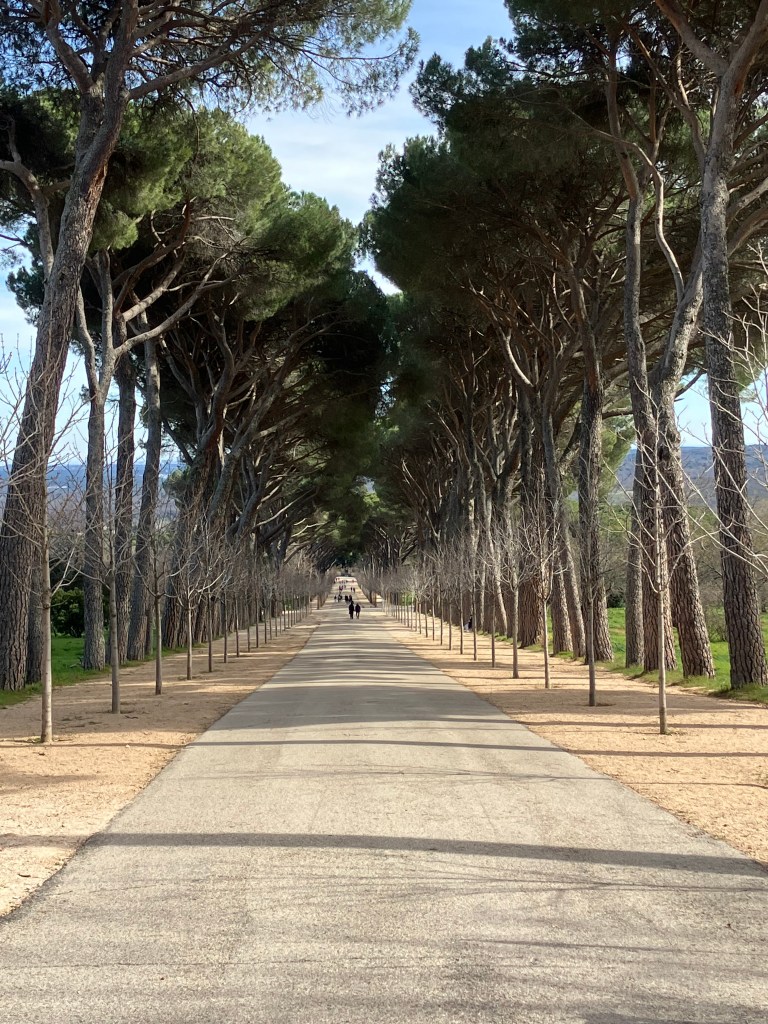
Leaving the train we headed out of the train station, across the road and entered the park of Casita Del Principe. It wasn’t hard to know where to go it was just a case of following the crowd! It’s about a 30 minute walk uphill through the park, just under 1.5 miles. I must admit I did have to take a couple of breaks particularly as the gradient got steeper the further you went.
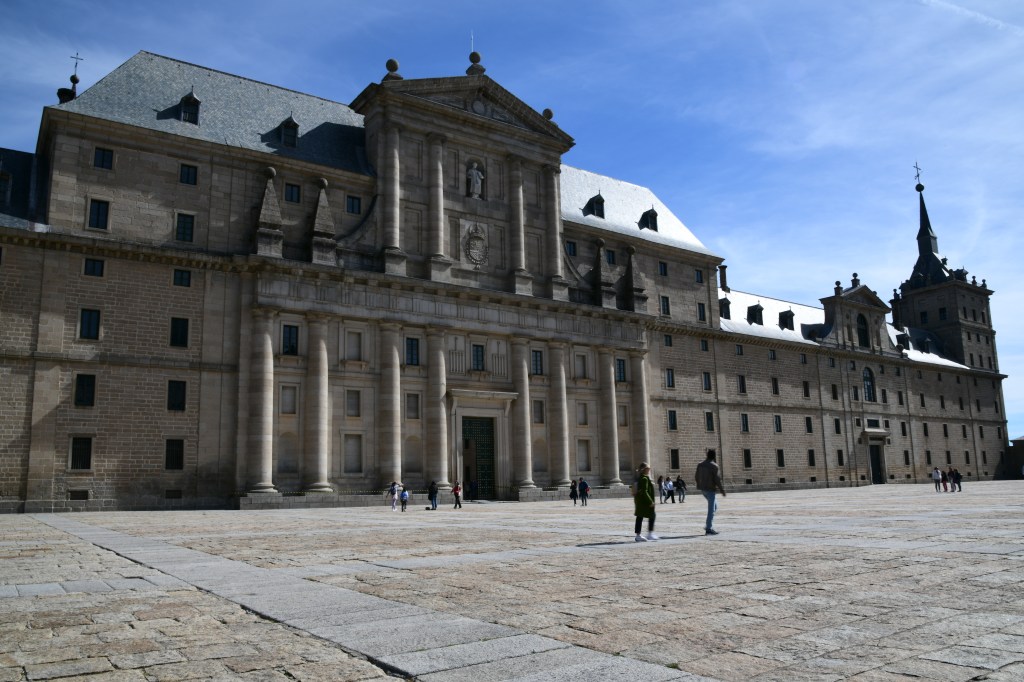
We finally reached the entrance, paid our entry fee, collected an audio guide and map and headed off to tour the palace. Toilets and luggage lockers are also provided just beyond the main entry point, which is useful for your camera as no photos can actually be taken in the Palace.
El Escorial or the Royal Site of San Lorenzo de El Escorial, to give it the full title, or the Monasterio del Escorial is a historical residence of the King of Spain. It was built by King Phillip II and is the largest Renaissance building in the world. El Escorial was both a Spanish royal palace and a monastery although Phillip II is the only monarch to have lived in the main building. Building began in 1563 and it was finished 21 years later in 1584. Since then it has become the burial site for most of the Spanish kings of the last five centuries, Bourbons as well as Hapsburgs.
The tour begins with the Courtyard of the Kings before heading upstairs to the royal library and then bringing you back down to the Basilica. Services still take place here so it’s worth noting the times as you may have to return later.
You also get to walk through the Hall of Battles, originally called the King’s Gallery, which is adorned with fresco paintings depicting the most important Spanish military victories.
The palatial rooms of Phillip II form part of the tour along with information on the architecture and the galleries of art.

You also head down to the lowest level of the palace to the Royal Pantheon crypt.
Twenty six marble tombs contain the remains of the kings and queens from Charles I to the present day. Remains of Royal consorts who were parents of monarchs also have tombs here. Once abdicated King Juan Carlos I’s parents are interred here it will actually be full and no plans have yet been released as to where Juan Carlos, his wife Queen Sofia or their off spring will be buried.
The Pantheon of the Princes, built in the 19th century houses the tombs of princes and princesses and royal consorts who were not parents of monarchy. Among their most recent interment was that of Infante Alphonse in October 1992, the younger brother of King Juan Carlos I.
This section of the pantheon is quite a sad collection of small tombs.
Jardin de los Frailes
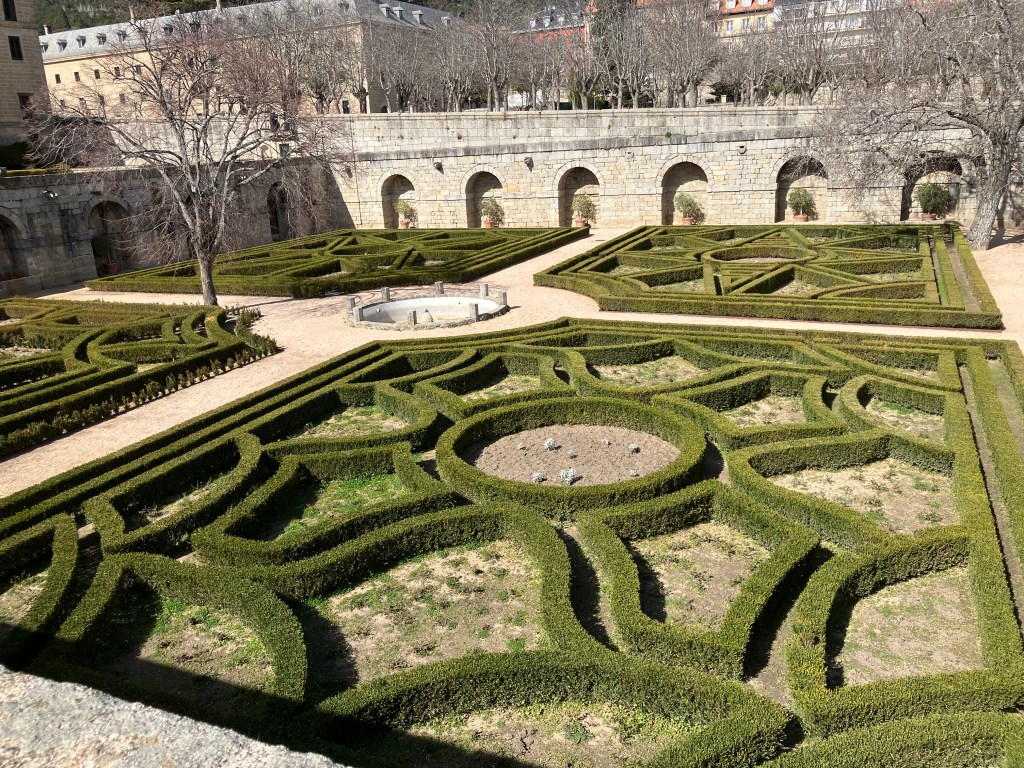
Having left the Palace itself you can make your way across to the far left corner of the front courtyard in order to access the gardens. These can be seen from above, through the windows of the Palace and are box hedge gardens laid out in geometrical patterns although it isn’t easy to see this at ground level.
We wandered the pathways, admiring the views across the valley and mountains beyond before retiring to the park for our picnic.
NB:
This is my fifth contribution detailing our tour of Western Europe. Why not check out all the previous posts and follow us as we learn more about this fascinating area of the world?
 A Midlife Adventure