On Saturday we took the train from Cordoba and travelled 45 minutes south to Seville and settled into another Air BnB just a 10 minute walk from the main train station but alas 40 minutes walk from the main city sites.
Our first adventure into the city began early on Sunday morning visiting the art market outside of the Museo De Bellas Artes De Sevilla. Scattered around the small square, local artists display their wares to the admiring and hopefully generous public. Whilst Mothers Day was being celebrated back home, it was in fact Father’s Day here in Spain and maybe as a result the streets were fairly quiet.
It was a pleasant introduction before entering the actual museum. It is free to enter, unless you come from a country not in the EU! But even then it is only 1.50 euros each.
I am not a massive fan of art and although hubby loves French Impressionism visiting art galleries isn’t necessarily “his cup of tea” either but I had thrown it into the schedule as a break from architecture, cathedrals and stately homes.
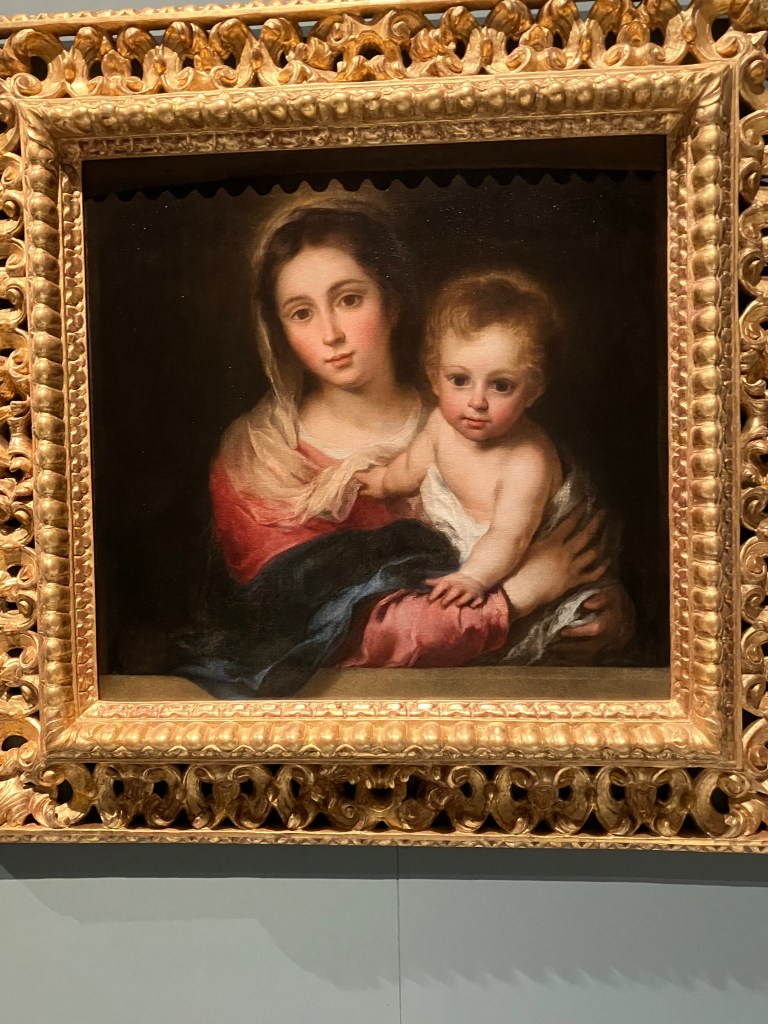
Housed in an ornate former convent dating back to 1594, the art is arranged chronologically throughout the museum and thus downstairs the walls are full of religious paintings and fresco ceilings whilst upstairs there is a greater variety. The highlight for art lovers is the painting of “Virgin of the Napkin” by Murillo painted 1668-69. My particular favourite, however, was “Moorish Ambush” painted in 1880 by Fernando Tirado, which at first glance looked like a photograph!

Heading away from the art museum we visited the Iglesia de la Magdalena before walking towards the river and the site of the Real Maestranza de Caballeria de Sevilla. Bull fighting is a major event in the Spanish calendar starting each April and this 12,000 seat venue is one of the oldest in Spain. You can take a guided tour to learn about the history of bullfighting whilst also visiting the museum, the stables and walking into the massive arena.
We chose to merely view the imposing Baroque architecture from the outside. I’m afraid my morals wouldn’t allow me to join the ever growing queue to enter.
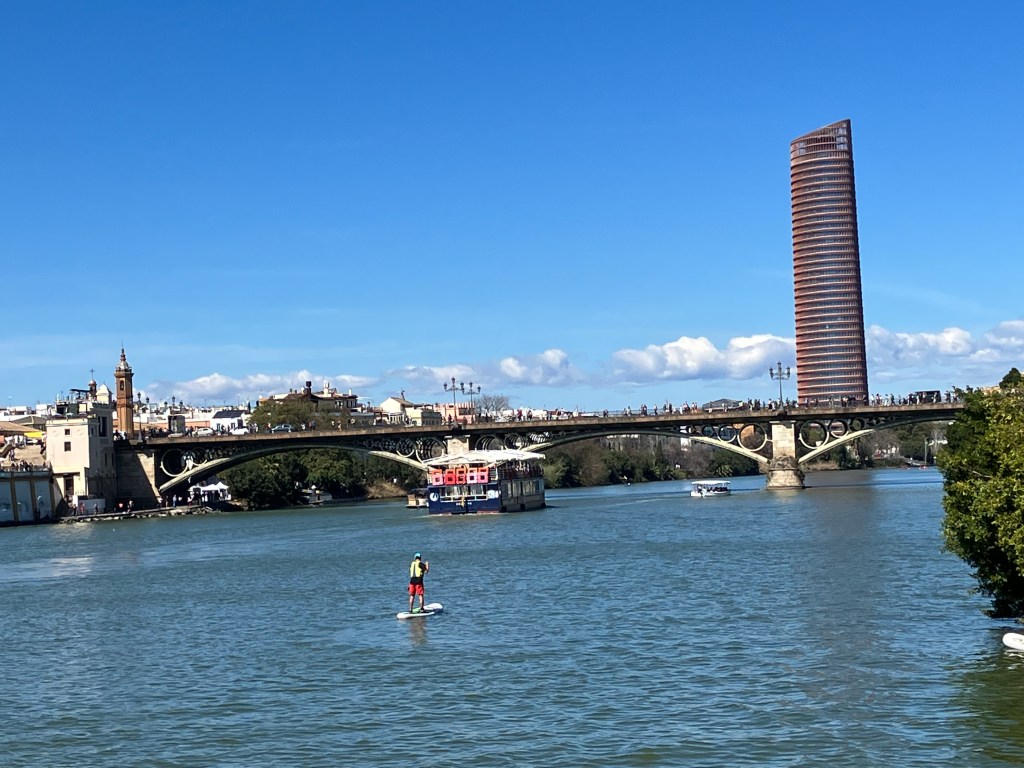
Like so many visitors and no doubt Sevillanas alike we then strolled along the riverfront in the sunshine, admiring the houses of Triana across the water, the outside of the Maestranza theatre and the Torre del Oro.
You can pay to go inside where Seville’s naval history is on display in the maritime museum and the top of the tower also offers outstanding views of the city and river.
Instead we headed to Parque de Maria Luisa and the Plaza de Espana
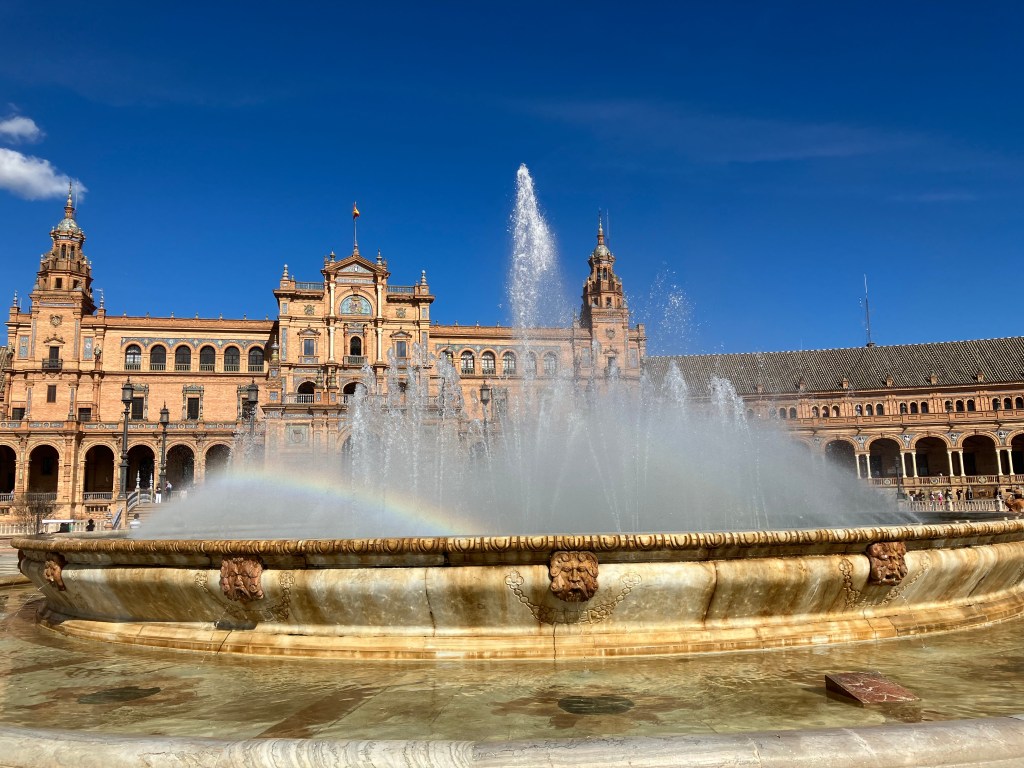
Like many I had seen pictures of the Plaza de Espana but nothing prepares you for the reality. As we rounded the corner I caught my breath as the magnificence of this Renaissance Revival plaza spread out in front of me. I am so pleased that we came here at the end of our day as there was no pressure on time and we could wander at will absorbing the atmosphere, taking a break whenever we wanted to and just being in the moment.
The square was originally built in 1929 but after years of neglect it needed restoring to its original splendour and intertwines elements of both Moorish and Christian culture. Adorned with tiles it is connected by bridges over a moat.
Take a moment to either hire your own rowing boat on the moat or like me just sit and watch the world go by at the central fountain, ensuring you pick an area that doesn’t get wet from the constant spray!
As you wander around there are so many little extras that are so easy to miss:-the beautiful tiling on the lampposts, the floral decoration on the bridges, the wooden ceiling above the walkways or the individual tiling on the ground floor dedicated to specific Spanish cities. All of this is accompanied by the haunting sound of a violinist playing “Nessun Dorma”, the loud clacking of the castanets as a small group of flamenco artists entertain the crowd and the strumming of a Spanish guitarist.

The Plaza faces the Maria Luisa park which was built at the same time. The park stretches along the Guadalquivir river and scattered amongst the vegetation are many important monuments including the famous statue of Miguel de Cervantes. Historical structures such as the Mudéjar Pavillion are also located in the gardens.
Birds sing amongst the treetops, children play amongst the fountains and life just stands still for a little while on a sunny Sunday Afternoon.
NB:
This is part eight in my series of posts about our tour of Western Europe. Why not read the previous posts and then follow us on our journey as we continue to explore this lovely part of the world
 A Midlife Adventure