As part of our explorations of this wonderful city we visited the Museo Fallero or Fallas Museum. From the outside the museum looks fairly small and unassuming. It costs just 2 euros per person to enter. The attraction for us stemmed from a previous visit to New Orleans where you can visit Mardi Gras World which gives visitors a behind-the-scenes look at the magnificent floats used during the Mardi Gras parade.
We had no expectations on entering this museum other than to view the sculptures that had been saved from the flames.
Wow! What a surprise! I left not just with loads of photos of my favourite figures but also with an insane desire to learn more about this Valencian Festival which I’d previously known nothing about.
Every Spring, from March 15th-19th, Valencia celebrates Las Fallas in honour of Saint Joseph, the patron saint of the carpenters. This festival stems from the mid-18th century when carpenters disposed of pieces of wood they had saved during the winter. As spring arrived they would apparently celebrate it’s arrival by burning it.
As this tradition grew over time so these pieces of wood were made to look like human figures, using clothes and wax (presumedly from candles), a bit like the scarecrows we have at home.
Gradually the characters became more complicated and became known as fallas, which is derived from the medieval Valencian language meaning “torch”. Each fallas would have a theme or “title” and were built by the people living in each neighbourhood working together with help from carpenters and painters.
As cardboard gained in popularity during the first half of the 20th century, the wax was replaced by this more pliable material and the fallas would be made up of several characters known as “ninots”, each ninot forming part of the story being told.
As we learnt in the museum from the 1970’s expanded polystyrene started to be used for the outer shell of the ninots and instead of dressing the figures they began painting on the polystyrene instead.
This picture shows the ninot from 1935.

As the festival gained traction so the demand for specialist creators grew and the profession of artists fallers (fall artist) emerged in the city. These artists have their own workshops and continue to develop and evolve their own style.

The festival grew and more and more people were supporting and sponsoring the creation of these yearly fallas. These groups of people known as “comisiones falleras”, began to compete against each other with the winning fallas creating great pride amidst the neighbourhood that had created it before being burnt on the evening of March 19th.

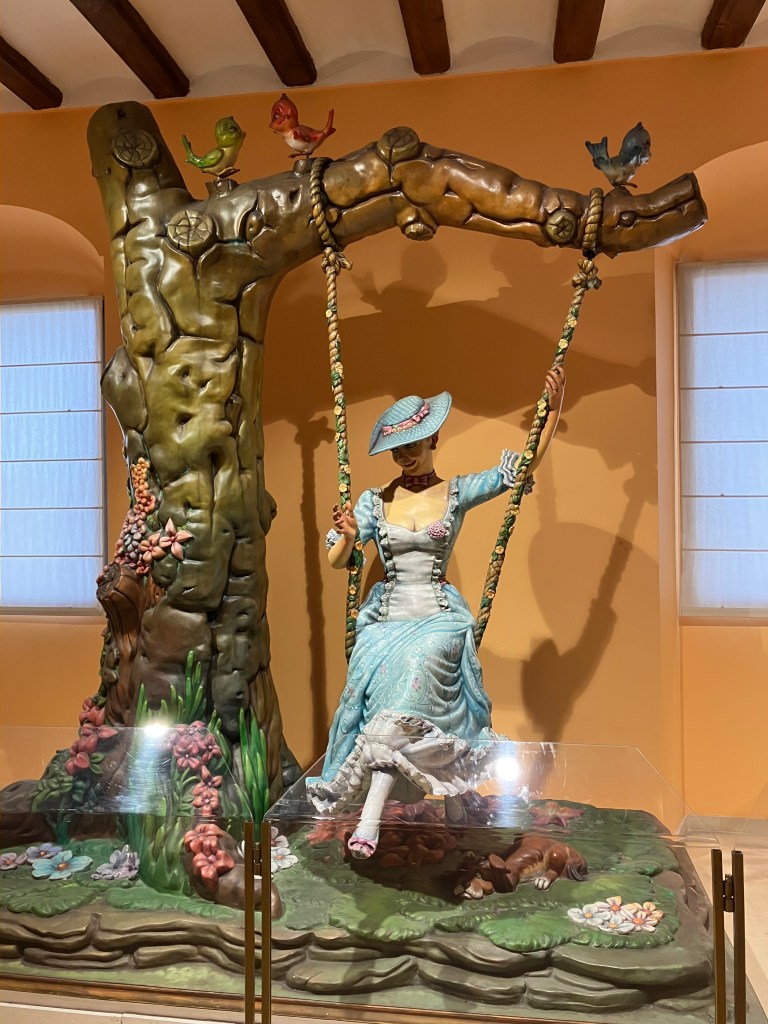
Fast forward to today and there are over 350 “comisiones falleras” in Valencia each building not only the main falla but also a falla infantil which is a smaller falla, family friendly and thus aimed at entertaining children. This is one of my favourite falla infantil called Solidarity saved in 2009.

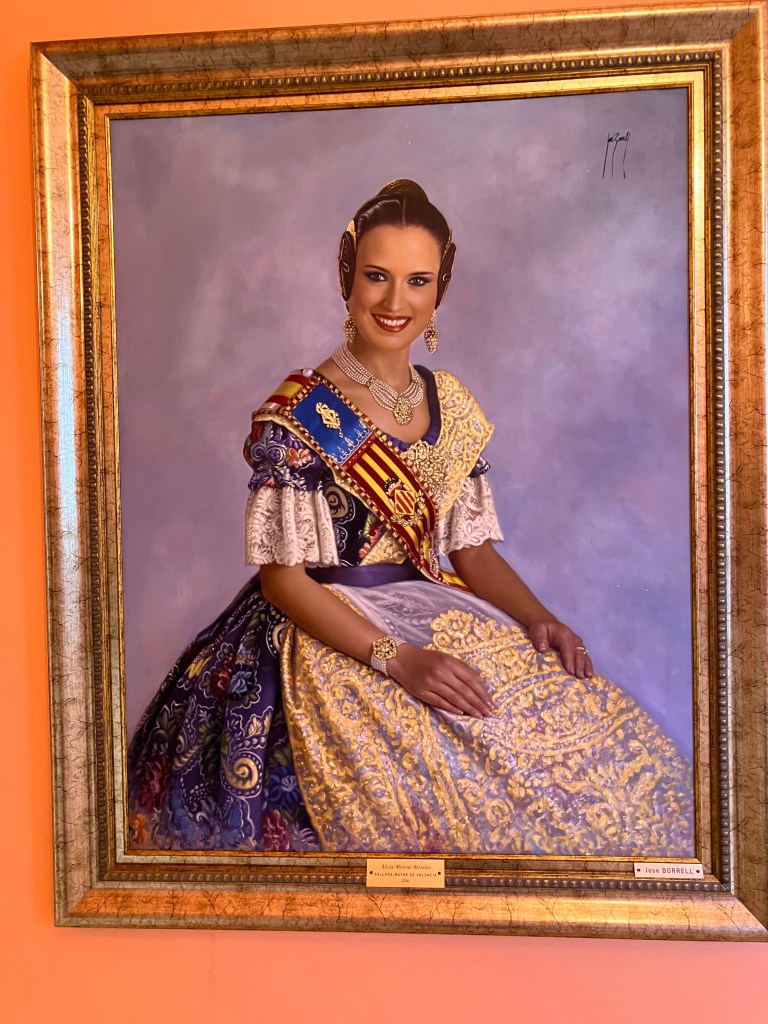
Each community also elects a Fallera Mayor -a Queen of the Faller neighbourhood and a Fallera Mayor Infantile who is the child equivalent. From these a Fallera Mayor de Valencia and a Fallera Mayor Infantil de Valencia are chosen. This is a great honour with many responsibilities. Painted pictures of previous Fallera Mayor de Valencia, dating back to 1995, are on display in the museum and I’ve attached a picture of my personal favourite here.
To give some idea of how big this festival now is. The most impressive fallas form part of sección especial and they cost well over €100,000 each. The most expensive falla ever built was in 2009 and cost approx. 1 million euros.
The two main winners are placed next to each other and burnt the same night, first the falla infantil, then the falla principal. The winning fallas are the last ones to burn.
The ninots on display in the museum date back to 1934 after a new tradition, in recognition of the skill and dedication used to create them, of pardoning ninots from the fire was started in the 1920s.
In 1934, the first Ninot Exhibition was organized so that the people of Valencia could choose by popular vote which ninot to pardon from the fire. This ninot receives the name of ninot indultat.
Nowadays the Ninot Exhibition is organized inside the City of Arts and Sciences. Anyone can vote, even visitors and the winning ninot infantile and ninot indultat are spared from the flames!
It is interesting to view them all in the museum in chronological order. You can clearly see how everything has developed and improved over the years including the themes that have been used.
This spectacular yearly event has grown from the burning of fires on March 19th to a full five day festival. Posters advertising the events taking place started back in 1929 and, as a result, the museum displays a collection of these across the years.
This festival is an essential part of the city’s culture and heritage bringing together communities to party and celebrate Valencian music, costumes and food.
It excites me to learn that in a world that is so disparate at times here in this Spanish city communities are still working together each year to create their own bespoke fallas.
I cannot wait to return and savour it for myself!
NB:
This is my third post about the great city of Valencia. Why not have a read of the other two? And then catch up on our tour of Western Europe thus far?
 A Midlife Adventure