We had embarked upon our adventure in Europe with the mindset of travelling rather than going on holiday. With this in mind we had looked for accommodation based upon an agreed set of criteria which would suit our needs:-
We wanted our own front door – we didn’t want to rent a bedroom within someone’s house. Although this might have reduced the cost considerably we value our privacy and to be honest do not feel the need to be sociable all the time while we are away.
Within our space we ideally wanted a double or kingsize bed but definitely our own bathroom. I’m not a fan of sharing toilet facilities.
If we were staying for three nights or more it needed to have self catering facilities so we could reduce our outlay by preparing our own breakfast, making picnics and cooking evening meals. We did learn later, however, on the trip that we could manage with a stove top and didn’t necessarily always need an oven. It tended to hinge upon how long we were staying and the expected weather.
If we were staying for less than three nights we would look at the option of a hotel room but it needed to include breakfast. This fills us up and sets us up for the day ahead. Eating breakfast out, for us, is an unnecessary expense.
We actually couldn’t believe during the adventure how many guests took breakfast items away to eat later! In one hotel we saw guests arriving for breakfast with brown paper sacks ready to fill for lunch!
We needed wifi so I could post on my blog and we could both sort photos en route.
We wanted free cancellation and as we had taken the decision to travel by train being accessible to the train station would cut down on time and money on arrival and departure.
Finally we set a nightly budget but safety also had to be considered. Staying in a less than salubrious area wouldn’t aid restful sleep after being on our feet exploring every day.
I utilised Booking.com, Hotels.com and Air BnB.
It was often a bit tedious but eventually the accommodation plan came together.
So how did the plan stack up?
We stayed in nine Air BnB’s in Bilbao, Madrid, Seville, Valencia, Barcelona, Paris, Brussels, Antwerp and The Hague for a total of sixty nights .
And five Hotels at Gatwick, Cordoba, Granada, Lille and Amsterdam for thirteen nights.
Our last night was spent with an old school friend near the airport in The Netherlands.
Hotels:
Hotel Casa de los Azulejos in Cordoba was our favourite. This is such a beautiful hotel, sequestered in the old part of town with cobbled streets and just a fifteen minute walk to all the key sites but tucked away from the hustle n bustle.
We stayed for three nights and our room featured a large original fireplace which lent to the authenticity.
A continental style, freshly home made, breakfast was served every morning by the owner Manuel.
He speaks many languages and the receptionist is full of helpful local knowledge. All the staff were super friendly and helpful and there was just a wonderful atmosphere of conviviality and tranquility.
We would both love to go back to experience the Cordoba Patio Festival -see my previous post and would definitely rebook here.
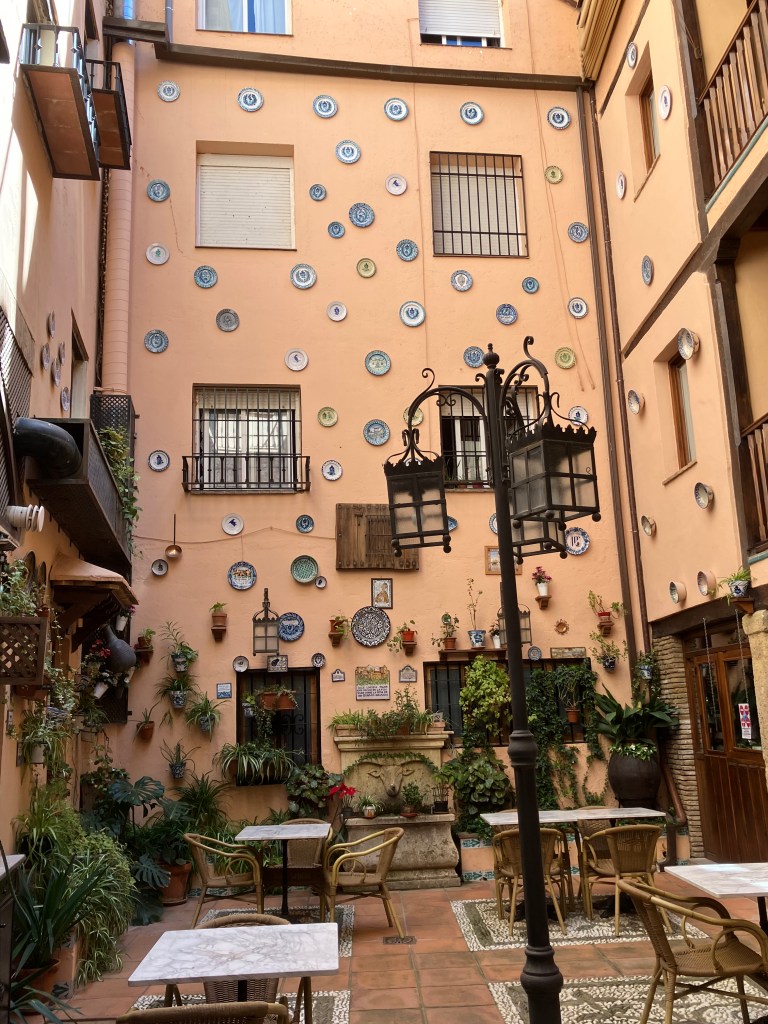
Hotel Posada del Toro in Granada came second. We stayed for three nights. The hotel is situated in the Albacin neighbourhood, which is full of Islamic influence and Moorish architecture.
The old cobbled streets are off limits to normal traffic which enabled peaceful sleep particularly since our bedroom with it’s two balconies was at the front of the hotel.
With the doors thrown open, the afternoon sun shone in, along with the chatter from the small shops below clustered together like a “souk” and the distinct aroma of Middle Eastern food.
The hotel has a central courtyard patio which is beautifully decorated and this provided me with a lovely peaceful haven in which to sit and type my posts whilst staying. This was the best outside space we experienced during our trip.
Air BnB:
We learnt a lot about rental accommodation provided through Air BnB, some of which was good and some not so good.
Please note I have changed the names of the people mentioned in this section to avoid invading someone’s privacy and the views expressed are our personal opinions only.
We learnt when booking you should try and take the time to check out your host. We discovered whilst on our adventure that the host falls into three categories:-
1/ Is this your host?:
The host is not necessarily the person whose picture appears on the accommodation page. The apartment we rented in Seville, for example, showed Isabella’s picture but the reality was something different.
We received responses to any messages and emails that we sent but they were signed off by Pedro. Maybe we were naive but we just assumed that Pedro was her partner.
On arrival we were met with the keys by Pedro’s friend Suzanne who spoke very little English. We were given little or no information about the apartment or surrounding area.
When I delved a little deeper on Air BnB I discovered that Pedro was renting out in excess of thirty different properties in Seville. He was, in fact, an agent.
We personally found this arrangement too commercial and not really in the spirit of why Air BnB was set up. Communication was very formal and not friendly or personable. You will rarely receive a review when you leave, maybe because as they are a business you are just a number!
We also came across this arrangement in The Hague.
2/ Owner Removal:
The host owns the property but moves out whilst you are renting it.
As a result there are wardrobes, cupboards etc that are locked and out of use in which I assume they store their personal clothes etc. All decorative items are, however, left on display which may include personal photographs and mementoes.
With this type of arrangement you are surrounded by the owner’s personal effects which in one case on our journey included a large papier mache sculpture of the upper part of the owner’s body painted in vivid green!
We found this arrangement was better than the first but it could make you feel like you were invading someone else’s space.
They may also have more rules in place to ensure their property is returned as they left it, particularly at check out.
Additionally they are likely to be less flexible with checking in times as they may want to meet you. They are, after all, entrusting you with their property.
The plus factor here though is that if you follow the rules you are likely to get a favourable review.
Also the likelihood is that if you are self catering, as we were, the place will be fully equipped even down to herbs and spices for cooking.
Whilst this is more in the spirit of the Air BnB culture, consideration also needs to be given to the fact that the owner is making far more money by renting the property out to you than they would if they rented it locally.
Having checked the booking calendar for Katie in Paris we discovered she was set to earn £48,000 gross this year which is an awful lot more than if she had rented the property out to someone locally.
The issue this gives, however, is that more and more cities are losing rental accommodation and remaining properties for rent are so competitive that prices are being artificially inflated. Some cities are beginning to react to this and are imposing stricter regulations on Air BnB rental or even banning it completely.
Amsterdam is a key example where we had to book a hotel. The portfolio of rental accommodation in the city has been so vastly decreased by the influx of Air BnB that university students are having to secure accommodation before their offer to study is accepted! The city is, therefore, starting to strike back and forcing Air BnB rental out to the suburbs.
If you are planning a trip that includes Air BnB accommodation it’s worth checking out the rules of the relevant city beforehand. We had to supply a lot more information than normal in both Madrid and Barcelona because the properties had to be licensed by the city council.
3/ Holiday Let:
The owner lives elsewhere, usually in the same city, but rents out their additional property.
In this scenario you are basically renting a holiday apartment/house. We found owners were a lot more friendly, more flexible with checking in and out times and will give you a review afterwards.
Because they are basically running their own small business they are more interested in ensuring you enjoy your stay. You may find, however, that kitchens are not as well equipped and thus cooking a proper meal may have its limitations.

You cannot always rely on reviews:
Secondly we discovered that the reviews on Air BnB may be honest but also evasive. For example we rented an apartment in Bilbao. Sited in the old quarter above a shop the reviews indicated it was a lovely place to stay.
The reality was that when we arrived the information booklet told us:
We were limited to three five minute showers per morning after which the hot water would run out!
The plumbing system is old so the toilet works on a macerator so go careful otherwise it will block and you will be charged for it to be mended!
Additionally the stairs leading to the apartment and thus to the other five apartments spread out above were made of wood so you could hear everyone coming in and out!
Heating was provided by plug in electric radiators so when you returned from sight seeing, cold and wet on a miserable day, you had to wait for them to heat up before you could get yourself warm or your clothes dry.
Not one review mentioned any of this. Now it might be that it didn’t bother any previous guests but it’s hard to believe. We stayed for six nights and were woken up four out of six nights by other occupants coming in late or leaving really early.
So why are visitors not honest? The answer lies within the review system.
Once you leave your review the owner has fourteen days in which to write a review about you as a guest. Until they do this you have no idea what they are going to say.
Whilst Air BnB have introduced this idea to ensure neither party gets to see the other review before writing their own, I still feel there is a tendency for some guests to be truthful but avoid mentioning any problems they may have experienced in case this rebounds on them later. They want to be seen as “nice people” by future hosts so they can secure future rentals.
Including Bilbao there were two properties which were either not as described or not up to our expectations.
Check out location:
We tended to look for properties near the train station, as previously mentioned, to decrease expenditure and time on arrival and departure BUT in so doing we didn’t actually explore fully how long it was then going to take to walk to see the key sites. We certainly came unstuck in one city where walking into the old town took forty minutes each way. We averaged six miles a day of walking so this was quite a lot to add on top. We soon learnt how to navigate the bus system but this added costs.
Transportation and Ticket Costs:
It is certainly worth checking transport links at your destination, if you have no car, as you cannot always secure reduced fares as a visitor.
We managed to travel by train throughout our adventure in Europe. However it’s worth pointing out that we actually added up the expected cost of each journey beforehand and compared this to the cost of an InterRail pass.
At first it seemed favourable to buy the latter but because certain countries charge you to book your seat it may actually be cheaper to not buy the InterRail pass and pay as you travel.
In Spain, for example, everyone is allocated an assigned seat as part of the booking process so travellers with InterRail passes still have to pay for that privilege. Depending upon how many trains you are going to be using in Spain the seat reservation charges can soon add up.
The same applies to City Passes. We calculated the cost of all the individual entrance fees for what we wanted to see in Paris and it was cheaper to do it ourselves rather than buy a Paris Pass. It tends to hinge on what you want to see.
Most City Passes include a one day ticket for the Hop on, Hop Off bus, which if bought and paid for on site can be expensive. Personally we don’t tend to use these buses.
The cost of tickets to enter key sites particularly in big cities can be expensive so it’s worth checking them out in advance particularly if you are on a budget.
Only buy tickets in advance if you really need to.
Pre purchased tickets certainly add a lot of stress to your packed itinerary in terms of having to be somewhere on a certain day at a certain time!
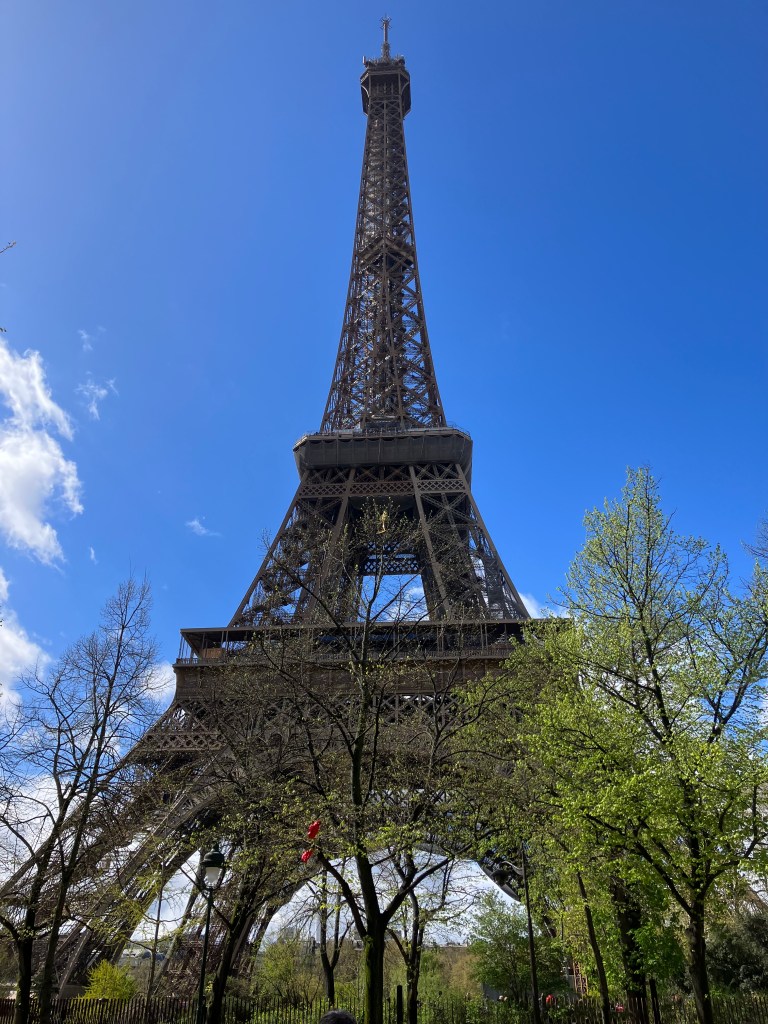
We thoroughly enjoyed our European adventure but there’s no doubt if we were to do this again we would do it slightly differently. Life is all about learning from your experiences and for us this can only improve our future adventures.
 A Midlife Adventure