My story continues in a city that I later learn is called Charleston. It is here that all three ships land and once again we are shackled together and marched out of the bowels of the now stinking hold.
As we walk through the streets of this city white people dressed in fancy clothes stop and stare, they make comments that I don’t understand and once again we are locked together in an overcrowded wooden pen. It’s not dissimilar to the type of enclosure I built back home in the village to secure our animals.
Time moves slowly and I lose count of how many days we are confined here. The heat is unbearable, sweat sticks to my body and although we are fed, it is mainly with bread and water.
When it rains, it is a relief to feel the cold water on our bodies but at the same time I fear becoming ill as I have seen others suffer. I need to stay alive. My companion from the boat is shackled nearby and our whispered conversations add brightness to my days. He speaks several African languages and is often able to pick up snippets of conversation that he conveys on to me. It is through him that I learn about the other boats that sailed with us. One of the vessels carried just women and children and whilst I hope that my wife managed to escape captivity, I also wish her to be here so I can once again set my eyes upon her face and know she is alive.
One morning bright and early we are shackled together in a line of six and marched out of our compound. Lined up in a row we are each forced to strip off our clothes, wash our bodies with a bucket of cold water, a rough cloth and a cake of white soap .
Still naked we are taken to a small hut, inside is a white man with a blade. We are each forced to sit down on a chair, our heads and faces are shaved. There is no point in struggling, this only leads to punishment from the canes and leather straps held by the guards.
As I leave the hut I feel like my manhood has been stripped away from me. I have never been bold since I was a baby.
Leaving the hut we once again line up and are given a small cup containing oil and one of the guards demonstrates we are to put this over our bodies. Only then are we given some clothes to wear that cover our manhood.
Once this process is complete each chain of men are led through the street. There are groups of white men gathered alongside, they prod and pinch us as we proceed, sometimes they stop the procession to look at our teeth or to check our arm muscles. What is happening to us?
I try and ask my friend but he cannot hear me and soon we come to a rest. In front of us in the middle of the street is a raised platform. There are several lines of African men in front of us. I have completely lost track of some of the men from my village that came off the ship with me but eventually I see some of them being individually unlocked from their leg irons and hauled up onto this wooden stage.
It reminds me of the small markets back home where we would go to buy and sell our vegetables and crops. But these white men are competing to buy us!
My spirit, at this point, feels broken. I am not for sale I want to shout but I know my words will be spoken in vain. We are totally outnumbered here and the punishment for disobeying these men is not worth the fight. My friend is now for sale. I look into his eyes and I can feel his pain. A white man on the far left eventually ends the bartering and my friend is led away.
My turn comes all too quickly and I pray to my gods back home that if I am to be sold in this way it is to the same man as my friend. Together I know we can survive but without him life will be harder. I make a point of looking at the white man, trying to catch his attention, I smile, I flex my arm muscles to show how strong I am and when the bidding finishes I am lucky and join my friend. We are in a new pen alongside several other young African men awaiting our fate.
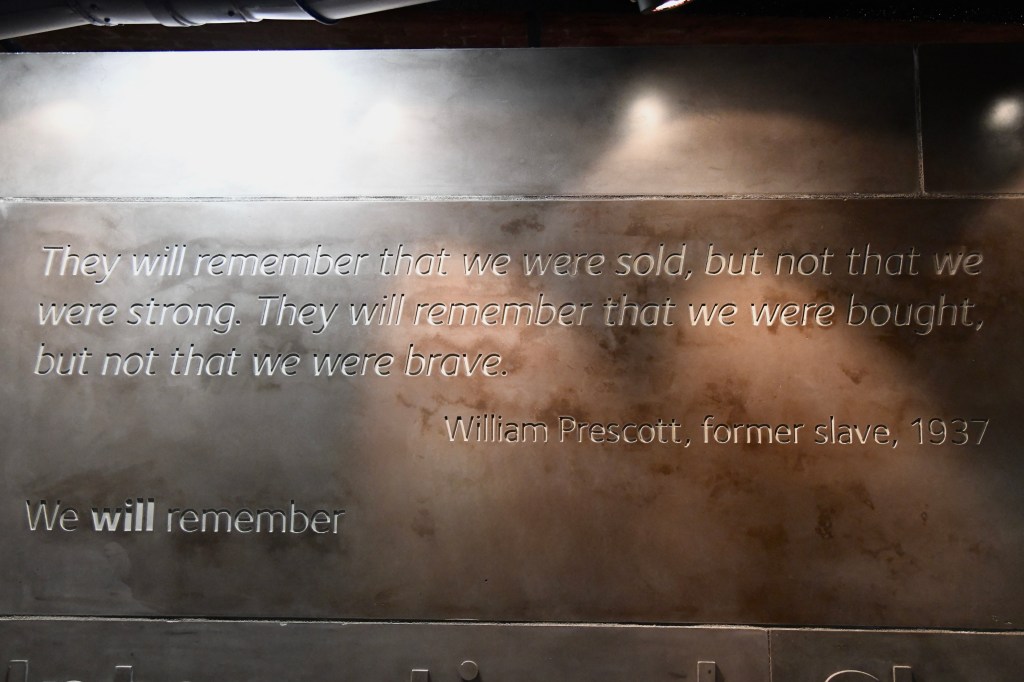
As the sale of the men finishes there is a brief pause in activity before I see women and children also in chains being marched down the street towards us. Some of the children look no more than ten years old. They are scared and frightened and do not understand this new world they have been forced into. I had no idea these white people were selling young boys and girls in the same manner as I myself have just been sold. Some of the children are chained to their mothers but are separated at the point of sale. The cries of the children and screams of the mothers resound all around us, this is a living hell.
Then suddenly I recognises a couple of the women, they are from my tribe. My eyes search the lines behind them in the hope of seeing my wife. Suddenly I see her. I am so happy that she is alive. My instinct is to shout out to her, to get her attention but she cannot hear me above the noise of the market.
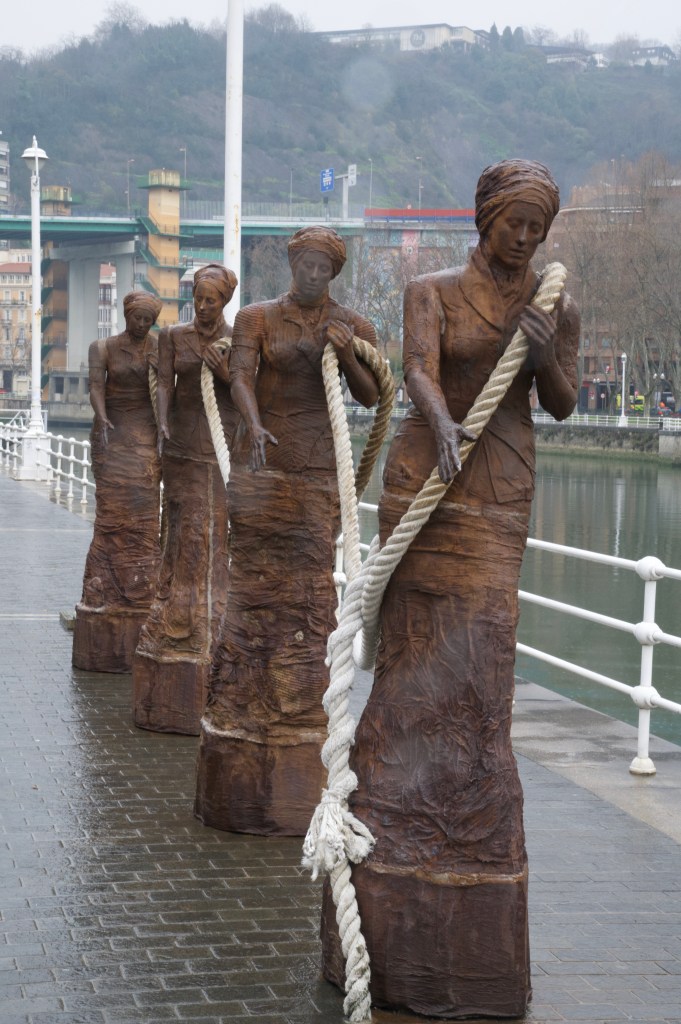
Soon it is her turn to stand on the platform and she is sold too but I cannot see the man who has bought her. I hope against hope that she will soon join us and I scan the crowds of people but she does not appear…………
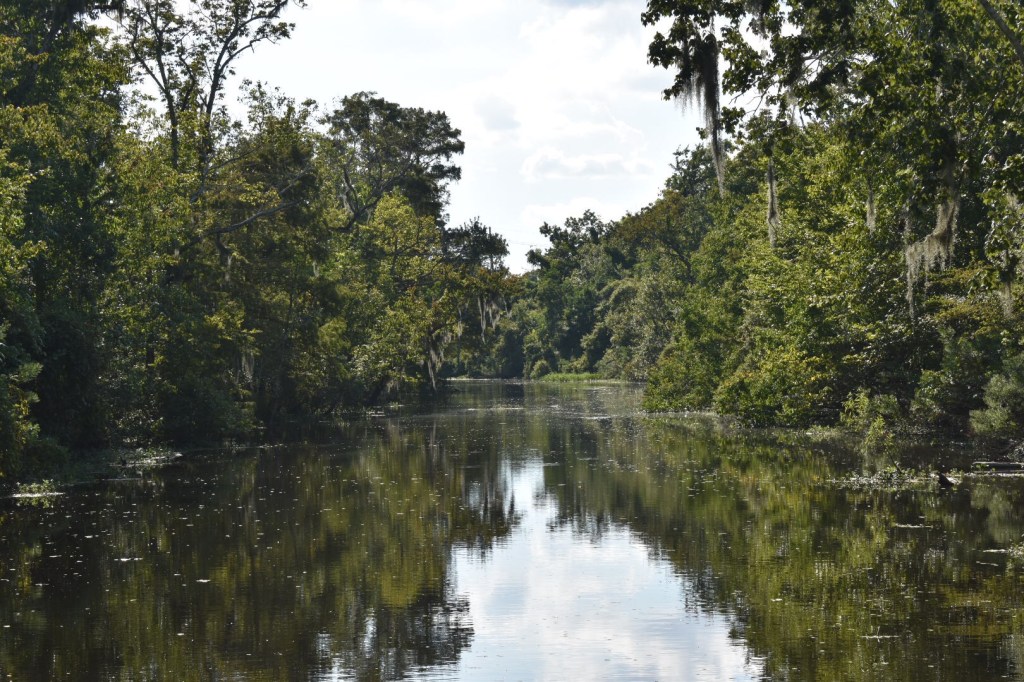
Sam, along with his fellow Africans are now slaves. They are moved to a plantation on the coast of South Carolina, cut off from the mainland and accessible only by boat, the chances of escape are minimal.
They work to create rice fields from the swamplands that surround them. It is a continuous fight to stay alive, to avoid the punishments metered out by the overseer for acts he considers defiance. The swamps are full of alligators and snakes, of which half a dozen are venomous. The heat and humidity during the long hot summers bring endless swarms of mosquitos.
They are forced to forgo their heritage, their language, their beliefs and customs and to adapt to this New World. Sam learns English in order to understand those who have enslaved him. His basic needs along with those enslaved with him – rest, cooking, making and mending clothes, tending the sick, the young and the old – are met in the short hours at the end of the working day or sometimes on Sundays.
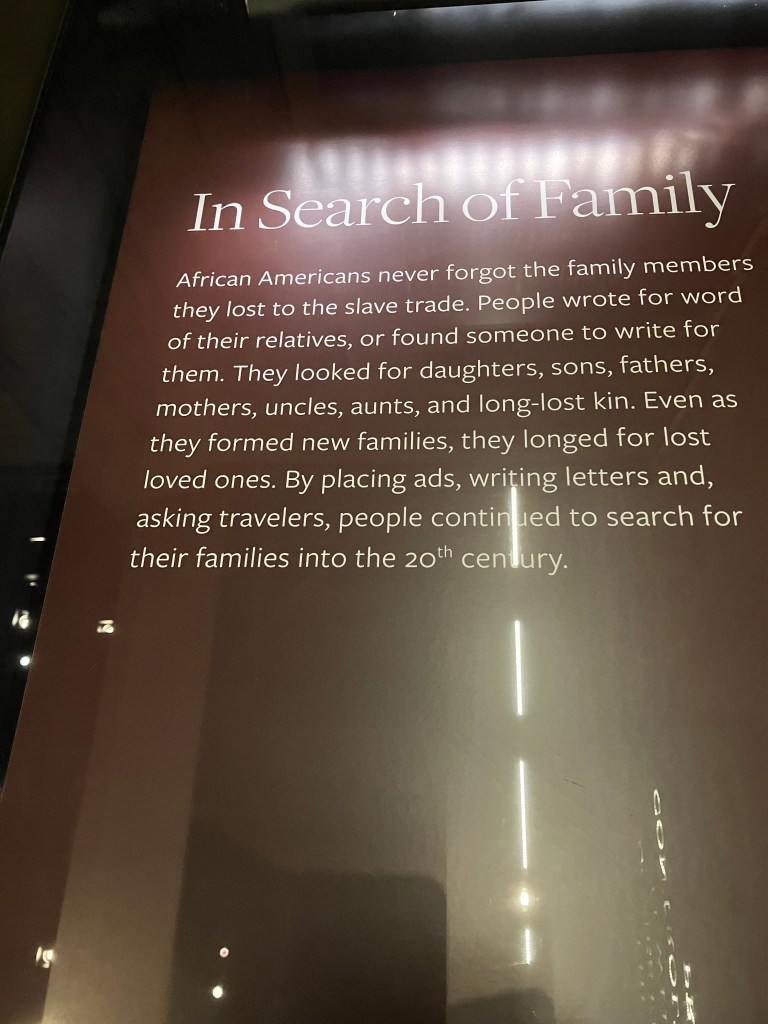
Sam never saw his wife again. He had no idea what happened to his unborn child. His life expectancy on entering the plantation was five years. Sam was a slave for eight years, he died alone and in hope.
 A Midlife Adventure