Having visited Glastonbury we stayed overnight in Wells and then ventured out to the city itself on foot. What a contrast!
Only 6 miles from Glastonbury, a town of integrity and differing cultures/beliefs, Wells is in every sense, except size, a city of historic architectural and religious wealth and feels as if it should rank alongside other elite university cities such as Oxford and Cambridge.
Wells is the smallest city in England with about 12,000 inhabitants but it can call itself a city because of the famous 13th century Cathedral.
We started our adventure by visiting the market which comes to town every Wednesday and Saturday. We strolled around the many stalls where we expected to find your traditional local market selling home grown produce and wares and I guess there is some of that but there was more than your fair share of artisan food stalls, arts and crafts and independent drink suppliers. We love these types of market and can see the attraction to clientele living in the surrounding area where the average property price is currently about £100,000 over the national average.
The market is the central hub from which other attractions radiate and is definitely part of the city’s social history growing and developing alongside it’s wealth. There are several cafes with tables and chairs spilling out on the pavement where you can sit, take a moment and imagine in times of yore all the local folk drifting in on market day to sell their produce, hand made goods and pots of honey. The sound of excited ladies chatting as they catch up on local gossip and children running around people’s feet chasing a ball or just playing tag.
Wells is a medieval city but it dates back to Roman times. People settled here because of the natural springs that bubble up creating wells. These three wells, dedicated to St Andrew, one in the market place plus two others in the gardens of the Bishop’s Palace, gave the city its name.
After browsing the market we made our way to the cathedral again dedicated to St Andrew the Apostle and the seat of the Bishop of Bath and Wells. This is an absolute architectural triumph from which many other cathedrals followed. Having since visited Canterbury, Lincoln and York this certainly stands out as a forerunner. It was the first Gothic cathedral to be built in England, it was finished in the thirteenth century, though there has been a church on the site since 705 AD. The baptismal font from the Saxon church of Aldheim (c. 705) can still be seen and is still in use.
As you stroll through you certainly get that feeling of walking where many have trod before you whilst also looking up and being entranced by the sheer brilliance of its production.

Don’t miss the Cathedral Clock sited in the north transept. Dating from about 1325 it is an astronomical clock, the second oldest surviving clock in England which still has its original medieval face. Apart from the time on a 24-hour dial, it shows the motion of the Sun and Moon, the phases of the moon and the time since the last new Moon. Every quarter of an hour is marked by the chiming of a quarter jack. This is a small automaton visible to the right of the clock, the statue hitting two bells with hammers and two with his heels. This is then followed by jousters on horseback rotating around above the clock face with the same jouster losing the mini tournament every time!
The tombs and monuments around the cathedral include one tomb dating back to the 17/18th century which shows graffiti existed even then with people inscribing their name and date on it.
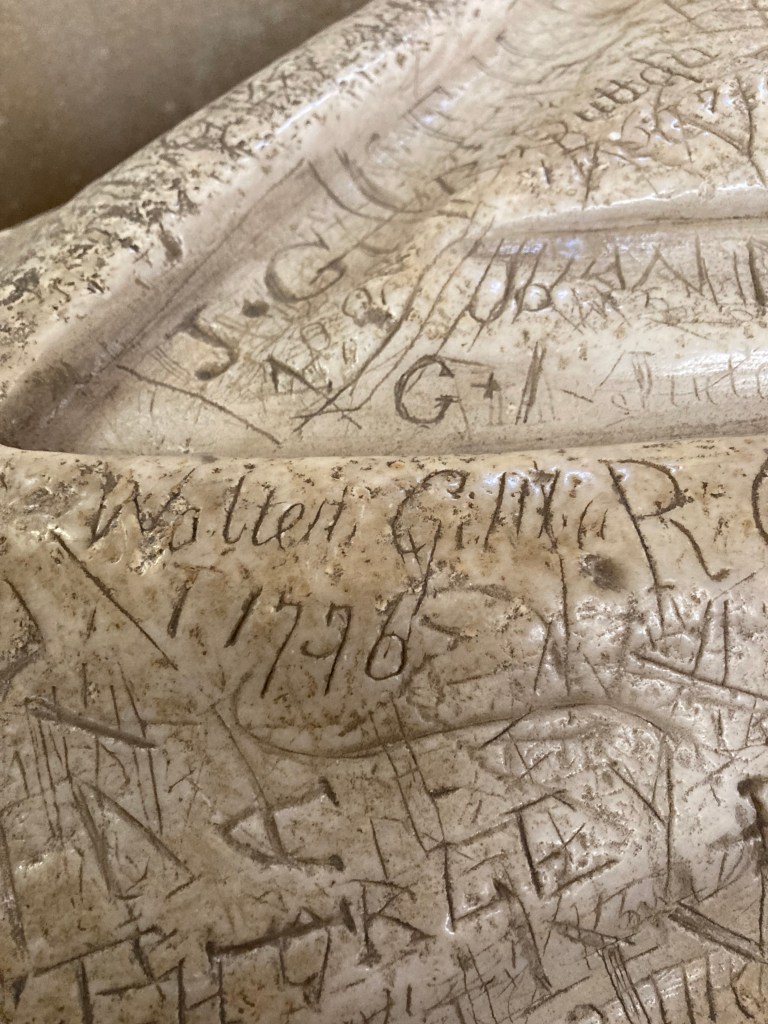
There are also tombs dating back to the 900’s which shock me in their intricacy. These actually made me question if we’ve evolved at all in terms of stonework production. How did they manage to produce something of such elegance without the modern day tools and machinery we are accustomed to?
On the walk back to the entrance you can exit the cathedral into their enclosed gardens. In the far corner of one of these there is a cut out window which when you peek through looks into the gardens of the Bishops’s Palace. Like an exploring child I had to find the other side of this when we moved onto the Palace itself.

The grounds of the Bishop’s Palace are themselves a quiet retreat from the hustle and bustle of the market outside. With spacious lawns, seats all along the moat and further interior grounds on which to relax, picnic or just take a breath, there is an immediate sense of tranquillity as if life is on pause.
The Palace has been home to the Bishops of Bath and Wells for over 800 years and feels like the central spoke of the wheel from which the city has grown in wealth. Surrounded by a moat, visitors cross over a drawbridge, walk under the portcullis and enter the 14 acres of gardens which lure you in at every turn, willing you to explore.
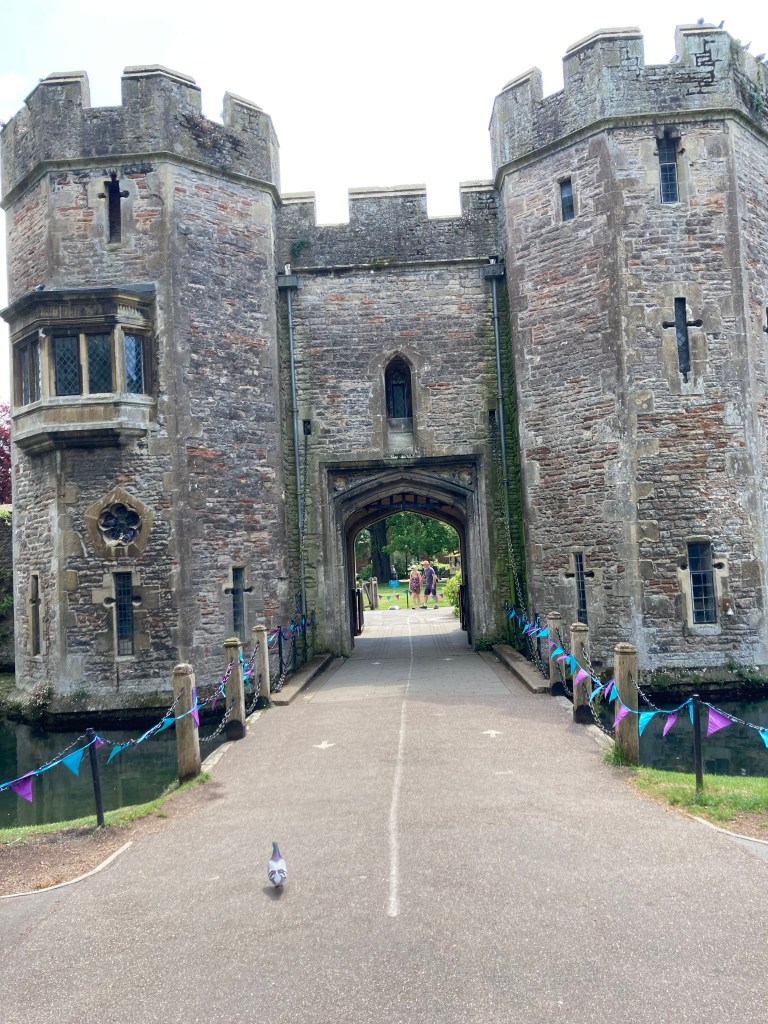
We chose to take a break here in the cafe aptly named The Bishop’s Table. This is accessible prior to actually paying the entry fee for the Palace. The cafe has a complete glass front allowing great views from inside if it’s not the weather to sit outside on the terrace. It was a pleasant interlude with dessert being taken on the lawn, thanks to two lovely young ladies from a stall on the market called Somerset Blissful Bakes, check them out on Facebook!
Moving onto the palace itself we managed to learn quite a bit about the many bishops who have lived here before, intertwined with the history of it’s development, but it was a bit lacking in atmosphere and ironically soul less.
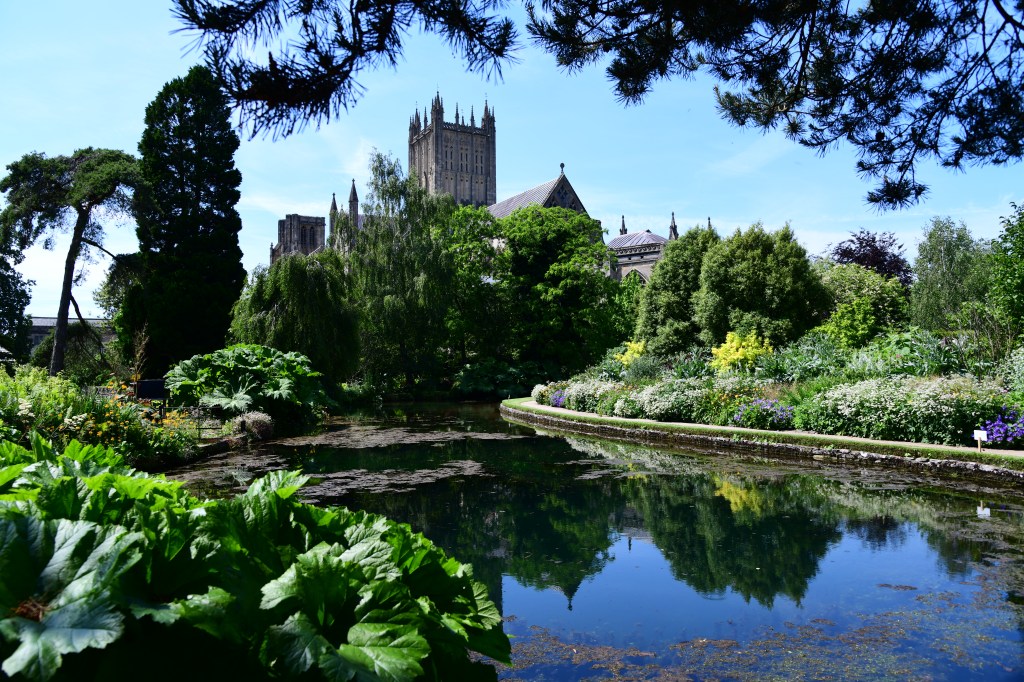
Back out in the sunshine we walked around the Grade 2 listed gardens, mainly laid out in the 1830’s by Bishop George Law. Now partnered with the RHS it was a true pleasure to walk around and a complete contrast to the austere rooms of the palace. There are plenty of benches and grassy areas where you can relax between admiring the beautiful flower borders, the well pools, the community food allotments and of course locating the other side of that elusive window from the cathedral!
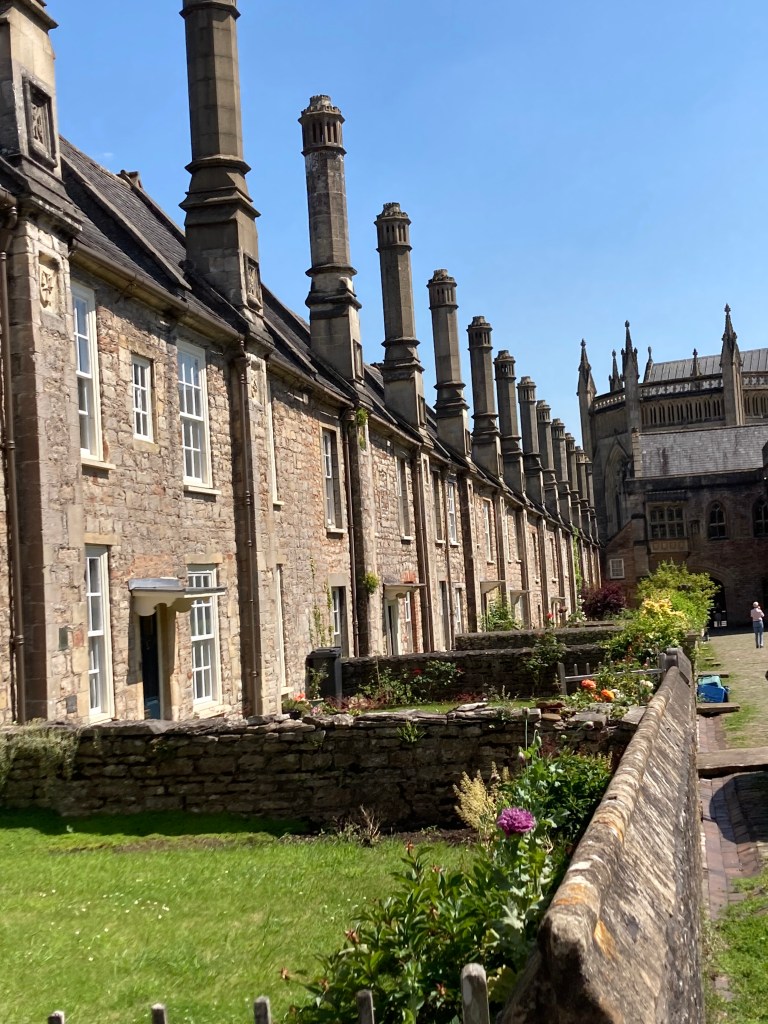
Our final port of call was Vicars Close which is sited on the other side of the cathedral.
Originally 42 houses (one per vicar) these houses were built in the 14th century with the perfectly in line chimneys added in the 15th century. As you wander along the Close you have to try and look beyond the modern trappings of the 21st century when cars and recycling boxes didn’t exist and imagine it as it was, a home for everyone working at the cathedral. It is claimed that this is the oldest residential street in Europe.
I wandered right to the end where the chapel and library are situated and I must admit a few members of the Wells Cathedral School in their dark blue uniforms made it feel again a bit like an elite university city.
These two cities of Glastonbury and Wells definitely offer a complete contrast but each also has it’s own unique attraction. When taken together they give you a real sense of ying and yang.
 A Midlife Adventure