On the far right or Eastern side of The Cotswolds, only nine miles from Oxford, is the wonderful English Baroque Palace of Blenheim. It is the only non -royal, non -episcopal country house in England to hold the title of a Palace.
Sited adjacent to the village of Woodstock, which in itself is worthy of exploration given it was mentioned in the Domesday Book of 1086, the Palace was built between 1702 and 1722.
Named after the 1704 Battle of Blenheim it was originally intended to be a reward to John Churchill, 1st Duke of Marlborough for his military triumphs against the French and Bavarians in the War of the Spanish Succession which culminated in the Battle of Blenheim and the Palace has housed the Marlborough dynasty ever since.
It is currently the home of the Twelfth Duke of Marlborough, Charles James Spencer-Churchill. Historically the Palace was also the birthplace and ancestral home of Winston Churchill, whose father Randolph Churchill was the third son of the 7th Duke of Marlborough.

With the sun finally making an appearance following what feels like months and months of rain we utilised our annual membership, received as a result of tickets purchased for their Christmas Light Show back in December 2023, to visit. Our original plan was to explore both the interior of the Palace and then its grounds.
We discovered, however, the day prior to our visit that the Palace was closed due to filming commitments. This is not a rare phenomenom. In fact a survey in 2021 noted that Blenheim made 71 appearances in film and television, more than for any other English country house, so it is worth checking their website before making plans to visit.
Armed with a paper leaflet complete with map we were quite happy to walk off our lunch purchased at the onsite Oxford Pantry which sells salads, sandwiches, hot savoury snacks, hot and cold drinks and wonderful cakes. We do love a cake!
We began our wander of the extensive grounds, which cover 150 acres, with an exploration of the Formal Gardens walk and it wasn’t long before we came across The Secret Garden.

Designed originally as a private garden for the 10th Duke of Marlborough it is now open to the public. Despite the multitude of cars we had seen and experienced on arrival the gardens appeared, on the whole, to be pretty empty. This gave us the opportunity to sit and really enjoy the peace and tranquillity that this small oasis allowed. We would have quite happily sat and read a book in the sunshine had we come prepared.
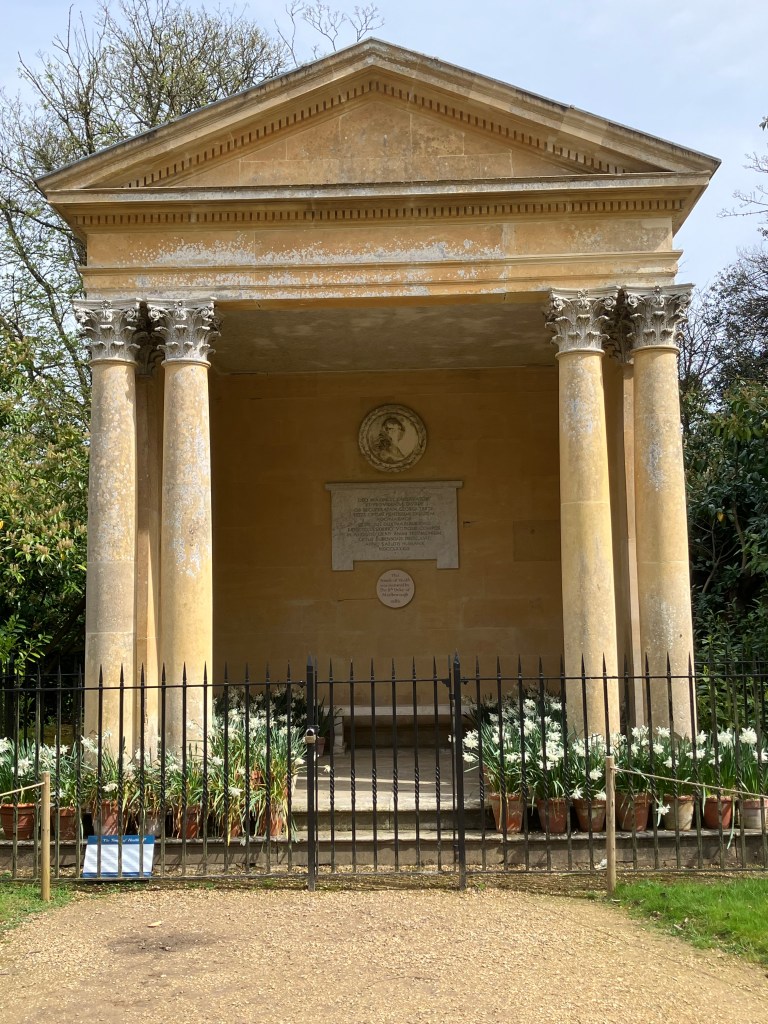
Leaving the Secret Garden behind we walked onto the Temple of Health. This Corinthian temple was designed by John Yen and built in 1789. It celebrated George III’s recovery from illness.
Branching off on a slight tangent we ventured off to the left and entered The Walled Gardens. This immense kitchen garden surrounded by a 14 ft high wall to protect the fruit and vegetables from hungry deer is one of the original features of the Palace Gardens designed by Henry Wise. Today this area incorporates the Butterfly House which opened in the 1980’s and is home to many species from around the world. Refreshed this year they have endeavoured to make it an even better environment for both the tropical butterfly species present and the zebra finches.
Spring flowers abound including Amaryllis and Fritillaries which happily sit alongside exotic plants from Africa, Madeira and South America. There is a greater emphasis on tropical fruits including pineapple, mango and papaya for the butterflies’ diet, to closely resemble what they would eat in the wild.
Alongside the Butterfly House you can also visit The Lavender Garden which has been specifically set out to enhance the native butterflies and you can spot plenty of nectar enriched plants growing here.
The final highlight of this area is the Marlborough Maze, the world’s second largest symbolic yew hedge maze. Two miles in length and made up of hundreds of yew trees, the design was inspired by the history of Blenheim Palace. We decided to give it a miss on this occasion but will definitely come back here on a future visit and hope we don’t get lost and can find our way out.
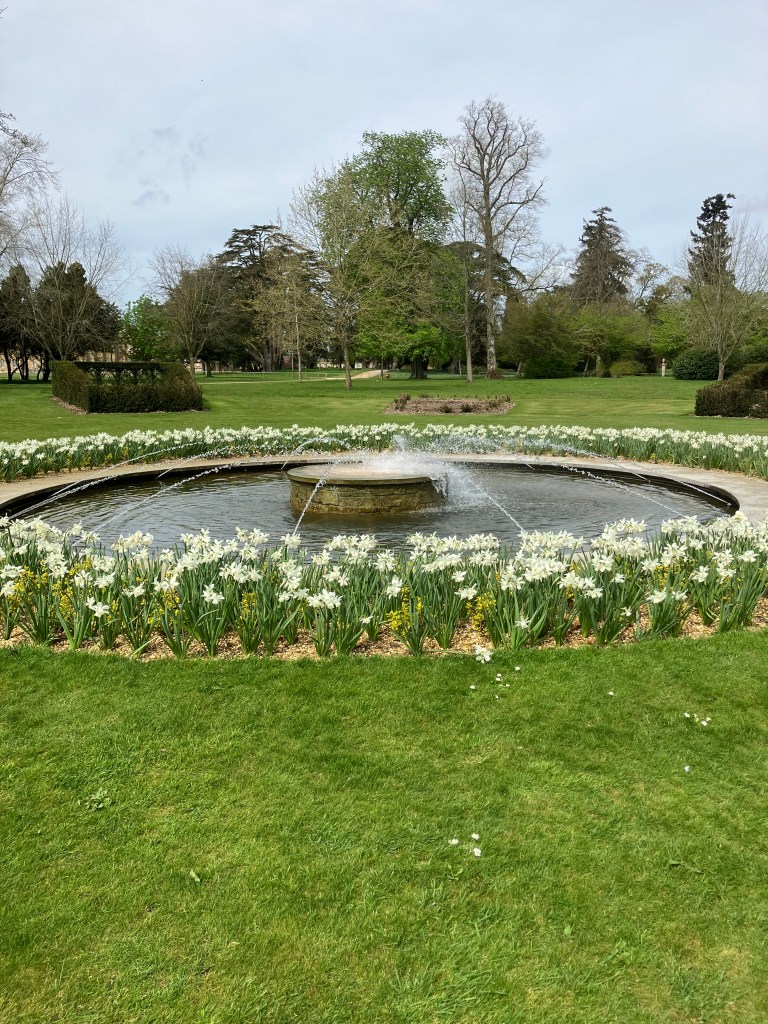
Exiting the walled garden back through the same way we had entered, we made our way to The Roundel. This was originally a statue, but was converted to a water feature in 2012. Another lovely place to sit and rest awhile or to unpack your lunch and take a break.
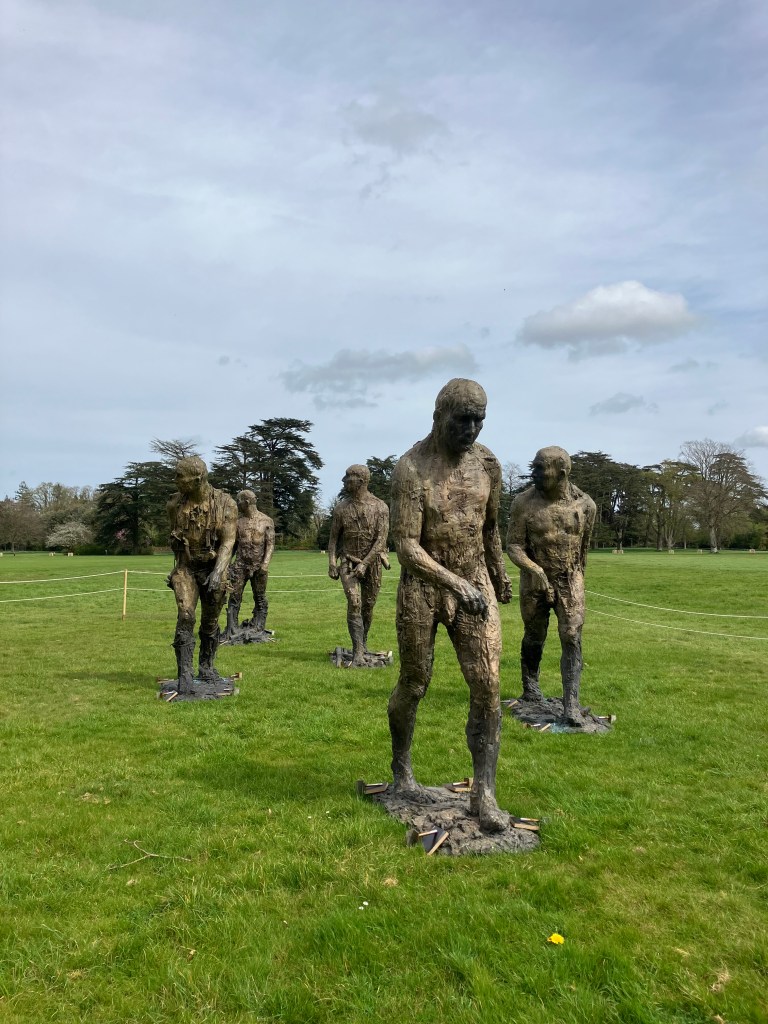
Heading past the South Lawn with a beautiful view of the Palace off to the right we came across a recent installation -“The Walking Men” figures. Cast in bronze by British sculptor Laurence Edwards they made me feel like they had somehow been born from the Palace lawn. Astonished and confused with branches, leaves, and clods of clay woven through them the leader is hell bent on escaping the area whilst the final figure of these five, eight foot Neanderthals is mesmerised by the Palace and lags behind .

Reaching a crossroads we opt to go left and follow the Lake Walk. It is less than a mile in length but takes you down past the Rose Garden and arboretum. The former is unfortunately currently shut , no doubt in preparation for the summer display. You can branch off to the right and actually walk through the trees but we opted to remain on the path and visit the Grand Cascade and Pump House. Designed by the famous landscape architect, Capability Brown, in the 1760s the flow of the River Glyme over the cascade is augmented by pumps.
I love waterfalls, there is something about the water thundering over the rocks and down stream, the natural and sheer scale of the water’s power forming foamy islands below that entrances me. This is definitely another place to take a few minutes rest or if you haven’t done so already to unwrap your lunch.

The path then meanders back up the hill past the Boathouse which only opens seasonally and looked a little dejected on our visit. The remaining formal gardens soon come into view and we stopped to admire The Water Gardens. These, along with the Italian Gardens next door, were created by the French landscape architect Achille Duchêne who was employed by the 9th Duke of Marlborough. His marriage in 1896 to wealthy American heiress Consuelo Vanderbilt, allowed him to make further changes in and around the Palace. The Water Gardens were begun in the late 1920’s and involved moving many tonnes of earth to create the two terraces complete with statues and topiary which we admire today.
The 10th Duke added moving water to the Water Terraces by creating fountains in the basins of the upper terraces.
I am a big fan of beautiful gardens such as this and really enjoyed our walk. I did capture the spring flowers in bloom with cherry blossom, daffodils, cowslips and even bluebells starting to make an appearance.


Whilst the map details the distances of each trail we actually walked four miles. We have a tendency to wander off piste to admire the flora, fauna and additional statues etc. This contributed greatly to “Project Knee Recovery” -see previous post (New Year’s Resolutions Have Come Early This Year!).
Walking whilst being able to admire the views etc always makes the miles evaporate. We will return to Blenheim during the summer in order to view the interior of the house and more of the gardens.
NB: This is the eighth post in my series about the wonderful “Cotswolds”. An area that you really shouldn’t miss out on visiting if you are coming to the UK. It’s full of olde world charm, history going back to the Roman era and beautiful architecture. Check out previous posts in this series plus more to come soon.
Please don’t forget to comment and/or like. I love to hear what my readers think. and also look forward to your recommendations of places to see in the Cotswolds for my future adventures Thank you
Thank you
 A Midlife Adventure
2 thoughts on “The Cotswolds – The Gardens of Blenheim Palace”