It is so hard when ill health strikes and you suddenly find that all the days out, weekends away and holidays have to be put on hold. This is what happened to us in March when completely out of the blue hubby was diagnosed with a heart problem.
I’m happy to say, as I write this, that after being in hospital for two weeks, then undergoing open heart surgery and being in another hospital two hours away for another week before spending six weeks mostly confined to home, he has, today, been signed off by the surgeon.
During his recovery we were only really able to go out in the last two weeks as his heart grew stronger and he was able to walk for at least thirty minutes twice a day. It took us a bit of research on the Royal Horticultural Society website to find a partner garden near to us which we hadn’t already visited and thus we set off for Dyffryn Gardens in South Wales.
History:
Before I take you through the route we took around the gardens I thought I would just give you some background to this estate.
Situated on the outskirts of the capital city -Cardiff, Dyffryn covers more than 55 acres and can be traced back to the 7th century when it was given to Bishop Oudaceous of Llandaf and named the Manor of Worlton. It wasn’t, however, until the 16th century when the manor was bought by the Button family that the first house was built. They continued to live here for several generations and changed its name to Dyffryn House.
The estate was sold in 1891 to John Cory, who was a wealthy coal merchant and founder of the port at Barry, making his home here within easy commutable distance of his business. Along with his brother John they owned collieries across South Wales and together they were also reputedly the largest private railway wagon owners in the UK.
The opening of the Suez Canal in 1869 was a key factor in their expansion. Welsh steam coal was, at the time, considered to be the best in the world and thus as demand began to rise the brothers continued to acquire more collieries shipping their coal around the world to countries where it was needed for steam ships and newly developing railway networks. Their business grew until they were exporting to over 120 different ports worldwide. In 1893 .John utilised some of his wealth to build the house and grounds we see today where he lived with his wife Anne and two of his four children, Florence and Reginald.
Reginald was a passionate horticulturalist and so in 1906 he collaborated on the garden design with the famous Edwardian garden designer Thomas Mawson. The majority of what we see today is true to the original.
Reginald also loved to experiment and enjoyed propagating and breeding many exotic and foreign species that he would bring back from his travels abroad. The Pompeiian Garden, built in 1909, was inspired by his trip to Italy and thus designed to include an impressive colonnade, a loggia and a central fountain.
The gardens include a series of themed outdoor rooms not dissimilar to the gardens we saw last year in Cordoba which were designed around original Roman houses with central patios. It was also a typical feature for grand houses like Dyffryn back in the early 20th century.
The house remained in the family until Florence’s death in 1937, when the estate was sold to Sir Cennydd Traherne who later leased it to the Glamorgan County Council in 1939. During the war years and for some time afterwards it was utilised as a police academy, dog training centre and education conference facility. Whilst the house and gardens are still owned by the Vale of Glamorgan Council, who are committed to their conservation, in January 2013 the National Trust took over the maintenance and running of Dyffryn on a 50-year lease. The Trust have continued the work here to restore these garden rooms back to their true beginnings from the 1920’s.
Walking the Gardens:
Having left the car park and crossed over to the entrance we were given an introductory chat by one of the NT employees/volunteers and furnished with a map we set off to explore.
Walking up to the main house, which is currently under restoration and thus not open to the public, we gazed in wonder upon its architectural brilliance before walking around it to the left and then making our way around the back. This Southern side of the house is resplendent with borders of mainly bright, orange flowers, no doubt at their best around this time, which really makes this area glow.
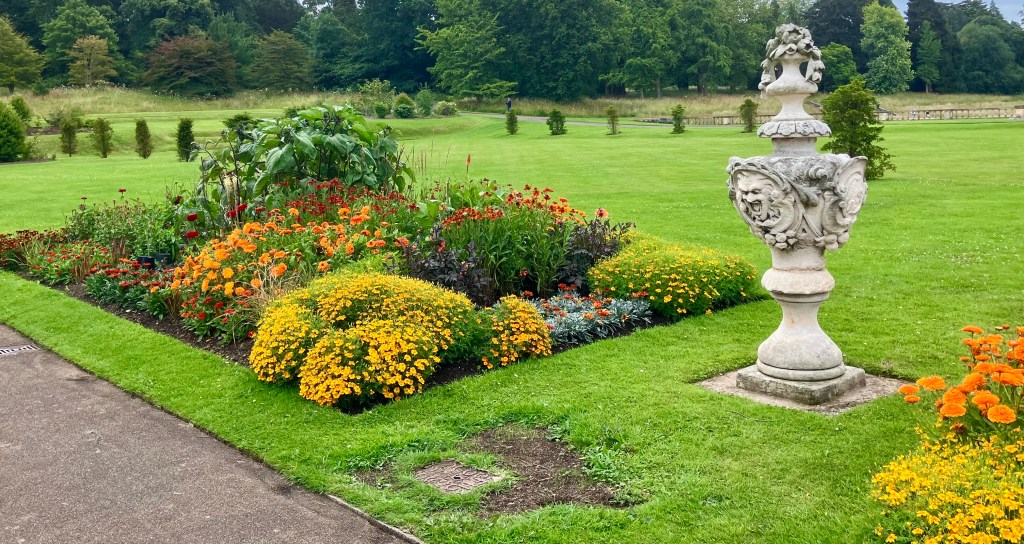
It’s also worth stopping to gaze upon the statue of the man on a cow which has an air of the Himalayas about it.
We walked across to the picnic tables at the far end and took some time to eat our lunch and peruse the map to plan a route.
Our first stop, after lunch, was the Mediterranean Garden with pathways that meander around allowing you to fully experience its various plants and flowers and also a great view back towards the house.
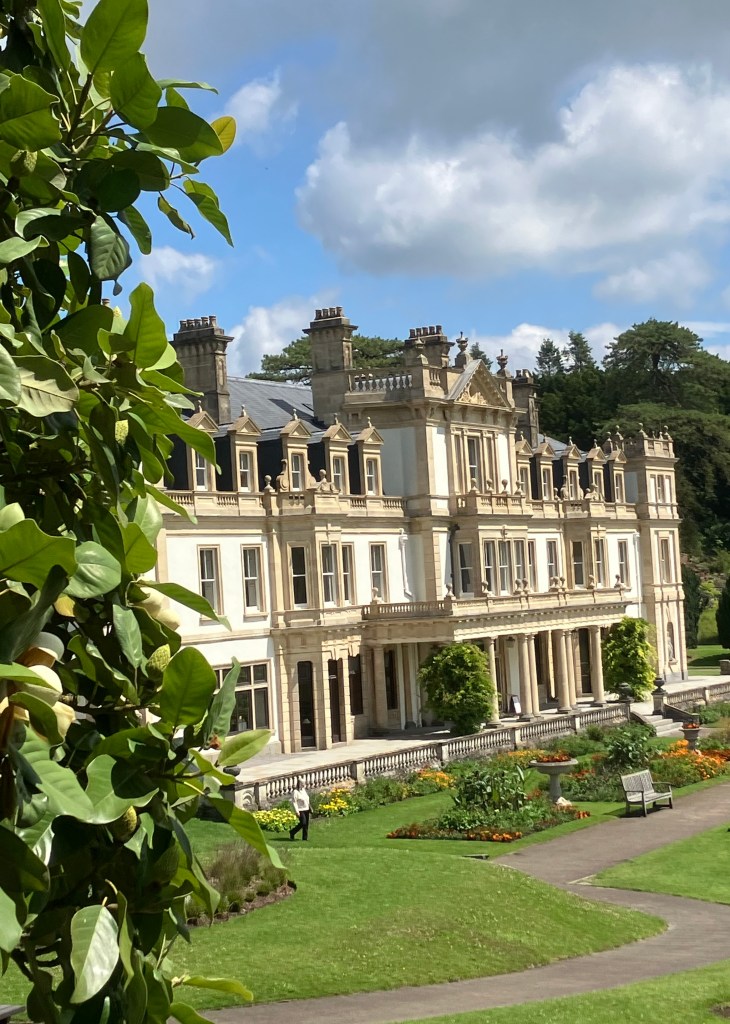
Having circumnavigated this section we made our way through to the Herbaceous Borders. During the Covid epidemic this area was unfortunately completely lost to bindweed. The gardeners here at Dyffryn are currently restoring one border at a time. In so doing they have created gardens that attract more than 50 species of bees who happily forage in the beds and borders and continue the pollinating cycle.
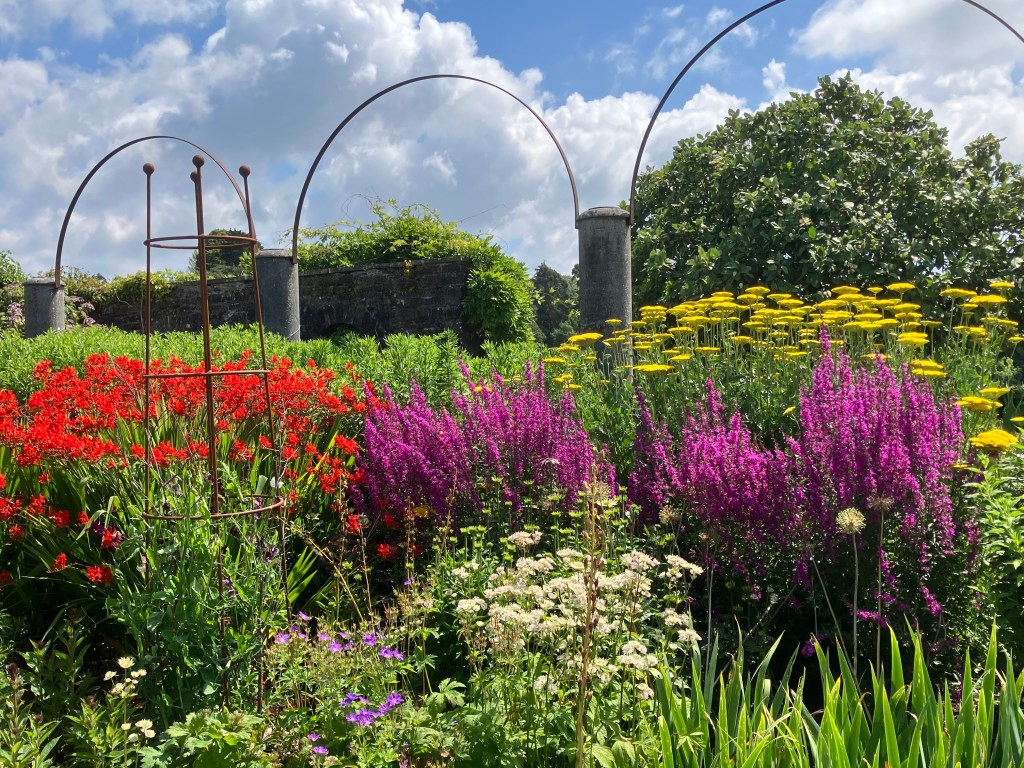
You can then gain access from here into the Walled Garden and then on towards the Tropical Glass House. We decided to enter at the far right side and then wander along its full length. There are three distinct areas and the first area we visited was the cacti and succulents. With over 30 different species it’s worth taking a look at these plants that otherwise wouldn’t be on display without their cosy tropical surroundings.
The remaining two areas include the rainforest section with some gorgeous orchids (one of my favourite plants that I have at home) along with such species as the Ethiopian Banana and Spiral Ginger.
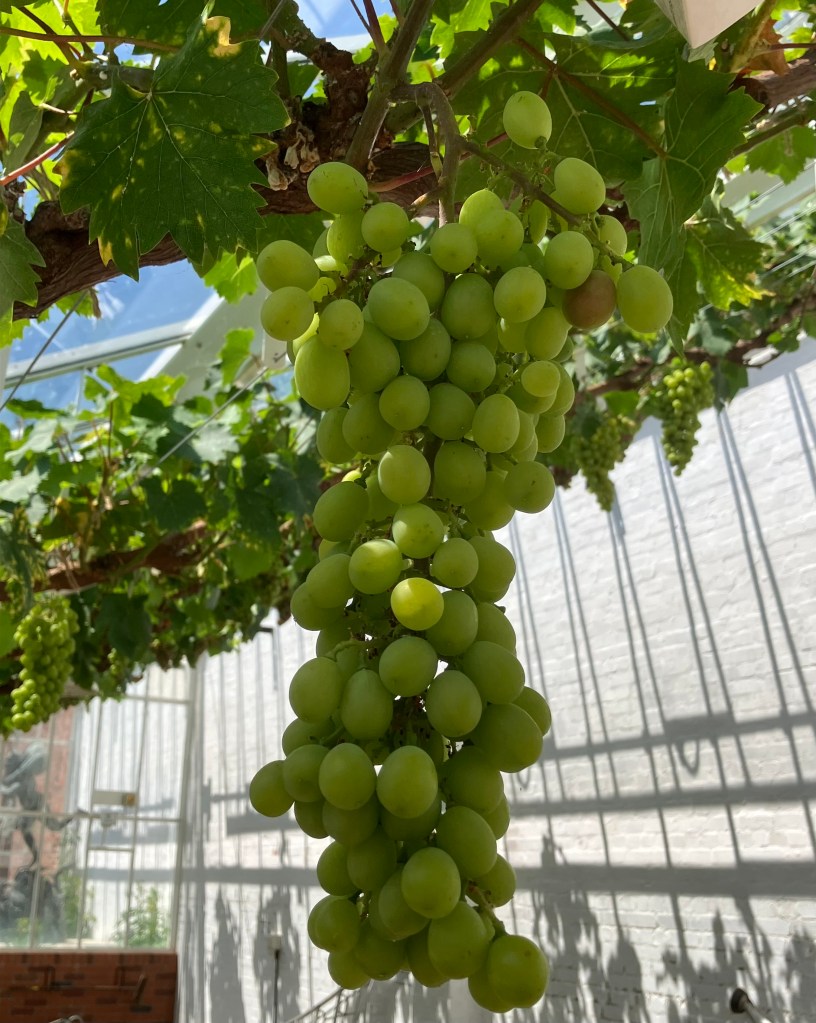
Finally the third section contains grapes which again were flourishing under the heat of the glass.
Leaving the Glasshouse behind we retraced our steps back to the Herbaceous Border in order to connect into a series of four gardens: The Exotic Garden which was re-established in 2019, Cloisters, The Theatre Garden with it’s strategically placed stone statues and finally the Annual Garden. This is another area where the hard working gardeners have worked in the last 12 months to restore the pathways whilst also adding new local stone borders in order to introduce annual planting displays.
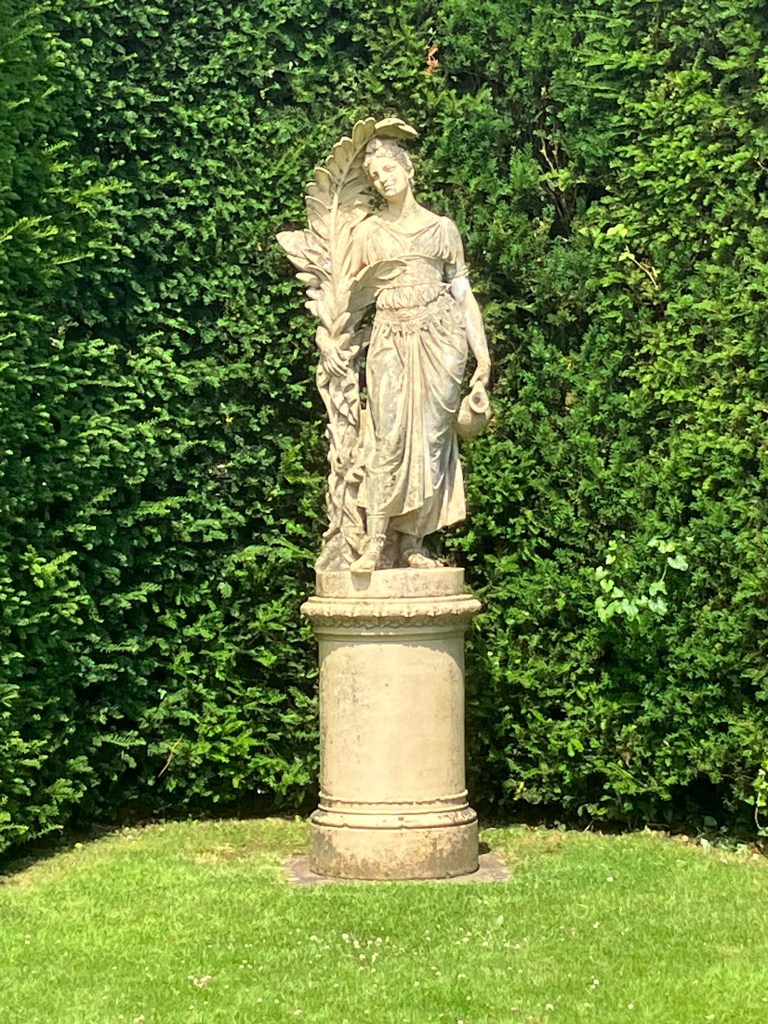
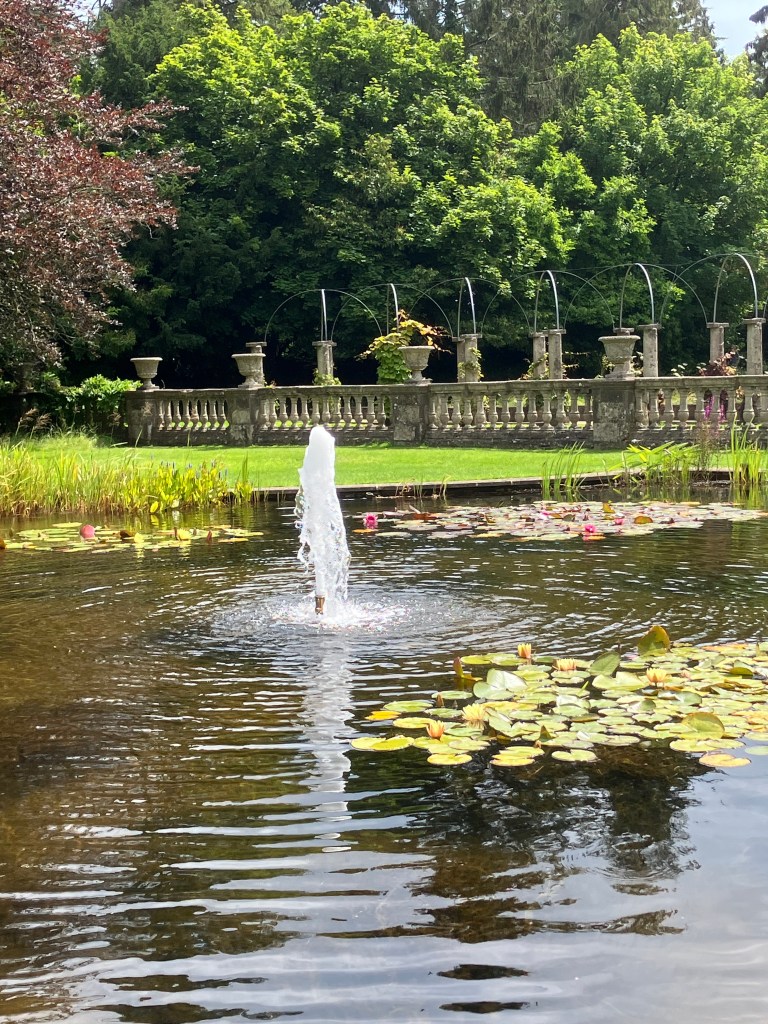
From here we were then able to access the Reflecting Pool which was probably one of my favourites. I do love a lily pond and here the lillies were in full bloom. The wisteria and acer trees add a lovely touch of colour and with a bench to sit on I took a quick break and just sat and admired the view.
Wandering onwards into the Paved Court we admired the classic topiary and colourful urns and borders before entering the Pompeian Garden which is definitely one of the highlights. Utilising a watercolour painted by Edith Adie, restoration on this area began in 2016 and continues to this day. You do feel like you have wandered into the inner courtyard of a Roman garden belonging to a rich merchant. The central fountain provides a focal point surrounded by colonnades with colourful rooftop flowers, shaded seating and Roman statues and urns.
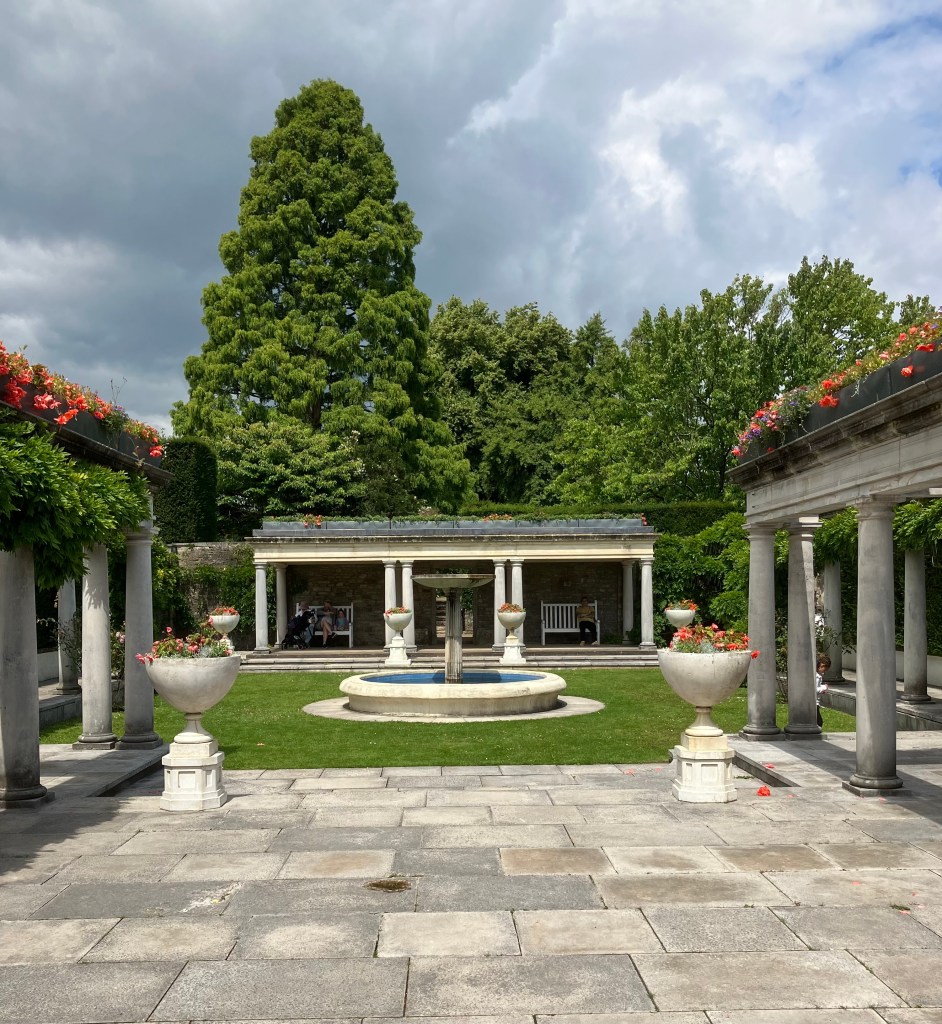
We took a moment to take in the surroundings before walking away from this area and entering the Rose Garden. I was hoping to find a garden room resplendent with perfumed, beautiful roses but perhaps because of the poor weather we have been experiencing this year it wasn’t quite as I’d expected.
The pathway from here leads into another series of gardens with the Folly, the Heart Garden, The Rill and then the Causeway.
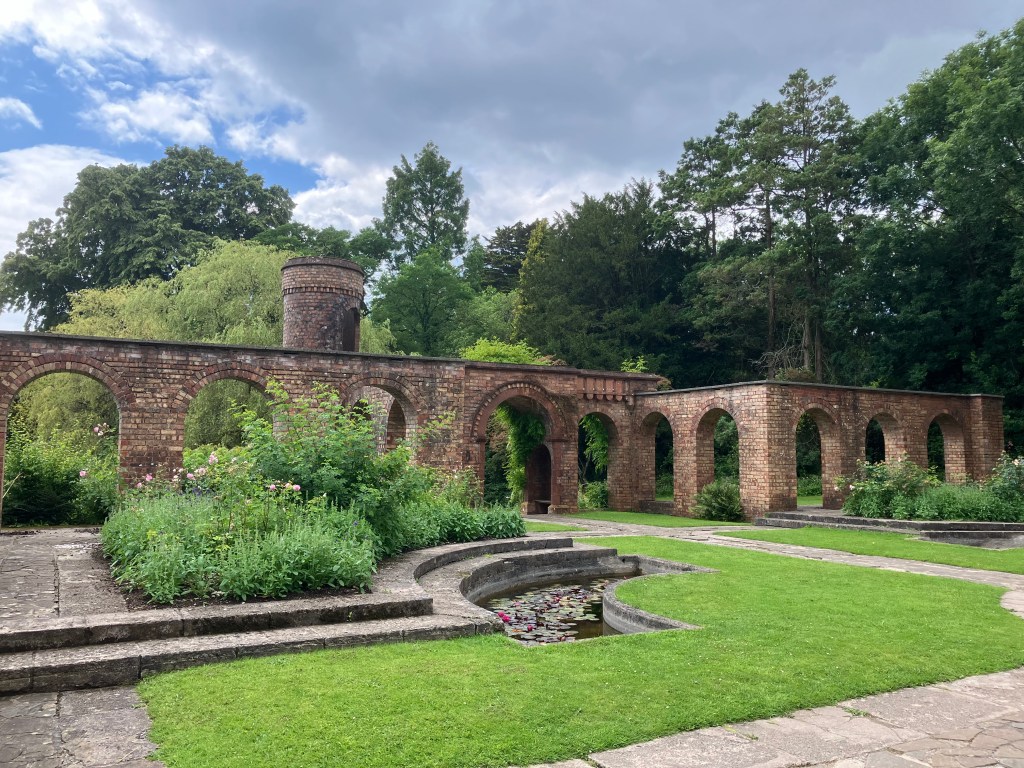
The former is another great example of garden architecture with the pointed turret and colonnades and standing on the latter you cannot help but be enamoured with the view back up to the house.
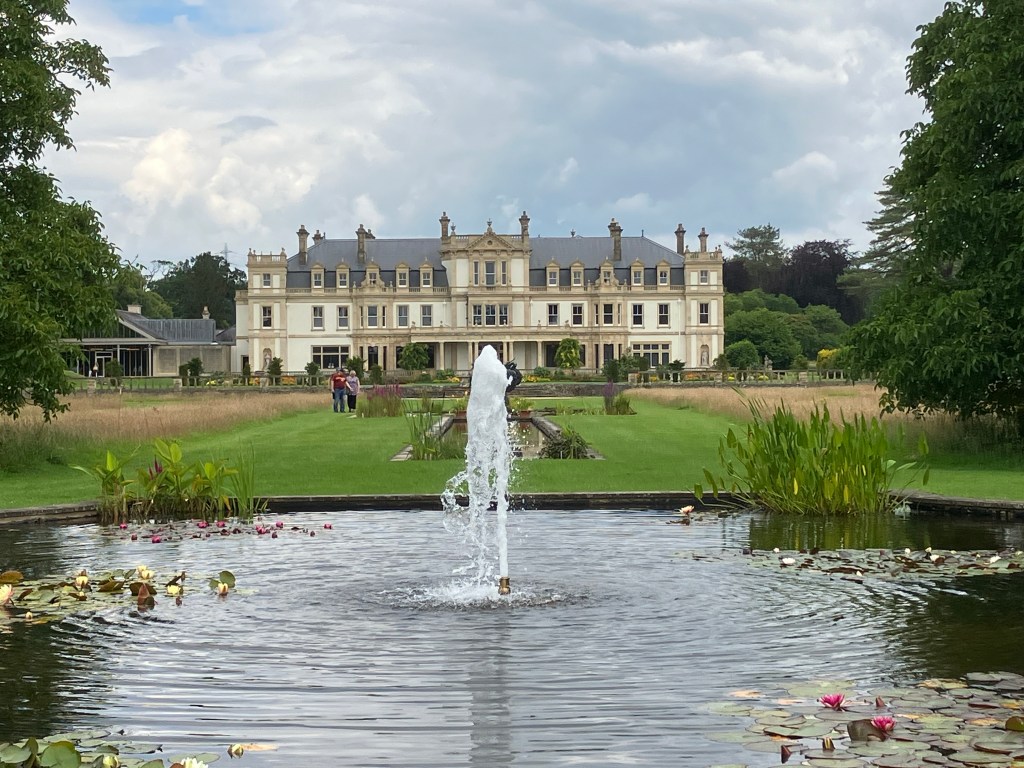
To the right of the Causeway is the Vine Walk, at the end of which you can turn right and begin a separate walk around the Arboretum. We chose instead to retrace our steps and walk directly towards the house across the Great Lawn and alongside the central canal. The meadows on either side of the canal are no longer cut completely instead in the last four years they are mown into designs, last year “spirals” were created. This year the lawn design was inspired by the swirl patterns on the facade of the house, uncovered and restored last winter.
The growth around the designs increases the diversity of pollinators and insects which in turn encourages predators like dragonflies. These were very much in evidence around the water lillies and other aquatic plants where they mingled with the damselflies. Trying to photograph them was nigh on impossible.
As we walked towards the house it was wonderful to watch the swifts sweeping down towards the longer grass before making their way skyward again. The grounds apparently also act as a summer sanctuary for swallows, house martins and greenfinches.
Reaching the house we made our way back to the start. I would really encourage you to visit these gardens. We both enjoyed our afternoon here and it is definitely one of those places where we will, no doubt, return with a book and a nice picnic on a lovely summer’s day and just explore some more surrounded by the sounds of nature.
NB:
This is my third post in a series I will be writing about Gardens in England and Wales. Since my visit last year to Keukenof in Holland (see my post -https://amidlifeadventure.org/2023/05/12/keukenhof-beauty-imagination-and-inspiration/)
it has sparked an interest in me to visit other beautiful spaces. As hubby loves to photograph flowers, bees, birds and just nature as a whole it gives us an opportunity to take some time out and just appreciate the calm that such spaces can give you.
Other Posts in this Series:
https://amidlifeadventure.org/2024/06/15/gardens-of-england-rhs-rosemoor/
https://amidlifeadventure.org/2024/06/08/gardens-of-england-bowood-house-woodland-trail/
 A Midlife Adventure