As Spring turns into summer hubby and I have started to once again think about day trips and short stays we can make from home.
Last year we had invested in an annual pass for the Royal Horticultural Society (RHS) which had allowed us to visit many gardens, often for free, alongside the gardens that the RHS also own themselves. One particular trip we had taken for two days was to RHS Wisley:
https://amidlifeadventure.org/2024/11/15/gardens-of-england-and-wales-top-attractions-at-rhs-wisley/
and to Painshill in Surrey:
https://amidlifeadventure.org/2024/11/01/gardens-of-england-and-wales-discovering-painshill-park-a-hidden-gem-in-surrey/
These form a series of five posts where I wrote about Gardens of England and Wales should you wish to search for and read further.
The National Trust:
This year we didn’t renew our RHS membership choosing instead to join the National Trust (NT). A one year membership for hubby and I currently costs £160. We, however, chose to pay monthly at £13.40 per month giving us access to over 500 National Trust properties alongside other benefits.
I appreciate I have readers from outside the UK in particular in the USA. You can join the NT in advance of your visit and it’s well worth it if you are going to be visiting properties throughout the UK, as paying for individual entries can add up. The membership fee pays for itself fairly quickly.
Introduction to Hidcote:
Hidcote sits in The Cotswolds in the county of Gloucestershire and is famous for its Arts and Crafts-inspired garden. Located near Chipping Campden, this area is home to many famous celebrities such as David Beckham, Jeremy Clarkson, Ellen DeGeneres and Calvin Harris to mention but a few.
As a National Trust property known for its series of garden “rooms” with distinct atmospheres and vistas it has been on our list of places to see for a while.
The property began its life back in 1907 and throughout the next 30+ years its owner Major Lawrence Johnston designed the gardens in phases creating separate rooms for different themes. He was a talented garden designer and was passionate about plants. Using these skills he created 10.5 acres of beautiful, often awe inspiring scenery, frequently furnishing his borders with newly discovered plants and exotic rarities that he had found during his expeditions across the world.
In 1948 Lawrence gifted Hidcote to the National Trust and they have continued to upkeep the gardens in the spirit with which he created them. You won’t see any labels identifying the plants. The garden was for himself, family and friends to enjoy and not a botanical show garden and thus his spirit lives on.
There is a cafe on site called The Winthrop but there also many strategically placed benches throughout should you wish to bring your own packed lunch/picnic as we did.
On entering the garden and armed with the information leaflet we opted to follow the route indicated in red on the map starting with…
The Old Garden:
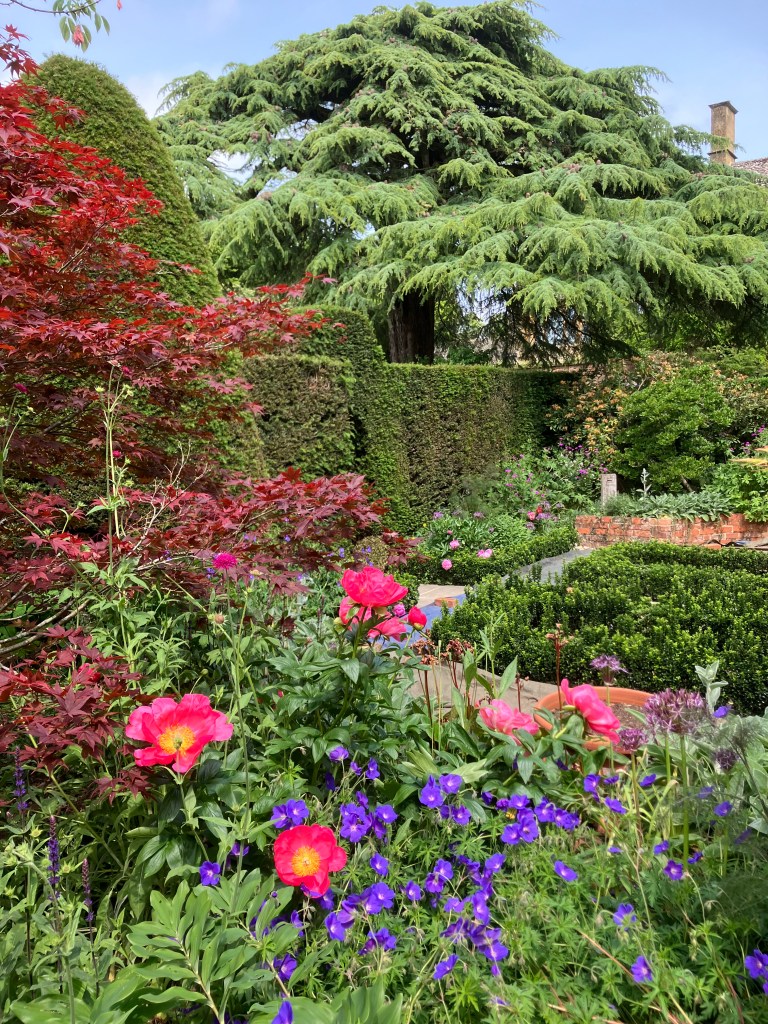
It was lovely to be met straight away with vibrant displays of colour with a mix of red roses, peonies as they came to the end of their season, iris and poppies. The dahlias were yet to bloom and showed no signs of slug nibbling which are all too frequent at my home!
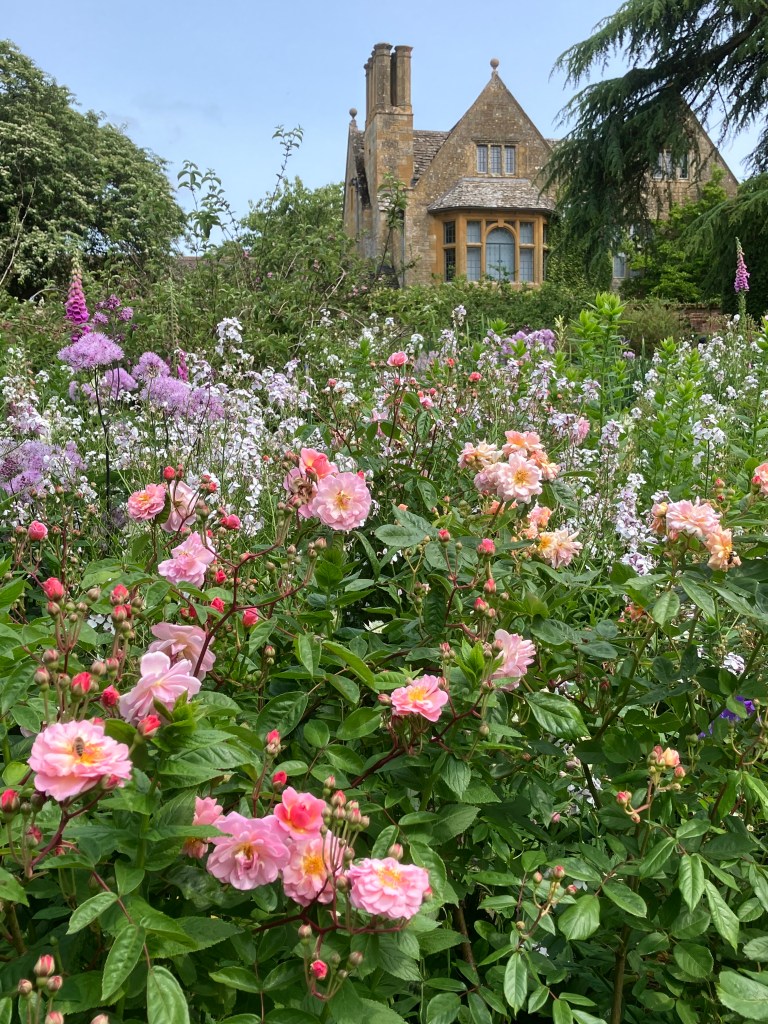
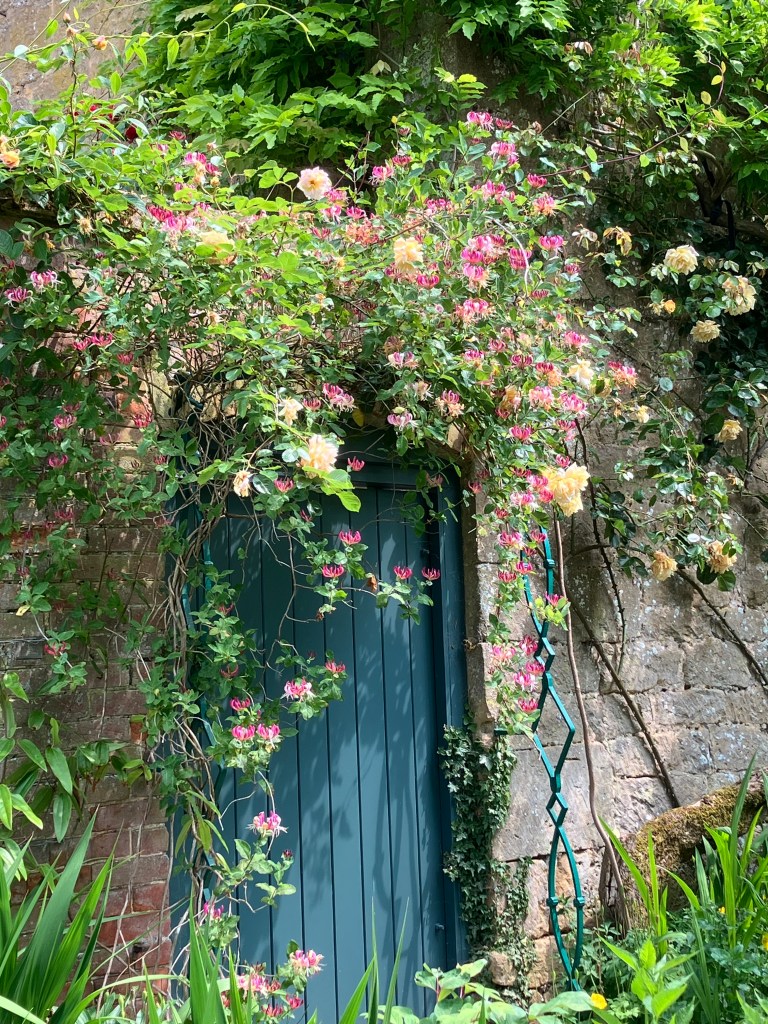
There is also a rustic arch covered in honeysuckle and roses and tucked away on the left of the pathway as you walk back towards the rear of the house a beautiful blue door smothered again in roses which I personally loved.
The White Garden is a separate garden room, within this area, featuring white flowers and silver/grey foliage which although creating a cool, calming atmosphere, even on hot days wasn’t as attractive to me as all the colours I’d seen on first entering. Despite my personal views the White Garden was, in fact, an inspiration for Vita Sackville-West’s White Garden at Sissinghurst.
Exiting this area we moved onto the…
Great Lawn:
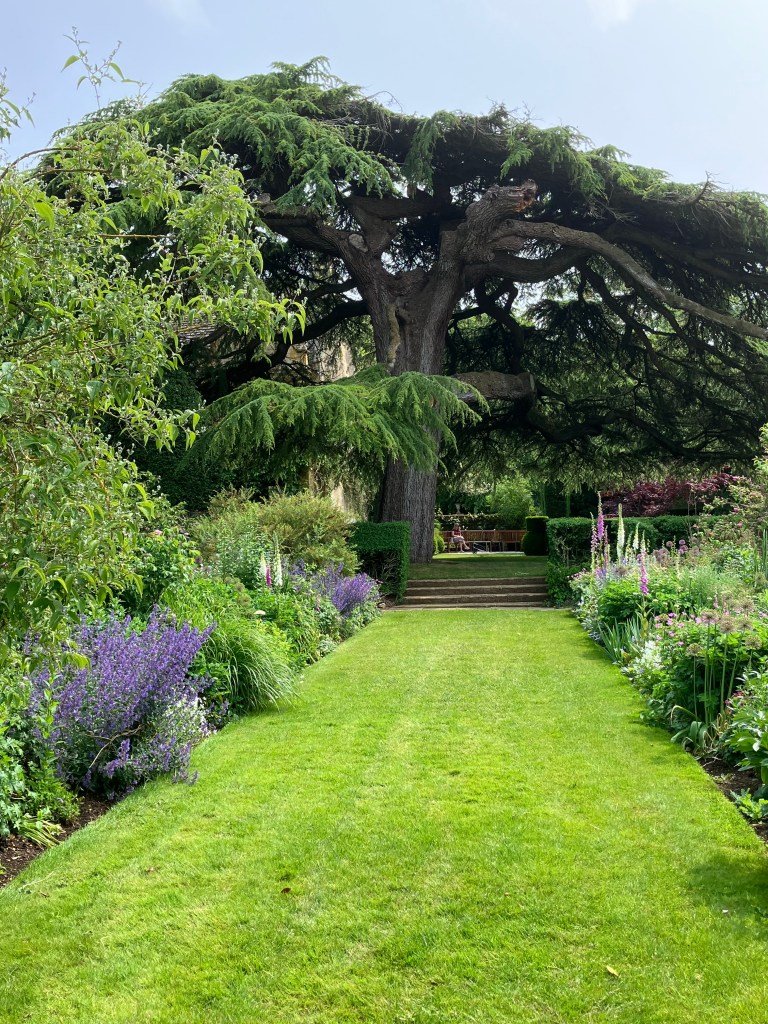
This prominent, formal lawn often referred to as the Theatre Lawn serves as a focal point and a space for recreation within the design of the garden. For us it provided a bench on which to enjoy our mini picnic but is also a classic Arts and Crafts style feature, contributing to the garden’s overall structure and aesthetic.
Trying to get a picture without any visitors was time consuming but eventually possible!
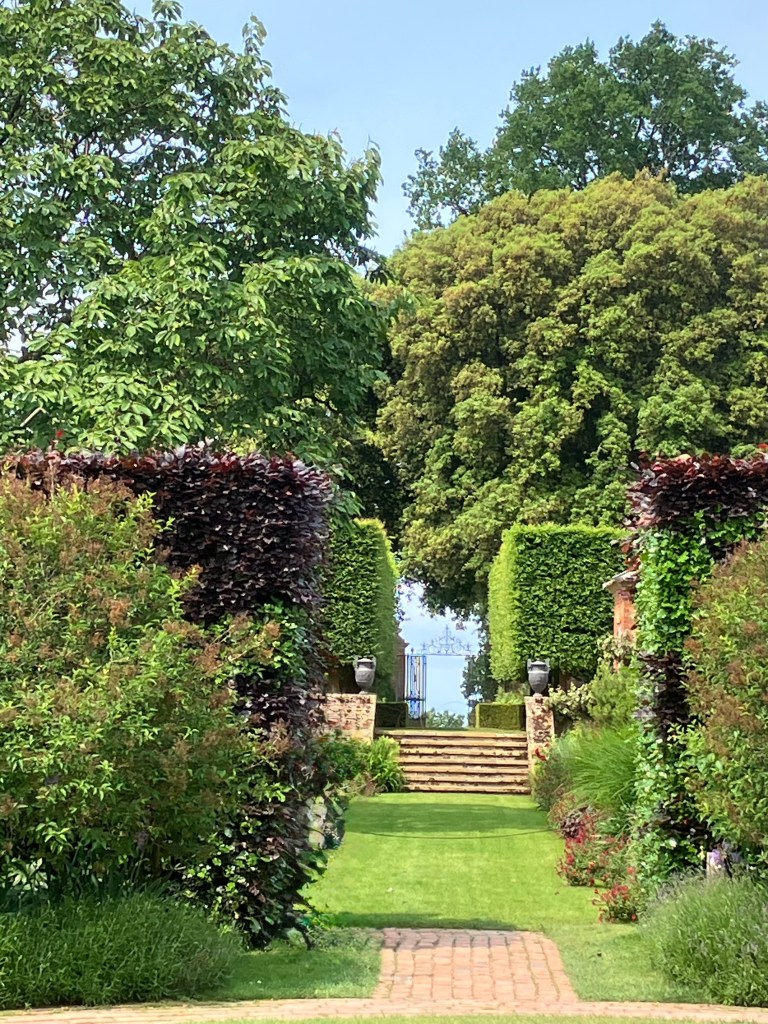
After lunch I realised that whilst hubby had already visited the Bathing Pool Garden I had managed to miss it so I popped into here before continuing our journey.
The Bathing Pool:
This large, rectangular pool, was originally designed as a swimming pool, with a deeper end for diving. It’s no longer used for swimming and instead serves as a reflective water feature, mirroring the surrounding hedges and trees. The pool is a prominent part of the garden, framed by tall box hedges with topiary birds. The water, itself, I felt was a bit green and murky.
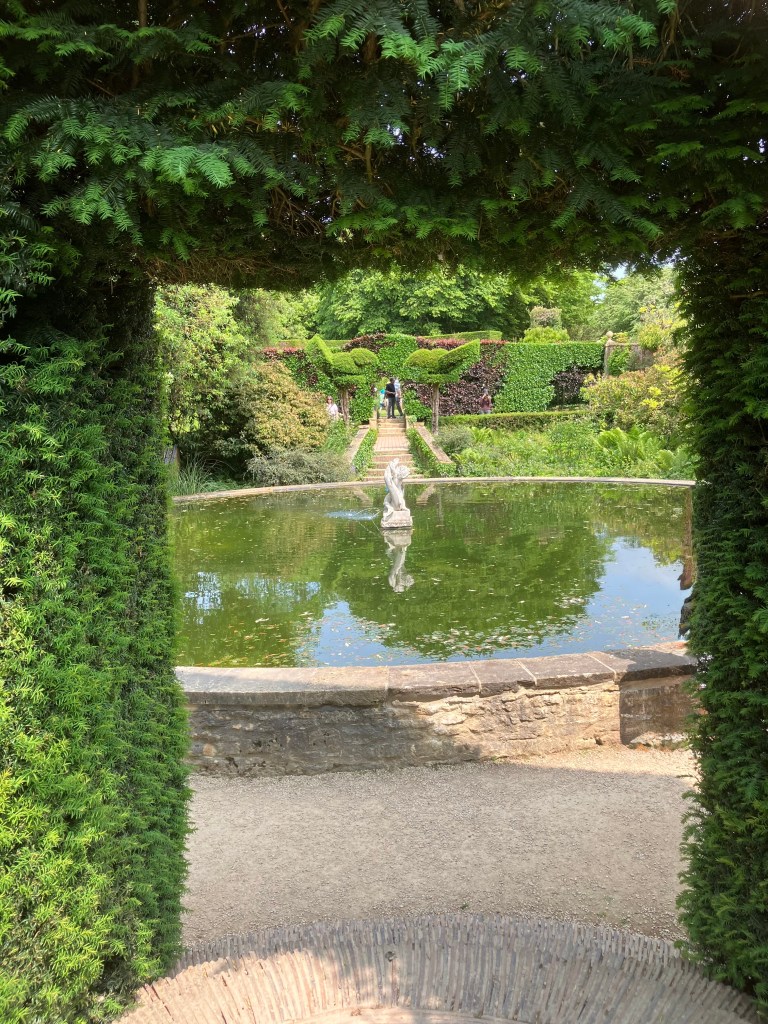
Retracing my steps back to the lawn we then continued to explore the….
Red Borders:
This area features a mix of shrubs, perennials, and annuals, with a focus on red, purple, and burgundy foliage with a neatly mown lawn dividing the space, creating two mirror-image borders.
To the left of here Lawrence Johnston designed Mrs. Winthrop’s Garden, a small square, brick-paved garden for his mother, incorporating her favourite colours, yellow and blue. It was intended to be a warm and sunny spot in which she could relax.
Beyond the Red Borders we walked onto The Stilt Garden, a formal garden feature which is characterised by two cubed blocks of tall, clipped hornbeam trees, enclosed by yew hedges and framed by gazebos at one end.
The Gazebos:
This pair of structures designed by Johnston have been in place since 1915. Built from Flemish bond brick with limestone slate roofs they have a domed ceiling and some lovely decorative elements. I particularly liked the tile work within and shown in my photo below.
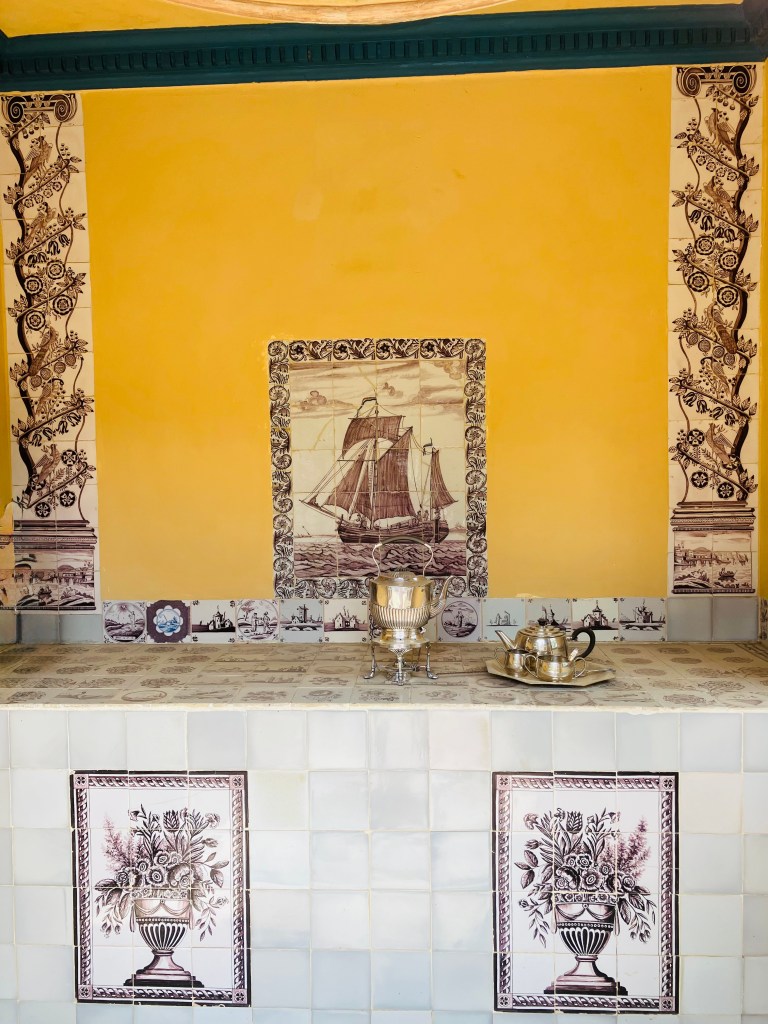
They are a notable feature of the garden, situated at a crossing point and still to this day offer shelter and a place to pause and enjoy the surroundings.
At the end of this area of the garden we were able to exit through a gate which provided us with views of the surrounding countryside, including the Malvern Hills.
Turning right we headed into…..
The Beech Allee:
This lined path or alleyway with it’s avenue of tall beech trees forms a “cathedral-like” walkway that acts as a focal point and pathway through the garden, also providing some shade on a hot summer’s day.
This led us to the……
Productive Garden:
This is, as described, an area for the on site gardeners to grow produce which is used in the cafe whilst also nurturing new plants that can be planted out into the main gardens at a later date.
There are also two orchards in this area aptly described as The Old and New Orchards.
The older orchard contains trees that have been there for a long time, with some dating back to the initial planting in the early 20th century. The exact varieties of the oldest trees are actually unknown. They did look a bit gnarly and forlorn.
The “new orchard” was planted around three decades ago and provides visitors, with manicured grass and seating.
Walking on back towards the main house we came to….
The Lily Pond:
Very popular with visitors, taking a photo was in itself a bit of a feat!
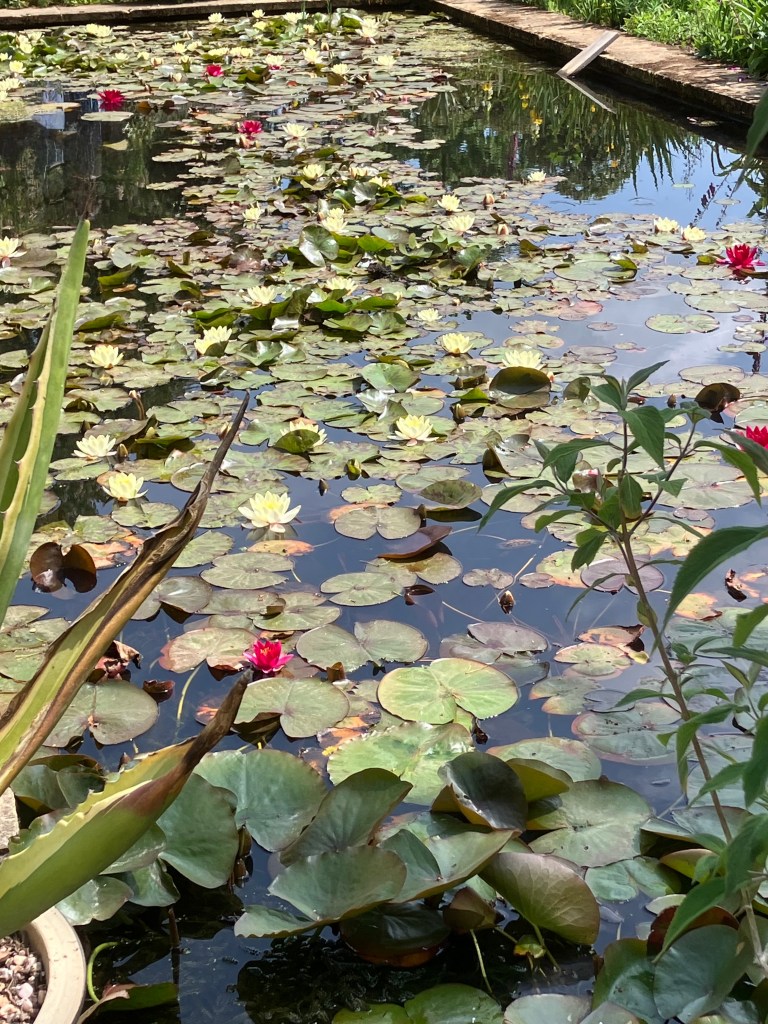
Alive with newts skitting under the water, it serves as both an ornamental pool and a bathing pool, with its history documented in the Hidcote archive. We also managed to see a few beautiful irridescent dragonflies who cleverly defied my camera lens!
The pond has a couple of vibrant flower borders alongside with a raised seating area.
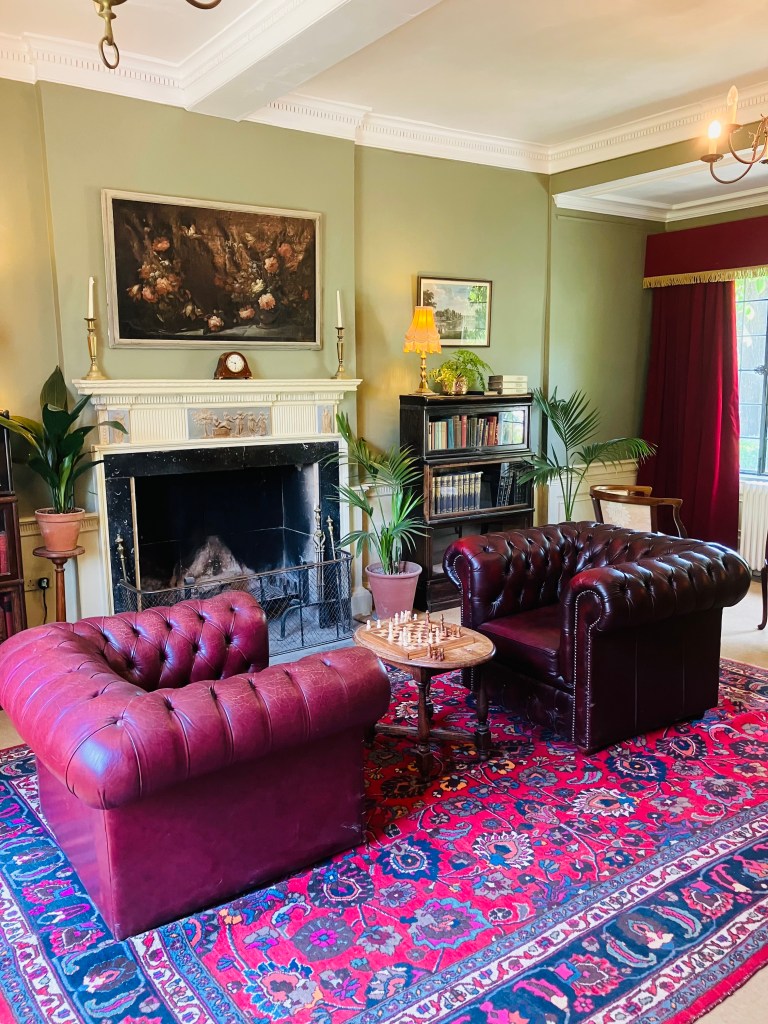
From here we made our way back to the main house and courtyard. You can pop inside the house and view a couple of downstairs rooms including the drawing room which gives you some idea of how Major Lawrence Johnston lived.
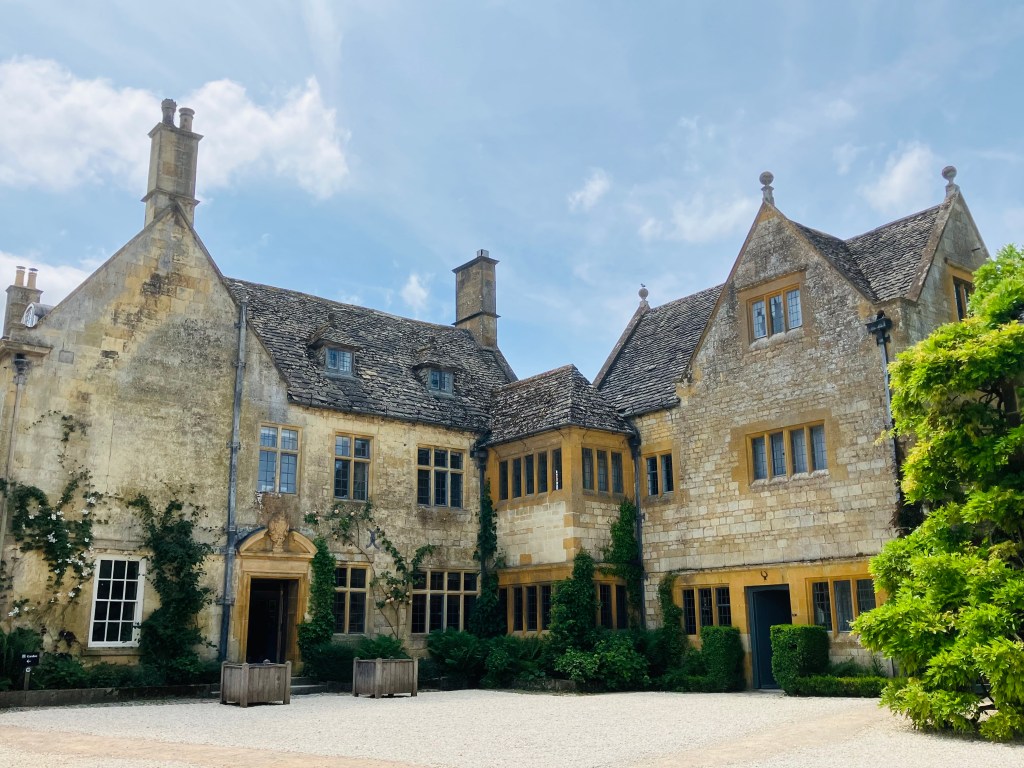
We were also fortunate on leaving to be able to admire the outside architecture without visitors in the frame! It is a beautiful example of a traditional Cotswold stone with it’s honey coloured bricks.
To give you some idea of timing we got to the garden at 11.45 a.m. and left at 2.00 p.m. so not a particularly long visit by our standards but worth a look if you are exploring the Cotswolds and wish to add it into your itinerary .
NB:
This is my thirteenth post in a series I have written about The Cotswolds. Why not check out the others and share with me any that you would recommend for us.
 A Midlife Adventure