Antigua is a brand new island for us to explore in the Caribbean.
Prior to my arrival my preconception was I didn’t imagine the island would be as sophisticated as Barbados or Grand Cayman but thought, in light of its popularity, it would be more developed than Grenada, which we visited last year – Adventures in Grenada.
Our Journey to Antigua:
There are very few flights from Grand Cayman to other Caribbean islands which means in order for us to fly to Antigua we had to be up at 4 a.m. to start the 1 hr drive to Cayman’s airport to catch an early morning American Airlines flight via Miami. The first section of our flight was about 1.5 hrs, we then had a 2 hour stopover in Miami before boarding a second American Airlines flight down to Antigua of about 3.5 hours.
As a UK citizen, it’s worth noting that if you are transiting via an American airport you still have to go through immigration which means you still need a valid ESTA. This would not be the case in London, for example, if you were flying from Europe, via London, to America, providing you stay airside there would be no immigration check.
No visa is required for many visitors to Antigua but a return ticket is mandatory and we had to give details to the authorities of our next flight leaving in 10 days time.
Antigua is one hour ahead of Grand Cayman and so on arrival we “jumped forward” an hour. The queues at immigration control were long, as they were in Grand Cayman, and having collected our bags, which had transferred direct from Cayman, we then picked up our car. You have to get a temporary local driver’s license (valid for three months) which was supplied by our car rental company at a cost of 50 (XCD), Eastern Caribbean dollars on production of my UK driving licence.
If you aren’t intent on hiring a car then taxis are available throughout the island. Fares are also regulated by the government and are posted at the airport and in taxi stands.
Origins and Information:
Antigua is located in the Leeward Islands and has a warm, tropical climate with temperatures averaging 77°F–82°F. This makes it a popular year-round tourist destination. Peak season is December to April which usually offers dry, sunny weather. Hurricane season (July–November) brings a higher risk of storms.
Visited by Columbus in 1493, Antigua was named after the Santa Maria la Antigua icon located in Spain’s Seville Cathedral. Antigua is Spanish for “ancient” or “old”.
Colonised by English settlers, it became a, critical sugar-producing hub with a plantation economy driven by enslaved African labour. It also served as the headquarters for the British Royal Navy Caribbean fleet.
It is part of the three-island nation of Antigua, Barbuda to the north, and the uninhabited, rocky island of Redonda to the southwest.
It is roughly circular, measuring about 14 miles by 11 miles. Fun fact, you could fit Antigua in the area of London three and a half times!!
With a mostly low-lying, volcanic, and coral-reefed landscape, the island’s capital is St. John’s, which sits in the north west of the island.
Antigua is divided into six administrative parishes: Saint George, Saint John (home to the capital), Saint Mary, Saint Paul, Saint Peter, and Saint Philip.
Antigua and Barbuda became an independent state within the Commonwealth of Nations on November 1, 1981, with Queen Elizabeth as the first Queen of Antigua and Barbuda and Right Honourable Vere Cornwall Bird as its first prime minister.
English is the official language.
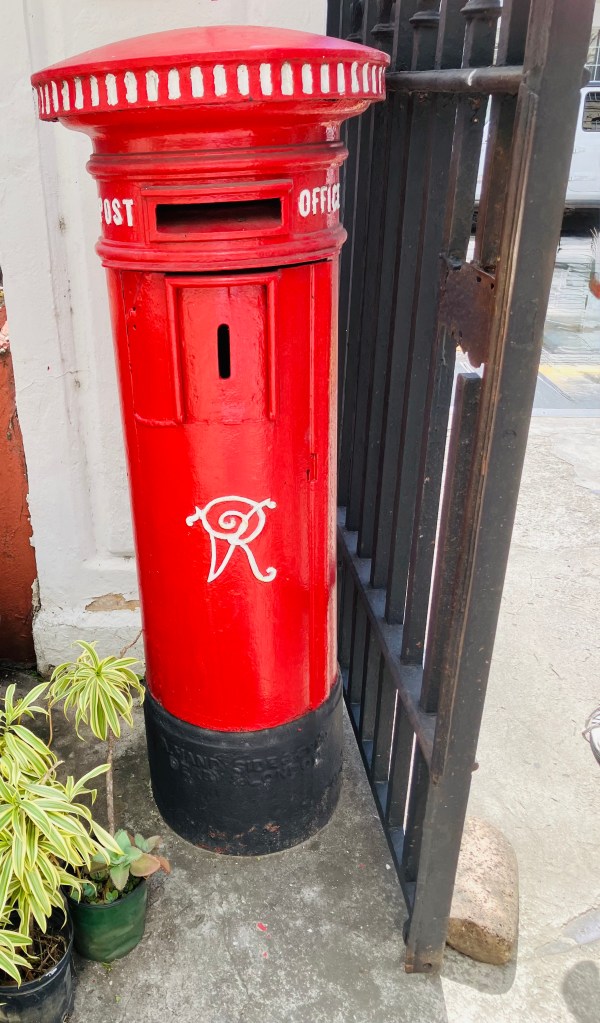
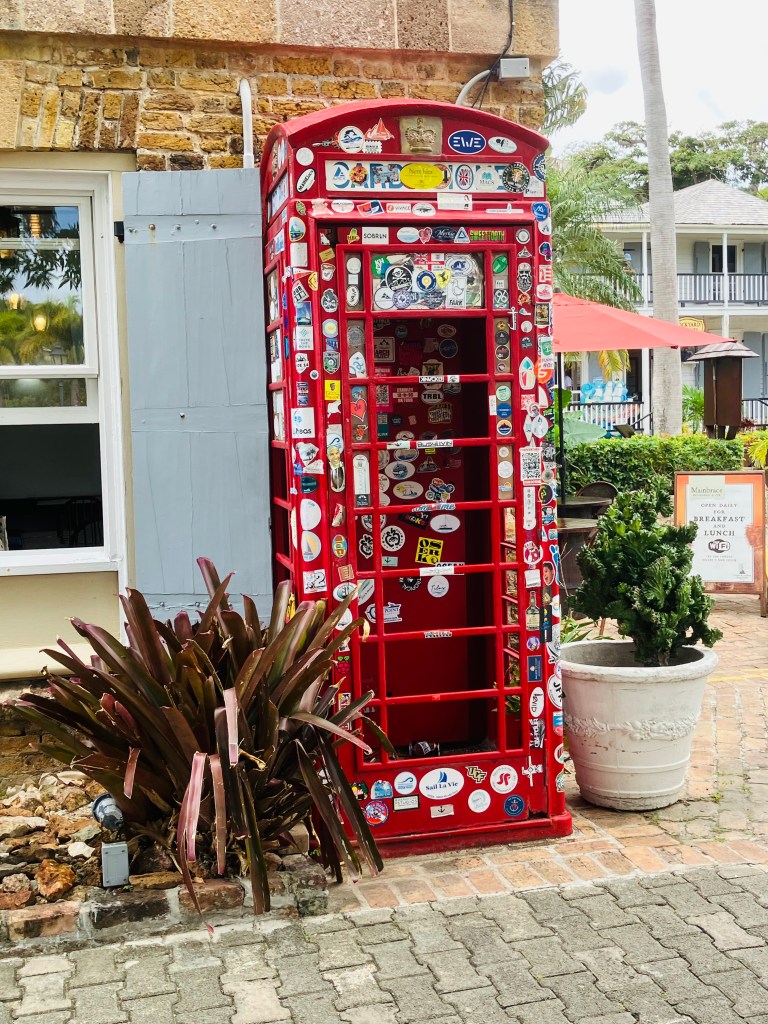
Evidence of British allegiance can be found on the island as seen here!
Tourism and The Economy:
Antigua and Barbuda are extremely dependent on tourism, which serves as the primary driver of its economy, contributing between 60% to over 80% of the GDP and providing over half of all jobs.
The sector is driven by luxury resorts, cruise ship arrivals, and yachting, primarily attracting visitors from the US, UK, and Canada.
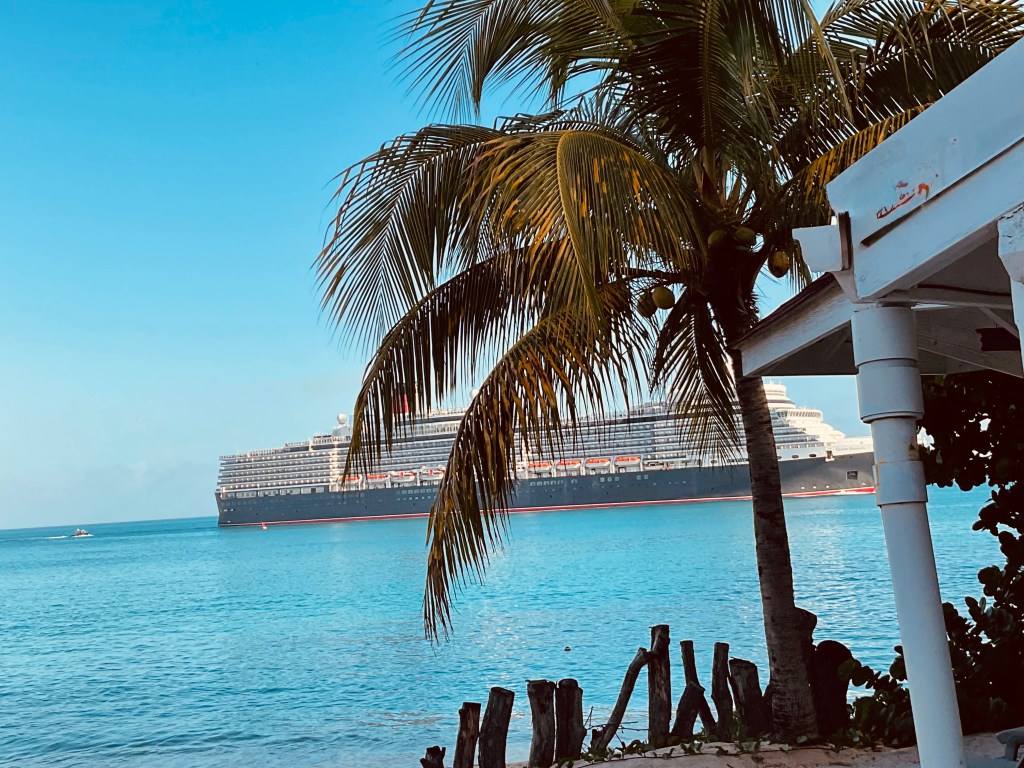
Famed for having 365 beaches the leeward or west coast is sheltered from the prevailing winds, creating calm and tranquil waters. As a result, it is home to the most stunning beaches such as Dickenson Bay, Jolly Beach and Hermitage Bay.
Antigua and Barbuda is a middle-income Caribbean nation, heavily reliant on tourism, with a GDP per capita higher than many developing nations but still facing significant poverty. The island has a high Gini coefficient which indicates greater income or wealth inequality within a population. It signifies that a small percentage of people hold a disproportionately large share of the total income or wealth, while the majority holds a smaller share. This leads to pockets of wealth and also areas of hardship.
Despite its income status, a notable portion of the population lives below the poverty line (around 22-29%)
Conversely the country offers tax benefits for high-net-worth individuals thus attracting famous residents and homeowners in Antigua including media mogul Oprah Winfrey, fashion designer Giorgio Armani, Virgin’s Richard Branson, musician Eric Clapton, and former Bond actor Timothy Dalton, alongside legendary Antiguan cricketers like Sir Viv Richards and Sir Curtly Ambrose, drawn to the island’s luxury resorts like Jumby Bay.
Jumby Bay is an ultra-luxury, 300-acre private island resort located two miles off the coast of Antigua. Accessible only by boat, it features 56 individually owned villas and 40 suites, offering all-inclusive, high-end amenities like private chefs, white-sand beaches, and no cars.
The Eastern Caribbean Dollar (XCD), is the official currency on the island of Antigua. The U.S. Dollar is also quite popular and accepted almost everywhere, especially in tourist-friendly zones. We used the XCD where 1 XCD equates to approx 30p in the UK, depending on the market.
Arrival:
Having picked up our car we left the airport as the sun began to set and armed with Google Maps on my phone (we couldn’t get it to connect into the car!) we made our way 5 miles west towards Green Bay and the Perry Bay Supermarket to pick up some essential supplies for breakfast the following morning.
Driving in Antigua:
- Driving is on the left which is great for us visitors from the UK and cars tend to be automatic.
- The roads in Antigua are all full of potholes. To drive 5 miles where we live in rural England would take approx 7-10 minutes, here you are looking at 20 minutes! The more I got to know the roads the more I realised that this was normal and perhaps explained why the lady at the car hire company made a point of ensuring we knew where the spare wheel was and the jack! 😊
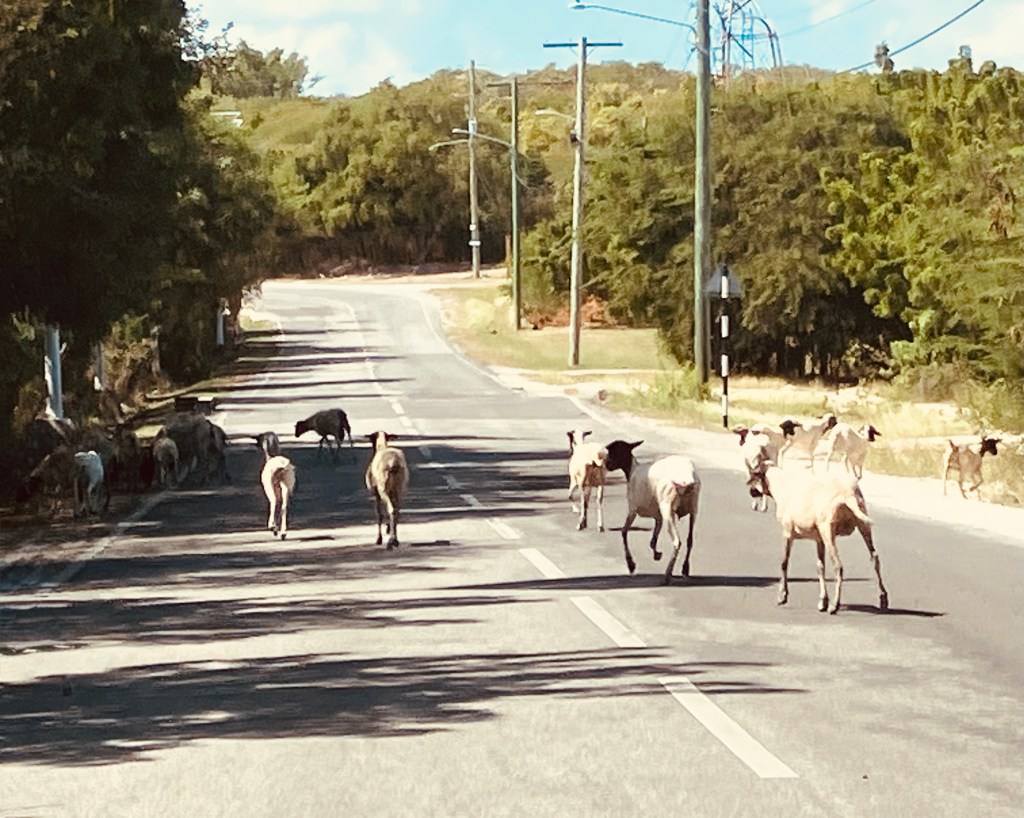
- Speed limits- what speed limits? There seemed to be a total disregard for limits which made driving particularly dangerous because roads often, as previously mentioned have significant potholes, there is often no street lighting particularly in rural areas, pedestrians often walk on the roads as there are no pavements and outside of St Johns meeting animals such as goats on the road is not unusual.
- Drivers don’t indicate where they are going and have no respect for “right of way” so don’t be surprised if drivers come out in front of you at junctions, crossroads or even side turnings when they should be giving way to you. If you come across a “red flashing crossroads” this is suppose to indicate a four-way stop sign. Drivers are suppose to come to a complete stop, yield to other vehicles and pedestrians, and only proceed when the way is clear.
In reality it is a free for all! so proceed with caution.
We took this photo coming down into Half Moon Bay
I much prefer arriving somewhere new and driving initially in daylight but unfortunately this wasn’t to be here on Antigua.
Making our way through St John’s the poverty became apparent very quickly and having found the supermarket and parked we were surprised to see security guards at the entrance. We definitely felt a bit nervous which was accentuated by a couple of vagrants approaching us for money on returning to our car.
With another 4 miles to drive to our Air BnB we soon left the lights of the capital behind and journeyed along empty roads which diminished into a dirt track for the last mile. Having been awake by this point for about 16 hours we began to question where on earth we were coming to and whether in fact we were at the right place.
We parked up and expecting to meet our host at the property initially managed to knock on the wrong door! Luckily the local gentleman who answered the door was able to walk us to the correct villa and whilst doing so explained he had lived and worked in England for seven years in an area I knew about an hour from our home!!!!
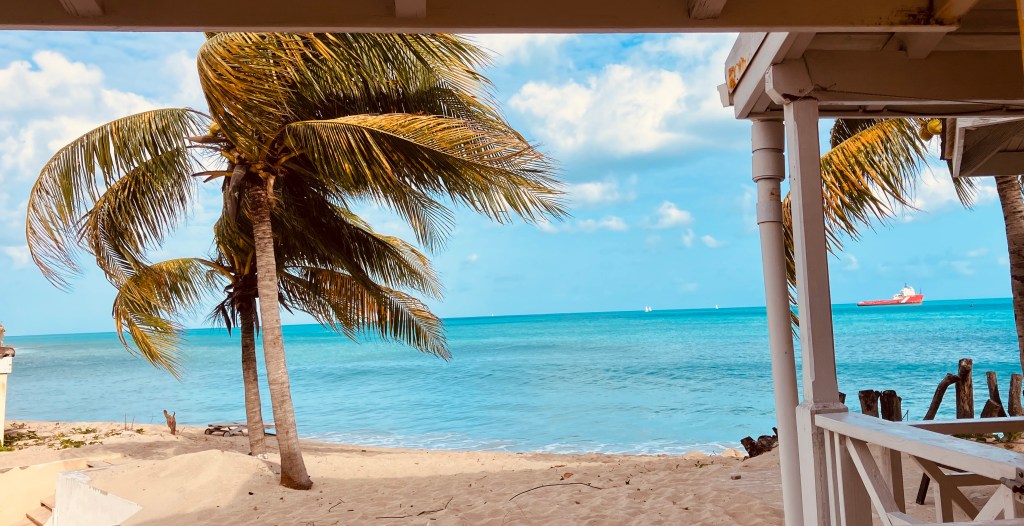
Our host was really welcoming and friendly and having unpacked and stored our food items we collapsed in bed upstairs opening the curtains in the morning to this view! And realising even after all our struggles of the night before we had arrived in paradise!
On my next post I will start to give you an insight into the places that we visited whilst here on Antigua and also how my views and opinions changed during our stay………
I hope you enjoy this first post on Antigua! Is it somewhere in the Caribbean that you would like to visit? or have already been to? I would love to hear your views and opinions
 A Midlife Adventure
One thought on “Antigua Travel Guide: Tips for First-Time Visitors”