Continuing to explore the island of Antigua we ventured south to Nelsons’ Dockyard and Shirley Heights.
Driving to our destination accentuated the poor condition of the roads as it was a mere 14 miles from our accommodation but the trip took nearly an hour! An equivalent journey at home on a similar category of road would take half this time.
However at this point in our adventure I am becoming somewhat accustomed to the lack of tourist infrastructure. I am instead revelling in the fact that the speed of our journey gives us time to view the locals as they go about their daily lives alongside typical Caribbean houses and landscapes. Maybe there is a lesson to be learnt here in terms of slowing down and adopting “Caribbean time”
Nelson’s Dockyard
Every exploration of a new place should, in my opinion, include a bit of history. There is always an urge in me to understand how a place has developed and this area of Antigua is no exception.
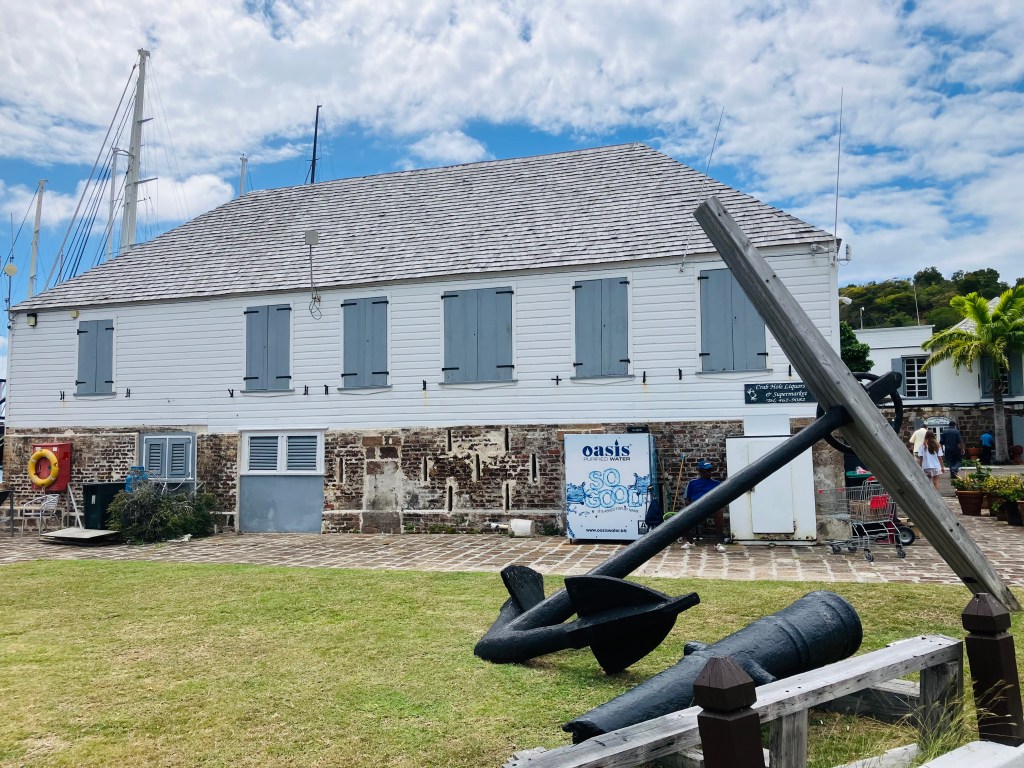
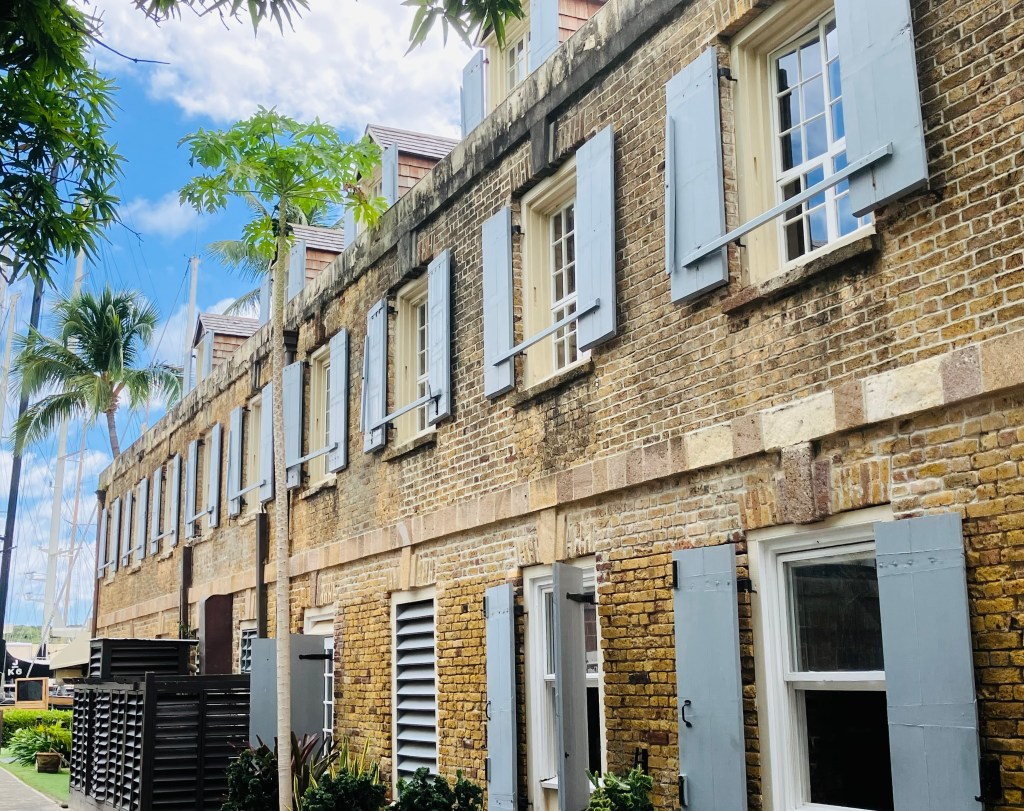
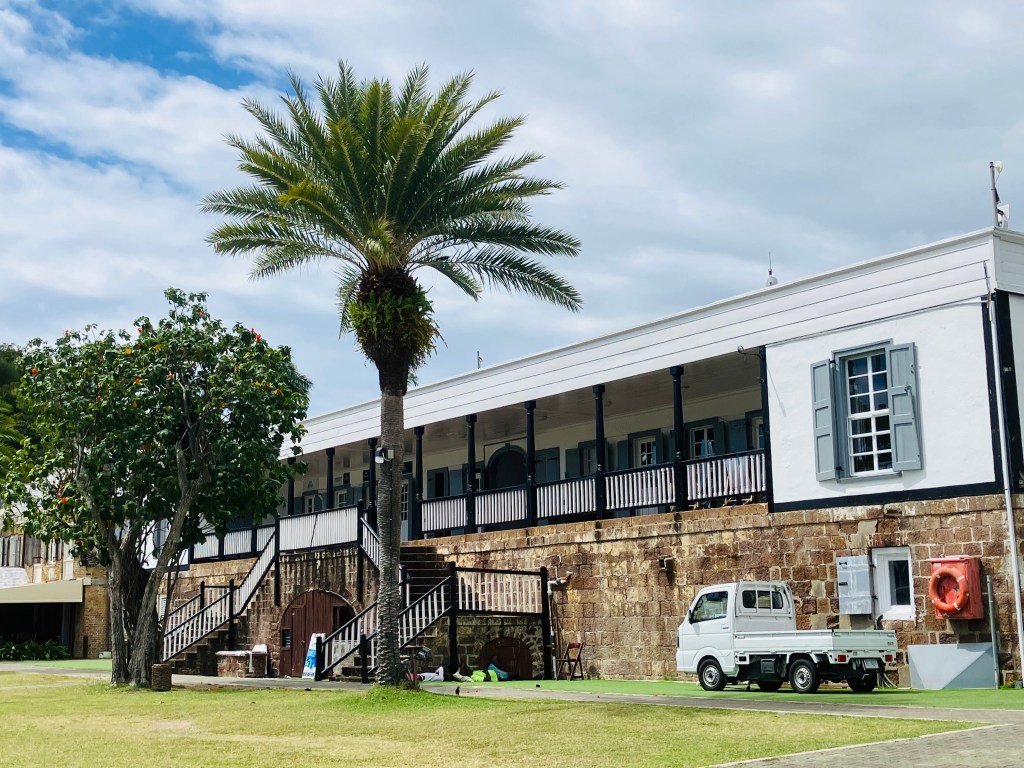
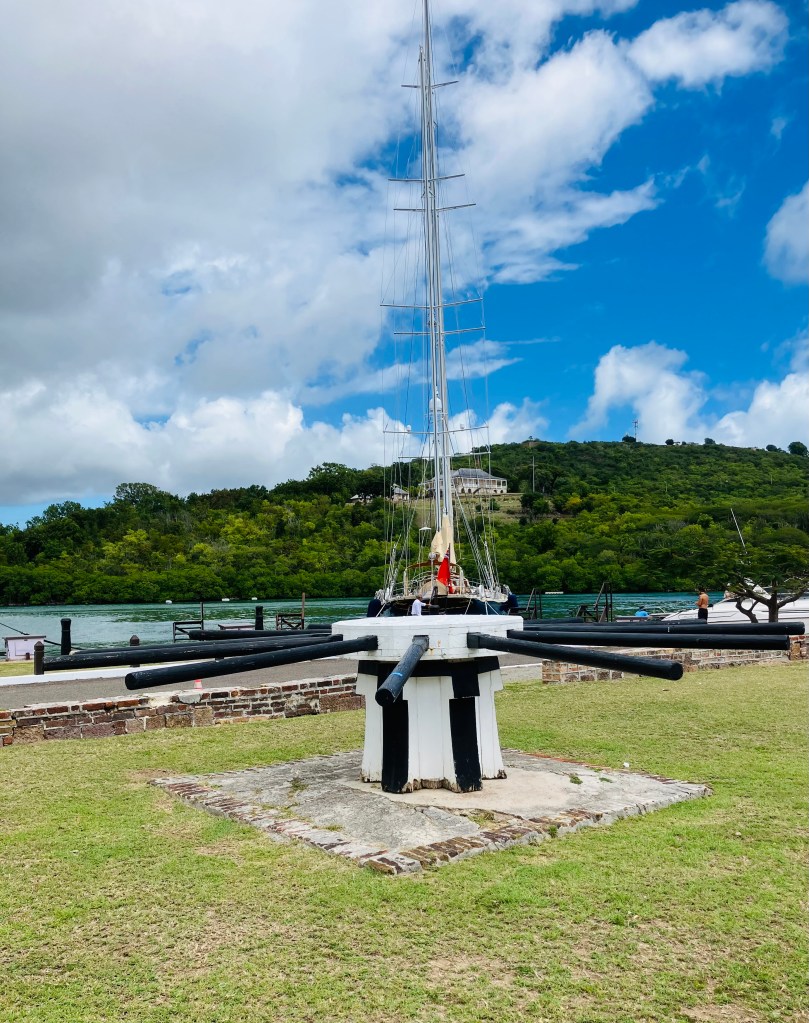
Tucked into the calm, turquoise waters of English Harbour, Nelson’s Dockyard feels like a place where history decided to linger a little longer than usual. It’s the kind of harbour where pastel sailboats bob lazily in the sun, old stone warehouses stand proudly against the Caribbean sky, and every corner seems to whisper a sea story or two.
Back in the 18th century, the British Royal Navy needed a safe place in the Caribbean to repair ships and keep an eye on their rivals. So they turned this natural hurricane-protected harbour into a bustling naval base. Sailors hammered planks, riggers climbed masts, and officers strode about looking very important. The dockyard eventually took its name from the famous British admiral Horatio Nelson, who served here between 1784 and 1787—long before he became the hero of the Battle of Trafalgar.
Life at the dockyard during Nelson’s time was anything but quiet. Imagine the creak of wooden hulls, the snap of sails drying in the wind, and the salty chatter of sailors from across the empire. Ships would arrive battered from long voyages, looking like they’d wrestled a few storms along the way. Carpenters, blacksmiths, and sailmakers got to work patching them up so they could sail off again—hopefully a little less battered.
Despite Nelson’s later fame, he wasn’t exactly thrilled with his posting in Antigua. In fact, he spent much of his time arguing with local merchants about British trade laws. One suspects he might have preferred commanding a fleet to debating customs regulations. Still, the dockyard kept humming along, doing the essential but less glamorous work of keeping the navy afloat.
As the age of wooden warships faded, so did the dockyard’s military importance. By the late 19th century it had fallen quiet, the buildings weathering slowly under the tropical sun. But history, fortunately, has a way of staging comebacks. Restoration efforts in the 20th century brought the dockyard back to life, preserving its Georgian-era buildings and maritime charm.
Today, Nelson’s Dockyard is the only continuously working Georgian naval dockyard left in the world. Instead of warships, sleek yachts and sailing vessels fill the harbour. The old storehouses now host cozy cafés, museums, and little shops where you can pause for a drink and imagine what the harbour looked like when red-coated officers and sunburned sailors were the regular clientele.
On the opposite shore, tucked on the hillside you can also see Clarence House. Built in 1804, this historic building overlooks English Harbour and was built for the Duke of Clarence (later King William IV). It was famously used by HRH Princess Margaret for her honeymoon.It has been restored and now operates as a museum and venue for special functions.
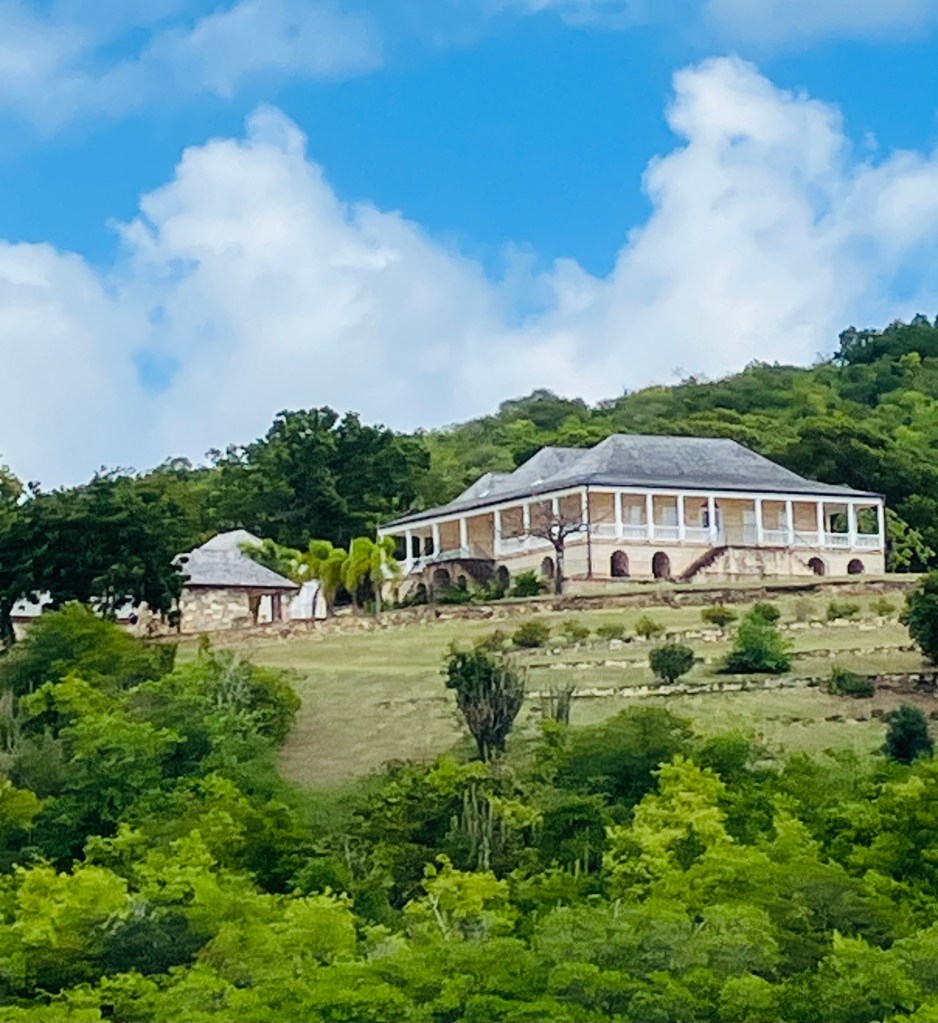
The dockyard and Clarence House are also part of the Antigua Naval Dockyard and Related Archaeological Sites, recognised for its remarkable preservation and its role in Britain’s Caribbean naval strategy. Walk the stone quays today and you’ll see the same sturdy architecture that once supported an empire’s fleet.
In the end, Nelson’s Dockyard isn’t just a historic site. It’s a place where past and present share the same harbour: eighteenth-century naval history anchored beside modern Caribbean life. And if you stand quietly by the water for a moment, you might just hear echoes of sailors’ boots on the stone, mingling with the gentle clink of sailboat masts in the breeze.
Parking: There is ample parking outside or along the side streets as you drive into the area
Admission Fee: There is a charge to enter the dockyard, we paid 40 XCD (£11 per person) but this includes a free guided tour by a member of staff (ask at the admission desk) and admission to the on site museum.
Shirley Heights
At the very end of Nelson’s Dockyard beyond the museum and on the right hand side of the harbour if you look up onto the hill beyond you will see buildings perched high above English Harbour, this is Shirley Heights.
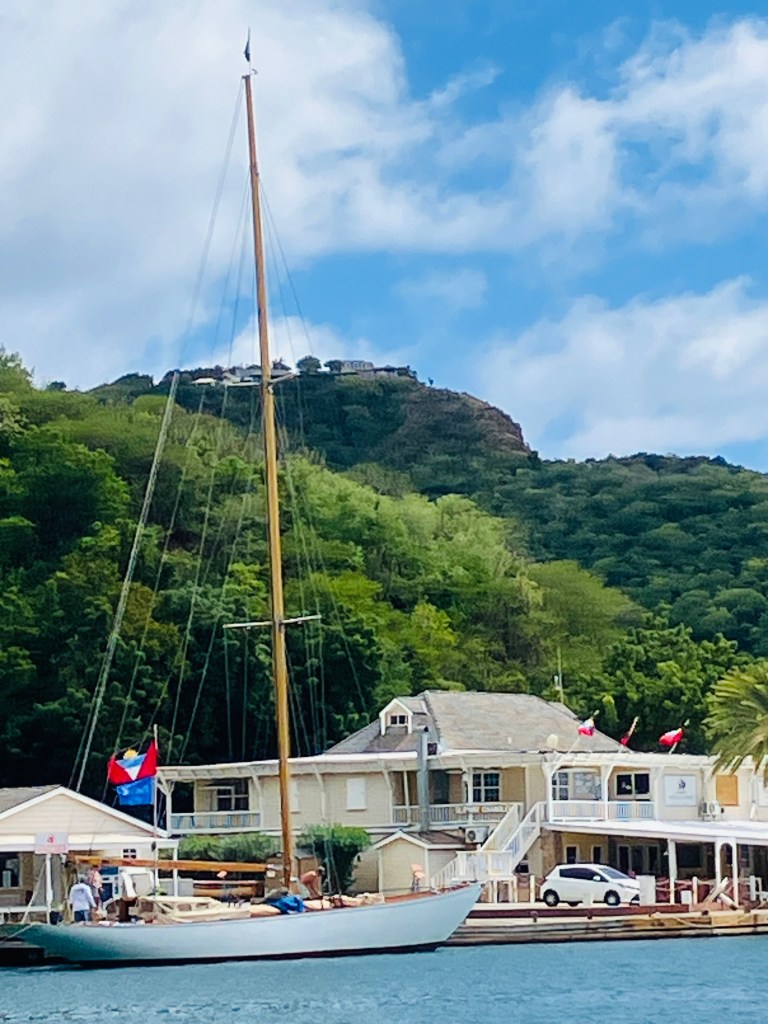
A short three mile drive will take you to the top of this hill and when you park up and look back towards whence you have come it is definitely one of those views that makes people stop mid-sentence, stare for a moment, and then reach for their cameras.
From its hilltop lookout, the entire harbour spreads out below like a postcard—turquoise water, white sails drifting in and out, and the historic buildings of Nelson’s Dockyard tucked neatly along the shoreline.
But Shirley Heights wasn’t built for admiring sunsets. In the late 18th century it was actually a military lookout, part of a defensive network protecting the British naval base below. From this high vantage point, soldiers could spot enemy ships approaching long before they reached the harbour. Cannons once lined the ridge, ready to send an unfriendly welcome to any unwelcome visitors.
The name comes from Thomas Shirley, a former governor of the island in the 1700s. In those days, life at Shirley Heights involved scanning the horizon, maintaining fortifications, and probably drinking strong tea while discussing naval strategy. It was serious business.
These days, however, the mood is considerably more relaxed.
As the afternoon fades, Shirley Heights begins to transform. The air fills with the irresistible scent of barbecue drifting from the grills. Locals and visitors gather around picnic tables, drinks in hand, chatting while the sky slowly turns shades of gold and guests vie for the best spot to take photos of the sunset.
The weekly barbecue—famous across Antigua—takes place every Sunday Evening and is less of a meal and more of a celebration. As it’s popularity has soared and with an influx of tourists from the “all inclusive” resorts across the island they have added another night (Thursday) to their repertoire which is when we decided to visit.
It’s worth being there early, we parked up at 4.15 p.m. and the car park nearest to the buildings was already full so we were directed to a grassy knoll outside.
It is also worth queuing up for drinks and to buy your barbecue tickets as soon as you get there. The queues can become quite extensive as more visitors arrive.

It’s not long before the music begins, however, with steel pans and reggae rhythms floating through the warm evening air, creating the kind of soundtrack that makes it nearly impossible to sit still.
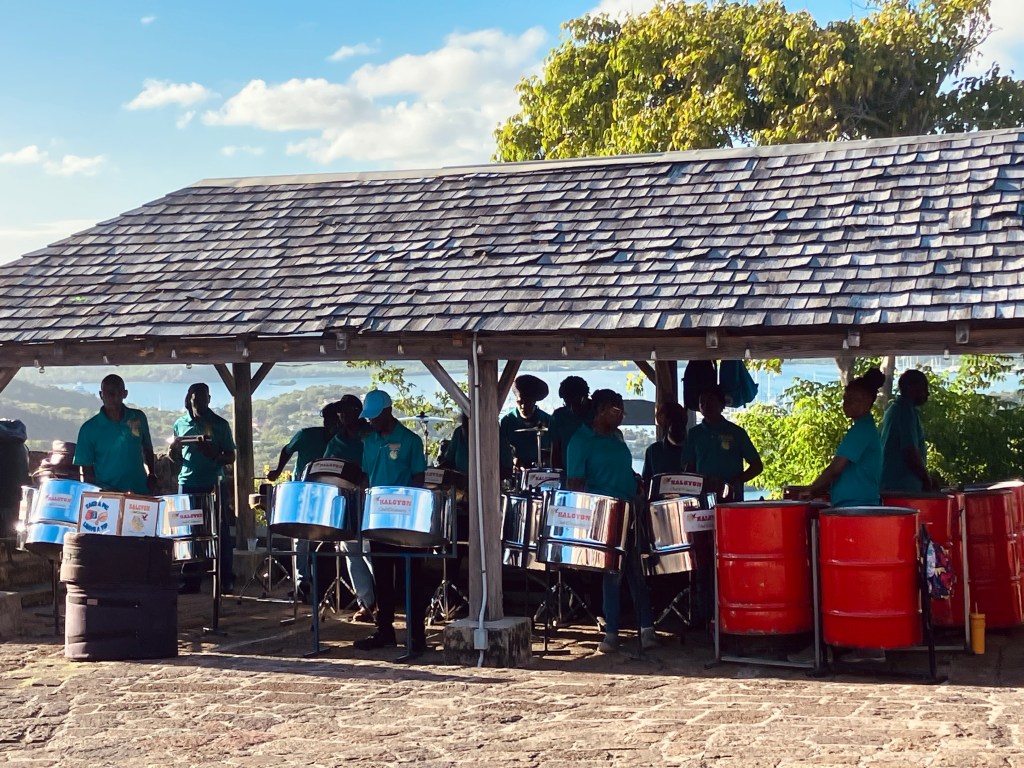
As the evening wears on musicians tune their instruments while dancers gather in front of the stage in preparation for the live music that soon replaces the local steel band. The combination of live Caribbean music, smoky barbecue, and a view over one of the island’s most historic harbours makes the whole scene feel effortlessly joyful.
Just as the sun dips below the horizon, the real magic happens. From Shirley Heights, the sunset spills across the water behind Nelson’s Dockyard, turning the harbour into a glowing mirror of oranges and pinks. Applause often breaks out from the crowd—part tradition, part genuine appreciation for a show nature performs nightly.
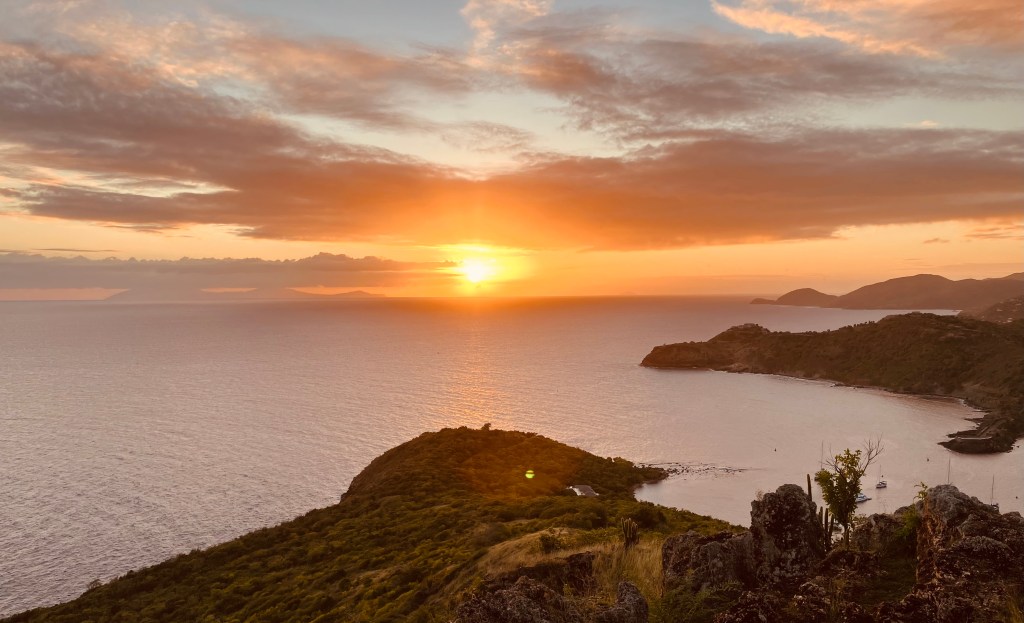
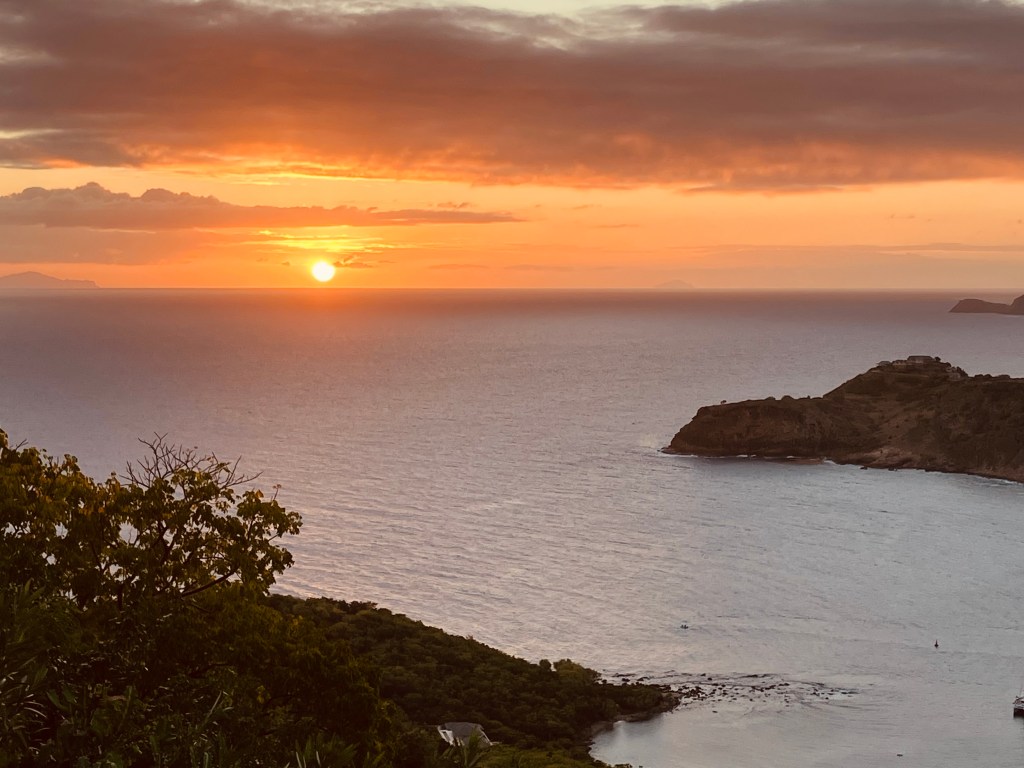
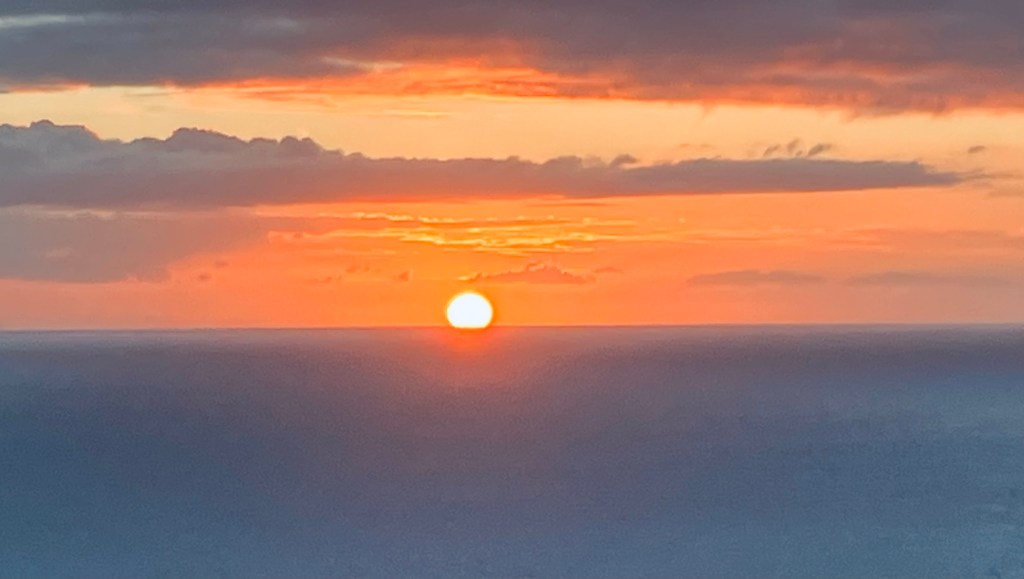
As dusk takes over, the party continues. The music grows livelier, the dancing more enthusiastic, and the barbecue keeps coming. Plates piled with grilled chicken, ribs, and local sides circulate through the crowd while laughter and conversation carry on late into the evening.
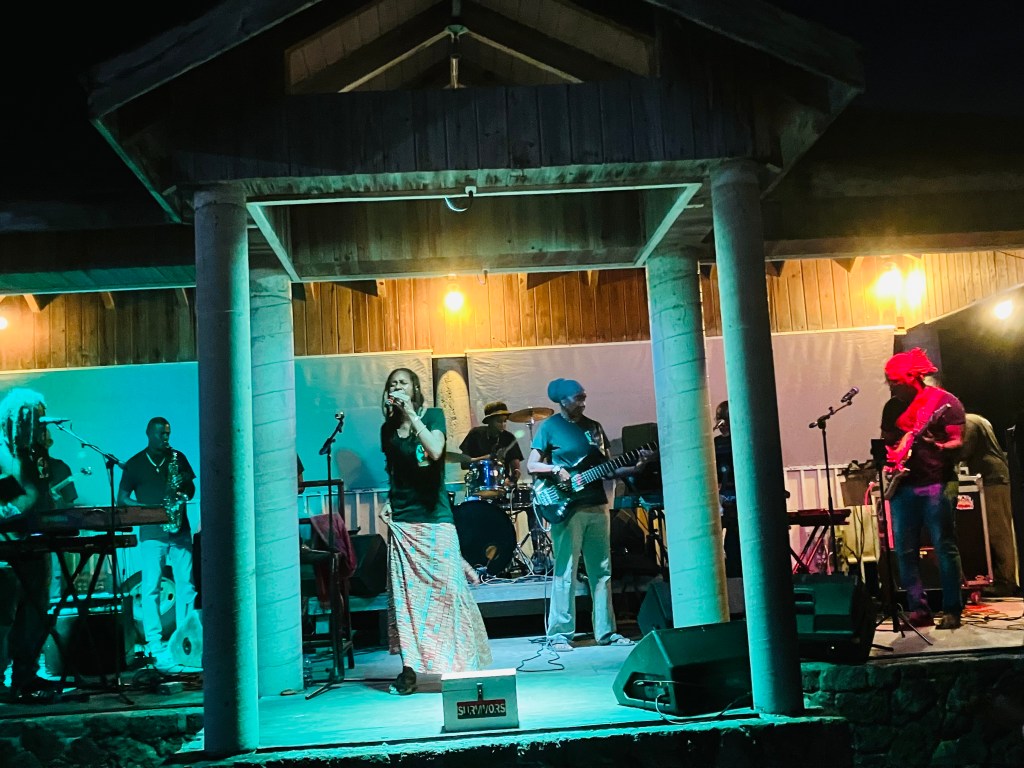
It’s a far cry from the tense watch posts of the 1700s. Where soldiers once scanned the horizon for enemy sails, visitors now gather to celebrate the sunset, the music, and the simple pleasure of good food with a spectacular view.
In many ways, Shirley Heights captures the spirit of Antigua perfectly: a place where history sits comfortably beside good company, great music, and the smell of barbecue drifting on a Caribbean breeze.
Final thoughts……
The South coast of Antigua has much to offer with its naval history, beautiful sunsets and a hilltop party with barbecue wafting on the Caribbean breeze and steel drums and reggae music bringing the Caribbean spirit to your soul.
Have I inspired you to perhaps include Antigua in your Caribbean itinerary?
Let me know your thoughts and comments ……………
 A Midlife Adventure