We left my new friend Lille (see previous post) last Saturday and travelled north east to Brussels.
The capital of Belgium since the country became independent in 1830, with a population just over 2 million, one tenth of the size of Greater London and since 1958 the seat of the European Economic Community, the precursor to today’s European Union.
As part of our exploration of the city we visited both the Museum of European History and the Hemicycle -the centre for the European Union of which we were once a member. Since our country voted to leave the EU on June 23rd 2016 I have wanted to understand more about the purpose of the Union, what it set out to achieve and perhaps begin to understand the effect of leaving.
I learnt there were twenty key pioneers, of various nationalities, who inspired the Europe we know today. Listed in alphabetical order, based on their Christian names, number twenty on the list is Winston Churchill.
Having led us through the Second World War, this was a man who was revered by many, not least our own Queen Elizabeth II. He was committed to the idea of European integration and as a former army officer, war reporter and British Prime Minister, Churchill was convinced that only a united Europe could guarantee peace.
In his address to the University of Zurich in 1946, Churchill urged Europeans to turn their backs on the horrors of the past and look to the future. He declared that Europe could not afford to continue in an atmosphere of hatred and revenge springing from the injuries of the past. For Churchill, the first step in recreating the ‘European family’ of justice, mercy and freedom was ‘to build a kind of United States of Europe.
It’s not surprising, therefore, that when you visit the Hemicycle you learn the key principles behind the European Union are freedom, democracy, equality and the rule of law, promoting peace and stability. Why would anyone not want to be part of that?
The European Union is based on the rule of law. This means that every action taken by the EU is founded on treaties which are binding agreements, approved voluntarily and democratically by all EU member countries. These treaties set out the EU objectives, the rules for EU institutions, how decisions are made and the relationship between the EU and its member countries. For example, if a policy area is not cited in a treaty, the Commission cannot propose a law in that area.
As a member of the EU the UK initiated, took part in the process of defining and adopted 97% of EU law.
Margaret Thatcher actually negotiated with the EU and secured a UK veto to any law we didn’t like. Are we, therefore, now saying by leaving that we were wrong in what we agreed to?
The European Parliament who vote on these policies currently has 705 members.
Since 1979, the members of this Parliament have been directly elected every five years by the citizens of their respective country, to represent the wishes of their country in the European Union. Could it be any more democratic?
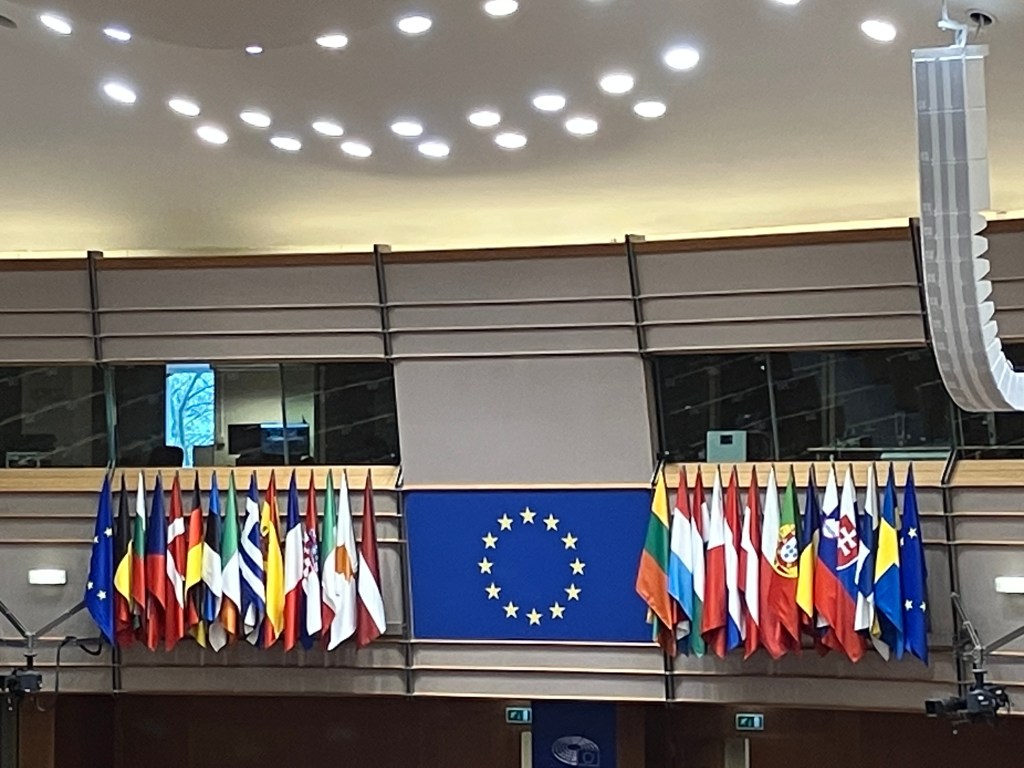
Since 1957, the European Union has delivered peace throughout the continent. It’s the world’s biggest single market. It has delivered aid and development assistance for millions of people worldwide and also plays an important role in diplomacy and works to promote these same benefits – as well as democracy, fundamental freedoms and the rule of law – across the globe.
On December 10th 2012, when we were still a member of The European Union, it received the Nobel Peace Prize at a ceremony in Oslo. The prize recognised the EU’s contribution over six decades to promoting peace, reconciliation, democracy and human rights. We helped contribute to this success so why would we no longer wish to be part of this and what it stands for?
The European Union operates as a single market. It enables most goods, services, money and people to move freely throughout most of the continent. All EU citizens have the right to live, study, work or retire in any EU country. As an EU national, for employment, social security and tax purposes, every EU country is required to treat you exactly the same as its own citizens. We voted to give up these opportunities and rights within our parent continent. Are we really ok with this?
Now made up of 27 countries, the total value of all goods and services produced (gross domestic product or GDP) in the EU in 2021 was € 14.5 trillion.These 27 countries account for around 14% of the world’s trade in goods. The EU, China and the United States are the three largest global players in international trade.The UK doesn’t even appear in the world’s top ten so what makes us believe that we can play a key role in world trade? And given we have now lost the freedom to move goods throughout the continent how can we not expect prices to increase? We now have increased paperwork that adds additional costs when we import and export goods from the EU.
Finally one of the key ingredients of being an EU member for myself personally, given my working background, was the amount of laws that covered workers’ rights. These laws were agreed and introduced when we were still part of the EU and thus covered all member countries.
When the Working Time Directive was implemented in the UK in 1998, it introduced a maximum 48-hour working week (normally averaged over 17 weeks), a daily rest period of 11 consecutive hours, a weekly rest period of 24 consecutive hours and rest breaks during the working day. Although UK workers can opt-out of the maximum working time limit, the introduction of these rights reduced the number of people working excessive hours in the UK. 700,000 employees benefitted from this when it came into effect and thousands more have been protected ever since.
The Directive also gave UK workers a statutory right to paid annual leave for the first time. This resulted in 6 million workers gaining improved entitlements to paid annual leave, two million of whom previously had no paid annual leave entitlement (many of these were part-time female workers). This amounts to a significant financial transfer (in the form of pay) from employers to predominantly low-paid female workers.
On annual leave, the European Court of Justice or ECJ has ruled that workers who fall ill during a previously scheduled period of leave have the right to reschedule that leave. And another ECJ judgement led to the calculation of holiday pay being extended to include commission payments and compulsory overtime
The EU Pregnant Workers Directive 1992 led to substantial improvements in the health and safety protections for expectant and new mothers in the workplace. It gave women paid time off for ante-natal appointments and placed duties on employers to assess the risks and to adjust working conditions where harm is identified. The ECJ has had a positive impact in tackling the disadvantage and discrimination that many women face in the workplace when they become mothers. For example, it made clear that treating a woman unfavourably because of pregnancy or maternity leave was direct sex discrimination. The Parental Leave Directives that we follow also came from the EU.
The right to equal pay for equal work between men and women is a fundamental right enshrined in the EU Treaty which is directly enforceable in UK courts.
The ECJ first established that paying part-timers who are mainly women a lower hourly rate than full-timers was indirect sex discrimination, as was excluding them from an occupational pension scheme.
Legislation on age, religion or belief and sexual orientation discrimination was introduced as a direct result of the EU Framework Equal Treatment Directive in 2000 and protection from discrimination on the grounds of gender reassignment came from an ECJ ruling.
Have we willingly sold all this progress down the river? What protection do we all have now? Since the Brexit deal came into effect, the UK is no longer bound to adhere to EU employment law. Hence, the UK government is in talks to change UK employment law in December 2023.
I have now visited Brussels and having learnt more about the history of Europe and the evolution of the EU I have the following unanswered questions:
Why, during the Brexit debate prior to the vote we all took, was this history not relayed to the UK public?
Why did the current Government, at the time, who apparently were in favour of us remaining in the EU, not broadcast as strongly the benefits the EU had brought to us as a country to counter the strength and breadth of the anti EU campaigners? The Brexit campaign seemed to me to be reliant upon people wanting to stop immigration and save bureaucratic expenditure to the EU in Brussels which could otherwise be spent on the NHS.
We are now seven years into our new status as a free country but have we seen any changes to the NHS? Have we seen improvements in immigration?
I am a midlife adventurer and it didn’t take me a great deal of effort to find out all these facts for myself. I’ll leave you to decide whether the decision we made was correct or not.

NB:
We are now in Belgium and this is part fourteen in my series of posts about our tour of Western Europe. Why not read the previous posts and then follow us on our journey as we continue to explore this lovely part of the world?
 A Midlife Adventure