As I mentioned in my previous post, I hadn’t really done much research into Crete before we arrived. This wasn’t one of those holidays where we had a packed itinerary and a list of places we absolutely had to tick off. After everything 2024 had thrown our way, we were mostly looking forward to sunshine, slower mornings and a bit of time away from everyday life.
That said, I do have a copy of the Lonely Planet Greek Islands guide sitting on my shelf, and I had a quick look through the Crete section before we went. Two places immediately caught my attention — Knossos and Spinalonga.
The coach company at our resort offered trips to both, but the timings for Knossos didn’t really appeal. After our experience of Hersonissos the thought of arriving at one of Crete’s most famous archaeological sites at peak tourist time wasn’t exactly tempting.
Spinalonga felt different. A half-day trip, a boat ride, a little bit of history and the chance to see somewhere away from the main resort areas sounded much more like our kind of day.
The journey itself was part of the experience. Our guide was friendly, welcoming and full of stories about Crete, and the drive towards Elounda passed quickly as we looked out at the changing landscape.

Crete is a fascinating island because it feels like much more than a beach destination. Yes, there are beautiful stretches of coastline and the kind of blue water you expect from Greece, but there is also a strong sense of identity here — from the villages and mountains to the food and the people who have lived here for generations.
Eventually we reached the coast, where our boat was waiting to take us across to Spinalonga.

The History of Spinalonga
The crossing only took around ten minutes, but it was enough time for the island to come into view — the old fortress walls rising above us, surrounded by the calm waters of Mirabello Bay.
It’s strange approaching a place that looks so beautiful when you know the history attached to it.
Spinalonga’s story is not a simple one. The island was once a Venetian fortress, built in the 16th century to protect the surrounding area, before later becoming part of the Ottoman Empire. But the chapter that has made Spinalonga famous is the one that came much later.
From the early 1900s until 1957, it was home to a leprosy colony.
People diagnosed with the disease were sent here, separated from the rest of society. At first, life on the island was extremely difficult, but over time a community developed. People worked, built homes, attended church, formed relationships and tried to create some kind of normal life in a place they had never chosen to live.
Walking through the entrance tunnel — known as Dante’s Gate — gave the visit an unexpectedly powerful start. This was the point where people arrived knowing they might never leave.
Rather than joining a guided tour, we decided to walk around the island ourselves. The route takes around an hour, passing the remains of houses, shops, the church, the hospital and eventually the cemetery.
The buildings are weathered now, many reduced to ruins, but that almost made it easier to imagine the lives that once filled them.
There is something about abandoned places where you can still see traces of everyday life. The streets weren’t just pathways — they were where people walked, talked, bought food, met friends and carried on as best they could.
Part of the old shopping street has been reconstructed, and although it is quiet today, standing there I could almost picture it when it was alive. The sound of conversations, doors opening, people going about their routines.

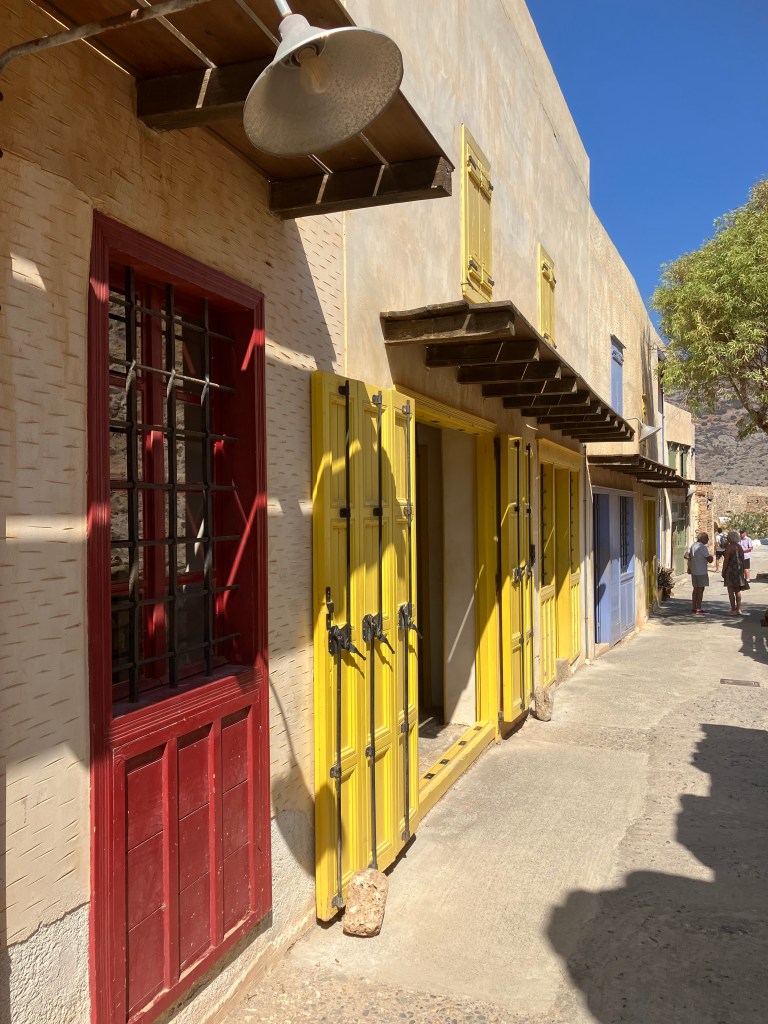
It reminded me a little of Alcatraz in California. Not because the two places are the same, but because of that feeling of being surrounded by beauty while also understanding the isolation. People here could look out across the water, see the mainland in the distance, and know they were separated from it.

The most moving part of the visit for me was reaching the cemetery.
There is a quietness on Spinalonga that is difficult to describe. The empty streets, the old stone walls and the knowledge of what happened here create an atmosphere that stays with you. It is not frightening, exactly — just deeply reflective.

The story of Spinalonga has also been brought to a much wider audience through Victoria Hislop’s novel The Island. I hadn’t read it before visiting, but standing there amongst the empty streets and old stone buildings, I found myself wishing I had.
The book, inspired by the island’s history and the lives of the people who were sent there, has helped bring Spinalonga back into the public imagination. It’s easy to understand why. When you walk around the island, you don’t just see abandoned buildings — you start wondering about the people behind them.
Who sat in these houses? Who worked in the shops? Who looked out across the water and dreamed of the life they had left behind?
Before leaving, we stopped at the small museum and café near the water. It felt like a gentle way to end the visit after walking through such a heavy piece of history.
I arrived at Spinalonga expecting an interesting day trip. I left feeling like I had stepped into the middle of someone else’s story.
It’s easy when travelling to focus on the views, the food and the places we can photograph, but sometimes the destinations that stay with us are the ones that remind us of the people who were there before us. Spinalonga was beautiful, yes — but it was the human stories behind the walls that made it unforgettable.

