So here we are in Antigua settled into our temporary home starting to live like a local.
Just a week into this new life I’ve already noticed some differences to when we were here in February.
It’s the Shoulder Season:
As our first week began to unfold we soon discovered that whilst this time of the year is described as the shoulder season (May and June) it’s actually more like the “off” season. Peak season is December to April which usually offers dry, sunny weather.
Hurricane season (July–November) brings a higher risk of storms.
Back in February there were three cruise ships coming in every day except on Sunday but now there is one cruise ship a week. The marked difference in daily visitors to the island reflects in a lot of beach bars and restaurants being closed and sun beds and umbrellas being put away and stored until November.
As we have discovered with some of the local eateries you cannot rely upon advertised timings on Google, Tripadvisor or even their own websites to be accurate.
The only restaurants or cafes likely to stay open are those with a captive audience, for example, where there is an all inclusive resort at one end of the beach or when it is sited in an area where the locals are happy to pay the prices and will still, therefore, visit all year. Friday nights definitely seem to be take-out night here and Sunday lunch is still very much a main weekly celebration.
Food:
When you decide to live somewhere the idea of eating out becomes a treat as it would be back home. So the first practical lesson we have learnt is where to buy food and water and this has been a main focus in our first week.
Water is safe to drink HOWEVER the main public water supply undergoes desalination and is heavily chlorinated. While it is technically safe, the water can cause minor stomach upset simply because it has a different mineral composition than your body is used to.
We, therefore, have chosen to buy our water. You can buy 5 litre bottles at some of the small local supermarkets.
As we don’t have one nearby and there are only four main supermarkets on the island we are already in the habit of popping out twice a week to buy what we need.
It’s important to ensure that food is as fresh as possible. There are no “sell by” dates here instead the labels display when the meat, fish or chicken was packed and displayed.
Fortunately our local supermarkets are Perry Bay in central St Johns, the capital, which is a 10-15 minute drive and the Epicurean, which stocks a large amount of imported English products from Waitrose, which is about 25 minutes away.
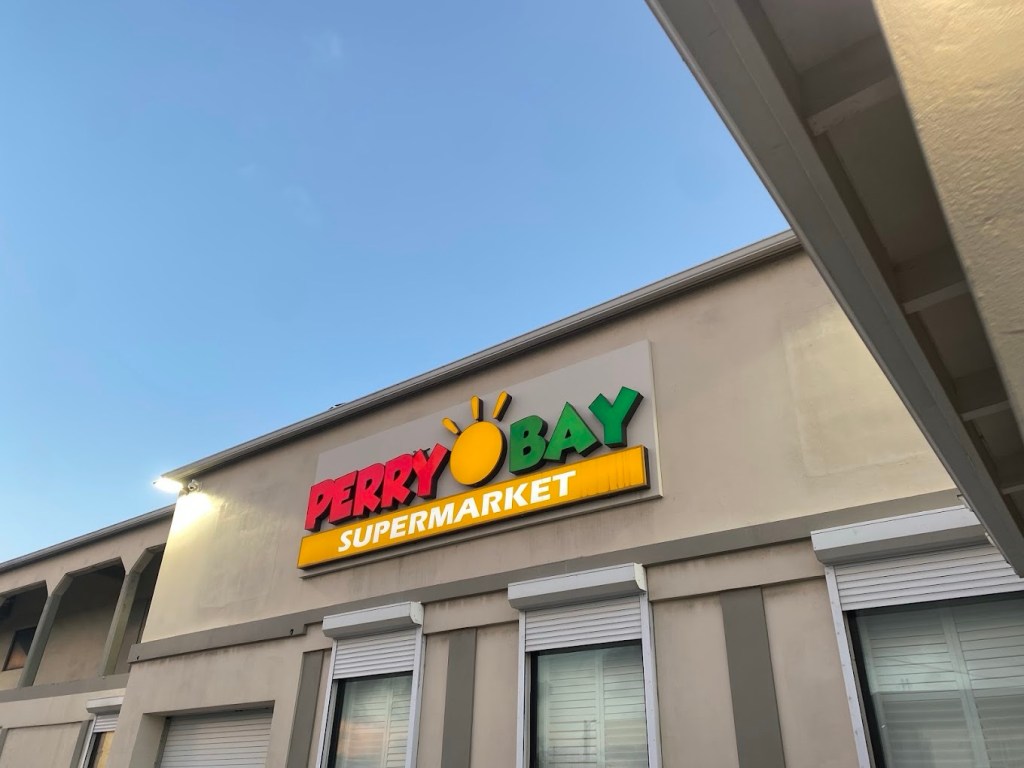
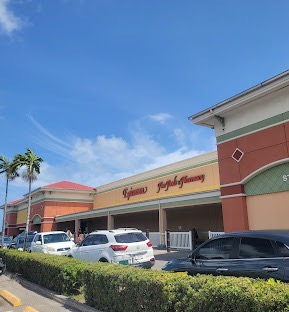
Prices are higher than the UK mainly because Antigua relies on importing 90% of what the island consumes -see “Affordable Dining” .
It’s quite frightening to think that the current Prime Minister has stated “a prolonged disruption to shipping routes (e.g., three weeks without “food boats”) could quickly precipitate a national starvation crisis.”
80% of the food imported comes from the USA so food standards are lower than we are accustomed to in the UK and Europe. We brought some dry goods like pasta, spaghetti, rice, teabags, coffee, breakfast cereals, marmite and peanut butter with us in a carry on suitcase as we knew from our first trip that this would lower our grocery spend.
We are intending to cook fairly simple meals from our repertoire at home, therefore, we only need to buy fresh meat, fish, chicken and eggs from the supermarket.
Prices for these proteins are pretty much aligned with the amount we would pay at home in the UK.
We will then buy basic tinned goods like tomatoes, beans or whatever the recipe requires, which are all imported and significantly higher than we are accustomed to.
In addition to the supermarkets there are produce and fish markets in central St Johns.
Fish is plentiful on the island and fresh fish are landed every day.
Fresh fruit and vegetables arrive on the “green boat” from Dominica normally on Tuesday or Wednesday. and then have to be unloaded
Keen to support the local people we have already popped into town and ventured to both markets to understand the range of goods, prices and quality available.
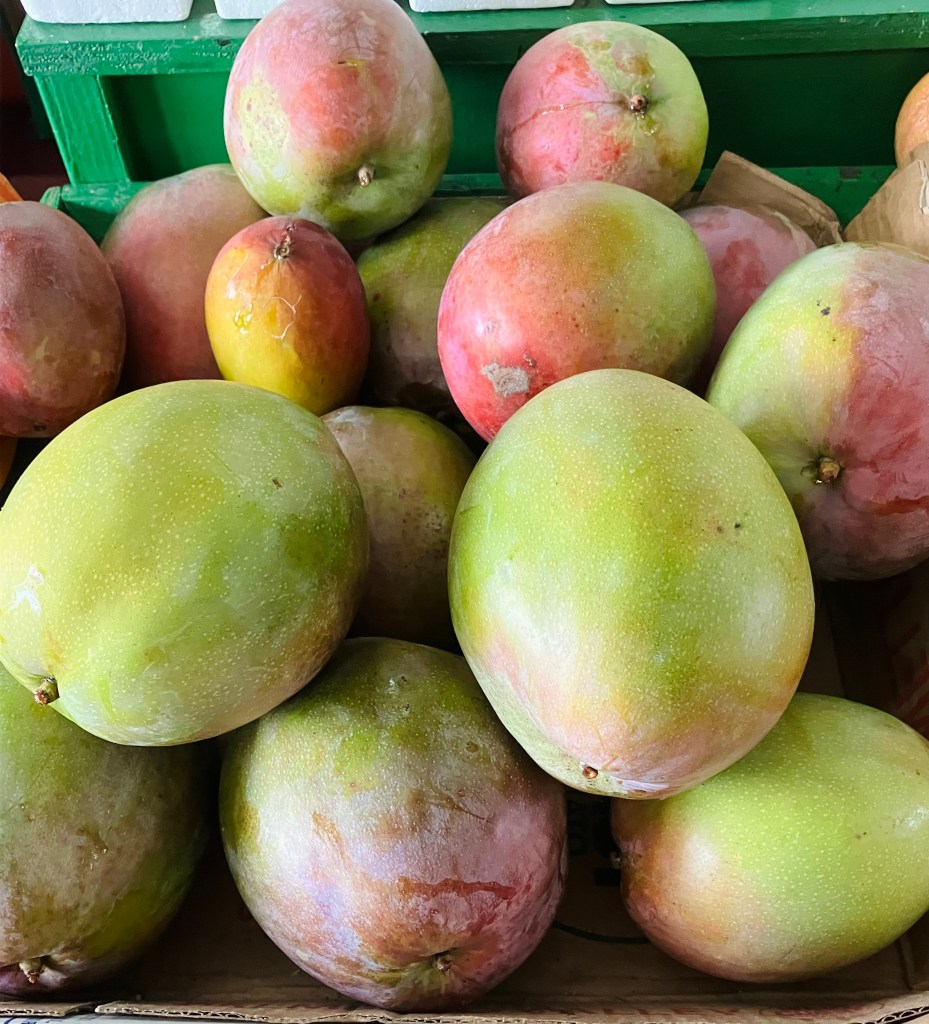
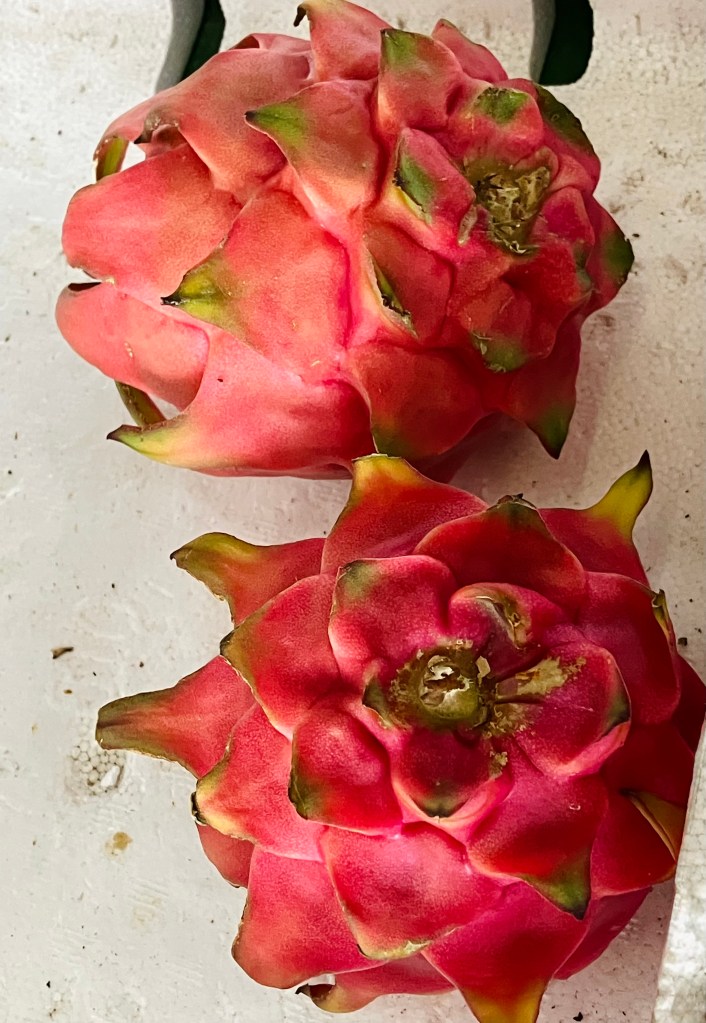
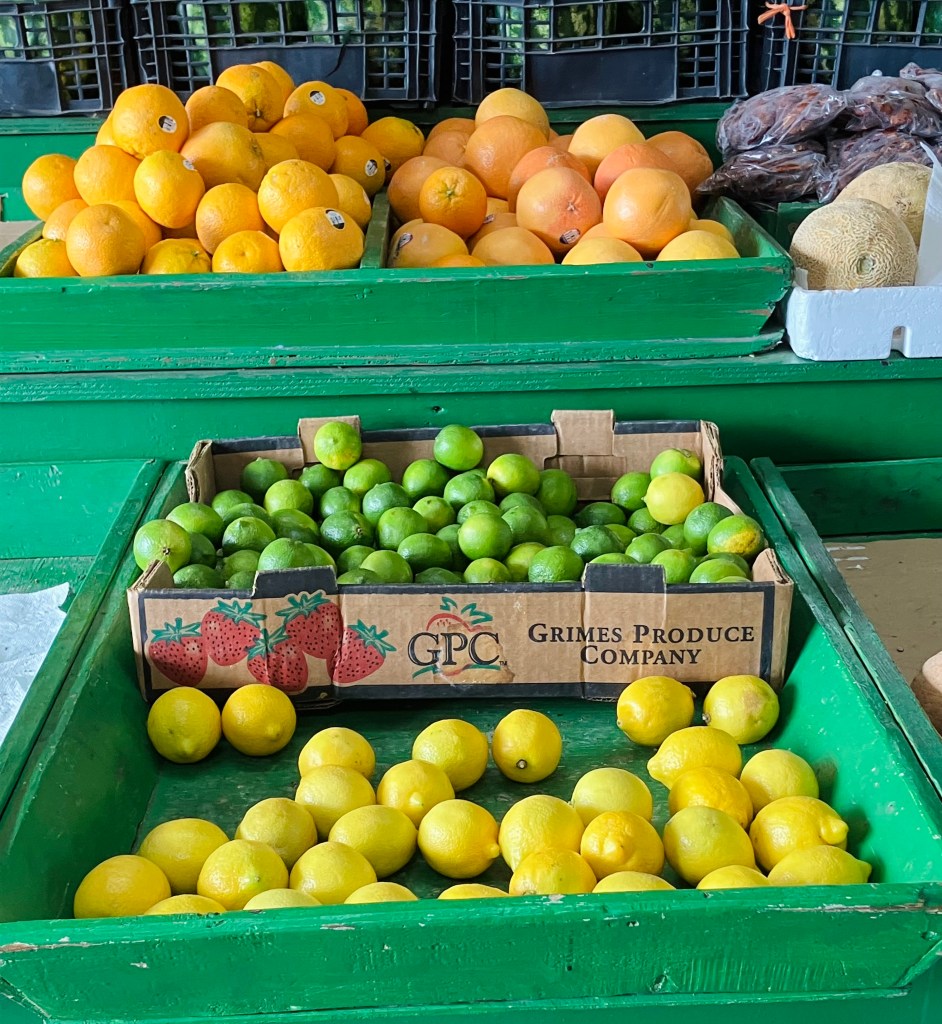
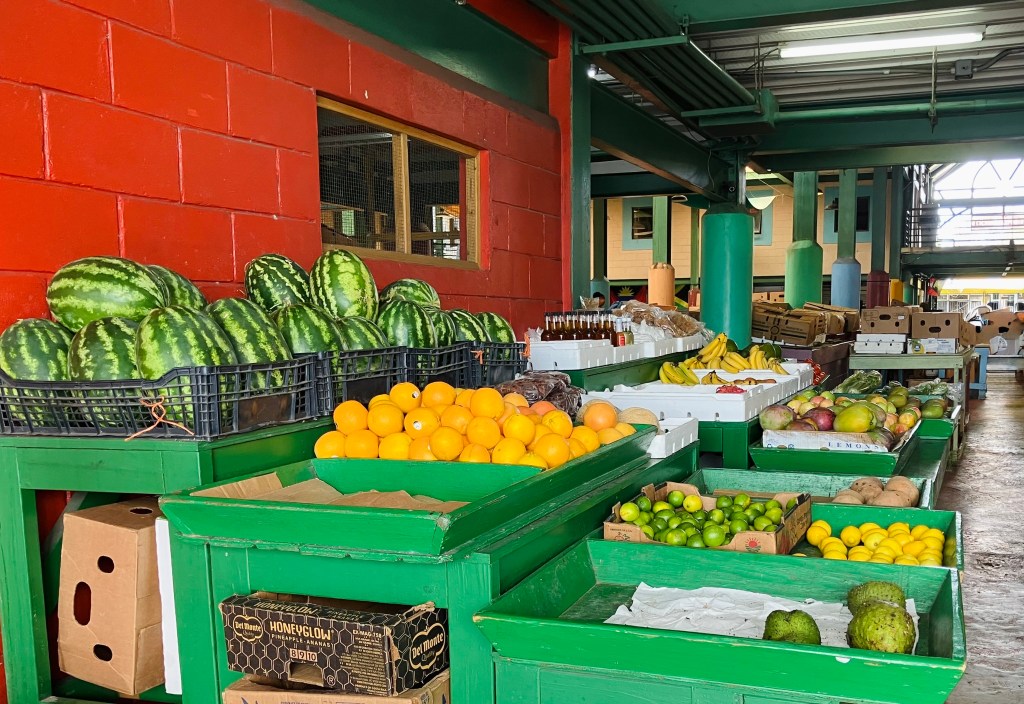
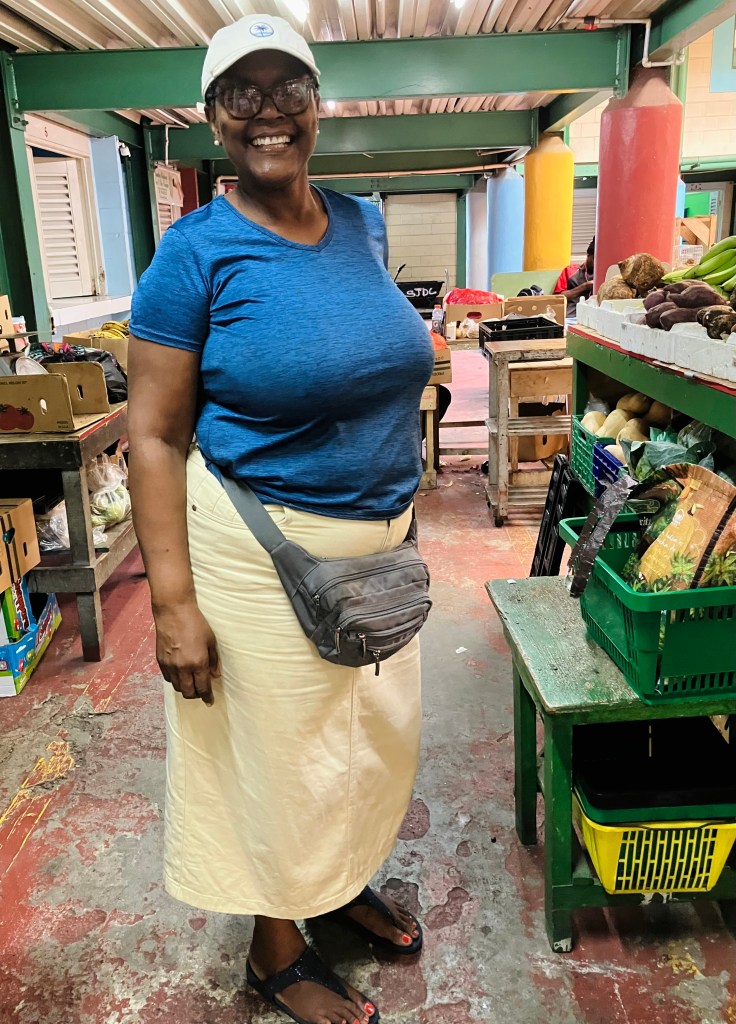
The ladies within the produce market were really friendly and we soon started chatting to one of the stall holders-Jacqui and picked up a good selection of mainly fruits and salads whilst earmarking her for future purchases.
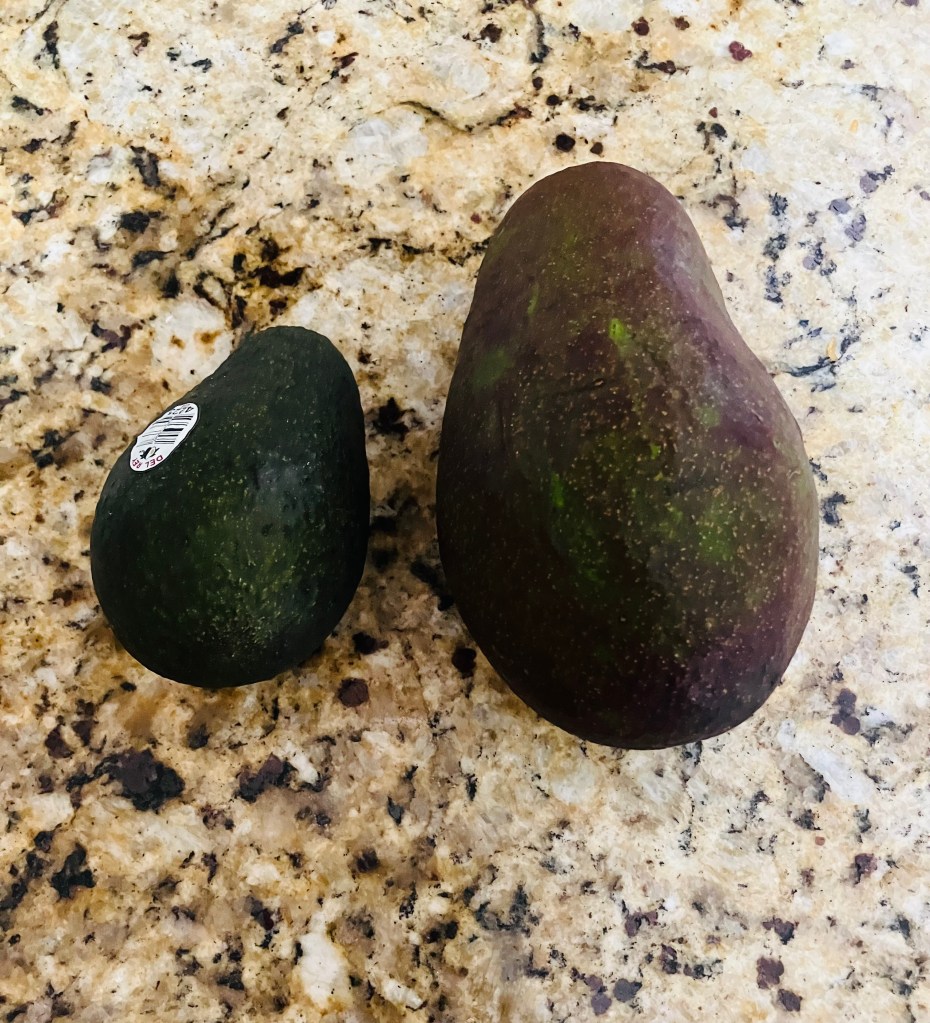
Not only is the produce fresh but also noticeably different to what we buy in the UK. It’s like everything has absorbed all the sunshine and just grown so much bigger, juicier and sweeter!
A standard avocado like we buy in the UK and then an Antiguan avocado on the right
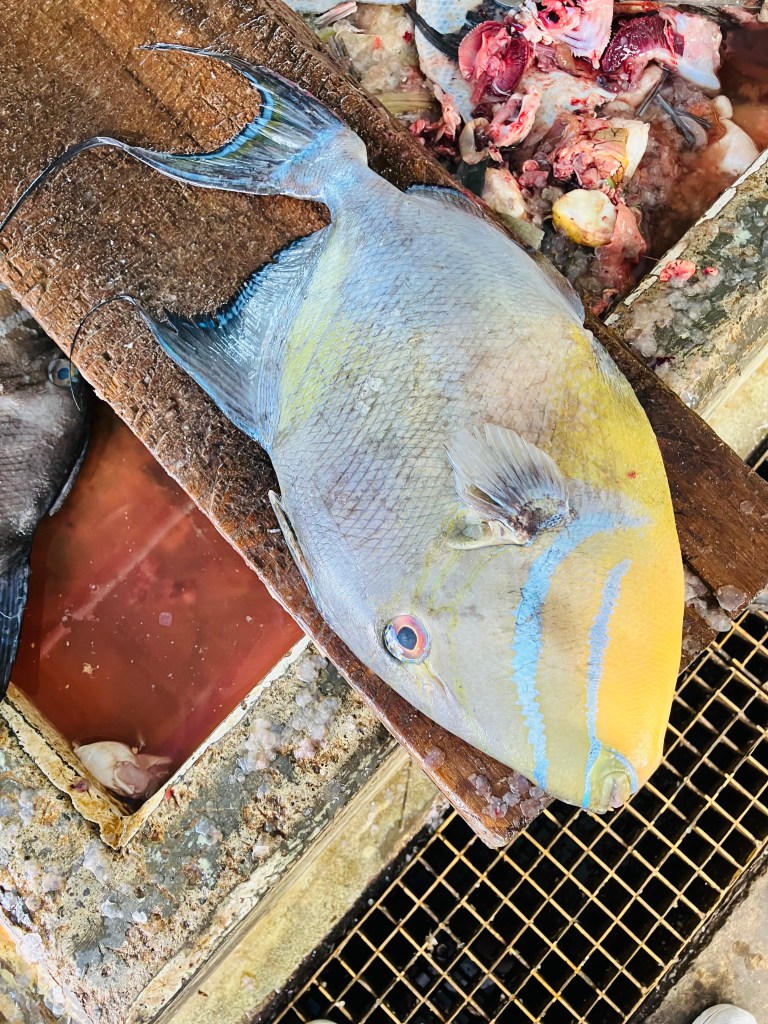
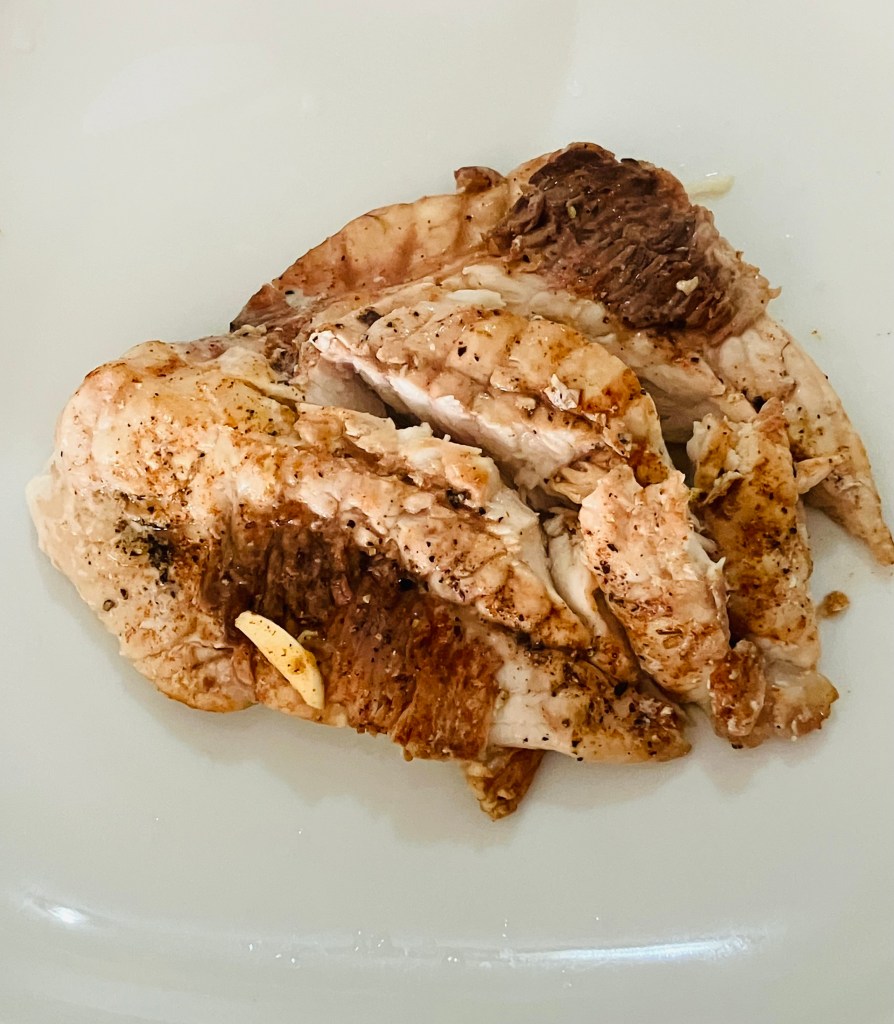
There weren’t many sellers at the fish market and whilst we bought some “trigger fish” which the vendor kindly skinned and gutted for us there wasn’t a huge selection available. The best time to be here, we discover later, is between 6 am and 8 am in order to get the best variety.
Our trigger fish before preparation and then cooked and on the plate
It is also possible to buy fruit and vegetables from roadside stands when you are driving around the island as we discovered back in February.
The island maybe small but as I explained previously, in my “Tips for First Time Visitors”, the roads are not good. It can take 10 minutes to drive 5 miles!
Economy:
The most evident factor in our first week is that the impression Antigua gives to the world is not the actual reality. We suspected this when we visited for 10 days back in February but it is so much clearer now.
Antigua and Barbuda are not first world countries and are extremely dependent on tourism, which serves as the primary driver of its economy, contributing between 60% to over 80% of the GDP and providing over half of all jobs.
The sector is driven by luxury resorts, cruise ship arrivals, and yachting, primarily attracting visitors from the US, UK, and Canada.
We are in the minority, in so much, as the amount of tourists arriving on the island intending to self cater is only about 35-40%. The island isn’t set up for travellers like us and whilst that won’t have a negative effect on our stay here it is already becoming more apparent that the locals are not benefitting from the current “tourist economy” that exists here.
Research shows me that Antigua is not unique in this scenario.
Millions of Visitors, But Who Really Benefits?
At first glance, Antigua looks like a tourism success story but when you dig deeper this is only superficial.
The Resort Bubble
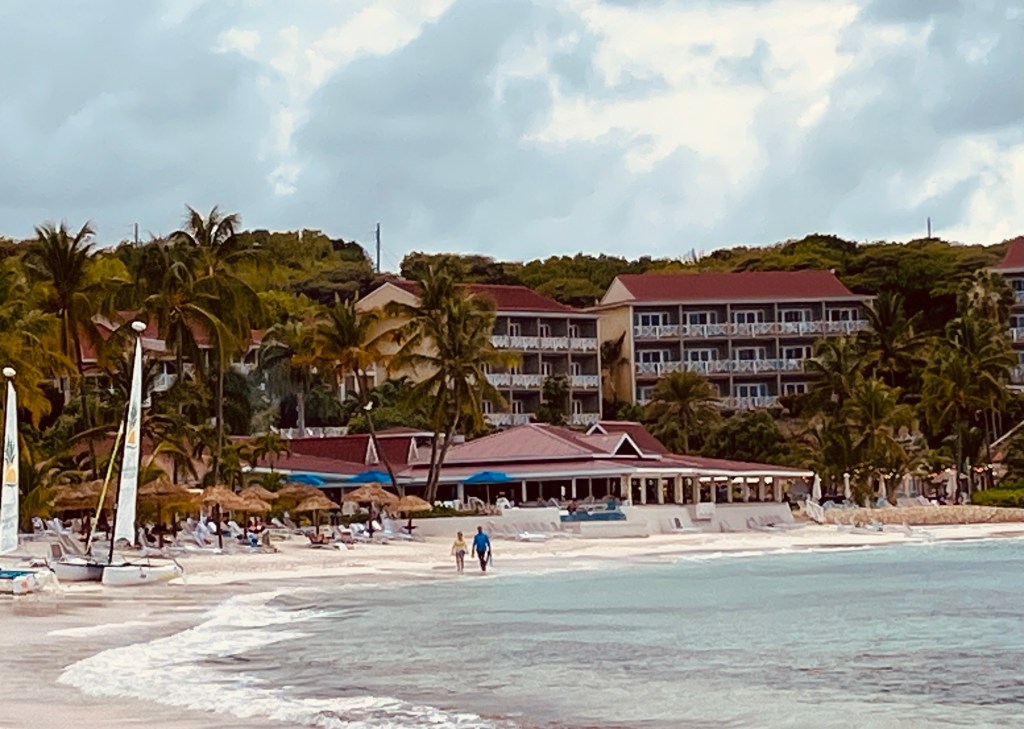
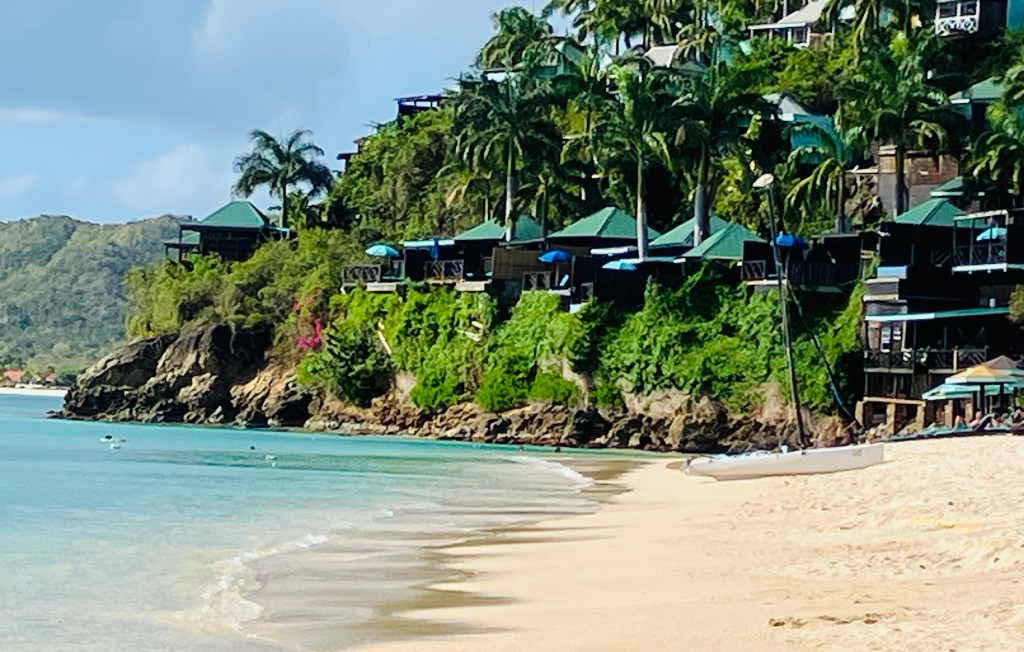
Many visitors stay in all-inclusive resorts, as a result, luxurious destination complexes line some of the Caribbean’s most beautiful beaches (like those shown below).
Everything is provided: meals, drinks, entertainment, activities, and even private beaches.
As a result, tourists often have little reason to venture beyond the resort gates.
That actually is a positive for independent travellers, like us, because the island isn’t overrun with tourists like, for example, some of the Greek Islands that we have previously visited.
For local businesses, however, that’s a problem.
While visitors may spend thousands of pounds on their holiday, much of that money stays within the resort rather than flowing into local restaurants, shops, tour operators and communities.
Spend time outside the resorts, as we are and a different picture emerges in terms of who benefits from money like this!
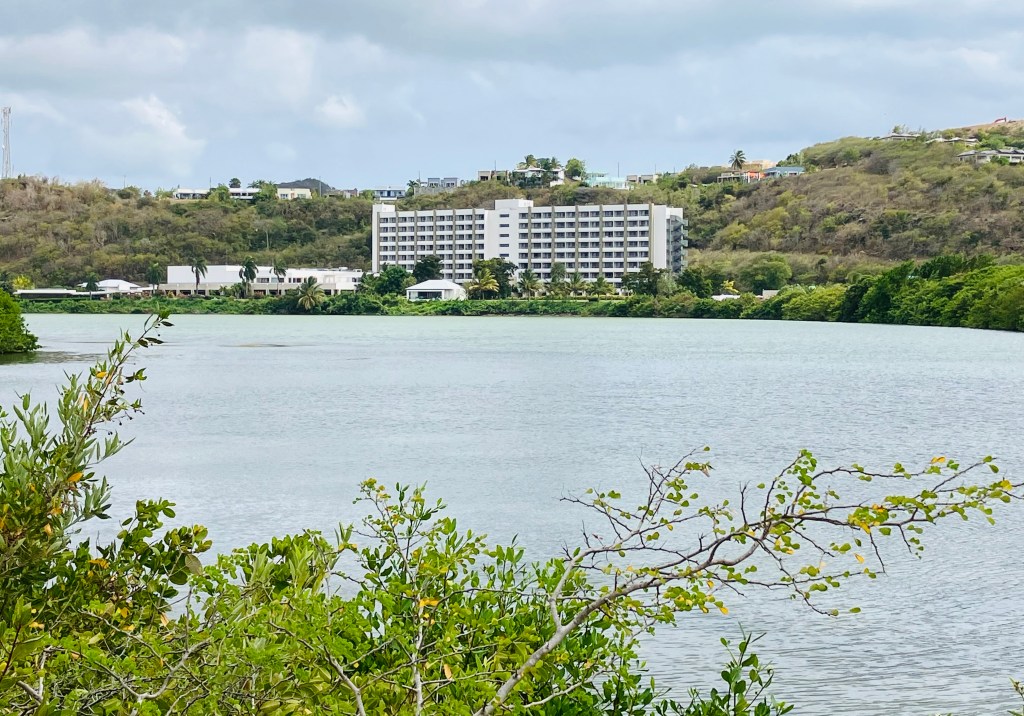
These three photos are examples of the “All Inclusive Resorts” on the island.
To stay at the resort shown in the last photo would cost £24,000 for two weeks in January!
Cruise Ships, Quick Visits
Antigua also receives hundreds of thousands of cruise passengers every year. Multiple cruise ships arrive daily in the main season disgorging anything from 6,000 to 18,000 visitors in one day!
They typically take organised excursions, visit a handful of port-area shops, and then return to the ship, often having spent only a few hours on the island.
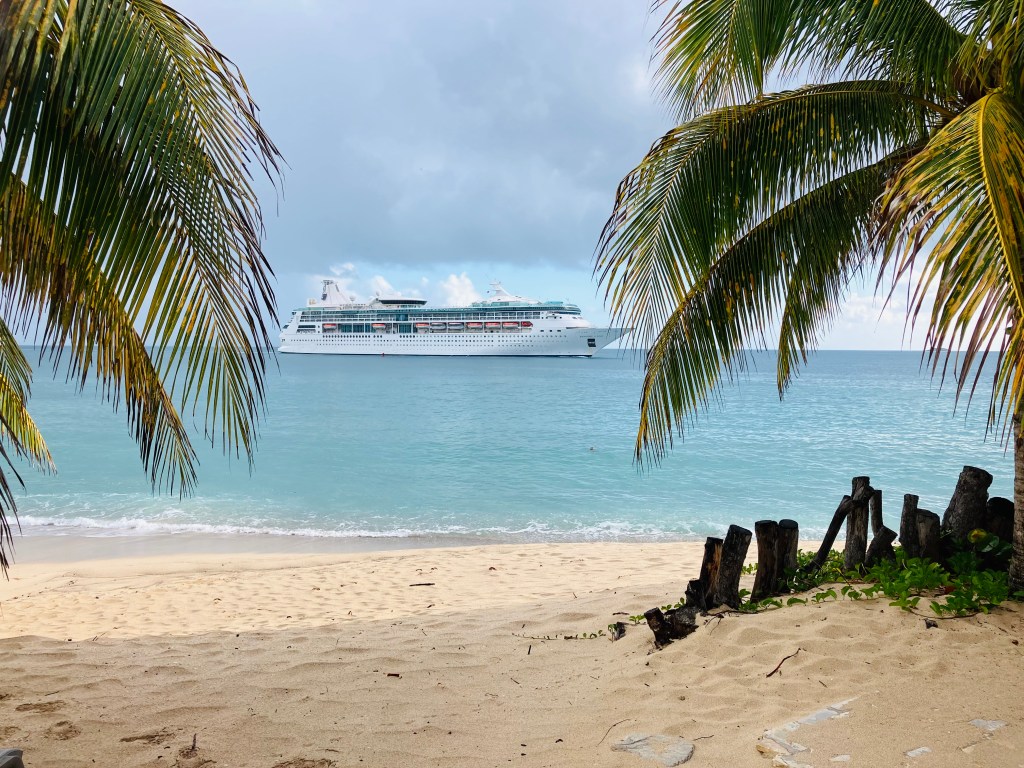
Unlike overnight visitors, they rarely use local transport, often return to the ship even for lunch, and don’t spend much time exploring independently because they just don’t have the time.
The result is lots of tourist traffic but relatively limited economic impact for many residents. It is clear to us already that a good percentage of the islanders are poor and struggling to even maintain a basic standard of living.
I took these photos of what we labelled as “The Mansion on the Hill”
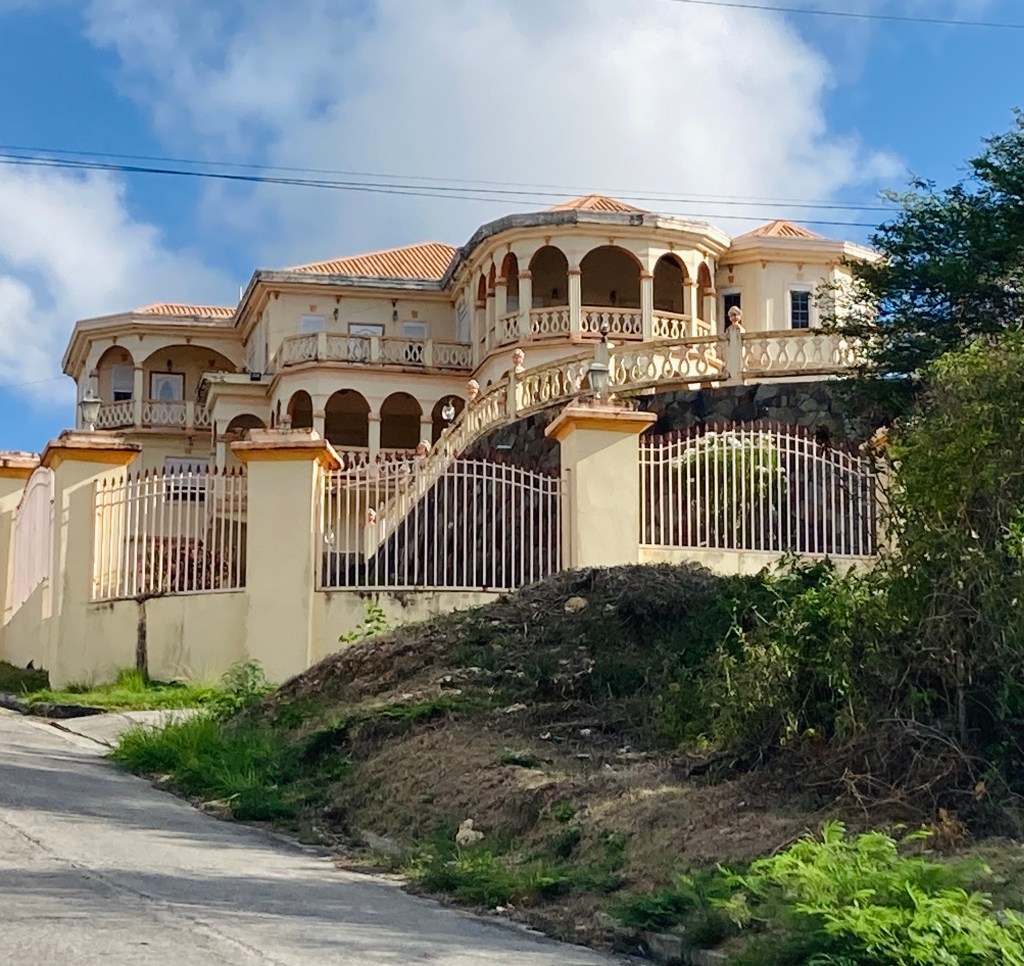
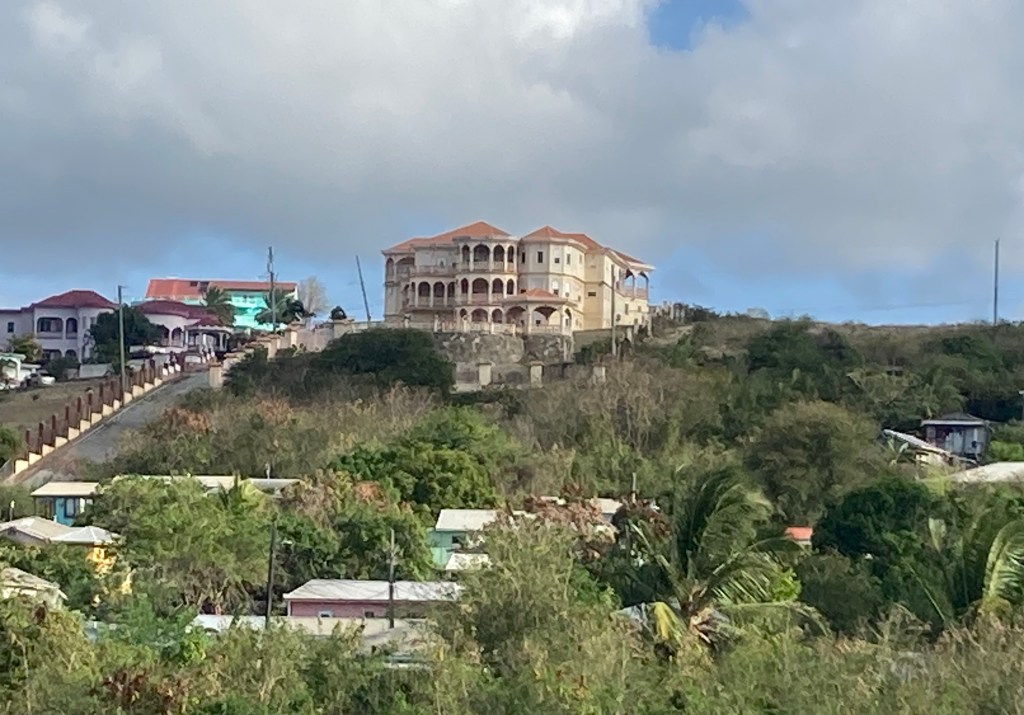
These three photos were taken just down the hill from this house. The disparity is shocking!
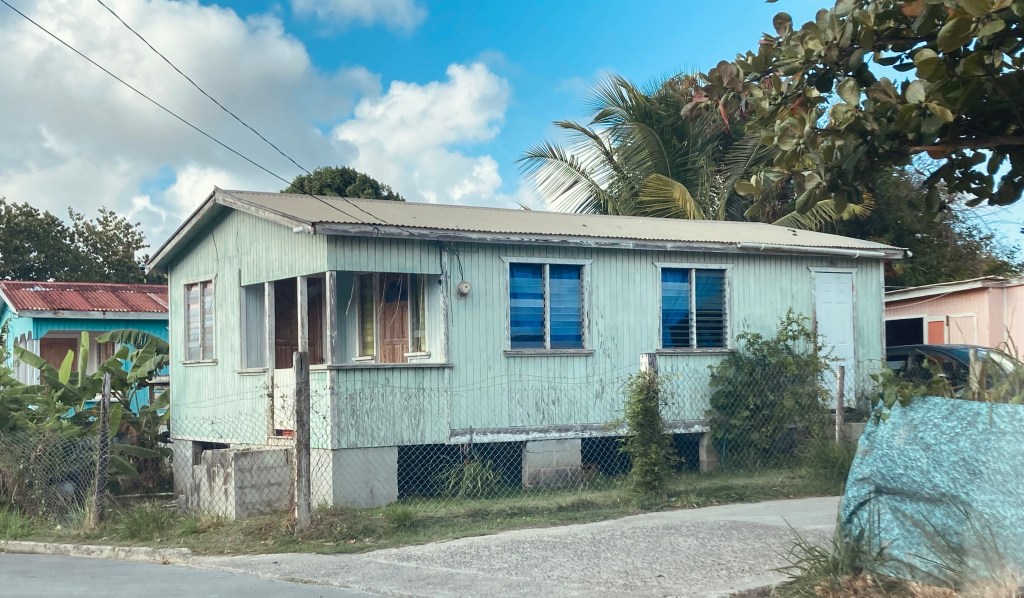
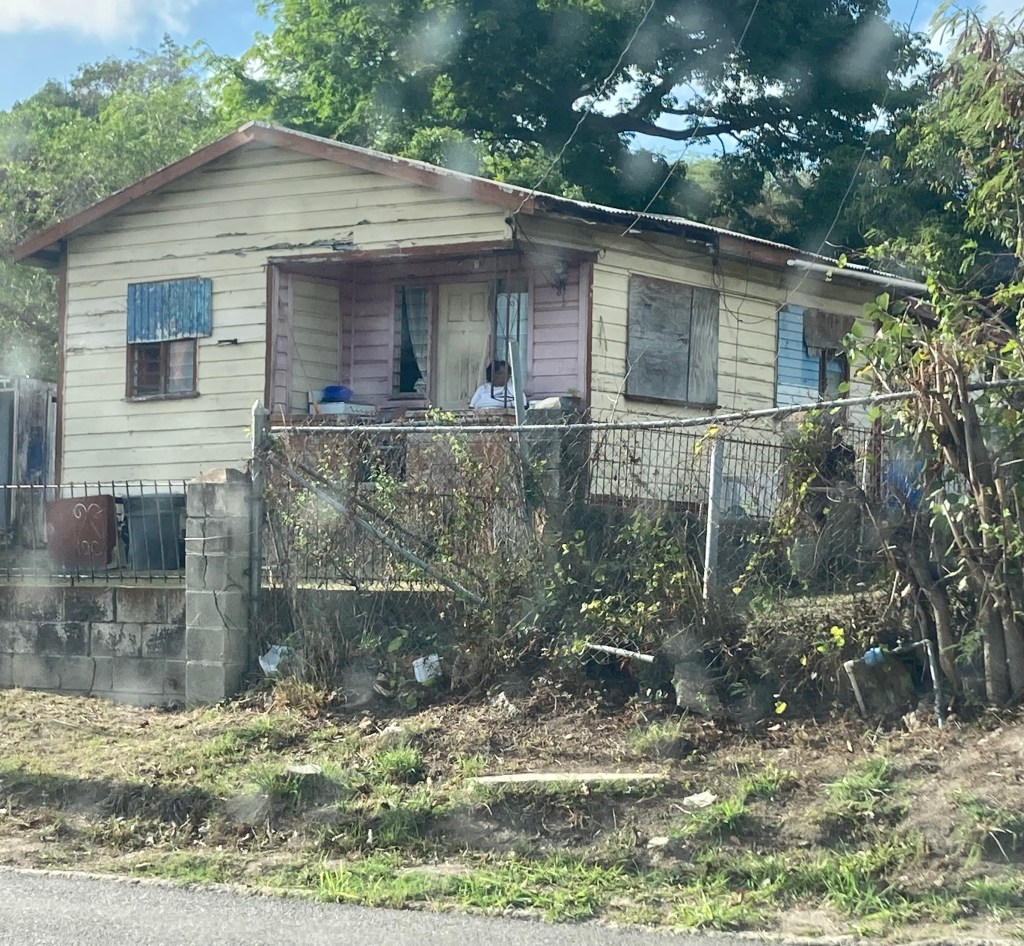
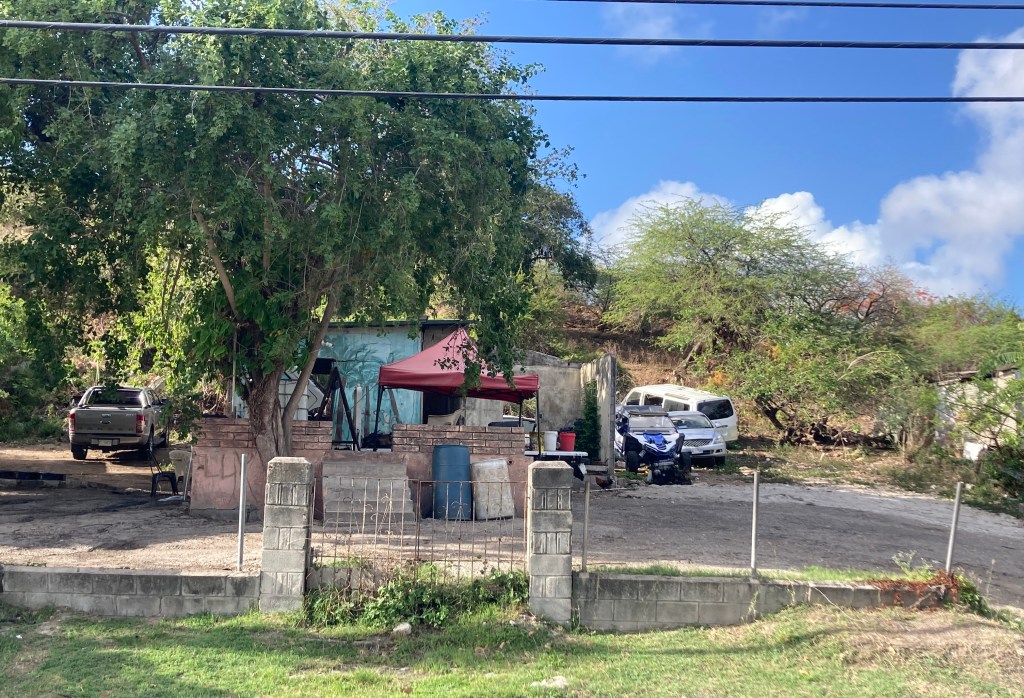
Why Doesn’t the Island Feel More Developed?
This tourism model helps explain why parts of Antigua can feel surprisingly quiet or underdeveloped despite the constant flow of visitors.
Because tourists are largely contained within resorts or cruise terminals, there is less pressure on the Government to invest in wider infrastructure, public transport, or community attractions.
Investment seems to be focused purely on the tourism industry itself rather than the neighbourhoods where local people live.
The Benefits
Luxury resorts generate significant revenue, create jobs, and help maintain the island’s reputation as an exclusive Caribbean destination.
Tourism undoubtedly, therefore, brings money into Antigua. It’s a vital source of economic activity for a small island of around 100,000 people.
The Human Cost
The challenge is that many Antiguans see only a fraction of the wealth tourism creates.
Jobs are often concentrated in hospitality and service work, which can be seasonal and relatively low paid. Opportunities for local entrepreneurship can be limited when large resorts keep most visitors spending in-house.
Many residents also feel the effects of rising living costs, environmental pressure on beaches and reefs and an economy that depends heavily on decisions made by foreign resort owners, cruise operators, airlines, and global travel companies.
A Fragile Success Story
Antigua’s tourism industry is both a blessing and a vulnerability.
It brings jobs, visitors, and valuable income, but it also creates an economy where much of the wealth leaves the island and many locals struggle to share fully in its success.
In many ways, Antigua is a place where tourism is everywhere, yet its benefits can sometimes feel just out of reach for the people who call the island home.
Final Thoughts:
After just one week of living here rather than simply visiting, Antigua is already revealing itself in ways we never fully appreciated during our previous Caribbean trip.
Beyond the postcard-perfect beaches and luxury resorts lies a very different reality; one of resilience, resourcefulness, and an economy that is far more fragile than many visitors realise.
Living here, even temporarily, means adapting to a slower pace of life, learning where and when to shop, accepting that opening hours are often only a rough guide, and understanding that the island operates according to its own rhythms rather than the expectations of tourists.
What has struck us most is the contrast between Antigua’s image and its reality.
Tourism undoubtedly keeps the island running, but its benefits are not always evenly shared amongst the people who call this place home. Spending time outside the resort environment offers a glimpse into both the opportunities and challenges that come with such heavy dependence on a single industry.
That said, what stands out just as much is the warmth of the people we have met. Whether chatting with market vendors, roadside stall holders, or local residents, there is a friendliness and openness that cannot be found in any travel brochure.
As our month here continues, we look forward to learning more about everyday life on the island, exploring beyond the tourist hotspots, and gaining a deeper understanding of what makes Antigua such a fascinating place to live as well as visit.
For now, one thing is already clear: the real Antigua begins where the holiday experience ends.
I hope you have enjoyed this first post about living in Antigua. If so please give it a “Like” and add any comments or feedback you wish to make 😊
 A Midlife Adventure
I’ve quite enjoyed this post and a lot of the issues you mentioned in Antigua are the same in Jamaica especially: astronomical food prices due to our high dependence on imports, and expatriation of the profits from tourism leading to a lot of locals struggling to afford a decent standard of living. I only recently learnt from an Antiguan friend that a lot of Antiguan businesses close outside of high season. I suppose we don’t have that problem in Jamaica just because we have a larger population. But hey, I’m sure you’ll continue adjusting to all the differences. Looking forward to your updates. Cheers!
LikeLike
It’s certainly different when you are staying here and not just passing through. The inequality has been eye opening but I have to say the everyday people seem to be happy with their lot and so friendly 😊
LikeLiked by 1 person
Very interesting! I hope you stay in good health, but wondering about healthcare there. If you need a doctor, where would you go?
LikeLiked by 1 person
As we are just trying it out for size so to speak we haven’t really worried about it. Our landlord is a dentist so I’m sure he will point us in the right direction plus we have medical insurance from the UK
LikeLiked by 1 person
Those dragon fruit look so good, they’re my absolute favourite.
LikeLiked by 1 person
Everything just seems super sized, maybe due to the beautiful sunshine and so much fresher than we get back in the UK
LikeLike