As I mentioned in my previous post, I hadn’t really done much research into Crete before we arrived. This wasn’t one of those holidays where we had a packed itinerary and a list of places we absolutely had to tick off. After everything 2024 had thrown our way, we were mostly looking forward to sunshine, slower mornings and a bit of time away from everyday life.
That said, I do have a copy of the Lonely Planet Greek Islands guide sitting on my shelf, and I had a quick look through the Crete section before we went. Two places immediately caught my attention — Knossos and Spinalonga.
The coach company at our resort offered trips to both, but the timings for Knossos didn’t really appeal. After our experience of Hersonissos the thought of arriving at one of Crete’s most famous archaeological sites at peak tourist time wasn’t exactly tempting. Spinalonga felt different. A half-day trip, a boat ride, a little bit of history and the chance to see somewhere away from the main resort areas sounded much more like our kind of day.
The journey itself was part of the experience. Our guide was friendly, welcoming and full of stories about Crete, and the drive towards Elounda passed quickly as we looked out at the changing landscape.
Crete is a fascinating island because it feels like much more than a beach destination. Yes, there are beautiful stretches of coastline and the kind of blue water you expect from Greece, but there is also a strong sense of identity here — from the villages and mountains to the food and the people who have lived here for generations.
Eventually we reached the coast, where our boat was waiting to take us across to Spinalonga.
The History of Spinalonga
The crossing only took around ten minutes, but it was enough time for the island to come into view — the old fortress walls rising above us, surrounded by the calm waters of Mirabello Bay.
It’s strange approaching a place that looks so beautiful when you know the history attached to it.
Spinalonga’s story is not a simple one. The island was once a Venetian fortress, built in the 16th century to protect the surrounding area, before later becoming part of the Ottoman Empire. But the chapter that has made Spinalonga famous is the one that came much later.
From the early 1900s until 1957, it was home to a leprosy colony.
People diagnosed with the disease were sent here, separated from the rest of society. At first, life on the island was extremely difficult, but over time a community developed. People worked, built homes, attended church, formed relationships and tried to create some kind of normal life in a place they had never chosen to live.
Walking through the entrance tunnel — known as Dante’s Gate — gave the visit an unexpectedly powerful start. This was the point where people arrived knowing they might never leave. Rather than joining a guided tour, we decided to walk around the island ourselves. The route takes around an hour, passing the remains of houses, shops, the church, the hospital and eventually the cemetery.
The buildings are weathered now, many reduced to ruins, but that almost made it easier to imagine the lives that once filled them.
There is something about abandoned places where you can still see traces of everyday life. The streets weren’t just pathways — they were where people walked, talked, bought food, met friends and carried on as best they could.
Part of the old shopping street has been reconstructed, and although it is quiet today, standing there I could almost picture it when it was alive. The sound of conversations, doors opening, people going about their routines.
It reminded me a little of Alcatraz in California. Not because the two places are the same, but because of that feeling of being surrounded by beauty while also understanding the isolation. People here could look out across the water, see the mainland in the distance, and know they were separated from it.
The most moving part of the visit for me was reaching the cemetery.
There is a quietness on Spinalonga that is difficult to describe. The empty streets, the old stone walls and the knowledge of what happened here create an atmosphere that stays with you. It is not frightening, exactly — just deeply reflective.
The story of Spinalonga has also been brought to a much wider audience through Victoria Hislop’s novel The Island. I hadn’t read it before visiting, but standing there amongst the empty streets and old stone buildings, I found myself wishing I had.
The book, inspired by the island’s history and the lives of the people who were sent there, has helped bring Spinalonga back into the public imagination. It’s easy to understand why. When you walk around the island, you don’t just see abandoned buildings — you start wondering about the people behind them. Who sat in these houses? Who worked in the shops? Who looked out across the water and dreamed of the life they had left behind?
Before leaving, we stopped at the small museum and café near the water. It felt like a gentle way to end the visit after walking through such a heavy piece of history.
I arrived at Spinalonga expecting an interesting day trip. I left feeling like I had stepped into the middle of someone else’s story.
It’s easy when travelling to focus on the views, the food and the places we can photograph, but sometimes the destinations that stay with us are the ones that remind us of the people who were there before us. Spinalonga was beautiful, yes — but it was the human stories behind the walls that made it unforgettable.
I have already written a post outlining our thoughts on taking a holiday versus going travelling “Our Journey: From Holidays to Authentic Travel Experiences” and to be honest didn’t really imagine back then I would be writing a part two but here I am sat on a sofa in an apartment in Crete doing just that!
2024 has been a tough year for us and whilst we had not originally planned to do any further travelling this year we also didn’t expect this year to unfold the way it has. We had made the decision in September 2023 when we returned from our six months away that we would spend the next twelve months making real life decisions. My husband retired in March 2023 when we set off so we really needed to find out: 1/ Can we live together full time now we are both retired? 2/ Can we live off the monthly pension allowance coming in every month in addition to putting money aside to continue our future travel plans? 3/ Did we want to remain in our current house or did we want to move out of the area in order to buy a property a bit more secluded and more to our ideal taste? Alternatively did we want to downsize in order to release capital from our current home and reduce our monthly bills? 4/ If we chose to stay what outlay was there going to be in order to deliver the home and garden we wanted for retirement?
The first reality check we had was the enormous and unexpected hangover we suffered when we returned from travelling. See my previous post ” Real Life When The Trip is Over”
Christmas came and went, then on New Year’s Eve we received a telephone call at 10 p.m. which catapulted us into 2024 with a bang. This was just the beginning of what turned into a constantly changing landscape where we were dealing with the unexpected on more than one occasion. Every member of our close family was touched by one issue or another.
Crete: We decided, in order to give us some respite from what 2024 was constantly throwing at us, we would book a holiday to Crete for two weeks. I did little or no research into where we were going as this was a holiday and the plan was to relax.
Here we are on our final night of our two week holiday and what a rollercoaster it has been. In the last six years, not withstanding the time at home due to Covid, we have spent:
8 weeks road tripping around England and Scotland 4 weeks island hopping in Greece 3 months touring Western Europe by train then 3 months road tripping in the USA
I know, compared to some, we are still fairly new to this world but in flying out to Crete to actually stay in one place, relax around a pool in the sunshine for two weeks we didn’t really give our travelling experience a second thought. We’ve been away on holiday before so what can go wrong?
Do you remember the days before the “all inclusive holiday”? I do. I remember spending many summer holidays in Fuerteventura in the Canary Islands when my children were small. The day would begin early with breakfast in our apartment, then the children would eagerly get in the pool. Happy to stay there all day, playing and making new but temporary friends I was left to switch off from work, relax, read and get a bit of a suntan. Lunch would be back in the apartment and then in the evening we would all get showered and changed and go out for dinner. Exploring the local restaurants and cuisine was half of the fun of our holiday. My children grew up culturally more aware as a result and still happily try anything once.
We took a break from Fuerteventura in 2005 returning in 2010, as a bit of a final farewell to an island that my children saw as a second home where they fine tuned their conversational Spanish and made friends from another country. Wow! what a difference in just a couple of years. Many of the small restaurants that had been favourite haunts had disappeared. They had fallen foul of the mass tourism, package holiday deals which were now all inclusive. A new generation of children and teenagers were now coming through the “holiday abroad system” completely unaware of the culture of the land they were now in, as package deal hotels laid on breakfast, lunch and dinner, “eat as much as you want” at the buffet. Mum and Dad could also now drink all the local beer, wine and spirits they wanted all for one price paid in advance before you even step onto the plane! This generation of teenagers are now parents themselves and thus the cycle continues with them bringing their children abroad on the same style of all inclusive holidays!
Whilst we are not booked on this type of holiday as we have used our holiday ownership to stay here, most of the other visitors are and it’s really quite weird watching this play out. It’s like they have transported themselves from one country to another and then just picked up their lives here. There doesn’t appear to be much interest in exploring the island, learning about ancient civilisations or understanding the Greek culture. There isn’t even much socialising. Admittedly there are a lot more different nationalities than fifteen years ago but each family seems to remain within their own unit. I’m not seeing children playing in the pool together or making new holiday buddies. Even their parents seem to be keeping themselves to themselves. They just seem to want to exist within this bubble for a week (most only come for 7 days) and then return home showing everyone their wonderful tan and telling family and friends about their wonderful holiday.
Brits Abroad! We arrived on a Friday and with two weeks stretching in front of us, we chilled out around the pool for a couple of days. We tried the “all you can eat” buffet” on the Friday night for dinner, the pool bar for lunch/dinner on the Saturday and then the buffet again for breakfast on the Sunday. Our resort is high up on a hill, quite detached from humankind, with magnificent views across the nearby mountains and a free shuttle bus down to the local main town of Hersonissos running several times a day. So eager to explore we caught the bus down into town on Monday morning having no idea what to expect.
Making our way to the seafront we decided to walk along to the harbour. The narrow streets were lined with a never ending collection of bars, restaurants, tacky souvenir shops and even a couple of “ladies clubs”. Everywhere we looked signage, menus and even printed t-shirts were in English. There was absolutely no evidence of Greece. We could have been anywhere. It felt like a seaside town in England with guaranteed sunshine.
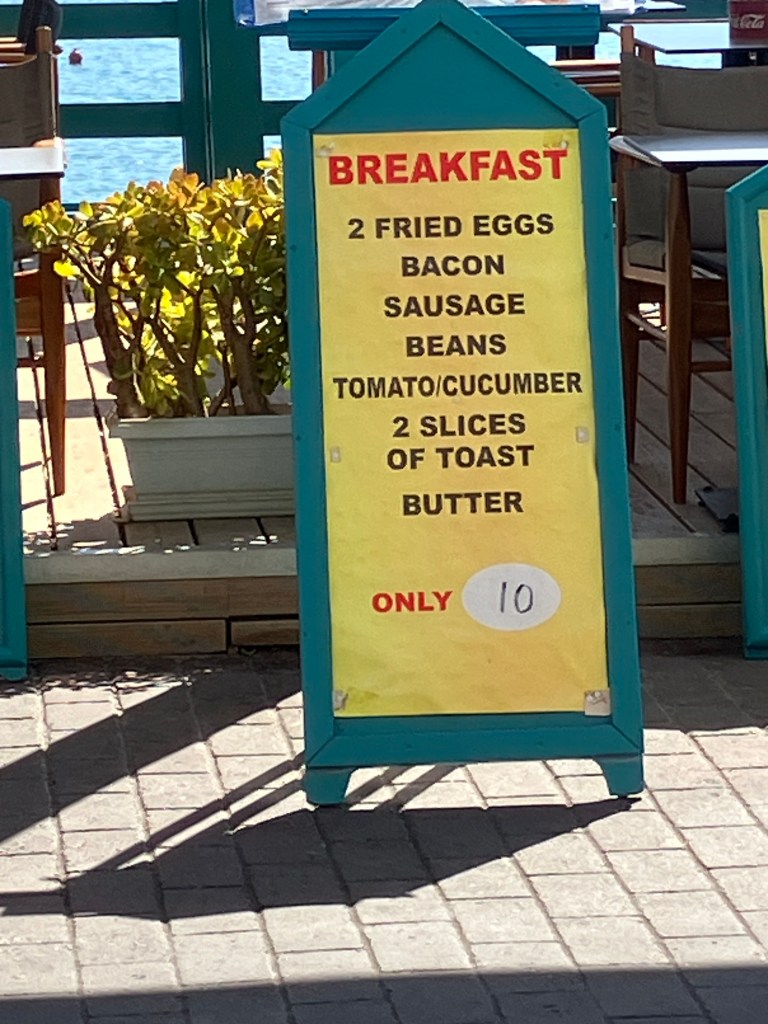
We have a term for this type of resort it’s “Brits Abroad” . Have you ever watched the film “Shirley Valentine” ? it’s a comedy/romance that came out in 1989 based upon a lady who escapes the confines of Liverpuddlian married life and takes herself off to Greece. Some of the reactions of the fellow guests in her hotel sum up for us a “Brits Abroad” mentality where fellow Brits travel to other countries and want it to be the same as it is at home. This mentality still lives and breathes across Europe and the really sad part about it, other than the boards outside restaurants advertising English breakfast, is how the locals so desperate for the tourist pound, change their lives and their culture to pamper to this demand.
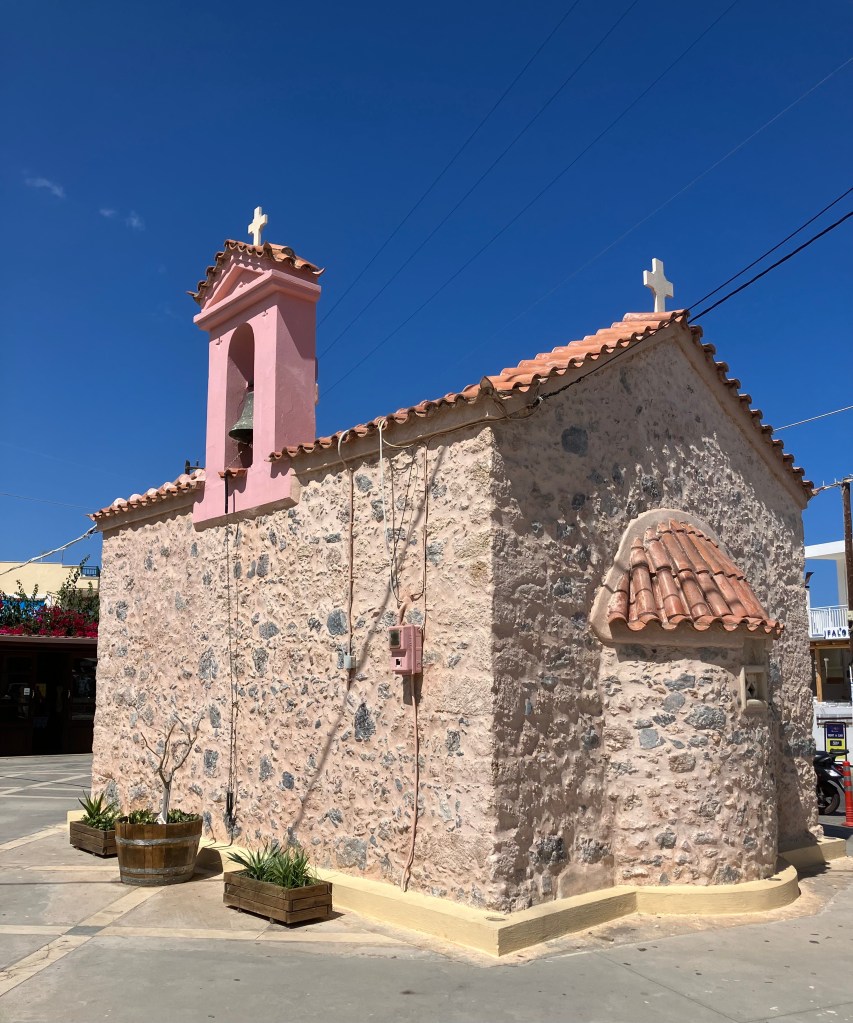
Suddenly what was once a beautiful, quaint, town on the edge of the sea, founded 3500 years ago by the Minoans, grows into something that the older Greek generation cannot even recognise. All the authenticity is lost and you even find small Greek churches poking out from amidst this tourist chaos.
The narrow strip of sand that masquerades as a beach is absolutely heaving.
The harbour is no longer full of fishing boats returning from the morning catch but instead is overshadowed by two large imitation pirate ships loading their passengers for the “all day adventure” at sea. As they leave the harbour the drinks are already flowing, the buffet is being prepared for lunch that is a poor imitation of real greek food and the music will be playing. At some point they will drop anchor in a previously quiet bay with clear water just inviting them all to jump off and go for a dip. This whole scene is just so predictable and quite honestly as I’ve said before sad. These people are not learning anything about the island, the Greek food or the people, they are just bringing their British culture to yet another seaside resort in the Mediterranean. This is no different to the time of the empire when as a country we happily took the British culture abroad and embedded it in countries such as India.
Our trip into town was short lived that day as we quickly made our way to the local large supermarket to pick up some supplies and then caught the bus back to solitude.
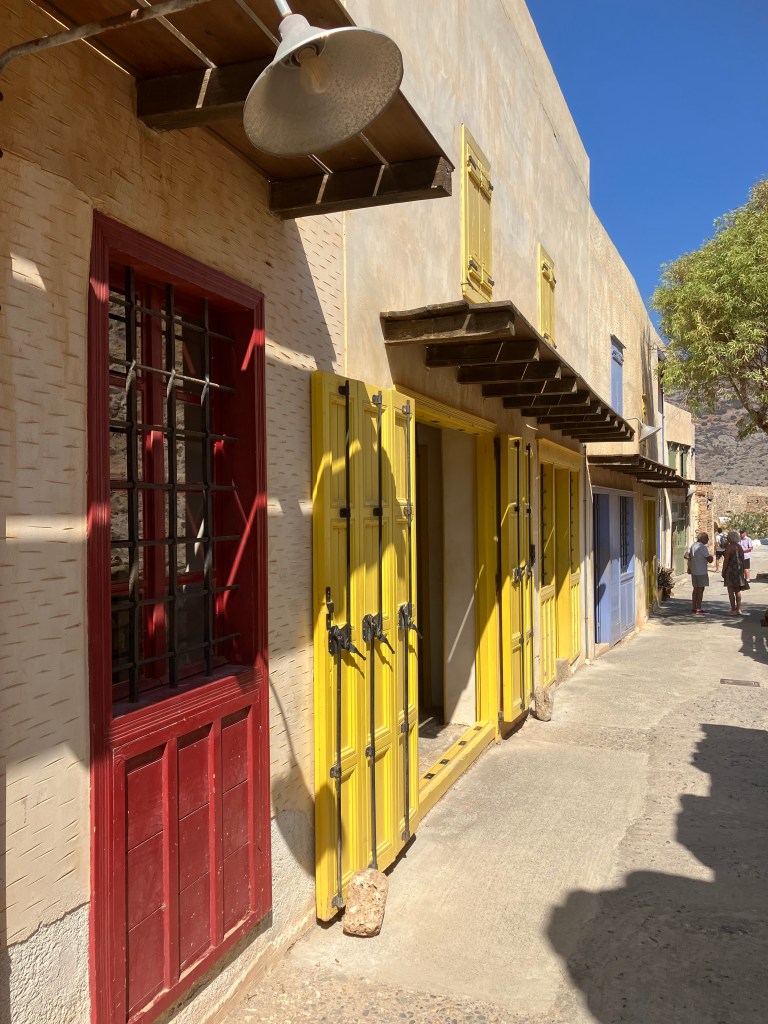
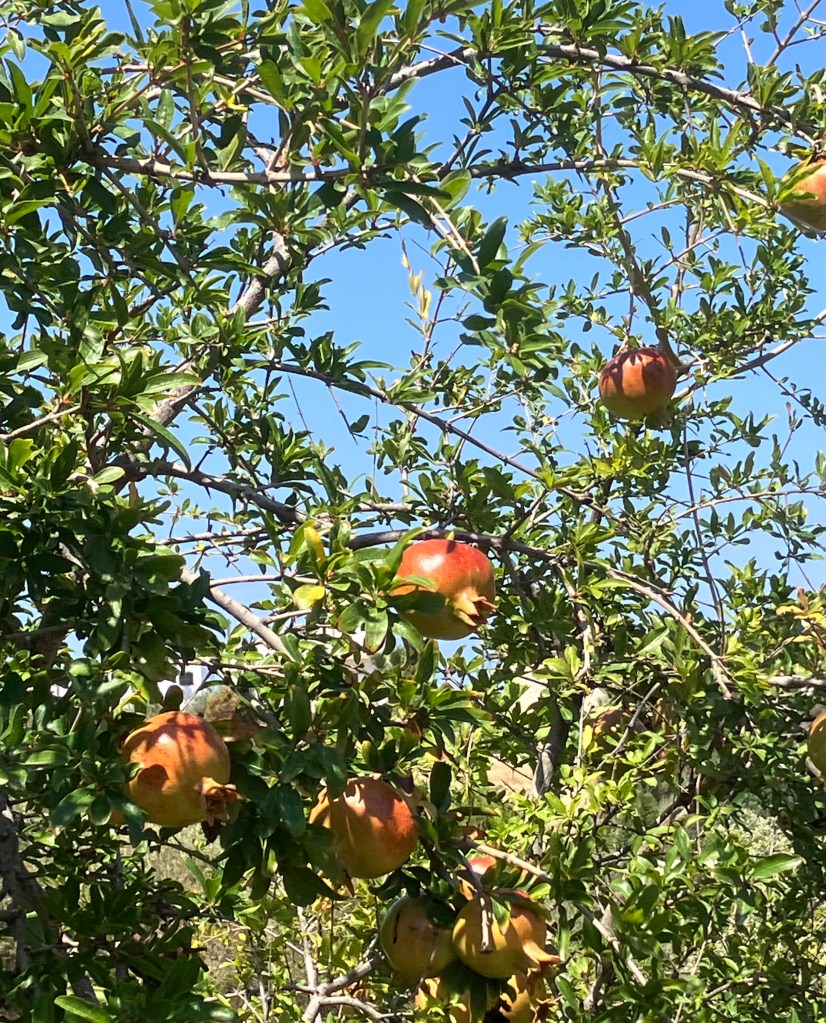
We had deliberately not chosen to hire a car on this trip as we were coming here to relax, unwind and catch our breath before going home to plan further travels. Without a car we found ourselves, at times, a little stranded. We did manage to utilise the shuttle bus to our advantage and get off to walk through the village of Old Hersonissos with lime and pomegranate trees (see photograph above) lining the narrow road and even some grapes that we could easily have “borrowed”. This is a small friendly village located less than two miles north of the “new” Hersonissos. It is located on the slope of Mount Charakas and from here we were also able to walk west to the villages of Piskopiano and Koutalafari where we ate at a couple of traditional family owned tavernas with more authentic Greek food.
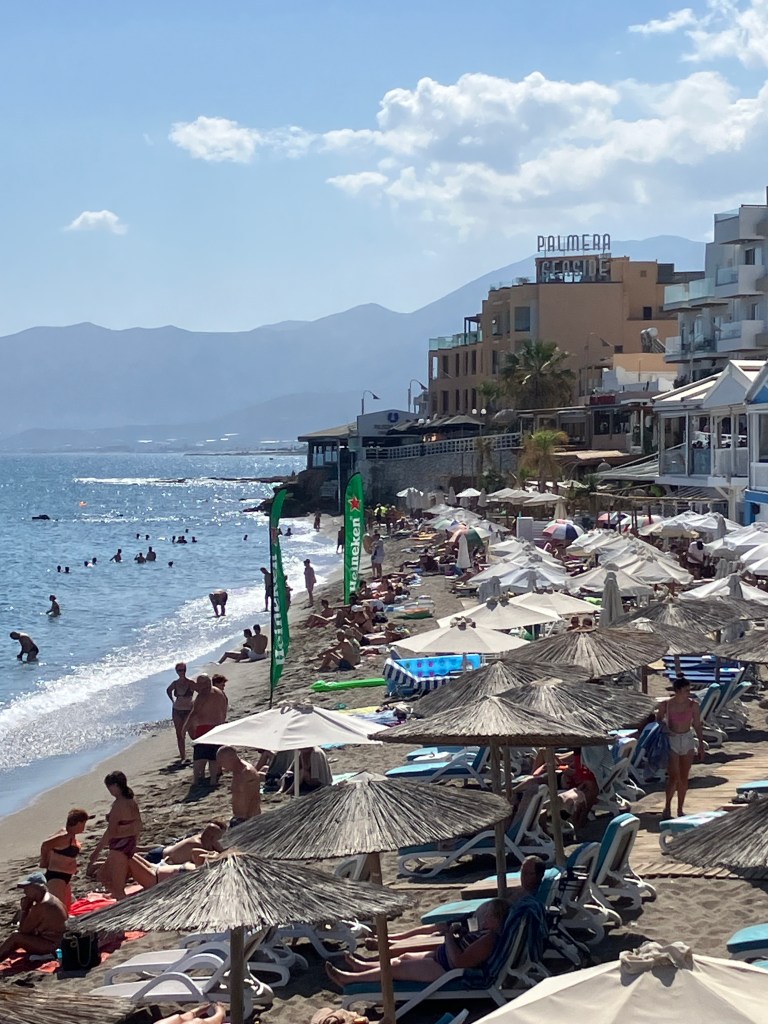
We also took the shuttle bus down to a “sister resort” a bit further around the coast from Hersonissos at Stalis. Here we did partake in the touristic ritual of hiring a couple of sunbeds and an umbrella for the day and actually getting to spend some time on a beach. It was still pretty crowded but at least lunch wasn’t a “Brits Abroad” menu and the whole place was immaculately clean and very welcoming. We also returned on another day and in need of some presents to take home wandered down through the shops and on out onto the coastline where we found an amazing quiet and peaceful cove to take a dip in the crystal clear blue sea and have an amazing lunch at another family owned taverna.
Our actual resort also had a list of coach trips available. Not normally our cup of tea but we thought we would give a half day tour a go and visited the island of Spinalonga which I will write about separately. Suffice to say the trip was good but being herded on and off a coach with set time frames to deliver to, isn’t us.
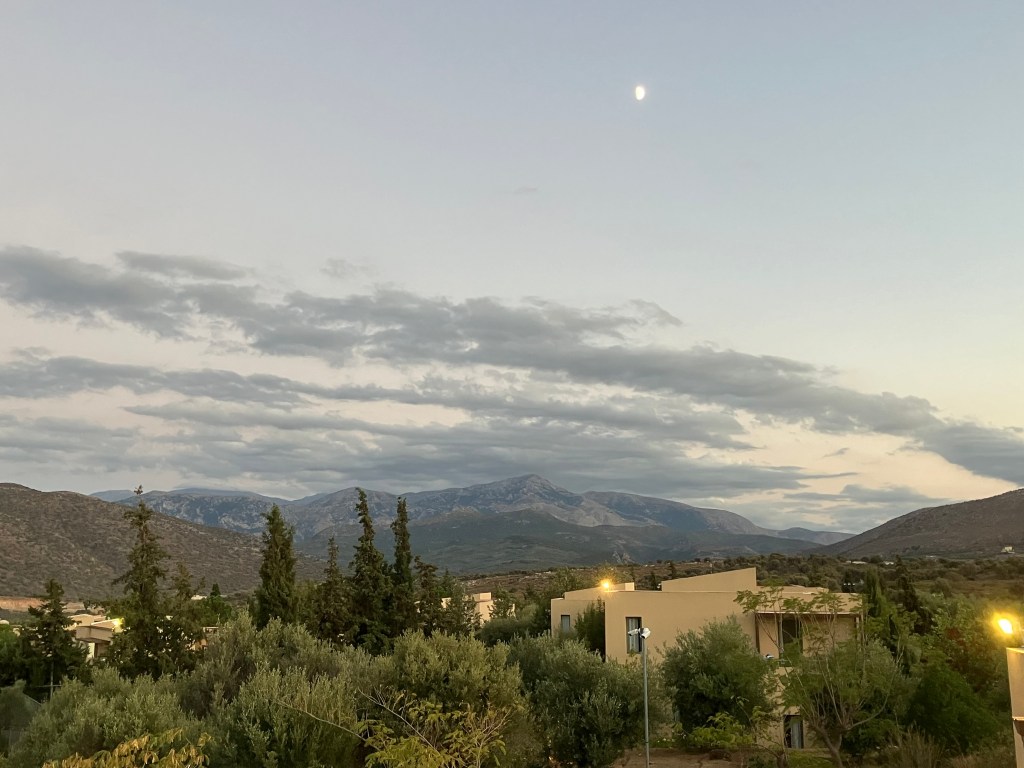
“Can you go on holiday when you are used to going travelling? There is no doubt that we achieved our main aim of relaxing in the sun, recharging our batteries and refreshing our tired minds and bodies from everything 2024 has thus far chucked at us. The view from our balcony was a welcome treat every morning when I stepped outside to have breakfast or watched the sun go down and the moon come up at night.
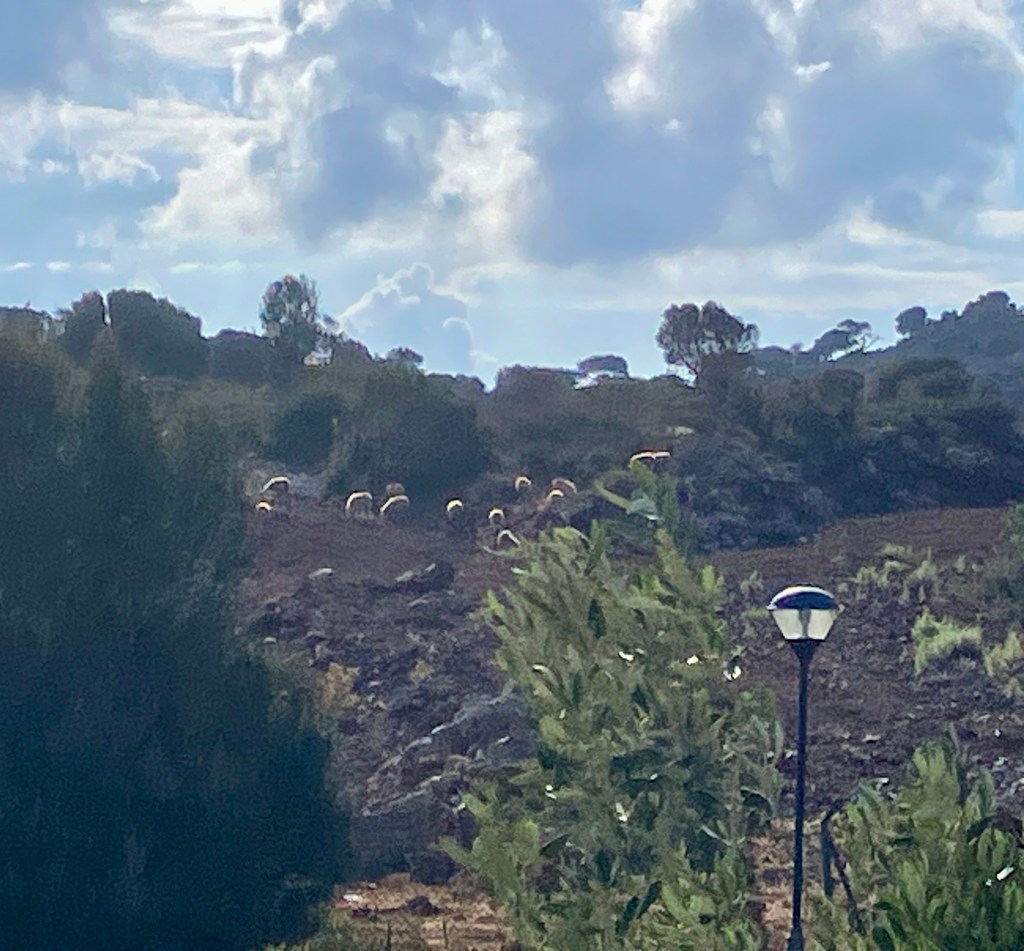
I also became used to the sound of the bells jangling as the local sheep and goats made their way down from higher pastures as the afternoon came to a close.
However we missed: The solitude and the freedom of doing what we want when we want The interaction with people. One of the loveliest parts of driving Route 66 was all the different people we met en route from locals to fellow road trippers. The excitement of exploration. For example we will always remember driving down a winding coastal road into a small hamlet on the coast of Naxos with one taverna and a family eagerly waiting to greet us and share their culture and food at a leisurely pace. Time standing still, being able to poodle along at our own pace, beholden to no one but ourselves The laughter of our own shared company when the unexpected happens or things don’t go quite according to plan
For us this holiday has led to many discussions, reflections and foresights. Whilst we may well return to Crete, in the future, in order to explore it properly over a much longer period of time we have discovered that travelling provides greater stimulation and personal freedom to us than a holiday. This trip was unfortunately sorely lacking in these two areas. The answer, therefore, to the question posed at the start of this section is “No, you cannot go on holiday once you have been travelling!.
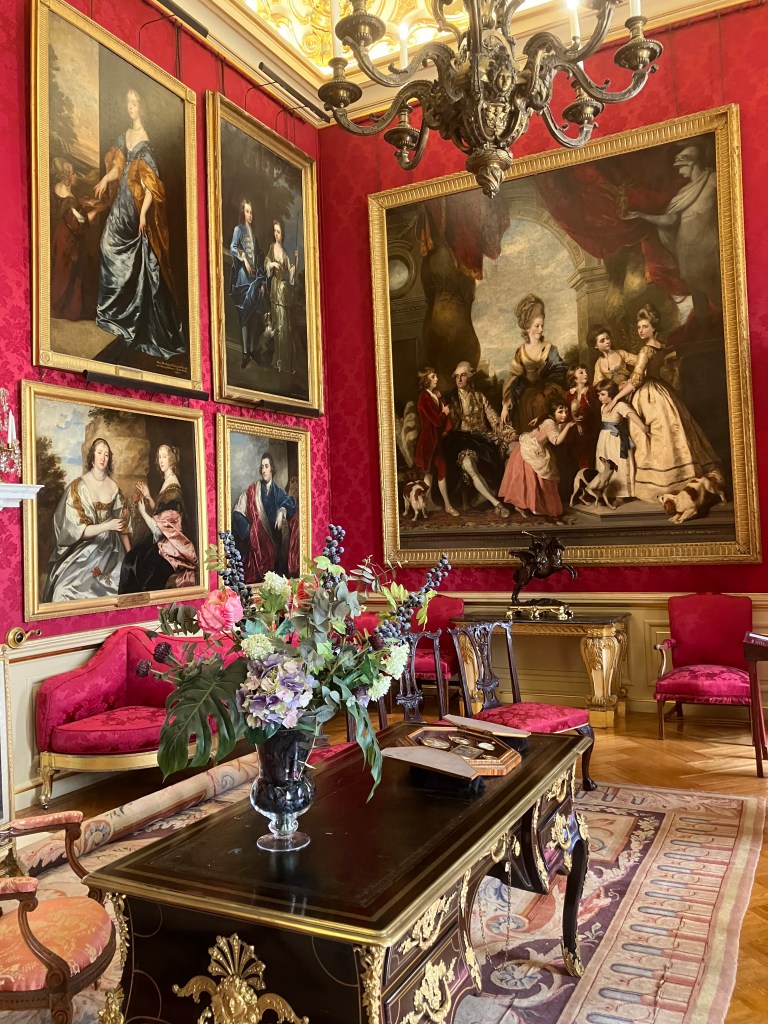
Unfortunately on that occasion we were unable to access the house itself and so we returned this Summer to finally get a much wanted peek inside.
The History of the Palace: Historical houses have always held a fascination for me particularly those that have lovely architectural features. Blenheim is the only non -royal, non -episcopal country house in England to hold the title of a Palace and was built in the English Baroque style. One of England’s largest houses, it was built between 1705 and 1722, and designated a Unesco World Heritage Site in 1987. Queen Anne rewarded John Churchill, 1st Duke of Marlborough, with the estate for his military triumphs against France and the Bavarians in the War of the Spanish Succession which culminated in the Battle of Blenheim. With her husband John away at war, Sarah, Duchess of Marlborough, oversaw the construction of Blenheim Palace which began in 1705. Sarah was a powerful woman. As Keeper of the Privy Purse, she effectively controlled the Queen’s budget. It was rare for a woman to reach such heights. Sarah’s first choice of architect was Sir Christopher Wren, architect of St Paul’s Cathedral and later of Sarah and John’s own London home. John, however, disagreed and instead appointed Sir John Vanbrugh to create his Palace. Previously a playwright, Vanbrugh was keen to present the palace in an opulent and decorative English Baroque style and chose only the best and most expensive materials, seeking out master craftsmen to deliver his ideas. Sarah felt he was too extravagant and ignored her instructions and soon took a dislike to the man. Their relationship eventually became so stormy that it disrupted the project.
The Marlboroughs troubles, unfortunately, didn’t stop with Vanbrugh. Their relationship with Queen Anne also broke down, and they were dismissed from their royal posts. As a result in 1712 they left England for Antwerp and the Queen ordered all building work on Blenheim to stop. This remained the case until Anne’s death in 1714 when John and Sarah were able to return to England and restart the project, this time at their own expense. The Duke died in 1722 and thus never saw his palace completed. Sarah continued with the project, completing its construction as a dedication to her much loved husband.
Following the palace’s completion, it became the home of the Churchill ( later Spencer-Churchill) family for the next 300 years, and various members of the family have made their own changes to the interiors, park and gardens. The Palace went on to become the birthplace of Sir Winston Churchill. There is an exhibition on site (to the right of the main Palace entrance) dedicated to this world famous head of state with photographs, letters, artefacts and excerpts from his most famous speeches.
Touring the Palace: With our free admission we didn’t have to book our visit but did arrive early at 10.15. The gardens currently open at 10 and the Palace at 10.30. Being the school summer holidays the car park was already busy. It’s always worth checking their website in advance of any visit because they do shut the Palace for filming (part of the latest series of Bridgerton was shot here). There is currently an additional tour that can be booked (up to September 30th) entitled The Bridgerton Trail if you are a fan! There are also special events during the year, including weddings of the rich and famous, when the Palace isn’t open and exhibitions are scheduled which may affect your visit. There is a map available on their website which you can utilise to plan your visit or alternatively you can pick up a leaflet on arrival. Guided Palace State Room tours also take place daily at 12:00 and 14:00. These are included with a valid Pass or Palace day ticket, starting in the Great Hall. No need to book, you just turn up! If you are intending to see the Palace and explore the grounds my recommendation would be to allow up to six hours. If the weather is in your favour it’s a great place to bring a picnic or there are places to buy food from a coffee to afternoon tea (this needs to booked in advance). To arrive at the Palace entrance you need to walk through the East Courtyard into the Great Court and the entrance is then on your left. You can download an audible tour inside but you ideally need your own headphones and plenty of phone battery.
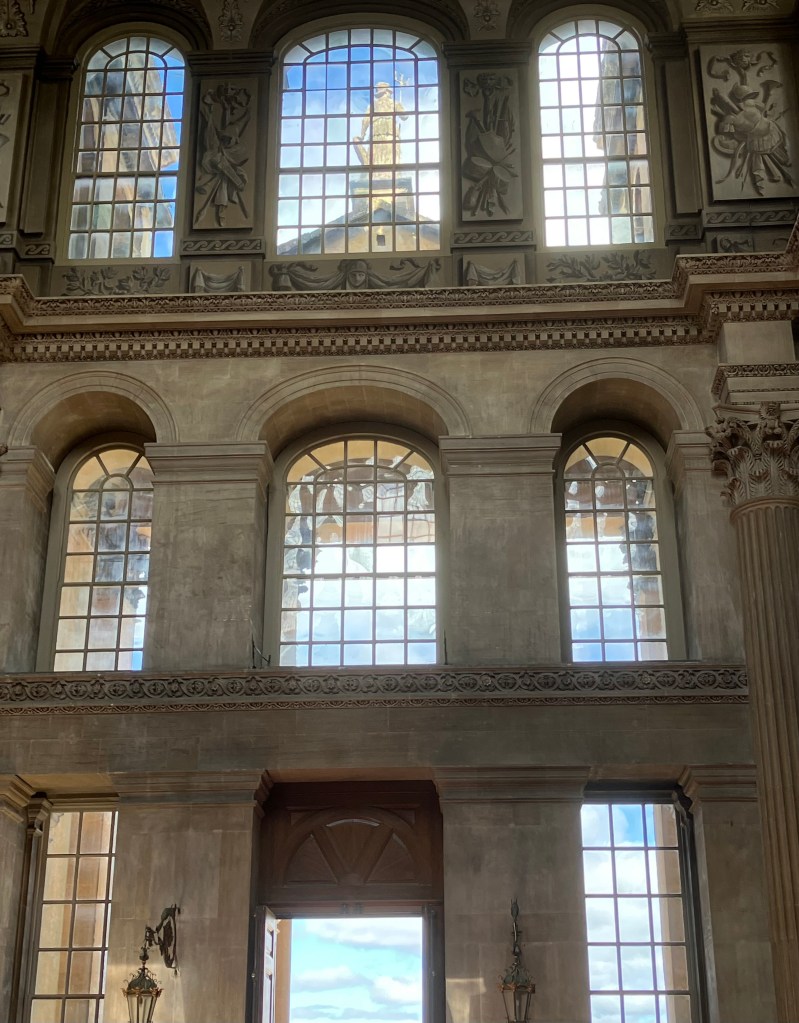
Walking in you immediately are met with the magnificent Great Hall. This brings to mind all those stories I read as a school girl written by the Bronte sisters and films I’ve watched based around the Royal family and their ancestors. If you stand there for a moment you can just imagine the carriages drawing up to the front steps and those ladies resplendent in their gowns and jewellery making their grand entrance to a ball. The ceiling which is 20 meters high was painted by Sir James Thornhill who also painted the dome in St Paul’s Cathedral. The entrance door is the original oak door made in 1715 with a key that weights 3.5 lbs! The arch windows above the door are beautiful letting in the summer light as we begin our tour.
If you look up you will also see a ledge around the edge of the room. During WWIl boys from Malvern College were evacuated to Blenheim Palace and during the blackouts, these boys would have to climb the staircases hidden in the columns either side and climb onto the 2ft wide ledge to close the curtains!
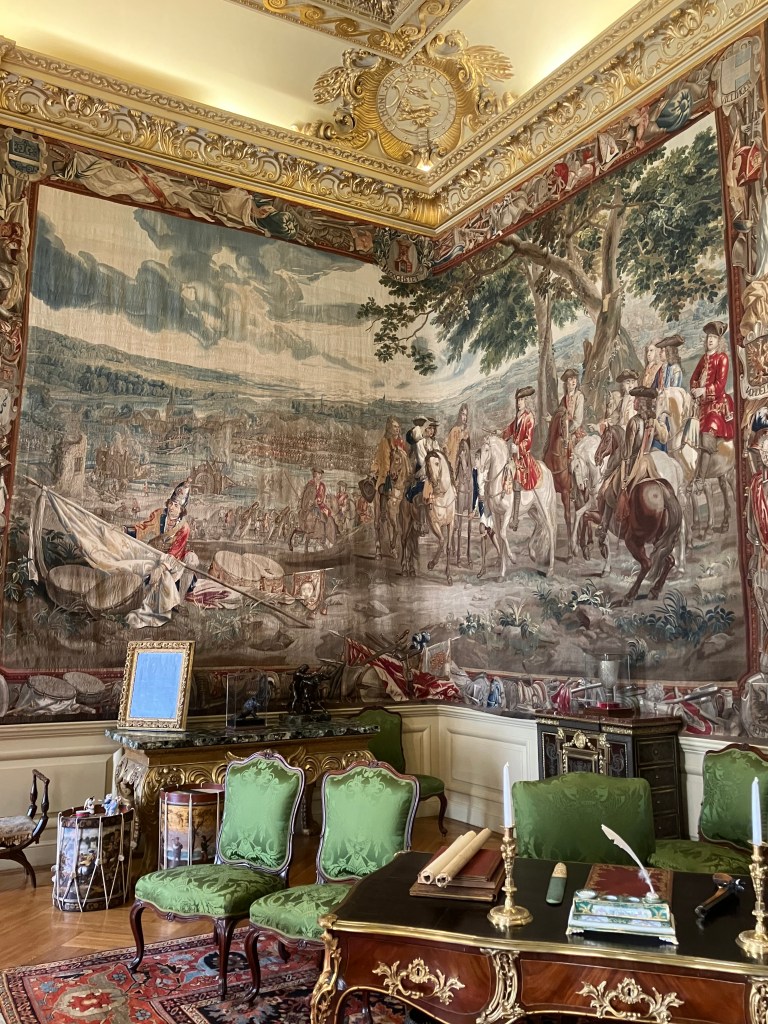
The tour of the State Rooms is very easy to follow and you can listen to every description of each room on the audio tour or skip if there are elements that don’t interest you. A couple of my highlights were: The fantastic paintings of those who have lived here set amongst some beautifully decorated rooms with priceless furniture of the time.
The original tapestries lining some of the walls in place of wallpaper
The statue of Queen Anne in the library along with the astounding collection of books. Again it harps back to an era when before television and radios were invented gentle folk had to find their own pastimes and would happily spend time reading.
It is worth noting that you can buy an additional ticket in advance if you wish to visit the Upstairs or Downstairs of the Palace. Both of these tours run individually and are currently scheduled at 11.00, 12.00, 14.00 & 15.00.
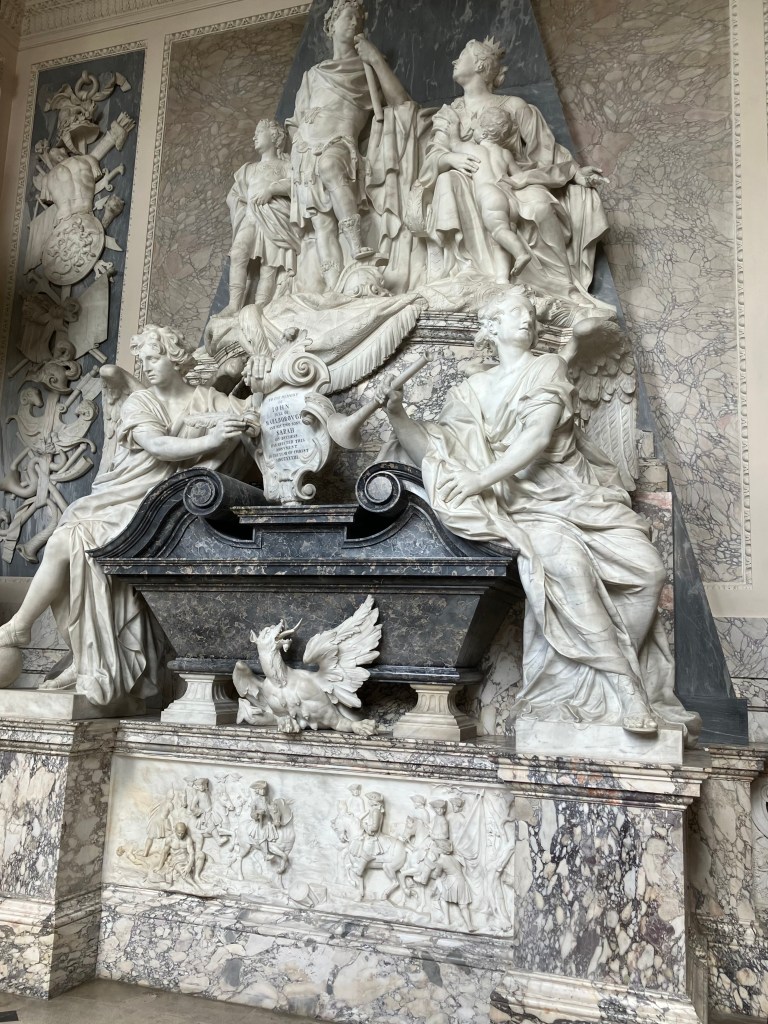
When we had finished the tour of the State Rooms we made our way into the chapel. Following the death of Duchess Sarah in 1744 the Duke’s coffin was returned to Blenheim from its temporary resting place at Westminster Abbey and husband and wife were interred together. A tomb was erected and completed and Blenheim Palace then became not just a Palace and Gardens but also a mausoleum with successive family members also being placed here after death.
We spent the remainder of our day strolling the gardens. We had already visited the Formal Gardens and Water Terraces on our previous visit along with the Walled Garden and so we made our way to Vanbrugh’s Grand Bridge in order to begin the Queen Pool walk. The bridge is thus named because the architect designed and created a bridge originally of such huge proportions it was reported to contain some 30 rooms!
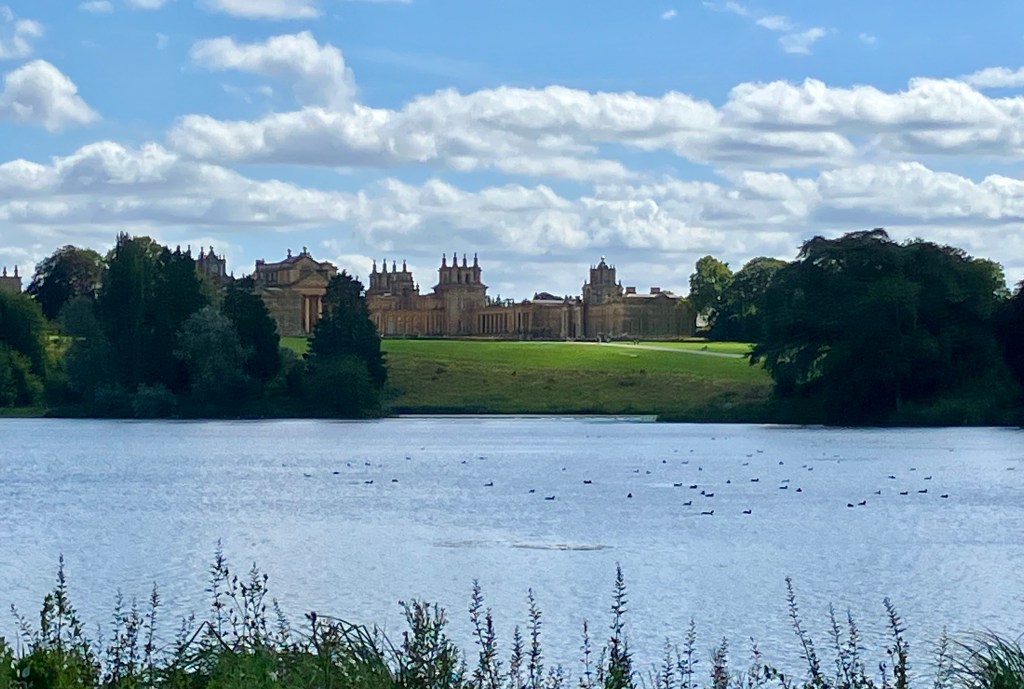
The 4th Duke of Marlborough in 1764 employed the now famous Capability Brown to transform the landscape into something more natural. Brown is forever associated with the redevelopment of the lake here at Blenheim. This huge stretch of water was created by damming the River Glyme and enhanced by a series of cascades, where the river flows in and out, which we had previously visited. He then narrowed it at the point of Vanbrugh’s grand bridge, but the three small canal-like streams that originally trickled underneath it were completely absorbed by one river-like stretch. Brown’s greatest achievement at this point was to actually flood and submerge beneath the water level the lower stories and rooms of the bridge itself, thus reducing its great height and achieving what is regarded by many as a quintessential English landscape.
The walk was easy to follow and allows you views across to the small islands within and back across to the Palace itself.
Again your imagination can run riot and imagine those genteel folk strolling in the summer sunshine admiring the views and magnificence of this astounding Palace.
NB: This is the eleventh post in my series about the wonderful “Cotswolds”. This is an area of England that you really shouldn’t miss out on visiting if you are coming to the UK. It’s full of olde world charm, history going back to the Roman era and beautiful architecture.
Check out previous posts in this series. Please don’t forget to comment and/or like. Thank you
What does a midlife lady do when it’s pouring with rain, on a August Bank Holiday Saturday in the Cotswolds? Go to the Big Feastival of course! This festival held over the August Bank Holiday weekend every year takes place in Kingham. It originally began in 2012 when Jamie Oliver, celebrity chef, restauranteur and cookbook author and Alex James, bassist for Blur, decided to create a combined music and food festival. The duo initially planned to host the event in Victoria Park in London to coincide with the London Summer Olympics, however due to branding restrictions this plan was cancelled and it was moved to Alex’s farm in the Cotswolds.
Being a massive fan of Jamie Oliver I had thought about attending for many years. Not only do I have nearly every cookbook he has ever written but I love his down to earth approach, family orientated vibe and crusade to bring good, healthy food to every household. I don’t have time for all that Michelin star “pretty food” where after three bites you’ve eaten over £100 worth of fancy cooking. I want to watch cookery programmes full of honest to goodness recipes that I can easily follow and reproduce at home with a presenter that just knows how to talk to us “normal folk”. I never miss a cookery series if Jamie is fronting it!
Alex James conversely plays in a band that I would never buy tickets to see. While Blur and Oasis were competing for the Britpop top act in the mid 90’s I was busy going to see Bon Jovi at the Milton Keynes Bowl! Alex did, however, realise the words of his famous song Country House “Oh, he lives in a house/A very big house/In the country” when he and his new wife famously bought the farm in Kingham whilst on their honeymoon in 2003. Together they renovated the 200 acre estate and turned it into, amongst other things, a cheese farm.
Despite the fact that Jamie left as co-host of the Festival after just five years in 2017, I felt that if I was to fulfil my ambition of actually “getting down with the kids” and attending a festival this would be the right starting point for me. The Feastival is billed as “the place to experience music from top acts, tuck into top chef demos in the Big Kitchen and have your fill from The Menu, featuring the cream of the UK’s street food crop” We had toyed with the idea, initially, of going all out and staying in a bell tent for the weekend. With various levels of this type of accommodation to choose from you could opt for a tent “offering top-notch facilities for ultimate relaxation and comfort. Expect everything from raised beds with memory foam mattresses, power sockets and hanging clothes storage, to hot showers and flushing toilets; plus a cinema tent to chill out with a film and some popcorn; and even a pamper tent to get yourself feeling festival fabulous.” But with prices starting around the £750 mark we opted instead to part with £220 including parking, refund protection and a “keep sake” programme to just try it out for one day to begin with. This transpired to be the right decision for as subsequently I photographed some of the bell tents up on the hillock overlooking the feastival activities and they were so close together, there cannot of been any privacy!
And so on the day we rolled up, around 10.30 in the morning, in my 4×4 truck happily anticipating a gentle introduction to festival life having never experienced anything like this before. We put on our walking boots, raincoats, plastered a smile on our faces and stepped out into the pouring rain ready to explore this music/ food phenomenon.
And this is the point where if you are looking for a rave review of what is considered by some to be the ‘Glastonbury of the Cotswolds’, you need to put this blog post to one side and do your own research. There are many wonderful reviews of this event including a report by a site called “buildingyourownnashville.com” which will extol the virtues of the event. We, however, didn’t get it “at all”……
We began our exploration by turning right, passing the Marks and Spencer bar and store (they are one of the main sponsors this year) and heading to the merchandise stand to pick up our very small programme incased in a plastic sleeve with a Big Feastival ribbon to hang it around your neck. Heading across to the right we stopped at the Nespresso stand to grab a morning coffee. The covered hay bales with comfy cushions offered an early respite from the rain and gave us a chance to have a look through the programme. I then handed it over to hubby to navigate us around and thus we set off on a clockwise exploration of the Village Green.
We strolled past the M&S Cookery School where you can book to take part in an interactive cooking experience, personally this wasn’t very appealing to us. Next door is their “Little Cooks” Tent where the aim is to educate children about food whilst allowing them to get hands on in an interactive cooking class. The whole weekend is very geared around being a family festival and this was very evident throughout.
Passing the Bandstand which hadn’t opened up yet we managed to secure a seat in the “The Big Kitchen”. With a programme of daily events clearly displayed outside and also incorporated in our nifty programme we decided to sit and watch “Meliz Berg”. Having researched this lady on the internet, whilst sat awaiting her demonstration at 11.30, she is “a self-taught cook, recipe developer, and food content creator. Inspired by her Turkish-Cypriot heritage, and her experience of growing up in a household that combined both traditional Cypriot and London living, she created the blog and Instagram page Meliz Cooks”. We had never heard of her but then we are midlifers who don’t spend every waking minute attached to a phone. To be fair she was very engaging and following her class, if that is what you call it, I did pop next door afterwards to peruse her new cookery book.
Moving on we passed the “Table Sessions” tent which again is a bookable, thirty minute experience where you can take part in a workshop or tasting session with chefs, brands and industry experts. I had perused this on line when I was sent an email, in advance, notifying me of the need to book but frankly didn’t recognise any of the names listed? Maybe that’s not the point and you are suppose to just “give it a go” but I’m afraid I didn’t feel inspired.
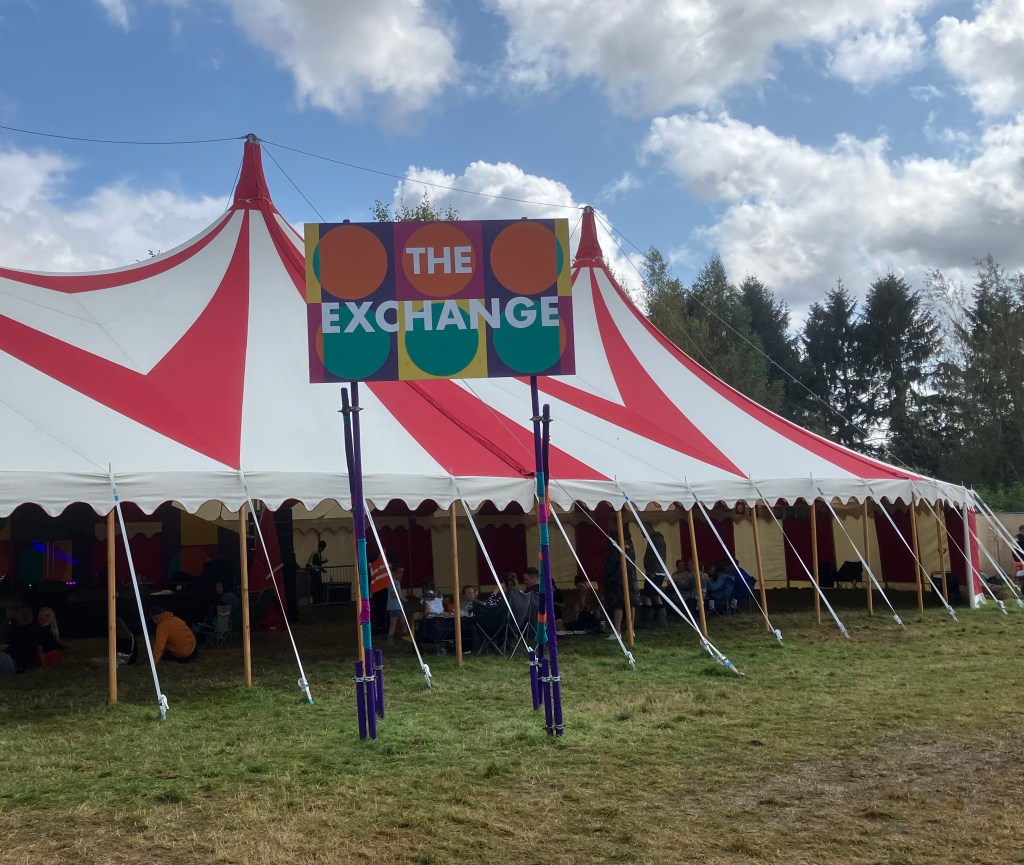
Heading on past The Big Top, another feature for children, we left the Village Green and headed out and left into the Udder Field. Coming across The Exchange which hosts everything from comedy to karaoke, quizzes and live podcasts we noticed the tented area filling up and on checking the programme found the next session featured live on stage “James and Clair Buckley”. We had no idea who they were but decided to find ourselves a spot to sit/stand and await their arrival on stage.
Again with Google to the rescue I discovered they are “co-hosts of the acclaimed podcast ‘In Sickness and In Health’ and the creative minds behind the hit YouTube channel ‘At Home with the Buckleys’ “. All credit to them, having never been a fan of the “Inbetweeners” and having rarely listened to anyone’s podcast and only used Youtube for the basic enquiry they did raise a laugh or two and I was drawn into their honest, marital banter. It highlighted to me, however, how again I don’t spend my life watching reality tv and searching endlessly for something to pique my interest every night at home.
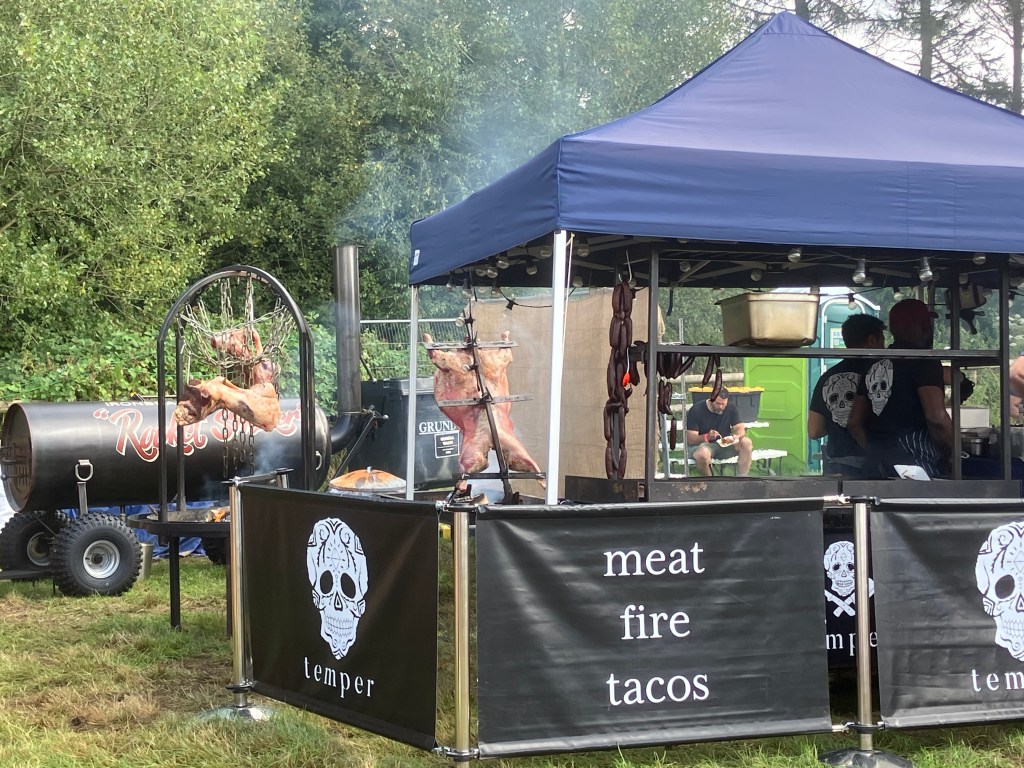
As we made our way past the Sundown Saloon in the quest for some food there was a duo called “Two Ways Home” doing their best to entertain but they didn’t stop me in my tracks I’m afraid and we walked on by. Beyond the Saloon are a series of food stands centred around outdoorsy food and bbq’s known as The Smokery. We decided it was time to find some lunch and having perused all the different offerings settled upon “Temper” who were shortly scheduled to do a session in The Fire Pit, another cookery style demonstration. We opted for their “Greedy Cow” meat plate at a cost of £15 each.
While hubby made the purchase I managed to squeeze onto the end of a wooden picnic bench which was undercover. The four young people already seated happily allowed us “oldies” to eat our lunch in relative comfort. Whilst we sat and ate our fairly small portion of bbq they seemed to be veterans and individually, at intervals, would pop out to a vendor and return with a plate big enough I guess to count as a starter for four in a restaurant. Thus getting to sample four different offerings between them for lunch. Perhaps this is the way you are supposed to do it?
When they departed we were joined by another two couples, more in line with our age group, who were delightedly camping for three nights. I was hoping, in chatting to them, to discover the secret to this type of event, to understand the attraction. The rain had started in the early hours of Friday morning they explained to us and not stopped since. Personally I couldn’t think of anything worse than to be under soggy canvas with wet clothes at our age but they seemed to be quite happy having come all the way up from Kent!
We finished our lunch with two fairly decent size portions of cake which we had purchased in a small tent of about six businesses before heading back out this time into a burst of sunshine and briefly returned to watch the end of an act ” Swing Patrol” at the Saloon. They had certainly managed to pull a crowd and whilst displaying their dancing techniques themselves had successfully encouraged patrons to get up on the temporary dance floor. I’ve dabbled in Ciroc some years ago and would probably have enjoyed watching their 45 minute set had I known.
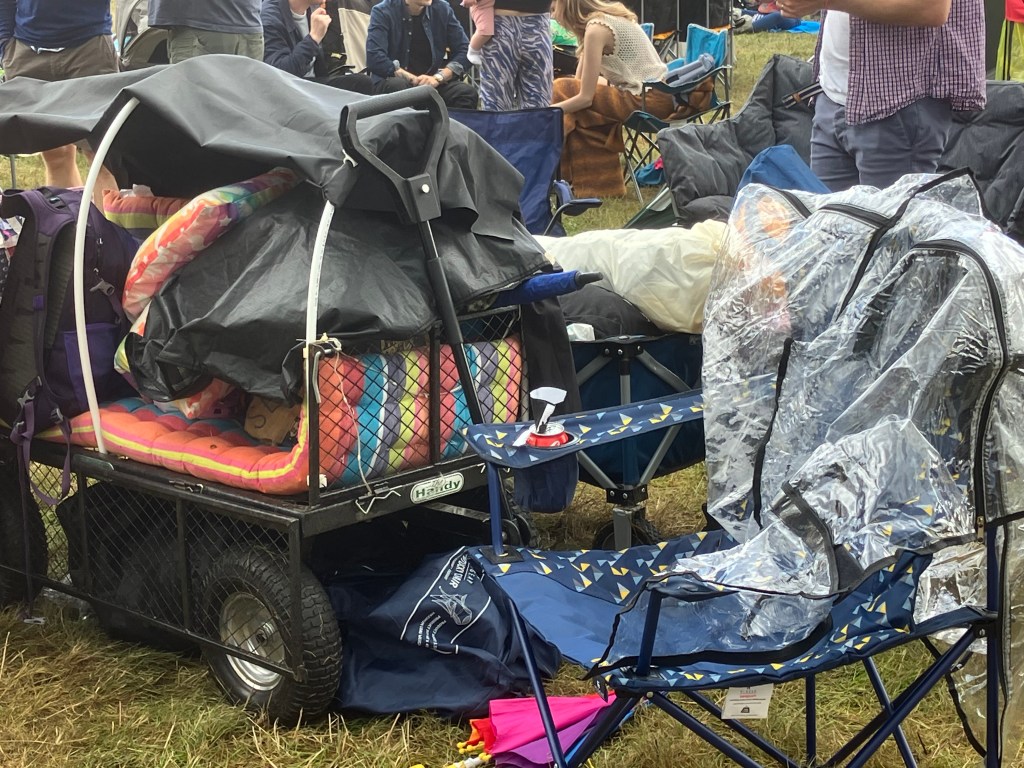
Making our way past the independent retail businesses on our left, none of which really attracted us to stop, we headed back past our starting point and up towards the Main Stage. It had become evident, by this point, that real die hard festival goers come well equipped with big trollies to carry their fold up chairs, small children and relevant accoutrements.
They are easily spotted, even when not pulling a trolley, because they have glitter on their faces or silver sparkly clothes.
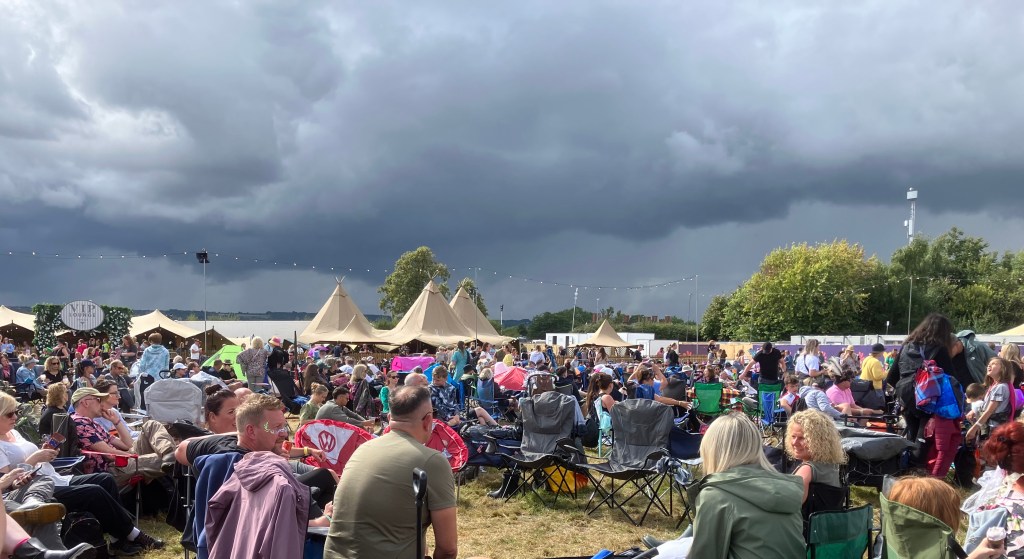
Three acts had already been and gone, none of which we had recognised but maybe again that’s the point. You are suppose to listen, regardless, in case you happen to see the next, currently not yet spotted, new big talent? It was odd to see not just the normal flock of people standing up near the stage but how this then drifted quite quickly into crowds of attendees sat on their camping chairs. Some in rows but others had claimed their own space on the field forming semi or full circles of chairs. As if to say “this is our piece of the action” walk around! The majority of these folk were not listening to the music on stage but chatting, eating, drinking and generally socialising. I’m guessing they had claimed their spot for the day and were awaiting some other act due on later in the programme?
It was fairly obvious, quite quickly, that if you had intentions of watching a bigger name later such as Cat Burns who was due on at 6.30 you would be struggling to find somewhere to stand much less park a chair without being miles away from the stage. Kate Nash was on stage, at this point and whilst I remembered her first hit single from 2007 called “Foundations” she wasn’t again someone who I necessarily wanted to listen to. This wasn’t helped, to be frank, by what appeared to be either a poor sound system or a voice that seemed to be off key at times.
Behind us, at this point, was the Alex James’ Cheese Hub which is apparently a double decker disco. It certainly looked very busy from the outside even in the afternoon. Next door is the Roller Disco aimed at giving whole families a chance to amuse themselves and then the Street Food Circus which is billed as an immersive food dining experience with DJ’s, cocktails and performances. We didn’t get a chance to check this out properly because the heavens opened and the rain came down in torrents and like so many others we all piled into this covered circus tent to just take refuge from the rain. There was a DJ, to be fair, playing some fairly classic 80’s tunes and another gentleman we had seen earlier making massive liquid bubbles for the enjoyment of the children. Just to prove that I’m not a complete old fogie I asked hubby to put one on my Christmas list!
Once the rain had finally taken a break we ventured back out to explore the street food sellers in this area. There was a vast selection and to be honest I’m not sure what we really expected but it just wasn’t this. They were all basically stand alone food stalls like you would see at any large event. I equated it to Badminton Horse Trials where these type of food conveyors are scattered, at intervals, throughout the course. We love this type of food but it just didn’t equate to the food trucks (actual trucks not food outlets) that we have frequented on our travels particularly in the USA. Two of which stand out still in our memories and both weirdly in Key West!
Hubby purchased some churros with an unwanted pot of melted chocolate but I was not in need of any more food and we suddenly found ourselves at about 4.30 in the afternoon looking at each other and wondering “what next?” We’d finished our exploration and thus stood and debated. “Do we pop back to the car and take refuge for a couple of hours with the intention of returning to watch Cat Burns who we have actually heard of and enjoy?” or do we “put this Festival Experience down to exactly that -an experience and head home?”
And so it was that we waved goodbye to our Festival experience and drove away, glad to be in a 4×4 while other cars were sliding their way to the exit whilst other festival goers were still arriving. I guess at £100 a ticket to watch an evening full of entertainment and more known acts isn’t that expensive these days when you are familiar with the extortionate prices charged for a ticket to see a headliner such Ed Sheeran, Adele or Taylor Swift in concert these days!
NB: This is the tenth post in my series about the wonderful “Cotswolds”. Whilst this is a fairly one off post about the joys or otherwise of visiting a festival, the Cotswolds, as a whole, is an area that you really shouldn’t miss out on visiting if you are coming to the UK. It’s full of olde world charm, history going back to the Roman era and beautiful architecture.
Check out previous posts in this series. Please don’t forget to comment and/or like.I’m intrigued to hear other midlife adventurers experiences of festivals, they might tempt us to try again! Thank you
Following on from last week’s post and as Los Angeles starts it’s four year focused preparation for 2028 I wanted to delve a little further into the games themselves and the idea of actually watching them live, It’s definitely on my bucket list to watch the Olympics live but is that really going to be possible in my lifetime?
I decided to do a bit of research into this long held dream………………
All the photos on this post are taken from my 2023 collection when we travelled around the USA passing through nineteen states!
If we begin back in London in 2012 when 97 per cent of all tickets available were sold. There were 8.8million tickets available of which 6.6 million were offered to the general public. 5.94 million of those tickets were priced at £100 or less of which 3.92 million were £50 or less and 2.5 million were £20 or less. Accounting for inflation, in 2024 this equates to £144, £72 and £29.
Four years later, in Brazil, approximately 3.8million tickets were offered at a cost of 70 Brazilian reals which is about £17 or less, with the cheapest ticket priced at 40 Brazilian reals (about £13). That was 1.3 million more tickets at this lower price point compared to London. With inflation, this would be £23 and £17.
Fast forward to Covid affected Tokyo. Prior to the games being postponed by a year, half of all tickets were priced at £60 or less, when converted from the yen with the cheapest general tickets priced at £19. I couldn’t actually find out how many tickets or what percentage were offered at this price though.
In Paris one million tickets were released at £20, that’s only 10 percent of the overall tickets being within a price range that locals could probably afford.
But what do you actually get to see for these low end prices? There is no doubt that these tickets will be in the least desirable areas — predominantly the highest and furthest away from the action and will not include medal events.
Tickets for the opening ceremony in London were priced between £20.12 and £2,012 and the closing ceremony. between £20.12 to £1,500. The most expensive tickets were for swimming, gymnastics and athletics.
In Tokyo tickets for the opening and closing ceremony cost locals more than £1,500 each, with athletics being the most expensive sport. In Paris more tickets than ever were sold for the Olympics with the opening ceremony tickets ranging from £75 to £2300. The £75 tickets not surprisingly sold out within an hour and imagine spending money on tickets and having to watch half of it on a screen as the rest took place live but further up the river! The closing ceremony ranged between £40 and £1360.
For those wanting to watch a qualifying match in the tennis in Paris you would have been looking at around £260 but this was the cheapest seat. Think about an auditorium in a theatre and all those seats far, far away from the stage, sometimes slightly behind a pillar or watching at an angle and this is the type of seat that £260 would have bought you. Cheaper tickets were available for courts where lower-profile matches were being played. The diving qualifications (not the finals) were a similar price. The coveted ticket for the mens’ 100m final cost between £70 and £830 depending again upon your seating.
Of all the events at the Paris Olympics there were only thirteen in which you could see medals won in which tickets would cost less than £170 at their maximum.
How do families get to support their familial contestants? The quick answer is they don’t unless they save up lots of money! By the time you have paid for flights, accommodation and tickets in order to be there to see your family member in action you have possibly blown the family holiday budget for the next 2-3 years. For me this really brings into question why the competitors cannot apply for up to two tickets each at a heavily discounted rate for one event they are competing in? In this era of mega technology it would surely be fairly simple to make those tickets non transferable so the competitors couldn’t apply, buy and then attempt to resell them for an increased price. When you have trained for four years to compete for your country surely it’s not a lot to ask that you can have familial support? After all, these are the same family members who have got up early day in, day out, driven their family member to events, forsaken other days out and holidays away for that one person to fulfil their dream. They have been there throughout. They may well be working class folk who have just supported that family member’s dream of representing their country. Why shouldn’t they be there in their finest hour?
And what about local people attending? I’ve blown my chance of seeing the Olympics in my home country but what about those living in Los Angeles in 2028 or Brisbane in 2032? Interestingly history has shown that hosting the Olympics tends to result in severe economic deficiencies for cities. Unless a city already has the existing infrastructure to support the excess crowds pouring in, not hosting the Olympics can often be the better option. Given this fact the local people actually get very little if any benefit from living in an Olympic hosting city. There wasn’t even a new stadium built in Paris this year. In fact, as was fairly well publicised this year, many Parisians moved out of the city for the fortnight of the games. They didn’t want the inconvenience of over 11,000 competitors plus their associated support teams descending upon the city, blocking roads, filling up underground trains and just generally upsetting “normal life”! If they were lucky enough to have gained tickets through working for a company involved in sponsoring the games these tickets were often given away to family members happy to temporarily fly into Paris for the events for which tickets were intended or alternatively those ex gratia tickets were sold on!
Olympic hosting cities spend a phenomenal amount of money on hosting the Olympics. The London Olympics cost a total of £8.77 billion – three times the original budget of £2.4 billion! However the UK economy saw a trade and industry boost in excess of £14 billion following the London 2012 Olympic and Paralympic Games, beating the four year target of £11 billion in half the time. I wonder how many people in London or even the UK knew that or felt like they saw the benefit?
Surely local people in these hosting nations deserve something in return? I think free tickets for key events, not sitting behind a pillar tickets, should be offered in a lottery. Everybody who is willing to organise transport to get there and accommodation if necessary should get to buy a lottery ticket at a reasonable price to win two tickets. On winning, those tickets would become non transferrable, so they couldn’t be sold on and the winner would have the opportunity to pick two tickets from those made available for the key events. They might want to see the Opening Ceremony, then again they might want to be there to see the fastest man in the world cross the line.
Admittedly the chances of winning would be very low but every week people buy lottery tickets throughout the world for that one chance to strike it rich. This would firstly generate funds that could be used to enhance the Olympic budget and also give ordinary people the chance to see the Olympics live. America is the top gambling country in the world so come on USA let ordinary folk spend a few dollars for a chance at some decent tickets for the next Olympics!
What do you think? Should the Olympic Games only be open to those who have lots of money to see the key events? Would you buy a lottery ticket to win two tickets to a key event? Is is unfair that competitors family cannot be there to support them unless they have lots of money for tickets?
Well that is the Olympics over for another four years! My interest has built over the years initially watching purely the Equestrian events. I remember urging Ann Moore on Psalm to the Silver Medal in the showjumping at the 1972 Munich Games and then over time my interests began to broaden. I was enthralled with Nadia Comaneci of Romania receiving a perfect ten on two separate pieces of apparatus at the 1976 Montreal Games. Carl Lewis caught my attention at the 1984 LA Games walking away with four gold medals winning the 100 and 200 meters, the long jump and the mens relay. Suddenly the explosion out of the blocks when that gun went off had me gripped and I have been hooked ever since.
All the photos of Paris were taken last year when we completed a three month trip around Western Europe
And so to Paris and the Opening Ceremony…… The first Olympic Games to hold the Opening Ceremony outside of a main stadium. Did it work? In my opinion -no! Taking away the fact that it rained which, excuse the pun, put a bit of a dampener on the evening it was just so long winded. It seemed to take forever for all those 85 boats to get the 4 miles up the Seine. For those with tickets watching from the stands, in all their wet weather gear, and I have a friend who had flown over especially for this ceremony, they felt like they had completely missed out. They could only see what was in front of them and yes they saw the GB team float past but there was no atmosphere. All the entertainment that we saw on the television was spread out along the route so those who paid for tickets were sorely robbed in my opinion. I tried to imagine what this would have looked like on the Thames in London and quite frankly could fully understand my friend’s point of view.
There was mass condemnation that parts of the ceremony brought Christianity into disrepute which I will come to later. However what was clearly evident was that the French organisers had included many references to their own culture. Great, but the rest of the world didn’t necessarily understand these references. You could argue that it is the Parisian Olympics and, therefore, it is their right to include whatever they wish. However it is also important for people around the world watching to be brought on board and connect to the show and to be frank I don’t think they were. One of the key reasons may have been that previously commentators were invited to the “dress rehearsal” so they could make notes and ensure they were able to explain to their specific audience, in their own language, the significance of each part of the ceremony. There was no dress rehearsal in Paris. I’m no expert, maybe the worldwide commentators were given supporting notes but it certainly didn’t appear to be the case watching on BBC 1 here in the UK.
I personally researched certain elements of the Opening Ceremony afterwards in order to try and understand what was taking place. For example the first part of the ceremony after the opening performance was entitled “Ça ira.” This roughly translates as “It Will Be Ok” and was the title of a popular song during the French Revolution. That went totally over my head!
It then became evident that unlike other hosting countries France was going to utilise people/entertainment acts from other countries. This was a little lost on me but I came to the conclusion that there are possibly not enough French born entertainers who are worldwide recognised to do them proud. And thus the entertainment began with Lady Gaga, dressed in black surrounded by men holding pink feathers, singing “Mon Truc en Plumes”. Apparently this is a famous cabaret song but who knew? I certainly hadn’t heard of it? I thought on the night it was a tribute to the can-can and Moulin Rouge. For me it wasn’t a very impressive start and I usually like Lady Gaga.
The section entitled “Liberte” paid homage to the musical Les Miserables with dancers performing around a barricade in the centre of a stage as the masked torchbearer made their way through the theatre. Then there was the section with the legendary Louis Vuitton cases on wheels. I later discovered this was an introduction to the fact that later in the Games, the medals would be handed out in (much smaller) Louis Vuitton cases. Both of these parts baffled me along with Marie Antoinette (after her head was severed) singing the opening lines of a heavy-metal song. What on earth was that about?
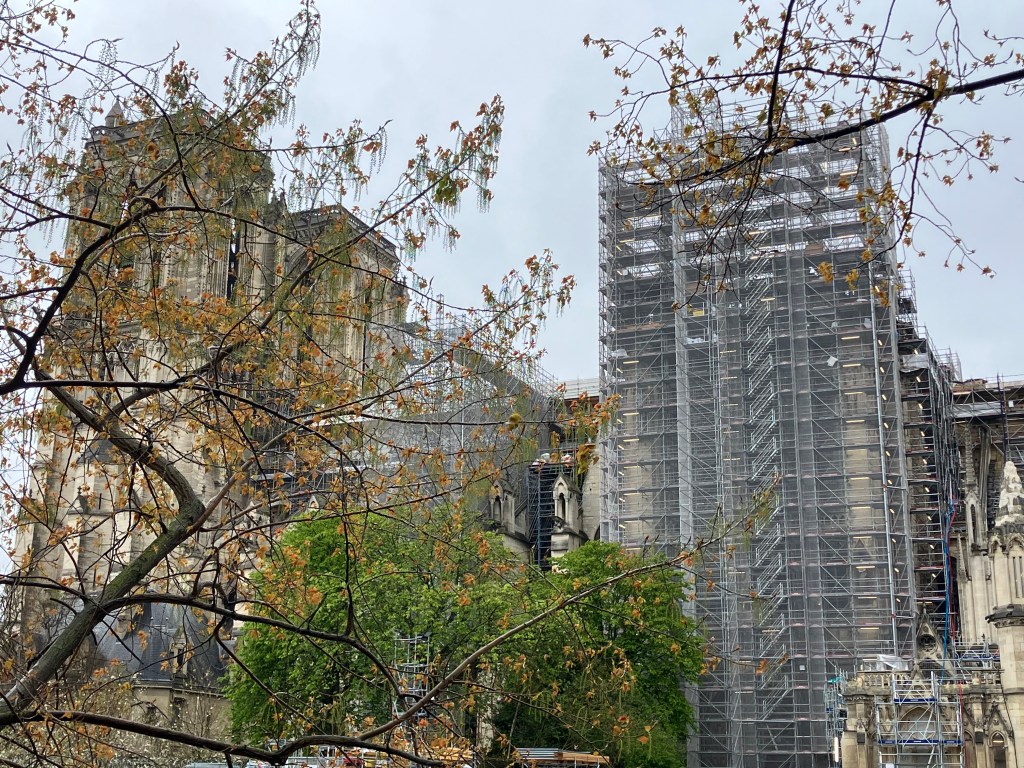
I quite enjoyed the part where the dancers dressed in construction uniforms performed around the scaffolded cathedral of the world famous Notre Dame. It’s a shame the repairs couldn’t have been completed, as originally planned, for the games but at least this was a recognisable Parisian landmark. We visited the site during our three month travels (photo below) around Europe last year and it inspired me to write a post on my blog: https://amidlifeadventure.org/2023/04/21/adventure-old-notre-dame/
During the section of the ceremony celebrating “Equalite”, statues of significant women in French history rose from the Seine apparently in homage to the gender disparity of statues in Paris. If you’ve never been to Paris and are viewing it somewhere, anywhere else on the globe, you wouldn’t have understood this either!
And finally to the controversial long table with drag queens seated around or “Last Supper’ scene which viewers including Pope Francis and Ayatollah Khamanei believed was based upon and mocked Leonardo da Vinci’s famous painting. I am not religious but the Last Supper is the event that Christians believe instituted the Eucharist celebration and thus Christianity itself. This caused outrage around the world including amongst the anti woke contingent which doesn’t really help the idea of inclusivity. It’s not exactly the introduction to your Olympic Games that you perhaps want.
Wondering whose idea and ultimate failure this was I was interested to see that the Director of the Ceremony, Thomas Jolly, did explain afterwards that the scene was based upon a painting by Jan van Bijlert called The Feast of God. The painting depicts the marriage of the characters from Ancient Greek mythology Thetis and Peleus, with the god Dionysus and his satyrs dancing in the foreground. The painting is on display in Dijon but as a painter from the Dutch Golden Age he does not really rank amongst the great painters around the world. It seems a massive error of judgement to me and I certainly questioned after the ceremony where Mr Jolly was going to retire to? Perhaps he just thinks it will all blow over but unfortunately I do think the Paris Olympics will be remembered now for all the wrong reasons.
The Games Themselves……. And so the actual events themselves. The first real positive for us in the UK was that they were held more or less on the same time zone. We should be grateful for this because the next two sets of games will not be and thus televised coverage will be adjusted accordingly.
However, and this is no fault of the organisers, because we were in a similar time zone BBC took advantage of this and took over the whole of BBC1 and parts of BBC2 every day. For television licence payers who have absolutely no interest in this event there was barely anything else to watch. Do they get their licence fees reimbursed for two weeks? I personally feel this was a massive mis-judgement. Secondly despite having the opportunity to watch everything live I still recorded every programme. Why? Because the programmes were so full of conversation, debate, analysis and then more analysis it took sometimes three hours to watch half a dozen events. Totally unnecessary in the world we now live in. The percentage of viewers in the UK watching live TV falls year on year and the statistics show this is increasing exponentially the younger you are. So are we once again still catering to the older age group in the UK because we cannot stay on trend?
Why do the BBC feel we need this commentating overload? I have nothing against the commentators themselves and have to say I thought that JJ Chalmers and Jeanette Kwakye did a good job in the morning, although I must admit I didn’t know who Jeanette was beforehand. I guess I wasn’t the only one given her name is currently at the top of the Google list of Jeanettes! The swimming coverage by Clare Balding, Rebecca Adlington and Mark Foster was entertaining and did keep my attention longer than other presenters did. Input from experienced athletes such as Dame Laura Kenny and Sir Chris Hoy was beneficial but what on earth was Fred Sirieix doing there? Was he our token French presenter? And the athletics trackside reporter, who was she? I was totally not enamoured with her. She evidently wasn’t a well known previous athlete and literally rolled out the same questions every time she spoke to someone. “How did you feel emotionally?” was in there in some format every time. After listening to the first couple of trackside interviews I fast forwarded her away. Sad because maybe some of the athletes had quality feedback.
You cannot comment on the games without highlighting some of the new sports that have arrived on the scene. Who knew watching speed climbing was going to be so exhilarating? I have to admit I love the skate boarding too which is still fairly new and the BMX racing was real daredevil stuff. Conversely the issues with the River Seine quite rightly hit the headlines. Following reports that France spent 1 billion pounds to make the Seine safe to swim in, with reports of unsafe levels of pollution and even E.Coli we all watched anxiously to see whether this investment would actually bear fruit. The jury is still out on this but suffice to say events were postponed throughout the games and I think all of those who actually jumped in and swam in it, in the name of sport, deserve their own medals. It seemed that despite the money invested no one had taken account of the currents with swimmers taking diversionary tactics to overcome this known phenomenon and some becoming ill afterwards. Again excuse the pun but what an insane idea that was. Why didn’t they just spend the money on a new stadium to host the opening and closing ceremonies which could then have benefited Parisians going forward as a legacy of these games?
The Closing Ceremony……. I have to be honest following the Opening Ceremony I was sat ready with my remote for this event. Fast forward times 30 where necessary. Recognising all the volunteers and thanking them for their contribution at the start of the ceremony was exactly the right thing to do. In their green outfits they had been there throughout the two weeks helping everyone from those taking part to the supporters trying to find their way around.
The athlete parade is always a highlight too. They’ve trained for four years, competed against each other for us all to see and now it’s over. It’s time to relax, enjoy themselves and make their way home. Unfortunately I feel the French got it wrong again when they started the celebrations with French songs. French is only spoken by 3.6% of the world’s population so needless to say it wasn’t until “Freed From Desire” came across the sound system that all the athletes and spectators could actually join in.
You couldn’t fail to be impressed when the lights at the Stade de France went out and tens of thousands of wristbands lit up all at once, illuminating the stadium as the sun fully set. The Bluetooth-synced wristbands started to not only flash and blink in time with each other, but individual sections of fans were, without prior knowledge, suddenly thrust into the show itself with their wristbands showing scenes of athletic competition moving across entire ends of the stadium. This breathtaking display ended with the Olympic rings being raised above the stage in the centre of the stadium, and the wristbands of the fans throughout the venue being illuminated in this iconic image. It was a modern take with a technical performance of synchronicity on a large scale that was truly impressive to watch.
The organisers, alas, got it wrong again when they hadn’t quite taken into consideration the reaction of the athletes later in the show. Releasing them from the assigned areas around the stage and initially encouraging them to get up close to the performers some contestants misunderstood and actually joined the band on stage. Announcements were then made over the stadium’s loudspeaker system asking the athletes, politely, to get off the stage. Not quite what you want to see and hear.
The final handing over of the flag was somewhat of a spectacle. Was it the James Bond and Her Majesty the Queen’s opening ceremony in London that inspired the moment when Tom Cruise jumped from the roof of the building? Landing on the field below he then made his way to the Los Angeles Mayor Karen Bass, was handed the prize of the Olympic flag and then found a motorcycle and rode out of the stadium with it. Driving through Paris to an airfield nearby he then flew off to the USA which then led into a party on the beach in Southern California. I guess it’s an example of what is to come when the next Games are held in Los Angeles, the Hollywood capital of the world!
Thank you and goodnight!
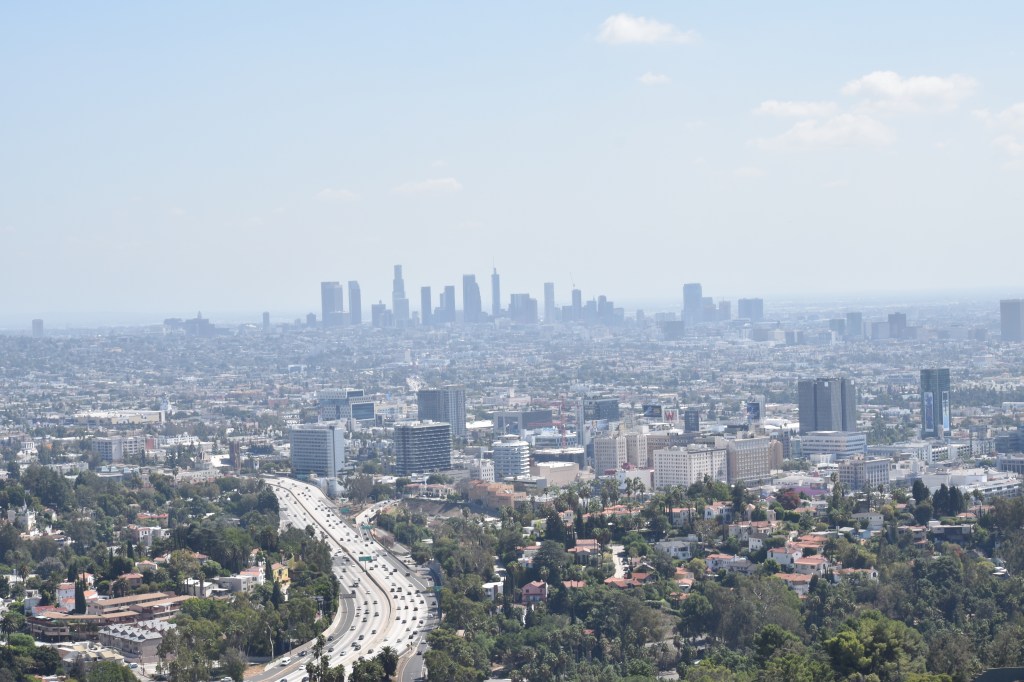
Los Angeles taken when we drove Highway 1
I was intending to comment about the cost of the Olympic tickets and how this reflects on availability to all going forward but this post was lengthy enough. I’ll keep that for my next post. In the meantime I look forward to your comments about this post and hearing about your own experiences of Paris 2024
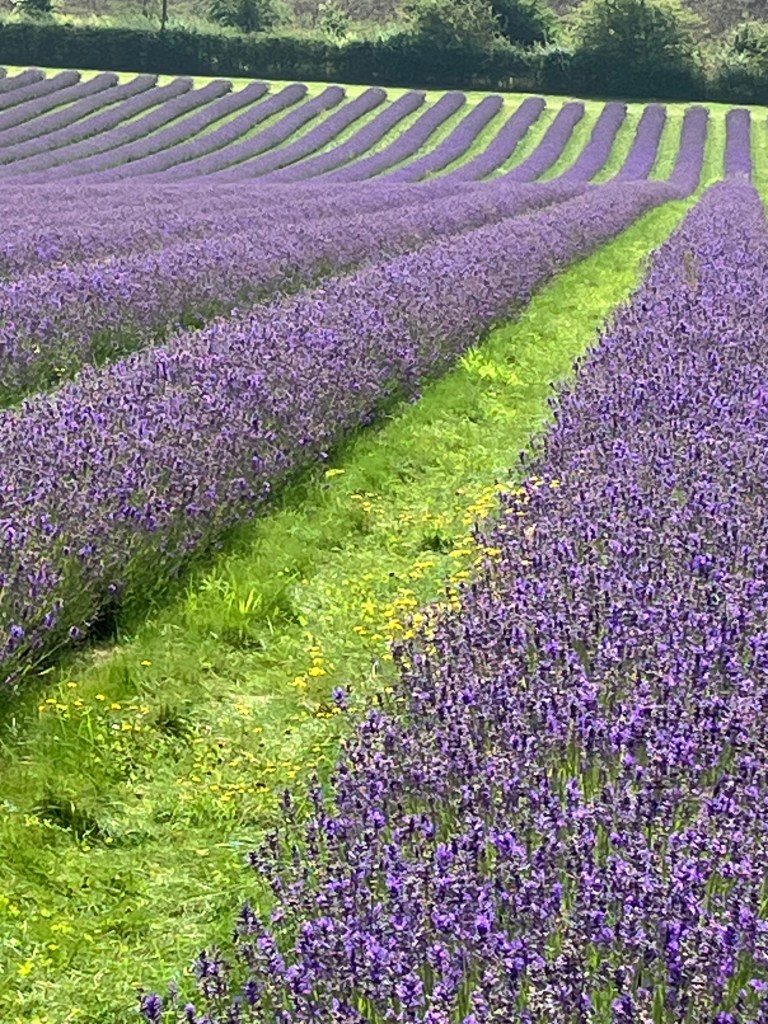
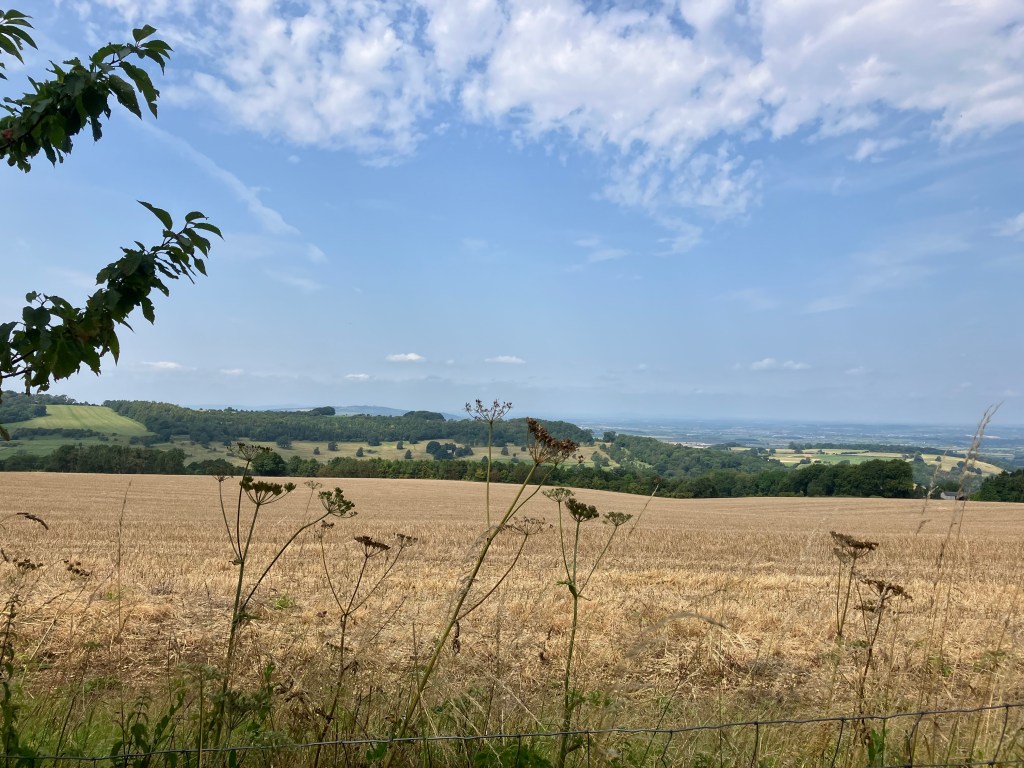
High up on the Cotswold Hills overlooking the spa town of Cheltenham and the Malvern Hills beyond is Snowshill. This cute village with its golden hue, authentic Cotswold stone cottages has been home to many different groups of people across the years. The village dates back to the Bronze Age and in the late nineteenth century an early Bronze Age hoard was found just outside Snowshill. The items were excavated from a barrow in 1881 and include a picrite battle-ax, a bronze pin, dagger and spear-head. This wonderful find dates back to between 2100 and 1600 BC and the lovely artefacts now have a home in the British Museum. Snowshill is famous for its Manor House and Gardens owned by the National Trust and in the last twenty plus years its famous Cotswold Lavender fields. A great combination of places to visit if you have a whole day to spare.
The Gardens: Alerted by a Facebook post, with the sun shining down on a beautiful August morning we decided to pay the Lavender Fields a visit. They open for just eight weeks every summer from around the start of June until the beginning of August. Their website gives more information on this along with up to date opening times and admission fees.
The first lavender at Hill Barn Farm was planted back in 1999. Over the years it has grown to a 70 acre purple spectacle stretching out across the hill top. The lavender is harvested around the end of July each year hence the limited opening period. The harvest produces the essential oil and lavender grains needed to make the products sold worldwide by the farm.
Walking Through The Gardens Once you have paid your admission fee you can enter and exit as many times as you like providing you keep the ticket on you. This is really useful if, like us, you bring your own picnic. We were able to leave it in the car until such times as we were hungry and then we picked it up and spread it out on one of the many wooden picnic tables scattered around the first part of the site. They also have a small kiosk selling hot drinks, snacks and ice creams if you just want to take a break during your visit.
There are approx 20 acres to wander around and enjoy. Weirdly the customary smell of lavender doesn’t fill the air but instead there is the constant buzzing of bees as they fly amongst the purple flowers gathering the nectar to make their honey. I was expecting to see some hives tucked away somewhere but alas that wasn’t to be. There is no set trail, you can basically wander at your will keeping to the pre made pathways between the rows of lavender or around the outside. We arrived not long after opening and the fields were quiet enough to take photographs without too many problems but as we were leaving after lunch it was definitely much busier and a couple of coaches arrived no doubt transporting day trippers from London or Oxford as part of their Cotswold tour.
In addition to the lavender in recent years the farm has also begun to plant an area solely dedicated to beautiful wild flowers. It is so picturesque, the colours almost take your breathe away.
Again there are pathways to walk upon but sadly in this world of Instagrammable photos people have taken to sitting within the flower displays and thus damaging the flowers beneath (as you can see below). I personally found this incredibly sad, selfish because it spoils the vision for those visitors who come after the culprits and upsetting. It is so unnecessary. Pathways are provided for a reason, please stay on them.
Finally there is also a woodland trail that takes you out onto the edge of the hill so you can admire the fabulous views across the valleys and hills beyond. A site locator board is available so you can pick out the relevant places when scanning the view. There are also plenty of strategically placed wooden bridges, tunnels, animal painted wooden markers and den-like structures for children to investigate and let off some steam.
The lavender fields are an awesome site to behold and we happily spent a couple of hours here. I love the fact that you are experiencing something natural which is only available for a limited time each year. If you are in the area I would definitely recommend a visit.
NB: This is the ninth post in my series about the wonderful “Cotswolds”. An area that you really shouldn’t miss out on visiting if you are coming to the UK. It’s full of olde world charm, history going back to the Roman era and beautiful architecture. Check out previous posts in this series plus more to come soon. Please don’t forget to comment and/or like. I love to hear what my readers think and also look forward to your recommendations of places to see in the Cotswolds for my future adventures Thank you
It is so hard when ill health strikes and you suddenly find that all the days out, weekends away and holidays have to be put on hold. This is what happened to us in March when completely out of the blue, my husband was diagnosed with a heart problem. I’m happy to say, as I write this, that after being in hospital for two weeks, then undergoing open heart surgery and being in another hospital two hours drive away for another week. Before spending six weeks mostly confined to home, he has, today, been signed off by the surgeon.
During his recovery we were only really able to go out in the last two weeks as his heart grew stronger and he was able to walk for at least thirty minutes twice a day. It took us a bit of research on the Royal Horticultural Society website to find a partner garden near to us which we hadn’t already visited and thus we set off for Dyffryn Gardens in South Wales.
The History of Dyffryn Gardens: Before I take you through the route we took around the gardens I thought I would just give you some background to this estate. Situated on the outskirts of the capital city -Cardiff, Dyffryn covers more than 55 acres and can be traced back to the 7th century when it was given to Bishop Oudaceous of Llandaf and named the Manor of Worlton. It wasn’t, however, until the 16th century when the manor was bought by the Button family that the first house was built. They continued to live here for several generations and changed its name to Dyffryn House. The estate was sold in 1891 to John Cory, who was a wealthy coal merchant and founder of the port at Barry, making his home here within easy commutable distance of his business. Along with his brother John they owned collieries across South Wales and together they were also reputedly the largest private railway wagon owners in the UK.
The opening of the Suez Canal in 1869 was a key factor in their expansion. Welsh steam coal was, at the time, considered to be the best in the world and thus as demand began to rise the brothers continued to acquire more collieries shipping their coal around the world to countries where it was needed for steam ships and newly developing railway networks. Their business grew until they were exporting to over 120 different ports worldwide. In 1893 .John utilised some of his wealth to build the house and grounds we see today where he lived with his wife Anne and two of his four children, Florence and Reginald.
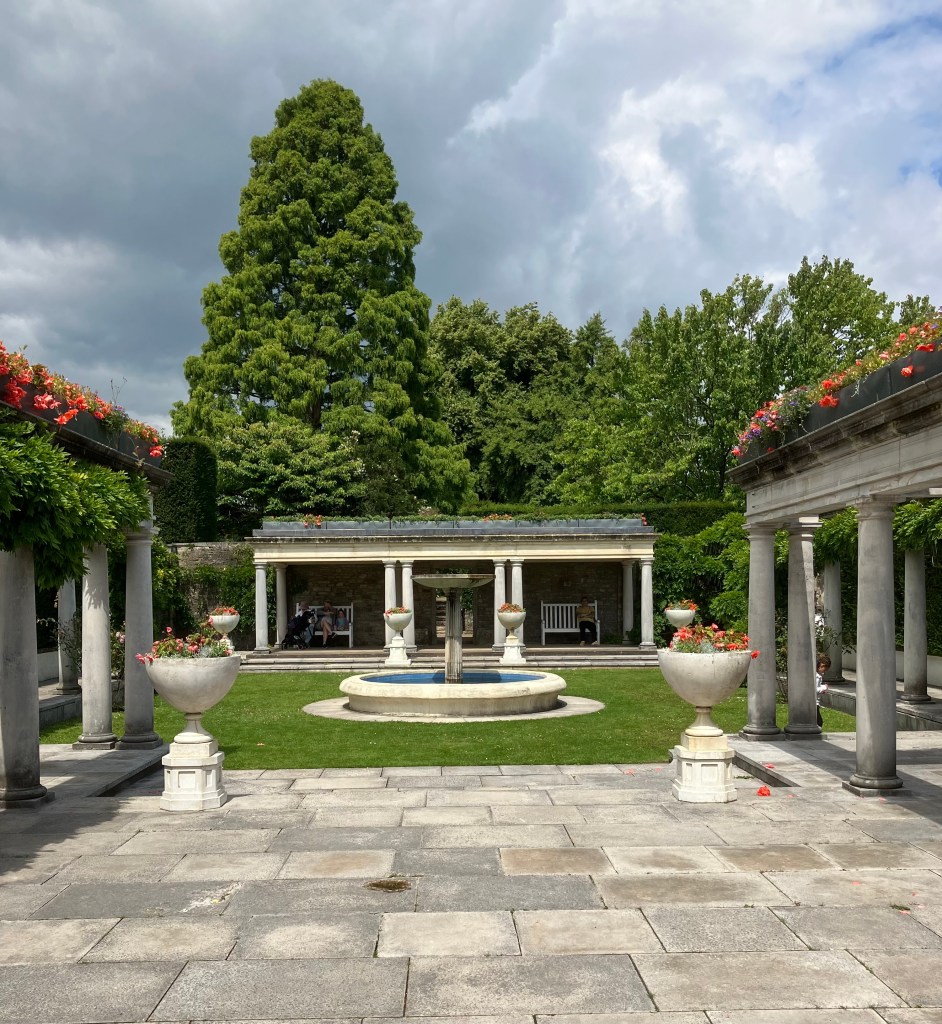
Reginald was a passionate horticulturalist and so in 1906 he collaborated on the garden design with the famous Edwardian garden designer Thomas Mawson. The majority of what we see today is true to the original. Reginald also loved to experiment and enjoyed propagating and breeding many exotic and foreign species that he would bring back from his travels abroad. The Pompeiian Garden, built in 1909, was inspired by his trip to Italy and thus designed to include an impressive colonnade, a loggia and a central fountain.
The gardens include a series of themed outdoor rooms not dissimilar to the gardens we saw last year in Cordoba which were designed around original Roman houses with central patios. It was also a typical feature for grand houses like Dyffryn back in the early 20th century.
The house remained in the family until Florence’s death in 1937, when the estate was sold to Sir Cennydd Traherne who later leased it to the Glamorgan County Council in 1939. During the war years and for some time afterwards it was utilised as a police academy, dog training centre and education conference facility. Whilst the house and gardens are still owned by the Vale of Glamorgan Council, who are committed to their conservation, in January 2013 the National Trust took over the maintenance and running of Dyffryn on a 50-year lease. The Trust have continued the work here to restore these garden rooms back to their true beginnings from the 1920’s.
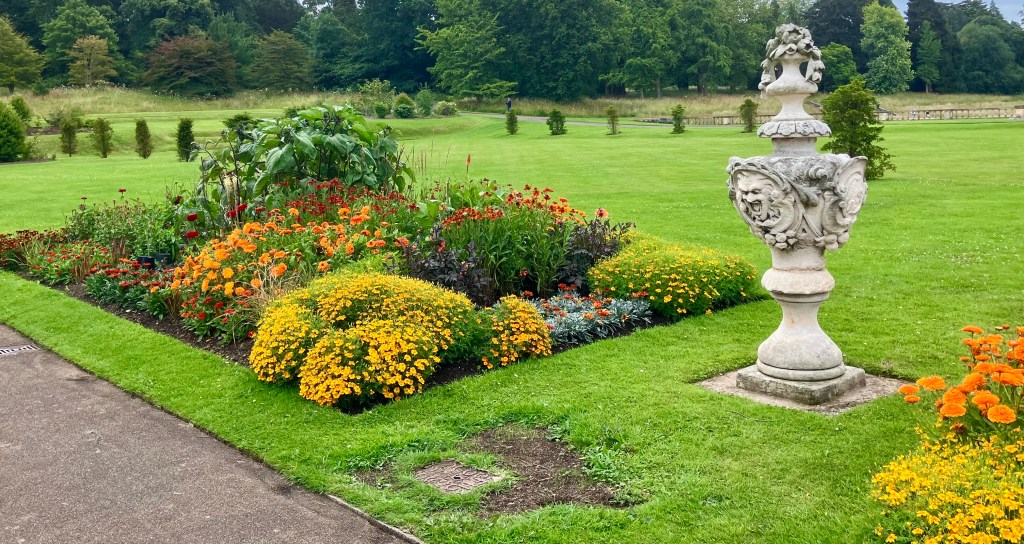
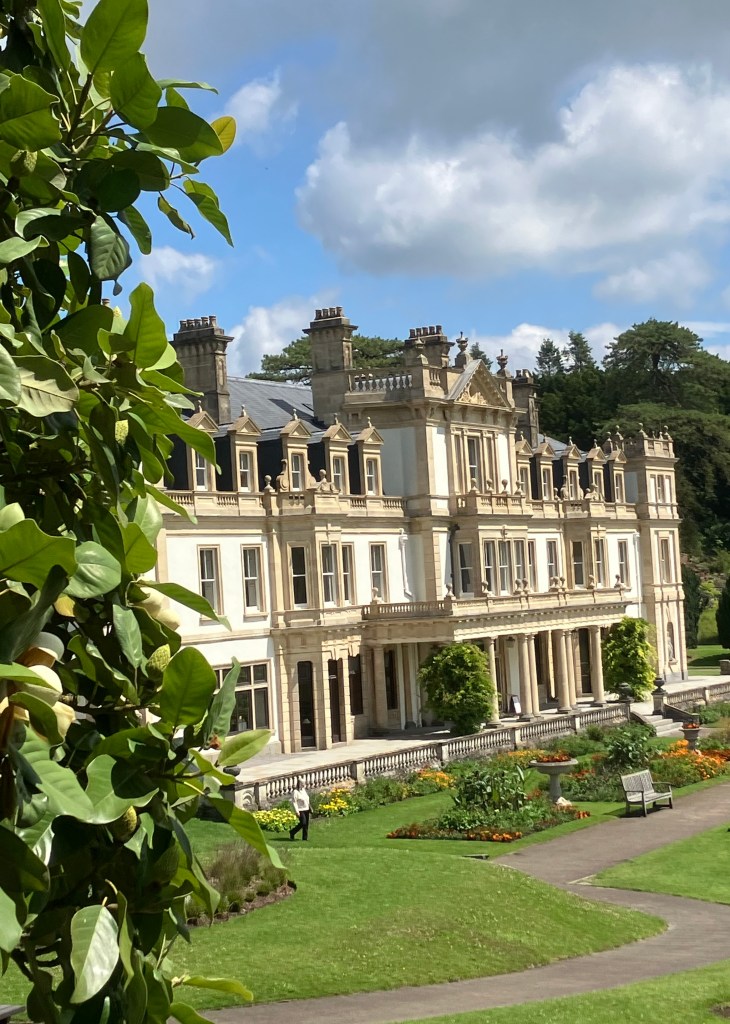
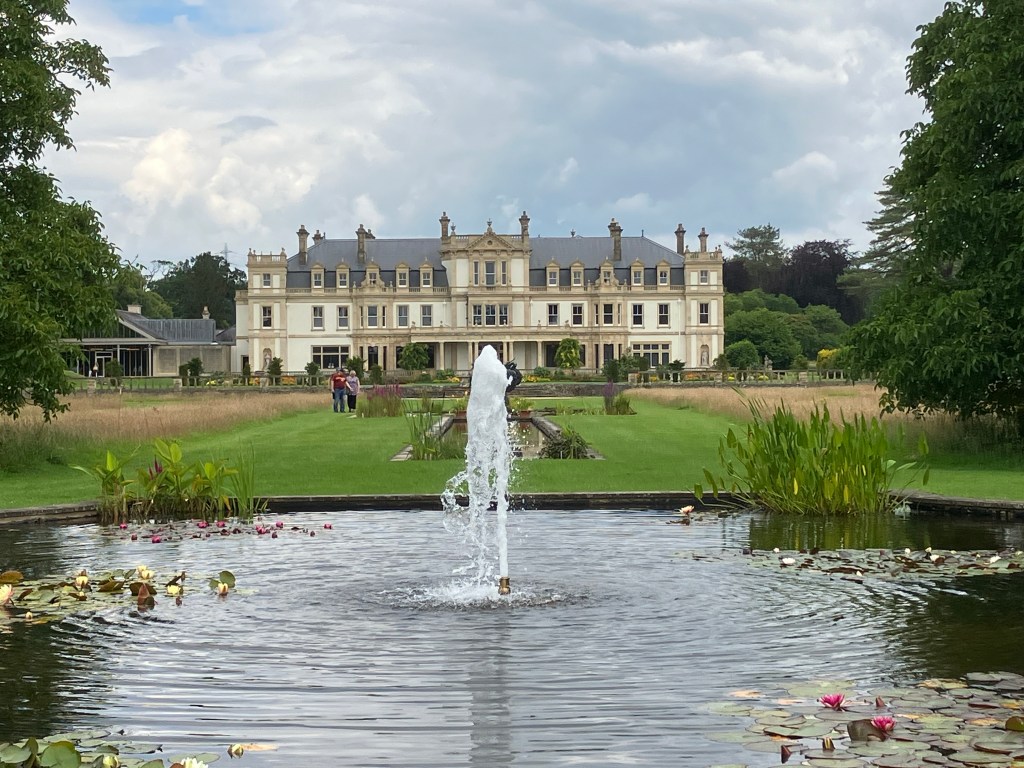
Walking the Gardens: Having left the car park and crossed over to the entrance we were given an introductory chat by one of the NT employees/volunteers and furnished with a map we set off to explore. Walking up to the main house, which is currently under restoration and thus not open to the public, we gazed in wonder upon its architectural brilliance before walking around it to the left and then making our way around the back. This Southern side of the house is resplendent with borders of mainly bright, orange flowers, no doubt at their best around this time, which really makes this area glow.
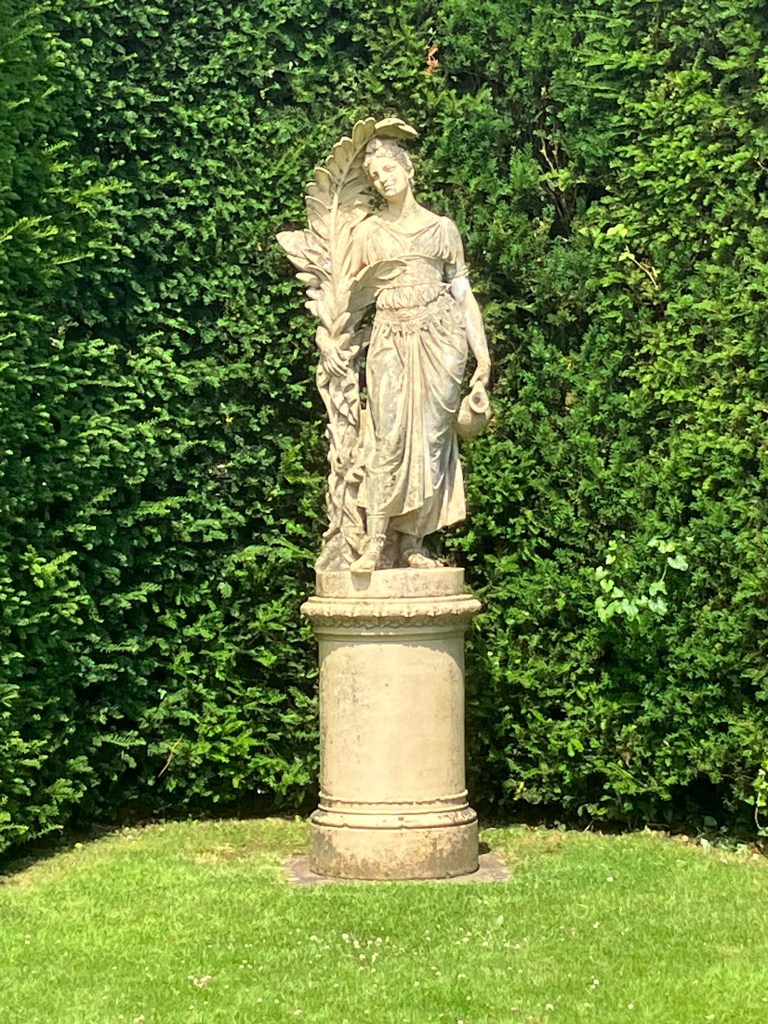
It’s also worth stopping to gaze upon the statue of the man on a cow which has an air of the Himalayas about it. We walked across to the picnic tables at the far end and took some time to eat our lunch and peruse the map to plan a route. Our first stop, after lunch, was the Mediterranean Garden with pathways that meander around allowing you to fully experience its various plants and flowers and also a great view back towards the house.
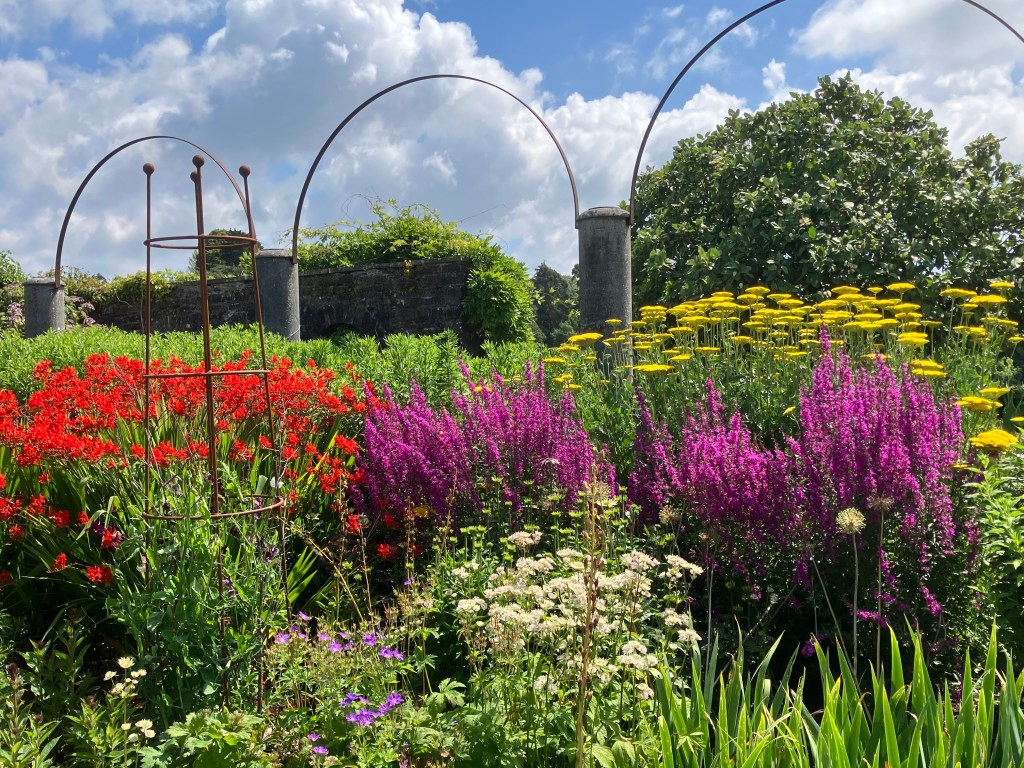
Having circumnavigated this section we made our way through to the Herbaceous Borders. During the Covid epidemic this area was unfortunately completely lost to bindweed. The gardeners here at Dyffryn are currently restoring one border at a time. In so doing they have created gardens that attract more than 50 species of bees who happily forage in the beds and borders and continue the pollinating cycle.
You can then gain access from here into the Walled Garden and then on towards the Tropical Glass House. We decided to enter at the far right side and then wander along its full length. There are three distinct areas and the first area we visited was the cacti and succulents. With over 30 different species it’s worth taking a look at these plants that otherwise wouldn’t be on display without their cosy tropical surroundings.
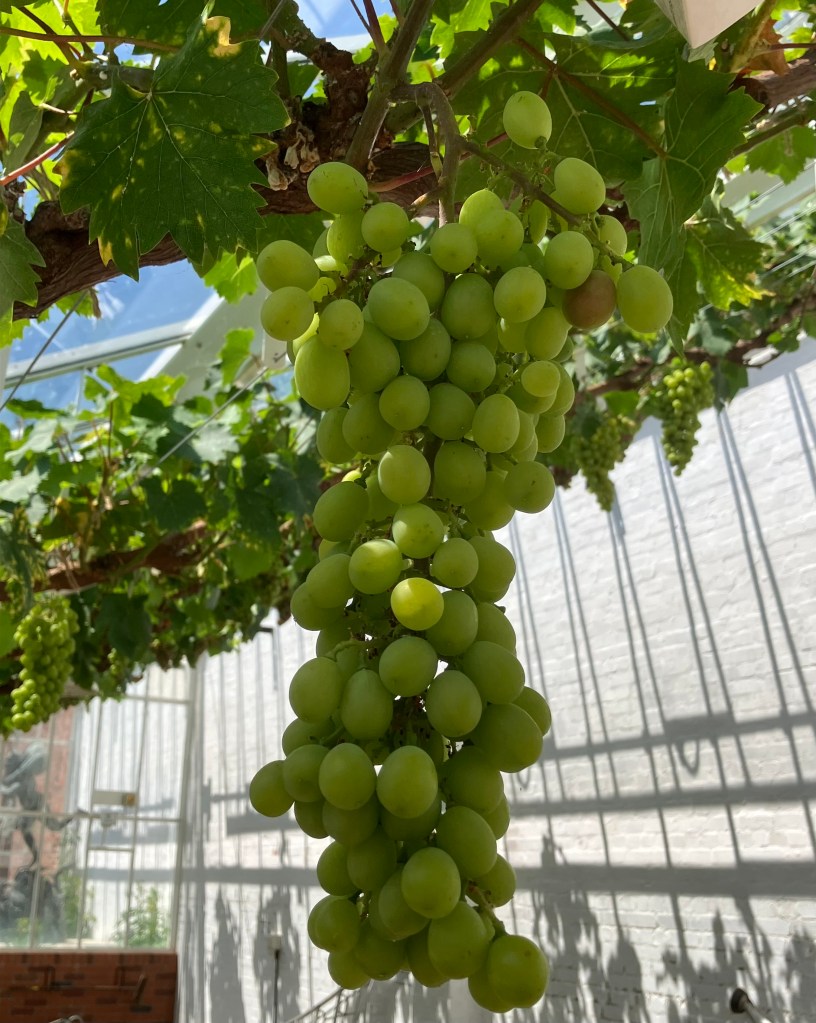
The remaining two areas include the rainforest section with some gorgeous orchids (one of my favourite plants that I have at home) along with such species as the Ethiopian Banana and Spiral Ginger. Finally the third section contains grapes which again were flourishing under the heat of the glass.
Leaving the Glasshouse behind we retraced our steps back to the Herbaceous Border in order to connect into a series of four gardens: The Exotic Garden which was re-established in 2019, Cloisters, The Theatre Garden with it’s strategically placed stone statues and finally the Annual Garden. This is another area where the hard working gardeners have worked in the last 12 months to restore the pathways whilst also adding new local stone borders in order to introduce annual planting displays.
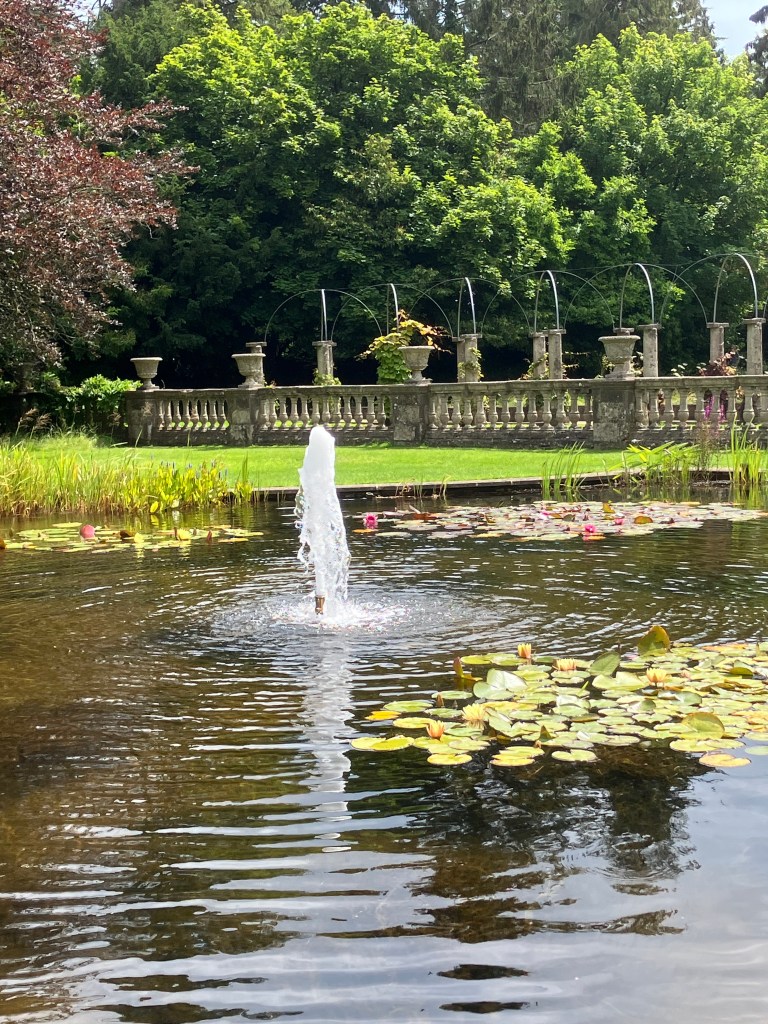
From here we were then able to access the Reflecting Pool which was probably one of my favourites. I do love a lily pond and here the lillies were in full bloom. The wisteria and acer trees add a lovely touch of colour and with a bench to sit on I took a quick break and just sat and admired the view.
Wandering onwards into the Paved Court we admired the classic topiary and colourful urns and borders before entering the Pompeian Garden which is definitely one of the highlights. Utilising a watercolour painted by Edith Adie, restoration on this area began in 2016 and continues to this day. You do feel like you have wandered into the inner courtyard of a Roman garden belonging to a rich merchant. The central fountain provides a focal point surrounded by colonnades with colourful rooftop flowers, shaded seating and Roman statues and urns.
We took a moment to take in the surroundings before walking away from this area and entering the Rose Garden. I was hoping to find a garden room resplendent with perfumed, beautiful roses but perhaps because of the poor weather we have been experiencing this year it wasn’t quite as I’d expected. The pathway from here leads into another series of gardens with the Folly, the Heart Garden, The Rill and then the Causeway.
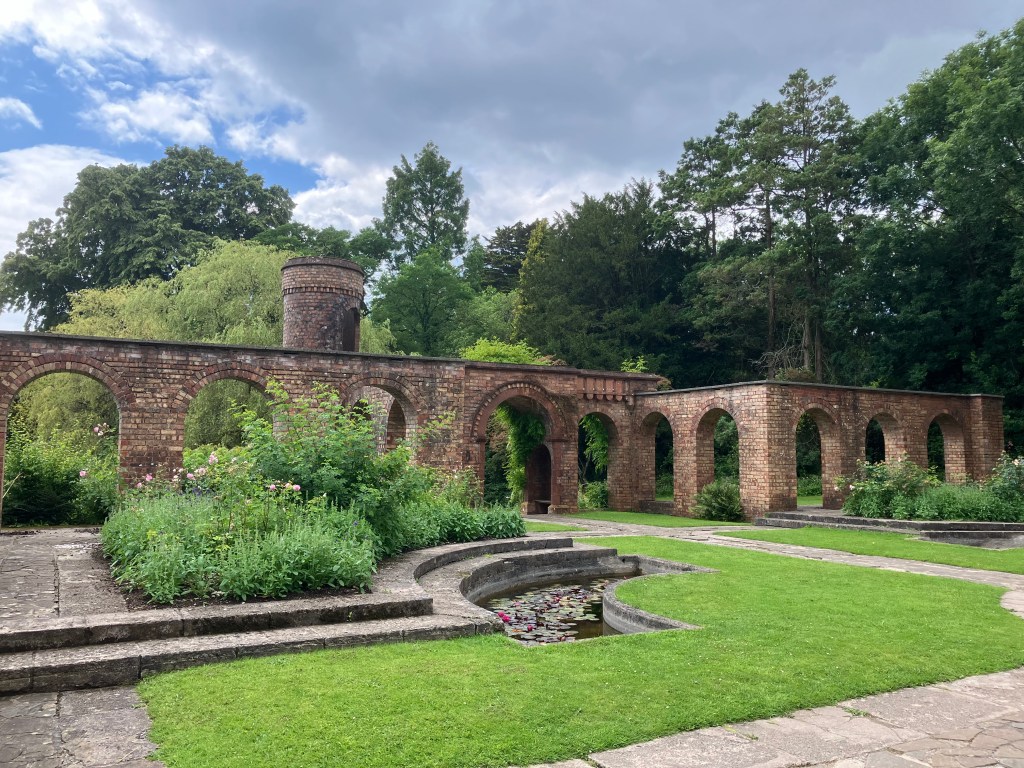
The former is another great example of garden architecture with the pointed turret and colonnades and standing on the latter you cannot help but be enamoured with the view back up to the house.
To the right of the Causeway is the Vine Walk, at the end of which you can turn right and begin a separate walk around the Arboretum.
We chose instead to retrace our steps and walk directly towards the house across the Great Lawn and alongside the central canal. The meadows on either side of the canal are no longer cut completely, instead in the last four years they are mown into designs, last year “spirals” were created. This year the lawn design was inspired by the swirl patterns on the facade of the house, uncovered and restored last winter. The growth around the designs increases the diversity of pollinators and insects which in turn encourages predators like dragonflies. These were very much in evidence around the water lillies and other aquatic plants where they mingled with the damselflies. Trying to photograph them was nigh on impossible.
As we walked towards the house it was wonderful to watch the swifts sweeping down towards the longer grass before making their way skyward again. The grounds apparently also act as a summer sanctuary for swallows, house martins and greenfinches. Reaching the house we made our way back to the start.
I would really encourage you to visit these gardens. We both enjoyed our afternoon here and it is definitely one of those places where we will, no doubt, return with a book and a nice picnic on a lovely summer’s day and just explore some more surrounded by the sounds of nature.
NB: This is my third post in a series I will be writing about Gardens in England and Wales. Since my visit last year to Keukenof in The Netherlands, it has sparked an interest in me to visit other beautiful spaces. As my husband loves to photograph flowers, bees, birds and just nature as a whole it gives us an opportunity to take some time out and just appreciate the calm that such spaces can give you.
So last week I talked about the freedom of choice which I see as a huge divide between the haves and the have nots in America. Don’t get me wrong there are many countries in the Western World who are struggling with out of control rents which in turn are leading to even working people being forced into homelessness. However the other countries aren’t proclaiming to the rest of the world that they are the “Land of the Free!” How can America be the land of the free if people are losing key choices in life such as living in affordable housing?
So this week, the week where a 20 year old lad, armed with a gun, attempted to kill Trump I’d like to move on to a second insight gained whilst touring this vast country. As part of our trip we drove Route 66 from Chicago to Los Angeles driving the 2400+ miles across America from East to West tracing our way along the route that hundreds of adventurers since the mid 1920’s had done before. Then having taken a week off in Fort Lauderdale we drove the Eastern seaboard up through Florida into Georgia, through South Carolina and North Carolina including the Outer Banks. Heading inland to Williamsburg and Richmond we left our rental car behind and joined the train network to visit Washington, Philadelphia and New York.
We didn’t use an interstate or freeway unless we basically had no choice. Instead we drove mainly on what in the UK we would refer to as “A” roads. This gave us such an incredible experience. We were able to communicate with so many different people. Chatting to everyday folk gave us such a better insight into their way of life, the different cuisines that grew up across the ages, the political divides and cultural differences from state to state.
When researching Route 66 beforehand utilising books, dvd’s and Youtube I do not recall learning that during its lifetime, Route 66 guided travellers through the lands of more than 25 tribal nations. I have had an interest in the culture and demise of Native Americans ever since I was a child sitting in front of Western movies which I have more recently discovered lie about the interaction between the folk heading west to discover new land and the Native Indians who were already resident here. (See my previous post “The Western Movies Lied To Me”) .https://amidlifeadventure.org/2023/06/27/the-western-movies-lied-to-me/ During our trip we visited many museums which highlighted the culture of these nations and factually retold the devastation that was forced upon them as their lands were in effect stolen from beneath their feet.
The reason I raise this piece of American history is because despite time moving on these people are still fighting for their rights. Rights that other American citizens take for granted. A lot of these people still live on the reservations. The lands on which reservations are located are disproportionately low in natural resources and quality soil conducive to fostering economic prosperity. Federal policy, including the Indian Removal Act of 1830, was designed to displace Native Americans from coveted land and to relocate them to areas seen as relatively “valueless by nineteenth century standards.” As a result they often live in very remote areas on poor land with limited natural resources.
We took a detour off Route 66 to spend time in Monument Valley. What an eye opener this was. Not purely for its fantastic authentic scenery but the time we were blessed to spend with a young Navajo guide -Sean.
Monument Valley is ancestral Navajo land. Today the Navajo Reservation stretches over 26,000 square miles, a portion of which we had passed through travelling here from Flagstaff, 180 miles away. A desert style landscape with scattered homesteads, scrubland and virtually no signs of working life or schools. Up to 100 Navajo still reside in the Valley, depending upon the season, most without electricity or running water! This in itself beggars belief. The country that defines itself as the centre of the Western World still does not provide basic utilities to all it’s citizens. You could argue that this is the fault of the people that live there, that they choose to live so far from civilisation but in many cases it is the Europeans and Americans who forced them off their lands who put the Native Americans on the reservations on land that was of no monetary value and no one else wanted.
Keen to understand what life was like here on a reservation I spoke to Sean about the vast emptiness of the region and how hard it must be to gain employment. Over 400,000 people from around the world visit here each year thus tourism is a high income generator for the Navajo who live in the area. However outside of the tourist industry he explained how many fathers, including his own, had been forced to leave the reservations to go away to work to earn money for their families. They worked in the oil and mining industry or took work trucking.
Unlike many tribes, the Navajo have succeeded in keeping their cultural heritage alive. Over 97% of adults still speak the Navajo language, and many tribal members continue to practice the ancient religious and ceremonial ways. But how do they manage so far from civilisation? I was intrigued to know where his Mum shopped for food in the wilderness that surrounds his home or where he went to school.
“My Mum shops every 2-4 weeks. She drives to the nearest large Costco in Flagstaff” he explains. That’s a 5 hour round trip! The roads may be straight and easy to navigate but 5 hours to buy food!
In America children from kindergarten through grade 12 in high school can go to public school for free. The city, state, or federal government fund public schools so you do not have to pay. Education law says everyone has a right to free education. Progressive educators viewed buses as a step toward modernising rural education. By 1932, there were 63,000 school buses on the road.
But how did that work in areas such as this where there were vast expanses of seemingly endless wilderness? Sean described to us the rigours of a 2 hr bus journey to school because at that time there weren’t any schools nearby to educate him or fellow Navajo students. He tells us about the new school that has opened in Monument Valley funded not by the Government or the State but by donations! Why? Why are the Native American children deprived of the basics such as schooling. I would question how many white American children make a 4 hour round trip to school each day? Even now when there is a school in Monument Valley it only teaches the younger children. Older children still get on that bus every day! Education may be free in America but when the state and federal government are not funding public schools for all children in America, how is that fair?
What I learnt in Monument Valley is not unique to this reservation. America is embarking on another Presidential election this year. Priding itself on being a democratic country, everyone apparently has the right to vote. To participate in the U.S. political system, Native Americans have to contend with limited mail delivery and internet service combined with travelling vast distances to voting registration and polling centers. Despite these natural barriers already being in place in 2021, less than a year into the new Biden Administration, the state of Montana passed two new laws that made it even harder for Native voters to register and vote.The first ended same day registration whereby citizens were able to register for their vote and then cast their vote on the same day. People such as the Native Americans would now have to make two separate trips to achieve the same result? The second law blocked organised ballot collection on rural reservations.
Meanwhile, at the national level, around the time that the two Montana laws went into effect, 13 other states had also introduced over 100 bills that would disenfranchise Native voters. The Native American Rights Fund (NARF) fights every day to protect the rights of these indigenous people. How can America be the land of the free when states are still being allowed to discriminate against their Native American citizens, taking away civil rights and bringing the whole concept of democracy into question?
Discrimination and lack of equality for all are not unique to America. Many Western countries battle with this on a regular basis but in my humble opinion you cannot call yourself the land of the free if everyone does not have equal rights. Inequality by definition means some citizens have more freedom than others!
During our trip we were fortunate to visit The National Cowboy and Western Heritage Museum where amongst other amazing exhibits the Prix De West 2023, Invitational Art Exhibition was taking place. The illustrations in this post were all photographs taken of some of the wonderful Native American paintings on display.
As the controversy rages around President Biden and whether he should continue to run for re-election I feel it is the right time to write a post from my perspective on the country that proclaims itself the “Land of the Free”.
My Experience of America: Many British people choose to come to the US on holiday spending a couple of weeks enjoying the theme parks or shopping in New York. I was, however, fortunate to visit the USA last year, traveling through eighteen states in total. From Chicago to LA on Route 66 and then up the eastern seaboard from Florida to New York. We met a huge variety of people and enjoyed some wonderful local cuisine en route. Prior to this trip other travels have taken me to New Orleans (when Trump was campaigning to be President against Hilary Clinton) and I have also driven Highway 1 from San Francisco down to LA twice with many stops in between. I’m not a fan of LA but seem to have still been there on another two occasions once prior to heading up to Yosemite and another time before driving down to Tucson and staying on a ranch in Arizona close to the Mexican border. I’ve taken my children to Florida and Disneyland, had the pleasure of driving the Florida Keys and spent time in the cities of Washington, Philadelphia and Las Vegas. I do feel that this combination of travel experience has opened me up more to the actual American way of life from small town America to cosmopolitan cities.
The first thing I noticed as a Brit was how diverse the states are. Coping with not only changes in time zones but people’s religious and political beliefs which was quite an eye opener. I am also used to a country where everyone follows the same laws and not a country where different laws apply depending upon which state you are in at the time.
One of the most regular proclamations I saw was “America: Land of the Free”. It appeared on posters and billboards, t.shirts, caps and even on restaurant menus. But is America “the land of the free”?
Freedom of Choice: Back last July we were driving our very last section of Route 66 towards Santa Monica pier. We had left our accommodation in Pasadena in the morning for the final 27 mile stretch. The route takes you down Santa Monica Boulevard (yes the one from the song!). It was a Saturday morning and whilst the road was already becoming busy it was just full of normal folk going about their day. Then suddenly having driven across a small intersection we were in cardboard city. The street was lined with tents and cardboard/tarpaulin shelters. People were sitting or lying on the benches alongside the roadside. What was even more evident was that a lot of these people looked like you or I. They didn’t look dirty or drug ravaged they just looked like they simply had nowhere to live but on the street. What is happening here?
The answer lies in the homeless problem that is beginning to sweep the Western World. As people give up on the dream of ever buying their own property they move out into rental properties. As a result in large metropolitan cities where there is little or no room to further expand, demand often far outstrips supply and, as a result, rents increasingly rise which in turn causes an economic layering effect with those on the highest wages often at the top and those on low income at the bottom. As of July 2024, for example,the average rent in Santa Monica, CA is $2,997 per month. This is 95% higher than the national average rent price of $1,534/month. This makes Santa Monica one of the most expensive cities in the US to live. The minimum wage in California is currently $16.00/hour to be paid by all employers. So if you work 40 hours a week you earn roughly $2560 per month, less than the average rent.
But what if your family and friends all live here? What if your job is here? Furthermore what if your wages are not staying in line with these rental increases and so to move out further becomes impossible because you simply don’t have the additional disposable income to pay fares to travel in and out each day? The answer is you struggle every day and you live on that very fine line between survival and destitution. The sad part of that is you could quite easily fall into homelessness through no fault of your own and there doesn’t appear to be anyone there waiting to catch you. This might sound dramatic but if a tenant doesn’t pay rent when it is due, the landlord can give the tenant a three-day notice to pay rent or quit (move out). All it takes is one unforeseen issue. Maybe the tenant loses his or her job through no fault of their own, maybe their employer just goes out of business. Maybe someone becomes sick and the wages into the household suddenly drop. It’s a very precarious line to walk when you are so strapped for cash.
“Crossing the thin line”
The homeless population has increased in Santa Monica by 15% against the previous year and from what I saw a lot of these people are not what everyone envisages when they think about the homeless. They were neatly dressed, some even had children! They simply cannot find affordable accommodation and so have no choice but to create homes for themselves and their families on the streets.
This phenomenon isn’t, unfortunately, new to me. When I managed a club in East London back in the late nineties (before the Olympic Games brought a total regeneration of this area) I had a couple of guys who worked for me who had no fixed abode. I used to let them come into work early each day and use the shower attached to my office so they could at least wash and dress in their uniform. They would then eat from the on site diner at staff subsidised rates. They were both earning a wage and trying their hardest to get the money together for a deposit on a flat.
The fountains in cities that provide the homeless places to wash in the early morning light of dawn
Back in Santa Monica when we drove across the next main intersection we were into another world altogether. The pavements were now full of young millennials and Gen Z spending their Saturday morning exercising in the glass fronted gyms, shopping with their friends or sitting at pavement coffee bars or cafes enjoying brunch. It was really hard to understand how these worlds, separated by just a road, were living such vastly different lives.
What it did show me, however, was that those young people on the right side of the financial divide probably do live in a world where America is the land of the free. They have freedom of choice because that is one of the options that disposable income gives you. I doubt those on the other side of the road feel the same. They don’t have those choices, they are not even free to choose to live with a proper roof over their heads because they simply cannot afford it .
This image just symbolises for me the divides we find in society.
I came away from Santa Monica feeling America was very much a country (like many others) of the haves and the have nots. Don’t get me wrong Santa Monica is not unique, this ideology was then underscored as our trip continued and we saw the homeless in Philadelphia and New York.
When I began writing this post it was my intention to address this question in full as there were other adventures on our American trip which also tested this adage that America is the land of the free. However with more to write I will have to continue next week……..