As we come to the close of our Caribbean adventure I thought I would introduce another aspect of Bajan life -markets! Barbados may be known for its beaches, but its farmers markets reveal a deeper, more local rhythm of island life. Two of the most popular—Holders House Farmers Market and Brighton Farmers Market—offer distinctly different experiences, each worth carving out time for. My husband and I first visited Holders House back in 2022, and while planning this visit to the island, we were keen to go again. It was during that search that we stumbled across Brighton Farmers Market. Rather than choosing between the two, we decided to spend our first weekend visiting both. Join me as I compare the two……….
Setting and Atmosphere
Set in the lush grounds of a historic estate, Holders House feels almost like a garden party. Shaded by trees and overlooking a polo field, it has a relaxed, social vibe where visitors linger with coffee in hand and browse at leisure. Live music and a mix of locals and tourists give it a slightly upscale, Sunday-brunch feel.
Brighton, on the other hand, is more rustic and rooted in everyday island life. Held on a working plantation dating back to the 1600s, it’s lively, bustling, and refreshingly unpolished. Locals arrive early, and by mid-morning the place is buzzing with energy, conversation, and the smell of breakfast cooking.
Timing and Pace
The biggest difference? Timing.
Holders House runs Sunday mornings (9am–2pm)—a slow, leisurely start to the day.
Brighton kicks off early Saturday (around 6am–10am)—a proper early-bird market where the best finds go fast.
Holders invites you to wander; Brighton rewards those who show up early and are ready to shop.
What You Will Find
Both markets celebrate local produce and craftsmanship, but their personalities show in the details.
At Holders House:
Organic fruits, vegetables, and artisanal goods
Fresh juices, baked treats, chutneys, and health products
Handmade crafts, clothing, and gifts
A more curated, boutique-style selection
At Brighton:
Abundant fresh produce at very reasonable prices
Hearty breakfast options like fish cakes, bakes, waffles, and coffee
Local crafts, plants, and handmade items
A more traditional, community-driven market feel
If Holders is where you browse, Brighton is where you stock up.
Food and Social Experience
Food is central to both—but again, the vibe differs.
Holders leans toward a relaxed foodie experience: think smoothies, pastries, and grazing under the trees while listening to live music. It’s as much about atmosphere as it is about eating.
Brighton is more about fuel and flavour—quick, delicious, and satisfying. Grab a hot breakfast, chat with vendors, queue for up to 30 minutes for a “Carrot Cup Coffee”and maybe sit at a picnic table before heading off with bags of produce.
Which One Should You Choose?
Go to Holders House if you want a scenic, leisurely Sunday with a mix of shopping, food, and socialising.
Go to Brighton if you want an authentic, early-morning market packed with locals, great prices, and a lively atmosphere.
Final Thoughts and My Personal Favourite
If you have the time, don’t choose—do both as we did.
Start your weekend at Brighton for the buzz and bargains, then wind down at Holders for a slower, more indulgent Sunday morning. Together, they offer two sides of Barbados: one energetic and grounded, the other relaxed and refined.
Personally, I prefer Holders House. For me, it captures the essence of the Caribbean—welcoming, flavourful, and relaxed.
This post brings our visit to Barbados and our Caribbean Adventure to a close. I hope you have enjoyed my insight into what this beautiful area of the world has to offer and hopefully picked up a few tips to make your visit a bit more budget friendly. I look forward to your feedback and bringing you our next mini adventure, a little closer to home, next week……………….
We said our goodbyes to Antigua and boarded a short Caribbean hop over to Barbados—our final stop on this Caribbean island adventure. For me, it felt a little like returning to familiar ground; this was my fourth visit, and there’s something about the island that keeps drawing me back.
Usually, we gravitate towards the north-west coast—around Holetown and Speightstown—where the beaches are calm and the sunsets never disappoint. But travelling during the school half-term meant prices had crept up more than usual, so this time we switched things up and based ourselves in Christchurch on the south coast. A different setting, but one that offered its own lively charm with Oistins Fish Fry just down the road.
If you’re curious about Barbados and are wondering where to visit on the island, I’ve written more in a previous post where I explore the island’s history and geography in a bit more detail. It’s an island with a rich story beneath the surface, shaped by centuries of culture and change.
Tourism, unsurprisingly, plays a huge role here. In 2024, just over 700,000 visitors stayed on the island, with the largest share arriving from the United States—helped by the growing number of direct flights from major cities. The UK remains a close second, accounting for around 40% of visitors, alongside travellers from Canada and neighbouring Caribbean islands. Barbados may feel like a tucked-away paradise, but it’s surprisingly well connected.
One of the things I always look forward to when I’m here is escaping the coastline and heading inland. Barbados isn’t just about beaches—it’s also home to some beautiful pockets of lush greenery. On a previous trip, I spent time exploring the serene paths of Andromeda Gardens and the enchanting, almost storybook setting of Hunte’s Garden (which I wrote about in Discovering Tranquillity in Barbados’ Hidden Garden Paradises.
A couple of pictures taken at Andromeda
This photo shows the entrance to Hunte’s Gardens, a real indication of the serene and tranquil walk that awaits you
This time, we headed to the north-central part of the island to visit the Flower Forest—a peaceful retreat tucked away from the busier tourist spots, and the perfect place to slow down and take in a different side of Barbados.
The Flower Forest
If Barbados is best known for its sun-soaked beaches and turquoise waters, then the Flower Forest feels like its quieter, more introspective sibling—the one who prefers misty hills, tangled greenery, and the slow unfolding of beauty over time.
Tucked away in the island’s uplands, the Flower Forest isn’t the kind of place you simply visit. It’s somewhere you can disappear into.
The journey there already hints at a shift in mood. As the road climbs, the air cools slightly, the breeze softens, and the coastline slips out of view. By the time you arrive, the rhythm of the island has changed. Things feel slower, softer, and a little more secretive.
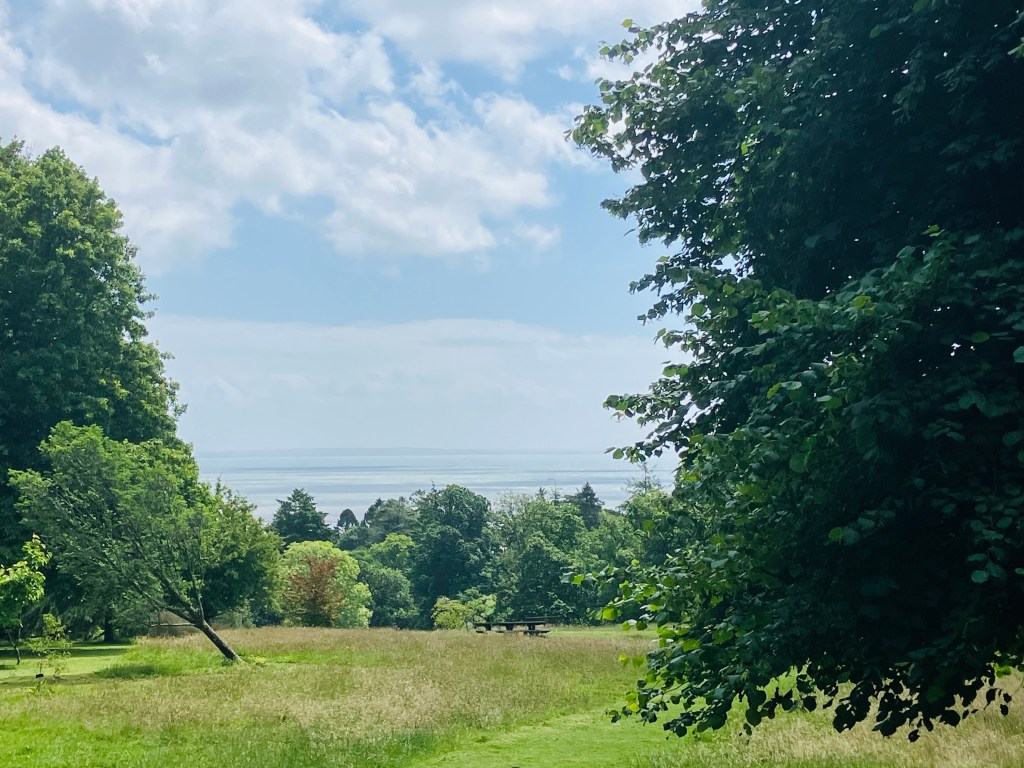
Inside, the forest greets you not with grand gestures, but with layers. Layers of green, first of all—deep emerald, bright lime, silvery sage—stacked and intertwined in ways that feel almost deliberate, though nothing here seems overly planned. Towering palms stretch upward while ferns unfurl quietly beneath them, and flowering plants appear unexpectedly in an ongoing scenic view of foliage.
amidlifeadventure.orgaidlifeadventure.org
Walking through the paths, you quickly realise this isn’t a manicured botanical garden. It’s something more relaxed, more alive with flora and fauna. The trails curve gently, inviting you forward without urgency. There’s no single “main attraction”—no one spot that demands your attention. Instead, the experience is cumulative, built from small, beautiful moments: a shaft of sunlight breaking through leaves, a sudden burst of colour, the sound of wind moving through branches like a whispered conversation.
The flowers themselves are both subtle and striking. Some bloom boldly in vibrant reds and oranges, while others reveal themselves only if you pause long enough to notice. It’s a place that rewards patience. The more slowly you move, the more the forest offers.
a,idlifeadventure.orgamidlifeadventure.org
And then there are the views.
At certain points, the dense greenery opens just enough to reveal sweeping vistas across the island. Rolling hills stretch out toward the horizon, eventually giving way to the distant shimmer of the sea. It’s a gentle reminder that, even surrounded by forest, you’re still on a Caribbean island—just seeing it from a different perspective.
What makes the Flower Forest particularly memorable is its atmosphere. There’s a calmness here that feels almost tangible. It’s not just the absence of noise, but the presence of something quieter—something grounding. You find yourself breathing more deeply, walking more slowly, noticing more than you usually would.
Time behaves differently in the forest. Minutes stretch. Plans dissolve. You might arrive intending to stay for an hour and leave wondering where the afternoon went.
amidlifeadventure.orgamidlifeadventure.org
The Flower Forest may not be the loudest or most famous attraction in Barbados, but it doesn’t need to be. Its charm lies in its subtlety, its atmosphere, and its quiet insistence that beauty doesn’t have to shout to be noticed.
Sometimes, it just grows—patiently, persistently—waiting for you to slow down enough to see it.
Final Thoughts: The Flower Forest offers a gentle reminder that Barbados is far more than its picture postcard-perfect beaches. There is also a quieter, more reflective side—one that invites you to slow your pace, look a little closer, and appreciate the beauty found in stillness. Away from the crowds and coastal buzz, this hidden retreat captures the essence of mindful travel: giving you a moment of calm, connection, and quiet discovery that lingers long after you leave.
Do you balance your travel experience or are you purely a beach lover? Let me know in the comments below or simply give my post a like if you enjoyed reading it today.
My final post on Antigua, before we head to our third destination on this Caribbean adventure, offers an insight into how we eat while travelling—especially since the Caribbean is known to be expensive.
First of all, that in order to stretch our funds so we can complete the rest of our travel plans, we do not eat in high end restaurants and spend the sort of budget you would if you were on your annual two week holiday. We do, however, pack a couple of outfits so if we decide to treat ourselves whilst away we have the wardrobe to do so.
When I plan a trip, accommodation will often be self catering so that breakfast can be in our temporary home along with the occasional main meal and snacks. After all, even on a budget, a decent breakfast and good coffee can set the tone for the day. Alongside the ingredients for these meals we will also buy a few staples like water, bread, butter/spread and fruit. Hopefully the owner will have supplied cleaning materials including washing up liquid (if there is no dishwasher) and we tend to bring our own toiletries from home. Everyone has their own viewpoint on this but smelling something familiar in the shower each day and ensuring my hair looks and feels human is important to me!
Supermarket Prices in Antigua
One of the biggest factors affecting our food choices is the cost of groceries on the island. Food shopping in the Caribbean is rarely cheap, as many goods are imported. Antigua, however, is not as commercialised as other Caribbean islands that we have visited which for us is a bonus. There are plenty of roadside fruit and vegetable stalls, a daily market in the capital – St John’s, as well as local eateries and roadside spots where homeowners barbecue chicken and meat in large oil-drum grills.
I thought I would share some food prices with you to give an idea of how much you can expect to spend if you have opted for, like us, a self catering visit. The first supermarket we stopped at on the evening of our arrival was the Perry Bay Supermarket in St John’s. This was the only place, we later discovered, that sold fresh milk rather than long life milk. However the majority of our shopping was completed at the “Epicurean Fine Foods and Pharmacy” , in St John’s, which was about a 20 minute drive from where we stayed. As stated on their website they stock a range of UK, US and Canadian products. For those shopping from the UK most of the products are “Waitrose”.
Tap water is generally treated in Antigua, but it is highly recommended to drink bottled, boiled, or filtered water to avoid stomach issues.
Listed below are some of the items we purchased at the supermarket (based on the currency conversion from XCD to British pounds at the time of purchase) with a comparison to prices in a Tesco supermarket in the UK:
Granola 500g cost £3.96. Tesco price £2.45 for 500g
Weetabix (24) cost £5.77. Tesco price £3.50
Honey 454g Jar £7.83 Tesco price £1.75
Pears cost 48p each Tesco price 52p each
Bananas cost 24p each Tesco price 16p each
Raspberries cost £3.91 for 320g Tesco price £4.30 for 300g
Local Lettuce £1.99 each Tesco price 89p
An English Cucumber £3 Tesco price 99p
Large packet of Ruffles Crinkle Cut Crisps, 180g cost £4.67 Tesco price for 150g is £1.25
Local brand of Diet, Caffeine Free Coke, 2 litre bottle £1.97 Tesco price £2.15
Water 5 litres £1.67 Tesco price £1.80
Total in Antigua: £44.18 Tesco Total: £23.71 87% more in Antigua. This really highlights how quickly self-catering costs can add up.
In total across our 10 days we spent £134.22 at the supermarkets. Prices, as you can see, are much cheaper in the UK and, therefore, often eating your main meal of the day at a local eaterie in Antigua can be cheaper than actually buying all the raw ingredients yourself and cooking it in the kitchen provided.
Local Food to Try
We are more than happy, in the Caribbean, to venture out and explore local places to eat.
The national dish in Antigua is Fungee and Pepperpot. Fungee (pronounced “foon-jee”) is a savory, firm cornmeal and okra dumpling similar to Italian polenta, while Pepperpot is a rich, hearty stew made with assorted meats, vegetables, and spinach. It is a quintessential dish highlighting African and Caribbean influences. We never actually came across this meal whilst in Antigua but maybe we didn’t go local enough?
Other local favourites also include jerk chicken and pork (similar to Jamaican cuisine), roti, and fish such as snapper, mahi-mahi and grouper along with tropical fruits/vegetables. Look out for the famous Antiguan black pineapples! Antiguan food is generally seasoned, flavorful, and savory, but it is not typically prepared with intense chilli heat
Rum is considered the national drink of Antigua and Barbuda, reflecting the island’s rich Caribbean history. Locally produced rum, particularly brands like English Harbour Rum and Cavalier Rum, are very popular. Additionally, Wadadli beer is recognised as the national beer which is actually a light lager named after the original name for the island.
Eating Economically
Supermarkets: Whilst the supermarkets in Antigua do not sell hot, cooked foods as much as you might find on other islands it is available at the Epicurean in St Johns. Times available on their website. There is a choice of two counters; the first stocks typical Caribbean food and the second Asian food. This is served in plastic box containers, weighed and sealed for you to take home. For both counters you need to take a ticket from the adjacent machine and wait for your number to be called. We tried this on a Sunday Afternoon and there was a long wait. If it’s busy I would suggest taking a ticket on entry and getting on with your shopping whilst maybe popping back every now and again to see which number they are at! On a positive note the food is freshly cooked and monitored in terms of how long it is on display before being replaced with fresh stock. Serving spoons etc are allocated to each dish and sterilised regularly to avoid any cross contamination!
We bought starters and mains from the Asian selection for two for £16.34 cheaper than most takeaways in the UK, and a great option when you don’t feel like cooking.
My Half Eaten Takeaway 😊
Whilst salad counters aren’t widely available in Antigua, you can easily pick up hot, freshly cooked BBQ chicken from the supermarkets We paid £9.93 for a chicken, which was enough for dinner (paired with salad bought separately) and lunch the following day.
Local Eateries:
Tipping Culture: In Antigua, a 10–15% service charge is often—though not always—added to restaurant bills. When it is included, there’s no obligation to tip further, although leaving a little extra for exceptional service is always appreciated. If no service charge is added, a 10–15% tip is customary.
Green Apple
Located next to the University of the West Indies, Five Islands Campus, Green Apple was recommended by neighbours at our accommodation—and it turned out to be a great find!
After parking by the roadside, we were immediately struck by the modern Caribbean feel of the wooden building. There’s seating in a courtyard at the front with tables and umbrellas, as well as additional space on a side balcony. With a steady student crowd, takeaway orders seemed popular, but there is also the option to dine in. The menu is displayed beside the counter and offers a good range of fast food with a Caribbean twist. The staff were friendly and helpful. We placed our order, took a seat, and before long our food arrived fresh from the kitchen.
After a long day at the beach, we were more than happy with something quick and satisfying. We shared a portion of steak-loaded fries, while my partner chose the Deluxe Burger and I opted for the Cajun shrimp wrap, along with sodas. The total bill, including a small tip, came to 75 XCD (£20.58).
Smiling Harry’s
We stopped here for lunch during a day trip to the east side of the island, and it turned out to be a highlight of the journey. As you descend into Half Moon Bay on the final stretch before the beach, this local favourite sits on the left-hand side, easy to spot. Its full name is “Smiling Harry’s Thirst Quencher” —lives up to its charm, even though Smiling Harry himself (a real person) wasn’t there when we visited. Still, the warm hospitality more than made up for it. This place is a true beachside gem, serving authentic island cuisine in generous portions at reasonable prices. The food clearly takes centre stage, with standout dishes like curry goat and garlic shrimp, all served with rice, salad, and macaroni pie. We opted for the curry goat and baked chicken, and both were packed with flavour—rich, comforting, and exactly what you’d hope for in a spot like this.
Total Cost incl a small gratuity: £27.72
A Special Occasion -Pillars at English Harbour
Whilst we were in Antigua, we decided to visit Pillars, a restaurant highly recommended by our Airbnb host—who even suggested the best table to request. We booked ahead for a Sunday afternoon lunch at 1 p.m., and it quickly became clear why it had been so enthusiastically recommended.
Set within Nelson’s Dockyard at Admiral’s Inn, a UNESCO-listed historic site, Pillars enjoys a stunning waterfront location. The restaurant is framed by 18th-century stone pillars overlooking the harbour, blending colonial-era character with a relaxed, modern elegance. We were seated on the terrace, where the views stretched across the water, with boats gently drifting by. The atmosphere struck a perfect balance—refined without feeling formal. The menu reflects this as well, combining Caribbean flavours with international influences, with a particular emphasis on fresh, locally sourced seafood.
Whether for a leisurely lunch like ours or a more romantic evening setting with cocktails and live music, Pillars offers a setting that feels both special and effortlessly relaxed.
Often considered one of Antigua’s standout dining experiences, it’s prized not only for its food but also for its historic charm and stunning waterfront views. We indulged in a three-course meal (mains and desserts shown below), lingering over each course while watching water taxis glide between neighbouring restaurants. The setting felt wonderfully tranquil, and the food more than lived up to the reputation. Total Cost: £117.07
Our Final Day – A Perfect Stop Before Take Off
Our Canadian neighbours had one last recommendation before flying home after their ten-day stay in Antigua—and we’re so glad they shared it. Just five minutes beyond the airport, Garden Grill turned out to be an absolute gem… and one that may well change how we plan future trips. Why? Because if we’d been catching an overnight flight back to the UK, we could have enjoyed a proper meal here, skipped the usual plane food entirely, and simply slept our way home. It’s a strategy we’ll definitely remember.
As it was, we were booked on a mid-afternoon inter-Caribbean flight, meaning we didn’t need to arrive at the airport until two hours before departure. That gave us the perfect window to stop here for a relaxed lunch—avoiding overpriced airport options and the need to eat later.
Set on Dutchman’s Bay, Garden Grill offers a laid-back, open-air setting with a breezy, garden-style feel. Surrounded by greenery and just moments from the beach, it strikes the perfect balance between casual dining and a scenic escape. The menu focuses on fresh, locally sourced ingredients, with a farm-to-table approach that shines through in dishes like grilled fish, tacos, burgers, and vibrant salads. Popular for brunch and lunch, it caters well to a range of dietary preferences, including vegetarian, vegan, and gluten-free options. With its welcoming atmosphere, attentive service, and blend of international comfort food and Caribbean flavours, it’s easy to see why it’s such a favourite.
Since this would be our main meal of the day, we decided to share a starter before enjoying a main course each—an excellent choice, as it turned out. Total cost: £58.08
Final Thoughts…. All in all, Antigua has been a brilliant reminder that travelling well isn’t about how much you spend, but how thoughtfully you spend it. With a bit of planning, a willingness to adapt, and an openness to local experiences, it’s entirely possible to enjoy incredible food, beautiful settings, and memorable moments without constantly stretching the budget.
Self-catering gave us flexibility and familiarity, while local eateries offered flavour, value, and a genuine taste of island life—and it’s often the latter that leaves the strongest impression. Yes, groceries can be surprisingly expensive, but by mixing things up and knowing when to cook and when to eat out, we found a balance that worked perfectly for us.
Antigua has delivered not just stunning beaches and warm hospitality, but also a valuable lesson in travel: sometimes the simplest choices—fresh fruit from a roadside stall, a perfectly cooked BBQ chicken, or a relaxed lunch by the sea—are the ones that stay with you the longest.
As we pack our bags and move on to the next stop in our Caribbean adventure, we’ll be taking these lessons (and a few new food habits) with us.
Are you tempted to plan your own Caribbean adventure? Do you think Antigua might be the place for you? Let me know in the comments below and if you enjoyed the post please give it a “like”!
We are approaching the end of our trip to Antigua and decided, in advance of our arrival on the island, to book a boat tour to Bird’s Nest Island. I had researched the various tours on offer and we chose to use this company which departed from Parham Harbour.
Parham
On the day in question we drove 10 miles across the island from our accommodation, which took about 40 minutes, to the north east to reach our embarkation point. The village of Parham, itself, feels like the kind of place that doesn’t try too hard—and doesn’t need to. It’s widely considered the island’s oldest settlement, and you can sense that history not in grand monuments, but in the easy rhythm of daily life: fishing boats rocking gently in the harbour, roads that seem to wander rather than hurry, brightly painted homes that peek out from behind flowering trees and very much a laid back Caribbean lifestyle. The village sits on the edge of a calm, mangrove-lined inlet that looks almost like nature decided to build a safe haven for both boats and daydreams. The water here isn’t the dramatic turquoise you’ll find on postcards—it’s softer, muddier, more lived-in. And that’s part of its charm. This is where locals mend nets, where birds pick their way through the shallows, and where time seems to stretch just a little longer than usual. There appears to be a strong sense of community—people greet each other by name and are not adverse to greeting you also as I discovered when I was trying to park safely and securely on the roadside. Only to discover later that they have a car park adjacent to where the boat is tethered in preparation for our journey.
In a world that often moves too fast, Parham offers a gentle suggestion: slow down, look around, and maybe—just maybe—don’t even check the time.
Travelling to the Island
Climbing aboard the vessel we meet our fellow travellers, a husband and wife from the Channel Islands along with Captain Brian and his first mate “Scooby”! We head out past Jumby Bay Island (also known as Long Island), located two miles off the the main island, this exclusive 300-acre private resort and residential community is famous for its private villas, white-sand beaches, and high-profile clientele.
Our voyage takes us through North Sound Islands and Mangrove coastlines which offer boats protection from invading hurricanes.
The journey there is half the charm as our boat skims over water so clear you can see coral gardens and darting fish beneath you. There’s a tiny speck on the horizon that doesn’t look like much at first. No bustling docks, no beach bars, no rows of sun loungers—just a low, green island surrounded by impossibly clear water. That’s Bird Island and as the engine cuts and the boat slows, the loudest sounds become the wind, the gentle slap of waves, and—true to the island’s name—the chatter of seabirds circling overhead like they’re debating your arrival.
Stepping onto the island feels a bit like accidentally discovering a secret the Caribbean forgot to advertise. The sand is pale and soft, the kind that squeaks faintly underfoot, and the sea shifts through shades of blue that don’t quite seem real. There’s a laid-back, untouched feel here accentuated by the young man casually mending his parasail on the beach—there’s no infrastructure, no rush, just nature quietly getting on with things.
The Island Itself
Bird Island is small enough that you can stroll across it in minutes, but that’s not the point! Brian is in the process of opening up the toilet/changing room, setting up tables and chairs ready for lunch and generally ensuring we feel welcome with a nice cold drink.
If you wander a little inland (and “inland” here is a generous term), you’ll notice the scrubby vegetation and rocky patches where birds nest and rest. Depending on the season, you might spot pelicans gliding in with surprising grace or small flocks of tropical birds hopping about like they own the place—which, to be fair, they do.
Included in the tour package is an island hike, which Scooby gives us access to by using the company’s keys to open the gate to climb the grand stairs which stretch up into the highlands. As he leads us along this canopied trail we are told a little of the history of the island and more about its flora and fauna. When you reach the top of the island there are great views back across the smaller islands and down to the beach.
Whilst everyone else is keen to get a glimpse of the harmless, beautiful and endangered racer snake, that lives nowhere else in the world but on the islands of Antigua’s Northern coast, I’m more than happy if it doesn’t show its face!
From the Hilltop trail in the winter months (from December through May) there is an added attraction. Whales can sometimes be seen as they migrate down from waters off New England and Canada. You will probably need a good pair of binoculars, plenty of patience and maybe a little bit of luck to see them.
Birds of many varieties also nest on the island throughout the year and Hawksbill and Green Turtles are commonly seen in the bays so I’m very much looking forward to the next stage of the trip. But before we move on, and as we return back down onto the beach, we are reminded that school children are brought here from the mainland to partake in an authentic nature lesson. Low and behold one of the teachers has picked up a racer snake and is handing it around to her young charges. With permission I took a photograph of this young man!
Snorkelling
The company provide snorkelling gear for all those wishing to take part. I, personally, brought my full faced mask and snorkel with me but turned down the opportunity to wear some flippers. I’m still learning and they just seemed so cumbersome.
Brian accompanies us, as just us two ladies slip into the water, alongside him and make our way out away from the beach. Suddenly you’re in another world—coral formations, curious fish, and the kind of visibility that makes you forget how deep you are. It’s peaceful, almost meditative, until you stop for a minute and realise you’re in the middle of the Caribbean Sea. We are blessed with several turtle sightings, a couple of rays whose sleek black bodies float to the surface in front of us and fish of all colours and varieties. It’s quite an awe inspiring experience for me as a newby to this sport but my lack of flippers mean that Brian has to give me a rope to hang onto so I can keep up!
Meanwhile our two hubbies are relaxing on the beach, chilling and in the case of the Channel island guest enjoying some rum punch!
Lunch
Lunch is also included in the package and when we return to the beach the traditional Antiguan fare is all ready and laid out for us to help ourselves buffet style. There is some marvellous barbeque chicken with green salad, macaroni pie and coleslaw with local banana bread for dessert and soft drinks, juice, water and rum punch to wash it down with.
It’s then time to get changed and think about heading back. Bird Island is special but it isn’t any single dramatic feature—it’s the simplicity. There’s something quietly luxurious about being somewhere so unspoiled, where your main decisions are whether to swim, sunbathe, or do absolutely nothing at all. Time stretches out here in the nicest way, and even a short visit feels like a proper escape.
Final thoughts…… By the time you leave, salt on your skin and sand in your bag (despite your best efforts), you might find you are already thinking about how to come back. Not for excitement or spectacle—but for that rare, easy feeling of having briefly stepped off the map.
Have I inspired you to perhaps include Antigua in your Caribbean itinerary? Let me know your thoughts and comments ……………
Continuing to explore the island of Antigua we ventured south to Nelsons’ Dockyard and Shirley Heights. Driving to our destination accentuated the poor condition of the roads as it was a mere 14 miles from our accommodation but the trip took nearly an hour! An equivalent journey at home on a similar category of road would take half this time. However at this point in our adventure I am becoming somewhat accustomed to the lack of tourist infrastructure. I am instead revelling in the fact that the speed of our journey gives us time to view the locals as they go about their daily lives alongside typical Caribbean houses and landscapes. Maybe there is a lesson to be learnt here in terms of slowing down and adopting “Caribbean time”
Nelson’s Dockyard
Every exploration of a new place should, in my opinion, include a bit of history. There is always an urge in me to understand how a place has developed and this area of Antigua is no exception.
Tucked into the calm, turquoise waters of English Harbour, Nelson’s Dockyard feels like a place where history decided to linger a little longer than usual. It’s the kind of harbour where pastel sailboats bob lazily in the sun, old stone warehouses stand proudly against the Caribbean sky, and every corner seems to whisper a sea story or two.
Back in the 18th century, the British Royal Navy needed a safe place in the Caribbean to repair ships and keep an eye on their rivals. So they turned this natural hurricane-protected harbour into a bustling naval base. Sailors hammered planks, riggers climbed masts, and officers strode about looking very important. The dockyard eventually took its name from the famous British admiral Horatio Nelson, who served here between 1784 and 1787—long before he became the hero of the Battle of Trafalgar.
Life at the dockyard during Nelson’s time was anything but quiet. Imagine the creak of wooden hulls, the snap of sails drying in the wind, and the salty chatter of sailors from across the empire. Ships would arrive battered from long voyages, looking like they’d wrestled a few storms along the way. Carpenters, blacksmiths, and sailmakers got to work patching them up so they could sail off again—hopefully a little less battered.
Despite Nelson’s later fame, he wasn’t exactly thrilled with his posting in Antigua. In fact, he spent much of his time arguing with local merchants about British trade laws. One suspects he might have preferred commanding a fleet to debating customs regulations. Still, the dockyard kept humming along, doing the essential but less glamorous work of keeping the navy afloat.
As the age of wooden warships faded, so did the dockyard’s military importance. By the late 19th century it had fallen quiet, the buildings weathering slowly under the tropical sun. But history, fortunately, has a way of staging comebacks. Restoration efforts in the 20th century brought the dockyard back to life, preserving its Georgian-era buildings and maritime charm.
Today, Nelson’s Dockyard is the only continuously working Georgian naval dockyard left in the world. Instead of warships, sleek yachts and sailing vessels fill the harbour. The old storehouses now host cozy cafés, museums, and little shops where you can pause for a drink and imagine what the harbour looked like when red-coated officers and sunburned sailors were the regular clientele. On the opposite shore, tucked on the hillside you can also see Clarence House. Built in 1804, this historic building overlooks English Harbour and was built for the Duke of Clarence (later King William IV). It was famously used by HRH Princess Margaret for her honeymoon.It has been restored and now operates as a museum and venue for special functions.
The dockyard and Clarence House are also part of the Antigua Naval Dockyard and Related Archaeological Sites, recognised for its remarkable preservation and its role in Britain’s Caribbean naval strategy. Walk the stone quays today and you’ll see the same sturdy architecture that once supported an empire’s fleet.
In the end, Nelson’s Dockyard isn’t just a historic site. It’s a place where past and present share the same harbour: eighteenth-century naval history anchored beside modern Caribbean life. And if you stand quietly by the water for a moment, you might just hear echoes of sailors’ boots on the stone, mingling with the gentle clink of sailboat masts in the breeze.
Parking: There is ample parking outside or along the side streets as you drive into the area Admission Fee: There is a charge to enter the dockyard, we paid 40 XCD (£11 per person) but this includes a free guided tour by a member of staff (ask at the admission desk) and admission to the on site museum.
Shirley Heights
At the very end of Nelson’s Dockyard beyond the museum and on the right hand side of the harbour if you look up onto the hill beyond you will see buildings perched high above English Harbour, this is Shirley Heights.
A short three mile drive will take you to the top of this hill and when you park up and look back towards whence you have come it is definitely one of those views that makes people stop mid-sentence, stare for a moment, and then reach for their cameras. From its hilltop lookout, the entire harbour spreads out below like a postcard—turquoise water, white sails drifting in and out, and the historic buildings of Nelson’s Dockyard tucked neatly along the shoreline.
But Shirley Heights wasn’t built for admiring sunsets. In the late 18th century it was actually a military lookout, part of a defensive network protecting the British naval base below. From this high vantage point, soldiers could spot enemy ships approaching long before they reached the harbour. Cannons once lined the ridge, ready to send an unfriendly welcome to any unwelcome visitors.
The name comes from Thomas Shirley, a former governor of the island in the 1700s. In those days, life at Shirley Heights involved scanning the horizon, maintaining fortifications, and probably drinking strong tea while discussing naval strategy. It was serious business.
These days, however, the mood is considerably more relaxed.
As the afternoon fades, Shirley Heights begins to transform. The air fills with the irresistible scent of barbecue drifting from the grills. Locals and visitors gather around picnic tables, drinks in hand, chatting while the sky slowly turns shades of gold and guests vie for the best spot to take photos of the sunset. The weekly barbecue—famous across Antigua—takes place every Sunday Evening and is less of a meal and more of a celebration. As it’s popularity has soared and with an influx of tourists from the “all inclusive” resorts across the island they have added another night (Thursday) to their repertoire which is when we decided to visit. It’s worth being there early, we parked up at 4.15 p.m. and the car park nearest to the buildings was already full so we were directed to a grassy knoll outside.
It is also worth queuing up for drinks and to buy your barbecue tickets as soon as you get there. The queues can become quite extensive as more visitors arrive.
It’s not long before the music begins, however, with steel pans and reggae rhythms floating through the warm evening air, creating the kind of soundtrack that makes it nearly impossible to sit still.
As the evening wears on musicians tune their instruments while dancers gather in front of the stage in preparation for the live music that soon replaces the local steel band. The combination of live Caribbean music, smoky barbecue, and a view over one of the island’s most historic harbours makes the whole scene feel effortlessly joyful.
Just as the sun dips below the horizon, the real magic happens. From Shirley Heights, the sunset spills across the water behind Nelson’s Dockyard, turning the harbour into a glowing mirror of oranges and pinks. Applause often breaks out from the crowd—part tradition, part genuine appreciation for a show nature performs nightly.
As dusk takes over, the party continues. The music grows livelier, the dancing more enthusiastic, and the barbecue keeps coming. Plates piled with grilled chicken, ribs, and local sides circulate through the crowd while laughter and conversation carry on late into the evening.
It’s a far cry from the tense watch posts of the 1700s. Where soldiers once scanned the horizon for enemy sails, visitors now gather to celebrate the sunset, the music, and the simple pleasure of good food with a spectacular view.
In many ways, Shirley Heights captures the spirit of Antigua perfectly: a place where history sits comfortably beside good company, great music, and the smell of barbecue drifting on a Caribbean breeze.
Final thoughts…… The South coast of Antigua has much to offer with its naval history, beautiful sunsets and a hilltop party with barbecue wafting on the Caribbean breeze and steel drums and reggae music bringing the Caribbean spirit to your soul. Have I inspired you to perhaps include Antigua in your Caribbean itinerary? Let me know your thoughts and comments ……………
Our next adventure in Antigua took us to Betty’s Hope, Devils Bridge and then lunch and an afternoon at Half Moon Bay. It gave us a good introduction into the broader island, the people who live here, the tourist infrastructure and its association with the overall economy.
Betty’s Hope
Betty’s Hope is a historic sugar plantation located in the eastern part of the island just south of the village of Pares. It was 12 miles from our accommodation, east of St Johns, with a travel time of about 35 minutes. We actually managed to drive past the entrance as the signage isn’t that big and the turning off to our right was basically a dirt track rather than an actual road. The plantation occupies a low limestone hill in a rural agricultural landscape, reflecting the type of terrain historically used for sugar cultivation on the island.
Founded in the 1650s, Betty’s Hope was primarily owned by the Codrington family from 1674 until 1944 and became one of the earliest and most productive sugar plantations in Antigua, helping to establish the island’s economy around sugar production during the British colonial period. Its operation depended on the forced labour of enslaved Africans, who worked the cane fields and the industrial processing buildings where sugar and rum were produced. The remains of the plantation complex—such as the windmills, boiling house, still house, and cisterns—illustrate the scale and organisation of the sugar industry that dominated the Caribbean during the seventeenth and eighteenth centuries.
It is very much an open-air museum and although it is managed by the Museum of Antigua and Barbuda,there is little evidence of any actual custodians. The guides we saw there were leading groups of tourists brought from the cruise ships that were in that day. It is very much a self led experience with a small visitor centre with interpretive displays explaining both the sugar-making process and the lives of enslaved workers on the estate. You can explore the restored twin windmills, ruins of processing buildings, and surrounding landscape at your own pace.
The site typically operates during weekday daytime hours (roughly 9:00 am–3:00 pm), and entry is free. There is a collection box within the museum for donations of around 5 XCD per person to support maintenance. Basic parking is available on site but there are no cafés or restaurants on the grounds, so you are probably only likely to be there about 1-2 hours depending on how much you wish to read about the site and how many photographs you wish to take.
Whilst Betty’s Hope is presented to visitors as both a heritage landmark of Antigua’s sugar economy and a memorial landscape reflecting the island’s history of slavery, it was also, for us, an introduction into the dichotomy that surrounds the tourist trade on the island. This is something that I may well write about later.
Devils Bridge
Just 5 miles East of Betty’s Hope lies Devil’s Bridge. Prepare yourself, though, for a 15 minute drive where the last mile or so is again very much a dirt track!
Devil’s Bridge, part of Devil’s Bridge National Park, established in 2008, is both a geological feature and cultural landmark. It is a natural rock arch located on the Atlantic coast of Antigua, where strong waves crash against the cliffs. It is one of the most famous natural landmarks on the island because of its dramatic coastal scenery and unique geological formation.
The bridge, itself, is a naturally formed limestone arch created by long-term coastal erosion (Wow! my geography A’Level came in handy!) and its unusual shape resembles a bridge stretching over the ocean, making it visually striking and popular for photography. As a result be prepared to wait to get a photograph without anyone standing on it! Erosion continues today and over time, cracks in the limestone may grow, meaning the arch could eventually collapse as part of the natural coastal cycle.
Local legends claim that enslaved Africans jumped from the cliffs to escape slavery, contributing to the name “Devil’s Bridge”. Whilst archaeological evidence also shows prehistoric Amerindian settlements lived nearby, suggesting the area had earlier cultural importance.
It’s worth taking a short walk around the surrounding coastline to see the powerful waves that create a spectacular display of sea spray and crashing surf whilst the rocks contain natural blowholes. When waves enter underground cavities, water and air are forced upward, creating dramatic eruptions of water. We probably spent about 30 minutes here but you can walk around the wider area of the limestone coastline.
Half Moon Bay
11 miles further south but still on the east coast is Half Moon Bay with spectacular views on the road down into it. Take care on this road as we came across several herds of goats just meandering along the centre of the road.
Half Moon Bay is one of the most beautiful and famous beaches on the island of Antigua. It gets its name from its distinctive crescent (half-moon) shape. The beach curves around a wide bay with soft white-to-pink sand and bright turquoise water, creating a classic tropical landscape.
Parking is basically where the road down into the bay ends with a short footpath leading you past the Beach Bum Bar and Cafe. With almost a mile of beach there is plenty of chose in terms of where to sit and enjoy this spectacular scenery. We made the mistake, however, of sitting fairly close to where the path ends. We discovered later, from our friendly Canadian neighbours, that the waves were not as big further around the bay and, therefore, snorkelling ( which with churned up sand where we were wasn’t possible) was quite good in the calmer waters.
Friendly locals operate the rental of chairs and umbrellas but they don’t charge you until you leave and its fairly normal for them to start closing down about 4.30 -5.00 p.m. Compared with many Caribbean resort beaches, Half Moon Bay feels peaceful, uncrowded and more natural. Maybe because it is surrounded by vegetation and open coastline, which makes it feel less developed, calmer and definitely tranquil.
Whilst we were happy to relax, read and swim in the clear Caribbean water you could bring a picnic, make the most of the steady ocean breeze to fly kites with children and also take a leisurely stroll right around the bay to the point you can see below in the centre picture where hikers were scrambling up the rock. Photography enthusiasts may also enjoy the natural scenery.
Today’s Food:
We stopped for lunch before we set ourselves up on Half Moon Bay. We could have eaten at the Beach Bum Bar and Cafe and it certainly seemed to be popular, however as you come down into the bay, on the final stretch of road there is a local haunt on your lefthand side called “Smiling Harry’s Thirst Quencher” which has a 4.5 on Tripadvisor. Unfortunately “Smiling Harry” ,who is an actual person, wasn’t there when we visited but despite this we had a fantastic lunch. It is a real beachside gem that offers delicious and authentic island food accompanied by friendly hospitality. The gentleman serving, seemed to be fairly new and was probably more accustomed to the locals who frequent this authentic Antiguan eatery. They offer a variety of tasty and generously portioned dishes at reasonable prices created by a very good local cook. They definitely pride themselves on their food serving up mouthwatering options like curry goat and garlic shrimp accompanied by rice, salad and Mac pie. We chose the curry goat and baked chicken, both of which were yummy!
Final thoughts…… The East coast of Antigua has much to offer from history to geology and a fantastic Caribbean beach. Have I inspired you to perhaps include Antigua in your Caribbean itinerary? Would you have eaten at the local restaurant like we did or would the Beach Bar been more your thing? Let me know your thoughts and comments ……………
So having travelled for another full day, on the Saturday, settled in and woken up to that magnificent view we took a day off on the Sunday to recuperate. Being a bit of a chatterbox it didn’t take me long to introduce myself to our neighbours on either side. On one side there was a Canadian family who had left Alberta’s snow to relax in the Caribbean sun. On the other side was a European couple, the lady was Dutch and the gentleman was English and they were on a Caribbean adventure like us but started in Barbados before coming to Antigua and were leaving midweek to go to St Kitts. It’s always good to get feedback from other tourists on what they have done already and also recommendations of places to eat. After our experience the previous evening at the nearest supermarket we also ventured out on the Sunday to get the remaining provisions we would need for our 10 day visit. We drove to a different supermarket recommended by our landlord and discovered they had a hot food counter. This was a great find as I will explain in a later post.
On Monday we then set about exploring the island that is Antigua and this is where my first impression of the island which I talked about at the start of my first post was shattered. Read on to find out more………….
Dickenson Bay:
With so many beaches to choose from, Antigua has one for every day of the year, yes 365 in total!, We started our trip with a day out at Dickenson Bay. Off we trundled back up the pot holed, dirt track for a mile to rejoin the main road. This became somewhat synonymous with our explorations as the time went on and I got better and better at avoiding the pot holes 😊. The bay is easily accessible and so we followed the road right down into the car park, whereas many cars were parked on the roadside. We were greeted by a local man who smiling warmly explained it would be 10 XCD (£2.70)* for the day (* conversion rates throughout are based on today’s rates). With no idea if he was official or just a young entrepreneur we happily parted with our money and made our way to the beach.
Immediately we arrived on the sand we were then greeted by “Mr Deckchair Man” who guided us to his area of sun-beds. I’d already done my research so knew roughly how much to pay. Greeting him warmly and explaining that we had parked in the car park he offered us two chairs and an umbrella for 40 XCD (£11) for the day. You can, of course, reject the sun-beds in favour of your own rug or towel on the beach. Like many Caribbean islands the beaches are public up to the high-water mark. According to the Physical Planning Act of 2003, all beaches must also have accessible landward entry points. You are legally allowed to walk along any beach, even those fronting high-end resorts or private villas.
Located close to St John’s and, therefore, the cruise terminal, the beach gets really busy so if you are not after crowds of people its probably best to avoid this one! With white sand and aquamarine, clear waters it is, however, one of Antigua’s best loved beaches and reminded us of Grande Anse beach on Grenada from last year’s Caribbean adventure. Like Grenada it has much more of a local feel to it than other beaches in Barbados or Cayman where tourism is already well established. Dickinson’s Bay comes complete with swaying palm trees, year-round sunshine and an array of facilities including nearby restaurants and food stands for lunch and stores selling local souvenirs.
Whilst we didn’t take up the option to experience the water sports etc on offer I did journey out for the first time on this adventure into the sea to snorkel. You may recall that snorkelling at our first stop –Grand Cayman wasn’t possible! There were a few fish to view, not too far from the shore, once you made your way beyond the crowds but nothing too exciting. It was a great restart to my snorkelling experience though. I brought my own snorkelling gear but rental is available.
If you fancy something a bit more adventurous you can go on a scenic boat trip to take a break from the beach with the uninhabited islands just off the coast offering a peaceful and relaxing change of scenery. Alternatively if you want something more thrilling you can rent a Jet Ski for a more adventurous way to enjoy the waves.
We left the beach around 4 p.m. Most of the sun-bed owners will start to ask you to leave around 5 p.m. as we discovered later on our trip.
Green Apple
Having only purchased a soda and a snack at the beach we made our way back to the car park where several mini buses were already lining up to pick up their cruise ship passengers. Leaving the car park behind we headed back around St Johns towards our accommodation in order to try out a local eatery right next to the University of the West Indies, Five Islands Campus. This had been recommended by both of our neighbours individually and was a real find.
Having parked on the roadside we were immediately struck by the modern Caribbean feel of the wooden structure. There were tables and umbrellas in the courtyard at the front but also on the balcony to the side. With a student population more or less in situ takeaways were very much the order of the day. The menu, however, is posted to the right of the counter and offered a good variety of typical fast food but with a Caribbean twist. The staff were friendly and helpful, we placed our order and took a seat and it wasn’t long before our food was delivered fresh to the table straight from the kitchen.
It was one of those days where we were more than happy to have something quick and easy whilst sitting there with an after beach glow, casual clothes and no doubt straggly hair and grainy feet. We chose to share a plate of steak loaded fries, then hubby had their Deluxe Burger and I had a Cajun shrimp wrap plus sodas. The total bill including a small tip was 75 XCD, £20.58.
Finishing off……….. We came back to our beachside duplex apartment having had a whole day out for just under £35!!! Personally in the Caribbean I think that’s pretty cheap! I appreciate it’s not going to be to everyone’s taste but it also proves you don’t have to spend a fortune and we had a lovely day. I’d be interested to hear what your thoughts on Antigua are if you have already visited, whether it is on your future travel list or if maybe I’ve inspired you to think about going to the Caribbean.
There are more adventures to come from Antigua when on the next post I’ll take you to a the historic Betty’s Hope, the geological wonder of Devil’s Bridge and then down to Half Moon Bay with a quick stop at another local eatery.
Antigua is a brand new island for us to explore in the Caribbean. Prior to my arrival my preconception was I didn’t imagine the island would be as sophisticated as Barbados or Grand Cayman but thought, in light of its popularity, it would be more developed than Grenada, which we visited last year – Adventures in Grenada.
Our Journey to Antigua: There are very few flights from Grand Cayman to other Caribbean islands which means in order for us to fly to Antigua we had to be up at 4 a.m. to start the 1 hr drive to Cayman’s airport to catch an early morning American Airlines flight via Miami. The first section of our flight was about 1.5 hrs, we then had a 2 hour stopover in Miami before boarding a second American Airlines flight down to Antigua of about 3.5 hours.
As a UK citizen, it’s worth noting that if you are transiting via an American airport you still have to go through immigrationwhich means you still need a valid ESTA. This would not be the case in London, for example, if you were flying from Europe, via London, to America, providing you stay airside there would be no immigration check. No visa is required for many visitors to Antigua but a return ticket is mandatory and we had to give details to the authorities of our next flight leaving in 10 days time.
Antigua is one hour ahead of Grand Cayman and so on arrival we “jumped forward” an hour. The queues at immigration control were long, as they were in Grand Cayman, and having collected our bags, which had transferred direct from Cayman, we then picked up our car. You have to get a temporary local driver’s license (valid for three months) which was supplied by our car rental company at a cost of 50 (XCD), Eastern Caribbean dollars on production of my UK driving licence. If you aren’t intent on hiring a car then taxis are available throughout the island. Fares are also regulated by the government and are posted at the airport and in taxi stands.
Origins and Information: Antigua is located in the Leeward Islands and has a warm, tropical climate with temperatures averaging 77°F–82°F. This makes it a popular year-round tourist destination. Peak season is December to April which usually offers dry, sunny weather. Hurricane season (July–November) brings a higher risk of storms.
Visited by Columbus in 1493, Antigua was named after the Santa Maria la Antigua icon located in Spain’s Seville Cathedral. Antigua is Spanish for “ancient” or “old”. Colonised by English settlers, it became a, critical sugar-producing hub with a plantation economy driven by enslaved African labour. It also served as the headquarters for the British Royal Navy Caribbean fleet.
It is part of the three-island nation of Antigua, Barbuda to the north, and the uninhabited, rocky island of Redonda to the southwest. It is roughly circular, measuring about 14 miles by 11 miles. Fun fact, you could fit Antigua in the area of London three and a half times!! With a mostly low-lying, volcanic, and coral-reefed landscape, the island’s capital is St. John’s, which sits in the north west of the island. Antigua is divided into six administrative parishes: Saint George, Saint John (home to the capital), Saint Mary, Saint Paul, Saint Peter, and Saint Philip.
Antigua and Barbuda became an independent state within the Commonwealth of Nations on November 1, 1981, with Queen Elizabeth as the first Queen of Antigua and Barbuda and Right Honourable Vere Cornwall Bird as its first prime minister. English is the official language.
Evidence of British allegiance can be found on the islandas seen here!
Tourism and The Economy: Antigua and Barbuda are extremely dependent on tourism, which serves as the primary driver of its economy, contributing between 60% to over 80% of the GDP and providing over half of all jobs. The sector is driven by luxury resorts, cruise ship arrivals, and yachting, primarily attracting visitors from the US, UK, and Canada.
Famed for having 365 beaches the leeward or west coast is sheltered from the prevailing winds, creating calm and tranquil waters. As a result, it is home to the most stunning beaches such as Dickenson Bay, Jolly Beach and Hermitage Bay.
Antigua and Barbuda is a middle-income Caribbean nation, heavily reliant on tourism, with a GDP per capita higher than many developing nations but still facing significant poverty. The island has a high Gini coefficient which indicates greater income or wealth inequality within a population. It signifies that a small percentage of people hold a disproportionately large share of the total income or wealth, while the majority holds a smaller share. This leads to pockets of wealth and also areas of hardship. Despite its income status, a notable portion of the population lives below the poverty line (around 22-29%)
Conversely the country offers tax benefits for high-net-worth individuals thus attracting famous residents and homeowners in Antigua including media mogul Oprah Winfrey, fashion designer Giorgio Armani, Virgin’s Richard Branson, musician Eric Clapton, and former Bond actor Timothy Dalton, alongside legendary Antiguan cricketers like Sir Viv Richards and Sir Curtly Ambrose, drawn to the island’s luxury resorts like Jumby Bay.
Jumby Bay is an ultra-luxury, 300-acre private island resort located two miles off the coast of Antigua. Accessible only by boat, it features 56 individually owned villas and 40 suites, offering all-inclusive, high-end amenities like private chefs, white-sand beaches, and no cars.
The Eastern Caribbean Dollar (XCD), is the official currency on the island of Antigua. The U.S. Dollar is also quite popular and accepted almost everywhere, especially in tourist-friendly zones. We used the XCD where 1 XCD equates to approx 30p in the UK, depending on the market.
Arrival: Having picked up our car we left the airport as the sun began to set and armed with Google Maps on my phone (we couldn’t get it to connect into the car!) we made our way 5 miles west towards Green Bay and the Perry Bay Supermarket to pick up some essential supplies for breakfast the following morning.
Driving in Antigua:
Driving is on the left which is great for us visitors from the UK and cars tend to be automatic.
The roads in Antigua are all full of potholes. To drive 5 miles where we live in rural England would take approx 7-10 minutes, here you are looking at 20 minutes! The more I got to know the roads the more I realised that this was normal and perhaps explained why the lady at the car hire company made a point of ensuring we knew where the spare wheel was and the jack! 😊
Speed limits- what speed limits? There seemed to be a total disregard for limits which made driving particularly dangerous because roads often, as previously mentioned have significant potholes, there is often no street lighting particularly in rural areas, pedestrians often walk on the roads as there are no pavements and outside of St Johns meeting animals such as goats on the road is not unusual.
Drivers don’t indicate where they are going and have no respect for “right of way” so don’t be surprised if drivers come out in front of you at junctions, crossroads or even side turnings when they should be giving way to you. If you come across a “red flashing crossroads” this is suppose to indicate a four-way stop sign. Drivers are suppose to come to a complete stop, yield to other vehicles and pedestrians, and only proceed when the way is clear. In reality it is a free for all! so proceed with caution.
We took this photo coming down into Half Moon Bay
I much prefer arriving somewhere new and driving initially in daylight but unfortunately this wasn’t to be here on Antigua. Making our way through St John’s the poverty became apparent very quickly and having found the supermarket and parked we were surprised to see security guards at the entrance. We definitely felt a bit nervous which was accentuated by a couple of vagrants approaching us for money on returning to our car.
With another 4 miles to drive to our Air BnB we soon left the lights of the capital behind and journeyed along empty roads which diminished into a dirt track for the last mile. Having been awake by this point for about 16 hours we began to question where on earth we were coming to and whether in fact we were at the right place.
We parked up and expecting to meet our host at the property initially managed to knock on the wrong door! Luckily the local gentleman who answered the door was able to walk us to the correct villa and whilst doing so explained he had lived and worked in England for seven years in an area I knew about an hour from our home!!!!
Our host was really welcoming and friendly and having unpacked and stored our food items we collapsed in bed upstairs opening the curtains in the morning to this view! And realising even after all our struggles of the night before we had arrived in paradise!
On my next post I will start to give you an insight into the places that we visited whilst here on Antigua and also how my views and opinions changed during our stay………
I hope you enjoy this first post on Antigua! Is it somewhere in the Caribbean that you would like to visit? or have already been to? I would love to hear your views and opinions
As part of our Caribbean trip I think it is important to give you an insight into how we eat whilst on an adventure. We are not normally here to eat in high end restaurants and spend the sort of budget you would if you were on your annual two week holiday but we did allow ourselves a couple of treats so get ready for some delicious food photos!
Our normal practice is to book self catering accommodation and eat breakfast there each day. We will also ensure we have some staples like milk, water, bread and/or snacks for example and hope the owner supplies cleaning materials including washing up liquid (if there is no dishwasher) and we bring our own toiletries. Everyone has their own viewpoint on this but smelling something familiar in the shower each day and ensuring my hair looks and feels human is important to me!
1/ Supermarkets: Buying food and commodities in supermarkets in the Caribbean is never cheap as a lot of goods are imported and not grown on the island. Also be warned supermarkets do not open in Cayman on Sunday.
I thought I would share some prices with you to give an idea of how much you can expect to spend. We visited two different supermarket chains in Cayman -Hurleys and Fosters. Like anywhere, different people will have their own views as to which is the best value.
As I’ve previously mentioned in my posts, we tend to try and eat healthily so fresh fruit features quite highly on our assessment of any supermarket abroad. Additionally having not drunk full fat milk for more years than I care to remember, buying low fat, fresh milk is also near the top of my agenda. Water is safe to drink on the island, they use high-quality desalination plants to produce safe, purified water that is pumped throughout the island. That being said my tummy has a habit of reacting to water even in different parts of the UK so I personally tend to buy bottled water.
Hubby likes granola and yoghurt for his breakfast, whilst I favour fibre cereals such as Weetabix and we both use honey at home as a sweetener rather than traditional sugar.
Comparisons with Tesco supermarket in the UK:
907g carton of natural, coconut yoghurt cost £4.29. Tesco price £4.10 per kg
Granola 500g cost £4.89. Tesco price £2.45 for 500g
Shredded Wheat cost £5.59. Tesco price £3.00
Honey 340g Squeezy Bottle £7.29 Tesco price £1.19
Apples cost £1.67 each (£5.01 for 3) Tesco price 36p each (£1.08 for 3)
Bananas cost 35p each (£2.45 for 7) Tesco price 16p each (£1.12 for 7)
Mangoes cost £1.54 each (£3.08 for 2) Tesco price 88p each (£1.76 for 2)
Pears cost £1.87 each (£5.61 for 3) Tesco price 52p each (£1.56 for 3)
Large packet of Ruffles Crinkle Cut Crisps, 180g cost £5.89. Tesco price for 150g is £1.25
Diet Coke, 2 litre bottle £3.79 Tesco price £2.15
Water 5 litres £2.29 Tesco price £1.80
Total in Cayman: £54.87 Tesco Total: £23.11 137% more in Cayman
In total across our 7 days we spent £81.35 at the supermarkets. Prices, as you can see, are much cheaper in the UK and, therefore, often eating your main meal of the day at a local eaterie in Grand Cayman is cheaper than actually buying all the raw ingredients yourself and cooking it in the kitchen provided.
2/ Local Cuisine: When you are travelling on a budget do not be afraid to venture out to places where the locals go to eat and sample real Caymanian food.
The national dish of the Cayman Islands is Stew Turtle, a traditional meal reflecting the islands’ maritime heritage, made from farm-raised turtle meat and often served with rice, beans, and a spicy sauce.
While turtle stew is the official dish, another popular ingredient is conch (in stews, salads, fritters), which is a staple of local Caribbean cuisine and culture. It is a large, protected marine snail. and a prized seafood with a clam-like flavour, heavily regulated through a strictly enforced season and catch limits to prevent overfishing. Other local favourites include jerk chicken and pork (similar to Jamaican cuisine), fish such as tuna, snapper and mahi-mahi and tropical fruits/vegetables. Food can often be spicy, using local chilli sauces, tomatoes, onions, and peppers. Never be afraid to ask how spicy it is!
The national drink is Swanky which is a bitter/sour mix of Seville oranges, brown sugar, and spices.
3/ Eating Economically: Supermarkets: Nearly all the large supermarkets on Grand Cayman have hot food counters where an array of freshly cooked food is available for purchase, served to you in plastic box containers. Some of them open for breakfast between 6.30 and 7 a.m. whilst lunch tends to start around 11.00 a.m. We bought a hot dinner for two at Fosters for £12.77, cheaper than a takeaway in the UK!
You can often also find a help yourself salad counter and cooked chickens are available in a hot cabinet. We chose this option at Hurleys at a total cost of £22.08. It gave us a lovely evening meal plus enough for a lunch the next day.
Local Eateries: As we were staying in the East End of the island this is where we focused our attention when having meals out. These local places do not add a service charge so a tip is discretionary.
Big Tree BBQ: (Currently rated 4.8 on Tripadvisor)
I have to start with this is a firm favourite of ours which we have been frequenting since our first visit together back in 2016.
The story goes that “Henry (the owner) was working at the local hospital when one Christmas he gathered his family around the table for their main dinner. The family sat at tables under the big tree in the front garden and whilst enjoying their festivities a car pulled up and out stepped an American couple and thinking it was a local restaurant they asked how much it was for dinner. In a typical Caribbean hospitable fashion Henry explained they were having a family Christmas meal but invited them to join in. Another car pulled up and again a couple came and joined them. Before the two couples departed they wouldn’t leave without offering Henry some money towards the food. Sunday is often the only day that Caribbean people get off, working 6 days a week isn’t unusual. Henry decided he would put a sign outside his property and invite the public to join him for Sunday BBQ lunch for a reasonable price underneath the big tree in the garden”
The rest is history, as they say, with the Big Tree BBQ still going strong, open 11-6, 5 days a week. Its now being run by his youngest son Arvid, who was a teenager when we first met him, but now has a family of his own!
We opted for the pork ribs and beef short ribs which were served as usual with fried plantain, potato salad and rice n peas. There’s always a home made piece of cassava cake on the side and I love their swanky!
Total Cost: £42
Caboose: (Currently rated a 4.8 on Tripadvisor) In venturing to the north of the island to visit The Botanical Gardens, we decided to try this cafe/restaurant in Old Man Bay. As we pulled up in the car park it was clear that this was a popular option at lunchtime/early afternoon. Whilst the owner welcomes the tourist trade it was obvious that her mainstay was local hospitality and construction workers who dropped by to pick up their pre-ordered takeaway or, if they had more time, stopped by during their lunch break to eat.
There is a printed menu but there are enough “specials” on the board to the right of the counter to meet most peoples’ tastes. We opted for some conch fritters to start and then followed this up with Coconut Curried Grouper and Cayman Style Grouper both served with rice n peas and potato salad.
Total Cost: £45
4/ Other Places To Eat in the East End: As this is our last time visiting Grand Cayman we decided to splurge a little and try a couple of other restaurants in the East End rather than cooking in our apartment. Everywhere you eat, except in the local restaurants, there will be an 18% service charge added.
Monday Night Welcome Party & Tropical Buffet at Morritt’s Resort: https://morritts.com/dine/david-deep-blue As we were staying at Morritts we decided to try the Monday Night Welcome Night and Entertainment buffet. This event is also open to outside visitors but tickets have to be purchased in advance from ‘Davids Restaurant”. This is not normally our sort of event but we were given it ex gratis as I had some business to conclude here, hence the visit to the island. Tickets are normally £35 each with a discount for children and there was a vast array of food to choose from including starters, salads, various meats and fish and a complete dessert island. Entertainment comes in the form of party style games for all ages and normally a “Fire Show” but this had to be postponed when we were there because of the winds blowing in off the sea.
The Rum Point Club: (Currently rated a 4.2 on Tripadvisor) https://rumpointclub.com We ventured up to the north end of the island for a day at the beach and were pleasantly surprised to find that Rum Point had completely changed since our last visit back in 2018.
As part of the new set up you can lie on your sunbed with your umbrella on the beach (which are free!) and have food and drinks brought to you, which probably explains why no outside food or beverages are allowed! Alternatively you can take a seat at one of the many tables, inside or outside, in their well designed restaurant We chose from their lunch menu and selected a Peach and Burrata Salad (Gf/Veg) and a Quinoa Tuna Poke (Gf) accompanied by a non alcoholic Pina Colada and a soda.
Total cost incl service charge: £60. For lunch this is expensive for us!
La Casita Authentic Mexican, Mezcal and Tequila Bar: (Currently rated a 4.8 on Tripadvisor) https://lacasita.ky With a head chef currently hailing from Guadalajara you can be certain of some real authentic Mexican food. We decided to try “Taco Tuesday” where they feature four different tacos at a slightly reduced price to normal. Thankfully we contacted them in advance to book a table for 6 pm. because when we arrived the place was nigh on full and we saw several groups turned away during the evening because they hadn’t made a booking and there was simply no more room!
With such a wonderful menu to pick from we decided to go a bit overboard and opted to share the chicken nachos to start, have all four of the special tacos to share as a mains and churros and tres leche for dessert accompanied by soda and unsweetened ice tea.
Total cost incl service charge: £64
Tukka: (Currently rated a 4.6 on Tripadvisor) https://east.tukka.ky I first visited this restaurant back in 2015 with my children and had a lovely but very expensive meal. I then revisited in 2016 with my hubby and whilst the price remained pretty static we weren’t really that impressed. However, Tukka has had an impressive resurgence with not one but three parking lots now available, due to its popularity and an extension of their business into Tukka in the West End as well. In light of the popularity we felt we had to go and see what had changed. Open for breakfast, lunch and dinner we chose to get dressed up and go in the evening.
Firstly there is an impressive array of food to select from on the menu and prices have definitely come down! We skipped a starter and went straight to mains with Hubby choosing the Aussie Burger and me the tacos. As I wanted to try a couple of different ones I ordered two Peanut Chicken and one Jerk Chicken. (Had I known that I could have chosen three different ones I would have probably done that!) I was really impressed! I’ve had quite a few tacos in my time, in many places around the world and these were up there with the best 😋 We drank bottled water and soda and finished off by sharing a Luv in a Jar (Lana’s Mums Creation) which was truly amazing! Definitely one of the best meals we have had for a while!
Total cost incl service charge: £68
I hope you have enjoyed my foray into the East End of Grand Cayman’s culinary scene. It should be noted that we are probably the exception to the rule here as most visitors, particularly those staying on Seven Mile Beach, will be looking for far more sophisticated fayre and thus will happily pay much higher prices! But the fact remains that you don’t have to and, therefore, you can visit this beautiful island without spending a fortune!
Have you been to Grand Cayman? What did you think about the food there? Did you try any of the local eateries? I’m interested in hearing from you…………………
We are waving goodbye to Grand Cayman now and embarking on the next leg of our Caribbean adventure so look out for my next post as we arrive in Antigua!
Having visited Grand Cayman on three previous occasions I feel I have pretty much visited everything there is to see of any significance on the island, so on this trip it was more a case of revisiting the places that I thought would bring me the most joy. As midlife adventurers we are not here to eat in high end restaurants and spend the sort of budget you would if you were on a two week holiday. This is just the start of our Caribbean adventure and we have other islands to visit. Our choice of places to visit is, therefore, influenced by this mode of travel but it doesn’t retract from having a good time. So here are a couple of ideas of things you can do without breaking the bank………
1/ Rum Point: Within a 45 minute drive from the island’s capital -GeorgeTown and located in the picturesque district of North Side, “Rum Point” is famous for its island atmosphere, white sandy beach and shallow waters. It is an ideal spot for swimming and snorkelling. The beach hammocks, shady trees, picnic tables and delicious food beckon visitors and locals alike seven days a week.
Driving north is a wonderful experience, in itself, as it passes some beautiful scenic stretches along the coast and it was a welcoming sight to see the presence of more traditional Cayman homes, maybe because the development of new houses seems to have currently not reached this far.
Arriving at the car park I am immediately struck with how much things have changed since my last trip back in 2018. We soon learn from the guy based at Red Sail Sports, who happens to come from England, that a complete, major refurbishment took place during 2022–2023. The whole beach front area now looks brand new, gone is the old wooden shack from which you could buy lunch and instead in its place is a much bigger, architecturally designed restaurant and bar which sweeps around the bay bringing waiting service to your sun bed!
Rum Point also now offers changing rooms, showers, huts, hammocks, snorkelling and volleyball nets. About 45 minutes from most hotels and the cruise terminal, Rum Point is well worth a day trip. Calm, shallow waters make it perfect for swimming, snorkelling and paddleboarding while beach hammocks and shaded loungers invite relaxation. Alas on our visit the winds were up and so all the umbrellas were safely tethered and the sea wasn’t welcoming snorkelers which was a bit disappointing. However with FREE sunbeds, waitress service for all food and drinks we were still able to spend a good few hours here relaxing in the Caribbean sun. Quick Tip: Don’t leave without trying the island’s legendary mudslide cocktail at the beach bar!
2/Starfish Point: Leaving Rum Point we head further north to Starfish Point. This is a very popular spot for both independent visitors and those on boat tours. Firstly let me say, having visited this spot many times, there are always starfish in the water. Secondly, however, visitors are reminded that “the starfish belong in the water, it is illegal to remove them”. This means even temporarily! If like me you appreciate seeing wildlife in their natural habitat you may find coming here a little overwhelming. There are usually a percentage of visitors who ignore that these are living creatures. I have seen children being allowed by their parents to collect them in buckets! Or remove from the sea and place them like trophies on the sand. Fortunately as it was a windy day we were blessed to be there this time with very few people and thus spent our time admiring these beautiful creatures under the water in their natural home.
Whilst all beaches on Grand Cayman are technically public up to the high-water mark, offering extensive access across the island, Grand Cayman has over 250 public shoreline access points. Look out for this sign on the roadside.
3/Queen Elizabeth Botanic Garden: Anyone that knows me is aware that I like to explore a good garden and having not been here since my first visit to Cayman back in 2015 I felt I was long overdue for a revisit. Admission is 20 Cayman Dollars, 20 UK pounds or 25 US dollars per person. We were happy to pay this as a contribution to the work they do here securing flora and fauna for future generations. A small map is provided so you can meander around at your own pace. These were my key highlights:
Orchid Boardwalk: I try my hardest to grow orchids at home and have often taken on poorly plants that friends and relatives have been gifted but have failed to thrive. My oldest plant was given to me as a house warming present back in 2005! I am more than happy to wander around this 600 ft looping boardwalk where hundreds of orchids can be found amongst the native vegetation. Be aware that orchids do not flower year round so the amount in bloom will vary upon the season. I love to see them in their natural environment and as they are mostly categorised as epiphytes, unlike money, they do grow on trees!
Heritage Garden: The heritage garden stands in tribute to early 20th century Caymanian life with a colourful, restored, traditional, pink cottage as its centrepiece. It has a separate small structure used for cooking, often featuring a traditional fire hearth. The cottage is set in a traditional white sand yard with paths lined with pink queen conch shells, a historical practice that kept the area clean and cool. Surrounding the house is a traditional garden with a variety of fruit trees, including mango, breadfruit, and banana. The garden also features an area displaying plants traditionally used by early settlers for treating illness and injury.
Birds: It’s definitely worth listening out for the bird song whilst you are walking around. If you stand still and listen you might even be lucky enough to spot a bird nearby in a tree or on a bush. If you are very fortunate you might be blessed with the presence of a Cayman parrot!
Iguanas: A visit to the Botanic Gardens isn’t complete without seeing these reptiles in the wild and also, as we discovered, on this visit within the Blue Iguana Conservation Facility. We also managed to spot a couple of agoutis whilst on the Woodland Trail.
When you have finished your visit and return to the car please heed the signs in the car park!
4/Snorkelling: There are many places around Cayman to snorkel and it was very much my intention to do so. If you are a regular reader of my blog you will know that this is a skill I didn’t learn until midlife. I’m still not super confident but I’m getting there. We chilled out on day one of our visit and then the remainder of our stay, when I had plans to explore various coves, beaches etc and build my ability, were unfortunately thwarted by the wind. With boats not taking visitors out to scuba dive we were advised not to pursue any snorkelling either until the winds dropped which didn’t materialise.
However these were the places I had on my list based upon my previous knowledge of the island taking my children snorkelling and also the snorkelling list I had been given by our resort:
Rum Point:
Featuring calm, shallow, and clear turquoise waters ideal for all skill levels, particularly when swimming about 100 yards offshore to the reef.
You can rent equipment from Red Sail Sports who operate a location on-site that provides masks, fins, snorkels, and vests for daily or weekly rentals.
The water is shallow, calm, and protected by a barrier reef, making it safe and easy for beginners.
For the best experience, swim out about 100 yards towards the reef and you should see abundant, colourful fish and healthy, live coral.
Spotts Beach:
Renowned as one of the best spots on the island to swim with green sea turtles in their natural habitat.
Located on the south coast, it offers shallow, calm waters, a sandy bottom with sea grass, and frequent sightings of turtles, stingrays, and various tropical fish.
The water is generally calm, but strong currents can sometimes occur. The best snorkelling is typically found to the left of the dock, where a rocky area attracts more marine life.
The beach has some shade, limited parking, and, is a more secluded, “chill” spot compared to others on the island.
Smith Cove:
It is easy to reach by car, with free parking available across the street. It offers easy access, calm, crystal-clear waters, and vibrant marine life just 30 yards offshore.
Located near George Town, it is a popular, cost-free, and scenic location suitable for all skill levels.
While the sandy beach area is quite small, it features beautiful scenery with rocky cliffs.
Small restrooms are available on-site, though visitors should bring their own food and beverages.
Macabuca, West Bay Area:
An excellent, highly-rated spot for shore snorkelling, offering easy access via ladders directly from a deck into a shallow, fish-filled iron shore cove.
It features clear water, nearby coral, and a “mini-wall” dive site experience with coral, reef fish, jacks, and sometimes barracuda or turtles.
Snorkelling equipment is available for rent on-site through Sun Divers, and there is a bar/restaurant right on the deck.
5/ Souvenirs and Shopping: I thought I’d finalise this post with a few ideas of where to shop for souvenirs etc on the island:
Beach Bubbles at Bodden Town -I have been frequenting this small shop since 2015. Owned and operated by Nina Squires, the shop, is known for its locally made, handcrafted soaps and natural skincare products. Located across from the post office.
Pure Art Gallery & Gifts -another beautiful shop that I always visit when on Cayman. Contained within a charming Cayman cottage this shop, located just a mile south of George Town on South Church Street, has been a mainstay for local artists for over thirty years. Selling prints, jewellery, souvenirs and collectibles you `are sure to find something unusual to take home.
Georgetown-the capital of the island and also the main port of call for the cruise ships. We tend to check out how many passengers are being disgorged daily before deciding which day to shop. It’s worth going into town on a day when there are less people but not when there are no ships at all as it can then lack atmosphere and feel a little abandoned. You may need to shop around, excuse the pun, for parking but the shopping area is very compact, making it easy to stroll to the shops, restaurants, and local attractions.
George Town is famous for high-end jewellery, watches (including a large selection of Rolex), diamonds, and crystal. My hubby bought my matching engagement ring and wedding ring here back in 2018! Souvenir shops are numerous, though for higher-end fashion, many visitors prefer Camana Bay, located a short distance away.
I hope you have enjoyed my post and appreciate that you don’t have to ‘break the bank’ to have a great time on the island. I’m more than open to feedback including those who have visited the island already. A comment or like is all I ask for 😊 My final post, coming soon, will give you some ideas of where to eat in the East End of Cayman.