The Western Movies Lied To Me!
When I was a child we had a black and white television, I guess that was all my parents could afford at the time. I even remember a time when we had no television.
My mum worked as a part time cleaner when I was young and I remember the marriage of Princess Anne to Captain Mark Phillips being televised. Apparently it took place on November 14th 1973 at Westminster Abbey.
One of the ladies Mum cleaned for, Mrs Bacon, lived in Friday Street, closer to the village than us and in an old Cotswold stone cottage. Even in her dotage Mrs Bacon liked to keep up with all the new ideas and she had a TV. I guess she must have invited my Mum to come and watch because I remember going there and trying to be dreadfully polite whilst the BBC broadcast the wedding. The living room was full of old fashioned chairs that were really uncomfortable and I was doing my best not to fidget.

Eventually television must have arrived at our house and my Dad took to watching the Western movies and so it was that Cowboys and Indians took over my younger years. I loved John Wayne in films such as Big Jake, Chisum and El Dorado, Clint Eastwood in a Fistful of Dollars and the emergence of his fellow actor Lee Van Cleef in For a Few Dollars More. Then there was Wayne alongside James Stewart in The Man Who Shot Liberty Valence and of course film of films -The Magnificent Seven. I was only a child but these were the movies that influenced me into learning to ride when I was eight years old. I wanted to be one of those Indians tearing across the local common bareback on my horse.

That early introduction to how the west was won never left me throughout life and whenever a new film of that genre arrived at the cinema I would be there. The Oscar winning 1990 film “Dancing with Wolves” starring and directed by Kevin Costner still ranks in my Top Five ever movies and I couldn’t wait for the remake of The Magnificent Seven in 2016 to be released at cinemas.

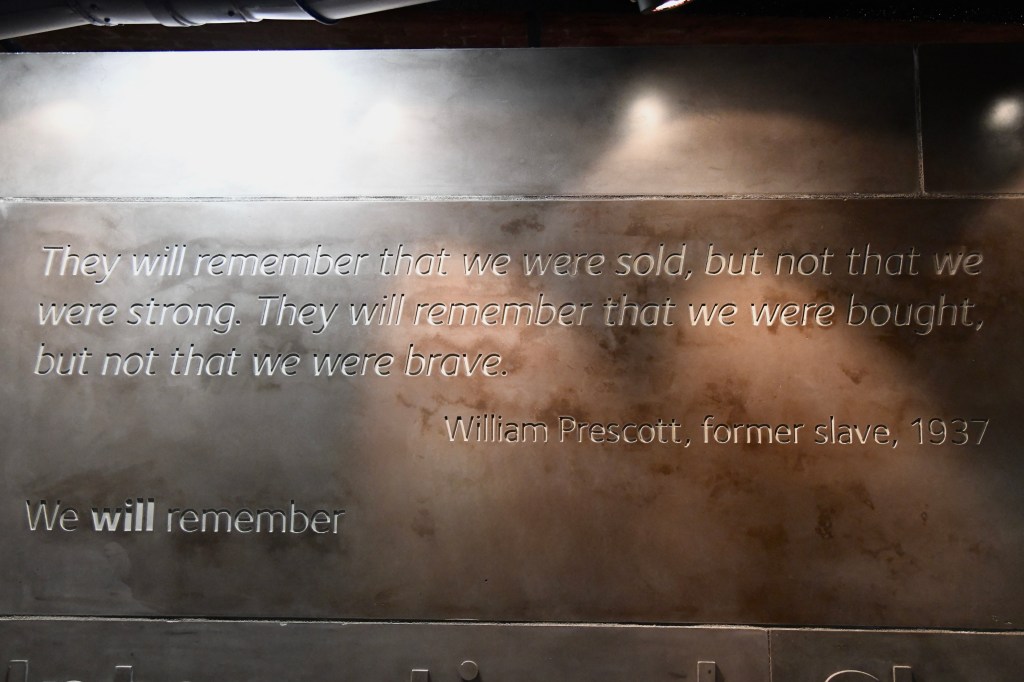
And so to our current adventure driving Route 66 and our arrival in St Louis. This city sits on the border between Illinois and Missouri, across the Mississippi River, and this was where the exploration of the west all began. I couldn’t possibly travel through without going to the Museum of Western Expansion and this was where the real story of the Wild West came to light……………..

The museum tells us “that prior to the Louisiana Purchase, French merchant Pierre Laclede and Auguste Chouteau selected an ideal site to build a commercial village, which they named St. Louis. Near the confluence of the Missouri and the Mississippi, St. Louis became a hub for trade with regional American Indian tribes such as the Osage. French officials, Spanish administrators, and entrepreneurial citizens arrived and built the village into a significant trading post and the political capital of the region. St. Louis quickly became an affluent and cultured place due to its natural advantages and the people who came here to make their fortunes.”

Trading with the Indians became common place. Contrary to what the Western movies had fed me the animosity between the “pale faces” and their native counterpart did not exist at this time. In fact the term “I bought it for a buck stems from this era”!

The Louisiana Purchase in 1803, when the United States purchased 828,000 square miles of land west of the Mississippi River for $15 million from France changed the course of history. For roughly 4 cents an acre, the United States doubled its size, expanding the nation westward.
Thomas Jefferson, the then President, knowing that the Spanish and English had mapped a lot of the Pacific Coast and Canada, realised that in order to gain supremacy in North America he needed to fund an expedition to map this country west of St Louis.
And so it was that in May 1804 Meriwether Lewis headed this critical mission and left St Louis with a crew of about fifty including his fellow comrade William Clark . They didn’t return until over two years later in September 1806.

They didn’t find the NorthWest passage that Jefferson craved because there was no water route across to the Pacific but they did provide overland travel to the Pacific. Furthermore their journals and sketchbooks were filled with incredible details of the western lands. Lewis mapped rivers, traced the principal waterways to the sea, and established the American claim to the territories of Idaho, Washington, and Oregon.


Today, the American Philosophical Society in Philadelphia holds the journals kept by Captains Lewis and Clark. They consist of eighteen small notebooks, approximately 4×6 inches, of the type commonly used by surveyors in field work.

Amongst the crew Lewis and Meriwether took with them was a Native American woman called Sacagawea. Sacagawea was either 16 or 17 years old when she joined the Corps of Discovery. She met Lewis and Clark while she was living among the Mandan and Hidatsa in North Dakota, though she was a Lemhi Shoshone from Idaho.
She was instrumental in the Lewis and Clark Expedition as a guide as they explored the western lands of the United States.
Most of the land Lewis and Clark surveyed was already occupied by Native Americans. In fact, the Corps encountered around fifty different Native American tribes including the Shoshone, the Mandan, the Minitari, the Blackfeet, the Chinook and the Sioux.
The presence of Sacagawea, as a woman, helped dispel notions to the Native tribes that they were coming to conquer and confirmed the peacefulness of their mission.

The Journals of Lewis and Clark are readily available to those who wish to read them and I left the on site shop with my own copy to take back to the UK. These were the original explorers of Western America.

Moving on through the museum I was intrigued to find out when and how the settlers travelled west.
Again my Western movie viewing didn’t bear fruit because the first white Americans to move west following Lewis and Clark’s exploration were the mountain men, who went to the Rockies to hunt beaver, bear and elk in the 1820s and 1830s.
It wasn’t until 1841, that the first wagon train set out on what was to become the Oregon Trail to the north-west coast of America.
In the mid-1800s, many Americans believed the United States had a God-given right—a “manifest destiny”—to expand and so it was that between 1840 and 1860, from 300,000 to 400,000 travellers then went on to use the 2,000-mile overland route to reach Oregon, NW Washington, Utah, and California destinations. The journey took up to six months, with wagons making between ten and twenty miles per day of travel.  The trail was arduous and snaked through Missouri and present-day Kansas, Nebraska, Wyoming, Idaho and finally into Oregon.

Contrary to the scenes from the Western movies these pioneers did not ride in the wagons drawn by horses. They generally walked 10 to 20 miles each day and the wagons were used to store their meagre belongings but more importantly their food supplies.  A family of four needed nearly 2,000lbs of food supplies to sustain them along the trail.

It is estimated that as many as 1 in 10 emigrants died on the trail—between 20,000 and 30,000 people. The majority of deaths occurred because of diseases caused by poor sanitation. Cholera and typhoid fever were the biggest killers on the trail.
Indian attacks were relatively rare on the Oregon Trail. While pioneer trains did circle their wagons at night, it was mostly to keep their draft animals from wandering off, not to protect against an ambush.

Again books are available retelling the true stories of these pioneers, one of which is now waiting in my suitcase and my return home.

Alongside this emigration in 1830, President Andrew Jackson signed the Indian Removal Act, which empowered the federal government to begin the forced relocation of thousands of Native Americans in what became known as the Trail of Tears. The Indians were moved from their ancestral homelands in the eastern United States to lands west of the Mississippi River – specifically, to a designated Indian Territory (roughly, present-day Oklahoma).

Some went freely, others fought to try and hold onto their ancestral homes but between 1800 and 1900, the American Indians lost more than half of their population.

Having learnt so much more about this era of American history I now realise that those movies from my youth were just stories. Stories that made movies, that in turn made money for the studios who made them and that entertained my father and many more like him. As for me I have a different view of those Native American Indians and an admiration for their survival.

There is also an element of sadness. It feels a bit like I was duped, that I was naive to believe what Hollywood was selling to me. I loved those films or stories as I guess I should now be referring to them.
Also looking back on my childhood history lessons, I realise, they were focused upon English and European history. I even have a History A’level but at no point did we ever follow American history so in that sense how was I to know that ” the West was never in fact won!” but stolen from those who had lived there for many generations?

Our First Route 66 Surprise

As we travelled alone across the flat farmlands of Illinois often alongside field after field of unripe corn, our thoughts often swayed to those who had travelled this road before us.

Route 66 was the first highway of its kind. Designed in 1926 this 2,448 mile road was the first trans-continental, year- round highway. It connected urban and rural America from Chicago to Los Angeles, crossing eight states and three time zones. Most small towns had no prior access to a major national thoroughfare.
People wanted to pursue the American dream and saw the idea of travelling west along Route 66 as an opportunity to turn this into reality. Like the settlers of the mid 1800’s before them this was their chance to make a better life for themselves.

We are following in their footsteps only life has progressed since then. We don’t need maps when everything can now be found written in a guidebook, on line or on an app. I bought the EZ66 book written by Jerry McClanahan, which I have to say in this world of sat navs and Apple/Google maps seemed somewhat archaic but I was prepared to give it a go. I did, however, whilst in Chicago, do a bit more research and found a Route 66 navigation app which has already become invaluable.

That being said as we neared the state line between Illinois and Missouri we found the app telling us to double back and take a fairly narrow road towards a dead end two miles ahead. There were moments where we nearly stopped and turned around but in the end we had faith that it knew better than us and following the road we entered Chouteau Island, eventually finding ourselves in a car park with about half a dozen other vehicles.

Leaving the car locked and secure we headed towards a barrier which was there to stop vehicles from entering. ‘The Old Chain of Rocks Bridge”, as we had now discovered it was called, was only open to pedestrians and pushbikes but had once been the Gateway to the West. A means for motorists to cross the state line from Illinois to Missouri, one state down and seven more to go!

We were definitely a bit tentative, not really knowing what to expect but could see people in the distance walking ahead and so off we ventured. At first we walk between woods of elm trees with the red iron tresses of the bridge towering over us. The sounds of nature are all around and then suddenly there is a faint roaring sound which gets louder the further onto the bridge we walk. It sounds like you are approaching Niagara Falls and then the woodland gives way to the most spectacular sight. This is the Mississippi River in all its glory. You just don’t expect to see this, it’s stunning, I am in awe!


To the left of us is a weir where the lovely still water suddenly turns into a raging torrent and this stretches right across from one side to the other. Beyond the weir where the water becomes still again there is actually a small beach and I can see cars in a carpark. I guess people come here to have a day out and spend the day on the beach. Just in front of me on the headland between the weir and the beach is a lonely fisherman standing on a small promontory ( you can just see him on the mid left of my picture) and no doubt hoping to bring home his supper.

The original roadway is still evident. You can see both lanes. The total width of the bridge is 24 feet and I learnt later that this is the reason the bridge was closed to motorised transport back in February 1970, after a second bridge was built to the north which could carry modern transportation.

Standing on the bridge looking down at the Mississippi, imagining the excitement of those motorists as they drove onto the bridge and crossed over to the state of Missouri is one of those moments in life that I’ll never forget.
Can you imagine how it felt to pack up your car, load your family and what little belongings you could fit in? You would be leaving your home behind and travelling potentially 2400 miles west to California with no knowledge of what lay ahead but with that fixation of a dream of a better life keeping you going. Back in the 1950’s when Route 66 was most popular, this journey would have taken more than the 2-3 weeks recommended for today’s traveller.

The last surprise is still to come. As you approach what your eye believes is the end of the bridge you realise it’s not the end. Instead the road turns a near 25 degree angle and bends to the right. It’s then you see the final end of the bridge on the other side of the river. The bridge in total stretches a full mile across the Mississippi. In that moment my mind goes back even further to the 1800’s and questions how those early settlers with their wagons and horses crossed over this mighty river? How incredibly brave they were. I wonder if we would have been that brave?

As you reach the Missouri side of the bridge you can look over to your left and see the arch of St Louis which is about twenty miles away. The sky isn’t completely clear but I imagine on a better day the view is spectacular.

When I researched the bridge a little later sat on my bed in my bed and breakfast in St Louis I discovered that they used to charge a toll for motorists to cross the bridge. The anticipation as the cars queued up waiting to drive onto the bridge having passed over their cash must have been immense.

Route 66 has given us our first surprise, I wonder how many will follow?


Welcome to Small-Town America

Many people have written books, made DVD’s and Youtube videos of their trip across America on Route 66. I have no desire to do the same.
What I’d like to do, however, is invite you into my world as I paint a verbal picture of our adventure. …..

As we take the keys for our rental car my mind is on high alert. This is it, no one is going to remind me how to drive on the opposite side of the road, how to use an automatic instead of a manual vehicle or give me a quick precis of the rules of the road. I’m in the centre of Chicago where my observations have told me that rush hour starts ridiculously early and, therefore, I’m not going to get the benefit of a slow introduction. I can only hope my previous experience of driving in America comes back to me.

Out on the open road with Chicago a spot on the rear horizon, I’m under no pressure. I have the luxury of getting used to Basil, that’s the name we’ve given him, the car that is, he is a Buick, as we follow Route 66 through the Illinois countryside. Around 11 o’clock we roll into Pontiac.

Ok dig deep into your memories and go back to the time when you were sitting in the local cinema watching “Back To The Future” , it would have been sometime around 1985 or thereafter.
Marty McFly and his friend, the eccentric scientist Emmett “Doc” Brown lived in Hill Valley, California. I remember that town. It felt like middle America, safe and cosy. A place where everyone knew each other, where people looked after each other, just a peach pie of a place.

Well welcome to Pontiac. We have arrived on what feels like the set of the film. There is no real connection to where Michael J Fox and Christopher Lloyd created the story but it feels like I’m there. Little do we know that we are about to learn about the “essence of Route 66”, that possibly indescribable pride people take in living on this famous road west. The friendliness they impart to complete strangers who wander into their town and the deep joy they leave you with when you leave to travel on.

We park up opposite the IL Route 66 Association Hall of Fame & Museum.
Parking is free, after all these are gentle folks who want to invite you temporarily into their community.
In need of sustenance we pop into Pfaff’s Bakery and are immediately greeted by a friendly face behind the counter who welcomes us, tells us the story behind the bakery and allows us time to peruse the wonderful array of cakes behind the counter.
Armed with four Pontiac Danish pastries, two filled with apricot and two with blueberry jam, plus two cups of self poured coffee from a flask on the counter we sit down at one of the tables and start chatting to the gentleman at the next table. He is a local and equally as friendly, enquiring as to our journey thus far and where we are heading next.
The pastries are beyond good and while we are there a steady stream of locals come in to buy pastries and cakes for parties and birthdays. We cannot resist leaving with some cookies, a couple of turnovers (recommended by the young man behind the counter) and a chocolate cake in the shape of a large walnut whip.

The same friendly faces await us at the museum. Rose is only too happy to explain the layout of the museum.
I so admire her fortitude, she isn’t as young as she once was, but she is still there welcoming people through the door. Proudly keeping this place going to introduce the “mother road” to folk like us who are setting out with only a dream and a couple of guide books. What an absolute stalwart of the community.
She also explains to us that if we wish to view the murals for which the town is famous, we merely have to follow the red footsteps on the side walk outside! This town is so welcoming they make it super easy for us out of town folk and paint red footsteps on the pavement to follow!

At the rear of the building Bob Waldmire’s Land Yacht is parked up for viewing. Bob was a stalwart supporter of Route 66. I looked into him a bit more later and found this great video on Youtube which explains more about him “Bob Waldmire’s Ultimate Hippie RV Land Yacht – Route 66 Bus”.

Rose finishes her directions with a quick introduction to the model cars we will also see on our stroll around Pontiac.

Finally downstairs in the shop we find ourselves in a conversation with Robyn. She is a school teacher by trade but whilst on summer break she is working in the shop. We find ourselves chatting about travel and “as a self confessed nomad” she has real life experience of many places in the world she has lived.
Her excitement bubbles over as she explains her plans for next summer. Influenced by the many solo travellers she has met in the shop who are embarking on the mother road alone and also by a friend and her family who are currently out there sharing fabulous photos of their adventures whilst wild camping. Robyn is determined to go it alone next year and get out there herself. I really hope she manages it. Life is definitely for living and if you have the courage, determination and excitement to fulfil a dream, then why not?

Impressions of Chicago

What does the third largest city in the USA have to offer? These are my impressions:

O’Hare International airport ( the sixth busiest worldwide) is inconveniently nearly 20 miles from Downtown.
A journey that is made harder by major roadworks which will last until 2025 according to our taxi driver! It’s not cheap either costing us 60 dollars to our hotel!
To be fair you can hop on the blue line for just 5 bucks each but we like to remain fairly inconspicuous when travelling and thus avoid any chances of crime being perpetrated upon us. Given our two large and one medium suitcase that wasn’t going to be possible.

Chicago is the nation’s railroad hub and this is very evident wherever you walk around downtown.
Crossing over the railway soon becomes a walking habit and when you’re not doing that you are walking across the river! The Chicago River runs through the city of Chicago, starting 40 miles north of the downtown loop area and connecting into Lake Michigan. It adds another dimension to the city that I’d not expected.

The city is really clean!
It puts London, Paris, Barcelona and a few other European cities we’ve visited to shame.

People don’t walk!
We often saw people get on at one bus stop and then jump off two stops later. One bus stop is about one block which is 220 yards.
As part of the “Welcome to Chicago and our hotel” the receptionist told us to get a 5 day transport pass because “you’ll be getting buses everywhere!”. We averaged just over 5 miles a day and only used the bus when we needed to go to Lincoln Zoo in the north and the Museum of Science in the south..

Lake Michigan is huge!
When you first set your eyes upon it, it’s easy to think of it as a sea. It’s a 300 mile long freshwater lake with twice daily tides and if the city lives up to its name as being “windy”, waves can rise up to 20 feet! If we had the time we would have definitely returned to its grassy shores with a lovely picnic and a book to read on a sunny day.

The city is full of green spaces.
From Lincoln Park in the north, down to Millennium Park and south as far as Jackson Park.
The Millennium Park is where you’ll find the famous Cloud Gate sculpture by Anish Kapoor, the Cloud Fountain with its two 50-ft. LED towers and reflecting pool by Catalan artist Jaume Plensa and the Buckingham Fountain which is among the world’s largest, 3-level rococo fountain built in 1927 in Grant Park.

Grant Park is also where Barack Obama made his “Yes We Can”victory speech back in 2008. Check it out on Youtube and you’ll get some idea of how much it means to the citizens of Chicago to see not just a black President but the man from their city in the White House!

The weather, what can I say.
You know that old saying “she changes her mind like the weather”? Well now I know where that phrase comes from -Chicago! You can leave your hotel in the morning in the blazing sun in need of sunscreen and a hat. Then when you leave a museum after lunch, you can walk outside and be met by a strong wind blowing in off the lake and then head back to your hotel in the evening in the pouring rain and this is all in one day!
And if that isn’t enough it is not called the “Windy City” for no reason. When that wind blows it brings in the cold air like a gust from some other being sneaking it’s way down the streets of the city and making you shiver!

There is an insurmountable variety of things to do.
We left with a list as long as your arm of adventures we would like to do in the future. I would advice getting a Chicago Pass or GoCity Chicago Pass, it was well worth the money. We bought an all inclusive 5 day pass and saved a lot of money even without doing everything listed on their website.

We also managed to fit in a Cubs game. Watching a baseball game at one of the oldest stadiums- Wrigley Field which opened in 1914 is a must for any real sports fan.

The museums are huge!
I’d forgotten until we visited that the Americans have a tendency to do everything on a much bigger scale than us and their museums are no exception.
We allowed up to six hours to cover everything in the Field Museum (a bit like the Natural History Museum in London) but I’m beginning to realise that my midlife brain can only cope with about four hours before it goes into system overload which was the case here. It’s spread over three floors and I’m afraid I didn’t make it to the third floor.
You really need a full day for most of their museums. The Americans really get it right, though, with plenty of very clean bathrooms, places to buy everything from snacks to a proper lunch and above all else there is always somewhere to eat your own picnic to keep cost down.
They also cater for all ages. We saw plenty of interactive, educational but fun displays for kids to use.
Staff were all super friendly wherever we went.

Their tube/metro system called simply “L’ isn’t inviting.
This might be an injustice but as you walk past a lot of the entrances to go down to the underground train system the smell of urine is just overpowering. Sorry we gave it a miss.

Use the bus!
They are clean and efficient. The drivers are proficient, not as friendly as we are used to in the UK but they have to run to a tight timetable.
There are 1,864 buses operating across 129 routes and covering 1,536 route miles. Buses make about 19,237 trips a day and serve 10,768 bus stops.
By using Google Maps we were easily able to find bus stops, jump on board and follow the route to our destination. Strangely the Chicago Transit Authority or CTA don’t seem to accept UK debit/credit cards. We had to buy three one day passes with cash instead but again once purchased they were easy to understand and saved us money.

The architecture makes you feel like you are looking at a painting.
Whether you are taking in the view across from the Planetarium of the Chicago skyline which is really awe inspiring and reminded me of looking across San Fransisco Bay on the boat back from Alcatraz.

Or staring up from an architectural boat trip on the river or taking in the panoramic views from the Skydeck or the 360 Tower at night you cannot help but be impressed.

We have been positively impressed with the variation of food.
Whilst it is famous for its deep dish pizzas, Chicago style hot dogs, Italian beef sandwiches and popcorn you will also find healthy food on menus. There is a huge variety of cuisines, for whatever reason we didn’t expect this and would love to come back and explore Chinatown and Greektown.

Last but no means least it is a safe city!
Not once did we feel unsafe during the day or at night. Don’t be influenced by all the bad news spread across the media. I’m sure there are areas where you wouldn’t be safe but you find this in any major city and downtown is not one of them!


Chicago surprised us and we will definitely return!

How We Afford to Travel

Time for our next adventure………..
I should be excited but instead I’m sitting amongst the crowds at Heathrow Terminal 5 feeling bleary eyed and tired. If I still drank alcohol I would say it feels like a hangover but as I don’t I’m leaning towards the fact that the last three weeks of unpacking from the last trip and then getting ready for this one have been super tiring and at times stressful.

Before we take off to America I thought I would spend a little time explaining how we try to reduce the cost of our adventures during the planning stages. It’s a question that hubby used to get asked a lot when he was working and his standard response was “We don’t drink, we don’t smoke and we don’t gamble. We choose instead to travel. Plus I have a wife who has always found ways to minimise cost”.
So how do I do this?

Well firstly it’s historic.
When I was a single Mum for thirteen years (see my previous post entitled “All About Me”-https://amidlifeadventure.org/2023/03/24/opinion-how-did-i-get-here/ ) and was also in the middle of a pretty hectic career I always ensured that during school holidays I took Wednesdays off.
My job worked over all seven days so weekends were not sacred. By having a Wednesday off my children always knew that we would do something as a family. I was also determined that they didn’t grow up thinking that the only way you could have fun was to spend money so I made sure we had a good balance.
We would go on Treasure Hunts in the local woods, take picnics to local Country Parks along with their bikes and kites, we would go to the beach and at the same time we would go to Theme Parks such as Legoland, Thorpe Park and Chesssington.

But I never paid for any of these, partly because they were really expensive and secondly because if you were savvy you could get in for free or at a reduced price. How?
Mainly by collecting Tesco vouchers which could be exchanged for three times their face value at the entrance to these places.
But I also did the same with Nectar points from Argos and Sainsbury’s.
I also used to collect the tops off cereal packets. Once you had so many you could send them in and exchange them for tickets or money off vouchers. There was always some offer to be had if you looked hard enough.

This then led to me looking at travel and whether these principals could still apply.

Do It Yourself versus Package Deals or Organised Tour Companies:
This is very much a personal choice and since 1999 I have opted for the former. However you do have to be prepared to put in the leg work whereas with a package holiday or tour company it is all done for you. You basically just turn up at the airport and meet your rep the other end at your destination.

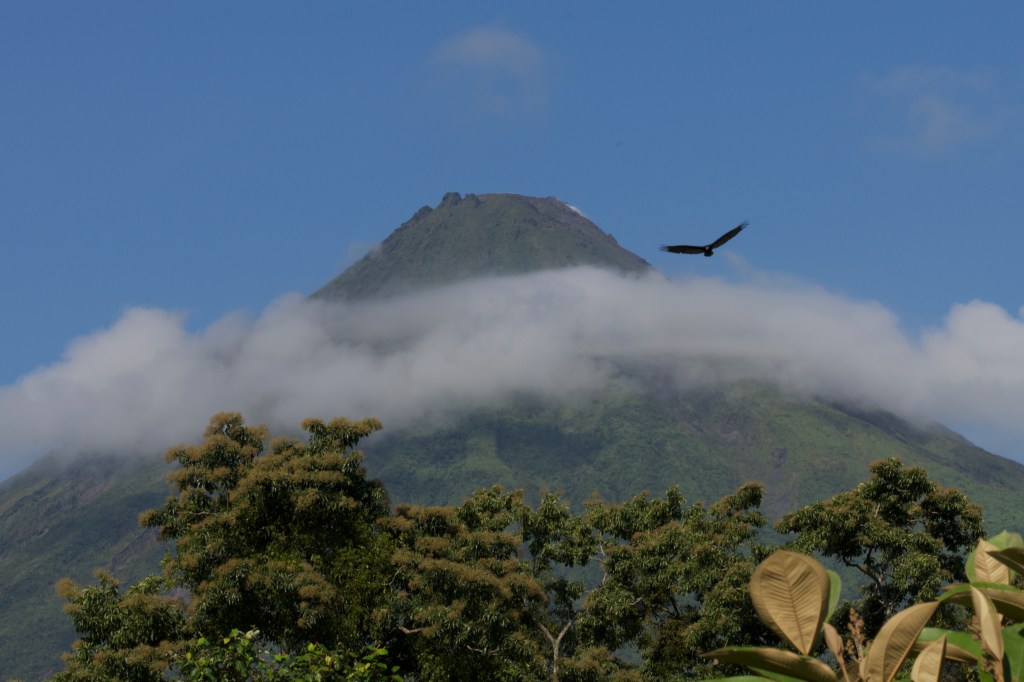
We did use a tour company, once, back in 2019 when we went to Costa Rica (where all my photos featured on this post come from) mainly because I had concerns about not being fluent in Spanish and, therefore, worrying about arrangements getting lost in translation. The reality on the ground once we were there was completely different. Everyone spoke English. In fact in order to be employed in the tourist industry, the second most popular job after local Government, you had to be fluent in English!

What we had not envisaged is that we paid a UK tour company to organise our 21 day trip which was then sub contracted out to another company on the ground in Costa Rica. Straight away my financial brain questioned the cost of this. We were, in effect, paying two different companies to deliver our holiday. On the whole it all went smoothly but I did come back thinking it might have been cheaper to do it myself.

That said, package companies buy their accommodation and flights in bulk and in turn are able to pass part of these discounts onto the consumer. I personally do not like being shepherded onto a coach at an airport with forty or so strangers, driving around numerous other resorts while people get off and retrieve their luggage from the hold and then dealing with a travel rep who wants to sell me several other trips, excursions and experiences. I’d just much rather go solo.

Organising your own trip is time consuming and the longer you are planning on being away the more time it will take. You can, of course, opt for a pack n go outlook, which is how a lot of students embark on their travels particularly during gap years, which is something we are thinking about doing next year.
If you do decide to book your own trip it normally starts with flights.

Flights:
Over ten years ago I signed up for a British Airways American Express Premium Plus credit card which has the following benefits (I’ve taken these direct from their website):

  • Welcome bonus: Get 25,000 bonus Avios when you spend £3,000 in the first 3 months of Cardmembership. New Cardmembers only.
  • Earn rate: Collect 1.5 Avios for every £1 spent on purchases
  • Rewards: Get a Companion Voucher when you spend £10,000 each membership year which is now more flexible than ever
  • Go further: Collect 3 Avios for every £1 spent on British Airways flights and holidays

    We use our card to pay the majority of our monthly outgoings such as food, petrol, personal expenditure as well as for all travel costs. Spending £10,000 per annum is, therefore, not hard and we qualify for a companion voucher every year. This means we can fly abroad and pay for just one ticket plus only the taxes on the second ticket.

    There are a couple of drawbacks:-
    You need to pay an annual fee of £250 but this is more than covered by the savings on our companion flight without other flights we might take using Avios points (the new name for Airmiles).
    The interest is phenomenal but if you pay your bill off each month, as we do, you have nothing to worry about.

    The final plus factor is you gain Avios points by recommending friends and family to the scheme. They in turn benefit from a higher than normal introductory amount of Avios points than that mentioned above.

    Companion Voucher:
    The Companion voucher is growing in use and BA have recently upgraded how it can be used (again taken from a recent email I received):

    Travel with a companion – Receive a second seat for a companion travelling in the same cabin on the same flight as you for no additional Avios when you make a Reward Flight booking on a British Airways, Iberia and Aer Lingus flight when booked through British Airways.

    Choose to fly solo– use your Companion Voucher on a Reward Flight booking in any cabin, and receive 50% off the Avios price for the flight.

    You could pay as little as £1 in cash for your Companion Voucher Reward Flight within Europe and cover remaining costs with Avios. And remember your Companion Voucher is valid for 24 months from issue. Your trip can start from anywhere.
    As an example we have recently booked for a flight to Rome next year using a companion flight. Our seats are in Business Class and cost us just £2 return plus some Avios points!

    Choose to enjoy Club World – When you use your voucher on British Airways, you will have enhanced access to Reward seats in Business Class when booking a Reward Flight with your Companion Voucher. Solo or together, you can travel in style.

    Hopefully this illustrates the fact that flights don’t have to cost the earth!

    Collecting Avios points:
    Again I’ve been collecting since they were called Airmiles.
    I collect points whenever and wherever I can? There is a full list of companies who supply you with Avios alongside monetary purchase on British Airways shopping.
    I seriously don’t buy anything on line without checking out their website or app beforehand. I regularly collect Avios from Booking.com, Hotels.com, Air BnB, Marks and Spencer, John Lewis, Trainline to name but a few.

    I also still have a Nectar card so on the odd occasion I shop at Sainsbury’s, buy from EBay or Argos I accumulate Nectar points and have an auto convert to Avios in place.

    I buy my petrol at BP and again have a BP card which auto converts points to Avios.

    Every month I collect Avios through the purchases made on my BA credit card detailed above, again these convert over automatically.

    I book car hire through BA which also gives me points, a second driver for free and an all inclusive insurance. Thus when I pick up my car I don’t have to deal with the sales person trying to sell me all sorts of additional insurance when I’m abroad.

    And so it goes on……..

    Accommodation:
    Saving on accommodation is rooted in price comparison.
    I compare AirBnB, booking.com and hotels.com prior to making any booking.
    A friend of mine also advised me to always use the apps on my phone for the latter two companies as the deals are definitely better.
    Also don’t rely on one phone, if there are two of you and you both look at the same city, for example, and use the same filters you can often get given different prices per night.

    I also accumulate rewards on Hotels.com. Once you have 10 rewards you get a free night. I’ve just used this to book our final night at JFK airport prior to flying home from this adventure. 

    Another option with booking.com or hotels.com is to find somewhere you want to stay and then research their details on the internet. Telephone them direct and see what price they offer.
    I always make sure when doing this that they are willing to refund my money by an agreed date if I cancel. I give them my email address and ask them to confirm the price and cancellation in writing before booking.
    Often they are paying substantial fees to these companies to fill their beds and are happy to bargain with you. If they don’t offer you a reduced price you can still book on the relevant site and you’ve not lost anything!
    Another tip is if you go somewhere you like and are likely to return, always make a point of asking them if you can book direct next time.

    I also still use my Tesco reward points but I now opt to get money off Cottage hire for a staycation in the UK or I double up the face value to book via Hotels.com. It used to be treble the face value but this has recently changed. I used this facility to get £60 off a one night stay on this current trip.

    I also use my Avios points to book accommodation either in full or by reducing the cost price per night to be paid. I did this three years running to take my children on a four night cultural break in Europe when they were younger.

    Finally I have holiday ownership which is similar to timeshare. I’m sure many baulked at this statement but I bought two weeks back in 1999 in the Canary Islands and one week, to be used bi yearly, in 2015 in Grand Cayman. 
    I made the decision to do this based upon the fact I was a working Mum and wanted my children to have a decent holiday every year otherwise why was I working?
    I also wanted to take the anxiety out of the accommodation selection as the places you can book to stay in are of a guaranteed standard.
    What can I say? It worked for me and my children got to see not just the Canary Islands but also Barbados, Florida, The Cayman Islands and New York to name just a few.

    I pay yearly maintenance on these but this allows me to then visit my “home resort” without paying anything extra, for example I could spend a week in Grand Cayman. The maintenance fee per year is about half the amount the resort would charge me for a one week stay if I was to book it myself.

    OR I can bank these into an exchange company in order to then swap them for holidays anywhere else in the world. When I bank each week this is converted into points and I can then select somewhere to stay based upon the points I have. To swap currently costs about £200 per week, depending upon which exchange company I use. I add this cost onto the annual weekly maintenance fee to decide whether in fact I am then getting a bargain.
    I’ve utilised this option four times on the adventure we have just started with stays in Chicago, Las Vegas, Fort Lauderdale and Williamsburg.

    The exchange companies are also always looking for ways to enhance their product so I can also use my exchange points to reduce the cost of hotel stays per night, reduce car hire costs or get additional weeks away without using my banked accommodation. These are at a reduce rate per night or per week.


    So there you are….
    Hopefully I’ve given you some insight in terms of reducing costs on going away


Getting Ready for the Next Adventure

I’m aware that my posts have tailed off a bit recently.
I was in a nice routine while we were on our adventure in Europe posting on Tuesday and Friday but having finished our trip in Amsterdam, life has become incredibly hectic preparing for our next adventure…….

Outline:
We fly into Chicago on June 9th and have a full week to explore all the “windy city” has to offer before picking up our rental car and heading out onto Route 66. With a couple of diversions to see Monument Valley, the Grand Canyon and Las Vegas we hopefully will arrive in Los Angeles four weeks later.
Then we fly down to Fort Lauderdale for a week of recuperation and relaxation before picking up our second rental car and heading up the East Coast of America. We drop our car off in Richmond, Virginia three weeks later and will be using the Amtrak train network to Washington, Philadelphia and finally New York before flying home in early September.

Making Plans:
Our trip to Chicago and out onto Route 66 was a dream that was created back in 2019 when we planned to get married in 2020 and decided this would make a great honeymoon for two midlife adventurers.

I had researched Route 66 utilising the following books:
Brits on Route 66 written by Vicki Graves
Billy Connolly’s Route 66
Lonely Planet Route 66 Road Trips
EZ66 -Route 66 Guide for Travellers by Jerry McClanahan
Dining and Lodging Guide to Route 66 printed by the National Historic Route 66 Federation

We had also watched the series that Billy Connolly, the comedian, had made on DVD about his adventure along Route 66 and also another series made about the same trip by “The Hairy Bikers” -two famous chefs from the UK.
Armed also with the Rand McNally Road Atlas of America, my normal on line planning website and my proverbial travel notebook I planned the trip including things to see, places to stay and some suggestions of where to eat.

Alas the wedding was postponed due to Covid and the honeymoon cancelled.
Having rebooked our wedding for 2021 I set it all up again but again Covid caused a postponement. I seriously could not muster the energy to rebook it all alongside our long awaited wedding for 2022 and thus it was shelved until this year.
We had been looking for a way to celebrate our “big birthdays” and this was how the European tour had evolved followed by Route 66.
Unfortunately Covid caused some places of interest, accommodation and eateries to close and so the “off the shelf” package I had sat waiting for me had to be altered but by the time we embarked on our European tour everything was in place for this to follow on.

We then, maybe crazily, decided to extend our American adventure to take in the East Coast. Whilst half of this was planned prior to leaving for Europe there was still stuff left to do whilst we were there.

Planning trips is something I’ve been doing since 1999 but it takes time to do it properly and, therefore, isn’t everyone’s cup of tea. Also as I said in my last post ” Lessons Learnt on our European Adventure” it’s important to learn from our travels so we can continuously improve our enjoyment of them. Some places of interest have been taken out and accommodation, particularly Air BnB places, have been re-examined to check they meet our needs.

Budget:
When you go on holiday, whether it is a package tour or a self planned trip the majority of folk have an amount of money they can spend which somewhat dictates where they can go, for how long and often what type of accommodation they will stay in.
This is is even more important when you are travelling. If you run out of money the likelihood is you are going to have to come home sooner than you anticipated.
To this end I have a habit of keeping spreadsheets to budget in advance of leaving the cost of my top three items which are transportation (flights, car hire, train fares etc), accommodation and daily expenditure.


Not forgetting arrangements to and from our UK airport. We nearly missed a flight a few years back due to a bad accident on the M4 which leads into London and meets with the M25 at junction 4B which takes us to Heathrow. Nowadays we don’t take chances and often book accommodation at the airport the night before.
Also in terms of travelling to the airport you can usually find some deal for car parking if you are heading off for a couple of weeks but when you want to go for extended periods you have to rethink this process and budget in for actually getting there and back without a car.

En route I like to keep this budget up to date with our actual expenditure. In Europe we calculated this every time we were about to leave a city so we could see how we were fairing. Don’t get me wrong we have credit cards on us but unlike when we were both working we are no longer in a financial position to arrive home and then have to pay off a massive bill.

Once completed these figures can also guide us, in future, in terms of estimating how much we need to budget per day depending upon the type of place we are visiting. For example large cities including capital cities are always more expensive than outlying regions. This is also where you are likely to find most of the key attractions on your trip.

This might all seem a bit “serious” but it gives me peace of mind now we are both retired. We still enjoy ourselves but we are mindful of the fact we are no longer going on holiday but travelling. A holiday is something you do maybe once a year for a couple of weeks but we are setting off on an adventure that in America will be for 85 days.

Packing:
I am old enough to remember the days when there was no limit on the weight of your suitcase! I took my first trip as a single Mum to Fuerteventura when my son was three and my daughter about eighteen months. My two suitcases were laden with not just clothes for the three of us but some toys, nappies, baby formula, bottles and six hard back books for me!
I had a bottle steriliser, at the time, and believe me if I could have fitted it in a suitcase I would have done. The idea of having to sterilise them in a pan of boiling water didn’t enthral me!
However I managed and over the next thirteen years we took many trips together and until the weight limits were introduced I brought all manner of mementoes back with me including two porcelain lamp shades from Spain!

These days everything is different as 23kg is the normal weight limit in the UK if you are flying off abroad. I have to say the European adventure tested my skills in this area as we needed to take layered clothing as the weather was likely to range from five degrees up to thirty degrees.
I’ve learnt to limit footwear particularly with Phil. He loves trainers and has quite the collection at home and would literally take a pair to match every outfit if he could but he managed in Europe with a black pair, a white pair and a pair he travelled in!

I have also always taken a first aid kit. Phil makes fun of me about it but again in Europe, after he had persuaded me to minimise the contents, we came unstuck. I’m not saying that paracetamol and cold and flu remedies, for example, are not available on the continent but they are seriously more expensive than England!
We can buy paracetamol, for example, from Lidl for less than £1 a packet. In Europe we were paying at least double that. Cold and flu tablets in the UK can be purchased from Lidl for about £1.60 whereas in Europe we were paying six times that amount!
It was the same for toiletries. The same bottle of shower gel in Europe was at least twice the price it is in the UK.
Toiletries do add to the weight, however, so it is a case of balancing everything to ensure we don’t go over on our weight limit whilst also not incurring additional expenditure whilst we are away on items that are expensive abroad.

Everyone packs differently and I’ve tried a few different ideas that I’ve read about on line. For example I can’t get on with packing cubes. I find they take up more room than packing individually, maybe I’m doing something wrong. They are useful I guess when you unpack at your destination as you can just pop them directly in a drawer and all your socks , for example, are in one place in their own cube. But if, like us, you are moving around a lot they don’t have the same benefit. I only unpack what I need for that particular destination. The rest stays in the suitcase.

One of my absolute stay safe methods is not to pack for us individually. We take two suitcases currently one red and one blue. In my head the red suitcase is number one and the blue suitcase is number two. Each suitcase contains everything we need for a seven day period. In this way if ever the airline loses a suitcase en route we have enough clothes, toiletries etc for a week until hopefully the second suitcase appears.
Additionally when you are travelling you only have to open one suitcase at each destination until seven days have expired. If we are using car hire I quite often leave the second suitcase, that I’m not currently using, locked in the boot of the car rather than lugging it into every single accommodation. After seven days we then swap to the other suitcase.

When I am travelling I try and ensure, when securing accommodation, that we have a washer and a dryer at fairly regular intervals. This way I can wash the clothes from the suitcase we have used whilst wearing the clothes from the second suitcase.

I fully understand that travellers with rucksacks who are basically carrying all their worldly possessions on their backs would be laughing now at my strategic planning but we are no longer youngsters and whilst we enjoy travelling we don’t really want to rough it.

The amount of clothes we take, as previously mentioned, varies depending upon the destination. If we are going to a hot climate and living in shorts and t-shirts we can pack more changes of clothes than if we are going to a colder climate where jeans, jumpers and sweatshirts are the order of the day.
I also pay attention to the description of the accommodation regarding towels being available and for summer resorts- beach towels. Again these can take up extra weight if we need to include them.
I have to be honest though the provision of toiletries and a hairdryer at accommodation is wasted on me because I like my own hairdryer and can only use certain shower gels and shampoos.
The final point I would make which has again only just sunk in with Phil is I also make sure I have some room to bring gifts and mementoes home. It’s no good ignoring this because when you do, you can land up spending money at the departure airport for excess baggage. Weirdly I’ve often found the airlines are more strict with your excess when you return to the UK than when you leave.

Whatever I am packing there has to be a packing list. I’ve always had one since the children were small mainly so I didn’t forget something they might need, wanted to take or which I could easily leave behind when departing. Now it’s more about my forgetful menopausal mind!

Hand Luggage:
Our hand luggage is always two rucksacks complete with any IT equipment, cameras or other valuables that we wouldn’t want to go into the airport baggage system in case they never came back.
I used to print off every piece of paper needed for each journey for example pre booked tickets, airline boarding passes etc but I’ve started to finally trust my iPhone and keep all the information on this. However this is only because I also carry my iPad and/or Mac with me which can act as back up.


Last year we met a couple of Irish ladies on the Greek Islands who had all their information on one iPhone which unfortunately then got left on the aircraft. This caused them no end of issues when trying to sort out their various ferry and accommodation bookings. It’s a stress I can definitely do without.


The one item I still print, which my son finds amusing, is the complete itinerary of a trip from my on line planner. It just makes it so much easier when there are two of you needing access to what we are doing tomorrow or where we are driving to next. It also means we always have somewhere to write notes and we often just detach today’s sheet and include it with our day sack or in the car. In the European cities it became a useful quick referral for detailing how to get to certain destinations if we were using public transport.


There is a huge reliance upon mobile phones these days but we found on our last adventure when using them constantly for mapping, audio guides, photo taking etc that batteries can deplete and not necessarily last if you are out for a long period of time.
With a lot of attractions requiring timed entry tickets and not accepting these on paper we found ourselves being ever mindful of battery life.
To remedy this on our next adventure we have invested in a portable double charging pack.

With a week to go until we set off again my to do list thankfully shortens by the day, my packing will be complete this weekend and America is on the horizon.


Lessons Learnt On Our European Adventure

We had embarked upon our adventure in Europe with the mindset of travelling rather than going on holiday. With this in mind we had looked for accommodation based upon an agreed set of criteria which would suit our needs:-

We wanted our own front door – we didn’t want to rent a bedroom within someone’s house. Although this might have reduced the cost considerably we value our privacy and to be honest do not feel the need to be sociable all the time while we are away.

Within our space we ideally wanted a double or kingsize bed but definitely our own bathroom. I’m not a fan of sharing toilet facilities.
If we were staying for three nights or more it needed to have self catering facilities so we could reduce our outlay by preparing our own breakfast, making picnics and cooking evening meals. We did learn later, however, on the trip that we could manage with a stove top and didn’t necessarily always need an oven. It tended to hinge upon how long we were staying and the expected weather.

If we were staying for less than three nights we would look at the option of a hotel room but it needed to include breakfast. This fills us up and sets us up for the day ahead. Eating breakfast out, for us, is an unnecessary expense.
We actually couldn’t believe during the adventure how many guests took breakfast items away to eat later! In one hotel we saw guests arriving for breakfast with brown paper sacks ready to fill for lunch!

We needed wifi so I could post on my blog and we could both sort photos en route.
We wanted free cancellation and as we had taken the decision to travel by train being accessible to the train station would cut down on time and money on arrival and departure.

Finally we set a nightly budget but safety also had to be considered. Staying in a less than salubrious area wouldn’t aid restful sleep after being on our feet exploring every day.

I utilised Booking.com, Hotels.com and Air BnB.
It was often a bit tedious but eventually the accommodation plan came together.

So how did the plan stack up?
We stayed in nine Air BnB’s in Bilbao, Madrid, Seville, Valencia, Barcelona, Paris, Brussels, Antwerp and The Hague for a total of sixty nights .
And five Hotels at Gatwick, Cordoba, Granada, Lille and Amsterdam for thirteen nights.
Our last night was spent with an old school friend near the airport in The Netherlands.

Hotels:
Hotel Casa de los Azulejos in Cordoba was our favourite. This is such a beautiful hotel, sequestered in the old part of town with cobbled streets and just a fifteen minute walk to all the key sites but tucked away from the hustle n bustle. 
We stayed for three nights and our room featured a large original fireplace which lent to the authenticity.

A continental style, freshly home made, breakfast was served every morning by the owner Manuel.
He speaks many languages and the receptionist is full of helpful local knowledge. All the staff were super friendly and helpful and there was just a wonderful atmosphere of conviviality and tranquility.
We would both love to go back to experience the Cordoba Patio Festival -see my previous post and would definitely rebook here.

Hotel Posada del Toro in Granada came second. We stayed for three nights. The hotel is situated in the Albacin neighbourhood, which is full of Islamic influence and Moorish architecture.
The old cobbled streets are off limits to normal traffic which enabled peaceful sleep particularly since our bedroom with it’s two balconies was at the front of the hotel.
With the doors thrown open, the afternoon sun shone in, along with the chatter from the small shops below clustered together like a “souk” and the distinct aroma of Middle Eastern food.
The hotel has a central courtyard patio which is beautifully decorated and this provided me with a lovely peaceful haven in which to sit and type my posts whilst staying. This was the best outside space we experienced during our trip.

Air BnB:
We learnt a lot about rental accommodation provided through Air BnB, some of which was good and some not so good.
Please note I have changed the names of the people mentioned in this section to avoid invading someone’s privacy and the views expressed are our personal opinions only.

We learnt when booking you should try and take the time to check out your host. We discovered whilst on our adventure that the host falls into three categories:-

1/ Is this your host?:

The host is not necessarily the person whose picture appears on the accommodation page. The apartment we rented in Seville, for example, showed Isabella’s picture but the reality was something different.
We received responses to any messages and emails that we sent but they were signed off by Pedro. Maybe we were naive but we just assumed that Pedro was her partner.

On arrival we were met with the keys by Pedro’s friend Suzanne who spoke very little English. We were given little or no information about the apartment or surrounding area.

When I delved a little deeper on Air BnB I discovered that Pedro was renting out in excess of thirty different properties in Seville. He was, in fact, an agent.
We personally found this arrangement too commercial and not really in the spirit of why Air BnB was set up. Communication was very formal and not friendly or personable. You will rarely receive a review when you leave, maybe because as they are a business you are just a number!

We also came across this arrangement in The Hague.

2/ Owner Removal:
The host owns the property but moves out whilst you are renting it.
As a result there are wardrobes, cupboards etc that are locked and out of use in which I assume they store their personal clothes etc. All decorative items are, however, left on display which may include personal photographs and mementoes.
With this type of arrangement you are surrounded by the owner’s personal effects which in one case on our journey included a large papier mache sculpture of the upper part of the owner’s body painted in vivid green!

We found this arrangement was better than the first but it could make you feel like you were invading someone else’s space.
They may also have more rules in place to ensure their property is returned as they left it, particularly at check out.
Additionally they are likely to be less flexible with checking in times as they may want to meet you. They are, after all, entrusting you with their property.
The plus factor here though is that if you follow the rules you are likely to get a favourable review.
Also the likelihood is that if you are self catering, as we were, the place will be fully equipped even down to herbs and spices for cooking.

Whilst this is more in the spirit of the Air BnB culture, consideration also needs to be given to the fact that the owner is making far more money by renting the property out to you than they would if they rented it locally.
Having checked the booking calendar for Katie in Paris we discovered she was set to earn £48,000 gross this year which is an awful lot more than if she had rented the property out to someone locally.
The issue this gives, however, is that more and more cities are losing rental accommodation and remaining properties for rent are so competitive that prices are being artificially inflated. Some cities are beginning to react to this and are imposing stricter regulations on Air BnB rental or even banning it completely.
Amsterdam is a key example where we had to book a hotel. The portfolio of rental accommodation in the city has been so vastly decreased by the influx of Air BnB that university students are having to secure accommodation before their offer to study is accepted! The city is, therefore, starting to strike back and forcing Air BnB rental out to the suburbs.

If you are planning a trip that includes Air BnB accommodation it’s worth checking out the rules of the relevant city beforehand. We had to supply a lot more information than normal in both Madrid and Barcelona because the properties had to be licensed by the city council.

3/ Holiday Let:
The owner lives elsewhere, usually in the same city, but rents out their additional property.
In this scenario you are basically renting a holiday apartment/house. We found owners were a lot more friendly, more flexible with checking in and out times and will give you a review afterwards.
Because they are basically running their own small business they are more interested in ensuring you enjoy your stay. You may find, however, that kitchens are not as well equipped and thus cooking a proper meal may have its limitations.

You cannot always rely on reviews:
Secondly we discovered that the reviews on Air BnB may be honest but also evasive. For example we rented an apartment in Bilbao. Sited in the old quarter above a shop the reviews indicated it was a lovely place to stay.
The reality was that when we arrived the information booklet told us:
We were limited to three five minute showers per morning after which the hot water would run out!

The plumbing system is old so the toilet works on a macerator so go careful otherwise it will block and you will be charged for it to be mended!

Additionally the stairs leading to the apartment and thus to the other five apartments spread out above were made of wood so you could hear everyone coming in and out!

Heating was provided by plug in electric radiators so when you returned from sight seeing, cold and wet on a miserable day, you had to wait for them to heat up before you could get yourself warm or your clothes dry.

Not one review mentioned any of this. Now it might be that it didn’t bother any previous guests but it’s hard to believe. We stayed for six nights and were woken up four out of six nights by other occupants coming in late or leaving really early.

So why are visitors not honest? The answer lies within the review system.
Once you leave your review the owner has fourteen days in which to write a review about you as a guest. Until they do this you have no idea what they are going to say.
Whilst Air BnB have introduced this idea to ensure neither party gets to see the other review before writing their own, I still feel there is a tendency for some guests to be truthful but avoid mentioning any problems they may have experienced in case this rebounds on them later. They want to be seen as “nice people” by future hosts so they can secure future rentals.

Including Bilbao there were two properties which were either not as described or not up to our expectations.

Check out location:
We tended to look for properties near the train station, as previously mentioned, to decrease expenditure and time on arrival and departure BUT in so doing we didn’t actually explore fully how long it was then going to take to walk to see the key sites. We certainly came unstuck in one city where walking into the old town took forty minutes each way. We averaged six miles a day of walking so this was quite a lot to add on top. We soon learnt how to navigate the bus system but this added costs.

Transportation and Ticket Costs:
It is certainly worth checking transport links at your destination, if you have no car, as you cannot always secure reduced fares as a visitor.

We managed to travel by train throughout our adventure in Europe. However it’s worth pointing out that we actually added up the expected cost of each journey beforehand and compared this to the cost of an InterRail pass.
At first it seemed favourable to buy the latter but because certain countries charge you to book your seat it may actually be cheaper to not buy the InterRail pass and pay as you travel.
In Spain, for example, everyone is allocated an assigned seat as part of the booking process so travellers with InterRail passes still have to pay for that privilege. Depending upon how many trains you are going to be using in Spain the seat reservation charges can soon add up.

The same applies to City Passes. We calculated the cost of all the individual entrance fees for what we wanted to see in Paris and it was cheaper to do it ourselves rather than buy a Paris Pass. It tends to hinge on what you want to see.
Most City Passes include a one day ticket for the Hop on, Hop Off bus, which if bought and paid for on site can be expensive. Personally we don’t tend to use these buses.

The cost of tickets to enter key sites particularly in big cities can be expensive so it’s worth checking them out in advance particularly if you are on a budget.
Only buy tickets in advance if you really need to.
Pre purchased tickets certainly add a lot of stress to your packed itinerary in terms of having to be somewhere on a certain day at a certain time!

We thoroughly enjoyed our European adventure but there’s no doubt if we were to do this again we would do it slightly differently. Life is all about learning from your experiences and for us this can only improve our future adventures.


Highlights of Our Western European Tour

We flew from London to Bilbao on March 2nd and travelled throughout our tour by train finishing in Amsterdam on May 14th. We spent seventy four days in Europe and travelled 4316 miles.
Our trip has taken us to:
Spain:
Bilbao, San Sebastián, Madrid, Segovia, Avila, Aranjuez, El Escorial, Cordoba, Seville, Jerez De La Frontera, Cadiz, Granada, Valencia, Barcelona, Arenys de Mar and Girona

France:
Tours, Paris, Versailles, Chantilly and Lille

Belgium:
Brussels, Bruges, Ghent and Antwerp

The Netherlands:
The Hague, Utrecht, Lisse, Amsterdam and Aalsmeer

So what were the highlights?
This is a discussion we had over a beautiful lunch in Amsterdam as the end of our journey drew closer.
My Top Five would be:

1/ Valencia:
The vibe, the market, the park and the modern architecture.
I have published three previous posts on this beautiful city entitled “Valencia-Please can I Stay”, “Valencia just has it all!” and “Valencia Fallas Festival”.
At the start of the first post I wrote “Wow! Oh my goodness! This is it! We have been looking for a city that makes us want to return and actually try life as a local for three months and this could be it! I am so excited…………………”
This city for us really does have it all from the beautiful old town to the thriving colourful and appetising market

to the 7 km Jardines del Turia, the amazing beach, the architectural wonder that is The City of Arts and Sciences and the annual Fallas Festival.

2/ Mosque-Cathedral of Cordoba:
I was over awed by its serenity, peace and acceptance and I seriously cannot even begin to describe its beauty. A beauty that is not only defined by its architecture but also by the unity of religion created within.
This picture shows how the two distinct types of architecture have been blended together.

In a world where so many countries have experienced or are experiencing religious warfare this cathedral bears witness to the fact that regardless of your religion (or in my case lack of religion) you can exist alongside each other in harmony.
As I wrote in my previous post entitled Religious Unity in Cordoba “Leave the audioguide alone and enter this sacred place with an open mind, let the atmosphere draw you in, let the sheer beauty of the architecture awake your senses and let the peace and tranquillity surround your soul. If you allow this Mosque-Cathedral to envelope you, believe me you will leave this place with a feeling of a greater sense of harmony and an aura of peace. “

3/ Keukenhof Flower Gardens in Lisse:
This was one of the top three places I wanted to visit whilst on our tour and it definitely did not disappoint. Just the sheer beauty within the natural surroundings is enough to take your breath away. But when you combine this with the sheer magnitude of the types of flowers, the imagination they use to create such variety and then the inspiration they also manage to instil in you before you leave is unbelievable.
I wrote a post about the gardens entitled “Keukenof – Beauty, Imagination, Inspiration ” in the hope that my words will always bring back my memories of this delightful oasis.

4/ Mirador de San Nicolas:
I hope I will never forget the moment I walked around the corner of the San Nicolas Church in Granada and saw this fantastic panorama spread out in front of me.
As I wrote in my post entitled Granada -A View to Remember, “I honestly could not believe my eyes. The whole of the Alhambra Palace was laid out before me with the beautiful snow capped mountains of the Sierra Nevada nestled behind. Suddenly everything I had read and seen the day before made sense. The Palace dominated the skyline, leaving everything below in its wake.
(The view of the Alhambra Palace is included in my previous post. Here I’ve included instead the sheer majesty of the mountains)

There are not many views in the world that you see and know are going to stay in your memory forever but this is one of them. It probably ranks in my top three!

5/ Plaza de Espana in Seville:
This was such an unexpected wow!
I wrote two posts on the city of Seville and this featured in the first of these.
“Like many I had seen pictures of the Plaza de Espana but nothing prepares you for the reality. As we rounded the corner I caught my breath as the magnificence of this Renaissance Revival plaza spread out in front of me. I am so pleased that we came here at the end of our day as there was no pressure on time and we could wander at will absorbing the atmosphere, taking a break whenever we wanted to and just being in the moment.”
I look back now on our tour and this definitely stands out as one of those unforeseen moments of splendour.

Europe has so much to offer and we definitely have plans to return to a few of the places we visited on this trip but the rest of the world awaits…………………………………………..


Touring Western Europe -Holland-Amsterdam -The Verzetsmuseum, Wartime Choices?

This museum tells the story of the Netherlands and its people from May 1940 to May 1945, when Nazi forces occupied the country. 
Having put four pieces of the jigsaw in place before arriving at this museum I had already begun to question, what would I have done if I was one of those people caught up in World War II in Europe?

The morning before coming to this museum we had visited Anne Frank’s House. This was the first part of the jigsaw and the beginning of the road to hell!
Anne is famous for her diaries of her life under German occupation and how, as Jews, the family had remained hidden in the attic of their Father’s office block until their discovery on August 4th 1944. After their discovery all eight people who had been hidden in the attic were sent to a concentration camp in Holland, and in September Anne and most of the others were shipped to the Auschwitz death camp in Poland. In the fall of 1944, with the Soviet liberation of Poland underway, Anne was moved with her sister Margot to the Bergen-Belsen concentration camp in Germany where Anne and her sister Margot are suspected to have died from typhoid.

In December 2016 we visited “The Topography of Terror” in Berlin, this exhibition is located on the site where between 1933 and 1945 the headquarters of the Gestapo existed. The Gestapo, of course, were responsible for the widespread atrocities exercised during World War II in particular the Holocaust. This had proved to be a hard hitting introduction for me into what actually occurred once all these thousands of people, who Hitler had decided did not fit with his “Aryan Society”, were taken from their homes and served as the second part of the jigsaw.

We had also recently visited, as part of this adventure, the Shoah Memorial in Paris which I have previously posted about. This explained in more detail the Jewish persecution that happened during the war in particular in France and serves as a memorial to those who lost their lives and, for me, the third part of the jigsaw.

In September 2019, just before Covid had hit, we had also visited Auschwitz and Birkenau, sited just outside Krakow.  This was the largest of the German Nazi concentration camps and extermination centres. Over 1.1 million men, women and children lost their lives here mainly Jews. Just looking at the railway line that brought the trains into the camp stirred both anger and sadness inside me. The thought of how they were herded off the trains, selected for hard labour until they dropped down dead or immediate extermination begs belief and served as the fourth part of my jigsaw.

And so to the Verzetsmuseum in Amsterdam, also known as the Resistance Museum. This is, for me, the final piece of the jigsaw. How did people resist the occupation?
Using moving personal documents you learn about the story of people who were confronted with dilemmas by the German occupation, and were forced to make choices. What would you have done?

Dutch public official Jacob Lent was asked by the German occupiers to design an ID card. Utilising special ink, stamps, fingerprints and three watermarks Jacob designed a card that was nearly impossible to forge.
Very few people objected to having an ID card which everyone over the age of fifteen had to carry with them. For the Germans the identity card turned out to be an ideal way to control the population in particular the Jews whose ID card would be stamped with a large letter “J”.
Did Jacob do the right thing? If he had refused what would have happened to him? And surely the Germans would have found someone else willing to comply?
After the war Jacob was sentenced to three years in prison for his work on producing the ID cards.

During the occupation women served as bicycle couriers. They were essential to the resistance. They were less likely to attract suspicion and would not be put to work by the Germans. A 19-year-old from Utrecht, Femanda Kapten, was one such bicycle courier. Illegal newspapers were stenciled in her parents’ bookshop. These underground publications provided the public with the truth. They gave important updates on the war’s political issues, battle results, large scale troop movements and casualties. They also provided an editorialisation of the war.
One day, Femanda was en route with 500 illegal brochures in her saddlebags when things almost went wrong. “Suddenly, there was a German checkpoint: One of the German soldiers nudged her saddlebag with the butt of his rifle. There were potatoes on top of the brochures. “Kartoffeln?” Fernanda nodded and was allowed to pass. “I started walking as slowly and casually as I could” she said “though I felt like running at full tilt”.
Would you have been brave enough to cycle alone on your bike delivering these all important pieces of news?

Other civilians helped to hide those fleeing persecution or stranded Allied troops.
Twenty four year old Johan Snoek helped those in hiding, right up until he and his family were driven out of their home by the Battle of Arnhem when they then moved in with three aunts in Ede.
When the British General, John Hackett, found himself wounded and trapped in the occupied part of the Netherlands following the battle of Arnhem he sought somewhere to hide. Johan thrilled with the chance to aid the resistance once again took him in.
Johan wanted to help Hackett reach liberated territory, but he kept having to cancel their plans until in early 1945 when he finally came up with a new plan for escape.
Resistance groups smuggled over 600 crew members from downed Allied aircraft out of the country. After the defeat at the Battle of Arnhem, some 350 Allied troops went into hiding in the area, at least 145 of whom were transported back to friendly lines by the Dutch resistance.
Would you have had the nerve to help?

Then there were those who played a more active role in direct sabbotage.

In the hamlet of Woeste Hove, on the night of 6 to 7 March 1945, resistance members attempted to commandeer a German vehicle as part of a plan to steal meat. As chance would have it, the car they stopped belonged to Rauter, the highest-ranking SS leader in the Netherlands. Rauter immediately shouted: “Achtung, these people are probably terrorists.”

The leader of the resistance group, Geert Gosens, saw the occupants move to draw their guns and opened fire. The resistance fighters’ Sten guns rattled off one round after another, riddling the car with bullets. Then they fled the scene. They had no idea who they had shot at. Rauter was badly wounded. The retaliation by the German occupiers was brutal: they shot 263 prisoners. The bodies were left on the side of the road, along with a sign: “This is what we do to terrorists and saboteurs.”

Over 5,000 people were killed by the German occupiers as retaliation for resistance activities; most were prisoners, some were innocent civilians. After an attack near Putten, every man in the town was sent to a concentration camp, where 552 of them died.
Would you have put your life on the line, time and time again, in order to sabotage the German war machine?

Some families provided homes for Jewish children whose families had sent them away from the conflict in the hope that they would be saved from the Jewish persecution.
Ellen Mike Olman was only nine months old when she went into hiding and was separated from her parents and sister.
Her foster parents loved her dearly. When Ellen Mike was three years old, the Netherlands was liberated. “For me, that was when the problems started. I was sent back to my mother, a woman I didn’t know and whom I called ‘ma’am!” Her relationship with her mother remained difficult for a long time.
Ellen Mike’s foster parents continued to play an important role in her life. On her 18th birthday, they gave her a photo album (which is on display in the museum) about the time she spent in hiding. “The album gave me back a piece of history that I couldn’t remember clearly but had an emotional sense of.

Some 5,000 Jewish children survived the war in hiding, often in the homes of Christian foster families. Around 2,000 of those children lost both parents. A conflict emerged around them: should they stay with their Christian hosts or be raised by their Jewish relatives?
Could you have sent your nine month old baby away to live with strangers in an attempt to save her life?
Could you have taken in someone else’s child in an attempt to save them from persecution?

7000 people died in concentration camps and prisons having taken part in resistance activities.
2000 people were shot in The Netherlands for taking part in resistance fighting.
These people were all heroes, people who went above and beyond their normal everyday life to try and turn the tide of the war.
Would you have been one of them?

NB:
This is our seventeenth stop on our current tour of Western Europe. Why not catch up on where we have been already and then join us as we progress?

Touring Western Europe -Holland-Keukenhof -Beauty, Imagination and Inspiration

Just amazing! I cannot believe how excited I am about flowers!

Just to bring you up to speed we departed Antwerp last Wednesday and took the train via Breda to The Hague or Den Haag. Visiting the Keukenof Flower Garden was high on my agenda for this whole Western Europe adventure and where we spent our final day whilst based here.
The Gardens open at eight each morning and we were there by nine. The journey was quite simple, we took a train to Leiden and then caught the “Tulip” bus to the park. There were Keukenof representatives at the bus station in Leiden checking we had both park and bus tickets. You can travel into the park via other cities, just check their website.
We had no idea how much time we would spend but with an unlimited schedule we really didn’t care, it was my intention to absorb all it had to offer.

On arrival we picked up one of their maps and agreed a route. From the onset you are met with the most astounding displays of flowers, mainly tulips of course, but so many different colours and types. Despite a bit of a misty start to the morning, I felt like a child at Christmas, it was just so beautiful and I was madly clicking away with my mobile camera.

Beauty abounds at Keukenof, giving endless pleasure to the senses and exalting the mind and spirit. Everywhere you look there are various colour combinations:- bright purple and delicate baby pink, deep crimson with velvety pink, yellow with satsuma orange.

Sometimes they are displayed mixed together, whilst other beds have distinct colour blocks:- yellow then red then white. Sunburst orange followed by a cerise pink and then lipstick red.

Sometimes there is an added dimension where a consistent mix of colour is used:- pure purple tulips, purple but with white tips on each petal, delicate white tulips with just a hint of pink on the outside of the petals, this is reversed with pink petals with a hint of white and all around the perimeter of the bed are frilly tulips in bubblegum pink.

There are beds of mixed flowers :-beautiful “Sir Winston Churchill” narcissus with “Queen of the Night” deep dark tulips and Carnagie hyacinths exuding their fabulous Spring awakening perfume. Fritallia aurora with it’s downward facing orange flowers mixed with traditional light purple tulips.

I honestly never knew there were so many varieties of tulip. I love the cerise pink that look like someone has taken a very small fine feather boa and created paper flowers and their purple equivalent where the frilly tips are white like someone has drawn a line around the outside of each petal. There is a yellow version with splashed red on the outside petals but only on the right side of the flower?

Long beds of flowers line the walkway stretching from the indoor”Beatrix” display area downwards to the lake, beautiful cherry trees sprinkling their blossom on the green lawns interspersed with beds upon beds of different flowers of every colour.

Nature brings beauty in other formats too like the tiny droplets of dew still on some of the petals. Or the production of one single purple tulip amidst a border of red tulips, which makes me smile, as if nature is trying to tell us we cannot always produce the perfection we desire!

Finally beauty has been created with fountains, a wood enclosed waterfall, ponds full of fish lined within two perpendicular lines of conical firs interspersed with more traditional red and white beds of tulips. There is a small pond with an ornamental windmill at its centre and a child’s sailing boat made from a traditional Dutch clog and home made sail .

Imagination -someone has to form a mental image of the flowers, currently mere bulbs, and not present in reality and never before wholly perceived in reality, so they can be planted every Autumn. The visitors arrive each year to see a different layout every Spring. How does someone constantly create new beds in new arrangements with different combinations of colours?

Today, for example, they have used two, even three, height differences to draw your eyes towards a bed of tulips and daffodils.

Their imagination conjures the idea of giant Barbie pink flower pots with fletching trees set amongst a bed of short pink carnation type tulips and blue pops of colour from grape hyacinth.
They create swirls of blue grape hyacinths amongst equally irregular shaped beds of orange tulips. Then they take this idea even further and plant another curving river of coloured tulips but this time accentuated by the grape hyacinths on either side!

Flowers are planted in beds but also to complement nature amongst the trees.

My favourite area of this type is a river of grape hyacinths winding its way amongst some trees with a quick dash of yellow daffodils and pink tulips thrown in for colour. Who on earth dreams up these ideas?

Keukenof not only presents beauty and imagination it delivers inspiration.
A traditional bed of flowers is presented above a stone seat on which can be seen a statue of Buddha. On either side a wicker basket of Spring flowers complete the image. I could create that at home.
Another display shows what could be the side of your garden shed painted vivid yellow on which has been hung a series of antique looking glass mirrors with pale pink garden tiles beneath on which stand subtle pink flower pots of varying sizes, again all planted with daffodils, tulips and hyacinths. The mirrors reflect the bed of mixed red tulips which surround the shed at a discreet distance.

Horizontal flower pots with bright yellow daffodils, pink tulips and hyacinths have been secured onto solid garden trellis at two different heights to add colour to what would otherwise be a boring garden divide.
A wooden home made container painted bright pink creates a raised bed of Spring flowers out of which a small ladder like set of shelves reaches upwards to the sky. The shelves filled with a collection of teapots, teacups and a kettle It’s a bit out there for my garden at home but certainly different.

I left feeling mentally stimulated, wanting to take ideas home with me particularly from the orchid display in “Beatrix” and flower arrangements within the indoor Willem-Alexander building.
The idea that orchids can be clustered together in their pots and then placed within a larger planter had never occurred to me but it looks fabulous.

The flower arrangements cover all manner of events and ideas- a blue VW camper with pure white flowers spilling from the rear that you could create for a wedding, a Valentines display with red hearts and gorgeous pink lilies

Even the great outdoors is celebrated with a quirky caravan and accompanying painted old car. Another display features pink paper lanterns strewn above beds of flowers as if a birthday is about to be celebrated in the garden.

An old kitchen armoire has been painted blue, its doors invitingly open so you can see within on every shelf pots of coloured flowers.
My mind was aswim with how I could take everything I had learnt previously in Cordoba where preparations had been underway for the Patio Festival (see previous post) and combine it with the inspiring displays I had seen here.

Please if you ever get a chance to go to Keukenhof, go! It is honestly astounding!

NB:
This is our sixteenth city on our current tour of Western Europe. Why not catch up on where we have been already and then join us as we progress?