Having filled ourselves up on fish and chips my husband and I set off back down the road towards Swansea, by car to Clyne Gardens.
We both enjoy walking around both public and private gardens and still have fond memories of another garden in Wales we visited previously called Dyffryn Gardens.
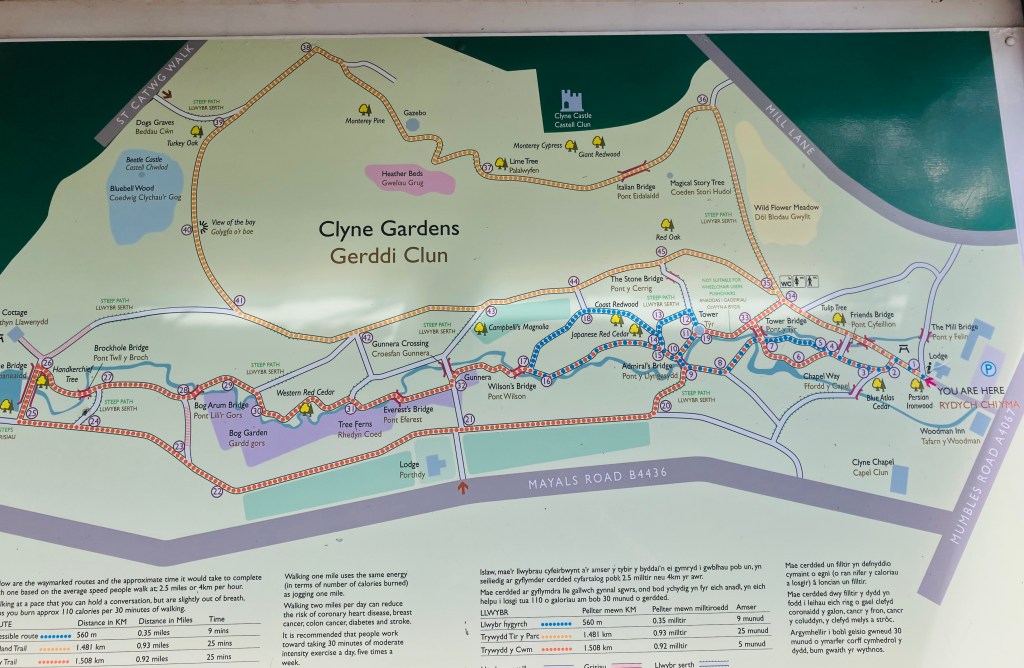
The above map of the gardens is displayed near the entrance and on the whole we didn’t find it too difficult to follow.
A Brief History of Clyne Gardens
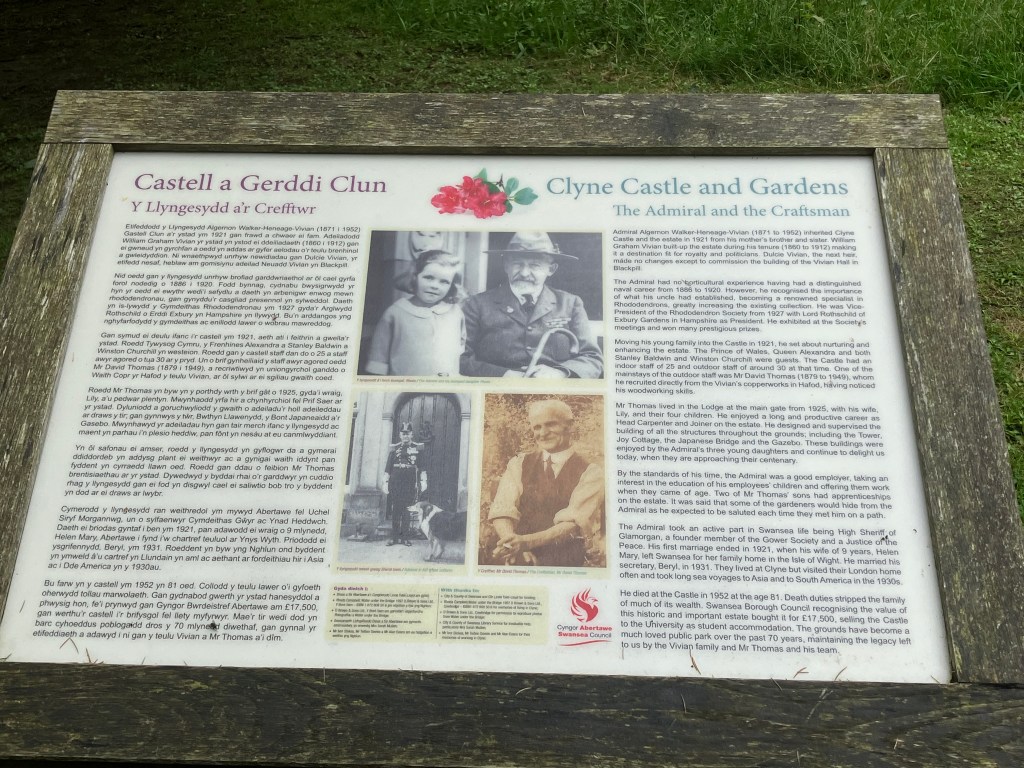
Clyne Gardens has its origins in the late 18th century, when a house known as Woodlands was built on the estate in 1791. The property was acquired by the wealthy Swansea industrialist William Graham Vivian in 1860, and he subsequently transformed the house into the impressive Clyne Castle while developing the surrounding grounds into landscaped gardens.
However, it was Admiral Algernon Walker-Heneage-Vivian, who inherited the estate in 1921, who had perhaps the greatest influence on the gardens we see today. He was a keen horticulturist, particularly passionate about rhododendrons who loved to go on overseas plant-hunting trips. It was as a consequence of these expeditions that he introduced many rare and exotic plants that can still be seen today.
He also created several of the gardens’ distinctive features, including the Japanese Bridge, lake, Gazebo and viewing tower.
Following the Admiral’s death in 1952, the estate was sold to meet death duties.
Swansea Corporation acquired the gardens and opened the former private pleasure grounds as a public park in 1954, while Clyne Castle itself subsequently became associated with Swansea University and has since been sold and made into private apartments.
Today, Clyne Gardens covers around 50 acres and is particularly renowned for its spectacular rhododendrons and azaleas, as well as its collection of mature and unusual trees.
The historic importance of the gardens was formally recognised when Clyne Park was added to the Register of Historic Parks and Gardens of Special Historic Interest in Wales at Grade I in 2022.
We took a minute, at the start, to decide upon a route. Walking clockwise we could easily see all the key sites within the park. Many photos were taken en route and so I’ve tried to include as many as possible because it was a truly colourful and an enjoyable stroll.
The Tower:
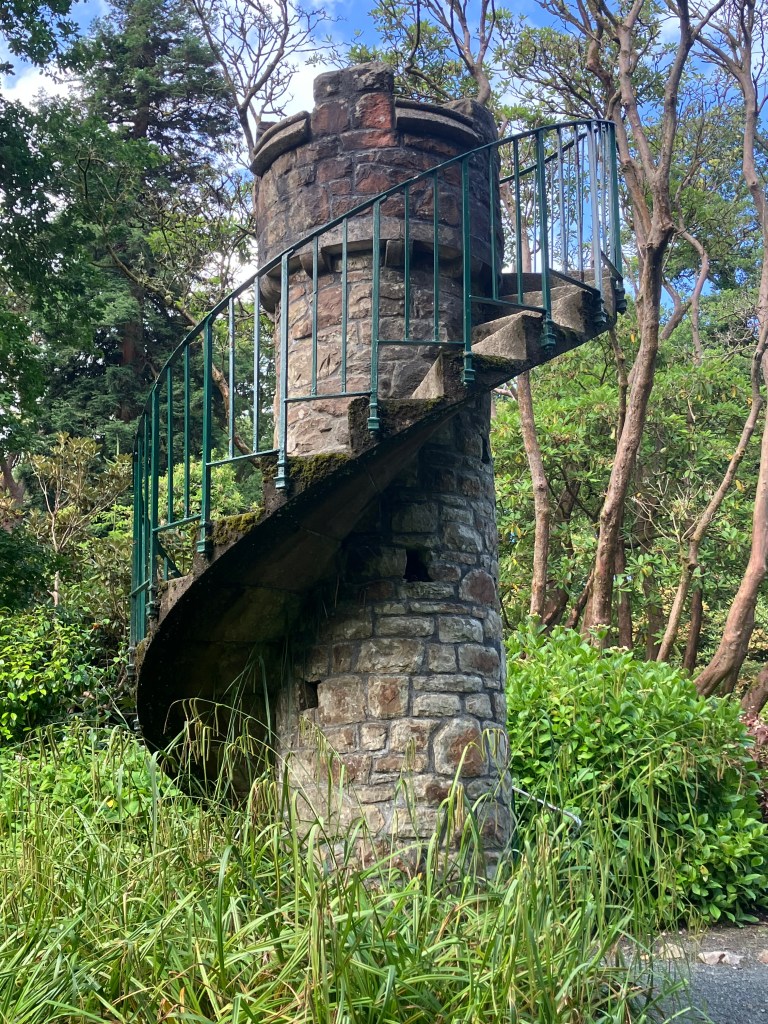
This cylindrical rubble-stone tower was built for the Admiral, aforementioned, in 1928. It is roughly 5 metres high with an anti-clockwise spiral staircase and an iron railing ending in a castellated viewing platform. It was built so that the Admiral could admire his flourishing large-leaved Rhododendrons.
The Rhododendrons, many of them new to European cultivation, but then only 30 cm tall, have grown much more than was anticipated when this Tower was built.
The Tower, itself along with other key features of the garden was designed by Mr David Thomas and constructed by Mr Arthur Mugford; both employees of the Estate.
The Admiral commissioned such features for his own pleasure and that of his wife and three young daughters after recognising the talent of Mr Thomas when he was a carpenter in the Vivian’s Hafod copperworks.
The Tower is now listed by CADW and cannot be changed in any way.
Cadw is the historic environment service of the Welsh Government, responsible for protecting, conserving, and promoting the heritage and historic sites of Wales. The name “Cadw” is a Welsh verbal noun that translates to “to keep” or “to protect”.
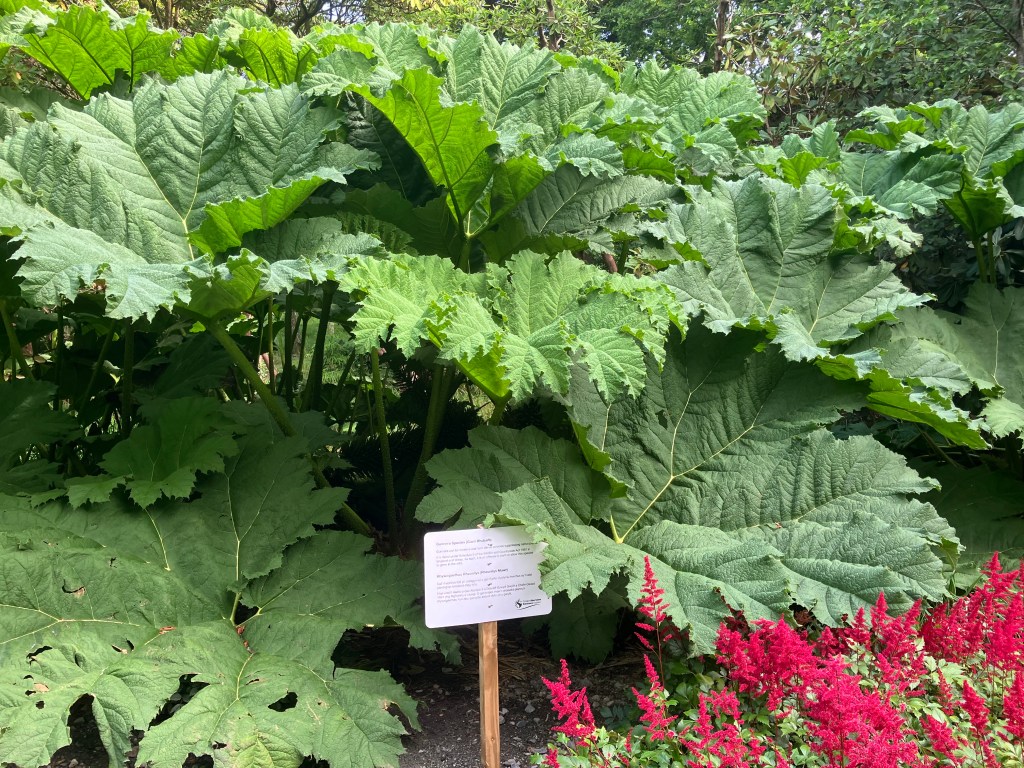
Walking on from the tower we headed past the gunnera -giant rhubarb
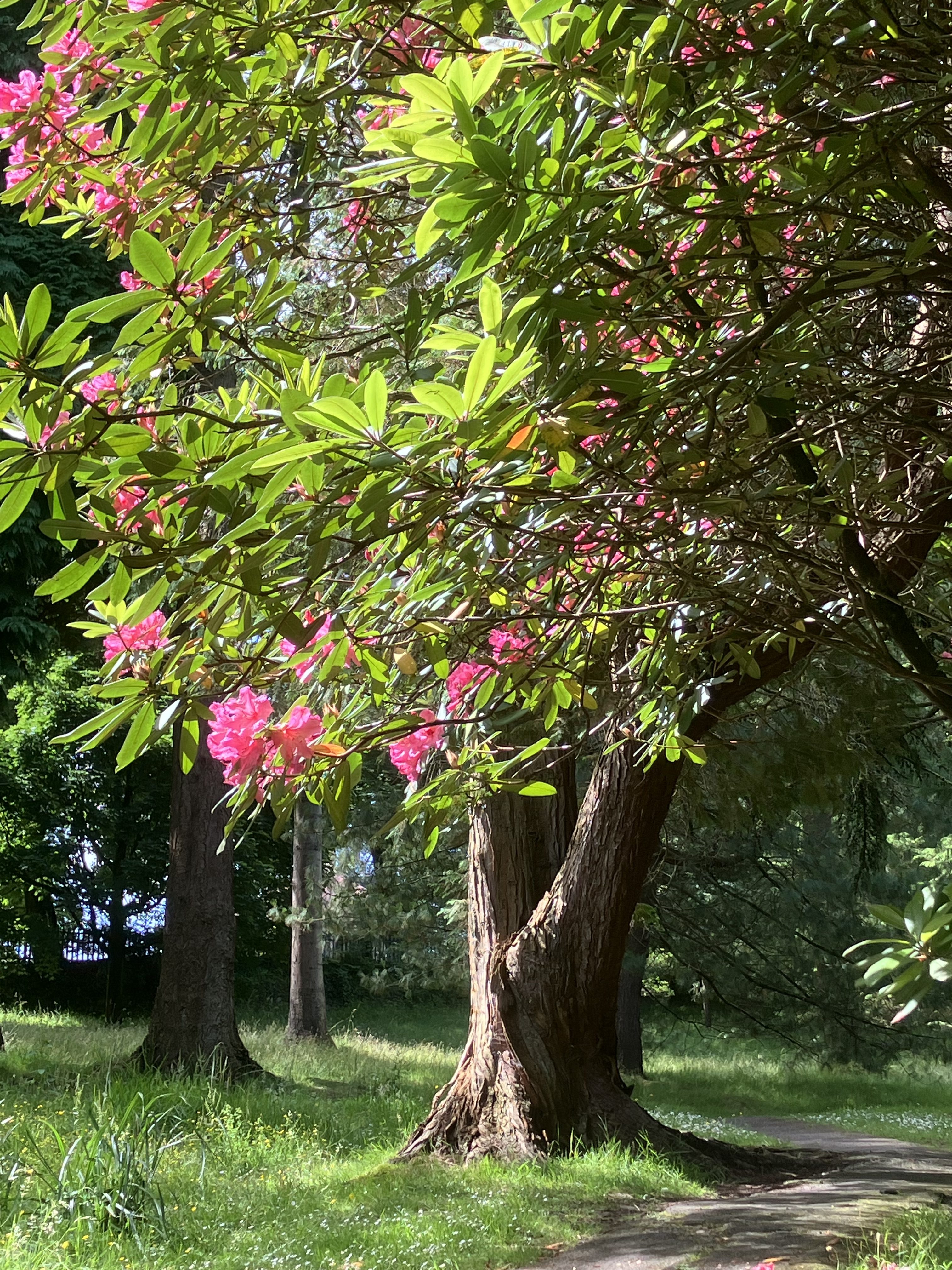
and followed a path amongst some rhododendron trees
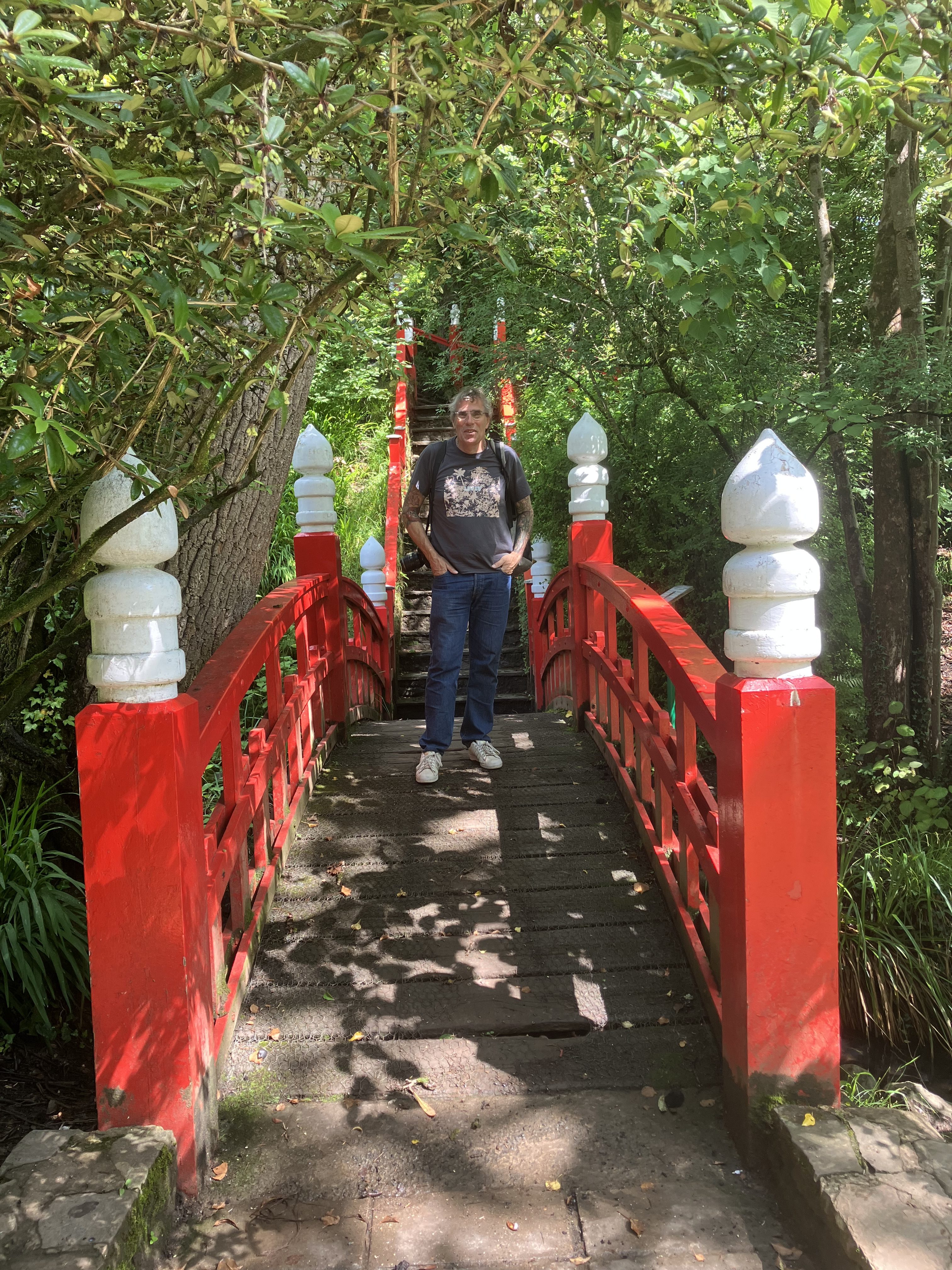
Until we reached the Japanese Bridge
The Japanese Bridge:
This is one of the iconic places in Swansea, beloved by photographers, because of its striking colour. The wooden bridge, painted a deep red with white finials, spans the outlet from the man-made lake.
The Admiral had visited Japan and China in 1900 whilst in the Royal Navy, where it is assumed he saw this landscape and photographed it maybe as a keepsake or maybe for future plans.
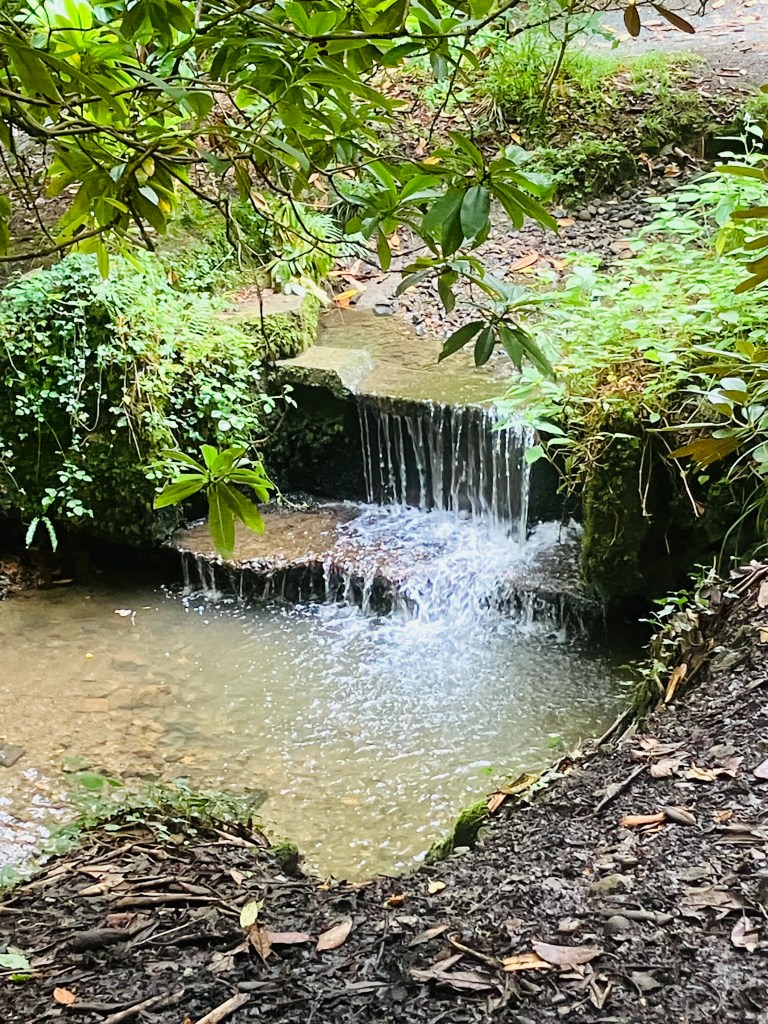
He showed David Thomas this small photograph, who then spent a week in the Royal Botanic Gardens at Kew, where together with the staff there he produced a design for the bridge. The bridge was then built on site and has stood in its current position since 1929! Thomas also created the lake and the waterfall by damming the Brock Hole stream that flows from Clyne Common into the sea at Blackpill.
Unfortunately after 40 years the original bridge fell into disrepair until in 1973 the skills of two Council carpenters -David Jones and Steve Tooze, enabled an exact replica of the bridge to be put in its place. The bridge is now listed with CADW and cannot be changed in colour or style.
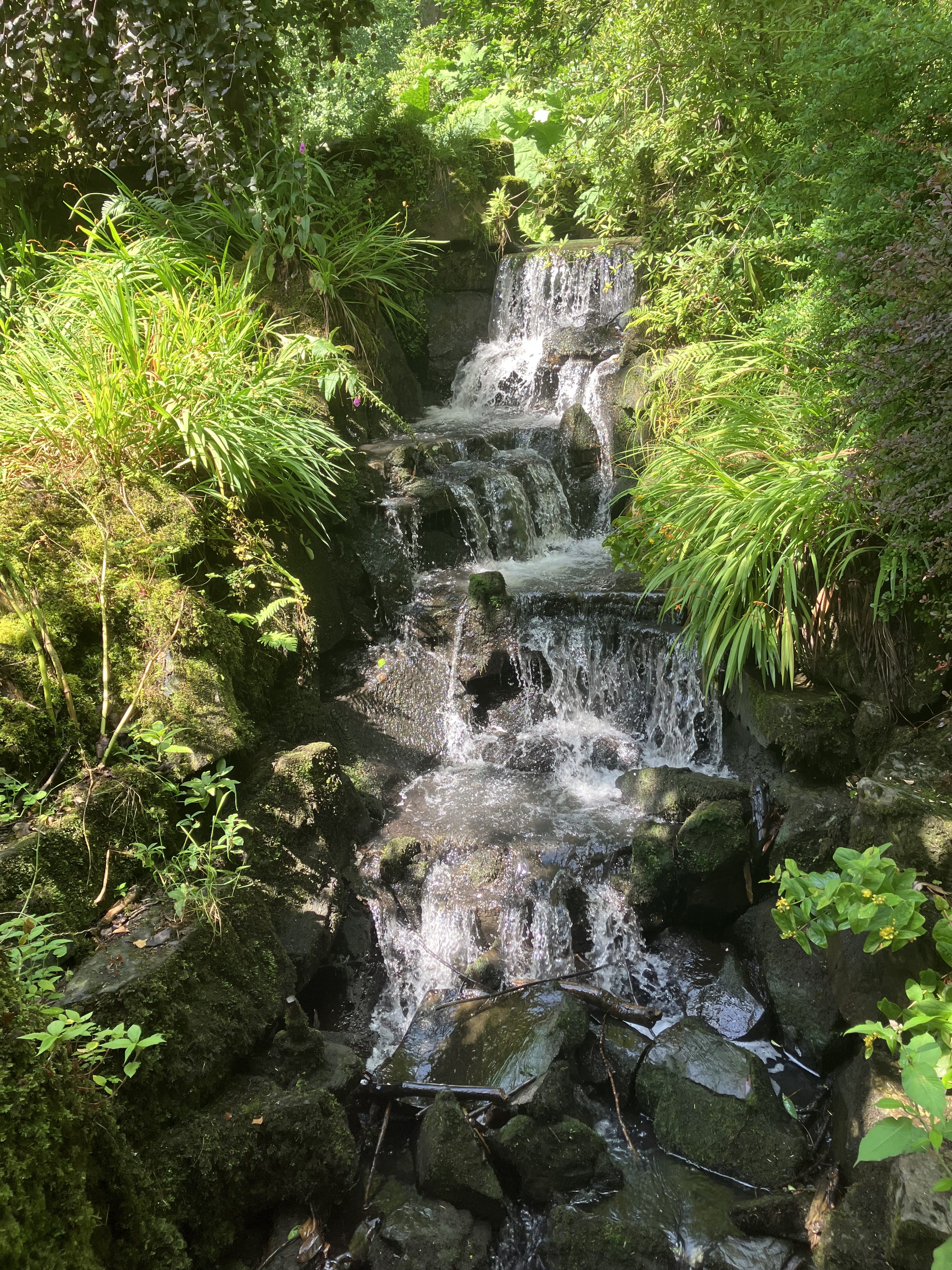
The bridge and associated waterfall above are an ideal spot to take a break and just listen to the sounds of nature whilst sitting in the sunshine. It felt very therapeutic and at the same time slightly unbelievable that I was sat in a public park that was being cared for so lovingly.
Heading up and away from the bridge we stopped once again, this time to admire the view across the bay.
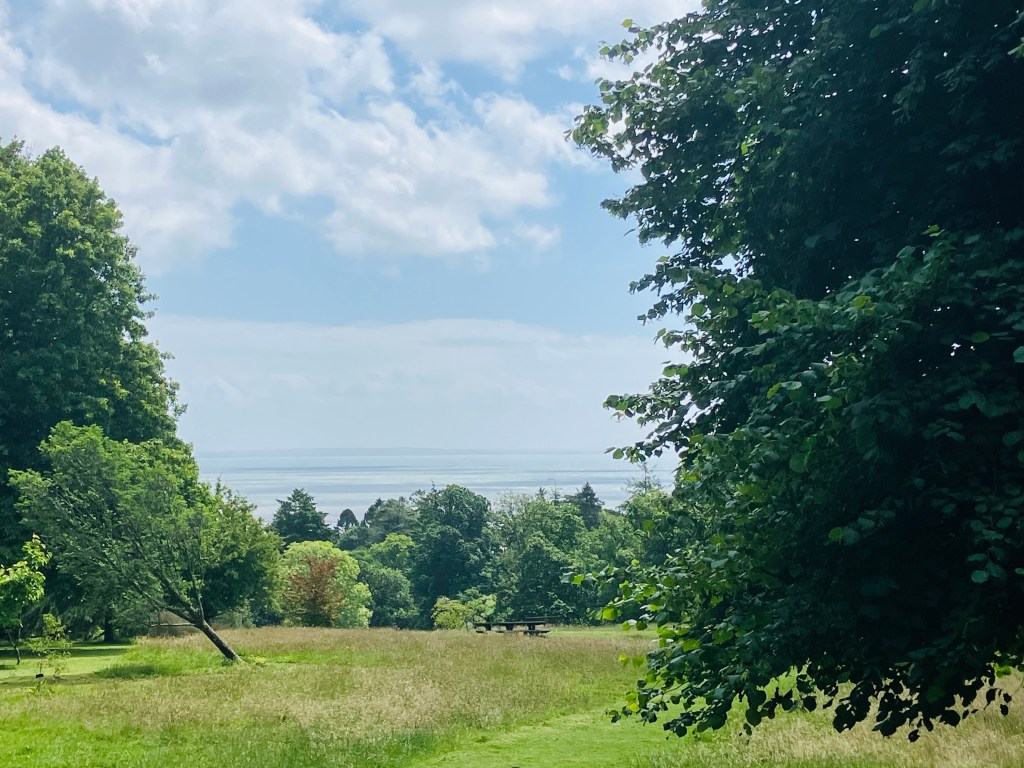
And then following the path around to the Castle
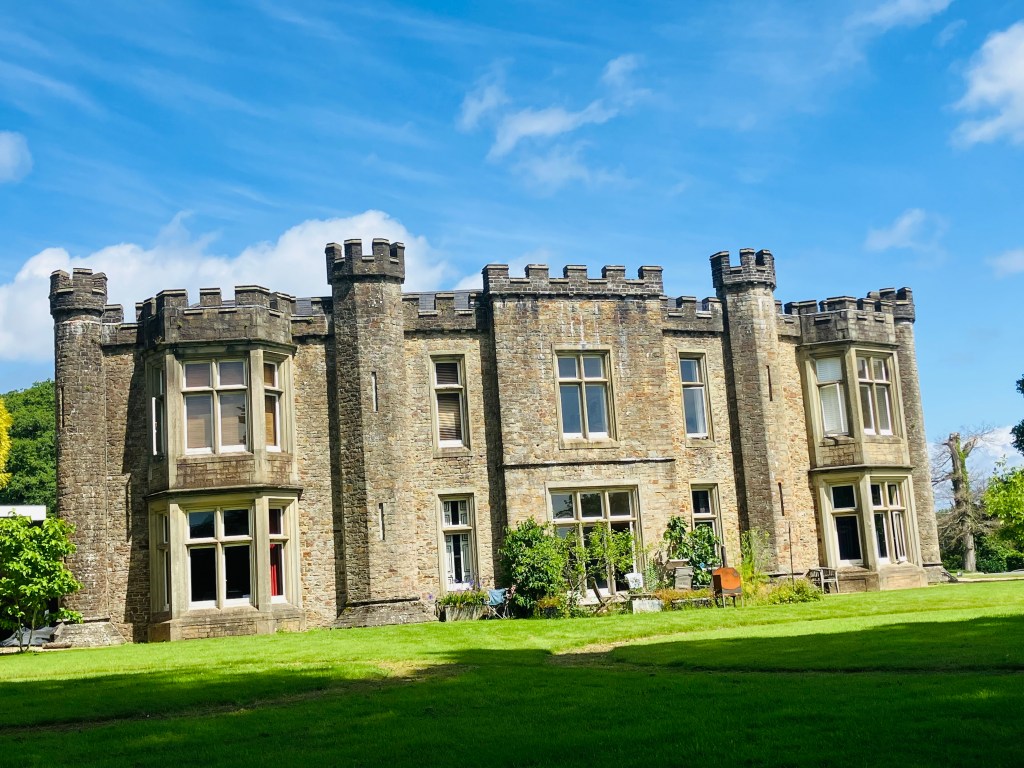
The Castle:
It is somewhat unbelievable that this was once used as student accommodation before being sold and made into private apartments.
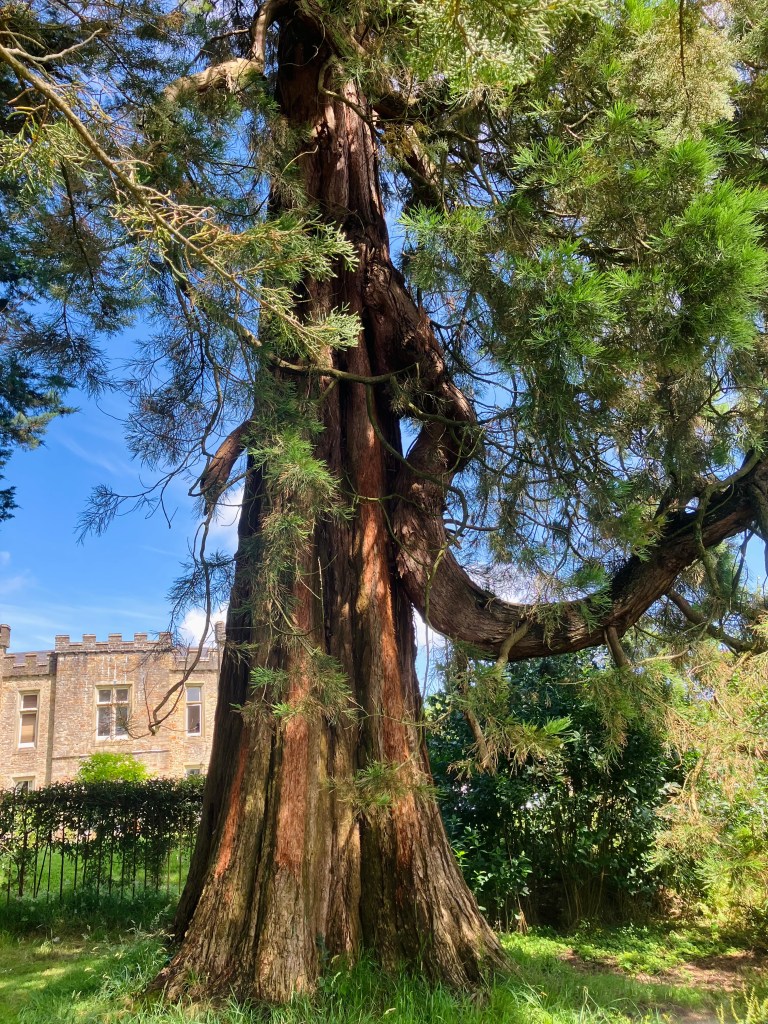
In front of the Castle are two magnificent trees: a Monterey Cypress and a Giant Sequoia.
Under the skill and imagination of the Admiral Clyne Gardens became a sort of Victorian/Edwardian botanical experiment, with exotic trees and shrubs being introduced from around the world. The present gardens contain more than 10,000 mature trees, and many of the most impressive specimens date from the 19th century.
By the mid-19th century, newly introduced Californian giant sequoias had become highly fashionable among wealthy British landowners. They were planted partly because they were exotic curiosities and partly because their extraordinary eventual size made them spectacular statement trees.
This living example of the Admiral’s foresight is now more than 150 years old.
Returning to the path we crossed the Italian Bridge
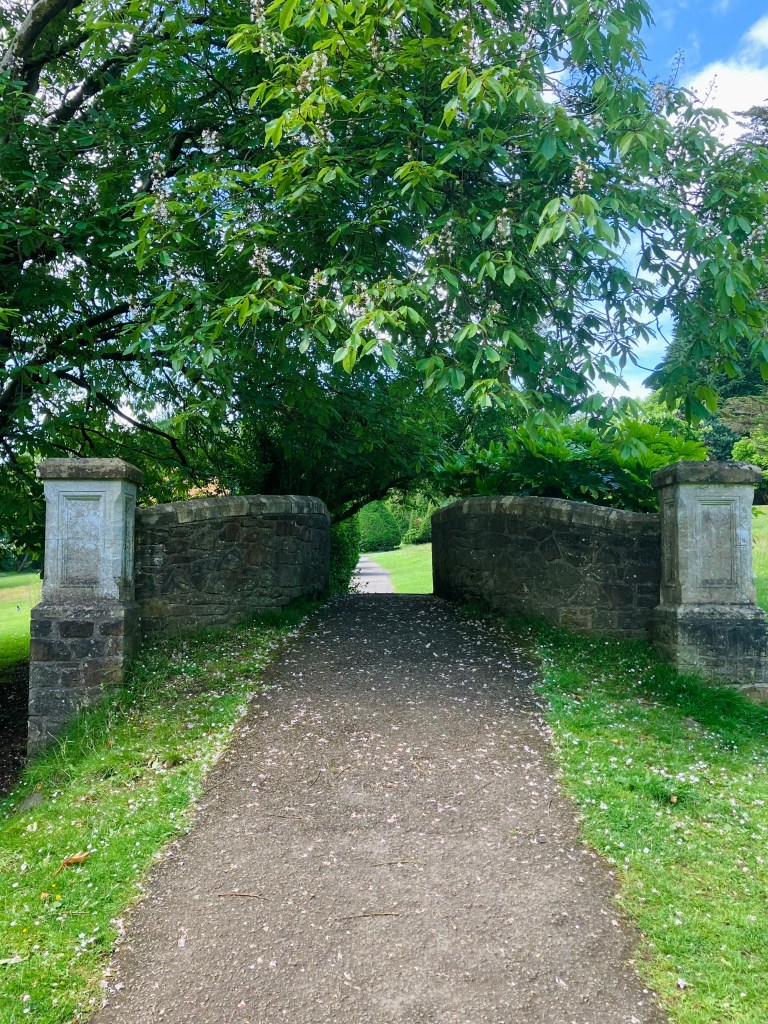
The Italian Bridge:
Although quite modest today — a small single-span stone and concrete bridge, the Italian Bridge is actually rather more significant than it first appears -the bridge was deliberately designed as an ornamental feature and is virtually the only surviving architectural element of an entire Italian garden that has otherwise disappeared.
The formal Italian-style garden, was laid out below the south front of the Castle and included a formal arrangement of planting with ornamental statues. Running water created a pool beneath the bridge and a series of water channels that ran down the slope.
The Magical Story Tree:
Having crossed the bridge, just a little further along the path is the Magical Story Tree
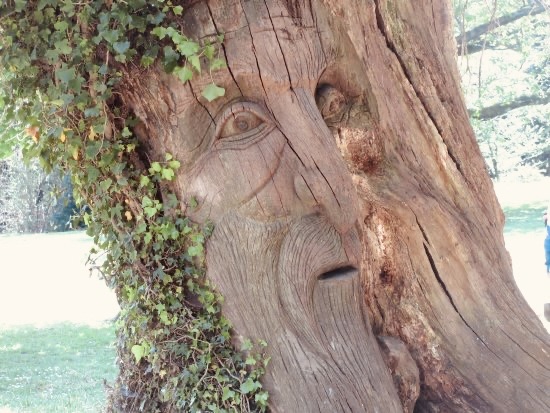
Among the gardens’ more unusual features is this wonderfully whimsical, carved tree with its own little outdoor theatre, where children can sit and listen to traditional Welsh tales.
This rather modern addition is essentially a large tree trunk carved with a face, with a small semicircular area of seating in front of it, creating a little outdoor storytelling theatre.
Heading off down the path our walk soon ended at the toilets and cafe. Like everything else at Clyne Gardens this is not your usual cafe but a lovely blue caravan surrounded by flowering pots.
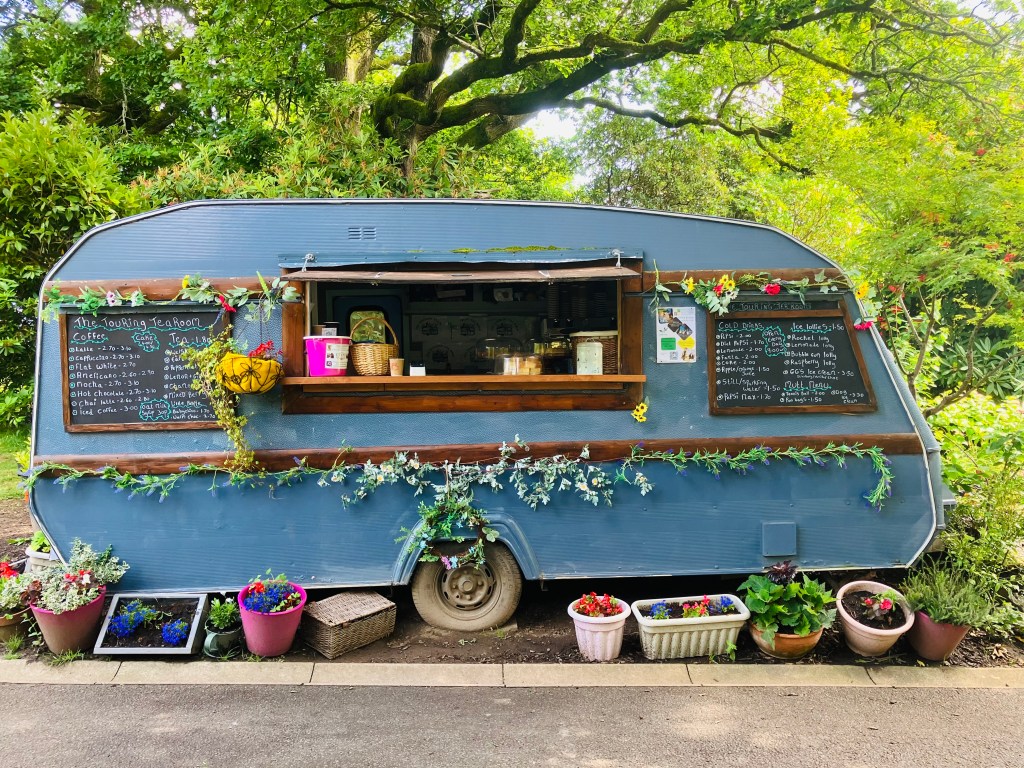
We happily ordered drinks and took a rest before leaving the park behind and heading back to our cottage in the country to prepare for our return drive home the next door.
Final Thoughts:
Our afternoon at Clyne Gardens turned out to be a lovely way to round off our time in Swansea and to celebrate my husband’s birthday. He really enjoys photography and with its colourful rhododendrons, magnificent trees, fascinating history and unexpected features, there was something interesting around almost every corner for him to capture.
I particularly loved the Japanese Bridge and it was such a pleasure to see such a historic garden being so lovingly cared for as a public park.
If you enjoy gardens, history and a leisurely walk, Clyne Gardens is definitely somewhere I would recommend adding to your Swansea itinerary.
Have you visited Clyne Gardens or any other garden of significance ? If so, I’d love to hear what you enjoyed most. Please feel free to leave a comment and, if you enjoyed this post, don’t forget to give it a like.


So much greenery, it’s wild! The waterfall is a lovely surprise, as is the Magical Story Tree. Looks like a lot of quaint sites within Clyne Gardens itself!
LikeLike
Clyne Gardens sounds like such a cool place to explore. Looks very peaceful too.
LikeLike
It was lovely and I think being a public park we were both pleasantly surprised about how well it was kept.
LikeLiked by 1 person
Yes, it does look well maintained.
LikeLike