I hope you enjoyed last week’s post when I introduced my readers to The National Trust. and our weekend away in Somerset amidst the rain and wind brought by the first two named storms of this Autumn/Winter season.
Our first stop en route to Somerset was just south of Bristol where we visited our first National Trust (NT) property, the wonderful Victorian Gothic Revival stately home that is Tyntesfield House and Gardens.
History:
Tyntes Place, as it was originally known, was built in 1813 for the Reverend George Seymour. It was a relatively modest Georgian country house.
The external view of the house leading to the NT entrance
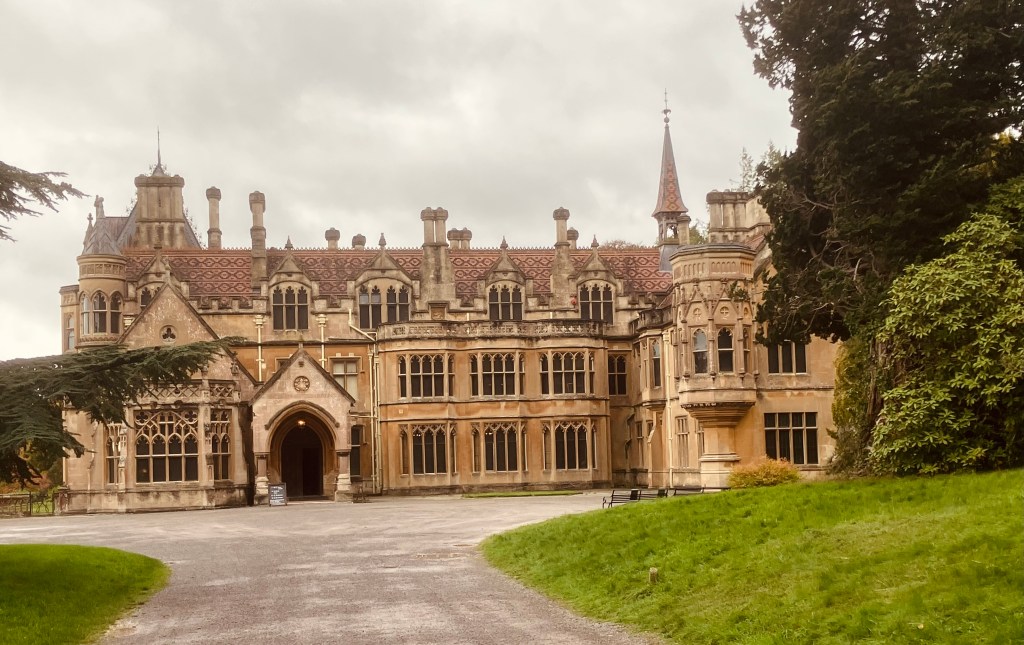
In 1843 it was purchased by a wealthy merchant -William Gibbs who renamed it Tyntesfield House. Between 1863 and 1866 he commissioned the architect John Norton to transform and substantially enlarge the house creating “a romantic fantasy of the middle ages” and the magnificent Gothic Revival house we see today. Between 1868 and 1884, the house had a water-powered hydraulic lift for transporting food from the kitchen, ensuring that meals arrived hot, manufactured by Waygood & Co, which originally served three floors. The Gothic chapel was then added by the architect Arthur Blomfield between 1873-1875.
A view of the chapel from the outside
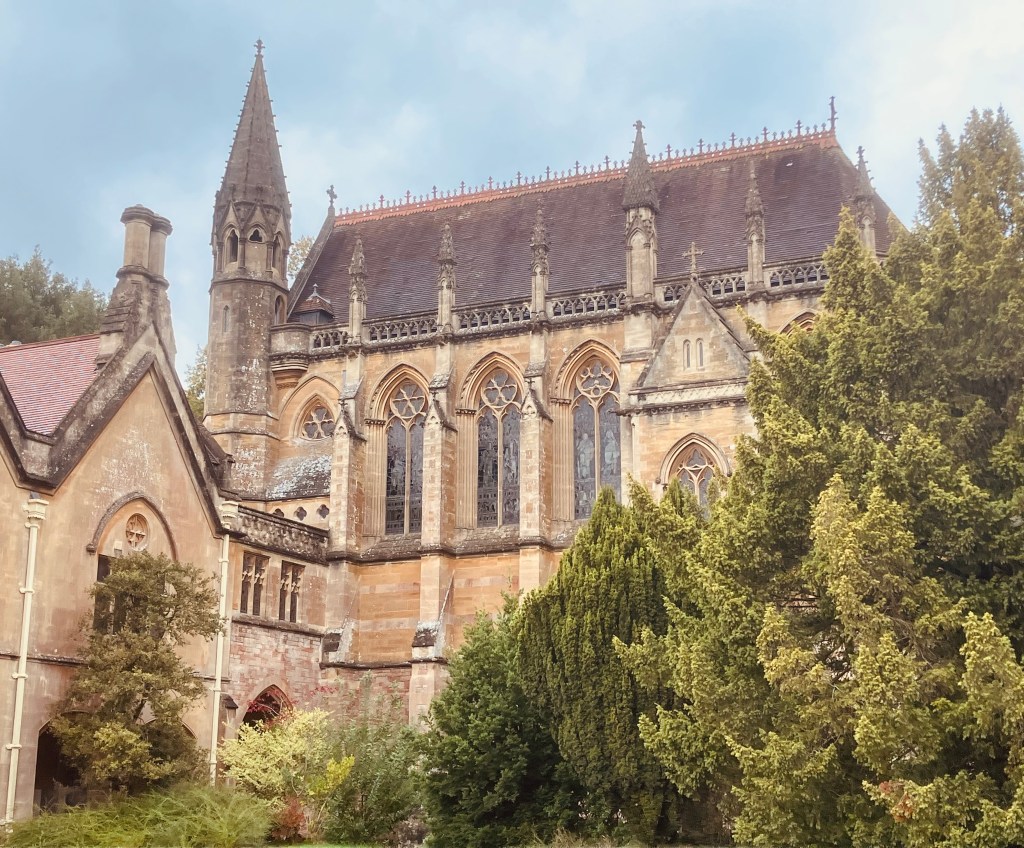
William Gibbs made his fortune from the trade in Peruvian guano (seabird manure), which was hugely valuable as an agricultural fertiliser. The house remained within the Gibbs family for the next 159 years:
1875–1889 – Blanche Gibbs: William’s widow inherited the estate for her lifetime. Interestingly the 1883 Ordnance Survey map shows that Tyntesfield had its own gasworks, a separate estate building. Also the billiard table was made around 1884 by James Plucknett & Co. for Anthony Gibbs:
It was heated from underneath by hot-water pipes. The heating kept the cushions and baize free from damp. Electrically activated buttons around the cushions controlled the scoring. These buttons were connected to a scoreboard on the wall.
1889–1907 – Antony Gibbs: Their son inherited the property and made further improvements including having electricity installed 1907–1931 – George Abraham Gibbs: Antony’s son, who later became the 1st Baron Wraxall. 1931–2001 – Following George’s death, his widow Ursula managed the estate until Richard, the 2nd Baron Wraxall, took over in 1949.
The National Trust;
Tyntesfield is a very unique property within the NT portfolio. In 2001 Richard died. Having never married and without children, his will left the estate to 19 beneficiaries! None of them could afford to buy out the estate to keep it in the family. As a consequence they put it up for sale.
The National Trust was particularly keen to acquire Tyntesfield because it was such an unusually complete Victorian house. Its furnishings, personal possessions, books and domestic contents had survived remarkably intact. The Trust wanted to preserve that collection rather than see it dispersed through auction.
The National Trust eventually acquired Tyntesfield in June 2002 for approximately £18.5 million. This included £9 million for the house and land and a further £9.5 million for its extraordinary collection of original furnishings and contents.
The money was raised through an unprecedented fundraising campaign, with £17.425 million coming from the National Heritage Memorial Fund, two anonymous benefactors contributing £4 million and £1 million respectively, and a further £1.5 million raised from more than 50,000 public donations in just 50 days.
The difference helped towards the wider costs of securing and caring for the estate.
Had this sale not taken place the estate would have been separated into lots and sold off losing one of the last great unaltered Victorian mansions forever. Christie’s, who had been preparing the contents for auction, described the astonishment of finding “room after room, cupboard after cupboard” of original contents. The sale would have run to at least 3,000 lots, down to the iron cots in the nursery and the medicine chest full of Victorian patent remedies.
The gardens contain a wide variety of trees
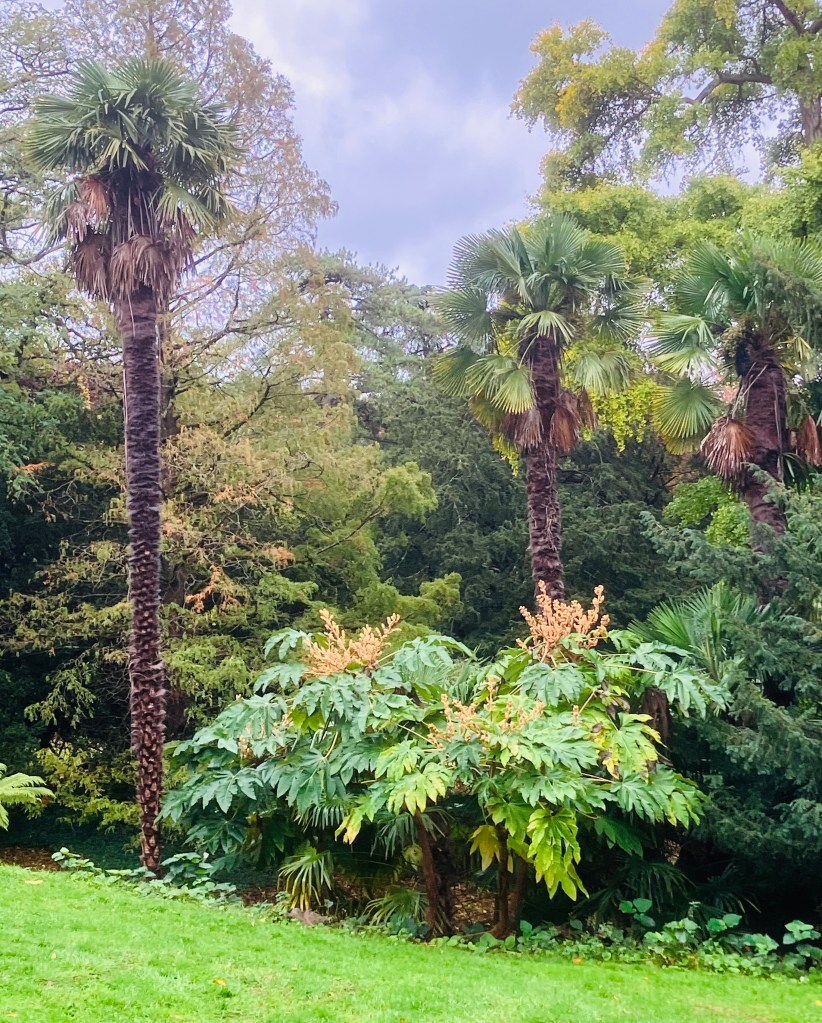
The Grounds:
Visitors have access to the grounds, gardens and house itself and there is no doubt the NT have worked hard with its many volunteers over the years to present the property as we see it today.
Just a couple of examples of the structure within the garden
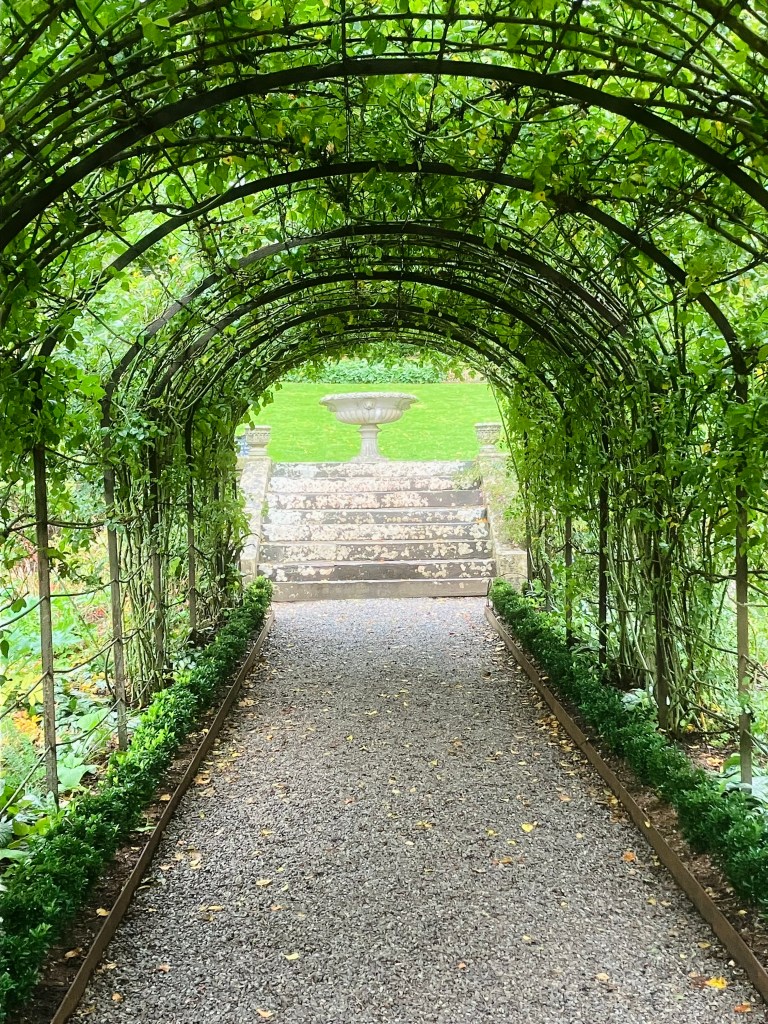
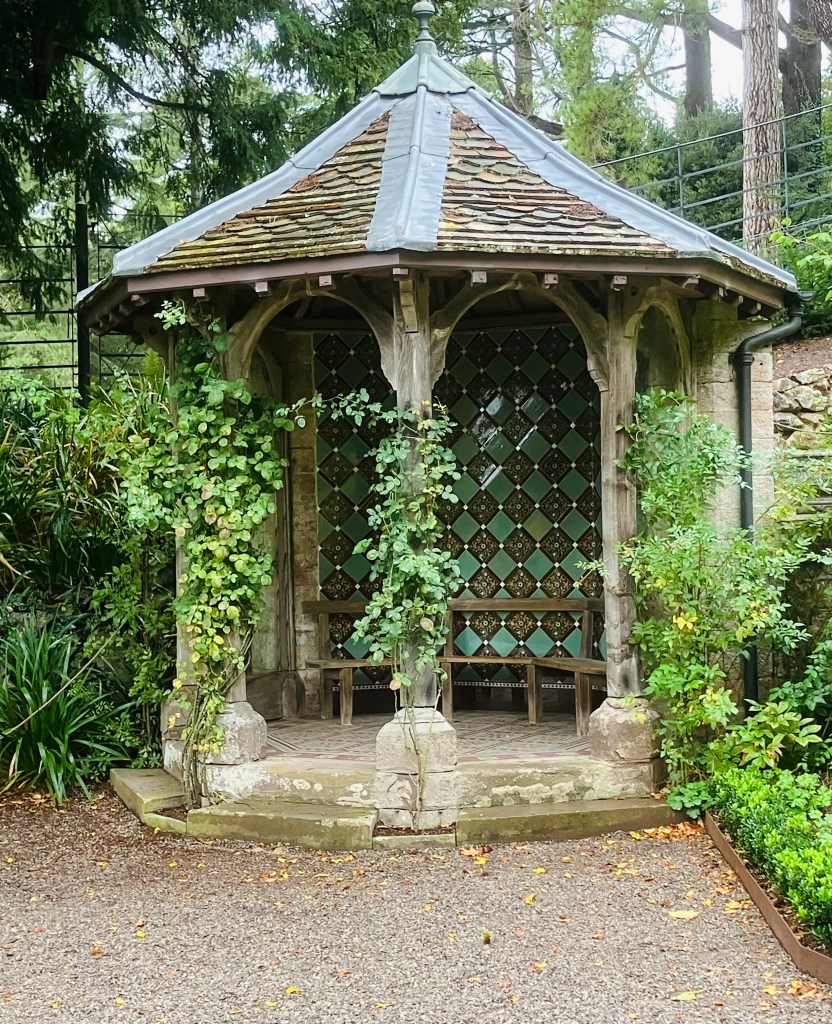
Its 540-acre estate offers a considerable amount of countryside to explore, with walks that reveal quite different aspects of its history. The garden is varied, ranging from open lawns and formal terraces, to a historic Orangery and working Kitchen Garden. Within the grounds there are several walks to choose from, depending upon your mobility and how far you wish to amble, you can take in as much or as little of the estate as you wish.
Conkers blown down by the high winds

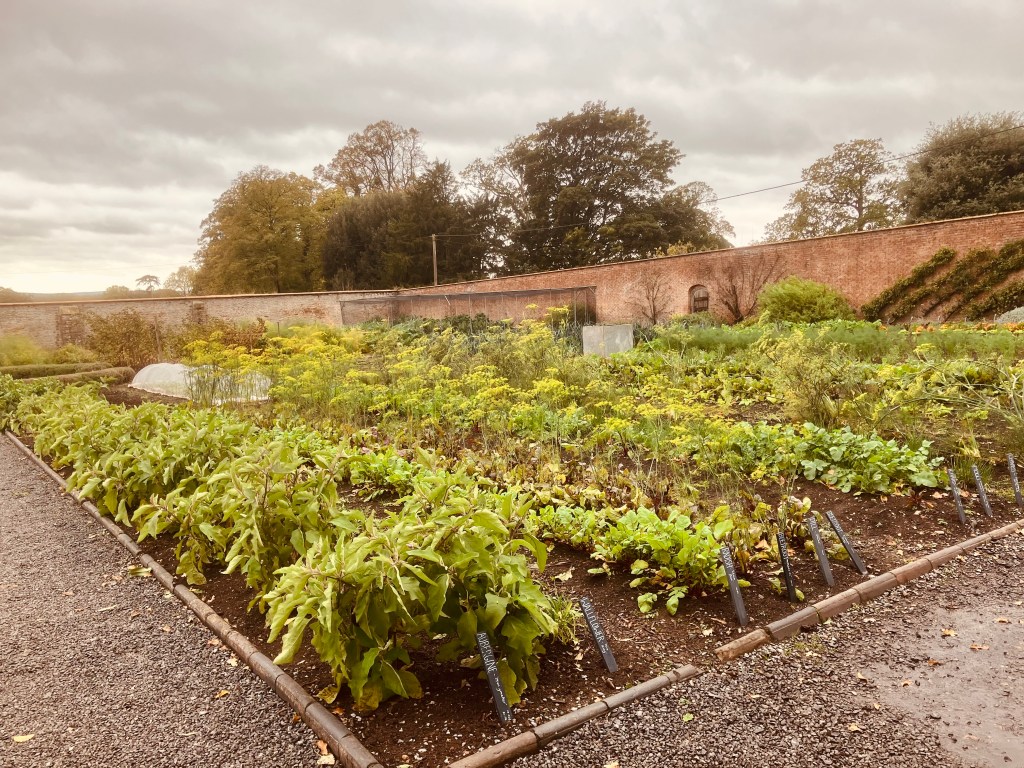
We completed the blue route which circumnavigates the house (there is a similar purple route which is step-free) and came away feeling as if we had done it all. The rose garden looks particularly beautiful in the summer and the kitchen garden is impressive all year, resplendent with a huge variety of home-grown vegetables and fruits.
The Kitchen Garden, still delivering produce in the Autumn
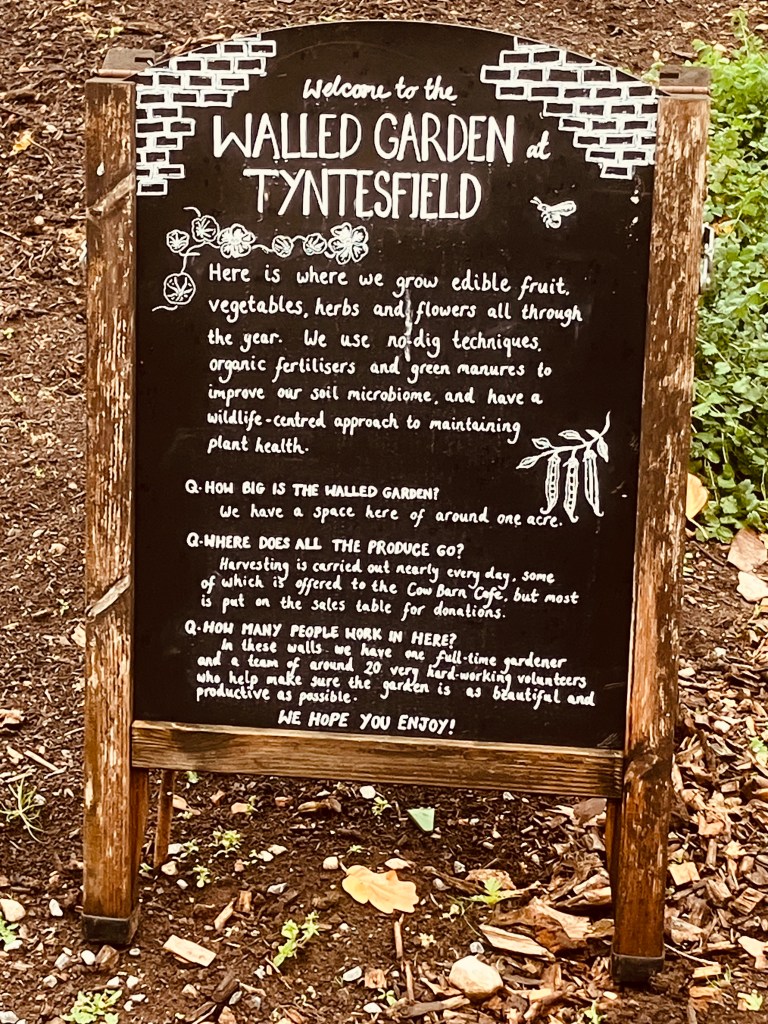
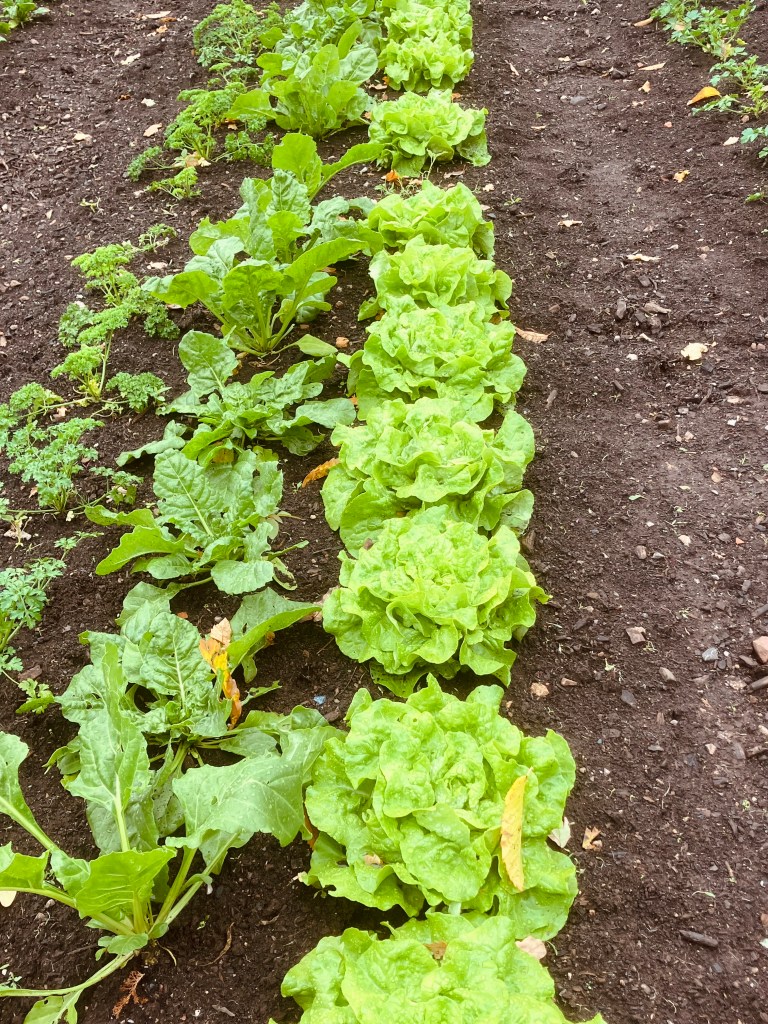
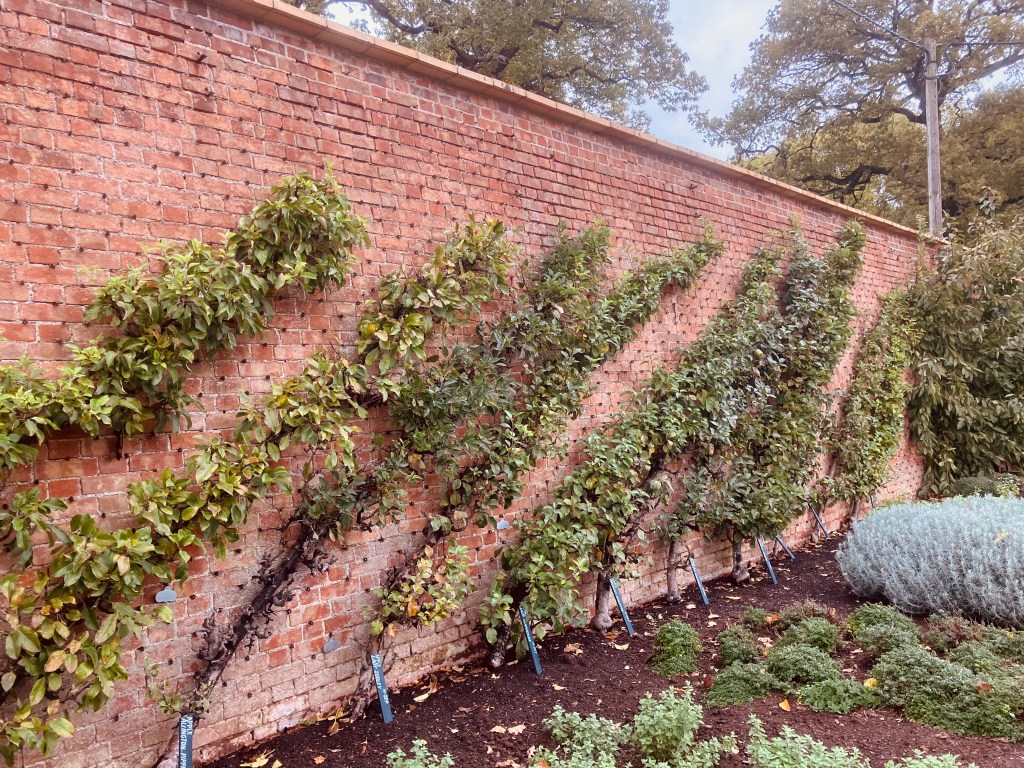
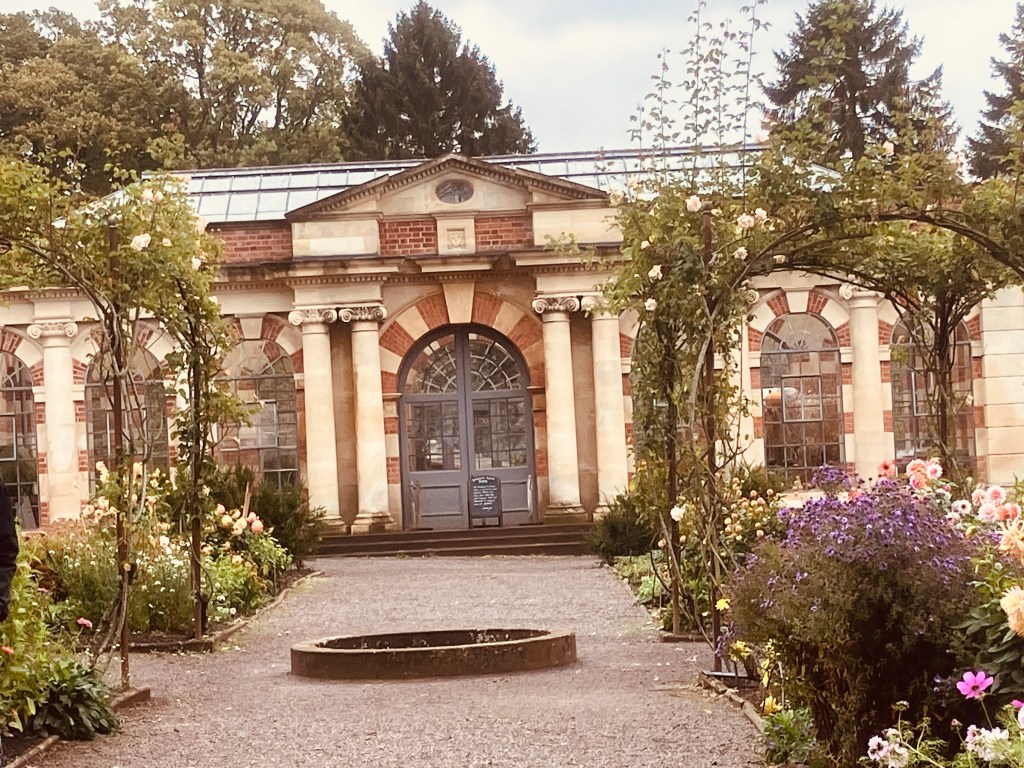
Don’t miss the Orangery, which changes with the seasons, and sits alongside the Kitchen Garden and “The Pavillion” Cafe.
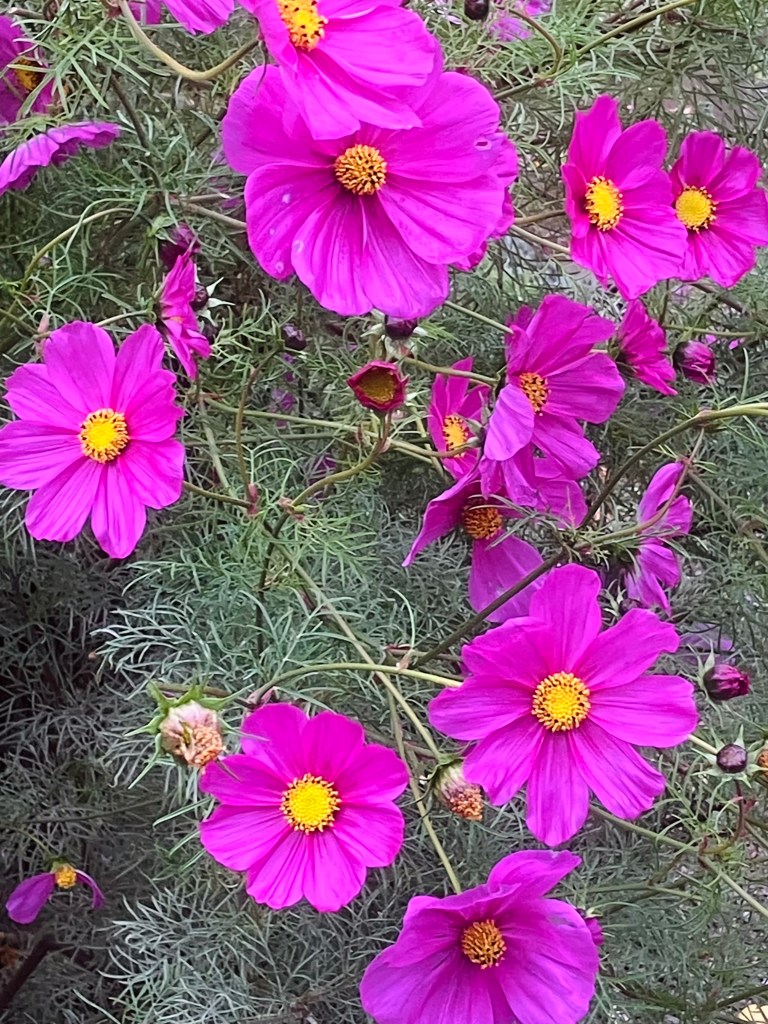
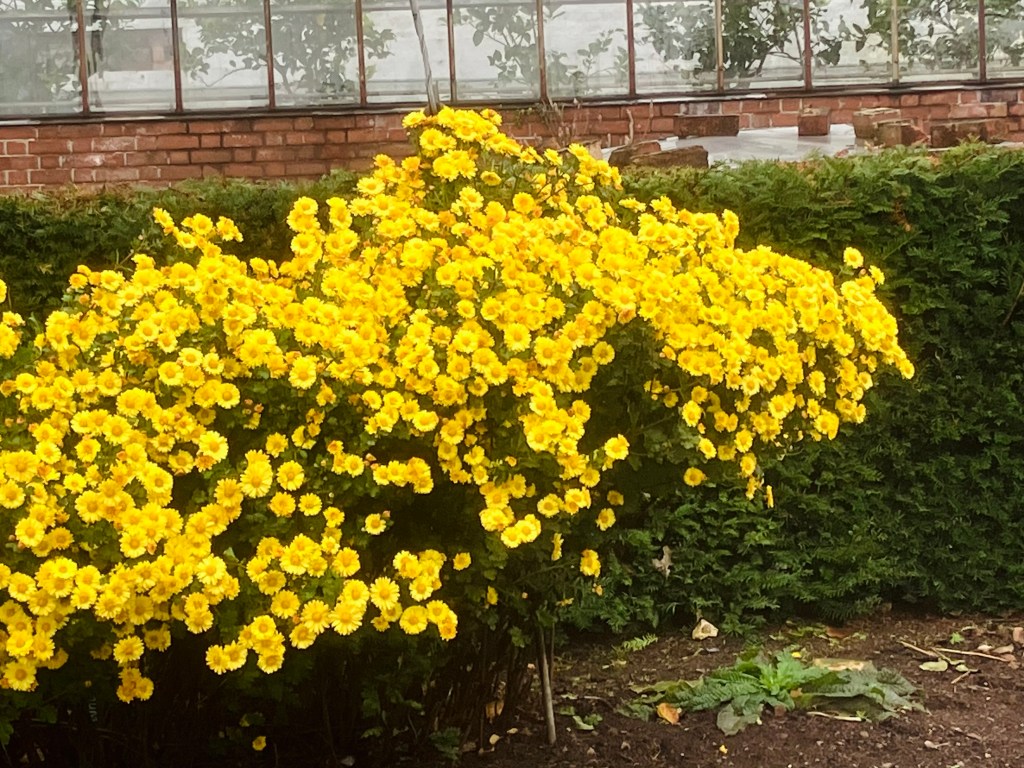
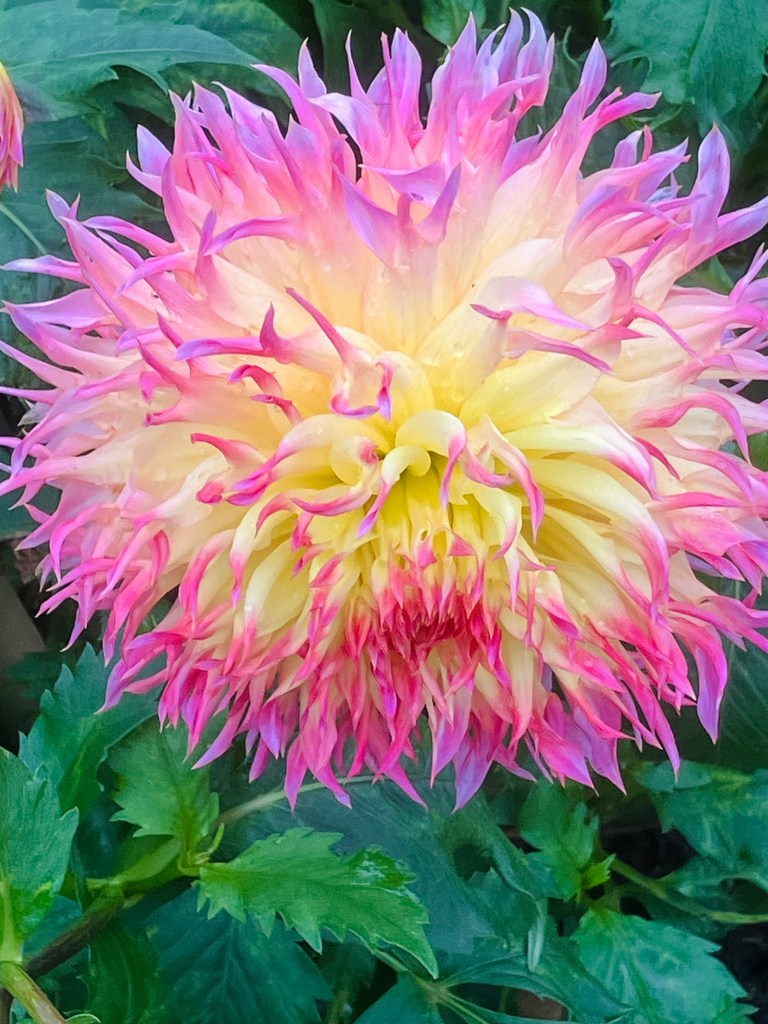
Flowers were still blooming in the garden leading to the Orangery
The House:
Stepping inside Tyntesfield is like being transported into another world. The exterior may look like a medieval Gothic mansion, but the interior is an extraordinary mixture of Victorian grandeur, religious devotion, family life and technological innovation.
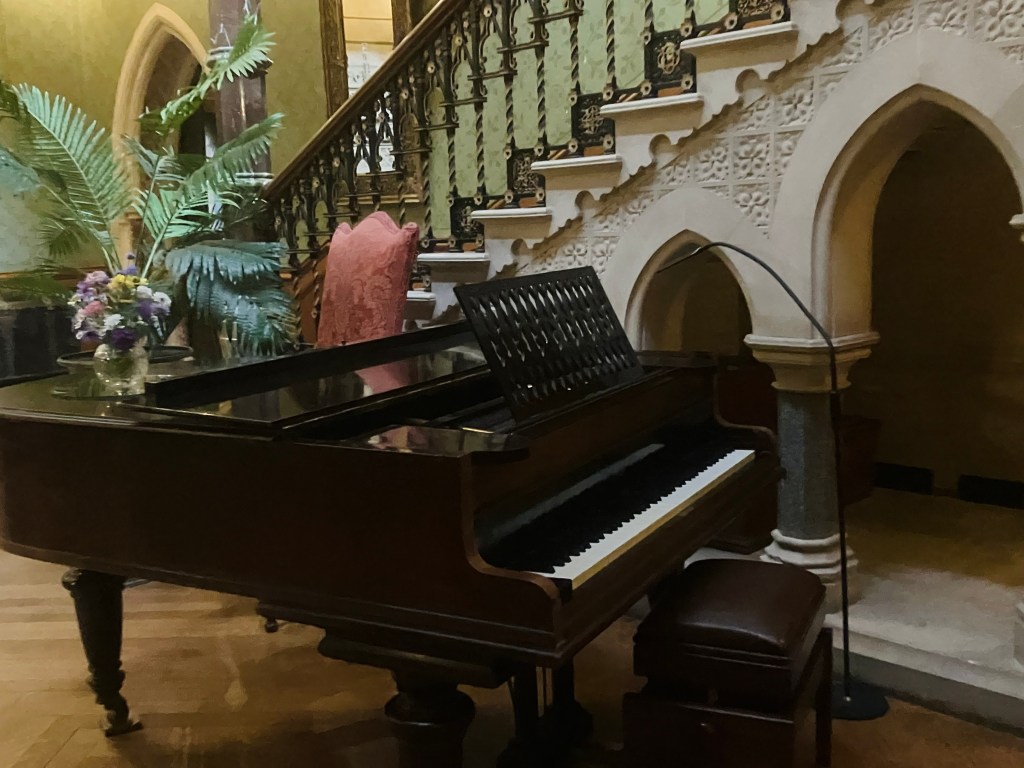
The entrance itself is impressive, with its vaulted Gothic cloister and Minton tiled floors, but it is the magnificent Grand Hall that really takes your breath away. Rising 43 feet to an oak lantern roof, it is dominated by an enormous intricately carved sandstone fireplace, decorated with figures representing the virtues of the Gibbs family.
The piano that sits in the Grand Hall
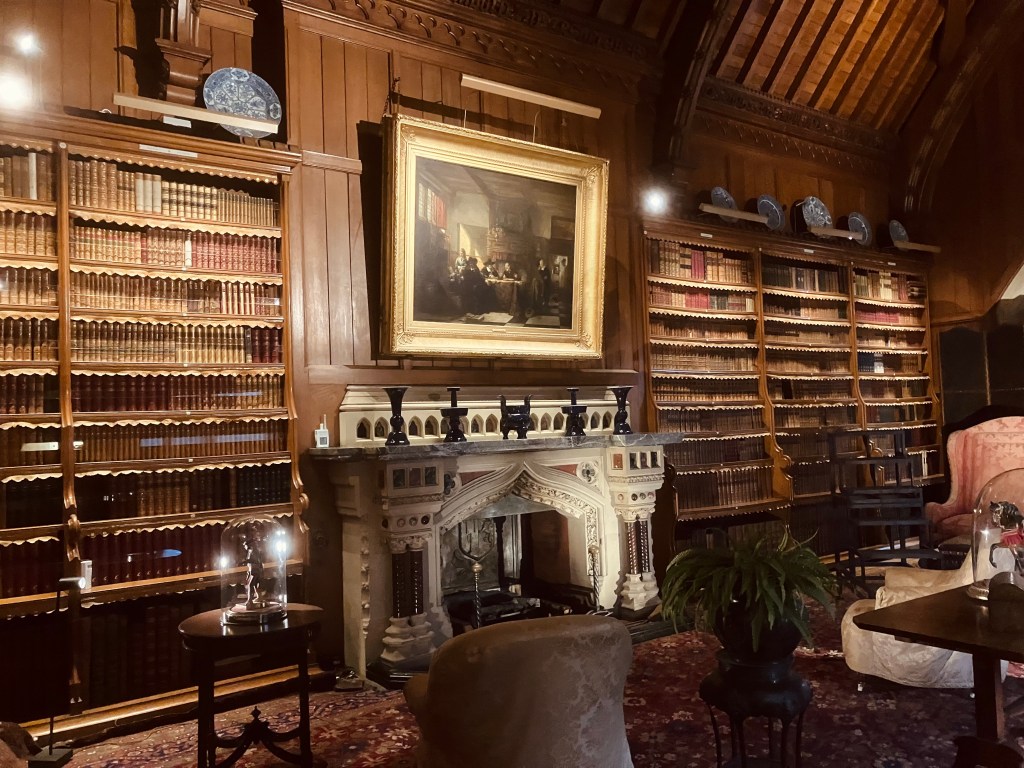
The house is filled with beautiful rooms, each with its own character. The magnificent oak-panelled library was clearly a much-loved part of family life with over 10,000 books including Darwin’s On the Origin of Species (1860).
Just one wall of the library
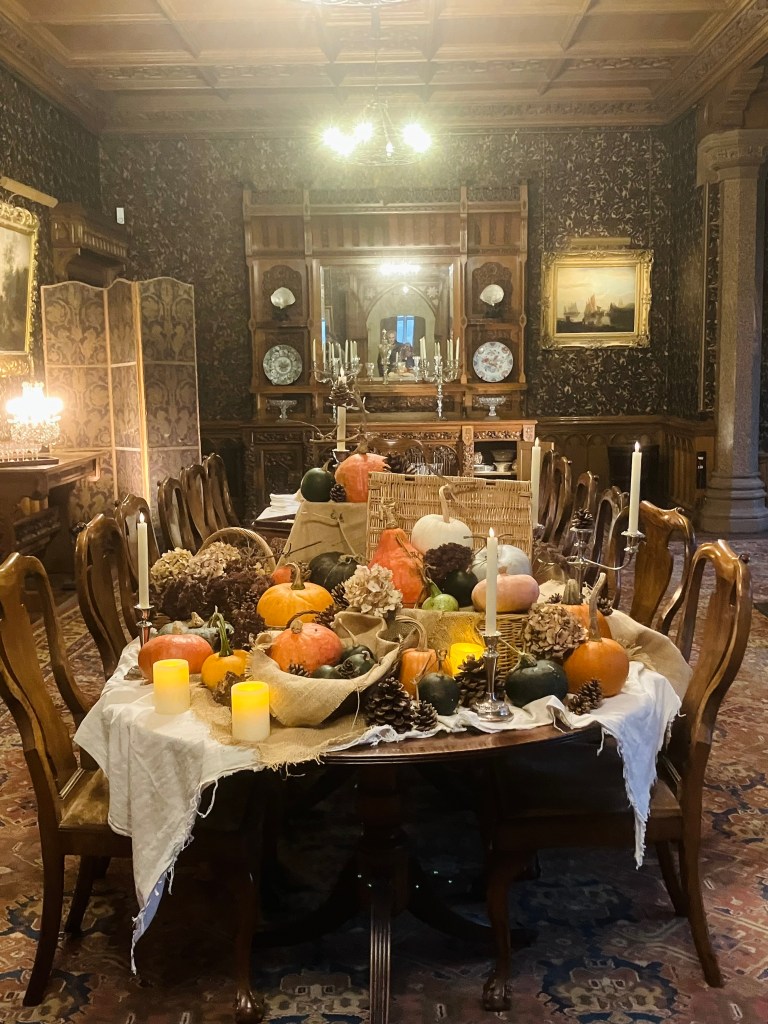
The richly decorated dining room, elegant drawing room and impressive billiard room give an insight into how the family entertained, while the smaller private rooms and bedrooms reveal a more personal side of life at Tyntesfield.
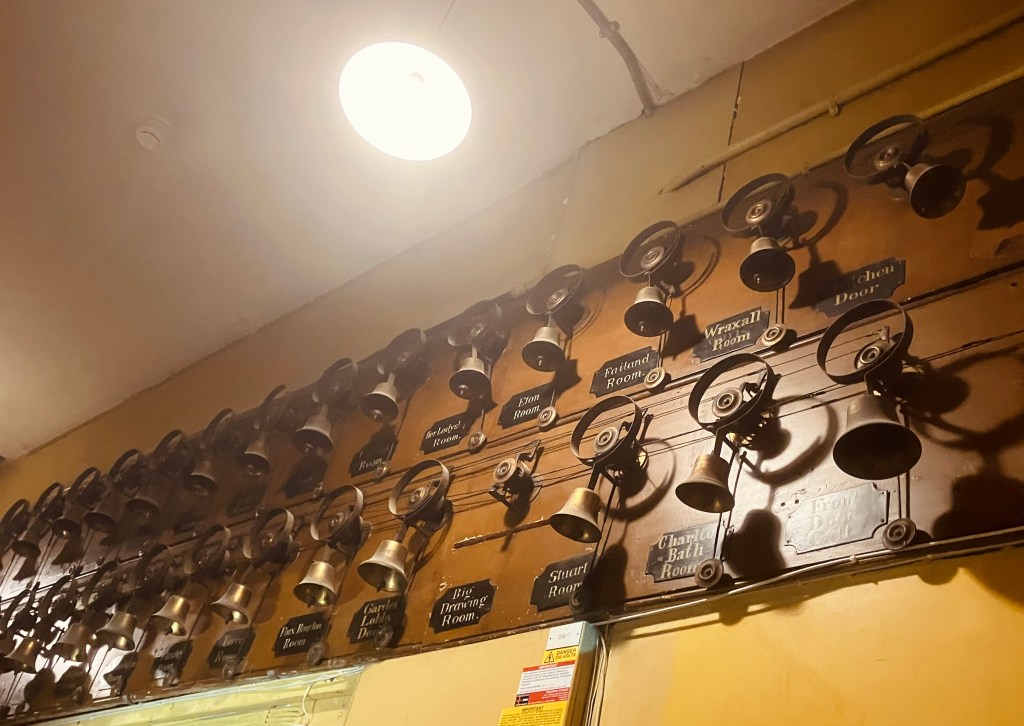
The dining room decked out for Harvest Festival and just a few of the bells that the staff answered during their daily work
There are some wonderful individual treasures to discover too, from the Renaissance paintings and Chinese ceramics to Antony Gibbs’s remarkable ‘Throne of Charlemagne’, an elaborate bronze chair inspired by a medieval design.
Not every room is necessarily open on every visit, so the precise selection can vary. However with the National Trust caring for a collection of more than 72,000 objects at Tyntesfield there is always something to see.
The Chapel:
As you make your way through the house the route inevitably finishes at the family’s personal chapel. The chapel is designed in the High Gothic Revival style, inspired particularly by the 13th-century Sainte-Chapelle in Paris, built for King Louis IX of France.
The entrance and interior of the chapel
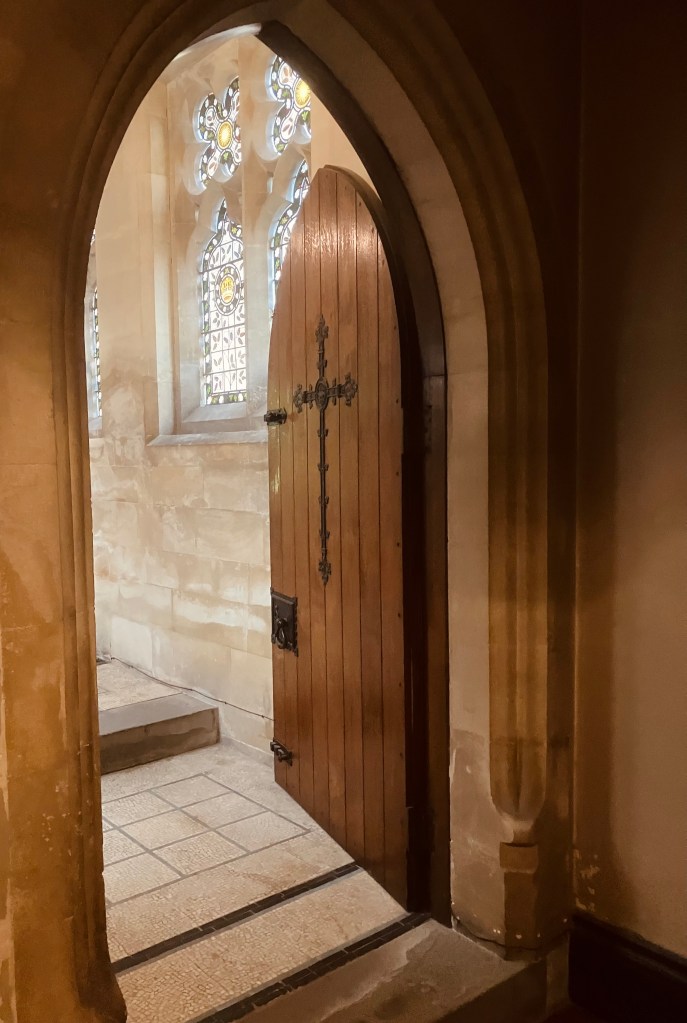
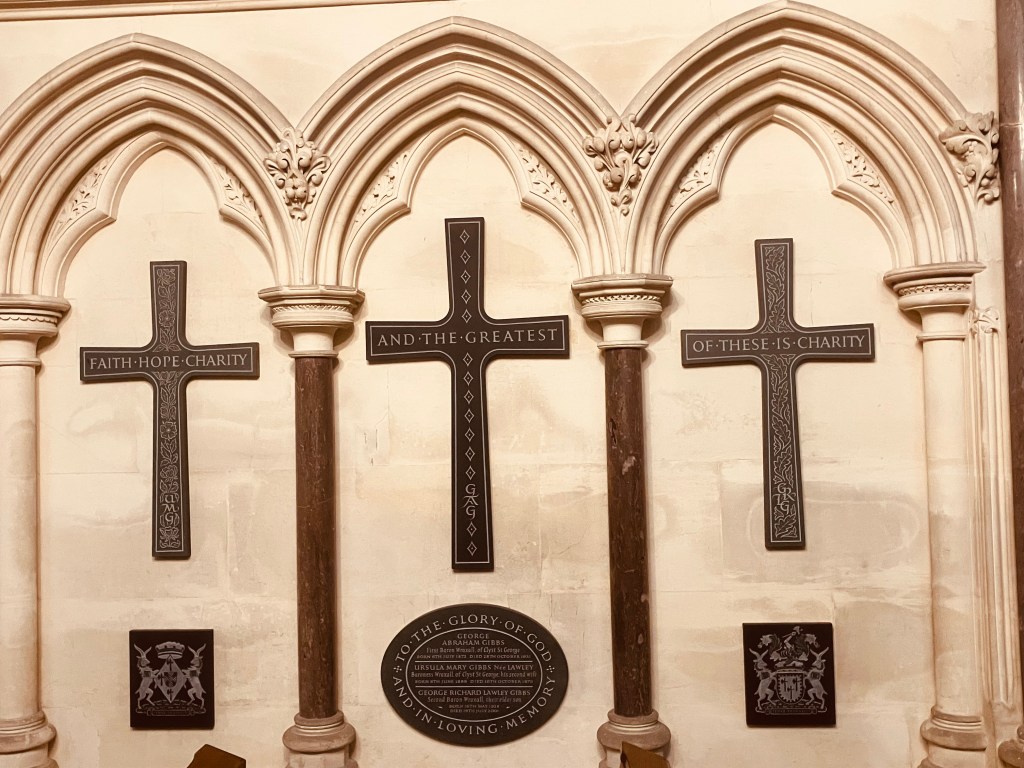
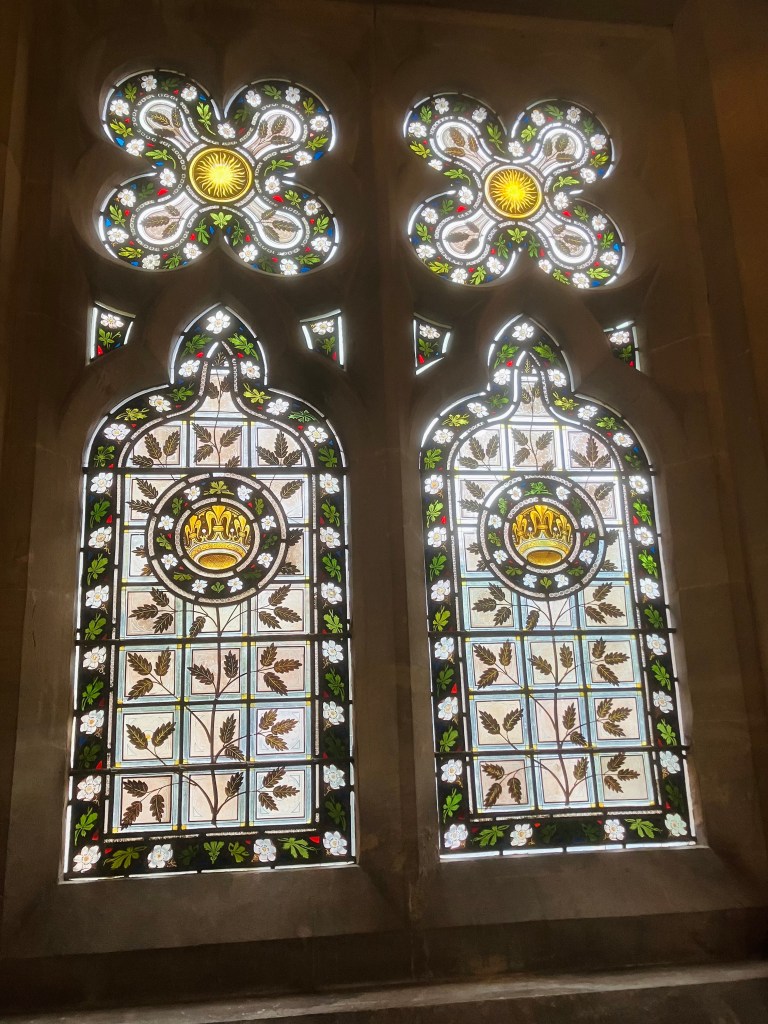
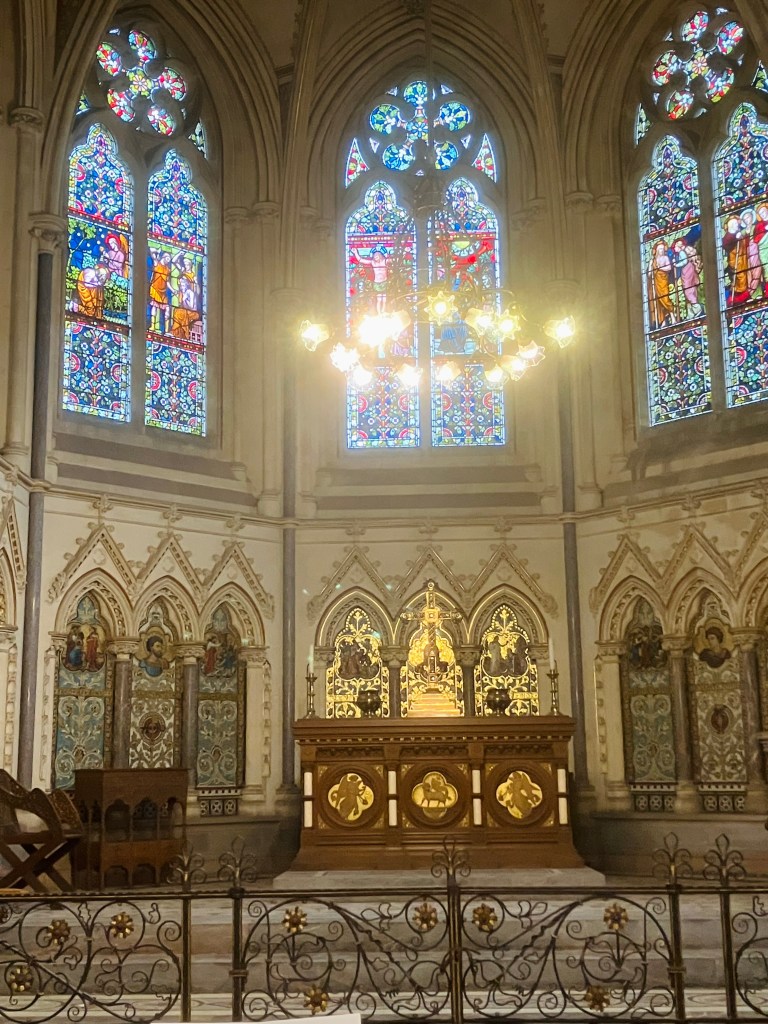
It is truly impressive with magnificent stained-glass windows designed by Harry Ellis Wooldridge. With elaborate mosaics, intricate wrought-iron decorative work and richly decorated Gothic arches it is well worth a visit. Don’t forget to look down -the floor is beautifully patterned and incorporates precious stones and mineral materials.
The chapel was an expression of the Gibbs family’s deeply held Anglican faith and their support for the Oxford Movement. It was used for daily family prayers and private services, although interestingly, it was never formally consecrated.
As you continue to wander around the estate you will discover that Tyntesfield had its own resident chaplain, employed by the Gibbs family. The house, in which he lived, is still available to visit on the estate.
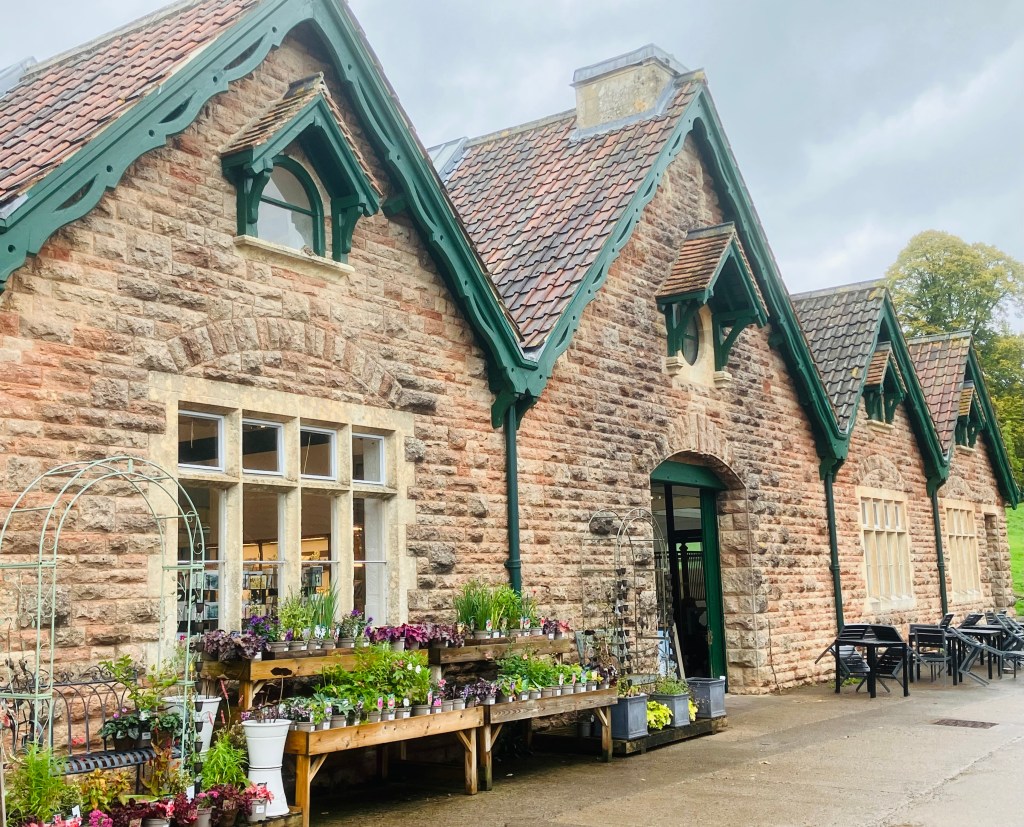
As we made our way back down to the Home Farm, where a cafe is sited within an old milking byre it was amazing to think that everything we had seen -the house, its gardens and all the extraordinary belongings were built thanks to millions made from the sale of bird droppings as fertiliser!
The cafe and shop including plant sales
Final Thoughts:
This was our second visit to Tyntesfield, and I’m pleased we made the effort to return. Our first visit, back in 2021 whilst on a UK road trip, was somewhat restricted by the lingering effects of Covid, so it was lovely to have the opportunity to explore more of the house and grounds this time around.
What makes Tyntesfield so special is that so much of the original interior and its contents have survived. Rather than simply looking at a grand historic house, you get a real sense of the people who lived here, their interests, their faith, their wealth and even some of the more eccentric aspects of their everyday lives.
It is also quite extraordinary to think that this magnificent estate, with its Gothic architecture, beautiful gardens and incredible collection of treasures, owes so much to a fortune made from the humble seabird dropping!
I’m always fascinated by the stories behind these historic properties, and Tyntesfield certainly has plenty to tell. It is a remarkable window into Victorian family life and a wonderful example of why preserving these places for future generations is so important.
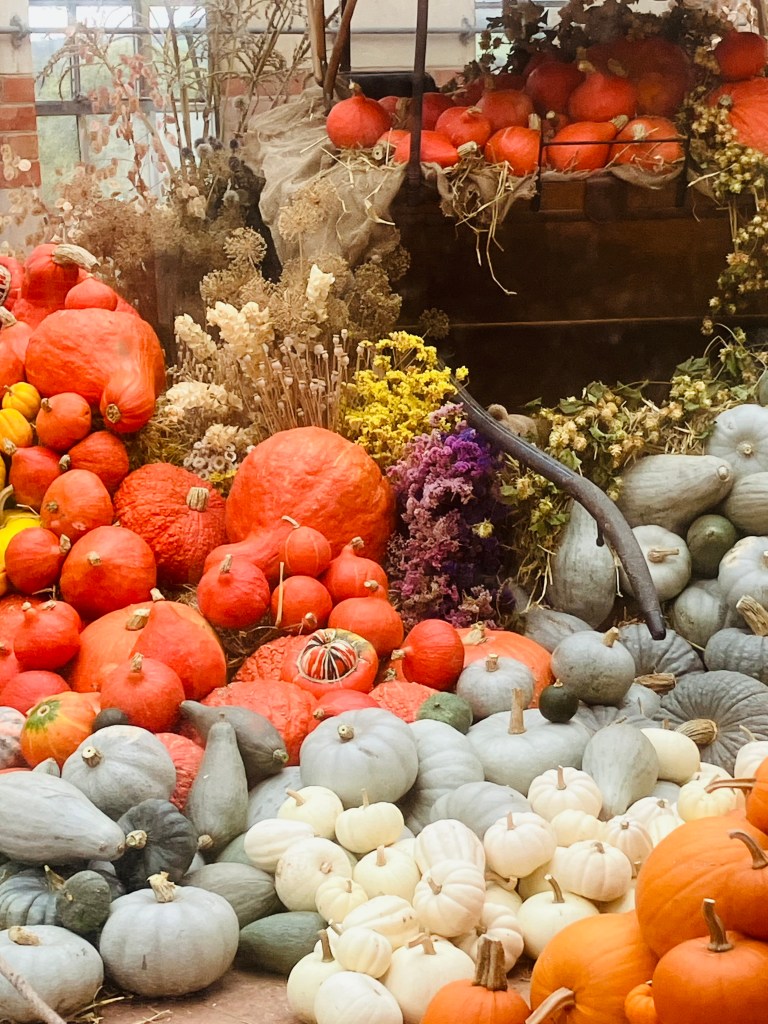
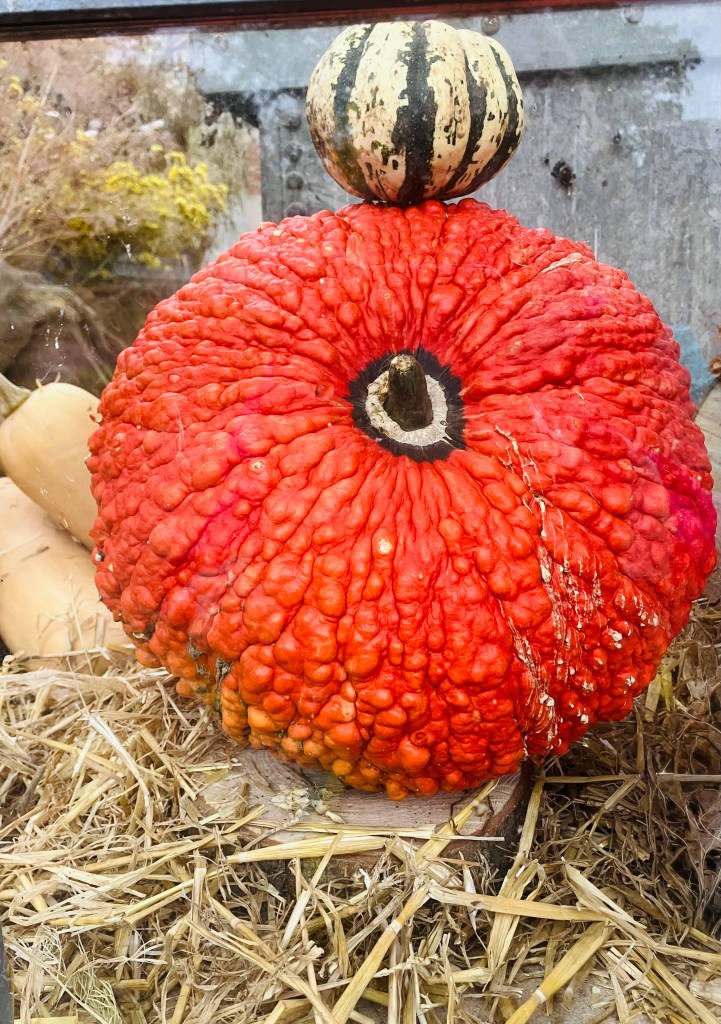
Inside the Orangery, all ready for the Autumn and Halloween
If you enjoy exploring Britain’s historic houses and gardens, I would certainly recommend adding Tyntesfield to your list. If you have enjoyed reading about our visit please give the post a like and consider joining us on our travels by subscribing to the blog.
Next week I’ll be finishing off our Somerset trip with a visit to another National Trust property, Barrington Court.


I always love learning about historical places and houses. It’s great that these have been preserved!
LikeLike