The Courtyards Festival of Cordoba

We had never heard of this festival before travelling to Cordoba. It takes place every year during the first two weeks of May and before I start getting really excited, about the preparations we saw whilst there, I have to share how historically fascinating it was to learn about how it all began.

On Day 2 in Cordoba we started the day by visiting the Archeological Museum. As museums of this subject go it isn’t all that big but does have some interesting antiquities going back to Roman times. Whilst there, we learnt that when the Romans came to Cordoba in 206 BC they built houses in a specific design. Due to the hot, dry climate houses centred around an inner courtyard (patio in Spanish) open to the sky. There was often a beautiful centrepiece, quite often a fountain and also a well to collect rainwater.
When the Moslems arrived and Córdoba became the capital of Islamic Spain in 756 AD they gave houses an entrance from the street which passed through a porch and started filling the courtyards with plants and water features as a way to keep homes cool and fresh. I find this even more interesting given that I live in an area of England where the Romans were prominent. I guess the English climate wasn’t as conducive to this style of living.

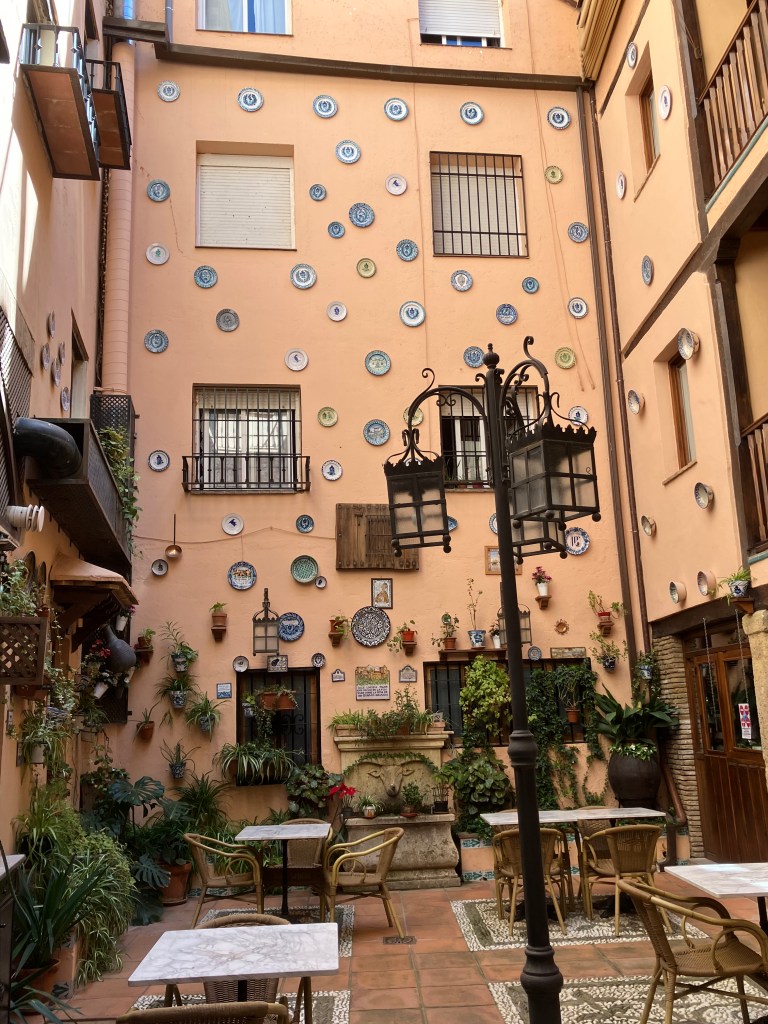
Over the centuries homeowners have developed their courtyards, through their own creativity and imagination, and patio decoration ended up taking on a life all of its own. Eventually someone realised that these hidden treasures were just too good to be kept tucked away behind heavy doors and iron grates. So, once a year, the doors open and everyone is invited in to see the wonders of Córdoba’s patios. The Patio contest is sponsored by the Córdoba City Hall and began in 1918. Again celebrations have grown over time with the inclusion of the “Battle of the Flowers” and May Crosses Festival.

These patios not only offer a chance to admire an array of colourful flowers but also an opportunity to appreciate the efforts that homeowners have made with beautiful stone mosaics and ceramic decorations. The amalgamation of floral scents such has jasmine and orange blossom alongside herbal plants such as oregano and basil assault your senses as you wander in off the street.
As a visitor to the festival you not only get to view private homes with such central patios but also larger apartment style buildings with ambitious patios where often many families work together to produce a beautiful shared meeting area.

We, visited Cordoba last week, in mid March but some of the patios are already open for viewing. They are free to visit and our hotel receptionist guided us where to look using a Cordoba city map but there is also a QR code you can pick up on your mobile which produces a map of those open.

Furthermore we visited the Palacio de Viana. The house, itself dates back to the 14th century but the main attraction for its 70,000+ visitors each year is the fantastic 18th century gardens divided into 12 patios. So stunning are the layouts that Vianna has become known as the Museum of the Patios. The layout is such that each patio sort of sneaks up on you. It might be that you turn a corner or wander through an open gateway and suddenly there before you is another secluded patio.
Each area has its own theme described on the entry board in Spanish and English for example “The Courtyard of the Oranges” which features, not surprisingly, orange trees but these are 100 years old!

I was just enchanted and my mind was buzzing with the idea of taking all this information home with me. Not to create a courtyard within my home, as I’m sure English planning laws would probably have something to say about that, but to segment my 120 foot garden and create my own private patio areas.

Needless to say The Courtyards Festival has been added to our list of future adventures and I seriously cannot wait to experience it!

This my final post of a series of three about Cordoba as part of our tour of Western Europe. Want to know more about this fascinating city? Why not check out the other two posts?


Who is Behind The Blog?

I’m sitting in a hotel room at Heathrow airport, with the alarm set for 4 a.m. so we have enough time to shower and grab a free breakfast before heading to the terminal and the start of a new adventure!
I seriously cannot wait. The run up to this point I often find a bit overwhelming, making sure I’ve packed everything we are likely to need, that all the plans I’ve researched and put in place are ready to rock and roll and we have those three key important ingredients: passports, money and a sense of adventure 😊

I’m sat in bed busily creating this next post, looking forward to receiving comments from readers around the world and hopefully some “likes” without those who give up their time to do this actually knowing a lot about me. So who is behind the blog?

Well I was born into a hard working family, in a beautiful Cotswold village, living high up on a hill overlooking the fabulous picturesque valleys below.
My life actually began in a caravan in my father’s field with my parents and my older sister.
I think I was about 4 or 5 when we moved into our family home on what is now known as a “social housing” estate. but back in my day was “council housing” so called because the local council built the houses and then rented them out.

At Junior School (in the UK that is aged 4 to 11 years) I excelled and willingly fought to keep my place at the top of the class.
It was also at this point in my life that I started to learn to ride and then very quickly caught the equine bug and fell in love with horses.
My Dad rented a farm so stabling came free. He was incredibly supportive which sometimes I don’t think I ever really thanked him for. It was a way of life that allowed me to be alone with my thoughts and negated the need at times to make friends. I was never lonely and became very independent, a characteristic that stood me in good stead many times later in life.

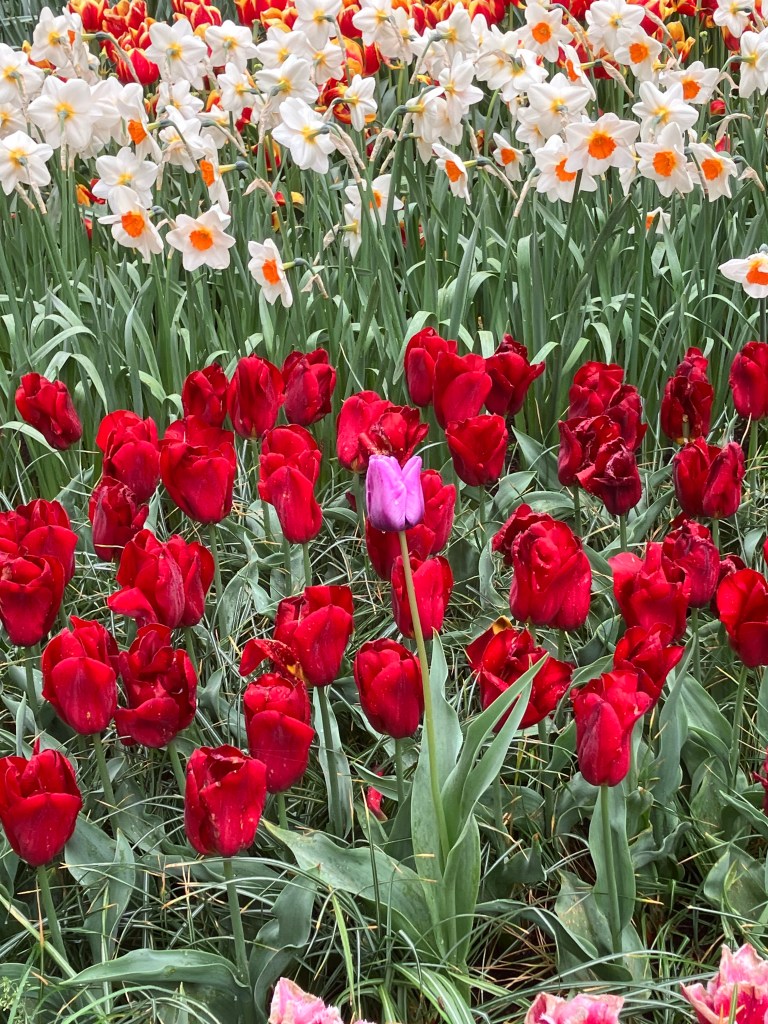
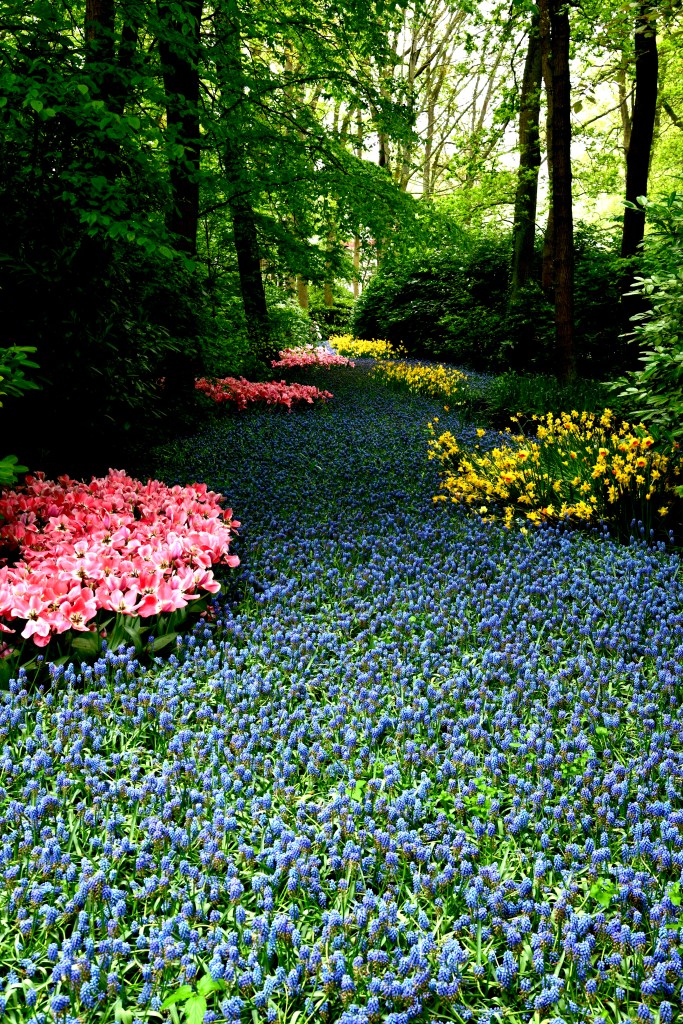
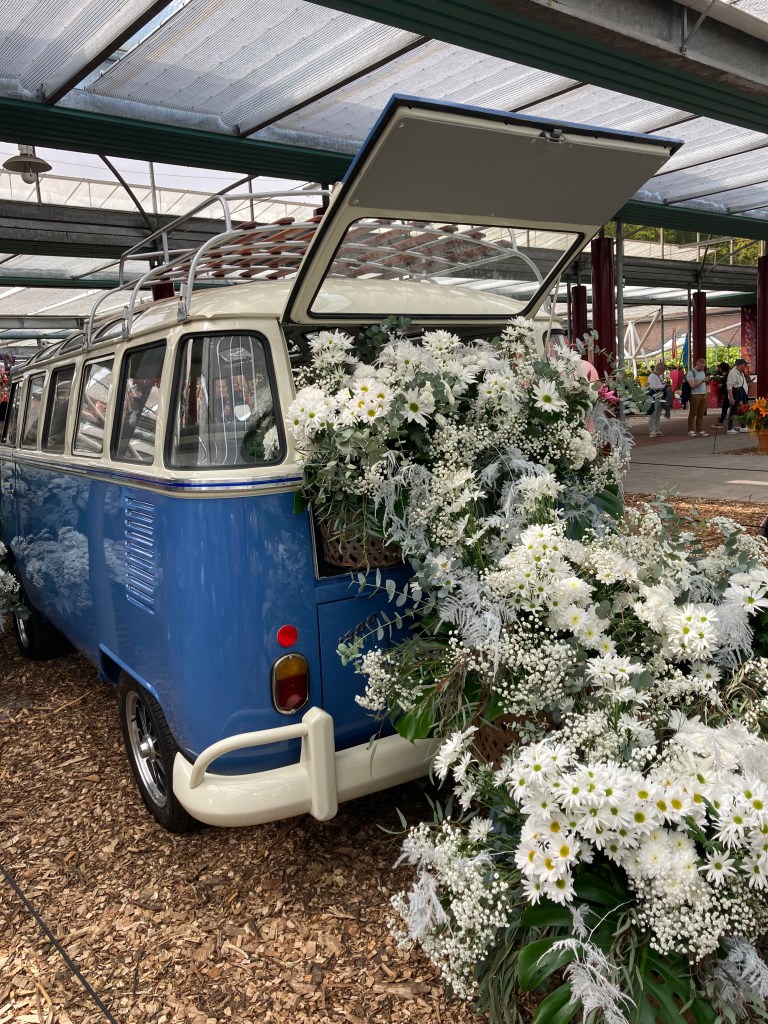
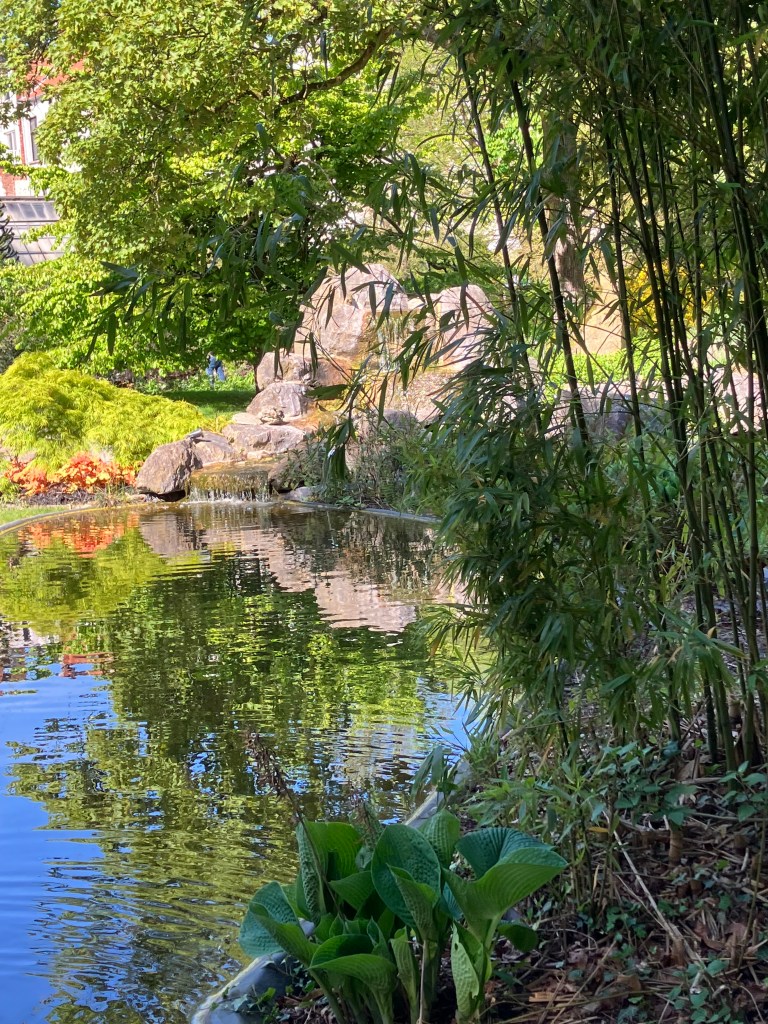
I’ve chosen pictures of flowers for this post taken on my travels

Passing my 11+ exam I then found myself at the Stroud High School for Girls. Suddenly I was no longer top of the class but surrounded by other “clever girls” and being fed an ethos that “we were the cream of the crop”.
This was also my first taste of a divided world, surrounded by girls from middle class backgrounds whose fathers were bankers, solicitors, directors and doctors and whose Mums stayed at home to bring up the children and “keep house”. A social stigma that I have already talked about in a previous post Navigating Midlife: Personal Opinions and Social Prejudice

I left school at 18 with good qualifications but university wasn’t an option for me.
My Mum had died at 55 when I was only 14 and my home life was emotionally and practically difficult and it was time for me to go out into the big wide world and earn a living.
With four job offers in retail management I chose to start my career with a large well known retailer as a Trainee Manager in Basingstoke, Hampshire. I was moved around the country every six months as my training and career progressed. It was a nomadic life style and one that I ultimately decided was not for me.


I left, settling in London and worked initially for a smaller fashion retail chain before joining a gaming and entertainment company. It wasn’t a job I envisaged taking but I desperately wanted to get out of fashion retail and so two days before my twenty second birthday on February 11th I started what turned into a 30 year career!


Apart from the work experience, promotions and sometimes good bonuses this job delivered, it allowed me to come into contact with all aspects of life. From the Mum spending her child allowance betting on the spin of a fruit machine to the thousands that could be bet and won on a roulette wheel along the demands that were listed on a “rider” for a visiting well known singing group or individual artist. Some of these entertainers were down to earth, speaking to you and treating you like a friend whilst others were full of their own self importance and happy to lord it over you.

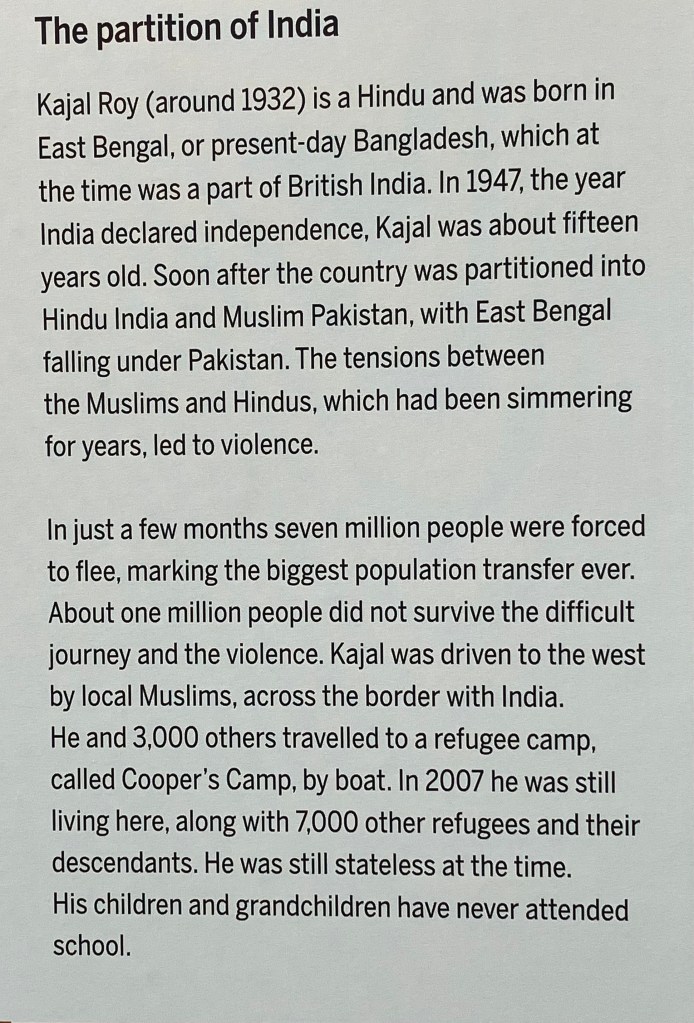
I loved the fact that I met people from every walk of life, every level of Management and a multitude of nationalities. I listened to true life stories of refugees forced to leave their homes and countries of birth from Sri Lanka to Uganda, Cambodia and beyond.
People who left behind all that they knew to start again in the UK without even the ability to speak the language.
I met people who left their countries on ships from the Caribbean or as internet brides from Russia and the Philippines intent on finding a better way of life for their future generations or the family they were forced to leave behind. I saw bravery and unbroken spirits in these characters who did what they had to do to make a better life.
It was a real eye opener and made me definitely appreciate the country I live in and the freedom we often take for granted.

In February 2002 I began the next stage of my personal life as a single Mum with two mixed race children making hard but rationalised decisions to ensure they had a stable upbringing. It didn’t come without it’s challenges, some from within our family unit and others from the world outside. They were and are still my pride and joy.

2015 was a massive year of change for me.
Just after my birthday in February I found myself out of work, with an NDA, having given 30 years of blood, sweat and tears to a company who no longer valued experience. A company that seemed to all intents and purposes to be set on culling those who added the most expense to their payroll in favour of a cheaper, younger labour market.
Despite this I left with so many happy memories, more life lessons than I will ever be able to recall and a wealth of commercial experience and transferable skills.

With a mortgage still to pay I reinvented myself and for three years worked in the funeral industry. Initially alongside my commercial ability I utilised my hospitality skills to run a crematorium and open their first ever hospitality suite.
A year later I was training to be a funeral celebrant and ultimately used my creative writing ability to write funeral services and eulogies whilst happily standing up and speaking publicly at funerals.

In July 2015 I also met my now hubby. We had known each other previously when we were 19, had dated for about 18 months and then split up amicably. It was just too hard to conduct a relationship when we basically lived at opposite ends of the country!
30+ years later he decided to come looking for me and having found me on line decided to email me one Sunday night completely out of the blue. His research and ultimate belief that we belonged together turned into marriage and a life long love.

With the success of my business clashing with our personal time together, with only two weeks notice I decided to retire early, in February 2018, whilst hubby went on to work for another four years. No doubt you can see the pattern of how the month of February has dominated every major stage of my life thus far.
With on structure or work life I found myself at a complete loss. What was I now going to do with my time?
It took me until September 2020 to even begin to work it out and I probably didn’t reach the finished retired article until the end of last year, 2025!
There’s been a few curve balls thrown in along the way to test my endurance and to knock me off course but I seem to have an inept ability to brush myself off and find my way back to my own personal yellow brick road and finally a life of happiness, enjoyment, adventure and occasionally rest!

Does all this life experience qualify me to write a blog? I think I’ll allow you to decide that and will look forward to your comments………………..
In the meantime I will listen out for that alarm tomorrow morning and get myself to the airport 😊

Religious Unity in Cordoba

As part of our first day in Cordoba we visited the Mosque-Cathedral of Cordoba and I seriously cannot even begin to describe its beauty. A beauty that is not only defined by it’s architecture but also by the unity of religion created within.
In a world where so many countries have experienced or are experiencing religious warfare this cathedral bears witness to the fact that regardless of your religion (or in my case lack of religion) you can exist alongside each other in harmony.


The Visigoth Basilica of San Vicente, built in the mid sixth century became the city’s main Christian temple. With the arrival of the Muslims the area was divided and used by both communities.
Abd-al-Rahman, in response to the growing population, built the first Mosque between 786-788 with eleven naves which stand perpendicular to the qibla wall. The qibla wall is the wall in a mosque that faces Mecca. The mihrab is a niche in the qibla wall indicating the direction of Mecca; because of its importance, it is usually the most ornate part of a mosque, highly decorated and often embellished with inscriptions from the Qur’an. Unlike other Muslim places of worship, the qibla wall here is not pointing towards Mecca but instead faces south.
His successor then enlarged the Mosque further in 833-848 before Abd al-Rahman III constructed a new minaret in 951. A second enlargement took place in 962-966 before the final enlargement in 991.

With the conquest of Cordoba in 1236 the building was consecrated as a Catholic Church and in 1489 a new Main Chapel was constructed and a transept was created in 1607. From the outside the transept’s brickwork gives the building a vertical appearance which contrasts with the horizontal impression provided by the mosque.

The narrative provided by the Mosque-Cathedral states “this is one of the most exceptional monuments in the world, a testimony to the ancient alliance of art and faith. Its islamic architecture, with Hellenistic, Roman and Byzantine touches, comes together with Christian architecture to create one of the most beautiful examples of its kind. Inside among an impressive array of columns, arches and domes, we come across splendid works of art which bear witness to the passage of centuries.”

I cannot write anything better than this, this is such a great summation of this awe inspiring monument to religion. Christians have held mass every single day here since 1236. No one has altered the original Muslim decoration or structure. They have just existed peacefully side by side.
There is a fee to enter ( tickets can be purchased on line or across the courtyard from the main entrance) and an audio guide is also available. But let me suggest something in advance of your visit.
Leave the audioguide alone and enter this sacred place with an open mind, let the atmosphere draw you in, let the sheer beauty of the architecture awake your senses and let the peace and tranquillity surround your soul. If you allow this Mosque-Cathedral to envelope you, believe me you will leave this place with a feeling of a greater sense of harmony and an aura of peace.

This my second post of a series of three about Cordoba as part of our tour of Western Europe. Want to know more about this fascinating city? Why not check out the other two posts?

Touring Western Europe -Spain -Cordoba

Wow! What an amazing place!
We arrived yesterday afternoon and settled into our hotel for three nights. Sequestered in the old part of town with cobbled streets, beautiful but varied architecture and an atmosphere of conviviality and somehow tranquility .

Our day began with a 15 minute walk from our hotel through newer parts of the town and then into the Jewish Quarter.

Cordoba Synagogue

It’s only small, free to go in and takes only about 10 minutes to view but is one of the most well preserved Jewish history sites in Spain. Built in 1315 this sacred site features Mudéjar-style plasterwork and detailing throughout with original Hebrew inscriptions that adorn the walls of the main hall. After the expulsion of the Jews in 1492 only three synagogues remained throughout Spain and this is one of them with restoration beginning as far back as 1885!
Walking on from here we headed to the Banos del Alcazar Califal de Cordoba or……

Califal Baths.
This Islamic bath house is located underground so you have to walk down the stairs or slope to the entrance. Within the historic centre of Cordoba and part of the Unesco World Heritage Site the baths formed part of the Caliphal Palace of the Umayyads (which is now the Alcazar de los Reyes Cristianos) .

Built in the 10th century to serve those who lived in the Palace when bathhouses were a common feature of Muslim cities the baths were frequented both for ritual purification purposes and also for hygienic and social purposes. 
The layout was very similar to that of Roman baths in that there would be a cold room, a warm room and then a hot room. 

 Latrines were also accessible near the cold room, with underground running water washing away the waste. Bathers visited the cold room first, then moved to the warm room and finally the hot room, the purpose of which was to induce perspiration as part of the cleaning or purification process. Visitors were also cleaned with vigorous rubbing and massaging by bathhouse staff. 
In contrast to other versions of steam baths, Muslim bathers did not actually immerse themselves in water but instead washed themselves at the end of the process by having warm water poured onto them.

Furnaces provided hot water for the steam rooms, and also generated hot air and smoke which was then channeled through pipes under the floors of the hot and warm rooms, similar again to the Roman hypocaust system before being released  through the walls and up to the chimneys. This was over 1000 years ago and yet they had already mastered these techniques!

During the 11th century a reception room was added which is still present today, in front of which was a sunken garden. The garden was likely planted with orange and lemon trees along with myrtle and other plants. Water was brought to the baths from the aqueduct along the city walls and also stored in a cistern. 

Following the takeover of the city by the Christians in the 12th century the baths remained in use with a water basin specifically for bathing being added. Alas in the 13th century the baths fell into disuse when King Alfonso XI built a new set of baths within the royal palace itself. As a result the baths were buried in order to create a small square known as the Campillo del Rey.

It wasn’t until 1691 that the baths were rediscovered by accident when building work was taking place around the square. Covered over again they did not resurface for over 200+ years in 1903 and despite being dated back to the reign of Al-Hakam II’s reign they were again covered over. They finally saw the light of day when they were excavated in the early 1960’s and eventually converted into as museum, which opened in 2006.

The marvel of the baths for me, other than the engineering ability is walking upon some of the original marble floor and thinking about all those who went before me.

Alcazar de los Reyes Cristianos
The present day Palace was begun in 1328 by Alfonso XI of Castile on the site of an old fortress and appears Islamic due to the king adopting the Mudejar style. 

In the reign of Henry IV of Castille it became involved in the civil war and his successor Isabella and her husband Ferdinand of Aragon used the Alcazar as one of the first permanent tribunals of the Spanish Inquisition. In 1482, as it became the headquarters of the inquisition, much of the Alcazar was converted into torture and interrogation chambers which continued for another three centuries. 
On a lighter and more positive note it was here in 1486 that Christopher Columbus had his first audience with Isabella and Ferdinand in order to gain support for his expedition to find a western sea route to Asia.

The alcazar again came into its own, serving as a garrison for Napoleon Bonaparte’s troops in 1810, before returning to a prison in 1821. It became a national monument in the 1950’s.

Gardens
These are the piece de resistance of the Palace. As you walk out you cannot help but be amazed. Created in the mid 20th century they are just stunningly beautiful and well kept. Ignore the map of the layout and just let yourself wander at will amongst the beautiful fountains, well kept flower borders and contemporary glass sculptures. It’s hard to get photos without other visitors present but be patient, take your time and you will achieve it. If you have the time take a book with you and just sit and read or better still take a breath and just treasure the moment. Trust me you will not be disappointed.

NB:
This is part seven of our tour of Western Europe. Why not check out all the previous posts and follow us as we learn more about this fascinating area of the world?

Touring Western Europe -Spain- El Retiro -The Best Park In The World!

“The Best Park in the World”
As we reached our last day in Madrid and another train journey loomed, we left our Air BnB for our final afternoon under sunny skies and excitedly set off for El Retiro. We had discovered this oasis of activity and tranquillity on our last visit to Madrid and were eager to go and explore again. 

Walking the 20 minutes, past the Prado, we entered through the Felipe IV gateway and headed straight for the lake. This artificial lake, on which you can hire rowing boats, is overlooked by the monument to Alfonso XII of Spain and features a semicircular colonnade and an equestrian statue of the monarch on the top of a tall central core. Visitors splay themselves on the steps of the monument and across the colonnades so getting a tourist free photo is never easy.

There are various food outlets scattered about the circumference of the lake but we head off in an ante clockwise direction just taking in the ambiance, watching the efforts of the rowers, enjoying the sun’s rays and an afternoon stroll.

Taking a short break I click off a photo of a wide walkway surrounded by benches for no other reason than to show how clean the place is. There is no litter! 

In fact the pride of the Madrilenos in their city is part of what heightened its appeal to us on our first visit. The park is filled with statues, fountains, commemorative monuments and well kept grass and flower beds. There are so many benches to sit on or patches of grass to lie on, you can take a picnic, read a book or just watch the world go by. It’s safe, there is no intimidation, there are no vagrants or homeless people.

From the lake we head off to the two existing buildings in the park that normally house one off exhibitions: the Velazquez Palace and the Crystal Palace. Neither current exhibitions appeal to us but it’s lovely to sit by the Crystal Palace lake and admire the central fountain whilst watching the terrapins on the lake’s edge vie for the best position to sunbathe in!

Our final stop is the Rose Garden, created in the 1930’s and 1940’s and a beautiful place to stop when the roses are in full bloom as they were when we visited in May last time. It’s too early this year so we find ourselves another fountain to sit beside, dig out our books from our rucksack and forget about the world for an hour.

We have been fortunate to visit Hyde Park in London, Central P:ark in New York, City Park in New Orleans amongst others and El Retiro beats them all for us. There is no doubt we will return not only to Madrid but to El Retiro probably in time for the roses to bloom next year.

NB:
This is my sixth contribution detailing our tour of Western Europe. Why not check out all the previous posts and follow us as we learn more about this fascinating area of the world?

Touring Western Europe -Spain-The Palace of El Escorial

Armed with the Renfe Cercanios Madrid network map I made another attempt at ascertaining what times these trains run and managed to find a Renfe page on line which appeared to be helpful. According to this there was a train from Sol Metro station to El Escorial at 39 minutes past the hour.

The sun was shining on Sunday morning as we set off for our walk to Sol complete with our picnic lunch and drinks. We managed to find a friendly member of staff ,on arrival, who advised us that we couldn’t go straight from there to El Estorial but we needed to change at Chamartin. So much for my internet page!
She helped us buy the tickets and told us to head to platform 1 for the next train. The next train was terminating just one station further up the line. Personally I would have waited for a Chamartin train but hubby decided we were going to get on regardless. Needless to say the train stopped at the next station and we then had to muck about changing platforms to get the correct train to Chamartin. Hopping out here we soon found a train to El Escorial sat waiting to leave in 10 minutes time. 

The metro train trundled out of Madrid and headed the 30 odd miles north west through the outer city and countryside to our destination, arriving about an hour later.

Leaving the train we headed out of the train station, across the road and entered the park of Casita Del Principe. It wasn’t hard to know where to go it was just a case of following the crowd! It’s about a 30 minute walk uphill through the park, just under 1.5 miles. I must admit I did have to take a couple of breaks particularly as the gradient got steeper the further you went.

We finally reached the entrance, paid our entry fee, collected an audio guide and map and headed off to tour the palace. Toilets and luggage lockers are also provided just beyond the main entry point, which is useful for your camera as no photos can actually be taken in the Palace.

El Escorial or the Royal Site of San Lorenzo de El Escorial, to give it the full title, or the Monasterio del Escorial is a historical residence of the King of Spain. It was built by King Phillip II and is the largest Renaissance building in the world. El Escorial was both a Spanish royal palace and a monastery although Phillip II is the only monarch to have lived in the main building. Building began in 1563 and it was finished 21 years later in 1584. Since then it has become the burial site for most of the Spanish kings of the last five centuries, Bourbons as well as Hapsburgs. 

The tour begins with the Courtyard of the Kings before heading upstairs to the royal library and then bringing you back down to the Basilica. Services still take place here so it’s worth noting the times as you may have to return later. 
You also get to walk through the Hall of Battles, originally called the King’s Gallery, which is adorned with fresco paintings depicting the most important Spanish military victories. 

The palatial rooms of Phillip II form part of the tour along with information on the architecture and the galleries of art.

You also head down to the lowest level of the palace to the Royal Pantheon crypt. 
Twenty six marble tombs contain the remains of the kings and queens from Charles I to the present day. Remains of Royal consorts who were parents of monarchs also have tombs here. Once abdicated King Juan Carlos I’s parents are interred here it will actually be full and no plans have yet been released as to where Juan Carlos, his wife Queen Sofia or their off spring will be buried.
The Pantheon of the Princes, built in the 19th century houses the tombs of princes and princesses and royal consorts who were not parents of monarchy. Among their most recent interment was that of Infante Alphonse in October 1992, the younger brother of King Juan Carlos I.

This section of the pantheon is quite a sad collection of small tombs.

Jardin de los Frailes

Having left the Palace itself you can make your way across to the far left corner of the front courtyard in order to access the gardens. These can be seen from above, through the windows of the Palace and are box hedge gardens laid out in geometrical patterns although it isn’t easy to see this at ground level. 

We wandered the pathways, admiring the views across the valley and mountains beyond before retiring to the park for our picnic.

NB:
This is my fifth contribution detailing our tour of Western Europe. Why not check out all the previous posts and follow us as we learn more about this fascinating area of the world?


Touring Western Europe -Spain- Aranjuez

The Renfe Cercanios Madrid Network:
When we were waiting for our return train yesterday in Avila we discovered there is another train service separate to the Metro and also not part of the Renfe intercity fast train network -the Renfe Cercanios Madrid network. It’s a bit like the London Underground in that it serves outlying regions of Madrid but instead of it being part of the Metro, as it is in London, it is separate.
Weirdly if we Google map from our present location to Avila, for example, it does not show Cercanios as an option. Despite research we have not yet discovered why, maybe Google maps doesn’t have it in its system?

Anyway having discovered this network exists we picked up a pocket sized map of the lines it runs, labelled line C2 up to C10 which take you out of the city of Madrid on metro style trains. They are, obviously, slower because they stop at every station but more convenient if you are not sure how long you are going to be visiting a destination and do not want to be confined to certain pre bought train times and tickets.

We decided on Saturday to give this service a trial. We had already booked our train tickets, as normal with Trainline, and had a fast train to take at 09:10 from Madrid Atocha to Aranjuez with a return ticket at 18:30. More of this later.

The Royal Palace of Aranjuez:
Leaving home to walk the 20 minutes to Atocha station we boarded our planned service and arrived into Aranjuez 45 minutes later. There were a couple of buses waiting outside the station on our arrival but we opted to walk in the spring sunshine down the tree lined Carr de Toledo instead. The entrance to the Palace is fairly easy to locate and being so early there wasn’t a queue. Our tickets were available on hubby’s mobile, having booked them in advance, and I picked up my audioguide which was on a tablet. You need to utilise the separate email you receive for this.

The site was originally established as a royal hunting lodge in the 16th century before Philip II of Spain built the palace itself and it became one of the four seasonal seats of the court.
The palace was almost destroyed by fire in 1748.
Ferdinand VI rebuilt the palace and although still respecting the original foundations, the new structure reflects late baroque style and an 18th century aesthetic with a series of beautifully furnished rooms within
The current building we view today, however, is mainly as a result of the work completed by Charles II. The architect of this modern palace was the Italian Francesco Sabatini.
During the 18th and 19th centuries it was enriched with paintings by various artists, hardwood furniture in the halls and collections of clocks, lamps, tapestries and sculptures were installed.

The tour begins in the hallway with its grand central staircase over which hangs a chandelier of gilt bronze and crystal. This is merely the starting point of what is to come as you follow the designated route through both the King’s and Queen’s various chambers with all they have to offer. Alas you are not allowed to take photos!

My two personal favourite rooms were the Moorish room or Salon Arabe which was made for Queen Isabel II between 1847 and 1851 and is decorated throughout with a Moorish style similar to that seen in the Alhambra Palace in Granada. The minimalist furniture consists of a porcelain central table and a bronze and crystal lamp. It was used as a smoking room mainly for men. The decoration of the walls being made of brightly coloured plaster work.

Secondly the Salon de Porcelana which was created by Charles III. The walls and ceilings are completely lined by plaques, attached to timber walls by screws, of white porcelain and reliefs with motifs of fruits, flowers, monkeys, vases, birds and dragons. The floor is marble and 8 large mirrors against the walls multiply the effect of the decorations.
In the centre of the ceiling is a lamp that looks like a palm, while a Chineses man with a hand fan and a monkey on his shoulders climbs the trunk. The room was originally for the purpose of playing games. It honestly is awe inspiring.

Jardin de la Isla

The audioguide includes coverage of the exterior of the Palace. I found this really helpful but a little astounding considering I was basically walking around outside with a tablet around my neck!
The Garden of the Island was given this name because it is surrounded by water on all three sides: the Tagus river, an artificial inlet from the river, and the Royal Palace.
Created originally by Philip II it is a lovely example of a Spanish Renaissance garden.
Laid out in a rectangular fashion it comprises a variety of different areas bordered by box hedges, each featuring a statue with a fountain dedicated to a god. My favourite was Bacchus.
Unfortunately of the 13 fountains only 4 apparently still work which is sad because seeing them all working would greatly enhance your visit.

There are two other gardens worth visiting whilst you are in Aranjuez, firstly the Jardin del Parterre which sits right next to the Palace and was originally designed to be the Queen’s formal flower gardens, although it is somewhat lacking in flowers today.
Secondly the Jardin de Principe. This large picturesque green space features manicured gardens, fountains, statues and monuments, To access it walk through the Garden del Parterre towards the El Rana Verde restaurant. As you walk to the left of this restaurant you will find several other popular restaurants should you want to stop to eat.
Continue walking and the entrance to the Garden del Principe is just a little further down on your left. There are rows of cars parked here and you can walk through the gardens to the Casa del Labrador. This is a Neo classical palace designed to complement the Royal Palace. Unfortunately it is was temporarily shut when we visited.

Picnics
Another slight adjustment we are having to make here in Spain is the organisation of a picnic, It was, here on Saturday, that we discovered it is easier to design and create it yourself before you leave and carry it with you.
We walked, what felt like, around the whole of Aranjuez looking for a bakery/cafe that made or had ready to purchase fresh rolls or batons filled with meat, cheese, fish etc. Unfortunately there weren’t any! Whilst fresh bread is plentiful in Spain this type of premises is not.

Returning Home
Due to the Casa del Labrador being closed we found ourselves ready to return home 2 hours earlier than expected. Armed with our new information about the Cercanios we walked back to the station and enquired about the possibility of returning using this method. The Customer Services man tried to replace our tickets but because we had booked them on line was unable to do so. He found our idea of purchasing two new tickets instead of waiting 2 hrs a bit odd but this we duly did. Whilst travelling back on the countryside metro I checked my purchase on Trainline and found we were covered for a 65% refund of our return journey. Ok it wasn’t the full price but it was something!

NB:
This is my fourth contribution detailing our tour of Western Europe. Why not check out all the previous posts and follow us as we learn more about this fascinating area of the world?


.

.[1]


Visit Avila: Discover Spain’s UNESCO Heritage City

We set out early on Friday morning to catch the metro just down the hill at Lavapies or Lava Pies as I tend to refer to it!
With a quick change at Plaza de Espana we soon arrived at Principe Pio to board our train going 70 miles, more or less, due west of Madrid to Avila. Avila lies on the right bank of the river Adaja and is the highest provincial capital in Spain. The city was declared a Unesco World Heritage Site back in 1985.
Alighting at the train station in Avila, 90 minutes later, we began our 15 minute walk towards the Old City. The sun was shining, it was a lovely Spring morning and as if to reaffirm the season we caught sight of three stork nests balancing precariously either side of a church bell tower. The storks sat proudly on their enormous nests adding the odd twig or two as we watched.

It wasn’t long before the looming city walls came into view and although we had an idea of what we wanted to see today we decided to head to the tourist information office.
These are not always very evident in Spain so you often have to revert to Google maps to actually locate one if you need it.
We picked up a map of the old city. Hubby was in his element, he does love a map! 😊
Before we met he’d never used a sat nav in his car instead there was one of those big AA road map books of England and he still doesn’t like relying on Google maps when we are out. Is this a man thing? Does it revert back to caveman days when the man was the hunter gatherer I wonder?
In broken Spanish/English we also managed to understand that there were two parts of the walls open for walking and viewing: a short stretch or a longer section and where to access the office for tickets etc.

Las Murallas de Avila:
The walls were built to completely circumnavigate the city back in medieval times in Romanesque style and stretch for 12.5 miles. Work began in 1090 but it took until the 14th century to actually complete them and they encircle 77 acres of land. The city, itself, has been inhabited since pre-Roman times around the 5th century BC.
There are 87 semicircular towers with an average height of 39 ft and 9 gates which allow access.
You can walk nearly half of the original walls.

We entered at La Puerta de la Catedral, at the entrance in the Casa de Carnicerías. The towers that you pass throughout the walk, some of which are open, are numbered based upon the site of the cathedral ,this being tower number 1.
Between towers 8 and 9 is the Puerta da San Vicente or Gate of St Vincent. This is a monumental gate with very strong turrets flanking the entrance. You can climb to the top of some of the towers and take in the extensive views across the outer city and beyond as well as key sites in the inner city. The longest part of the wall that you can walk takes in 41 towers and covers the northern side. You finish the walk at the turret of San Segundo so-called because it looks onto the Shrine of San Segundo.
Access to the second walled section is through the Puerta del Alcázar. This is a lot smaller section and you can buy a ticket solely for this section if you don’t wish to walk the longer part. I took up the offer of a free audio guide and found this useful in terms of giving me some background history and highlighting parts of both the inner and outer city as we walked.

Lunch:
The Spanish way of life is very different to us in the UK. Most families back home will eat breakfast (before work or school), lunch (around 12 noon to 1 pm and dinner (after work/school, anytime from 5 – 8 pm).
In Spain the day usually starts with breakfast and lunch is often between 2-3 pm. The whole town/city shuts down except for some tourist sites for siesta and everything then re-opens at 5:00 pm and everyone goes back to work until 8 pm.
Most restaurants open for lunch around 1:30 and the crowds start pouring in around 2. On weekends, tables will stay full until well past 4:30 as friends and family keep talking long after the meal is over.
Dinner time is also very late at 10:00 pm
It isn’t abnormal for Spaniards to also eat snacks between breakfast and lunch and again between lunch and dinner.
My daughter did a Spanish exchange when in school and found the eating customs quite hard to adapt to as did her Spanish exchange student when she arrived in the UK.
We are also finding it harder than we thought on this trip.
It might be due to it being a midlife adventure and our bodies are already a bit stuck in their ways!

As lunch is often the biggest meal of the day restaurants sometimes offer a 3 course lunch at a set price with various choices of starters, mains and dessert. Restaurants often have very few tables inside instead they spill out onto the street or plaza.
For the first time since arriving in Spain we decided to take advantage of this offer whilst in Avila. The sun was still shining bright and it made a pleasant rest sitting directly outside the walls, be it we were early for lunch as it was only 12.30 pm! Oddly English rock and pop music from the 80″s seemed to be the chosen background to this lunch.
To give you a flavour of what was on offer we had tomato and goats cheese salad and mash potato with paprika for starters followed by chicken stew and fried dogfish for mains with strawberries and cream and lemon mousse for afters. This was all for the sum total of 15 euros each and we left completely stuffed!

Catedral de Avila
After lunch we walked inside the walls and visited the cathedral. There is an entrance fee and an audio guide is offered via your mobile phone.
Built as a planned cathedral-fortress and incorporated into the city walls, there is a mixture of Romanesque and Gothic architecture. Said to have been built between the 11th and 14th centuries, the earlier Romanesque parts are made of a striking red-and-white “blood” limestone, while the Gothic parts were built with pure white stone.
The cathedral features 24 pieces depicting the life of Jesus, the Evangelists and the Apostles hanging in the altar. There is much to admire including the stained-glass windows that date to the 15th century, and the choir section carved out of walnut, which was completed in 1546.

Plaza del Mercado Chico
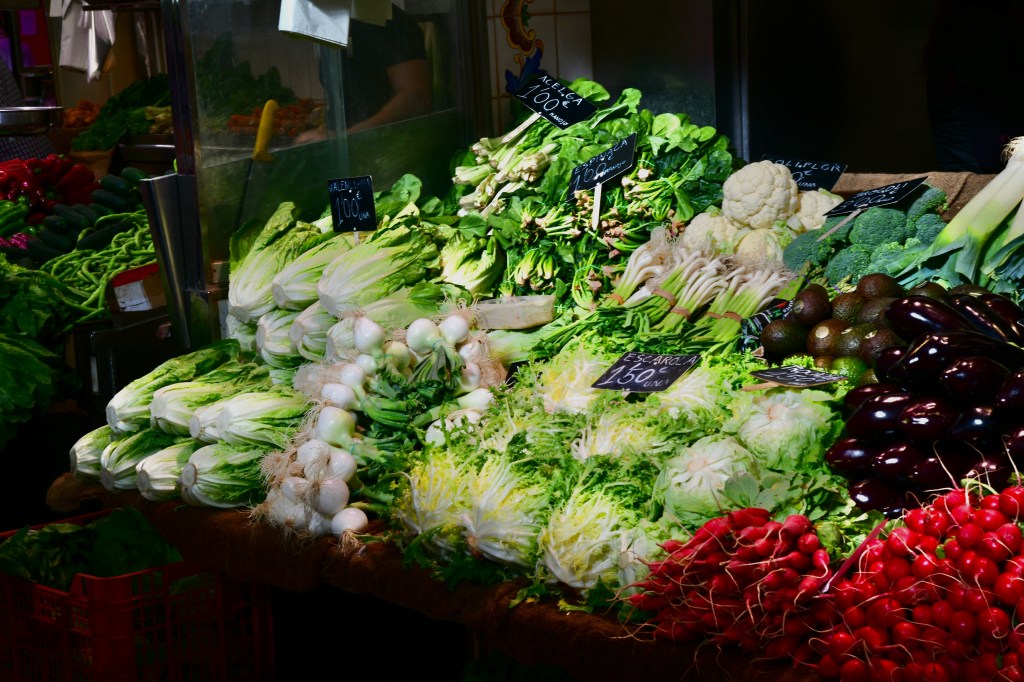
Markets are a common sight in Spanish towns/cities. As we had eaten lunch early, before siesta, the market was slowing down when we arrived after our cathedral visit but there were still stalls offering fruit, vegetables, fish, pastries etc . If you are self catering like us you are never spoilt for choice in terms of fresh produce. The plaza or square of any Spanish town always exudes atmosphere and this one is made more unique by the thoughts of those who have trodden the cobbles before you.

There are many more historic sites and parks to see in Avila both inside and outside of the walls but far too many to mention here. You really have to plan your visit, however, as some attractions close during siesta. On this occasion this included the Convent of St Teresa which we would have liked to have visited. Unfortunately we came away with just a photo of her!
If you are planning a visit to the Castile region of Spain, Avila should be on your list!

This is part three of our extended trip to Western Europe and also the third post about Spain. There will be more to follow on this tour.

Opinion and Sexual Prejudice

When I first worked in London and the South East back in the late 80’s, HIV was just taking a hold. I lived through that era when heterosexuals were starting to question their lifestyle. I remember sitting at the bar one night, after work, having that discussion about how many people have you slept with, now multiply each of those people by just 10 and then multiply that new group by 10 and before you know where you are you are heading into the 100’s. The pie chart of sexual connections, just from your own life, started to become scary. No one really knew how HIV was caught or how it was spreading, they just knew it was connected to sex.
Suddenly homosexuality, which ad become legal in 1967, was out there in the public eye. Opinions were beginning to segregate society with those believing “what they do is wrong and God is punishing them for their deeds” at times seeming to be in the majority. This was being fuelled by the tabloid media who had very little positive to say. then there were others like myself who were convinced that no one was specifically to blame for this and that a cure would be found.

Throughout my career I have worked with staff of different sexual persuasions and, again, have always taken the view that everyone deserves to live their life as they see fit, as long as they are not directly affecting others. I have, unfortunately, worked with people who have questioned my decisions about employing people of different sexual persuasions, people who tried to tell me I was bringing “problems” into the working environment and questioning how our customers would react!

I’ve seen the effect that homosexual prejudice has had on people who I was fortunate to call friends.
One friend of mine, back in the early 90’s, came to London looking for a way to live his life happily. He had been brought up in a small village in Scotland and knew from an early age that being gay wasn’t something he could be open and honest about. Like so many others he had a girlfriend, got engaged and tried to be “normal”. But he couldn’t live the lie and instead moved away so he could be himself. He left everything he knew and moved to a huge metropolis which quite frankly was really scary for him. The gay scene in London, that he described, was like walking on a tightrope between the good and the bad and falling into the bad scene was hard to avoid. “I never know who to trust and who not to trust” was a common lament of his.
He drank to avoid facing the person he was. He constantly prayed to be “normal”. Life as a gay guy back then was just so difficult and if he had a choice, a life he would rather not have to lead.

One of my best friends came from a seaside town in Yorkshire. We met in about 2001 and worked together many times over the next 5 or so years. He also went through periods of being unable to cope wit his sexuality. His family fully accepted him for who he was but the town he had been brought up in was less forgiving. He found life hard and after a few long term relationships which left him picking up the pieces of his life, he eventually went home permanently to seek solace with people who truly loved him. Unfortunately we lost touch when I moved back to Gloucestershire and I found out later he had died an early death back in 2012. I still remember him fondly.

When my own son started to talk to me at 13/14 about his sexuality. My response was “make sure you are not being forced into a pigeon hole because of your enjoyment for performing arts and not the rugby/football that all the other boys at your school are playing but if you are certain that your preference isn’t the female of the species I don’t care a dam. You are my son and I will always love you regardless.”
I’m not going to lie and say I wasn’t concerned about what the future held for a mixed race queer guy, given my previous experiences of society’s prejudices, but I could only do what I’d always done and that was to try my best to support him.
There is no doubt, though, that my son leaving home at 19 to pursue his own career in London was mainly borne out of the narrow minded outlook prevalent at the time in this area of England. London gave him a chance to be himself and although he returned home three years ago with the onset of Covid, he is 100% happy now with who he is and lives his life accordingly which makes me incredibly proud.

Sexual prejudice is just another prejudice that divides society and I return again to my mantra of “everyone deserves to be happy and, therefore, should live their life as they see fit”.

Discover Segovia: Top Attractions and Travel Advice

A Little Background to our Trip:
When we left our home in the UK we cancelled every fixed bill that we didn’t need to pay whilst away. Unfortunately there is no reprieve from council tax or utility bills and so we have budgeted to pay these bills alongside the expense of our trip.

Money that would normally be spent on variable expenses such as petrol, food, clothes, personal expenses etc has instead been placed into the travel fund.
To keep costs down we have committed to using local/inter city trains and, for stays of 3 nights or more, have rented airbnb’s to minimise accommodation cost and ensure we are self sufficient food wise. Where we have booked hotels for the shorter stays we have ensured that breakfast is included. This should cut down our food intake when out and about.

We could have invested in inter-rail passes but hubby calculated all the rail fares, in advance, and has told me there is very little difference in costs. Additionally inter-rail spaces on trains are limited, have to be booked well in advance and in Spain and France, despite having an inter rail pass, you have to then pay to book your seat. Time will tell if his calculations are correct!

We arrived in Madrid after a 4.5 hr, seamless train journey from Bilboa and checked into our second Air BnB.
We have visited Madrid before, back in May 2018, when we brought my daughter here as part of her 21st birthday present. It was somewhere she wanted to go and was a great choice. Madrid still features in our top 3 cities in the world to date and we were happy to come back.
However having completed all the tourist attractions in the city that we want to see we are this time using it only as a base. From here we can venture out into the Spanish countryside and visit other places of interest. Today’s city of choice is Segovia.


Getting to Segovia from Madrid:
Using google maps I managed to plan the journey firstly from our temporary home to Madrid-Chamartín-Clara Campoamor train station via the Madrid Metro.
The metro is fairly easy to use. You have to purchase a transport card from a machine at the first metro station you enter. We only needed one card between us because you can pass it across the barrier and reuse it when you enter the relevant metro line. They are very much like Oyster cards in London so for us not unfamiliar.
Once you have purchased your card, which at the time was 2.50 euros, you can then either load individual trips onto it each time or you can purchase a group of tickets in one transaction and load them onto your card, utilising them until they are finished. A trip on the metro wass 2 euros per person and the package we bought today was 10 trips for 6.10 euros, so a bargain!

We would suggest you arrive at the main train station 30 minutes before departure as Spanish trains leave on time and you still have to tackle security.
Once at the train station you need to check the board for the platform from which you will depart. Unlike the UK it does not show all the stops, only the final destination, so you need to utilise the departure time and the number of the train shown on your ticket to find your correct train.
When you reach the platform entrance your ticket and ID are checked and your belongings have to go through a security scanner like being at an airport. It’s a fairly quick process.

Our train is bound for Salamanca but Madrid to Segovia Guiomar station takes only 30 minutes. This is a fairly new station on the outskirts of the city. It appears as if they are trying to take traffic away from the historical interior and also facilitate easier commuting into Madrid for work.
As we leave the station there is a number 11 bus standing outside waiting. For 2 euros per person you can travel the 20 minutes into the centre and be dropped off right next to the astounding Aqueduct. The journey into the centre takes you past “New Segovia” and I must admit it was slightly off putting to begin with. I was sat there thinking “where is this glorious old town I’ve read about? Are we in the right place?”
It seems as if money has been injected into housing and to attract more business. I do wish these beautiful old places were left alone but I guess you can’t always stop modernisation!

Aqueduct:

This amazing piece of Roman architecture is a sight to behold. Roman remains always fascinate me, mainly because of the sheer engineering ability they had. This aqueduct was built to bring water from the mountain to Segovia. Originating from the 1st century BC it was in continual use until quite recently. 36 of the 166 arches were damaged back in 1072 during an attack on the city but were restored in the 15th century and you can still walk all 11 miles of the aqueduct should you wish.

Leaving this masterpiece behind we wander up the olde world street past an array of shops. The Old Town including the aqueduct is a Unesco World Heritage site so take your time and marvel at some of the beautiful buildings en route including the library. Also check out the masonry and decorations on the houses.

Segovia Cathedral:
As you reach the top you cannot miss the 16th century Gothic style cathedral that towers above the city and can be seen from everywhere. We wandered around the outside first just to be able to marvel at the craftsmanship used to create it.
There is paid entry and audio guides are available if you want to learn more about the interior.
You might find it a bit odd that a non religious person such as myself (assuming you’ve read other parts of my blog) visits religious buildings but for me it’s not about the reason for the build but how it’s built. The amount of artistry that goes into the statues, paintings, wooden artefacts and most importantly the ceiling adornments just leaves me breathless. How were they capable of creating such beauty so long ago? It always begs the question “have we actually developed anything better than this since?”.

Inside the cathedral I was drawn to two specific paintings.
The first is this really odd picture of Jesus and a skeleton under a tree with some sort of party taking place on top of the tree?

The second highlights for me how brilliant the artist was in showing Jesus with tears in his eyes. The tears are just so realistic and emphasise to me what art really is. The ability to convey in a picture an emotion that looks real.

Leaving the cathedral behind there are signs to follow to reach the third key attraction in Segovia -The Alcazar.
The pathway takes you through the oldest part of the city and there are other clear examples of Roman architecture and engineering en route.

The Alcazar:
This beautiful medieval castle, rising out of a rocky crag, stands prominently with 360 degree views overlooking the valleys below. Shaped like the bow of a ship it was originally built in the 11th century as a fortress.
Alphonse VIII and his wife Eleanor of England (sister of Richard the Lionheart) were the first monarchs to make it their home and it subsequently served as a royal palace for 21 further generations.
Entry tickets are purchased in the building to the left of the Alcazar and there is also an audioguide available.
This building also contains a cafeteria where we sampled some traditional Segovian fare before making our way back over to commence our self guided tour.
There is much to marvel at from the beautiful external architecture, traditional armoury, to the Hall of the Kings and the unique tapestries and of course the amazing views all around.

Next time you are in the Castile area of Spain take a trip out to Segovia. It has a lot more to offer, I have only included three key highlights.
There is also an alternative train journey which is cheaper than the direct train we used which takes 2 hrs and meanders its way from Madrid through the mountains to Segovia Central train station. Our Air BnB host strongly recommended it but time was not on our side on this particular day.

This is my second post on our extended trip to Western Europe and also the second in Spain. There will be more to follow on this tour.