Leaving Tyntesfield behind we headed south and into Somerset itself. Checking into our hotel for the night before we managed to get a good night’s sleep despite the wind and rain pounding on the skylight windows of our bedroom. We woke up the next day ready for our breakfast, which was included in the nightly price. In the past I’ve not written about the places that we stay at but I now feel that it is worth mentioning in my posts if it has met our expectations.
Hornsbury Mill -Chard, Somerset:
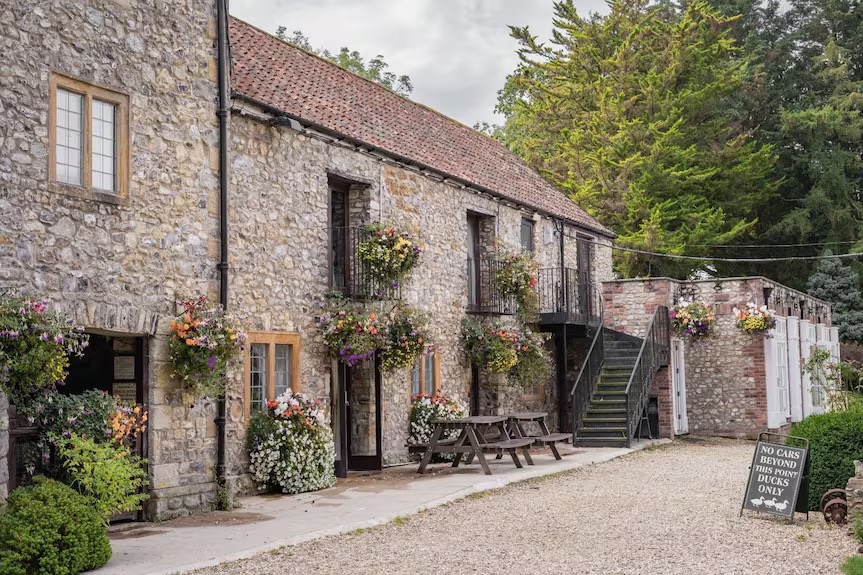
The history of the site is thought to date back to medieval times, with the first documented reference to a mill here appearing around 1327. The present building, however, largely dates from 1835, when it was rebuilt as a corn mill using traditional local materials, including flint and hamstone.
One of its most striking features is the magnificent cast-iron waterwheel, installed during the nineteenth century. Carefully restored, it remains operational today, providing a fascinating glimpse into the mill’s industrial past. The Wheel Room restaurant allows visitors to enjoy a meal alongside the sight of the impressive waterwheel turning.
Hornsbury Mill is set within five acres of landscaped gardens, with a picturesque lake and fountains, successfully combining its historic character with a new purpose as a hotel, restaurant and wedding venue. It is a charming example of how an historic industrial building can be preserved and given a new lease of life, while retaining the features that make it so special.
We left the hotel mid morning and drove twenty minutes to our second National Trust property of the weekend –Barrington Court. This was another revisit, after we had originally come here on our UK road trip back in the summer of 2021.
History:
Situated near the village of Barrington, just outside Ilminster in Somerset, Barrington Court is one of the finest examples of an early Tudor manor house in the county. Built from beautiful golden Ham stone, with its distinctive gables, tall chimneys and mullioned windows, it has a fascinating history involving wealthy merchants, political intrigue, neglect and an ambitious twentieth-century restoration.
There has been a house on the site since at least the Norman period, but the present mansion was begun around 1538 for Henry Daubeney, Earl of Bridgewater, who had inherited the estate in 1514. Daubeney was a prominent courtier of Henry VIII, but his extravagant lifestyle eventually brought financial difficulties. Following his death in 1548, the estate was sold in 1552 to William Clifton, a wealthy London cloth merchant with trading interests extending as far as Russia. He completed the house around 1559, during the reign of Elizabeth I.
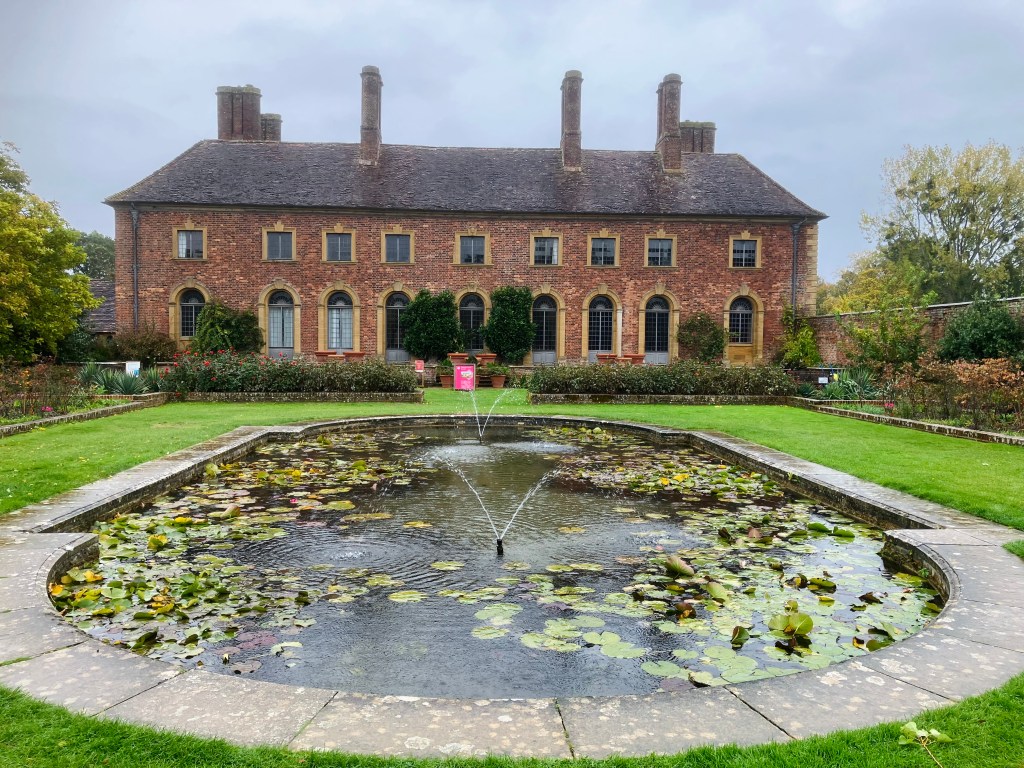
In 1625, Barrington passed into the hands of William Strode, another wealthy cloth merchant. His son, William Strode II, made further improvements and, in 1674, built the impressive red-brick stable block alongside the mansion. Today known as Strode House, this substantial building was a rather grand statement of the family’s wealth and status.
The Strode family also became involved in the political turbulence of the period. In 1685, William Strode famously entertained the Duke of Monmouth and his troops during their ill-fated rebellion against James II. Although many of those involved were subsequently executed following the Bloody Assizes, Strode escaped with a substantial fine.
Following the departure of the Strode family in the eighteenth century, Barrington Court passed through several owners and gradually fell into decline. By the nineteenth century it had become a tenanted farmhouse, many of its original interior fittings had been removed and the once-grand house was approaching dereliction. Luckily its fortunes changed in 1907 when the National Trust acquired the estate, making it the first country house to come into its care. The Trust had been founded only twelve years earlier and struggled to find the funds needed to restore and maintain such a substantial property.
Modernisation:
The next chapter began in 1920 when Colonel Arthur Lyle, whose family fortune came from the sugar-refining business that became Tate & Lyle, took on the lease with his wife Elsie, known as Ronnie. They embarked on an ambitious restoration programme with architect J.E. Forbes. Colonel Lyle was an enthusiastic collector of architectural salvage and filled the house with antique panelling, fireplaces, staircases and other features rescued from demolished or derelict buildings. His wife shared his enthusiasm for the estate and enlisted the help of celebrated garden designer Gertrude Jekyll to advise on the planting schemes for the formal gardens.
The restoration transformed not only the house but the wider estate, with the former stable block converted into a second residence, new farm buildings constructed and beautiful formal gardens created. The work reflected the Arts and Crafts movement, with its emphasis on traditional craftsmanship, natural materials and the reuse of historic features.
Following Colonel Lyle’s death in 1931, his son Ian continued to manage the estate, and subsequent generations of the family further developed the gardens. In 1991, the family relinquished the lease and Barrington Court returned to the full management of the National Trust.
Our Visit:
Court House: is the main house developed during the Tudor times has been sadly closed to visitors since 2020, following water ingress which caused damage to the historic fabric of the building. The National Trust embarked on a major conservation project, but the scale and complexity of the work mean that the house remains closed while investigations and restoration plans continue.
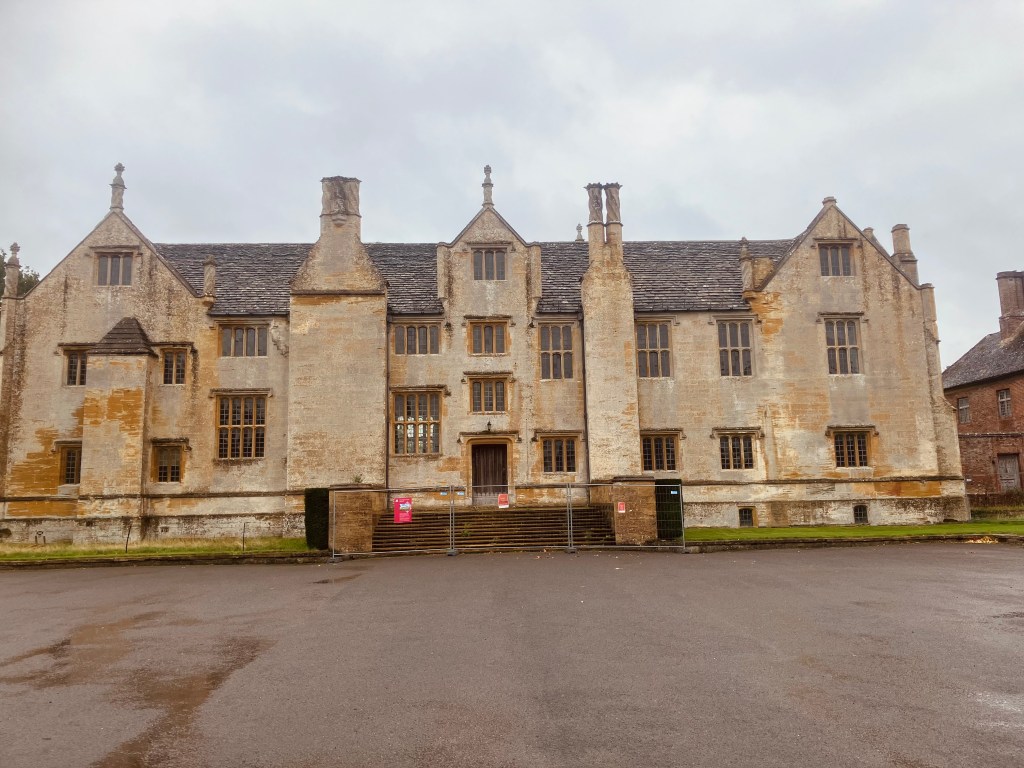
Strode House: which was converted from a stable block into a second home by Colonel Lyle, however, is open. It’s interesting that Tyntesfield House in my previous post was rescued as a result of wealth accumulated from guano (bird droppings developed into powerful, nutrient-rich natural fertiliser) and Barrington Court’s development came from Abram Lyle and Sons. The company to whom we owe the development of Golden Syrup back in 1885! Lyle merged his business with that of Henry Tate and Sons in 1921 and between them they then controlled 50% of the UK sugar market!
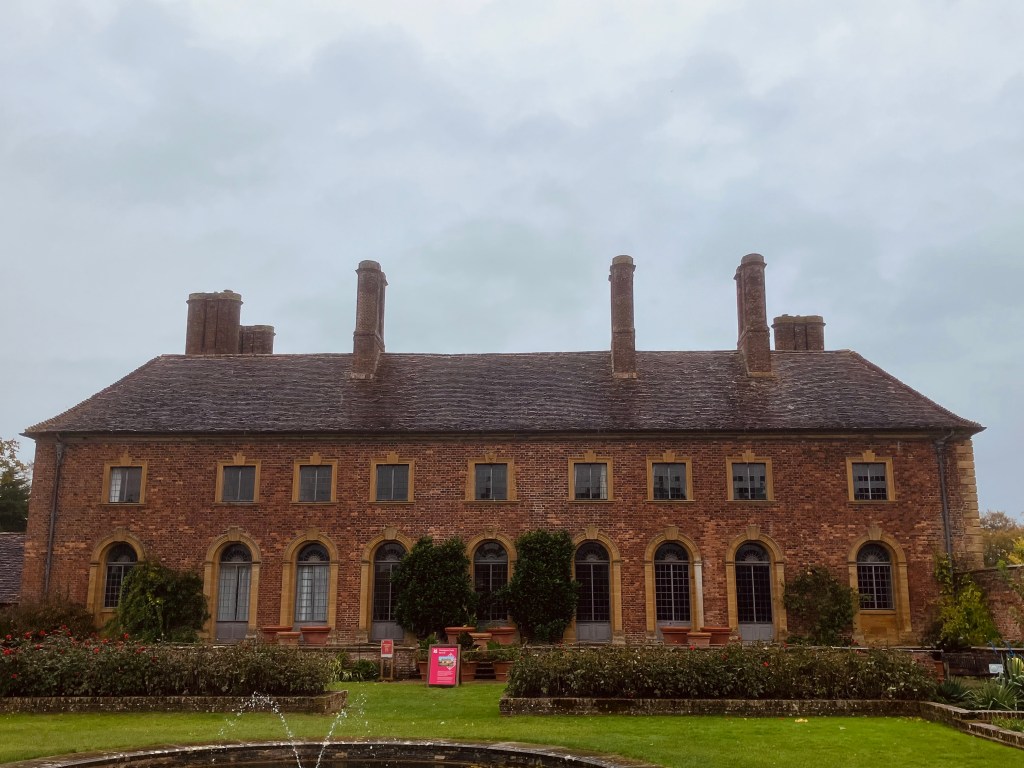
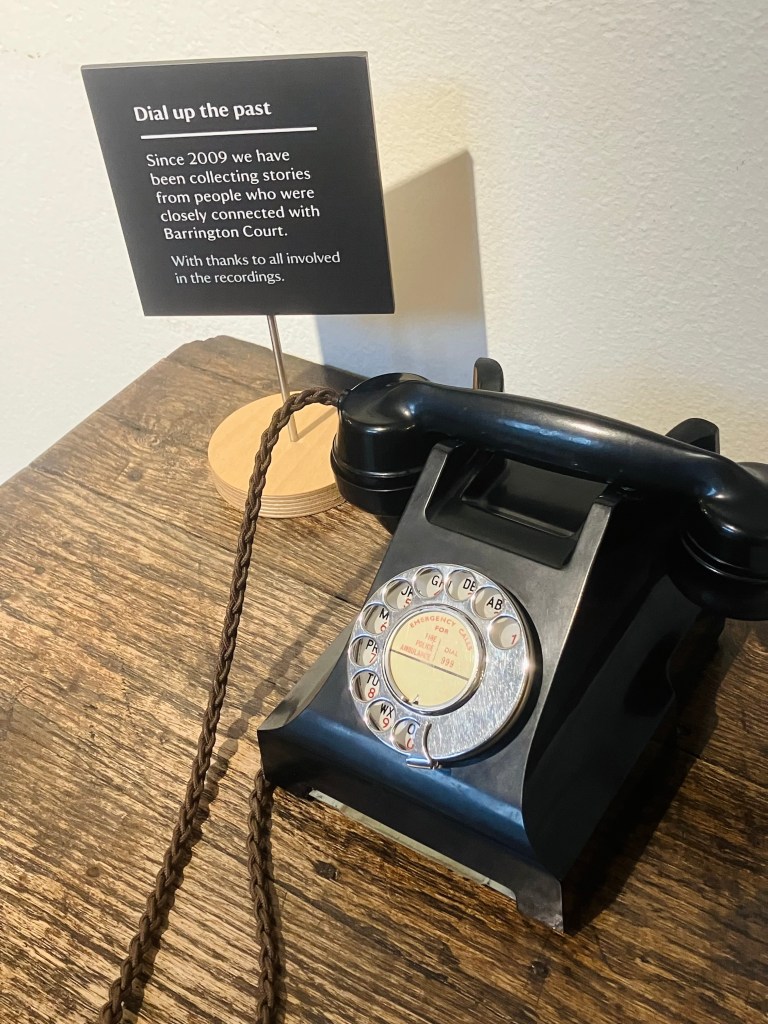
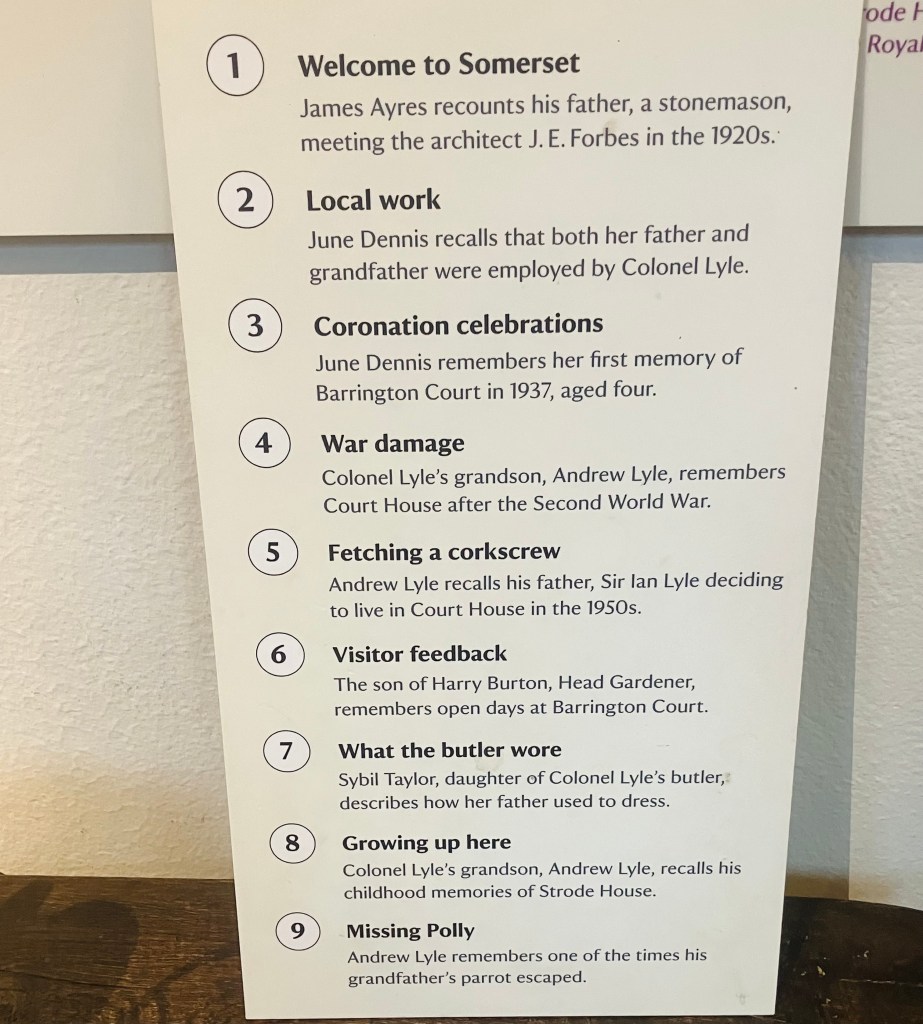
Today, the house remains an unusual and atmospheric property. Rather than being furnished as a conventional historic home, its rooms showcase Colonel Lyle’s remarkable collection of rescued architectural features. It was interesting to peruse the many artefacts on display and fully understand how the house was restored alongside actual architectural drawings associated with this process. Being someone who is interested in socio economics I found this telephone and associated story board amusing, giving a gentle but accurate insight into life through the early 1900’s.
Exploring the Gardens:
Beyond the formal gardens, the estate extends into orchards, avenues, lawns and parkland. There is also an arboretum, developed by a later generation of the Lyle family. Unfortunately, our opportunity to explore the grounds was somewhat curtailed by the weather. High winds and the risk of falling trees meant that the parkland was closed for safety reasons, so we were only able to see a small part of what the estate has to offer. We did manage to do the arboretum walk back in 2021 and as it was summer it added an opportunity to be out in nature on a pleasant sunny afternoon.
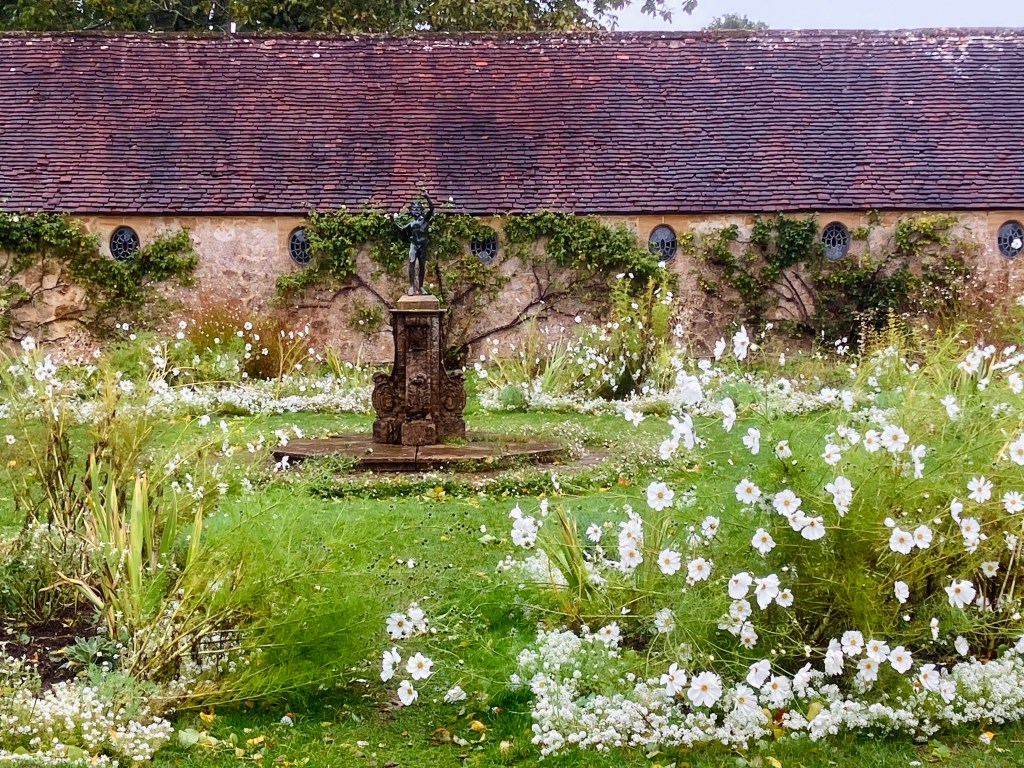
Nevertheless, what we did manage to see, on this revisit, still gave us a taste of this rather special place. Although the house itself has a fascinating Tudor history, the gardens at Barrington Court have a story of their own. Much of what you see today was created during the 1920s, when Colonel Arthur Lyle and his wife Ronnie embarked on an ambitious project to restore the estate and create a beautiful country home.
Working with their architect, J.E. Forbes, they planned a series of formal walled gardens, with the celebrated garden designer Gertrude Jekyll being consulted on the planting schemes. The result was a collection of individual garden rooms, each with its own character, including a Rose and Iris Garden, a White Garden and a Lily Garden.
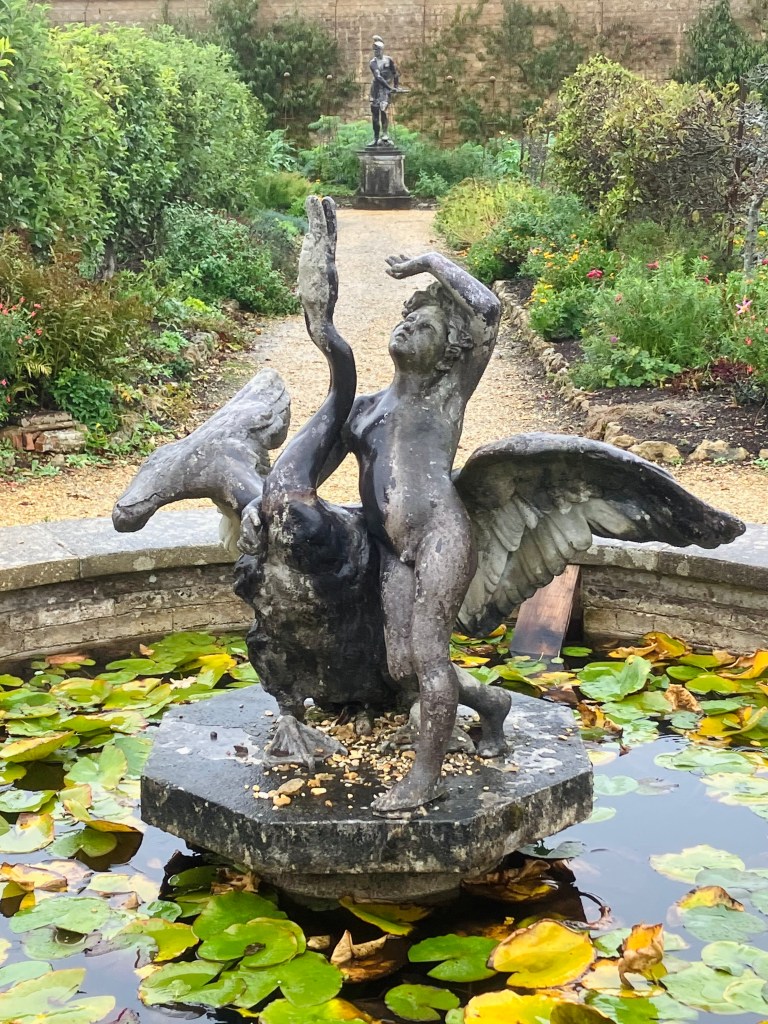
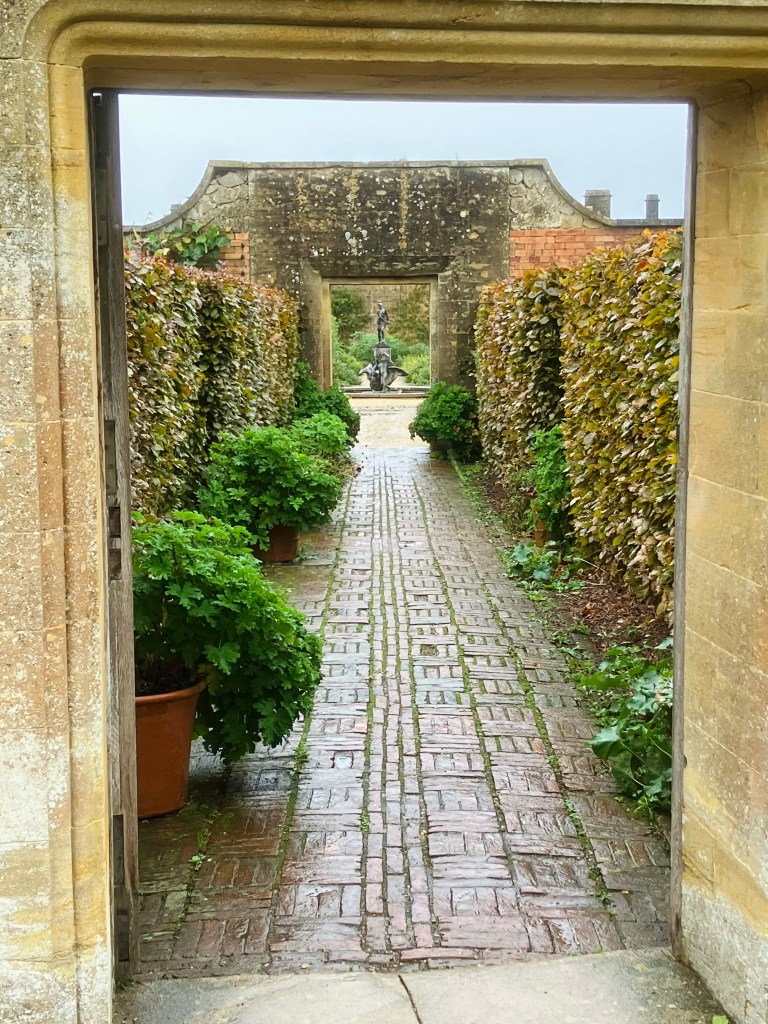
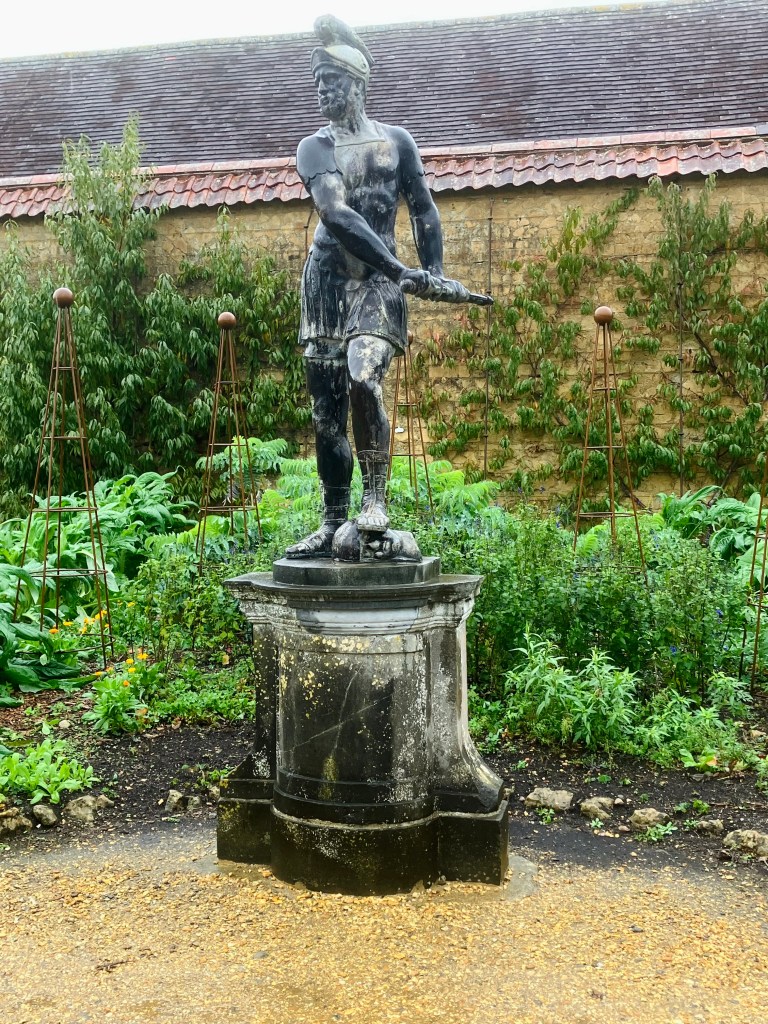
Overall the gardens reflect the Arts and Crafts influence of the restoration, combining formal design with traditional planting and a sense of connection to the surrounding countryside.
A Grand Entrance:
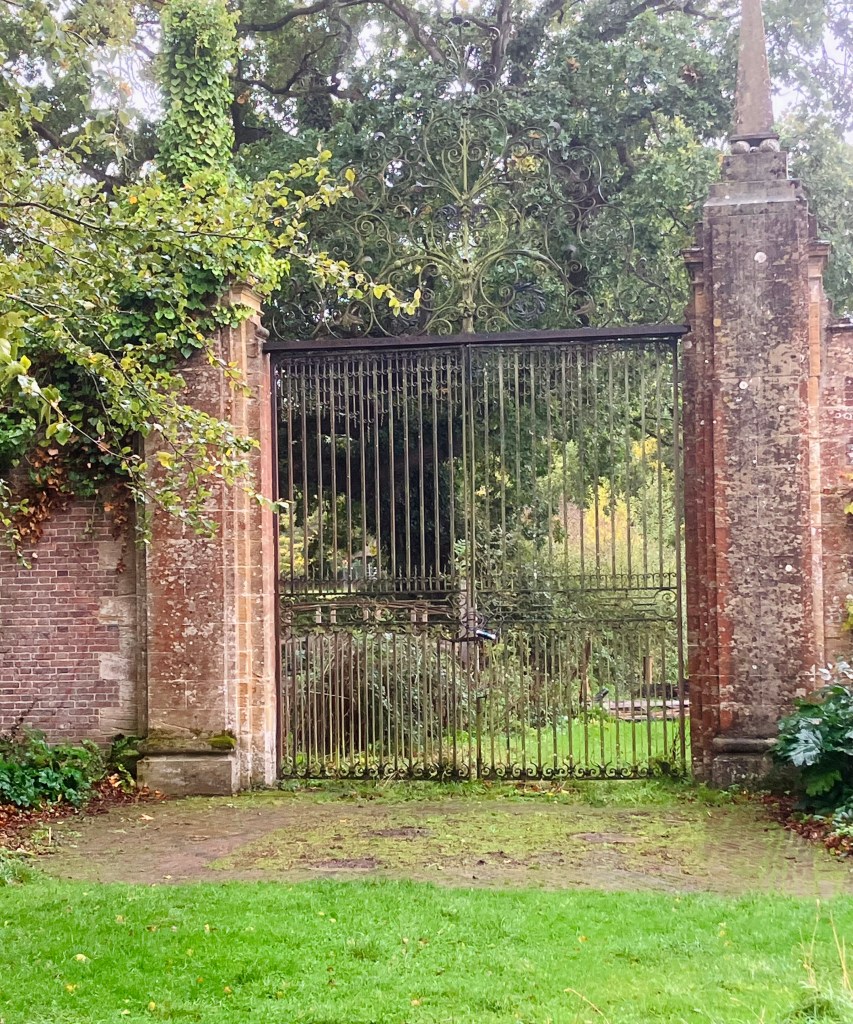
One thing that caught my eye during our visit was the three different gates leading into the main houses. Each had its own character, but they all brought to mind those wonderful period dramas based on Jane Austen’s novels.
I could almost imagine a coach and horses passing through the gates, making its way up the drive before drawing to a halt outside the house, with passengers stepping down to be greeted at the front door. It is amazing how a simple entrance can conjure up such a picture of life in a bygone age.
Perhaps I’ve watched one too many Austen adaptations, but I rather like the idea of imagining the comings and goings that these gates must have witnessed over the centuries!
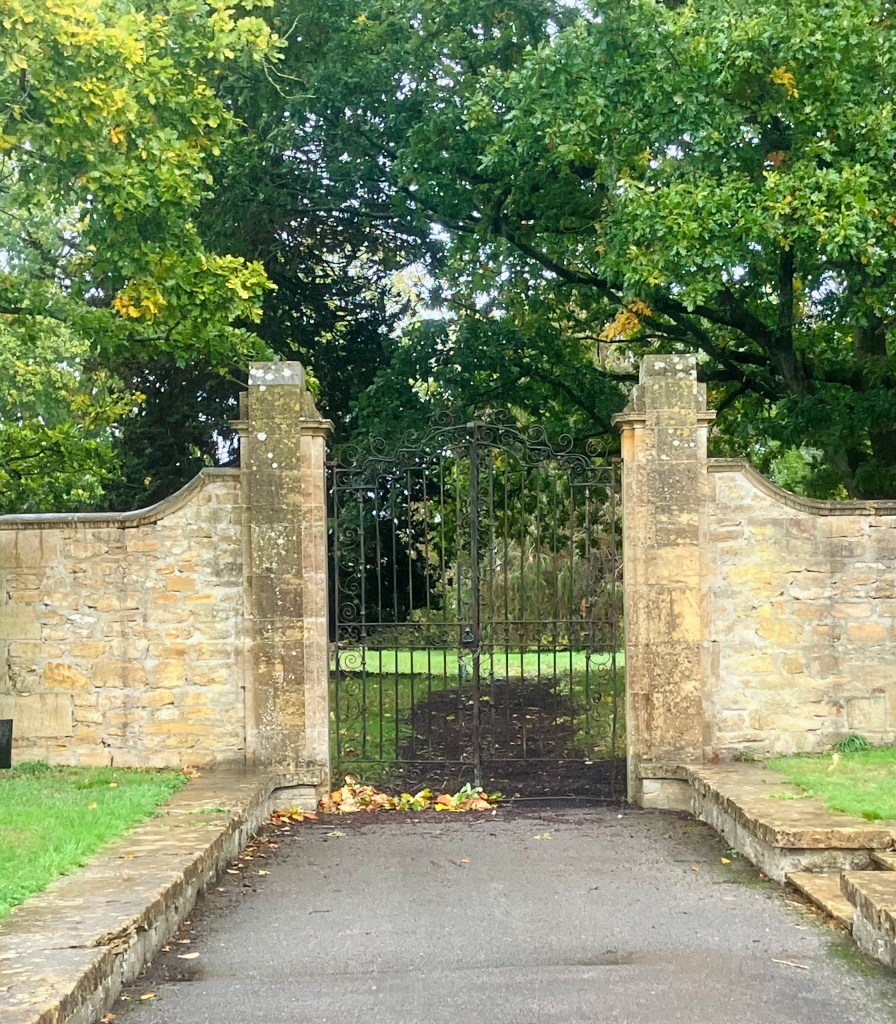
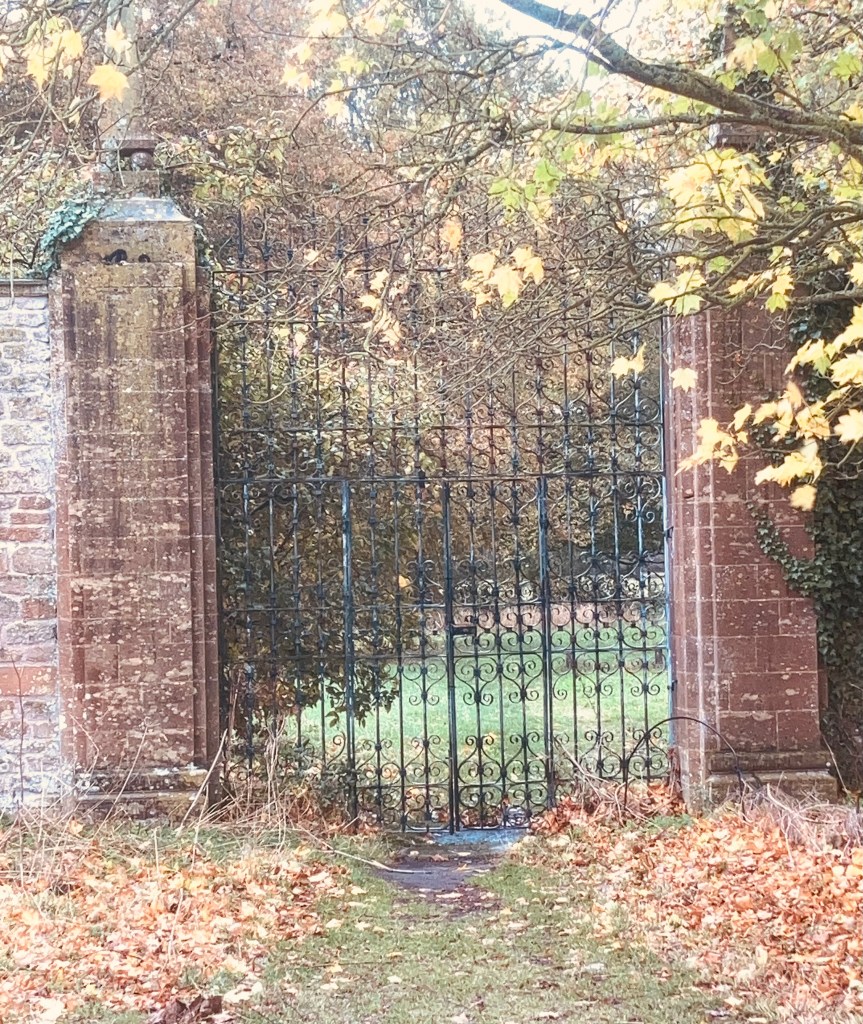
Interestingly Barrington Court was used as a filming location for the BBC’s adaptation of the book “Wolf Hall” written by British author Hilary Mantel. Published in 2009, it is the first book in her trilogy about Thomas Cromwell and the court of Henry VIII.
Eating and Shopping:
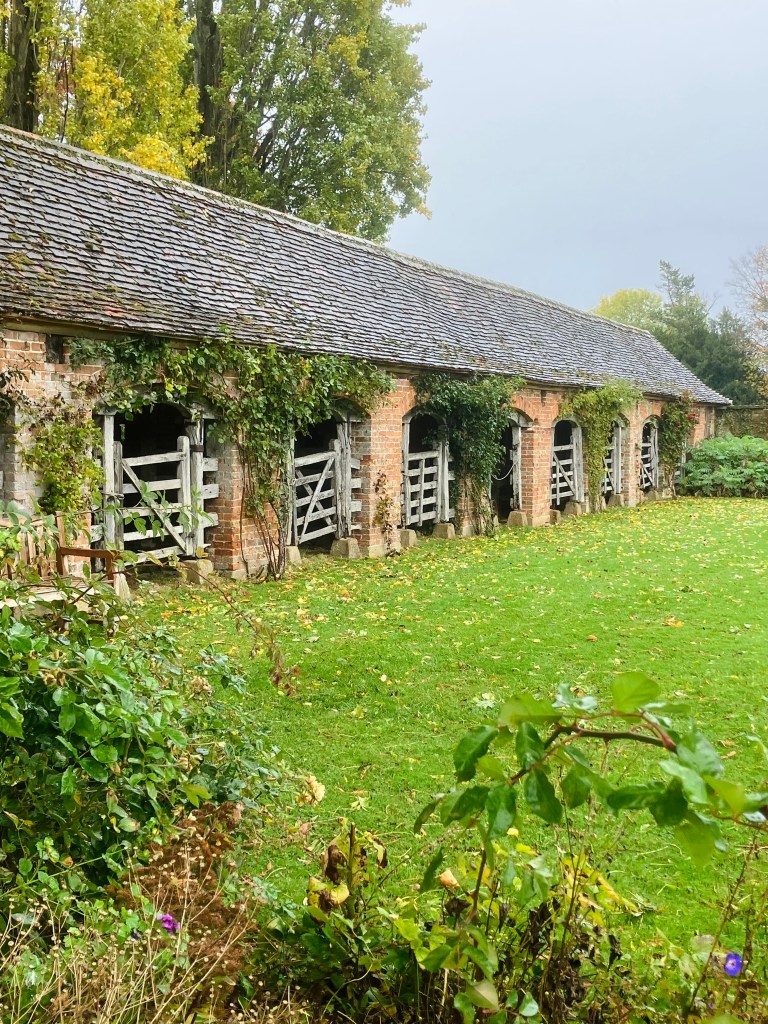
Having dodged the raindrops and feeling a little soggy we finished our visit by browsing the shopping area. Situated away from the main house, the old farm buildings along the Avenue are home to a collection of independent artisan workshops. Here you can discover traditional crafts still very much alive, with a goldsmith making and restoring jewellery, a potter producing beautiful hand-thrown slipware, a specialist chair maker creating bespoke Windsor and country chairs, and a master woodcarver undertaking both commissions and restoration work.
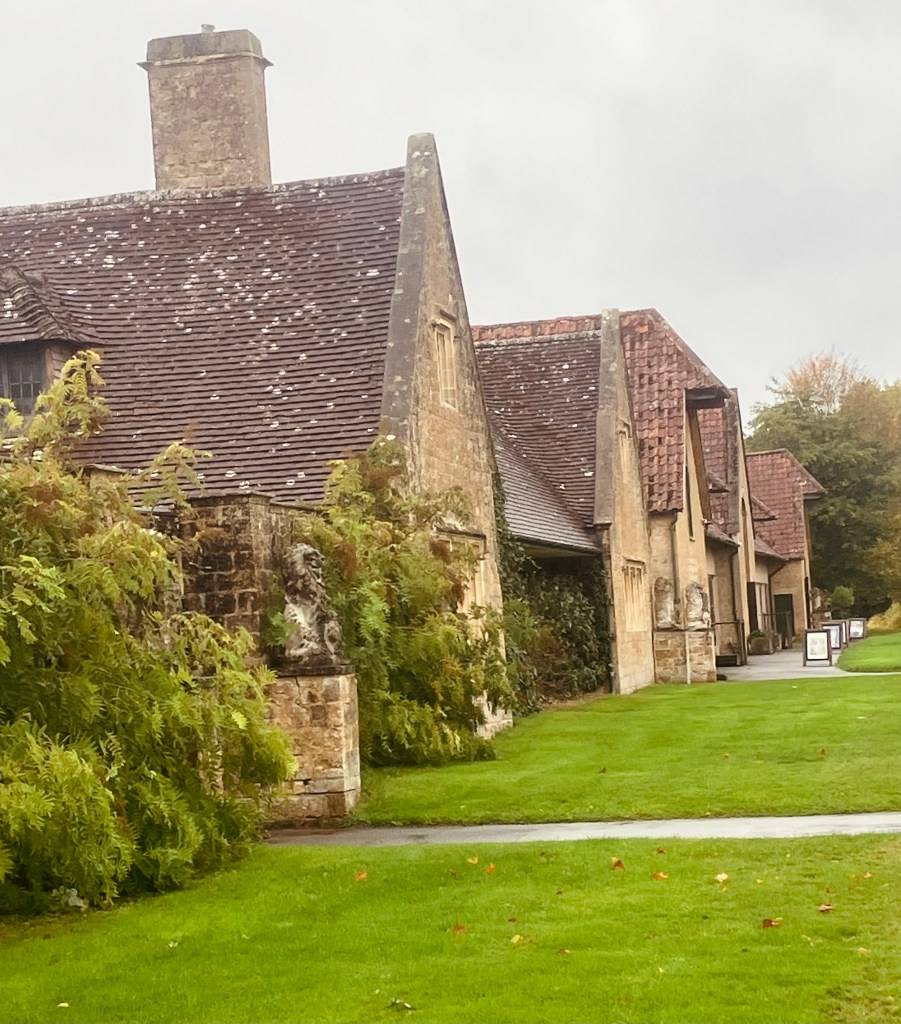
There is also a National Trust gift shop and a Book Barn, where you can browse an assortment of pre-loved books. Unfortunately, not all the workshops were open during our visit, which was a shame as I would have enjoyed seeing more of the craftsmanship on offer.
The Beagles Café, close to the visitor reception, was open however and provided us with a welcome opportunity to stop for a coffee before heading off in search of lunch/dinner.
Final Thoughts:
It was lovely to revisit Barrington Court, even if the weather wasn’t particularly kind to us this time around. Having first visited in the summer of 2021, it was interesting to see the property again and discover a little more about its history, its restoration and the people who helped shape the estate into what we see today.
It is always a reminder that these historic properties are about so much more than the buildings themselves. Behind every house there are stories of the families who lived there, the wealth and ambition that created them, and the people who have worked hard to preserve them for future generations.
Although we didn’t manage to explore as much of the grounds as we would have liked, Barrington Court still provided a thoroughly enjoyable stop on our Somerset weekend.
Have you visited Barrington Court? I’d love to hear what you thought of it, particularly if you’ve had the opportunity to explore more of the gardens than we managed this time. And, as always, if you’ve enjoyed reading about our visit, please do leave a like or share your thoughts in the comments. It’s lovely to hear from fellow explorers!
Next week I’ll be bringing you the final instalment in this little series of National Trust visits, as we head to Newark House. Another historic property, another story to uncover, and hopefully a little better weather along the way!

