Retirement Stress: What Living in Antigua Taught Us About Simplifying Life

It’s a few weeks now since we returned from Antigua.

That has given me time not only to settle back into normal life but also to reflect upon our month of experimenting with a different way of living.
The predominant lesson I learnt was that, in the Western world, we live incredibly stressful lives — and a lot of that stress is actually self-induced.

As I said in my last post about Antigua, a slower and happier life isn’t entirely dependent on where you live. It’s about choosing what matters, letting go of what doesn’t and making time for the people, places and moments that bring genuine contentment.

Since our return, life has been busy. Some of that busyness has been pleasurable, involving time well spent with friends and family. But other parts have highlighted just how quickly we return to our old ways.

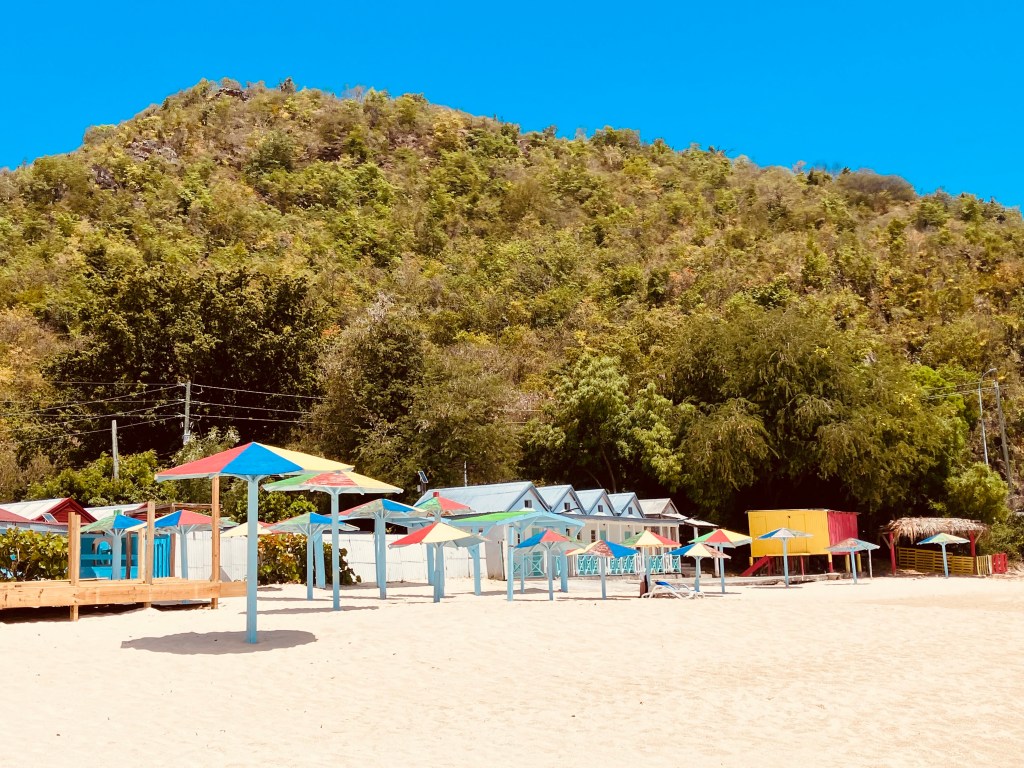
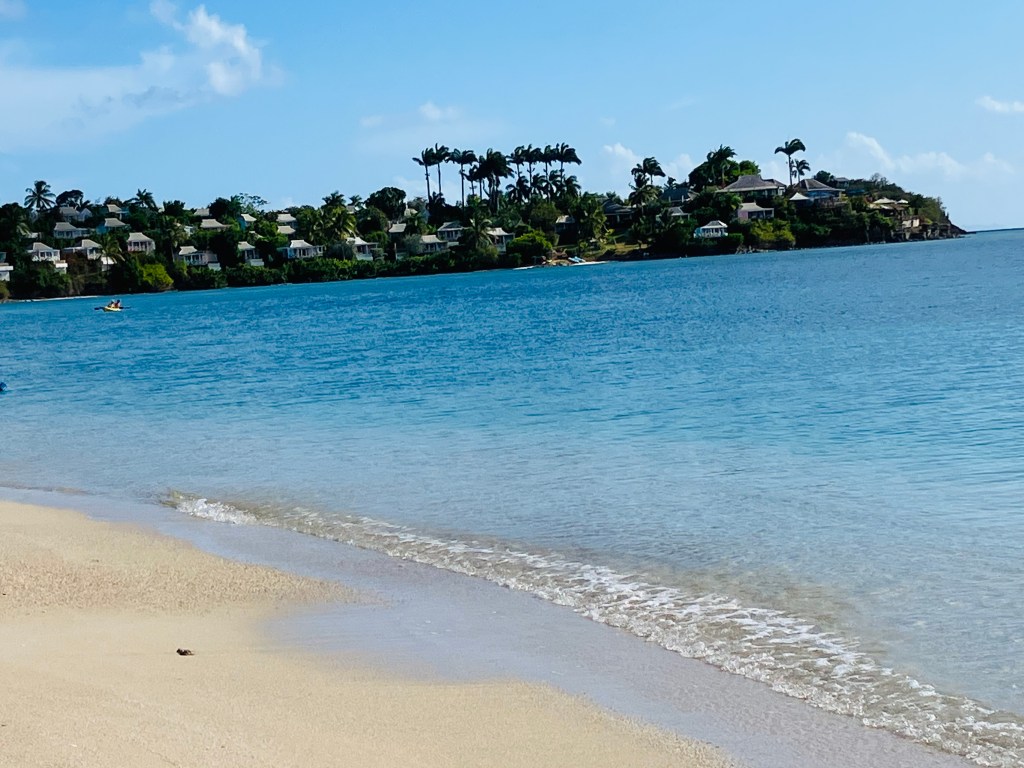
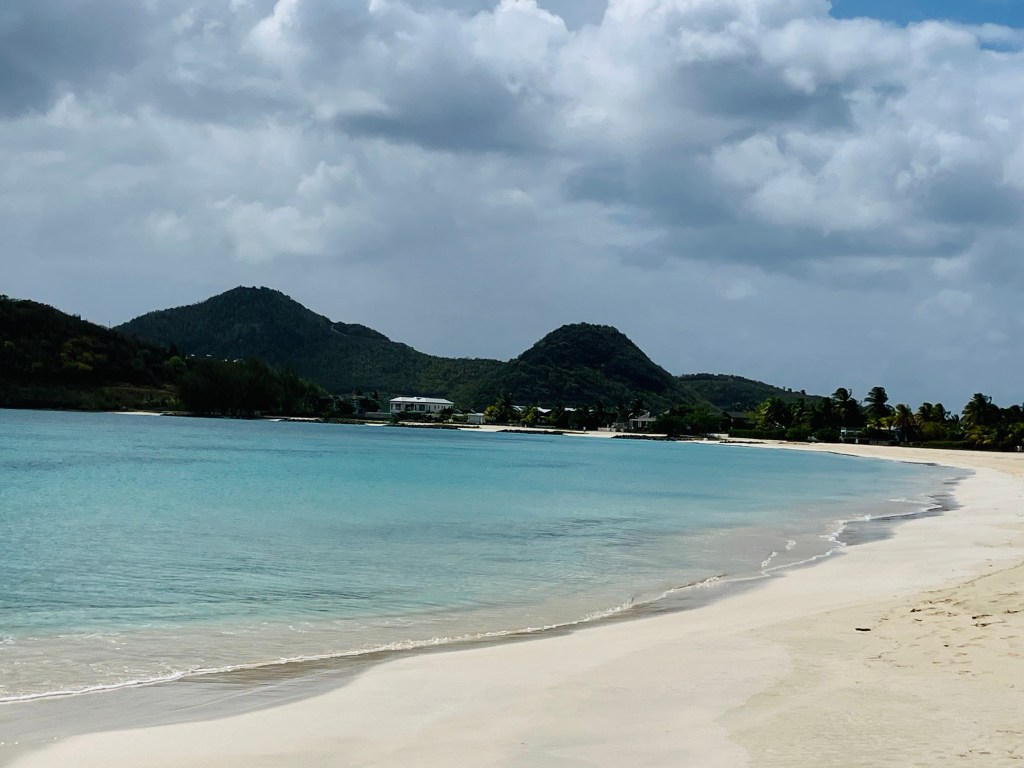
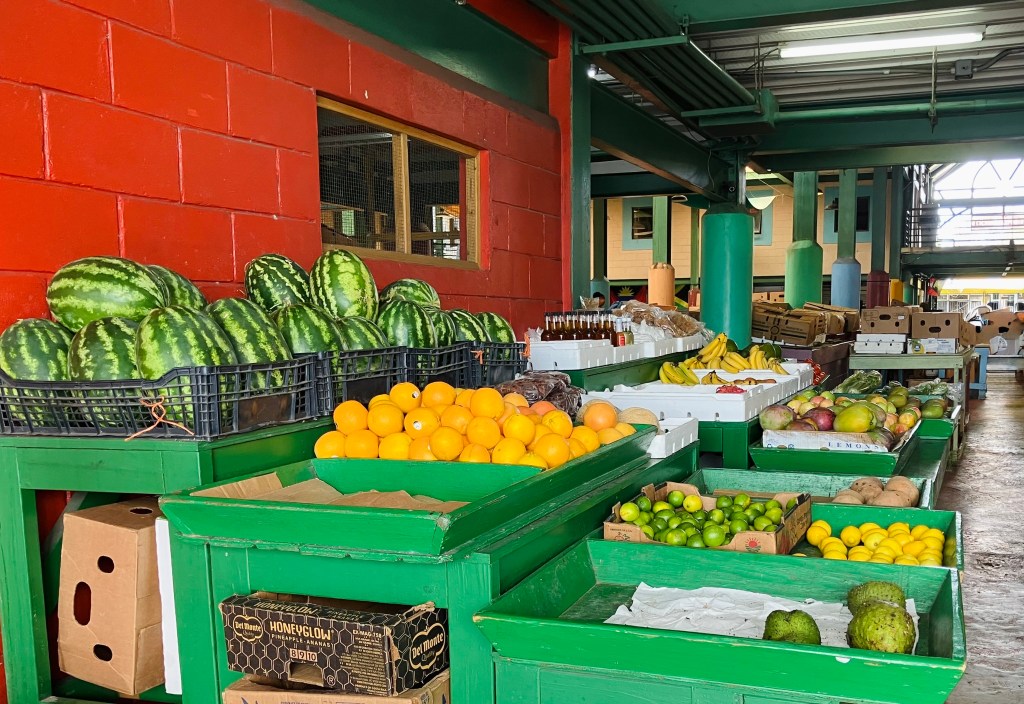
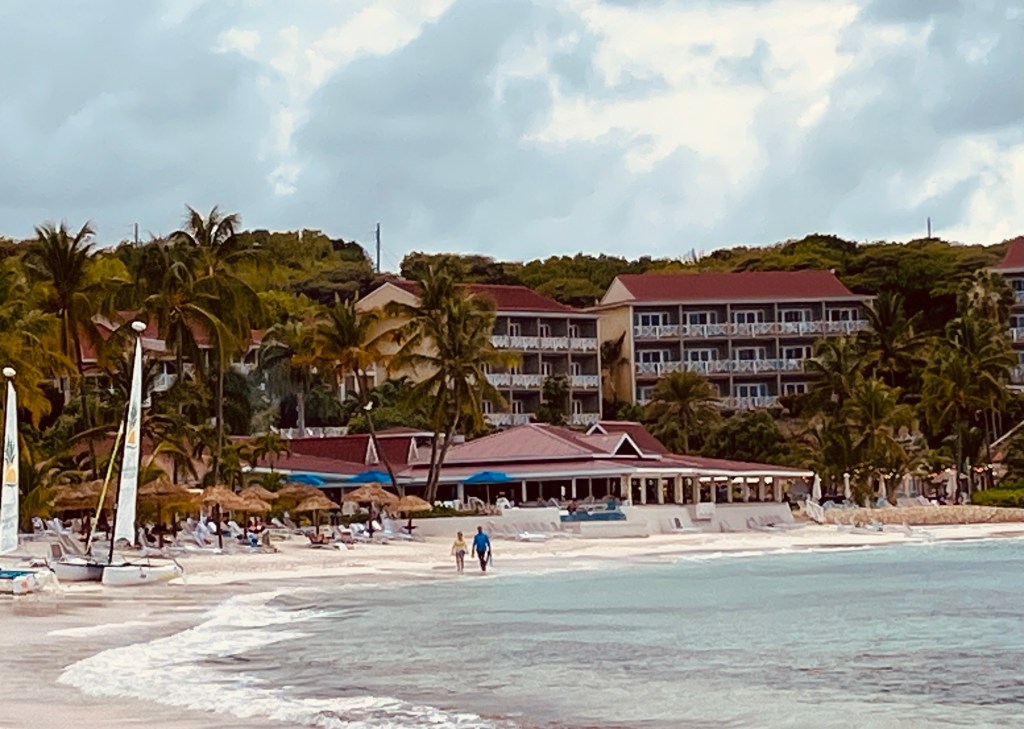
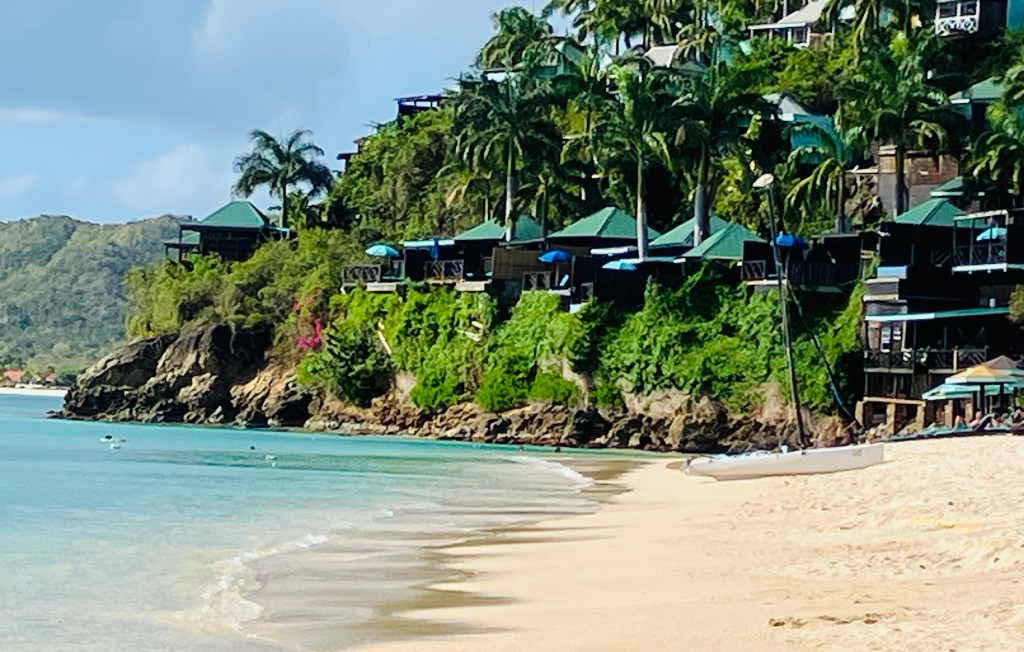
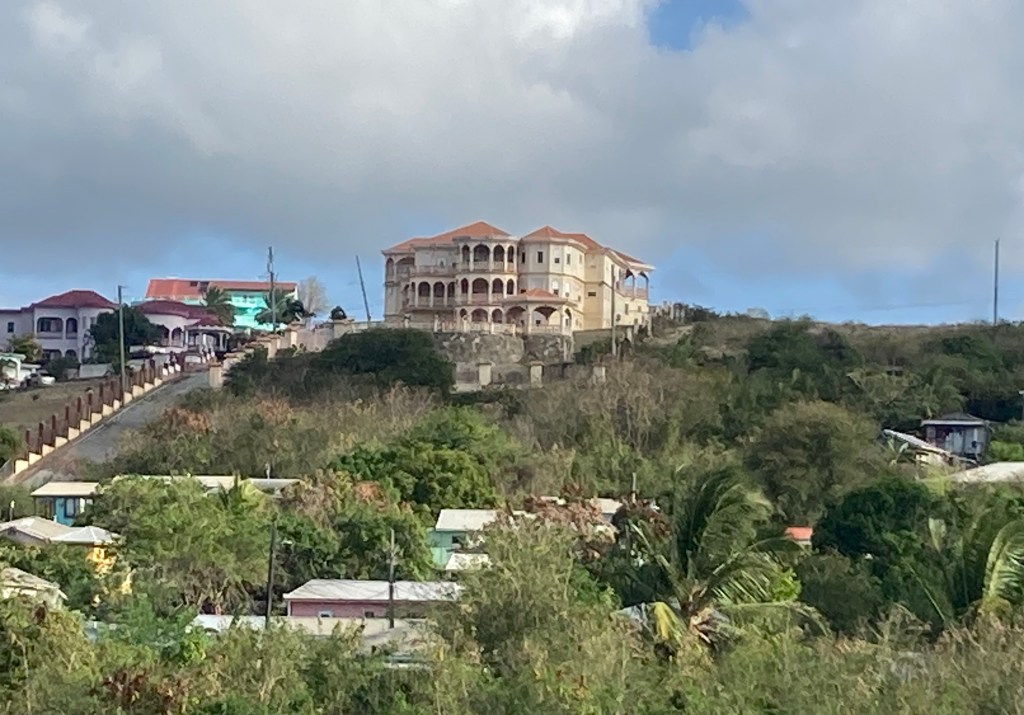
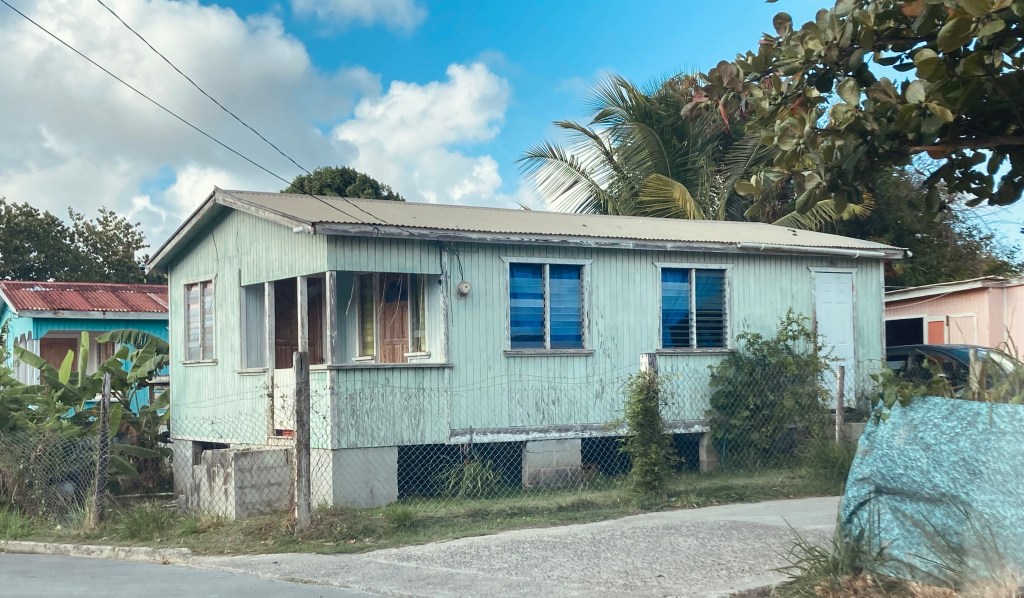
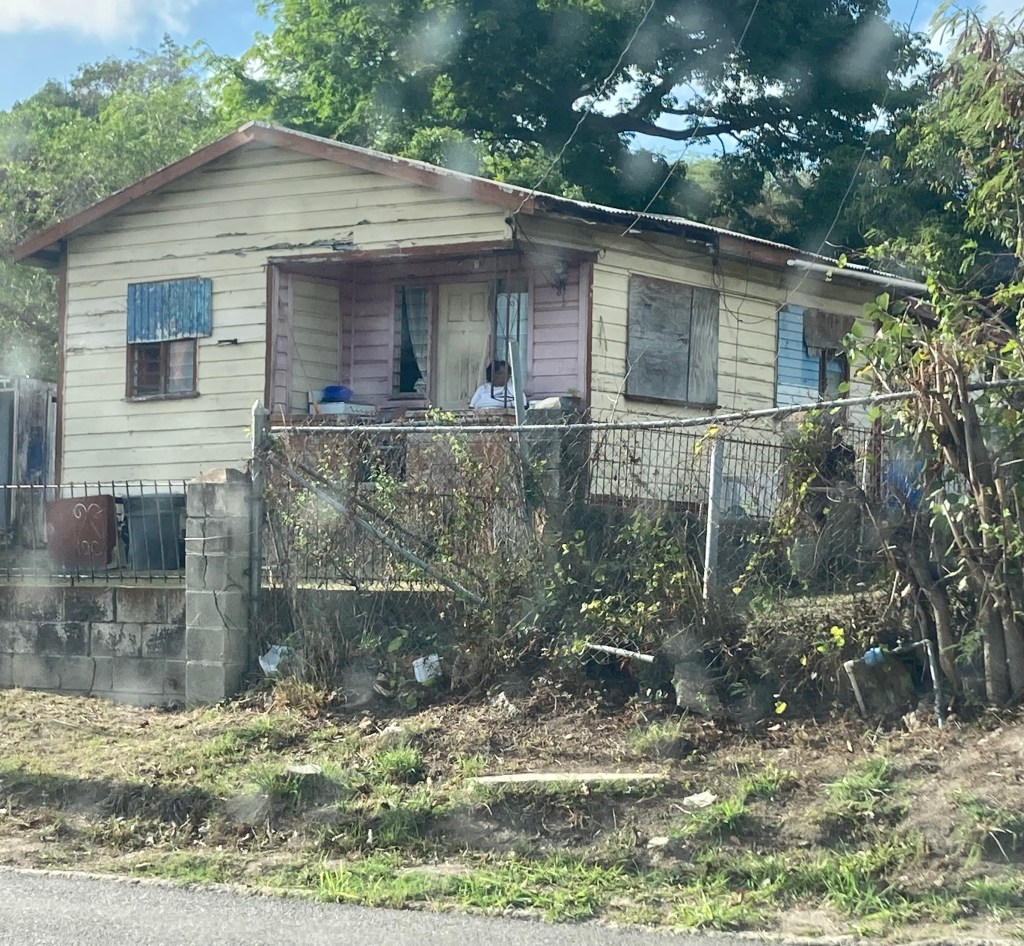
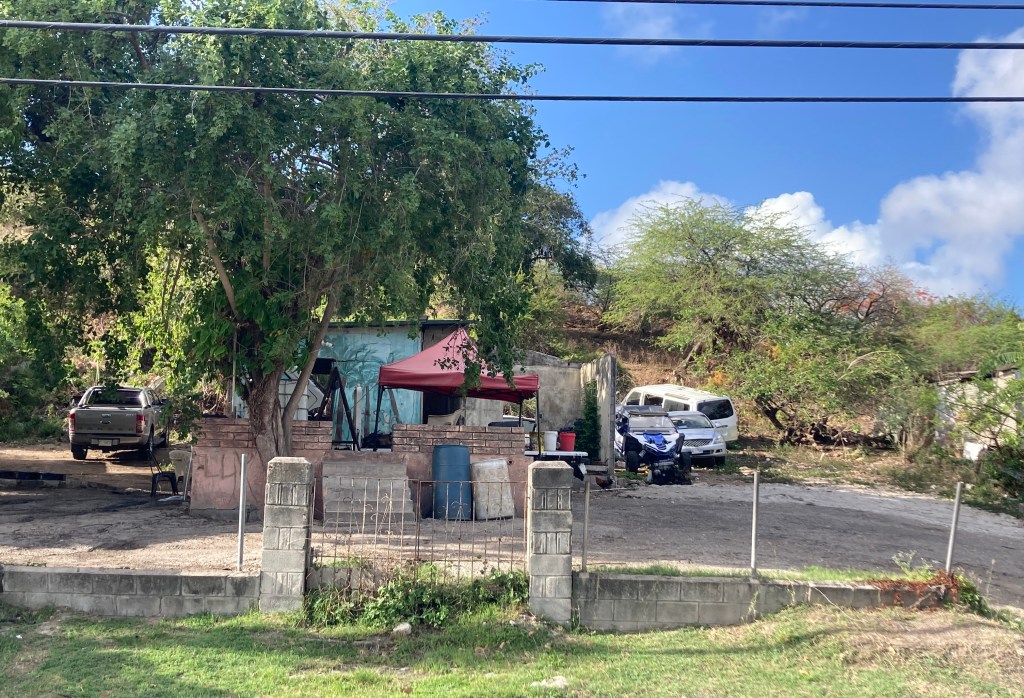
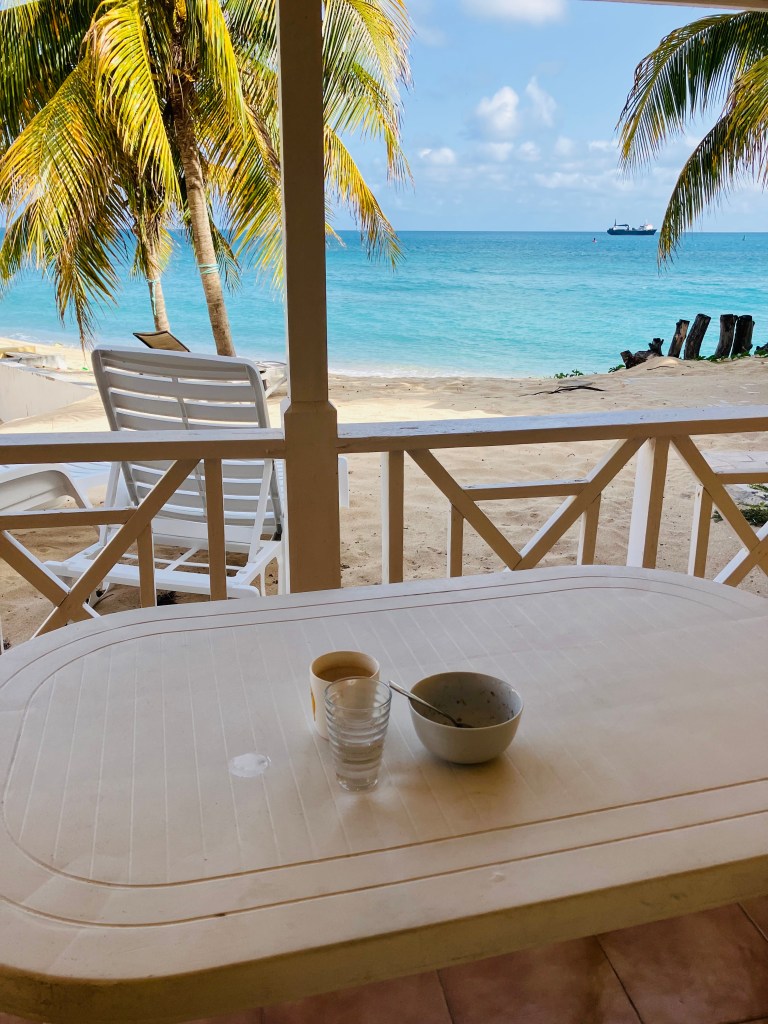
Life in Antigua in one simple photo!

Driving:

Driving in Antigua wasn’t easy. The roads were full of potholes, with what sometimes seemed like very little tarmac in between them! Despite that, driving was mainly pleasurable.

Back here in England, it is stressful.

Our first journey was 178 miles north from Gloucestershire to Lancashire to celebrate my friend’s 40th birthday.
We set off at midday on a Friday. We had accounted for traffic and, when we entered our destination into the sat nav, it estimated that the journey would take just under three hours.

At roughly 60 miles an hour on predominantly motorway roads — the M5 and M6, with a UK speed limit of 70 mph — that seemed reasonable.

The journey actually took six hours.
There were no accidents. No major incidents. Just the sheer weight of traffic. That meant we averaged around 32 mph.

It’s just crazy.

Returning home on the Sunday, we left at 11.30 am. The journey took just over four hours. Again, there were no accidents, and we averaged approximately 44 mph.

Our second journey was to London for a family reunion and barbecue.
We left on Saturday morning at 9 am, with Google Maps telling us we should arrive at our hotel, 140 miles away, by 11.30 am.

The M25 congestion

Within 30 minutes, we were being directed away from our route because of a road closure which Google hadn’t picked up on. A road closure on a busy A road on what was predicted to be the busiest weekend of the year — the children had broken up from school the day before.

Why?
Why would you plan roadworks at that time? I could already feel the stress building.

And then, the next minute, we broke down. The car lost all power and we had to call the AA for roadside assistance.

The car was towed to our local garage. My husband went with it, while I was dropped off en route so that I could get home and pick up our second car. I then made my way to the garage, picked up my husband and we set off again.

By this point, it was 12.30 pm.

The barbecue was scheduled to start at 1 pm, so I had already telephoned ahead to let everyone know we would be late. Reprogramming the sat nav, our estimated arrival time at the hotel was now 3 pm.

Allowing ourselves 20 minutes to change and then another 30-minute journey to the barbecue — just 7.5 miles through London, which meant travelling at an average speed of around 15 mph — we expected to arrive shortly before 4 pm.

An accident on the infamous M25, which circles London, meant that the sat nav sent us on another detour. We eventually arrived at the hotel at 3.25 pm and finally reached the barbecue at 4.15 pm.

We managed to get home on Sunday in just over three hours, averaging roughly 45 mph.
We were delayed once again on the M25. This time, there had been an accident on the opposite carriageway and, as people slowed down to rubberneck, our carriageway also ground to a halt for a couple of miles.

I am so done with driving in this country!

Can you make driving less stressful?

We discussed this on our way home because the whole experience was just so exhausting.
Driving constantly surrounded by traffic, having to remain alert for potential problems and never knowing what delay might be waiting around the next corner is stressful.

We reflected upon Antigua and its simplicity. Then it dawned on us.
We were still planning journeys around motorways and deadlines that we had set for ourselves.
What are we doing? We are retired. We can leave when we want. We can arrive when we want. We can take whichever route we want.

Back in 2023, we spent three months road-tripping around America, visiting 18 states while avoiding interstates and freeways wherever possible. So why are we using the motorways here in the UK?

We could arrive early and explore the area. We could stop for a nice lunch. We could take a picnic and find somewhere pleasant to stop along the way.
We don’t have to get there as quickly as possible.

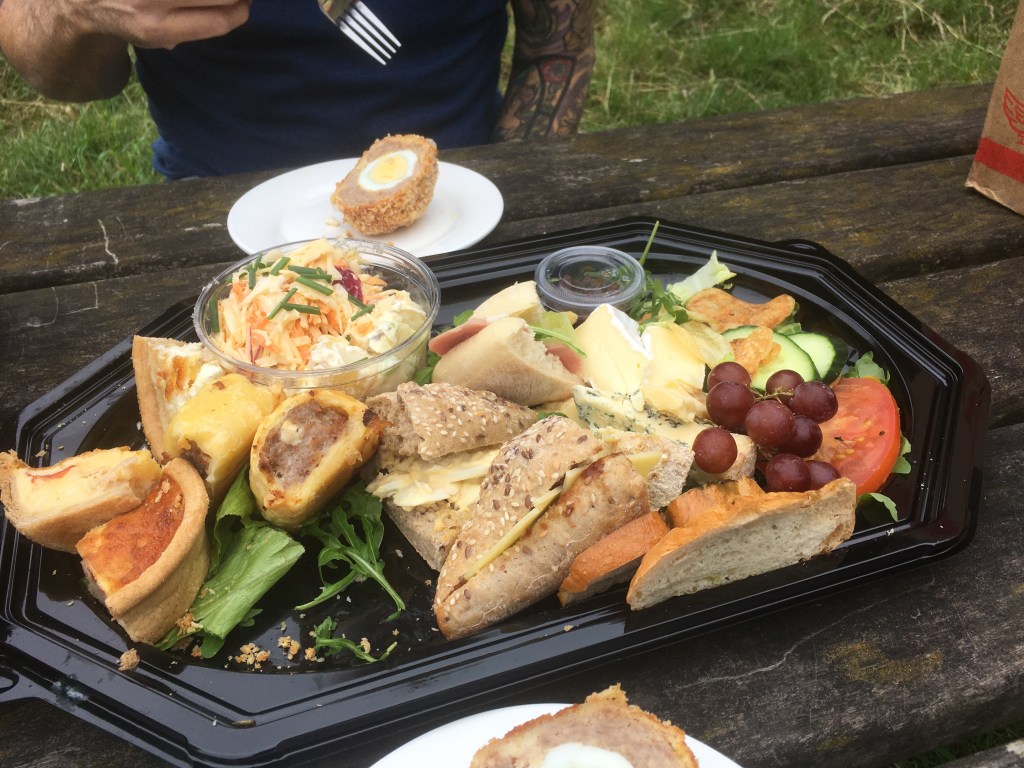
Our type of healthy picnic

We are doing exactly what we realised in Antigua: bringing unnecessary stress into our lives.

The Mundane:

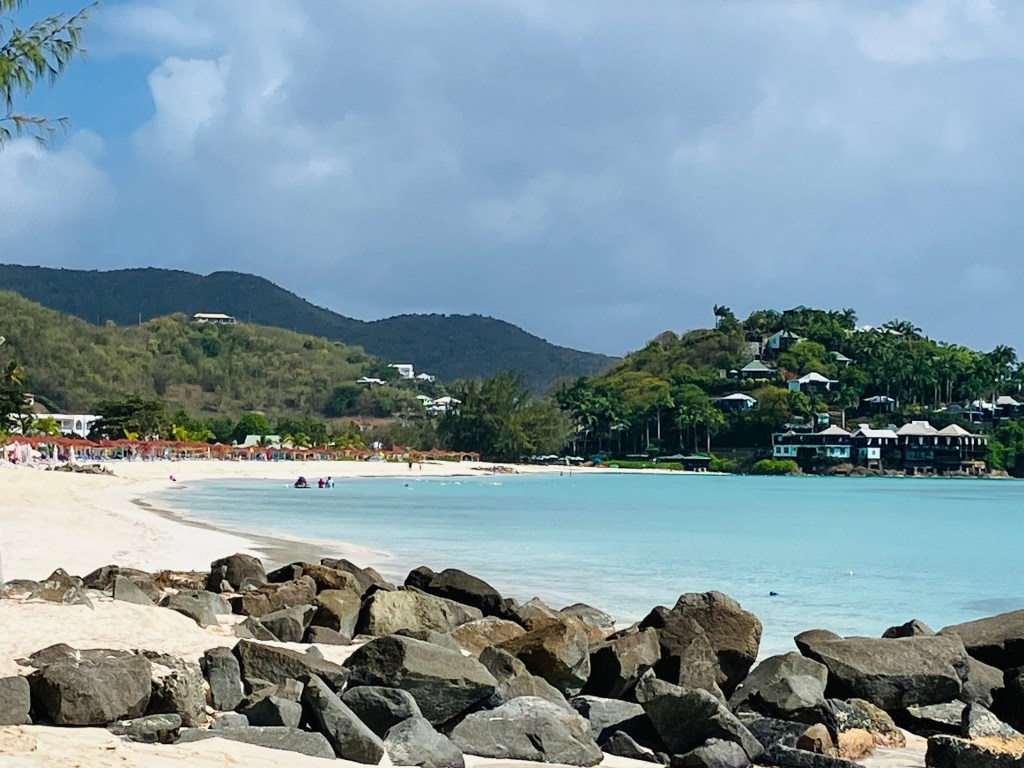
In Antigua, we woke up every morning to that beautiful view, with the sun shining and, most of the time, nowhere we had to be. The day was ours to do with as we wished.

The view that greeted us every morning in Antigua

We weren’t there on holiday. We were living a normal life there for a month. So why is it that, when you return home, life suddenly seems to take over?

In Antigua, I washed the dishes in a sink and did our laundry in a bucket. Here, I have a dishwasher, a washing machine, a tumble dryer and a clothes line in the garden.
Life should be easier.

But in Antigua, we cleaned our duplex apartment between us in about an hour. Suddenly, here at home, we are faced with a three-bedroom house, one-and-a-half bathrooms, two reception rooms, a kitchen and a utility room to clean.
It feels like it takes forever. And, to be honest, it’s boring, mundane and I hate it!

The simple solution is to get a cleaner. We probably only need someone once a fortnight for a couple of hours. Several people I know have cleaners, so why are we putting ourselves through this during our retirement?

Hobbies:

We both have hobbies.

My husband’s are mainly confined to the weekend, when he goes out early in the morning for a couple of hours scouring local boot fairs for bargains.
There is also the occasional day during the week when he meets up with his photography friends. Once the summer holiday period is over, this will also extend to Thursday evenings.

His weekdays are largely his own. He loves to bake bread and cakes and if he has chores or DIY to do, he tends to do them in the mornings, freeing up his afternoons to do what he wants.

Pictures of my husband’s baking -those are rhubarb and custard muffins 😋

My hobbies and commitments are much more routine.

Monday morning: Aqua Aerobics

Wednesday morning: Slimming World, normally followed by a council meeting

Thursday morning: Aqua Aerobics

Friday morning: Pilates, followed by Aqua Aerobics early in the evening

In addition to this, I try to fit in future travel research and planning, home administration, gardening — both flowers and vegetables during the summer months — keeping up with social media, clearing emails, and both reading and writing for my blog.

I’m growing yellow cucumbers this year, pictured alongside my home made jam, my favourite coffee table books and my son’s present of a printed version of Year 1 of my blog

My position as a Parish Councillor also includes Wednesday evening meetings and other ad hoc meetings with members of the community during the week.

None of this is necessarily relaxing.

Before long, I start to feel as though I have no time to do what I want, when I want, again.
And then the guilt begins.
If I dare to take time for myself to read a book or magazine, or watch television, I feel guilty because I am not tackling one of the many other things on my list.

Why do I feel guilty about relaxing?

Reflecting Upon Antigua:

People in Antigua seemed to have lower expectations, both in terms of the lives they lived and what they expected from life. They appeared to be happier with what they had.

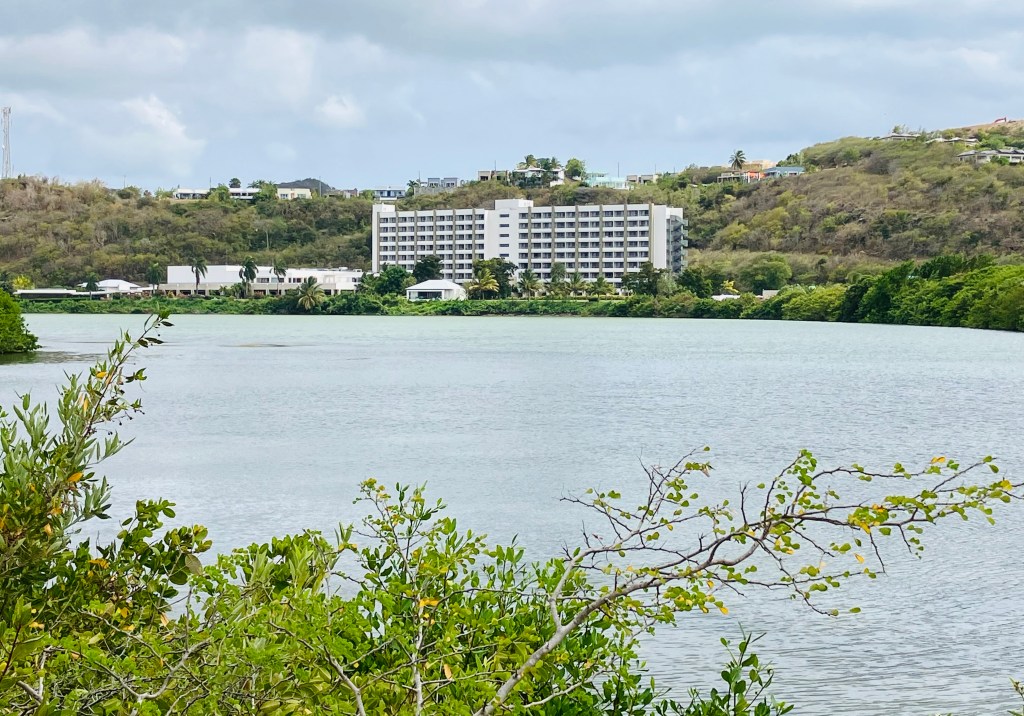
Our home in Antigua

There also seemed to be far less intrusion and obligation.
Comparing our life there with our life here has already highlighted my overcommitment and the imbalance in my daily routine.
My mornings are basically swallowed up with keeping fit and healthy.
My afternoons are then taken up with all the other tasks I have listed above.

But being retired should mean doing what I want, when I want. That’s what I worked all my life for!

I don’t want to spend my retirement rushing from one commitment to another, worrying about whether I am keeping up with everything I think I should be doing. I don’t want to recreate the busy, stressful life I had when I was working.

Perhaps retirement isn’t just about having more free time.
Perhaps it is about learning how to use that time differently.
I currently don’t have a magic solution. Other than running away back to Antigua, of course.

But I do know that something needs to change.

We returned from Antigua with the realisation that a simpler life isn’t necessarily about living somewhere beautiful, driving on quieter roads or waking up to a stunning view.
It’s also about the choices we make.

Perhaps we need to stop asking ourselves, “How much can we fit into our lives?”
And start asking: “How much do we actually want in them?”

I think that’s something I need to work out.

Final Thoughts:

Our month in Antigua has made us look at our life back home in a slightly different way.
We have realised that we often create unnecessary stress for ourselves by trying to do too much, rushing when we don’t need to rush and feeling guilty when we take time to simply relax.

Perhaps the answer isn’t to move permanently to Antigua — although I’m not ruling it out!
Perhaps it’s about taking some of the lessons we learnt there and applying them to our life here.

Taking the slower route. Saying no occasionally. Getting help with the jobs we dislike. Leaving more time to simply do nothing. We are retired. We have worked hard for the freedom to choose how we spend our time.
So perhaps it’s time we started making better use of that freedom.

Have you ever returned from a holiday, trip or extended stay somewhere else and realised that your own life had become more complicated or stressful than it needed to be?
Or have you made any changes to your lifestyle after realising that you were trying to fit too much into your life?

I’d love to hear about your experiences in the comments below.


A Month in Antigua: Could We Really Call It Home?

It is the Saturday at the end of our third week and I have woken up feeling sad. Our time here in Antigua is slipping away. We have only a week left and I’m not looking forward to going home to England.
Living here for a month has just been a “taster”, it’s really not long enough to make a proper assessment and maybe that analysis cannot be fully completed until we return to the UK and see how we feel then.

Can you actually replicate your life in the UK somewhere else?
There is no doubt that we have succeeded in actually living our life here which answers one of the questions which I wrote in my initial post. We haven’t treated it like a holiday or even a travelling adventure. We have woken up every morning and lived a fairly normal life.

Can I live like a local and not like a tourist or traveller?
We have found our bodies adapting to the regular sunrise and sunset. Due to it’s location Antigua does not experience the same seasonal changes we do in the UK when in the Winter, for example, sunset can be as early as 4.00 p.m. and in the Summer as late as 9.30-10 p.m. Here there is only about a 1 hour difference between the two seasons.

As a consequence we have found ourselves going to sleep by 10.30 pm each night and waking up around 5.30-6.30 a.m. The consistency is nice but I miss the light nights back home.

We have managed to cook every day except on the days that we have gone for a day out at the beach.
Groceries are more expensive, I wrote about this back in February , but proteins such as chicken, pork, beef, fish, shellfish and eggs aren’t vastly different in price to the UK.
Interestingly the chicken we roasted in the oven here reminded me of my childhood when it came straight from my Dad’s farm. It tasted so different.
I’m not sure whether it was because it was locally sourced or the way it was raised but it reminded me that the food we buy in the supermarkets back home isn’t always naturally grown.

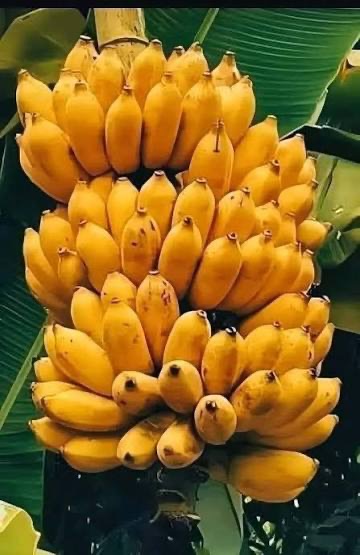
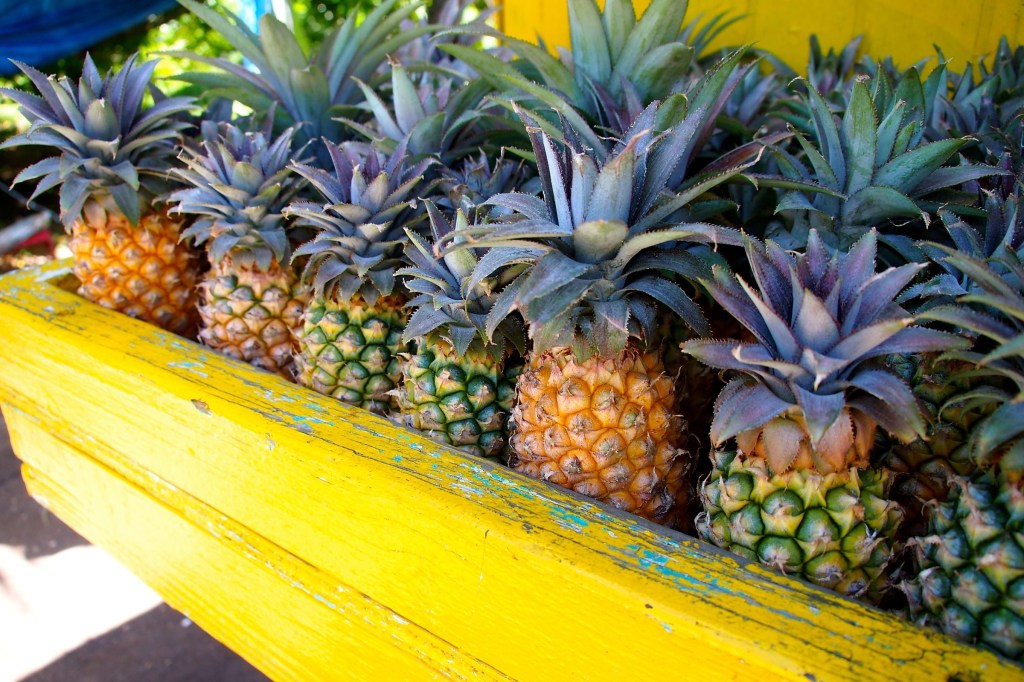
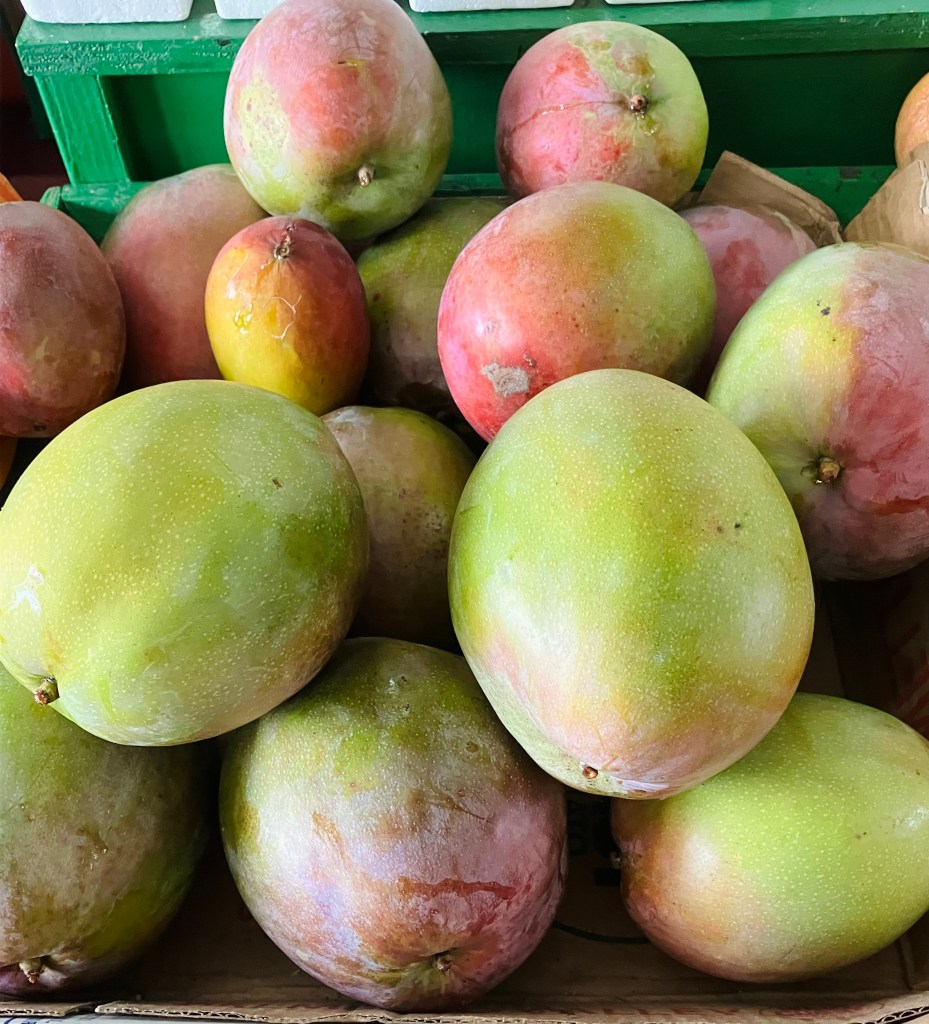
Fruit also tastes different, everything is larger and sweeter, maybe because it’s had more sunshine! Who knew there are four varieties of mango or that you could get tiny finger bananas. We ate these as snacks, they are firmer and sweeter than a normal banana. We won’t forget the black pineapples here in Antigua either!
I will definitely miss the more natural flavours when I get home.

Washing the dishes here is in the sink, there is no dishwasher but I could, honestly, adapt to this change.

Washing clothes has been more difficult in that we don’t have a washing machine.
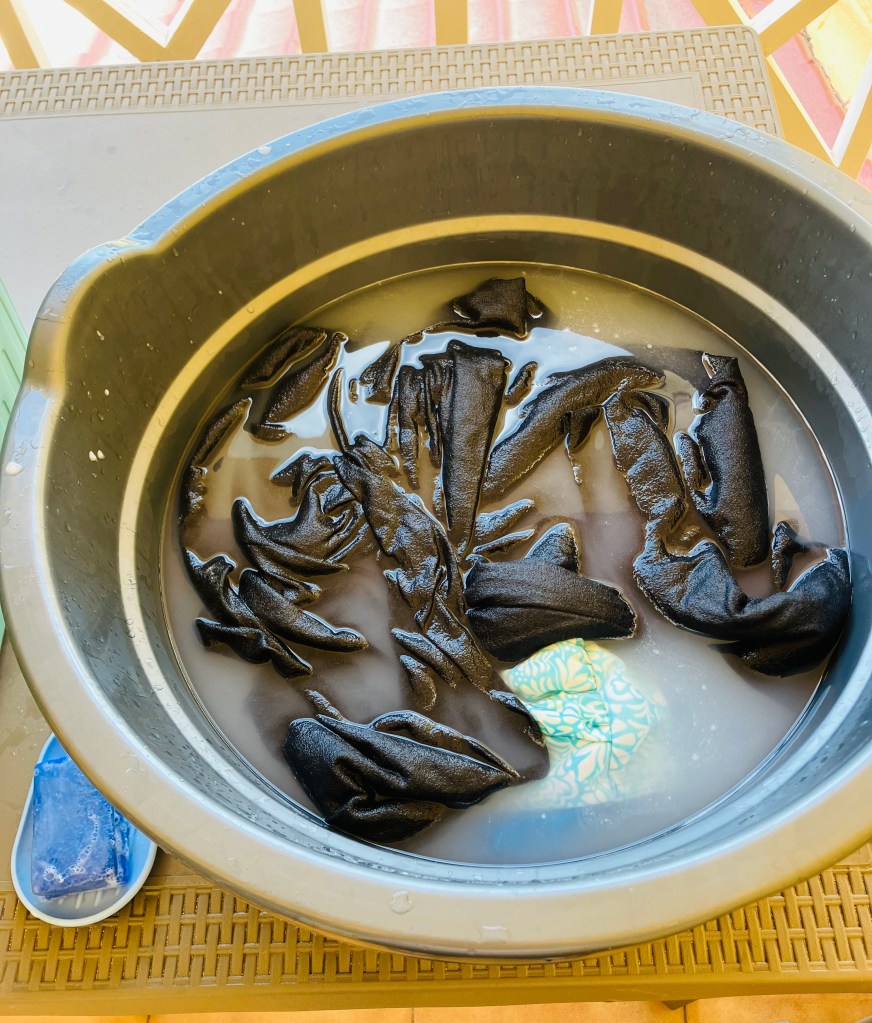
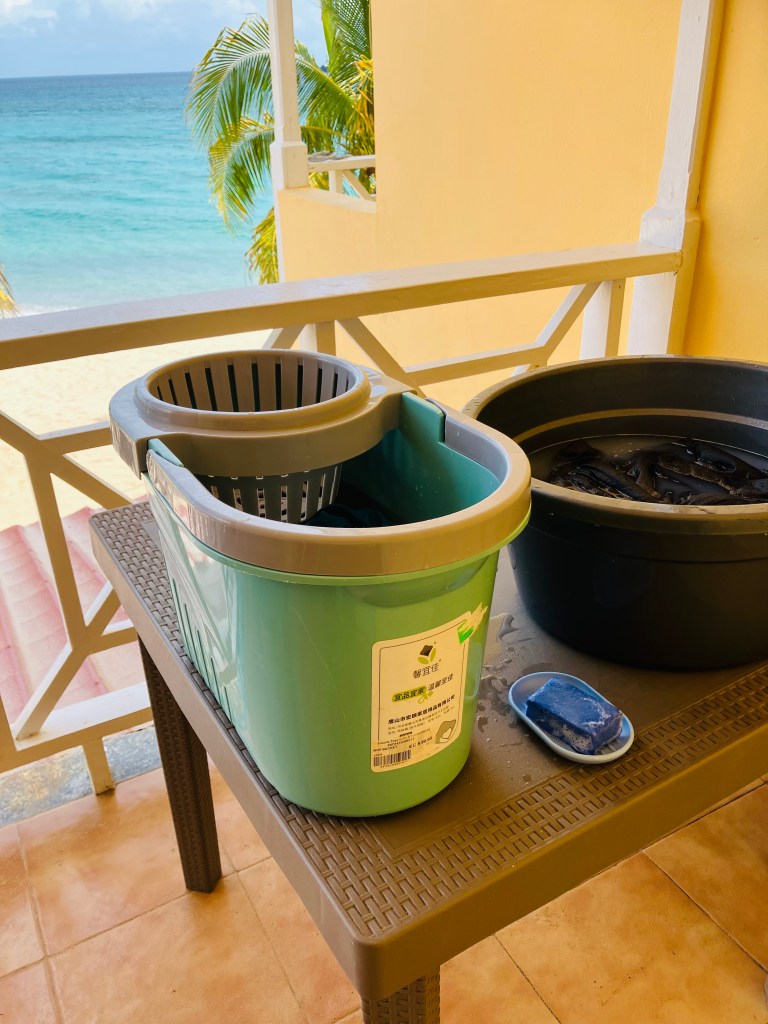
I’ve set up my own mini process where I soak about a dozen items in a large bucket of hot water with some washing up liquid and then wash everything by hand using a bar of Jamaican Blue Laundry Cake Soap. My ex mother-in-law introduced me to this product and I’ve used it many times on our travels.

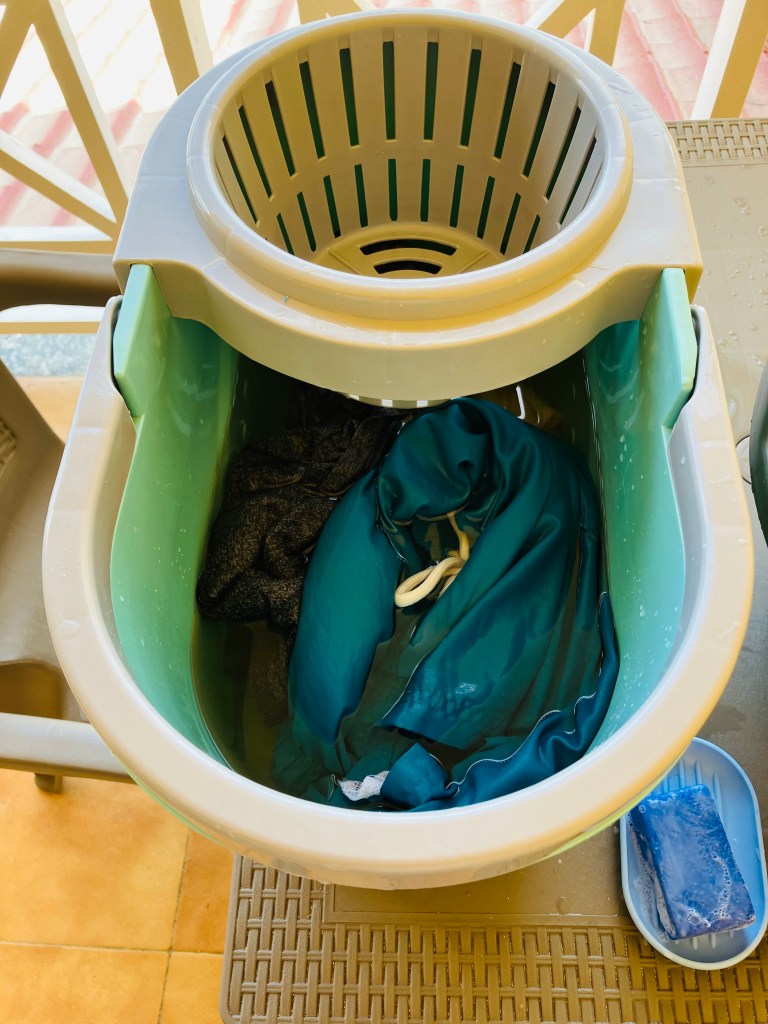
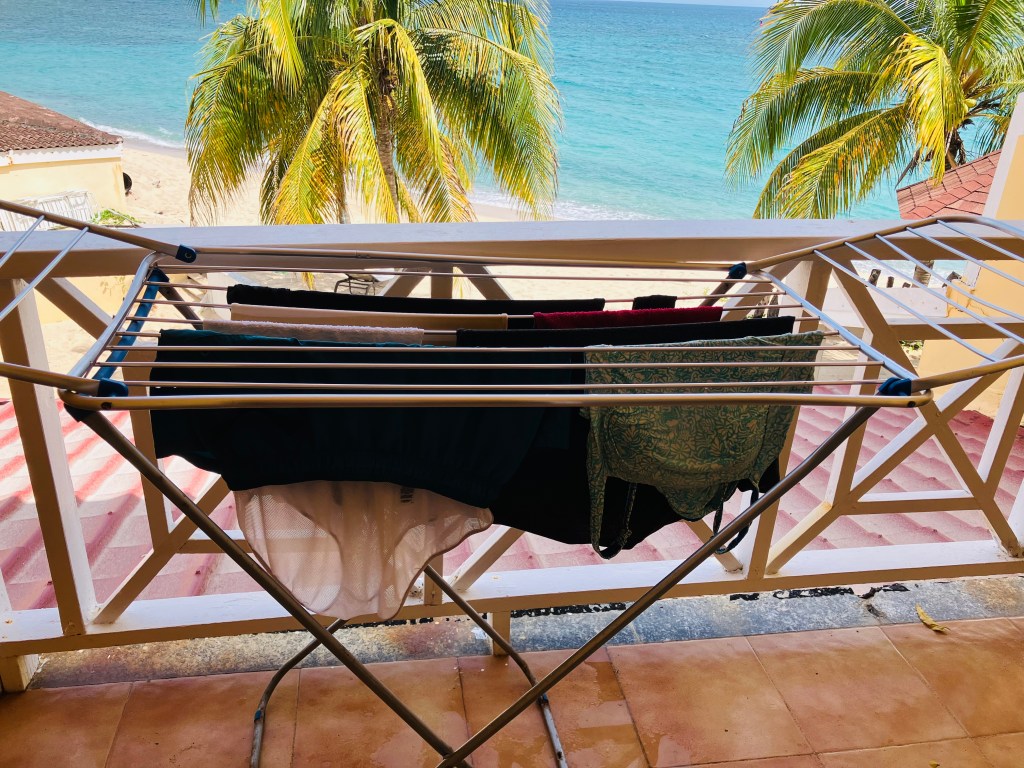
The clothes are then wrung out and dunked and rinsed in another bucket of cold water before being put on a clothes dryer on the upstairs balcony. It’s a bit of a tedious procedure but everything has come out clean and fresh.

The Weather:
It is the shoulder season so we arrived as the seasons were beginning to change, and we’ve already had a couple of those dramatic Caribbean downpours. The sort of rain where the sky opens and suddenly you can barely see the beach except for the palm trees swaying with the winds.
Surprisingly, I didn’t mind this, being tucked inside our little duplex, cooking, reading and just carrying on with normal life made me realise that rain feels very different when you aren’t rushing through it.
We have missed one of the hottest periods in the UK on historical record but I’m not sure that I care.

The day the house started shaking
I have to admit that researching earthquakes in advance of our stay wasn’t on my agenda.

However on Saturday, at approximately 10:50 a.m. local time, as I was chatting on FaceTime to my daughter back in the UK the room started to shake. I immediately ended my call and shouted to my husband who was upstairs in the shower.
I had no idea what was happening. It didn’t last long but it was like an express train had torn past the duplex wall at 200 mph shaking everything in its wake.

Research on the internet showed that roughly 60 miles northeast of St John’s, the capital of Antigua, at a depth of about 20 miles an earthquake measuring 6.5 on the Richter scale had occurred.

Whilst we were perfectly fine and no structural damage occurred, the strong shaking caused inventory to fall from supermarket shelves across the island.
Unbeknownst to us Antigua experiences regular seismic activity. The twin-island nation is located in one of the most seismically active zones in the Atlantic region, situated near the boundary of the Caribbean and North American tectonic plates.

Hurricanes:
The island is, also, in the hurricane belt but the last major hurricane to hit Antigua was Hurricane Luis in 1995. Both Irma and Maria in 2017 brought tropical storm-force winds and heavy rain but avoided a direct major landfall.

I posed the question before arriving here “maybe if I live somewhere that’s warm all year around, life will feel better?
The short answer to this is YES it does feel better. Despite earthquakes and hurricanes I seriously don’t think if we lived here full time that I would miss the wind, rain and occasional snow we experience in the UK.
There is a sort of comfort that knowing it is going to be mainly sunny brings.


Hobbies:
When we were exploring the idea of moving from the West of England to West Wales back in 2019/2020 one of the key reasons we remained where we were was our hobbies.
I like to visit the local leisure centre to do pilates and aqua aerobics classes. I’m a member of a local Slimming World Group, also a member of my local Parish Council and have friends who live in the area who I see regularly. It would be very hard to leave all this behind although Antigua would deliver a slower pace of life and I have more than filled my time here and have never been bored.

The animals who seem to own the island
Antigua has a menagerie of animals and I do think it’s worth mentioning this.
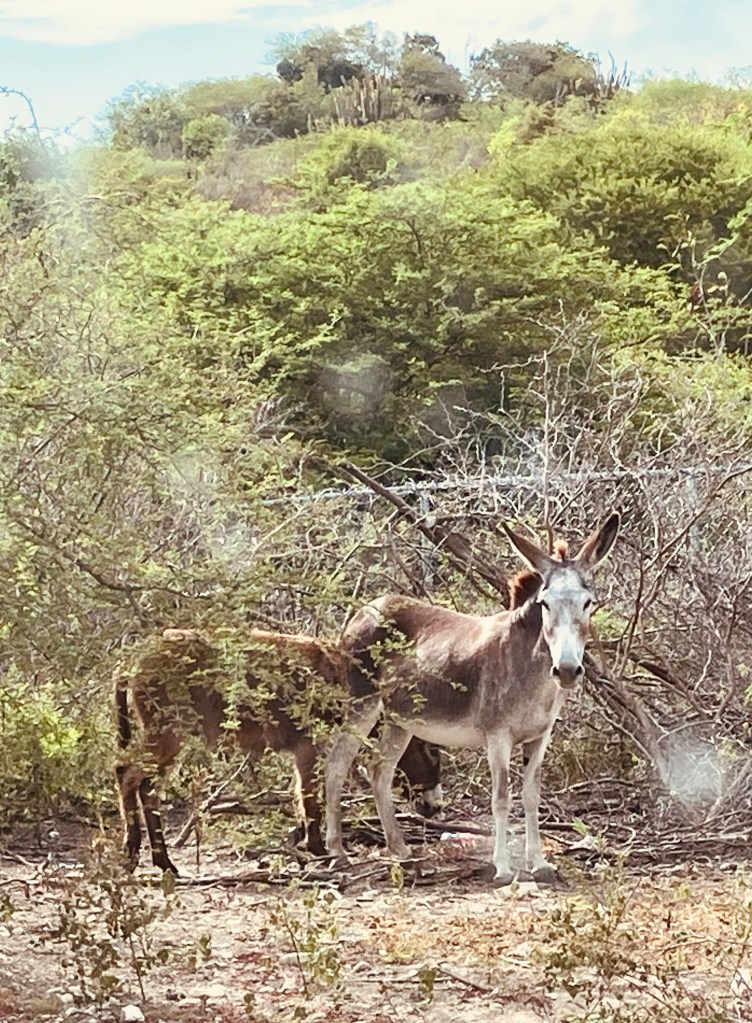
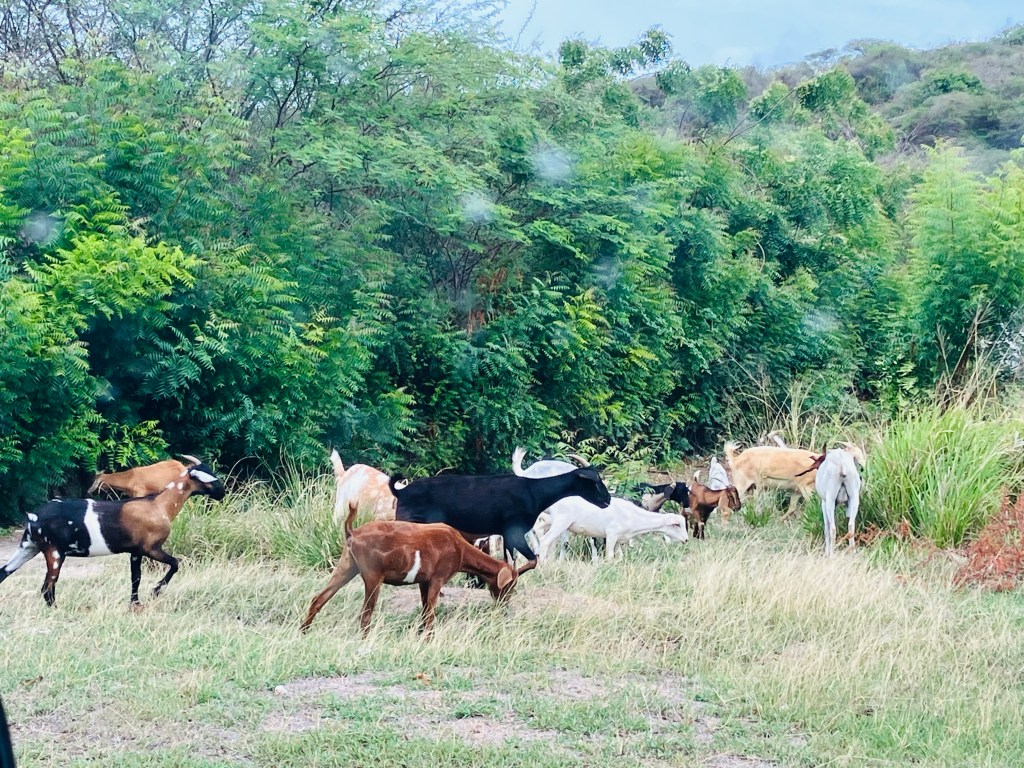
During our stay in February and again this month we have seen herds of goats wandering at will in the more country areas of the island. We even spotted this mother donkey with her baby fairly close to the road we were driving on.

The mongoose is very prevalent here. There wasn’t a day that went by when one or more of these invasive species didn’t wander across our patio.
Mongooses were deliberately introduced to Antigua in the late 19th century by European colonists in a failed biocontrol attempt to eradicate invasive ship rats that were destroying the lucrative sugarcane crops. The introduction went terribly wrong, creating an ecological imbalance that allowed the mongoose to thrive uncontrollably.
Once introduced, the mongoose faced zero natural predators on the island, allowing them to breed rapidly and dominate the landscape. 

Chickens are far less noticeable here than on other Caribbean islands we have visited. This is also unfortunately due to the levels of mongoose who happily eat the chicken’s eggs, hatchlings and even adult birds.
Whilst we did see some hen coops in the countryside we didn’t see any in the main towns or in St Johns. This is mainly down to the fact that chickens are a food source and, therefore, catching a chicken that doesn’t belong to you and eating it isn’t unusual.

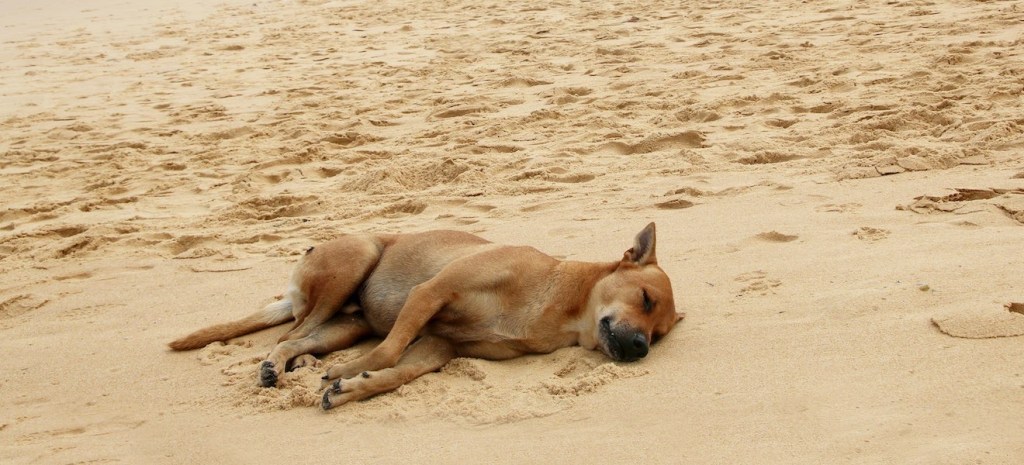
Whilst we saw very few cats on the island, dogs are very prevalent. They pretty much wander freely, primarily due to a severe pet overpopulation crisis driven by a historical lack of widespread spay and neuter programs.
Additionally, many dogs belong to owners who allow them to roam during the day, or are “community dogs” cared for by neighbourhoods and local congregations rather than kept indoors. Whilst we did not experience any issues with the street dogs not all of them look particularly healthy or well fed so this is definitely a consideration if you are visiting the island or thinking about making the island your permanent home.

Culture:
Antigua is a culturally conservative society.
All 365 beaches in Antigua are public, but they are not clothing-optional. Wearing standard swimwear is the legal and cultural norm across the island. It is expected that all individuals, including children should wear appropriate swimwear when visiting the island’s shores.

It is also important to note that wearing beachwear in public streets, shops, or restaurants is illegal; cover-ups should always be worn when away from the sand.
You must also refrain from overly overt displays of public affection.

Finally it is also strictly illegal for any person to wear camouflage print clothing or accessories in Antigua. This law is strictly enforced, so you have to ensure that no clothing or swimwear includes these patterns

Is there an alternative to living in the UK? I worked hard for my retirement and now I just want a Simple Life
The quick and easy answer to this is YES!
Antigua offers a very simple way of life. The locals may not have the material possessions so sought after in the UK but they seem happy with their lot.
You don’t see children, for example, walking down the road with their nose stuck in a mobile phone. You see children playing football and cricket, playing on the sand or in the sea or just creating their own fun.

Antiguan people appear not to be interested in worldwide politics and, therefore, no one talks about it but people are still sociable. I can, also, hide from the news here because to be frank I’m not really bothered about what is going on beyond these shores and the Caribbean Sea!
The adults don’t seem to look at their phones either and, therefore the news isn’t so omnipresent. Materialism isn’t front and centre and life is not so commercially driven. 
Very little affects their lives. It’s a simple life because aspiration isn’t so high.

I think the main question we are left with is could we come back for the full 90 days currently allowed as a visitor? Or could we spread our lives flitting between two different countries?
Also within this is the additional question “Is the positive where we are staying and if we had to live inland would we be so happy?

The quick and easy answer to this is staying for 3 months would be a gift.
Staying inland, however, would not be for us. Ideally we would love to return to the same apartment complex but alternatively we have sought out other rental properties whilst on the island that are also near the sea or directly on a beach.

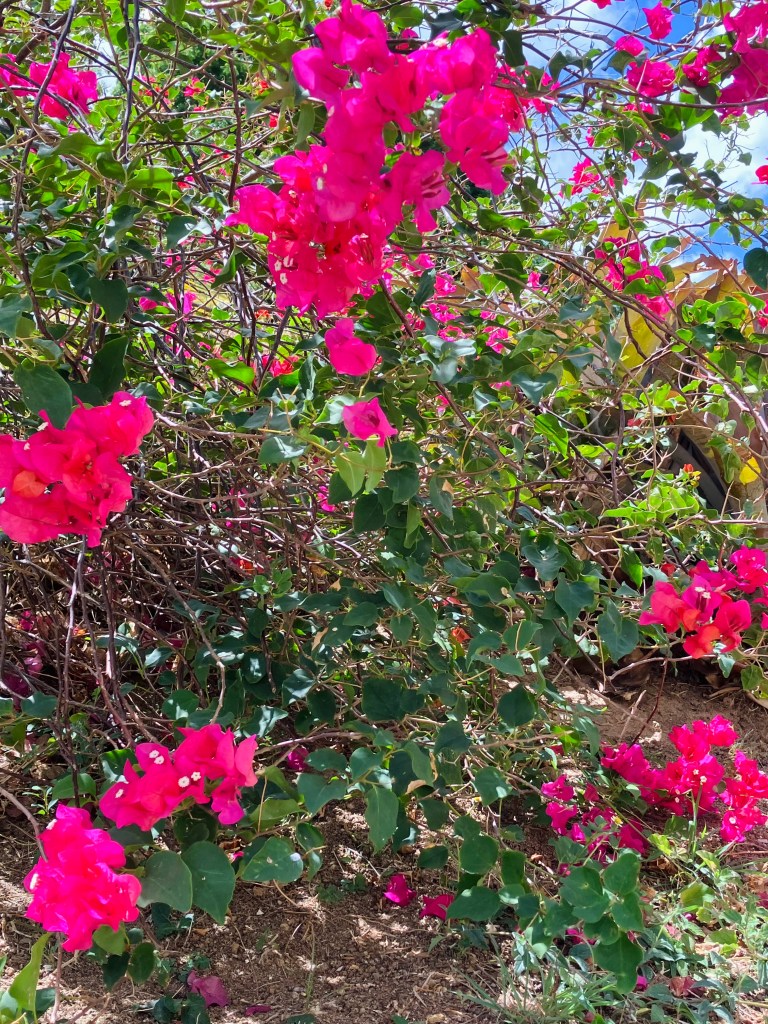
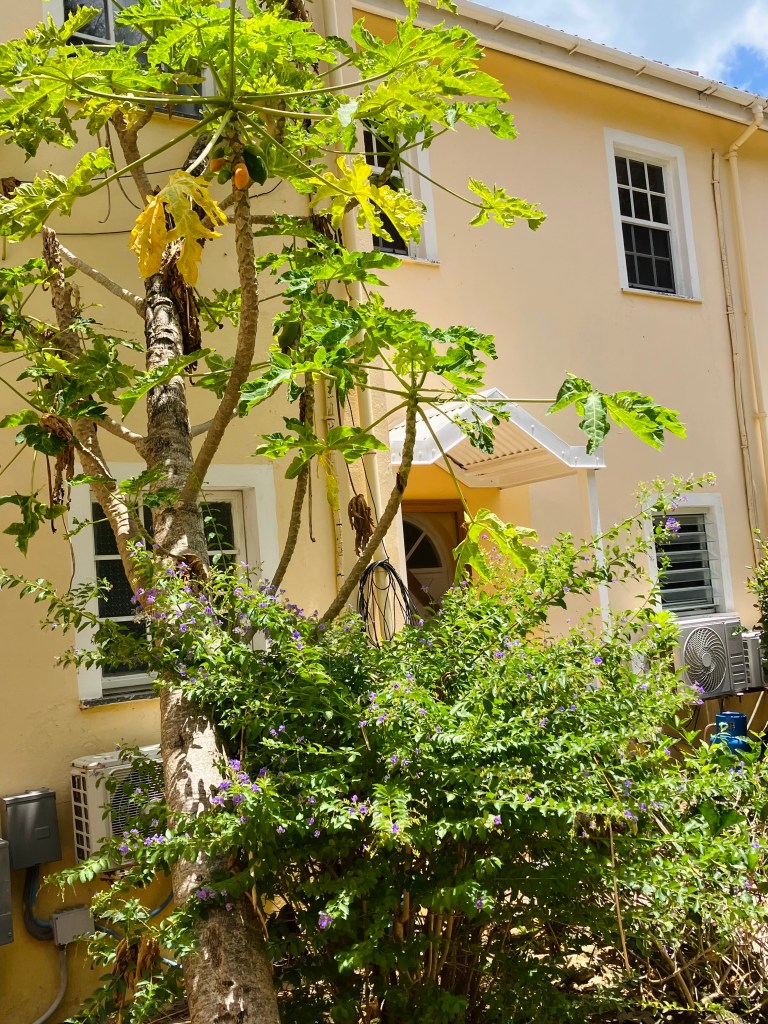
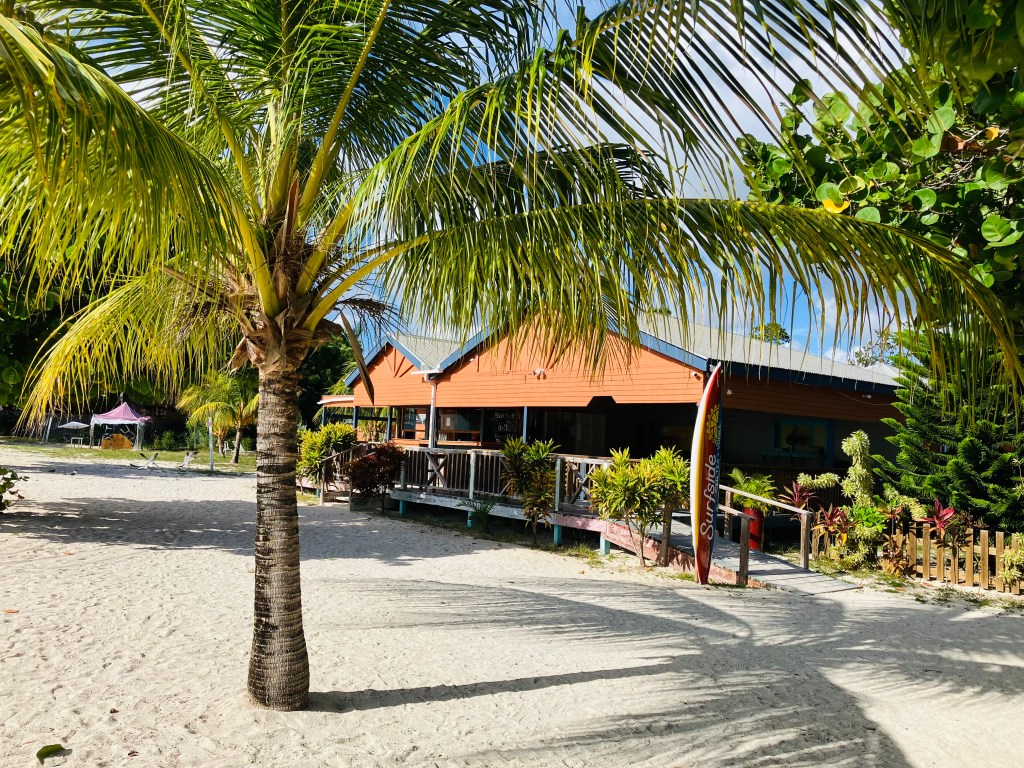
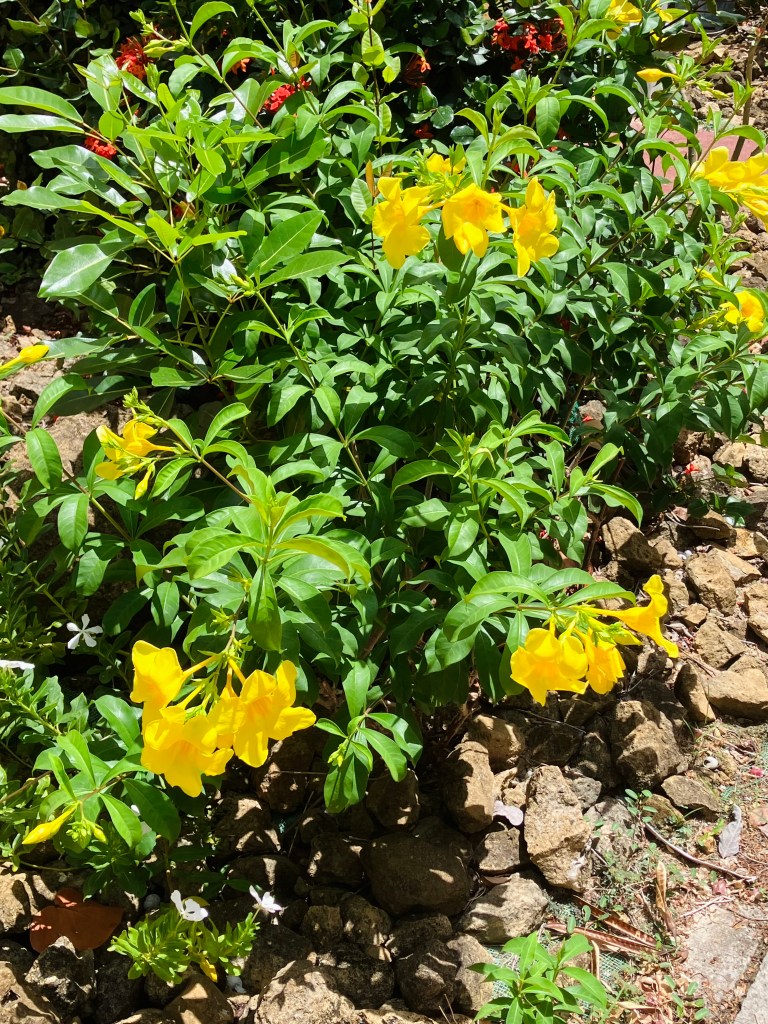
This was our home in Antigua with beautiful flowers outside the front door shown in two of my previous photos on this post

Final Thoughts
A month isn’t long enough to decide whether Antigua could ever become home, but it has been long enough to change the way I think about home. We’ve discovered that it’s possible to swap routines without losing ourselves, to live more simply without feeling as though we’re missing out, and to appreciate experiences far more than possessions.

Perhaps the biggest lesson isn’t whether we’ll return to Antigua for three months—or even one day live somewhere warmer—but that a slower, happier life isn’t entirely dependent on where you are. It’s about choosing what matters, letting go of what doesn’t, and making time for the people, places and moments that bring genuine contentment.

Whether this month turns out to be the beginning of a new chapter or simply a wonderful chapter on its own, it’s one I’ll look back on with enormous gratitude

If you’ve enjoyed following our Antigua adventure, I’d love to hear your thoughts. Have you ever considered taking an extended stay somewhere new, or has a place you’ve visited changed your perspective on home?
Leave a comment below and join the conversation. And if you’d like to follow along with our future travels and adventures, don’t forget to like this post and subscribe so you never miss the next chapter.

Can Andy Burnham End Britain’s Revolving Door of Prime Ministers? His Policies, Challenges and What Comes Next

As England exit the World Cup, and the final is contested between Spain and Argentina on Sunday I wonder how any people watching it around the world realise that the very next day here in the UK we could well be welcoming yet another Prime Minister!
That is five Prime Ministers since the last World Cup just 4 years ago!

Boris Johnson (July 2019 – September 2022)
Liz Truss (September 2022 – October 2022)
Rishi Sunak (October 2022 – July 2024)
Keir Starmer (July 2024 -July 2026)
Andy Burnham (July 2026 – ? )

I find it incredible that politics in the Western World are in such turmoil.
Whether the people of the USA like it or not the world watches Trump’s every move while wondering how on earth anyone voted for someone many critics describe as authoritarian within a democratic country?
An increasingly negative review of him grows worldwide which unfortunately also then reflects on the USA as a whole! This is just one study that summarises this.
This in turn is having a massive effect on incoming tourism to the USA. People who would normally happily spend money visiting Las Vegas and Florida’s Disney Extravaganza for example are choosing to go elsewhere. There are many reports out there that attach research to this phenomenon, this is just one of them.
No doubt the tourism results for 2026 will be given a positive spin because they will include all the football fans who came to watch the World Cup, without which the downturn would be 6.5% year on year. This 6.5% downturn in U.S. international tourism is projected to inflict a $21 billion deficit on the U.S. economy in 2026, heavily straining local businesses, the job market, and international trade balances. Because overseas travellers spend an average of $4,000 per trip—eight times more than domestic tourists—their absence triggers a massive compounding slowdown.


I wonder if the world is looking at us, here in the UK in a similar way, perhaps asking the question “How many more PMs will they have before they actually get it right?”

Let me start by saying I am not politically aligned to any party. I vote in an election for the person I believe is the right person for that particular job and not because they belong to any specific party. This rhetoric, therefore, is written impartially.

So as the world watches on, Who exactly is Andy Burnham?

Andrew Burnham was born in Liverpool in 1970 to a working class family – his father, a British Telecom engineer, and his mother, a GP receptionist. This is not a man who was educated at a private school such as Eton, like so many Prime Ministers and leading politicians before him.
Educated at the local comprehensive school where he became known by “Andy” he did, however, aim high at a very early age achieving acceptance at none other than Cambridge University where he studied English.

His focus on politics began in his early 20’s from which he had a variety of posts before resigning as an MP in 2017 in order to contest the election for the first ever Mayor of Greater Manchester.
The Mayor of Greater Manchester is the directly elected leader of Greater Manchester Combined Authority (GMCA). The role was created as part of English devolution, which means certain powers were transferred from national government to Greater Manchester so more decisions could be made locally.

 This is where his star began its real ascendancy.

Burnham won the contest with more than 60% of the vote and was re-elected by an even bigger margin in 2021 and again in 2024.

So what made him so successful?
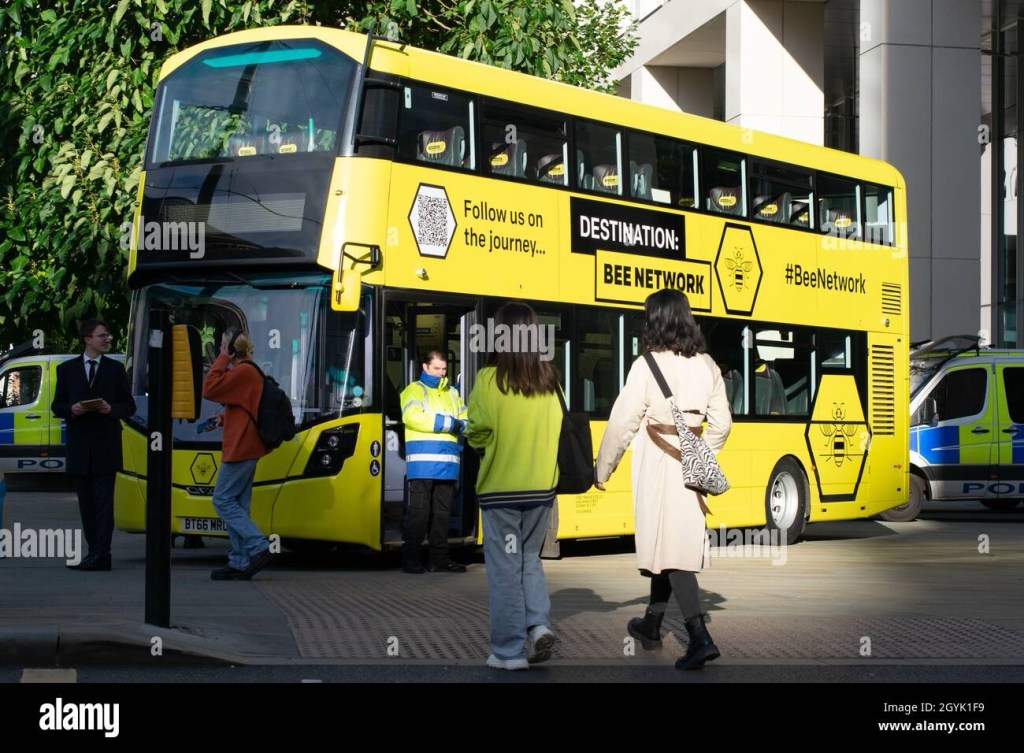
Under his guidance the Greater Manchester Combined Authority founded the Bee Network. The centrepiece of this integrated transport scheme was the renationalisation of bus routes across Greater Manchester, as well as support to cap fares at £2 at a time when nationally they were rising.

Of course, transport wasn’t the only area where Burnham built his reputation, he also focused a lot on building “Brand Manchester”.
Greater Manchester (GM) was the UK’s fastest growing sub-regional economy in the period 2015-2023, growing at double the rate of the UK (GM: 3.1% per year; UK: 1.5%).
GM’s economy grew more quickly than the UK economy in 7 of the 9 years to 2023. This would indicate that he had his finger on the economic pulse so to speak.

He has earned a reputation as a politician who cares deeply about his roots, and has consistently and publicly reinforced it. He famously stood up to the Conservative Government, over what he felt was a weak and confusing support package during the COVID pandemic. This was what delivered him his title as “King of the North”.

However, even though Andy Burnham became one of England’s most high-profile metro mayors, governing Greater Manchester is very different from governing the UK.

As Mayor he was responsible for around three million people and a limited range of devolved powers.

A Prime Minister, by contrast, makes decisions affecting nearly 70 million people across taxation, defence, foreign policy, immigration and public finances.

What can we expect from Monday?
“Andy” will be thrust into making decisions immediately. he is giving the ascent of the King
On Monday he will:

Need to form a government
This means appointing the senior ministers, beginning with the Chancellor of the Exchequer (Treasury Secretary), Foreign Secretary, Home Secretary, and Defence Secretary.

Receive national security and intelligence briefings
Be briefed by senior civil servants, the Cabinet Secretary, the heads of the intelligence agencies (MI5, MI6 and GCHQ), and military officials.

He will receive updates on any ongoing national security threats, military operations, international crises, and classified intelligence.

Begin setting the government’s legislative and policy agenda
He will have to formulate his Cabinet of two dozen ministers, whilst also immediately overseeing more than 100 ministers across Government. He will then need to meet with at least the Cabinet to agree immediate priorities.

He will also need to start preparations for when Parliament returns from its summer recess on September 1st.

It seems like a very big step up to me so what can we expect?

Whilst no solid policies are, of course, yet forthcoming, Burnham has made several speeches both during his bi-election to return to being an MP and also since. He has talked about:

Devolution of Power:
Burnham has promised the biggest-ever “rebalancing of power” away from Whitehall in London, with English regions handed more control in areas including housing and transport by a new Parliamentary Unit based in Manchester.
The unit would be tasked with promoting “equivalent living conditions” across Britain, borrowing from an idea in the German constitution.

He also says he wants all parts of the UK to take “greater public control” of the water and energy sectors so this in turn could perhaps come under devolved control?

Housing:
Andy wants to see the biggest council house building programme “since the post-War period” – implying a large rise in rates of construction compared to recent years. His plan is to see higher density residential development in towns in order to protect more green spaces from residential building land.
This is a huge change to the current free-for-all building we see currently which is dominated by six major housebuilders, who control more than half of all private sector construction in England.

This project will be financed by using the whole £39 billion budget, already set for housing development in the next 10 years, being spent purely on social housing.
He has, quite rightly in my opinion, argued against using parts of the fund to subsidise “affordable” home ownership or market-rate housing. Instead, his approach prioritises direct public investment to create the largest generation of council houses, treating homes as a public good rather than a commodity.
I am definitely with him on this. A home is not a nice to have it’s a necessity for everyone!

This is a policy close to my heart given the current housing crisis we are experiencing where the six major house builders are making extortionate profits from building on our wonderful English countryside in order to meet social demand.
Currently each local district council dictates what percentage of homes built have to be social housing.
In District A, for example where this is one third it means:
For every 300 house built only 100 houses are social housing and thanks to the previous Conservative Government only 50% of these are actual council houses, the other 50% are sold as “shared ownership” where the tenant pays part mortgage and part rent. This type of housing is very rarely open to anyone on minimum wage because they don’t earn enough to get a shared ownership mortgage on their own.

So for every 300 houses currently built in District A , in this example, only 50 are council houses
This means for every 1000 people on a council house waiting list you need to build 6000 houses!
It is quite honestly ridiculous and needs to stop!

Social Care:
The UK’s adult social care system is widely considered to be in a state of chronic crisis. Local councils struggle with massive funding gaps, hundreds of thousands of people are stuck on waiting lists for assessments, and the system relies heavily on unpaid carers to function.
Andy Burnham has long supported the idea that social care should become a more universal system.
In a speech in 2023, he suggested this could be funded by replacing inheritance tax with a new “national care levy”. He has suggested everyone would pay this new tax, whilst “obviously the wealthiest would pay the most”.

Personal Taxes
Personally I think this is one of the more politically difficult balancing acts. People want better public services, but almost nobody wants higher taxes.

During his campaign to be re-elected as an MP, Burnham said he wanted to “have a proper look” at potentially raising the £12,570 starting threshold for income tax thus delivering more money into “the working person’s pocket” and lessening the tax implication on OAP pensions.
He has, also, previously argued the UK overtaxes work and undertaxes wealth, prompting speculation he could raise capital gains tax – paid on profits made when selling assets such as shares and property aside from a main home.

He has previously suggested that both council tax and stamp duty, a tax paid by homebuyers, could be replaced with a new tax on the value of land – an idea he has been advocating since as far back as 2010.

Welfare and Unemployment
His view is that we need to see a “fair and lasting” reduction to the UK’s welfare bill, amid rising spending on health and disability benefits in recent years.

Without planning to change the level of benefits payments, or how people qualify to receive them, he argues that the way forward is to reduce the amount of people claiming benefits.
He believes improving employment support and “in-work” mental health support will achieve this alongside ensuring that all 16 to 18-year-olds leave school with guaranteed work placements.

As of early 2026, there were over 1 million young people aged 16-24 in the UK who were not in education, employment, or training (NEET) of which 58% have never held a job!.
Of the 1 million, roughly 400,000 are actively classified as unemployed, while 613,000 are economically inactive (not working and not seeking work). 

I’m not surprised that studies show that up to 60% of 18-to-25-year-olds in the UK feel that politicians do not care about them. Furthermore, polling indicates that over 50% of young adults are dissatisfied with the current state of UK democracy, believing that political parties fail to speak directly to them or address their concerns.

Research by the UK Parliament, itself, indicates that the majority of young adults feel alienated from the political establishment. Many feel their priorities—such as housing affordability, the cost of living, and climate change—are consistently overlooked. 

It feels like the young people in the UK today have lost hope!
Can Andy Burnham restore that hope?

Immigration:

This is very much a “hot topic” here in the UK, frequently used by parties such as Reform UK to mobilise public opinion. Critics argue that this rhetoric can sometimes blur the line between legitimate debate over immigration policy and language that risks inflaming racial tensions and returning us to the “racial riots of the 1980’s”.
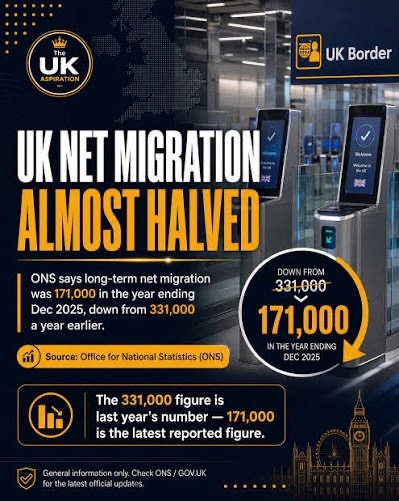
Like the Sunak government, Labour has reduced levels of immigration by tightening visa requirements. During his Makerfield campaign, Burnham said net migration “needs to fall further”, although he has not set a specific target.

Foreign Policy:
Andy Burnham has said he would like the UK to rejoin the EU within his lifetime, but he has insisted he does not want to “re-run the [2016] referendum now”.
Instead he has pledged to seek a “closer relationship” with European countries, and “consolidate the progress made” on existing negotiations with the EU.

He will have to hit the ground running in this sphere of politics as he will inherit a series of live negotiations on youth visas, food regulations and plans to relink the UK to the EU’s carbon pricing regime.

I’m not sure what Donald Trump will make of Andy Burnham because they honestly seem as if they come from “two completely different planets in terms of wealth and education” and that’s without delving into their political outlook.
All Burnham has said thus far is that he will be seeking a “good relationship” with the US, however he will also be willing to say “if we can’t agree with them”!

Final Thoughts:
Whatever happens over the coming months, Burnham will quickly discover that leading Greater Manchester and leading the United Kingdom are two very different challenges. Whether he becomes the Prime Minister who finally steadies British politics or simply another name on an increasingly long list remains to be seen. One thing is certain: the world will be watching.

What are your views on World politics? Are we in turmoil as I have said?
Do you read the news and involve yourself in the political situation in your country or do you find it easier to just remain in your own “bubble”?

Do you feel there is hope out there?


World Cup 2026: Highlights and Controversies Explored

The last 16 matches of the World Cup 2026 are drawing to a close and the quarter finals will thus be finalised to take place this weekend. This tournament has already brought moments of individual national elation and controversial decisions that have reverberated around the world particularly amongst those who support and follow the game.

Football Supporters:
I was not brought up to watch football or support a specific football team. However, my husband was introduced to the game at the tender age of 4 years old when his Dad took him to watch West Ham play against Leicester City on Boxing Day. His Dad was born in the EastEnd of London and so supporting West Ham “was in the blood”.
Like so many others born into the game my husband can tell you the history of every player of any significance on the pitch in all of these World Cup games.

Football is by far the most popular spectator sport in the UK, both in terms of the number of supporters and attendance.

  • Support: Around half of UK adults say they support a football club, far more than any other sport.
  • Attendance: English professional football attracts more than 40 million spectators each season across the Premier League and the English Football League.
  • Television: Football consistently dominates sports viewing figures, with major tournaments such as the FIFA World Cup and UEFA European Championship attracting audiences of over 20 million in the UK.
    Women’s football is also gradually gaining more and more viewers with England’s historic back-to-back Women’s Euro final being the most watched television moment of 2025 across all TV broadcasters.
  • Most of the football supporters in the UK inherit their allegiance through family and local identity, so many support the club associated with the area where they grew up. However, the country’s biggest clubs have nationwide and global fan bases, meaning millions of supporters live far from the club they follow.

The World Cup is, therefore, a really “big deal” here in the UK.

The World Cup:
The FIFA World Cup is one of the most important sporting events in England. Every four years it captures the nation’s attention, bringing together millions of people—including many who don’t usually follow football—to support the England team.

Its importance can be seen in several ways:

  • Huge television audiences. England matches routinely attract audiences of 15–25 million viewers, and when England reaches the latter stages, the audience can exceed 20 million.
  • National attention. During the tournament, newspapers, television, radio and social media are dominated by World Cup coverage. Many workplaces, schools and pubs organise events around England matches.
  • Occasional fans get involved. Millions of people who don’t regularly watch club football will still follow England (or Scotland, Wales or Northern Ireland when they qualify). The World Cup becomes a shared national event.
  • Cultural significance. England’s victory in the 1966 FIFA World Cup remains one of the defining moments in British sporting history, and each tournament revives hopes of another triumph.

This World Cup has definitely been a shared event in our household. We have been following each game from the onset, predicting the outcome of each match on line either win, lose or draw and predicting who will reach the semi finals and ultimate final from the point it began!
My prediction is that France will win and my outside chance to win is Morocco
My husband is predicting Spain will win and his outside chance is Norway.
By the time this post goes to print the semi finals will be about to begin so let’s see if any of these four teams get this far.

Interestingly France plays Morocco in the quarter finals this weekend so at least one of my teams will be gone. Whilst Spain take on Belgium and Norway play England, which will be interesting for my husband!

You may think that we are not patriotic but neither of us, to be honest think the England squad are good enough to win. Maybe, just maybe we will be proved wrong!

Then, of course, there is the question of the famous “Golden Boot” awarded to the player who scores the most goals throughout the duration of the tournament. My money is definitely on Mbappe but my husband is backing Dembele, also of France.
Currently the competition is between Messi (Argentina)- the senior, Mbappe (France) -the ascendant and Haaland (Norway) -the young pretender!

The World Cup in USA, Canada and Mexico:

Holding this year’s World Cup in the above three countries has been somewhat eye opening given that the sport of football, until now, has not been particularly popular in the USA or Canada.

If we were to compare the popularity in the USA and Canada versus England:

CountryFootball’s popularity
EnglandThe dominant national sport and by far the most popular spectator sport.
CanadaPopular and growing, but behind ice hockey in cultural significance.
United StatesPopular and growing rapidly, but still behind American football, basketball, baseball and ice hockey as a spectator sport.

In contrast football is the most popular sport in Mexico and the country has qualified for every FIFA World Cup since 1994 and has hosted the tournament twice before, in 1970 and again in 1986. In 2026, Mexico has become the first country to host matches at three men’s World Cups.

There is no doubt from what we see and read here in the UK that the USA has dominated this World Cup organisation headed by FIFA’s President Gianni Infantino and none other than President Trump himself.

Hydration Breaks:

The introduction of hydration breaks at this tournament has not been a popular decision this side of the pond and throughout Europe.

FIFA’s December announcement was notable, making it mandatory for a hydration break to take place in each half during all World Cup matches — including those played under closed roofs and in colder climates such as Seattle.

While the need to prioritise the health of players in high temperatures is not contested, it is somewhat obvious, in advance, that not all stadiums will experience high temperatures.

Some, therefore, argue that football matches are being divided from a contest split across two halves into a four-quarter format more readily associated with American sports and, therefore, to suit American advertising companies.

These misgivings were followed three months later by the confirmation that FIFA had given commercial broadcasters the green light to show adverts during the hydration breaks at the World Cup.

The development left many onlookers concluding that as well as player welfare concerns, there were commercial motivations behind FIFA’s decision to unilaterally impose drinks breaks at their showpiece event.

FIFA has argued that its decision to apply drinks breaks across all 104 matches regardless of the local temperature at the time of each match was designed to ensure uniformity and consistency across the tournament.

So even before the tournament started there was a view from abroad that President Trump alongside Infantino were straying away from the traditional rules of the game.

Football originates from Great Britain and the 90-minute structure dates back to the mid-1860s, with the length of each half and the interval regulated under The FA Laws of the Game. 

Needless to say the United States (Fox Sports) is leading the commercial push and is estimated to make between $250 million and $600 million from hydration break commercials alone. This massive windfall is enough to cover more than half of the $485 million fee Fox paid FIFA for the tournament’s broadcasting rights.

The Grand Final Halftime Show:
Normally, the International Football Association Board Laws of the Game state that:
“Players are entitled to a halftime interval not exceeding 15 minutes, and it may be altered only with the referee’s permission.”

For the 2026 FIFA World Cup Final at MetLife Stadium, FIFA has decided to stage the tournament’s first-ever Super Bowl-style halftime show. The musical performance and the time needed to set up and remove the stage are expected to extend halftime to around 25–30 minutes.

This has been controversial because:

Many players, coaches and supporters believe a 30-minute break disrupts players’ rhythm and warm-up routines.

Broadcasters initially complained because FIFA had not confirmed the exact duration, making scheduling difficult. 

Some fans feel it is again importing an American sports tradition into football

And the controversy doesn’t end there……………

The Red Card Rule:

Trumps latest intervention to allow the USA’s key player- Folarin Balogun to take part in the final 16 game against Belgium has exploded across the internet.
Balogun received a red card and was sent off in the last 32 match against Bosnia-Herzegovina. The rules state that
Players receiving a red card in the 2026 World Cup will receive a one-match suspension.

This applies to both straight red cards and red cards that are the result of the same player being cautioned twice.

Fifa does hold the right to impose “further sanctions” if it deems it necessary.

So after a telephone call from Trump to Infantino this rule is set aside and Balogun is allowed to play.
Does the President’s interference have no end?

Unfortunately for the USA team there were resounding cheers throughout the stadium that reverberated across the whole of the UK and Europe when Belgium beat the
home side 4 – 1.
My sympathy actually goes to the USA team who had been playing well but came into this game shrouded in controversy brought about by the ultimate person in charge of the USA.

Individual National Elation:

Amongst all this “noise” the players have left their countries behind, trained hard and wearing their national football kit have run out onto every pitch in the hope of securing victory for their watching families, friends and fans both here and back home.

I wanted to pick out my Top Five matches played to date that I have sat and watched in my living room alongside thousands of other fans worldwide that would feature as must-watch replays:

Argentina 3–2 Egypt (Round of 16) ⭐⭐⭐⭐⭐
This has to be one of the games of the tournament so far including two legendary footballing Captains both possibly playing in their last ever World Cup tournament -Mo Salah and Lionel Messi.
Egypt led 2-0 until the 79th minute of the game.
With 11 minutes of full time to go Argentina pulled off two goals in 4 minutes (including one by Messi- the Golden Boot senior) before a final third goal was sent into the net at 2 minutes into stoppage time.
This was end-to-end football, superb individual performances, and with a dramatic finish making this an instant classic. 

Mexico 2–3 England (Round of 16)
Held at the world famous Estadio Azteca, home of Mexican football and the first stadium to hold two FIFA World Cup finals, England entered the city after a lengthy deliberation regarding the starting time of the match due to pending storms and having to adapt very quickly to the elevation and 20% less oxygen than normal..
The start time was eventually kept at 6 p.m. local time but then delayed due to storms for 1 hour leaving both teams sitting in their changing rooms.
With over 87,000 seats the roar of the Mexican fans was loud throughout as they cheered their team to hopeful victory in what was set to be one of the biggest heavyweight clashes of the tournament so far.
The England team led by Harry Kane came to win and defy the critics of their last three games. England survived after playing much of the second half with 10 men.
This was high quality, mixed with controversy and palpable tension to the end!

Brazil 1–2 Norway (Round of 16)

This has to be perhaps the tournament’s biggest upset particularly to those who don’t know the name “Erling Haaland” and the now famous “Norwegian Viking Victory Row” at the end of every winning match.
Check it out on the internet, it has been a highlight of this tournament much to the amusement of the American public.

In this game Norway stunned five-time champions Brazil with a heroic defensive display and decisive late goal. The “Cinderella moment of this year’s World Cup”

Argentina 3–2 Cape Verde (Round of 32)

The island nation of Cape Verde with a population of approx 500,000 situated off the West coast of Africa has won everyone’s hearts at this World Cup.
With a 0 – 0 draw against Spain and a 2 -2 draw against Uruguay in the initial table round Cape Verde came into the last 32 with a positive mindset.
Continuing their remarkable fairy-tale run they pushed Argentina all the way. With five goals, relentless attacking football, and a tense finish with the final Argentinian goal coming in the 111th minute of extra time they have earned widespread praise from fans.

Not many football fans would fail to mention their 40 year old goalkeeper Vozinha who has played in the national team for 14 years. When interviewed after their first match against Spain Vozinha with tears in his eyes said “His Mum was unable to come and watch him play in their first match against Spain because she couldn’t afford the visa”.

Cape Verde was among 50 countries whose citizens faced bonds of up to $15,000 to secure a U.S. visa, part of President Donald Trump’s broader crackdown on travellers from countries that officials said had high rates of visa overstays.
The Trump administration last month suspended the requirement for ticket-holders from Cape Verde and four other World Cup nations, but critics said it was too late for many fans.

However House Democratic Leader Hakeem Jeffries stepped in and spoke to U.S. Secretary of State Marco Rubio and “asked the State Department to do everything in their power to ensure that Vozinha’s mother can attend Cape Verde’s next match.”
Jeffries said all fees have been waived and travel arrangements are being made to get her to Cape Verde’s next game on Sunday against Uruguay in Miami.
“I thank Secretary Rubio, U.S. State Department officials, the government of Cape Verde and FIFA for working together to make this possible,” Jeffries said.

Final Thoughts:
I do like a fairy tale ending and seeing Vozinha’s Mum in the crowd at his second match definitely touched my heart.
Do you have any views on the tournament so far?
Do you feel, like me, that sporting events should remain free of political interference?

Eating Our Way Through Antigua: Local Food, Surprises and a Few Lessons Along the Way

One of the things that has changed most since retirement — and since we swapped holidays for longer stays travelling abroad — is the way we eat.

Back home our days are quite simple. Breakfast, our main meal sometime between 1 and 3pm, and then maybe a piece of fruit or a slice of toast later if we are hungry.
We don’t eat out very often. Partly it’s about keeping to a budget, but also because we genuinely enjoy cooking and sometimes find ourselves thinking, “we could probably make this better ourselves.”

It always makes me smile when I think back to our very first overseas trip to Santorini in 2016. We ate breakfast, bought baguettes and crisps for lunch or stopped for a bowl of Greek salad, and then headed out every evening for a three-course meal by the sea.

How on earth did we eat that much?

Somewhere along the way, travelling changed our habits. When holidays became longer adventures, our budget needed to stretch further, and cooking became part of the experience. We started buying fresh local ingredients, wandering around markets, and creating meals wherever we were staying.

Eating out became a treat rather than an everyday occurrence.

And here in Antigua we have discovered something interesting. Sometimes, especially if you are only cooking for one or two people, buying food at local eateries can be cheaper than actually buying the ingredients and making it yourself.

We have enjoyed cooking with the fresh produce we find here, but we have also enjoyed exploring the local food scene.


Home cooking with Antiguan ingredients

An English roast dinner (well you have to don’t you!)
Fried eggs in a multi pan (we want to take this pan home!)
Pasta bolognese (but for some reason cheese doesn’t melt in Antigua 🤷‍♀️)
Using up some rolls, some bacon and leftover mince to make bacon, cheese burgers!

Local Food In Antigua:
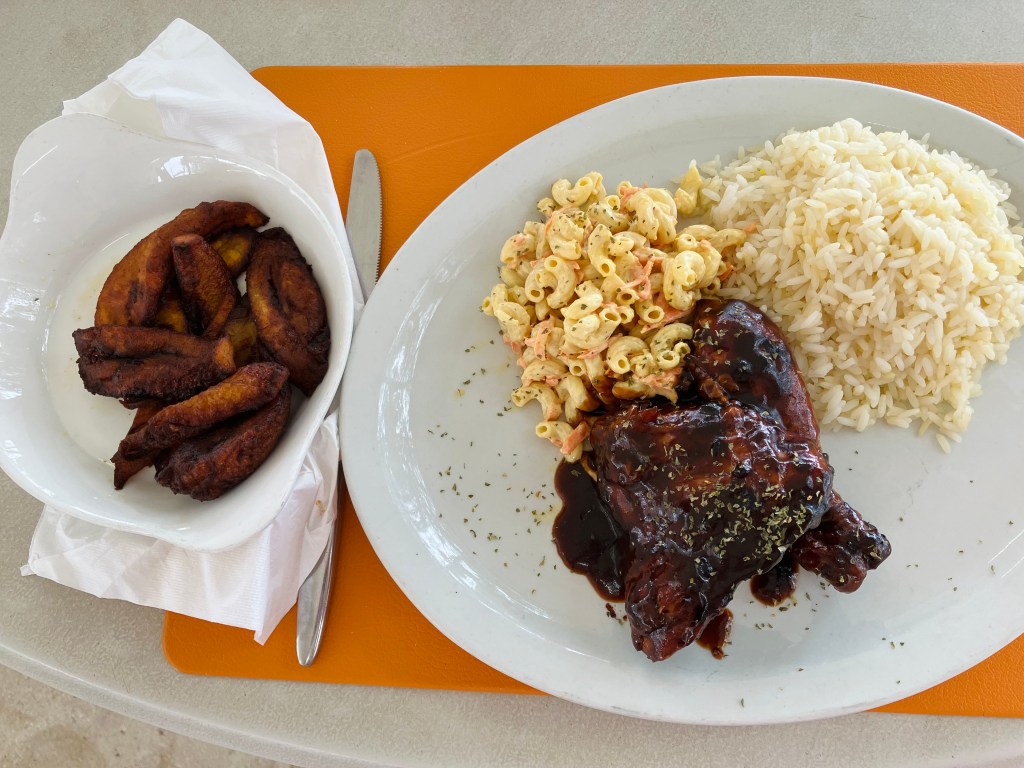
If you refer back to my post from when we were here in February entitled Affordable Dining in Antigua, you will see that we had already discovered some of the cheaper places to eat. This included supermarkets with hot food counters where you can pick up freshly prepared Caribbean and Asian dishes. We have done this a couple of times while shopping and paid around £15 for both of us.

We also returned to the Green Apple near the University, another place where we found ourselves surrounded by local people rather than tourists. For us, that is always a good sign.

But during this stay we have also found a couple of new favourites.

Roti King:
Roti King sits in the centre of St John’s, just a short walk from the cruise terminal and Redcliffe Quay. When we arrived, the queue was already stretching outside — always encouraging.

This wasn’t a place full of visitors stopping by for a holiday lunch. It was families, workers grabbing something after work, and locals who clearly knew exactly where to go. If local people are choosing to spend their own money somewhere, it usually tells you something!

Inside there are simple tables with traditional plastic tablecloths, and outside a few picnic benches. Nothing fancy — just good, honest food.

The staff were wonderful. Friendly, welcoming and genuinely pleased to see us.

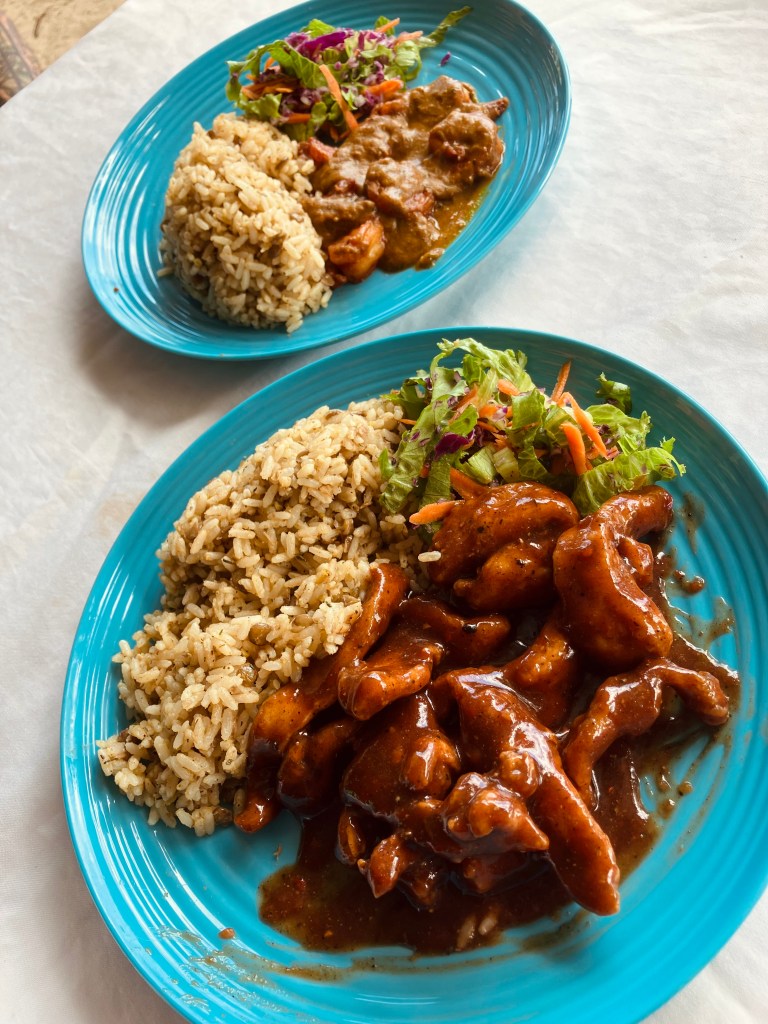
Roti is a popular Caribbean comfort food consisting of curried or stewed meats and vegetables wrapped inside a soft, flaky flatbread. We ordered a fish roti, a beef roti, chips and plantain. We were directed to a table while everyone else waited for their food, and then something happened that really stayed with me.

Our drinks were brought over.

Our food arrived on plates with cutlery, (everyone else was eating from takeaway containers).

I would happily have eaten from a container too, but the effort they made to make us feel looked after was such a lovely gesture. It was one of those small moments when you remember that travelling isn’t just about places — it’s about people.

Including the tip, we paid just under £35 for two huge meals, and every mouthful was delicious.

Firehouse Grill:
Another day, after our usual supermarket trip, we decided to drive a little further north and explore somewhere different.

We found ourselves at Firehouse Grill in Bay Gardens, sitting outside on brightly painted picnic benches under umbrellas — a welcome change from cooking back at our duplex.

The menu had burgers, wraps, salads and daily specials. Our server, Theo, was brilliant. He was happy to answer our questions and clearly took pride in the family business.

It was just a simple lunch, but those are often the moments we enjoy most when travelling.
Two meals, a nice setting, and a chance to chat with someone local.

The cost for both of us? Around £27.

Restaurant Week — a different side of dining in Antigua:

While we were here we also noticed that Antigua was celebrating its annual Culinary Month, which included Restaurant Week.

It sounded like a lovely opportunity to explore some of the island’s restaurants and perhaps try somewhere new. The idea is that participating restaurants offer special menus during the event, giving visitors the chance to experience Antigua’s food scene.


We looked through the options, but in the end the prices were beyond what we usually spend on a meal out which made me stop and think.

Restaurant Week is clearly aimed at a different market, perhaps visitors looking for a more traditional holiday dining experience. There is nothing wrong with that, but it was interesting to see the contrast between the Antigua experienced through tourism and the Antigua we have been discovering day by day.

FABFest — when expectations and reality don’t quite meet:
While we were here, we discovered that Antigua’s Culinary Month also included the FABFest (Food Art & Beverage Festival).

It sounded exactly like the sort of thing we would enjoy — local food, culture, music and a chance to experience another side of the island.

So we went along.

The event was held at Cedar Valley Golf Club and we arrived mid-afternoon. The car park was already full, so we joined the other cars heading onto the golf course and made our way in.
The entrance fee was around £23.50 each and included a small goodie bag. To buy food, you purchased chits which were then used with the vendors.

The advertising had painted a picture of a lively food village, with local experiences, demonstrations, tastings and entertainment.

Maybe our expectations were too high. The reality felt much smaller than we imagined.

Stilt Walkers in Traditional Costumes were a Highlight

There were a few craft stalls and an interactive painting wall, but we didn’t find the food tastings we had expected. The chef demonstrations required a different entrance ticket at a cost of £100 each and the music was only really getting started later in the day.

The “Eat Like A Local Village” had around a dozen vendors, and we walked around it surprisingly quickly.

We chose two local food stalls and found somewhere to sit.
Unfortunately, my meal arrived cold and was nowhere near the standard of the food we had enjoyed elsewhere on the island. Half of it ended up in the bin, which was disappointing.

We still had chits left, but when we asked about using them, we discovered they couldn’t be refunded — they became a souvenir instead.
£93 lighter in pocket, after just over an hour, we left!

For us, the most interesting part wasn’t actually the event itself, but what it highlighted.
The Antigua we have loved discovering, whilst living here for a month is found in small cafes, market stalls, conversations with shop owners, and places where locals eat every day. It isn’t always polished, and it doesn’t always match the picture created for visitors — but those everyday experiences are often where the real character of a place lives.

The best meals we’ve had here haven’t necessarily been the most expensive or the most advertised.
They have been the ones where someone smiled, took a little extra time, and made us feel welcome.

Final Thoughts

Food has a funny way of telling you a lot about a place.

When we first started travelling for longer periods, we thought we would miss eating out more often. Instead, we found ourselves enjoying the simple things — wandering around local markets, picking up fresh ingredients, cooking with whatever was available, and occasionally treating ourselves to a meal we didn’t have to prepare.

Antigua has reminded us that some of the best experiences don’t always come from the places designed to impress visitors.
They come from sitting at a small table, chatting with someone who lives there, watching families pick up their lunch, or being welcomed like a regular even when you’re clearly not.

Of course, not every experience is perfect. Some places will exceed your expectations and others won’t quite live up to the picture painted beforehand. But perhaps that is part of travelling — seeing the good, the disappointing and everything in between.

For us, the highlights have been the everyday moments: a great roti, a friendly conversation, a helpful smile, and those little reminders that we are guests in someone else’s home.

Have you discovered a hidden food gem while travelling, or had an experience that surprised you (good or bad)? I’d love to hear about it in the comments.

If you’ve enjoyed following along with our adventures, please feel free to leave a comment, share the post, or give it a like — it really helps and we love knowing who is travelling along with us.

A Perfect Day at Long Bay: From Snorkeling to Sunset Dining

Long Bay was a little different from the beaches we’d visited so far, not least because it required a 40-minute drive across Antigua from our home on the west coast to the island’s eastern shoreline.
The journey itself was part of the experience, taking us through villages and countryside that reminded us just how varied this relatively small island can be.

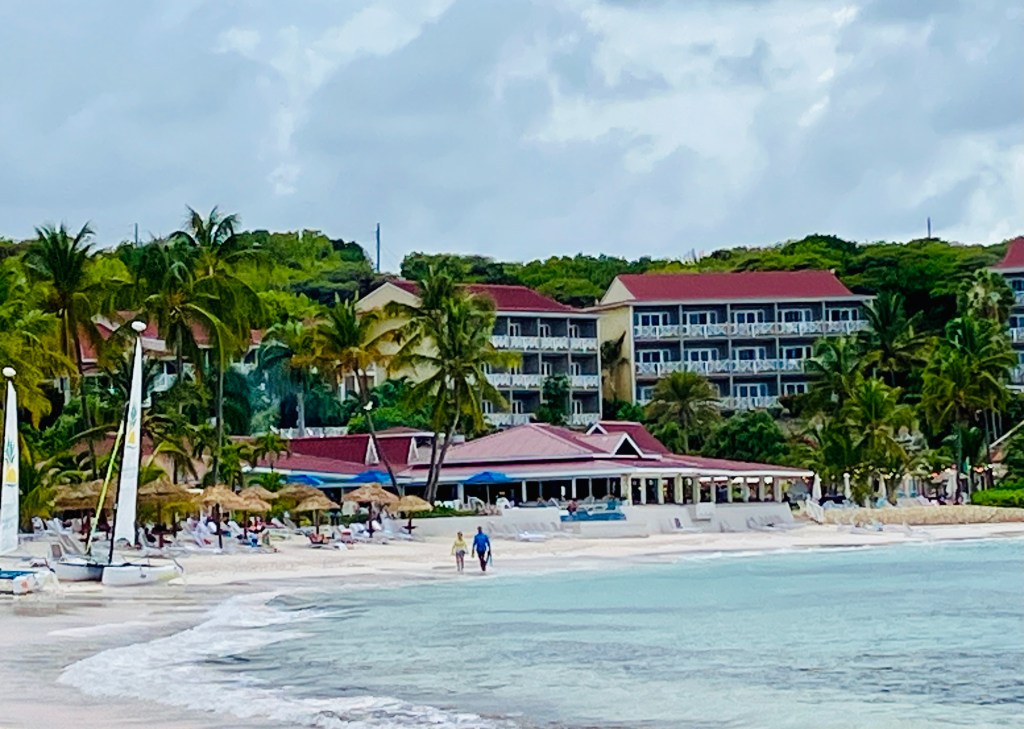
On arrival, it quickly became apparent that Long Bay naturally divides itself into two distinct worlds. At one end, the guests of Pineapple Beach Club enjoyed the comforts and convenience of their all-inclusive resort. At the other, locals, independent travellers and day-trippers, like us, gathered to enjoy the same beautiful stretch of sand, but in a rather more informal way.

We hired sun beds and an umbrella from a friendly, local gentleman who immediately made us feel welcome. As a novice snorkeler, I was particularly grateful for the advice he shared about the best places to enter the water, the direction of the currents and the varying sea depths along the bay. Local knowledge like that is invaluable and often makes all the difference between a good day and a memorable one.

As it turned out, we couldn’t have chosen a better spot. The sea was wonderfully warm, even by Caribbean standards, and the underwater life was surprisingly abundant. Shoals of fish seemed to be everywhere, darting amongst the rocks and seagrass, providing plenty to admire during my snorkelling adventures. I spent far longer in the water than I’d originally intended, simply enjoying the clarity, warmth and marine life.

The only downside to Long Bay was the lack of anywhere to grab a bite to eat as the local beach bar at our end of the beach was closed for the season. After a day of sunbathing, swimming and snorkelling, we found ourselves getting hungry and eventually had to pack up a little earlier than planned. Still, that simply gave us an excuse to continue our exploration of Antigua as we headed off in search of dinner.

Our search took us around thirty minutes south-west to Papparazzi Pizzeria and Bar at Nelson’s Dockyard. Ordinarily, we might not have chosen pizza whilst living in Antigua, preferring to seek out dishes we couldn’t easily find back home. However, the restaurant had come highly recommended by the owner of our accommodation, and curiosity eventually won out.

Arriving shortly after 5pm, just as the restaurant was opening for the evening, we found ourselves among the first customers. We were welcomed by Justin, a friendly young local who, as it turned out, lived not far from Long Bay himself.
With the restaurant still quiet, conversation came easily. Before long, he and my husband were discussing English Premier League football. An Arsenal supporter and talented athlete who had represented Antigua on neighbouring islands, Justin was eagerly anticipating the Champions League Final the following evening and even invited my husband back to watch the match on the large screen in the bar.

The pizzas proved every bit as good as we’d been promised. One of the more unusual features was the opportunity to add Caribbean-inspired toppings such as jerk chicken, while the option of ordering a half-and-half pizza made it easy to sample more than one combination.

As the sun slowly began to set across the harbour, we enjoyed our meal from an outdoor table overlooking the bay.

It was a familiar style of restaurant, but one that had been given its own distinctly Caribbean character. Combined with the warm welcome and relaxed setting, it provided the perfect end to a memorable day on Antigua’s east coast, and it’s somewhere we’ll certainly return to if the opportunity arises.

The meal provided a fitting end to what had already been an excellent day on Antigua’s east coast.

In fact, our experience at Long Bay left such a positive impression that we found ourselves returning a second time whilst living on the island.
Our original plan had been to spend the day at Half Moon Bay, one of our favourite beaches from a previous visit to Antigua in February and also on the East Coast. Unfortunately, when we arrived we discovered that the beach was heavily affected by sargassum seaweed. Disappointed, but unwilling to waste the day, we decided to retrace our route and head back to Long Bay instead.

It turned out to be an easy decision. The warm, clear water, excellent snorkelling and relaxed atmosphere were exactly as we remembered from our first visit. Sometimes the best travel experiences aren’t the ones you carefully plan, but the places you happily return to when your original plans fall through.

With its warm waters, excellent snorkelling and relaxed local atmosphere, Long Bay proved well worth the drive, offering yet another reminder that some of the island’s best experiences are often found away from the resort gates.

Final Thoughts
Looking back, it’s not just the beach that stands out in our memories of Long Bay. It’s the friendly local advice that led us to the best snorkelling spots, the abundance of fish beneath the surface, the conversation with Justin over football, and the sunset enjoyed over dinner at the end of the day. Together, those moments captured exactly what we loved most about Antigua: beautiful places, welcoming people and the occasional surprise that turns a good day into a memorable one

Have you ever found that a change of plans led to an even better day than the one you’d originally planned? Let me know in the comments below – I’d love to hear your stories.

And if you enjoyed this post, a like is always appreciated and helps others discover my travel adventures too.

A Month in Antigua: Embracing Relaxation and Beaches

I can’t stress this enough: we are not in Antigua on holiday we are living here!

We’re not working our way through a list of must-see attractions, racing from beach to beach, or ticking restaurants off an itinerary. In fact, one of the reasons we came here for a month was to do all those things we never seem to find time for at home.

That carry-on suitcase wasn’t just stuffed with dried goods for cooking (see my previous post). It was also packed with everything we needed to continue some of our everyday hobbies and interests. For me, that meant six weeks’ worth of magazines from my annual subscription that had been piling up unread, plus another monthly magazine of which I already had six neglected copies waiting for attention. I also brought a couple of travel books to help me research a future trip.

My husband packed a specialist photography book that he’s been meaning to read for ages to help develop his skills, and between us we brought our Kindles, iPads and my MacBook.

The funny thing is that, even though we’re retired, there never seems to be enough time for any of this when we’re at home. Life has a habit of getting in the way. There are always groceries to buy, meals to cook, gardens to tend, DIY jobs to tackle and housework to do.
On top of that, I attend four or five gym classes every week and volunteer as a local Parish Councillor.

Lately, we’ve realised something else too. Although we’re often busy, we don’t actually spend that much time together. My husband heads off with his photography group, I meet friends for coffee, and we enjoy the occasional lunch or evening meal with friends as a couple. But quality time, just the two of us, has become surprisingly rare.

So while we’ve been busy catching up on reading, pursuing our hobbies, shopping at local markets and cooking our own meals here in Antigua, we’ve also rediscovered something rather important: making time for each other by taking some time out.

So What Do You Do In Antigua On A Day Out?

It’s really simple, you go to the beach!
We had an itinerary back in February when we were here and in those 10 days pretty much saw anything of interest that we wanted to see.

Antigua is only 14 miles long and 11 miles wide but it has 365 beaches—literally one for every day of the year. This is one of the island’s most famous claims to fame.
Back in February we visited Dickinson’s Bay, Half Moon Bay and Bird Island leaving us 362 other beaches to explore!

West Coast Beaches


With between 150 and 200 of Antigua’s beaches located on the west coast, where we are staying, it seemed logical to focus our day trips on this stretch of coastline, keeping travel distances short and allowing more time to enjoy each destination.

Darkwood Beach

Just a 30-minute drive south of us, on the west coast of Antigua, is Darkwood Beach.

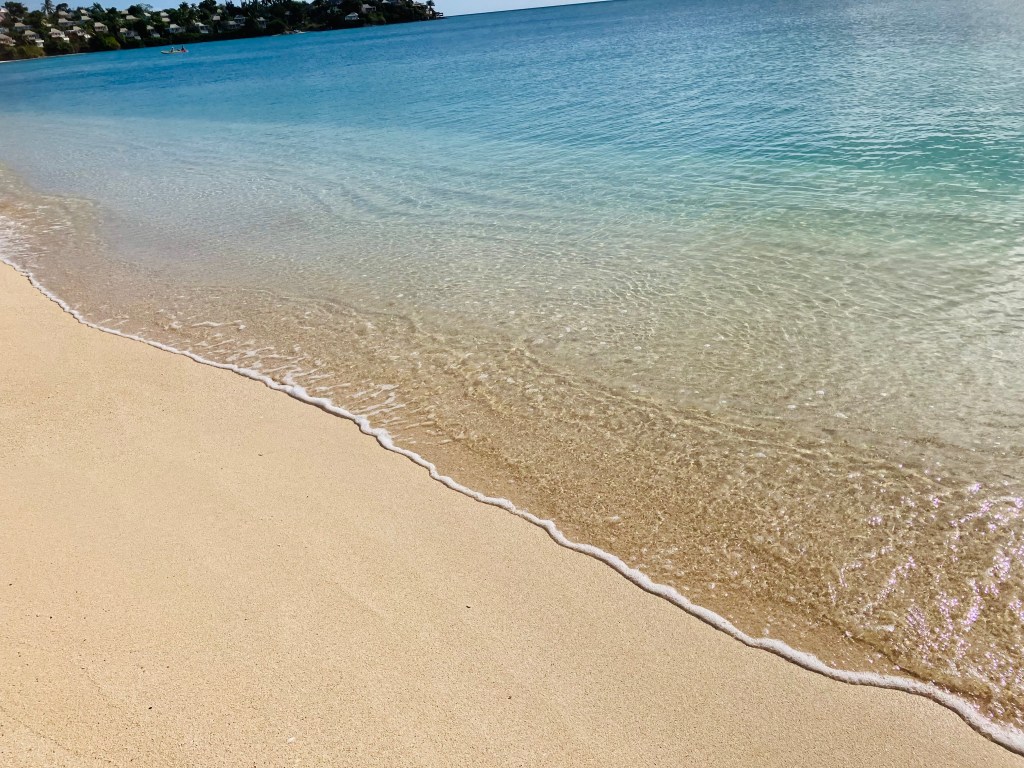
Peak season is now over and so we discovered a very different side to one of the island’s most beautiful stretches of sand. Gone are the crowds and the hunt for a sunbed and umbrella; instead, we were greeted by wide-open views, a gentle soundtrack of rolling waves, and the feeling that we had stumbled upon our own private corner of the Caribbean.

The beach itself is every bit as stunning as the postcards promise, with powder-soft white sand and water that shifts from pale turquoise to deep sapphire depending on the light. But it’s the sense of space that really stands out. You can walk along the shoreline for several minutes without passing another soul, making it the perfect place to slow down, read a book or, in my case, a magazine, and soak up Antigua’s laid-back charm.

This time of year also brings a more authentic feel. Only one of the local beach bars was open, operating at an easy pace. An occasional tropical shower only added to the atmosphere, sweeping across the bay before giving way to sunshine and a relaxing afternoon.

Mid Afternoon, we left the beach and headed a little further south to Morris Bay to try a local eatery called Gina’s Cook Shop. Unfortunately, despite several websites showing opening hours that suggested it would be open on the day of our visit, we arrived to find the doors firmly shut. With our meal plans scuppered, we made the return journey and opted for one of our trusted local haunts closer to home instead.

Darkwood Beach in the quieter months isn’t about ticking off attractions or chasing activities. It’s about embracing the simple pleasures: a swim in warm, crystal-clear water, a cold drink with an ocean view, and the rare luxury of having one of Antigua’s finest beaches almost entirely to yourself.


Ffryes Beach

Just 5 minutes up the coast from Darkwood Beach, coming back towards home is Ffryes Beach.
For much of the day, we spent here, it felt as though we had stumbled across a quiet corner of Antigua that everyone else had forgotten about. Apart from a handful of visitors stretched out beneath the trees that line the beach, there was plenty of space and very little noise.

We decided to hire a couple of sunbeds and an umbrella and made a point of finding the person responsible so we could pay for them. Judging by the number of people using the facilities throughout the day, not everyone seemed quite as concerned about settling up and supporting the local economy.

The sea was beautifully calm and clear, making it easy to spend long periods drifting between swimming, snorkelling and simply floating. Beneath the surface we spotted a few fish and several tiny starfish, which was an unexpected bonus. Another surprise was the number of yachts that appeared during the day. Every so often another would glide into the bay and drop anchor, adding to the relaxed atmosphere.

Behind us, the Tikki Bar provided a soundtrack of familiar 1980s songs that drifted across the sand throughout the afternoon. The economically priced menu was fairly limited, which perhaps wasn’t surprising given that we’re visiting during the quieter shoulder season, but that didn’t detract from the experience. We enjoyed lunch at one of the carefully laid tables, complete with tablecloths and small arrangements of dried flowers that gave the place a more personal touch than you might expect from a beach bar.

With so few customers around, Dion, who looked after us, had time to chat. He was friendly, welcoming and happy to talk about life on the island once the cruise ships and peak-season visitors disappear. Those conversations often end up being the moments I remember most from a trip, offering a glimpse of a place beyond the beaches and holiday brochures.

The rest of the day passed at an unhurried pace. We read our books, stretched out in the sunshine and wandered into the sea whenever the heat became too much. There was nothing particularly remarkable about the day in the conventional sense, no grand sights or adventures, but that was exactly what made it memorable.
Sometimes the best travel days are simply the ones where there is nowhere to be, nothing to tick off a list, and enough time to appreciate the simple pleasure of doing very little in a beautiful place.


Valley Church Beach

After the peaceful solitude of Ffryes Beach, our next day out took us to Valley Church Beach, again just a five-minute drive closer to home. The experience couldn’t have been more different.

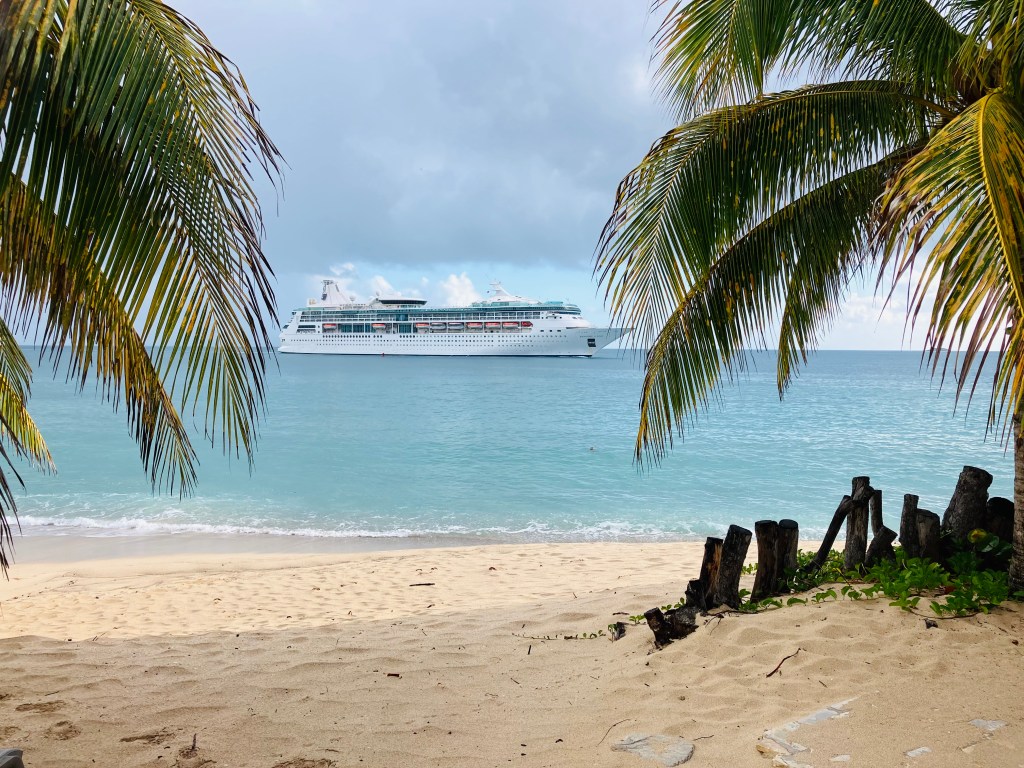
Although it is currently shoulder season, a cruise ship was in port that day, bringing a lively influx of visitors, many of whom appeared to be Brazilian. Their upbeat music drifted across the sand, adding a vibrant soundtrack to an already beautiful setting.

Far from detracting from the experience, the buzz gave the beach a cheerful energy. Groups gathered under umbrellas, children splashed in the shallows, and the normally tranquil shoreline felt a little more animated than usual. Yet Valley Church Beach is large enough that it never felt crowded, and there was still plenty of space to stretch out and enjoy the stunning views across the turquoise water.

The beach restaurant was doing a brisk trade too, with most tables occupied and staff kept on their toes. Even so, everyone remained wonderfully friendly and welcoming. There was none of the rushed atmosphere you sometimes encounter when a venue is busy. Instead, service came with smiles and a genuine warmth that seems to be part of everyday life in Antigua.

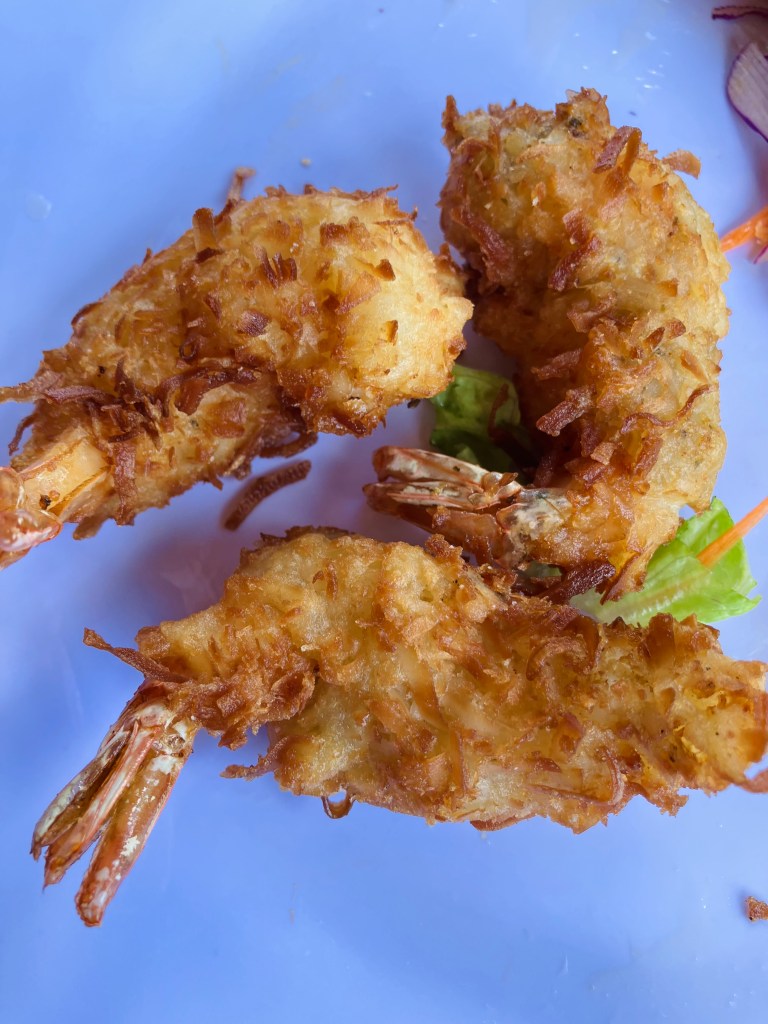
Lunch turned out to be one of the highlights of the afternoon. I opted for the coconut shrimp and was not disappointed. The prawns were plump, succulent and coated in a crisp coconut crust that struck just the right balance between sweet and savoury.

There were more than this but I tucked in before taking my photo 😊

One thing worth noting is that, like many businesses that cater heavily to cruise ship visitors, prices at the restaurant were listed in US dollars rather than Eastern Caribbean dollars. This is fairly common at some of Antigua’s more visitor-focused beaches and often extends to sunbed and umbrella rentals as well.
While the food was enjoyable and the setting superb, visitors staying on the island for longer periods may notice that venues pricing in US dollars (aiming their menu at the cruise customers), can work out considerably more expensive than those catering primarily to locals and day trippers charging in the local currency.

Sitting there with a cold drink, watching the gentle waves roll ashore and listening to the mixture of Caribbean sounds and Brazilian rhythms, it felt like a perfect reminder that travel is often about the unexpected combinations of people, places and experiences that make a day memorable.

Valley Church Beach may not have been at its quietest, but it was full of life, colour and character—and all the more enjoyable for it.


.Jolly Harbour Beach

Our final beach adventure, on the West Coast, took us to Jolly Harbour Beach, the closest stretch of sand to our temporary home and just a 15–20 minute drive south.

First impressions were a little mixed. On arrival, we discovered major building works underway, creating a modest amount of noise and completely altering the usual route from the car park to the beach. Instead of the normal pathway, visitors were directed along a temporary corridor lined with Heras fencing. For a moment, we genuinely wondered whether we’d be able to access the beach at all, but curiosity got the better of us and we followed the signs.

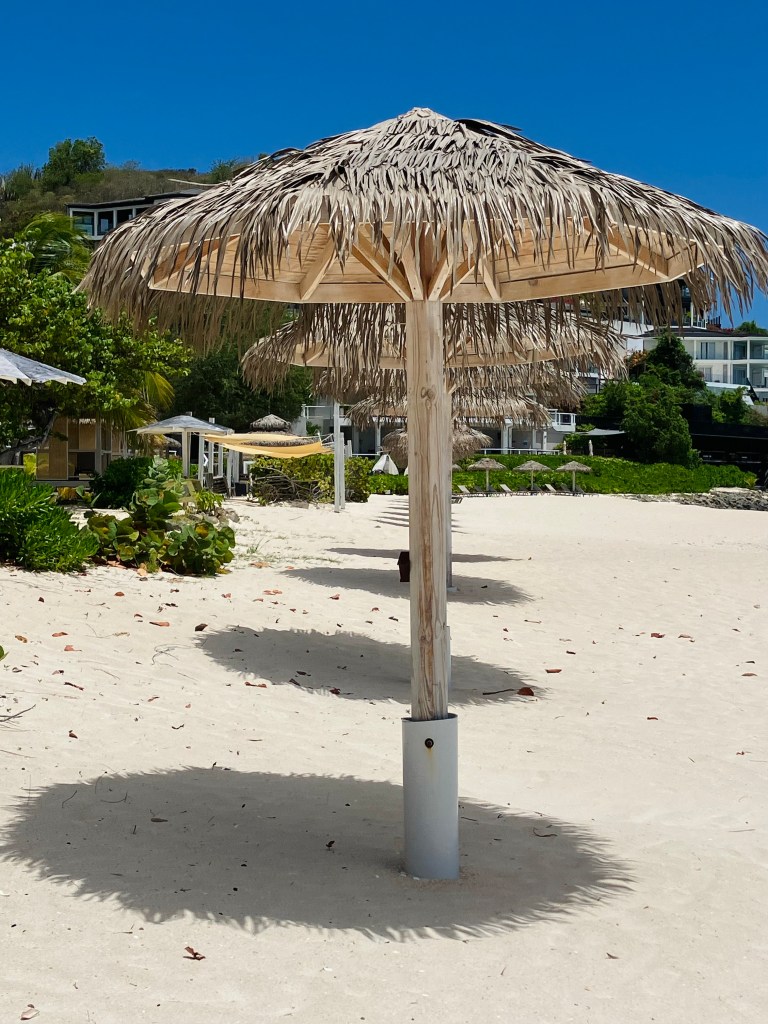
Once on the sand, we headed left and settled beneath one of several permanent wooden umbrellas with a pair of sunbeds beneath. It seemed the perfect spot.
My husband volunteered to return to the car for our bags, only to be intercepted by two staff on patrol who politely explained that the umbrellas belonged to the neighbouring resort and weren’t available for public use.

Not exactly the start we’d imagined.

Fortunately, what could have been an awkward encounter turned into quite the opposite. One of the gentlemen couldn’t have been more helpful.
He offered to drive both of us back to the car to collect our belongings and then return us to a more suitable area of the beach. He even advised us to set up further to the right, beyond the building works, explaining that the prevailing wind would otherwise carry dust in our direction.

His advice proved spot on.

The beach itself was almost deserted. With it being shoulder season, there were very few independent visitors around and, coupled with the construction work, parts of the beachfront felt surprisingly quiet, almost abandoned. Yet there was something rather appealing about having so much space to ourselves. Even the occasional tropical rain shower failed to dampen our spirits.

In fact, despite the less-than-promising start, Jolly Harbour Beach ended up being one of our favourite beach days. The beach bar was quiet, but the service was anything but indifferent. The waiter was genuinely warm and welcoming and happy to chat. The food tasted as though it had come straight from a family kitchen rather than a commercial restaurant—freshly prepared, full of flavour and unmistakably Caribbean in style.

The sea was beautifully clear and inviting, although snorkelling proved a little disappointing, with very little marine life to be seen.
Somehow, though, that hardly mattered. Between the empty beach, the friendly locals, the relaxed pace of the day and the excellent food, Jolly Harbour reminded us that a great beach day isn’t always about perfect conditions. Sometimes it’s the people you meet and the unexpected turns a day takes that make it memorable.

Final Thoughts:
After visiting four very different beaches, we’ve realised that our favourite days in Antigua aren’t necessarily about finding the “best” beach. They’re about slowing down, enjoying the moment and embracing a way of life that leaves room for simple pleasures.
Whether it’s a quiet stretch of sand, a chat with a local, or lunch overlooking the Caribbean Sea, each beach has offered its own reminder that sometimes the greatest luxury is simply having nowhere else to be.

I’d love to know which of Antigua’s beaches you would choose to spend a day on, so please share your thoughts in the comments. If you’ve enjoyed this post, I’d be grateful if you’d give it a Like—it helps others discover the blog and encourages me to keep sharing our Antigua adventures.


Living in Antigua: Discovering Local Life Beyond Tourism

So here we are in Antigua settled into our temporary home starting to live like a local.
Just a week into this new life I’ve already noticed some differences to when we were here in February.

It’s the Shoulder Season:

As our first week began to unfold we soon discovered that whilst this time of the year is described as the shoulder season (May and June) it’s actually more like the “off” season. Peak season is December to April which usually offers dry, sunny weather.
Hurricane season (July–November) brings a higher risk of storms.

Back in February there were three cruise ships coming in every day except on Sunday but now there is one cruise ship a week. The marked difference in daily visitors to the island reflects in a lot of beach bars and restaurants being closed and sun beds and umbrellas being put away and stored until November.
As we have discovered with some of the local eateries you cannot rely upon advertised timings on Google, Tripadvisor or even their own websites to be accurate.
The only restaurants or cafes likely to stay open are those with a captive audience, for example, where there is an all inclusive resort at one end of the beach or when it is sited in an area where the locals are happy to pay the prices and will still, therefore, visit all year. Friday nights definitely seem to be take-out night here and Sunday lunch is still very much a main weekly celebration.

Food:

When you decide to live somewhere the idea of eating out becomes a treat as it would be back home. So the first practical lesson we have learnt is where to buy food and water and this has been a main focus in our first week.

Water is safe to drink HOWEVER the main public water supply undergoes desalination and is heavily chlorinated. While it is technically safe, the water can cause minor stomach upset simply because it has a different mineral composition than your body is used to.
We, therefore, have chosen to buy our water. You can buy 5 litre bottles at some of the small local supermarkets.
As we don’t have one nearby and there are only four main supermarkets on the island we are already in the habit of popping out twice a week to buy what we need.

It’s important to ensure that food is as fresh as possible. There are no “sell by” dates here instead the labels display when the meat, fish or chicken was packed and displayed.
Fortunately our local supermarkets are Perry Bay in central St Johns, the capital, which is a 10-15 minute drive and the Epicurean, which stocks a large amount of imported English products from Waitrose, which is about 25 minutes away.

Prices are higher than the UK mainly because Antigua relies on importing 90% of what the island consumes -see “Affordable Dining” .
It’s quite frightening to think that the current Prime Minister has stated “a prolonged disruption to shipping routes (e.g., three weeks without “food boats”) could quickly precipitate a national starvation crisis.”

80% of the food imported comes from the USA so food standards are lower than we are accustomed to in the UK and Europe. We brought some dry goods like pasta, spaghetti, rice, teabags, coffee, breakfast cereals, marmite and peanut butter with us in a carry on suitcase as we knew from our first trip that this would lower our grocery spend.
We are intending to cook fairly simple meals from our repertoire at home, therefore, we only need to buy fresh meat, fish, chicken and eggs from the supermarket.
Prices for these proteins are pretty much aligned with the amount we would pay at home in the UK.
We will then buy basic tinned goods like tomatoes, beans or whatever the recipe requires, which are all imported and significantly higher than we are accustomed to.

In addition to the supermarkets there are produce and fish markets in central St Johns.
Fish is plentiful on the island and fresh fish are landed every day.
Fresh fruit and vegetables arrive on the “green boat” from Dominica normally on Tuesday or Wednesday. and then have to be unloaded
Keen to support the local people we have already popped into town and ventured to both markets to understand the range of goods, prices and quality available.


The ladies within the produce market were really friendly and we soon started chatting to one of the stall holders-Jacqui and picked up a good selection of mainly fruits and salads whilst earmarking her for future purchases.

Not only is the produce fresh but also noticeably different to what we buy in the UK. It’s like everything has absorbed all the sunshine and just grown so much bigger, juicier and sweeter!


A standard avocado like we buy in the UK and then an Antiguan avocado on the right


There weren’t many sellers at the fish market and whilst we bought some “trigger fish” which the vendor kindly skinned and gutted for us there wasn’t a huge selection available. The best time to be here, we discover later, is between 6 am and 8 am in order to get the best variety.

Our trigger fish before preparation and then cooked and on the plate

It is also possible to buy fruit and vegetables from roadside stands when you are driving around the island as we discovered back in February.

The island maybe small but as I explained previously, in my “Tips for First Time Visitors”, the roads are not good. It can take 10 minutes to drive 5 miles!

Economy:

The most evident factor in our first week is that the impression Antigua gives to the world is not the actual reality. We suspected this when we visited for 10 days back in February but it is so much clearer now.
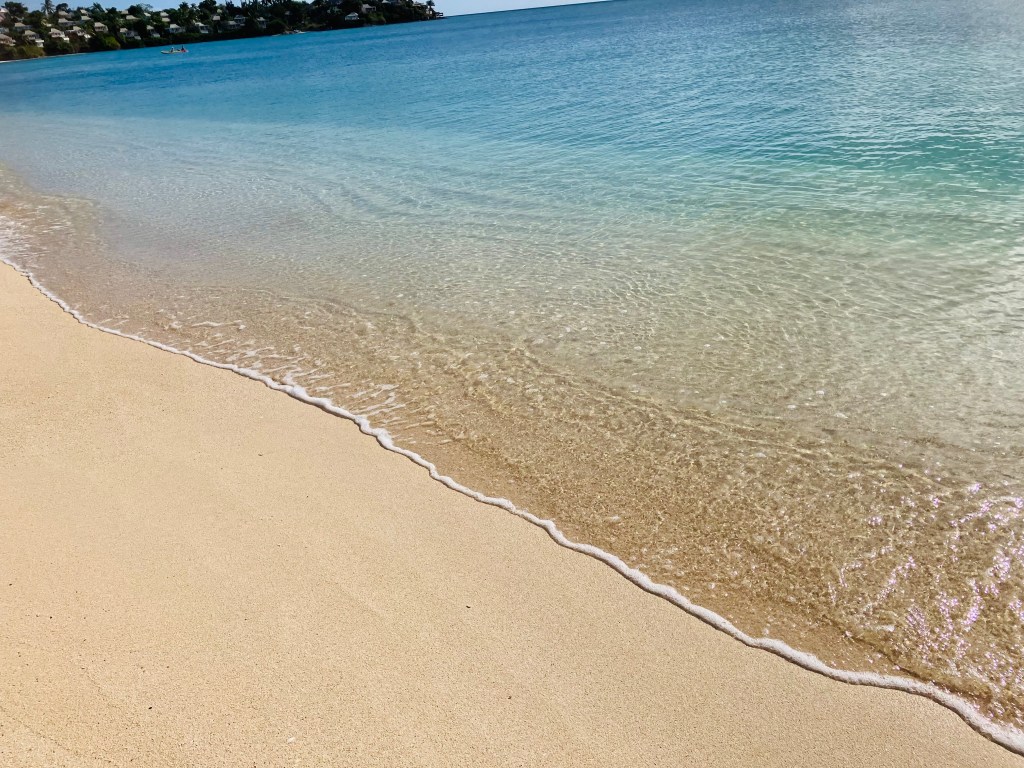
Antigua and Barbuda are not first world countries and are extremely dependent on tourism, which serves as the primary driver of its economy, contributing between 60% to over 80% of the GDP and providing over half of all jobs.
The sector is driven by luxury resorts, cruise ship arrivals, and yachting, primarily attracting visitors from the US, UK, and Canada.

We are in the minority, in so much, as the amount of tourists arriving on the island intending to self cater is only about 35-40%. The island isn’t set up for travellers like us and whilst that won’t have a negative effect on our stay here it is already becoming more apparent that the locals are not benefitting from the current “tourist economy” that exists here.
Research shows me that Antigua is not unique in this scenario.


Millions of Visitors, But Who Really Benefits?

At first glance, Antigua looks like a tourism success story but when you dig deeper this is only superficial.

The Resort Bubble

Many visitors stay in all-inclusive resorts, as a result, luxurious destination complexes line some of the Caribbean’s most beautiful beaches (like those shown below).
Everything is provided: meals, drinks, entertainment, activities, and even private beaches.
As a result, tourists often have little reason to venture beyond the resort gates.

That actually is a positive for independent travellers, like us, because the island isn’t overrun with tourists like, for example, some of the Greek Islands that we have previously visited.

For local businesses, however, that’s a problem.

While visitors may spend thousands of pounds on their holiday, much of that money stays within the resort rather than flowing into local restaurants, shops, tour operators and communities.
Spend time outside the resorts, as we are and a different picture emerges in terms of who benefits from money like this!


These three photos are examples of the “All Inclusive Resorts” on the island.
To stay at the resort shown in the last photo would cost £24,000 for two weeks in January!

Cruise Ships, Quick Visits

Antigua also receives hundreds of thousands of cruise passengers every year. Multiple cruise ships arrive daily in the main season disgorging anything from 6,000 to 18,000 visitors in one day!
They typically take organised excursions, visit a handful of port-area shops, and then return to the ship, often having spent only a few hours on the island.

Unlike overnight visitors, they rarely use local transport, often return to the ship even for lunch, and don’t spend much time exploring independently because they just don’t have the time.

The result is lots of tourist traffic but relatively limited economic impact for many residents. It is clear to us already that a good percentage of the islanders are poor and struggling to even maintain a basic standard of living.

I took these photos of what we labelled as “The Mansion on the Hill”

These three photos were taken just down the hill from this house. The disparity is shocking!

Why Doesn’t the Island Feel More Developed?

This tourism model helps explain why parts of Antigua can feel surprisingly quiet or underdeveloped despite the constant flow of visitors.

Because tourists are largely contained within resorts or cruise terminals, there is less pressure on the Government to invest in wider infrastructure, public transport, or community attractions.
Investment seems to be focused purely on the tourism industry itself rather than the neighbourhoods where local people live.

The Benefits

Luxury resorts generate significant revenue, create jobs, and help maintain the island’s reputation as an exclusive Caribbean destination. 
Tourism undoubtedly, therefore, brings money into Antigua. It’s a vital source of economic activity for a small island of around 100,000 people.

The Human Cost

The challenge is that many Antiguans see only a fraction of the wealth tourism creates.

Jobs are often concentrated in hospitality and service work, which can be seasonal and relatively low paid. Opportunities for local entrepreneurship can be limited when large resorts keep most visitors spending in-house.

Many residents also feel the effects of rising living costs, environmental pressure on beaches and reefs and an economy that depends heavily on decisions made by foreign resort owners, cruise operators, airlines, and global travel companies.

A Fragile Success Story

Antigua’s tourism industry is both a blessing and a vulnerability.

It brings jobs, visitors, and valuable income, but it also creates an economy where much of the wealth leaves the island and many locals struggle to share fully in its success.

In many ways, Antigua is a place where tourism is everywhere, yet its benefits can sometimes feel just out of reach for the people who call the island home.

Final Thoughts:
After just one week of living here rather than simply visiting, Antigua is already revealing itself in ways we never fully appreciated during our previous Caribbean trip.

Beyond the postcard-perfect beaches and luxury resorts lies a very different reality; one of resilience, resourcefulness, and an economy that is far more fragile than many visitors realise.
Living here, even temporarily, means adapting to a slower pace of life, learning where and when to shop, accepting that opening hours are often only a rough guide, and understanding that the island operates according to its own rhythms rather than the expectations of tourists.

What has struck us most is the contrast between Antigua’s image and its reality.
Tourism undoubtedly keeps the island running, but its benefits are not always evenly shared amongst the people who call this place home. Spending time outside the resort environment offers a glimpse into both the opportunities and challenges that come with such heavy dependence on a single industry.

That said, what stands out just as much is the warmth of the people we have met. Whether chatting with market vendors, roadside stall holders, or local residents, there is a friendliness and openness that cannot be found in any travel brochure.

As our month here continues, we look forward to learning more about everyday life on the island, exploring beyond the tourist hotspots, and gaining a deeper understanding of what makes Antigua such a fascinating place to live as well as visit.

For now, one thing is already clear: the real Antigua begins where the holiday experience ends.

I hope you have enjoyed this first post about living in Antigua. If so please give it a “Like” and add any comments or feedback you wish to make 😊

Why We’re Trading England for Life in Antigua

We were scheduled to go on a road trip around Wales starting on May 7th and lasting 26 nights. It was all planned, there was an itinerary, accommodation booked (with free cancellation), a budget in place and money allocated.
However there is always room to change your mind.

While we were in Antigua back in February we spoke to the owner of our Air BnB and asked him if he ever rented it out for longer periods of time, say a month. He was quite keen on the idea but only if we avoided peak season.
Two weeks after returning from the Caribbean and back home, we discussed the idea of going back to Antigua to try an experiment -“Can we live like a local for a month?” and suddenly Wales was put back on the shelf and it was all systems go to try this new adventure.

Why Did We Want To Do This? What Are We Hoping To Achieve?

Is there an alternative to living in the UK?

Ok, I’m going to have to be honest here. I try to avoid digesting too much news because let’s be frank it’s all a bit soul destroying currently.
I try to avoid being drawn into political debates or aligning myself with one particular political viewpoint. I like to have the freedom to choose who I consider to be the right person for the right job. Call me naive but we all have our idiosyncrasies.

I fail to understand how anyone voted for Trump to be President or how the normal person in the street still supports his actions.

I watched a documentary recently created by Panorama and shown on the BBC, here in the UK entitled “Trump and the Tech Giants”.

“Peter Thiel. David Sacks. Elon Musk. Mark Zuckerberg. Jeff Bezos.
These tech titans have pledged their loyalty to President Trump. But what do they really believe and what do they stand to gain? This unfiltered portrait, revealed by insiders, shows where American democracy is heading and how this handful of tech billionaires accumulated such unprecedented power and influence.”

It clearly shows who is benefiting from Trump’s policies and believe me it’s not the everyday man in the street!
I felt this was a really good piece of journalism. It takes a lot for me to say that because I truly believe that the media has a lot to answer for in this current world.
Journalism used to be an honourable career, a job that young people competed to get into university to study. They investigated stories and they told the truth!
Now they write articles based upon their own opinions in order to sell newspapers and amass clicks on line. By expressing their opinions they on longer have to worry about whether their articles are factual and, therefore, being sued because this is just their opinion!
The sad part of this is that people still believe what they read. It’s in the newspaper, therefore, it has to be true!

So what has Trump got to do with me going to live in Antigua for a month?

Well unfortunately we have Trump’s little brother Nigel Farage in the UK.
He heads up the Reform Party which is a right-wing, populist, political party that advocates for strict immigration controls, major tax cuts, the abolition of net-zero climate targets, and the defence of traditional British culture!
If you take the trouble to read about their policies you will see many of them are a repeat of what Trump has already changed or plans to alter in America.

There is a very thin line between immigration and racism and I cannot Iive in a country that advocates for racism.
The next General Election in the UK must be called by August 2029.
Despite UK citizens watching Trump’s actions in America and often vocally disagreeing with him there is a surge towards supporting Nigel Farage.
It seriously worries me. I cannot live in a country that is led by this man!

So maybe the only alternative is to look to leave.

I worked hard for my retirement and now I just want a Simple Life

Is there such a thing as a simple life? Isn’t life what we make it?
I don’t know is my truthful answer.
I led a very busy life. I was a career woman working 50+ hours a week. A single parent with two children paying for childcare so I could earn enough money to pay the bills, keep a roof over our heads and put food on the table.
Yes I earned enough that we could have 2-3 weeks away each year, memorable Christmases and special birthdays but to do all that I juggled many balls. In fact I was a professional ball juggler!

So when you then step away from that world and try to slow down it’s not easy. You are not used to doing nothing or even having time to yourself.
You are used to feeling guilty when you read a book in the bath, take some time out for yourself to maybe go shopping or even go to the gym!
I even wrote a post about it entitled “Why Do I Struggle To Put Myself First?”

I’m thinking that maybe if you strip away your previous life and then move yourself to a new country and a new culture then perhaps it’s easier to press reset. To restart your life in a new format so you have time for everything without rushing around balancing diary entries and sometimes still feeling like you are pushing a heavy cart uphill

Maybe if I live somewhere that’s warm all year around life will feel better?

I must admit the weather in the UK, like so many countries is becoming more and more erratic. The seasons seem to blend into one.
Autumn lasts maybe a week, just enough time for the leaves to fall off the trees and then it starts to rain. The rain just goes on and on……….

A real winter seems to be a figment of my imagination.
6-10ft snow drifts that prevented the buses getting up onto the hill, meaning we could skip school and stay at home making snowmen, are a distant memory.
Instead it rains, temperatures are fairly mild through the traditional winter months and experiencing a White Christmas is definitely something in the past!

Spring is like Autumn. It last longs enough for the daffodils and primroses to poke their heads above the grassy parapet before the rain and wind blow them flat.If we are lucky the rain finally stops around the beginning of April in time for Easter.

Summer has been all over the place. We’ve had hot weather in May and June and then changeable, cloudy skies and even rain in July and August when the children are off school. Then we had one summer recently when it was mega hot.
Everything is so extreme. But there’s nothing to worry about because Trump and Farage say global warming is unimportant and economically unsound!

So can I live in a warmer climate? Will I miss the odd snowy day, seeing the lambs gambolling in the fields in Spring and walking through the Autumn leaves as the nights draw in?

Can I live like a local and not like a tourist or traveller?

Will Antigua still hold the same appeal when you are living like a local?
As a tourist on holiday you focus your time away into seeing the key attractions and spending nights out savouring different foods because your time is limited. You are focusing everything into one or maybe two weeks away on holiday per year and money is more available.


When you switch to travelling, as I’ve talked about in “Our Journey: From Holidays to Authentic Travel Experiences” , you have a tighter budget mainly because you want to see as much of the world as you can before this last quartile of your life expires. You go away, therefore, more frequently.
In our case we do three main trips a year with the odd additional shorter adventure thrown in. You still see the key sites but you tend to self cater and only pop out to experience the local cuisine maybe 1-2 times a week. Managing your budget is real!

So if you then alter that still further and actually go and live somewhere then suddenly seeing the sights disappears. You’ve possibly done that already or if not they become part of normal life where you maybe go out once a week and eating out is a treat as it would be back home in England.

The price of buying food at supermarkets will no doubt become very real.
And what am I going to do every day when suddenly some of my normal hobbies are not available?

Can you actually replicate your life in the UK somewhere else?

Well the flights are booked. Our accommodation on the beach in Antigua is waiting –think Death in Paradise beach and palm trees, we have a car waiting for us to pick it up at the airport and a budget worked out.
Lets go and find out!

Final Thoughts:
Have you ever thought about living in another country? What made you decide to do this? What would put you off moving? What would you miss?
I’m interested in hearting from you and if you have enjoyed my article please give it a “like”

Exploring the Best Local Foods During My Travels

After sharing my favourite cities and exploring some unforgettable places of interest, I found myself reflecting on something even more powerful — those rare, spine-tingling “WOW” moments that travel gives us.

You know the ones. The moments when a view stops you in your tracks, when reality somehow feels bigger than imagination, and for a few seconds you simply stand there in awe. What I’ve realised over the years, though, is that these moments are often impossible to recreate in quite the same way twice.

I discovered this when I returned to the Grand Canyon in 2023 with my husband, who was seeing it for the very first time. Watching his reaction was unforgettable — complete amazement, total silence, pure wonder. Yet for me, despite still admiring its immense beauty and scale, the experience felt different from my first visit a decade earlier. The magic was still there, but that initial jaw-dropping impact could never quite be repeated.

Trying to narrow down my greatest travel WOW moments proved almost impossible. Every memory seemed to lead to another breathtaking place, another unforgettable view, another moment that deserved a place on the list. In the end, one post simply wasn’t enough, which inspired me to expand the journey into Top 15 Must-See WOW Moments from Around the World and finally Discover My Top 5 Favourite Panoramic Views.

This marks the final post in this travel series — and it’s dedicated to one of my absolute favourite parts of travelling…

FOOD

Because long after the suitcases are unpacked and the photographs are filed away, it’s often the flavours, aromas, and unforgettable meals that stay with us the most.

The truth is, I hardly know where to begin. Over the years we’ve tasted our way through an incredible variety of food experiences — from beautifully prepared local dishes and indulgent desserts to simple street snacks, bustling food markets, individual shops, hidden cafés, and tiny family-run restaurants serving recipes passed down through generations.

Travel has definitely changed the way we eat too. I still remember holidays where eating out every evening was simply part of the experience. But long-term travel comes with a different mindset — and usually a much tighter budget. These days, we often cook for ourselves or keep meals simple, which somehow makes those occasional treats even more memorable. A special dinner after a long day of sightseeing, a perfect pastry discovered by accident, or a comforting local dish enjoyed in the right place at the right moment can become just as unforgettable as the landmarks themselves.

Every place featured in this list is somewhere we have personally visited, eaten, or bought food from, making each recommendation a genuine part of our own travel story rather than simply a guidebook suggestion.

Number 15:

In a world where more and more we seem to be focused upon convenience it’s wonderful to discover traditional, individual, small shops as we see here in the French city of Lille. Below you will see an example of a “Boulangerie” dedicated to bread and cakes, not unusual in many French towns and cities.
Then there is the unique “Le Comptoir du Miel” which is a speciality artisanal honey boutique, which specialises in direct sales of rare and unusual honeys sourced from independent beekeepers across France and around the world.
You can find a wide variety of honeys—including French lavender, organic chestnut, forest, acacia, and international varieties (e.g., Manuka from New Zealand and lychee from Madagascar). We happily took some home with us to enhance our meals at home.

Number 14:

You cannot visit New York without trying a traditional bagel and on our visit we went to Zucker’s Bagels and Smoked Fish on Columbus Avenue and I chose a Reuben with pastrami, sauerkraut, Swiss cheese and Russian dressing.
With a Raspberry and an Apricot Hamantaschen and of course a coffee to go it was less than a 10 minute walk to Central Park, where we parked ourselves on a bench by Strawberry Fields and listened to the regular rotation of buskers who play acoustic Beatles and John Lennon tunes throughout the day .

Number 13:

The Market in Valencia is the best market I have ever been to!
Full of fresh, vibrant produce, beautiful cakes and an array of meat and fish. One day we will return for a longer stay and like the locals frequent this “attack on the senses” to buy our ingredients daily.

Number 12:

Another market but this time in Essoiuria, Morocco where you can buy fish for lunch and then take them across the street where you request for the fish to be cooked for you, taking a seat at one of the tables to enjoy your fishy fare.
This is fish at it’s freshest and such a huge range to choose from!

Number 11:

My first dessert on this list and I can still taste the chocolate now!
Back in 2017 we visited San Francisco and stopped off, after a long day of sight seeing at The Original Ghirardelli Chocolate & Ice Cream Shop for one of their world famous hot chocolate fudge sundaes!

Number 10:

The best tacos I’ve eaten! Earlier this year we revisited Grand Cayman and ate at Tukkas in the East End. I’m still trying to persuade my husband to recreate them at home!

Number 9:

A local haunt of ours which never fails to satisfy –The Lavender Bakehouse.
Sited in Chalford, right near the historic Thames and Severn Canal in the Cotswolds, we have had many lunches here and the odd traditional afternoon tea.
On this occasion, which was July 4th 2020, we ordered a picnic and a wonderful Hummingbird cake.
It was our 5th anniversary of being together and we were suppose to get married on that day but COVID meant we had to put all the plans and preparations on hold.
Not wanting to let the day go by unnoticed we took our picnic to where we first met -the banks of the River Thames at Lechlade

Number 8:

Another recent find which I haven’t even posted about yet. I took my daughter on an impromptu adventure to Bala in North Wales.
While we were there we visited the Pistyll Rhaeadr waterfall in the early morning and then moved onto Lake Vyrnwy.
We walked to the Tavern located inside the Lake Vyrnwy Hotel & Spa, where we chose several items from their tapas menu to share. This was some of the best tapas I’ve eaten, we were outside on the terrace, there was enough for two people in each dish to share and with a wonderful view of the lake below!

Number 7:

I am not a massive fan of pizza so it takes a really good pizza to impress me and this is surely it!
Back in 2023 we embarked on a trip from Fort Lauderdale following the Eastern seaboard along the coast ultimately to New York. We omitted any interstates or freeways and stuck to what in the UK we would call A roads along with the railroad for the last three big stops: Washington,Philadelphia, and finally to New York.
Whilst in New York we did the Greenwich Free Walking Tour led by Renee who recommended the Bleecker Street Pizza.
We had two slices each both trying the Nona Maria which was truly amazing. Nothing beats this astoundingly good pizza for flavour. We’ve eaten pizza in Chicago, Italy and various other cities of the world and if we could ship this over by super jet we would!

Number 6:

Caribbean food is always on the menu when we fly to any of the islands and having been to Barbados on four separate occasions it has to feature in my top ten foods of all time.
A visit to Browne’s Beach at lunchtime to pick up a bag of freshly cooked Bajan Fish Balls followed by a visit to Grandenes.
Sited on the west coast at Mullins between Holetown and Speightstown is this family run restaurant where Mum’s home cooking cannot be beaten!

Number 5:

In at number 5 is another local haunt. You cannot visit the Cotswolds without frequenting Winston’s Ice Cream Factory.
Sited on Rodborough Common it was opened in 1925 and based upon an old Victorian recipe and to this day sells the best ice cream I’ve ever tasted.
Maybe it’s because it always reminds me of the “ice cream van” of my childhood or maybe because it’s just never fails to impress!

Number 4:

Another “sweet treat” but this time in the form of a French patisserie in central Marrakech!
Patisserie Des Princes is one of the city’s most famous patisseries and a wonderful “hangover” from the French influence.

Inside you will find two large display cabinets where the team of dedicated, skilled chefs create delightful confections that reflect a passion for the art of pastry-making.
We were spoilt for choice and opted for two cakes each, alongside some home made lemonade for my husband and refreshing mint tea for me. The total cost of this little afternoon sojourn was less than £10!!

Number 3:

I love to try authentic food when travelling and here at number 3 is one of my biggest surprises.
Back in 2023 we went on a 3 month adventure around Western Europe travelling by train.
Our first stop was Bilbao where within the market, on the Saturday, was a large food hall where everyone seemed to congregate for lunch.
The various counters, were laden with pintxos of all descriptions. This small snack, typically eaten in bars and taverns are traditional to Northern Spain and especially popular in the Basque region of which Bilbao is the most economically powerful city.
This was our first foray into this Basque delight and WOW! these little delicacies are amazing!

Number 2:

In September 2016 we decided to visit New Orleans.
It was our first big adventure together and so in addition to the usual research to establish what we wanted to do and see I asked my husband to look into restaurants.
What he discovered was the restaurant “Shaya”.
Opened in February 2015, this modern Israeli restaurant, founded by acclaimed Chef Alon Shaya, quickly became a city staple and won the James Beard Award for “Best New Restaurant” in 2016. It became so popular that you had to make a reservation months in advance and boy it didn’t disappoint.
In all honesty it is the best overall meal I’ve ever eaten in a city restaurant. The wonderful pillows of pitta and hummus alone would have had me coming back for every special occasion if I lived locally!!!

Despite still bearing it’s founder’s name Alon left the establishment in 2017

Number 1:

And finally comes this absolute delight and total surprise.
As part of our adventure previously mentioned along the Eastern seaboard of America we booked a trip, in advance, on Hilton Head “The Gullah Heritage Tour” .
As we left the bus I asked the guide if he could recommend anywhere to eat for lunch and he recommended Hudson’s Seafood House on the Docks.
Hudson’s is Hilton Head Island’s oldest and most famous restaurant with 50 years of casual dining experience with spectacular views of the Inter coastal Waterway.
Using one of only two remaining local fishing fleets on Hilton Head Island to bring in fresh-caught seafood straight to their docks and onto your table, the seafood couldn’t be any fresher!
Below is a photo of my chosen starters -Fried Green Tomatoes. I’d never had them before and I’ve never tasted better since!
I followed this up with Low Country Seafood Boil which was also amazing and a dish we have done our best to replicate since, using a recipe by a famous UK chef “Nadia Hussein” 

I hope my photos and narrative give you inspiration to go out there and try to find your own top foodie experiences!
Perhaps you already have an absolute favourite if so why not share it in the comments? I, for one, am always open to a recommendation.

Let me know if you’ve visited any of the places I’ve listed, maybe give this post a like. Let me know what you thought of the food, I’d love to hear from you in the comments