Welcome back to my mini series of WOW moments as I finally reveal my Top 5!
Number 5:
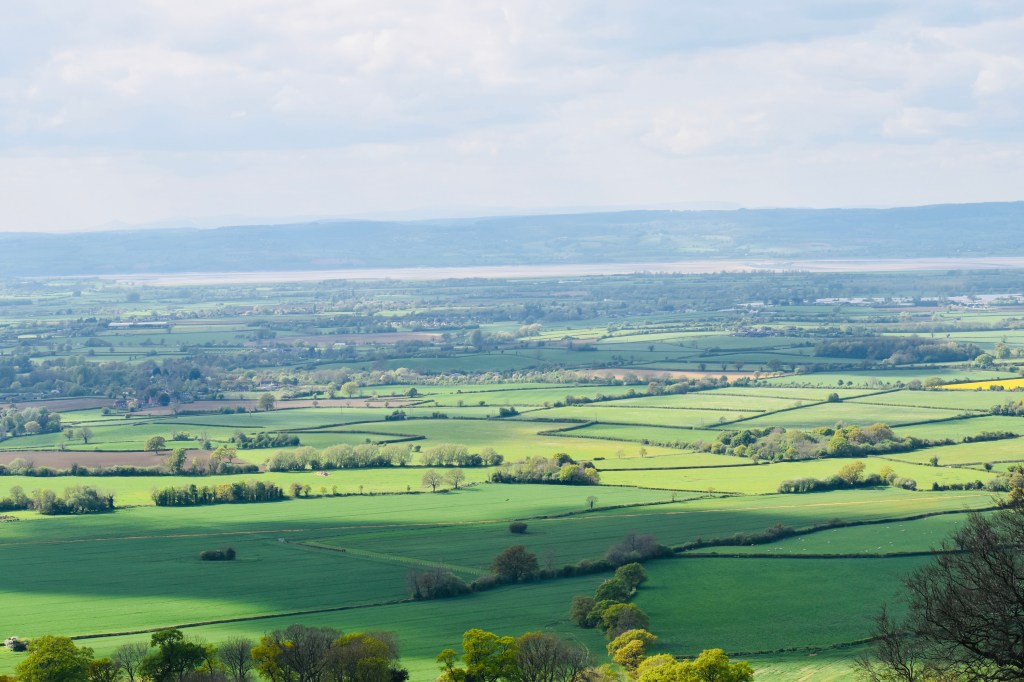
At Number 5 is “home”! Coaley Peak is only a short drive away from where I live and it offers one of the finest panoramic vistas in the Cotswolds. Perched high on the Cotswold escarpment in Gloucestershire, in the West of England, a sweeping patchwork of lush green and golden agricultural fields stretches out beneath the escarpment. The River Severn and its estuary glint in the sunlight, meandering toward the sea. You can often spot the iconic Severn Bridge and the sweeping bends of the water. On a clear day, the striking outlines of the Forest of Dean and the Welsh mountains can be seen beyond the river. This landscape never fails to take my breathe away and the photograph really doesn’t capture this, but its always a WOW whenever I visit.
Number 4:
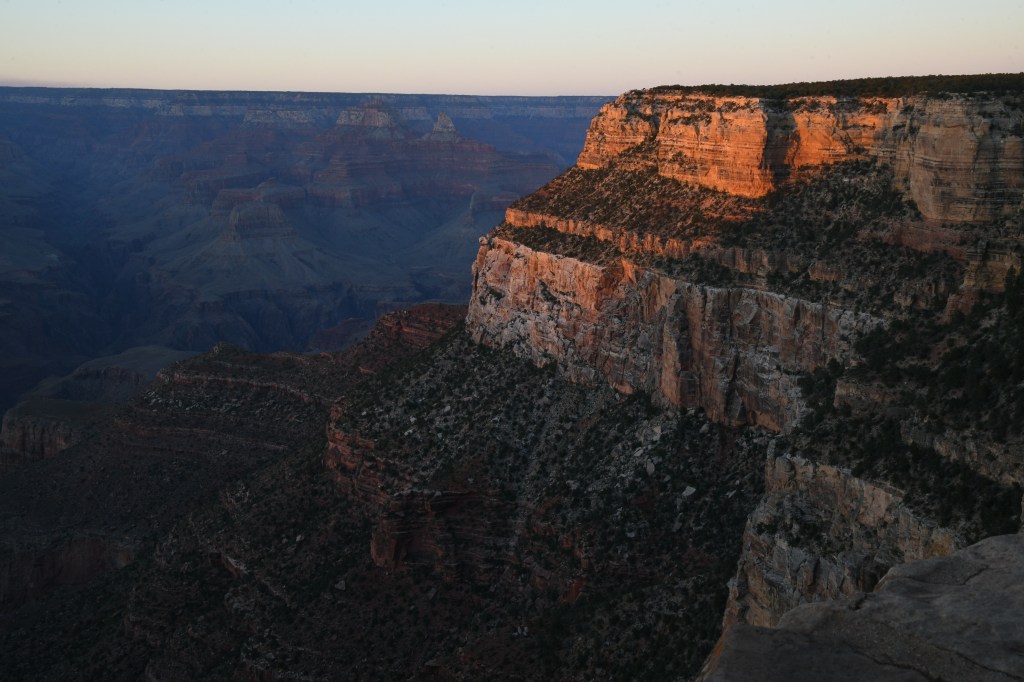
A totally different landscape but no less beautiful. This photograph was taken at sunset back in July 2023 when we paid to stay for a night at The Grand Canyon whilst taking a slight diversion off Route 66. This unbelievable masterpiece that is considered one of the Seven Natural Wonders of the World takes your breathe away on your first visit. There is nowhere quite like it! It stretches 277 miles long, reaches up to 18 miles wide, and plunges over a mile deep and until you see it there in front of you, you cannot appreciate the WOW moment it gives!
Number 3:
Back in 2021 my husband and I embarked on an 8 week road trip around England and Scotland. As part of the adventure we drove the NC500. The North Coast 500 is a 516-mile scenic route around the Scottish Highlands, starting and finishing in Inverness. We drove anti clockwise beginning by travelling up the West Coast and throughout this section you are rewarded with spectacular views and WOW moments at every turn.
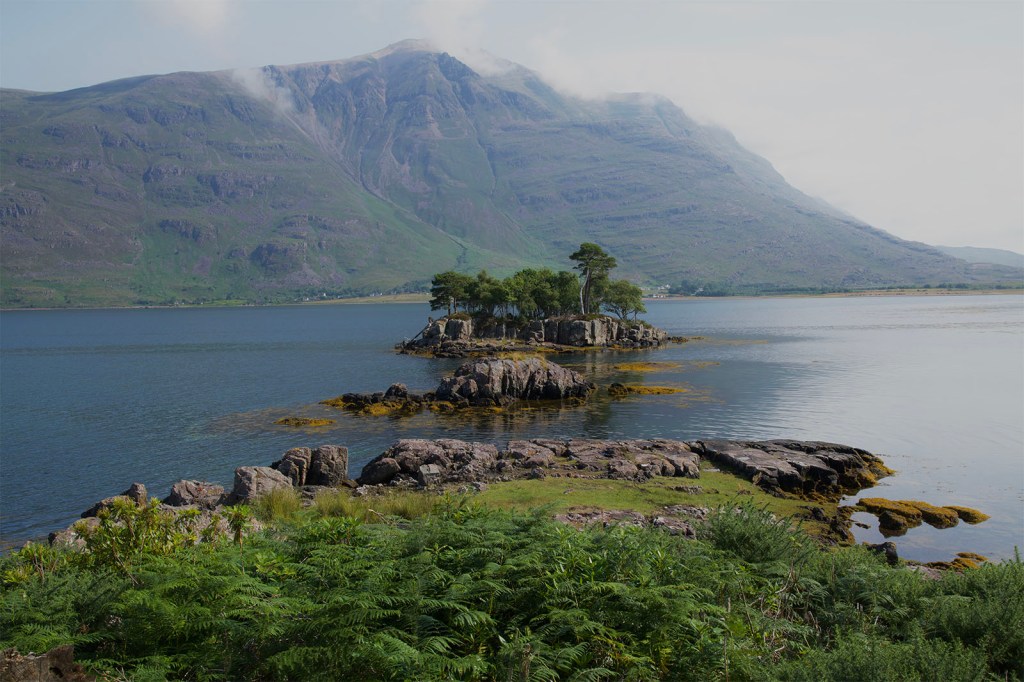
This particular photograph captured by my husband is a view overlooking the waters of Upper Loch Torridon toward the Applecross Peninsula in Wester Ross. The prominent mountain in the background is part of the Torridon range, known for its dramatic scenery and ancient geology and the small island featured in the centre of the loch is named Eilean Chasgaig.
Number 2:
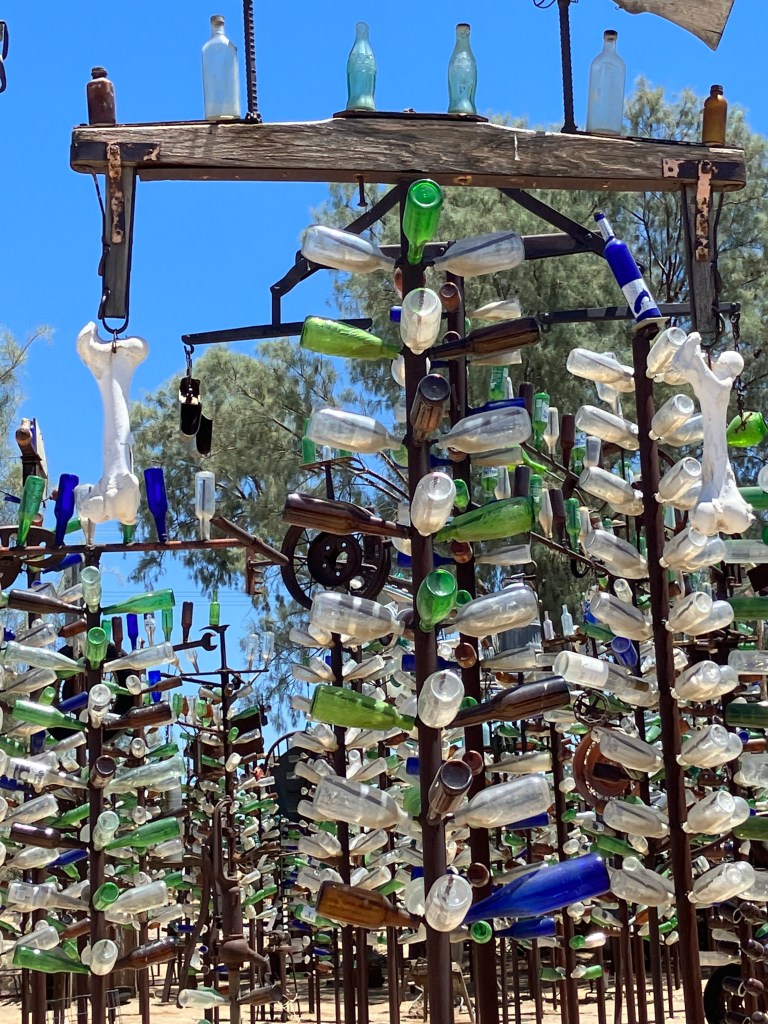
Out along a dusty stretch of old Route 66 near Oro Grande, California, Elmer’s Bottle Tree Ranch is exactly what it sounds like—and somehow much more. Created by artist Elmer Long, this quirky outdoor gallery is a forest of metal “trees” sprouting hundreds of colourful glass bottles that shimmer, whistle, and glow in the desert sun.
Despite its offbeat nature, this ranch was one of my favourite stops on our Route 66 adventure back in 2023 that I had to write about. It’s another place that I will never forget and just filled me with WOW moments. For me it epitomised the individualism of the people we had met en route. This is art in its most imaginative form, what an inspiration Elmer must have been.
Number 1:
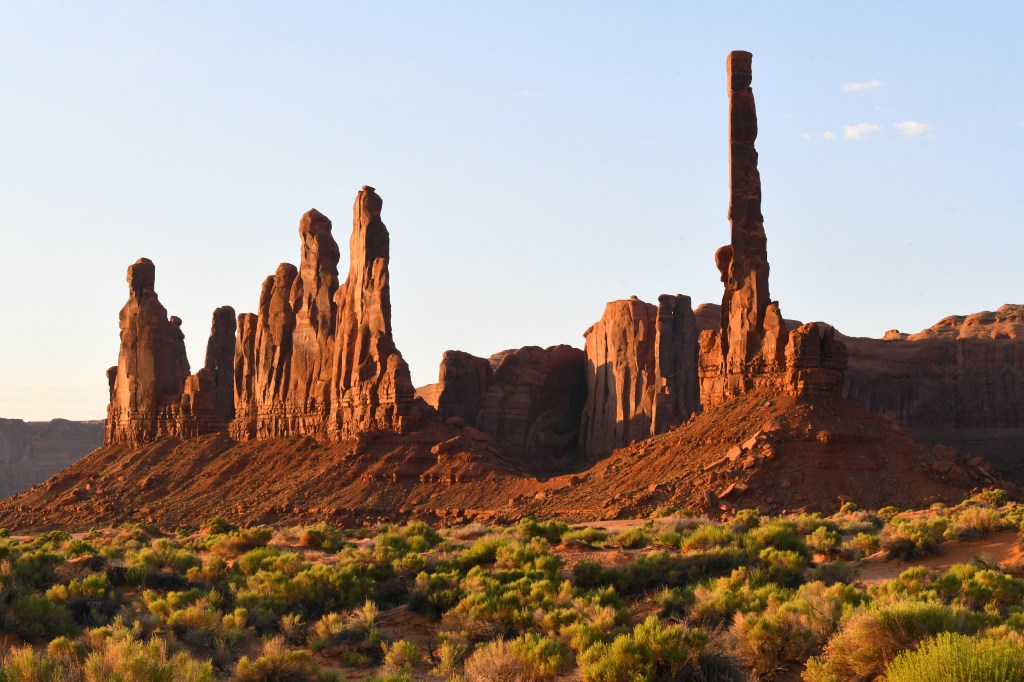
As part of our trip across America back in 2023 we took a detour to Monument Valley. We booked an early morning sunrise tour of this magnificent landscape with a Navajo guide. Surrounded by the magnificent vistas of Monument Valley when the sun was rising in the sky I took a moment to stand and just breathe. To really take in the panorama of the country around me and in that moment I felt more at peace that I probably ever have. There is something unique about this place, a peacefulness, a history, a spirituality that calls to me. It will remain with me forever as my biggest WOW moment.
Interestingly we left after our tour and headed to the Grand Canyon to see the sunset (Photo 4 above). There are some days in your life that you will carry with you to your grave and July 4th 2023 is definitely one of them!
I hope my photos and narrative give you inspiration to go out there and find your own WOW moments amidst forthcoming adventures! If you want to see other photos taken on our travels they are available on Flicker.
Let me know if you’ve visited any of the places I’ve listed, maybe give this post a like. Let me know what you thought when you were there, I’d love to hear from you in the comments
Welcome back to my mini series of WOW moments captured on our adventures around the world.
Number 15:
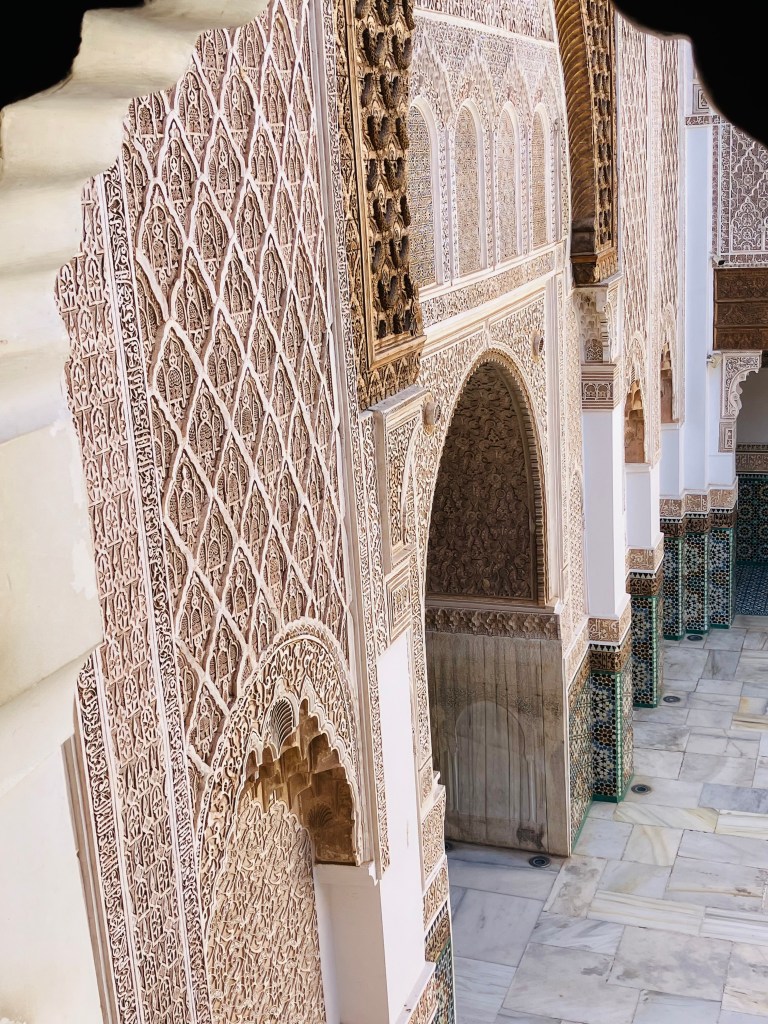
Staying with architecture but of a similar vein to Number 16 on my previous post, let me introduce you to The Ben Youssef Medersa. This is truly a masterpiece, displaying Moroccan architecture through the ages with diverse motifs, vibrant colours, and astounding tile work. The walls and columns are covered with “zellige” -colourful, geometric mosaic tile work with friezes of calligraphy above. I felt like I just wanted to drink it all in and create a forever indelible memory to return to in the future so I could always have this WOW moment.
Number 14:
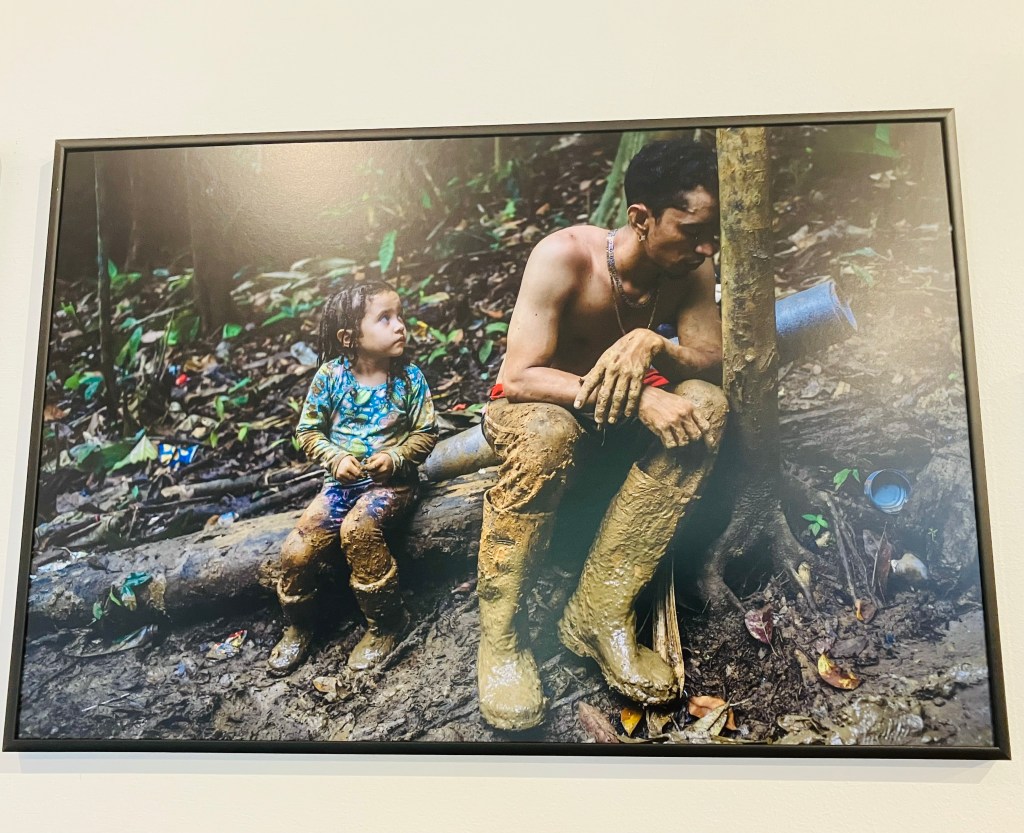
This photograph was on display courtesy of the World Press Photo Foundation which has connected people to the stories that matter worldwide, spending 70 years championing visual journalism. The World Press Photo Contest “is one of the most prestigious competitions in photojournalism and documentary photography, celebrating the most impactful visual storytelling from across the globe.”
We were fortunate to visit last year whilst in London and when you view the photos at this exhibition there is no doubt that they each have a story to tell but behind each lens is a photographic journalist often risking their life to record these images visually for the whole world to see. This photograph is called Paths of Desperate Hope and was taken on September 23rd 2022 in the jungles of the Darian Gap
Luis Miguel Arias (28) takes a break with his daughter Melissa (4) as they climb a hill. They are from Venezuela and joined the over 250,000 migrants who traversed the Darien Gap in 2022. The Darién Gap is a remote, roadless, and dangerous area of rainforest along the border between Panama and Colombia, acting as a natural barrier between North and South America. The lack of roads, the presence of dangerous animals and insects (including venomous snakes and spiders), and the risk of criminal activity (like robberies and violence) contribute to the region’s dangers.
Sometimes a WOW moment can come from other peoples’ courage. I’ve never forgotten this photograph.
Number 13:
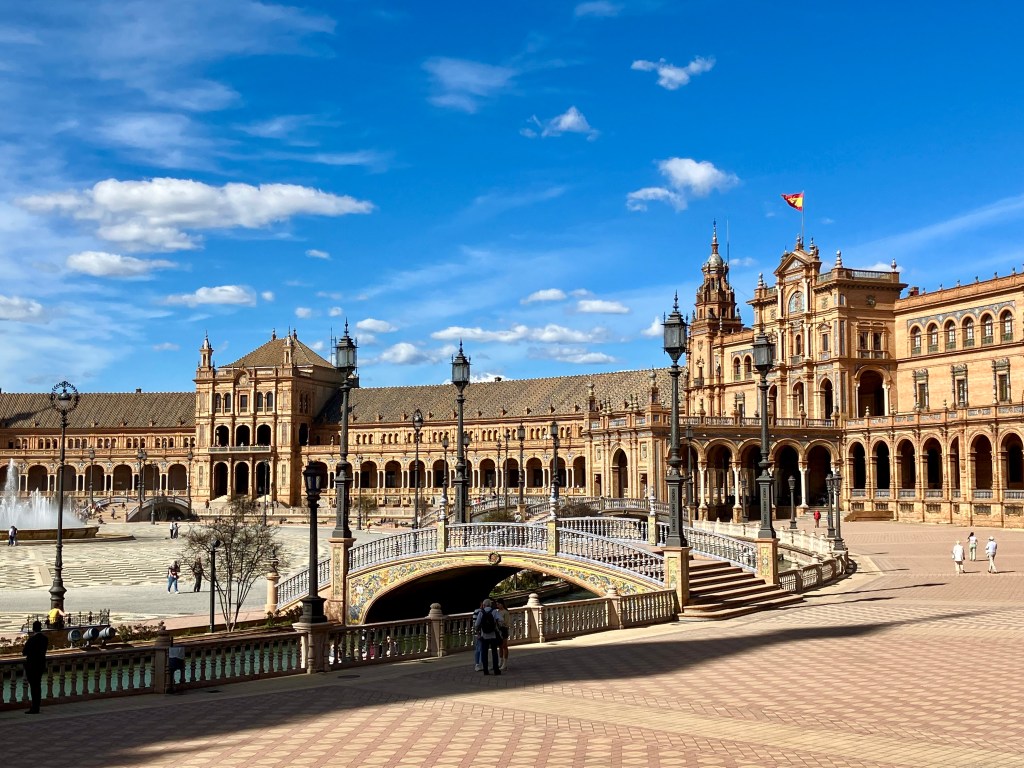
Like many I had seen pictures of the Plaza de Espana in Seville, Spain before but nothing prepared me for the reality when we were touring Western Europe by train in 2023. As we rounded the corner I caught my breath as the magnificence of this Renaissance Revival Plaza spread out in front of me. I am so pleased that we came here at the end of our day as there was no pressure on time and we could wander at will absorbing the atmosphere, taking a break whenever we wanted to and just being in this truly WOW moment.
Number 12:
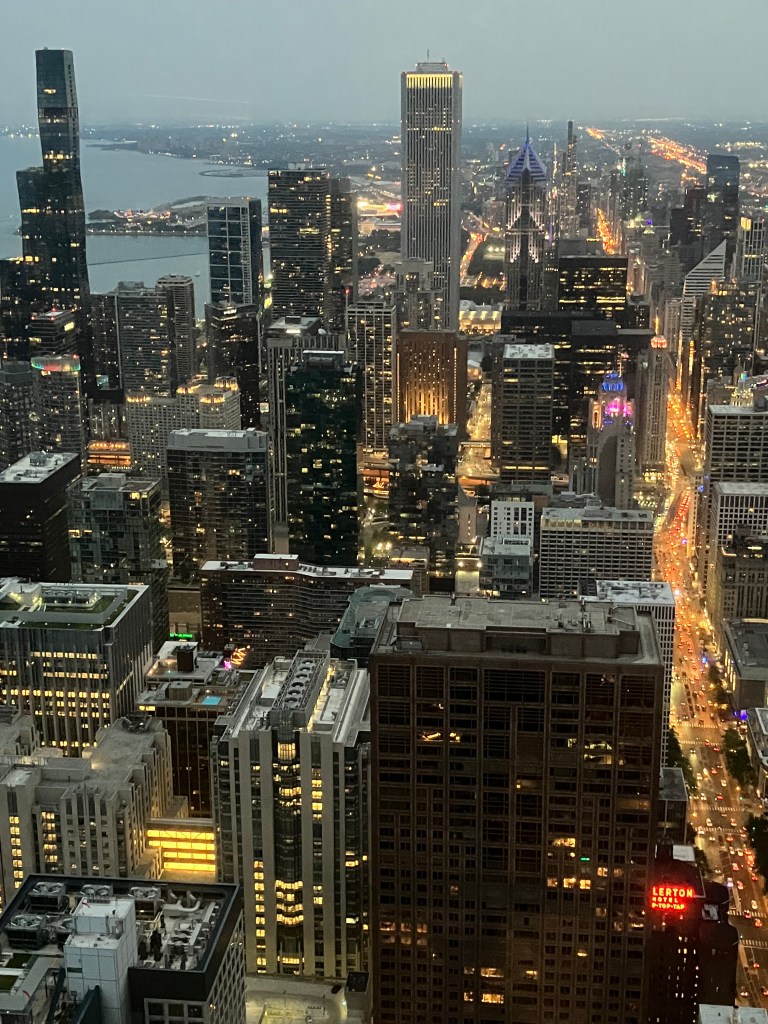
Another cityscape but this time taken at night in Chicago. We visited the city for a week before embarking on the famous Route 66 road trip from Chicago to Santa Monica pier in LA in the summer of 2023. This particular WOW moment was just the sheer beauty created by the different lights below.
Number 11:
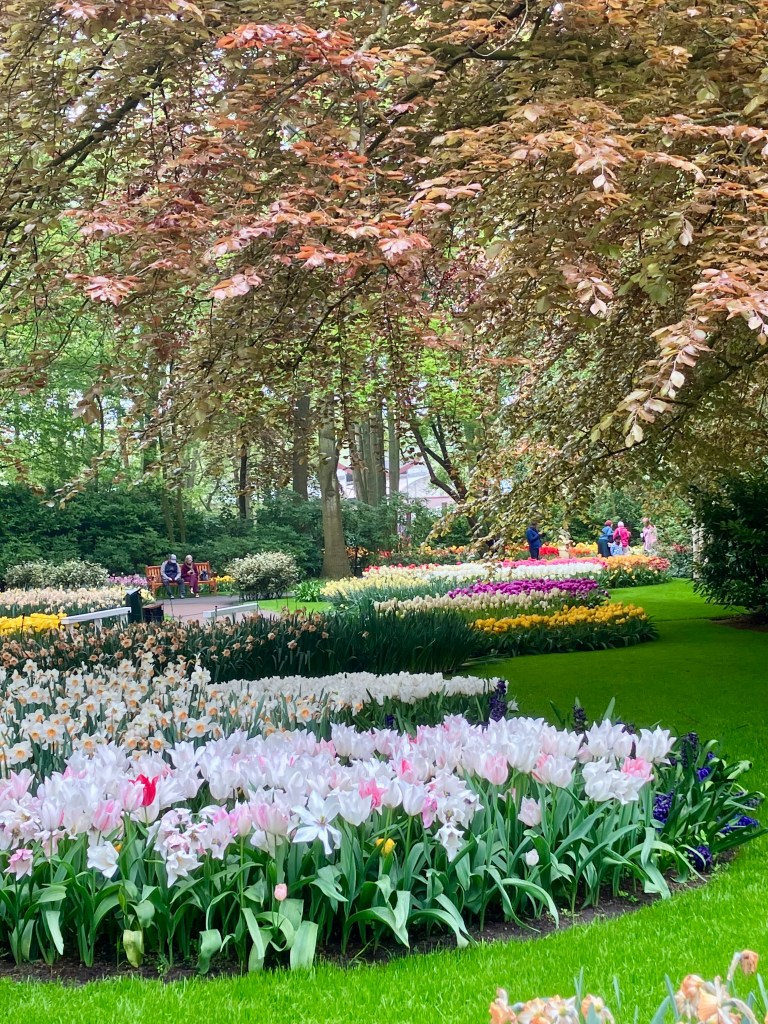
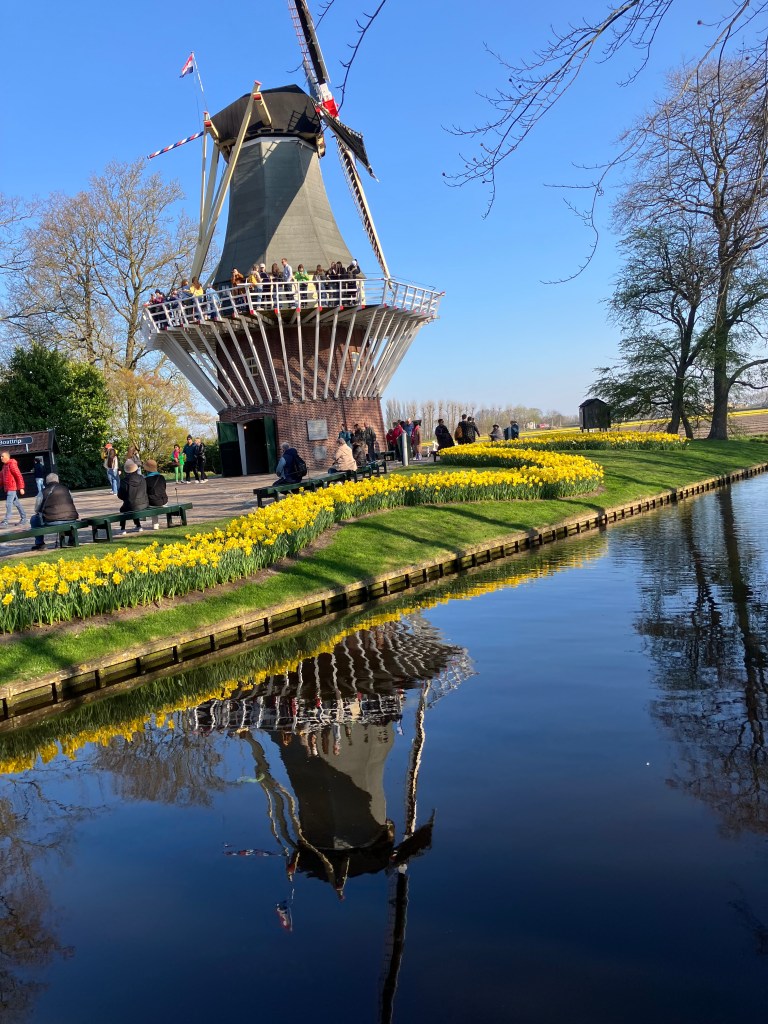
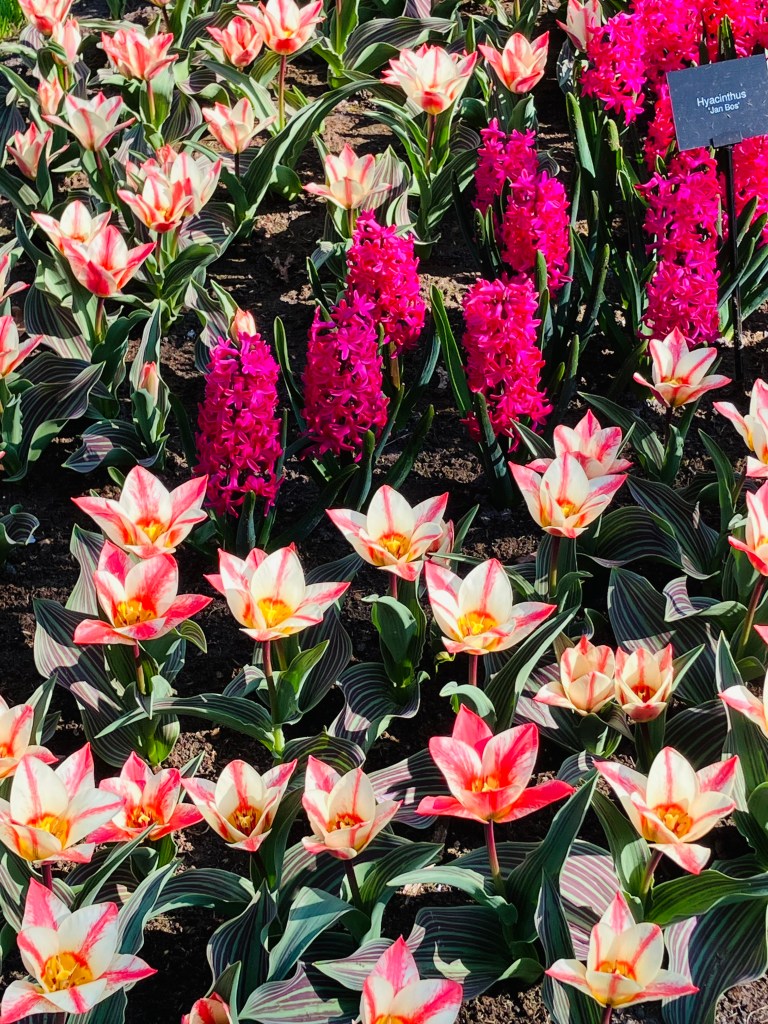
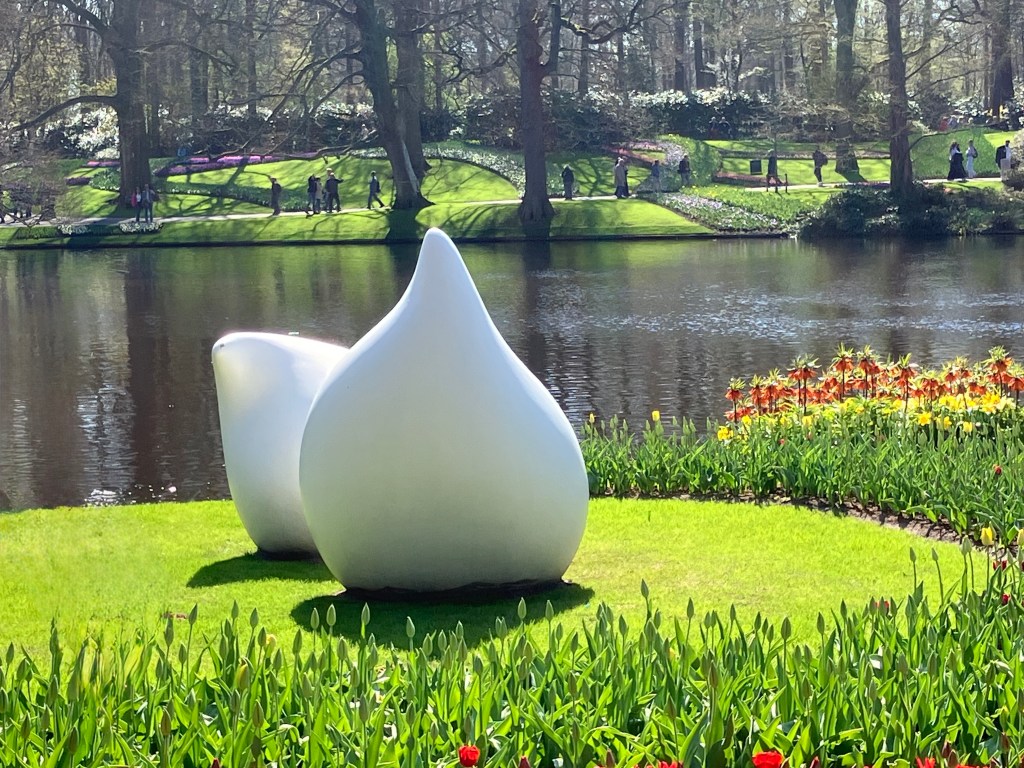
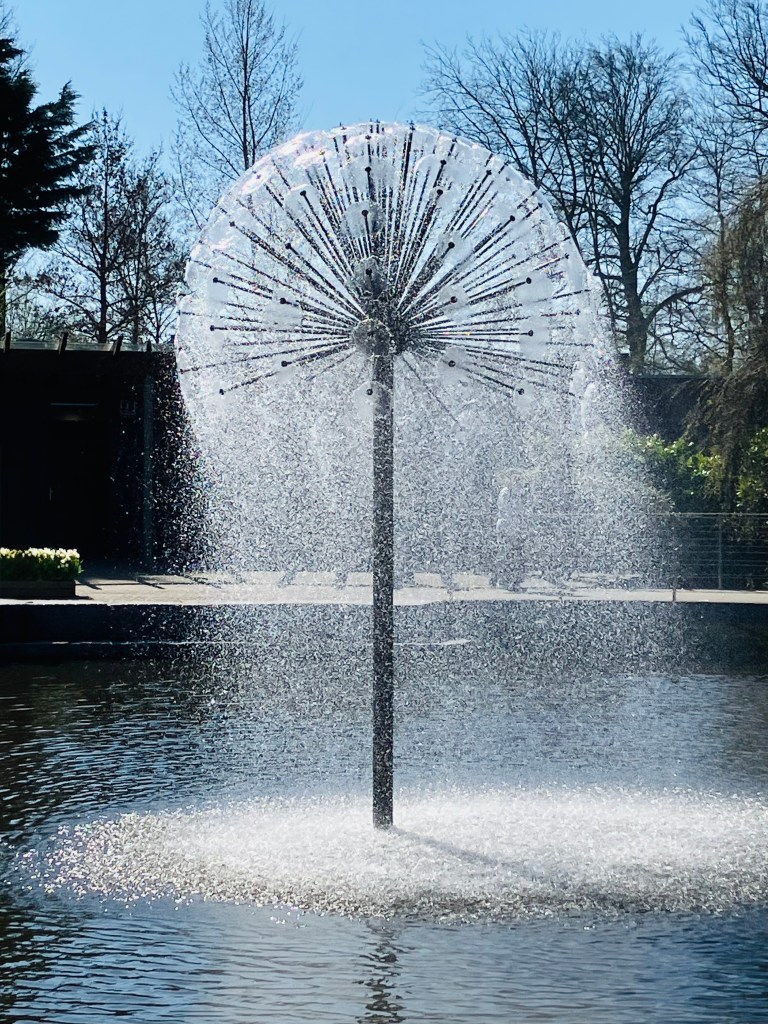
Keukenhof, also known as the Garden of Europe, is one of the world’s largest flower gardens, situated in the municipality of Lisse, in the Netherlands. According to the official website, Keukenhof Park covers an area of 32 hectares and approximately 7 million flower bulbs are planted in the gardens annually. You cannot fail to have a WOW moment here with all the wonderfully curated flower displays with every colour of the rainbow. We’ve now visited it twice!
Number 10:
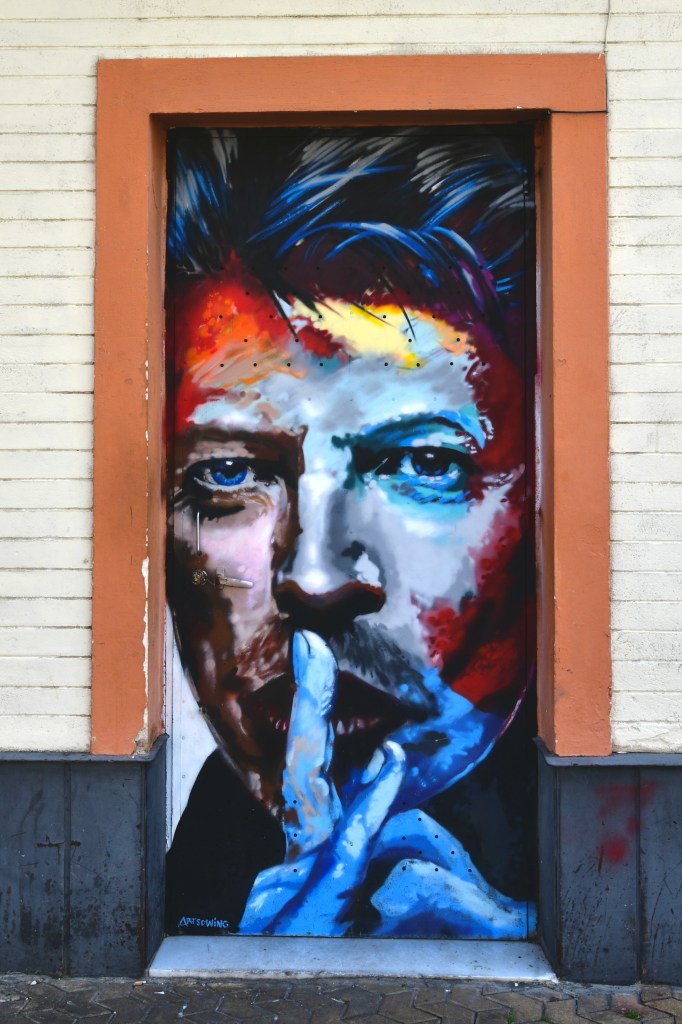
And so we finally reach my Top 10 WOW moments and at number 10 is this piece of street art in Seville, Spain. We often research the best places to see street art when visiting cities on our travels but on this occasion this wonderful piece of art showing a clear likeness to David Bowie caught us by surprise. We stopped, we admired, we photographed and to date haven’t seen anything else to match it!
Number 9:
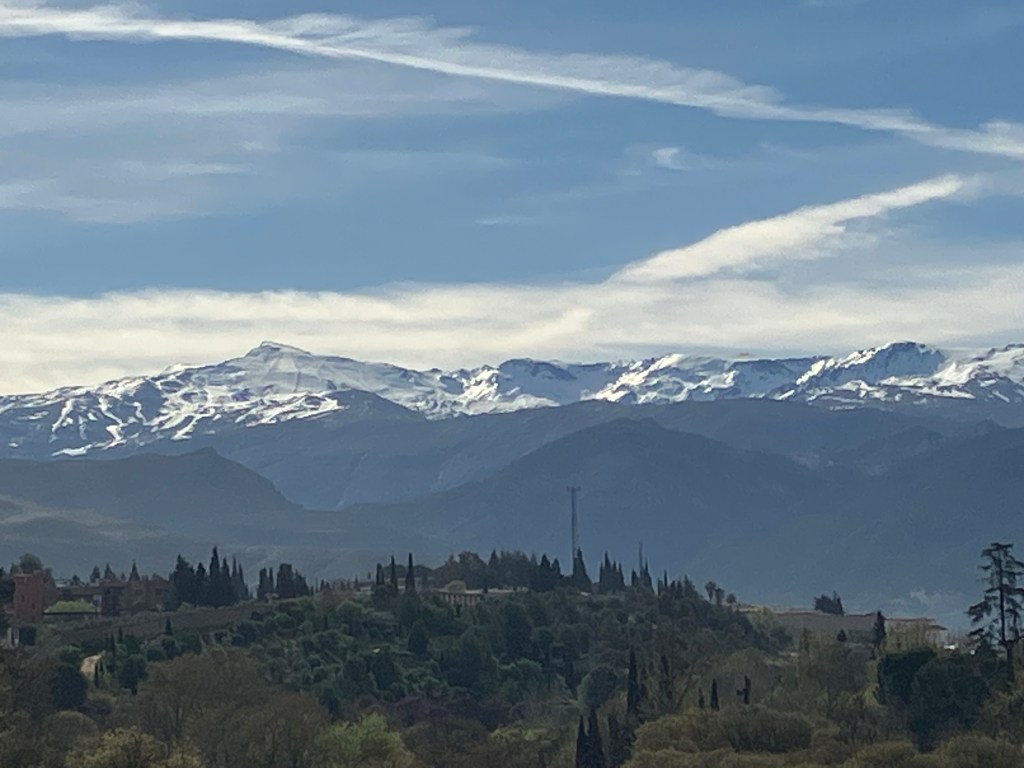
Just like my number 10 this landscape, (the photo honestly doesn’t do it justice), was also a surprise when we went off piste in Granada and found ourselves at the back of the Church of San Nicolas. As we came around the side of the church there before us was an unforgettable panorama. We had chanced upon the Mirador de San Nicolas. I honestly could not believe my eyes. The whole of the Alhambra Palace was laid out before me with the beautiful snow capped mountains of the Sierra Nevada nestled behind. The Palace dominated the skyline, leaving everything below in its wake. There are not many views in the world that you see and know are going to stay in your memory forever but this is one of them. Finding a vacant stone seat and ignoring the crowds I settled down and just stared in front of me feeling at peace.
Number 8:
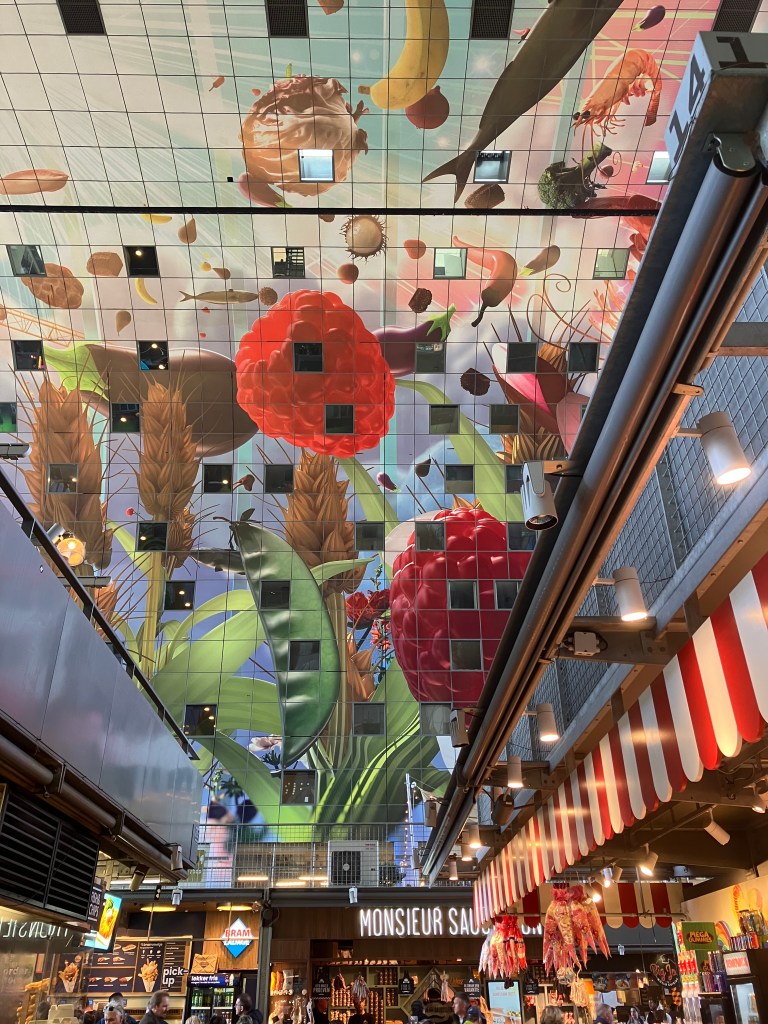
The Market Hall in Rotterdam, in The Netherlands holds a very special secret. Inside visitors are often so bewitched by the 100+ stalls and food outlets to choose from that they actually fail to ever look up which is such a shame as there are 11,000 square meters of artwork above their heads. Designed by Arno Coenen and Iris Roskam and named “Horn of Plenty” pictures of vegetables, fruit, flowers, insects and enlarged fish adorn the ceiling. These were created digitally and the file was so large that the artists had to turn to the Pixar Studios to actually store it! Separating it into 4000 pieces they then printed each section on perforated aluminium panels and thus decorated the inside of the market hall. They are beautiful to behold and ironically made me feel as if I was inside one of Pixar movies like “Bug’s Life”! Just WOW!
Number 7:
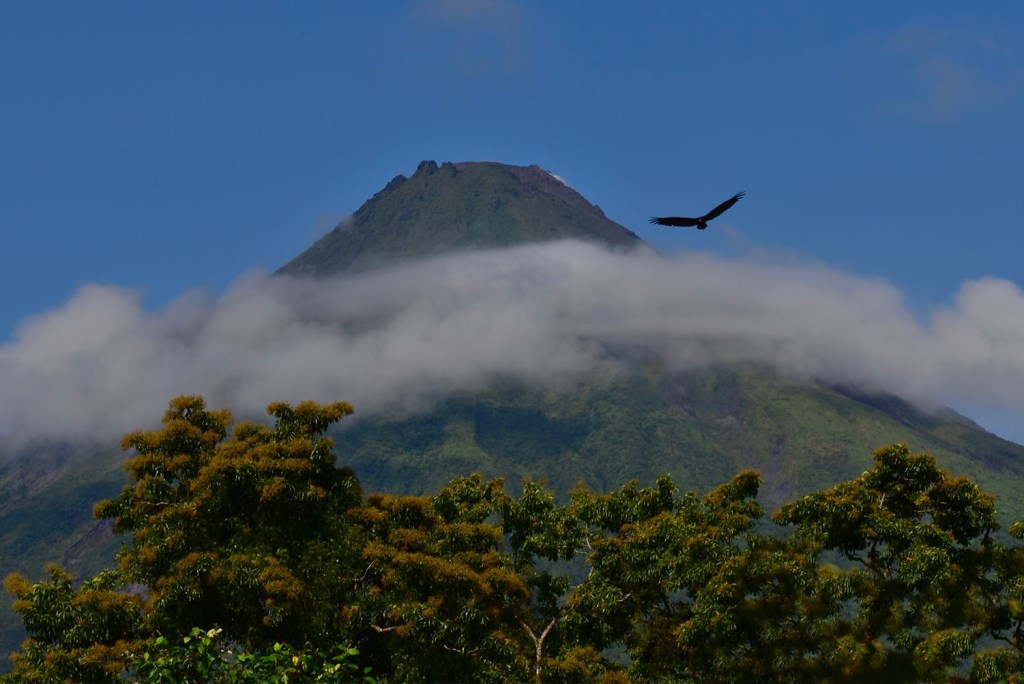
Another landscape captured on film in the moment. This photo was taken by my husband when we were crossing Lake Arenal in Costa Rica back in 2019. It captures the volcano shrouded in mist with a black vulture soaring on the thermals above the lake. Just magically WOW!
Number 6:
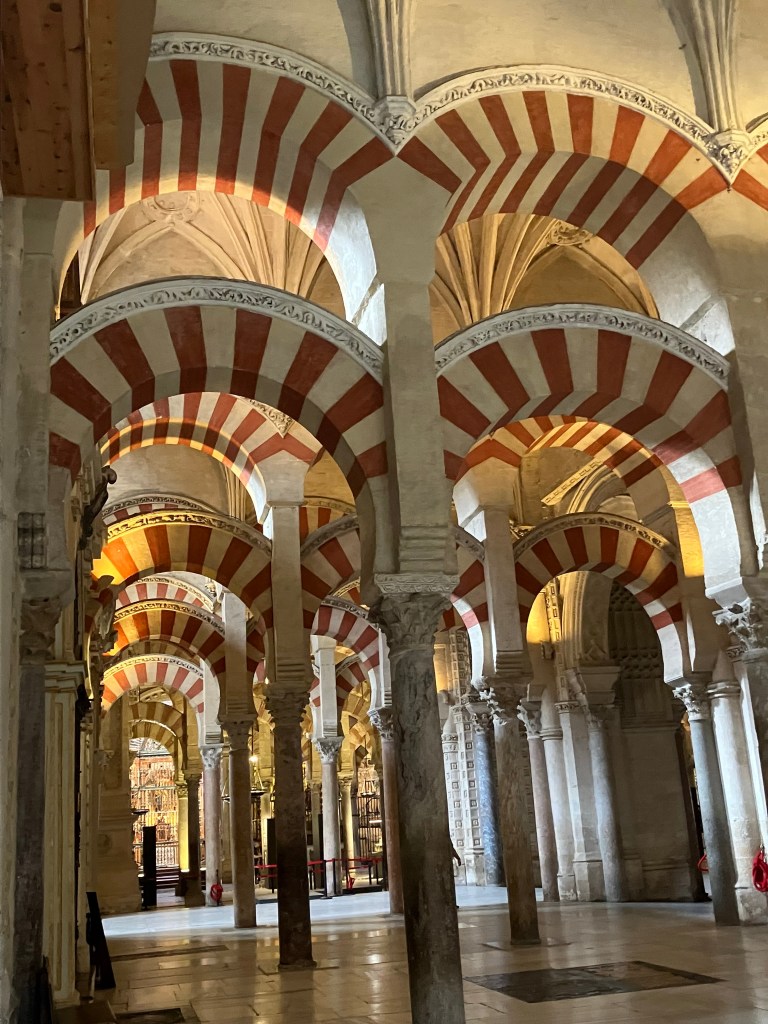
The Mosque–Cathedral of Córdoba is definitely one of those rare WOW places that stays with you long after you leave and that I had to write about on our trip through Western Europe in 2023. This stands out for me as one of the most beautiful but also interesting religious buildings that I’ve ever visited. It stands not only as a place of architectural brilliance but a unique example of religious unity in a world that is full of religious conflict.
Ok, so I’m going to leave you waiting for my Top 5, they will be with you in a couple of days! I’m conscious that lengthy posts mean you have to find time to sit down and concentrate and in this ever revolving world that isn’t always easy to find. So I’ll see you in a couple of days and all will be revealed!
I hope my photos and narrative give you inspiration to go out there and find your own WOW moments amidst forthcoming adventures! If you want to see other photos taken on our travels they are available on Flicker.
Let me know if you’ve visited any of the places I’ve listed, maybe give this post a like. Let me know what you thought when you were there, I’d love to hear from you in the comments
Do you recall those moments when you suddenly look up and the vision in front of you just makes you go WOW! Pressing the button on your camera or phone just becomes compulsory because you have to capture that point in time, that magnificent landscape, that beautiful piece of architecture, that funny moment, that unforgettable memory that will remain in your mind forever. Looking back through my photo collection of all the places we have been fortunate enough to visit has really brought this home to me.
I know I would have written this anyway because I just felt compelled to have these favourite moments and memories on record so here is my Top 25!
Number 25:
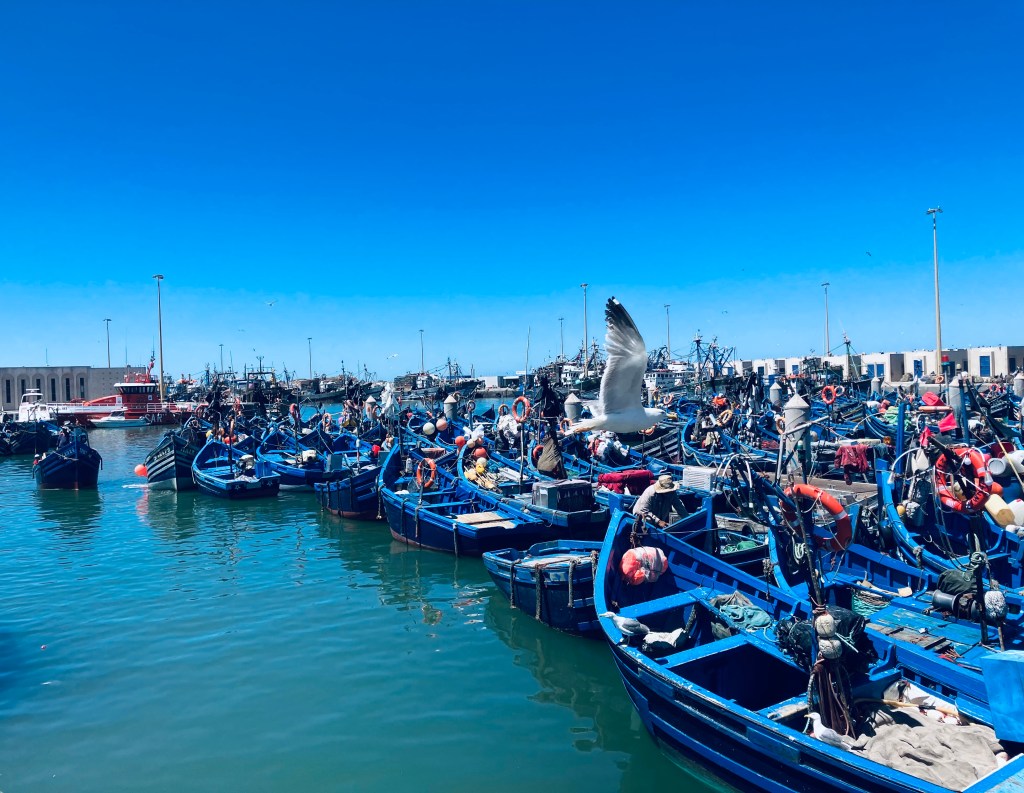
In May 2025 we ventured to Morocco, primarily to Marrakech. As part of our trip we also visited Essouiria which I wrote a post about entitled Discovering the Beauty of Essaouira’s Medina and Harbour. Having been dropped off by our guide, we crossed over the road and made our way to the harbour where I was immediately struck by both the hustle and bustle of the vibrant fish market on the opposite side and the wonderful sea blue, fisherman’s boats bobbing around on the water in between. It was one of those moments where I just stopped, held my breathe and just absorbed the beauty of what lay in front of me.
Number 24:
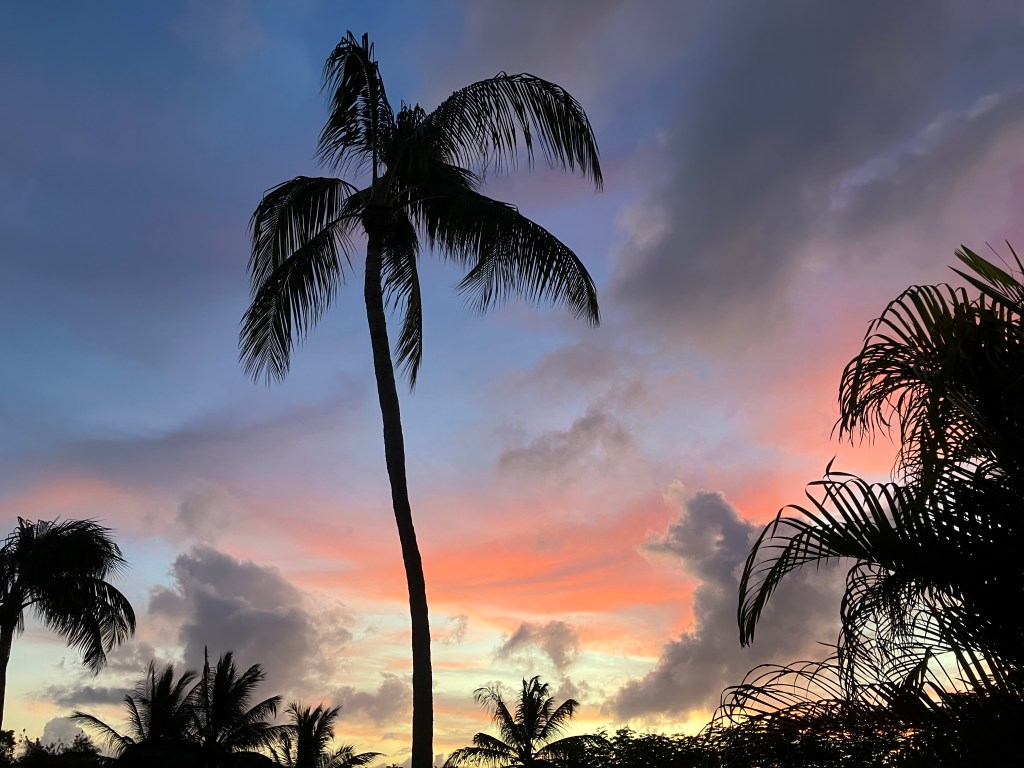
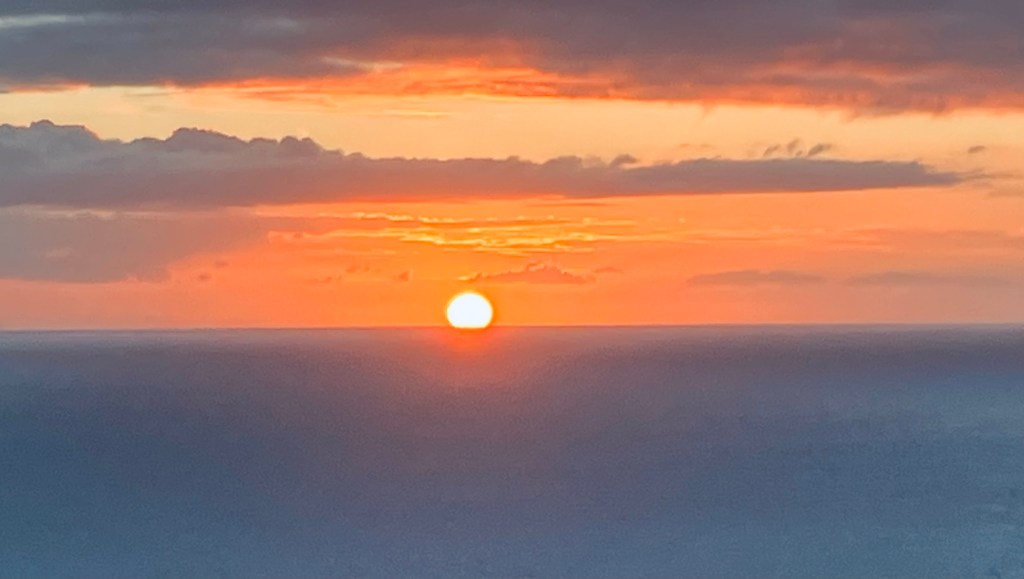
Taking pictures at sunset, for some reason, I find incredibly difficult bearing in mind that most of the time I’m just using my trusted iPhone. This photo was taken whilst sitting on our balcony in Barbados in February 2025. The colours were amazing, it was a calm and peaceful moment.
Number 23:
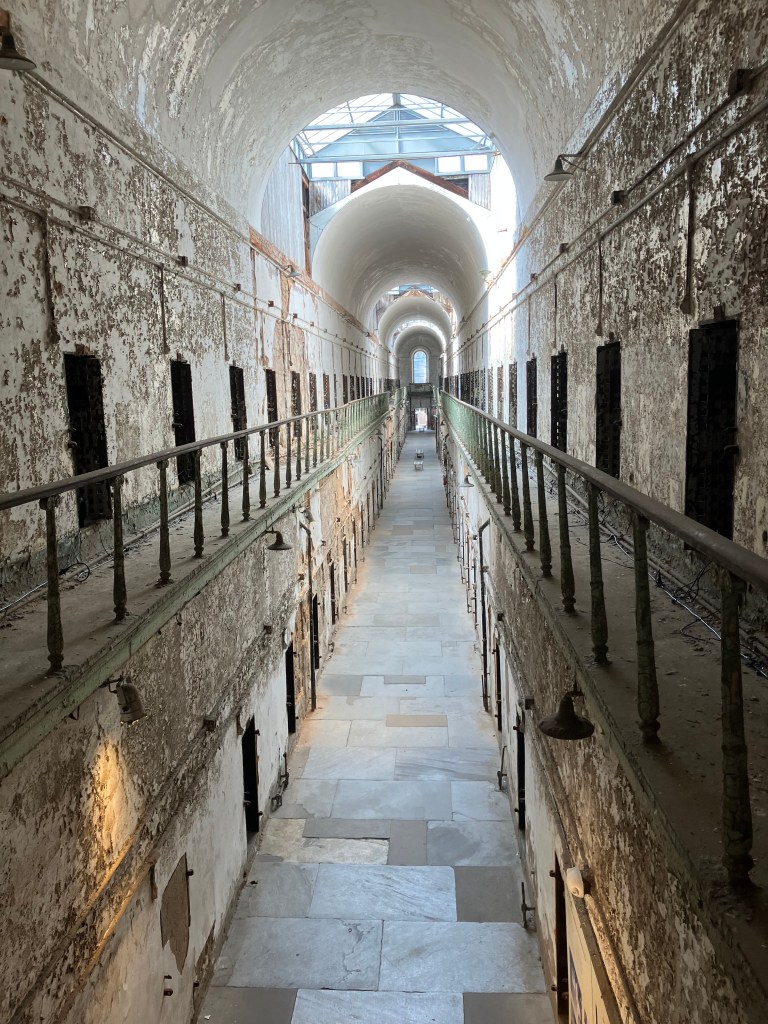
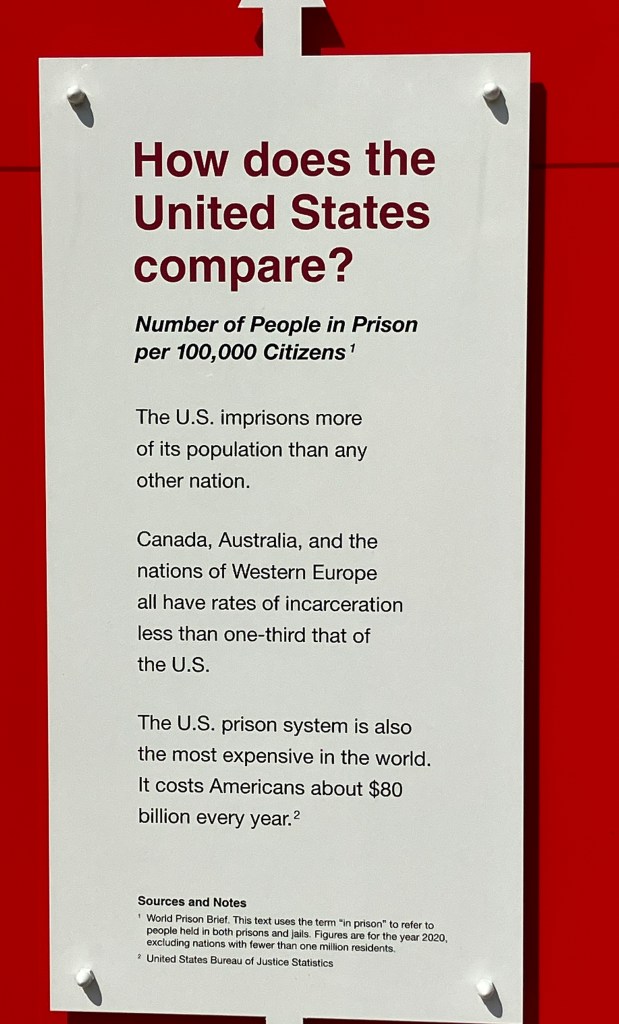
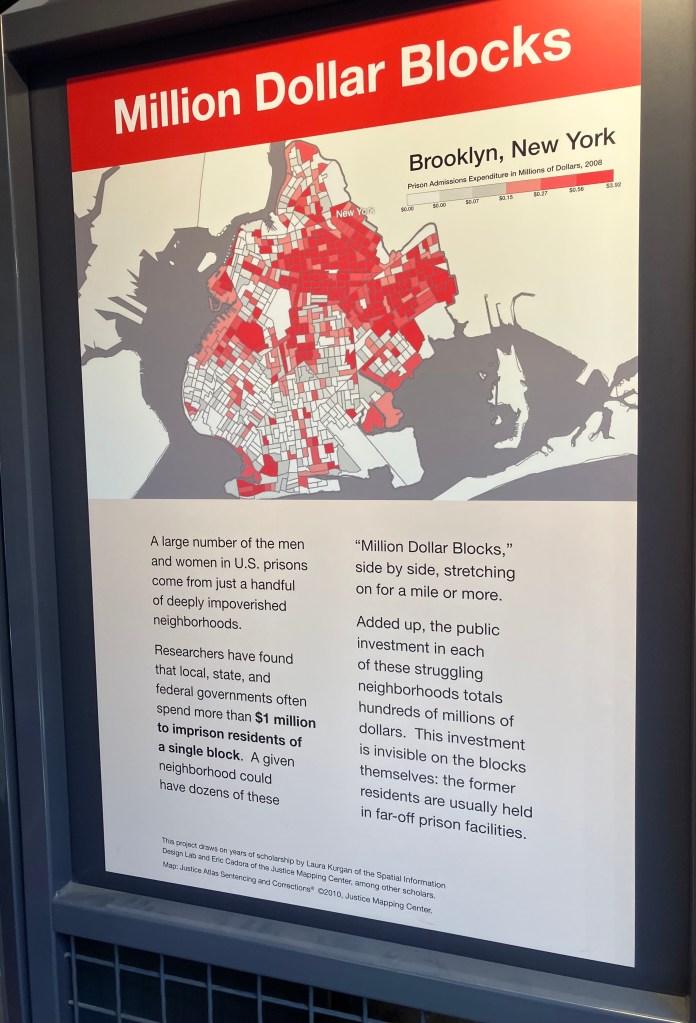
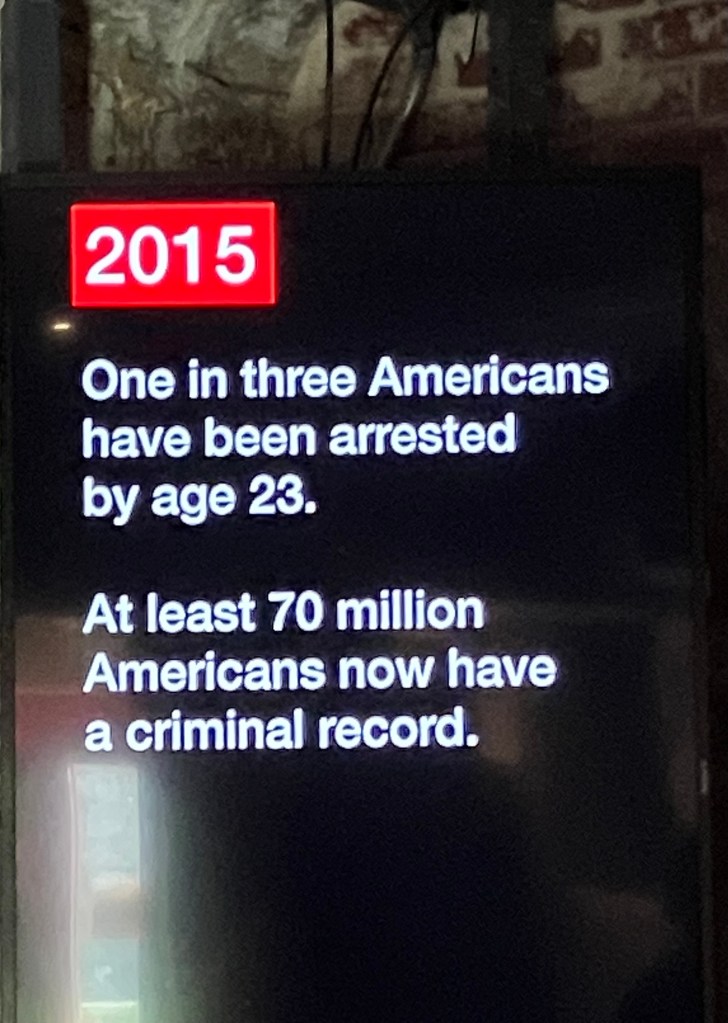
This might seem a bit of an odd set of pictures but the WOW factor for me came from the statistics available at this famous old prison -The Eastern State Penitentiary in Philadelphia which we visited in 2023.
Operational from 1829 until 1971, it was once the most expensive building in the U.S. and famously held notorious figures like Al Capone. Today, the site operates as a National Historic Landmark offering both audio and guided tours.
I found it incredibly hard to absorb the reality of the information presented to me. It was one of those moments where I felt compelled to study this phenomenon further on my return home.
Number 22:
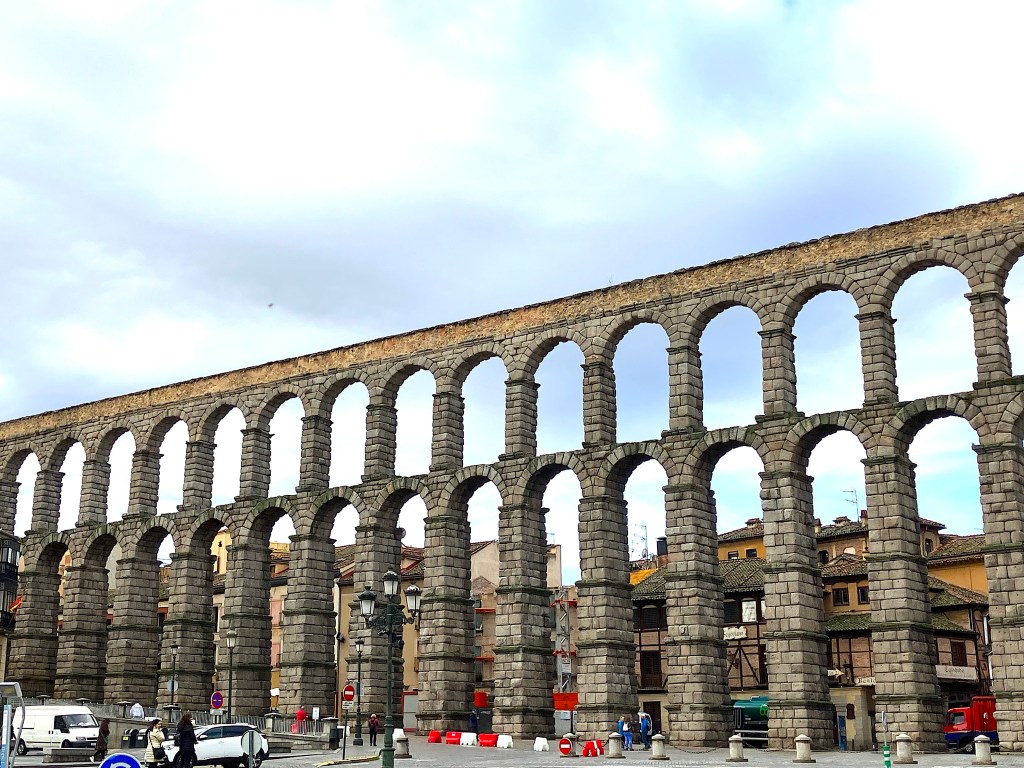
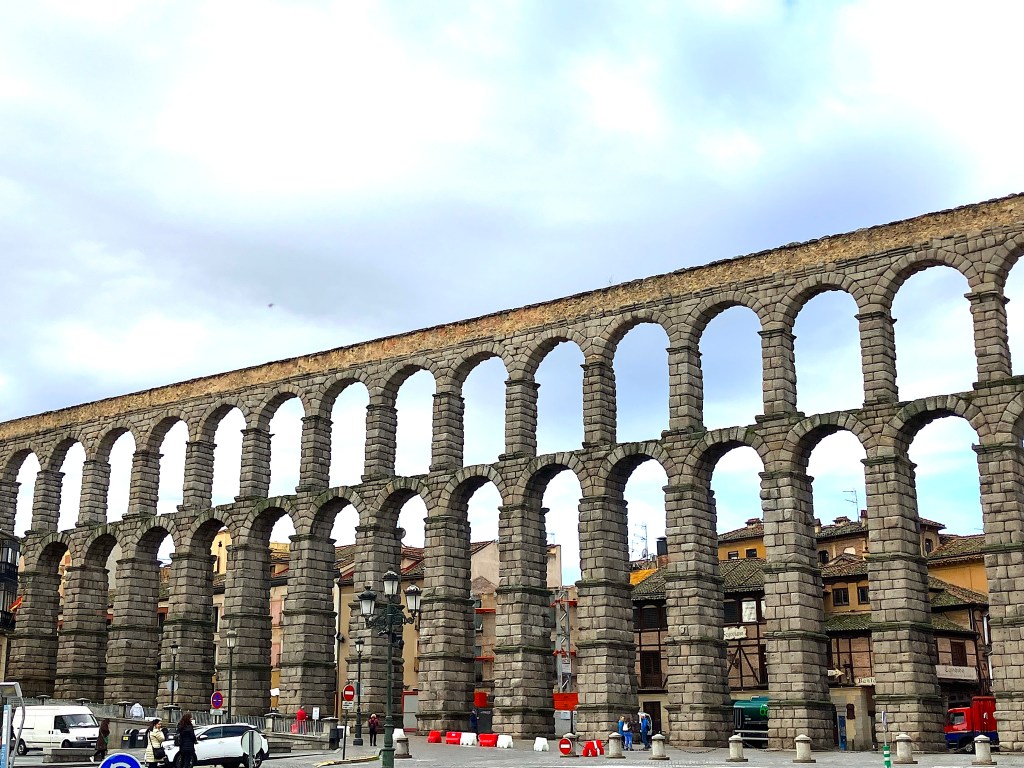
I love to look at the architecture when I’m visiting a place that has existed for hundreds of years as is the case here. This amazing piece of Roman architecture originating in the 1st century BC, in Segovia, Spain is a sight to behold and I still remember, back in 2023, looking up at its sheer size and feeling that WOW moment. Roman remains always fascinate me, mainly because of the sheer engineering ability they had. If you want to know more I wrote many posts about our 3 month trip. This one was entitled: Discover Segovia: Top Attractions and Travel Advice
Number 21:
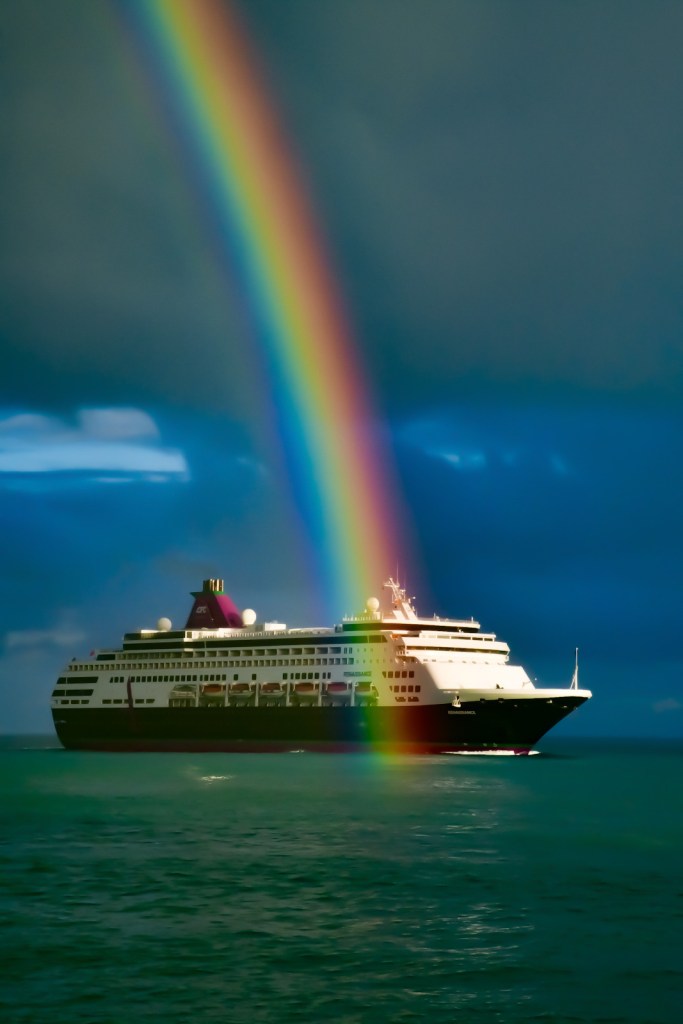
Sitting on our ground floor balcony in Antigua earlier this year eating breakfast we were watching this cruise ship make its way into port when suddenly just in front of it a rainbow appeared in the sky. It was one of those least expected moments made even more so by the fact that the ship actually passed through the rainbow. I had to capture the moment and still wonder if the passengers knew what was happening!
Number 20:
Another very poignant moment which honestly brought tears to my eyes. We visited Prague, Dresden and Krakow back in 2019. It was our final trip before COVID snuck up on all of us and compelled us to stay at home. As part of the visit to Krakow we joined an organised excursion to Auschwitz and Birkenau, the largest of the German Nazi concentration camps and extermination centres. Over 1.1 million men, women and children lost their lives here. If only the world, as a whole, had taken this message to heart.
Number 19:
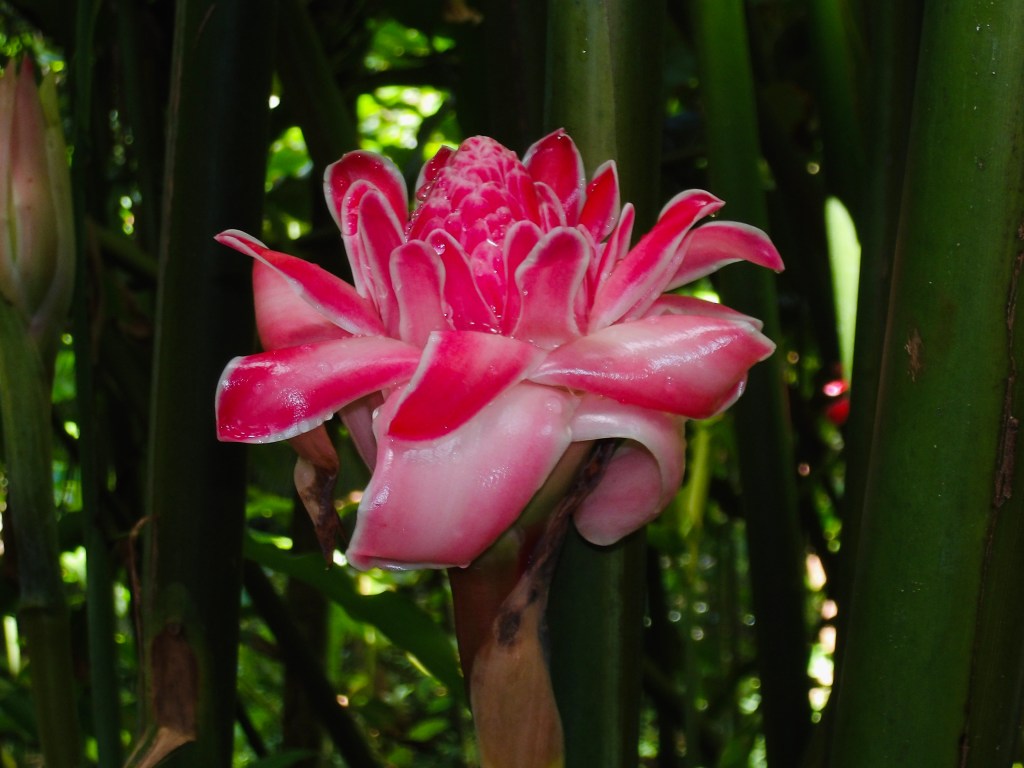
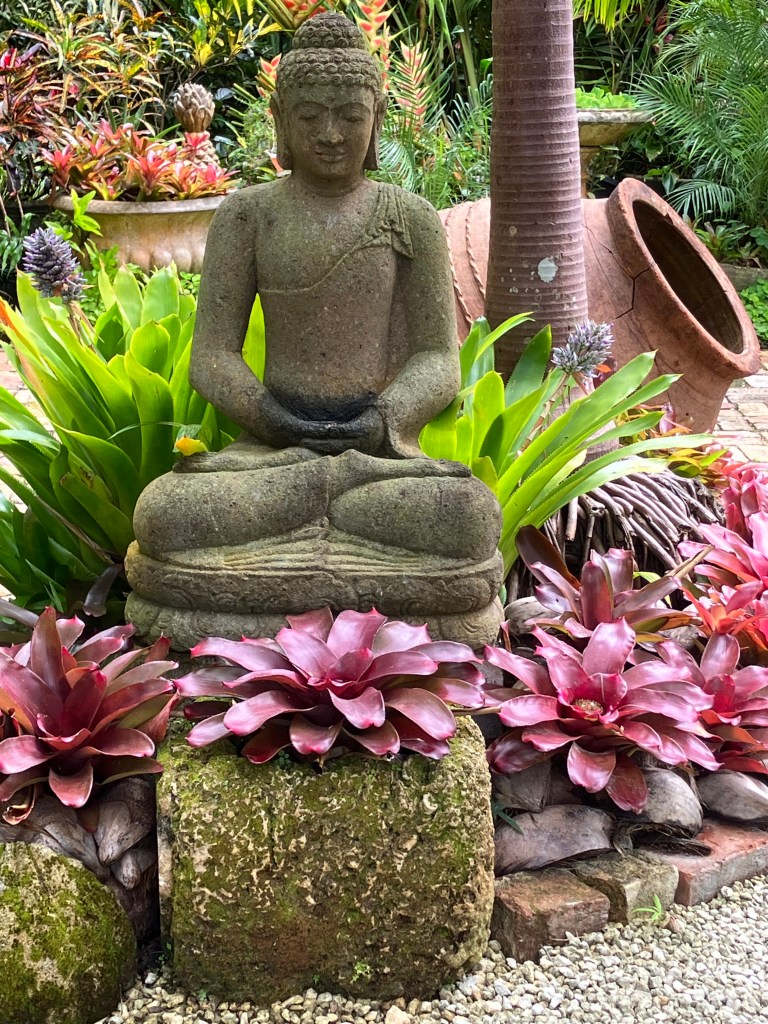
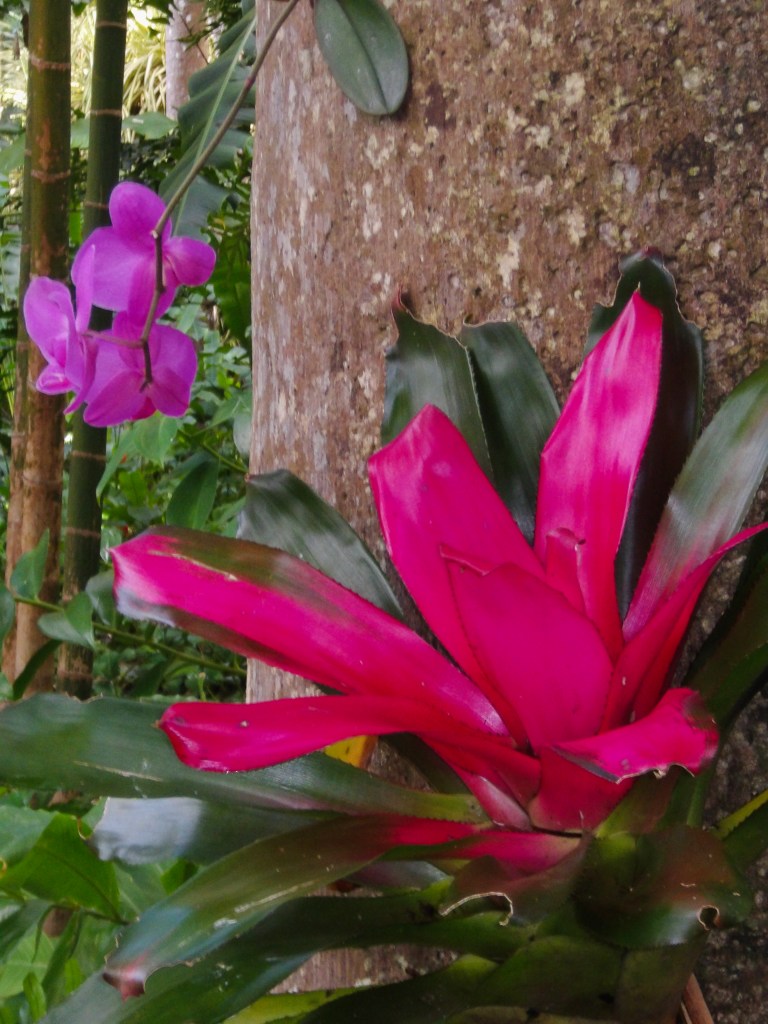
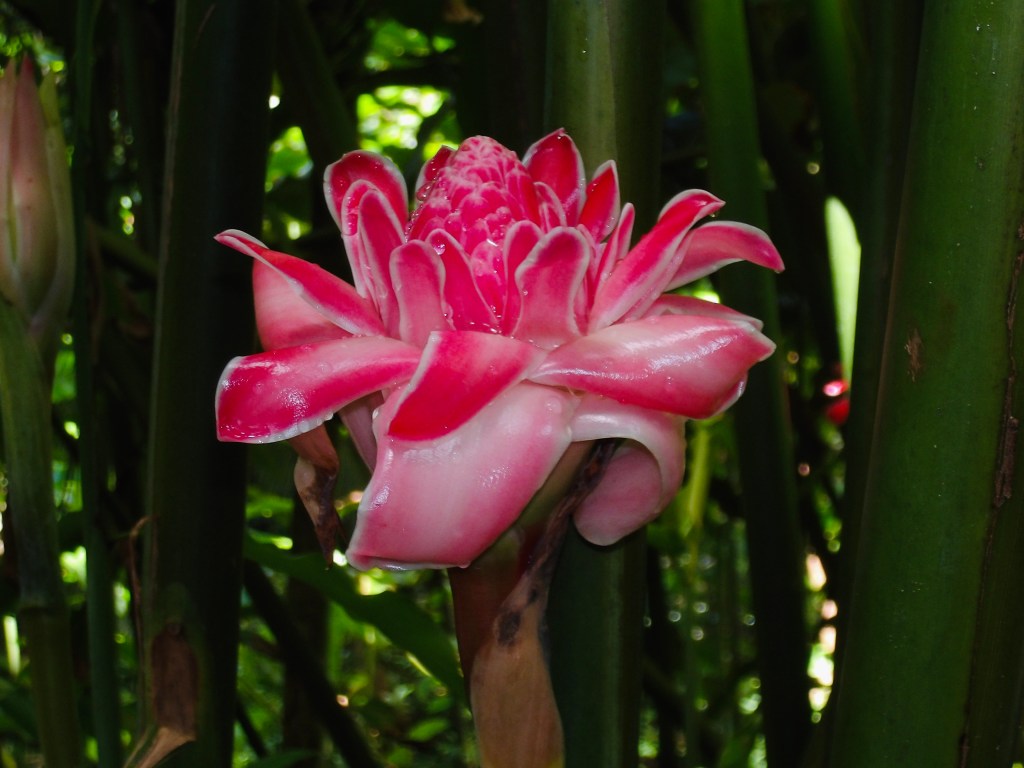
On a much brighter note I am also a big fan of gardens of all descriptions, being outside and just enjoying the peace and tranquillity that can so often come from the purity of nature. This photo became a WOW moment for me very recently when we visited the Flower Forest in Barbados and I began to use my new camera, gifted to me at Christmas, primarily to take underwater photos. I have no idea what this beautiful flower is but it definitely caught my eye and I had to photograph it!
Number 18:
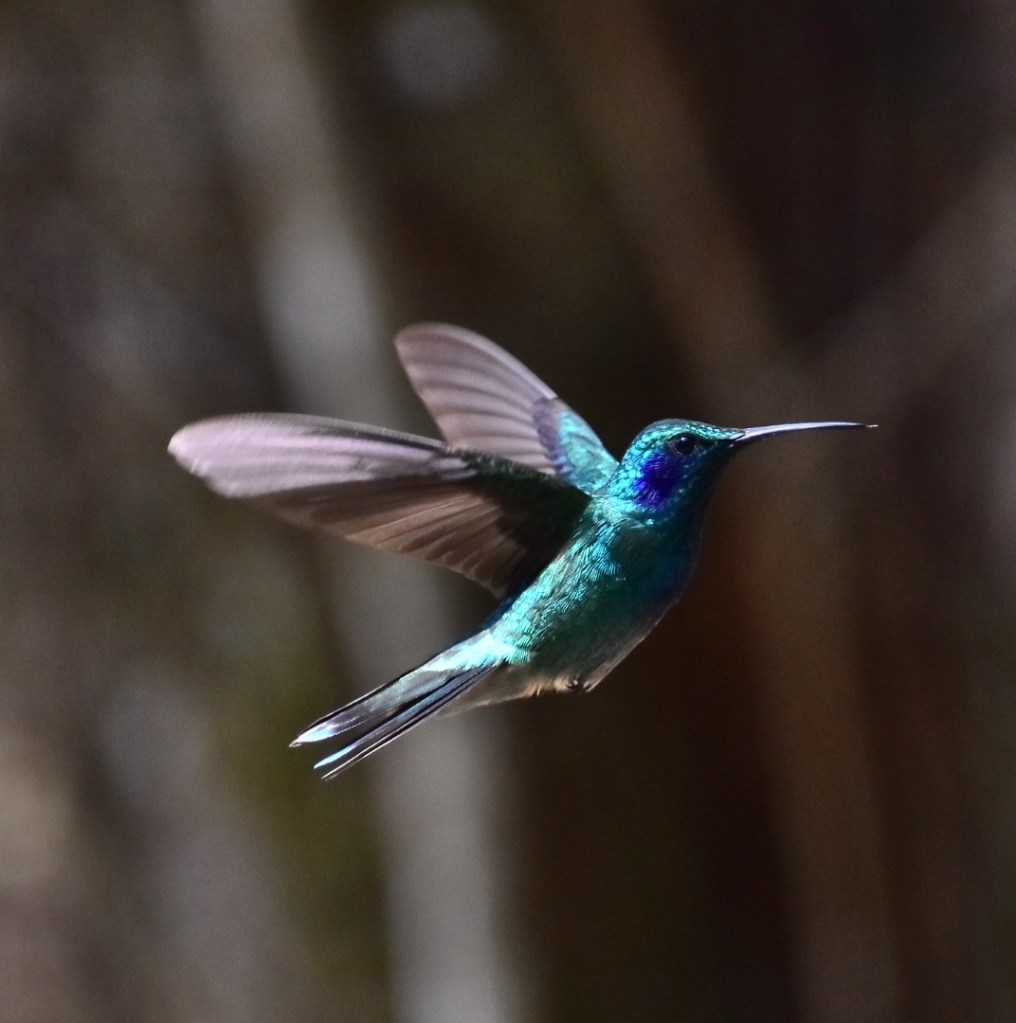
Continuing the nature theme, in February 2019, we visited Costa Rica where I celebrated my birthday amongst the rain forest, cloud forest and sheer magnitude of this amazing country. This little fellow was photographed by my husband with his far more technical camera than mine. Watching these tiny but beautiful hummingbirds flit from flower to flower collecting nectar was definitely a WOW moment for me.
Number 17:
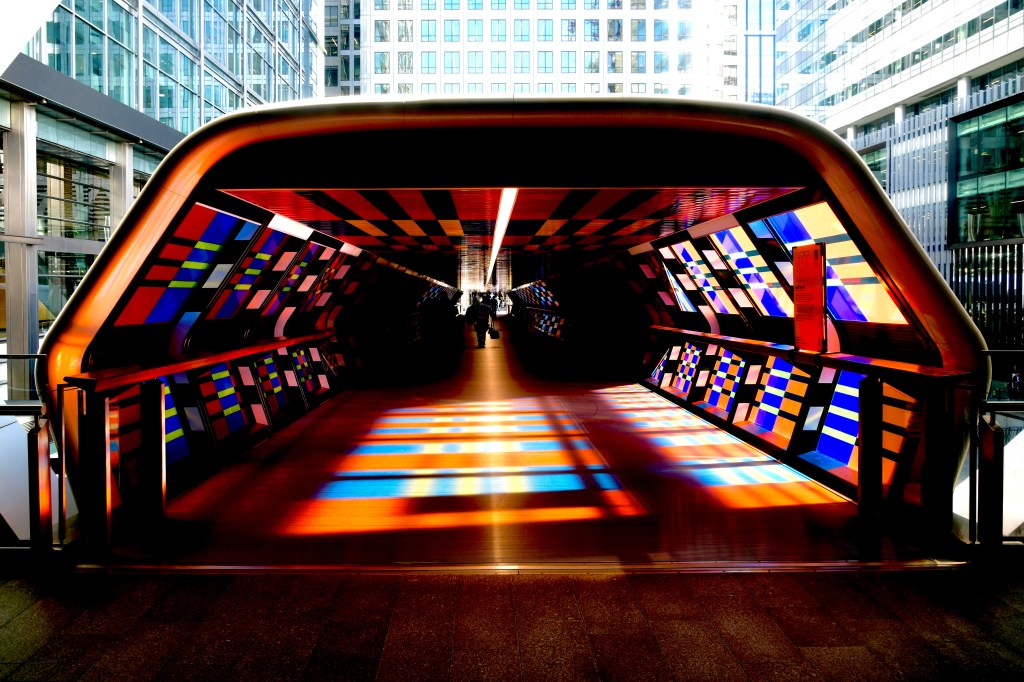
Along with a fascination for architecture comes a more recent appreciation of sculpture. It’s never too late to adopt a new interest particularly one that you previously had no inclination to explore. My love for this form of art sprang from visiting Paris back in 2023 and the Musee Rodin which my husband wanted to look at. This particular piece of art by Camille Walala’s “Captivated By Colour” just mesmerised me. It was part of a Sculpture Trail that we followed in Canary Wharf in London last summer 2025. This local artist designed colourful geometric shapes, playing with the long perspective of the tunnel. The design shows an optical pattern that shrinks and elongates as it moves across the panel of the bridge – creating a distorted effect as visitors pass through. I have never seen anything quite like this and cannot think of anywhere else we have currently travelled to where this amount of effort has been put into creating what is in effect a tunnel for pedestrians to walk through. Outstanding and definitely a WOW moment!
Number 16:
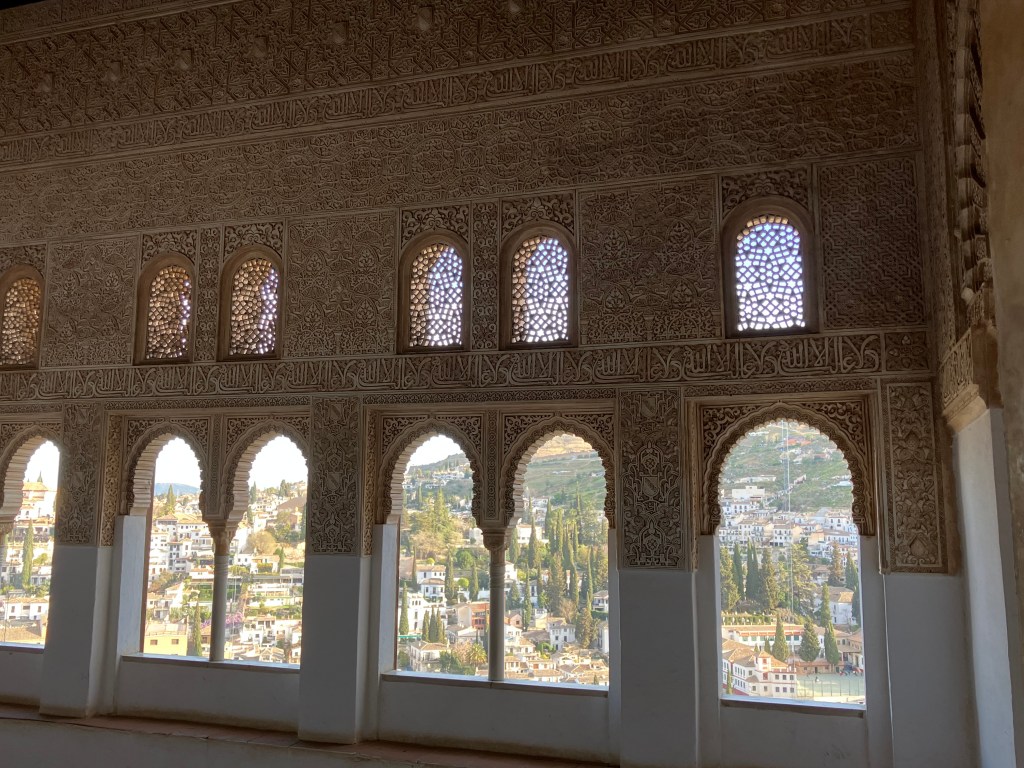
Back to architecture, this time from Granada in Spain. The Alhambra Palace is one of the most revered monuments of Islamic architecture and one of the top visitor attractions in Spain. We could not fail, therefore, to visit whilst on our Western Europe adventure back in 2023. To try and give you some idea of the size of the palace, throughout the Nasrid era, the Alhambra was a self-contained city separate from the rest of Granada below. Within its walls could be found most of the amenities of a Muslim city such as a mosque, public baths, roads, houses, workshops and a sophisticated water supply system. As a royal city, there were at least six major palaces. You honestly cannot fail to be in awe of this place and I experienced many WOW moments whilst walking around on our visit.
With so many WOW moments from our adventures to sort through I’m going to leave you in suspense for a few days before revealing my Top 15!
I hope my photos and narrative give you inspiration to go out there and find your own WOW moments amidst forthcoming adventures! If you want to see other photos taken on our travels they are available on Flicker.
Let me know if you’ve visited any of the places I’ve listed or maybe give this post a like. Let me know what you thought when you were there, I’d love to hear from you in the comments
Following on from my first post, in this series entitled “Unforgettable Adventures, My Favourite Cities Revealed”, this second post looks back on my favourite places of interest thus far. Scanning back through my blog posts, huge photo collection and pure memories of all the museums, places of worship, parks, monuments, annual exhibitions etc it was quite hard to narrow it down. Whilst my Top Five seemed like a nice round number to write about I’ve only managed to narrow it down to six and I really cannot place them in any ascending or descending order but suffice it to say they are very different!
Top Six Places of Interest To Date
Firstly my two favourite museums:
National Memorial and Museum, Oklahoma
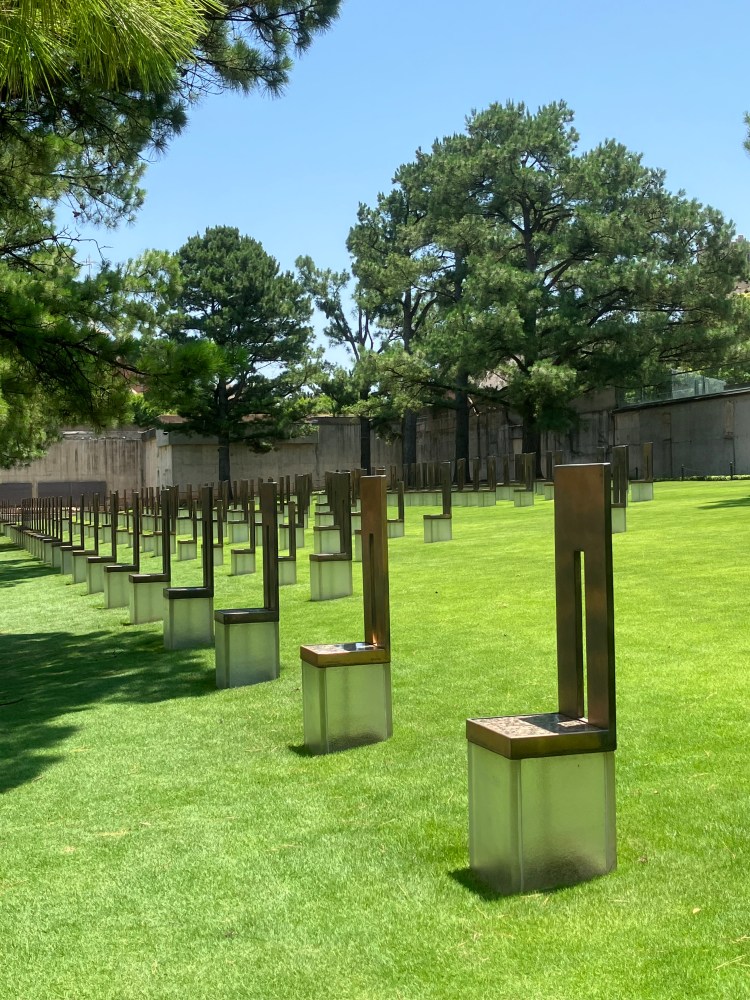
This museum brings to life how just one minute of time can change hundreds of peoples’ lives. It had a profound effect on me and I left the city, whilst on our Route 66, cross America road trip back in 2023, with not just indelible memories but also a real respect for time and the need to make the most of our lives.
I couldn’t help but write, in detail, about my experience here. There have been many such incidents worldwide but this National Memorial and Museum really resonated with me. It is a powerful and deeply moving site dedicated to the victims, survivors, and rescuers of the April 19, 1995 bombing. Set on the former grounds of the Alfred P. Murrah Federal Building, it combines a serene outdoor memorial—featuring symbolic elements like the Reflecting Pool and the Field of Empty Chairs—with an immersive museum that chronicles the tragedy and its aftermath through artifacts, stories, and interactive exhibits. Together, they offer both a place of quiet reflection and an educational journey into one of the most significant events in modern American history.
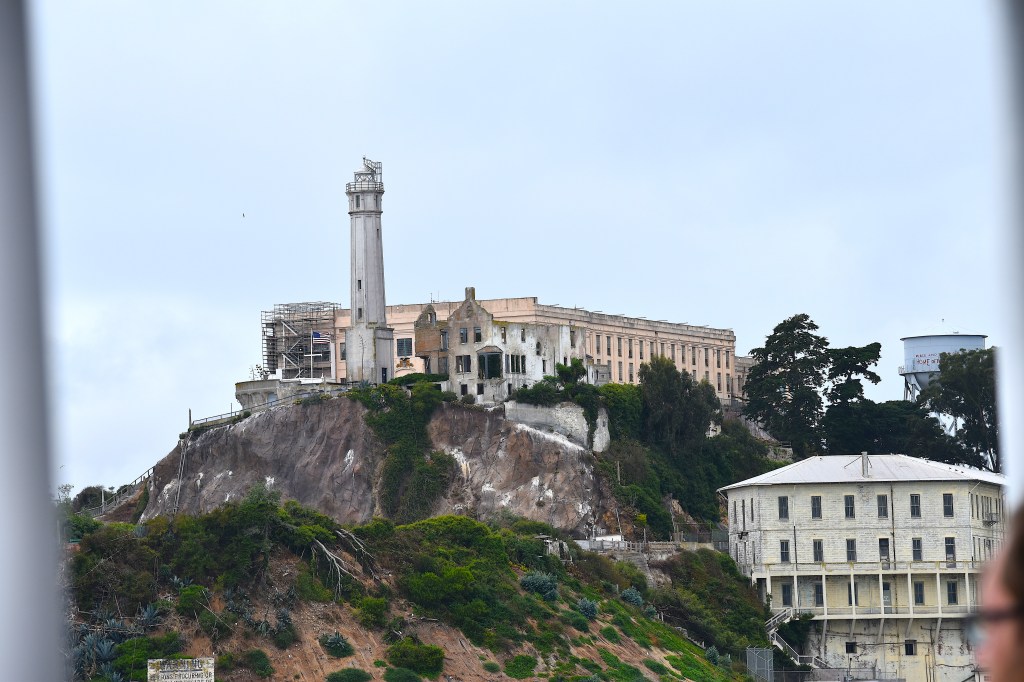
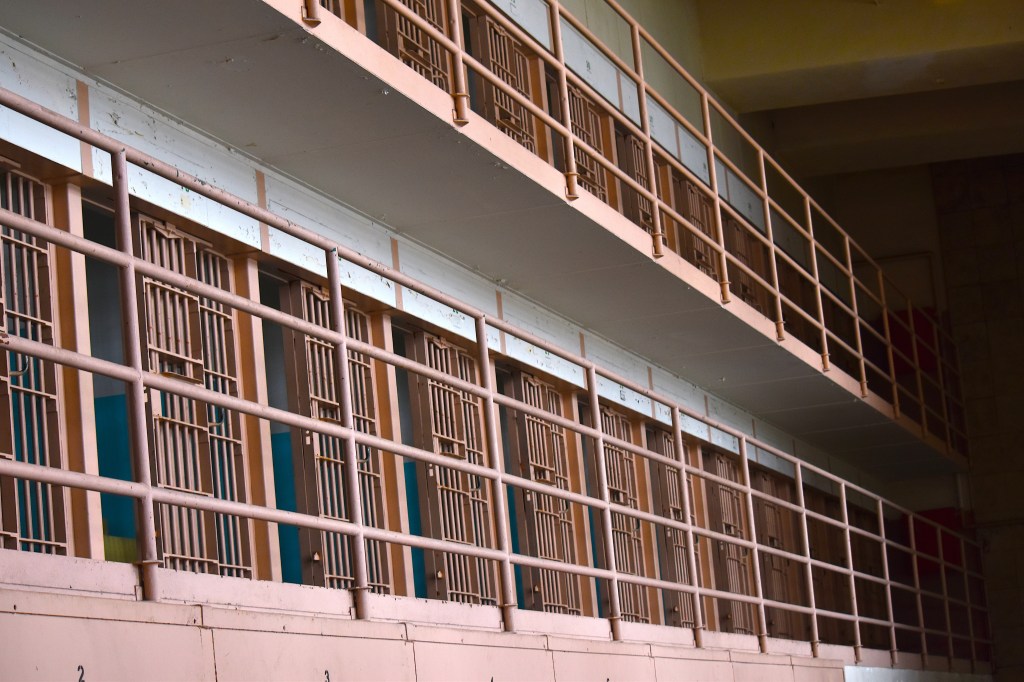
Alcatraz
I have visited San Francisco on two separate occasions originally in 2013 with my two children and then again in 2017 with my husband. No visit, in my opinion, to this Californian city is complete without a visit to this memorial to prison life and it has the best audio tour I’ve ever experienced.
The island is one of the most iconic landmarks in San Francisco, famed for its dramatic setting in the middle of the bay alongside its history as a maximum security federal prison. In operation from 1034 to 1963 it once held notorious inmates like Al Capone, George “Machine-Gun” Kelly and Robert Stroud, the famous “Birdman of Alcatraz”.
In this modern era this major tourist attraction, which requires you to buy tickets well in advance in order for you to traverse the waters by boat, is managed by the National Park Service. Visitors can explore the preserved cellhouse whilst learning about daring escape attempts. You also get to understand what it was like for the families of the prison guards who lived there whilst also looking back and enjoying sweeping views of the San Francisco skyline. The island also has a deeper cultural layer, having been occupied in 1969 by Native American activists, making it a place of both historical and social significance. This stark former prison turned heritage site is definitely one of San Francisco’s most compelling and atmospheric attractions.
Next my favourite religious building
The Mosque Cathedral of Cordoba
This stands out for me as one of the most beautiful but also interesting religious buildings that I’ve ever visited. It stands not only as a place of architectural brilliance but a unique example of religious unity in a world that is full of religious conflict. The Mosque–Cathedral of Córdoba is definitely one of those rare places that stays with you long after you leave and that I had to write about on our trip through Western Europe in 2023.
At first glance, it’s a masterpiece of architecture—endless rows of striped arches, intricate Islamic detailing, and, at its heart, a soaring Renaissance cathedral. But what makes it truly unforgettable is its story. Built on the site of a Visigothic church, transformed into a grand mosque, and later consecrated as a Catholic cathedral, it carries layers of history without erasing what came before. Walking through it, you’re not just seeing a building; you’re experiencing centuries of faith, change, and coexistence all in one space.
Next my favourite parks and gardens:
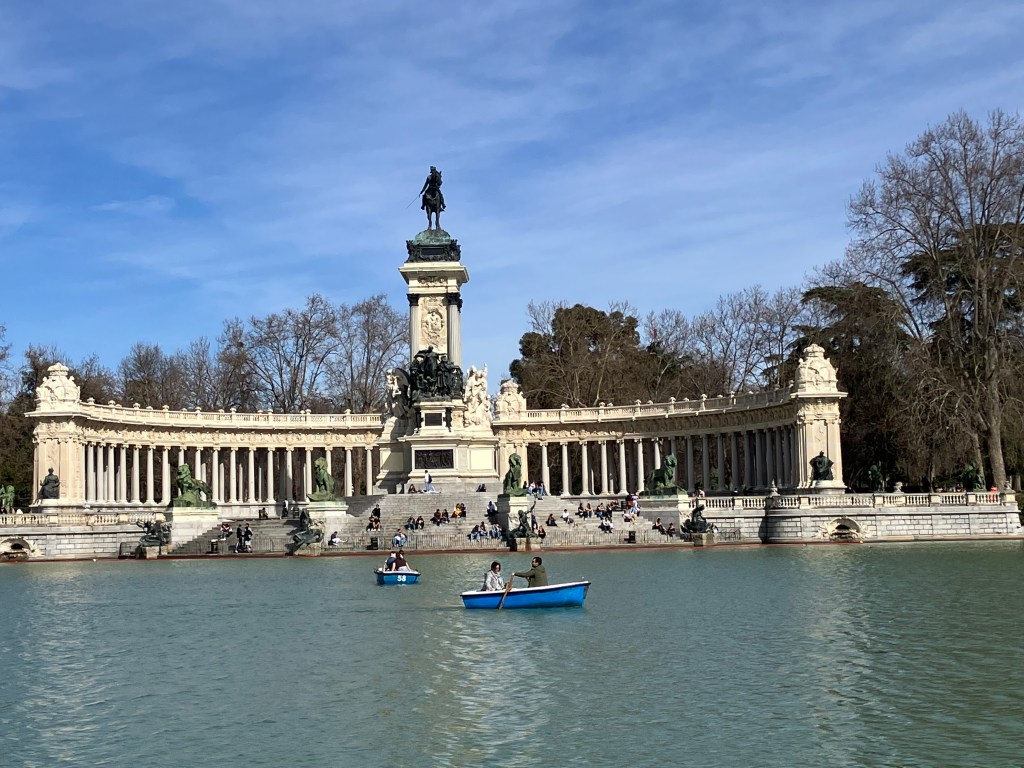
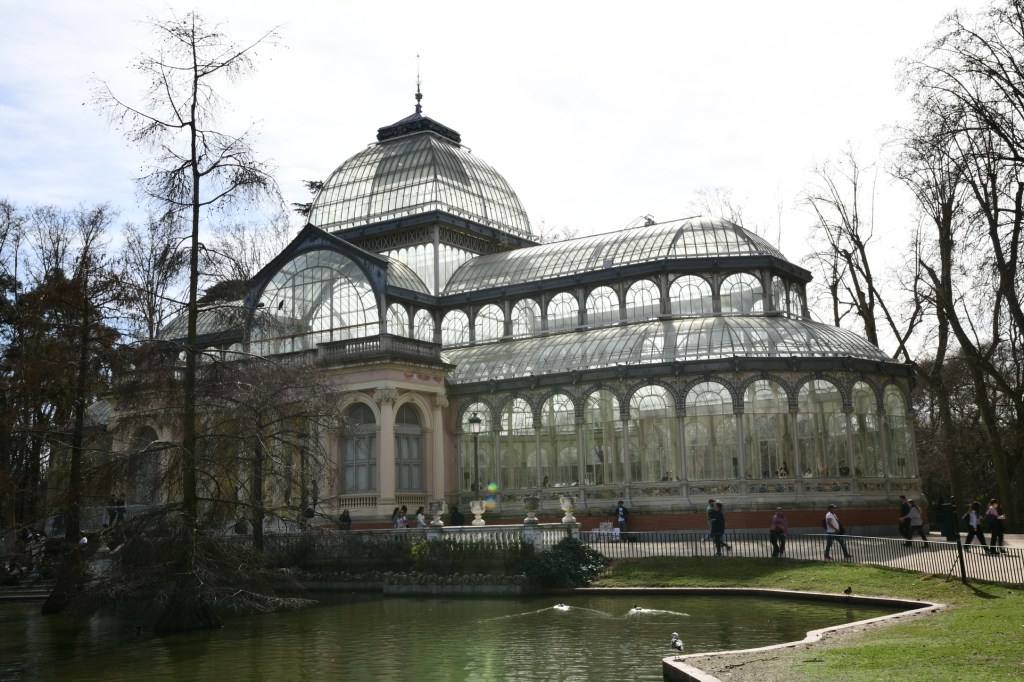
El Retiro Park in Madrid
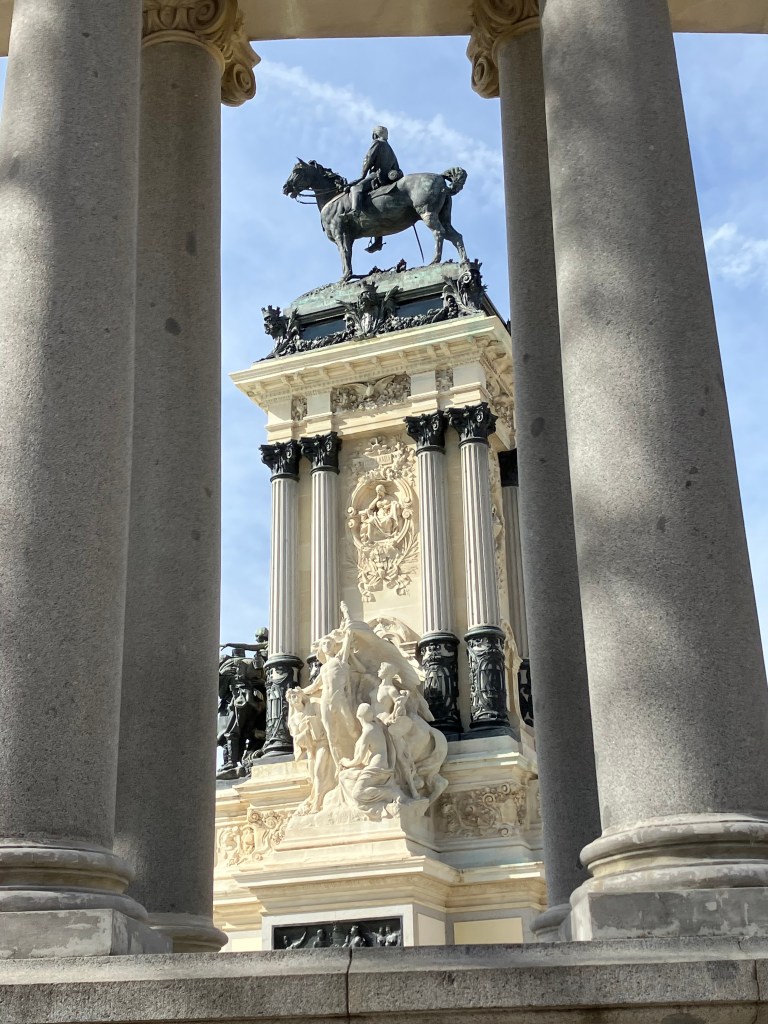
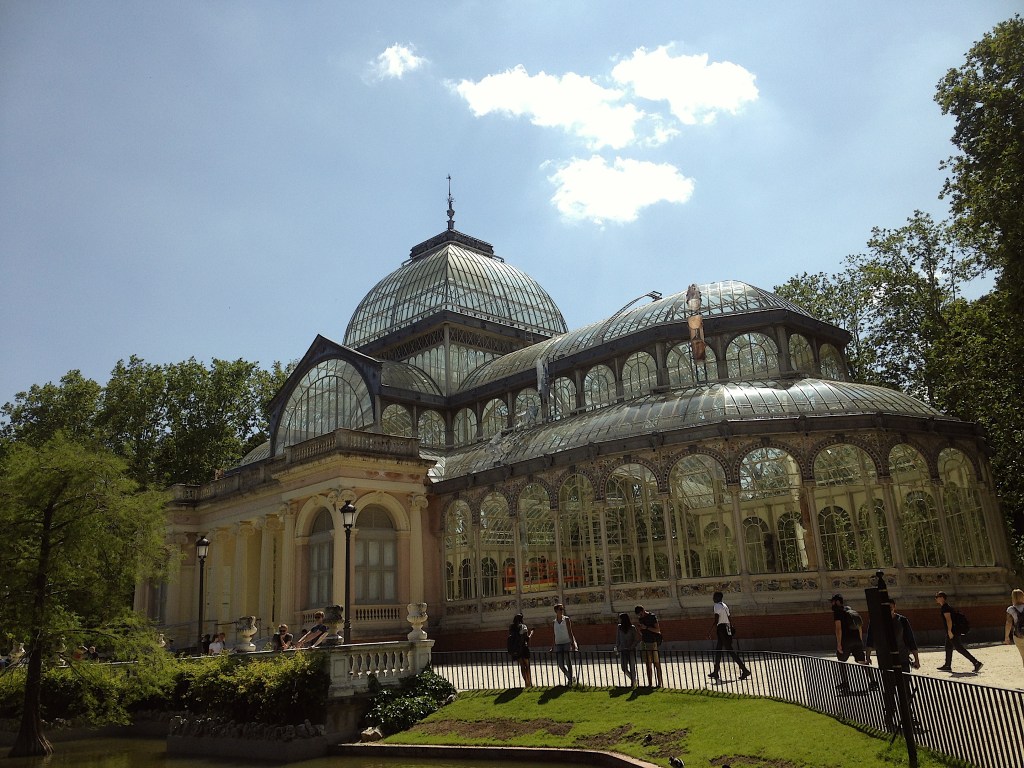
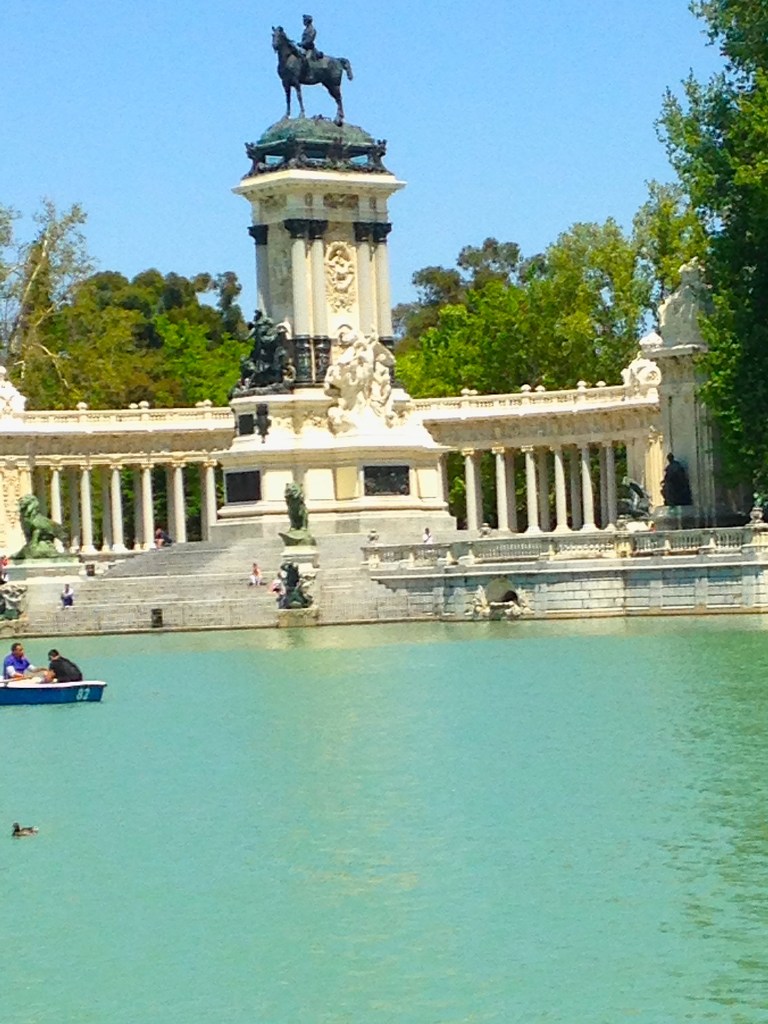
This is my favourite park in the world to date which I visited originally in 2018 and then went back to in 2023, writing an article on my blog proclaiming my love of this beautiful central city green space Amongst many, I’ve been fortunate to visit Central Park in New York, many parks in Central London, the City Park in New Orleans and the Millennium Park in Chicago but this is the best in my opinion. Originally created in the 17th century for the Spanish monarchy as a royal retreat and opened to the public in the 19th century , El Retiro Park is now Madrid’s most beloved green space. A vibrant hub for both locals and visitors alike it is a harmonious blend of landscaped gardens, grand monuments, and cultural landmarks set across more than 125 hectares in the city’s heart.
At its centre lies the tranquil boating lake, overlooked by the striking Monument to Alfonso XII, while the elegant Crystal Palace offers a luminous setting for contemporary art exhibitions. The park’s design shifts from formal French-style gardens to more natural, winding paths, dotted with sculptures, fountains, and hidden corners.
Beyond its beauty, El Retiro is alive with atmosphere and for me whether you’re rowing on the lake, wandering beneath centuries-old trees looking for the ideal picnic space, or simply pausing on a sunlit bench to read a book, the park captures Madrid’s balance of history, leisure, and everyday life.
Keukenof Annual Flower Gardens in The Netherlands
We have visited Keukenof on two separate occasions, firstly in 2023 as part of our Western Europe three month train adventure when I was totally amazed and had to write about how I felt. It was truly beautiful, imaginative and inspirational. Our second visit was last year when we returned to The Netherlands to explore a few more places such as Utrecht and Gouda whilst also fitting in a Keukenof revisit.
The Keukenhof Gardens are less a garden and more a living tapestry—where millions of tulips, daffodils, and hyacinths bloom in sweeping waves of colour each Spring. Set against serene canals and leafy pathways, every turn reveals a new composition: bold ribbons of crimson and gold, delicate pastels layered like brushstrokes, and intricate floral designs that feel almost too perfect to be real.
Wandering through Keukenhof is like stepping into a painting that changes with the light—morning mist softens the hues, while afternoon sun ignites them into brilliance. It’s not just the scale that impresses, but the artistry: each bed thoughtfully arranged to tell a story of season, symmetry, and renewal. As a visitor it really gives you an unforgettable reminder of nature at its most vibrant and meticulously choreographed.
If like me you have a garden at home you seriously cannot leave here without feeling inspired to go home and beautify your own patch however small or large!
And last but not least this wonderful quirky and artistic creation
Elmer’s Bottle Tree Ranch on Route 66
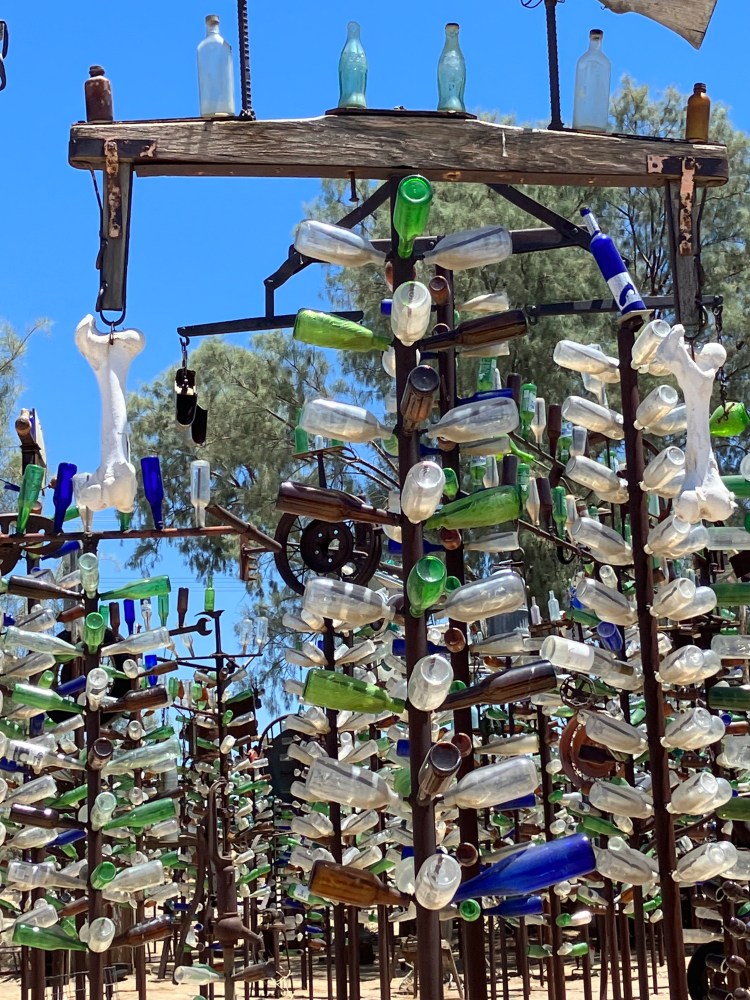
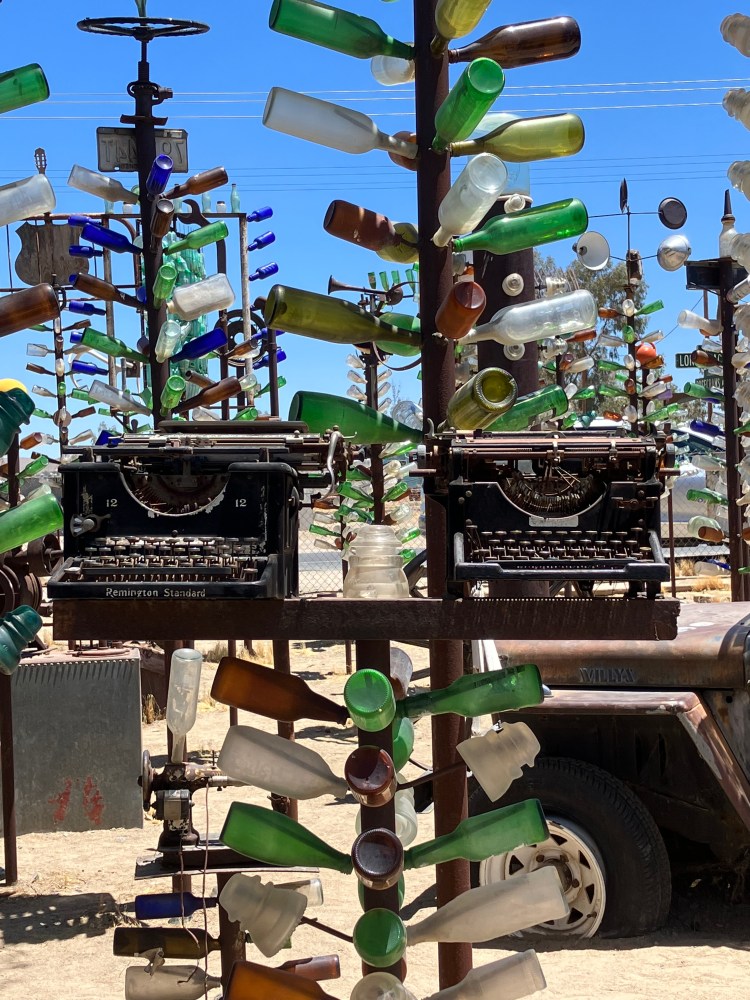
Out along a dusty stretch of old Route 66 near Oro Grande, California, Elmer’s Bottle Tree Ranch is exactly what it sounds like—and somehow much more. Created by artist Elmer Long, this quirky outdoor gallery is a forest of metal “trees” sprouting hundreds of colourful glass bottles that shimmer, whistle, and glow in the desert sun.
Each structure is handcrafted, many using reclaimed objects—old tools, signs, and bits of Americana—giving the whole place a scrappy, inventive charm. On windy days, the bottles hum softly, turning the ranch into a kind of accidental musical installation. It’s equal parts folk art, recycling project, and roadside oddity.
Despite its offbeat nature, this ranch was one of my favourite stops on our Route 66 adventure back in 2023 that I had to write about. It’s another place that I will never forget. For me it epitomised the individualism of the people we had met en route. This is art in its most imaginative form, what an inspiration Elmer must have been. There’s no formal entry fee, no gift shop, and no strict rules—just a wide-open invitation to wander, take photos, and appreciate the beauty of turning junk into something unexpectedly magical.
In short: it’s weird, it’s wonderful, and it’s a reminder that even in the middle of the desert, creativity can take root—and sparkle.
As my Caribbean adventure came to an end I found myself struggling to find the motivation to write my next post. Call it writers block, general apathy, maybe even the world demise, something zapped my writer’s energy. My biggest surprise, therefore, was to return to my stats and find that for the first time ever in the three years I have been writing my blog I had over one thousand views in a 30 day period!!! So Thank You! to all my readers, you have made this midlife adventurer very happy!
My next adventure is on the horizon but whilst I await my exit flight from the UK I’ve been pondering all the adventures I have had, —both during my blogging years and before. As a newly formed couple, we started travelling together back in 2016. Sometimes I forget just how many wonderful places we’ve been fortunate enough to visit… until I open my hard drive and see hundreds of photos neatly filed by year. Press another button, and folders from each destination pop up—scenic reminders of memories made. I found myself asking: Which were my favourites? Which cities would I revisit? Which museums, galleries, or historic sites would I return to? And that led to a new series of posts stretching back over the last decade, beginning with:
MY TOP THREE CITIES
I’ve decided to write this in reverse order to build a little suspense, including not just reasoning but also some fond memories of why these cities stand out to me.
3. Madrid
I first visited Madrid in May 2018. It was a trip my husband and I organised as part of my daughter’s 21st birthday celebrations—and the first time I used a travel planning app. “Inspirock”: I absolutely loved this app. It became a staple tool in my travel planning arsenal. Easy to use—especially for a beginner like me—it allowed users to create personalised itineraries using AI and local expertise, while still adding their own ideas.
Unfortunately, it was later acquired by Klarna in October 2021 as part of its expansion beyond “Buy Now, Pay Later” (BNPL). When it didn’t meet expectations, it was shut down with no notice to users.
Anyway… back to this wonderful Spanish capital
🏛️ History
Madrid began as a small Moorish fortress settlement in the 9th century under Islamic rule. It was later conquered by Christian forces in the 11th century but the city’s real transformation came in 1561, when Philip II of Spain moved the royal court there, making Madrid the capital. From that point, it grew into the political and cultural centre of Spain it is today.
Madrid played major roles in key events like the Spanish War of Independence against Napoleon and the Spanish Civil War, during which it suffered heavy damage but remained symbolically important.
The mixture of heritage creates a city and a surrounding area that is full of beautiful and outstanding architecture.
👥 Population
Madrid is very much a modern European capital that blends royal heritage with contemporary culture. It has a population of around 3.3 million within the city and over 6.5 million in the wider metropolitan area. It’s Spain’s largest city and one of the EU’s major urban centres, known for its diversity and vibrant lifestyle. It also serves as an excellent base for exploring nearby towns and cities..
📍 Best Places to Visit:
🎨 Culture & Museums
Museo del Prado – One of the world’s top art museums, featuring works by Goya, Velázquez, and El Greco. Museo Reina Sofía – Modern art museum, home to Picasso’s Guernica. Thyssen-Bornemisza Museum – A diverse collection spanning centuries of European art.
My husband has always enjoyed art—particularly world-famous works and the French Impressionists—but I used to wander off and do my own thing.
Madrid changed that. I joined him at the Reina Sofía and realised that art truly is in the eye of the beholder. You don’t have to like everything—it’s personal. Suddenly, I found pieces I connected with, and from that point on, I’ve happily joined him on cultural explorations (as long as we go at our own pace!).
👑 Landmarks & Historic Sites
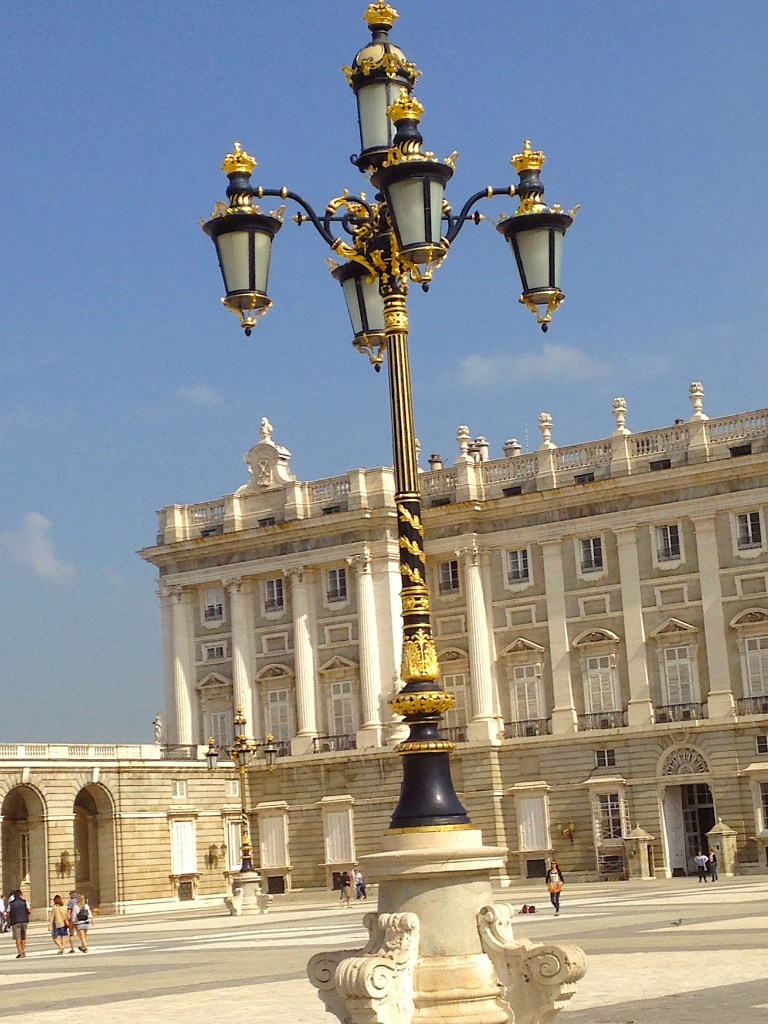
Royal Palace of Madrid – A grand royal residence with lavish interiors. Plaza Mayor – Historic square surrounded by beautiful architecture. Puerta del Sol – The symbolic centre of Spain and a lively gathering spot.
🌳 Parks & Relaxation
El Retiro Park – A large, scenic park with a lake, gardens, and the Crystal Palace. This is my absolute favourite park in the world!
🛍️ Food & Local Life
Mercado de San Miguel – A popular food market for tapas and local specialties. Gran Vía – A bustling street full of shops, theatres, and nightlife.
🌄 Surrounding Towns & Day Trips
🏛️ Segovia –
Famous for its remarkably preserved Roman Aqueduct and fairy-tale castle -The Alcazar.
👑 San Lorenzo de El Escorial–
A small town home to one of Spain’s most important royal sites – the El Escorial palace and monastery
🏞️ Aranjuez–
A peaceful town known for its royal palace, gardens and riverside walks
🧱 Ávila
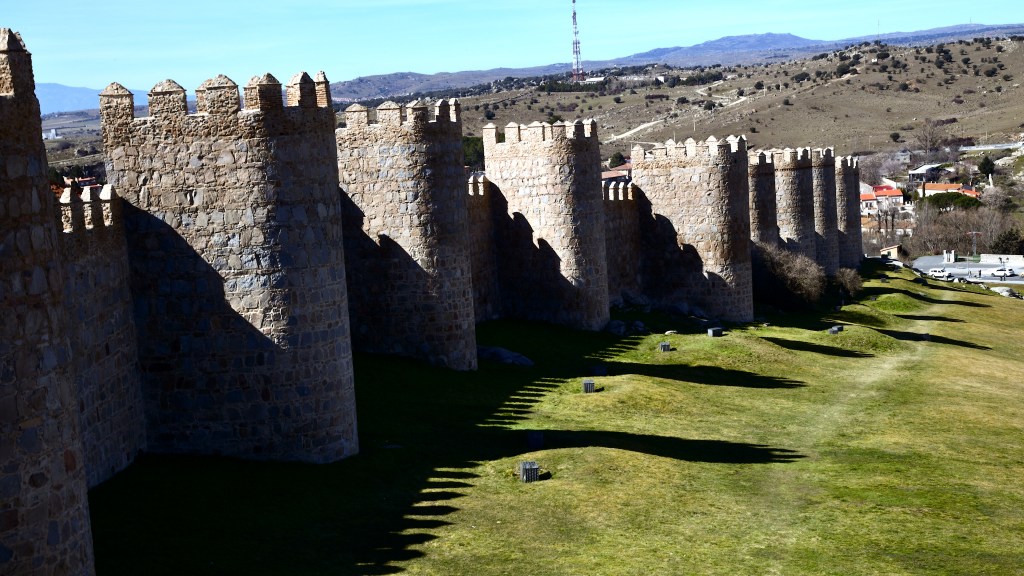
One of the best examples of a fortified medieval city in Europe; you can actually walk along large sections of the walls
✨ What Makes Madrid Special
Madrid stands out for its world-class art, historic grandeur, lively street lifeand infinite opportunities to explore in the surrounding area..
It’s a city where you can visit a royal palace in the morning, relax in a park in the afternoon, and enjoy tapas past midnight.
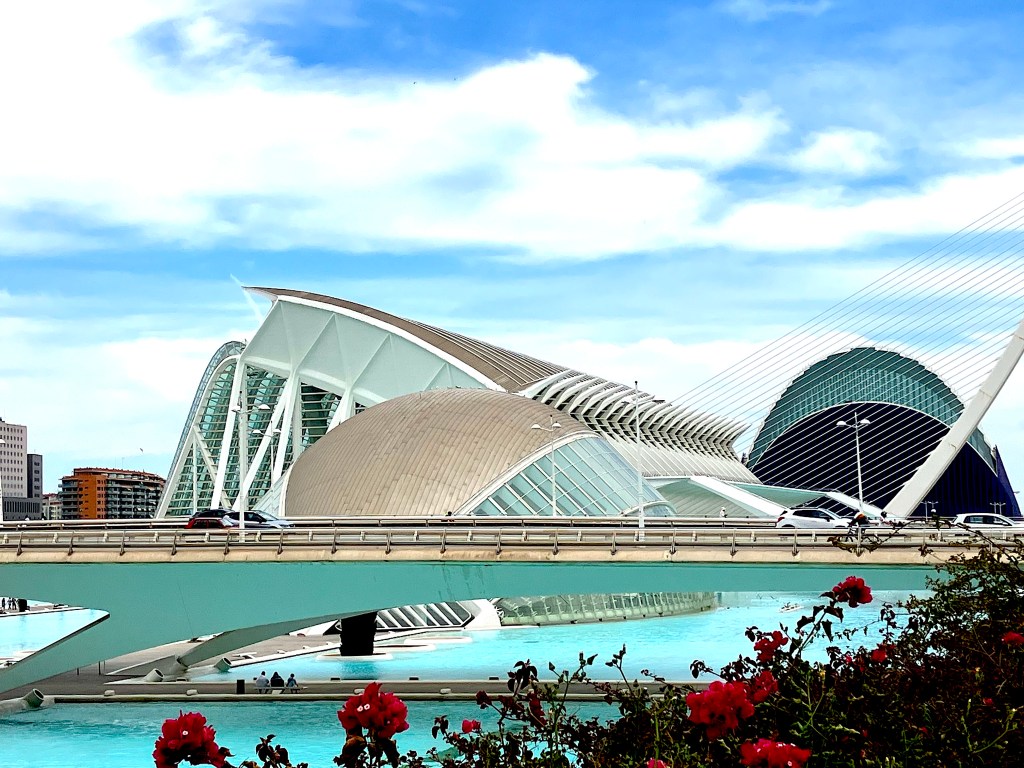
I hesitated putting another Spanish city in second place—but I had to. Valencia completely surprised us during our three-month tour of Western Europe in 2023, and we fell in love with it.
It’s still firmly on our list as a place to live for a few months one day.
🏛️ History
Valencia has over 2,000 years of history. It was founded by the Romans in 138 BC, later ruled by Visigoths and Moors, and eventually reconquered by King James I in 1238.
It flourished during the 15th and 16th centuries as a major cultural and economic centre.
Today, it blends historic architecture with futuristic design.
Today, Valencia blends historic architecture with futuristic design, making it unique among Spanish cities.
👥 Population
Valencia has around 790,000 residents, with up to 2 million in the metro area. It’s Spain’s third-largest city
📍 Best Places to Visit
Valencia really does have it all when it comes to places to visit
City of Arts and Sciences – One of Valencia’s most iconic attractions. A futuristic complex with a science museum, IMAX cinema, and Europe’s largest aquarium.
Valencia Cathedral A mix of Gothic, Romanesque, and Baroque styles where you can climb the Miguelete Tower for panoramic views.
La Lonja de la Seda A UNESCO-listed Gothic building that reflects Valencia’s medieval wealth and trade power.
Turia Gardens A large park, 8-10 km long, built in a former riverbed—perfect for walking, cycling, and relaxing.
L’Oceanogràfic Europe’s largest marine centre which forms part of the City of Arts and Sciences.
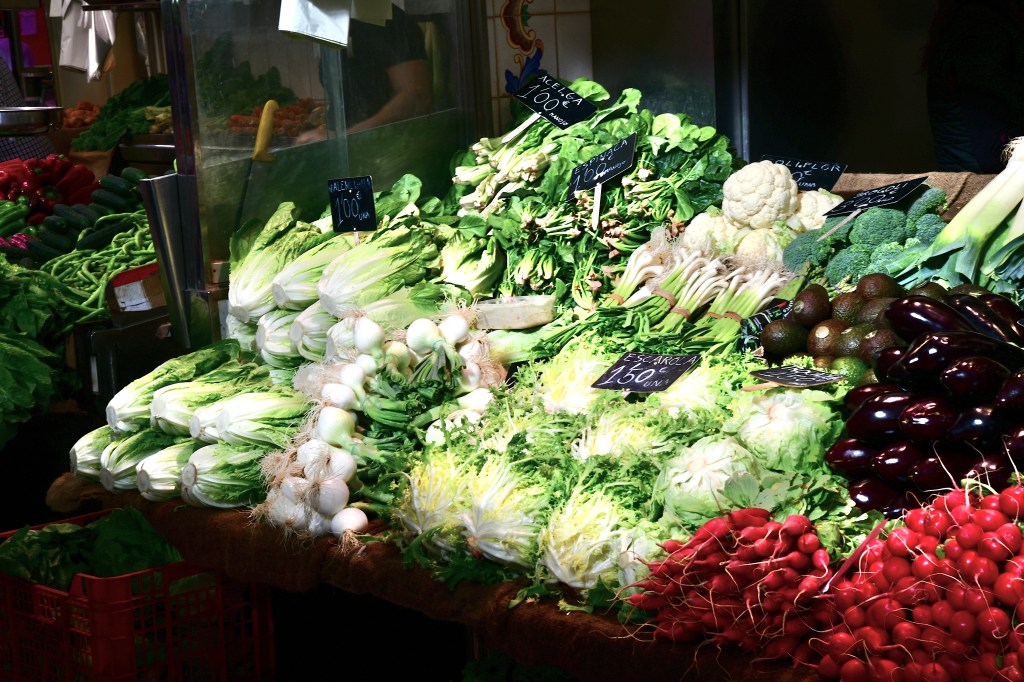
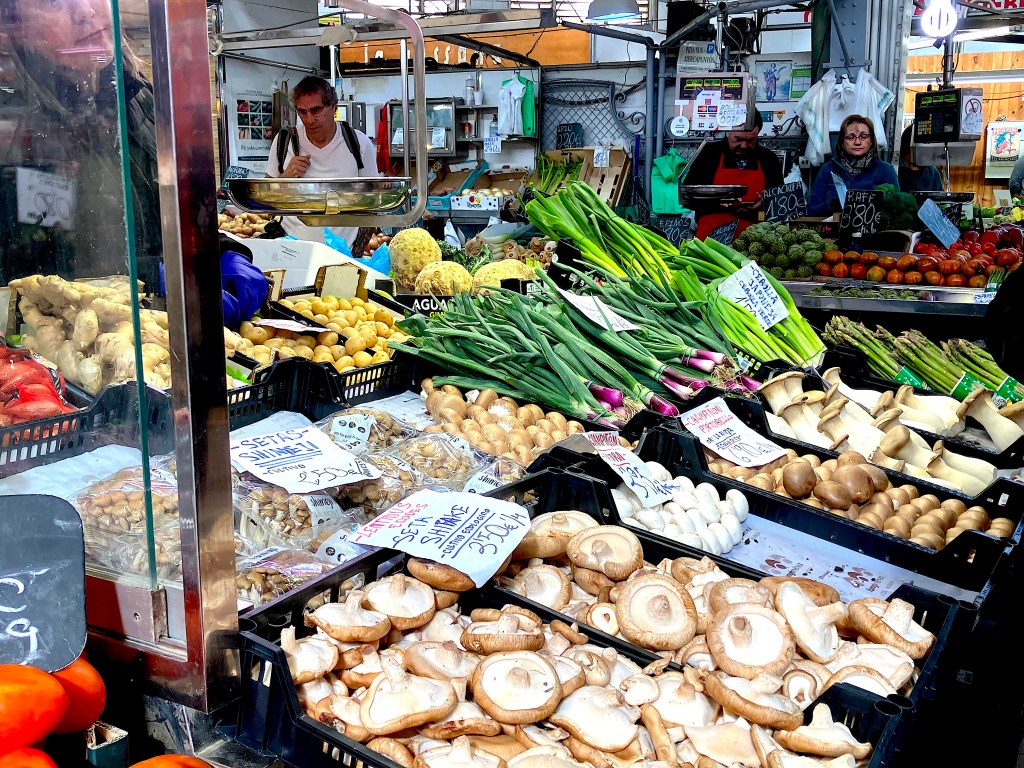
Mercado Central One of Europe’s largest fresh food markets—just amazing, the best indoor market of this type we’ve been to, great for local culture and food.
Malvarrosa Beach The bonus of Valencia as a city is that whilst you have the old original city on one side of Turia Gardens you can easily access this wide, sandy beach on the other side—ideal for relaxing or trying authentic paella at one of the many popular restaurants. Valencia is the birthplace of paella, one of Spain’s most famous dishes!
Fallas Festival This astonishing annual event that takes place every year in March and is a sight to behold with neighbourhoods competing for the prize for the best giant sculpture which then is burnt in a huge street celebration.
✨ What Makes Valencia Special
Valencia is one of Spain’s most balanced cities—where history, innovation, food, and lifestyle come together beautifully.
I first visited San Francisco in 2013 as part of a month-long trip around the U.S. with my children. We started in New York, flew to San Francisco, drove Highway 1 to Los Angeles, visited Disney, and finished in Las Vegas.
I loved it—but it’s definitely a Marmite city. You either love it or hate it.
I returned in 2018 with my husband, and although I haven’t been back since, it still holds my number one spot.
🏛️ History
Originally inhabited by the Ohlone people, the area later became a Spanish mission settlement in 1776. It passed to Mexican control before the California Gold Rush transformed it into a booming city.
The devastating 1906 earthquake destroyed much of the city, leading to major rebuilding.
In the 1960s, it became the centre of counterculture during the Summer of Love, centred around Haight-Ashbury.
Today, it’s a global tech hub linked to Silicon Valley.
👥 Population
Around 800,000 people live in the city, with up to 5 million in the wider area. It’s diverse, densely populated, and known for its high cost of living.
📍 Best Places to Visit
👑 Iconic Landmarks
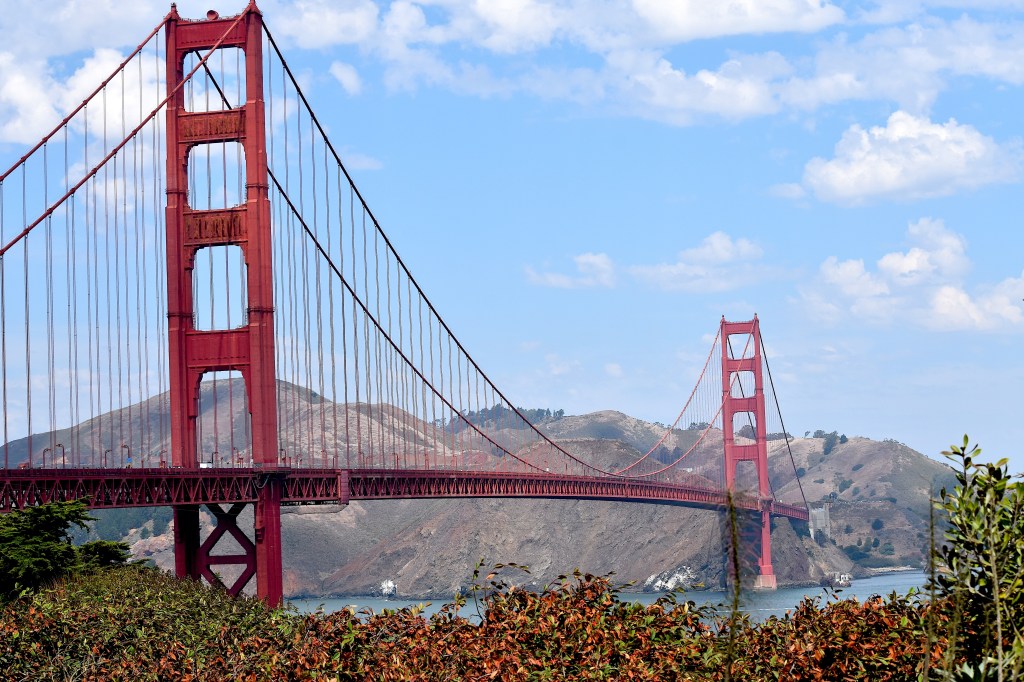
Golden Gate Bridge – The city’s most famous symbol. We hired bikes from “Blazing Saddles” and peddled our way along the waterfront to the bridge. Crossing the bridge made me a little nervous as you share a lane with pedestrians and the local bike riders seemed to be going very fast. However on reaching the other side you can ride down into Sausalito which is a beautiful place to explore. (The houseboats are very tempting for a future stay). After a welcome lunch we headed back to San Fran on the ferry.
Alcatraz Island – Former prison turned historic attraction – this will definitely feature in a later article of my favourite cultural places to visit
Lombard Street – Known as the “crookedest street” and one of the iconic sights of the city.
🌆 Neighbourhoods
Fisherman’s Wharf – Busy waterfront area known for seafood, shops, and sea lions
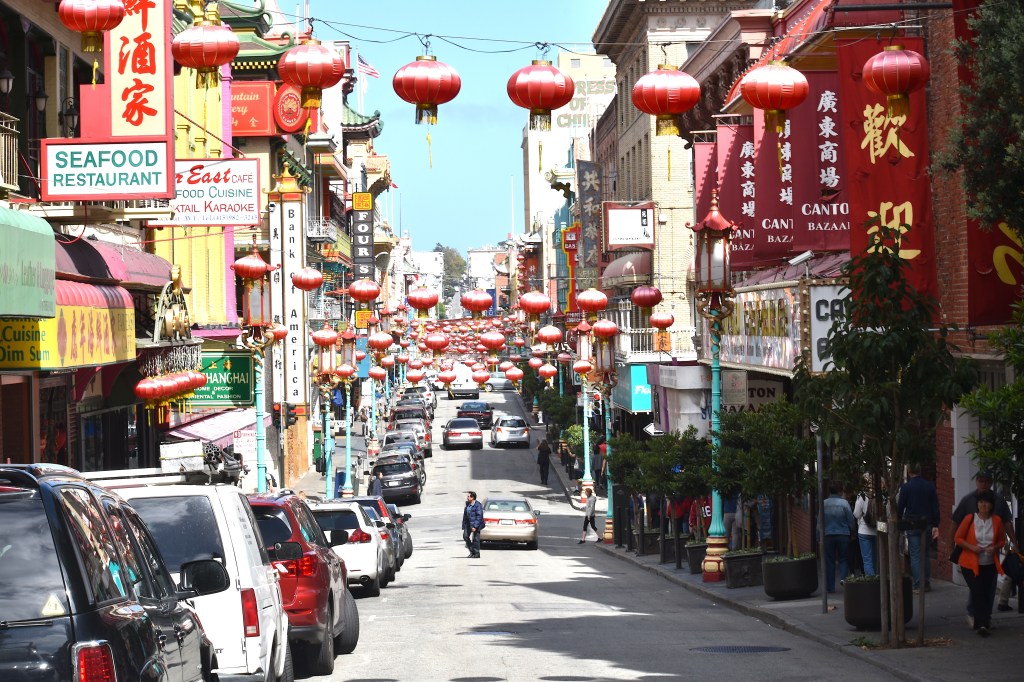
Chinatown – One of the oldest and largest Chinese communities outside Asia
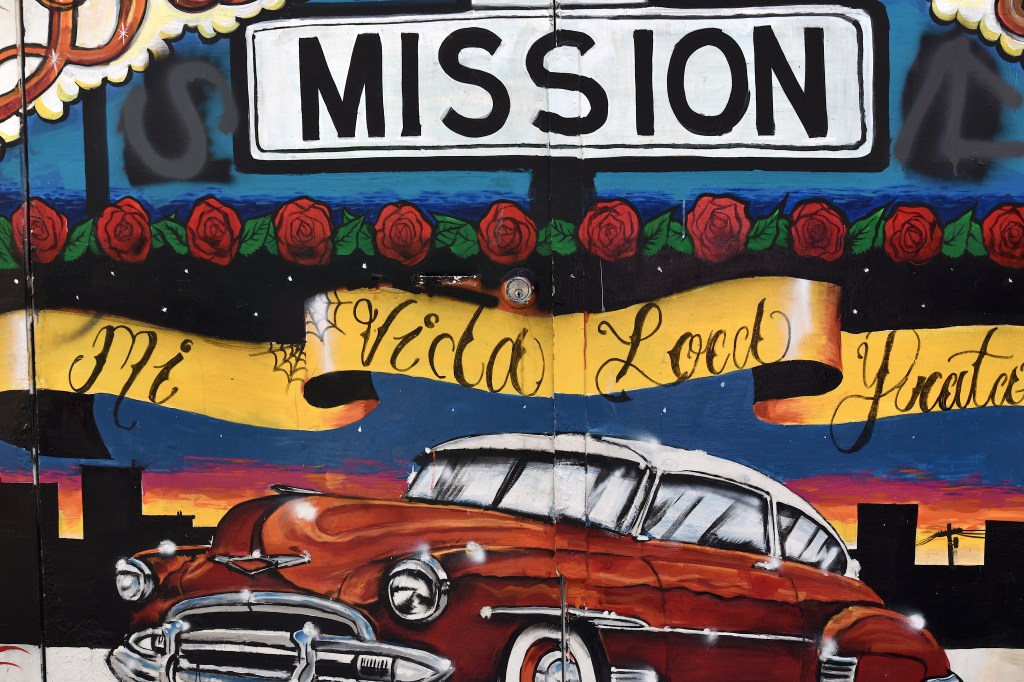
Mission District – Trendy area with street art, nightlife, and amazing Mexican food
Castro District – One of the world’s most prominent LGBTQ+ neighbourhoods, full of history, nightlife, and culture; closely tied to figures like Harvey Milk
Haight-Ashbury – Famous for its role in the 1960s counterculture movement and the Summer of Love; still has a bohemian, alternative vibe
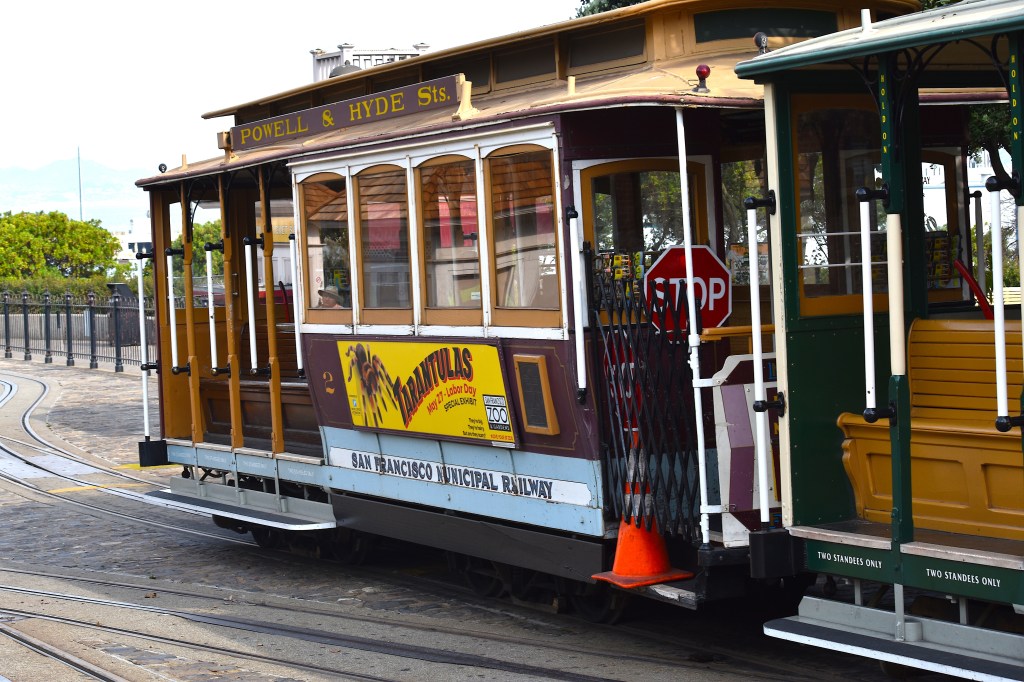
We even took a tourist bus (rare for us!) to better understand the city’s neighbourhoods—and it was worth it.
🌿 Parks & Views
Golden Gate Park – Larger than Central Park, full of gardens and museums
Twin Peaks – Best panoramic city views
Palace of Fine Arts – Beautiful classical style landmark
🎨 Culture & Museums
California Academy of Sciences – Aquarium, planetarium, and natural history museum in one
San Francisco Museum of Modern Art – Major contemporary art museum
✨ What Makes San Francisco Special
San Francisco stands out for its dramatic setting, diversity, and culture of innovation.
Built on steep hills beside the Pacific, it offers iconic views, rich neighbourhoods, and a unique mix of history, creativity, and progressive ideas.
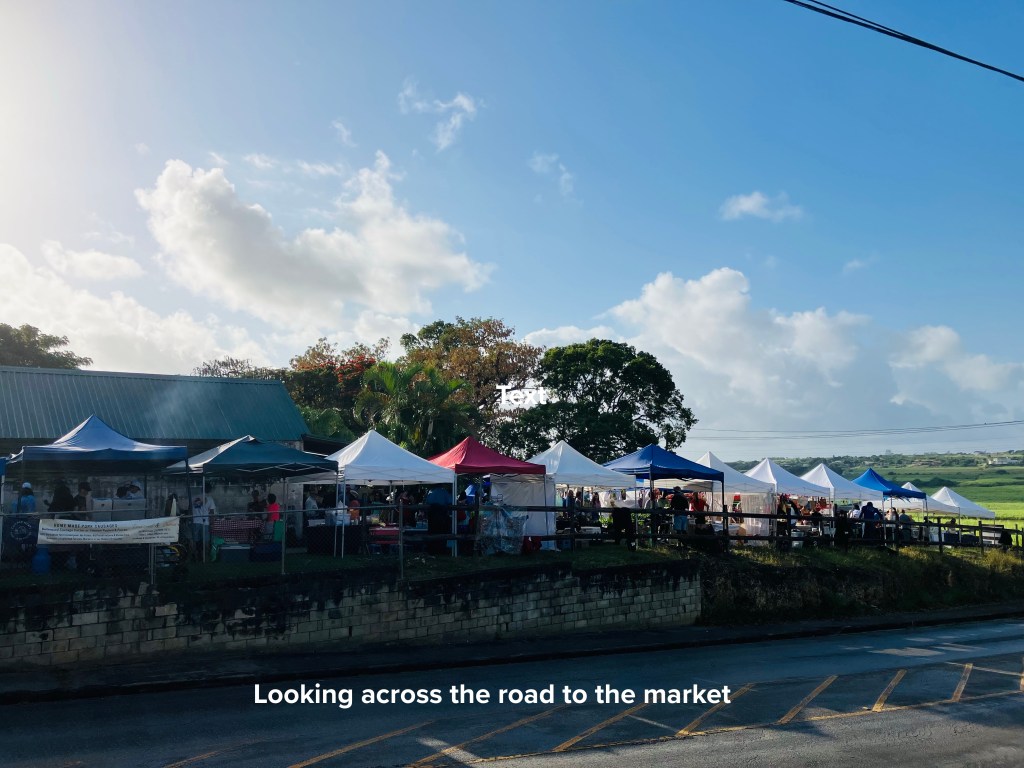
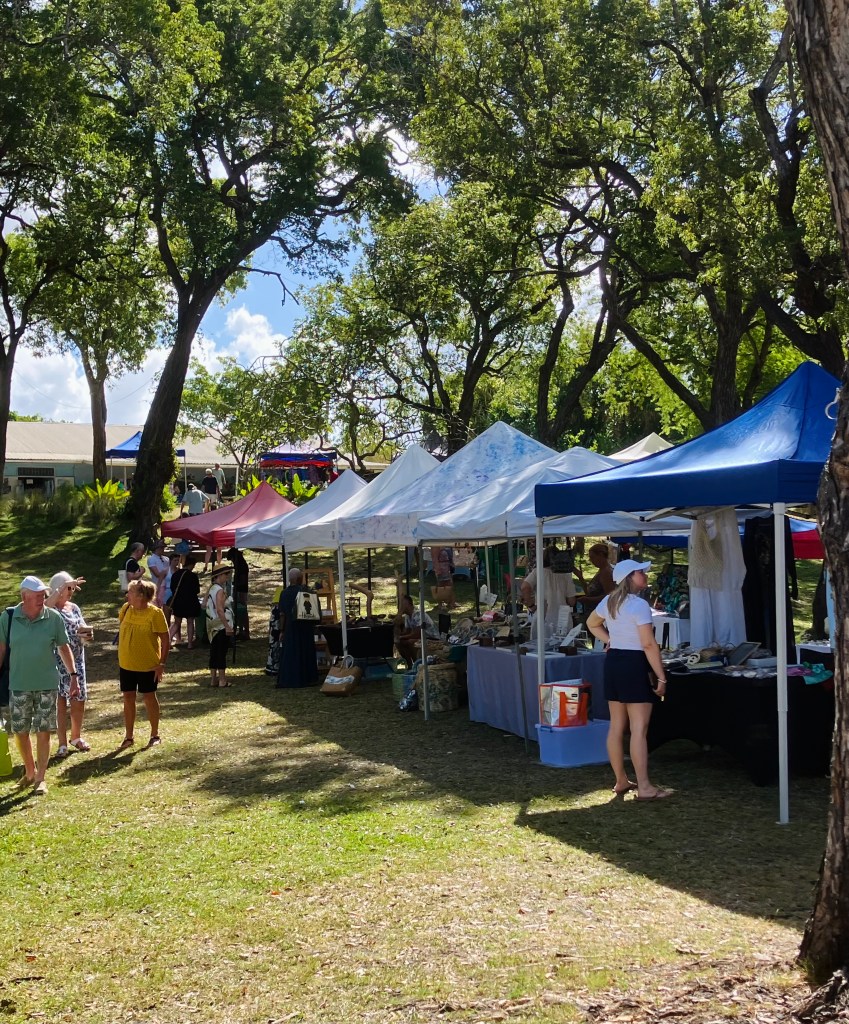
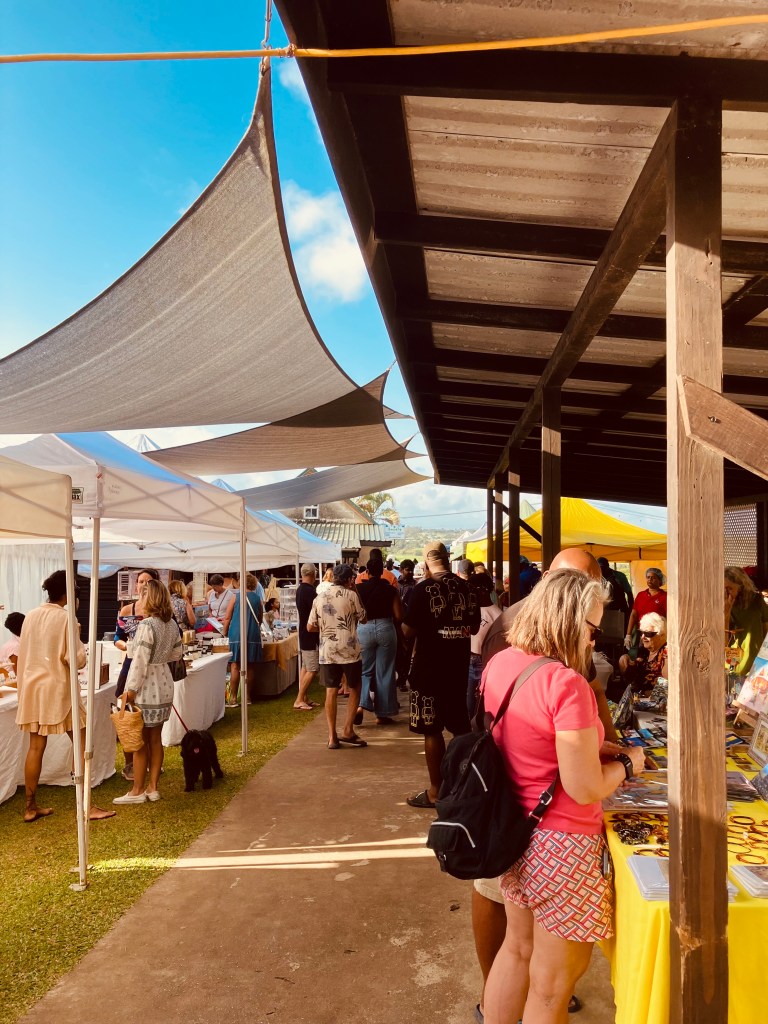
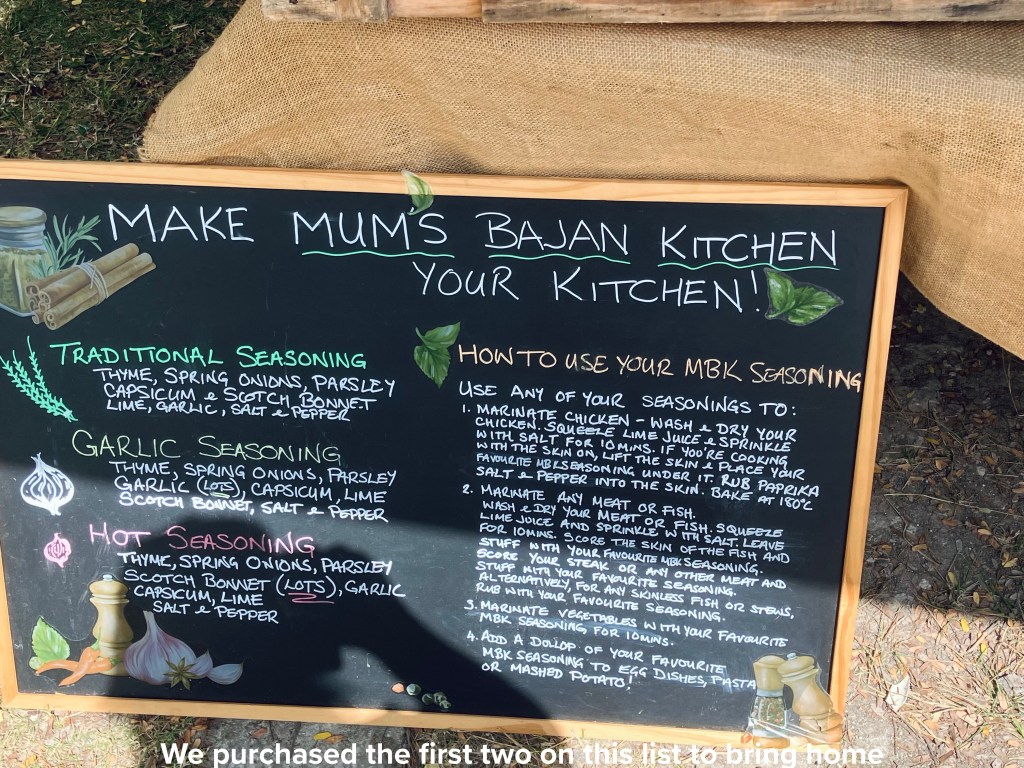
As we come to the close of our Caribbean adventure I thought I would introduce another aspect of Bajan life -markets! Barbados may be known for its beaches, but its farmers markets reveal a deeper, more local rhythm of island life. Two of the most popular—Holders House Farmers Market and Brighton Farmers Market—offer distinctly different experiences, each worth carving out time for. My husband and I first visited Holders House back in 2022, and while planning this visit to the island, we were keen to go again. It was during that search that we stumbled across Brighton Farmers Market. Rather than choosing between the two, we decided to spend our first weekend visiting both. Join me as I compare the two……….
Setting and Atmosphere
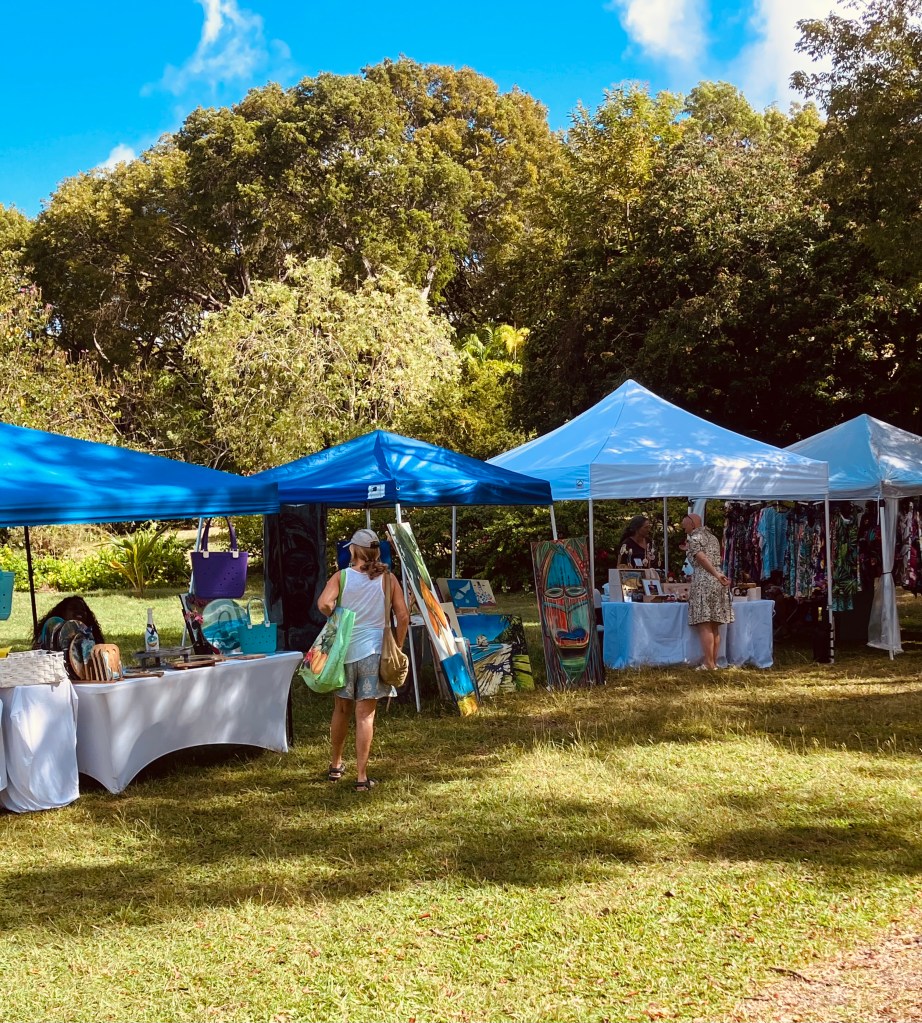
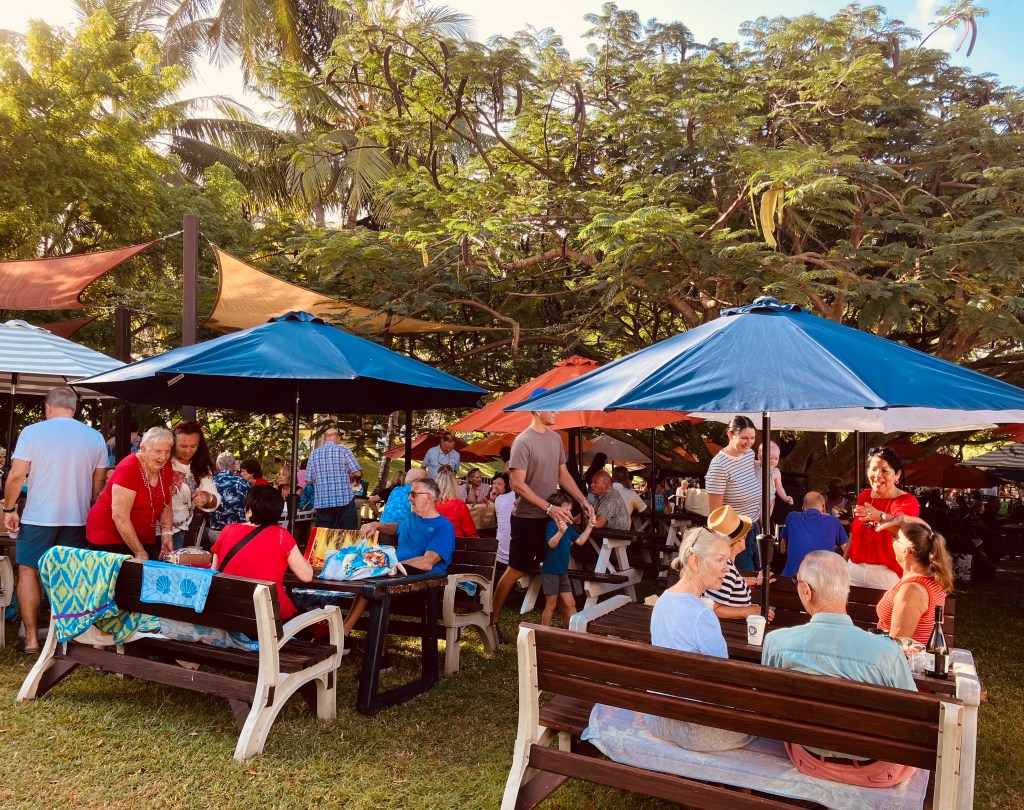
Set in the lush grounds of a historic estate, Holders House feels almost like a garden party. Shaded by trees and overlooking a polo field, it has a relaxed, social vibe where visitors linger with coffee in hand and browse at leisure. Live music and a mix of locals and tourists give it a slightly upscale, Sunday-brunch feel.
Brighton, on the other hand, is more rustic and rooted in everyday island life. Held on a working plantation dating back to the 1600s, it’s lively, bustling, and refreshingly unpolished. Locals arrive early, and by mid-morning the place is buzzing with energy, conversation, and the smell of breakfast cooking.
Timing and Pace
The biggest difference? Timing.
Holders House runs Sunday mornings (9am–2pm)—a slow, leisurely start to the day.
Brighton kicks off early Saturday (around 6am–10am)—a proper early-bird market where the best finds go fast.
Holders invites you to wander; Brighton rewards those who show up early and are ready to shop.
What You Will Find
Both markets celebrate local produce and craftsmanship, but their personalities show in the details.
At Holders House:
Organic fruits, vegetables, and artisanal goods
Fresh juices, baked treats, chutneys, and health products
Handmade crafts, clothing, and gifts
A more curated, boutique-style selection
At Brighton:
Abundant fresh produce at very reasonable prices
Hearty breakfast options like fish cakes, bakes, waffles, and coffee
Local crafts, plants, and handmade items
A more traditional, community-driven market feel
If Holders is where you browse, Brighton is where you stock up.
Food and Social Experience
Food is central to both—but again, the vibe differs.
Holders leans toward a relaxed foodie experience: think smoothies, pastries, and grazing under the trees while listening to live music. It’s as much about atmosphere as it is about eating.
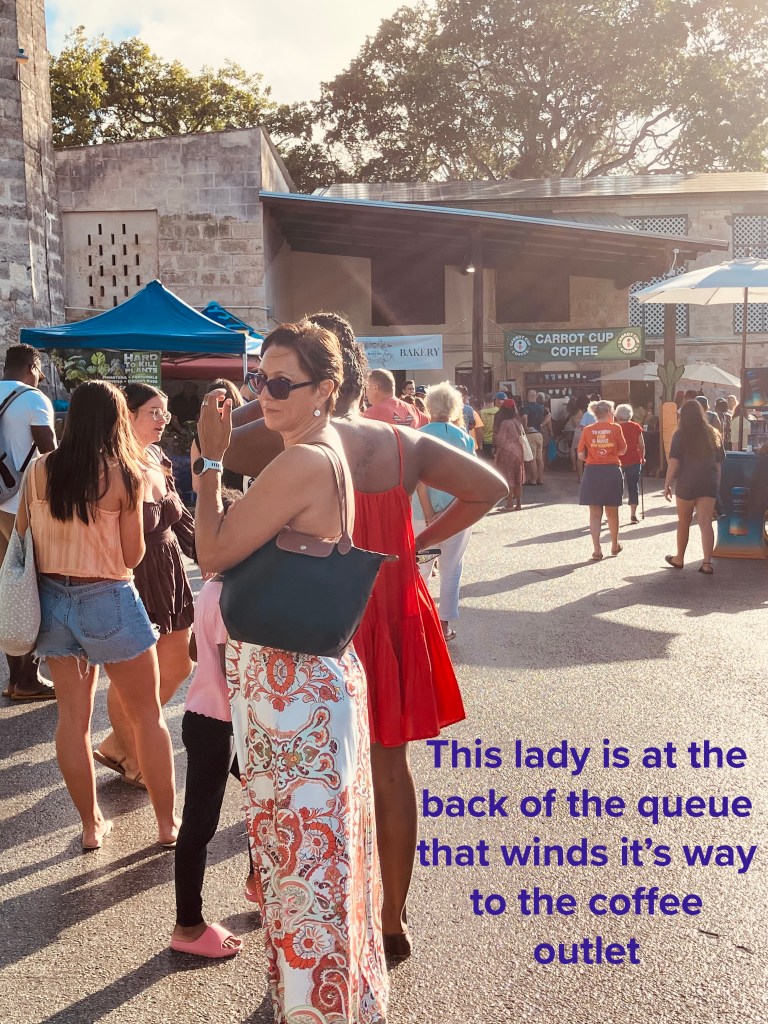
Brighton is more about fuel and flavour—quick, delicious, and satisfying. Grab a hot breakfast, chat with vendors, queue for up to 30 minutes for a “Carrot Cup Coffee”and maybe sit at a picnic table before heading off with bags of produce.
Which One Should You Choose?
Go to Holders House if you want a scenic, leisurely Sunday with a mix of shopping, food, and socialising.
Go to Brighton if you want an authentic, early-morning market packed with locals, great prices, and a lively atmosphere.
Final Thoughts and My Personal Favourite
If you have the time, don’t choose—do both as we did.
Start your weekend at Brighton for the buzz and bargains, then wind down at Holders for a slower, more indulgent Sunday morning. Together, they offer two sides of Barbados: one energetic and grounded, the other relaxed and refined.
Personally, I prefer Holders House. For me, it captures the essence of the Caribbean—welcoming, flavourful, and relaxed.
This post brings our visit to Barbados and our Caribbean Adventure to a close. I hope you have enjoyed my insight into what this beautiful area of the world has to offer and hopefully picked up a few tips to make your visit a bit more budget friendly. I look forward to your feedback and bringing you our next mini adventure, a little closer to home, next week……………….
We said our goodbyes to Antigua and boarded a short Caribbean hop over to Barbados—our final stop on this Caribbean island adventure. For me, it felt a little like returning to familiar ground; this was my fourth visit, and there’s something about the island that keeps drawing me back.
Usually, we gravitate towards the north-west coast—around Holetown and Speightstown—where the beaches are calm and the sunsets never disappoint. But travelling during the school half-term meant prices had crept up more than usual, so this time we switched things up and based ourselves in Christchurch on the south coast. A different setting, but one that offered its own lively charm with Oistins Fish Fry just down the road.
If you’re curious about Barbados and are wondering where to visit on the island, I’ve written more in a previous post where I explore the island’s history and geography in a bit more detail. It’s an island with a rich story beneath the surface, shaped by centuries of culture and change.
Tourism, unsurprisingly, plays a huge role here. In 2024, just over 700,000 visitors stayed on the island, with the largest share arriving from the United States—helped by the growing number of direct flights from major cities. The UK remains a close second, accounting for around 40% of visitors, alongside travellers from Canada and neighbouring Caribbean islands. Barbados may feel like a tucked-away paradise, but it’s surprisingly well connected.
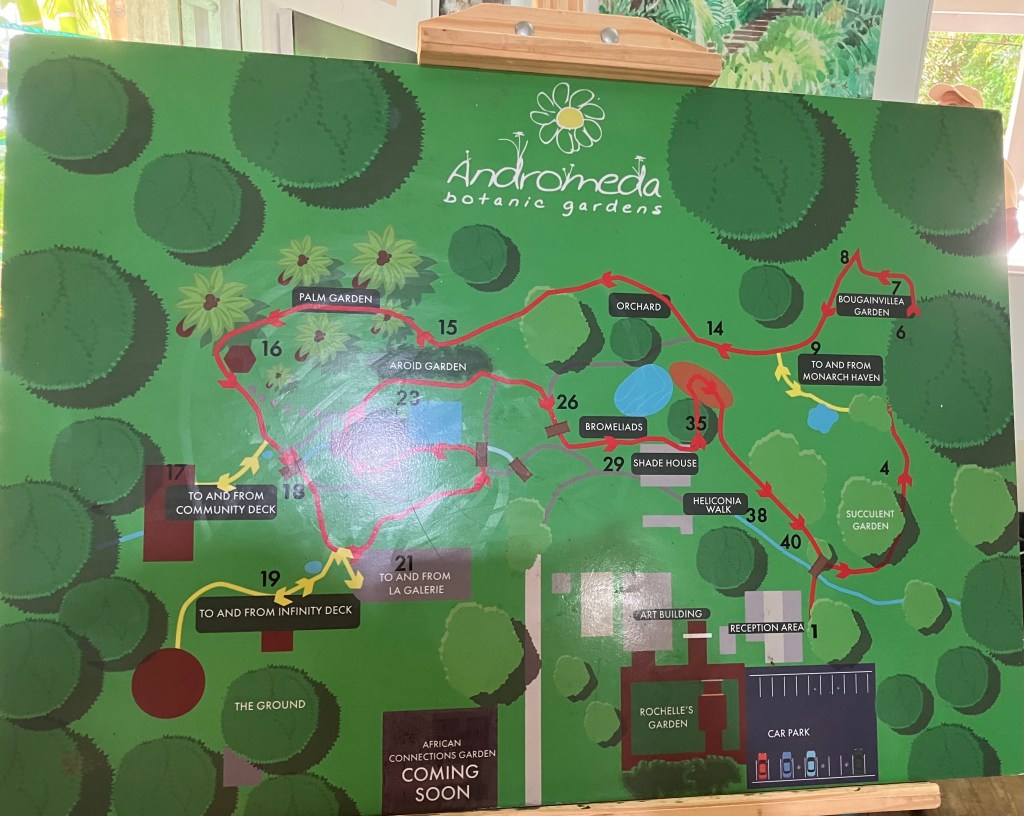
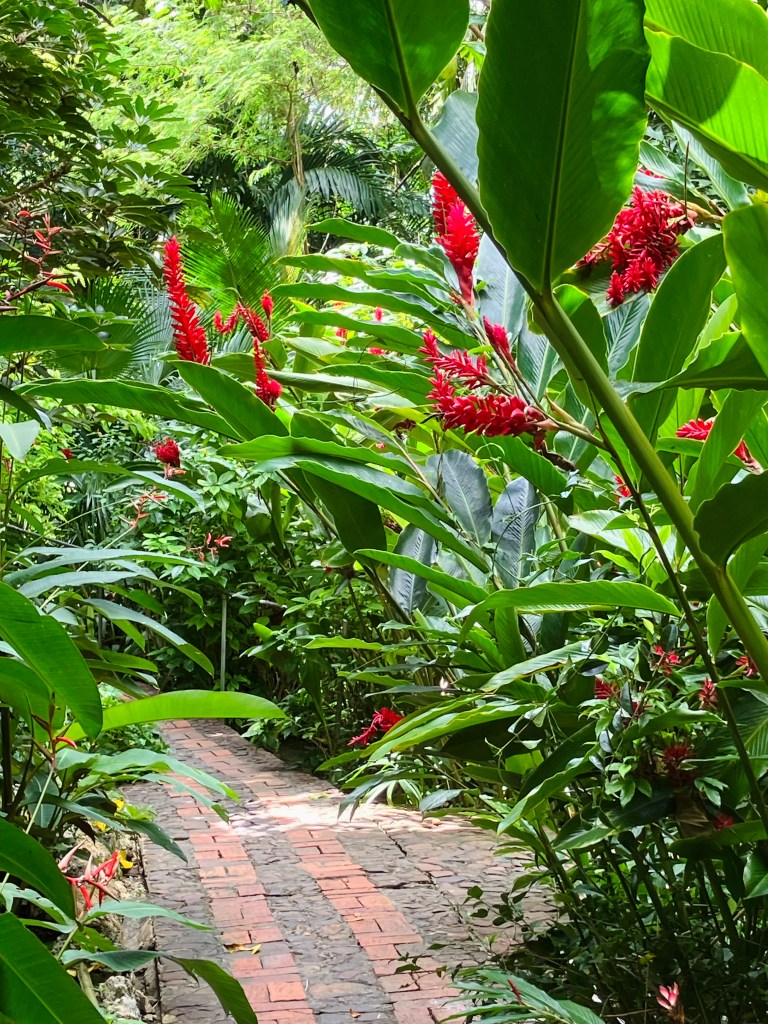
One of the things I always look forward to when I’m here is escaping the coastline and heading inland. Barbados isn’t just about beaches—it’s also home to some beautiful pockets of lush greenery. On a previous trip, I spent time exploring the serene paths of Andromeda Gardens and the enchanting, almost storybook setting of Hunte’s Garden (which I wrote about in Discovering Tranquillity in Barbados’ Hidden Garden Paradises.
A couple of pictures taken at Andromeda
This photo shows the entrance to Hunte’s Gardens, a real indication of the serene and tranquil walk that awaits you
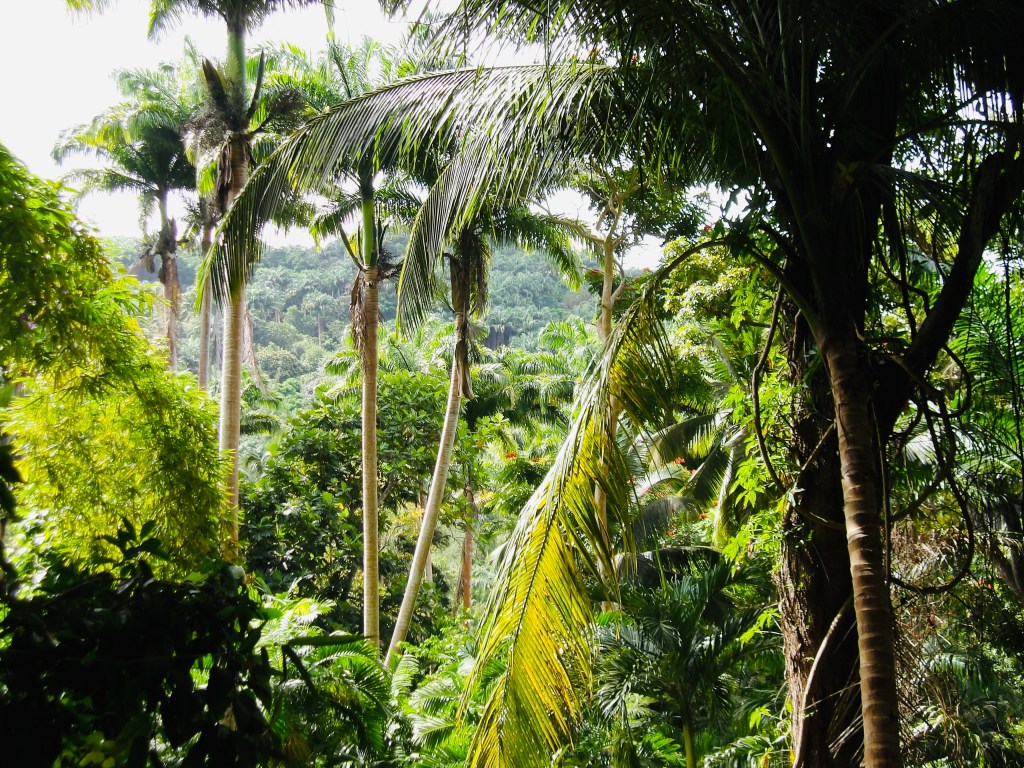
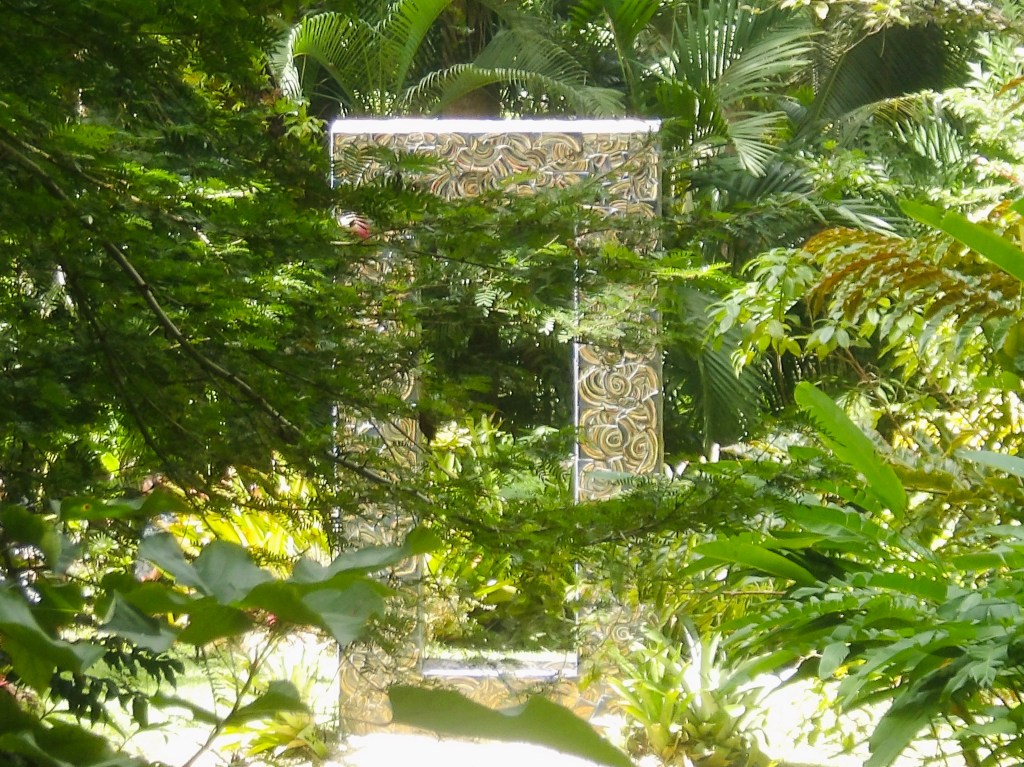
This time, we headed to the north-central part of the island to visit the Flower Forest—a peaceful retreat tucked away from the busier tourist spots, and the perfect place to slow down and take in a different side of Barbados.
The Flower Forest
If Barbados is best known for its sun-soaked beaches and turquoise waters, then the Flower Forest feels like its quieter, more introspective sibling—the one who prefers misty hills, tangled greenery, and the slow unfolding of beauty over time.
Tucked away in the island’s uplands, the Flower Forest isn’t the kind of place you simply visit. It’s somewhere you can disappear into.
The journey there already hints at a shift in mood. As the road climbs, the air cools slightly, the breeze softens, and the coastline slips out of view. By the time you arrive, the rhythm of the island has changed. Things feel slower, softer, and a little more secretive.
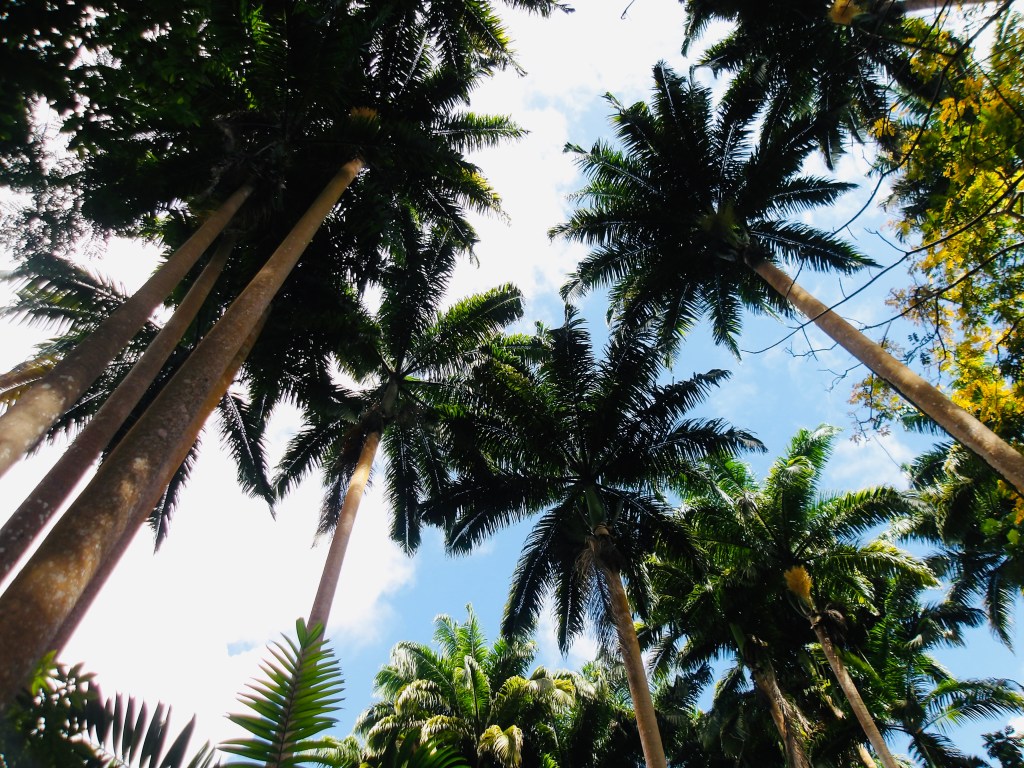
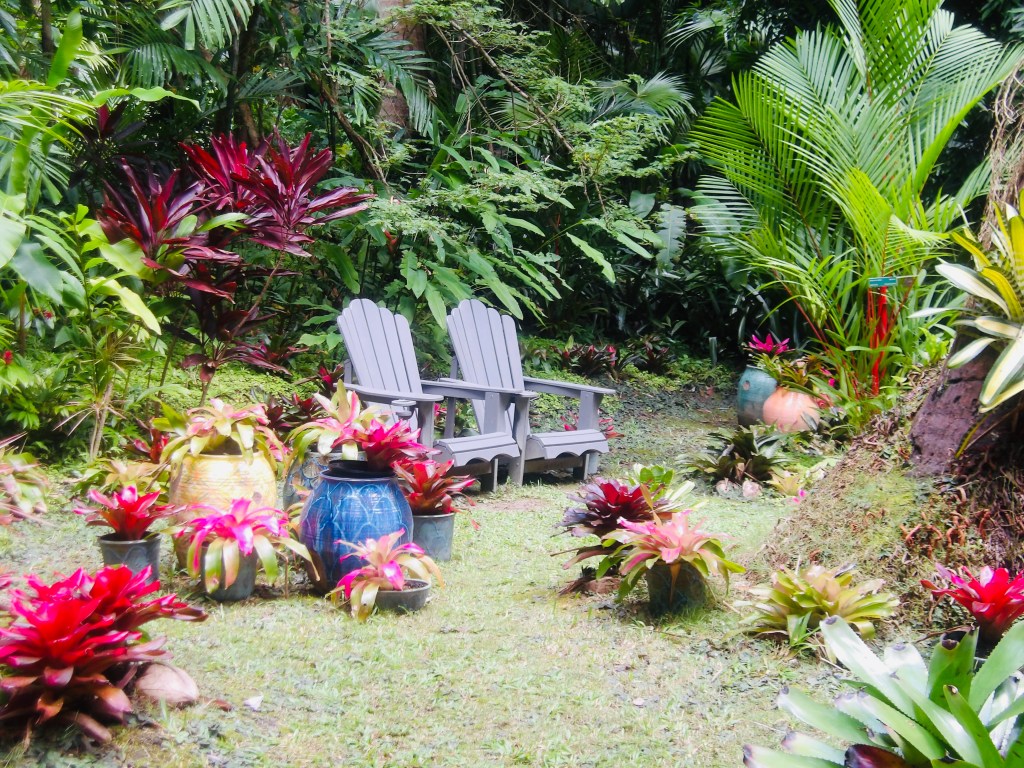
Inside, the forest greets you not with grand gestures, but with layers. Layers of green, first of all—deep emerald, bright lime, silvery sage—stacked and intertwined in ways that feel almost deliberate, though nothing here seems overly planned. Towering palms stretch upward while ferns unfurl quietly beneath them, and flowering plants appear unexpectedly in an ongoing scenic view of foliage.
amidlifeadventure.orgaidlifeadventure.org
Walking through the paths, you quickly realise this isn’t a manicured botanical garden. It’s something more relaxed, more alive with flora and fauna. The trails curve gently, inviting you forward without urgency. There’s no single “main attraction”—no one spot that demands your attention. Instead, the experience is cumulative, built from small, beautiful moments: a shaft of sunlight breaking through leaves, a sudden burst of colour, the sound of wind moving through branches like a whispered conversation.
The flowers themselves are both subtle and striking. Some bloom boldly in vibrant reds and oranges, while others reveal themselves only if you pause long enough to notice. It’s a place that rewards patience. The more slowly you move, the more the forest offers.
a,idlifeadventure.orgamidlifeadventure.org
And then there are the views.
At certain points, the dense greenery opens just enough to reveal sweeping vistas across the island. Rolling hills stretch out toward the horizon, eventually giving way to the distant shimmer of the sea. It’s a gentle reminder that, even surrounded by forest, you’re still on a Caribbean island—just seeing it from a different perspective.
What makes the Flower Forest particularly memorable is its atmosphere. There’s a calmness here that feels almost tangible. It’s not just the absence of noise, but the presence of something quieter—something grounding. You find yourself breathing more deeply, walking more slowly, noticing more than you usually would.
Time behaves differently in the forest. Minutes stretch. Plans dissolve. You might arrive intending to stay for an hour and leave wondering where the afternoon went.
amidlifeadventure.orgamidlifeadventure.org
The Flower Forest may not be the loudest or most famous attraction in Barbados, but it doesn’t need to be. Its charm lies in its subtlety, its atmosphere, and its quiet insistence that beauty doesn’t have to shout to be noticed.
Sometimes, it just grows—patiently, persistently—waiting for you to slow down enough to see it.
Final Thoughts: The Flower Forest offers a gentle reminder that Barbados is far more than its picture postcard-perfect beaches. There is also a quieter, more reflective side—one that invites you to slow your pace, look a little closer, and appreciate the beauty found in stillness. Away from the crowds and coastal buzz, this hidden retreat captures the essence of mindful travel: giving you a moment of calm, connection, and quiet discovery that lingers long after you leave.
Do you balance your travel experience or are you purely a beach lover? Let me know in the comments below or simply give my post a like if you enjoyed reading it today.
My final post on Antigua, before we head to our third destination on this Caribbean adventure, offers an insight into how we eat while travelling—especially since the Caribbean is known to be expensive.
First of all, that in order to stretch our funds so we can complete the rest of our travel plans, we do not eat in high end restaurants and spend the sort of budget you would if you were on your annual two week holiday. We do, however, pack a couple of outfits so if we decide to treat ourselves whilst away we have the wardrobe to do so.
When I plan a trip, accommodation will often be self catering so that breakfast can be in our temporary home along with the occasional main meal and snacks. After all, even on a budget, a decent breakfast and good coffee can set the tone for the day. Alongside the ingredients for these meals we will also buy a few staples like water, bread, butter/spread and fruit. Hopefully the owner will have supplied cleaning materials including washing up liquid (if there is no dishwasher) and we tend to bring our own toiletries from home. Everyone has their own viewpoint on this but smelling something familiar in the shower each day and ensuring my hair looks and feels human is important to me!
Supermarket Prices in Antigua
One of the biggest factors affecting our food choices is the cost of groceries on the island. Food shopping in the Caribbean is rarely cheap, as many goods are imported. Antigua, however, is not as commercialised as other Caribbean islands that we have visited which for us is a bonus. There are plenty of roadside fruit and vegetable stalls, a daily market in the capital – St John’s, as well as local eateries and roadside spots where homeowners barbecue chicken and meat in large oil-drum grills.
I thought I would share some food prices with you to give an idea of how much you can expect to spend if you have opted for, like us, a self catering visit. The first supermarket we stopped at on the evening of our arrival was the Perry Bay Supermarket in St John’s. This was the only place, we later discovered, that sold fresh milk rather than long life milk. However the majority of our shopping was completed at the “Epicurean Fine Foods and Pharmacy” , in St John’s, which was about a 20 minute drive from where we stayed. As stated on their website they stock a range of UK, US and Canadian products. For those shopping from the UK most of the products are “Waitrose”.
Tap water is generally treated in Antigua, but it is highly recommended to drink bottled, boiled, or filtered water to avoid stomach issues.
Listed below are some of the items we purchased at the supermarket (based on the currency conversion from XCD to British pounds at the time of purchase) with a comparison to prices in a Tesco supermarket in the UK:
Granola 500g cost £3.96. Tesco price £2.45 for 500g
Weetabix (24) cost £5.77. Tesco price £3.50
Honey 454g Jar £7.83 Tesco price £1.75
Pears cost 48p each Tesco price 52p each
Bananas cost 24p each Tesco price 16p each
Raspberries cost £3.91 for 320g Tesco price £4.30 for 300g
Local Lettuce £1.99 each Tesco price 89p
An English Cucumber £3 Tesco price 99p
Large packet of Ruffles Crinkle Cut Crisps, 180g cost £4.67 Tesco price for 150g is £1.25
Local brand of Diet, Caffeine Free Coke, 2 litre bottle £1.97 Tesco price £2.15
Water 5 litres £1.67 Tesco price £1.80
Total in Antigua: £44.18 Tesco Total: £23.71 87% more in Antigua. This really highlights how quickly self-catering costs can add up.
In total across our 10 days we spent £134.22 at the supermarkets. Prices, as you can see, are much cheaper in the UK and, therefore, often eating your main meal of the day at a local eaterie in Antigua can be cheaper than actually buying all the raw ingredients yourself and cooking it in the kitchen provided.
Local Food to Try
We are more than happy, in the Caribbean, to venture out and explore local places to eat.
The national dish in Antigua is Fungee and Pepperpot. Fungee (pronounced “foon-jee”) is a savory, firm cornmeal and okra dumpling similar to Italian polenta, while Pepperpot is a rich, hearty stew made with assorted meats, vegetables, and spinach. It is a quintessential dish highlighting African and Caribbean influences. We never actually came across this meal whilst in Antigua but maybe we didn’t go local enough?
Other local favourites also include jerk chicken and pork (similar to Jamaican cuisine), roti, and fish such as snapper, mahi-mahi and grouper along with tropical fruits/vegetables. Look out for the famous Antiguan black pineapples! Antiguan food is generally seasoned, flavorful, and savory, but it is not typically prepared with intense chilli heat
Rum is considered the national drink of Antigua and Barbuda, reflecting the island’s rich Caribbean history. Locally produced rum, particularly brands like English Harbour Rum and Cavalier Rum, are very popular. Additionally, Wadadli beer is recognised as the national beer which is actually a light lager named after the original name for the island.
Eating Economically
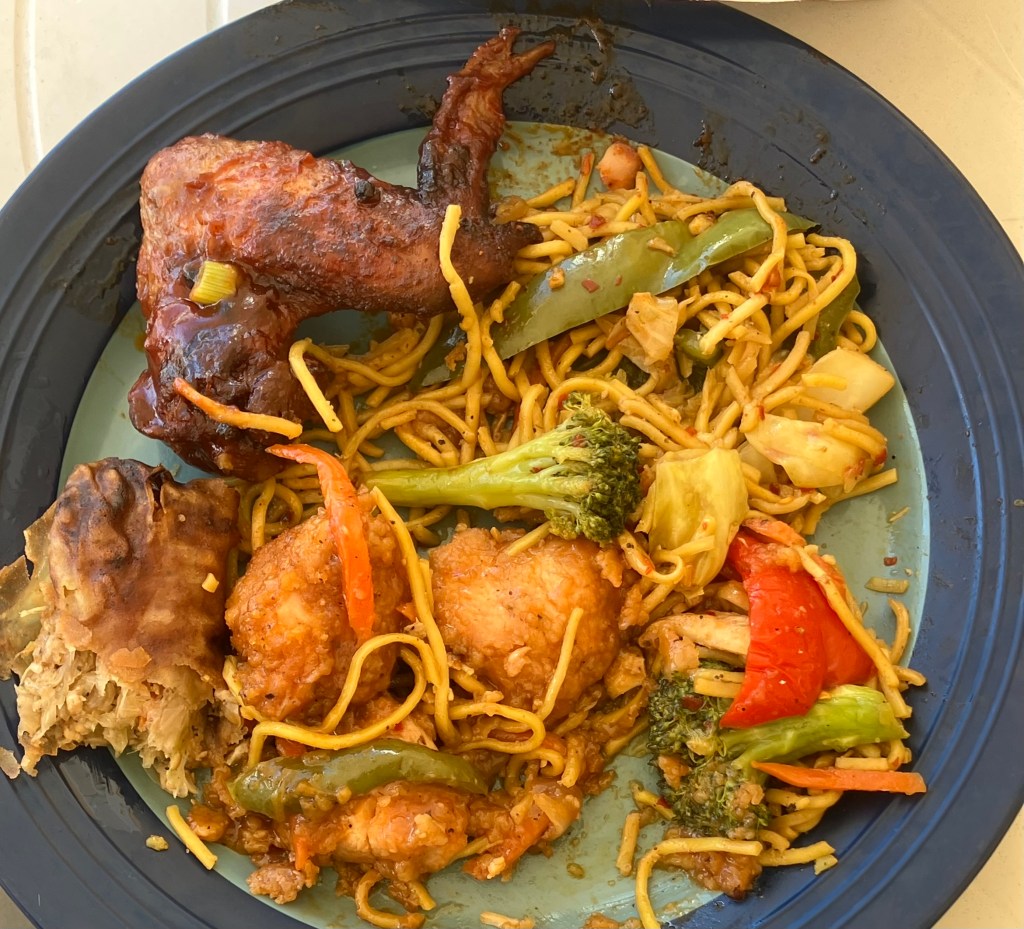
Supermarkets: Whilst the supermarkets in Antigua do not sell hot, cooked foods as much as you might find on other islands it is available at the Epicurean in St Johns. Times available on their website. There is a choice of two counters; the first stocks typical Caribbean food and the second Asian food. This is served in plastic box containers, weighed and sealed for you to take home. For both counters you need to take a ticket from the adjacent machine and wait for your number to be called. We tried this on a Sunday Afternoon and there was a long wait. If it’s busy I would suggest taking a ticket on entry and getting on with your shopping whilst maybe popping back every now and again to see which number they are at! On a positive note the food is freshly cooked and monitored in terms of how long it is on display before being replaced with fresh stock. Serving spoons etc are allocated to each dish and sterilised regularly to avoid any cross contamination!
We bought starters and mains from the Asian selection for two for £16.34 cheaper than most takeaways in the UK, and a great option when you don’t feel like cooking.
My Half Eaten Takeaway 😊
Whilst salad counters aren’t widely available in Antigua, you can easily pick up hot, freshly cooked BBQ chicken from the supermarkets We paid £9.93 for a chicken, which was enough for dinner (paired with salad bought separately) and lunch the following day.
Local Eateries:
Tipping Culture: In Antigua, a 10–15% service charge is often—though not always—added to restaurant bills. When it is included, there’s no obligation to tip further, although leaving a little extra for exceptional service is always appreciated. If no service charge is added, a 10–15% tip is customary.
Green Apple
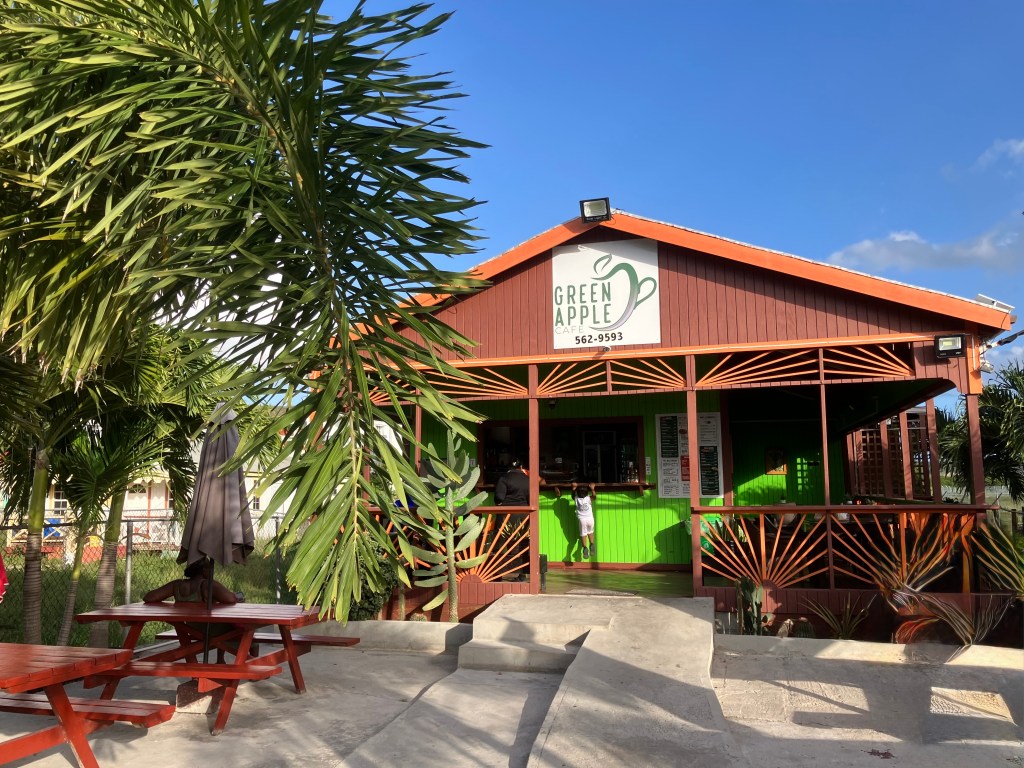
Located next to the University of the West Indies, Five Islands Campus, Green Apple was recommended by neighbours at our accommodation—and it turned out to be a great find!
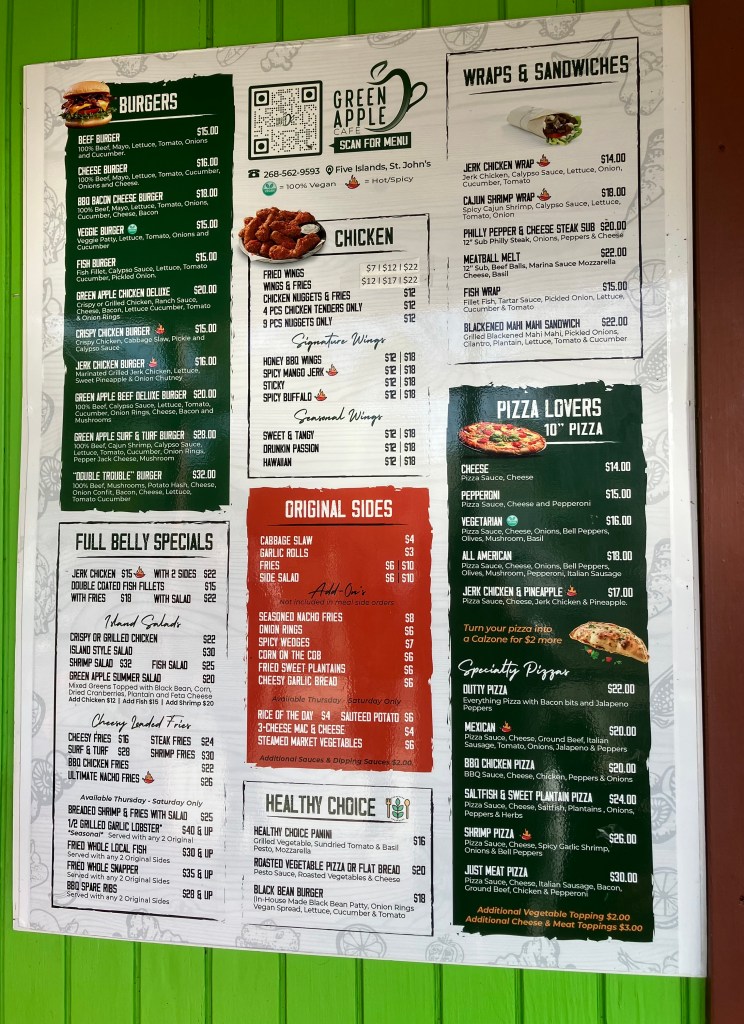
After parking by the roadside, we were immediately struck by the modern Caribbean feel of the wooden building. There’s seating in a courtyard at the front with tables and umbrellas, as well as additional space on a side balcony. With a steady student crowd, takeaway orders seemed popular, but there is also the option to dine in. The menu is displayed beside the counter and offers a good range of fast food with a Caribbean twist. The staff were friendly and helpful. We placed our order, took a seat, and before long our food arrived fresh from the kitchen.
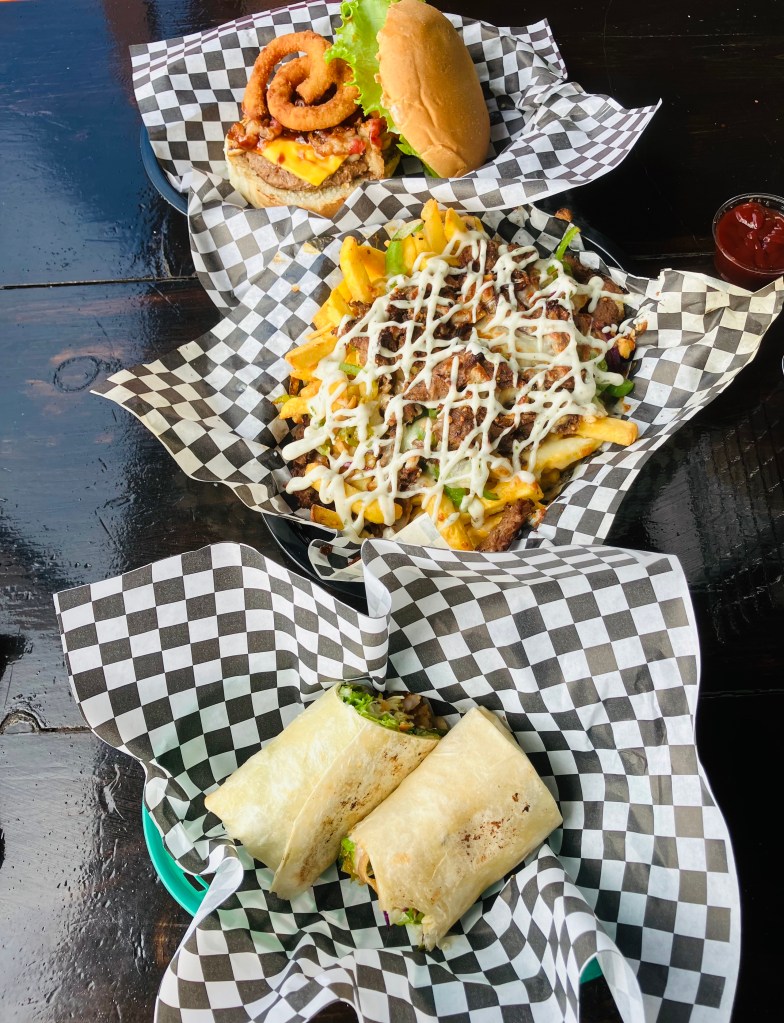
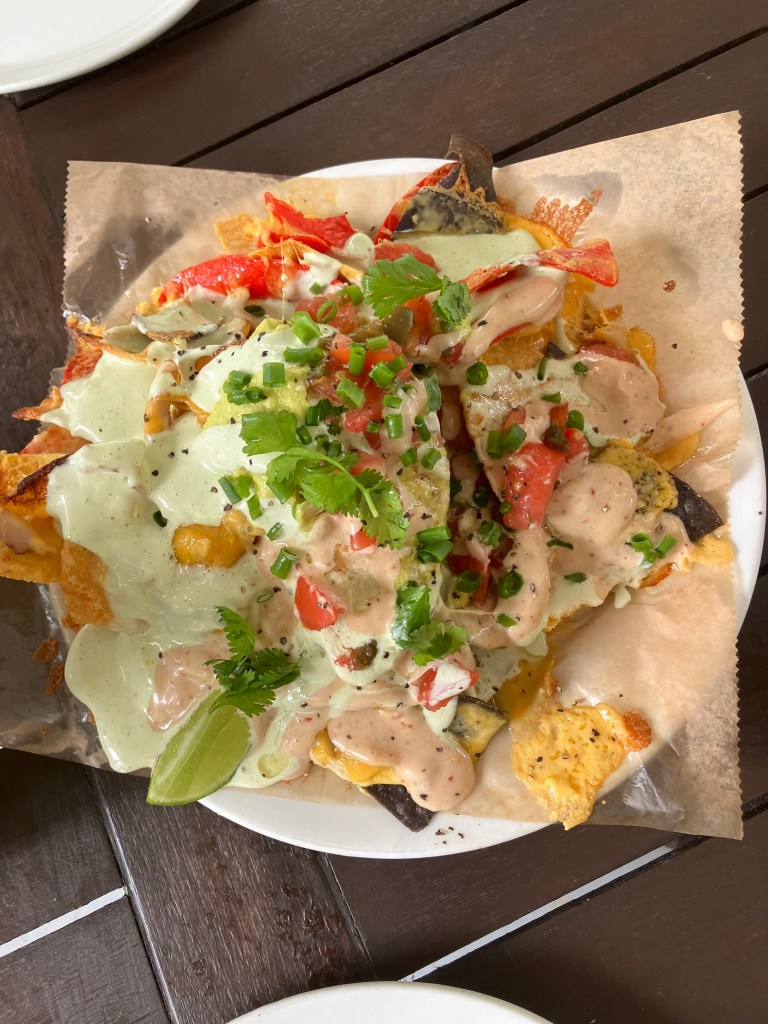
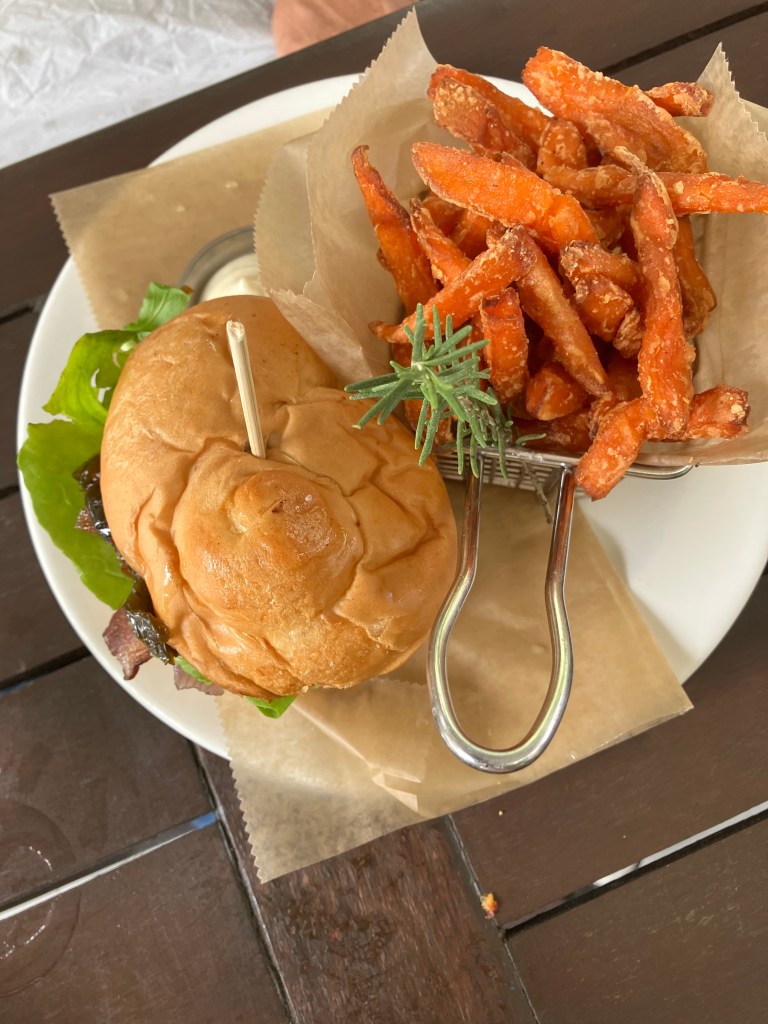
After a long day at the beach, we were more than happy with something quick and satisfying. We shared a portion of steak-loaded fries, while my partner chose the Deluxe Burger and I opted for the Cajun shrimp wrap, along with sodas. The total bill, including a small tip, came to 75 XCD (£20.58).
Smiling Harry’s
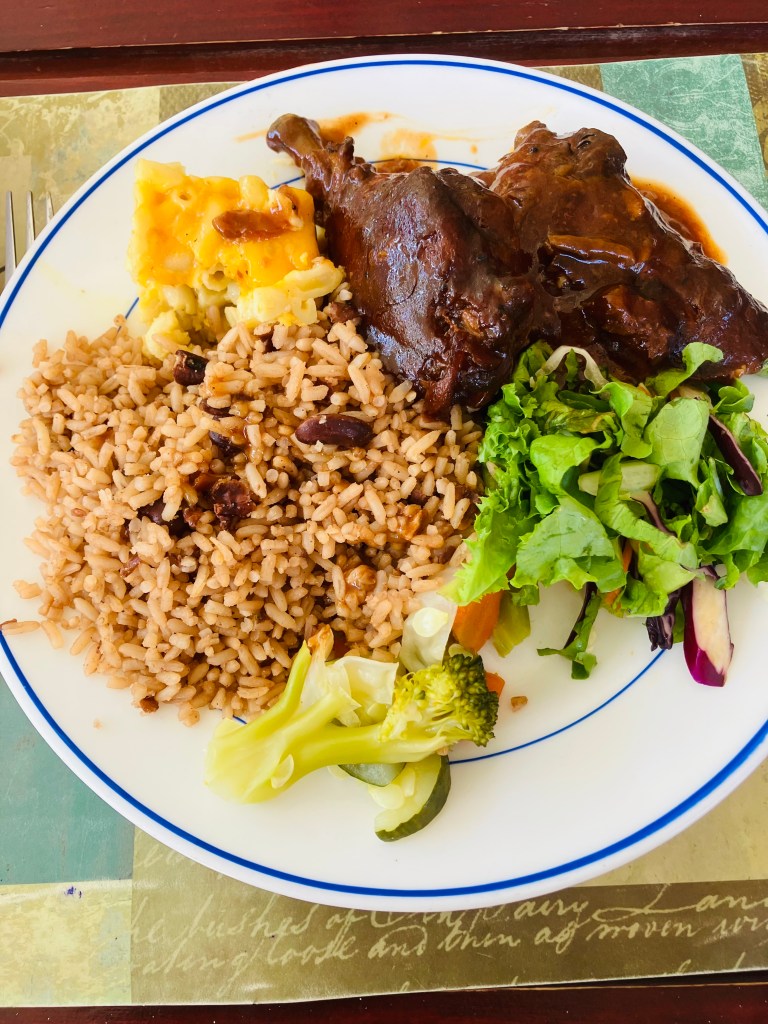
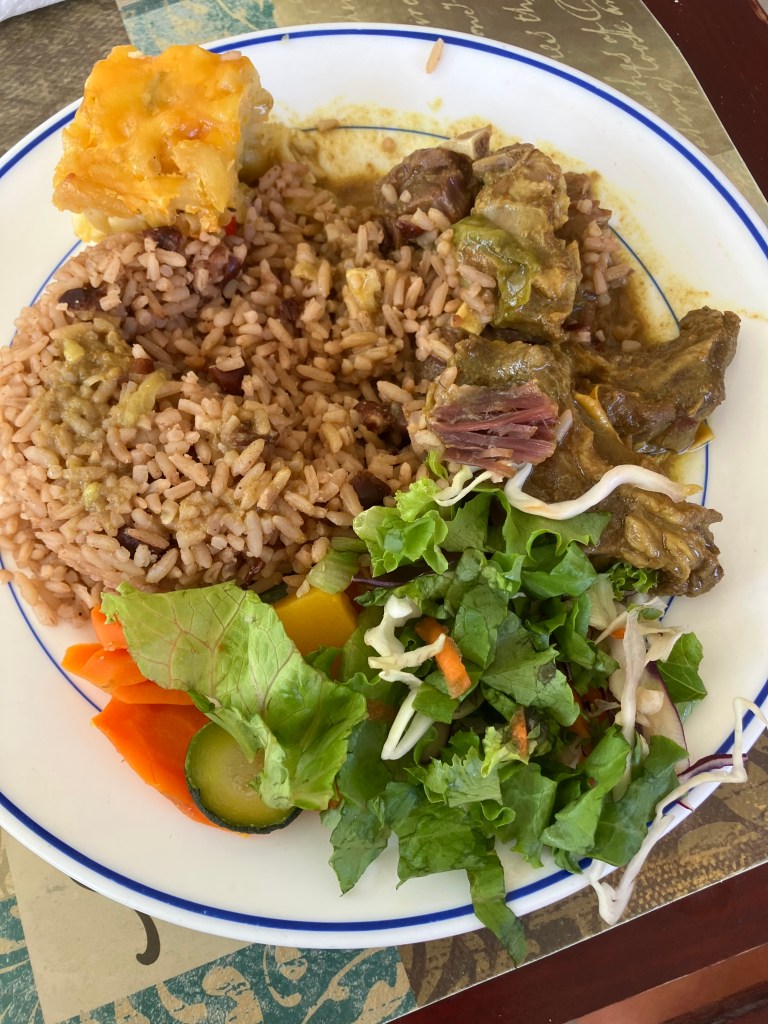
We stopped here for lunch during a day trip to the east side of the island, and it turned out to be a highlight of the journey. As you descend into Half Moon Bay on the final stretch before the beach, this local favourite sits on the left-hand side, easy to spot. Its full name is “Smiling Harry’s Thirst Quencher” —lives up to its charm, even though Smiling Harry himself (a real person) wasn’t there when we visited. Still, the warm hospitality more than made up for it. This place is a true beachside gem, serving authentic island cuisine in generous portions at reasonable prices. The food clearly takes centre stage, with standout dishes like curry goat and garlic shrimp, all served with rice, salad, and macaroni pie. We opted for the curry goat and baked chicken, and both were packed with flavour—rich, comforting, and exactly what you’d hope for in a spot like this.
Total Cost incl a small gratuity: £27.72
A Special Occasion -Pillars at English Harbour
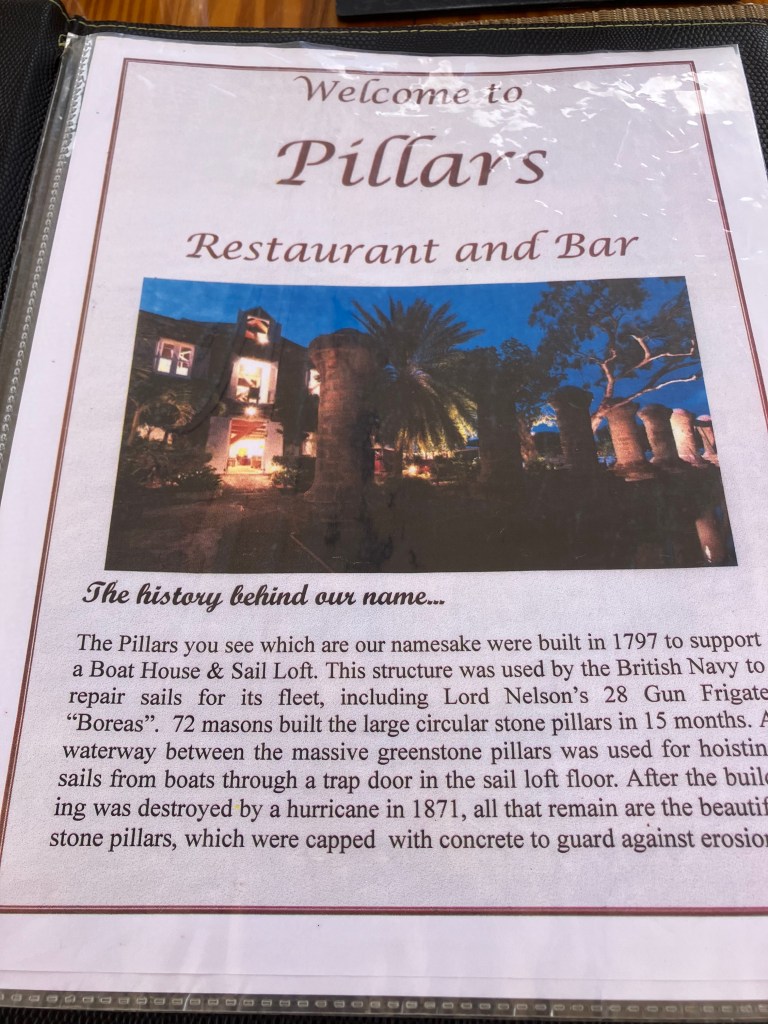
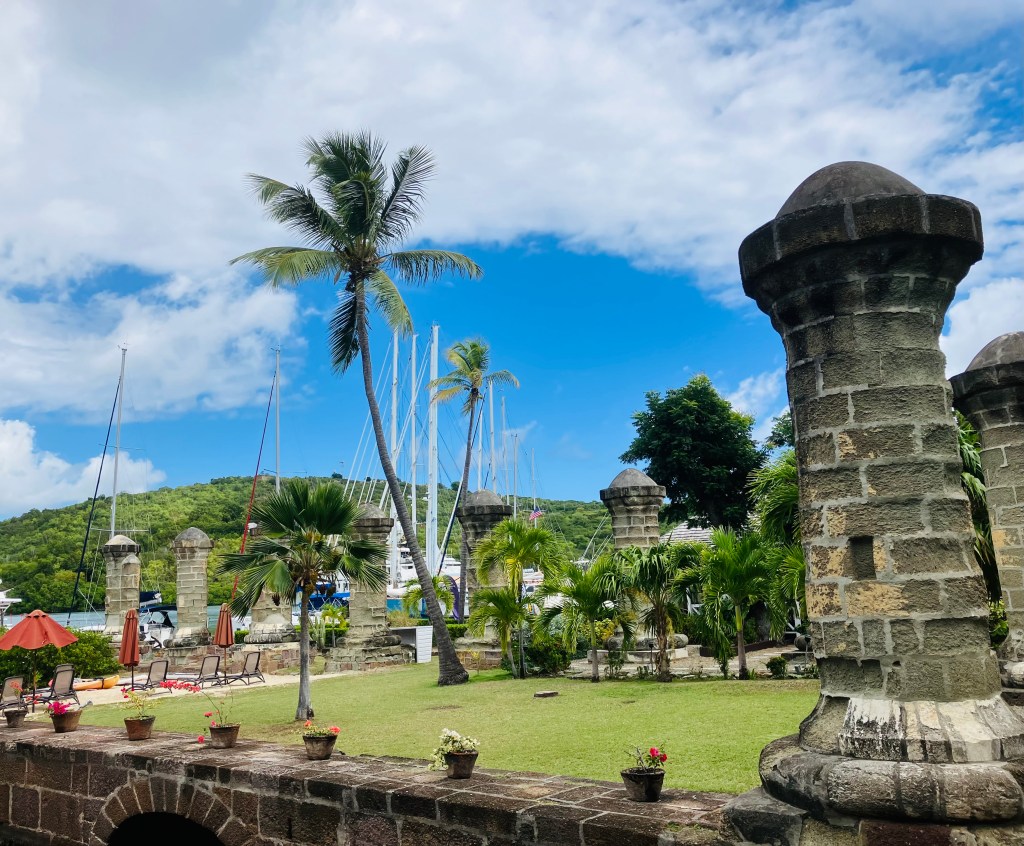
Whilst we were in Antigua, we decided to visit Pillars, a restaurant highly recommended by our Airbnb host—who even suggested the best table to request. We booked ahead for a Sunday afternoon lunch at 1 p.m., and it quickly became clear why it had been so enthusiastically recommended.
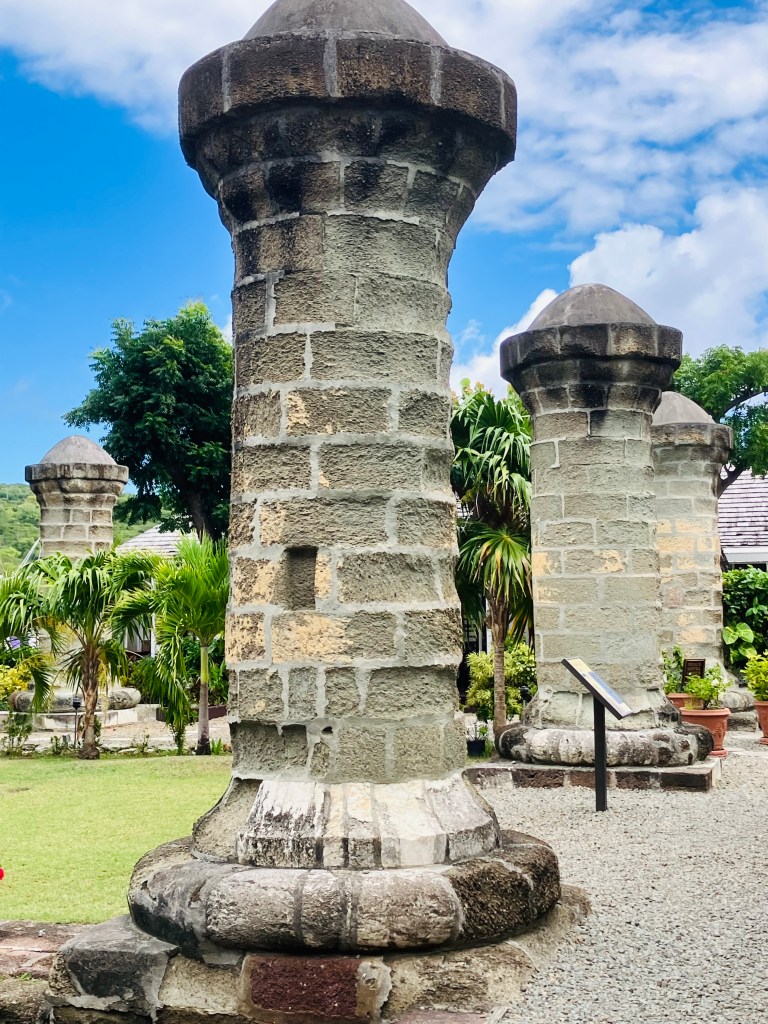
Set within Nelson’s Dockyard at Admiral’s Inn, a UNESCO-listed historic site, Pillars enjoys a stunning waterfront location. The restaurant is framed by 18th-century stone pillars overlooking the harbour, blending colonial-era character with a relaxed, modern elegance. We were seated on the terrace, where the views stretched across the water, with boats gently drifting by. The atmosphere struck a perfect balance—refined without feeling formal. The menu reflects this as well, combining Caribbean flavours with international influences, with a particular emphasis on fresh, locally sourced seafood.
Whether for a leisurely lunch like ours or a more romantic evening setting with cocktails and live music, Pillars offers a setting that feels both special and effortlessly relaxed.
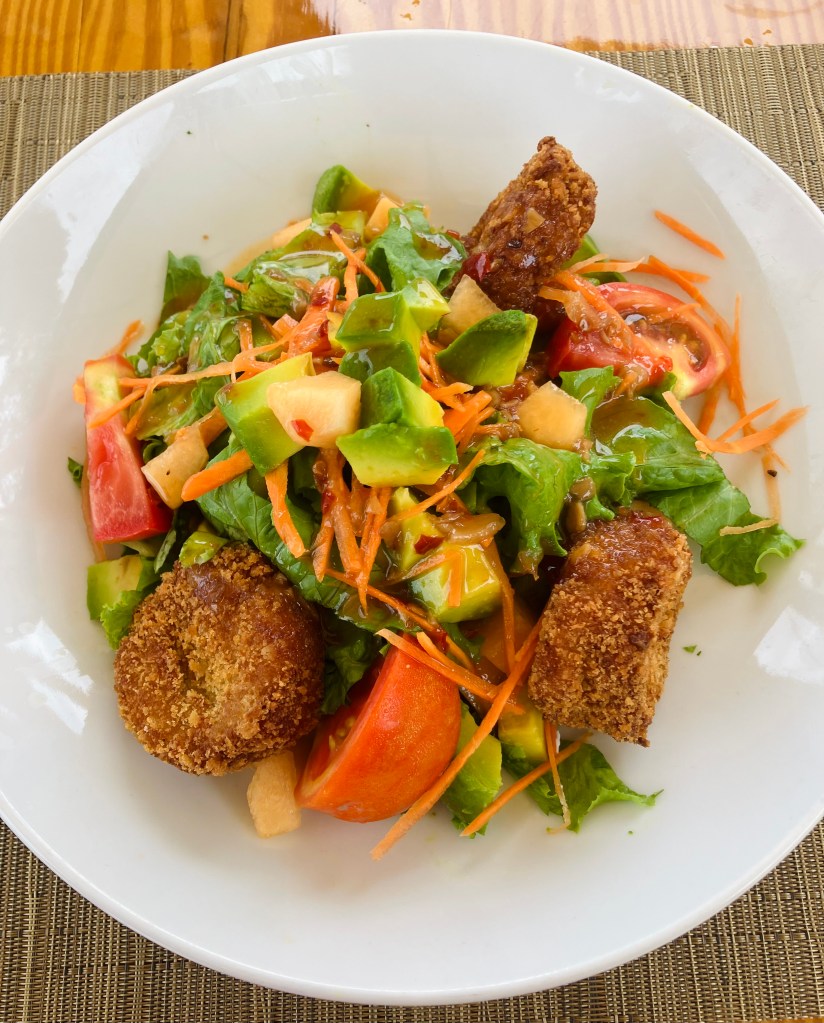
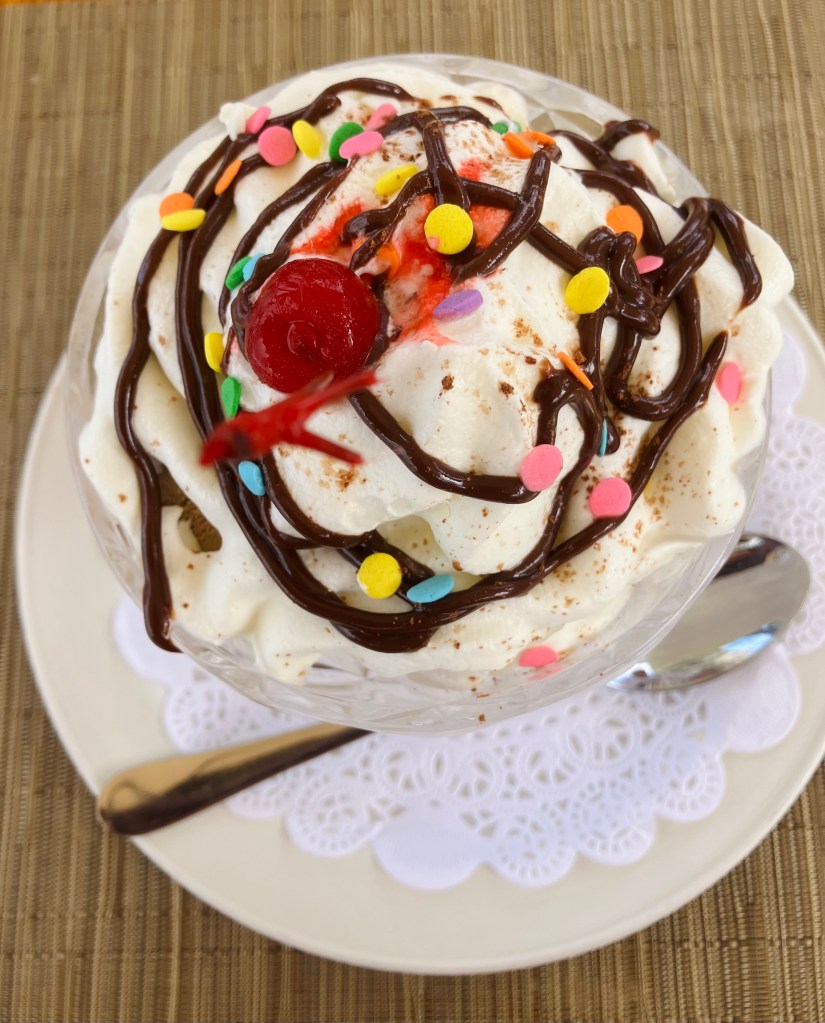
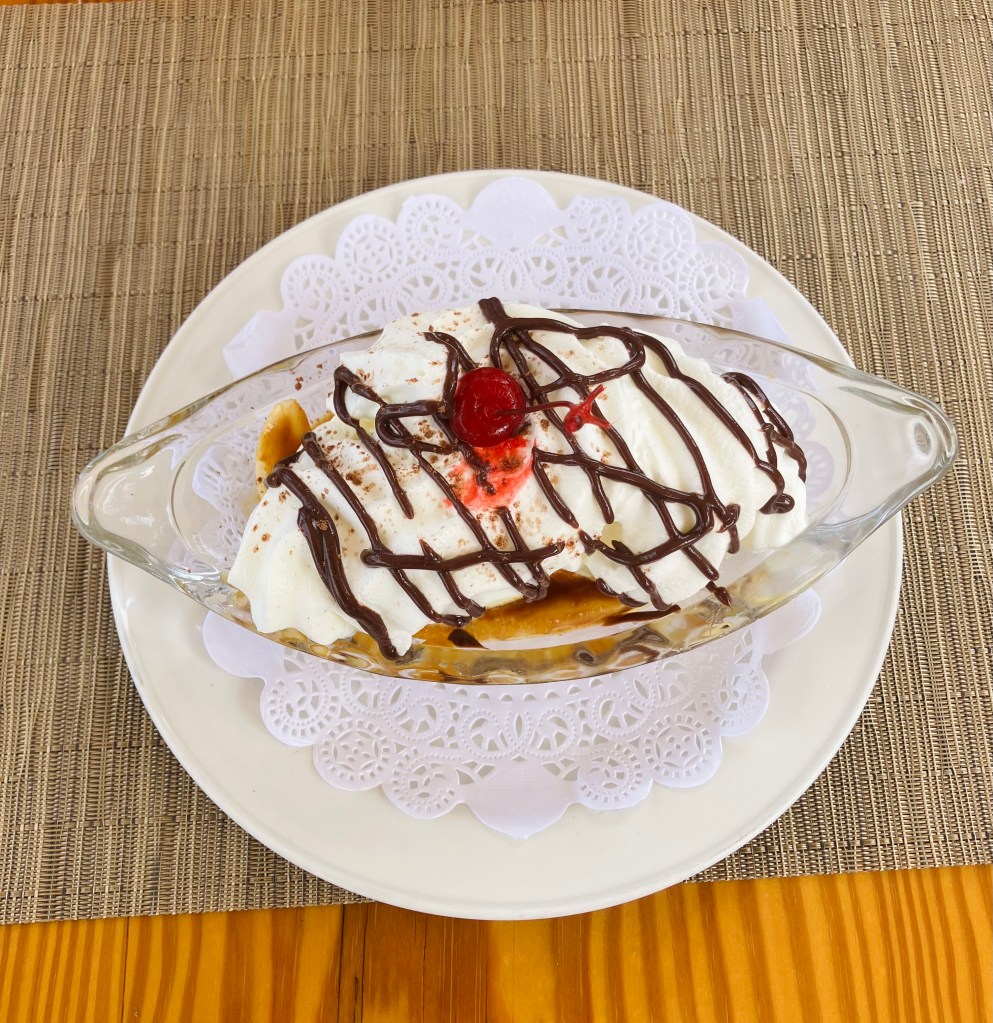
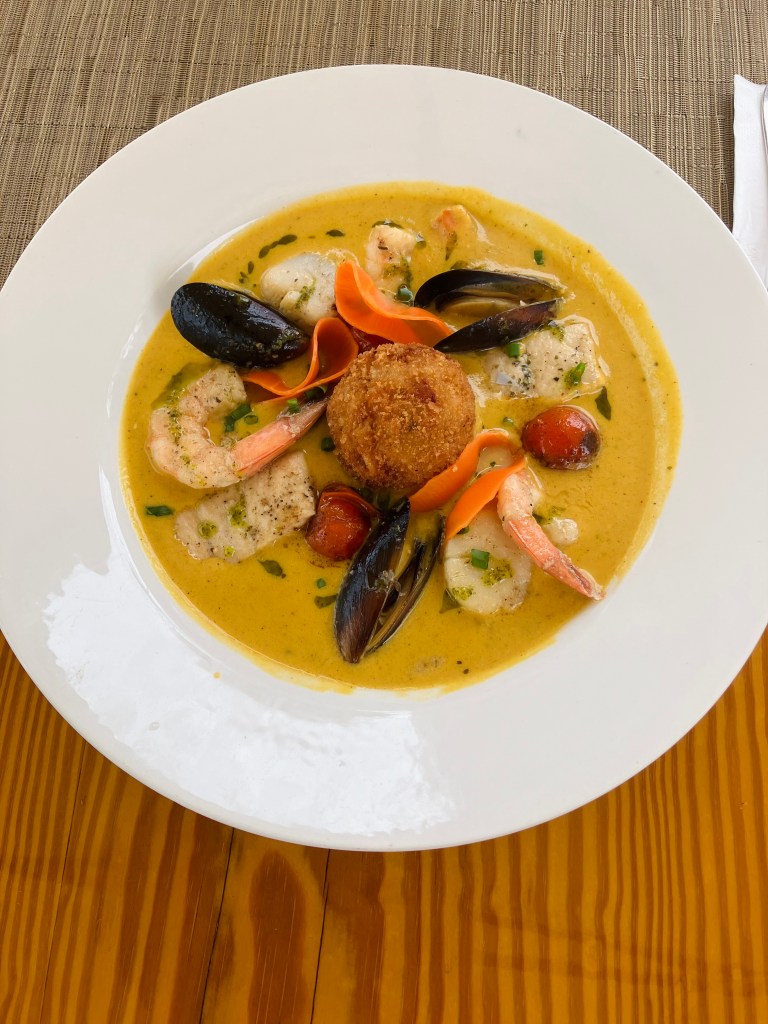
Often considered one of Antigua’s standout dining experiences, it’s prized not only for its food but also for its historic charm and stunning waterfront views. We indulged in a three-course meal (mains and desserts shown below), lingering over each course while watching water taxis glide between neighbouring restaurants. The setting felt wonderfully tranquil, and the food more than lived up to the reputation. Total Cost: £117.07
Our Final Day – A Perfect Stop Before Take Off
Our Canadian neighbours had one last recommendation before flying home after their ten-day stay in Antigua—and we’re so glad they shared it. Just five minutes beyond the airport, Garden Grill turned out to be an absolute gem… and one that may well change how we plan future trips. Why? Because if we’d been catching an overnight flight back to the UK, we could have enjoyed a proper meal here, skipped the usual plane food entirely, and simply slept our way home. It’s a strategy we’ll definitely remember.
As it was, we were booked on a mid-afternoon inter-Caribbean flight, meaning we didn’t need to arrive at the airport until two hours before departure. That gave us the perfect window to stop here for a relaxed lunch—avoiding overpriced airport options and the need to eat later.
Set on Dutchman’s Bay, Garden Grill offers a laid-back, open-air setting with a breezy, garden-style feel. Surrounded by greenery and just moments from the beach, it strikes the perfect balance between casual dining and a scenic escape. The menu focuses on fresh, locally sourced ingredients, with a farm-to-table approach that shines through in dishes like grilled fish, tacos, burgers, and vibrant salads. Popular for brunch and lunch, it caters well to a range of dietary preferences, including vegetarian, vegan, and gluten-free options. With its welcoming atmosphere, attentive service, and blend of international comfort food and Caribbean flavours, it’s easy to see why it’s such a favourite.
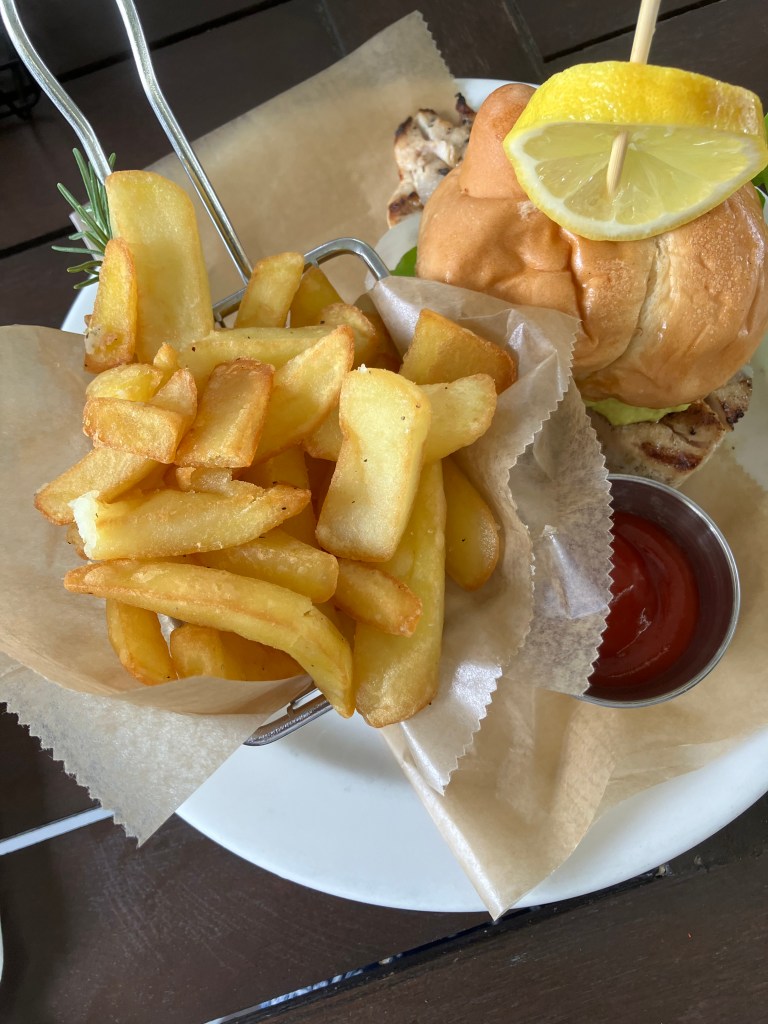
Since this would be our main meal of the day, we decided to share a starter before enjoying a main course each—an excellent choice, as it turned out. Total cost: £58.08
Final Thoughts…. All in all, Antigua has been a brilliant reminder that travelling well isn’t about how much you spend, but how thoughtfully you spend it. With a bit of planning, a willingness to adapt, and an openness to local experiences, it’s entirely possible to enjoy incredible food, beautiful settings, and memorable moments without constantly stretching the budget.
Self-catering gave us flexibility and familiarity, while local eateries offered flavour, value, and a genuine taste of island life—and it’s often the latter that leaves the strongest impression. Yes, groceries can be surprisingly expensive, but by mixing things up and knowing when to cook and when to eat out, we found a balance that worked perfectly for us.
Antigua has delivered not just stunning beaches and warm hospitality, but also a valuable lesson in travel: sometimes the simplest choices—fresh fruit from a roadside stall, a perfectly cooked BBQ chicken, or a relaxed lunch by the sea—are the ones that stay with you the longest.
As we pack our bags and move on to the next stop in our Caribbean adventure, we’ll be taking these lessons (and a few new food habits) with us.
Are you tempted to plan your own Caribbean adventure? Do you think Antigua might be the place for you? Let me know in the comments below and if you enjoyed the post please give it a “like”!
We are approaching the end of our trip to Antigua and decided, in advance of our arrival on the island, to book a boat tour to Bird’s Nest Island. I had researched the various tours on offer and we chose to use this company which departed from Parham Harbour.
Parham
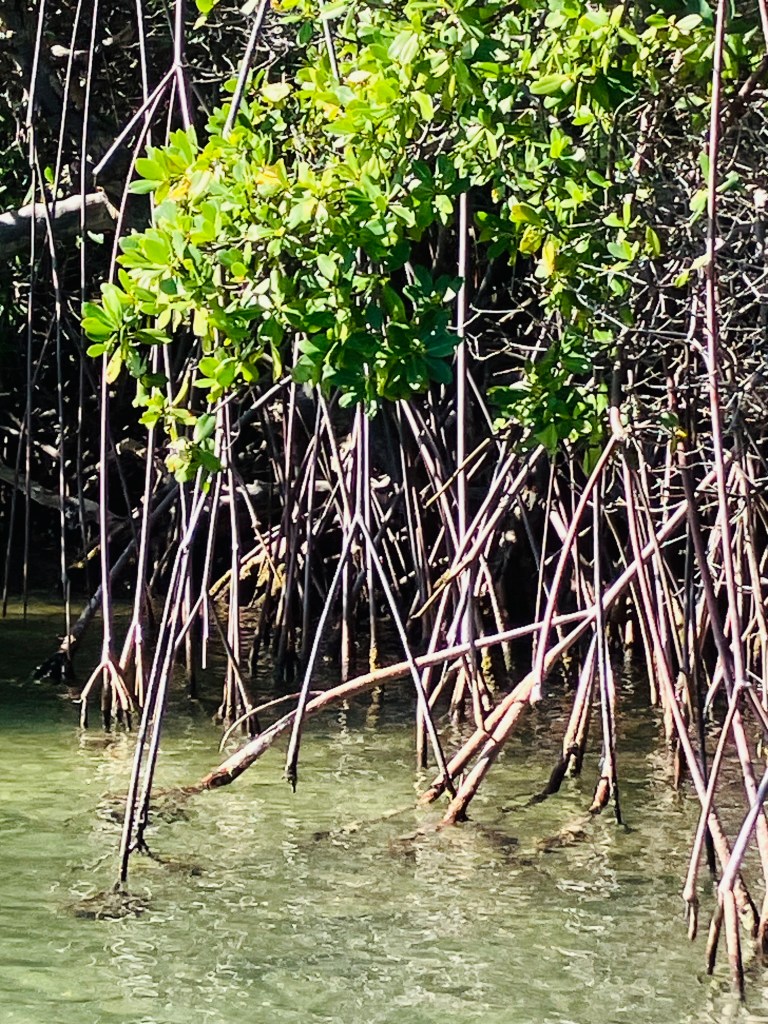
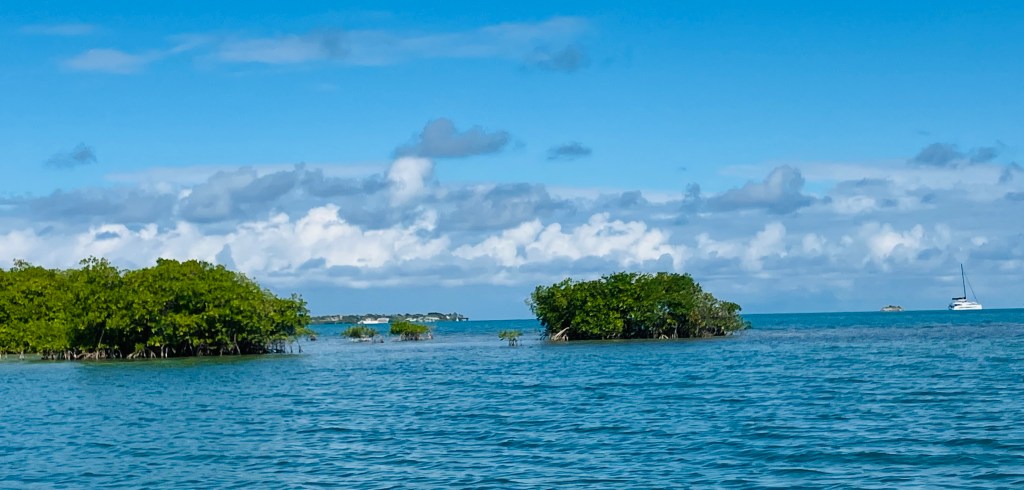
On the day in question we drove 10 miles across the island from our accommodation, which took about 40 minutes, to the north east to reach our embarkation point. The village of Parham, itself, feels like the kind of place that doesn’t try too hard—and doesn’t need to. It’s widely considered the island’s oldest settlement, and you can sense that history not in grand monuments, but in the easy rhythm of daily life: fishing boats rocking gently in the harbour, roads that seem to wander rather than hurry, brightly painted homes that peek out from behind flowering trees and very much a laid back Caribbean lifestyle. The village sits on the edge of a calm, mangrove-lined inlet that looks almost like nature decided to build a safe haven for both boats and daydreams. The water here isn’t the dramatic turquoise you’ll find on postcards—it’s softer, muddier, more lived-in. And that’s part of its charm. This is where locals mend nets, where birds pick their way through the shallows, and where time seems to stretch just a little longer than usual. There appears to be a strong sense of community—people greet each other by name and are not adverse to greeting you also as I discovered when I was trying to park safely and securely on the roadside. Only to discover later that they have a car park adjacent to where the boat is tethered in preparation for our journey.
In a world that often moves too fast, Parham offers a gentle suggestion: slow down, look around, and maybe—just maybe—don’t even check the time.
Travelling to the Island
Climbing aboard the vessel we meet our fellow travellers, a husband and wife from the Channel Islands along with Captain Brian and his first mate “Scooby”! We head out past Jumby Bay Island (also known as Long Island), located two miles off the the main island, this exclusive 300-acre private resort and residential community is famous for its private villas, white-sand beaches, and high-profile clientele.
Our voyage takes us through North Sound Islands and Mangrove coastlines which offer boats protection from invading hurricanes.
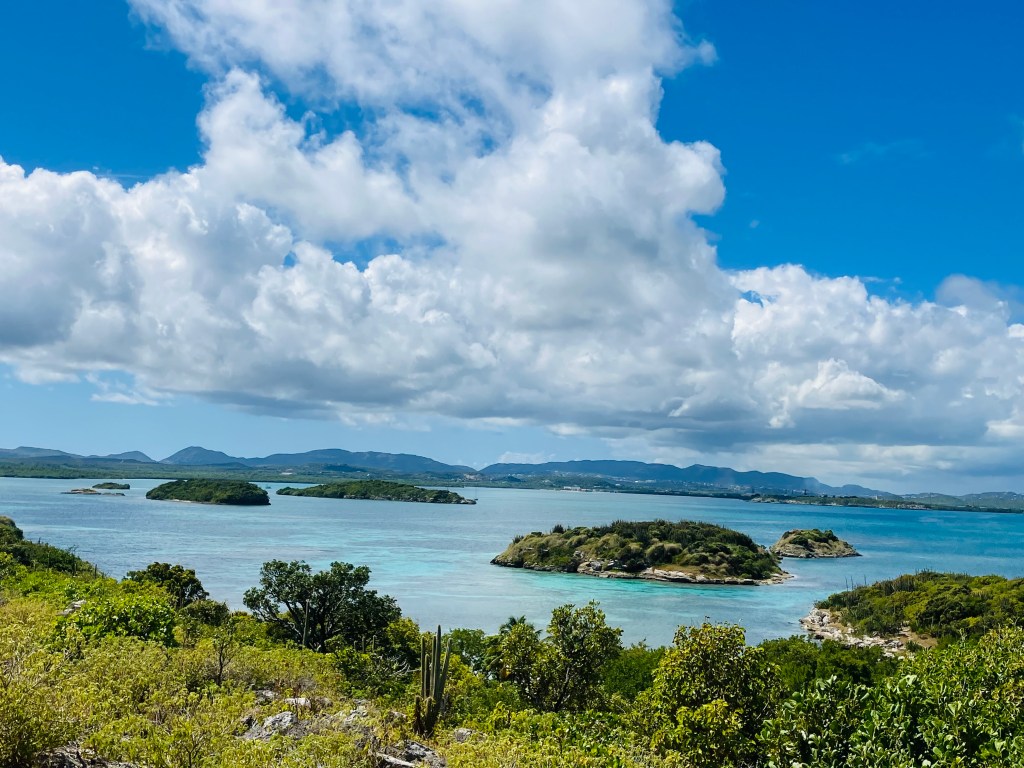
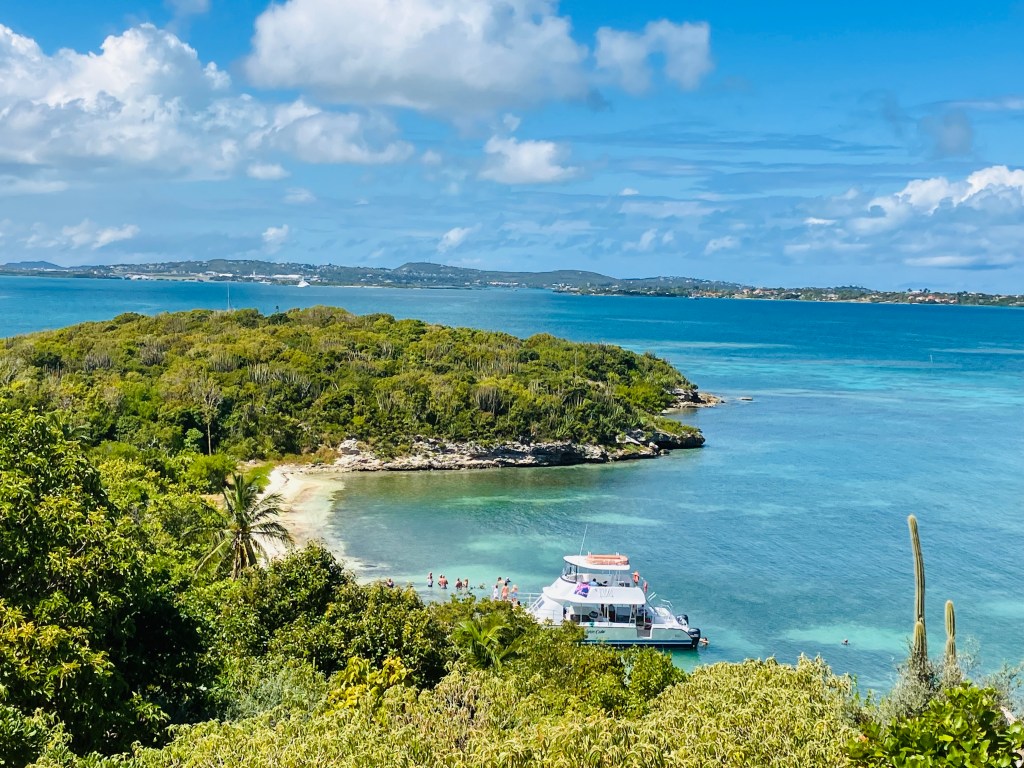
The journey there is half the charm as our boat skims over water so clear you can see coral gardens and darting fish beneath you. There’s a tiny speck on the horizon that doesn’t look like much at first. No bustling docks, no beach bars, no rows of sun loungers—just a low, green island surrounded by impossibly clear water. That’s Bird Island and as the engine cuts and the boat slows, the loudest sounds become the wind, the gentle slap of waves, and—true to the island’s name—the chatter of seabirds circling overhead like they’re debating your arrival.
Stepping onto the island feels a bit like accidentally discovering a secret the Caribbean forgot to advertise. The sand is pale and soft, the kind that squeaks faintly underfoot, and the sea shifts through shades of blue that don’t quite seem real. There’s a laid-back, untouched feel here accentuated by the young man casually mending his parasail on the beach—there’s no infrastructure, no rush, just nature quietly getting on with things.
The Island Itself
Bird Island is small enough that you can stroll across it in minutes, but that’s not the point! Brian is in the process of opening up the toilet/changing room, setting up tables and chairs ready for lunch and generally ensuring we feel welcome with a nice cold drink.
If you wander a little inland (and “inland” here is a generous term), you’ll notice the scrubby vegetation and rocky patches where birds nest and rest. Depending on the season, you might spot pelicans gliding in with surprising grace or small flocks of tropical birds hopping about like they own the place—which, to be fair, they do.
Included in the tour package is an island hike, which Scooby gives us access to by using the company’s keys to open the gate to climb the grand stairs which stretch up into the highlands. As he leads us along this canopied trail we are told a little of the history of the island and more about its flora and fauna. When you reach the top of the island there are great views back across the smaller islands and down to the beach.
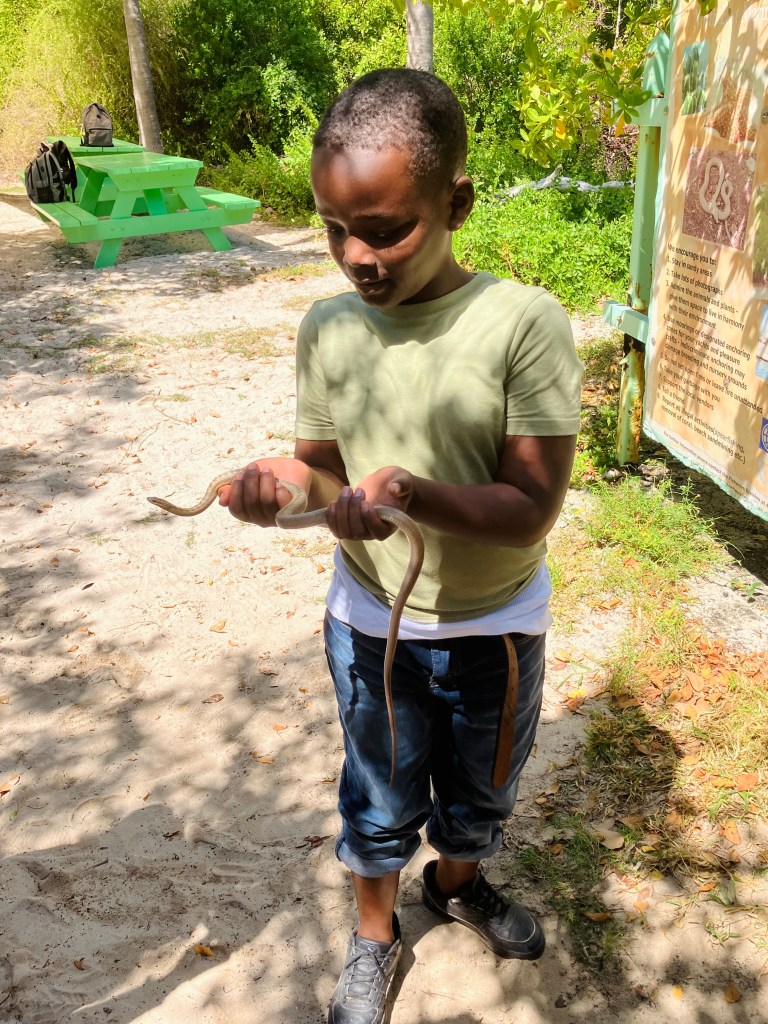
Whilst everyone else is keen to get a glimpse of the harmless, beautiful and endangered racer snake, that lives nowhere else in the world but on the islands of Antigua’s Northern coast, I’m more than happy if it doesn’t show its face!
From the Hilltop trail in the winter months (from December through May) there is an added attraction. Whales can sometimes be seen as they migrate down from waters off New England and Canada. You will probably need a good pair of binoculars, plenty of patience and maybe a little bit of luck to see them.
Birds of many varieties also nest on the island throughout the year and Hawksbill and Green Turtles are commonly seen in the bays so I’m very much looking forward to the next stage of the trip. But before we move on, and as we return back down onto the beach, we are reminded that school children are brought here from the mainland to partake in an authentic nature lesson. Low and behold one of the teachers has picked up a racer snake and is handing it around to her young charges. With permission I took a photograph of this young man!
Snorkelling
The company provide snorkelling gear for all those wishing to take part. I, personally, brought my full faced mask and snorkel with me but turned down the opportunity to wear some flippers. I’m still learning and they just seemed so cumbersome.
Brian accompanies us, as just us two ladies slip into the water, alongside him and make our way out away from the beach. Suddenly you’re in another world—coral formations, curious fish, and the kind of visibility that makes you forget how deep you are. It’s peaceful, almost meditative, until you stop for a minute and realise you’re in the middle of the Caribbean Sea. We are blessed with several turtle sightings, a couple of rays whose sleek black bodies float to the surface in front of us and fish of all colours and varieties. It’s quite an awe inspiring experience for me as a newby to this sport but my lack of flippers mean that Brian has to give me a rope to hang onto so I can keep up!
Meanwhile our two hubbies are relaxing on the beach, chilling and in the case of the Channel island guest enjoying some rum punch!
Lunch
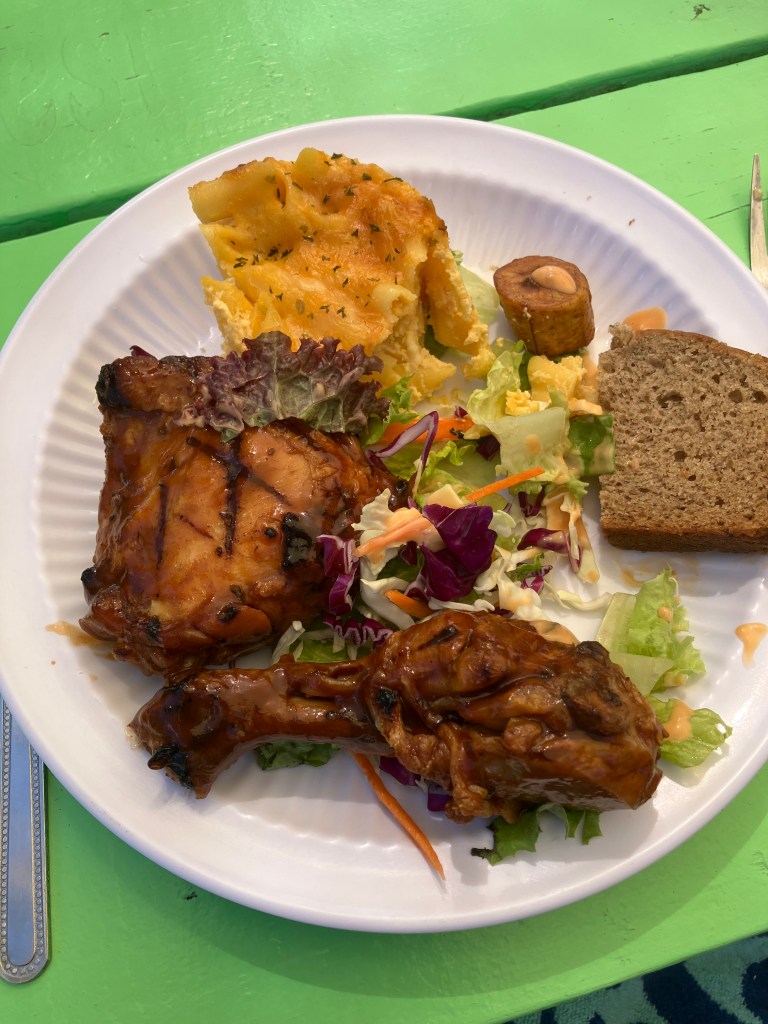
Lunch is also included in the package and when we return to the beach the traditional Antiguan fare is all ready and laid out for us to help ourselves buffet style. There is some marvellous barbeque chicken with green salad, macaroni pie and coleslaw with local banana bread for dessert and soft drinks, juice, water and rum punch to wash it down with.
It’s then time to get changed and think about heading back. Bird Island is special but it isn’t any single dramatic feature—it’s the simplicity. There’s something quietly luxurious about being somewhere so unspoiled, where your main decisions are whether to swim, sunbathe, or do absolutely nothing at all. Time stretches out here in the nicest way, and even a short visit feels like a proper escape.
Final thoughts…… By the time you leave, salt on your skin and sand in your bag (despite your best efforts), you might find you are already thinking about how to come back. Not for excitement or spectacle—but for that rare, easy feeling of having briefly stepped off the map.
Have I inspired you to perhaps include Antigua in your Caribbean itinerary? Let me know your thoughts and comments ……………
Continuing to explore the island of Antigua we ventured south to Nelsons’ Dockyard and Shirley Heights. Driving to our destination accentuated the poor condition of the roads as it was a mere 14 miles from our accommodation but the trip took nearly an hour! An equivalent journey at home on a similar category of road would take half this time. However at this point in our adventure I am becoming somewhat accustomed to the lack of tourist infrastructure. I am instead revelling in the fact that the speed of our journey gives us time to view the locals as they go about their daily lives alongside typical Caribbean houses and landscapes. Maybe there is a lesson to be learnt here in terms of slowing down and adopting “Caribbean time”
Nelson’s Dockyard
Every exploration of a new place should, in my opinion, include a bit of history. There is always an urge in me to understand how a place has developed and this area of Antigua is no exception.
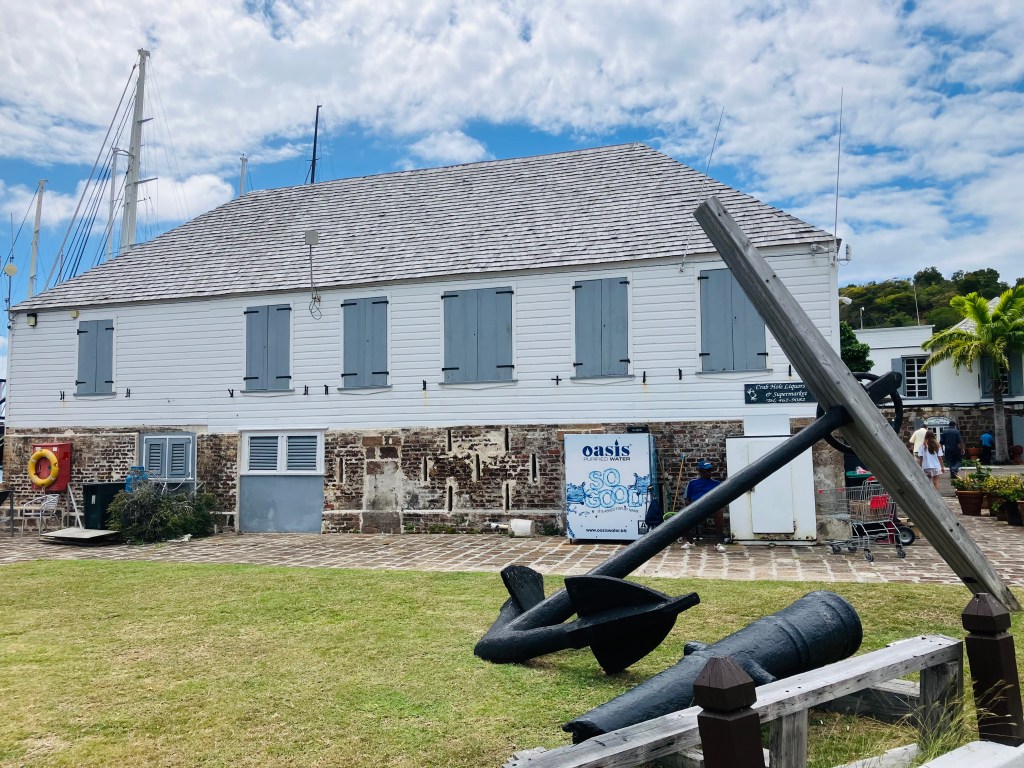
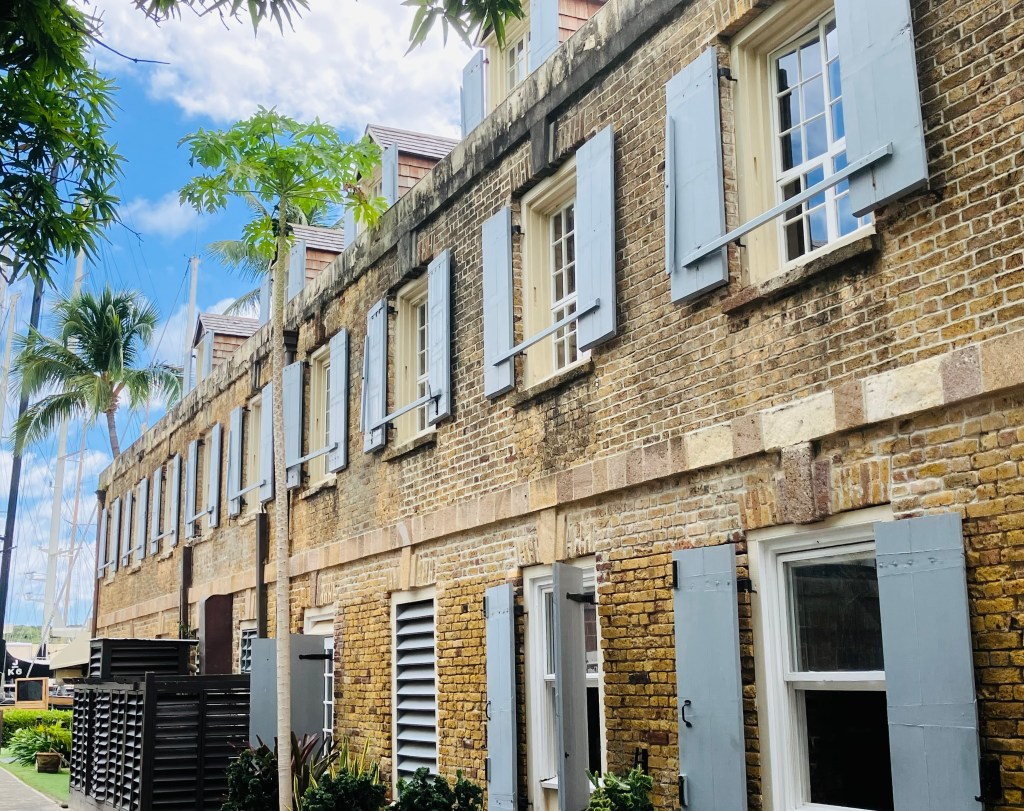
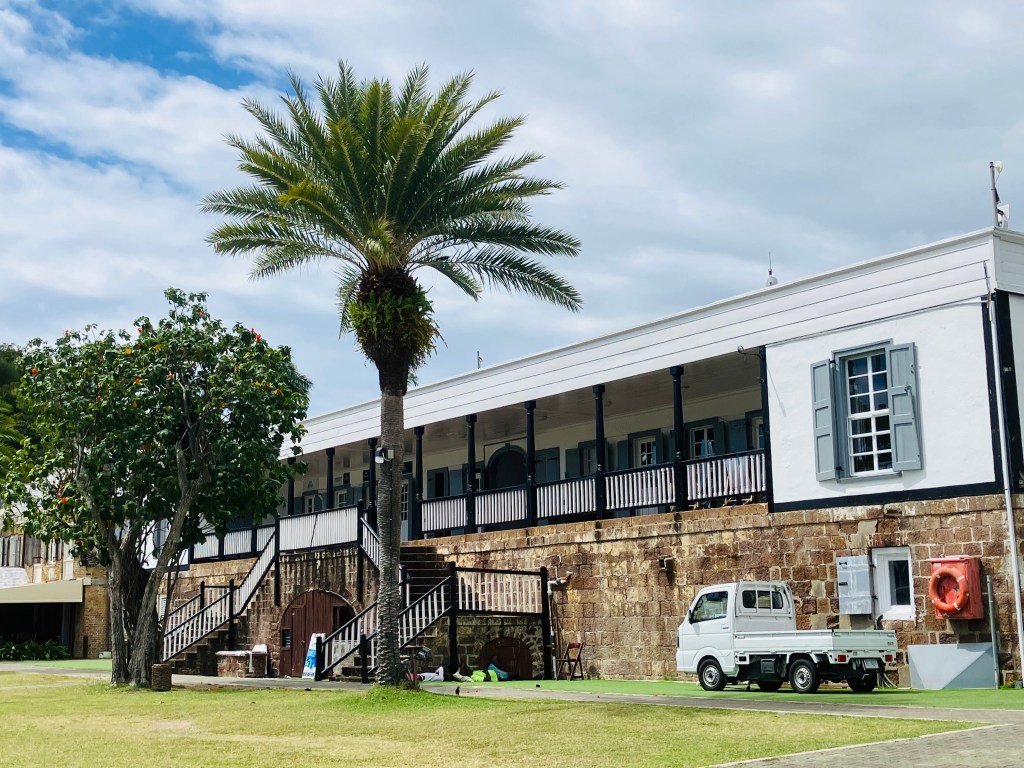
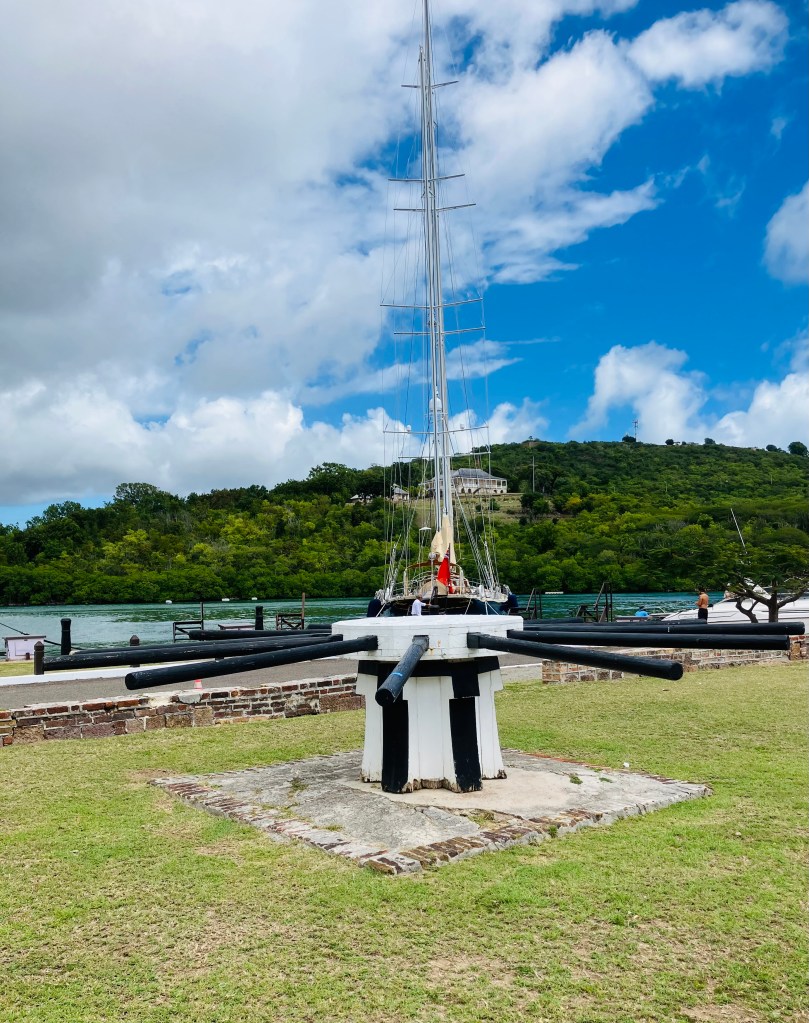
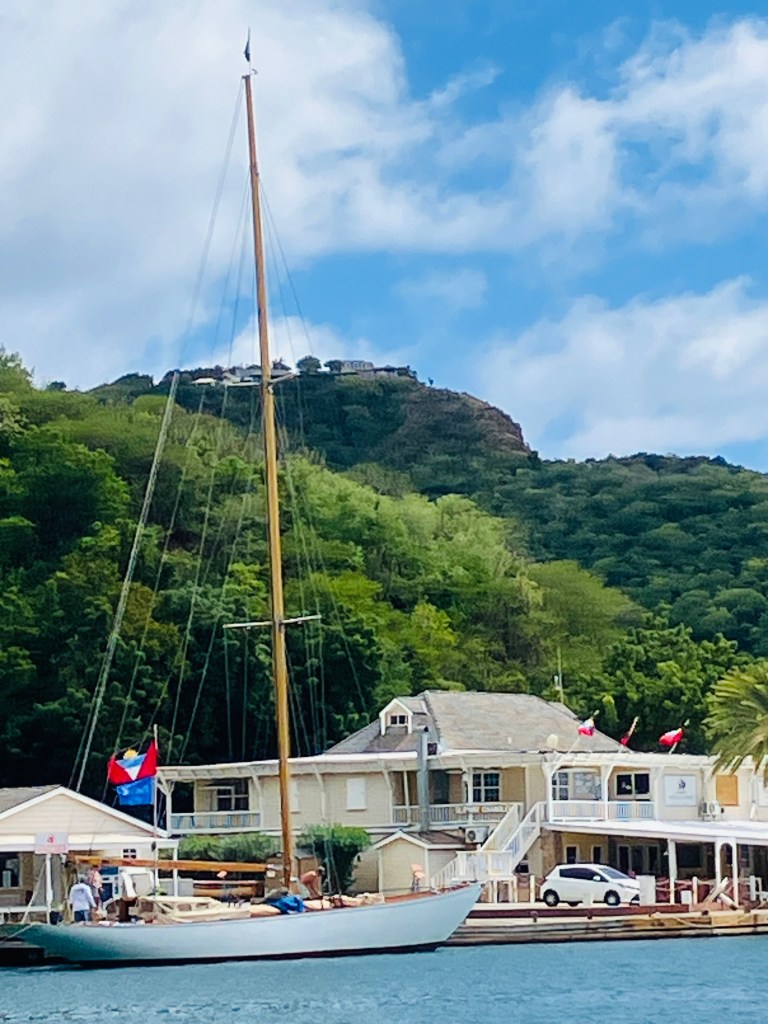
Tucked into the calm, turquoise waters of English Harbour, Nelson’s Dockyard feels like a place where history decided to linger a little longer than usual. It’s the kind of harbour where pastel sailboats bob lazily in the sun, old stone warehouses stand proudly against the Caribbean sky, and every corner seems to whisper a sea story or two.
Back in the 18th century, the British Royal Navy needed a safe place in the Caribbean to repair ships and keep an eye on their rivals. So they turned this natural hurricane-protected harbour into a bustling naval base. Sailors hammered planks, riggers climbed masts, and officers strode about looking very important. The dockyard eventually took its name from the famous British admiral Horatio Nelson, who served here between 1784 and 1787—long before he became the hero of the Battle of Trafalgar.
Life at the dockyard during Nelson’s time was anything but quiet. Imagine the creak of wooden hulls, the snap of sails drying in the wind, and the salty chatter of sailors from across the empire. Ships would arrive battered from long voyages, looking like they’d wrestled a few storms along the way. Carpenters, blacksmiths, and sailmakers got to work patching them up so they could sail off again—hopefully a little less battered.
Despite Nelson’s later fame, he wasn’t exactly thrilled with his posting in Antigua. In fact, he spent much of his time arguing with local merchants about British trade laws. One suspects he might have preferred commanding a fleet to debating customs regulations. Still, the dockyard kept humming along, doing the essential but less glamorous work of keeping the navy afloat.
As the age of wooden warships faded, so did the dockyard’s military importance. By the late 19th century it had fallen quiet, the buildings weathering slowly under the tropical sun. But history, fortunately, has a way of staging comebacks. Restoration efforts in the 20th century brought the dockyard back to life, preserving its Georgian-era buildings and maritime charm.
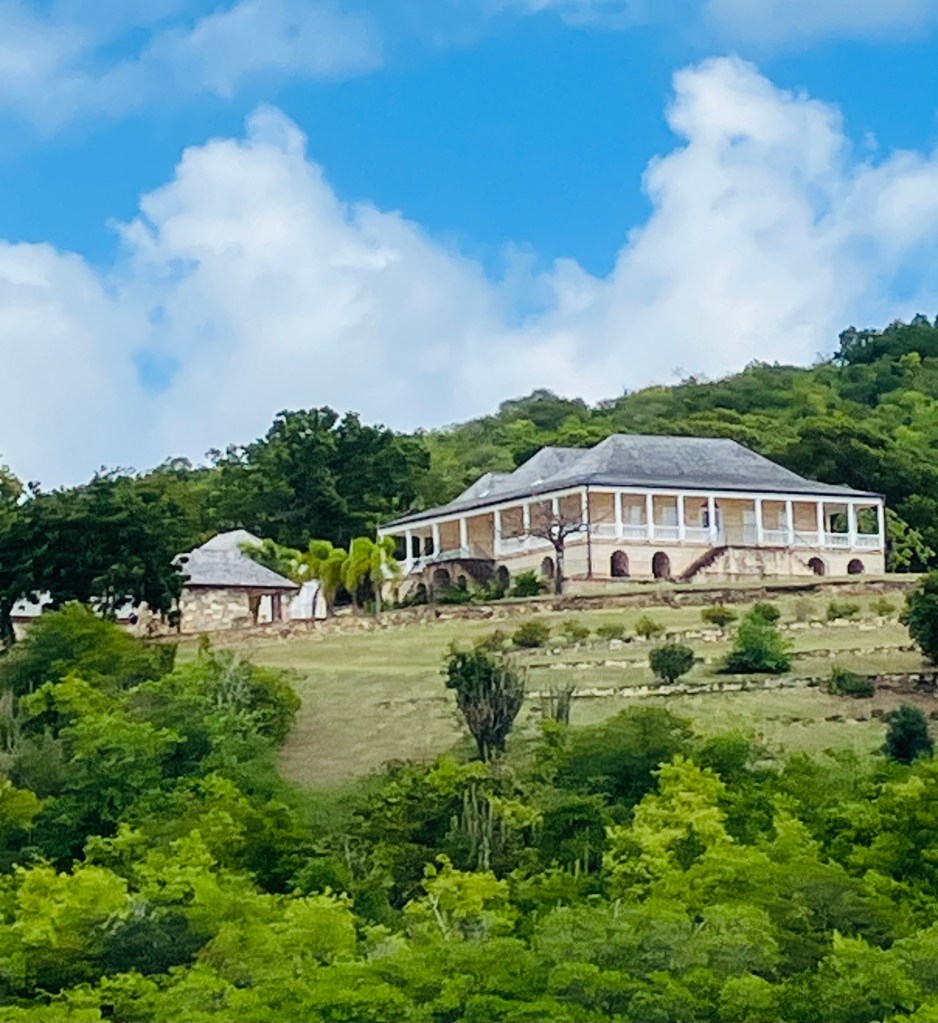
Today, Nelson’s Dockyard is the only continuously working Georgian naval dockyard left in the world. Instead of warships, sleek yachts and sailing vessels fill the harbour. The old storehouses now host cozy cafés, museums, and little shops where you can pause for a drink and imagine what the harbour looked like when red-coated officers and sunburned sailors were the regular clientele. On the opposite shore, tucked on the hillside you can also see Clarence House. Built in 1804, this historic building overlooks English Harbour and was built for the Duke of Clarence (later King William IV). It was famously used by HRH Princess Margaret for her honeymoon.It has been restored and now operates as a museum and venue for special functions.
The dockyard and Clarence House are also part of the Antigua Naval Dockyard and Related Archaeological Sites, recognised for its remarkable preservation and its role in Britain’s Caribbean naval strategy. Walk the stone quays today and you’ll see the same sturdy architecture that once supported an empire’s fleet.
In the end, Nelson’s Dockyard isn’t just a historic site. It’s a place where past and present share the same harbour: eighteenth-century naval history anchored beside modern Caribbean life. And if you stand quietly by the water for a moment, you might just hear echoes of sailors’ boots on the stone, mingling with the gentle clink of sailboat masts in the breeze.
Parking: There is ample parking outside or along the side streets as you drive into the area Admission Fee: There is a charge to enter the dockyard, we paid 40 XCD (£11 per person) but this includes a free guided tour by a member of staff (ask at the admission desk) and admission to the on site museum.
Shirley Heights
At the very end of Nelson’s Dockyard beyond the museum and on the right hand side of the harbour if you look up onto the hill beyond you will see buildings perched high above English Harbour, this is Shirley Heights.
A short three mile drive will take you to the top of this hill and when you park up and look back towards whence you have come it is definitely one of those views that makes people stop mid-sentence, stare for a moment, and then reach for their cameras. From its hilltop lookout, the entire harbour spreads out below like a postcard—turquoise water, white sails drifting in and out, and the historic buildings of Nelson’s Dockyard tucked neatly along the shoreline.
But Shirley Heights wasn’t built for admiring sunsets. In the late 18th century it was actually a military lookout, part of a defensive network protecting the British naval base below. From this high vantage point, soldiers could spot enemy ships approaching long before they reached the harbour. Cannons once lined the ridge, ready to send an unfriendly welcome to any unwelcome visitors.
The name comes from Thomas Shirley, a former governor of the island in the 1700s. In those days, life at Shirley Heights involved scanning the horizon, maintaining fortifications, and probably drinking strong tea while discussing naval strategy. It was serious business.
These days, however, the mood is considerably more relaxed.
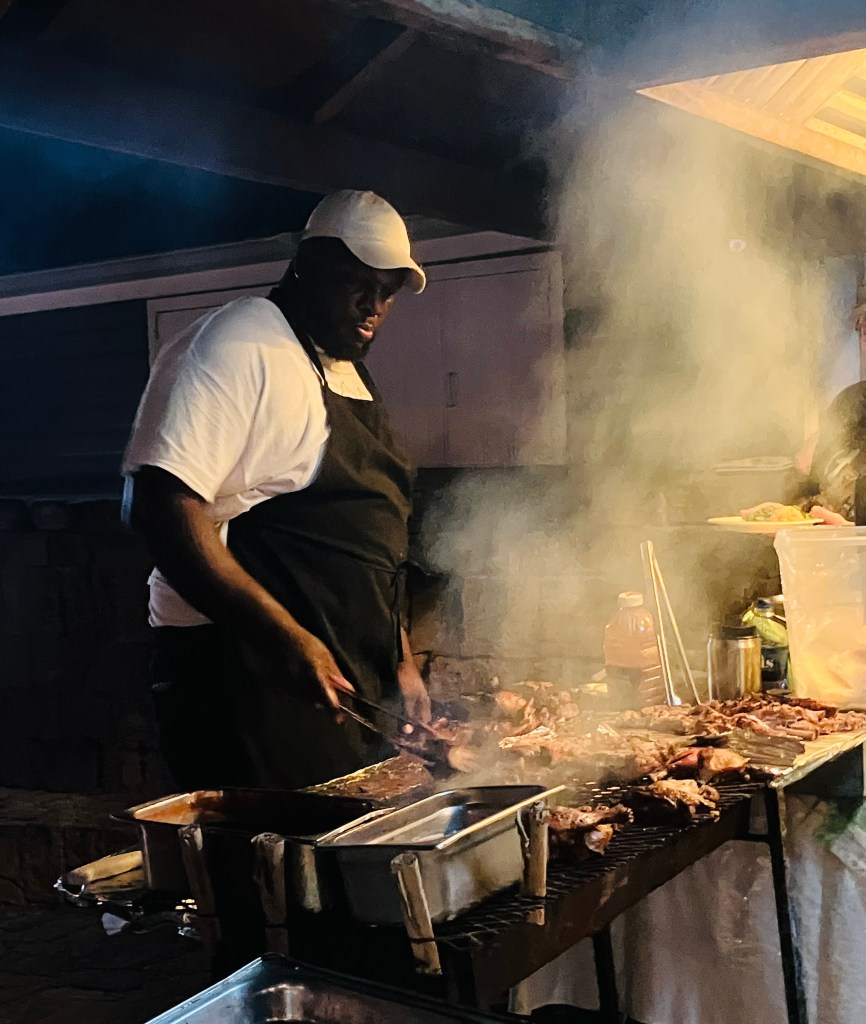
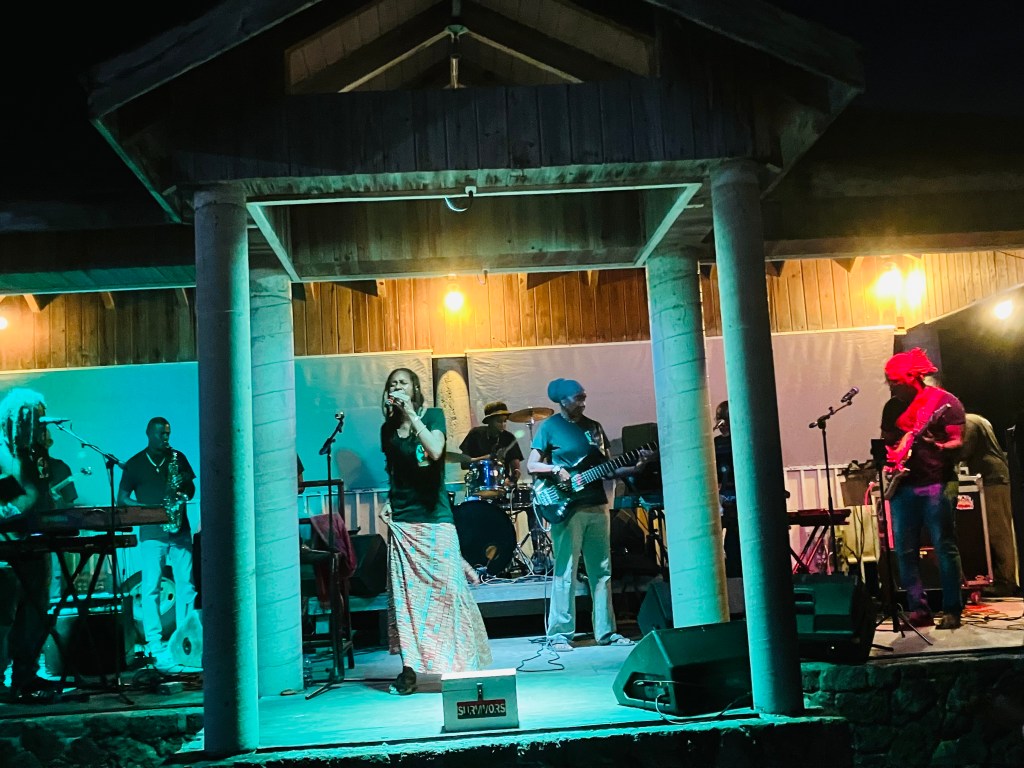
As the afternoon fades, Shirley Heights begins to transform. The air fills with the irresistible scent of barbecue drifting from the grills. Locals and visitors gather around picnic tables, drinks in hand, chatting while the sky slowly turns shades of gold and guests vie for the best spot to take photos of the sunset. The weekly barbecue—famous across Antigua—takes place every Sunday Evening and is less of a meal and more of a celebration. As it’s popularity has soared and with an influx of tourists from the “all inclusive” resorts across the island they have added another night (Thursday) to their repertoire which is when we decided to visit. It’s worth being there early, we parked up at 4.15 p.m. and the car park nearest to the buildings was already full so we were directed to a grassy knoll outside.
It is also worth queuing up for drinks and to buy your barbecue tickets as soon as you get there. The queues can become quite extensive as more visitors arrive.
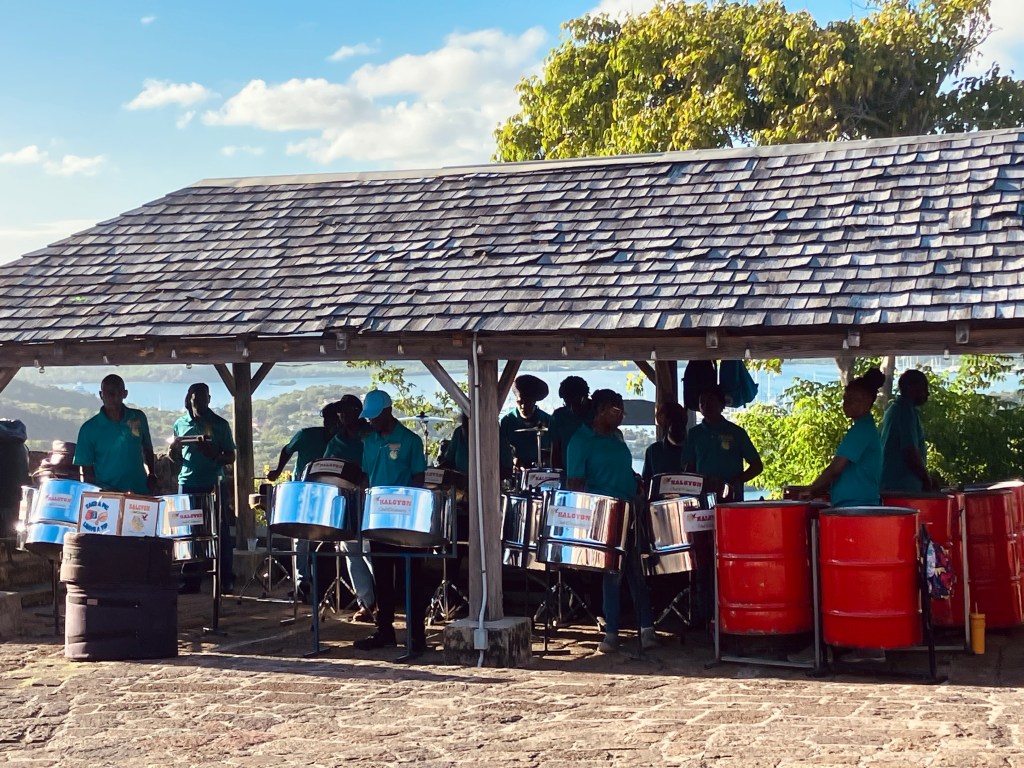
It’s not long before the music begins, however, with steel pans and reggae rhythms floating through the warm evening air, creating the kind of soundtrack that makes it nearly impossible to sit still.
As the evening wears on musicians tune their instruments while dancers gather in front of the stage in preparation for the live music that soon replaces the local steel band. The combination of live Caribbean music, smoky barbecue, and a view over one of the island’s most historic harbours makes the whole scene feel effortlessly joyful.
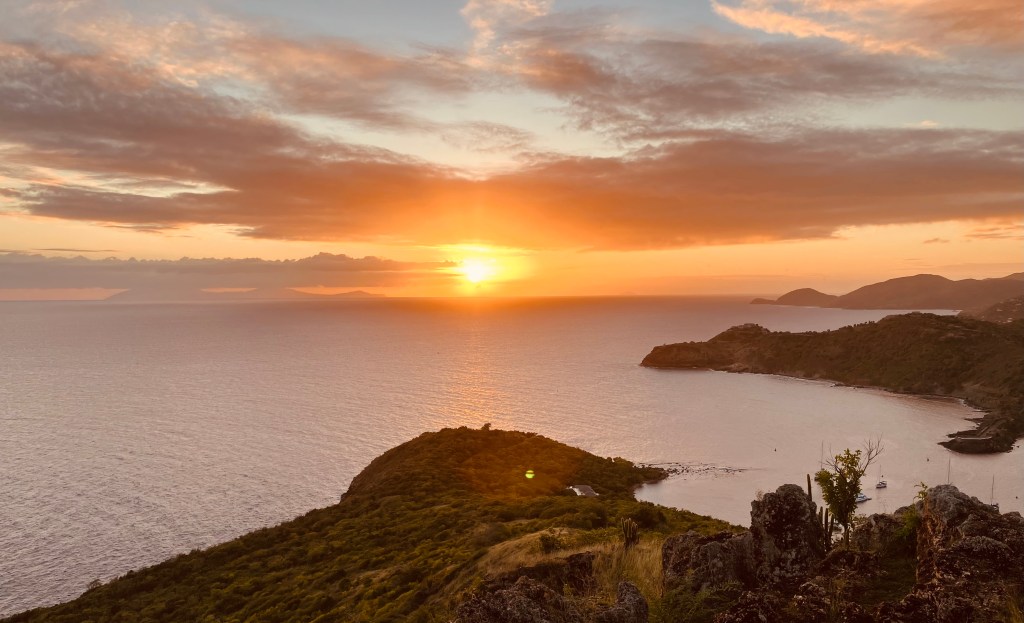
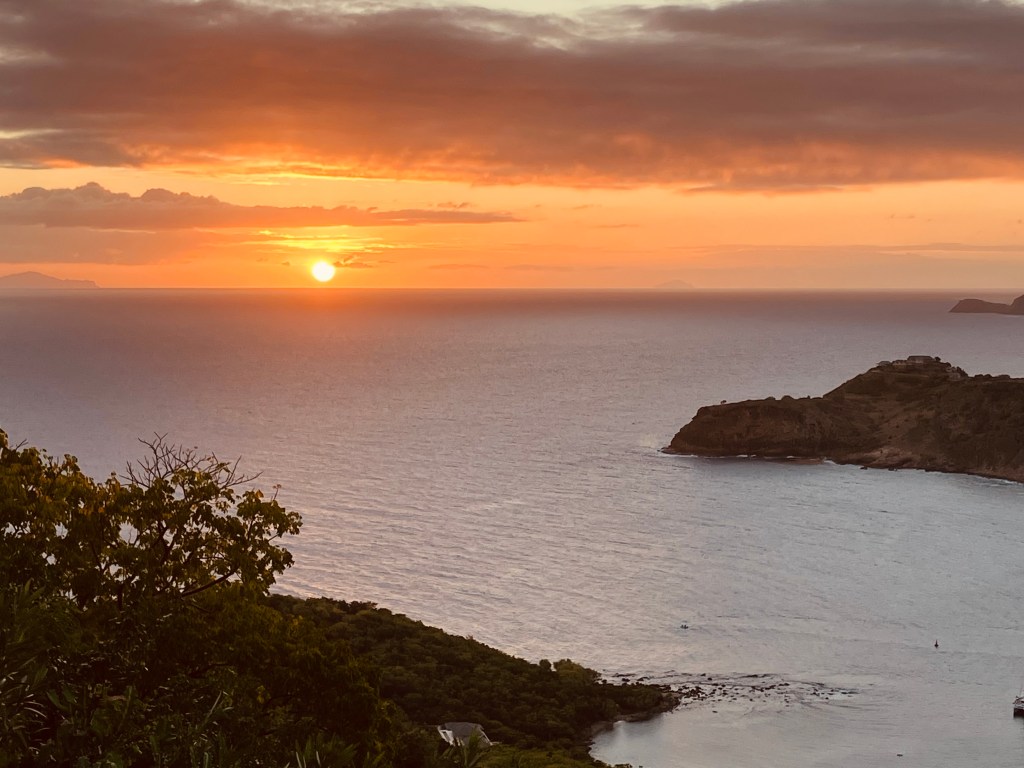
Just as the sun dips below the horizon, the real magic happens. From Shirley Heights, the sunset spills across the water behind Nelson’s Dockyard, turning the harbour into a glowing mirror of oranges and pinks. Applause often breaks out from the crowd—part tradition, part genuine appreciation for a show nature performs nightly.
As dusk takes over, the party continues. The music grows livelier, the dancing more enthusiastic, and the barbecue keeps coming. Plates piled with grilled chicken, ribs, and local sides circulate through the crowd while laughter and conversation carry on late into the evening.
It’s a far cry from the tense watch posts of the 1700s. Where soldiers once scanned the horizon for enemy sails, visitors now gather to celebrate the sunset, the music, and the simple pleasure of good food with a spectacular view.
In many ways, Shirley Heights captures the spirit of Antigua perfectly: a place where history sits comfortably beside good company, great music, and the smell of barbecue drifting on a Caribbean breeze.
Final thoughts…… The South coast of Antigua has much to offer with its naval history, beautiful sunsets and a hilltop party with barbecue wafting on the Caribbean breeze and steel drums and reggae music bringing the Caribbean spirit to your soul. Have I inspired you to perhaps include Antigua in your Caribbean itinerary? Let me know your thoughts and comments ……………