Lessons Learnt On Our European Adventure

We had embarked upon our adventure in Europe with the mindset of travelling rather than going on holiday. With this in mind we had looked for accommodation based upon an agreed set of criteria which would suit our needs:-

We wanted our own front door – we didn’t want to rent a bedroom within someone’s house. Although this might have reduced the cost considerably we value our privacy and to be honest do not feel the need to be sociable all the time while we are away.

Within our space we ideally wanted a double or kingsize bed but definitely our own bathroom. I’m not a fan of sharing toilet facilities.
If we were staying for three nights or more it needed to have self catering facilities so we could reduce our outlay by preparing our own breakfast, making picnics and cooking evening meals. We did learn later, however, on the trip that we could manage with a stove top and didn’t necessarily always need an oven. It tended to hinge upon how long we were staying and the expected weather.

If we were staying for less than three nights we would look at the option of a hotel room but it needed to include breakfast. This fills us up and sets us up for the day ahead. Eating breakfast out, for us, is an unnecessary expense.
We actually couldn’t believe during the adventure how many guests took breakfast items away to eat later! In one hotel we saw guests arriving for breakfast with brown paper sacks ready to fill for lunch!

We needed wifi so I could post on my blog and we could both sort photos en route.
We wanted free cancellation and as we had taken the decision to travel by train being accessible to the train station would cut down on time and money on arrival and departure.

Finally we set a nightly budget but safety also had to be considered. Staying in a less than salubrious area wouldn’t aid restful sleep after being on our feet exploring every day.

I utilised Booking.com, Hotels.com and Air BnB.
It was often a bit tedious but eventually the accommodation plan came together.

So how did the plan stack up?
We stayed in nine Air BnB’s in Bilbao, Madrid, Seville, Valencia, Barcelona, Paris, Brussels, Antwerp and The Hague for a total of sixty nights .
And five Hotels at Gatwick, Cordoba, Granada, Lille and Amsterdam for thirteen nights.
Our last night was spent with an old school friend near the airport in The Netherlands.

Hotels:
Hotel Casa de los Azulejos in Cordoba was our favourite. This is such a beautiful hotel, sequestered in the old part of town with cobbled streets and just a fifteen minute walk to all the key sites but tucked away from the hustle n bustle. 
We stayed for three nights and our room featured a large original fireplace which lent to the authenticity.

A continental style, freshly home made, breakfast was served every morning by the owner Manuel.
He speaks many languages and the receptionist is full of helpful local knowledge. All the staff were super friendly and helpful and there was just a wonderful atmosphere of conviviality and tranquility.
We would both love to go back to experience the Cordoba Patio Festival -see my previous post and would definitely rebook here.

Hotel Posada del Toro in Granada came second. We stayed for three nights. The hotel is situated in the Albacin neighbourhood, which is full of Islamic influence and Moorish architecture.
The old cobbled streets are off limits to normal traffic which enabled peaceful sleep particularly since our bedroom with it’s two balconies was at the front of the hotel.
With the doors thrown open, the afternoon sun shone in, along with the chatter from the small shops below clustered together like a “souk” and the distinct aroma of Middle Eastern food.
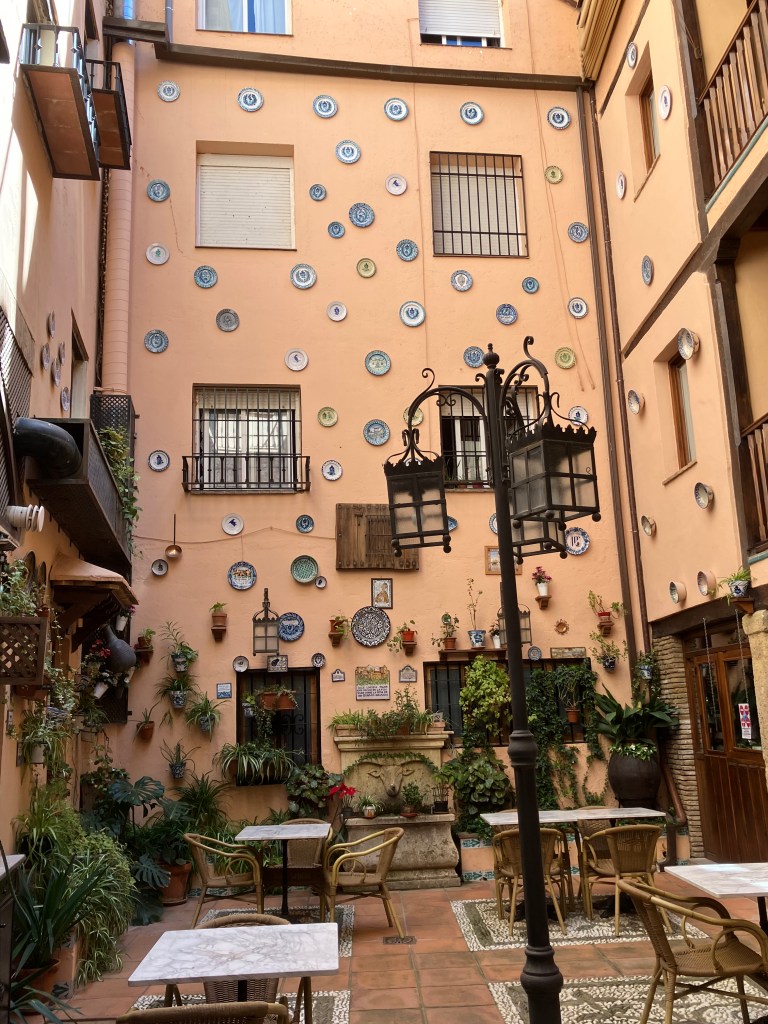
The hotel has a central courtyard patio which is beautifully decorated and this provided me with a lovely peaceful haven in which to sit and type my posts whilst staying. This was the best outside space we experienced during our trip.
Air BnB:
We learnt a lot about rental accommodation provided through Air BnB, some of which was good and some not so good.
Please note I have changed the names of the people mentioned in this section to avoid invading someone’s privacy and the views expressed are our personal opinions only.

We learnt when booking you should try and take the time to check out your host. We discovered whilst on our adventure that the host falls into three categories:-

1/ Is this your host?:

The host is not necessarily the person whose picture appears on the accommodation page. The apartment we rented in Seville, for example, showed Isabella’s picture but the reality was something different.
We received responses to any messages and emails that we sent but they were signed off by Pedro. Maybe we were naive but we just assumed that Pedro was her partner.

On arrival we were met with the keys by Pedro’s friend Suzanne who spoke very little English. We were given little or no information about the apartment or surrounding area.

When I delved a little deeper on Air BnB I discovered that Pedro was renting out in excess of thirty different properties in Seville. He was, in fact, an agent.
We personally found this arrangement too commercial and not really in the spirit of why Air BnB was set up. Communication was very formal and not friendly or personable. You will rarely receive a review when you leave, maybe because as they are a business you are just a number!

We also came across this arrangement in The Hague.

2/ Owner Removal:
The host owns the property but moves out whilst you are renting it.
As a result there are wardrobes, cupboards etc that are locked and out of use in which I assume they store their personal clothes etc. All decorative items are, however, left on display which may include personal photographs and mementoes.
With this type of arrangement you are surrounded by the owner’s personal effects which in one case on our journey included a large papier mache sculpture of the upper part of the owner’s body painted in vivid green!

We found this arrangement was better than the first but it could make you feel like you were invading someone else’s space.
They may also have more rules in place to ensure their property is returned as they left it, particularly at check out.
Additionally they are likely to be less flexible with checking in times as they may want to meet you. They are, after all, entrusting you with their property.
The plus factor here though is that if you follow the rules you are likely to get a favourable review.
Also the likelihood is that if you are self catering, as we were, the place will be fully equipped even down to herbs and spices for cooking.

Whilst this is more in the spirit of the Air BnB culture, consideration also needs to be given to the fact that the owner is making far more money by renting the property out to you than they would if they rented it locally.
Having checked the booking calendar for Katie in Paris we discovered she was set to earn £48,000 gross this year which is an awful lot more than if she had rented the property out to someone locally.
The issue this gives, however, is that more and more cities are losing rental accommodation and remaining properties for rent are so competitive that prices are being artificially inflated. Some cities are beginning to react to this and are imposing stricter regulations on Air BnB rental or even banning it completely.
Amsterdam is a key example where we had to book a hotel. The portfolio of rental accommodation in the city has been so vastly decreased by the influx of Air BnB that university students are having to secure accommodation before their offer to study is accepted! The city is, therefore, starting to strike back and forcing Air BnB rental out to the suburbs.

If you are planning a trip that includes Air BnB accommodation it’s worth checking out the rules of the relevant city beforehand. We had to supply a lot more information than normal in both Madrid and Barcelona because the properties had to be licensed by the city council.

3/ Holiday Let:
The owner lives elsewhere, usually in the same city, but rents out their additional property.
In this scenario you are basically renting a holiday apartment/house. We found owners were a lot more friendly, more flexible with checking in and out times and will give you a review afterwards.
Because they are basically running their own small business they are more interested in ensuring you enjoy your stay. You may find, however, that kitchens are not as well equipped and thus cooking a proper meal may have its limitations.

You cannot always rely on reviews:
Secondly we discovered that the reviews on Air BnB may be honest but also evasive. For example we rented an apartment in Bilbao. Sited in the old quarter above a shop the reviews indicated it was a lovely place to stay.
The reality was that when we arrived the information booklet told us:
We were limited to three five minute showers per morning after which the hot water would run out!

The plumbing system is old so the toilet works on a macerator so go careful otherwise it will block and you will be charged for it to be mended!

Additionally the stairs leading to the apartment and thus to the other five apartments spread out above were made of wood so you could hear everyone coming in and out!

Heating was provided by plug in electric radiators so when you returned from sight seeing, cold and wet on a miserable day, you had to wait for them to heat up before you could get yourself warm or your clothes dry.

Not one review mentioned any of this. Now it might be that it didn’t bother any previous guests but it’s hard to believe. We stayed for six nights and were woken up four out of six nights by other occupants coming in late or leaving really early.

So why are visitors not honest? The answer lies within the review system.
Once you leave your review the owner has fourteen days in which to write a review about you as a guest. Until they do this you have no idea what they are going to say.
Whilst Air BnB have introduced this idea to ensure neither party gets to see the other review before writing their own, I still feel there is a tendency for some guests to be truthful but avoid mentioning any problems they may have experienced in case this rebounds on them later. They want to be seen as “nice people” by future hosts so they can secure future rentals.

Including Bilbao there were two properties which were either not as described or not up to our expectations.

Check out location:
We tended to look for properties near the train station, as previously mentioned, to decrease expenditure and time on arrival and departure BUT in so doing we didn’t actually explore fully how long it was then going to take to walk to see the key sites. We certainly came unstuck in one city where walking into the old town took forty minutes each way. We averaged six miles a day of walking so this was quite a lot to add on top. We soon learnt how to navigate the bus system but this added costs.

Transportation and Ticket Costs:
It is certainly worth checking transport links at your destination, if you have no car, as you cannot always secure reduced fares as a visitor.

We managed to travel by train throughout our adventure in Europe. However it’s worth pointing out that we actually added up the expected cost of each journey beforehand and compared this to the cost of an InterRail pass.
At first it seemed favourable to buy the latter but because certain countries charge you to book your seat it may actually be cheaper to not buy the InterRail pass and pay as you travel.
In Spain, for example, everyone is allocated an assigned seat as part of the booking process so travellers with InterRail passes still have to pay for that privilege. Depending upon how many trains you are going to be using in Spain the seat reservation charges can soon add up.

The same applies to City Passes. We calculated the cost of all the individual entrance fees for what we wanted to see in Paris and it was cheaper to do it ourselves rather than buy a Paris Pass. It tends to hinge on what you want to see.
Most City Passes include a one day ticket for the Hop on, Hop Off bus, which if bought and paid for on site can be expensive. Personally we don’t tend to use these buses.

The cost of tickets to enter key sites particularly in big cities can be expensive so it’s worth checking them out in advance particularly if you are on a budget.
Only buy tickets in advance if you really need to.
Pre purchased tickets certainly add a lot of stress to your packed itinerary in terms of having to be somewhere on a certain day at a certain time!
We thoroughly enjoyed our European adventure but there’s no doubt if we were to do this again we would do it slightly differently. Life is all about learning from your experiences and for us this can only improve our future adventures.
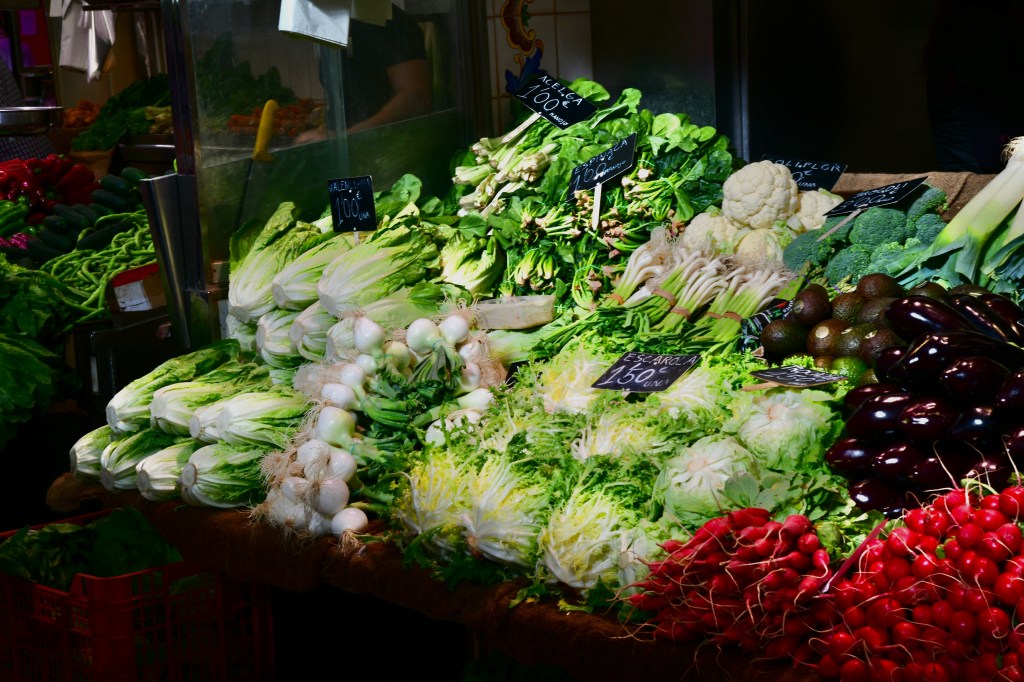


Highlights of Our Western European Tour

We flew from London to Bilbao on March 2nd and travelled throughout our tour by train finishing in Amsterdam on May 14th. We spent seventy four days in Europe and travelled 4316 miles.
Our trip has taken us to:
Spain:
Bilbao, San Sebastián, Madrid, Segovia, Avila, Aranjuez, El Escorial, Cordoba, Seville, Jerez De La Frontera, Cadiz, Granada, Valencia, Barcelona, Arenys de Mar and Girona

France:
Tours, Paris, Versailles, Chantilly and Lille

Belgium:
Brussels, Bruges, Ghent and Antwerp

The Netherlands:
The Hague, Utrecht, Lisse, Amsterdam and Aalsmeer

So what were the highlights?
This is a discussion we had over a beautiful lunch in Amsterdam as the end of our journey drew closer.
My Top Five would be:

1/ Valencia:
The vibe, the market, the park and the modern architecture.
I have published three previous posts on this beautiful city entitled “Valencia-Please can I Stay”, “Valencia just has it all!” and “Valencia Fallas Festival”.
At the start of the first post I wrote “Wow! Oh my goodness! This is it! We have been looking for a city that makes us want to return and actually try life as a local for three months and this could be it! I am so excited…………………”
This city for us really does have it all from the beautiful old town to the thriving colourful and appetising market

to the 7 km Jardines del Turia, the amazing beach, the architectural wonder that is The City of Arts and Sciences and the annual Fallas Festival.

2/ Mosque-Cathedral of Cordoba:
I was over awed by its serenity, peace and acceptance and I seriously cannot even begin to describe its beauty. A beauty that is not only defined by its architecture but also by the unity of religion created within.
This picture shows how the two distinct types of architecture have been blended together.

In a world where so many countries have experienced or are experiencing religious warfare this cathedral bears witness to the fact that regardless of your religion (or in my case lack of religion) you can exist alongside each other in harmony.
As I wrote in my previous post entitled Religious Unity in Cordoba “Leave the audioguide alone and enter this sacred place with an open mind, let the atmosphere draw you in, let the sheer beauty of the architecture awake your senses and let the peace and tranquillity surround your soul. If you allow this Mosque-Cathedral to envelope you, believe me you will leave this place with a feeling of a greater sense of harmony and an aura of peace. “

3/ Keukenhof Flower Gardens in Lisse:
This was one of the top three places I wanted to visit whilst on our tour and it definitely did not disappoint. Just the sheer beauty within the natural surroundings is enough to take your breath away. But when you combine this with the sheer magnitude of the types of flowers, the imagination they use to create such variety and then the inspiration they also manage to instil in you before you leave is unbelievable.
I wrote a post about the gardens entitled “Keukenof – Beauty, Imagination, Inspiration ” in the hope that my words will always bring back my memories of this delightful oasis.

4/ Mirador de San Nicolas:
I hope I will never forget the moment I walked around the corner of the San Nicolas Church in Granada and saw this fantastic panorama spread out in front of me.
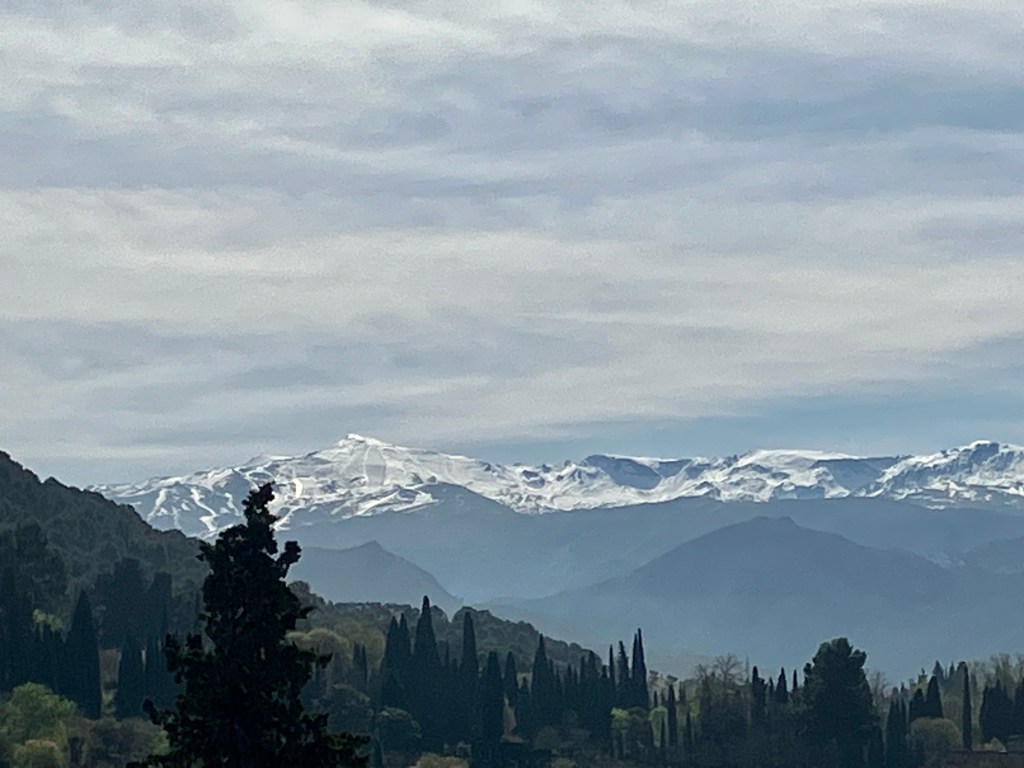
As I wrote in my post entitled Granada -A View to Remember, “I honestly could not believe my eyes. The whole of the Alhambra Palace was laid out before me with the beautiful snow capped mountains of the Sierra Nevada nestled behind. Suddenly everything I had read and seen the day before made sense. The Palace dominated the skyline, leaving everything below in its wake.
(The view of the Alhambra Palace is included in my previous post. Here I’ve included instead the sheer majesty of the mountains)

There are not many views in the world that you see and know are going to stay in your memory forever but this is one of them. It probably ranks in my top three!

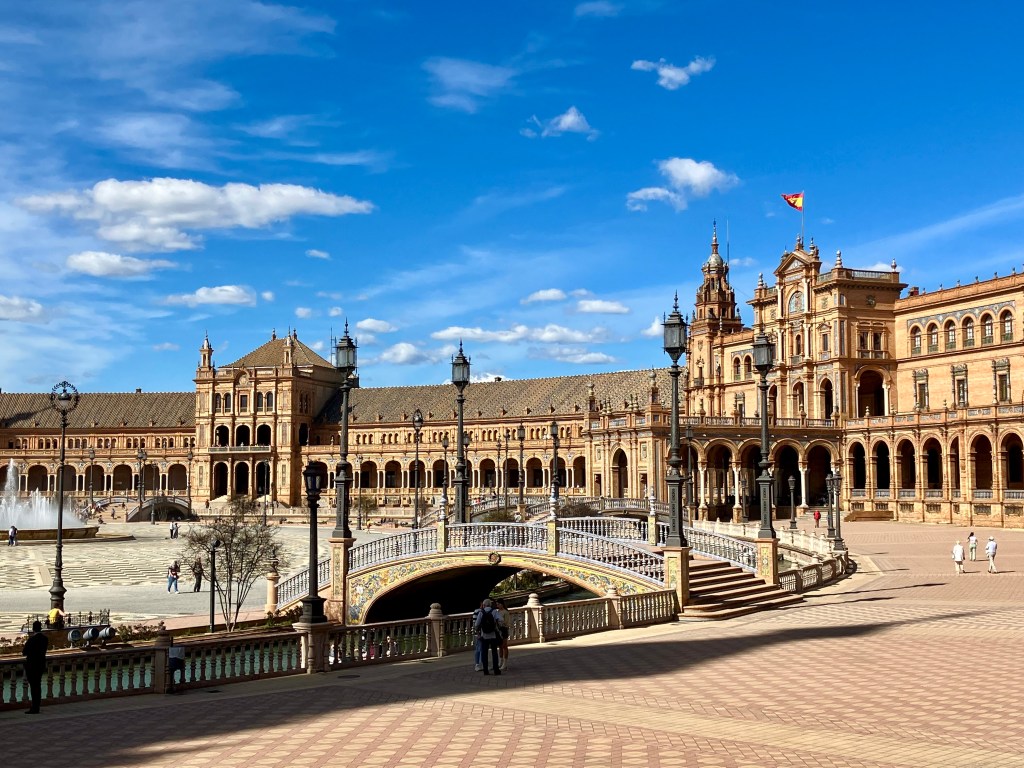
5/ Plaza de Espana in Seville:
This was such an unexpected wow!
I wrote two posts on the city of Seville and this featured in the first of these.
“Like many I had seen pictures of the Plaza de Espana but nothing prepares you for the reality. As we rounded the corner I caught my breath as the magnificence of this Renaissance Revival plaza spread out in front of me. I am so pleased that we came here at the end of our day as there was no pressure on time and we could wander at will absorbing the atmosphere, taking a break whenever we wanted to and just being in the moment.”
I look back now on our tour and this definitely stands out as one of those unforeseen moments of splendour.

Europe has so much to offer and we definitely have plans to return to a few of the places we visited on this trip but the rest of the world awaits…………………………………………..


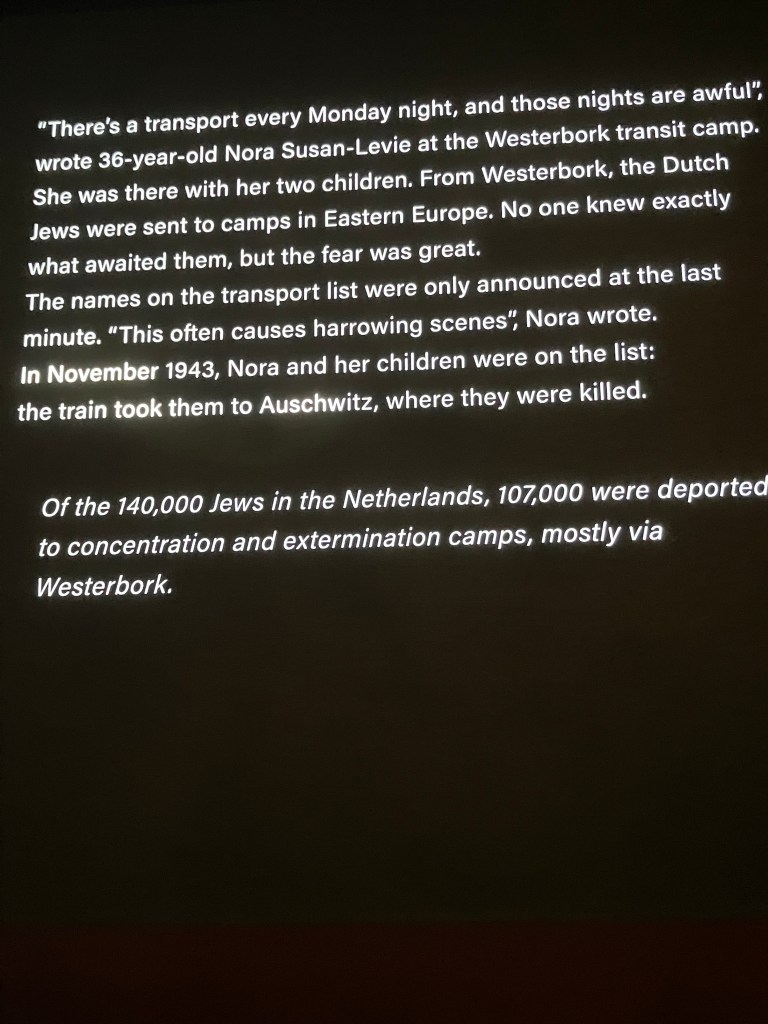
Touring Western Europe -Holland-Amsterdam -The Verzetsmuseum, Wartime Choices?

This museum tells the story of the Netherlands and its people from May 1940 to May 1945, when Nazi forces occupied the country. 
Having put four pieces of the jigsaw in place before arriving at this museum I had already begun to question, what would I have done if I was one of those people caught up in World War II in Europe?

The morning before coming to this museum we had visited Anne Frank’s House. This was the first part of the jigsaw and the beginning of the road to hell!
Anne is famous for her diaries of her life under German occupation and how, as Jews, the family had remained hidden in the attic of their Father’s office block until their discovery on August 4th 1944. After their discovery all eight people who had been hidden in the attic were sent to a concentration camp in Holland, and in September Anne and most of the others were shipped to the Auschwitz death camp in Poland. In the fall of 1944, with the Soviet liberation of Poland underway, Anne was moved with her sister Margot to the Bergen-Belsen concentration camp in Germany where Anne and her sister Margot are suspected to have died from typhoid.

In December 2016 we visited “The Topography of Terror” in Berlin, this exhibition is located on the site where between 1933 and 1945 the headquarters of the Gestapo existed. The Gestapo, of course, were responsible for the widespread atrocities exercised during World War II in particular the Holocaust. This had proved to be a hard hitting introduction for me into what actually occurred once all these thousands of people, who Hitler had decided did not fit with his “Aryan Society”, were taken from their homes and served as the second part of the jigsaw.

We had also recently visited, as part of this adventure, the Shoah Memorial in Paris which I have previously posted about. This explained in more detail the Jewish persecution that happened during the war in particular in France and serves as a memorial to those who lost their lives and, for me, the third part of the jigsaw.

In September 2019, just before Covid had hit, we had also visited Auschwitz and Birkenau, sited just outside Krakow.  This was the largest of the German Nazi concentration camps and extermination centres. Over 1.1 million men, women and children lost their lives here mainly Jews. Just looking at the railway line that brought the trains into the camp stirred both anger and sadness inside me. The thought of how they were herded off the trains, selected for hard labour until they dropped down dead or immediate extermination begs belief and served as the fourth part of my jigsaw.

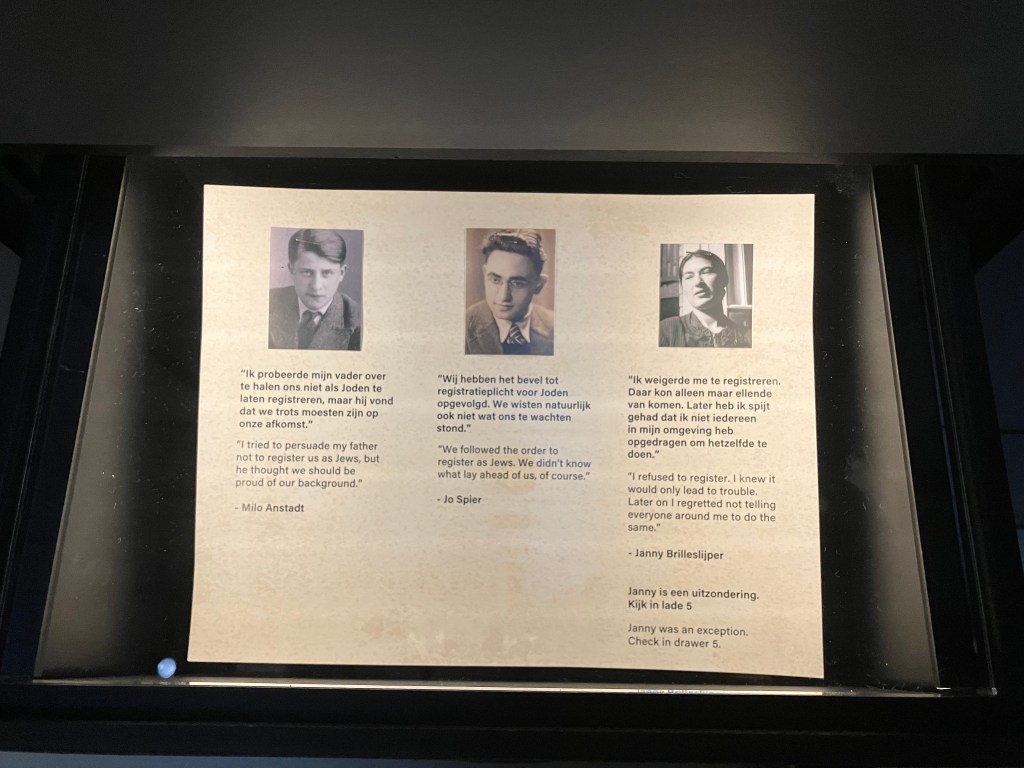
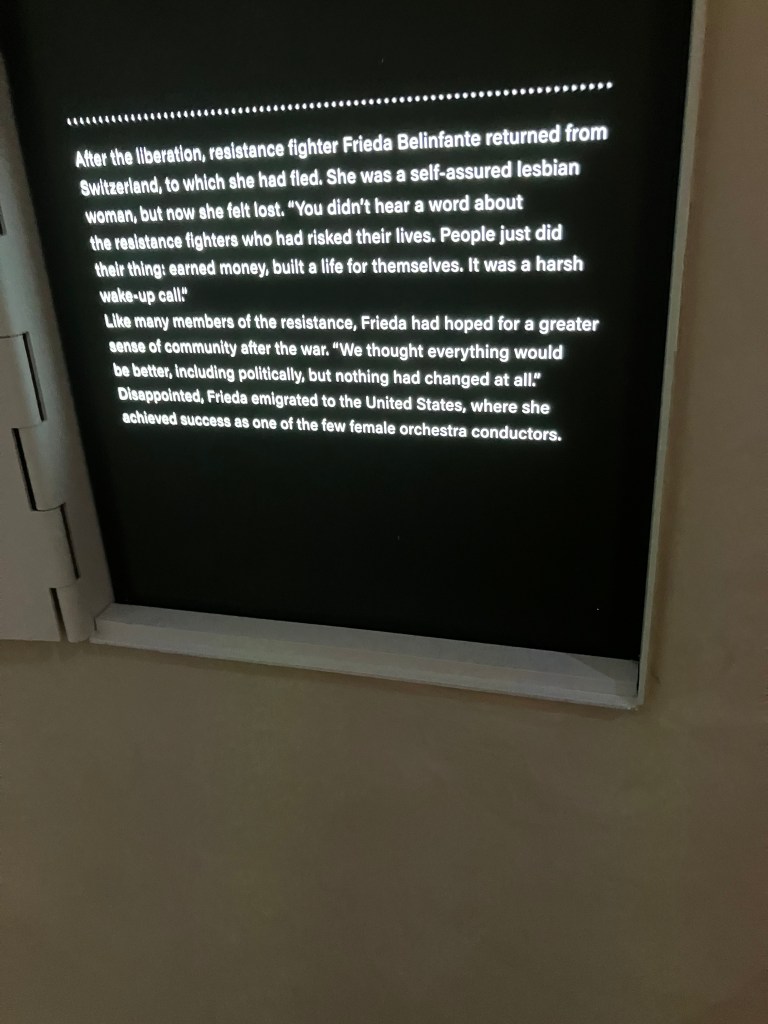
And so to the Verzetsmuseum in Amsterdam, also known as the Resistance Museum. This is, for me, the final piece of the jigsaw. How did people resist the occupation?
Using moving personal documents you learn about the story of people who were confronted with dilemmas by the German occupation, and were forced to make choices. What would you have done?

Dutch public official Jacob Lent was asked by the German occupiers to design an ID card. Utilising special ink, stamps, fingerprints and three watermarks Jacob designed a card that was nearly impossible to forge.
Very few people objected to having an ID card which everyone over the age of fifteen had to carry with them. For the Germans the identity card turned out to be an ideal way to control the population in particular the Jews whose ID card would be stamped with a large letter “J”.
Did Jacob do the right thing? If he had refused what would have happened to him? And surely the Germans would have found someone else willing to comply?
After the war Jacob was sentenced to three years in prison for his work on producing the ID cards.

During the occupation women served as bicycle couriers. They were essential to the resistance. They were less likely to attract suspicion and would not be put to work by the Germans. A 19-year-old from Utrecht, Femanda Kapten, was one such bicycle courier. Illegal newspapers were stenciled in her parents’ bookshop. These underground publications provided the public with the truth. They gave important updates on the war’s political issues, battle results, large scale troop movements and casualties. They also provided an editorialisation of the war.
One day, Femanda was en route with 500 illegal brochures in her saddlebags when things almost went wrong. “Suddenly, there was a German checkpoint: One of the German soldiers nudged her saddlebag with the butt of his rifle. There were potatoes on top of the brochures. “Kartoffeln?” Fernanda nodded and was allowed to pass. “I started walking as slowly and casually as I could” she said “though I felt like running at full tilt”.
Would you have been brave enough to cycle alone on your bike delivering these all important pieces of news?

Other civilians helped to hide those fleeing persecution or stranded Allied troops.
Twenty four year old Johan Snoek helped those in hiding, right up until he and his family were driven out of their home by the Battle of Arnhem when they then moved in with three aunts in Ede.
When the British General, John Hackett, found himself wounded and trapped in the occupied part of the Netherlands following the battle of Arnhem he sought somewhere to hide. Johan thrilled with the chance to aid the resistance once again took him in.
Johan wanted to help Hackett reach liberated territory, but he kept having to cancel their plans until in early 1945 when he finally came up with a new plan for escape.
Resistance groups smuggled over 600 crew members from downed Allied aircraft out of the country. After the defeat at the Battle of Arnhem, some 350 Allied troops went into hiding in the area, at least 145 of whom were transported back to friendly lines by the Dutch resistance.
Would you have had the nerve to help?

Then there were those who played a more active role in direct sabbotage.

In the hamlet of Woeste Hove, on the night of 6 to 7 March 1945, resistance members attempted to commandeer a German vehicle as part of a plan to steal meat. As chance would have it, the car they stopped belonged to Rauter, the highest-ranking SS leader in the Netherlands. Rauter immediately shouted: “Achtung, these people are probably terrorists.”

The leader of the resistance group, Geert Gosens, saw the occupants move to draw their guns and opened fire. The resistance fighters’ Sten guns rattled off one round after another, riddling the car with bullets. Then they fled the scene. They had no idea who they had shot at. Rauter was badly wounded. The retaliation by the German occupiers was brutal: they shot 263 prisoners. The bodies were left on the side of the road, along with a sign: “This is what we do to terrorists and saboteurs.”

Over 5,000 people were killed by the German occupiers as retaliation for resistance activities; most were prisoners, some were innocent civilians. After an attack near Putten, every man in the town was sent to a concentration camp, where 552 of them died.
Would you have put your life on the line, time and time again, in order to sabotage the German war machine?

Some families provided homes for Jewish children whose families had sent them away from the conflict in the hope that they would be saved from the Jewish persecution.
Ellen Mike Olman was only nine months old when she went into hiding and was separated from her parents and sister.
Her foster parents loved her dearly. When Ellen Mike was three years old, the Netherlands was liberated. “For me, that was when the problems started. I was sent back to my mother, a woman I didn’t know and whom I called ‘ma’am!” Her relationship with her mother remained difficult for a long time.
Ellen Mike’s foster parents continued to play an important role in her life. On her 18th birthday, they gave her a photo album (which is on display in the museum) about the time she spent in hiding. “The album gave me back a piece of history that I couldn’t remember clearly but had an emotional sense of.

Some 5,000 Jewish children survived the war in hiding, often in the homes of Christian foster families. Around 2,000 of those children lost both parents. A conflict emerged around them: should they stay with their Christian hosts or be raised by their Jewish relatives?
Could you have sent your nine month old baby away to live with strangers in an attempt to save her life?
Could you have taken in someone else’s child in an attempt to save them from persecution?

7000 people died in concentration camps and prisons having taken part in resistance activities.
2000 people were shot in The Netherlands for taking part in resistance fighting.
These people were all heroes, people who went above and beyond their normal everyday life to try and turn the tide of the war.
Would you have been one of them?

NB:
This is our seventeenth stop on our current tour of Western Europe. Why not catch up on where we have been already and then join us as we progress?

Touring Western Europe -Holland-Keukenhof -Beauty, Imagination and Inspiration

Just amazing! I cannot believe how excited I am about flowers!

Just to bring you up to speed we departed Antwerp last Wednesday and took the train via Breda to The Hague or Den Haag. Visiting the Keukenof Flower Garden was high on my agenda for this whole Western Europe adventure and where we spent our final day whilst based here.
The Gardens open at eight each morning and we were there by nine. The journey was quite simple, we took a train to Leiden and then caught the “Tulip” bus to the park. There were Keukenof representatives at the bus station in Leiden checking we had both park and bus tickets. You can travel into the park via other cities, just check their website.
We had no idea how much time we would spend but with an unlimited schedule we really didn’t care, it was my intention to absorb all it had to offer.

On arrival we picked up one of their maps and agreed a route. From the onset you are met with the most astounding displays of flowers, mainly tulips of course, but so many different colours and types. Despite a bit of a misty start to the morning, I felt like a child at Christmas, it was just so beautiful and I was madly clicking away with my mobile camera.

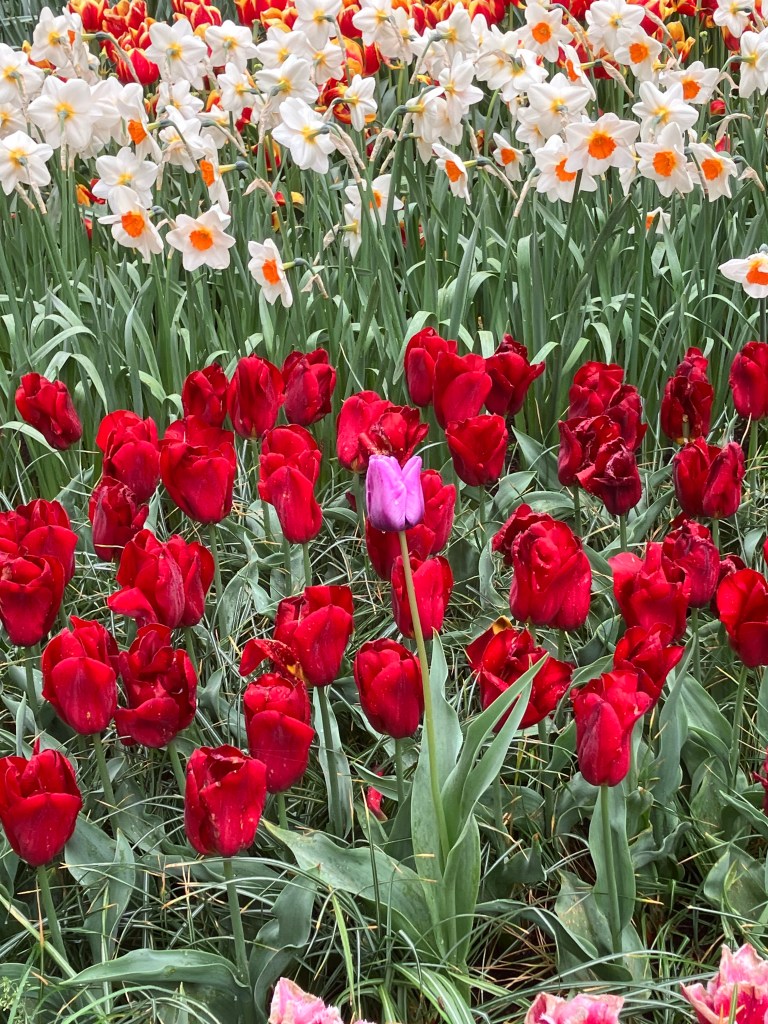
Beauty abounds at Keukenof, giving endless pleasure to the senses and exalting the mind and spirit. Everywhere you look there are various colour combinations:- bright purple and delicate baby pink, deep crimson with velvety pink, yellow with satsuma orange.

Sometimes they are displayed mixed together, whilst other beds have distinct colour blocks:- yellow then red then white. Sunburst orange followed by a cerise pink and then lipstick red.

Sometimes there is an added dimension where a consistent mix of colour is used:- pure purple tulips, purple but with white tips on each petal, delicate white tulips with just a hint of pink on the outside of the petals, this is reversed with pink petals with a hint of white and all around the perimeter of the bed are frilly tulips in bubblegum pink.

There are beds of mixed flowers :-beautiful “Sir Winston Churchill” narcissus with “Queen of the Night” deep dark tulips and Carnagie hyacinths exuding their fabulous Spring awakening perfume. Fritallia aurora with it’s downward facing orange flowers mixed with traditional light purple tulips.

I honestly never knew there were so many varieties of tulip. I love the cerise pink that look like someone has taken a very small fine feather boa and created paper flowers and their purple equivalent where the frilly tips are white like someone has drawn a line around the outside of each petal. There is a yellow version with splashed red on the outside petals but only on the right side of the flower?

Long beds of flowers line the walkway stretching from the indoor”Beatrix” display area downwards to the lake, beautiful cherry trees sprinkling their blossom on the green lawns interspersed with beds upon beds of different flowers of every colour.

Nature brings beauty in other formats too like the tiny droplets of dew still on some of the petals. Or the production of one single purple tulip amidst a border of red tulips, which makes me smile, as if nature is trying to tell us we cannot always produce the perfection we desire!

Finally beauty has been created with fountains, a wood enclosed waterfall, ponds full of fish lined within two perpendicular lines of conical firs interspersed with more traditional red and white beds of tulips. There is a small pond with an ornamental windmill at its centre and a child’s sailing boat made from a traditional Dutch clog and home made sail .

Imagination -someone has to form a mental image of the flowers, currently mere bulbs, and not present in reality and never before wholly perceived in reality, so they can be planted every Autumn. The visitors arrive each year to see a different layout every Spring. How does someone constantly create new beds in new arrangements with different combinations of colours?

Today, for example, they have used two, even three, height differences to draw your eyes towards a bed of tulips and daffodils.

Their imagination conjures the idea of giant Barbie pink flower pots with fletching trees set amongst a bed of short pink carnation type tulips and blue pops of colour from grape hyacinth.
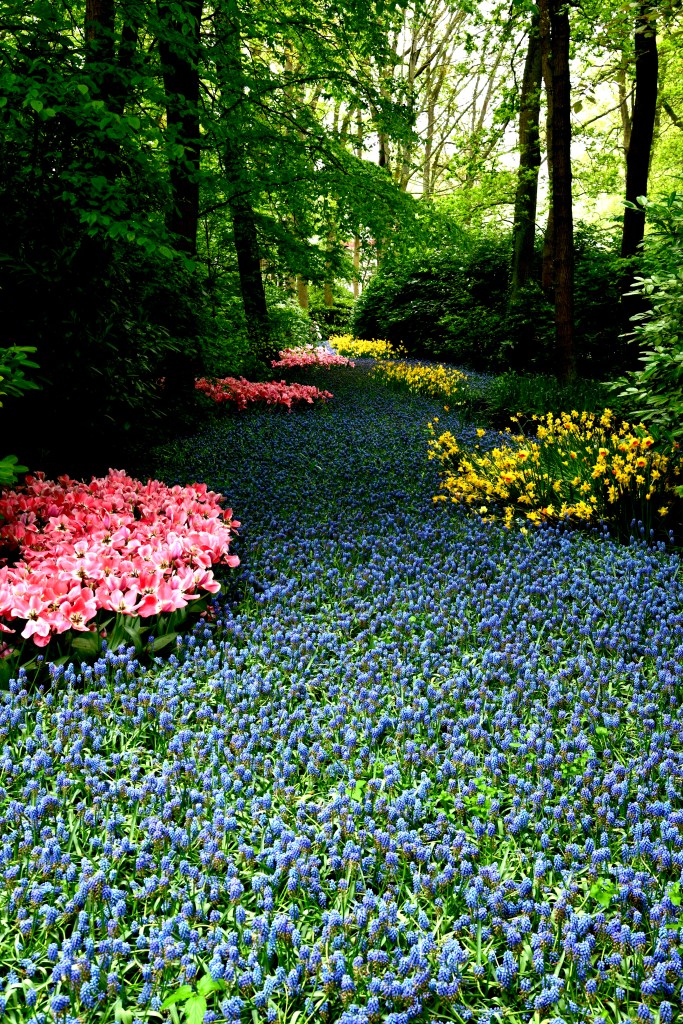
They create swirls of blue grape hyacinths amongst equally irregular shaped beds of orange tulips. Then they take this idea even further and plant another curving river of coloured tulips but this time accentuated by the grape hyacinths on either side!

Flowers are planted in beds but also to complement nature amongst the trees.

My favourite area of this type is a river of grape hyacinths winding its way amongst some trees with a quick dash of yellow daffodils and pink tulips thrown in for colour. Who on earth dreams up these ideas?

Keukenof not only presents beauty and imagination it delivers inspiration.
A traditional bed of flowers is presented above a stone seat on which can be seen a statue of Buddha. On either side a wicker basket of Spring flowers complete the image. I could create that at home.
Another display shows what could be the side of your garden shed painted vivid yellow on which has been hung a series of antique looking glass mirrors with pale pink garden tiles beneath on which stand subtle pink flower pots of varying sizes, again all planted with daffodils, tulips and hyacinths. The mirrors reflect the bed of mixed red tulips which surround the shed at a discreet distance.

Horizontal flower pots with bright yellow daffodils, pink tulips and hyacinths have been secured onto solid garden trellis at two different heights to add colour to what would otherwise be a boring garden divide.
A wooden home made container painted bright pink creates a raised bed of Spring flowers out of which a small ladder like set of shelves reaches upwards to the sky. The shelves filled with a collection of teapots, teacups and a kettle It’s a bit out there for my garden at home but certainly different.

I left feeling mentally stimulated, wanting to take ideas home with me particularly from the orchid display in “Beatrix” and flower arrangements within the indoor Willem-Alexander building.
The idea that orchids can be clustered together in their pots and then placed within a larger planter had never occurred to me but it looks fabulous.

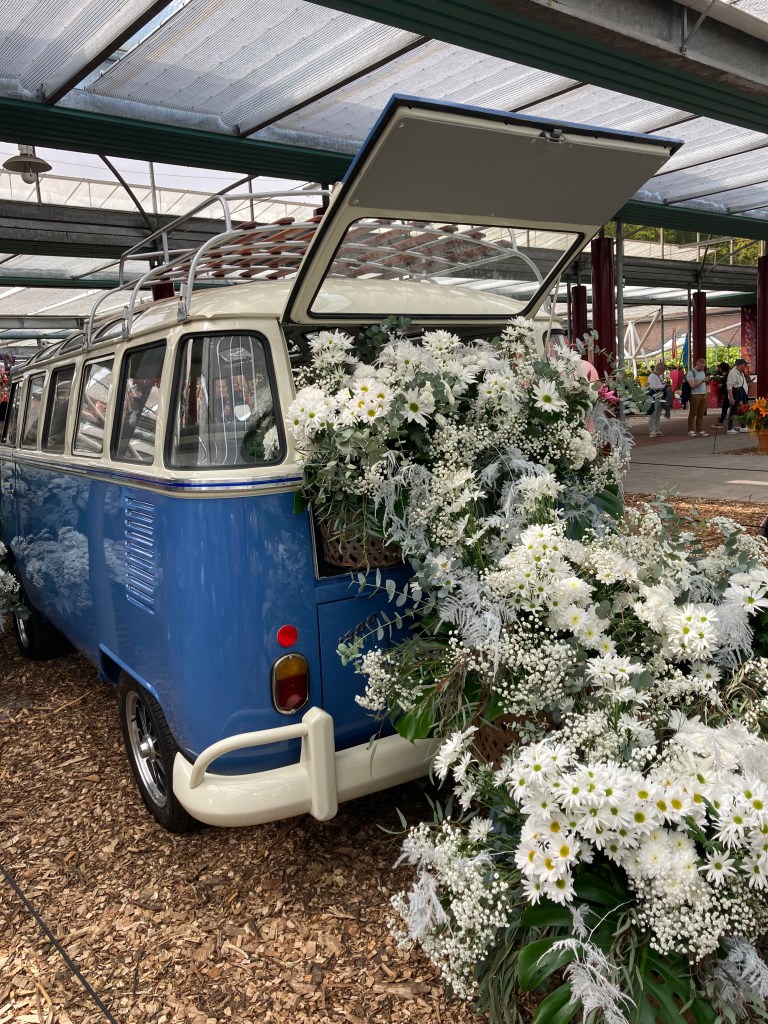
The flower arrangements cover all manner of events and ideas- a blue VW camper with pure white flowers spilling from the rear that you could create for a wedding, a Valentines display with red hearts and gorgeous pink lilies

Even the great outdoors is celebrated with a quirky caravan and accompanying painted old car. Another display features pink paper lanterns strewn above beds of flowers as if a birthday is about to be celebrated in the garden.

An old kitchen armoire has been painted blue, its doors invitingly open so you can see within on every shelf pots of coloured flowers.
My mind was aswim with how I could take everything I had learnt previously in Cordoba where preparations had been underway for the Patio Festival (see previous post) and combine it with the inspiring displays I had seen here.

Please if you ever get a chance to go to Keukenhof, go! It is honestly astounding!

NB:
This is our sixteenth city on our current tour of Western Europe. Why not catch up on where we have been already and then join us as we progress?


Antwerp Headlines Immigration

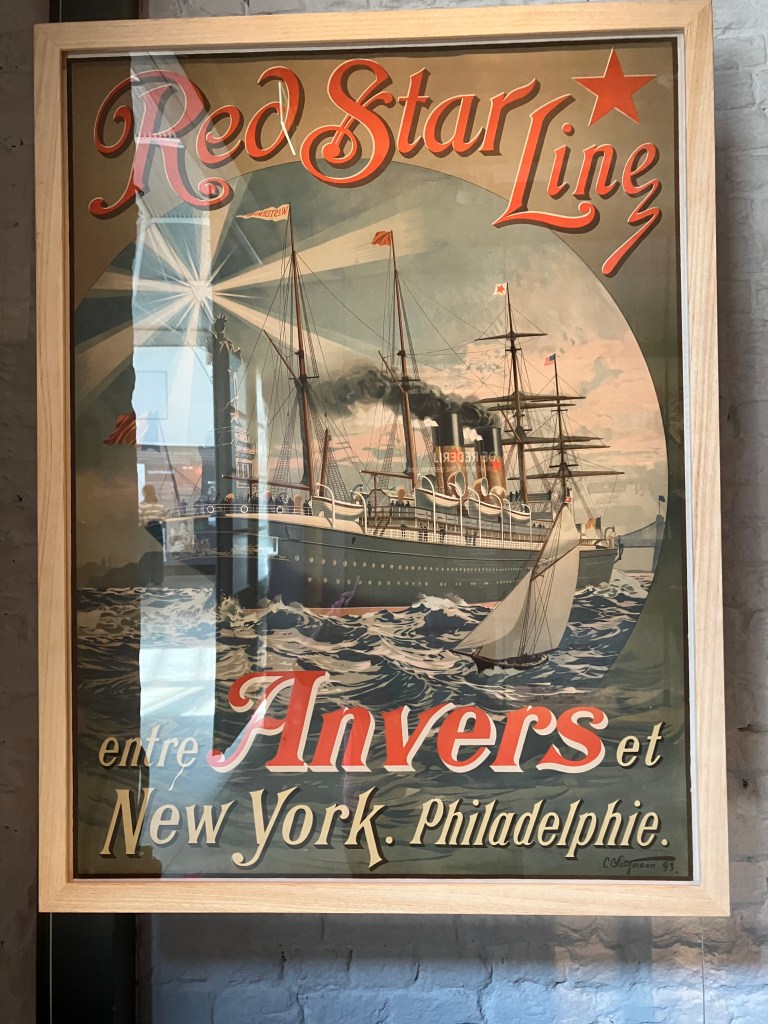
On our adventures in Antwerp we visited a fantastic museum The Red Star Line Museum.
You enter through the door expecting to learn about The Red Star Line which was a group of ships that transported migrants to North America but you leave with so much more knowledge, understanding and empathy for migrants as a whole.
As I mentioned in my previous Antwerp post this specialist museum outlines the story of immigration. Migration is a timeless story. For centuries people have gone in search of a better life elsewhere.

It begins with the true stories of twenty individuals. Each of these people have left their homeland during a period of massive migration. It begins with the dispersion of modern man back in 60,000 to 40,000 BC who left Africa, spreading out across the globe, creating new civilisations and cultures. Within these stories is the story of Irving Berlin, who crossed the ocean to the United States as a child aboard The Red Star Line. The Museum makes it clear that the story of the Red Star Line is just one example.
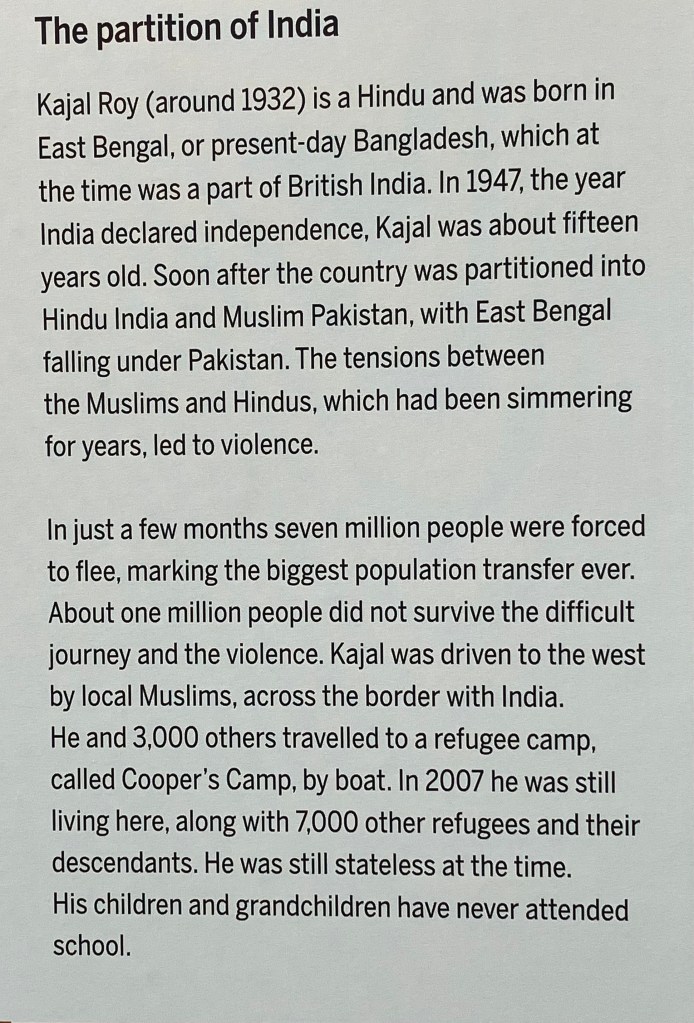
In the 19th century new waves of migration culminated in the flows of refugees and the forced deportations of entire populations during the two World Wars in the 20th century. Travel has become easier than ever, due to globalisation, modern transport and communication and so through the lives of these people you are brought right up to date with the modern day immigration crisis. One of these twenty people was Kajal Roy and you can read his story below.

Once you get into the museum proper you are introduced to The Red Star Line and you follow the path of the emigrants from leaving their country of origin, through their long journey and temporary stay in Antwerp, to the ocean crossing and their arrival in America or Canada. All of the stories are based upon facts.
Facts that have been gathered from people who maybe crossed the ocean at a very young age or stories told by grandparents and parents of their voyage across the sea. The museum continues constantly gathering this information and they provide research facilities for people who want to search for their relatives who they believe migrated.
I’ve included a couple of the narratives from the museum which enlighten us further on how arduous the journey was.

The Red Star Line was founded in 1871 by Peter Wright & Sons, a company of Philadelphia based shipbrokers and was called the International Navigation Company. They dealt in oil exports and thus the intention was to send their products from USA to Europe and then on the return route, as a way to assuage some cost, they would sell tickets in order to ferry migrants from Europe to USA.
Not so very different from today in terms of money being made from people’s desire to find a better life!

Funds were provided to launch this project by The Pennsylvania Railroad Company who could see the benefits to them, given both the cargo and return passengers would need transportation, having arrived in Philadelphia, to other destinations in the US. In taking on this project they built new docks and terminals in the port of Philadelphia as well as a train station, a loading quay and grain silos.

Clement Acton Griscom was appointed President and in 1872 he travelled to Europe in search of a port for his new shipping line. Antwerp was already an important destination for American oil exports and utilising his contacts he set about establishing the city as the main port through which the migrants would travel.
There was a slight glitch in his plans in so much as the USA Government prohibited combined transports of both oil and passengers, thus the Red Star Line never transported oil but purely migrants. The company also started to look at New York and as this was the biggest port on the East Coast of USA, the Belgian Government became interested in the idea and in 1877 granted a 100,000 dollar subsidy to anyone providing a fortnightly, regular connection between Antwerp and New York and as a result on March 12th 1874 the Red Star Line’s first ship the “Cybele” sailed for New York.
Temporarily during the First World War the fleet sailed under the British flag from Liverpool, assisting in the war effort providing hospital ships as well as shipping cargo and emergency aid.
Post the war everything returned to Antwerp.

Tickets for the ships were promoted all over Europe through agents of the shipping line. Often these agents were local bankers, shop or pub owners who earned some additional income on the side. In order to maximise ticket sales the journey was made as easy as possible with package deals developing whereby travellers could purchase their train tickets to Antwerp and hotel accommodation alongside their boat ticket. This all sounds very familiar when you examine our current travel industry.
Some of the promotional material developed by the shipping line is on display in the museum. Cost of tickets varied over the years and often also upon the season. Children under 10-12 years of age went half price.
In 1902 an adult ticket in third class would have cost 162.50 Belgian Francs or 31 American Dollars equivalent to about 1000 Euros today. Over a third of the tickets were paid for by family members or acquaintances already in America who when writing home would highlight the advantages of the journey and what America had to offer. Again similarities can be brought in terms of families established in the UK writing emails or sending photos home of the wonderful life they have made for themselves here and encouraging others to follow.

The train journey was the first step. The migrants needed to travel to Antwerp in order to catch the boat. They crossed via the Austrian, German and Belgian borders or travelled internally from Leipzig.
Everyone was checked at the borders and needed a passport. Those without passports would cross illegally by avoiding roads and crossing via open fields. This sounds very like the path followed by those crossing into America today from South and Central America. Especially since smugglers who knew the routes well helped them to cross for a fee and Russian border patrol officers could be bribed.
At Myslovitz on the German border the migrants would be subjected to a first medical examination and their baggage would be disinfected. This was as a result of a cholera epidemic in Hamburg. At the checkpoint here there was a waiting room with a canteen, although food was minimal, but no beds.
Those travelling via Leipzig would travel on trains in separate carriages to all other passengers.
As of the 1890’s those arriving at the Belgian border had to show their ticket and prove they had enough money to cover their stay in Belgium.

On arrival in Antwerp the migrants were spread throughout the city and were very noticeable because of their different mode of dress, with sheepskin coats, colourful headscarves and high boots. In 1913 during a typical week 4000 migrants passed through the city. The migrants fuelled quite a debate amongst local people. Not that different to what we see today!
From 1905 onwards they all disembarked at Antwerp Central station and from 1908-1914 Belgian doctors examined the migrants in the station for infectious diseases. It was important for the shipping line to check that those hoping to travel met with the immigration legislation in place in the USA. If they were turned back on arrival in America then the shipping line had to meet the cost of their return journey.
After the war the Red Star Line built it’s own shower block at the port in Antwerp to further hasten the disinfection and medical checks of the migrants.

Once aboard the ship your comfort was dictated by the class of your ticket. Most migrants lived between decks, in steerage. This was below the main deck but above the cargo hold. Passengers slept on straw mattresses in narrow bunk beds and also ate in the same space. They were required to bring their own bed linen and cutlery. The stories of those who made these voyages make interesting reading within the museum.

On arrival in America all passengers had to meet with the USA immigration requirements. For example you had to be able to support yourself financially. There were restrictions on the disabled, those with a criminal record, pregnant ladies travelling alone, anyone found to have a contagious disease etc.
In first and second class, provided you did not show any signs of sickness, you were allowed to disembark straight away.
All third class passengers, however, had to go through Ellis Island in order to complete administration and medical checks. If you failed on any point you were returned home. From 1925 these immigration formalities were transferred to the European point of departure and thus to Antwerp.
I read a biography at the museum about a family of five; Mum, Dad, two boys and a girl. The girl was only five years old but when she arrived at Ellis Island she was given an intelligence test, as was normal for all and she failed. The Mum and Dad were then faced with the dilemma of whether they all returned to Europe or she went back alone. The Dad went back with her, settled her in a home for what we would these days call “special needs” children and left her there before returning to his family in America!

The museum really proves that migration is not a modern day issue but one that has been around for years. We are more aware of it in modern society because we have newspapers, television and radio but interestingly the difficulties of the migrants are very similar, they are fleeing poverty, racism or war.
I’m looking forward to my next adventure where as part of this journey I will be visiting Philadelphia and more importantly Ellis Island and seeing the other end of the migrant journey.

NB:
This is my second post about Antwerp. It is definitely a city we would return to, why not have a read of my first post? We are currently touring Western Europe, why not join us on our journey and catch up with where we have already visited?


Touring Western Europe -Belgium-Scratching The Surface of Antwerp

Leaving Brussels behind we travel, by train, further north and arrive forty five minutes later in Antwerp on Saturday Afternoon.
Our accommodation looks directly out onto Theaterplein which is the home of not only the city’s main theatre but also a Saturday market which is in full swing when we arrive. Our Air BnB host, who owns the restaurant downstairs, explains that it is a Holiday Weekend and therefore the market will be there for all three days. Having unpacked and made ourselves at home we popped across to the market to explore and amongst the many stalls selling produce, fish, cheese, meat and clothing were some food sellers including an oyster bar!
We bought ourselves some great Thai street food and a good supply of fruit and veg to eat over the next couple of days.


We have a full plan of activities lined up for two days of our stay but have left Monday free. Checking out the dates of Public Holidays in the countries you are visiting is a must. Not only might you find some additional events that interest you but also tourist levels and traffic can increase whilst shops etc may close for the duration of the holiday.

I learnt this lesson, ten years ago, when I embarked on a month long trip of America with my children.
My son wanted to visit New York and I wanted to go to San Francisco and then drive Highway 1 down the west coast. LA promised my teenagers Disney, Universal and Hollywood! Then from LA we were going to drive across the desert to Las Vegas.

Two thirds of the way down Highway 1, I got chatting to the owner of a restaurant in Morro Bay and discovered it was Labour Day weekend starting tomorrow!
“You will need to get on the road early” she exclaimed “traffic will be nose to tail!” I managed to get us to LA without straying off Highway 1 but the hotel we had booked in Anaheim was heaving as was all of the theme parks. Luckily we were there a week and I could rearrange everything in order to avoid the crowds but my lesson was learnt!

On Sunday morning we set out reasonably early to start our explorations. Walking to the Grote Markt or Great Market Square, the streets were still fairly quiet which always gives a better sense of authenticity to a place.

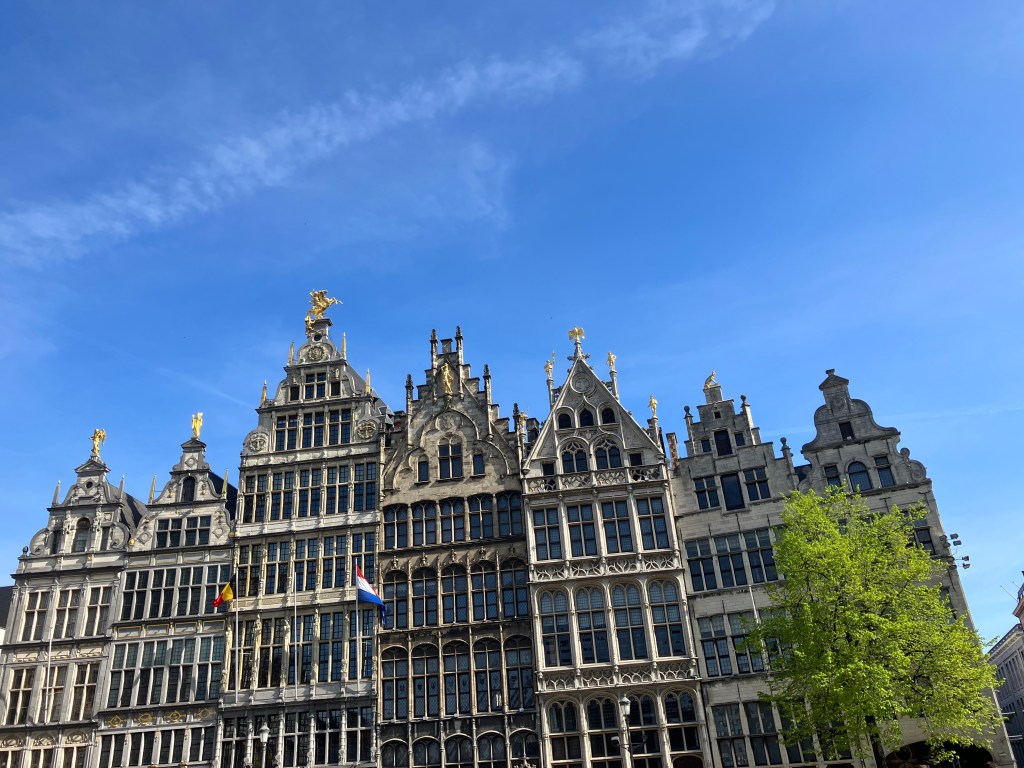
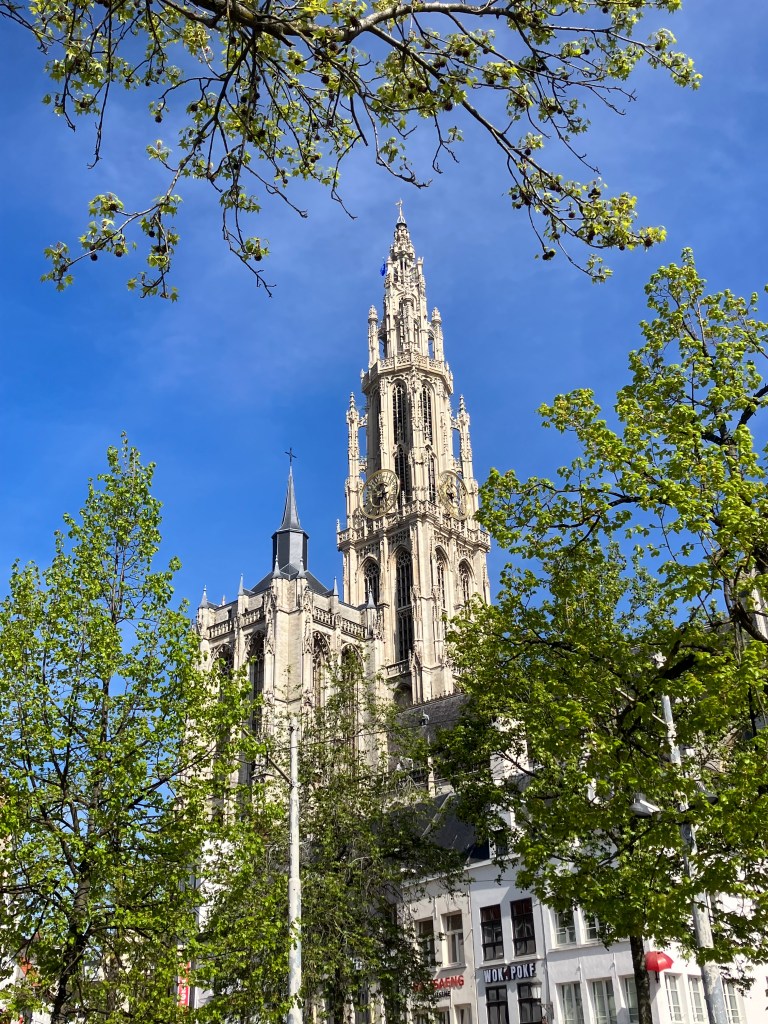
Standing in the square dominated by the elegant and grant Renaissance style City Hall on one side, the Baroque guildhall on another and set back a bit further but looming over it all The Cathedral of Our Lady, I take time to absorb the history around me.
The cathedral’s single Gothic spire seems to be reaching for the sky, standing at 123 m (404 ft); plans to build a matching partner were never realised but look up wherever you are in Antwerp and you will catch a glimpse of this edifice. 
The surrounding guild houses and old patrician homes housed powerful artisan guilds who looked after each other and protected the techniques of their craft for future generations. The square is definitely a magnet for those who love studying city architecture.

We leave the cathedral for a future visit and walk instead towards the river. Antwerp sits 55 miles from the North Sea on the River Schelde.
The busiest part of the river lies between Antwerp and Ghent and during the war Antwerp was a primary target for German forces. Following the destruction of Rotterdam in 1940, Antwerp was the largest surviving port in Western Europe, and the obvious choice to support an invasion of Germany. Of all the Belgian cities, Antwerp was the hardest hit during the German bombardment with flying bombs and rockets. Historians estimate that some 3,000 civilians were killed in Greater-Antwerp during a six month period. An additional 600 Allied soldiers also died.

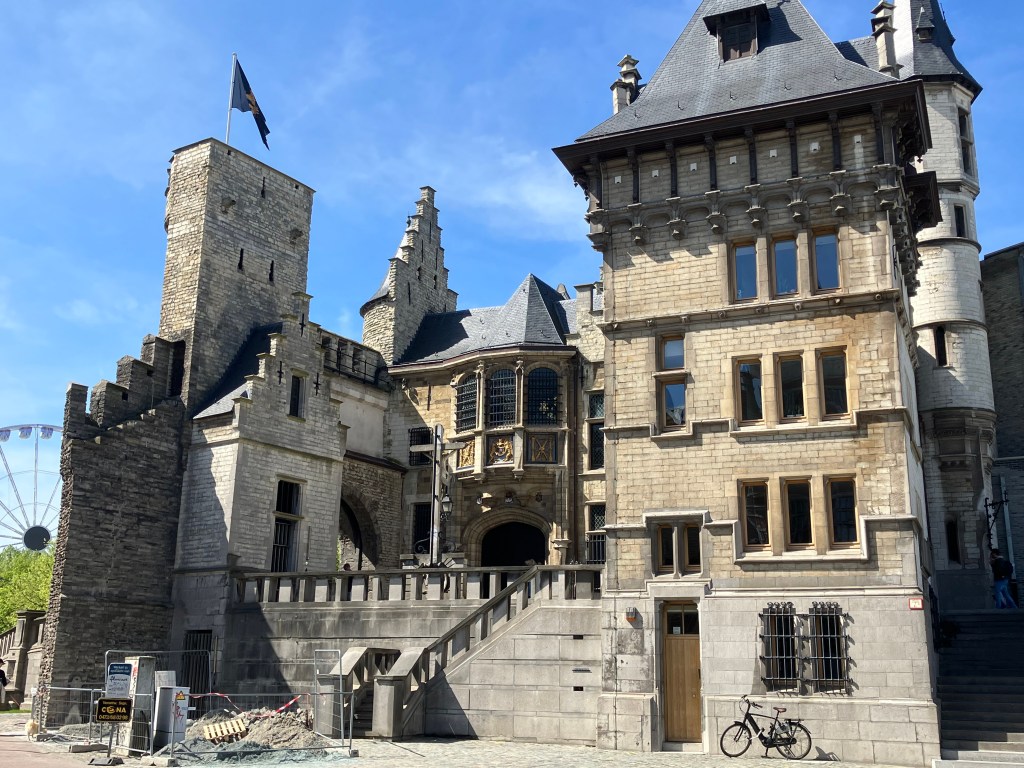
Sitting on the river today is the Het Steen, a medieval fortress which controlled the access to the Scheldt. The surviving structure was built between 1200 and 1225 as a gateway to a larger castle. However, there was a castle here as early as the Carolingian period in the 9th century.
As the first stone fortress of Antwerp, Het Steen is Antwerp’s oldest building and used to be its oldest urban centre. The words “Het Steen”, are dutch for The Rock.
Today the renovated Het Steen is home to The Antwerp Story where you can learn all about the history and identity of the city.

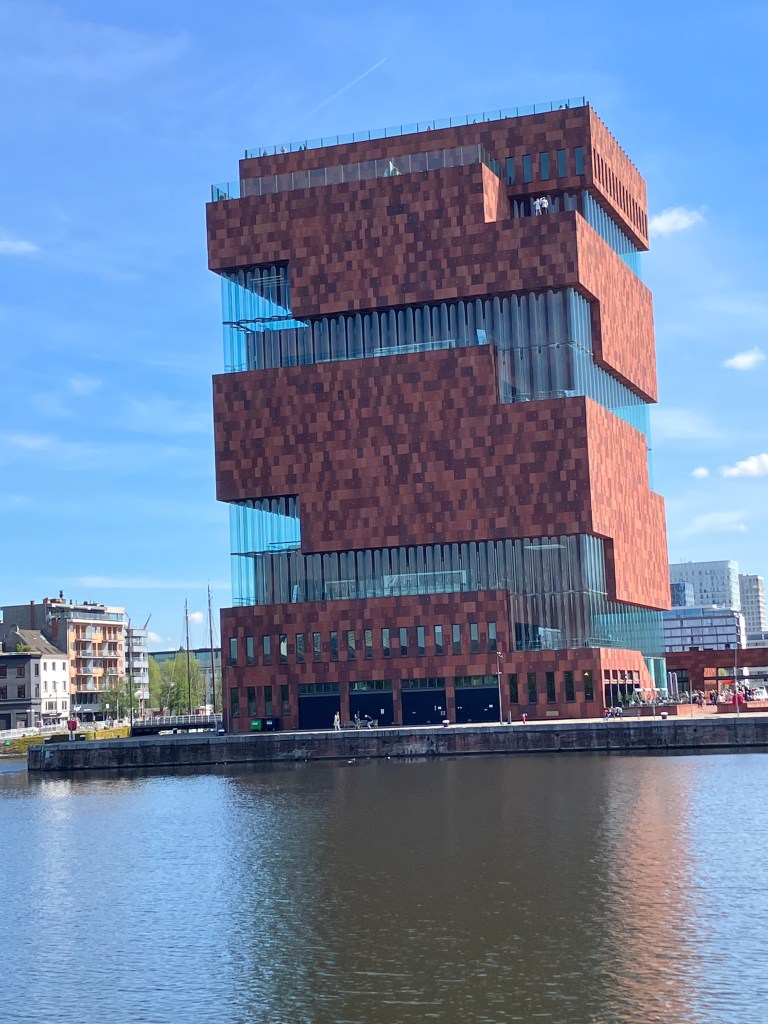
Walking further north along the river and then branching inland you arrive at Museum aan de Stroom or MAS. The building is designed to resemble boxes stacked in a spiral tower, and it offers great views of the city. Housing 600,000 pieces it tells the story of Antwerp, the river, the port and its place in the world. Whilst some exhibitions are permanent there are also ever changing exhibitions which are detailed on their website. You can take the escalator up to the ninth floor for free, and enjoy views through glass walls as you make your way to the top. On the 10th floor, there is a 360-degree panorama over the city, the harbour and the river.

Further north and tucked away in a quiet street -Montevideostraat is the Red Star Line Museum. This specialist museum outlines the story of immigration.
The history of humanity is presented as a history of migration and begins with a timeline of twenty personal stories. Each of the twenty stories represents a period of massive migration, from the dispersion of modern man (60,000 to 40,000 BC) to the migration crises of today.

Its main focus, however, is on the Red Star Line which transported 2 million people from Antwerp to North America. It is the most amazing story and one which I am writing a post about separately to publish on Tuesday.

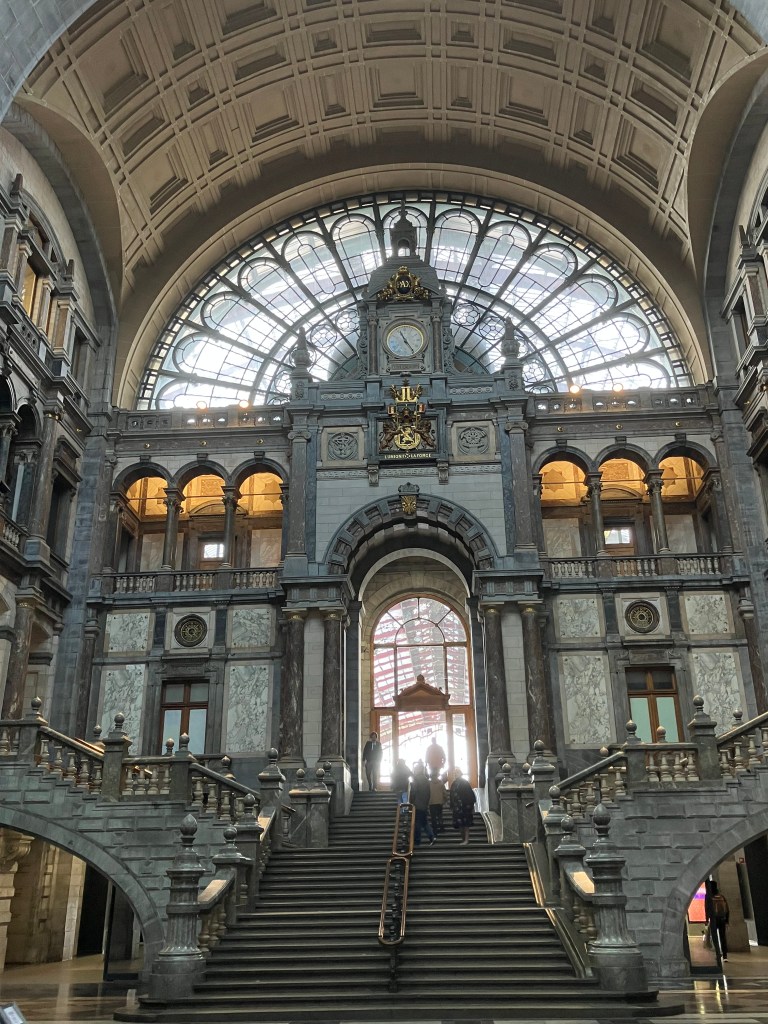
Our day ended here at this museum but on Tuesday we also explored the Antwerp Train Station, voted one of the most beautiful in the world.

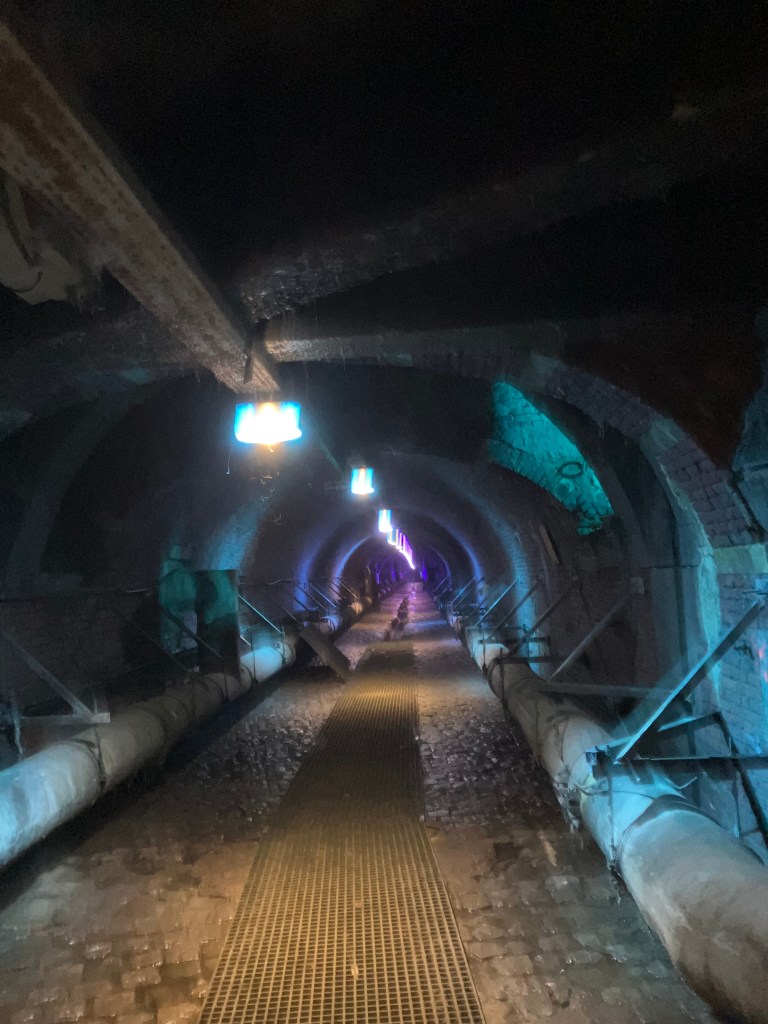
We went down into the old sewers of Antwerp with De Ruien

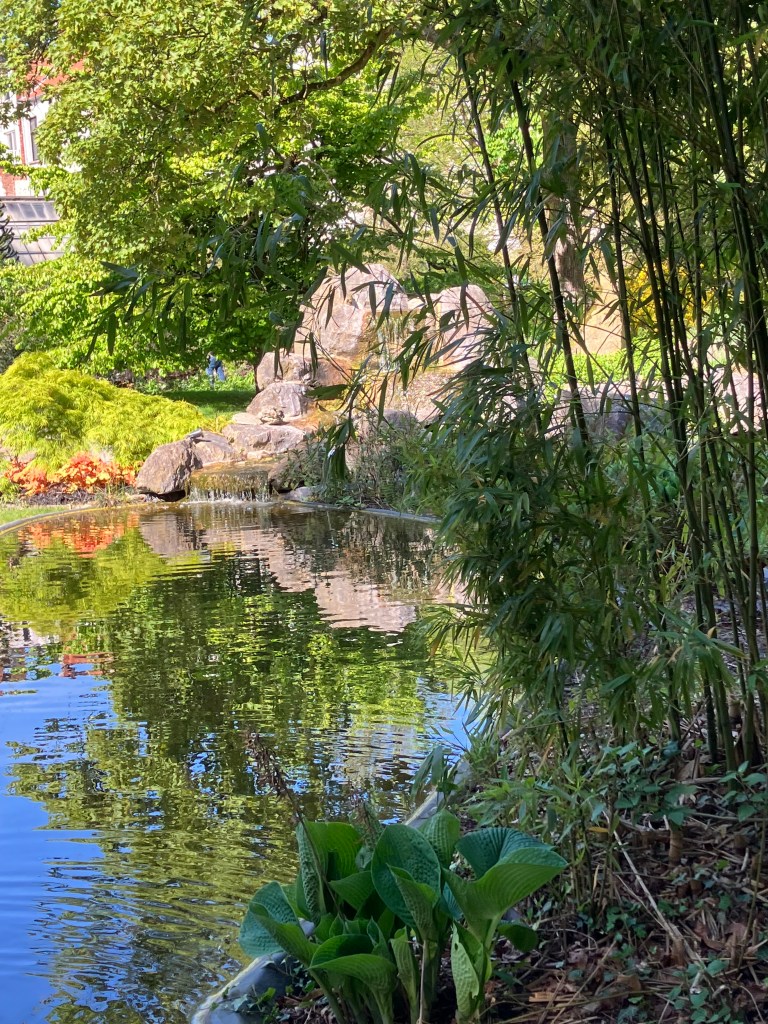
and visited the Diamond District. As well as being the second-largest port in Europe, Antwerp is also known as the diamond capital of the world. We finished that day in the Botanic Gardens.

We have only scratched the surface of this wonderful city. There are so many neighbourhoods to explore. There is the Meir shopping area which stretches from the cathedral all the way to Central Station. It doesn’t get its reputation of being the fashion capital of Belgium for no reason.
There’s the city park, the zoo, a walk along the River Scheldt, many other museums and the largest chocolate museum in the world…………………….
Tot ziens Antwerp, we will return!

NB:

We are now in Belgium and this is part fifteen in my series of posts about our tour of Western Europe. Why not read the previous posts and then follow us on our journey as we continue to explore this lovely part of the world?

Touring Western Europe -Brussels -Discovering the Facts About The European Union

We left my new friend Lille (see previous post) last Saturday and travelled north east to Brussels.
The capital of Belgium since the country became independent in 1830, with a population just over 2 million, one tenth of the size of Greater London and since 1958 the seat of the European Economic Community, the precursor to today’s European Union.

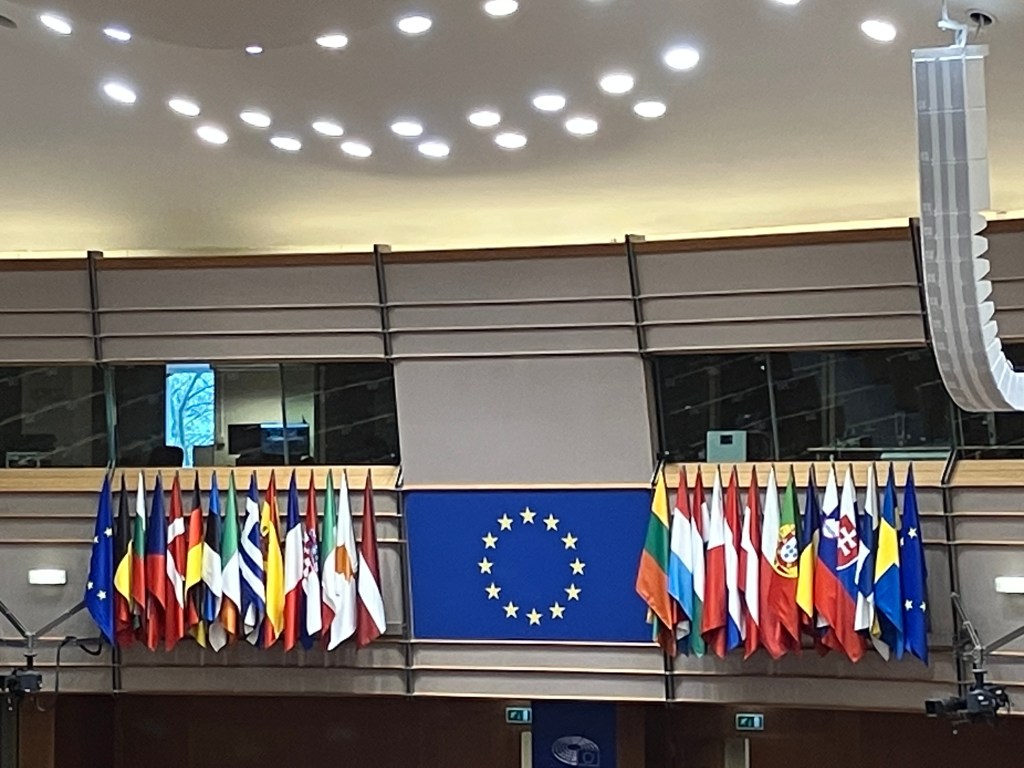
As part of our exploration of the city we visited both the Museum of European History and the Hemicycle -the centre for the European Union of which we were once a member. Since our country voted to leave the EU on June 23rd 2016 I have wanted to understand more about the purpose of the Union, what it set out to achieve and perhaps begin to understand the effect of leaving.

I learnt there were twenty key pioneers, of various nationalities, who inspired the Europe we know today. Listed in alphabetical order, based on their Christian names, number twenty on the list is Winston Churchill.
Having led us through the Second World War, this was a man who was revered by many, not least our own Queen Elizabeth II. He was committed to the idea of European integration and as a former army officer, war reporter and British Prime Minister, Churchill was convinced that only a united Europe could guarantee peace.
In his address to the University of Zurich in 1946, Churchill urged Europeans to turn their backs on the horrors of the past and look to the future. He declared that Europe could not afford to continue in an atmosphere of hatred and revenge springing from the injuries of the past. For Churchill, the first step in recreating the ‘European family’ of justice, mercy and freedom was ‘to build a kind of United States of Europe.

It’s not surprising, therefore, that when you visit the Hemicycle you learn the key principles behind the European Union are freedom, democracy, equality and the rule of law, promoting peace and stability. Why would anyone not want to be part of that?

The European Union is based on the rule of law. This means that every action taken by the EU is founded on treaties which are binding agreements, approved voluntarily and democratically by all EU member countries. These treaties set out the EU objectives, the rules for EU institutions, how decisions are made and the relationship between the EU and its member countries. For example, if a policy area is not cited in a treaty, the Commission cannot propose a law in that area.
As a member of the EU the UK initiated, took part in the process of defining and adopted 97% of EU law.
Margaret Thatcher actually negotiated with the EU and secured a UK veto to any law we didn’t like. Are we, therefore, now saying by leaving that we were wrong in what we agreed to?

The European Parliament who vote on these policies currently has 705 members.
Since 1979, the members of this Parliament have been directly elected every five years by the citizens of their respective country, to represent the wishes of their country in the European Union. Could it be any more democratic?

Since 1957, the European Union has delivered peace throughout the continent. It’s the world’s biggest single market. It has delivered aid and development assistance for millions of people worldwide and also plays an important role in diplomacy and works to promote these same benefits – as well as democracy, fundamental freedoms and the rule of law – across the globe.
On December 10th 2012, when we were still a member of The European Union, it received the Nobel Peace Prize at a ceremony in Oslo. The prize recognised the EU’s contribution over six decades to promoting peace, reconciliation, democracy and human rights. We helped contribute to this success so why would we no longer wish to be part of this and what it stands for?

The European Union operates as a single market. It enables most goods, services, money and people to move freely throughout most of the continent. All EU citizens have the right to live, study, work or retire in any EU country. As an EU national, for employment, social security and tax purposes, every EU country is required to treat you exactly the same as its own citizens. We voted to give up these opportunities and rights within our parent continent. Are we really ok with this?

Now made up of 27 countries, the total value of all goods and services produced (gross domestic product or GDP) in the EU in 2021 was € 14.5 trillion.These 27 countries account for around 14% of the world’s trade in goods. The EU, China and the United States are the three largest global players in international trade.The UK doesn’t even appear in the world’s top ten so what makes us believe that we can play a key role in world trade? And given we have now lost the freedom to move goods throughout the continent how can we not expect prices to increase? We now have increased paperwork that adds additional costs when we import and export goods from the EU.

Finally one of the key ingredients of being an EU member for myself personally, given my working background, was the amount of laws that covered workers’ rights. These laws were agreed and introduced when we were still part of the EU and thus covered all member countries.
When the Working Time Directive was implemented in the UK in 1998, it introduced a maximum 48-hour working week (normally averaged over 17 weeks), a daily rest period of 11 consecutive hours, a weekly rest period of 24 consecutive hours and rest breaks during the working day. Although UK workers can opt-out of the maximum working time limit, the introduction of these rights reduced the number of people working excessive hours in the UK. 700,000 employees benefitted from this when it came into effect and thousands more have been protected ever since.


The Directive also gave UK workers a statutory right to paid annual leave for the first time. This resulted in 6 million workers gaining improved entitlements to paid annual leave, two million of whom previously had no paid annual leave entitlement (many of these were part-time female workers). This amounts to a significant financial transfer (in the form of pay) from employers to predominantly low-paid female workers.
On annual leave, the European Court of Justice or ECJ has ruled that workers who fall ill during a previously scheduled period of leave have the right to reschedule that leave. And another ECJ judgement led to the calculation of holiday pay being extended to include commission payments and compulsory overtime


The EU Pregnant Workers Directive 1992 led to substantial improvements in the health and safety protections for expectant and new mothers in the workplace. It gave women paid time off for ante-natal appointments and placed duties on employers to assess the risks and to adjust working conditions where harm is identified. The ECJ has had a positive impact in tackling the disadvantage and discrimination that many women face in the workplace when they become mothers. For example, it made clear that treating a woman unfavourably because of pregnancy or maternity leave was direct sex discrimination. The Parental Leave Directives that we follow also came from the EU.

The right to equal pay for equal work between men and women is a fundamental right enshrined in the EU Treaty which is directly enforceable in UK courts.
The ECJ first established that paying part-timers who are mainly women a lower hourly rate than full-timers was indirect sex discrimination, as was excluding them from an occupational pension scheme.
Legislation on age, religion or belief and sexual orientation discrimination was introduced as a direct result of the EU Framework Equal Treatment Directive in 2000 and protection from discrimination on the grounds of gender reassignment came from an ECJ ruling.

Have we willingly sold all this progress down the river? What protection do we all have now? Since the Brexit deal came into effect, the UK is no longer bound to adhere to EU employment law. Hence, the UK government is in talks to change UK employment law in December 2023.

I have now visited Brussels and having learnt more about the history of Europe and the evolution of the EU I have the following unanswered questions:
Why, during the Brexit debate prior to the vote we all took, was this history not relayed to the UK public?
Why did the current Government, at the time, who apparently were in favour of us remaining in the EU, not broadcast as strongly the benefits the EU had brought to us as a country to counter the strength and breadth of the anti EU campaigners? The Brexit campaign seemed to me to be reliant upon people wanting to stop immigration and save bureaucratic expenditure to the EU in Brussels which could otherwise be spent on the NHS.

We are now seven years into our new status as a free country but have we seen any changes to the NHS? Have we seen improvements in immigration?

I am a midlife adventurer and it didn’t take me a great deal of effort to find out all these facts for myself. I’ll leave you to decide whether the decision we made was correct or not.

NB:

We are now in Belgium and this is part fourteen in my series of posts about our tour of Western Europe. Why not read the previous posts and then follow us on our journey as we continue to explore this lovely part of the world?

Touring Western Europe -France -My New Friend Lille

Having left Paris on Friday we took the train an hour north to the city of Lille.
Sitting just 10 miles from the Belgium border, it is the tenth largest city in France with approx a million citizens and was the original capital of Flanders.

We had been drawn here, en route to Belgium, by a Lonely Planet article and having slept well in our hotel room we set off on Saturday morning armed with a self guided walk to explore the centre.
I have an app on my phone called GPS My City which I find really useful when we want to explore a new place, but at our own pace, without any pre booked tickets or devised plan. On this occasion we were given two options: City Introduction Walk or Historical Buildings and chose the former.

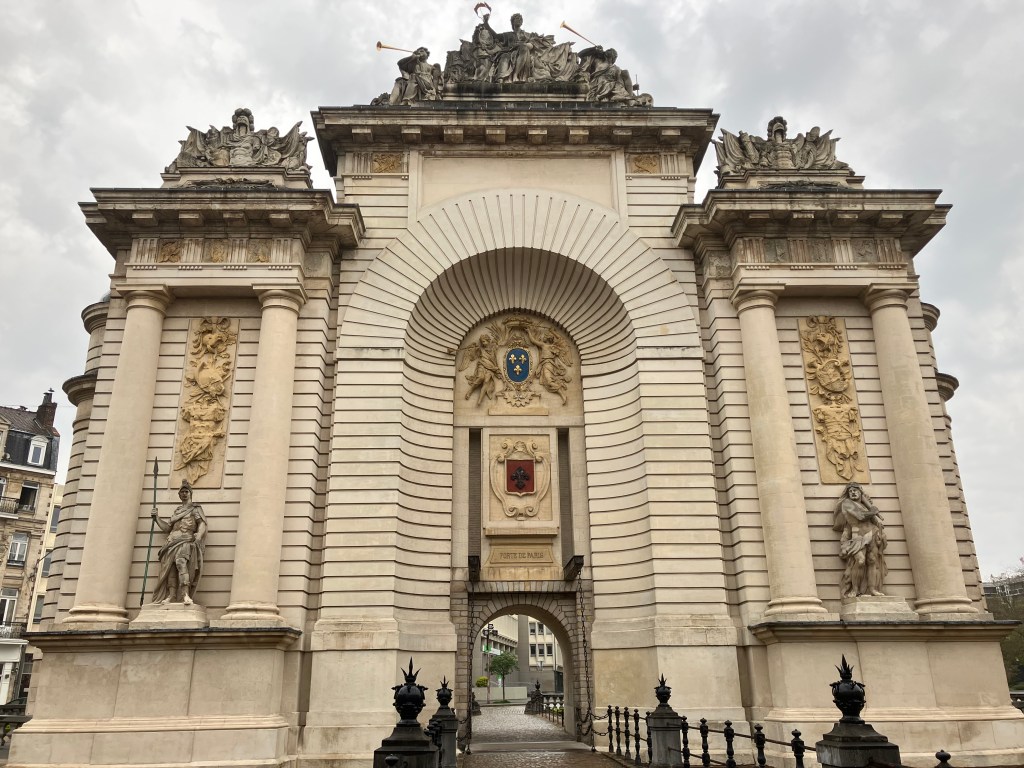
It was a little overcast and there was the occasional shower but we soon arrived ten minutes later at the Porte de Paris. Built by Louis XIV in 1692 to celebrate him conquering the city and as such is an Arch of Triumph.

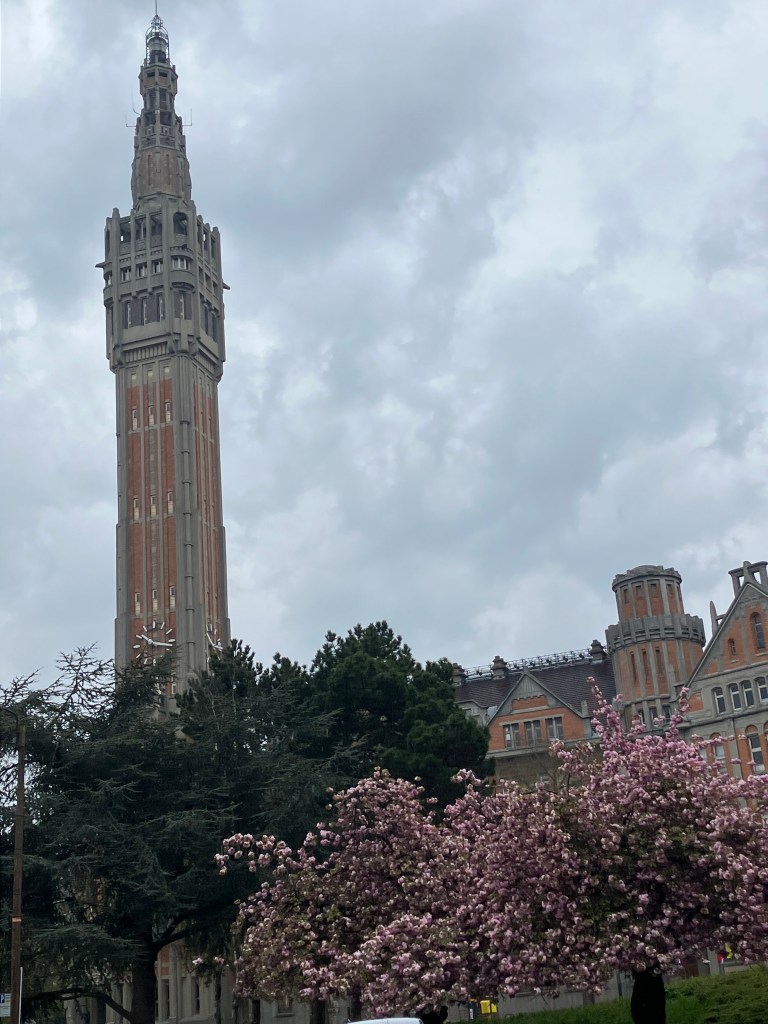
Close by is the Belfry of Lille Town Hall, the tallest municipal building in France but a belfry without any bells! Built in classic art-deco style with Flemish elements common to this region.

Walking on we soon reach the Palais des Beaux Arts, which is the second biggest Fine Arts Museum in France in terms of the number of exhibits on display. If you wish to go inside you will find a Middle Ages and Renaissance department, as well as European paintings with Rubens, Goya, Van Dyck, Delacroix etc, French paintings and sculptures from the 19th century including Rodin, a magnificent collection of ceramics from the 17th and 18th centuries and a room of drawings including some by Raphael.
Being slightly museumed out, having just left Paris, we chose instead to merely admire the beauty of the building built in a French end of century style with elements of Italian Renaissance.

Our walk then led us to Bethune Street, a pedestrianised old street at the centre of the city and this is where temptation led us astray. But that’s the great part of a self guided walk, you can wander off at will and come back to it when you are ready.
We are not shoppers, let me make this clear! I still remember my peers at senior school taking off to the local town every Saturday Afternoon to shop. I couldn’t understand the allure then and I still don’t get it now!
However one element that Lille has is an abundance of independent shops. You will still find some well known brands but it is these sole traders that always tempt me in if I’m in that frame of mind to explore. I like to support local business and I always feel you are more likely to spot that unusual memento of your visit in such a place.
Along the cobbled streets that radiate off from Bethune Street you also start to see an plethora of individual coffee shops, patisseries, small cafes and bistros.

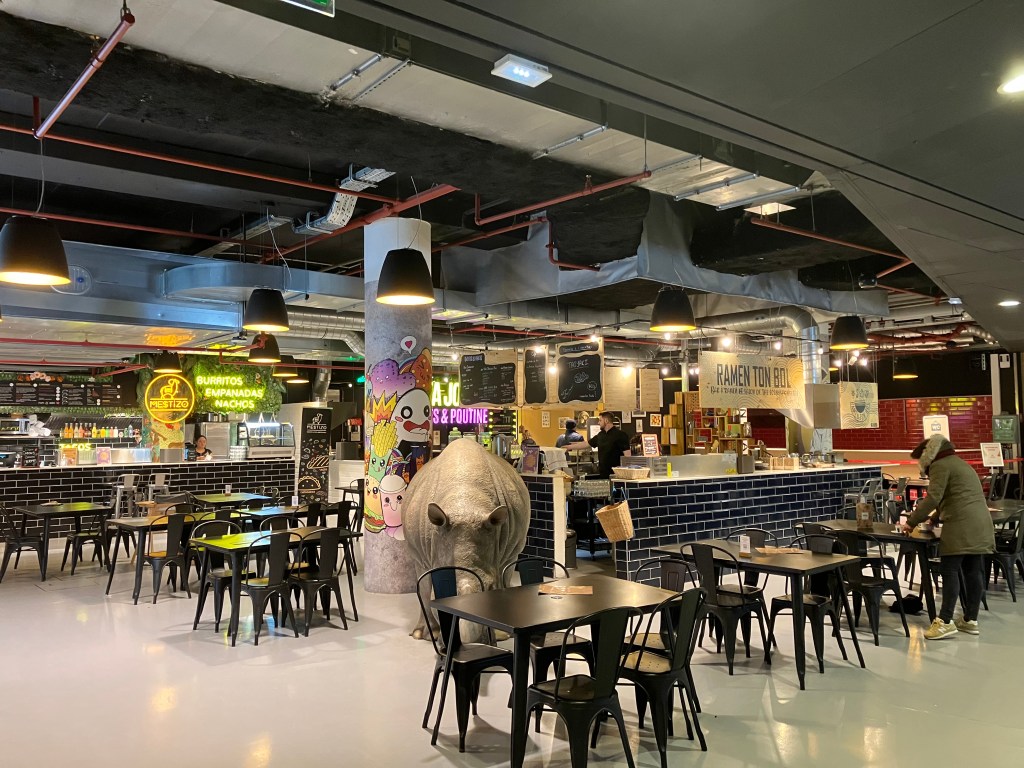
We also stumbled across the Grand Scene whilst looking for a public toilet. This is an indoor food court. As we wandered through, the toilets were at the back, the smell of food starting to cook and the absolute buzz of the different unit holders was a scene to behold. Music played in the background, statues of African animals are interspersed between the seats and the whole place just exudes atmosphere. But for the fact that we were too early to be considering lunch we would have definitely chosen from the many varieties of food on offer and stayed.

Back on track we make our way to the Grand Place, Lille’s main square. It is surrounded by a number of buildings including the Theatre of the North and the Old Stock Exchange and paved in check of pink and blue granite. The architecture of the houses and shops around the square brings a smile to my face. I love these grand old market squares and always take a moment to savour the ambiance. In this case inside a cafe, oddly called ” The Notting Hill” where we partake of coffee and wonderful cake!

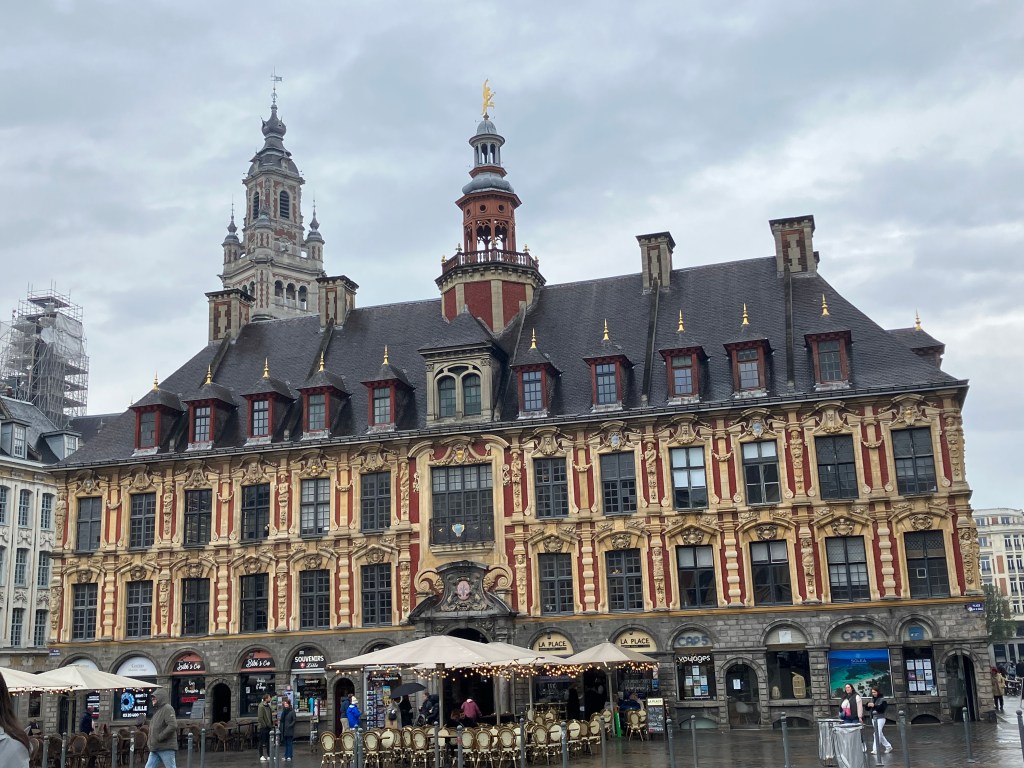
The Old Stock Exchange is definitely worth a visit with its Renaissance Flemish architecture, columns adorned with garlands and at the top of the bell tower a golden image of the god Mercury. It consists of a quadrangle of twenty four lookalike houses surrounding a large courtyard where today you will find florists, book stall holders, coin collectors and people selling old fashion board games, all plying their trade.
My husband naturally gravitates to the record stalls.
Meanwhile locals gather at the adjacent eateries and even the odd game of chess is being played, under cover from the raindrops.
Again it is full of atmosphere, a bit like a step back into a bygone era.

Also on the square you will find Librairie Furet du Nord or the Ferrets of the North Bookstore. I love a book store and this shop has been operating since 1960! It claims to be the largest book shop in Europe but I’m not sure having visited Blackwells in Oxford? Obviously most of the books are not written in English but there are sections, here and there, where a display of English books on a particular genre are available for sale. The only catch is the price. I spotted, for example, a copy of a recently released paperback by one of my favourite writers but it was nearly three times the price I would pay back home. I’m not sure why?

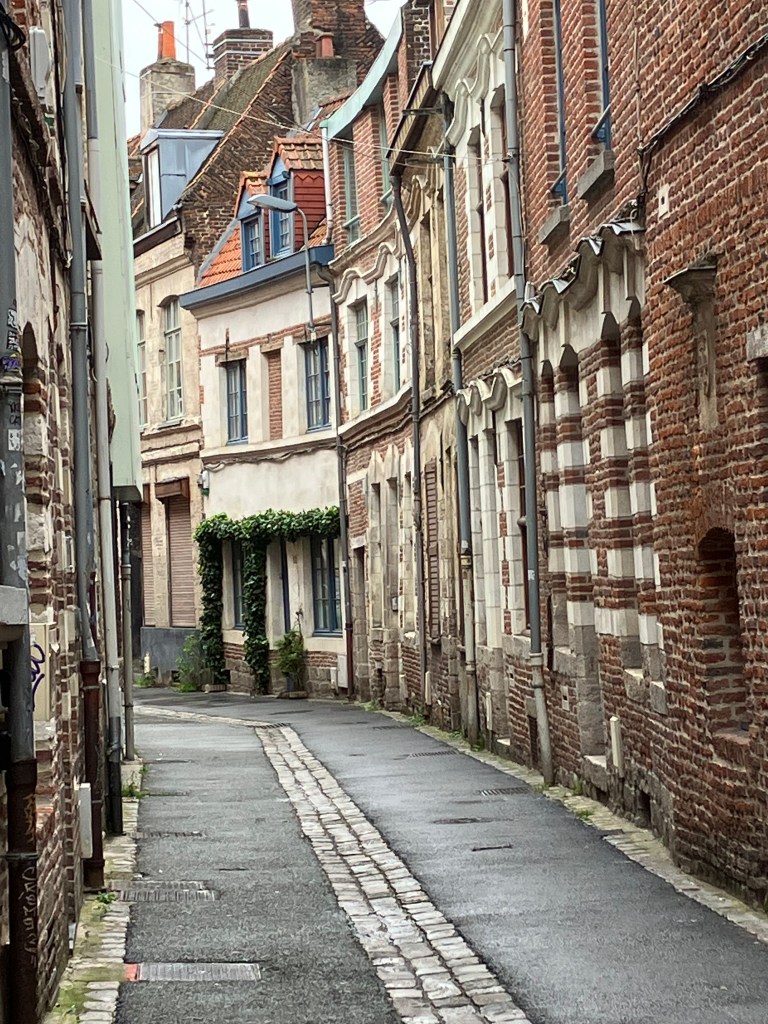
Moving on from the square we make our way to Lille Cathedral, the Hospice Comtesse Museum and the 13th century Church of St Catherine. But the highlight again of walking around this area of the “Old Town” is how easy it is to wander off, to go and explore down an alley or an old narrow street. We even manage to stumble across Place aux Oignons or Onion Square. Lined with houses dating from the 17th and 18th century, they were originally homes for artisan weavers who used the attics and cellars as workshops. Now you will again find independent cafes and restaurants and just such a lovely olde worlde atmosphere.

In case you’ve not realised I’m beginning to fall in love with this city. It’s my kind of place!

To finish off our walk we head to the Citadel of Lille and whilst I could include a photo and give you the historic background to this last piece of architecture, I will leave you to discover that for yourself and instead extoll the virtues of the beautiful walk we took to get there.
Leaving the Old Town behind we suddenly find ourselves on the side of a canal and entering the Parc de la Citadelle. This park, of 123 acres, encircled by the Deûle canal, is an unexpected surprise. The sun has started to peep through the clouds as we take a stroll along the canal, admiring the bulbs poking through the grass and watching the moorhens feeding their young. Several bridges span the water and, but for the fair that is in town, this would be a great place to bring a picnic on a dry day.

We also come across a monument that on further research we find “honours the memory of members of the Jacquet Committee who, during the First World War, were shot for having helped French and English soldiers who took refuge in the city to escape.
Sculptor Félix Desruelles chose to represent the resistance fighters at the moment of their execution, on 22 September 1915. The young Léon Trulin, although shot on 8 November, lies face down on the ground. The work, inaugurated in 1929, was destroyed by the Germans in 1940 and restored identically by the sculptor’s widow.”


Lille has been a city full of surprises.
Sometimes when you visit a new place with no expectations, other than to explore, you walk away with what feels like a new friend. Lille is my new friend, a walkable city full of hints of a bygone era, with friendly shopkeepers and an array of differing cuisine that we are already planning on returning to for Christmas shopping.

NB:

This is part thirteen in my series of posts about our tour of Western Europe. Why not read the previous posts and then follow us on our journey as we continue to explore this lovely part of the world?

Touring Western Europe -France – This Is The Climax of Prejudice

Last week in Paris, as part of our current adventure, we visited the Memorial de la Shoah – The Holocaust Memorial.
For us it was the amalgamation of three adventures that began back in December 2016 in Berlin, moved through September 2019 in Krakow and ended here.

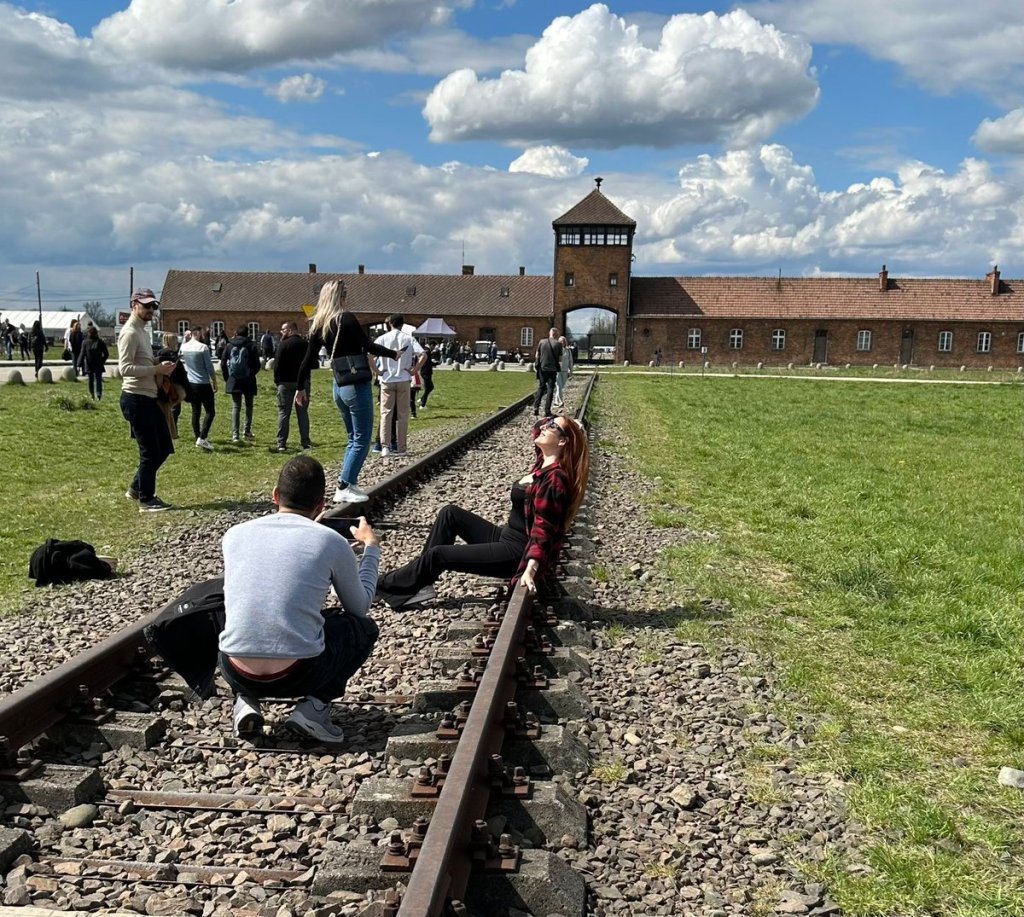
Coincidentally this weekend an article was printed by a journalist – Maria Murphy, producer at GB News, who shared a photograph she’d taken of a tourist posing with a smile on her face on the tracks into Auschwitz-Birkenau.
If you have not seen the article here is a link;
https://www.independent.co.uk/news/world/europe/auschwitz-tourist-photo-viral-selfie-b2324377.html (https://www.independent.co.uk/news/world/europe/auschwitz-tourist-photo-viral-selfie-b2324377.html)

This is an apt follow up of my earlier post “The Instagram Society -Am I Too Old to Understand?”

1939-1945 is a six year period in history that can never be allowed to be repeated and that the whole world should have learnt from. This is where prejudice of all forms: racism, religious, sexual and social discrimination can ultimately land up.
I challenge anyone to visit this Holocaust Memorial in Paris, Auschwitz-Birkenau near Krakow or The Topography of Terror (also known as the Gestapo Museum) in Berlin and not to leave unchanged. If at no point do you wipe away a tear from your eye or feel a knot in your stomach or a lump in your throat then frankly you are inhumane.

Shoah is the Hebrew word for “catastrophe”.  This term specifically means the killing of nearly six million Jews in Europe by Nazi Germany and its collaborators during the Second World War. English-speaking countries more commonly use the word Holocaust, which is Greek for “sacrifice by fire”.
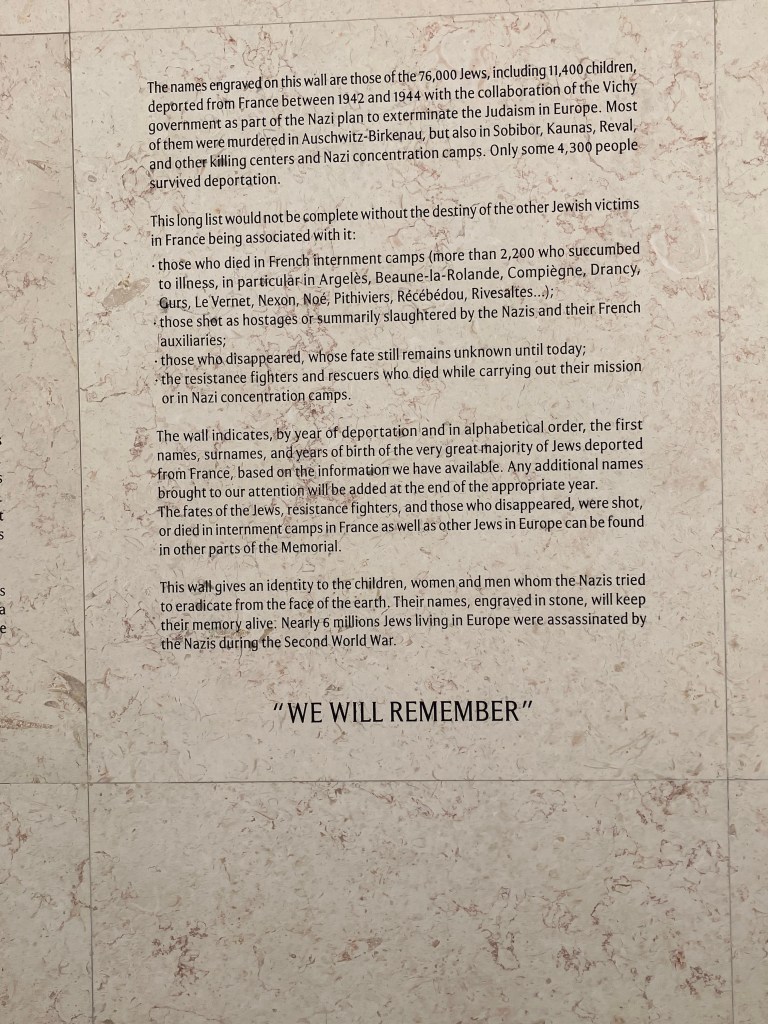
Access is free and when you arrive at the Memorial de la Shoah you are immediately met with factual evidence of the genocide of the Jews. They don’t hide it, it’s there in your face, the Memorial Wall of Names.
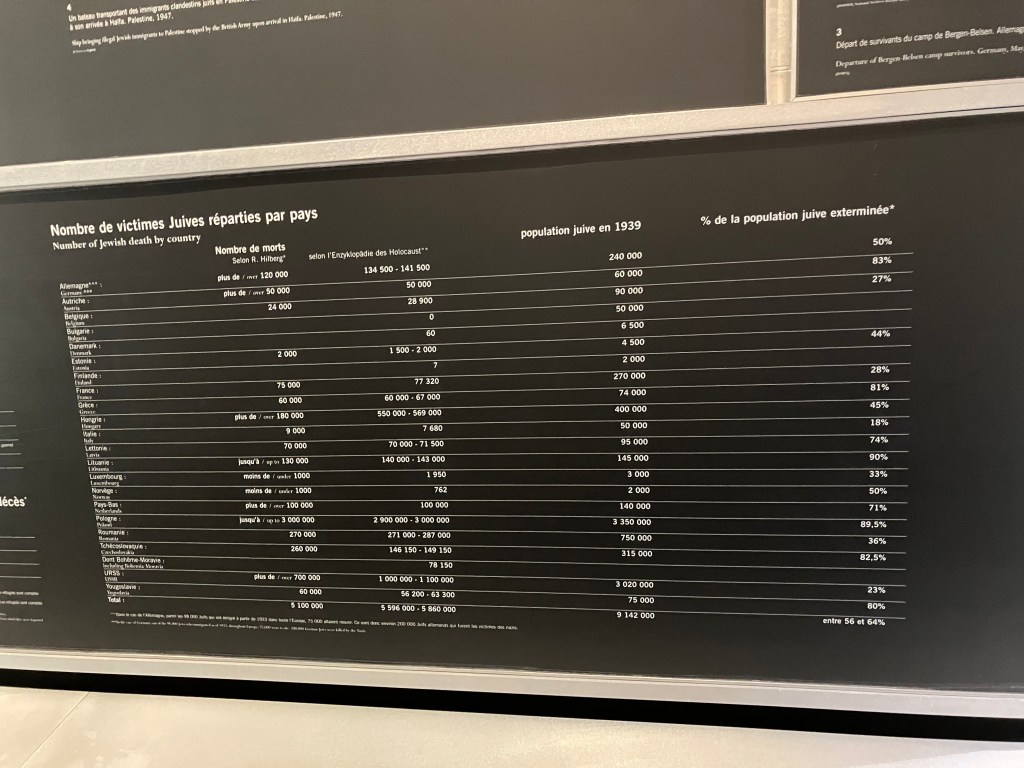
76,000 names of Jewish men, women and children deported from France between 1942 and 1944. 11,000 of those names belong to children! And only 2,500 of those names you read survived.
The purpose of the wall is to ensure that they will not be forgotten.

People come here from all over the world to find the name of a loved one. Someone who they may never have known in life but who was sacrificed at the behest of Hitler.
The museum contains a reading room and documentation centre which anyone can gain access to. Within the centre are 50 million archives, some 320,000 photographs, 14,000 films (2,500 testimonies),1500 sound archives and more than 80,000 books and periodicals all testifying to the life of the Jews in Europe and France under the Nazi occupation. The staff will willingly assist families to find their relatives.

Inside the museum on the first floor is the permanent exhibition which traces the history of the Jews of France during the Holocaust in chronological order. During the period of 1940-42 you can read about how the French Jews suffered from both French and German legislation, about their internment and ultimate deportation.
The Jews, at the time, believed themselves to be fully accepted into French society and that they would be protected. However as the war raged, support from their fellow Frenchmen was distinctly lacking and ultimately the French Vichy Government delivered Jewish children under the age of sixteen to the Germans occupying France, along with all the Jews rounded up by the Vichy in southern France which was still under French administration.
After years of ignoring this involvement, France finally acknowledged the responsibility of the Vichy government in 1995.

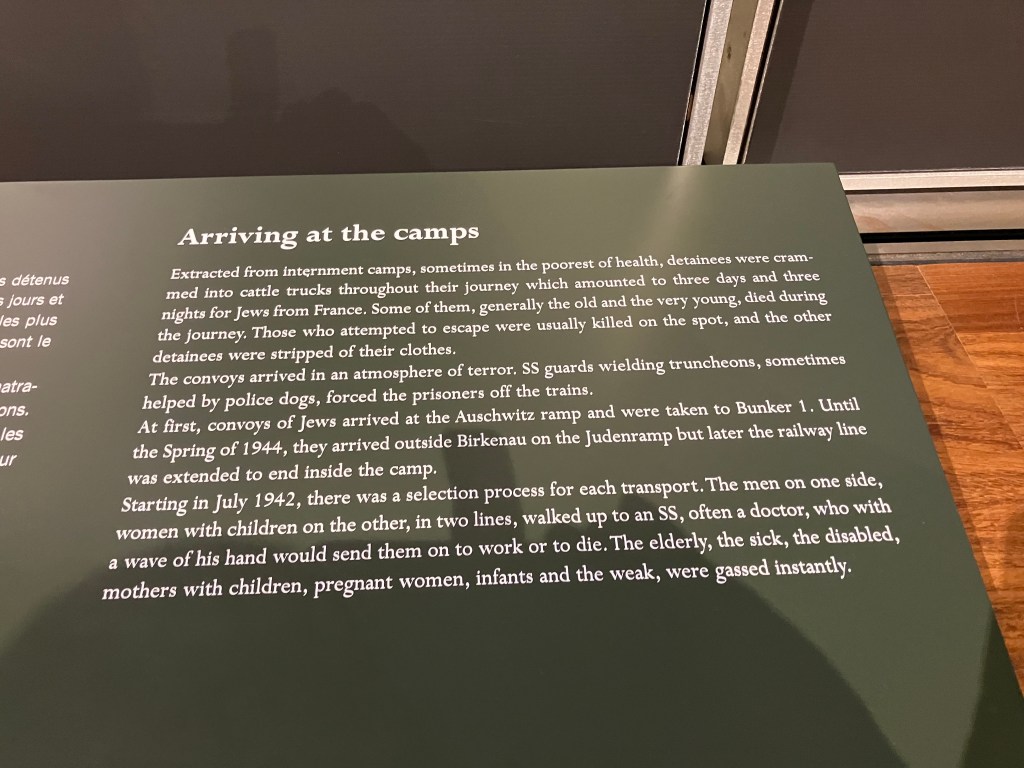
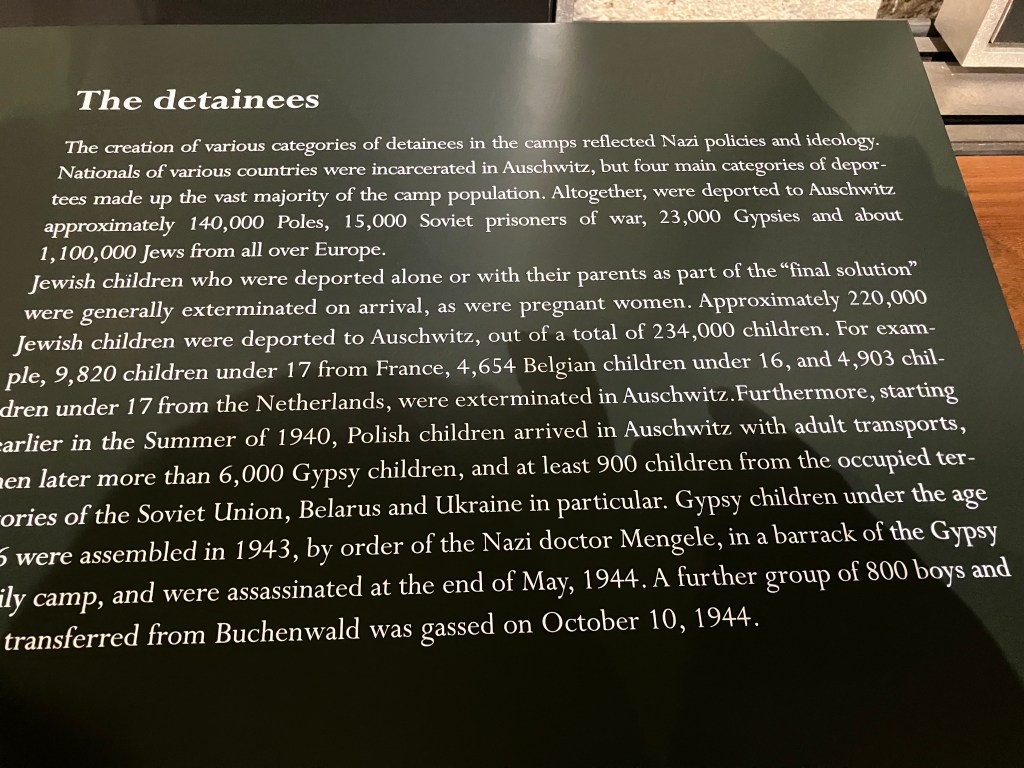
The museum doesn’t hide what happened, it is hard hitting and so it should be. New generations need to learn and understand about these atrocities. It’s impossible to take everything in on one visit and to be frank your emotions, like mine, may get the better of you. I’ve attached three photos that give a small insight into the journey the Jews suffered.

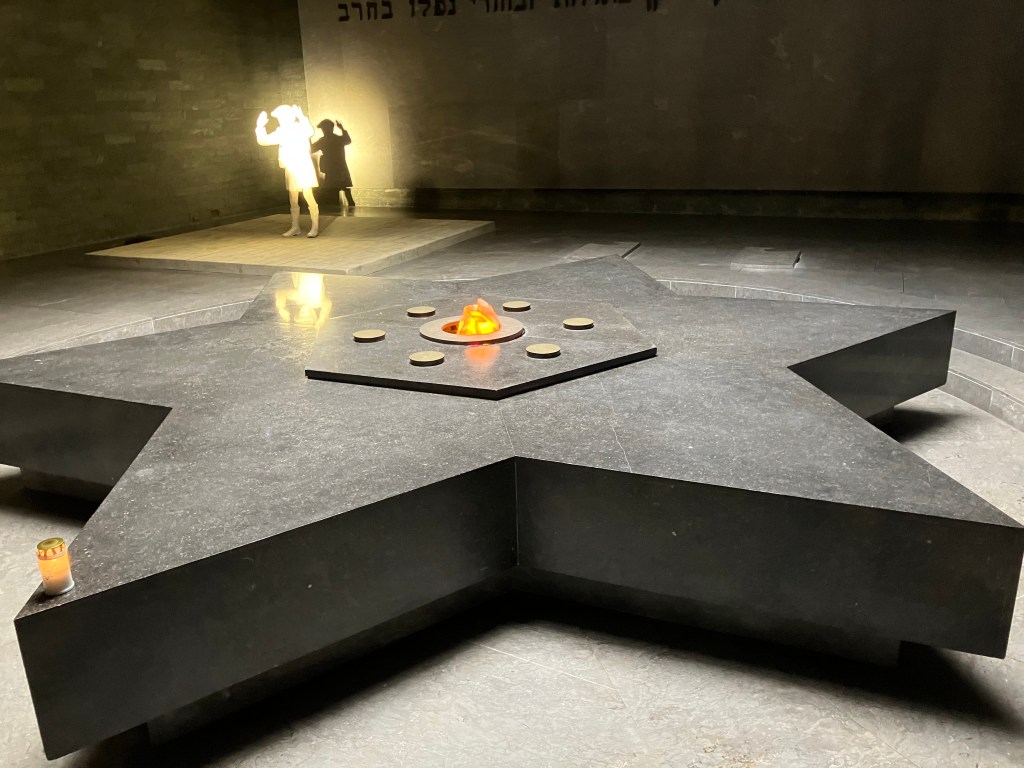
At the centre of the museum is the crypt where you can see the black marble Star of David which sits beneath the forecourt and is the symbolic tomb of six million Jews who do not have a grave.
Gathered from the death camps and the Warsaw Ghetto’s ruins, the ashes of Jews are mingled in this place. Grand Rabbi Jacob Kaplan buried them, with soil from Israel, on February 24, 1957 in accordance with Jewish tradition.

Additionally, in the crypt, on the occasion of the 80th anniversary of the Warsaw Ghetto uprising, the Shoah Memorial invited the contemporary artist Adel Abdessemed to present a set of works entitled “My child”: a sculpture, and a series of drawings inspired by the emblematic photograph N° 14 that SS Jürgen Stroop sent to Krüger and Himmler, documenting the suppression of the insurrection in April-May 1943.

The current temporary exhibition, housed on the ground floor, was devised to mark International Women’s Day and features the work of Julia Pirotte (1907-2000). Pirotte is known worldwide for her photojournalism during the Second World War.
Jewish, communist and in the Resistance, Pirotte, who did not think she would survive the war, took her Leica camera with her wherever she went, capturing faces, scenes of life and scenes of war to leave a trace.
She eyewitnessed the internment of Jewish women and children in Bompard, Resistance operations in the South of France, the liberation of Marseille and the immediate aftermath of the Kielce pogrom in 1946.

Antisemitic violence did not end with the Second World War. In 1946, a pogrom broke out in Kielce, Poland. As rumors circulated that Jews had kidnapped a Christian boy, a mob attacked Holocaust survivors in the town, many of them former residents who had returned home.
Forty-two Jews were killed and approximately eighty wounded. The Kielce pogrom showed that even after all the Jews had endured they were still not wanted, they were still spurned by certain elements of society. This was a key factor in the refusal of many Holocaust survivors to return home and spurred their immigration to the British Mandate of Palestine or the United States.

This exhibition about Julia Pirotte also ties in with the Wall of the Righteous outside. Located in the walkway alongside the Memorial and bearing the names of over 3,900 people who risked their lives to save Jews in France during the Second World War. They received the title of “Righteous Among the Nations”, which the Yad Vashem Museum Memorial in Jerusalem has awarded since 1963. So far, the honor has been bestowed on over 24,000 people all over the world.

Places like this memorial not only educate me in the horrors that took place but humanise the experience. I cannot even begin to imagine how these French Jews felt. They trusted the French administration only to be betrayed in the worse way possible. Having been to Birkenau and seen those train tracks and stood there and imagined the fear as they were ordered off the train, naked, humiliated and cold, leaving behind those already dead or dying, I still feel that emotion today. We need to learn from this. We need to promise each other that this atrocity will never be repeated.

NB:

This is my third post whilst we are in Paris, why not learn a little more about Paris in my previous two posts? We are currently on a tour of Western Europe, you can catch up with where we have been and follow us as we progress. It would be great to have you with us on our journey!


Guide to Versailles and Chantilly: A Tale of Two Châteaux

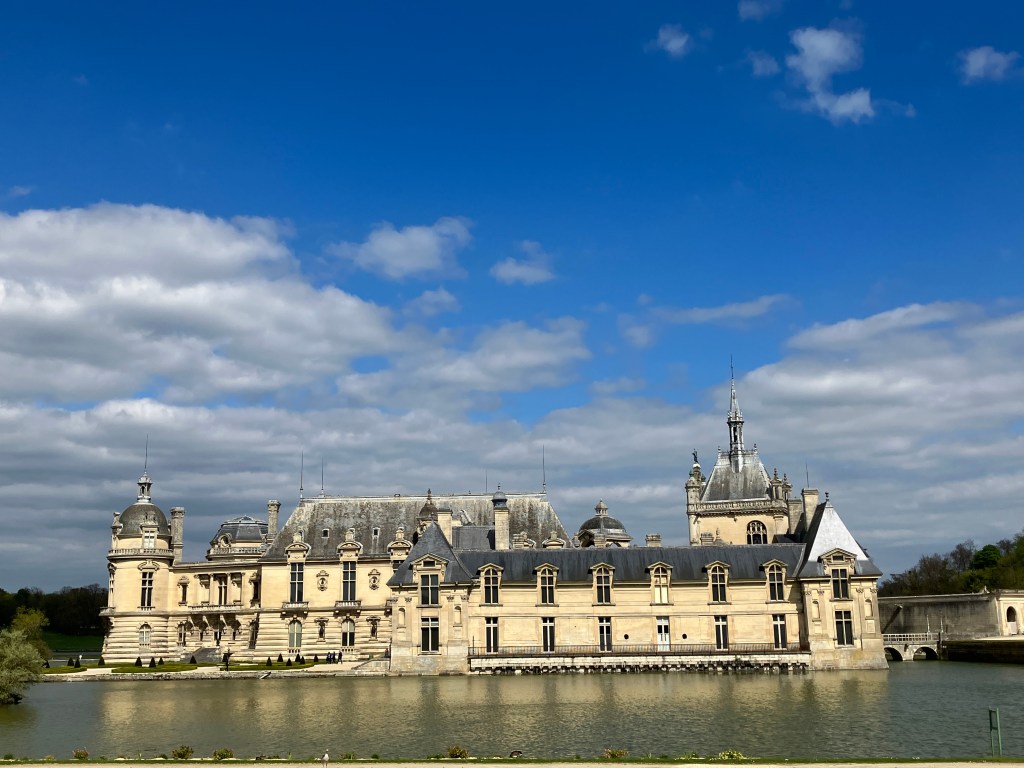
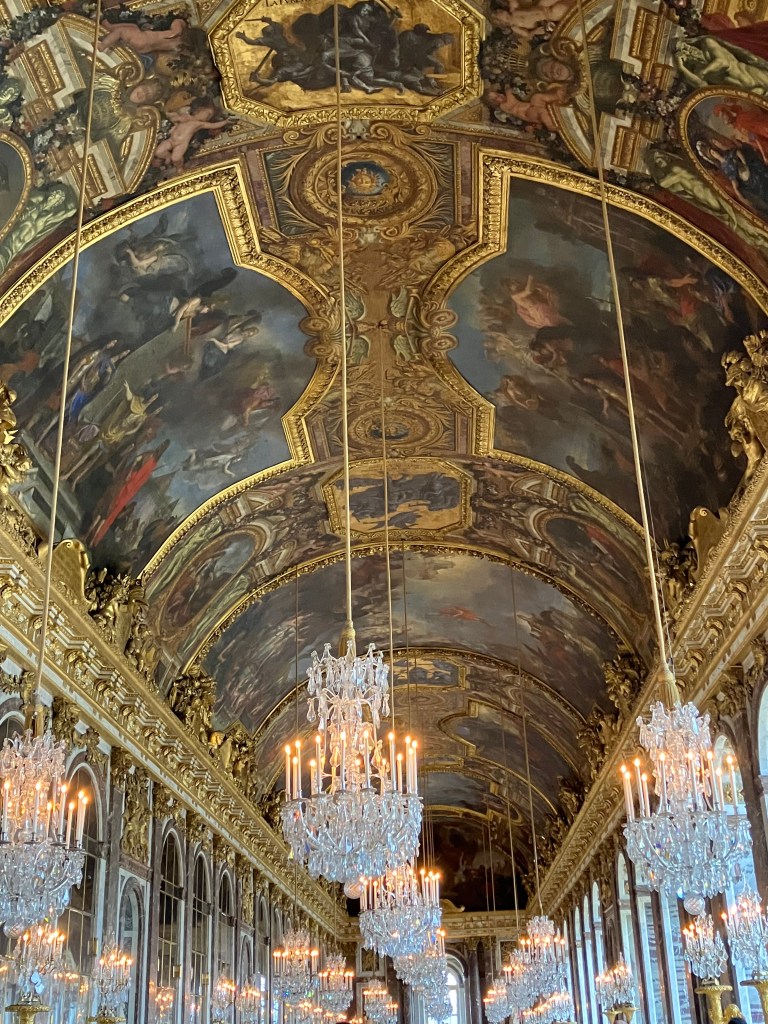
Whilst in Paris we have visited both Versailles and Chantilly. What a totally different experience! This is certainly a tail of two chateaux!
The aim of this post is to hopefully enable you to decide which property you would prefer to visit assuming you have a choice.

Versailles is of course a Palace and not a chateau. It was in the top three of my list of places to visit whilst here in the French capital. I’d been before but a long time ago and by a long time I’m talking the late eighties!
Chantilly, in contrast, was a new idea which stemmed from an article my hubby had read.

We were staying in the 18th arrondissement of Paris which is centred around hilltop Montmartre, a former artists’ village once inhabited by Picasso and Dali, and home to the majestic Sacré-Cœur basilica. In visiting both estates we needed to make public travel arrangements.


Tickets and Arrival
We set off, for Versailles, early on a Saturday morning and we were, unfortunately, not blessed with a sunny Spring day. It was instead cold, wet and at times raining.
With 15 million visitors a year, you have to book your tickets for Versailles in advance in order to secure your visit, so if it’s raining there isn’t a lot you can do but just get on with it. We purchased the “Passport” ticket, at 28.50 euros each, which gives you admission to everything there is to see.
From the local metro station it only took us about an hour via metro and the RER C service (8.10 euros each) to reach Versailles Château Rive Gauche. From the station it is about a 10-15 minute walk to the Palace itself. On arrival we joined the queue assembled for the 10 a.m. entry.

Organisation was poor and it wasn’t long before people started to sneak into the queue and double if not triple and quadruple up. This then gave the impression that there were in fact two separate queues. Grumbles began to echo around us, but no one wanted to be that person who caused a fuss and maybe risked being asked to leave the queue. The staff member, to be fair, did at one point come along and explain there was only one queue but it was all a little too late and the guilty parties just ignored him.

Tickets for Chantilly can be bought at any time including on the day. With about half a million visitors a year your ticket is valid for a full twelve month period following purchase if you want to revisit. We bought our tickets (17 euros each) the night before, travelled by metro to Gare Du Nord and then caught the train to Chantilly Gouvieux (15.20 euros each ). The journey again took about an hour in total with a slightly longer walk of about 25-30 minutes to the chateau which opens up before you surrounded by it’s moat.

Interior:
Versailles has 2300 rooms of which you can view about 2%. I paid for an audioguide (5 euros) in advance in order to fully understand the history and the purpose of every room. Visitors follow a predetermined route so your progress is somewhat determined by the amount of people there at the time and the size of each specific room.
On our visit there were times where we were queuing up to walk and in order to listen to my audioguide I often had to find small spaces near the windows to stop and absorb the information.
There is an interactive guide on their website which shows a short precis of each room in advance.

The tour starts on the first floor and the first ten rooms you pass through in succession are mainly devoid of furniture and hung with paintings relevant to the theme of that room. Personally this was a disappointing start for me as I like to absorb the whole history of a Palace including understanding how the residents lived.
The next six rooms are all dedicated to individual Gods such as Venus, Diana and Mars etc. These rooms all have decorative ceilings painted upon the theme of the God for which the room is named.

You then move onto the opulently decorated War Room depicting Louis XIV as a victorious King before the centre point of Versailles which is The Hall of Mirrors. This luxuriant room measuring 73m long holds 357 mirrors covering the 17 arches opposite the windows. It’s difficult to record it’s majestic beauty because of the sheer volume of visitors, hence my photo doesn’t include the bottom half of the room.

You then move onto the Peace Salon and the Coronation Room alongside the Queen’s chambers before heading downstairs.The twelve rooms on the ground floor are those of the Princesses Victoire and Adelaide and the Dauphin. These surround the Marble Courtyard.
The remaining fourteen rooms are only accessible as part of a guided tour.

Chantilly begins with a video presentation, in the chapel just to the left of the main entrance, which introduces the chateau to the public, its history and eleven centuries of ownership. Again I opted for an audioguide to learn as much as I could, along with a map of the rooms available to view. Whilst there is a suggested route you can wander at your leisure. With the decreased number of visitors compared to Versailles no one is rushing you along.

The chateau is the work of a man with an extraordinary destiny: Henri d’Orléans, Duke of Aumale, son of the last King of France, Louis-Philippe. He was considered to be the greatest collector of his time and made Chantilly the showcase for his countless masterpieces and precious manuscripts.
He designed the art galleries as a showcase for his exceptional collections, putting together the second largest collection of antique paintings in France, after the Louvre Museum including three paintings by Raphael. In keeping with the Duke of Aumale’s wishes, the layout of the paintings have remained unchanged since the 19th century.

There are 27 rooms open to the public and highlights include The Reading Room or Library where over 1,500 manuscripts and 17,500 printed volumes are housed, along with part of the collection of over 700 incunabula and some 300 medieval manuscripts. An incunabula is a book, pamphlet, or broadsheet that was printed in the earliest stages of printing in Europe, up to the year 1500. They were produced before the printing press became widespread on the continent and are distinct from manuscripts which are documents written by hand.

You can also view the Grande Singerie, a salon with paintings on the walls of monkeys engaged in human activities, once a fashionable salon motif, but with few examples surviving anywhere today.


In contrast to Versailles all the rooms are fully decorated with original furniture.
Located on the 1st floor of the Château, the large suites were used as reception rooms by the Princes of Bourbon-Condé. They are a wonderful example of the ceremonial decors in fashion in the 18th century and provide a broad variety of decorative arts, furniture and Old Master paintings. This feels more like a home preserved for future generations.

Exterior and Gardens
The Gardens of Versailles to the west of the palace was one of the key draws for my visit.  Covering some 800 hectares of land, much of which is landscaped as a French formal garden, it was created predominantly by Andre Le Notre.
If you did not purchase the “passport” ticket the gardens come at an extra cost so all visitors are channelled through another gateway to enter. We picked up a leaflet outlining everything there is to see, intent on enjoying the rest of our day regardless of the weather.

Look at any images on Google and you will see flowers in abundance in Spring and Summer with the classic Latona’s fountain in the foreground and the Grand Canal tempting your view to the landscape beyond. The reality was much different. The gardens didn’t appear to have been planted this year and the Latona wasn’t working?
The Apollo fountain further down before the Grand Canal is also under reconstruction.

The grounds at Chantilly are a lot smaller at 115 hectares but also feature a French-style garden created by André Le Nôtre in the 17th century along with the Anglo-Chinese Garden from the 18th century and the English Garden developed at the beginning of the 19th century.
As you walk the grounds you feel at one with nature and armed with the leaflet, previously mentioned, it is easy to find your way around. Keep your eyes peeled for wildlife, we managed to catch sight of a beaver!

Additionally across the road from the main chateau is the famous Chantilly racecourse, home of the French Derby. The stables are an architectural masterpiece of the 18th century and when en route from the train station can be easily mistaken for the chateau itself!
Built from 1719 to 1735 to house 240 horses and over 400 hounds, it recently celebrated its three hundredth birthday!
The Great Stables are also home to the Museum of the Horse, which presents the relationship between humans and horses since the beginning of civilisation. They are also home to an Equestrian troop that stages original creations all year round in the purpose built arena. We were able to see a 30 minute demonstration at 2.30 on the day of our visit.

Finally Food!
Food and drinks are not allowed inside the museum at Versailles and picnics are not allowed in the gardens. However, it is possible to have a picnic in the park.
On the first floor of the Palace of Versailles, the restaurant Angelina tea room offers sweet and savoury dishes all day long. As quoted from their website “The space combines elegance, charm and refinement. With its exceptional pastries, the Angelina tea room is a place of gourmet delights.”
Alternatively you can dine at Ore. “This specially-designed restaurant facility created by Alain Ducasse is an elegant contemporary cafe in the French spirit on the first floor of the Dufour Pavilion, looking out onto the Royal Courtyard.”

If like me you don’t require fine dining whilst on a visit to the palace you can choose between the Grand Café d’Orléans which is described as “a series of lounges, decorated in a contemporary style where all visitors can enjoy fast food, sandwiches and desserts in the cafeteria to eat in or take away without needing to book.”
The reality is a mile long queue, which in itself should tell those managing the estate the preference of the majority of its visitors, followed by a frantic search for somewhere to sit in the dedicated room which is overflowing with people and looks like you have been relegated to the old staff quarters!

Another option is to walk out into the grounds and partake of takeaway food at either Girondole or Dauphin Grove. The only slight hiccup is there is no indoor seating here so if it is raining as it was on our visit you are slightly stuck!

Chantilly allows picnics and provides benches all around the gardens along with picnic tables near the playground. We came prepared for this.
If, however, you do want to buy food the Chantilly website says “under the arches of famous 17th century French chef François Vatel’s old kitchens, at the heart of the château, La Capitainerie restaurant offers during the winter holidays hot and cold drinks, sandwiches, waffles and chips for sale or to take away. “
Alternatively in the grounds “The Hameau is located in the peaceful surroundings of the gardens, at the heart of the Anglo-Chinese garden. These seven small rustic-style houses inspired Marie-Antoinette’s Petit Trianon in Versailles. Le Hameau restaurant, famous for its Chantilly whipped cream, is located in one of these small houses.”

Conclusion
I am fond of reducing decisions to a base level and to me it seems to come down to whether you want to follow the multitudes and visit the grandiose Palace of Versailles with all that comes with it. Or do you want to step outside of the masses and have a quieter but just as fulfilling day at Chantilly?

NB:
This is my second post whilst we are in Paris, why not learn a little more about Paris in my first post? We are currently on a tour of Western Europe, you can catch up with where we have been and follow us as we progress. It would be great to have you with us on our journey!