I hope everyone had a wonderful Christmas! I had a blissful time, despite being without my children, as you can read on my latest post published earlier tonight!
I’d like to just wish all my subscribers, readers and everyone here on WordPress:
For about twenty five years I spent Christmas at home surrounded by my immediate family, revelling in the Christmas traditions we had created together. From new pyjamas on Christmas Eve to opening our stockings on the bed on Christmas morning before scrambling downstairs to open the main presents and much, much more! Fabulous moments captured in our family history but as most midlifers know children grow up and suddenly you are no longer the centre of their universe. They move away in the pursuit of careers, meet that special someone who also has a family and before you know it you are left at home, just you and hubby, wondering where all that time went.
Having spent the last three Christmas Days on our own hubby and I decided this year to try something different and booked a trip away. We deliberated for some time over where to go but realised fairly quickly that going somewhere hot wasn’t really for us and even flying off to somewhere cold was a little beyond our Christmas comfort zone so as a first step we booked a lovely bungalow in Wales for a week.
We had no idea how we were going to feel and even booked a place big enough that should the children have time they could come and join us at any point. Never say never! There was still that small part of me, deep down that was living in hope that we might once again be able to revisit times of yore!
We really wanted to ensure that, as far as possible, everything went well so it was like a military operation! Armed with a menu plan for the week, most of our food including our turkey for Christmas Day and kitchen utensils (in case they didn’t provide what we needed), we loaded up our truck. In went one of our Christmas trees along with decorations (to ensure the interior met my expectations) and, not forgetting of course the stockings and presents, we locked up our house on Saturday morning and set off.
All excited we headed across the English countryside avoiding the boring, grey motorways in favour of lush green fields, country homes and small villages and hamlets. We made an unplanned stop for some lunch at the Ludlow Farm Shop and Kitchen partaking of some home made soup with on site baked, crusty, wholemeal bread and hot drinks. It’s definitely worth a stop if you are passing. We also took a wander around their gift shop and farm shop and utilised their toilet facilities before rejoining our route.
We arrived at our bungalow early afternoon and were both immediately struck by the wonderful landscape in front of us. Rolling hills in the distance, a nest of pheasants in the field across the lane and several grey squirrels running around the garden collecting food for their winter hibernation. Eager to see inside we popped the key in the door and went to explore. I love that moment when with the luggage still in the truck you get your first glimpse of your temporary home. I’m always eager to see behind every door and inwardly keep my fingers crossed that the reality matches the photos we have already seen.
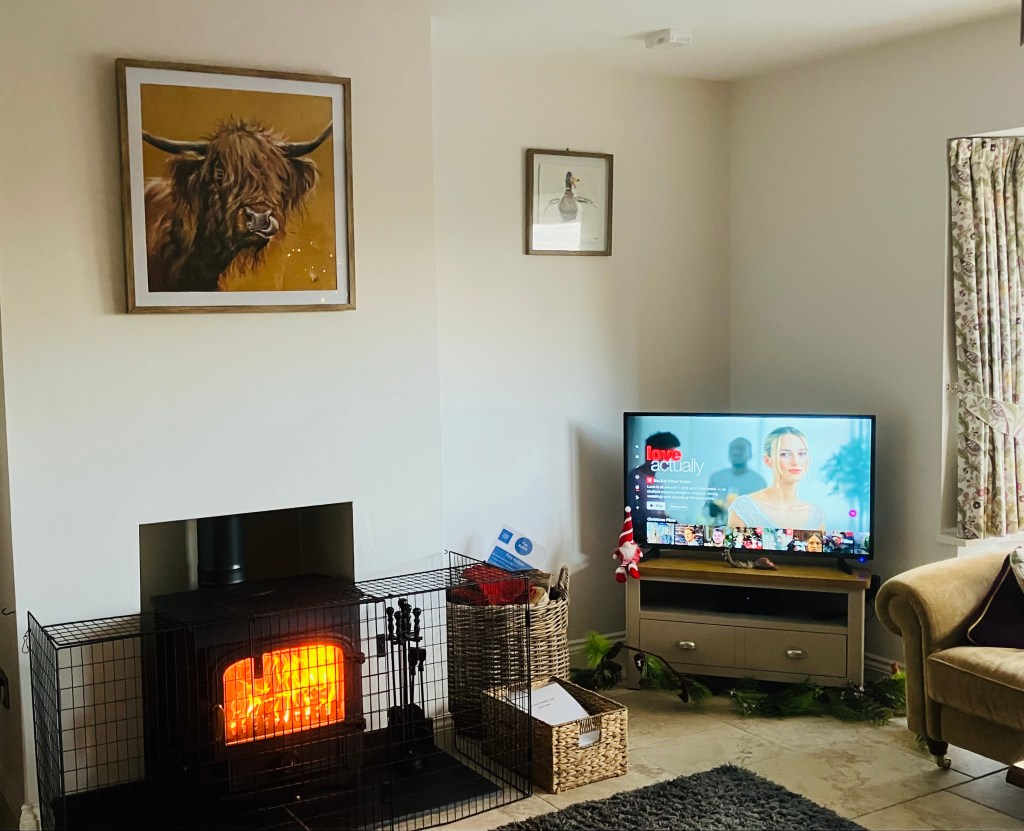
Wow! it was amazing. Everything was immaculately clean with two bedrooms, both with fitted wardrobes and tv’s off the hallway. There was also a spectacular bathroom, with a double shower and the longest bath I’ve ever seen, before we entered the open plan living/dining room/kitchen space. There was a beautiful, sophisticated Christmas tree sparkling away in the window along with a large woodburner just begging to be lit with a good supply of logs.
On the kitchen island Ruth, the owner, had left us a Christmas card welcoming us to our home for the week alongside the best array of food we have ever been given. Christmas cupcakes with snowmen and penguins on! A massive fruit bowl with oranges, apples, melon, bananas and two types of grapes. A box of chocolates alongside crackers for our Christmas Day table. Two bottles of quality apple and orange juice, milk and butter in the fridge. Croissants, a newly baked white cob style loaf, Welsh strawberry preserve and orange marmalade, fresh coffee and cranberry sauce. And last but not least chilled Prosecco and a bottle of Shiraz wine
Beyond the kitchen was a utility area with another lovely bathroom with a rainfall shower and our bedroom. It was so spacious, again with fitted wardrobes and a TV but best of all a large, picture, bay window looking over the front landscape and large enough for our Christmas tree to stand in.
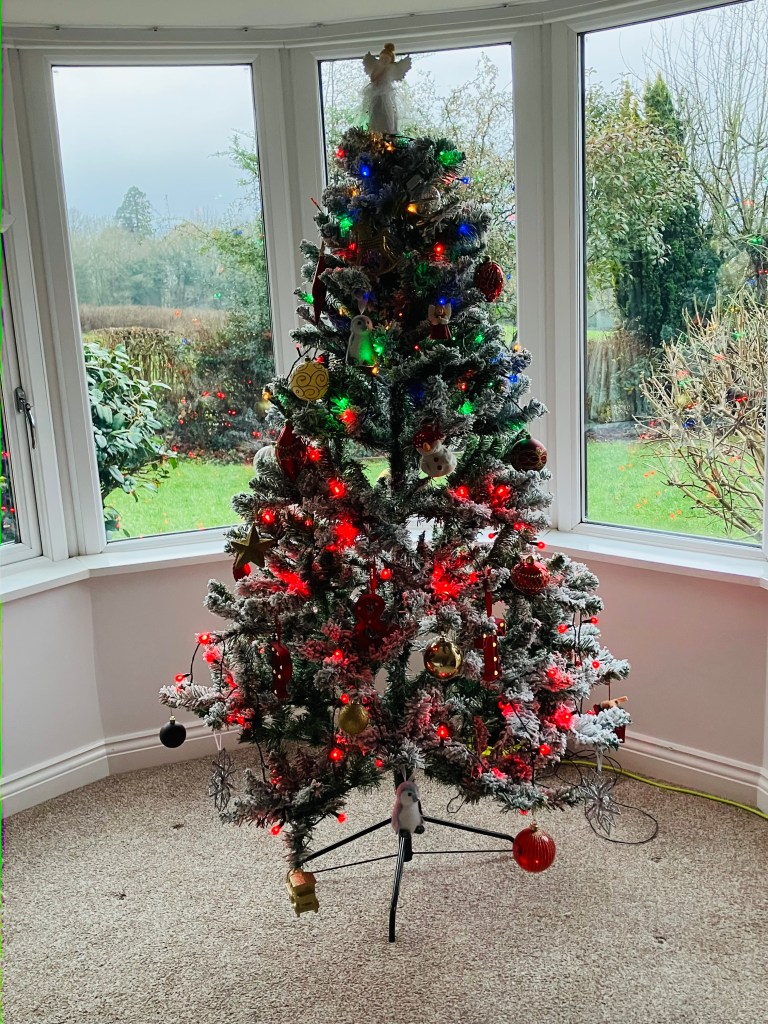
I was so excited unpacking and putting up our tree in the bedroom window so we could settle in.
Our bedroom Christmas tree, it looked much better lit up at night!
As we discovered when it was time to make dinner, everything you could wish for was there and so all the kitchen equipment we had brought with us remained in the truck. It was wonderful to be able to chop vegetables with sharp knives, to pop the dishwasher on after dinner and not have to worry there wouldn’t be enough dishwasher tablets because there was a whole packet! I did struggle, initialling, with the bath! I filled it up with hot water and bubbles, stepped in, led back and nearly disappeared under the water. Being quite short my toes couldn’t touch the end of the bath! Hubby solved the problem with the sticky mat provided and so several hours were whiled away that week reading and soaking luxuriously. I think next time I’m going to treat myself to some really expensive bubble bath! With three large sofas in the living area we had a chose of where to sit every day and when the fire was lit it was still super cosy!
The pheasants and squirrels were regular visitors and whilst we did venture out one day to the local town of Welshpool we didn’t feel under any pressure to go out and explore anymore.
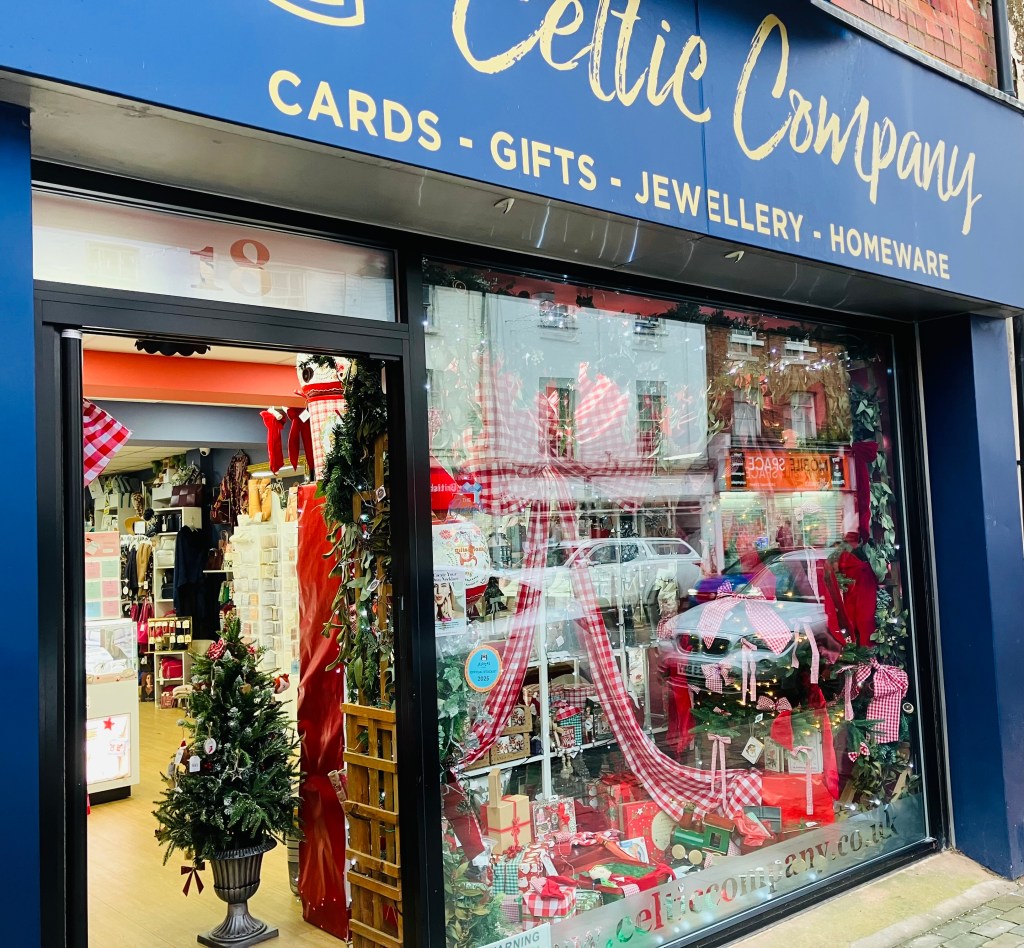
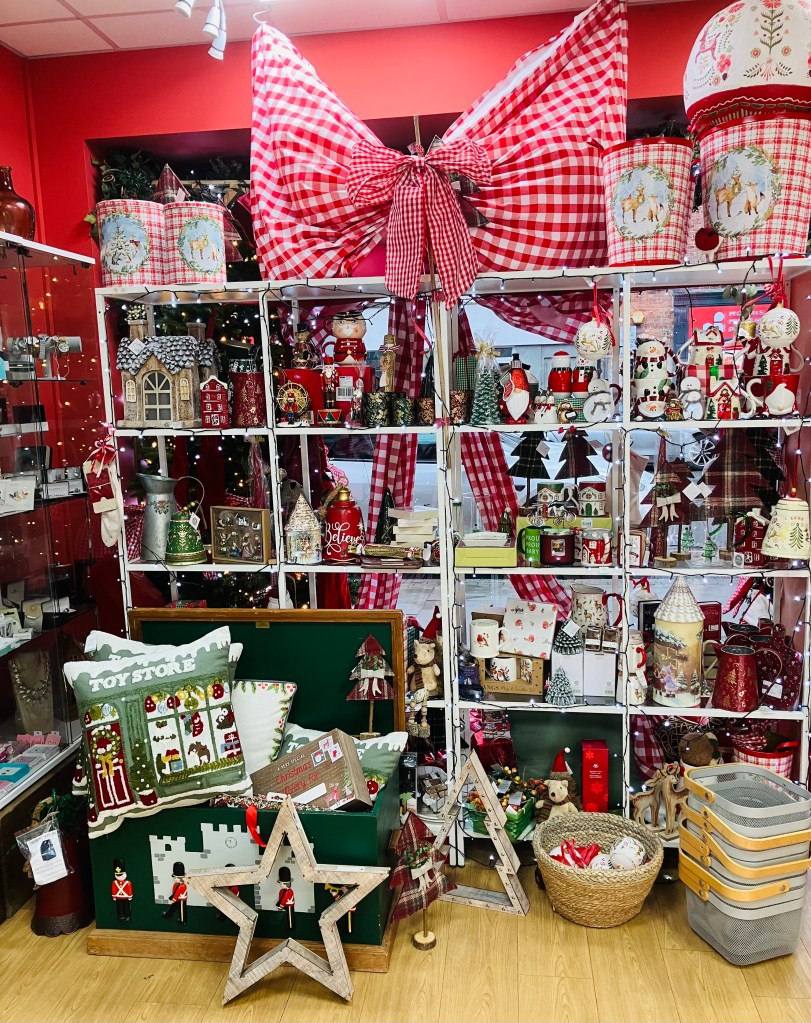
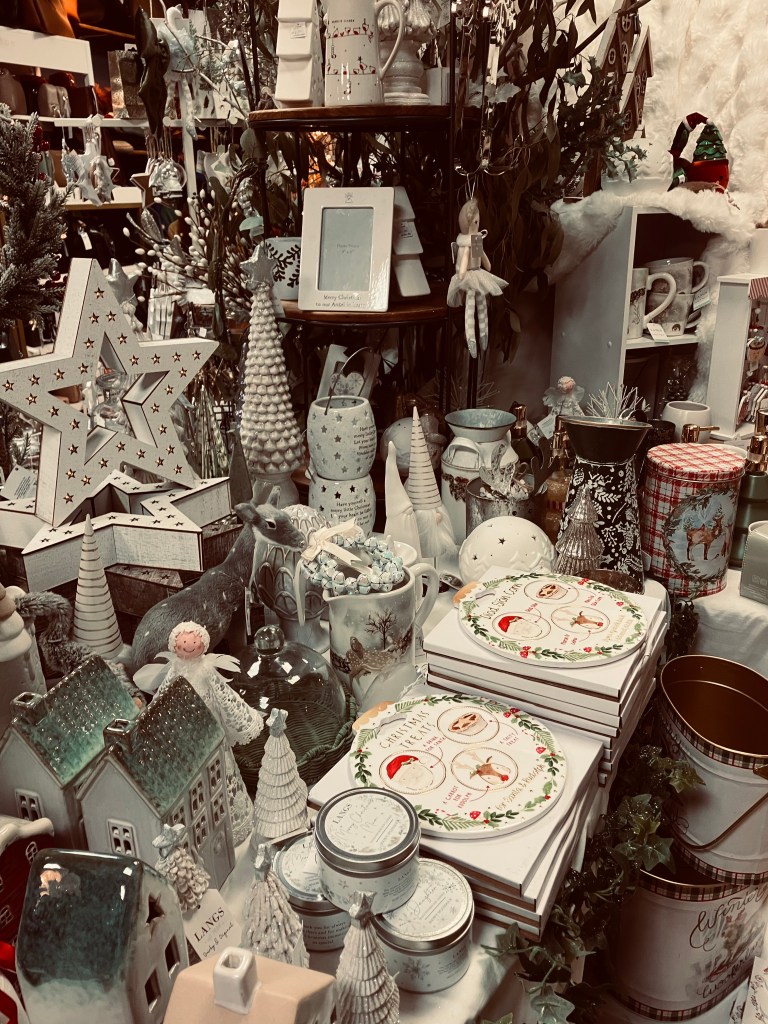
I took these photos whilst in Welshpool visiting a local shop all decked out with Christmas bits and pieces to buy!
Christmas Eve Afternoon was spent as usual in front of a Christmas movie with the fire lit and the big tree in the living area shedding it’s light on the room.
Christmas isn’t Christmas without a movie! And Love Actually is one of our favourites!
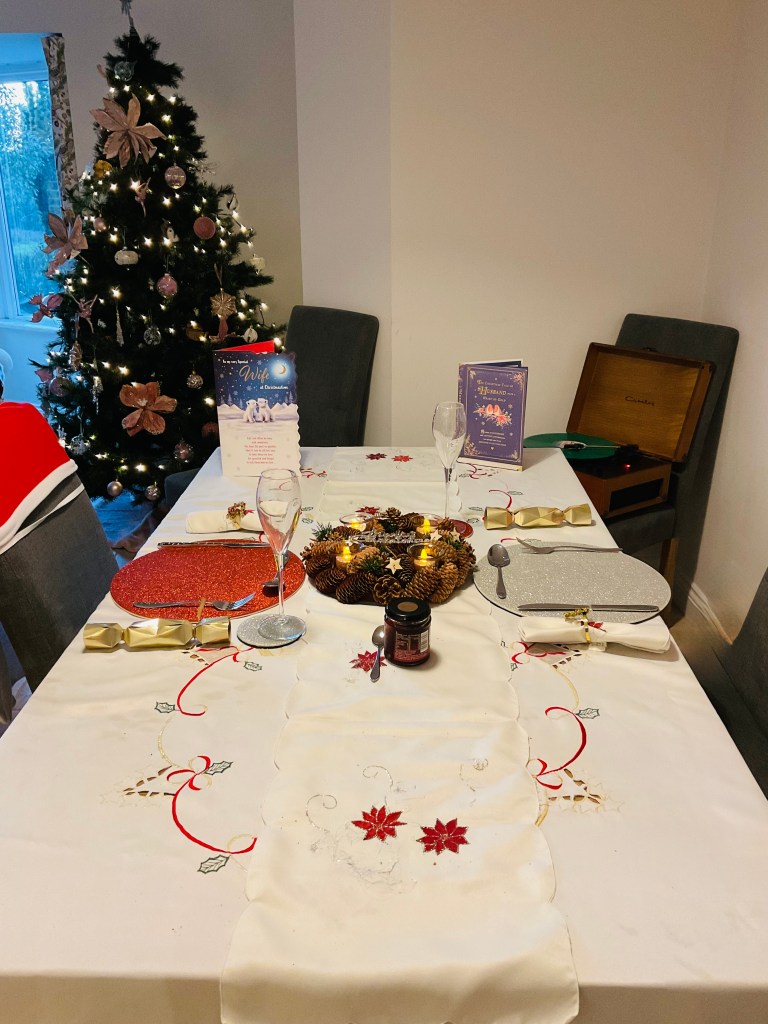
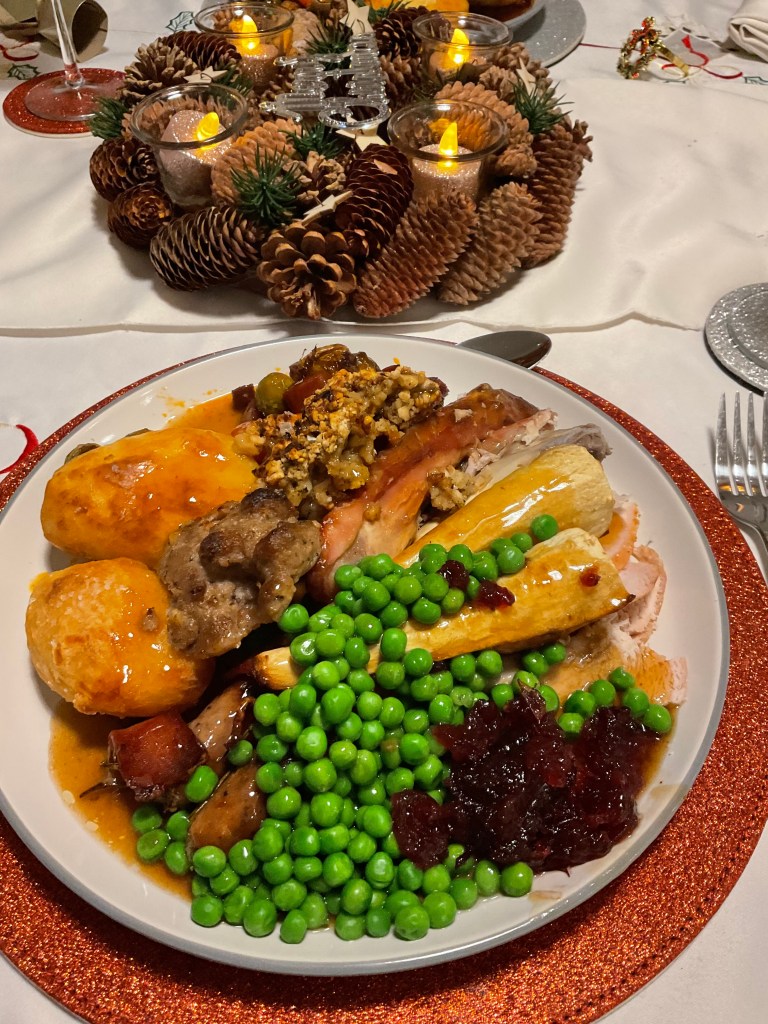
On Christmas Day we woke up and opened our stockings on the bed. We bypassed our normal breakfast choosing instead to be a little more indulgent with smoked salmon and scrambled egg in a bagel. Then it was onto the main event -presents!! Our Santa sacks came out from under the main tree and we spent time savouring all the gifts we had been bought. We made the effort to peel off our Christmas pyjamas, shower and dress so Christmas dinner, once cooked, could be served at the table which was lovingly dressed with linen that we had brought with us for the occasion.
A traditional Christmas lunch in the UK!
We had an amazing week just chilling out. For the first time ever I really did manage to “stop the world and get off”! I had no guilt about just reading book after book, catching up on magazines and switching off from the outside world. Read more about it in my previous post.
I even managed to achieve another first of spending a whole day without a clock. I got up when I woke up, ate when I was hungry and slept when I was tired. It was quite an experience. Imagine! this is how our ancestors lived before the electric light bulb and a vast cornucopia of food was available at any time every day. I wrote about having this ambition in this post and it is definitely something I’m going to try and repeat in the future.
It was lovely to go to bed at night and lie there with the lights off and just the twinkling of the Christmas tree casting it’s own shadows around the room. Revelling in the knowledge and contentment that we had finally achieved a new child-free style of Christmas. Bliss!
What did you do this Christmas? Have you found new ways to celebrate now your children are all grown up and have left home? I’d love to hear from you x
Christmas is such a lovely time of year and since my children have grown up and left home I’ve looked for new ways for hubby and I to ignite the Christmas spirit and for it to still be a special season. One of our favourite Christmas visits to begin the festivities is to an outdoor “light show”. There are lots to choose from and I’ve attached some other suggestions at the end of this post of previous places we have visited at this time of year.
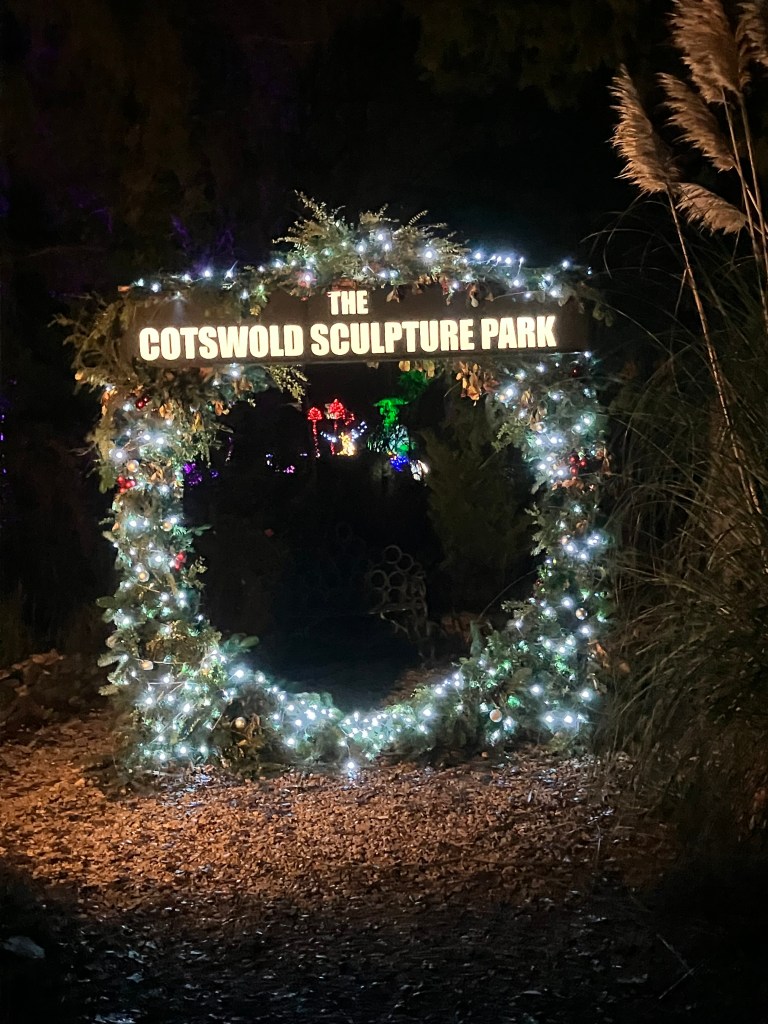
This year wrapped up in jeans, cosy woolly jumpers, waterproof boots and raincoats we ventured out last week on a wet and windy evening to try a new “light show”. Our destination was a little closer to home as we embarked on exploring “Welcome to Lights Up -The Cotswolds Sculpture Park’s first ever light show. Our journey wasn’t without drama when halfway there we came across what appeared to be a nasty road accident and had to turn around and find an alternative route. Our new pathway took us through narrow Cotswold lanes interspersed with flood waters but we did eventually arrive at our destination.
The Cotswold Sculpture Park is a beautiful place to visit when they open from April to September with a new exhibition each year. Again I’ve added a link below.
On this cold, dark December evening we needed our phone cameras to light the way from the car park to the entrance and beyond. I guess next time we should bring a torch!
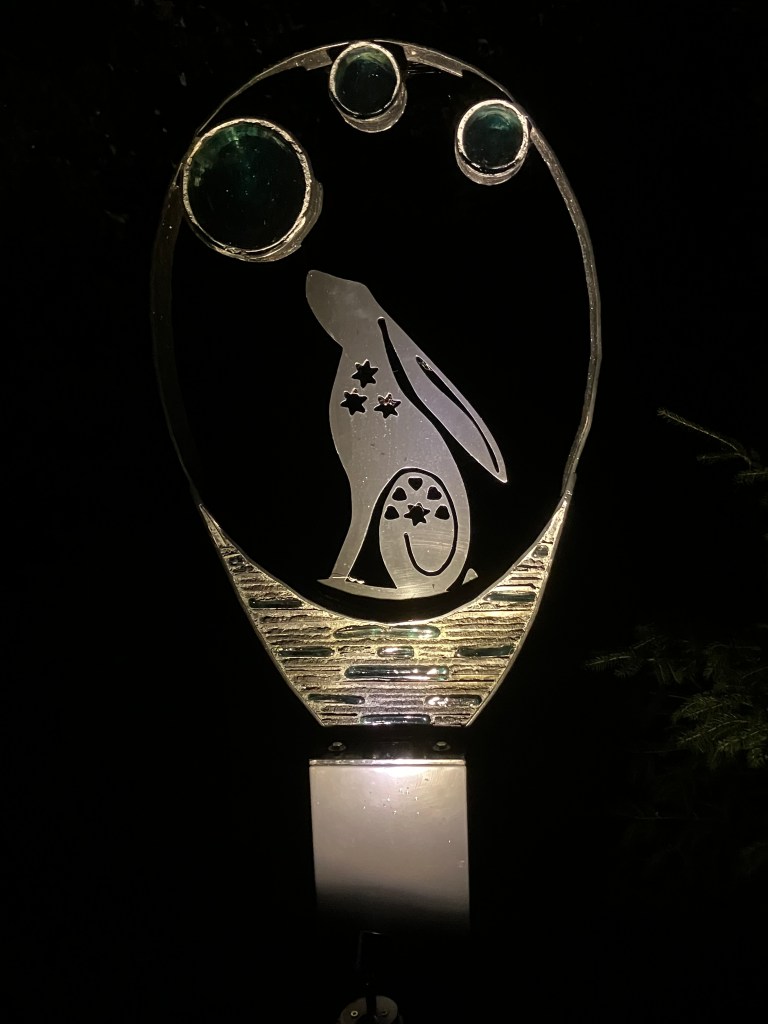
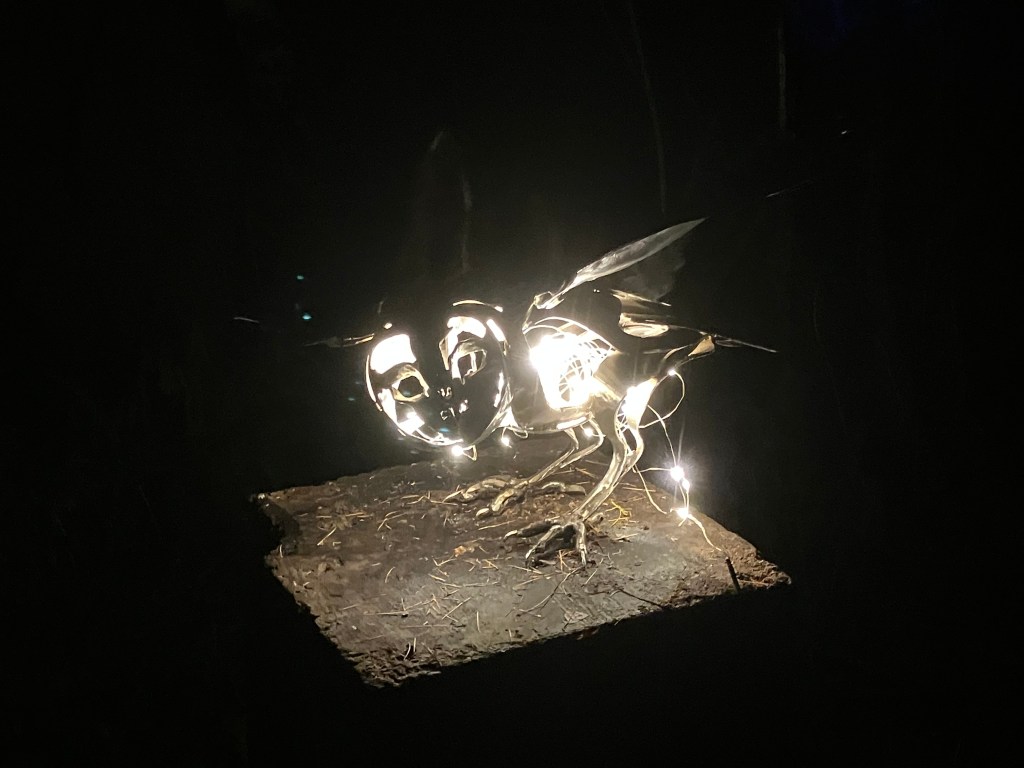
This is not your traditional all singing, all dancing Christmas light show, predominantly created for families, it’s a little more reserved and still aims to highlight some of the current sculptures on display with a night-time, Christmassy feel such as this steel hare cleverly lit up against the dark sky.
or this owl lit from within.
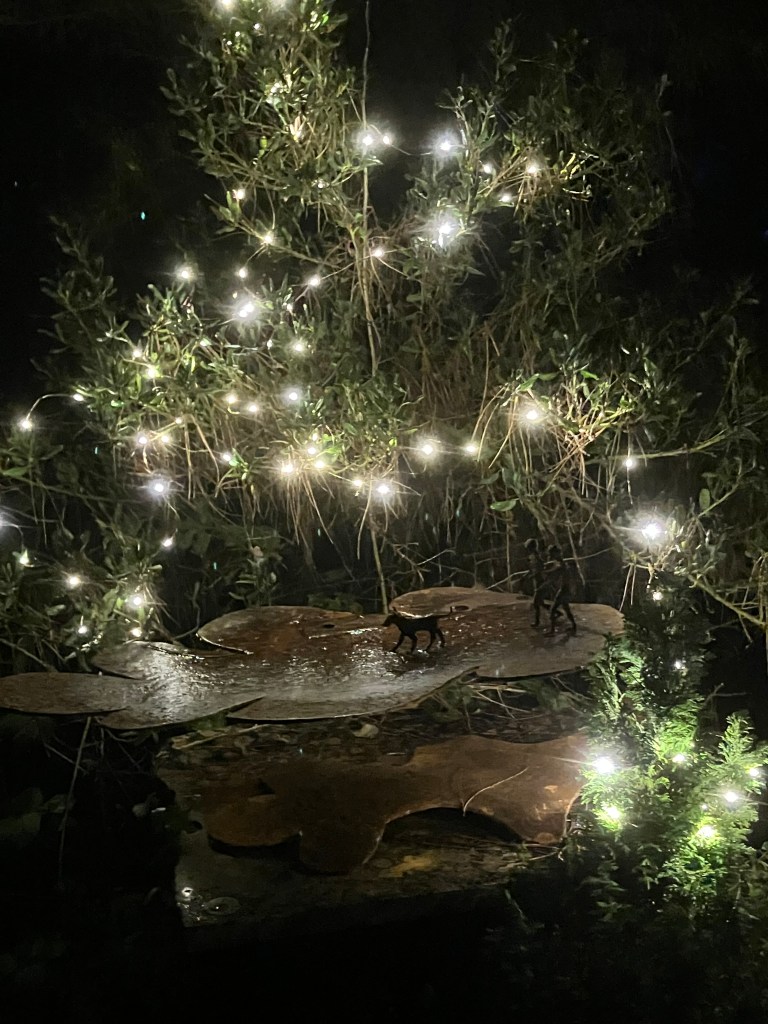
This sculpture made me think about our family walks on Boxing Day.
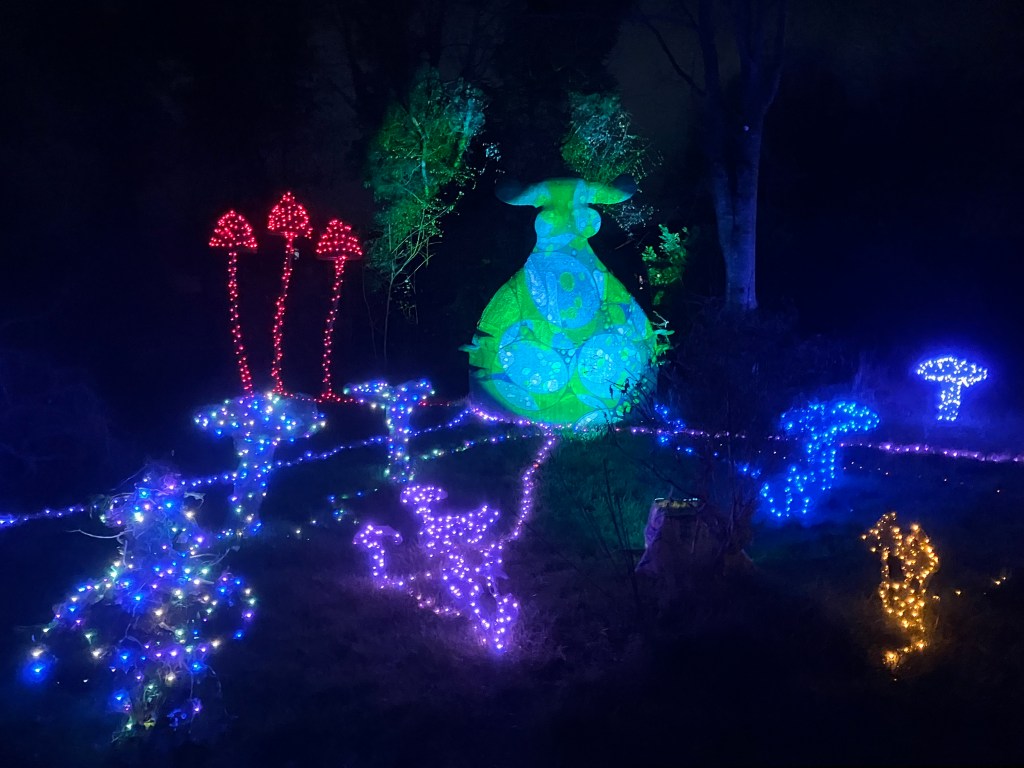
There was a definite air of “cold, Winter’s night and times of yore” about the trail with only small lanterns on the floor to light your way. Again bring a torch if you are concerned about the uneven ground! Added excitement came in the shape of light displays such as this.
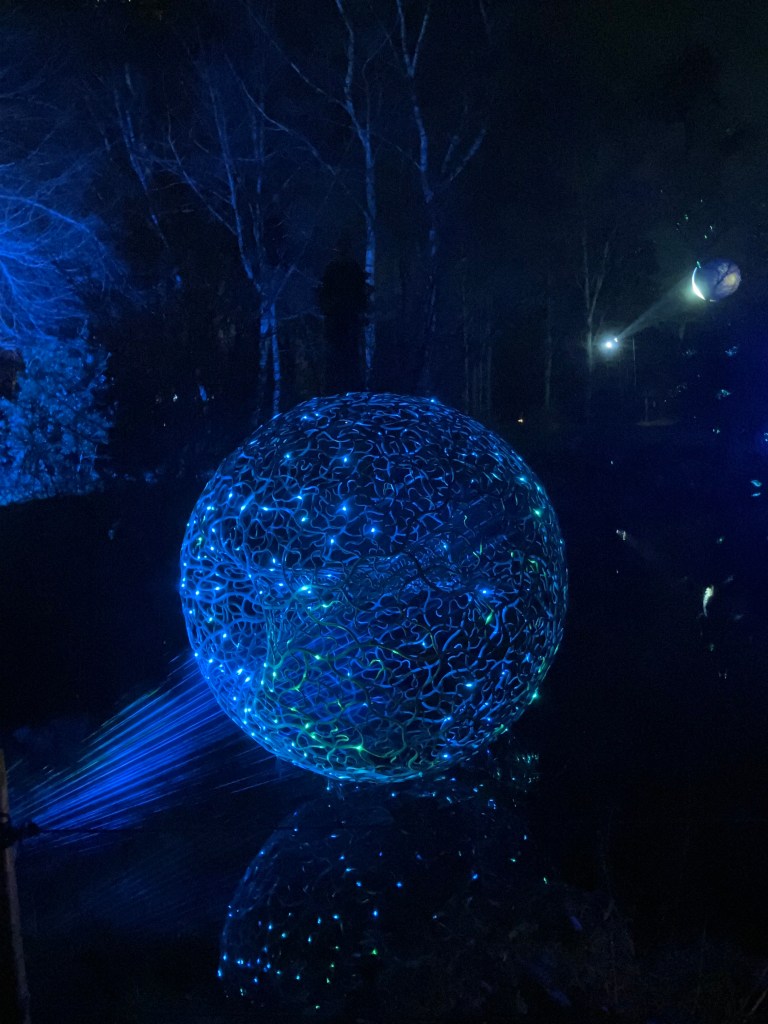
And aerial lights dancing to panpipe music which I really liked but only managed to record on video and not in a single photo shot. There was also a globe in the sky which rotated and showed a series of Christmas themes on it which you can just see in the background of this shot taken of another piece of sculpture.
The Instagram crowd could pose for photos inside a curated lit display above.
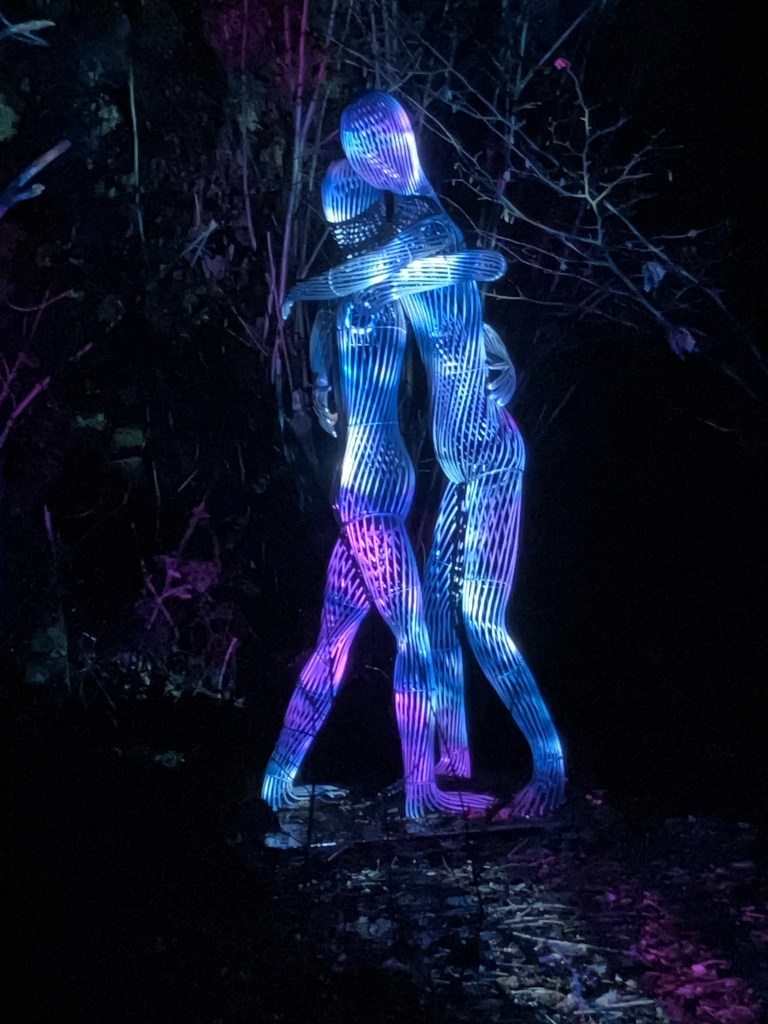
Returning to the actual sculptures I felt this creation entitled “The Hug” by Richard Cresswell was really well lit.
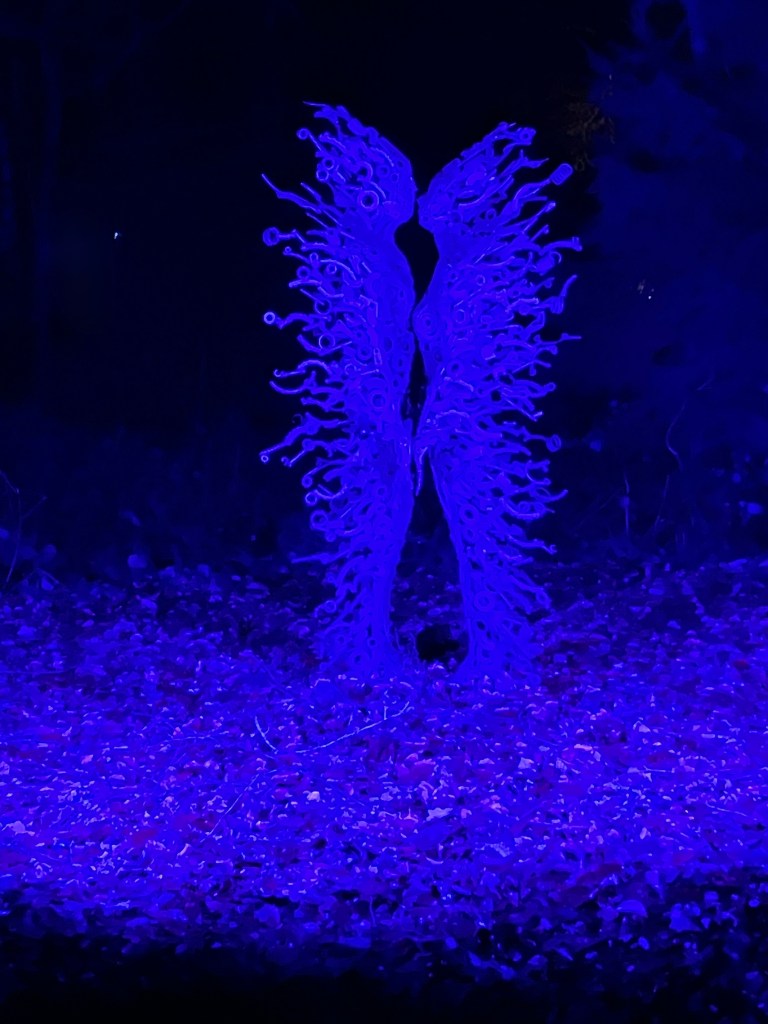
Along with Penny Hardy’s “The Kiss”
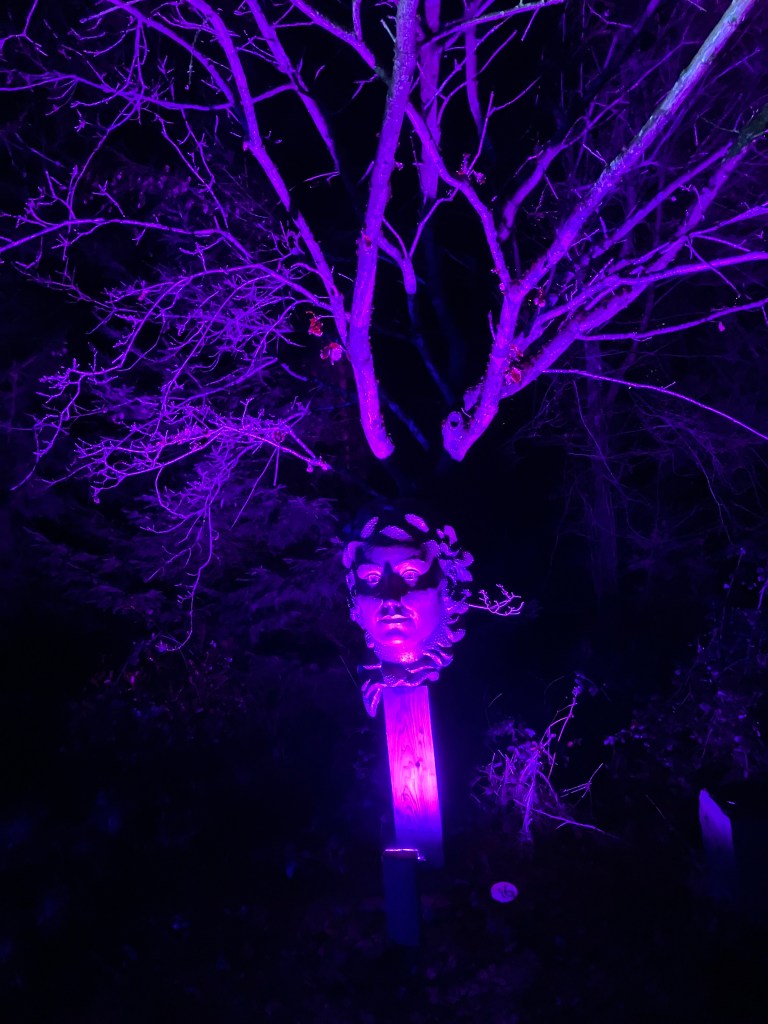
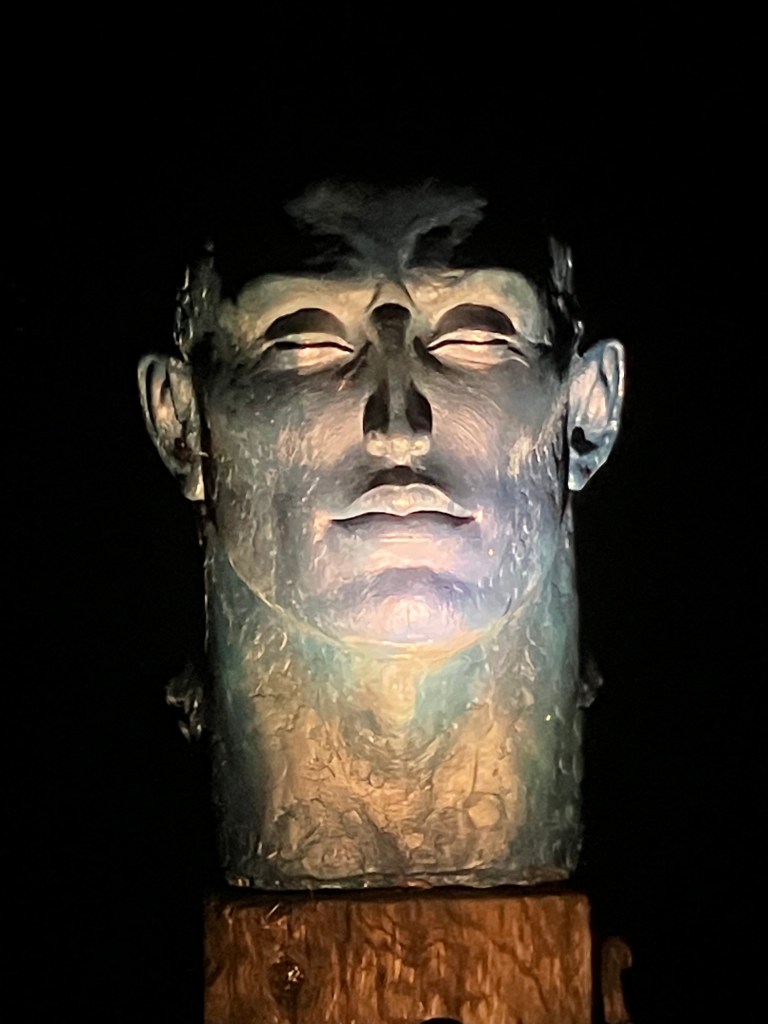
And this wonderful head looking like the spirit of the tree is watching over us!
This was my final photo which, in my opinion, looks so much more authentic lit up at night
I felt the availability, two thirds of the way around of marshmallows on sticks to toast over an open fire with hot spiced apple juice or mulled wine was a lovely touch. It added to the nighttime feel of the park and lit a small Christmas glow in my heart x
There were additional hot food and drinks for sale at the end of the walk including wood-fired pizza. As I said previously this isn’t your traditional Christmas light show but it still has its place as an authentic trail through the woods of the park whilst augmenting the internal Christmas glow.
If you wish to attend other Christmas light shows the Royal Horticultural Society hold annual events at their gardens. We visited Hyde Hall last year:
We have also previously visited Westonbirt Arboretum and Blenheim Palace, both in the Cotswolds as well as Kew Gardens Night Glow in London. Please let me know if there are other Christmas Light displays I should add to my calendar for next year.
We have also visited The Sculpture Park during the Summer, it is definitely worth adding to your Cotswolds itinerary:
As a retired person you can quite easily, if you’re not careful, drift into a way of life where each day looks and feels the same. When mealtimes become a central part of each day and I imagine, for some people, life becomes somewhat monotonous and possibly even boring. Hubby and I have always shared a more refreshing view of retirement and have vehemently swerved away from a life where we are ” sat in God’s waiting room” so to speak. Life, whatever your age, is definitely for living and admitting we have entered the last quartile of our life means we need to make the most of whatever time we have left.
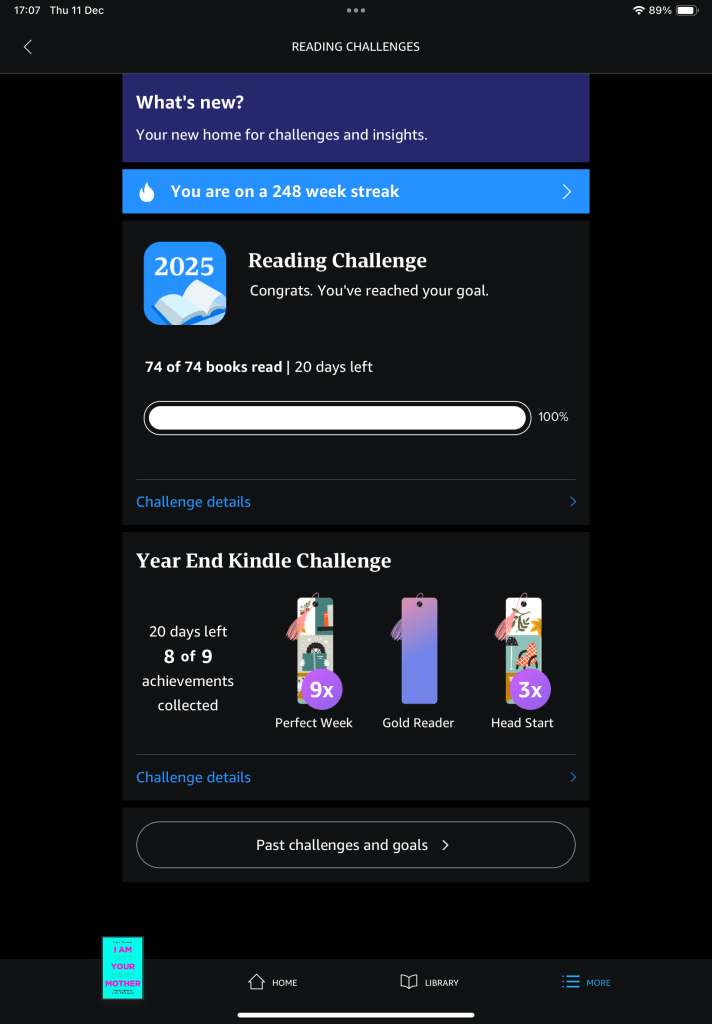
Between us we have many hobbies but a shared hobby is definitely reading. He can read at will whilst I still, sometimes, get that guilty feeling if I’m sat reading for too long particularly when I have a list of tasks that need my time and other hobbies that should get equal if not some standing. Even taking into account “my guilt” I have just hit my target of 74 books this year!
It’s worth saying that books have always played an integral role in my life. I’ve been reading since I picked up Enid Blyton as a child and have gone on to share “The Magic Faraway Tree’ for example with my own children. Reading provided an escape for me in my teenage years when, at times, I just didn’t feel like I fitted in with my peer group. Hiding in the library during lunch break was’t unusual.
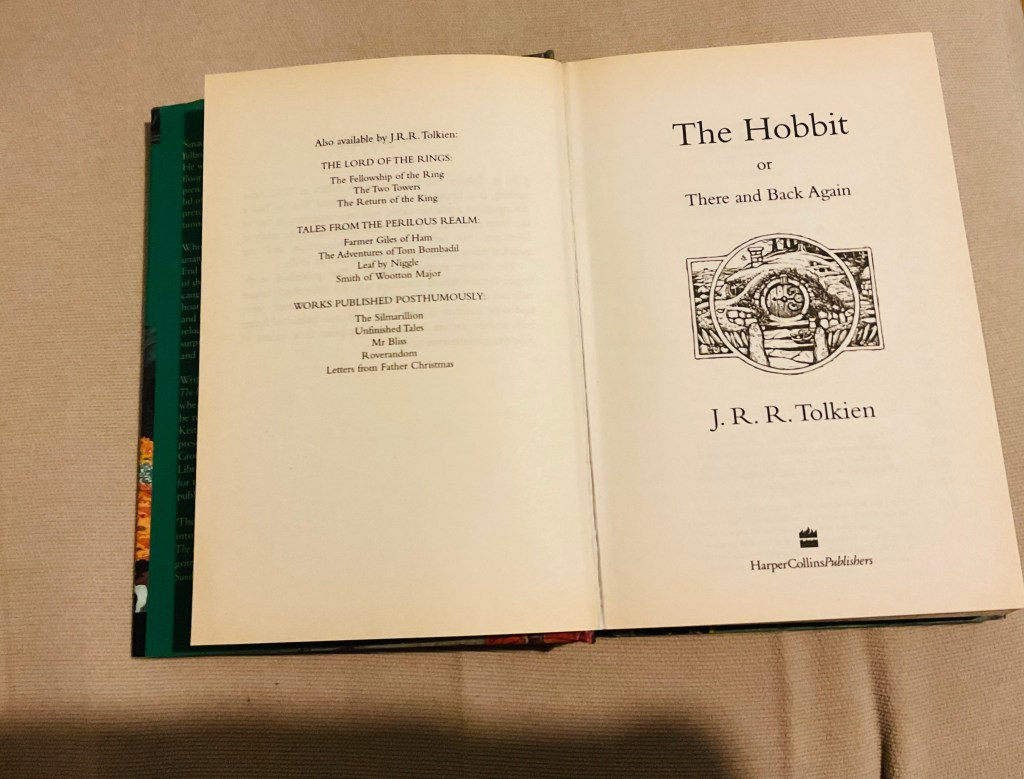
Progressing to O’Level English Literature and the magnificent “To Kill a Mocking Bird” which led into “The Colour Purple” and then tomes like “Lord of the Rings” and Jane Austen I soon realised that reading could transport me into “other worlds”. My absolute favourite book and always will be is “The Hobbit”. Tolkien was a fantastic mythical adventure writer!
Romance: I read a diverse range of books. I have always enjoyed “chick lit” as it used to be termed, now known quite rightly as “Women’s Fiction” or “Contemporary Romance” and have followed Jill Mansell, Carole Matthews, Katie Ffforde, Lucy Diamond, Jenny Colgan etc since they began to write. It’s a form of escapism where you leave your own life behind temporarily and step into someone else’s. Over the years I’ve found it to be a great stress reliever and never go to sleep at night without reading at least a couple of pages of whatever book I have on the go.
Over the years other authors of this genre have joined my library, which used to be in the form of newly printed hardback books, moved to paperbacks and then eventually to a Kindle. Purely because lugging six books in your suitcase on a two week holiday became too much, particularly when weight limits were introduced. Paige Toon is my absolute favourite and one of very few writers who I actually make the effort to go and see at signings. I actually discovered her when I picked up a fairly battered paperback called “One Perfect Summer” which was sitting on a shelf in a cottage I hired for me and the children in Mousehole, Cornwall in 2016. Her “Johnny Be Good” series just totally hooked me and I love the fact that she intertwines her main characters into bit parts in future novels. I’ve read everything she has written and always eagerly await her next novel. This photo was taken at a book signing at Waterstones in Bristol prior to the release of her book “Seven Summer”
I’ve also enjoyed some of the overseas authors within this genre such as Cecilia Ahern. To think she wrote “PS I Love You” at the tender age of 21 is slightly mind boggling. It sold to over 40 countries! Cathy Kelly also features in this section of my library along with Sheila O’Flanagan and American writer Jane Green who I also love to follow on Instagram. She left the USA and now lives between London and Marrakech bravely but confidently “rewilding” her life following divorce and reaching midlife. This article explains more.
Sexy Romance: I’m not sure if that’s the actual genre but I’m sure you get what I mean. Jackie Collins obviously leads the field here and I was an avid reader of her books in my twenties. Since her death in 2015 I’ve actually gone back and started to reread them and only have the last three to go. Lucky Santangelo is one of my all time favourite characters.
Tasmina Perry and Adele Parkes also fall into this category although both have diversified over the years. Adele moved into historical romance and then into psychological thrillers, which in itself is a huge achievement for an author. The three part “Lara Stone” mysteries from Tasmina are really good thrillers based around a newspaper reporter.
I have also read all the Jilly Cooper books, again finding these in my twenties and following her throughout. However I have to speak as I find here and say that writing this type of fiction needs to remain up to date. Her final book “Tackle” which was loosely based upon our brilliant local football team “Forest Green Rovers” really grated on me. The “sexy” scenes were so antiquated, very stereotypical of an age where the whole premis was for the woman to “please her man” . Life these days is far more equally balanced sexually and to be honest women just don’t behave like that anymore they quite rightly, in my opinion, expect to receive pleasure not just to give it!
Christmas Books: Once December is upon us, the Christmas tree is up in the living room and my home is sprinkled, rather liberally, with decorations, then I’m on to Christmas literature. This is how I originally found the Welsh writer Jo Thomas. I’ve read all her books now which are always based somewhere specific but different each time and have an element of food and recipes interlaced with them. I also discovered Jenny Bayliss, Sarah Morgan and Sue Moorcroft through browsing this genre. This is Jenny’s latest release.
Screenshot
Crime andThrillers: I love both Harlan Coben and John Grisham and avidly devour their books. The films of Grisham’s books are, in my opinion, just amazing. A Time to Kill with Sandra Bullock, Samuel L. Jackson and Matthew McConaughey is probably my favourite.
Conversely I cannot watch any series made of Harlan Coben’s books. I’ve tried. but moving them from the USA where they are literally based to the UK just doesn’t work for me and actually deflects from the brilliance of the original writing.
Watching both “The Lincoln Lawyer” on Netflix and “Bosch” on Prime brought me to Michael Connelly and whilst I’ve finished all the Lincoln Lawyer books I’m gradually working my way through his complete Bosch collection plus those associated with it such has the Jack McEvoy and Terry McCaleb books. I truly have to commend Connelly for the translation from book to TV series. Whilst the series doesn’t totally reflect the books, the essence of Bosch is never lost. I was quite sad when my husband and I finally finished all ten series including Bosch Legacy
Then I came across “Tracker” on Disney+ mainly because I loved all six series of “This Is Us” and Justin Hartley who played Kevin in this programme plays the lead character -Colter Shaw in Tracker. I think his good looks probably had something to do with it too but this led me to the Jeffrey Deaver books which I’m also making my way through. However I was disappointed that Tracker, the series (there are now three) is only very loosely based upon Deaver’s Colter Shaw books. It is definitely a “made for tv” series but easy watching nonetheless!
I can’t finish this category without a mention of “American Dirt” by Jeanine Cummins. Wow! It’s gritty, hard to read at times but no doubt based on someone’s reality as a young woman and her child flee their life in Mexico, for genuine reasons, and head for America.
Screenshot
Other Films and TV Series: Then of course there are other TV series that caught my attention “Sweet Magnolias” and “Chesapeake Shores” based upon the books by Sherryl Woods. I eagerly await Season Five of the former although the latter finished after six series. They are not completely accurate to the fictional books but I’ve still enjoyed them. I’ve also now read everything she has written that is still in print!
Virgin River is another firm favourite so I’ve also been working my way through the Robyn Carr books. I devoured all three series of “Sullivans Crossing” recently released here in the UK and will no doubt read those as well once I’ve completed all 22 books in the Virgin River series.
I also love the films made from Nicholas Sparkes’ books such as “The Notebook”, “Message in a Bottle” “Dear John” etc. My favourite being “The Longest Ride” so they have also been added to my reading list and I’m gradually working through his books in chronological order.
Reality: I also intersperse my reading with reality. What do I mean by this? Firstly I definitely don’t mean anything based upon reality tv! I enjoy reading about actual lives from books that are still somewhat fictional but based upon real life experience such as the books by Deborah Rodriquez. Her first book “The Little Coffee Shop of Kabul” was based upon her experiences of living and working in Afghanistan. I’ve read all of her books since.
This then leads onto autobiographies. Not the manufactured books that roll off the press when some superstar pop idol makes it and a book of their life to date is just an additional financial benefit with little or often no input from the person themself. I like actual real life truth.
A few of my favourites being Candice Brathwaite “I Am Not Your Baby Mother” where she writes frankly about her life as a black woman and then mother in the UK.
Rylan Clark’s two books which are really surprising. I am not a fan of the TV programme “Big Brother” in the UK although I did watch Rylan, back in the day, when he came to prominence as a contestant on the ninth series of the talent show The X Factor in 2012. He explains in his books how he basically manufactured the character that is “Rylan” and how outside of this he still lives his life authentically as “Ross”, the name he was given at birth. I was quite shocked how intelligent he is. His relationship with his Mum also features quite highly and the books really give you a glimpse as to what goes on behind the scenes of these reality tv shows and how hard it is to then live your life away from the spotlight once you finish work each day.
Gareth Thomas’s book “Proud” is a great real life introduction to how being gay in the sporting world can be beyond difficult and sheds light on why so many male sportsmen never “come out” or do so in later life when their careers have ended and they now have new often journalistic or commentary roles.
Finally in this section I can’t fail to mention Michelle Obama’s “Becoming”. What an amazing woman! I’m currently reading it for a second time in preparation for “The Light We Carry”. Both books are happily on my book shelf!
I have other books in this category lined up to read like Ben Fogle’s “Inspire” and “Woman in the Wilderness” by Miriam Lancewood who featured on one of Ben’s series of “New Life in the Wild” -one of my all time favourite programmes. Alongside these there is the Journals of Lewis and Clark and a few books I’ve picked up on our travels based around the slave trade and the Gullah people. I do try and educate myself sometimes as well as taking time for genuine literary escapism!
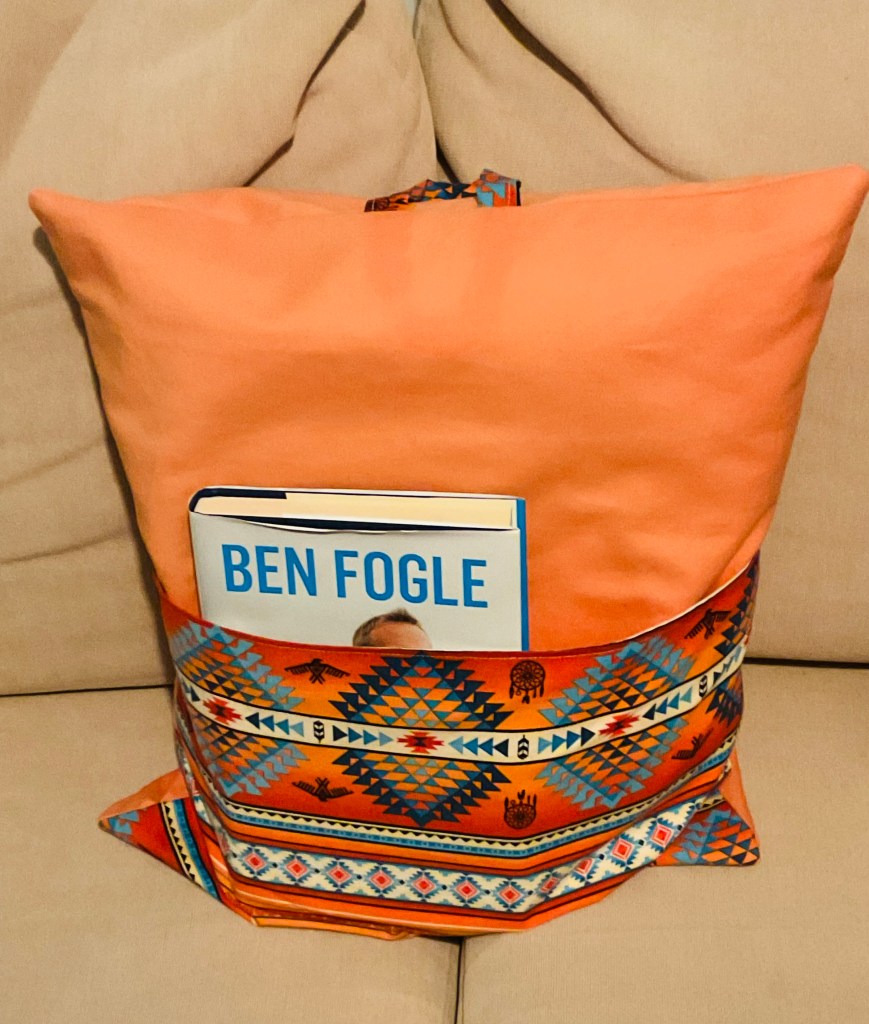
My husband and I turned our small bedroom into a “den” and it provides a great place to curl up on a comfy sofa to read or listen to vinyl music on a stand-a-lone stereo. There are a few knick knacks decorating the shelves etc including this lovely reading pillow that I picked up on our travels. We were driving the Eastern Seaboard of the USA and stopped off to explore the Outer Banks whilst in North Carolina and dropped into the Native American Museum there:
My Literary Conclusion: Reading has brought me so much joy and pleasure. It has been there throughout all the ups and downs of my life. Whilst I have never joined a “book club” my literary hobby has sparked many a conversation across the years. I cannot imagine a time when there won’t be a book by my side even when I’m old and can no longer travel. I’d love you to share with me not only your comments but also recommendations of books to read……..
When are you considered old? Apparently there is no single age when you are considered old, as it depends on context and perception. Officially, 65 is a common benchmark due to its historical association with retirement and social programs, but official definitions can vary, with organisations like the United Nations defining old age as starting at 60. Public opinion also differs, with many people feeling that “old age” starts in their 60s or 70s, while others feel it is much later. Some people consider that the age from 60-75 years are the “autumn” years of life, when people often start to welcome grandchildren. A recent study in the UK found that 70 is the age where most people believe someone is considered old.
I feel old age follows “midlife” (See my previous post) and my personal view is that the perception of “being old” can be influenced by location, relationship status, and a person’s health and lifestyle. Let me briefly explain why these may influence your interpretation:
Location: People living in developing countries, with lower life expectancies, may quite understandably define old age as someone younger purely because they are expecting to die younger. Some third world nations base old age on a person’s ability to contribute to society rather than a fixed number. The point at which they cease to be able to work and provide for their community is the time at which they reach old age and have to depend upon their “village” to support them.
Relationship Status: Sexual satisfaction is strongly linked to overall life satisfaction, mental health, and social well-being in older adults. The emotional support and connection derived from intimate relationships contribute to a better quality of life and may protect against feelings of loneliness or isolation, which are often associated with aging.
I read a recent magazine article about Jane Seymour -the actress, now aged 74, where she stated “I honestly never thought I would find a really committed, healthy, lovely, loving relationship at this time of my life but I’m incredibly blessed that I have. 70 is the new 50!” She goes on to say “Sex is important too. In my parents’ generation and I think a lot of people, they reach a certain age and they go “That’s not part of our life anymore”. To this she responds by saying” I just think, with maturity you understand your body, you understand what feels good and you have knowledge, so put it down to that”
A Person’s Health and Lifestyle: The two ages with the largest molecule and microbe changes, scientists have found, occur when a person is in their mid-40s and early 60s. I think health and lifestyle has the greatest effect on age perception and affects people often more than their actual chronological age. People who maintain good physical and mental health, and lead active, socially engaged lives, tend to feel younger and have more positive self-perceptions of aging. Research suggests that physical decline begins in the decade of the 50s and worsens as we age, especially for those who don’t exercise.
Hair and Face: I’m fairly fortunate that my hair has been shades of blonde most of my life and currently it isn’t going grey or white and I don’t have to dye it. I don’t look at my face and despair at the wrinkles or “crows feet” because quite honestly if they are there I don’t see them. I wasn’t brought up in a world that was overly concerned about creams and potions and loads of make up except if you did wear it “make sure you take it off before bed’ was what my Aunt taught me!
Smoking: I’ve never smoked. Smoking creates premature wrinkles and a dull, sallow complexion. It breaks down collagen and elastin, reduces blood flow to the skin, and depletes nutrients like Vitamin C. This leads to a gaunt, aged appearance that can make a smoker in their 40s look like a non-smoker in their 60s.
Alcohol: Drinking alcohol can accelerate the aging process by damaging DNA, decreasing collagen production, and worsening age-related health issues Alcohol contributes to cellular aging by shortening telomeres, and chronic or binge drinking is linked to faster biological aging and an increased risk of diseases like cancer and cardiovascular disease. The effects of alcohol can also be amplified in older adults due to reduced muscle mass and a less efficient liver, leading to stronger effects from the same amount of alcohol.
I gave up alcohol 21 years ago.
Healthy Lifestyle: I read this article recently and whilst this study is based in America and I live in the UK I do feel there is some truth in it. I gave up “takeaways” nine years ago. I joined Slimming World eight years ago, gave up processed foods and since then have followed their food optimising programme. I will admit I’ve not lost as much weight as I’d like to and am currently focused on losing another fourteen pounds BUT it brought me into a world where fruit and vegetables feature highly in my daily food intake. Hubby and I regularly eat ten portions a day.
I was never the type of person who exercised regularly but the Slimming World Body Magic programme opened up a new world to me which alongside my local leisure centre brought daily/weekly exercise into my life. Since 2018 I’ve attended aqua aerobics and aqua zumba classes. I did a couple of aerobics classes too before my knees started complaining but I didn’t give up. Instead I took my physiotherapist’s advice and switched to Pilates. Hubby and I also walk a fair amount particularly when we are away travelling.
Interestingly I also watched the “IMO Podcast” with Michelle Obama which focused upon “Getting Old” and Michelle too said that “health is the key. It is important to have a healthy baseline so you know when something is wrong. Exercise, eat healthy but don’t overdo it” she said. “It’s not what you look like, its what you feel like”
The Last Quartile: Some people just cannot face the idea that at 60 they are potentially entering the last quartile of life. In the UK, post the pandemic between 2021 and 2023, life expectancy was 78.8 years for males, 82.8 years for females so at 60, 75% of your life is already behind you.
Interestingly in the above mentioned IMO podcastJane Fonda, now aged 87 says “At 60 this is the beginning of my last chapter. Be conscious of how you present yourself to the world. Don’t die with regrets but surrounded by people who love you” and Michelle Obama says “You know how fast time flies so be mindful of what you have left. You need to get to a point where your children can continue without you”.
Some credible thoughts -I’ve certainly started to revert back to more colourful clothes. For some reason I’d let my wardrobe become a bit staid and boring, maybe I was drifting into this idea that as you get older you should be more conscious of what you wear and dress according to your age. More recently I was in a Marks and Spencer store looking to buy a new jumper and held one up to show my hubby before saying “do you think this is an old fogey’s jumper” meaning is this what old women wear? We both admitted it was and it went straight back on the rack!
I think getting to a place where your children can continue without you is a real blessing. You want to know they can survive and thrive without you. I guess we want them to be confident in their lives and settled, it gives us less to worry about.
Being in the last quartile also brings others factors to the forefront such as “have you made a will?” “Do your family know whether you want to be cremated or buried etc”. Have you, where possible, made provision for your other half so they can still thrive without you? What do you want to happen if you become terminally ill? Life is definitely finite and once you hit 60 I do think you start to think more about the idea that you are not here forever. When I was a funeral celebrant I saw first hand how difficult and messy things can be when there is no will or funeral arrangements particularly if you have a large family who might not agree. I also saw how horrible the remaining close relatives can be to one another where money is concerned. My Dad, bless him, taught me many years ago “nothing splits families more than births, marriages and deaths” and it is so true! You might think you have nothing to leave but I’ve seen children fighting over the most trivial of things.
I also think when you reach this stage of life you should be far more self aware than you’ve ever been. My tolerance levels are definitely diminishing with age and I also find myself getting a little left behind with the rate at which technology, for example, is constantly evolving. Keeping your brain active is important because otherwise I think it starts to dim like a light bulb going out. Even writing this blog keeps me alert and stretches my literary and research skills. I read a huge amount, I’ve already hit 70 books this year with a few weeks still to go! Travelling also helps me stay focused, it takes a lot of planning when you do it all yourself and also keeps me involved in the world around me when I am out and about discovering new places. Staying at home sitting in God’s waiting room is anathema to me, I cannot think of anything worse.
Conclusion: As I come to the end of this post I think the key advice I’d like to pass onto those younger than me is “plan your future”. Make sure you are going to have enough money in your old age so you can still enjoy life. Never give in to old age, persevere, try and stay healthy, keep your brain active, have fun and remember “tomorrow is promised to no man”.
The photos included in this post are completely random and taken on our travels across the globe.
As a woman you can’t really talk about midlife without touching on the big “M’! When does it start? When does it finish? Is this normal? Questions, questions, questions! Until recently there weren’t really any readily available answers. It was like a taboo subject. Something that women just got on with and no one talked about.
Thank goodness for Davinia McCall is all I can say. She brought it to the forefront, made people sit up and take notice. Brought some feeling of normality to this period of life that all women have to pass through. I loved her first programme “Sex,Myths and the Menopause” and also the subsequent follow up programme “Sex, Mind and the Menopause” -available on All4, Channel 4’s streaming service. If you are looking at this from overseas check out Apple TV, Youtube etc and you may find it.
My husband and I sat and watched both programmes together. I’m beginning to realise that I’m very fortunate as my husband is a “modern man”. There are no pink and blue jobs in this house, well not unless you include his love for taking out the bins! We are an equal partnership and he never shies away from any topic. He was happy to sit there and watch with me and together we learnt a great deal.
At What Age Does It Begin? It starts with Perimenopause – This is the transition period leading up to menopause, when hormone levels begin to change. It can start as early as your late 20s up to your late 40s.
Menopause itself typically begins between the ages of 45 and 55, with the average being 51. The exact age can vary, and menopause is defined as having no periods for 12 consecutive months. Every woman’s menopause is different, so my journey isn’t going to be the same as yours.
Firstly I have no idea when my menopause started. I had a mirena coil fitted when I was 43 which on its 5th anniversary was then replaced with a second one. Then when I was 53, a year after I’d met my husband, it was taken out and I was unceremoniously told by my doctor “I was too old to have another one!” So I left the surgery thinking “what happens next?” “Will I have a period?’ “Will I need to use some other contraception?’ I soon discovered that the answer to the latter two questions was no and in terms of what happens next, again it can be different for each person.
In my case each symptom seemed to occur separately. First there were the hot sweats during the day, not great when, as I was a funeral celebrant at the time, I was dealing with grieving families. They passed quite quickly, thank goodness and I thought I was out of the woods.
Then the night sweats started and a good night’s sleep became a distant memory and I found myself, sometimes, collapsed in bed mid afternoon totally exhausted as if someone had literally pulled my energy plug!
This led to brain fog during the day. Again not great when you are standing at the front of a funeral congregation and can’t remember the Lord’s Prayer! As a funeral celebrant, services are suppose to be non religious, but families often chose to include the Lord’s Prayer at the end, just in case! It’s a bit like edging your bets:- “I don’t really believe in God but what happens if he does exist and I’ve not included any religious element? Where does my Mum, Dad, Sister, friend go then?”
On this particular occasion we had reached the end of the service, just before we commit the coffin for cremation, and I invited the congregation to join in saying aloud The Lord’s Prayer. It was, at this moment, that my mind just went completely blank. In my head I’m thinking “for goodness sake you’ve been reciting this since High School what’s wrong with you?’. In the end I had to pretend I had something caught in my throat and coughed unceremoniously before asking the congregation to continue without me, whilst I sipped on my ever present glass of water!
I was still having the night sweats nearly seven years later despite having invested in a duvet that was half warm, about 10 togs for my husband and half cool about 5 togs for me! Yes even through the Beast from the East back in 2018 and subsequent cold winter spells I was quite happy with my 5 togs! It’s a good way to remain in the same bed and room as your partner too!
I finally reached a point where I was getting the odd night where I would wake up in the morning astonished I’d not been woken up during the night and tossed the duvet off !
I’ve been fortunate and so has hubby, as I gently remind him sometimes, in that I didn’t have to deal with mood swings. However recurring UTI infections were my personal cross to bear. I’d had this problem in my twenties when sexual relations were far more active and adventurous. Little did I know the menopause would bring back that age old problem.
Having watched Davina’s first programme I ventured off to see a female doctor at my surgery, discussed the big “M” and came away with HRT patches. No matter what I tried they just didn’t stay in place and I had a couple of headache spells which included flashing lights in front of my eyes so gave up the ghost. Six months or so later, I went to see another female GP regarding my recurring UTI’s and she suggested I tried a different type of HRT which is inserted vaginally. The HRT definitely improved my menopause symptoms but I did eventually have to be referred to a Urologist for the UTI’s. I’d had so many infections and subsequent antibiotics that my whole body had become inflamed which resulted in a new medication for three months to bring down the internal inflammation! I still have to be ultra careful with my female hygiene and always have antibiotics with me if we are travelling abroad.
HRT is obviously a personal choice but I’m quite happy with it and if nothing else I don’t think women should suffer in silence, please go to talk to a female GP and at least get advice. I was fortunate on the whole that when the tiredness and sleepless nights set in I was working for myself and had a little more freedom. I could at least take a mid afternoon nap if I needed it, but goodness knows how I would have coped if I’d still been working in my career.
Hopefully workplace education is now helping in this area to support women through this “change of life” and all credit to all the midlife women in the media eye who have influenced this.
Why not comment about your experiences of the menopause or how it feels to be living with someone going through this?Sharing advice can hopefully help others too
From the point I started writing this blog I have expressed my views and opinions. They are never going to be 100% the same as maybe your ideas or beliefs and I’m sure you have good rationale behind how you think. But given this blog is about my midlife adventure, in all its diversities, I have always felt the need to be honest.
Opinion is personal and we are fortunate enough to live in a democratic country where personal expression is currently allowed and not illegal.
I like to centre my opinion on personal life experience and I sometimes, as is the case here, include photographs from my personal collection that don’t perhaps seem to have relevance to my text. With the narrative alive in my head I like to choose photos that speak to me when I’m perusing my collection.
During my midlife I’ve begun to look more consciously at the world around me and to realise that people’s opinions are often formulated upon what they read, have been taught or been brought up with and not what they have actually experienced.
In this current climate often what they read is in the media, in all it’s now wonderful formats. I find it quite frightening that tabloid newspapers both in paper format and on line can influence people’s opinions so dramatically. It’s incredibly sad that some of our younger generation are reading and believing what they see on line. I’m not saying that everything that is written in the tabloids or on social media is untrue but I would suggest that a lot of it is not factually based but merely the journalist’s opinion. Journalism used to be an admired and time honoured profession, young students competed for university places. These days it is an excuse to write an article based upon “opinion”, the “opinion of the journalist”. There is no longer, it seems, a need to ensure what is written is based upon fact, as long as it grabs attention and “clicks”! There is a consistent need to speculate and dramatise events to grab peoples’ attention whilst they are scrolling through the internet on their phones and also to sell papers and magazines to those generations who still rely on this medium to read the news.
As part of my midlife I am making a concerted effort to formulate views based upon true life experience. I appreciate not everyone has lived on this planet as long as me or had the experiences I’ve had. I’ve been fortunate to work alongside people of every nationality, from every walk of life, rich and poor and to see the real effect that life, in all its shapes and forms, can have on people. I have also experienced prejudice in my life. How can a white, middle aged British woman have been subject to prejudice? I hear you ask.
Prejudice Comes in all Shapes and Sizes: As I explain in more detail in an older post entitled “Who is Behind the Blog” I was brought up in Gloucestershire on a council estate or in social housing as it is referred to now. Council houses then were very much the homes of the “working class”. Despite my start in life I was encouraged by my Mum to make the most of my education. I loved attending the local village Junior School and won a yearly prize in the form of a book for my continual achievements. At the age of 11 I passed my 11+ exam and joined the Girls Grammar School in the local town and that was when my world began to change. I was no longer the admired student winning accolades for my attendance, dedication and work, I was suddenly “the girl from the council estate”. It’s possibly hard to imagine this now but back in the 1970’s the class system in the UK was very much alive and kicking.
The UK Class System Where you sat in the social class ranking back then remained a highly significant factor determining life outcomes, opportunities, and social interactions. Don’t get me wrong I wasn’t the only person in my year group in this social class but we were definitely in the minority. Living in a council house held a stigma, our parents weren’t doctors, dentists or bankers. As such I wasn’t seen as a prospective friend for the other middle class raised daughters in my year at school and I certainly wasn’t invited to their birthday parties.
I did make friends with girls from other social classes who accepted me for who I was but even then when their parents dropped me off from visiting their house, I always got them to drop me by the private housing estate and then when they had driven off I’d sneak across the road and take the cut through back home. The mother of my second boyfriend when I was 17 blatantly told her son I was not good enough for him because of my poor background. Can you imagine that happening today?
Single Parenting: Later in life I discovered a new manifestation of social prejudice, that of being a single parent. By moving back to Gloucestershire in 2005 I suddenly found myself in a world where I was once again different to all the other Mums at the school gates. They were all stay at home Mums, either because they were lucky enough to have husbands who earned enough money to allow them a standard of living whereby they could stay at home and bring up the family or they were living on benefits and had little or no choice but to stay at home.
So here I was again presenting myself as different- a working single mother with a career and a live in au pair. It became apparent only too quickly that the school had never had to deal with this situation before. They didn’t understand the need, for example, until I pointed it out to them, that notifying me 7-10 days beforehand that an important event such as parents evening was taking place was insufficient notice for me to sometimes get cover at work to attend.
I still remember one parent governor coming up to me on sports day and saying “I’ve heard so much about you, its admirable that you have a career whilst also being a Mum but don’t you think its unfair on your children not to have a parent at home, to pick them up every day and care for them?” I remember being astounded by her comment, that without doubt came from a complete lack of understanding of my position. Who did she think was going to pay my bills if I didn’t work?
Being A Working Single Mum: This wasn’t best received in my working life either. There was no allowance made for it. I joined the company in the mid 80’s and by the late 80’s was a Manager working in a male dominated industry and if I wanted to pursue my career then I had to operate alongside all the guys. They had wives who happily stayed at home keeping the house running, washing and ironing their shirts, looking after their children and not blinking an eyelid when a meeting was changed at less than a day’s notice to another area of the country. Staying away for the night was nigh on compulsory in these circumstances and they saw it as a great opportunity for a good jolly away from their wives. I lost count how many times I stood in hotel bars listening to male colleagues talking about football, cricket and other male dominated leisure activities with no regard to my presence or inclusion. Nights that sometimes included them chatting up (and pursuing) other women in the bar with no regards to the wedding ring which may or may not be still on their finger!
There were no females employed above me. It was tough finding my way and constantly competing. I basically wore two hats that were interchangeable in my car, morning and night -Manager and Mum.
It is these experiences though, alongside others, that have helped shape who I am and on which I can now base my opinions. My views come from a life well lived. I’ve tried to stay true to myself, following my own values and goals, rather than being influenced by others. And as I now navigate midlife I spend some of my time writing about this stage of my life and sharing adventures that I take with my husband and sometimes letting those opinions out in the open.
I really like writing a blog and I hope that you have enjoyed this post. If you have maybe you can tick the “like” box or even share a comment. I’m interested in hearing other peoples views of social prejudice if you have time to share.
So why is this blog entitled “A Midlife Adventure” ? Well apart from the fact that I am in my “midlife” age-wise and utilise a lot of my free time to go on adventures, I also wanted to explore the term “midlife” and how it fits into society today.
When is Midlife? Wikipedia says”midlife is the time from 45 to 64″. It’s a time when people are often evaluating their own life and a time when people can get overloaded with day to day stresses thus the term “midlife crisis”.
Then again on a recent TV show I watched midlife was described as being between the ages of 38 and 60!! One of the guests, currently aged 42, was astonished by this, as am I! What comes after midlife then if 60 is where it ends? Old age? What you are now a senior citizen at 60, looking back on life rather than forward? That surely can’t be right!
Researching Midlife: I like to do a bit of research now and again, it gives me a chance to read something a little more educational rather than the books I avidly devour every night before bed. I came across an article entitled “The Existential Necessity of Midlife Change” written by Carlo Strenger and Arie Ruttenberg in the Harvard Business Review (Feb 2008). This is the link should you wish to read it in it’s entirety: In the article the authors were looking at the application of midlife specifically to the working environment.
Apparently two opposing myths underlie many people’s fears about midlife, inhibiting successful midlife change.
The first is the Myth of Midlife as the onset of Decline: This is rooted in historically outdated conceptions where people end their productive lives and retire at age 65. Sixty five is not a magical number, it was introduced as the retirement age in Germany in 1916. Twenty seven years earlier Chancellor Otto Von Bismarck had established that 70 was the age to begin receiving a pension. When asked how the state could afford such largesse Bismarck replied that almost nobody would reach this age anyway. He was right! According to one source life expectancy in Germany at the time (1889) was 49 years old! Fortunately life expectancy today, in Western society, is around 80+ and continues to rise.
Personally retiring at 65 had never held much of an attraction to me. When I was 45 and still in my single Mum faze my intention was to retire at 55, sell my house, buy a flat (as a home base) and a camper van and set off around the UK before trying out Europe.
My peers and even some of my friends were bewildered by my idea but, being fully aware that life is not forever, I couldn’t see the point in devoting another 10 years to making money for someone else to benefit from. More to the point I didn’t want to lose out on my best years to do as I pleased. I did retire at 55, partly thanks to my husband who I met at the age of 52, opting to continue to work for another 5 years which meant I didn’t have to touch my private pension for living costs. Unfortunately the camper van idea evaporated and was replaced by creating travelling adventures instead.
The second myth, mentioned in my research, is the notion of midlife as a magical transformation. The myth tries to sell the illusion that if people have enough vision and will power they can be anything or anybody they want to be.
Myth or not, this is something I can buy into. I certainly feel midlife is a time to live life without any constraints. I am in fact shocked by the amount of women, around my age or slightly older, that I come across locally where I live who still conform to the idea of specific role models within their marriage. A life where women have the “pink jobs” such as cleaning, cooking, shopping and generally “keeping house” and men have the “blue jobs” like DIY, driving and maintaining the car, taking out the rubbish etc. Have we learnt nothing as women in the last sixty years?
Needless to say that doesn’t happen in this household. We share the cleaning and since retiring my husband has opted to take on all the food shopping and cooking. Having cooked for the best part of 50 years its wonderful. I’m finally free of the kitchen sink!
The idea that “midlife marks the onset of decline and the acceptance of growing limitations being the only mature way to deal with ageing” is still generally accepted, according to Strenger and Ruttenberg’s article, as good common sense. Common sense, however, may be overrated and outdated!
I remember reading an article a couple of years back where Dame Emma Thompson was talking about her film role in the 2022 drama “Good Luck to You Leo Grande“. Emma plays a repressed widow who hires a young escort in a bid for “sexual awakening’. “It was very challenging” she said “to be nude in her 60’s. Especially in a world where nothing has changed in the dreadful demands made of women to look a certain way”.
Why do we have to conform to this ideology? Why, if we are women in our midlife do we have to act in a particular way or dress in a certain manner? I remember my stepmum changing the way she dressed, around the age of 50, which I guess back in the 1990’s was still considered to be the last phase of life. It was as if society expected her now to adopt the twinset and pearls style and accept that she was now entering the second half of her life and certain expectations needed to be fulfilled. This is definitely no longer the case. I see midlife women all around me dressing however they wish and all power to them.
“Fortunately the life force does not just extinguish itself at age 65″ says Strenger and Ruttenberg when concluding their narrative. They continue with “Indeed there is no period better suited to inner growth and development than midlife when many people learn to listen to their inner selves -the necessary first step on the journey of self realisation.”
Midlife is exciting, it should bring freedom. Freedom not to have to consider the children, assuming they are grown up and off hand. Freedom to realise some of those dreams that we still hold dear. To try a new hobby, to travel, to volunteer and help others, to learn a new skill, the sky should be the limit.
I don’t want to have to worry about declining into old age and I can do whatever I want if I put my mind to it . There may be obstacles to overcome and many issues will no doubt arise. But hey I’ve worked all those years, often ridiculous hours in the name of company commitment and career advancement and surely now deserve to shake off the shackles and live a little.
My dearest ambition is to throw away the clock. Imagine waking up when it’s light, eating only when you are hungry, doing whatever you want when you want and then sleeping when you are tired -that would be freedom to me!
What is or would be your ambition in midlife?Are you a midlifer enjoying life? I’m keen to hear how life is treating you? I look forward to reading your comments. If a comment is too much then please just hit the “like button” and give this midlifer some encouragement to keep exploring her new hobby of writing!
I’ve done a lot of blog posts this year based upon our adventures and where we have been so I’m taking a short break from that and instead featuring some posts based upon my opinions, midlife and adventure as a whole rather than specifics.
The definition of someone adventurous is amongst other things “someone who is willing to take chances”. When I set up this blog I definitely felt it was time to take a chance on life. To experience different ideologies, new places, ways of life and alternative cultures.
Adventure is stepping out of your comfort zone by doing something that you normally wouldn’t do. It could be helping out a random stranger to working up the courage to make friends with a complete stranger. When was the last time you did either of those?
Someone who is adventurous is willing to take risks and to try new methods.
I quite like quotes and sometimes if you do a bit of research you find something that really speaks to you or motivates you. Here are a few I quite like and why they speak to me……
“Adventure may hurt you, but monotony will kill you” Marcus Purvis The idea of being retired and living each day as if you are in God’s waiting room is a total anathema to me!
“To travel is to live” Hans Christian Anderson “Jobs fill your pockets but adventures fill your soul” Jaime Lynn I have been fortunate to do some travelling and it definitely ignites my soul and makes me feel alive. I particularly enjoy understanding the social history of countries, looking how their way of life has evolved over time, seeing how the average person lives and understanding their priorities. I’ve been creating my own holidays and travels since 1999, visiting a travel agent is not for me and the idea of cruising is just not on my radar. Being stuck on a ship with thousands of other passengers would be my idea of hell! I’m aware there are a lot of midlife people who thoroughly enjoy this style of travel but not me. I can barely cope with an organised excursion alongside 10-15 others in a minibus.
“A journey of a thousand miles must begin with a single step” Lao Tzu My midlife adventure blog had to start somewhere and releasing the thoughts pent up in my brain was my starting point and there is still no end in sight! I never began this journey striving for hundreds of likes, viewers or subscribers. I really wanted it to grow organically which it has and knowing I have international readers definitely gives me a thrill that I didn’t anticipate at the onset. I would love, if anything, more feedback, more comments, purely so I can grow myself and make my posts more interesting.
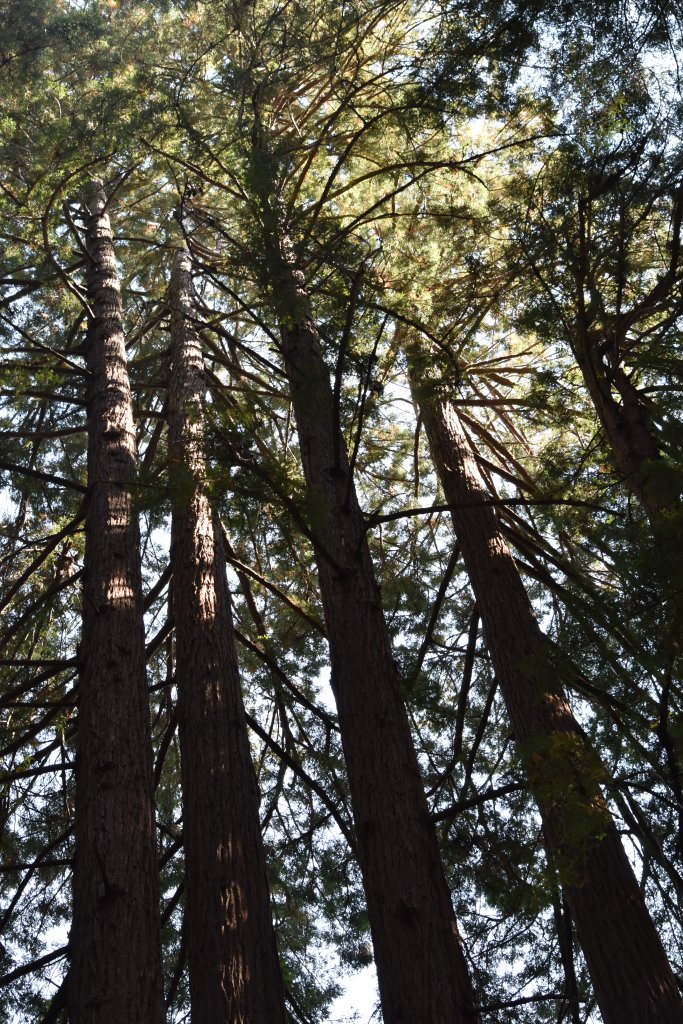
“And into the forest I go, to lose my mind and find my soul” John Muir As part of a previous adventure in America we had visited the great coastal redwoods of Muir Woods overlooking San Francisco Bay and I had purchased a book of John Muir poems. Seeing this quote pop up on my research for this post reminds me of that adventure and how being out among such great arboreal monoliths inspired me to find more time to be in nature.
“The journey matters more than the destination” Tony Fahkry Midlife adventures isn’t all about travelling and exploring the world it’s about the journey you find yourself upon in delivering that adventure. What you learn about yourself and also your dynamic as a couple. The roles you find yourself taking on, the compromises you make and the honest evaluations you make en route to your destination.
“Life should not be a journey to the grave with the intention of arriving safely in a pretty and well preserved body but rather to skid in broadside in a cloud of smoke thoroughly used up, totally worn out and loudly proclaiming “wow, what a ride!””Hunter S Thompson I chose this quote, at the onset, for my home page because it really says it all for me.
Growing up and then returning home in my early forties to a fairly traditional conservative area of the UK I often find myself in the company of people who believe their key focus in life is to scrimp and save in order to ensure their children inherit a tidy sum of money. In other words they give up on enjoying life to its full extent to ensure the comfort of their offspring.
I find myself questioning their logic in so much as if most people have their children when they are in their 20-30’s then by the time they die at at 80, based upon life expectancy in the Western world, their children will be 50-60 years old. What’s the use of inheriting an amount of money at that age except to continue this prophecy and give it to the grandchildren? Being the richest person in the graveyard seems to me to be an incredible waste thus I like this quote and intend to live life as I see fit regardless of whether I am spending my kids’ inheritance.
Adventures come in all sorts of formats, some conventional and some less so but every entry in my blog is a part of my midlife adventure and all the photos are taken from our personal collection. If you would like to add some other quotes that provoke thoughts about adventures please feel free to comment
Have you ever had that feeling where everything just seems to be overwhelming you and you want to just shout ” Stop The World, Let Me Get Off?” I remember being in the local play park as a child and sitting on the roundabout, while one of the bigger kids constantly grabbed one of the metal handlebars and ran for all they were worth in a circle so the roundabout just get spinning faster and faster and you did everything you could to just hang on and not become dizzy. Whenever life gets overwhelming I often think of that roundabout and the feeling that you are just going around and around, faster and faster but not actually reaching any end point.
There have been times in my life when I have been juggling so many balls and realistically I know that I’m going to drop one of those balls and having to decide which one, if dropped, will have the least effect or detriment to my overall life. As a single Mum working more than a full time job to progress a career there were many times when I just felt like running away from all those responsibilities. My two week Summer holiday was my escape from all of that when my children would happily play in the pool and I could just chill out in the sun, reading copious amounts of books.
When I took early retirement I thought those days of the world spinning at such a velocity were well and truly over. I had earned a rest, hadn’t I? But somehow here I am seven years into that early retirement I worked so hard for and already there are times when I want to press the ‘stop button”. The urge to do that, however, isn’t the same as it was in my working life. It comes from a very different place. In those high powered career days, as previously mentioned, it was all about escaping the daily stress of life, trying to keep the balance between working and parenting and not caving under all the pressure. Now in my retirement I cannot believe that I now have days where I question “when did I have time to go to work?” my days are so full. I don’t need to escape the pressure, I just need time to breathe, to relax and to some degree escape being with someone 24 seven.
There is also still one common denominator -guilt! When I was working I often felt guilty if I thought my work/life balance was getting out of synch and I was spending too much time at work and not enough time with my children. Now I feel guilty if I take time to relax and read a book, there’s a feeling of not being productive as if I am still answerable to someone. Who? I don’t know!
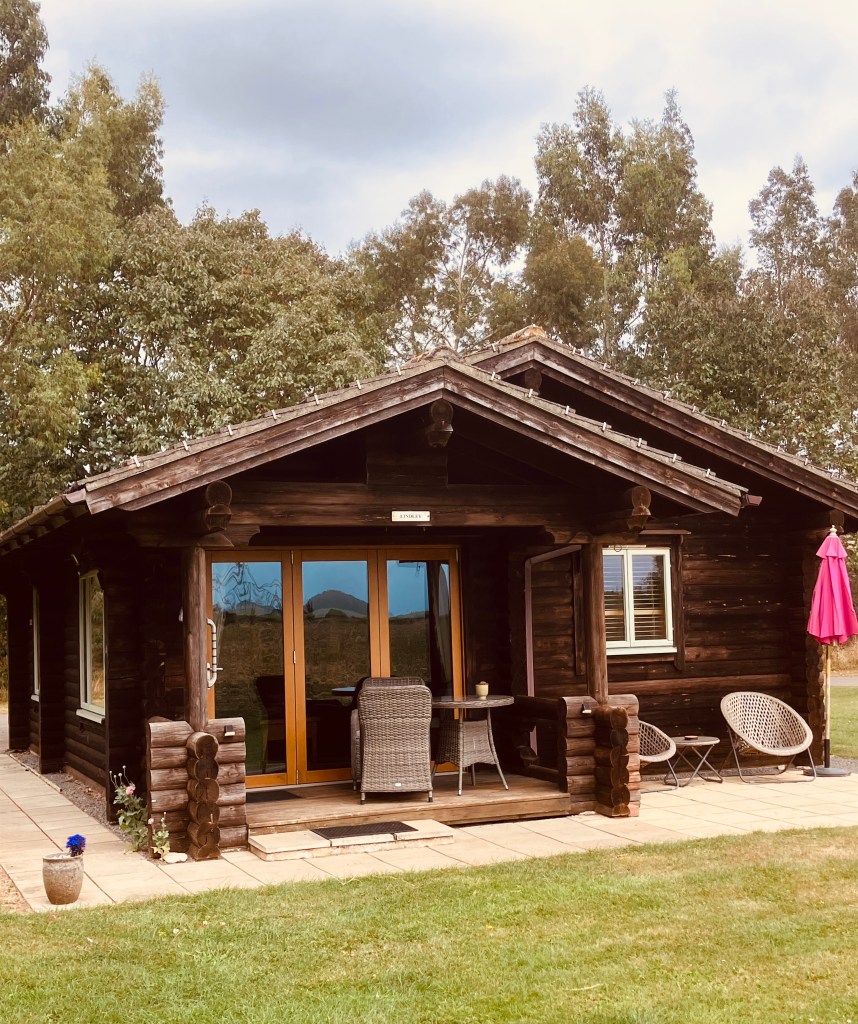
Last year I rather selfishly, depending upon how you look at it, took three days away on my own. I had dropped my daughter up in Lincolnshire and instead of heading straight home decided to take a three day solitary break. It was all completely planned, hubby was aware. Prior to my arrival I remember being full of exciting anticipation, revelling in all the things I was going to get done, how ahead of myself I would be when I returned home. The joy of not feeling answerable to anyone, doing what I wanted when I wanted and above all else not having the ever encompassing feeling I get at home when I look around and realise the washing needs doing, the housework is mounting up, the beds need changing, life admin is constantly being shelved etc etc. Then I remember arriving at my wooden lodge, that slept two, and immediately questioning whether I had done the right thing. Was I wasting our communal funds selfishly on myself? Was this actually going to benefit me?
I worried I might not be able to sleep with only one other lodge on site, maybe I would feel insecure but then I remember waking up with the sun rising to my left with the sound of the wood pigeons. Dewy grass outside revealed a rather large rabbit munching away that scampered into the woods when I tried to get a photo. I was free to set my own pace, there was peace n quiet, a sense of tranquillity and no one to answer to. I saw it as a chance to take a breath and reset. There was no doubt that I missed my hubby but there was also a sense of freedom. My life was solely my own and I could go back home and move forward, safe in the knowledge that I was ahead of myself in terms of all my hobbies and interests. On my return, however, those aspirations lasted all of a couple of weeks and then I was more or less back to where I’d started. Trying to juggle my time between keeping fit and healthy at the gym, maintaining a healthy body weight at Slimming World, reading both in terms of enjoyment and to learn more, writing my blog posts and ensuring my social media reflected what I had written, keeping on top of life admin, trying to spend time with hubby, creating travel itineraries, staying on top of housework and washing, seeing friends and family etc etc……………
My mini break had definitely created “a time out” but how often could I truly expect to do that? And realistically had I really achieved anything in the long run?
This year we decided to take some time out together. Wow! that was a revelation. We packed ourselves off to a friend’s cottage in Cornwall. We thought if we chose somewhere we had been before we would be less tempted to go out exploring and would actually spend time relaxing, enjoying our individual hobbies and in my case trying yet again to get ahead of the game.
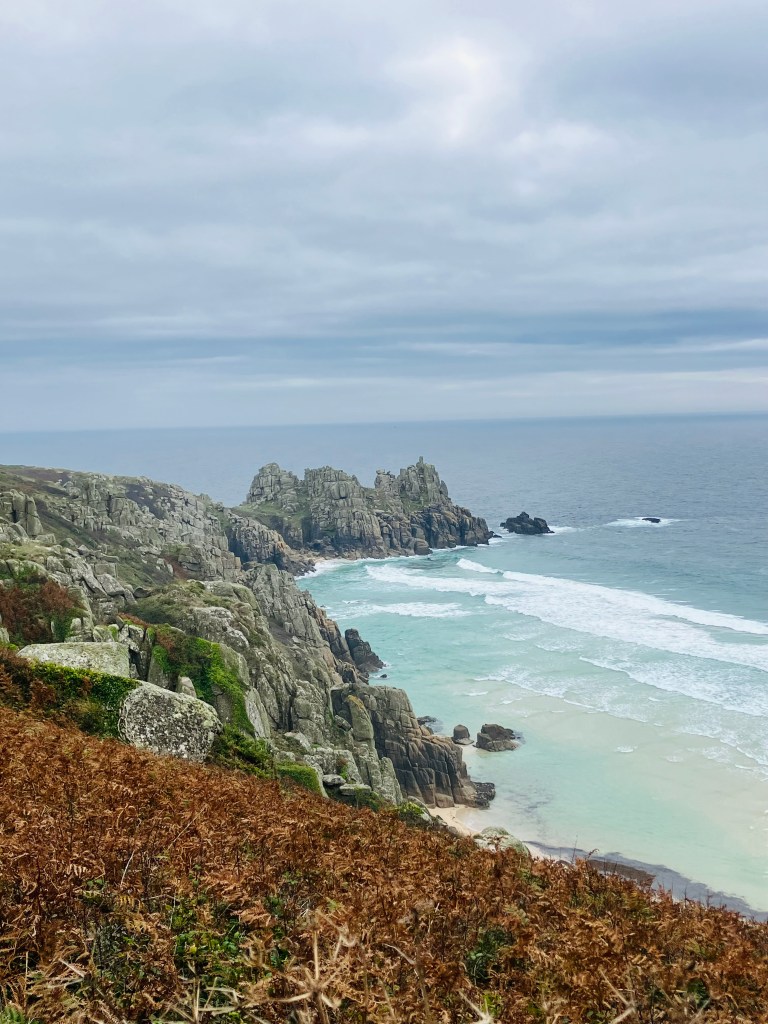
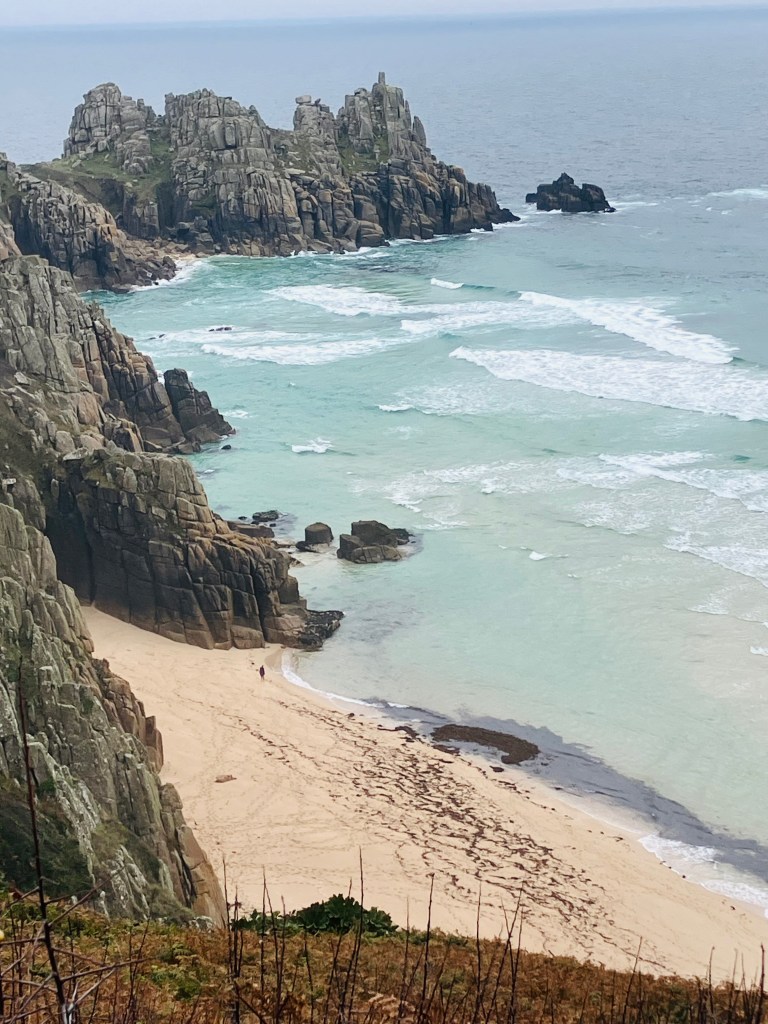
The rain poured down, the wind howled a gale outside, the truck broke down en route and again whilst we were there and the cosy cottage soon became somewhat claustrophobic. We had definitely got it wrong! The only moments of enjoyment were the day we spent at Trebah Gardens, one of my favourite places to go in the world! And another afternoon where we went out walking along the coastal path, chatting to a couple of locals we met en route and just enjoying the magnificent views and tranquillity.
Not only couldn’t I escape hubby, who had originally planned to go out and do some photography while I wrote blog posts, finished travel plans and read etc but I felt like I was wading through treacle. There just wasn’t enough hours in the day. I’d recently become a Parish Councillor and had training to complete (which still isn’t finished even now a couple of weeks later). I’d hoped to get ahead on my blog posts so that, like now when unfortunately I’ve spent nearly ten days feeling ill with Covid, I would have posts lined up to publish.
So where do I go wrong? Is it that I’m so used to being “busy” that I overfill my time? Is guilt never going to free me from its grip? Is relaxation just not a part of my DNA? Or is everything just a learnt behaviour? Are women just prone to guilt when men don’t even procrastinate about taking time for themselves? As a Mum are we just so used to juggling the balls that a life without any balls is just empty so we naturally fill it? If we are retired from work are we just on one long holiday and, therefore, not having enough time is just my own fault? And taking time away just to be ourselves without any worries and stress, is that just being ridiculous?
Is it just me who still feels the need to press that great big button, stop the world and get off?Please let me know your views because I really need to try and get it right!