From Holidays to Adventures: A Personal Travel Evolution

Lonely Planet Magazine changed my perspective on travel:
Many years ago I remember wandering around a magazine/book store at Heathrow airport and picking up a copy of Lonely Planet magazine. Little did I know that this innocent gesture would lead me up a path of no return…….
I sat on the plane absorbing all the articles and photographs, my mind transporting me to all the exotic places outlined in my reading and on my return from holiday I readily subscribed to the magazine.
It was a turning point in my life, I started to wave goodbye to “holidays in the sun” and began to think about actual “adventures” abroad. I would read the magazine from cover to cover, tearing out articles and eventually setting up files on my bookshelf where these prospective escapades would sit in their plastic covers, in alphabetical order, of course, awaiting a time when I would be able to pull them out and actually make those dreams a reality!

The magazine, unfortunately, ceased to exist in the UK in April 2020 and suddenly I was thrust back into a world without those monthly inspirational articles and dreams of where I was going to venture to next.
Covid suddenly meant that travelling became impossible and everyone was forced to spend their summer at home. It gave me a breathing space, however, to address all those carefully filed travel suggestions and formulate some actual plans for the future.

In 2021, still reeling from the epidemic but supported by articles about various cities and places to see in the UK I began to plot our first road trip. There were so many places here, in my home country, that I wanted to see. Places that had been defined as potential short breaks or weekends away with cathedrals and castles, beautiful countryside or seaside walks but places that were just sitting in a folder and never seeing the light of day. Inspiration overtook rationalisation and I finally joined the dots of all those places and we embarked upon a 56 day road trip of England and Scotland including the NC500.

Dunrobin Castle on the East Coast of Scotland

Then in 2022 we spent three weeks in Barbados in March which gave us an insight into that feeling of hot sun on your skin, whilst back at home the weather continues to be wet and miserable. We also finally got married and went off island hopping in Greece during the summer.

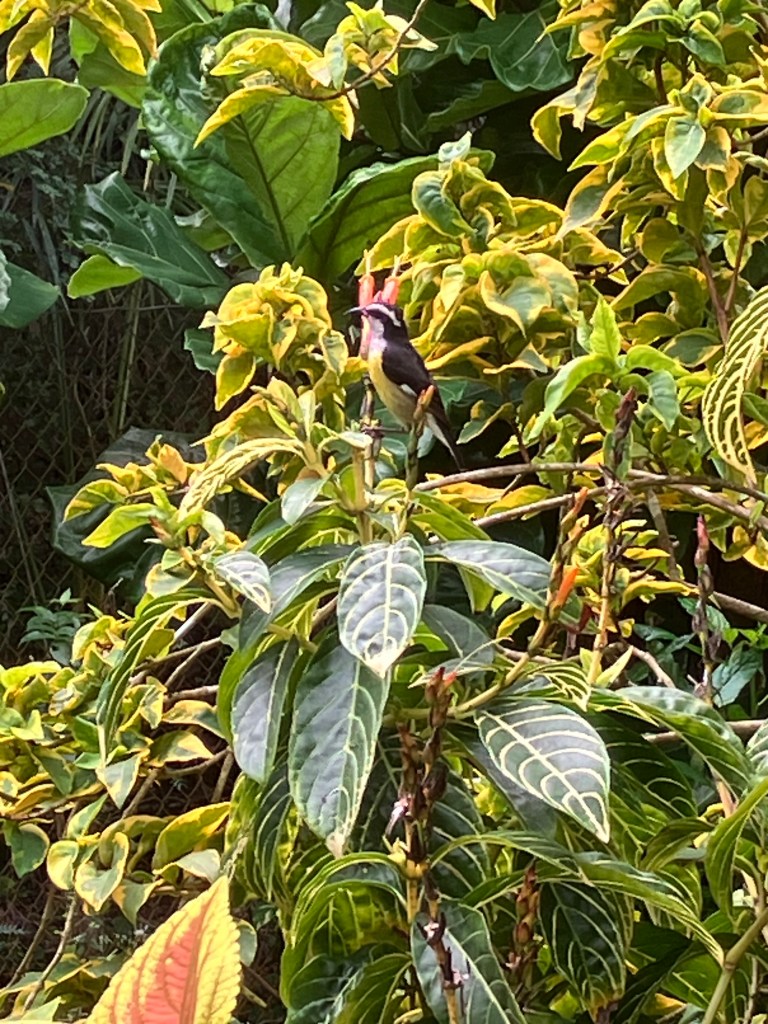
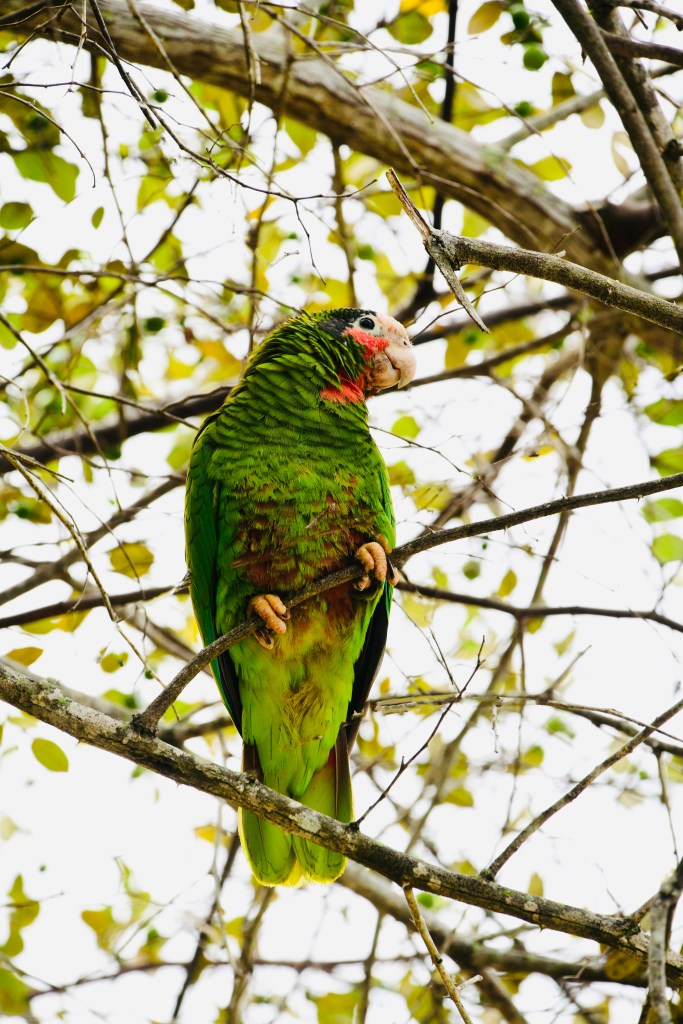
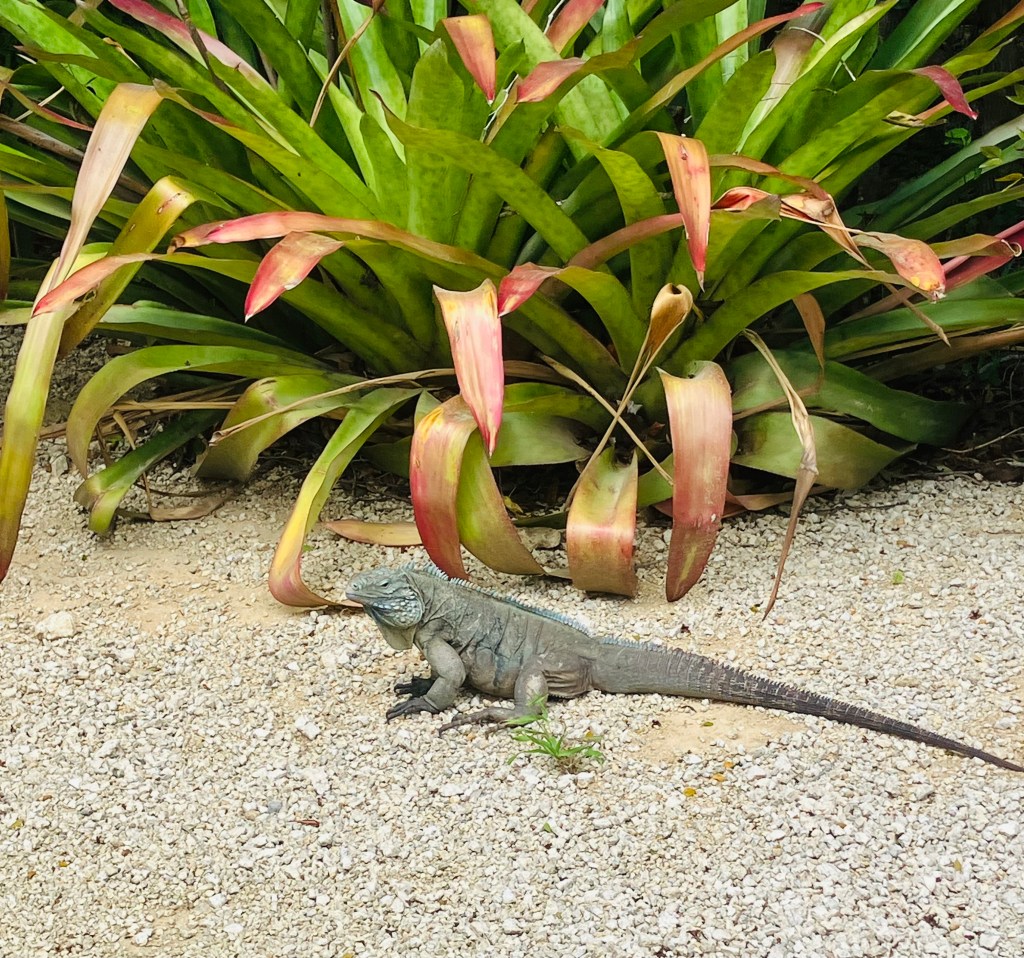
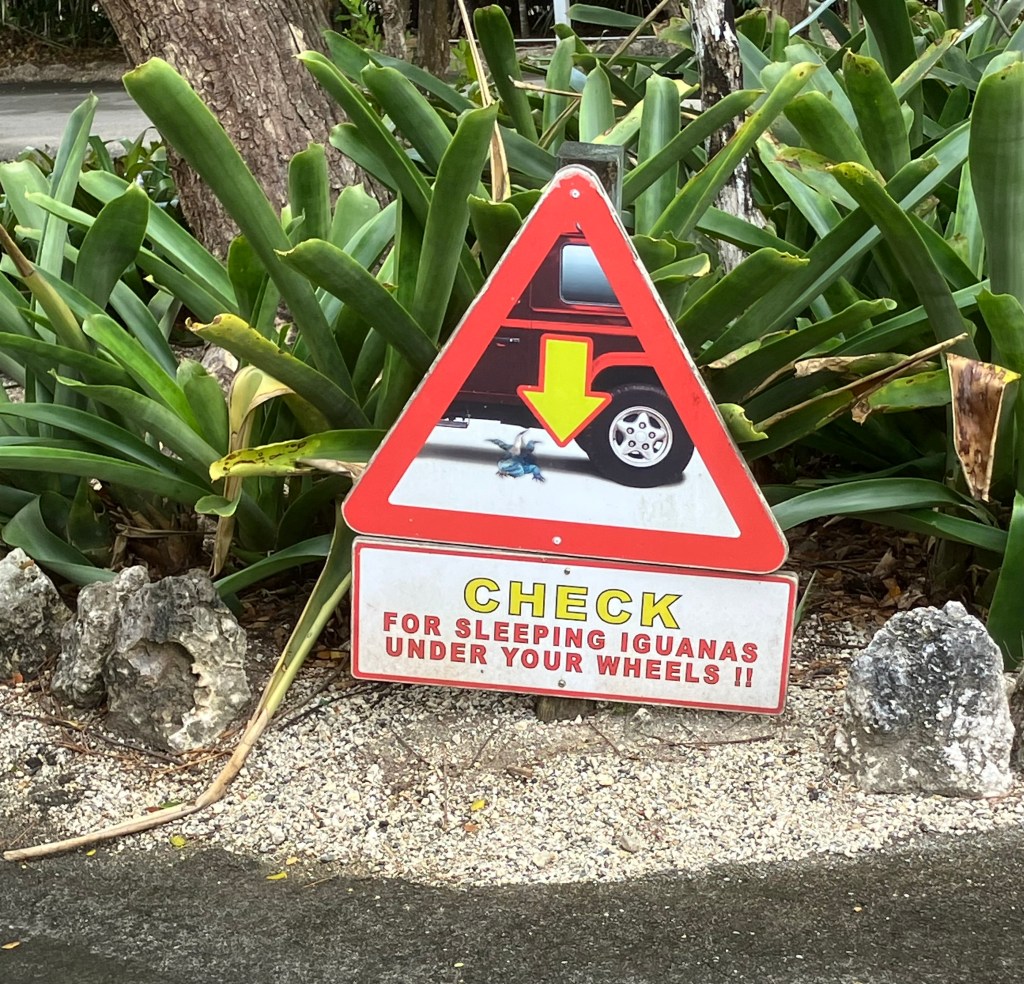
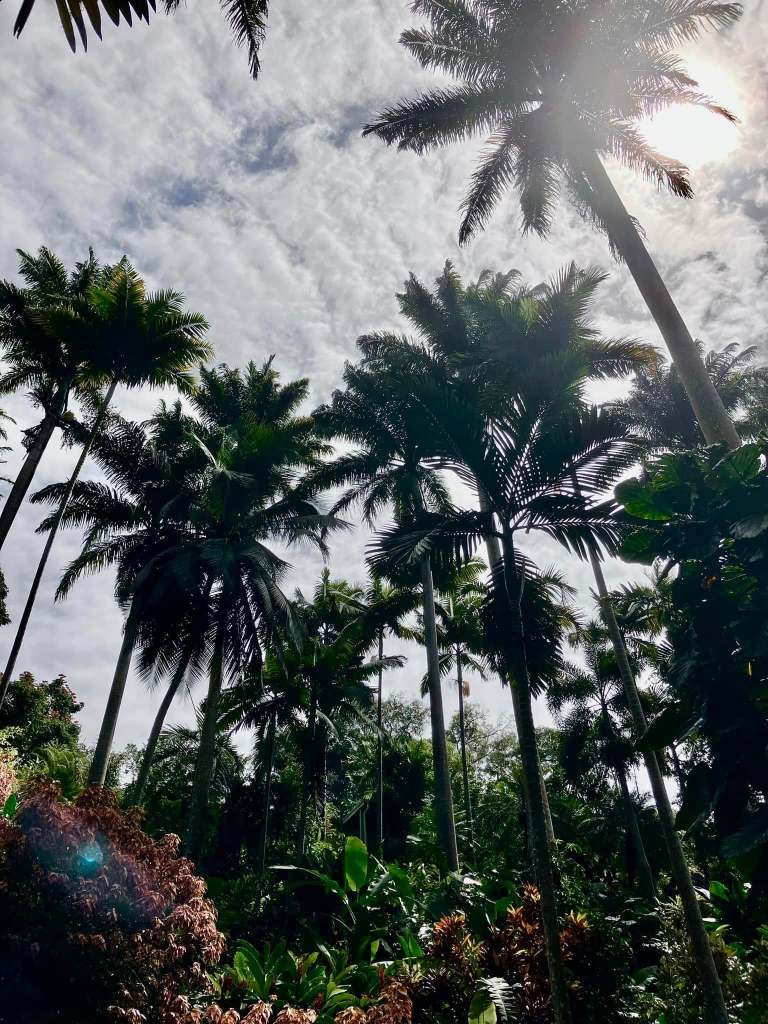
A Little Friend in the Andromeda Gardens, Barbados

2023 we left home for six months travelling around Europe and then America including Route 66 and the Eastern Seaboard. The freedom of the open road appealed to us. Just hubby and I against the world. Loads to see and do, again thanks to many of those LP articles giving me inspiration!

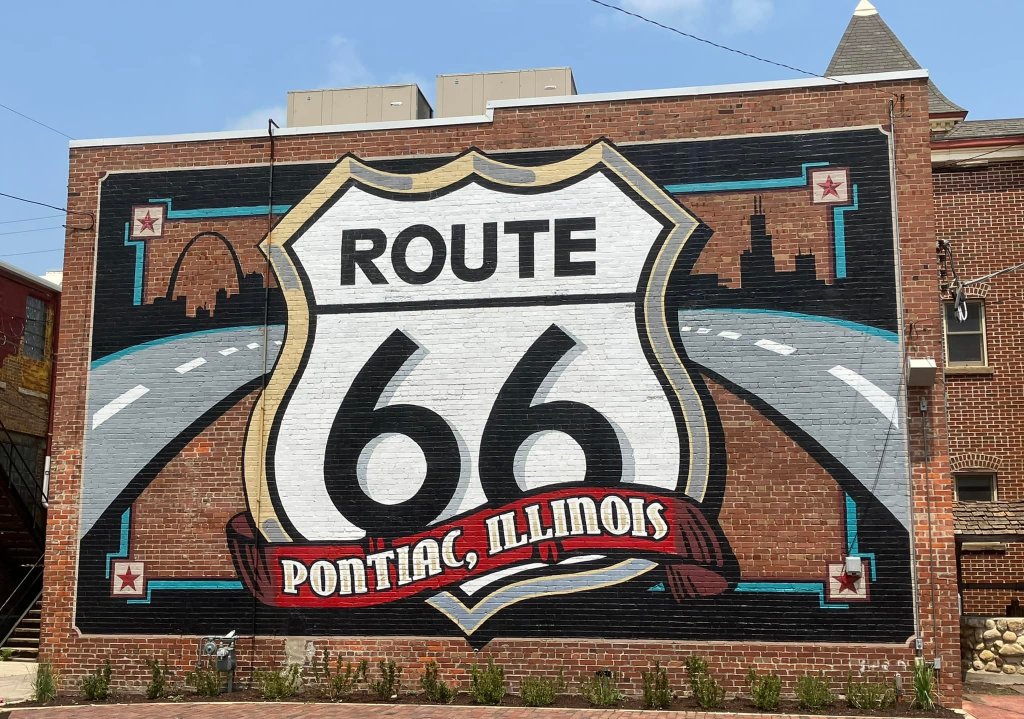
Only Those Of Us Who Have Completed Route 66 Know The Significance Of This Place

2024 turned into a unexpected pause due to ill health apart from a short foray for 2 weeks to Crete. This forced us to face the reality that “holidays even in the sun” are just no longer our thing. We needed mental stimulation and places to explore!

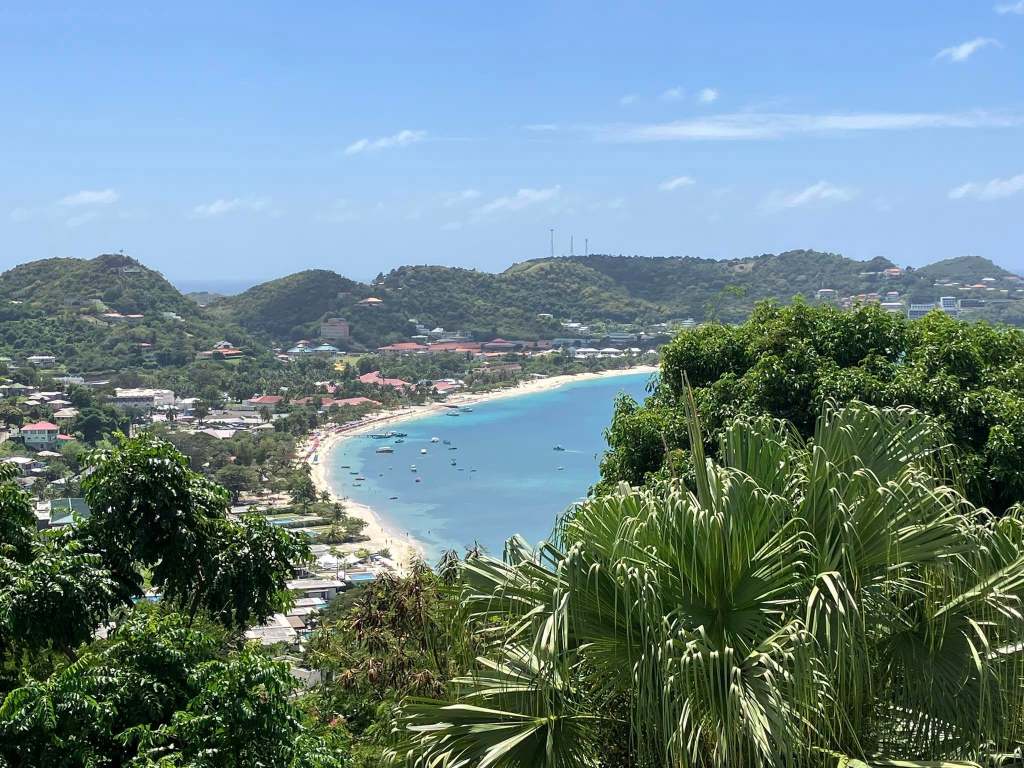
2025 started with a bang as we returned to the Caribbean exploring Grenada and returning to Barbados to see places still on our wish list. I also learned to snorkel for the first time, not bad for a midlifer who only a few years ago was not confident at all in deep water and looked on in envy when other people talked about the “other world under the waves”.
Trips to The Netherlands and then Las Vegas followed to sign off a couple of places we had previously missed back in 2023.

The Beautiful Town Of Gouda in The Netherlands

Amongst all the LP articles was another road trip that had picqued my interest. This trip, if we were to take it, would begin in Tarifa in Southern Spain, taking the ferry across to Tangier in Morocco and then would follow the coast road down through the capital -Rabat. On southwards to world famous Casablanca (thanks to the historic movie of the same name) before winding its way to Safia, Essaouira and finally to Agadir.
It seemed like a good idea but Morocco isn’t a first world country. I appreciate this terminology is somewhat outdated now and countries trend to be categorised by their development but whichever method is used Morocco is still a developing country and possibly still sits in the third world country category on the old scale.

It seemed like quite a challenging concept to “road trip” in a country that is still developing. I’d read travel books but they predominantly focused on Marrakech rather than the country as a whole. Reports from travellers of feeling unsafe and rampant petty theft didn’t instil me with confidence. Friends that had been there came back with mixed viewpoints. And so finally we decided to get on a plane to Marrakesh ourselves and dip our toe in the water so to speak………………
Arriving at the Airport:
As the plane lowered itself through the clouds in preparation for landing at the international airport of Marrakesh Menara I was amazed at the layout of the land below me. Squares upon squares of fertile agricultural land, views of the Atlas Mountains in the distance and certainly not the disparate, bare landscape I had anticipated.
If you ever watched Luke Skywalker in the Star Wars movie, A New Hope (Episode IV), where he is living on the desert planet of Tatooine with his family, then that was what I had imagined. Maybe because it was filmed in the next door country of Tunisia!
This looked so different to what my mind had conjured up and on landing at the airport I was even more shocked at how modern the airport is.

The new terminal was finished in 2016 and features some wonderful traditional Moroccan patterns and motifs, such as diamond-shaped tiles in various shades of green and terracotta, which create a unique blend of old and new. 

It’s a slightly different process getting through the airport here to what we are accustomed to, in so much as once you have been through security and had your passports checked you then have another manual check before you go into baggage reclaim. Once you have located your bags you then have to queue again to have them passed through an airport security machine before you can actually leave the airport.
It’s important also to get some Moroccan cash before leaving the airport.
It is a closed country which means that the currency cannot be taken in or out, it just stays in the country. The ideology behind this is that it protects their economy from the ups and downs of global trading.
We used an ATM at the airport to withdraw our initial cash but other visitors were using one of the two exchange counters.

Wi-fi is in good supply at the airport so you don’t need to actually use your data allowance but I would suggest that you ensure you have sorted your mobile phone contract in advance of arrival. We have 56 days each on our UK contract that allow us to utilise data in most countries in the world without any additional costs.

Getting to our Riad:
My research had shown me that independent travellers are best to book an airport transfer in advance rather than rely upon picking up a taxi at the airport. Taxis waiting at a stand are not obliged to use their meters and will often drop you off at Djemaa El Fna central square. There are a couple of reasons for this:
– There are no cars allowed on the narrow lanes within the city walls on which most riads are found.
– For this reason the taxi drivers do not need to speak your language or worry about the address you are willingly providing to them at the airport because they are not going to take you there.
– Finally young men in Marrakesh learn very early in life that money can be made from tourists who are dropped off in the square and then, looking completely bewildered and lost, need help locating their specific riad. If you do decide to opt for this idea make sure you agree a price for the guidance in advance.

We were fully prepared and our driver -Said has already text me on WhatsApp after our plane has landed letting me know where to find him. He greets us with a welcoming smile and leads us to his vehicle.

En route to our Riad, which is about a 20 minute drive, Said welcomes us to his country and speaking very good English explains a bit more about how the city operates. The roads are tremendously busy and somewhat chaotic at times.

The city was founded between 1062 and 1070 AD by the Almoravids, a Berber dynasty. Said, himself, originates from a Berber tribe who live outside of the city, nestled in villages stretching East out to the Atlas Mountains, although he now lives within the city walls with his wife and children.  
Marrakesh is the fourth-largest city in Morocco and is known as “The Red City” because the majority of buildings are built with distinctive red sandstone. The city grew rapidly and soon established itself as a cultural, religious, and trading centre with the ancient walls of Marrakech standing as a boundary between the vast desert landscapes and the burgeoning city.
These 12th century city walls are clearly visible on our route and stand majestically up to 32 feet tall. Made of earth, lime, and straw, they originally served to protect the city’s inhabitants and up until the early 20th century, the gates were all securely closed at night.

Today they enclose the historic Medina, packed with vendors and their stalls, marking a boundary between it and the modern city built on its outskirts. It is in this modern external section that you will find all the plush hotels with designs that often feature open courtyards, mosaic-lined rooms, and luxury amenities, providing a peaceful, modern escape from the city’s bustling historic centre.
This is not on our agenda and we are more than happy when Said pulls up in a car park explaining that there are nineteen gates through which you can enter the city. It reminds me of the start of the “Robin Hood, Prince of Thieves” film with Kevin Costner and Morgan Freeman when Robin is imprisoned whilst fighting the crusades and escapes after dark to make his way back to England. The narrow lanes, tall historic buildings, noise and chaos hit you immediately you enter through the gate.

Said explains that we need to walk on the right. Whilst cars are not allowed within the Medina walls, scooters are prevalent allowing their passengers to quickly traverse this ancient capital and carefully meander their way through the cobbled lanes of the city.

The sights and sounds immediately attack your senses. People abound, men, women and children all in traditional dress. Donkeys pulling carts laden with anything from produce to building materials also make their way amongst the melee. Every lane is lined on both sides with small open shop fronts with busy locals selling their wares. You immediately realise that you need to be aware of your surroundings, not for any sinister reason, but purely so you don’t cross someone’s path or get in the way. We may be the tourists but this is “their city” and there is an air of pride present.

Riad Shaden:
I found the Riad on a Facebook group for retired travellers. It was recommended and having researched it a little further it appeared to be exactly what we were looking for.
We had turned right off the lane leading from the gate and circumnavigated a mosque to arrive at the Riad’s front door.
As became apparent on our adventures in Marrakesh these doors are often quite inconspicuous, if you didn’t know they were there you could easily walk on by.

As we arrive we are met by two other British tourists who appear to be having a debate with a very tall young man in traditional dress. It appears this couple didn’t know about the aforementioned taxi problem and have indeed been dropped at the main square and the young man has led them to the Riad. The discussion is now about the money he feels he is owed for extending this courtesy.
Said leads us inside and immediately we are struck by the silence. The heavy, black door cuts off all noise from beyond the walls and we are led into a central courtyard. Tables and chairs are placed neatly on the paving stones, water trickles from an inlaid stone feature to my right, potted plants enjoy the sunshine and around the top of the courtyard a beautiful balcony can be seen.
The rooms all face into the courtyard, creating a sense of privacy and seclusion from the outside world. Intricate Moroccan craftsmanship abounds with zellige (pronounced zuh-leej) tilework, carved woodwork on the doors of each room and tadelakt plaster in between. I am so impressed and also so pleased that we came to a traditional Riad instead of a soulless hotel, where we quite honestly, could have been anywhere in the world.

While Said goes back out to assist the couple, his brother Imran leads us into a comfortable salon with large, colourful sofas into which you can collapse after a long day. Imran serves us the traditional mint tea in a silver teapot with a small collection of Moroccan cakes.
Peace surrounds us and I’m already sold on this amazing piece of the world’s architecture, beauty and tranquillity.

Part 2 of Marrakesh will take you on our journey through the medina to some of the many key sites we wanted to see and experience………………………


Maximize Your Travel Experience with GPSmyCity App

Read on for your FREE Welcome bonus!

As a midlife adventurer I’m the first to admit that working with on line apps and websites isn’t always my cup of tea.
I was in the first group at my senior school to be offered an O’Level course in Computing way back in the late 70’s. The career path I then followed when I left school increased my knowledge of various Microsoft products and my children, now in their late twenties, have also attempted to keep me up to date as much as they can with new ideas and technologies as they surface.
For me, therefore, to be introducing you to this app is a major step forward!
But it is so easy to use and even the upgraded version is at a very acceptable and reasonable cost.

In this day and age utilising your phone whilst travelling abroad can become a bit of a nightmare. Maybe you don’t have a cell phone plan for the country you are visiting or utilising your data abroad comes at a daily cost, then the idea that you can download articles in advance and access them later without an internet connection is a real advantage.

GPSmyCity – How It Works:
By using GPSmyCity you can access any travel article and it comes complete with GPS co-ordinates embedded in the article and even a map of the route the author has described!
There are literally thousands of these articles to choose from, with hundreds of cities worldwide at your fingertips at GPSmyCity. Once this app is downloaded to your phone you will not need any internet to use the article as a guide.

If like me you don’t rely upon a travel agent to sell you a package deal but enjoy creating your own made-to-measure travel plan then these articles can be invaluable. You can upload any travel article from GPSmyCity free of charge, so that you can read it at your leisure without wi-fi or even link it to your itinerary ready for use when you arrive at your destination!
There is also the option to upgrade for a small fee or to subscribe annually (for just over a £1 a month!) so you can improve your travel planning further by accessing an offline map showing the points of interest. It then links the app to GPS, so when you are actually in the city you can get a route to the places mentioned in the article. It shows you exactly where you are on the map and guides you to each subsequent location!
No more printing off pages of literature to take with you or packing heavy guidebooks!
If you are visiting multiple cities, as we did on our Western European tour, you can have access to everything in one place.

Additional Welcome Offer:
I’m pleased to say that my blog amidlifeadventure.org is now featured on the app and as such I can now personally introduce you to the GPSmyCity app in order for you to experience how good it is for yourself and your future travels.
Whilst many of my articles now feature on the app if you access any of the following travel articles between Monday August 18th and Monday September 1st you can access any of these three articles, download them for FREE and upgrade to the full version for FREE!


Exploring Rotterdam: A Guide to Its Must-See Attractions
We visited Rotterdam on a recent trip whilst staying in The Netherlands. This a photograph of the market or Markthal where you can see many different foods for sale or even grab something to eat for lunch. There’s so much to see and do, this is a real gem of a city!

This article is now featured on GPSmyCity-https://www.gpsmycity.com.
To download this article for offline reading or create a self-guided walking tour to visit the attractions highlighted in this article just click on this link:
 https://www.gpsmycity.com/blog/8542


Glastonbury -An Ancient Town Full of Integrity
We completed a UK Road trip, driving for 56 days throughout England and Scotland. This is Glastonbury Tor.
Tradition has it that here lies the Holy Grail brought here by Jesus’s uncle, Joseph of Arimathea. The Cauldron and the Grail were both the object of quests for King Arthur and his knights.

This article is now featured on GPSmyCity – https://www.gpsmycity.com.
To download this article for offline reading or create a self-guided walking tour to visit the attractions highlighted in this article, just click on this link:  https://www.gpsmycity.com/blog/8537


Top Attractions in Saint George’s, Grenada 
We visited Grenada earlier this year whilst travelling around the Caribbean. I loved this typical Caribbean house in the centre of Saint George’s!

“This article is now featured on GPSmyCity-https://www.gpsmycity.com
To download this article for offline reading or create a self-guided walking tour to visit the attractions highlighted in this article, just click on this link:
  https://www.gpsmycity.com/blog/8540

How To Access This Offer:
To get your free upgraded app, you need to click on the link for the article(s) you are interested in.
– Then follow the instructions to download the GPSMyCity app.
– You will then be taken to the page for the article app
– Click on Upgrade and the app will be automatically linked to an offline map and the GPS navigator.
– Once you have read my article(s) why not browse all the cities offered on GPSmyCity and start planning your next trip

My Articles:
I have other articles on the GPSMyCity app (https://www.gpsmycity.com) which you might also find interesting.

Visiting England:
“The Cotswolds – Shopping in Nailsworth”  – https://www.gpsmycity.com/blog/8546
“Exploring Stratford upon Avon”– https://www.gpsmycity.com/blog/8539

Visiting Europe:
Utrecht: Must-See Attractions and Shopping Spots”– https://www.gpsmycity.com/blog/8541 

Visiting America:
Impressions of Chicago – https://www.gpsmycity.com/blog/8535
“Top Free Attractions in Las Vegas: A Visitor’s Guide” – https://www.gpsmycity.com/blog/8543
“Santa Fe – The Contradiction”– https://www.gpsmycity.com/blog/8536
“Washington DC – What a Capital City!”– https://www.gpsmycity.com/blog/8538

Alternatively you can browse my blog –amidlifeadventure.org.
Just tap on the “blogs” section in the top right hand corner and every post will appear in chronological order working backwards from today. I’ve been running it since 2023 so there are plenty of posts to choose from!

I’m happy to receive any comments or questions. I always do my best to answer them.
Additionally you can subscribe in order to receive my posts straight to your inbox.. You’ll find the subscribe button in the bottom right hand corner of any post.
Happy Reading!

Exploring the Cotswolds: Finding The Source of the Thames

A little while ago I came across a local app on Facebook entitled “Glos Walks” which has entertained hubby and I in helping us to discover new walks in and around our great county of Gloucestershire.

Gloucestershire:
Covering 1024 sq miles this beautiful county lying in the South West of England was likely established in the tenth century, and expanded to approximately its current borders in the eleventh century.
It has three main landscape areas including a large part of the Cotswolds, associated with its honey coloured stone houses and cottages and designated areas of outstanding natural beauty. The Cotswolds take up a large portion of the east and south of the county.
These days, of course, it is also well known for its many famous residents including King Charles III, Princess Anne and her family, the Beckhams (just across the border), model Kate Moss, artist Damien Hirst, actor Richard E Grant and singer James Morrison to name but a few.

Also within it’s boundaries is the second landscape that is the Royal Forest of Dean, which takes up a large portion of the west of the county and which featured heavily in the filming of the Harry Potter film -Deathly Hallows. Probably not surprising when its author J K Rowling spent part of her childhood in this area.
The final landscape is the Severn Vale which stretches from historic Tewkesbury in the north of Gloucestershire, past the cathedral city of Gloucester and flows down towards the market towns and countryside of South Gloucestershire, following the winding path of the mighty River Severn. Along this scenic corridor, you will find castles, wetlands, picturesque villages and peaceful riverside walks.

The aforementioned app features over 150 walks so whether you are a resident of picturesque Gloucestershire or a temporary visitor there are plenty of new experiences and places to explore. All of the walks are circular which makes it so much easier to park up and then venture out to explore the countryside.
Joined by an old junior school friend and her husband who now live in The Netherlands we set out one sunny morning recently to find the source of the River Thames. This walk is under the heading of “Coates” on the app.

Coates:
The small village of Coates lies about 3 miles west of the Roman town of Cirencester. A large proportion of the houses and land within the village form part of the 15,500 acre Bathurst Estate. Earl Bathurst being based nearby at Cirencester Park.
Parking up in the village centre we hop out of the car and utilising the “yellow brick road” on the app set off on our walk in an anti clockwise direction.
It’s not long before we are passing the local 13th century church of St Matthews, sited right on the edge of the village and tucked away from immediate view. With its perpendicular tower, Norman doorway and well kept graveyard to the front I felt like it was thanking me for making it part of our walk today and was wishing us well on our journey today.

Making our way across some recently cut arable farmland we head towards the railway line.
The Golden Valley Railway Line:
This is the line that connects Swindon to Gloucester and Cheltenham Spa which opened between 1841-1845.
The “Golden Valley” is actually the section of the valley located between Chalford and Stroud where the River Frome flows, which the railway line follows for part of its route. However according to legend Queen Alexandra, wife of King Edward VII travelled along this route back in June 1909 and was struck by the sheer beauty of the countryside through which the train was travelling and coined the phrase “the Golden Valley” and it has stuck ever since.
If you are travelling from London and don’t wish to drive up to Gloucestershire, trains run regularly from London Paddington and you can experience the “Golden Valley” for yourself just as Queen Alexandra did.

Trains run regularly along this track in both directions and so crossing the line even at the designated place needs some care particularly with children and animals. We had to wait for a train to go past, blowing its horn as if to emphasise its domination and warning us of the danger.
On the opposite side we skirt Hailey Woods and join the Wysis Way. This is a 55 mile walking route which forms a link between the Offa’s Dyke Path and Thames Path, both national trails in the United Kingdom. Starting at Monmouth in Wales it winds its way east through the Forest of Dean to the top of May Hill (971ft), through Gloucester before turning south east through the beautiful villages of Painswick, Bisley and Oakridge Lynch and then following the Thames-Severn canal to Sapperton and eventually Kemble where it joins the Thames Path.
Who knew you could walk all the way from Monmouth in Wales to London?

Tunnel House Inn:

Arriving at the Tunnel House it is sad to see it shut and boarded up. It was well known back in my teenage years as a place to frequent for the odd drink or meal hidden away from the main road running from Cirencester to Stroud. Unfortunately it ceased trading in 2020 when the pub’s management were unable to reach an agreement with the landlords, The Bathurst Estate, which prevented them from continuing to trade. 

It was actually originally built back in the 1780’s for the navvies working on the two mile long Sapperton tunnel on the Thames and Severn canal. There was a huge loss of life during the digging of the tunnel from 1788-90. The inn provided both lodgings for the navvies and also occasionally became a makeshift mortuary!

Turning left down the steps we join the Monarchs Way, a path known for its diverse scenery, which passes through various landscapes, including the Cotswolds, as well as many historical sites. 
Stretching some 625-miles across England, Monarchs Way traces the escape route of King Charles II after his defeat at the Battle of Worcester in 1651. It is not a single, unbroken path but rather a network of existing footpaths and rights of way that roughly follow the historical route from Worcester, through Bristol and Yeovil, to Shoreham, West Sussex.

Sapperton Canal Tunnel:
Opened in 1789 this was the longest canal tunnel ever constructed in the United Kingdom at 2.17 miles in length, it is now the third longest. The first boat passed through the tunnel in April 1789 and the last commercial traffic to use the tunnel was in May 1911. Today the Sapperton Tunnel remains impassable with a number of significant roof falls and a complete blockage near the Sapperton end. 
During the working life of the waterway, canal craft did not have engines. Instead, boats were pulled along the canal by horse, donkey or a man walking along the towpath. However there is no towpath within the tunnel so in order to get a boat through the tunnel, one or two men would lie on their backs on board the boat and ‘walk’ along the tunnel wall or roof. This process was known as ‘legging’. Another method used a pole to push the boat along, again using the tunnel wall or roof.

Active plans and restoration efforts to reconnect the 36 miles of the Thames and Severn Canal, specifically through the Cotswolds Canals Trust are in place. The restoration of Sapperton Tunnel is entirely feasible from an engineering standpoint. As might be expected though, this will be the most complex and expensive single element of the Thames and Severn Canal restoration.
Maybe one day we will be able to repeat this walk and actually see boats once again meandering along this wonderful old canal.
In the meantime our walk takes us alongside the canal sometimes ducking under or climbing over fallen trees that haven’t been removed in recent storms.

Coates Round House:
Alongside the canal path on our right we come across this wonderful historic building and immediately set about exploring inside and outside as best we can.
This is actually one of the five round houses on the Thames and Severn Canal, which were originally built as lengthsman’s cottages between 1791-2. One of the responsibilities of the lengthsman was keeping the towpath in good condition, ensuring it was clear of obstructions and suitable for horses to pull the boats. The Coates Round House featured as one of the three tallest of these roundhouses, the additional height concealing an inverted conical roof for collecting rainwater.
The ground floor was designed for stabling, and the upper floors, linked by an internal staircase, for living accommodation. This particular building was modernised and extended, and the ground-floor portion was then incorporated into the living accommodation.
The building is now unfortunately derelict, lacking floors or roof, but structurally it is in a reasonable condition.

All five original round houses on the Thames and Severn Canal have survived. Forming part of the Bathurst Estate this is the only one that is derelict.

Skew Bridge:
Leaving the roundhouse behind we walk underneath the railway bridge that carries the Golden Valley railway over the canal. Before the Ocean Railway Bridge was re-built and opened near Stonehouse in 2022 in association with the aforementioned Cotswold Canal Trust, this bridge was the only remaining live railway bridge on the Cotswold Canals. Notable for its intricate brickwork it’s worth a stop and a photo.

And finally the Source of the Thames:
Whilst our circular walk from Coates doesn’t officially include walking to the source of the Thames it offers it as a slight diversion. Leaving the canal path behind we turn right and walk over green pastureland, keeping the boundary on our left and crossing over two fairly steep step stiles ( not great if you have a dog with you) plus one further stile.
It is during this section of our walk that we bump into a gentleman on his bike with his dog and in typical Cotswold fashion stop to pass the time of day. It transpires that his family own the land on which we stand and a polite conversation ensues where we learn more about the surrounding area and the Thames source.
You can’t miss the famous source of the Thames, there is a clear upright stone marker accompanied by a pile of small stones in front, below which the spring head is located. Both of these were placed here by the Thames Conservators in the 19th century to indicate the official source of the River Thames. 

While the area is considered the source, the springs themselves are often dry, as they were on our visit. Our farmer acquaintance had explained that the route to the stones that we had walked is, however, often very wet and can form a stream after heavy rainfall. 

There may not have been any water present on our visit but we were joyful anyway to have actually stood where the Thames begins before it makes it way eastwards across Gloucestershire, Oxfordshire and on into London. The Thames Path also begins here and is clearly marked telling you it is 184 miles to walk to the Thames Barrier in London where the path ends!

Finishing the Circle:
We returned to the point where we had diverted off “our yellow path” and followed it the short distance back to Coates and back to our car.

If you are in need of refreshments, The Thames Head Inn is only a five minute drive from here on the main Tetbury to Cirencester road. We haven’t been there but Tripadvisor gives it 4.5 stars from over 600 reviews if you wish to take a look.

Gloucestershire offers some wonderful opportunities for you to take a stroll, a walk or even a hike in some beautiful countryside and the Glos Walks app really helps with this. You can get a real insight to the distance, topography and sites before you embark on your chosen walk and they also recommend some “watering holes” for refreshments.

NB:
This is my fourteenth post in a series I have written about The Cotswolds. Why not check out the others and share with me any that you would recommend for us.


Day 4: Exploring The Houses of Parliament at the Centre of UK Politics

Having spent day three immersing ourselves in art we left our hotel for our final day of exploration and caught the DLR once again from Westferry, jumping out at Tower Hill and transferring onto the District Line to Westminster.
Exiting from the Tube station we are immediately met by the sheer magnificence of Big Ben and alongside him the Houses of Parliament.

Tickets for the Houses of Parliament:
Having never visited the Houses of Parliament we purchased tickets on line. In so doing you need to pick both your day of visit and time. The early morning slots sell out quickest as visitors fight to miss the usual tourist melee of central London and so booking well in advance is a good idea.

The U.K. House of Parliament or Palace of Westminster is open Monday to Friday from 9 am to 5 pm. You have a choice of guided tours and multimedia tours. Multimedia tours allow you up to 90 minutes inside the Parliament buildings using their audio guides. The guided tours last 75 minutes and these sell out quite quickly, another reason to plan your visit well in advance. All tours mostly take place on weekdays and Saturdays. We opted for the self guided multimedia tour.

We cross over the road from the station to the other side of Westminster Bridge and keeping Parliament Square on our right and the Houses of Parliament on our left we walk straight down the road to the visitors entrance at Cromwell Green. They suggest you arrive about twenty minutes before your chosen time to allow for queuing and once inside the building there is an airport security check so it is worth making sure you have read what you are allowed and not allowed to bring with you, including the size of any bags.

Westminster Hall:
Once inside the building you step straight into Westminster Hall where we picked up our audio guide. Fully equipped and working I turn around and just stand and look around me, this magnificent entrance hall built between 1097 and 1099 immediately immerses me in it’s history, imagine what history the walls have been privy to!

In 1189 Richard I held the first recorded coronation feast here.
It was here in 1606 that the trial of Guy Fawkes and the Gunpowder Plot conspirators took place, followed by the trial of King Charles I in 1649.
Fast forward to 1910 and the body of Edward VII was the first royal to lay-in-state here prior to his Royal funeral.
In 1960 President de Gaulle of France addressed both Houses of Parliament within this space as did Nelson Mandela in 1996.
Finally in 2022 our longest serving monarch Queen Elizabeth II also lay in state here. It is estimated that over 250,000 people queued up and bade their last farewell to her across the four days that she lay in state.

Westminster Hall is the oldest building in Parliament and almost the only part of the ancient Palace of Westminster which survives in almost its original form. The Hall was indeed by far the largest hall in England, and probably in Europe at that time. Measuring 240 by 67 feet, it had a floor area covering about 17,000 square feet and walls that are some six feet thick.
The roof is in itself a bit of a mystery, made of wood timber the roof is the largest hammer-beam roof in the world. However it wasn’t until the 13th or 14th century that carpenters could create roofs significantly wider than the length of the available timber. So how was it built? Well it was assumed that a single or double row of columns was put in place to support it. However, recent archaeological explorations found no evidence of these, and that the roof may have been self-supporting from the beginning?

Following the audio tour I walk up the stone steps at the opposite end of the hall and turn left into St Stephen’s Hall.

St Stephen’s Hall:
The hall was built to replace the chapel of the same name which was destroyed in 1864 due to a fire. The chapel was actually the original home of the House of Commons and beneath the hall the original undercroft of St Stephen’s chapel still survives. The hall was the creation of Charles Barry who decorated it with sculptures of famous parliamentarians and paintings of great events in British history.
Lined with seating it gives me a welcome pitstop in my tour on a fairly hot, stuffy summers day. This is also the last point at which you are permitted to take photos.

Exiting from this beautiful, corridor like space you then come to the Central Lobby.

The Central Lobby:
This is the very heart of the Palace of Westminster, acting as a crossroads between the two Houses and Westminster Hall allowing members of the House of Commons and the House of Lords to mingle and also serving as a meeting point where MPs can meet their constituents.
I’m happy to stand and take in the wonderful architecture. Designed once again by Charles Barry this area is octagonal in design, made of stone with an intricately tiled floor.
I love the feature that has been made of the four exits from the Lobby. Each has a large mosaic panel, depicting the patron saints of each of the four constituent countries of the United Kingdom: St George for England, St David for Wales, St Andrew for Scotland and St Patrick for Northern Ireland. The audio guide utilises this feature to ensure you follow the route in the correct order.

House of Lords:
This is the upper house of the Parliament of the UK and currently there are about 800 members who are eligible to take part in the work of the House of Lords. As the second chamber of the UK Parliament, the Lords play a vital role in examining future legislation, whilst also investigating public policy. They can challenge the government and hold the government accountable through debates and questions. With a broad range of expertise with members having successful careers in business, culture, science, sports, academia, law, education, health and public service, they can provide expertise in their given areas. 

Whilst Charles Barry designed the Palace of Westminster as a whole, Augustus Pugin supplied the detail and had the passion to deliver the complex gothic interiors that can be seen here today.
The House of Lords is full of red upholstery and looking around the chamber I cannot help but notice the large and majestic royal throne which stands at the far end on a raised platform. Designed upon the 14th century coronation chair in Westminster Abbey it is here that the monarch delivers the ‘speech from the throne’, which is written by the government, in the chamber during the State Opening of Parliament.

House of Commons:
Leaving the upper house behind the tour takes you back out to the central lobby and into the House of Commons. Suddenly the red upholstery has been replaced with green benches, a colour that has apparently been associated with this chamber for over 300 years.
The current Chamber was actually rebuilt after the World War 2 by the architect Sir Giles Gilbert Scott at a cost of some £2million and to be honest is rather austere and certainly of a more simple and plain Gothic design. I wonder if it is to remind the occupants of their status compared to the chamber next door?
Scott, to be fair, did introduce modern heating, lighting and ventilation and enlarged the galleries to provide more seats especially for the press and public. 

The audio guide explains the manner in which the Government works in the UK so hopefully visitors can leave with a better understanding of a system that stems back to its roots in Anglo Saxon times. The idea of the Commons meeting separately from the nobility and clergy began back in 1341.

Leaving the House of Commons behind I follow the defined route back to St Stephen’s Hall and thus back to the start of the tour. There are both a gift shop and cafe on site off Westminster Hall along with public toilets.

Bidding a farewell to this historic building at the centre of UK politics our London adventure comes to a close. I hope if you haven’t done so already you will have read my other posts about this adventure and if you have any comments or questions you would like to make/pose please feel free even it is advice about other things to do and see in London…..


Frameless: A New Era of Artistic Immersion

“Day 3 in London -Immersing Ourselves in Art” continues by leaving “Here East’ and the World Press Photographic Exhibition behind and heading back to the bus stop to jump back on the 388 bus towards Stratford City Bus Station. From here it is just a five minute walk to the underground where we pick up the Central Line. Heading towards West Ruislip we get out at Marble Arch and walk around the corner to the “Frameless Immersive Art Experience”.
We purchased our tickets on line and I have to be honest they are more expensive than we would normally pay for an alternative art exhibition but we wanted to try something new and this is certainly it!

Frameless is a unique and modern method of absorbing yourself in art. Classic pictures are brought to life by basically removing them from the confines of a frame and displaying them instead throughout the room in which you stand or sit. Every wall, the floor and sometimes the ceiling is a masterpiece in motion. By adopting this approach you are brought into the actual picture , it envelops you, surrounds you and connects you to the artist in a very unique and awe inspiring process.

This is the largest permanent, digital immersive experience of its kind in the UK. Using state of the art Panasonic projection alongside individually curated scores you are totally immersed into each piece of art.

The introduction from the curators says:

“This is a place where there are no white walls,
Where art seeps into every inch of space,
Surrounding and astounding all inside.
This is a place where art comes alive
Where it is free to run wild
Where it knows no bounds.
This is a place where you can climb inside,
Where you can be immersed in each spectacular scene,
Where you can find your place to wonder.
This is a place where there are no frames,
Where art is a world you can explore,
Where you can get closer to art than you’ve ever been before.”

There are four separate galleries:
“Beyond Reality”.
This is where we began our journey exploring great art works such as:
Edvard Munch “The Scream’, Max Ernst “The Fireside Angel” and Hieronymus Bosch “The Garden of Earthly Delights”.
Taking centre stage these and many more famous pieces from the 16th century right up to the 20th century swirl across the walls around you.
My favourite piece in here was Thomas Lowinsky’s The Dawn of Venus. It filled all four walls, plunging us as visitors into the depths of its ocean whilst immersing my feet on the seabed. Truly amazing!

I’ve not be able to upload my videos onto my post but they will be available from tomorrow on my instagram page
https://www.instagram.com/amidlifeadventure/
I have a couple of photos instead.

Colour in Motion:
This was the second room we entered where great masterpieces such as Monet’s “The Waterlily” are enhanced to the point that you can see every brushstroke up close and personal.
Van Gogh’s “Self Portrait” and “Starry Night over the Rhone” similarly amazed me.

In this room an added aspect comes into play -the idea of the pictures being triggered by the movement of the audience. Walk along the floor and the leaves move with you, it’s like rustling through the Autumn leaves on a woodland floor whilst being inside a magnificent piece of art. Again a video really shows this interaction on instagram.
I did capture a few photos as well:

The World Around Us:

Room three and here the creators have taken paintings from the 1st century BC up to the Impressionist Movement of the late 19th century to bring “life itself” into our view. Imagery such as:
Rembrandt’s “Christ in the Storm on the Sea of Galilee”, “Vesuvius in Eruption” by Joseph Wright of Derby and Canaletto’s “The Grand Canal” where the figures within the painting come to life. Sound is added to the experience so you can hear the oars as they go through the water and the chatter of the people on the canal side. Everything has been created to make you feel as if you living within each painting!

The Art of Abstraction:
The fourth and final room brings the visitor into a floating maze of colour, shape and form with the pioneers of abstract art.
If you have been reading my blog from the beginning you will know I struggle with this type of art.
https://amidlifeadventure.org/2023/03/07/opinion-modern-art/

Using cutting edge technology the pioneers of abstract art are brought to life in this room full of colour and light. Famous pieces of art from artists such as Piet Mondrian, Wassily Kandinsky and Paul Klee feature amongst the kaleidoscope of floating projections which respond to music so that each painting appears as a living, pulsating piece of art.

My Conclusion:
The Mayor of London, Sadiq Khan described this exhibition saying “Frameless will be a groundbreaking and hugely popular attraction in the West End demonstrating the constant innovation and creative energy of London.”
It is certainly very different and takes traditional art away from the walls of many an art gallery in order to make it an immersive and living experience thus opening it up to more people. It’s an experience that lends itself to children of all ages and including those with neurodiversity who might find a traditional gallery too enclosing and busy with visitors.
Expensive but worth a visit!

And so Day 3 comes to a close, one final day in London to bring you in my next and final post of this recent adventure.……………………………

Day 3 in London -Immersing Ourselves in Art

Having been up with the lark yesterday we decided to take things a bit slower today and with pre-bought tickets set off to visit two completely different art exhibitions that were on in the capital.
We began our journey by catching the 277 bus just outside the hotel towards Kingsland. Alighting at Stop N on Holcroft Road we then walked to Stop D and picked up the 388 heading towards Stratford City. This stopped directly outside “Here East” where our first exhibition was on display. I’ve included our journey details in order to hopefully give other visitors confidence to travel around London not just on the tube but also on the “big red London buses”. It’s easy to get your journey details on “Google Maps” or on the “Citymapper” app.
Payment is by card, buses are generally clean and services frequent and mostly on time. There is a display board within the bus and a commentary clearly indicating what the next stop is.

If you check out the website for “Here East” you will find a description of this fairly new area located in London’s Queen Elizabeth Olympic Park.
“Here East was designed from the outset to operate as a catalyst for change and a pillar of the post-Olympic East London community.

A dedicated campus, for innovators, disruptors, visionaries and locals to push their professional and personal boundaries; to surround themselves with some of the world’s most inspiring artists and performers; to build on the Olympics’ architectural and cultural legacy.

Already, 6,500-plus people call Here East home, and many more will follow… “

From the bust stop we walked down towards the canal and then branched left alongside a section of restaurants to reach the MPB Gallery

The World Press Photo Exhibition
This is an internationally acclaimed exhibition and as hubby is a keen photographer with photos displayed on “Flicker” –https://www.flickr.com/photos/amidlifeadventure/
and I also enjoy viewing photos at exhibitions this was a good choice for both of us.
Tickets vary in price depending upon the day of attendance but we bought and paid for our tickets on line in advance at £13.50 each.
As is normal in these circumstances we wandered around individually at our own pace.

Since 1955, the World Press Photo Foundation has connected the people to the stories that matter worldwide spending 70 years championing visual journalism. The World Press Photo Contest “is one of the most prestigious competitions in photojournalism and documentary photography, celebrating the most impactful visual storytelling from across the globe.”
It is a non-profit organisation that remains committed to press freedom and provides platforms to visually display the photographs that this powerful style of journalism produces. In 2024, the exhibition reached approximately 4 million visitors across 89 locations worldwide.


When you view the photos at this exhibition there is no doubt that they each have a story to tell but behind each lens is a photographic journalist often risking their life to record these images visually for the whole world to see. I have included this narrative from the exhibition to reflect what this actually means in the real world. Please read it…………………
The photos are powerful, thought-provoking and often spark an emotional response within you that you maybe didn’t expect to get from “just a photo”! Each photo tells a story and gives an insight into the real situation these people find themselves in. With a brief explanation of where and why each photo was taken by each respective journalist I’ve chosen my favourite three alongside the overall winner of the competition and included a question I’d like you to ask yourself?
I’m now going to let the photographs do the talking……………
Paths of Desperate Hope
Taken on September 23rd 2022 in the jungles of the Darian Gap

Luis Miguel Arias (28) takes a break with his daughter Melissa (4) as they climb a hill. They are from Venezuela and joined the over 250,000 migrants who traversed the Darien Gap in 2022.
The Darién Gap is a remote, roadless, and dangerous area of rainforest along the border between Panama and Colombia, acting as a natural barrier between North and South America. The lack of roads, the presence of dangerous animals and insects (including venomous snakes and spiders), and the risk of criminal activity (like robberies and violence) contribute to the region’s dangers. 


“Do you live in a safe country with your children? How desperate was this man to make this journey with his little girl?”

The Last Hope

Taken on June 25th 2024 in Merida, Venezuela

Venezuelan opposition leader María Corina Machado greets supporters atop a vehicle during a campaign rally for the opposition presidential candidate, Edmundo González Urrutia.

In 2023, María Corina Machado won the opposition primaries to challenge Nicolás Maduro in the presidential elections, but Venezuelan authorities subsequently barred her from running. As a result, she endorsed former ambassador Edmundo González Urrutia as the opposition’s candidate and led his political campaign across the country. After the election, authorities declared Maduro the winner, but the opposition contested the results, citing vote tallies that indicated a victory for González. Allegations of electoral irregularities led many countries to question the legitimacy of the outcome.

Although Maduro retained power and González was forced into exile, Machado remains in hiding as the leader of the opposition and a key figure advocating for political change.


Opposition leaders and some international organisations have labeled the Maduro government as a dictatorship due to its authoritarian actions and suppression of opposition. 
International bodies have criticised Venezuelan elections for not meeting international standards of fairness and transparency. 
There are ongoing concerns about human rights violations, including the suppression of protests and the imprisonment of political opponents. 

“Do you live in a country where democracy is real, where you can watch the votes coming in live on TV as they are counted? Could you live under a dictatorship that masks itself as a democratic country or would you leave?”

Beyond the Trenches

Taken on March 7th 2024 in Borshchivka, Ukraine.

Anhelina (6), who is traumatised and suffers panic attacks after having to flee her village, lies in bed in her new home.

Ongoing conflict in their home village near Kupiansk (a frontline city in Russia’s invasion of Ukraine) forced Anhelina’s family to seek refuge. She now lives with her grandmother, Larisa, in Borshchivka, 95 kms from Kupiansk, while her mother lives and works in Kharkiv, about an hour’s journey away.

The photographer wished to shed light on children who have grown up surrounded by violence, their innocence fractured but their spirit enduring as they adapt to a new life

As a result of heavy shelling and fighting in the Ukraine, 3.7 million people have been driven from their homes and are internally displaced and 6.9 million people have crossed into neighbouring countries in the region including Poland, Hungary, Moldova or other countries globally.

Do you live in a safe country? What would you do if suddenly your country became unsafe due to conflict, and your home was destroyed?

World Press Photo of the Year 2025

Taken on June 28th 2024 in Doha, Quater

Mahmoud Ajjour (9), who was injured during an Israeli attack on Gaza City in March 2024, finds refuge and medical help in Qatar.

As his family fled an Israeli assault, Mahmoud turned back to urge others onward. An explosion severed one of his arms and mutilated the other. The family were evacuated to Qatar where, after medical treatment, Mahmoud is learning to play games on his phone, write, and open doors with his feet.
Mahmoud’s dream is simple: he wants to get prosthetics and live his life as any other child. Children are disproportionately impacted by the war.

The UN estimates that by December 2024, Gaza had the highest number of child amputees per capita anywhere in the world.

The photographer, who is from Gaza and was herself evacuated in December 2023, lives in the same Doha apartment complex as Mahmoud. She has bonded with families there, and documented the few badly wounded Gazans who made it out for treatment.

This photographic exhibition had a huge effect on me and will remain at the MPB Gallery until August 25th. I urge you to go and look.


Conscious of not monopolising your time to read my post I will write about our second exhibition we visited that day entitled “Frameless” in the next couple of days……………


Day 2: Exploring Kew Gardens in London -History, Attractions and Planning Tips

Travelling to Kew by underground:
Day 2 dawned sunny and bright and we jumped on the Jubilee line at Canary Wharf station and made our way to Westminster. Changing onto the District line to reach our destination -Kew Gardens. From the tube station it is only about a five minute walk to the Victoria Gate entrance.

Entry tickets for Kew can be bought on line which is always slightly cheaper than just turning up on the day. We took advantage of a special offer from National Rail where tickets are currently 2for1 if you travel to London and back by train. It doesn’t have to be a day trip it can, as with us, be a longer trip but it’s worth having your outward and return train tickets available with you in case you get asked.
Whether you live in the UK or are here visiting it is always worth looking at their website National Rail.com for offers particularly during the summer and any other main school holiday.

History of Kew Gardens:
Kew Gardens can trace its history back over 250 years to 1759, when Augusta, Princess of Wales, founded a nine acre botanic garden within the pleasure grounds of Kew Palace. Over the years, the Gardens have seen a huge amount of change, but incredibly, some of the plants from the original grounds still survive today. It is now not just a beautiful garden but a globally renowned scientific institution for plant and fungal research employing over 1,100 staff.

It is one of London’s top tourist attractions consisting of 330 acres of gardens and botanical glasshouses. As a World Heritage Site it also contains four Grade 1 listed buildings and 36 Grade II listed structures on site. It’s not surprising that Kew Gardens is listed Grade I on the Register of Historic Parks and Gardens.

Planning Your Day:
There are four gates through which you can gain entry:
The Lion Gate -this is the nearest to Richmond Station which has both underground and overground rail links
The Victoria Gate -which links to Kew Gardens Underground Station
The Elizabeth Gate -this is near Kew Pier if you are using river bus services or Kew Bridge Station which is on the overground
The Brentford Gate -next to the car park if you are travelling in by car. Parking charges are available on the Kew Gardens website.

It is worth pointing out that Kew Gardens can get very busy particularly at weekends and in school holidays with numbers increasing in the middle of the day. We chose to come on a Thursday (mid-week) and arrived as it opened at 10 a.m.
It’s also worth mentioning that school parties tend to arrive early but, from our experience, they quickly disperse once inside.
At the entrance it is worth picking up the map and guide pamphlet and then grabbing a bench nearby and planning out what you want to see and in what order you wish to do this. You can, of course, do this beforehand as the map is accessible on the Kew Garden website.
There is a lot of walking involved in exploring these beautiful gardens so trying to encapsulate everything of interest to you in a circuitous route does have its advantages.
If walking isn’t for you, you can catch the”Kew Explorer” for an easier way to travel around. Up to date ticket prices are again available on the website.

The pamphlet also highlights key attractions and seasonal highlights and gives you details of Free Guided Walking tours including timings. Check with on site staff at the entrance gate before setting off into the gardens as to how and where you join one of these.

Finally if you haven’t brought a picnic or lunch there are details within the pamphlet of the various six eating places on site. There is somewhere for all price ranges and for those with or without children.

Our Day At Kew:
These are my highlights of our day and some of the rationale we used for what we saw but don’t forget this day is your day to explore as you please.
We started our day with the two main glass houses as we didn’t want to have to contend with crowds of people later on.

Palm House:
This beautiful glass building, shaped like the upturned hull of a ship, was the first of its kind as no one had ever built a glasshouse of this size before. Designed by Decimus Burton with Richard Turner and completed around 1844 they actually borrowed techniques from the ship building industry in order to complete its structure hence its shape. There are 16,000 panes of toughened glass some of which are curved and very expensive . What you see today is the result of the second renovation which took place between 1984 and 1988 when the original building was completely dismantled, restored and rebuilt.
The temperature is maintained to a minimum of 18C. There is no maximum but the vents are opened when it gets above 28C .
They also have a misting unit designed to keep the relative humidity above 75%. Apart from the vents everything is controlled by a computer sited downstairs so when the water sprayers suddenly come on you know it’s not some ghost you cannot see but a pre determined event. The staff also manually water the plants every day.

Many rare and threatened species grow in the Palm House including several palms endemic to tropical islands, such as one from Comoros, an island nation in the Indian Ocean. There are very few left in their natural habitat.
Another critically endangered, very beautiful palm originates from French Polynesia.

We entered this Palm filled oasis from the left as you look at the map, splitting up as is often the case. This allows us to admire the plants individually in our own way. Hubby is very into photography and so tends to look from that perspective whereas I like to wander around, usually in a uniform fashion i.e. up and down the rows, ensuring I don’t miss anything and grabbing photos on my phone. It’s easy to feel like you are in a different world when inside with all the different species growing merrily.

I was fascinated by all the flowers and fruits that were growing. I had no idea what some of them were but I still took delight in photographing them for myself.
This was one of the stranger flowers I saw?

Keep your eye open when inside the Palm House for the world’s oldest potted plant, a prickly cycad, which was brought from South Africa to the UK and planted in 1775.

Don’t forget either that important scientific work also takes place in the Palm House, including DNA research and finding new medicines. For example a study took place here on water retention in palms with relation to climate change.

The Temperate House:
Leaving by the same entrance from whence we had arrived we then made our way to the Temperate House originally created to house frost-tender plants.

The first thing you will notice is its pure size. At more than twice the size of the Palm House, the Temperate House covers nearly 5000 square metres and is 19 metres high at its tallest point. Like the Palm it was designed by Decimus Burton and completed between 1845 and 1848,
Architecturally the oldest part of the house is the central block with the two octagons being completed and opened in 1863. The north and south ends were added much later and completed in 1899.

The building was last refurbished in 2018. It took five years to complete and now houses 1,500 species and more than 10,000 individual plants, all from temperate regions of the world. The world’s rarest and most threatened temperate plants are housed here. Six species in the Temperate House are considered Extinct in the Wild.
The tallest tree in the glasshouse is a pink trumpet tree which began its life here at 9 meters and can potentially reach 30 metres when fully mature. Three plants arrived here back in the 1800’s!

Being temperate plants the temperature inside must be above 10 degrees celsius in order for them to survive. On cold winter days, the glasshouse is heated by boilers and radiators, while the windows are kept shut. Conversely on warm summer days, the windows are all opened. If the temperature exceeds 12°C inside the building, vents in the glass roof open, all controlled by a localised sensored mechanism.

Being from temperate zones there were more species that I recognised such as these beautiful yellow flowers:

Conversely there were some flowers that I’d never seen before like this giant pink flower that looked like something from a sci-fi movie.

Being a larger environment it has also been possible to include man made embellishments such as statues and a lovely waterfall:

The Great Pagoda:
Having entered the Temperate House from Cherry Walk we left via Thorn Avenue and made our way to the Great Pagoda.
Built in 1761 by Sir William Chambers as a present for Princess Augusta, the founder of the gardens. Chambers had spent time travelling and studying the architecture of East Asia and thus it is a beautiful and striking example of chinoiserie architecture. Most pagodas were designed as a religious monuments but Chambers instead intended it to be a window for the British people into Chinese culture.
The pagoda is made of grey brick and stretches up 10 storeys, totalling 163 ft in height, A popular ‘folly’ of the age, it offered one of the earliest and finest bird’s eye views of London.

Like many of the buildings here at Kew it had to undergo restoration and thus was returned to its former splendour in 2018. Adorning the building are 80 dragons, which were removed in 1784 when repairs were undertaken to the building’s roof. Lost for 200 years they are now back thanks to 3D printing technology and hand wood carving techniques.

Access to The Great Pagoda requires a separate ticket, in addition to your Kew Gardens ticket and a degree of good health to climb the 253 steps to the viewing gallery.

We chose to take a break here and eat our picnic relaxing on one of there nearby benches with the glorious view of the building in the foreground.

Treetop Walkway and Lake:
Walking past the pagoda we set off along Cedar Vista, stopping off at the Treetop Walk before moving onto the lake.
The treetop walk is fairly self explanatory. Catching the lift to the top and at 18 meters off the ground you get a birdseye view of the gardens and the landscapes of London beyond.

The Lake is definitely worth walking around, we went clockwise from Cedar Vista and with many benches strategically placed on the circumference it offers a peaceful interlude from an otherwise fairly full on day.
It was created in 1856 in an area that was excavated to provide gravel for terracing the original Temperate House and covers five acres of water with four islands. Underground channels connect the Lake with the Thames, and it was filled for the first time in 1861.  

The Sackler Crossing, designed by architect John Pawson, opened in 2006 and became the first ever bridge across the Lake. He designed it to mimic the Lake’s rounded banks. It also provides a great spot to stop and check out all the fish in the lake below.

Having crossed over the lake we went left onto Boat House Walk and then left again onto Princess Walk following this all the way to The Orangery.
Walking in front of this restaurant which is housed within a magnificent eighteenth-century Grade I listed building, you get a feel for the sheer grandeur of Kew. Designed by Sir William Chambers, and was completed in 1761, it measures 92 by 33 ft. With i’ts tall glass windows looking out over the grounds it has a very light and airy feel.

Princess of Wales Conservatory:
We walked on and turned right onto Ginkgo Lane leading us down past The Hive and onto The Princess of Wales Conservatory on the left.
The building was designed by architect Gordon Wilson, replacing 26 smaller buildings and opened in 1987 by Diana, Princess of Wales in commemoration of her predecessor Augusta’s associations with Kew.

With a floor space of 4,500 square metres, the glasshouse contains a whopping 10 different climatic zones and a huge variety of plants, from cacti and carnivorous plants to orchids and bromeliads.
Each of these climatic zones, from the cool desert to the tropical mountain and rainforest, is maintained by a computer which adjusts heat, ventilation and humidity automatically.

I struggled inside this conservatory to remember where I had been and where I hadn’t. It is definitely a bit of a maze and takes longer to meander around than either of the previous glasshouses.

Interestingly during its construction Sir David Attenborough buried a time capsule in the foundation of the building containing seeds of important food crops and several endangered species. It will be opened in 2085, when many of the plants it contains may be rare or extinct. People will be able to use those seeds and understand how much we cared about the future of our planet.

Leaving the conservatory behind we made our way back onto Broad Walk and returned to our starting point admiring the lake and gardens in front of The Palm House.

With over 6 miles walked we bade our farewells to this wonderful piece of botanical history and headed back to our hotel to prepare for Day 3…………………

.

Day 1 -Sculpture and Serenity in London

Having decided to spend our ten year anniversary in London I began researching last year where to stay and what to do. Way back in September of last year I managed to secure a good deal on a Premier Inn Hotel right next to the Westferry DRL Station in Canary Wharf. Premier Inn is actually the UK’s biggest hotel brand with 86,000 rooms. They are a mid range hotel chain but perfectly adequate for our needs and we quite like the fact that we know when we book and then arrive, what to expect.

We arrived last Wednesday for our five night stay and checked in mid afternoon. Normally when we are off on an adventure I don’t plan anything for us to do straight away. It’s nice to chill out, unpack and relax before hitting the streets to explore but on this occasion I had decided to hit the ground running, so to speak, and head out on a Sculpture Trail.

Both of us enjoy art and my particular passion is Sculpture. We are fortunate to have a Sculpture Park near where we live in Gloucestershire which I have featured previously in a post:
https://amidlifeadventure.org/2024/06/28/discover-the-cotswolds-sculpture-park-a-harmony-of-nature-and-modern-art/

I had no previous knowledge of the sculptures at Canary Wharf but it is actually home to London’s largest collection of outdoor public art. With more than 100 pieces of stand-alone sculptures and integrated architectural works, each piece was created by a highly-respected artist and it would appear from our search goes largely unnoticed by those who live and work in the area.

Being midlife adventurers we haven’t ever got into the Pokemon search via phone that so many young people are involved in and from what I’ve seen on Instagram even some famous English celebrities! This was, for us, like an older persons artistic equivalent. It is completely free, in the open air and gave us a great introduction to this area of London that we had never previously explored. You can download a copy of the map and information about each statue directly from the Canary Wharf. com website: https://canarywharf.com/artwork/art-map/

I printed it off so I didn’t have to rely upon my phone battery, given I would also be using it for photographs and mapping our way. However be warned it doesn’t print accurately onto A4 paper!

Divided into five separate areas labelled A to E we started in Zone A purely because it was the closest to our hotel and we managed to complete about half of it in the three hours we had allocated before our dinner reservation. Here are my highlights, mainly in photographic form, of our afternoon stroll:

Zone A -Westferry
Our starting point was at a sculpture entitled “Windward” which stands directly on the riverside at a height of 50 metres. Made of red carbon fibre it bends in the wind. When it is particularly windy the tip of the needle can bend down to 20 meters!
This in itself was a beautiful spot to begin. The sun was still shining and the view across the Thames to The Schard was lovely enough to distract me from taking my first sculpture photograph!.

Adjacent to this is Westferry Circus where seven other sculptures stand. We found the map in this area slightly confusing with the numbered pictures matching the associated descriptions but not always matching the map.

The park is a small haven in an otherwise busy commercial area. It provides respite and calm with this focal sculpture entitled “Sasso Cosmico”standing out amongst the summer flowers and foliage.
En route to Columbus Courtyard was this piece called “Avatar” which portrays a hawk-like beast with a human form embedded in its back. You can see the yellow plaque on the floor next to this piece. This also gives information about the artist and details of the sculpture. Most of the sculptures we saw had their plaques intact.

The next photo shows my favourite in this first area -Centurione I by Igor Mitoraj.
I like the fact that the sculpture has its origins in the Roman era. I wanted to know who this handsome fellow was and really felt that Mitoraj had captured the human form well.

Walking around this fairly intense commercial area I couldn’t fail to also admire the architecture itself:

And look how clean all the streets are, it’s amazing!

We finished Zone A with “Man With Open Arms” by Giles Perry. Another of his sculptures also captured my attention in Zone B.

Zone B-Cabot:
At the centre of Cabot Square is a fountain which again offers refuge, a moment of calm and an ornate area to have your packed lunch whether visiting, like us or working here.

Six statues surround the square including this bronze statue by Helaine Blumenfeld called “Illusion”. The information given on the map tells us that the artist wanted visitors to interact with her piece and invited them to touch it, step into it and walk within and between its separate parts which I duly did. You do get different perspectives from completing this artistic suggestion.

Giles Perry’s second statue “Two Men on a Bench sits adjacent to the fountain. I really like this artists work and having been introduced to him on this walk will definitely look out for more in the future.

The men made of bronze are so solid in stature whilst smoothly presented and slightly historic, as if they have emerged from a period many hundreds of years ago.

Walking away from Cabot Square down the Cubitt Steps you reach this marvellous piece entitled “The Clew”. Made from 100 circles of red light, it was created by Ottotto, a Portuguese architectural firm.
It is actually timed to come on at dusk, there are a few other pieces en route that also are better seen in the dark rather than daylight. I still enjoyed it in daylight though particularly backed by the clever architectural stonework of the oblong building behind.

Leaving this piece behind we strolled alongside the water of Mackenzie Walk. Turning left onto South Colonnade and then right into Cabot Place Mall to check out number thirteen. Walking through here we reached North Colonnade on the other side ,had a look at number fourteen before doubling back on ourselves to walk to number twelve. Once again we were met with a beautiful piece of architecture with an Art Deco ceiling complete with fantastic ceiling lights.

Number Twelve -Jon Buck’s “Returning to Embrace” encapsulated for me the act of a total embrace where two people merge into one. I found it very romantic and reminiscent of Ancient Roman architecture and statues.
Before leaving this exhibit behind it is worth looking above your head in order to marvel at the ceiling which follows the Art Deco theme of the previous photo.

Walking from here towards Wren Landing to finish this section we headed onto the next zone.

Zone C -Canada Square and Crossrail Place:
Fishermans Walk in Zone B led us to Frobisher Passage thus joining Zone C at number sixteen. My two favourite pieces of the whole walk were in this area:

Camille Walala’s “Captivated By Colour” just mesmerised me. This local artist has designed colourful geometric shapes, playing with the long perspective of the tunnel. The design shows an optical pattern that shrinks and elongates as it moves across the panel of the bridge – creating a distorted effect as visitors pass through.
I have never seen anything quite like this and cannot think of anywhere else we have currently travelled to where this amount of effort has been put into creating what is in effect a tunnel for pedestrians to walk through. Outstanding!

The photos above and below show Adam Nathaniel Furman’s creation entitled “Click Your Heels Together Three Times”. This is a new piece installed for Pride Month in June 2023, celebrating the rainbow colours and embeds queer coded artworks within the public realm.
I just found it so celebratory, bright, cheerful and with the addition of being placed in water the colours reflect on the surface.
Again where else could you see something so jubilant?

We finished our exploration by popping into the lift at Crossrail Place and zooming up to the Roof Garden. Yet another beautifully designed garden in which to find some solitude and disconnect from the frenzy of modern life.

Alongside the sculptures we were able to discover on our five mile walk it was also the addition of these strategically placed areas of calm that really made me want to explore further how the whole area of Canary Wharff was designed for modern life and work. I was truly impressed!

We still have half of Zone C and the whole of D and E to finish but on this occasion our dinner date was calling. We will be back though without a doubt to continue!

Day 1 of our trip to London was complete, on to Day 2………………………

Exploring Hidcote Garden: A Hidden Gem in the Cotswolds

As Spring turns into summer hubby and I have started to once again think about day trips and short stays we can make from home.
Last year we had invested in an annual pass for the Royal Horticultural Society (RHS) which had allowed us to visit many gardens, often for free, alongside the gardens that the RHS also own themselves. One particular trip we had taken for two days was to RHS Wisley:
https://amidlifeadventure.org/2024/11/15/gardens-of-england-and-wales-top-attractions-at-rhs-wisley/

and to Painshill in Surrey:
https://amidlifeadventure.org/2024/11/01/gardens-of-england-and-wales-discovering-painshill-park-a-hidden-gem-in-surrey/

These form a series of five posts where I wrote about Gardens of England and Wales should you wish to search for and read further.

The National Trust:
This year we didn’t renew our RHS membership choosing instead to join the National Trust (NT). A one year membership for hubby and I currently costs £160. We, however, chose to pay monthly at £13.40 per month giving us access to over 500 National Trust properties alongside other benefits.
I appreciate I have readers from outside the UK in particular in the USA. You can join the NT in advance of your visit and it’s well worth it if you are going to be visiting properties throughout the UK, as paying for individual entries can add up. The membership fee pays for itself fairly quickly.

Introduction to Hidcote:
Hidcote sits in The Cotswolds in the county of Gloucestershire and is famous for its Arts and Crafts-inspired garden. Located near Chipping Campden, this area is home to many famous celebrities such as David Beckham, Jeremy Clarkson, Ellen DeGeneres and Calvin Harris to mention but a few.
As a National Trust property known for its series of garden “rooms” with distinct atmospheres and vistas it has been on our list of places to see for a while. 

The property began its life back in 1907 and throughout the next 30+ years its owner Major Lawrence Johnston designed the gardens in phases creating separate rooms for different themes. He was a talented garden designer and was passionate about plants. Using these skills he created 10.5 acres of beautiful, often awe inspiring scenery, frequently furnishing his borders with newly discovered plants and exotic rarities that he had found during his expeditions across the world.

In 1948 Lawrence gifted Hidcote to the National Trust and they have continued to upkeep the gardens in the spirit with which he created them. You won’t see any labels identifying the plants. The garden was for himself, family and friends to enjoy and not a botanical show garden and thus his spirit lives on.

There is a cafe on site called The Winthrop but there also many strategically placed benches throughout should you wish to bring your own packed lunch/picnic as we did.

On entering the garden and armed with the information leaflet we opted to follow the route indicated in red on the map starting with…

The Old Garden:
It was lovely to be met straight away with vibrant displays of colour with a mix of red roses, peonies as they came to the end of their season, iris and poppies. The dahlias were yet to bloom and showed no signs of slug nibbling which are all too frequent at my home!

There is also a rustic arch covered in honeysuckle and roses and tucked away on the left of the pathway as you walk back towards the rear of the house a beautiful blue door smothered again in roses which I personally loved.

The White Garden is a separate garden room, within this area, featuring white flowers and silver/grey foliage which although creating a cool, calming atmosphere, even on hot days wasn’t as attractive to me as all the colours I’d seen on first entering. Despite my personal views the White Garden was, in fact, an inspiration for Vita Sackville-West’s White Garden at Sissinghurst.
Exiting this area we moved onto the…


Great Lawn:
This prominent, formal lawn often referred to as the Theatre Lawn serves as a focal point and a space for recreation within the design of the garden. For us it provided a bench on which to enjoy our mini picnic but is also a classic Arts and Crafts style feature, contributing to the garden’s overall structure and aesthetic.
Trying to get a picture without any visitors was time consuming but eventually possible!

After lunch I realised that whilst hubby had already visited the Bathing Pool Garden I had managed to miss it so I popped into here before continuing our journey.

The Bathing Pool:
This large, rectangular pool, was originally designed as a swimming pool, with a deeper end for diving. It’s no longer used for swimming and instead serves as a reflective water feature, mirroring the surrounding hedges and trees. The pool is a prominent part of the garden, framed by tall box hedges with topiary birds. The water, itself, I felt was a bit green and murky.

Retracing my steps back to the lawn we then continued to explore the….

Red Borders:
This area features a mix of shrubs, perennials, and annuals, with a focus on red, purple, and burgundy foliage with a neatly mown lawn dividing the space, creating two mirror-image borders. 
To the left of here Lawrence Johnston designed Mrs. Winthrop’s Garden, a small square, brick-paved garden for his mother, incorporating her favourite colours, yellow and blue. It was intended to be a warm and sunny spot in which she could relax. 

Beyond the Red Borders we walked onto The Stilt Garden, a formal garden feature which is characterised by two cubed blocks of tall, clipped hornbeam trees, enclosed by yew hedges and framed by gazebos at one end.

The Gazebos:
This pair of structures designed by Johnston have been in place since 1915. Built from Flemish bond brick with limestone slate roofs they have a domed ceiling and some lovely decorative elements. I particularly liked the tile work within and shown in my photo below.

They are a notable feature of the garden, situated at a crossing point and still to this day offer shelter and a place to pause and enjoy the surroundings. 

At the end of this area of the garden we were able to exit through a gate which provided us with views of the surrounding countryside, including the Malvern Hills.

Turning right we headed into…..
The Beech Allee:
This lined path or alleyway with it’s avenue of tall beech trees forms a “cathedral-like” walkway that acts as a focal point and pathway through the garden, also providing some shade on a hot summer’s day.


This led us to the……
Productive Garden:
This is, as described, an area for the on site gardeners to grow produce which is used in the cafe whilst also nurturing new plants that can be planted out into the main gardens at a later date.
There are also two orchards in this area aptly described as The Old and New Orchards.
The older orchard contains trees that have been there for a long time, with some dating back to the initial planting in the early 20th century. The exact varieties of the oldest trees are actually unknown. They did look a bit gnarly and forlorn.
The “new orchard” was planted around three decades ago and provides visitors, with manicured grass and seating. 
Walking on back towards the main house we came to….

The Lily Pond:
Very popular with visitors, taking a photo was in itself a bit of a feat!

Alive with newts skitting under the water, it serves as both an ornamental pool and a bathing pool, with its history documented in the Hidcote archive. We also managed to see a few beautiful irridescent dragonflies who cleverly defied my camera lens!
The pond has a couple of vibrant flower borders alongside with a raised seating area.

From here we made our way back to the main house and courtyard. You can pop inside the house and view a couple of downstairs rooms including the drawing room which gives you some idea of how Major Lawrence Johnston lived.

We were also fortunate on leaving to be able to admire the outside architecture without visitors in the frame! It is a beautiful example of a traditional Cotswold stone with it’s honey coloured bricks.

To give you some idea of timing we got to the garden at 11.45 a.m. and left at 2.00 p.m. so not a particularly long visit by our standards but worth a look if you are exploring the Cotswolds and wish to add it into your itinerary .

NB:
This is my thirteenth post in a series I have written about The Cotswolds. Why not check out the others and share with me any that you would recommend for us.

Explore the Free Hidden Wonders Inside Las Vegas Casinos

The Las Vegas Strip is full of architectural wonderment as described in my last post:
https://amidlifeadventure.org/2025/06/17/top-free-attractions-in-las-vegas-a-visitors-guide/

What lies behind these facades? Casino gaming floors, cafes and restaurants, night-time entertainment but also along with the wealth of external architecture there is also another world of decor within, that again is free to view and my starting point has to be-

Inside the Bellagio:
As you enter the lobby of this magnificent casino and look above your head you will see the famous glass ceiling. This is one of the most iconic and breathtaking glass art installations in the world. Created by Dale Chihuly when the Bellagio opened back in 1998 and named “Fiori di Como.” or Flowers of Como it is estimated to have cost 10 million dollars!

It is a stunning work of art in a vibrant explosion of colour that has captivated millions of visitors ever since. We were fortunate to also see evidence of Chihuly’s work in St Louis when on our Route 66 road trip a couple of years ago. The exhibition there was entitled “Chihuly in the Garden,” and staged in the Missouri Botanical Garden.

Continue walking through the lobby and you will enter the Bellagio Conservatory and Botanical Gardens. There is again no cost to wander through this 14,000 square foot indoor garden. What I really like about this is that they change the display five times a year for each of the four seasons and also for the Chinese New Year. The displays are completely transformed and feature new plants, decoration and designs. Each transformation takes about a week to install offering a unique experience depending upon the time of year you visit.
Our latest visit was in the Spring and, therefore, included Easter. Think of Spring and our minds are drawn to flowers poking through the earth, bees starting to seek pollen and birds nesting in the treetops. Easter brings chocolates and treats, Easter bunnies and chicks.

The Forum Shops at Caesars Palace:
Just next door to the Bellagio is the famous Caesars Palace Casino which is another definite free internal visit you should make. Don’t be put off by it’s over 160 mainly high end stores because it also has a huge amount of internal architecture and features which you can view for free as you take a wander around.
With 636,000 sq. feet of space the Forum Shops were designed to resemble a Roman forum, with marble columns and statues. It also has several fountains including a detailed replica of the famous Trevi Fountain!

As you will see from the above photo once you are inside you are fully encapsulated and will have no idea of whether it is day or night outside but don’t forget to check out the ornate ceilings as you wander around.

Within the mall itself you will also find a large saltwater aquarium and the famous Atlantis Show which runs every hour on the hour daily from 10am to 11pm. It is an animatronic display of fire, water and nine-foot-tall talking statues set in the kingdom of Atlantis and telling the story of when King Atlas has to decide which of his children will take on the responsibility of the throne.

Don’t leave out the main part of the shopping mall where the installation of spiral escalators presented unique challenges. The design had to match the curve of the building and offer as much transparency as possible to allow unobstructed views of the elite retail shops while still matching the unique design aesthetic of Caesars. To meet this demand arching support structures were used to create the illusion of escalators suspended in mid-air. The support system was enclosed in the “stone” facade, creating the appearance of escalators gracefully curving from one floor to the next, fulfilling the building owner’s objective and allowing riders to enjoy panoramic views of the grand atrium’s surrounding boutiques.

The Flamingo “Flamingoes”:
Across the Strip from Caesars you will find The Flamingo which opened way back in 1946 but some fifty years later the wildlife habitat was created, opening in 1995. It is still free to enter and is home to a range of wildlife not least the famous Chilean Flamingoes. Within the four acres of landscaped gardens are beautiful streams with waterfalls and lush vegetation. Strolling through definitely brings an element of calm to an otherwise frenetic environment outside.
On our latest visit we managed to spot different species of exotic waterfowl and some brown pelicans. Within the clear waters Koi Carp, Albino Catfish, Sturgeon and even turtles were available to view. Various local songbirds were competing in song although we didn’t manage to catch a glimpse of the native hummingbirds.
Dotted amongst the vegetation and gardens are picnic areas and places to sit so if, like us, you are trying to keep the daytime expenditure to a minimum, grab a meal deal at Target and bring it along with you.

The Venetian:
Just up the street from The Flamingo is The Venetian which welcomes you to Venice.
A stroll around inside presents a vibrant mixture of 160 shops which flow along both sides of the canals designed to represent those in the city of Venice itself complete with gondola rides. (If you fancy partaking in this you do need to buy a ticket and they are usually cheaper on line.)

Whilst you can explore the Renaissance-inspired art and architecture throughout the resort (as seen above), there is also a replica of St Marks Square to round off this architectural experience (as seen below).

The Wynn Casino:
To finish off my free internal tour of the Las Vegas Strip walk a little further to The Wynn. Like the Bellagio, The Wynn also has a beautifully decorative lobby so it is definitely worth taking a stroll inside. Famous for its opulence this casino impresses with dramatic floral displays, fanciful sculptures, and an artistic atmosphere.

I particularly like the floral baubles hanging from the trees which are lit up day and night.

And the beautiful carousel

Whilst you are inside The Wynn it is also worth seeking out some of the sculptures and other artefacts in residence here. These can vary, as updates do take place, but below are a couple of photos from my collection. Firstly a beautiful geometric teddy:

And for diversity purposes a selection of hanging lanterns

Once you have wandered around admiring various installations it’s also worth making your way to The Lake Of Dreams.
Tucked inside the Wynn and set against a 45-foot waterfall and a mountainside backdrop there is a nightly show that starts at dusk and takes place every half hour until 11.30 p.m. You can watch completely free from The North Show Terrace. This area provides a good view of the show without requiring any purchase or reservation although if you want to sit down I’d suggest getting there early. On our most recent visit there was a time displayed in this area for the first show.
It is quite magical and sets out to bring art, nature, and technology together in a dazzling nighttime spectacle. This photo was taken beforehand.

Las Vegas is many things to many different people and it doesn’t have to be solely a place of monetary excess. Hopefully as I conclude this post I have inspired you to take a trip along the Strip to explore everything it has to offer for free both inside and outside.

Please send me a “like” if you have enjoyed my post and I’m aways open to feedback and questions