This is the ninth post in my series about the wonderful “Cotswolds”. An area that you really shouldn’t miss out on visiting if you live in or are coming to the UK. It’s full of olde worlde charm, history going back to the Roman era and beautiful architecture. Check out my previous posts in this series and please don’t forget to comment and/or like. I love to hear what my readers think. Thank you
(I decided to begin my post with this fantastic owl sculpture. I feel like he is looking down on me as I write in an enquiring but friendly manner.)
Some friends of ours visited the Sculpture Park a couple of years ago and put some photos on Facebook otherwise we probably wouldn’t have known it was there. It is situated just South of Cirencester in Somerford Keynes, just a little north of the Cotswold Water Park. There is free parking but no dogs or picnics are permitted. On entry you will find a small caravan from whence you can purchase your ticket.
There are currently 200 sculptures on display from 150 different artists and you are given a small paper guide inside of which you will find each numbered sculpture. Each listing shows the name of the sculptor along with the material from which the piece of art was born and it’s price. Every sculpture is for sale!
It’s a very peaceful environment, a place where nature and modern art exist in perfect harmony. The owner of the park David Hartland bought the land 28 years ago. It was then but a mere thistle field with one solitary oak tree sitting proudly amongst the ten acres. He has made it his life’s work to deliver the environment you now step into, planting every tree and plant. He has also recently developed a small amphitheatre where every year an outside production is on show, tickets available on the website. The park is only open from April 1st to September 30th. The sculptures are changed yearly and this year there is an additional area ” The Zimbabwean Loop” featuring artists from Zimbabwe which maybe otherwise wouldn’t get a foot in the door within this market in the UK.
( Don’t you just love this orangutan sleeping soundly hanging from the rope. What would you do to have that ability to switch off from life for a while?)
David and his wife Serena are never short of ideas to further develop the area and now offer four separate places to stay, all bookable on Air BnB and available to view in snapshot on the park website.
Wandering around the park we chose to follow it in numerical order but whichever route you take it’s definitely worth taking a breath on your journey, there are various benches available, just to soak up the beautiful and natural surroundings. A sculptor himself you will see some of David’s works on display but unlike the other pieces probably not for sale. The one below just made me smile as he looked down on me from his perch. They seem to have become part of the furniture, so to speak, and David doesn’t let them go.
There are a huge variety of different items available to see and so I’m sure you will find something that matches your taste. As I wandered around the park it highlighted to me how many other sculpture displays I have looked at over the years whilst travelling such as the New Orleans Sculpture Garden, (a picture of The Blue Corridor Pin is on display in our kitchen on canvas). I have also been fortunate to visit the Musee Rodin in Paris and whilst his works are not able to be viewed here in the Cotswolds there are some unbelievable lifelike sculptures on display such as this statue of a man’s head below. The eyelids and mouth stand out as very lifelike.
David and his family are dedicated to the upkeep of their land and in so doing protecting the environment. It’s no surprise, therefore, to discover Myrtle, shown below in all her majesty. This giant green turtle is made from a steel frame and then clad with around 200 crafted used tyres from cars, motorbikes and bicycles. She was then painted with recycled paints to give her a realistic look. At 4 meters long, 4.5 meters wide and 2.6 meters high she is a sight to behold. This one statue highlights the single use plastic society we have become and the inherent dangers these items along with fishing nets, drinks bottles etc have on our sea life. Myrtle is as close to a living, breathing example of the damage we humans cause as I’ve probably seen on land. The polluting message is loud and clear.
The glass sculptures on display remind me of the The Sculpture Trail in the Forest of Dean. This four mile walk in one of England’s ancient woodlands sits on the other side of Gloucestershire across the River Severn. The sculpture of emerging man feels like it is part of the “The Walking Men” figures that were cast in bronze by British sculptor Laurence Edwards at Blenheim Palace (see my previous Cotswold post –https://amidlifeadventure.org/2024/04/16/the-cotswolds-visiting-blenheim-palace
. This has been created by a different artist but still makes me feel like it has been born from the earth in front of me.
As you come to the end of the trail there are a couple of examples of more modern art with graffiti also having its place here at David’s park. I was pleased to see this included as when we are away travelling we will often stop and take photos of the street art.
And finally just in front of the cafe -The Poppin Tea Room is David’s masterpiece in my opinion. He is a scrap metal, recycling style artist and this piece is entitled Glastonbury Tree, maybe because it was displayed at the festival in 2019.
I would recommend a break at the cafe during your visit. The staff were super friendly and made great hot coffee to accompany the savoury snacks and cakes also available to buy.
I was never into art at school and still don’t have a massive interest in paintings but over my midlife years, with more time to explore, I have grown to appreciate photography and sculptures. I hope you enjoy a visit to this park in the future. In the meantime I will be posting more photos on my Instagram so let me know which ones you like and if you have visited any other sculpture parks please let me know and I can add them to our travel itinerary.
As part of our jaunt to North Devon to visit RHS Rosemoor we also decided to complete another section of the South West Coast path. As previously mentioned in my post regarding walking this path in Cornwall the South West Coast Path is the UK’s longest and best-loved National Trail. Stretching 630 miles from Minehead in Somerset it runs along the coastline of Exmoor, then North Devon and into Cornwall. It follows the entire coastline of Cornwall, goes across the mouth of the River Tamar and continues on to Devon. After running along the south coast of Devon it then follows the Dorset coastline before finally ending at Poole Harbour.
Wherever you live in the world, if you love hiking, enjoy coastal walks and the associated flora and fauna think about this challenge. You don’t have to do the full 630 miles, just choose a section that meets your needs, I promise you won’t regret it! southwestcoastpath.org.uk has all the details you need to start planning.
This section of the path from Woolacombe to Saunton covers between eight and nine miles and three beautiful beaches. It’s fairly easy going and follows the beautiful coastline although we diversified both at Woolacombe and Saunton in order to walk along the sand. This walk also forms part of the Tarka Trail, a 180 mile figure eight loop that explores North Devon. We set off from the Watersmeet Hotel and followed The Esplanade with magnificent views out to the Atlantic Ocean. It’s weird I never seem to be able to look out on an ocean without trying to work out where I would land up if I set off from the coastline in front of me in a boat and just kept going. I’m guessing the Caribbean?
The coastal path, itself runs just below the Esplanade on the right and along the top of Combesgate Beach. The Barricane Beach Cafe soon comes into view. This little cafe is open every day but is well known for it’s curry nights. Check it out on Tripadvisor where it has a five star review status from nearly 1000 patrons. The great expanse of Woolacombe beach is soon laid out before us and we reach the Woolacombe D-Day Memorial.
Unveiled in May 1992 the memorial consists of two tall irregular shape stones placed next to each other standing on a circular area made of bricks. One of the stones is rough-hewn and the other is smooth which holds five metal plaques that are inscribed in English in incised lettering. These shores were used to train American soldiers in preparation for the final invasion of Normandy and, as a consequence, The Assault Training Centre moved its headquarters from Grosvenor Square in London to Woolacombe along with many thousands of troops, landing craft and tanks.
It’s not long after this that the path branches off to the right and along Challacombe Hill Road before following Marine Drive on the right along the top of the beach.
We, however, remain on the sand and fortunately we have chosen a day where the rain stays away but it was still quite windy and I have to admit I have to admire the brave souls who actually decide to fulfil their holiday dreams and sit on the beach. Personally as part of the venture down onto the sands the attraction for me is watching the surfers. This is one of those sports that fascinates me. I’ve never been courageous enough to try it, mainly because I’m not that good a swimmer and the thought of being swept out to sea is my worse nightmare! However watching other people ride the waves does entrance me.
Continuing along the beach you get a glimpse of Lundy Island off in the distance. Lundy is owned by the National Trust and managed by the Landmark Trust. The island is three miles in length and only half-a-mile wide, but with it’s 4000 years of human habitation it offers an array of things to do for day-trippers. With a backdrop of stunning natural rugged beauty it is a walker’s paradise. Visitors can board a ship at either Bideford or Ifracombe with the crossing taking about two hours. They sail across at least three times a week and you can have between four and six hours to explore the island depending on the day you choose to travel.
Woolacombe Beach blends into Putsborough Beach and it is at this point we walk up into the car park to rejoin the actual coastal path. Shortly afterwards the path branches off along the headland to the right towards Baggy Point. This area owned by the National Trust is designated a Site of Special Scientific Interest (SSSI) for its geological features and is quite exposed. We found the path around the headland easy to follow and continued our walk onto Moor Lane where the NT Baggy Point car park is and we were soon on our way down into Croyde Bay. Turning right onto Beach Road we follow the coast path downhill onto Croyde Beach where it crosses right across the sand.
As you reach the end of the beach the path skirts around Simons House.
Anyone who has an interest in the programme “Grand Designs” will recognise this as the house that spiralled out of all control financially after the purchasers Edward and Hazel Short put their life savings into building their fantasy home on the coast. They had hoped it would change their lives for the better and give their two children a fabulous childhood. However more than twelve years later, the luxury home has been relisted for sale, once again, at the knockdown price of £5.5m and the couple’s marriage is over. Millionaire Mr Short is still paying off some of the money he borrowed for the ambitious project thought to have cost over £10m!
The coastal path skirts the main road (B3231) from this point onwards until you descend into Saunton Sands Car Park. As I stand on the beach looking back towards whence we have come I spot a small house tucked away above the main skyline. It looks like just the sort of place I would love to stay in, looking out onto the beach and the ocean beyond. Somewhere I could stay in quiet solitude and just read and write for a couple of a days. It certainly begins to trigger a desire for me to investigate further!
Saunton Beach isn’t very busy but I love the beautifully coloured beach huts just sitting there invitingly in the hope that someone will hire one for a day. There is a separate wooden kiosk just on the beach where you can make enquiries and if you glance directly behind you from here you will also spot the sea sauna hut? I’m not sure I would want to be in a sauna on a beach particularly when the English summer hits and the weather is hot and muggy!
Even though my legs are aching and I certainly won’t need any rocking to sleep this evening I’m glad we made the effort to complete this walk.
NB: This is my second post about walking the South West Coast Path, why not check out the first one in Cornwall. Please like and/or comment at will
The English Royal Horticultural Society owns and runs five gardens scattered around the country in addition to organising and delivering some major horticultural shows throughout the year such as Chelsea Flower Show, Hampton Court Palace Garden Festival etc. Check out their website for more details. Having joined the society back in November 2023 it was my intention to visit at least three of these during 2024 and my first choice was Rosemoor. I chose this one first for no other reason than it was here in the West Country and gave us the opportunity to venture down to Devon for a couple of days.
As RHS members we get free entry to this beautiful garden nestled in a valley near Great Torrington in North Devon. Opening times and prices can be found on line. Please note dogs are not allowed with the exception of registered support dogs. We didn’t see any evidence of visitors having picnics so you might need to check this out beforehand. They do have several eateries which again can be accessed on their website.
Historically the Rosemoor Estate was gifted to the RHS in 1988 by Lady Anne Berry. At this point in time it consisted of the 18th-century house, the eight acre garden and 32 acres of pastureland. Lady Anne Walpole was born in 1919; her father was the fifth (and last) Earl of Orford, Robert Horace Walpole. The first Earl of Orford, was the famous Sir Robert Walpole (1676-1745) who became Britain’s first prime minister in 1721; generations of the family have remained an established part of the British political, cultural and literary world throughout history. In 1923, Lady Anne’s father bought Rosemoor as a salmon fishing lodge. When her father died in 1931, Rosemoor became home to Lady Anne and her mother and they lived here until World War II. At that time the garden was, as Lady Anne described it, ‘dull and labour-intensive, typically Victorian with a great use of annuals in beds around the house’.
During the war the house was used by the Red Cross as a refuge from the bombing for evacuees from London’s East End. In 1939, Anne married Colonel Eric Palmer and returned to Rosemoor in 1945 with her family and ran the estate as a dairy farm for many years. Her inspiration for gardening was born accidentally whilst in Spain back in 1959. She was recuperating from measles, (caught from her children) and whilst there she met the plant collector and gardener Collingwood ‘Cherry’ Ingram of Benenden in Kent. He was a great authority on Japanese flowering cherries and became her gardening mentor, opening her eyes to the beauty of a well tended garden. He invited her to his garden in Kent where she took some cuttings and young plants away with her to help start her own garden and plant collection back at Rosemoor.
We decided to visit midweek and were immediately surprised at the welcome we received and advice given as to how to navigate our way around the garden utilising the paper map provided. I was immediately struck by the layout which was similar to that which we had viewed in Spain the previous year. The first section of Rosemoor which is the formal gardens are like small garden rooms of which there are six. Self contained with more than 1,200 hedging yews and paths etc. to separate each area.
When the RHS took over Rosemoor they employed the vision and skills of landscape architects, Elizabeth Banks Associates, in order to create the formal garden out of the existing pastureland. First, the sloping site had to be re-graded to achieve a gentle fall to the river. More than 13,000 tonnes of soil were removed from the new entrance area and car park, and redistributed in the Formal Garden area to level off the site.
We began our walk at The Queen Mother’s Rose Garden which features modern hybrid tea roses and floribundas mixed with climbing roses and ramblers. Each rose has been chosen for their scent, stature and colour range. This garden sits adjacent to the Shrub Rose Garden which is planted with old traditional historical roses that have been blended with some modern shrub roses. Unfortunately we were too early in the season to see them in full bloom but other plants provide colour and interest before the roses start flowering.
The RHS is such a useful institution for gardening advice and I wish I had known this and joined before planting roses in my own garden. Being in the South West which has a warm, damp climate and a lack of air pollution means that roses grown here can be susceptible to diseases such as black spot. Rosemoor have, therefore, chosen varieties that are more disease resistance, that grow vigorously and are of a free-flowering nature. Having spoken to one of the gardeners on duty I did come away with a few tips to eradicate such diseases from a couple of my rose bushes.
Below the rose gardens are the Cold and Hot Gardens, again side by side. The Hot Garden is again at its best during the summer. Created by Roger Webster in 2007 the idea was to create prairie style planting, and many of the plants used are from the grassland habitats of North America. To give it more impact and intensity and to tie the design together bold blocks of the same plant are repeated throughout the garden. During the summer months visitors can marvel at its beauty whilst also taking time to stop and take in the smells, sights and sounds including bees and other pollinators which give this whole area it’s own atmosphere. The Cool Garden is centred around water and, therefore, for me a lot more attractive. It was created by multi-award-winning garden designer Jo Thompson and opened in July 2019. It is Rosemoor’s first and only garden designed around an ornamental water feature. The curved terrace, allows visitors to look down across the garden with five water blades that feed rills running through the area into a teardrop-shaped pond. This garden was specifically designed to deal with heavy rainfall and give home gardeners an opportunity to view the various techniques used if they too have gardens that suffer in this way.
There are around 3,000 plants in this garden with cool-coloured flowers of blue, white and pastel shades which contrast the more fiery shades next door in the Hot Garden, and continues the link between the two neighbouring areas.
We then moved across to the last two parts of the formal gardens – the Herb Pottage and Cottage Garden and above this the Foliage and Plantsman’s Garden. The former was one of my favourite parts of this formal area maybe because it illustrates so well the types of gardens I saw as a child growing up in the countryside. One of the focal points is the thatched summer house (see photo above), wouldn’t we all like one of those in our garden? Built using traditional West Country techniques and materials the summer house is made from local oak and authentically constructed without the use of nails or screws, the walls are of wattle and daub. Next to this is an ornamental kitchen garden which was historically seen during the French Renaissance period. Look around and you will also see grape vines on tall wrought iron arches and at the centre of all this is a lovely stone pond complete with fish and a statue of a small girl.
From the formal area we headed along the path behind these gardens and into the woods. Shafts of sunshine were making their way between the tree branches, the birds were singing around us and it was lovely to sit down on a strategically placed bench and just stop and listen to nature. The path through the woods leads to the lake. Historically when the RHS took over here, for the first couple of years the gardens were just a sea of mud and this brought attention to the small stream that sprang up seasonally coming in from above the estate. Work was completed to divert this water and create dams to form small pools and waterfalls which ultimately led down into the lake. Plants were placed strategically around the lake and being able to hold 400,000 gallons of water also meant it could be used as a reservoir from which they could irrigate the garden.
From the lake we headed through the Devon Apple Orchard and onto the fruit and vegetable garden. As my interest in cultivating our garden at home has begun to ignite and reminiscent of the vegetable plot my parents had at the back of our house when I was a child growing up I have, myself, begun to cultivate edible produce. It’s early days but I currently have lettuce, peppers, tomatoes, herbs and strawberries, so I’m enchanted by everything they are growing here. Most of their produce is utilised in the various four eateries on site but strolling around my head is full of ideas of what I can do next year assuming my plants this year come to fruition.
We head back the way we have come and walk upwards past the Lower Rock Gully, Stream Garden and Rock Gully itself. I love the sound of water, however quiet or loud and so again take a minute to stop and admire this area before passing through the Underpass.
The underpass was built to link the new and the old gardens opening to visitors on 1 June 1990. Entering into this second area there is a circular path which winds its way around so you can either go clockwise, as we did, or anti-clockwise. The area to our right is Lady Anne’s Historic Garden including the arboretum. Lady Anne was fastidious in recording the correct name of every plant and providing a historical record of its growth and cultivation. She began planting in 1959 and her arboretum contains a number of rare and unusual trees grown from wild-collected seed from Hurricane Valley in the USA. The RHS continue to expand the collection, especially with trees and shrubs that contribute spring colour as you can see here.
It is also worth stopping to admire the view across the immaculately cut lawns to the house itself.
Reaching the house and tucked around the corner is a lovely little tearoom where we happily take a break and gorge ourselves on scones with jam and cream whilst sitting on the patio. Ignoring the fact we are in Devon, where the cream should go on first, we added jam and then cream which is the Cornish method. Accustomed to visitors dropping crumbs the wildlife soon made an appearance with first a female thrush poking its nose out of the bushes, then a small mouse creeping out between the stones on the wall and this closely followed by this beautiful little robin. It had no fear and sat quite comfortably on the spare seat at our table awaiting a few titbits.
Rested we set off to complete our tour of this area by walking, firstly, through the Exotic Garden. I can’t imagine it is easy to grow these types of plants with English weather but tree ferns abound alongside bananas, hostas, lilies and cannas.
As we walk on around, above us stretches the Woodland Garden, lying between the woodland on the upper slopes and Lady Anne’s main garden. This steep, west-facing slope forms part of Lady Anne’s original garden, where some of Collingwood Ingram’s first cherry introductions still survive. As the sky begins to blacken and rain starts to slowly fall we finish our tour at the Stone Garden. This section was actually designed by Lady Anne’s mother back in 1932 and was in fact the first area of hard landscaping. They built the walls from the lime kilns that stood at the edge of Rosemoor back in the 19th century and the paving made of slate came from the western boundary of the estate.
As the skies truly open we make a mad dash back to the entrance, sorry that we are leaving so quickly but really pleased we decided to visit.
NB: This is the second of a series of posts I will be writing about Gardens in England. Since my visit last year to Keukenof in Holland (see my post -Keukenhof -Beauty, Imagination and Inspiration) it has sparked an interest in me to visit other beautiful spaces. As hubby loves to photograph flowers, bees, birds and just nature as a whole it gives us an opportunity to take some time out and just appreciate the calm that such spaces can give you. I will also be writing a second post about the North Devon coastline which also formed part of this visit to the county of Devon
Bowood sits South-West of the town of Calne in Wiltshire, only a 30 minute drive away from Castle Combe which is at the southern tip of The Cotswolds. It’s a great place to add to your itinerary if you are around the area. Before I begin, please note, this post is not about the house and gardens. I will be visiting those later this year but specifically about their annual Woodland Trail. This area of their expansive gardens has its own separate entrance off the A342, you can get the postcode from their website. It only opens during the flowering season so this year 12th April – 2nd June. Parking is available, free of charge, adjacent to the Admissions Kiosk.
The Woodland Gardens cover 30 acres and focus on all the beautiful Spring flowers and shrubs that epitomise this season in the UK. We have missed the bluebell season which sees these traditional blue flowers poke through the grassy areas in abundance. The rhododendrons and azaleas are in full bloom showing their wondrous colours alongside the woodland pathways. The sweet, citrusy floral smell of magnolia trees permeate the air. These gardens are considered to be one of the most exciting of their type in the country.
The actual estate is the home of the Lansdowne family, having been in residence since 1754. Bought by the 1st Earl of Shelburne, his descendants have lived here ever since. The second Earl received the title of Marquess of Lansdowne from King George III and his latest successor is Charles Petty-Fitzmaurice, 9th Marquess of Lansdowne.
There are over two miles of pathways to meander and dogs are welcome but don’t forget to bring your poopy scooper! We visited on the Saturday of a Bank Holiday weekend towards the end of the flowering season. With my RHS membership available to show the kiosk lady we only paid an entrance fee for hubby. We were given a lovely map of the pathways and advised that whilst some flowers may be going over, others were still in bloom. You can, therefore, choose to either take your own route or alternatively, as we did, follow the “Path of the Week” which promises an array of colour, scent and vistas.
As the map explains all the Walks and Rides are named after members of the family. The exceptions being Pauline’s Ride, named after the Hon. Mrs. Spencer-Clay, David’s Ride named after a retired Head Groundsman and Sir Henry’s Walk named after a family friend. Heading off down Abbott’s Ride it isn’t long before we start snapping off some photos.
The weekly trail today, seems at first, to follow the outskirts of the woodland and so we continue onto Simon’s Ride before turning left along Lady Lansdowne for views across the pond. Circumnavigating the pond we soon reach the 250th Anniversary Magnolia Grove. Various viewpoints are highlighted on the map and benches abound, which personally I love.
It gives you time to sit, admire the views or just listen to nature in all its abundance like the bees that are drawn to the wonderful magnolia trees.
The pathway named Lord Shelburne’s Walk leads onto Sir Henry’s Walk and this takes us around to the Mausoleum. This beautiful classical building was built in 1761 by the widow of the 1st Earl of Shelburne and was one of Robert Adam’s finest buildings. It is definitely worth going inside to marvel at the stonework and statues and experience the peace and tranquillity.
Continuing on the clearly marked weekly walk we head along Lady Shelburne’s Walk. In addition to benches throughout the gardens there are also grassy areas where, had we brought a picnic, we would have laid down our rug and taken a break in the sunshine.
Perusing the information about the gardens it is worth noting that recently over 30 original hardy hybrids which were thought to be extinct have been found here. The original plants date back to when the garden was first planted by the 3rd Marquis of Lansdowne in 1854. The present Marquis’s great grandfather substantially expanded the gardens on his return from India where he had been Viceroy.
Our walk takes us left and then almost immediately right into the Jubilee Gardens. This new addition to the Rhododendron Walks has required twelve years of dedicated, futuristic vision by the current Marquis who started planting in the wood that is known as ‘The Jubilee Garden’ in 2006. There is a circular route around this part of the garden and I spot what I think is a wild orchid. I’m fairly new to gardens so I could be wrong but click off a photo just in case.
As we leave this section behind we head right and this takes us back to where we started. The picnic tables clustered around “The Nosh Box” are now all full including one fairly large family who have laid out an enormous gastronomic delight of a lunch. There are toilet facilities in this area and you can purchase coffee, tea and home-made cake. We decide to wave goodbye to the gardens though until next year. We would definitely return, maybe when the bluebells are out next time. We have opted to have a late lunch at a delightful farm cafe at the Allington Farm Shop which we’ve been to before and is on our way home.
NB: This is the first of a series of posts I will be writing about Gardens in England. Since my visit last year to Keukenof in Holland (see my post -Keukenhof -Beauty, Imagination and Inspiration) it has sparked an interest in me to visit other beautiful spaces. As hubby loves to photograph flowers, bees, birds and just nature as a whole it gives us time to take time out and just appreciate the calm that such spaces can give you.
We are fortunate at home to have a fairly large garden, about 120 feet long which currently is mainly laid to lawn. Now I’m retired, however, I’ve become more interested in growing flowers, plants and vegetables and creating something a little more modern but easy to manage. With my garden project in mind last year during our three month exploration of Europe we attended Keukenhof which is the famous flower gardens in Holland. They only open for a short period of time during Spring each year and I was absolutely blown away -see previous post “Keukenhof -Beauty, Imagination and Inspiration”. From this grew the idea of attending Chelsea Flower Show here in the UK to maybe glean some more ideas.
Held in London every year it is organised and staged by the Royal Horticultural Society (RHS). It first opened in 1912 and has always been attended by the royal family every year on the opening day. The Queen attended fifty times during her seventy year reign and this year King Charles III and Queen Camilla attended. Hosted by the Royal Hospital Chelsea this prestigious event has continued to captivate audiences and is one of the most eagerly anticipated horticultural events on the gardening calendar. Despite its presence in Central London every May it isn’t actually the largest flower show in Britain that honour goes to the RHS Hampton Court Palace Garden Festival being held this year in July. This horticultural festival, which opened in 1993, has actually grown into the largest flower show in the world, stretching over 31 acres and attracting around 120,000 visitors.
Chelsea Flower Show attracts about 170,000 visitors each year all keen to experience the latest and very best in horticulture across the 11 acres of the site. Tickets are all sold in advance. The first two days of the show are normally restricted to RHS members only who receive reductions on ticket prices. Thus having explored the cost of membership and looked into the benefits of joining the RHS we decided to join. With my individual membership, hubby and I have free access to all five of the RHS Gardens in the UK plus I normally get in free at any of the 200+ associated gardens in the UK and we just have to pay admission for him. Each associated garden has its own restrictions and sometimes this includes the days they allow reductions with an RHS membership so you do have to check before going. Additionally you also get an informative regular magazine, free gardening advice, access to their app and much more.
Utilising my RHS membership I bought two tickets for the Chelsea Flower Show for the third day. I had wanted the half day tickets which run from 1 p.m. until 8 p.m. but they were sold out so I had to buy the all day tickets giving access from 8 a.m. until 8 p.m. I also ordered a brochure which is mailed in advance and is roughly the size of an A5 fairly thick book! That in itself introduced me to the magnitude of this show. It is worth buying this if you wish to read a bit in advance and plan out the sections you really want to see. The booklet also suggests that it is worth planning your attire! The weather has been very changeable of late, Spring has never fully sprung and if the run up is anything to go by rain may well come to play. While there is no specific dress code, researching photos of previous Chelsea Shows will show there is a tendency to dress at least smart casual. While there’s no actual ban on jeans for example, it’s felt that something like linen trousers would make a more sophisticated alternative to jeans. Plus, linen trousers, I’m led to believe from the narrative, can be paired with just about anything; matching blazers, broderie blouses, cotton shirts or fitted tees, to name a few. Are you starting to get the vibe? I probably should have thought about this more in advance instead of pulling out two or three outfits the actual morning of the event. Not possessing linen trousers it was a choice of a summer dress with three quarter sleeves and trainers or a fitted t-shirt and very colourful cotton trousers. I can’t quite get to grips with wearing trainers with a dress so I opted for the latter.
The intention was to go with my hubby but with his pending operation he waved me off instead at 8.15 to pick up my friend Debbie who lives about thirty minutes away. I chose to drive to the outskirts of London (remaining outside the Ulez zone) which took about two hours, planning to then park up and jump on the fairly new Queen Elizabeth tube line (known in our house as the Lizzy line) into Paddington. Unfortunately where I normally park has been segmented off into an area of “Permit Owners only”. No doubt the advent of this line and increased Ulez charges have brought more London commuters into the area to park for free on side streets, like we were intending to do. Having driven around to fully understand the restricted area we had to pull over and book a “Just Park” spot on someone’s drive. Trains run every thirty minutes so we arrived into Paddington at about 12.15. From here we could have taken the tube and then walked the last fifteen minutes from the tube station to the nearest entrance to the show, the whole process taking us about another hour. However to save time we jumped into an Uber.
The first impression on arrival was mixed. There was no real queue despite there being a ticket and bag check area. However once you enter the show proper it felt like being swallowed up by an army of ants. The Chelsea Flower Show is known to be busy during the day, especially in the morning but this was slightly insane! There is no rushing, you spend a lot of time walking at a snail’s pace. Everyone is either walking towards you or away from you and you have to join this mass movement to navigate your way around.
We had decided to make our way to the show gardens first. I had prepared myself for these and fortunately they had arranged them in the same order as the brochure so reading about them as we went around was made easy. That being said I arrived, maybe very naively, thinking they would each be about the size of my own garden at home when in reality they were smaller than this and more importantly I thought you could walk around them. No you only get to admire them from behind a post and rope barrier around the outside. Each garden costs about £180 -£200,000 to stage, has to be built in a three week time frame before the gates open on the first day and has to be dismantled within five days once the gates close on the final day.
I took plenty of pictures but was slightly disappointed not to be able to see them closer up. Additionally you are competing with everyone else there to get your photo so there is a fair amount of standing around, chivying to the front etc involved. Debbie was in her element, being a much more knowledgable and experienced gardener than me spotting plants and shrubs she liked and/or was familiar with. There were eight gardens to admire and another eight sanctuary gardens on display. This year’s best in show winner was the Muscular Dystrophy UK – Forest Bathing Garden. I’m a complete novice and didn’t really get this display at all. I guess I still have a lot to learn.
However I was pleased to find out afterwards that the People’s Choice Award, voted by attendees, was The Octavia Hill Garden by Blue Diamond with the National Trust. This I could relate to. It is described as “a beautiful plant filled wildlife garden designed to stimulate physical, mental and social wellbeing set within an urban setting.” There’s no prize money at Chelsea Flower Show – only the prestige of the medals.
Time had crept on and having finished admiring the gardens we headed off to find sustenance. Food outlets are clearly marked on the detachable map within the pre-bought guide. Chelsea offers something for every price point from expensive pre-bookable lunches right down to “street food style” stalls and this is where we decide to head off to. Contained within the Courtyard and Potting Shed areas we are immediately met with another onslaughter of human beings. Every step, garden wall, chair and table are taken and you can barely navigate your way around the food displays for the amount of congested mankind. The Potting Shed is where the tables and chairs are sited and we both agree to park ourselves in the midst of it all ready to jump on the next available table in our vicinity. I guess we probably wait about twenty minutes before our stalking pays off. Debbie offers to go off and buy lunch while I sit myself down next to an unsuspecting couple, who very kindly begin to chat to me and even offer me some of their strawberries! Both from Eniskillen in Northern Ireland they have travelled to London to visit the great city and partake in the show. They had bought a picnic in advance at Marks and Spencer but the picnic area is apparently flooded and thus closed, which might explain the amount of people crushed into this eating zone. It seems we have been very fortunate as despite the rain deluging the event from about 2 p.m. on the first day (Tuesday) right through to teatime on the Wednesday, our day has turned out mainly sunny. You are allowed to bring food into the show although alcohol is not encouraged. I have quite the chat with this couple before Debbie returns bearing lunch and they offer their good wishes and depart. Lunch is a wonderful bowl of jerk chicken with various Caribbean style side dishes and I must admit I’m majorly impressed. Dessert comes in the form of a cake bought with a coffee. We later discover that the cake selection is uniform throughout the site at any coffee dispensary. I’m assuming one company covers all the outlets which is a shame because one thing the British are very good at is cake! I tend to feel this limited choice is not only disappointing but also not showing us, as a nation of cake makers, in the best light.
It’s nearly three o’clock by the time we head out and into the Grand Pavilion. Now this is more my style. Avenue after avenue of plants, flowers, floral displays etc. My brochure explains that “It holds over 500 exhibitors from around the world. It houses the All About Plants gardens and the Monument installation, the Discovery Zone as well as all the floral exhibitors and sits at the centre of the show with numerous entrances/exitways.” The displays are truly beautiful and I’m entranced by the colours, the quantity of different types of flowers on display and even the amount of different species of one flower. There’s a display of delphiniums, for example, in every colour imaginable.
Flower Arrangements have also been created for this section of the competition.
Tropical plants cover another exhibit, a multitude of lillies are displayed, roses, climbing roses, clematis to die for. It is a real attack on the senses. I’m really impressed with how friendly and helpful all the exhibitors are when you approach them with questions or queries. Debbie is keen to inspect both of the hosta stations and walks away happy with a new drench she can use to ensure the slugs don’t munch their way through this year’s plants.
From the Pavilion we head out to the Balcony and Container Gardens passing several shops and displays en route. I didn’t think this area would necessarily be of interest to me but there are some wonderful ideas that you could easily translate into your own garden.
From here we make our way to the stage area. Yes there is live music throughout the day. En route we pass some great willow huts covered with flowers and plants with some clever ideas for growing vegetables etc. Lettuces in wicker baskets for example which we have both decided to give a go. Debbie managed to pick up a couple of baskets from a local charity shop the. following weekend and when I was out walking a few days ago someone had three wicker baskets on the end of their drive to give away. It seemed like an omen so I will be shopping for lettuce plants this weekend.
Talking about shops, the map clearly shows endless amounts of places to shop at Chelsea Flower shop if this is your vibe. Being new to the show we have focused solely on gardens, plants, flowers etc today and finding a seat by the stage we have a last coffee taking time to chat about our experience. It has been obvious that as the day wore on the crowds dispersed so both of us feel that next time it would be worth ensuring tickets are purchased immediately they go on sale to ensure we can buy half day tickets. The sun is starting to drift away and we finally take our leave at 7.30 p.m.
NB: This is my second post on key events to attend in the UK. I have plans to visit additional famous events over the next 12 months so look out for additional posts in the future. Please like and/or comment at will. Maybe there is somewhere you’ve always fancied going and would like a preview, just let me know
As a nation we love to get out and attend key events across the calendar year whether that is the Cheltenham Race Festival in March, the Grand National or the Boat Race in April or Wimbledon in July. Certain dates get marked off on calendars at the start of each year and people turn out, sometimes in their thousands, to support these wondrous spectacles.
Badminton Horse Trials features amongst these and in 2024 it celebrated its 75th Anniversary. First started in 1949 by the 10th Duke of Beaufort, Badminton has since grown to become one of the world’s greatest equestrian events. Classified by the Federation Equestre Internationale (FEI) as a five star event, it draws the top three day event riders from across the globe. Located in South Gloucestershire, every May thousands of spectators gather in the 1500 acre grounds of Badminton House, the current home of the 12th Duke of Beaufort, Henry John FitzRoy Somerset, to watch this magnificent test of horse and rider unfold.
Badminton is one of only six competitions in the world to have the CCI 5 Star rating. The season starts with the Kentucky Three-Day Event in the USA on the last weekend of April closely followed by Badminton in early May. Horses and riders then travel to Luhmühlen Horse Trials in Germany in June, before returning, in early September, to the UK for the Burghley Horse Trials. Crossing the channel they then compete at Pau in France in October and then finish the season at the Australian International Three Day Event in November.
2024 is even more significant given it is an Olympics year so worldwide riders are under scrutiny as they take on firstly the dressage test across Thursday and Friday before the cross country course on Saturday and finally the showjumping on Sunday. Three combinations and a travelling reserve will be selected to represent Team GB in Paris – all three combinations will contest the team and individual medals. A list of twelve nominated combinations, including three reserve combinations, will be announced in late May. From this list, the final squad of three plus the travelling reserve will be chosen in June.
Prior to the start of Badminton Oliver Townend, the current world number one, was favourite to take the win on his horse Ballaghmor Class. Having won Burghley the previous September on this horse and then secured a win at Kentucky on Cooley Rosalent he was up for the Rolex Grand Slam. Only two other riders have previously achieved this feat by winning all these three five star events in succession. Unfortunately Oliver had to withdraw his horse before the dressage due to an ailment leaving the three day event wide open for other competitors.
I have been going to Badminton since I was a child. When my interest in horses began at the tender age of eight it wasn’t long before I was competing locally in showjumping competitions and starting to become interested in cross country. I still remember my first Badminton, it’s ingrained in my memory, because my heroine, at the time, Lucinda Prior-Palmer (later Lucinda Green) won her first Badminton on Be Fair. She was only nineteen years old! She went on to win the event five more times and still holds the record for the most amount of wins here. I had no idea what to expect on that first visit but my Dad took me along and together we walked the course. There are around 45 individual jumps, including the combinations, across four miles. In those early days of visiting Badminton wandering around the shopping village was not on the agenda. We didn’t live in that price bracket. It was solely about watching the horses, drinking in the atmosphere and looking out for your favourite riders. I’m pretty sure my Dad didn’t pay for our tickets back in the day. His brother -Michael lived nearby and worked on the Badminton Estate so I’m guessing he helped my Dad and his pony mad daughter out with some complimentary tickets.
Once I left home at the age of eighteen my visits to Badminton became a rare occurrence and I didn’t return to the sport until I was a Mum myself and took my own children along. Since then I’ve tried to go as often as possible and this year was no exception. The cross-country day at Badminton attracts crowds of up to a quarter of a million and is the second largest in the world for money made (after the Indianapolis 500) but despite this for those wishing to attend it isn’t a cheap day out. Tickets this year were £52.50 per person plus £21 for car parking =£126 for a day out for two! All tickets now have to be bought in advance. They are slightly cheaper if bought before April 1st but with UK weather being what it is you can be taking a huge gamble if you do this. Walking around Badminton in soggy jeans, muddy boots and an all weather style jacket isn’t much fun in my book.
As it was, the sun finally made an appearance and the day dawned bright and warm. Over the years since I’ve been an adult myself I’ve got into a bit of a routine and tend to get there by 9 o’clock when the shopping village opens. I make a direct beeline for a programme, closely followed by a check on the up to date score board to see who the overnight winner is following the dressage. This year the reigning Badminton champion Ros Canter (GB) on Izilot DHI delivered a brilliant dressage score of 25.3 to secure first place, followed by Bubby Upton (GB) with 27.3 and then Tim Price, from New Zealand with 27.7. Next to the scoreboard you can then pick up the list of horses and riders for today’s cross country. Armed with all the necessary information I then tend to go and explore the shops. Most of these, as you can imagine, are geared around the world of horse and rider, which for me is now a distant memory but I will drift in and out of some of the clothing merchandisers and always make a point of visiting The Craft Tent.
Allowing enough time to return to the main arena for the start of the cross country at 11.30 a.m. I finish my tour in the Food Area. There is usually a wide variety of foods to pick from. This year there were over 100 street food vendors serving dishes from around the world. Options included woodfired pizza, tacos, bao buns, Greek wraps, Japanese street food and much more! Again this wasn’t always the plan, in the past Dad and I wouldn’t arrive so early. We were there purely to watch the horses and riders and would usually retreat to his vehicle to eat our home made sandwiches and flask of tea around lunchtime whilst taking a short break from watching the cross country.
Having watched the first ten riders set off from the main arena hubby and I set off to walk part of the course. With hospital and a major operation still looming for him we didn’t want to overstretch ourselves and commit to the whole thirty two fences. The cross country at Badminton this year is governed by the great British weather. It feels like it’s not stopped raining since October, as a result the ground is saturated. Despite a few sunnier days in the run up to today the ground is still sticky. Riders will need to take care and, as previously mentioned, with the Olympics looming they won’t be taking any chances. Badminton may be a five star event but nothing overshadows the chance to compete for your country at the Olympics or the welfare of your horse! A rider and their horse are very much in tune with each other. They know each other inside and out and the riders will, no doubt, be totally on their game in terms of horsemanship so they make the right decision for their horse.
Fences One and Thirty Two are in the main arena whilst the rest of the fences loom thick and fast as the course takes an anti clockwise route around the grounds. We head out to fence twelve with the intention of then following the course to jump twenty nine before returning into the arena to watch the remaining competitors come home. The first thing we notice is that the change in weather has brought thousands of spectators out. It seems a lot busier than normal. My interest is in watching the skills of the horse and rider as they attempt to jump the fences and I love to get at least one photo at each fence. Hubby loves photography and has brought a longer lens so he can snap off some real action photos.
Maybe because we aren’t committed to walking the whole course this year, and thus are in no great hurry, I start to notice elements of society behaviour that I would perhaps normally walk past without a glance. Firstly I’m slightly bewildered by the amount of people that are having picnics on the grass in between the fences. They aren’t watching the action at all. I understand the need to take a break, stop and eat but it’s obvious that a lot of these picnickers have been there all day. The empty bottles of wine and champagne, the leftover food lying around, in some cases the sunburning bodies and general frivolity. I must be getting old because I just don’t get it. What’s the point in being here if you have no interest in the primary reason for Badminton -world class horsemanship?
My second observation is the dress attire of some visitors. Maybe I’m old fashioned but Badminton to me has always been about the “country look”. Whether that is a pair of old jeans, last year’s Badminton polo shirt and a good pair of boots or the more classy Tatler uniform of an old family Barbour, muddy Le Chameaus and a black Labrador in tow. Today I see less country set and more summer dresses. White cotton old English lacy dresses with flat strappy sandals for example. This isn’t a beach in Koh Samui it’s a series of grassy and sometimes muddy fields! Twice during the day I am inadvertently given a full sideways view of a breast where the young lady concerned hasn’t ensured that her top is close fitting enough to avoid such a malfunction. Again I’m bewildered, this is not the Badminton I’ve come to grow and love?
Making our way back to the arena as planned, we walk past the southern end of the tented shopping village and are quite frankly amazed by the amount of people sat around the Big Screen. Again I’m at a loss. Why pay over £100 per couple to come into Badminton to sit, eat and drink (often to excess) in front of a Big Screen watching the cross country unfold. Why not invite a group of friends around to your house, lay on an extravagant buffet complete with unlimited booze and watch it on your 65 or maybe 98 inch television screen at home?
Winding our way past the parked cars “tale gate picnics” are in abundance. This I understand but on the odd occasion we pass a large picnic table with seats for 6-8 people, the table laden with a massive lunch of every conceivable delicacy obviously purchased from Marks and Spencer, Waitrose or the local village delicatessen or purchased in Chelsea that morning. Champagne flows freely, the chat and laughter loud and sometimes boisterous. Again any thoughts about the horsemanship being delivered on the course is far from their minds. Why are you here? Why don’t you set up your picnic on the vast lawn at home and save yourself the entry fee or maybe the entry fee is so inconsequential to them it’s irrelevant.
Finally just before we reach the entrance to the main arena we hear endless barking, whining and whimpers and realise there is a dog creche. Open from 9am until 5 pm each day this tent of dog crates is evidently on offer to those who, for whatever reason, choose to bring their dog with them but don’t wish to actually walk them around. The cost is £5 per dog per hour up to a maximum of four hours. This turns out to be my final astonishment. Not the cost or even the noise emanating from within but why? Just why? Badminton is full of dogs on leads and always has been. I don’t really understand why you would give your dog the excitement of being here and then lock it up in a dog crate? Wouldn’t the poor canine have been better off at home?
Making it to the main arena we manage to watch the final half a dozen horses go out onto the course before returning afterwards. Not one horse makes it round on time. 62 horses started the cross country but by the end of the day, 9 combinations were eliminated and 12 retired, including the dressage leader Ros Canter so only two thirds make it to the end.
Tim Price (NZ) goes into the final showjumping phase on Sunday as the overnight leader, followed closely by William Fox-Pitt (GB) who at the age of 55 has announced this is his final curtain. 25 years after he made his first appearance here and having come back from a major head injury less than nine years ago he is stepping aside. In contrast in current third place is 27-year-old Badminton first-timer Lucy Latta from Ireland, a one-horse rider who holds down a full-time job in a drinks marketing company; she rose from 46th place on RCA Patron Saint after dressage with the fastest round of the day, finishing just one second over the optimum time of 11 minutes 19 seconds.
Tomorrow’s showjumping takes place in the main arena, no doubt with a capacity crowd. Tickets for this final phase are bought in advance in order to secure a seat in the arena. As we drive away I actually feel quite tired but, at the same time, there is that inner sense of having watched something momentous and, at times, amazing as together the horse and rider produce a carefully created partnership. Until next year………………………………….
NB: This is my first post on key events to attend in the UK. I have plans to visit additional famous events over the next 12 months so look out for additional posts in the future. Please like and/or comment at will. Maybe there is somewhere you’ve always fancied going and would like a preview, just let me know
As part of our little foray into Cornwall and despite making promises to ourselves to cook and eat in our cottage, we did opt to eat lunch/dinner out on one occasion. We quite like to eat outside an English pub when the weather is good and have done so on endless occasions during hot weather but it’s a whole different ball game when the weather is as changeable as it has been this Spring here in the UK. Saying that, we were lucky as the sun did pop out for a little bit which meant we were able to shed our coats and actually feel some warmth on our skin. We chose to eat at “The Tinners Arms ” in Zennor which was recommended by some friends who own a cottage on this peninsula. It’s a lovely little pub built back in 1271 which has sat at the heart of the village of Zennor for over 700 years.
Arriving about 2pm we found the garden quite busy despite it having more tables outside than we probably expected. There are great views across to the sea in the distance, it’s in a lovely rural location and we were soon happily ensconced in conversation. It has a fairly predictable pub menu but we liked the fact that they utilise local produce. Their website boasts that “with Newlyn fishing port, acres of arable land, and lush grazing pastures on our doorstep, naturally our menus make the most of the local produce grown, reared and landed here. You’ll find crab, fresh off Stevenson’s boats at Newlyn, mackerel from Mount’s Bay, meats all reared on local pastures and Moomaid of Zennor ice-cream, churned down the lane at Tremedda farm, all fill the menu with delicious dishes.”
We opted to share a bowl of nachos to start and to be fair this felt like a meal in itself before embarking on our main courses. Hubby opted for the burger and I thoroughly enjoyed a crayfish and avocado salad. Eating as a couple is one of those adventures that we actually enjoy but have you ever looked around you, done a bit of people watching and clocked what other couples are doing, particularly those in midlife? Some are like us and never stop chatting. Others don’t say a single word. It’s as though they’ve been together for so long that they have run out of conversation. I guess they could just be happy in silence and in each other’s company but personally I feel those couples are a rare breed and the case is often the former!
In this age of social media, conversation is often substituted by an attachment to a mobile phone. Can you spot the career driven guy who cannot possibly go to lunch with his wife or family without turning his phone off? Sometimes the shoe can be on the other foot and it’s the lady who doesn’t seem to be able to put her phone down. Many years ago I actually walked out on a guy who answered his phone twice during what was suppose to be a pleasant Friday date night. I just figured I obviously wasn’t that important to him and, therefore, went home. Incidents like this always remind me of the film “Pretty Woman” when Julia Roberts throws Richard Gere’s phone away to ensure he actually switches off from his business.
Then there are those who desperately need to check the phone for messages and social media updates. Often this will be a group of friends usually millennials or GenZ but couples do it as well. We sat adjacent to a young couple once in a lovely tapas restaurant in Edinburgh. They both arrived looking fabulous, evidently on a date night and then spent their entire meal on their phones texting and taking selfies! At one point we were convinced they were going to text each other across the table what their choices to eat were! We also witnessed a couple older than us recently sat on on their phones throughout their whole meal as if that was preferable to actually talking to one another!
Finally there are the family groups where Mum and Dad may actually talk to one another, when they can prise themselves away from their phones, but their children are sat at the table, in their buggy or in a high chair with a phone or a tablet in front them watching a children’s programme or even Disney movie. I’m guessing this is to keep them amused. What happened to parenting? Teaching your children table manners and integrating them into society. I still remember being sat in a restaurant in Tenerife and a family of four sat down at a table opposite us. Before ordering anything from the menu the little girl who was only about two remained in her pushchair and was given a child size tablet and the little boy who was about school age was given a handheld computer to play on. Hubby and I just looked at each other in amazement.
Sorry but I brought two children up on my own. Our first holiday was when my daughter was eighteen months old and my son was just turned three. We went to Fuerteventura for two weeks in June. I thought it was a good idea until I was 30,000 feet up in the air on the way there and we hit turbulence. My daughter was on my lap as she wasn’t entitled to a seat and desperate for a wee my son wasn’t allowed to leave his seat with the seatbelt light on and so he wet himself and the seat! The guy on the inside of us was disgusted and made his views known! I just wanted to get to the airport and jump on the next plane home. How on earth was I going to manage two children on my own in a foreign country that I’d never been to before? I didn’t turn tail and run, however, instead I started out slow taking them to a local cafe on our first night complete with plastic tablecloths and a menu with everything and chips and then worked my way up from there. It wasn’t always easy but I persevered and on the last night I celebrated by taking us to an Italian restaurant with proper tablecloths, linen napkins and no childrens’ menu. As dinner wasn’t served until about 7.30 p.m. when my children were usually asleep in bed my daughter actually fell asleep in her spaghetti bolognese but I didn’t care. We’d made it. My children left that holiday knowing how to behave in any restaurant, with proper please and thank you manners and able to use cutlery.
What has happened to having a meal as a social occasion? Chatting and laughing and having fun as a couple or family. My challenge to you is to make an adventure of your next meal out together, leave your phones in the car and see if you can talk to each other throughout your meal and enjoy each other’s company !
I’d like to finish this series of four posts about Cornwall and our mini break with a wonderful piece of narrative written by D.H. Lawrence which I admittedly “nicked” from The Tinners Arms website but only because I feel it fits not just Zennor but the landscape of the Cornish coast so well. “At Zennor one sees infinite Atlantic, all peacock-mingled colours, and the gorse is sunshine itself. Zennor is a most beautiful place: a tiny granite village nestling under high shaggy moor-hills and a big sweep of lovely sea beyond, such a lovely sea, lovelier even than the Mediterranean… It is the best place I have been in, I think”
– D. H. Lawrence, 1916.
NB: This is part of a series of four posts I have written about Cornwall. Why not read the others? Please like and/or comment at will
Trebah Gardens is one of the most amazing places I’ve ever visited! Even when I compare it to some of the most famous parks and gardens in the world, that I’ve been lucky enough to frequent, it is up there in my list of Top Ten places to go.
My first ever foray to this beautiful world, tucked away on the Helford River between Helston and Falmouth in Cornwall, was back in 2012. It was the year of the Olympic Games in London, when I stayed with my children in a cottage in Mousehole. Since then I returned again with my children, for my fiftieth birthday, despite it being around Valentine’s Day and the weather not being so great. There was just nowhere else I wanted to spend my special day which included a fabulous lunch at their on site cafe.
I then dragged my hubby-to-be along to photograph it when we went to Cornwall in February 2016. It was our first ever holiday away together and like me he fell in love with it. I now return there every time I am staying in Cornwall.
Historically Trebah was originally purchased by the Fox family in 1831 and laid out by Charles Fox. Charles was a Quaker and his breadth of knowledge spanned a substantial number of subjects. He was able to draw on this knowledge in order to solve problems as they arose during the planning stages paying particular attention to the exact positioning of every tree. His family had already built Glendurgan Garden just a four minute walk up the road although this garden was later, in 1962, given to the National Trust by his future descendants Cuthbert and Philip Fox. In 1907 Trebah was sold to Charles Hawkins Hext and then inherited on his death in 1917 by his wife, Alice who died in 1939. Alice was a Cornish philanthropist, garden developer and magistrate and the gardens thrived under her stewardship. She was a keen horticulturist and a frequent exhibitor at county and local garden shows and in her support of these she did much to help allotment holders and small gardeners. The grounds at Trebah were always open to the public and were often used for fetes and garden parties.
After her death and as World War II loomed, Trebah Estate was sold off in small packages, of which the house and garden was one. They fell into decline until 1981 when the then “lost garden” at Trebah was rescued by the Hibbert family, who established a charitable trust to enable the garden to be open to the public once again. It reopened to the public in 1987 and by 1989 visitor numbers had reached 36,000. These continued to increase and following a major grant in the year 2000 the nursery was restored, further major landscaping and garden improvements were made and a cob and thatch arbour in the garden was restored and given the name “Alice’s Seat”.
It’s just such a special place. Paths meander downwards from the entrance towards the private Polgwidden Beach. During the war, Trebah was used for military purposes and the assault on Omaha Beach in Normandy was launched from here. Every corner you turn something else hits your eyeline and makes you smile or fills the air with a lovely flowery scent that actually stops you in your tracks. There is just so much to explore in this 26 acre, subtropical paradise with over four miles of footpaths. The gardens have been very cleverly managed and established so that there is something to see here whatever the season. Their website sums this up really well…… ” In spring, Trebah comes alive with a colourful array of 100-year-old rhododendrons, magnolias and camellias. In summer, the giant gunnera is a must see for young and old. In autumn, Hydrangea Valley casts clouds of china blue and soft white across Mallard Pond. In winter, our spectacular champion trees dominate the landscape, whilst plants from the southern hemisphere start to flower.”
There are so many things I love to do here: Try just sitting -do a bit of people watching or just close your eyes and listen. Really listen, to the sound of the birds up in the high treetops or the lonely little bee buzzing nearby as it stops for it’s nectar feed. Take a book with you – sit for a while and just lose yourself in your book surrounded by nature at its glorious best. There’s a great seat up on the eerie overlooking the beach at the bottom of the garden on the right as you look out to sea that just seems to be meant for this purpose. Sit yourself down in one of the shaded glades and lose yourself to your own imagination. I find this place so magical I can almost hear the whispers of the fairy folk as they go about their day carefully avoiding being seen by us super humans!
Next time you are in Cornwall pay Trebah a visit, luxuriate in your surroundings and see, if like me, you fall under it’s spell.
NB: This is part of a series of four posts I have written about Cornwall. Why not read the others? Please like and/or comment at will
The South West Coast Path is the UK’s longest and best-loved National Trail. Stretching 630 miles from Minehead in Somerset it runs along the coastline of Exmoor, then North Devon and into Cornwall. It follows the entire coastline of Cornwall, goes across the mouth of the River Tamar and continues across to Devon. After running along the south coast of Devon it then follows the Dorset coastline before finally ending at Poole Harbour.
Many years ago when my son was seventeen and in Year 12 at school, which in the UK is that interim year between GCSE’s and A’Levels, we had planned to walk part of the Cornish section from Hartland Quay near the Devon/Cornwall border to Lands End, a total of 150 miles. I made all the plans, I trained at the gym, I even did some practice coastal walks. My son then got accepted onto a summer programme at a prestigious Drama School in London and we never went. I was somewhat younger then and a lot fitter than I am now. A dream unfulfilled.
Wherever you live in the world, if you love hiking, enjoy coastal walks and the associated flora and fauna think about this challenge. You don’t have to do the full 630 miles, just choose a section that meets your needs, I promise you won’t regret it! southwestcoastpath.org.uk has all the details you need to start planning.
This walk that we did from the centre of Penzance to Mousehole is only a six mile round trip. It’s a gentle stroll but has stunning views. We were lucky with the weather, the sun was finally peaking out through the clouds and we started by first taking a look around Penzance itself. The town is famous for being an ancient market town and historic port with a settlement dating back to the Bronze Age. There are some lovely architectural buildings dating from the Georgian and Regency era and the Market Building, which dates back to the 1830’s, was built in the Greek Revival style. Despite being the most westerly town in Cornwall it is unfortunately, in my opinion, turning into one of those forgotten seaside towns. There are many scattered around the UK which appear lost in time. Local councils seem to be failing in their efforts and financing to sustain any vibrancy and the towns just seem to become sad and dejected. The centre of town does, however, have that cobbled street, olde worlde vibe with historic buildings, where you walk down the pavement and can imagine sailors from times of yore falling out of ale houses whilst the gentle Cornish folk go about their daily lives. There are several big name brand shops and some smaller independent traders as well as several Cornish pasty shops so it is worth an hour of your time to wander around.
Penzance is a major transport hub being the final terminus for GWR trains from London Paddington. Cross Country rail also run out of Penzance, connecting the town to many other cities stretching from Birmingham to Scotland with a daily service operating from Aberdeen on the north east coast of Scotland into Penzance; a journey time of over 13 hours, this is the longest direct rail service in the United Kingdom. I love the exterior welcome sign at the station which is written in Cornish. Adjacent to the railway station is the bus and coach station where National Express operates coach services into London Victoria, a journey that takes nine hours via London Heathrow Airport. The A30 road also passes just north of the centre of town as it makes its way from London to Lands End. The town also offers a ferry across to the Sicily Isles with a sailing time of about two and a half hours or alternatively you can fly by helicopter from the local heliport. Your third choice is to catch the Skybus Airline Service which connects with Land’s End Airport for fixed wing flights to the Isles of Scilly.
We started our walk from Penzance at the Quay next to the ferry terminal walking around the corner to Jubilee Pool which is one of the oldest surviving Art Deco swimming baths in the country. Following Battery Road which soon becomes the Western Promenade we remained on the left hand side of the road, on the esplanade which becomes wider the further that you walk. Effort has been put in to provide a variety of seating options along the route, including some giant pebbles, should you wish to stop and rest or take in the magnificent views out to sea whilst also watching the world go by.
Further along the route you will come across the Wherrytown Skateboard Plaza where we stopped to watch the antics of the local youngsters as they took advantage of this installation. Shortly after this we came into the fishing town of Newlyn. This is one of the busiest fishing ports in the UK with more than 600 vessels at 49 landing stations. It has its own Fish Market auctioning the day’s catch of up to 40 different fish species. Apart from admiring all the fishing boats in the harbour it’s definitely worth stopping to look back across Mount’s Bay to your left where the majestic St Michael’s Mount is clearly visible topped by it’s castle dating back to the 11th century. The island can be visited but access is somewhat governed by the tide if you wish to walk across. Information can be found on their website. There are a few shops and places to eat in Newlyn if you fancy a browse. The Mackerel Sky Seafood Bar is definitely worth a visit if you, like us, love fresh fish and seafood. It is only small inside though with most of the seating outside. It does also get busy and they don’t take bookings but the food is honestly worth it. We chose to move on and navigated our way through the little white stone houses onto The Strand, which we then followed out of town in order to head on towards Mousehole. You will pass a few fresh fish shops on your right hand side. We managed to purchase some for our dinner and they kindly kept it until our return journey to save us having to carry it throughout the walk.
Leaving Newlyn behind you have to walk along the pavement of the main road for a period of time until the pathway meanders off to the left, initially making its way through a quiet grassy area and then back out onto the coastline with rugged rocks appearing below you. Nestling close to the water’s edge the sea stretches off into the horizon before the path takes an upward turn to the aptly named Cliff Road. The Old Penlee Lifeboat Station will soon appear just down on your left. It was closed for active service back in 1983 following the Penlee Lifeboat disaster. Sixteen people, including eight RNLI crew on the lifeboat Soloman Browne, lost their lives in hurricane conditions while trying to rescue passengers on board the cargo ship Union Star, which was on its maiden voyage on 19 December 1981. The walk continues on into Mousehole via The Parade.
Mousehole (pronounced Mowsul) itself is just a quintessentially beautiful Cornish fishing village with its own cute little harbour and surrounding narrow streets with shops and places to eat. You have to take a meander and lose yourself amongst the mazelike pathways. My mind wanders gladly to a bygone era when pirates possibly marauded through these streets having made their way up from Penzance. Yes the opera is based upon real life when the area was affected by what was called Barbary Piracy. Returning to the harbour, if the tide is out you will be blessed with a small but safe sandy beach on which you can sit and relax. If you fancy a swim Mousehole has its own Rock Pool which is a natural tidal pool and a great spot for a wild sea swim. You may even see some seals out in the bay beyond.
No visit to Cornwall for us is complete without partaking of at least one Cornish pasty and a cream tea, On this occasion we stopped on our way back out of Mousehole at The Rock Pool Cafe. This cafe perched just above the shoreline reopened in 2023 under new Management and has spectacular views over the bay. Basking in the long awaited afternoon sun we happily munched our way through our scones with clotted cream and jam (Don’t forget you are in Cornwall the jam goes on first) before making our way back to Penzance.
NB: This is part of a series of four posts I have written about Cornwall. Why not read the others? It is also the first post I’ve written about walking. More to follow. Please like and/or comment at will
I’ve been hiring cottages since Christmas 1988 when I went with my then boyfriend to a cottage overlooking a lake in Snowdonia somewhere. Over the years your needs change and as I now find myself retired and holidaying on the whole with just my husband, we continuously strive to find that unique but elusive place to stay that we want to return to again and again. Unfortunately it still currently alludes us.
I think it is important to establish exactly what you are looking for. Once upon a time I was a marketeers dream being seduced by pictures of “chocolate box” cottages covered in pink roses with low ceilings and that olde worlde charm throughout. Now we have both hit midlife there are far more practical considerations to take into account and I find myself often trawling through copious amounts of adverts on sites only to be disappointed at the end.
Firstly where do you look? I’ve narrowed it down to VRBO, Booking.com (who are now branching out into this type of accommodation) and Holiday Cottages.co.uk ( who have always been my provider of choice in these circumstances). I also sometimes look at cottage websites local to where I wish to stay. The free cancellation and book now, pay later options with Booking. com are really tempting plus I can also earn Avios (the new name for airmiles). Previously I would have always looked on Air BnB as well but after our six months away travelling last year I’ve started to veer away from them. We stayed in many different Air BnB’s throughout Western Europe and America and to be honest overall we weren’t that impressed. We scored our accommodations from 1-10, the lowest scored a 1 and the highest reached a 7. There was nothing outstanding that we would return to again.
I think the problem is you are relying upon the owners’ honesty. Honesty in terms of their description and photos and often more concerning we found were their omissions. The internal photos and description might be accurate but they fail to tell you, for example, that there are seven apartments above the shop and not just your one. Seven apartments with wooden staircases and six of those are above you so you hear everyone coming in and out at all hours of the day. I won’t dwell on this because I wrote about our European accommodation in detail on my post entitled “Lessons Learnt On Our European Adventure”.
What are we looking for? On this occasion we are looking for a cottage in a village in Cornwall. We are not “open plan type folk”. Don’t get me wrong there may be the odd occasion in the future where this type of set up will suffice but on the whole we like to find somewhere with it’s own living room, kitchen and preferably dining room although this isn’t a prerequisite as long as there is adequate room for a table. Ideally we need two sofas. Why? Because hubby is 6 ft 3 and likes to stretch out and despite being only 5ft 2, I don’t want to spend my holiday scrunched up in a corner.
It would be nice to have a bath and a shower. We both shower every morning but when I’m away relaxing I also like to chill out sometimes and relax in a bubble bath or in hot bath-bomb scented water with a good book or a magazine. After all what are holidays for? The bathroom needs to be upstairs. None of that getting out of a hot shower and having to run barefoot up the stairs, usually across a tiled floor or trying to find the loo in the middle of only a star lit night sky!
Being tall hubby also needs a bed with no upright base at the bottom otherwise he has to sleep in the fetal position throughout our stay and won’t be able to stretch out. A double bed is fine, anything bigger is a bonus. I must admit you do get spoilt in America where everything comes kingsize or even super king! Goodness knows what they think when they come over here on holiday? We had to smile recently when watching a programme on Paramount+ where US couples were house hunting for holiday homes and found it strange that the places they were looking at in the Caribbean didn’t have double sinks in the bathroom! They don’t in the UK either and we often don’t have mixer taps either!
Finally there has to be somewhere to park Conan. Conan is my bright red Barbarian L200, bought seven years ago. I had wanted a Barbarian ever since I had sat in one at Badminton Horse Trials on the Mitsubishi stand many years ago and so finally after my career ended and I left my company cars behind, I found him. He is my best mate and doesn’t like small tight parking spaces . He has his own character like all those in the film “Cars” and we look after each other. I make sure he gets a good clean inside and out if we are going away, that the oil, water and tyres are fine and that he has plenty of food and he makes sure we get everywhere ok. Together we are a partnership and he will be with me until the end. We celebrated going on an eight week UK tour in 2021 together with me buying him a tattoo. It’s on the drivers door!
So armed with all this information I finally found what I hope is a nice cottage in Cornwall for a period of relaxation and recuperation. On arrival we find that the “parking outside” is actually across a kerb. Conan can just about fit but if you had a car with a low chassis you would not be impressed. We did try parking across the other side of the road but a lady came out and asked us to move. Apparently in this particular Cornish village she decides who parks on that side of the highway! A great way to start our holiday.
The description states the cottage is in a village and it is but the road that goes through the centre of it, directly outside our temporary home, is busy with cars, lorries n buses, so not the quiet country idyll we thought it would be.
Worse is inside! We discover our bedroom overlooks the road so I guess we won’t be sleeping with the window open. The photos on the listing have also been adapted, shall we say, to make everything look bigger and brighter. Hubby is into photography and takes great pleasure explaining to me how the photos have been staged to make it look like the summer sunshine is sparkling through the windows. The reality is that we will be spending our whole time with the living room light on whenever we are chilling on the sofas. There is also no mention of height restricting doorways, the famous omission I was talking about earlier. The laugh is these are not olde, worlde door frames, they have been put in purely for aesthetics as above each one is plaster board wall! Hubby is not happy, banging his head several times on the first night and threatening to go home before our holiday even begins! He does adapt, however, walking around the cottage like a hobbit in a permanent crouch. I guess I shouldn’t laugh! So finally settled into our temporary home our holiday begins………………………………
NB: This is part of a series of four posts I have written about Cornwall. Why not read the others? Please like and/or comment at will


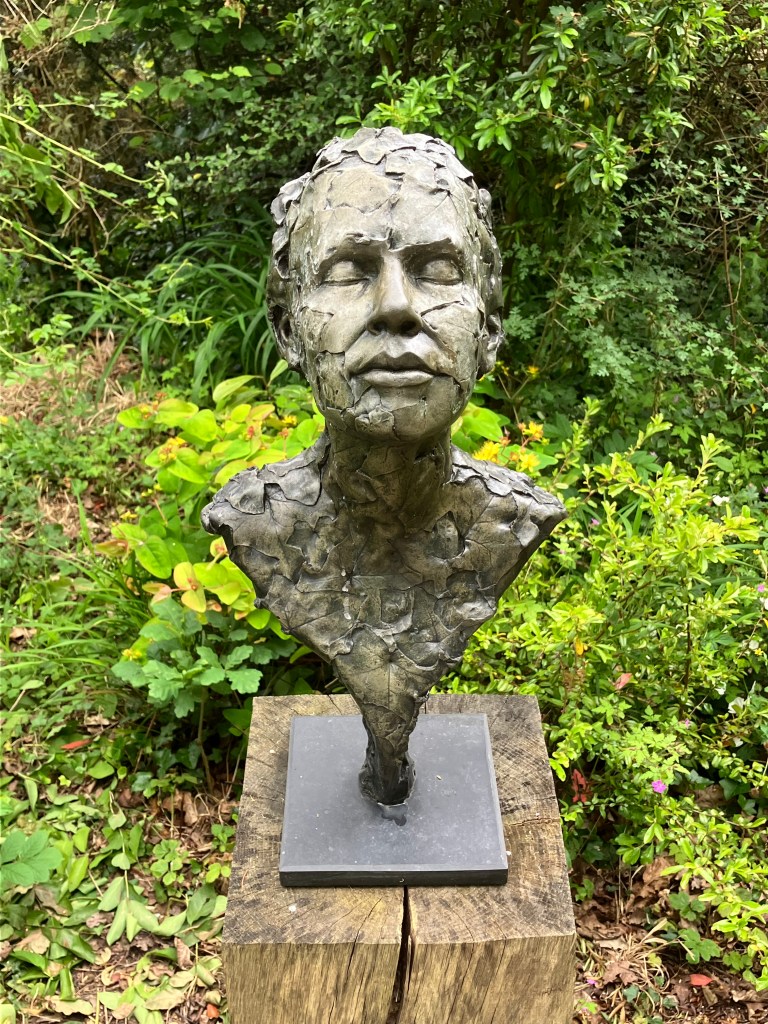



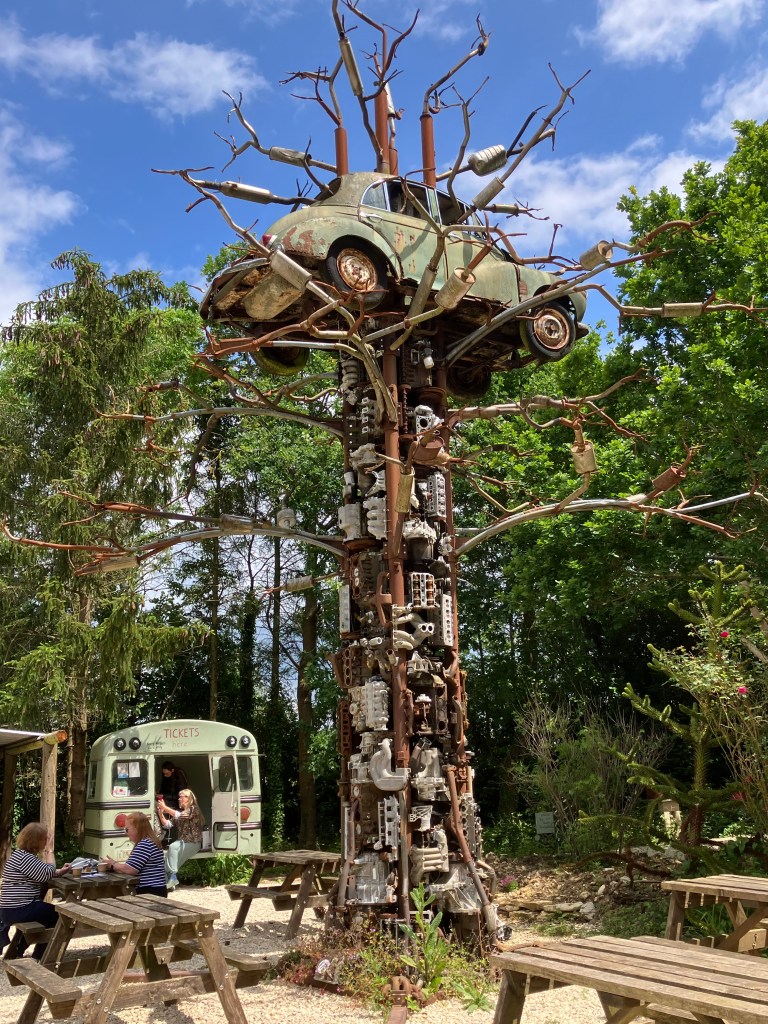


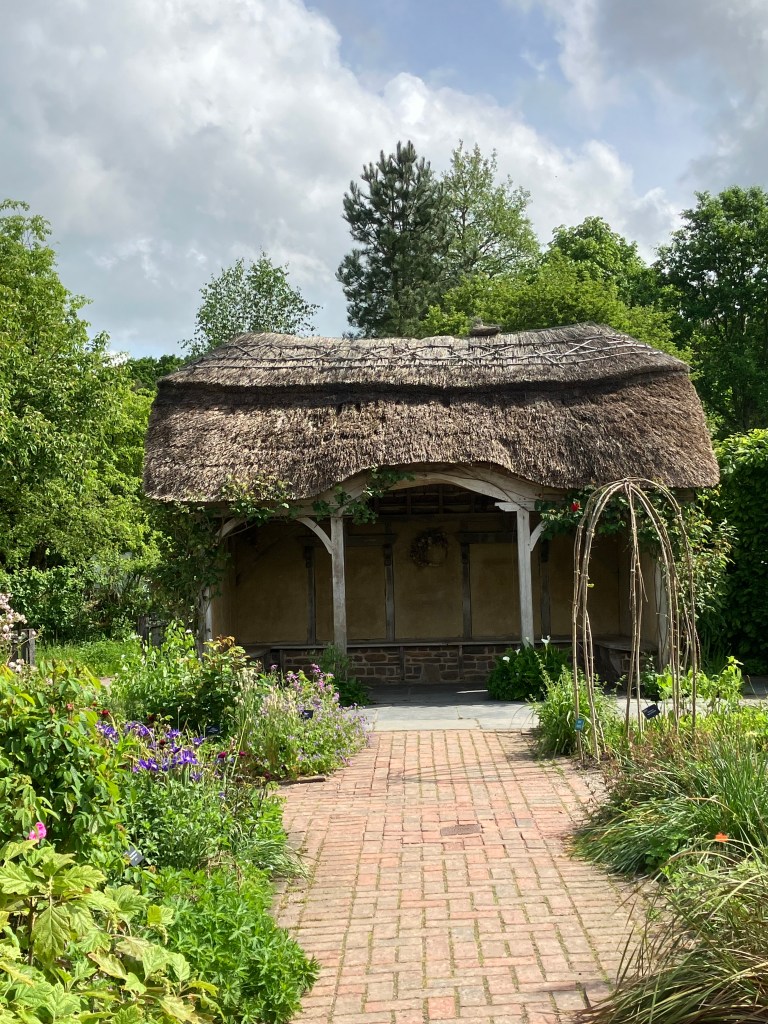


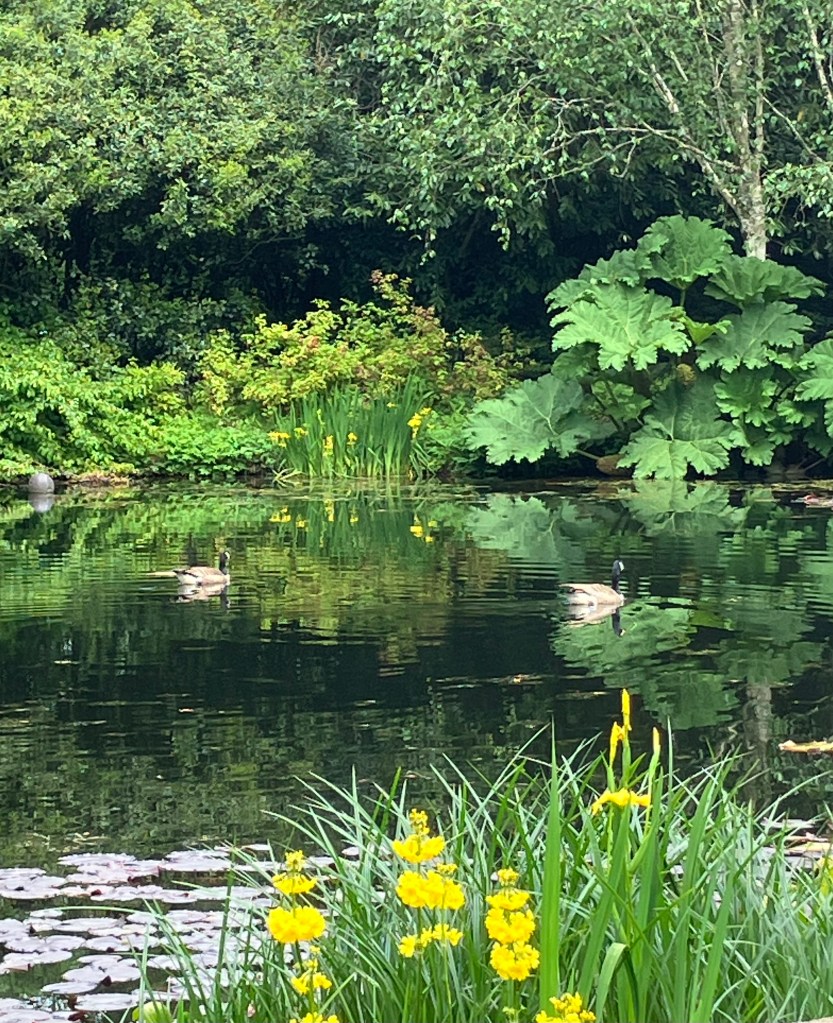
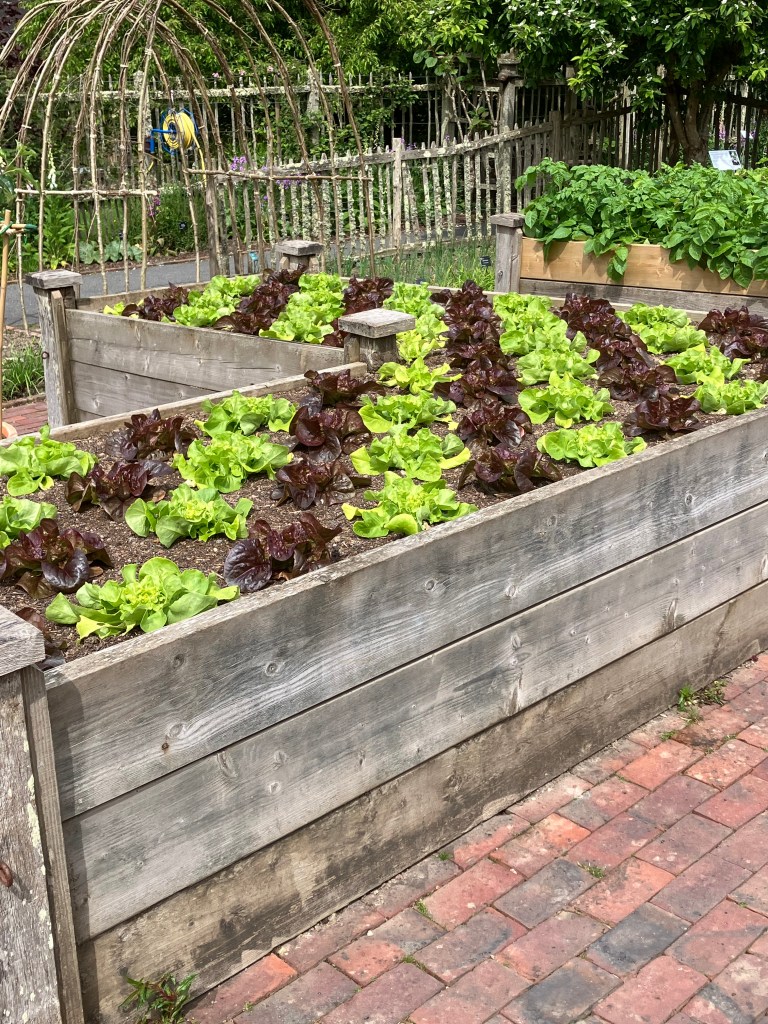

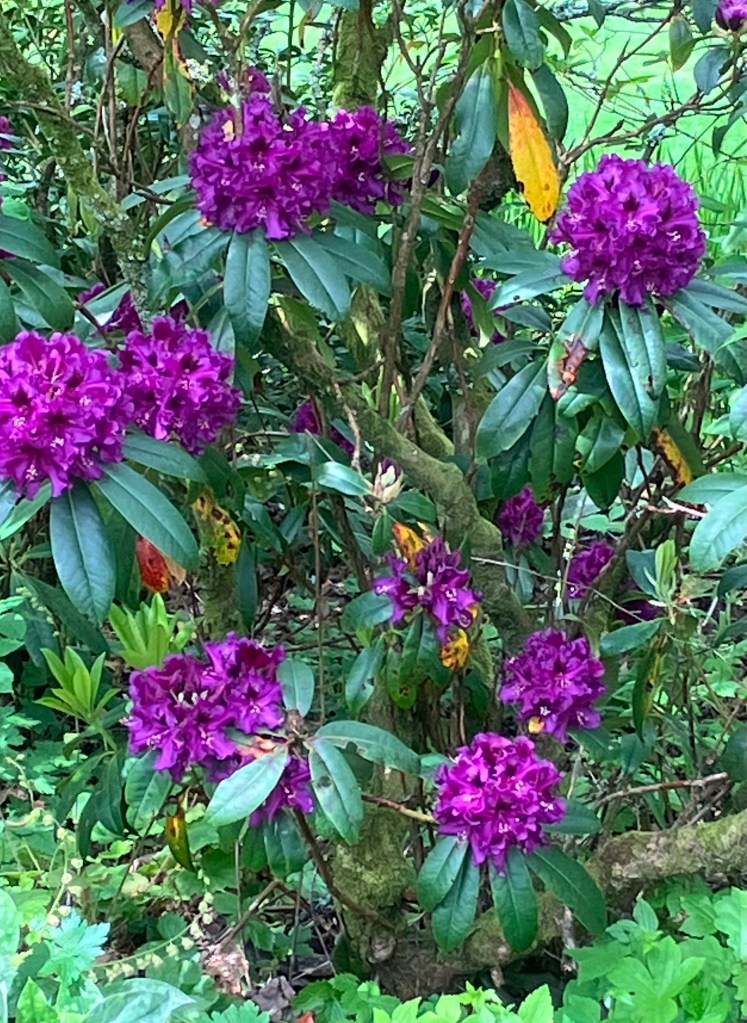


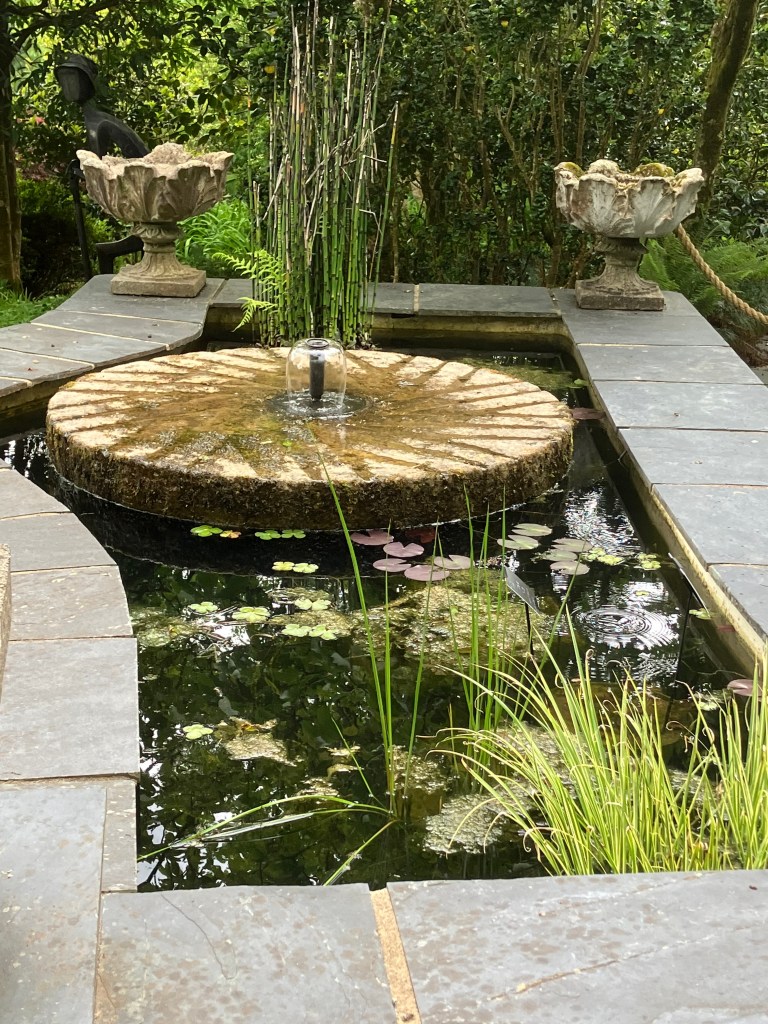
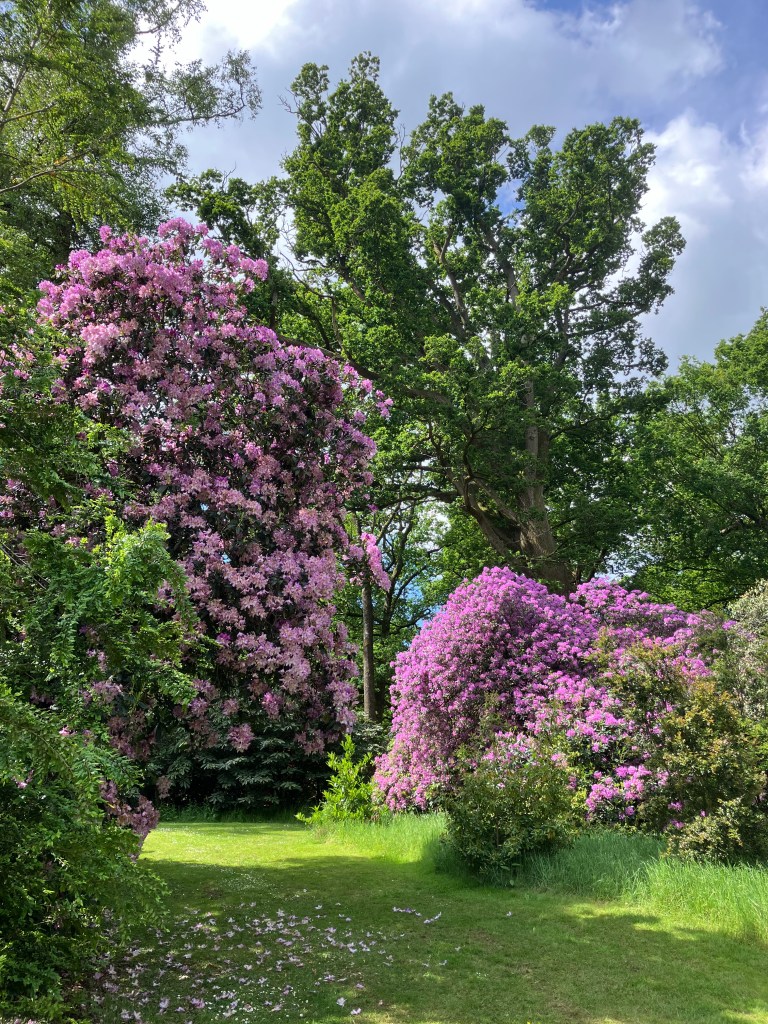





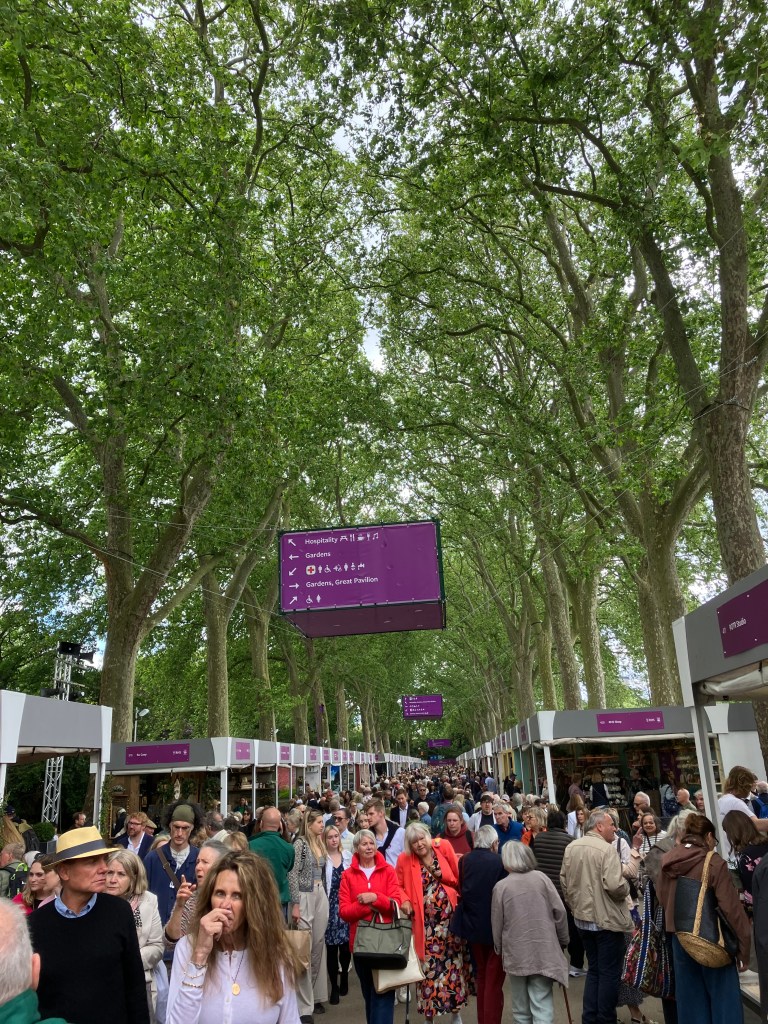
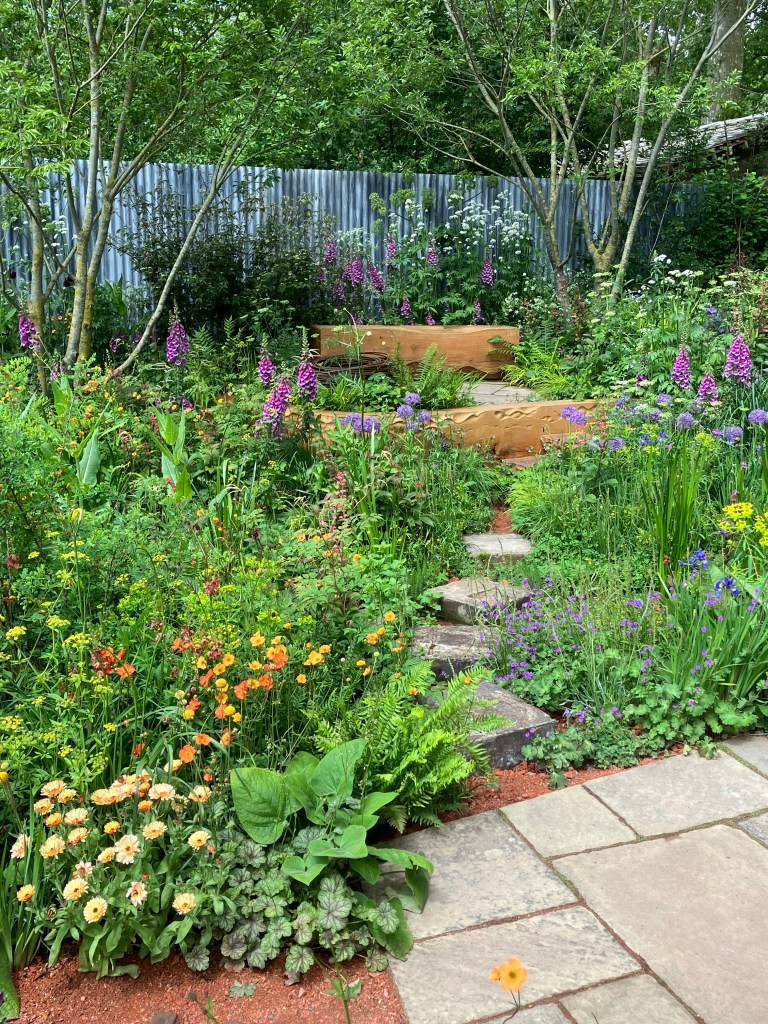
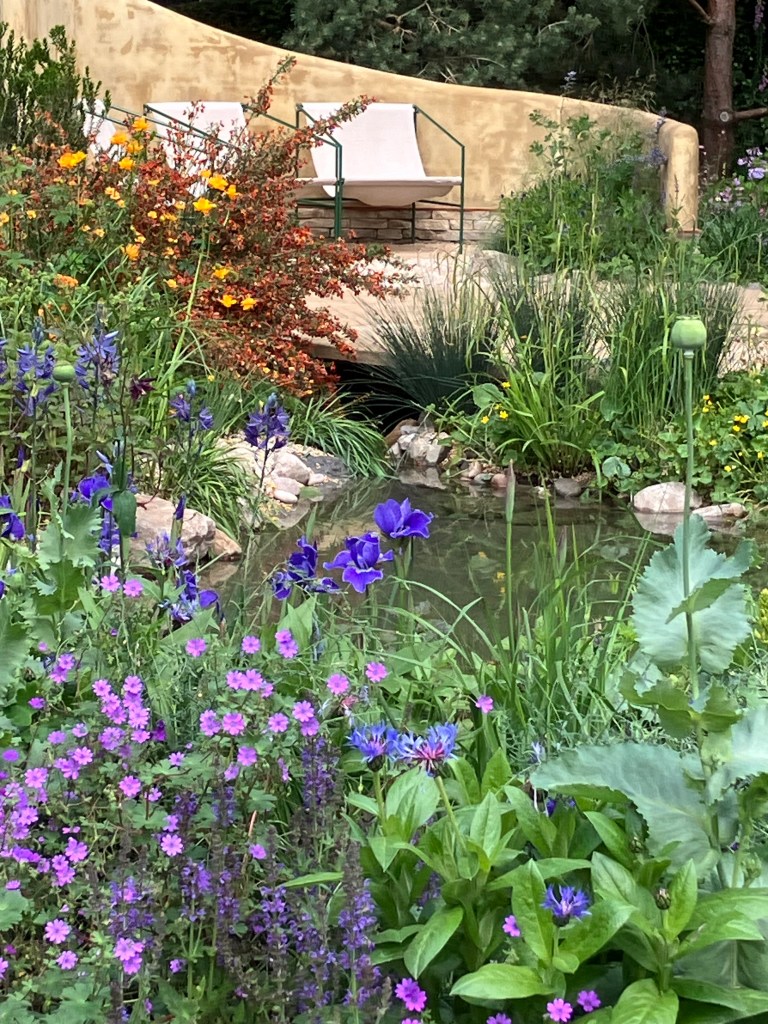


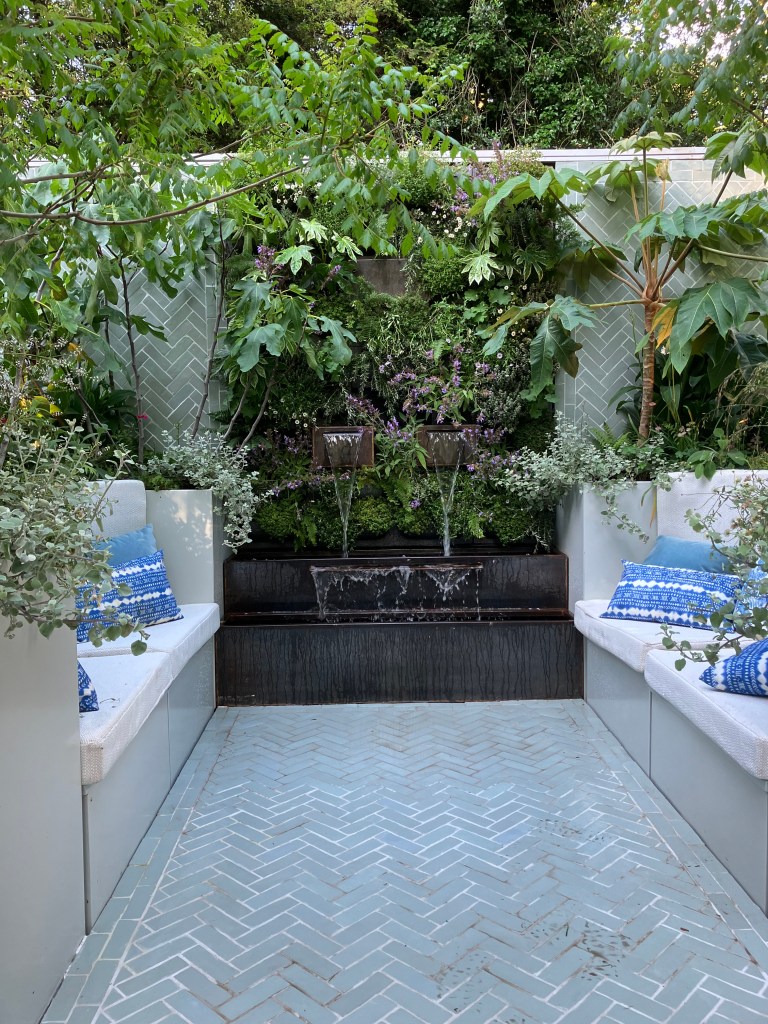
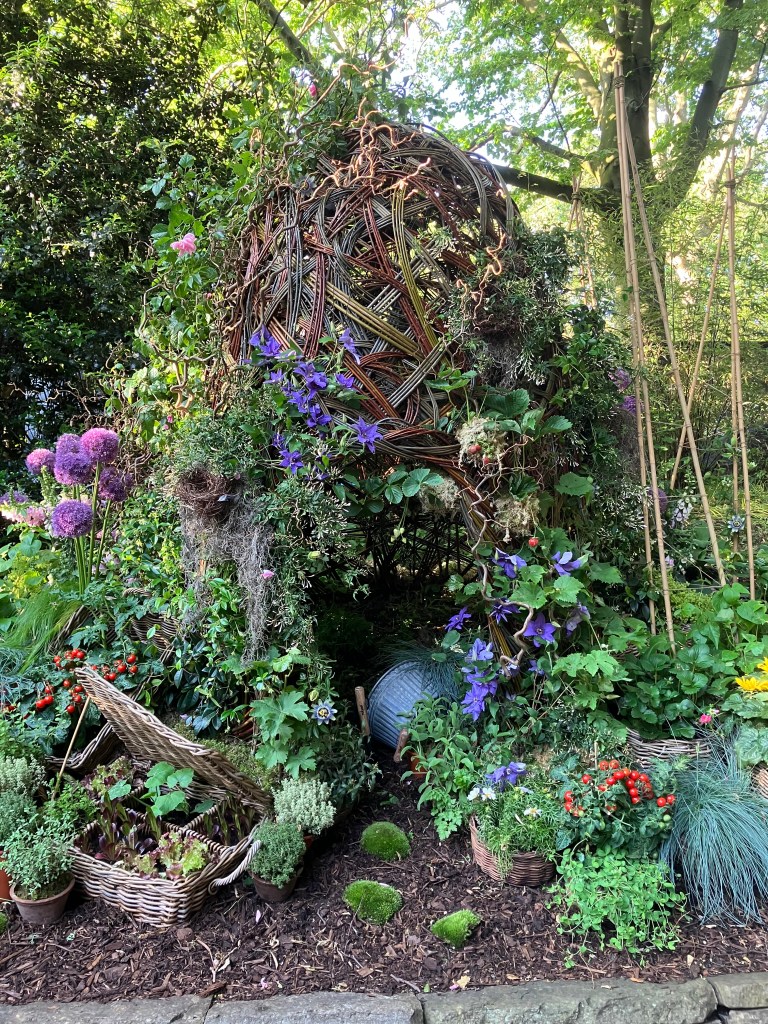
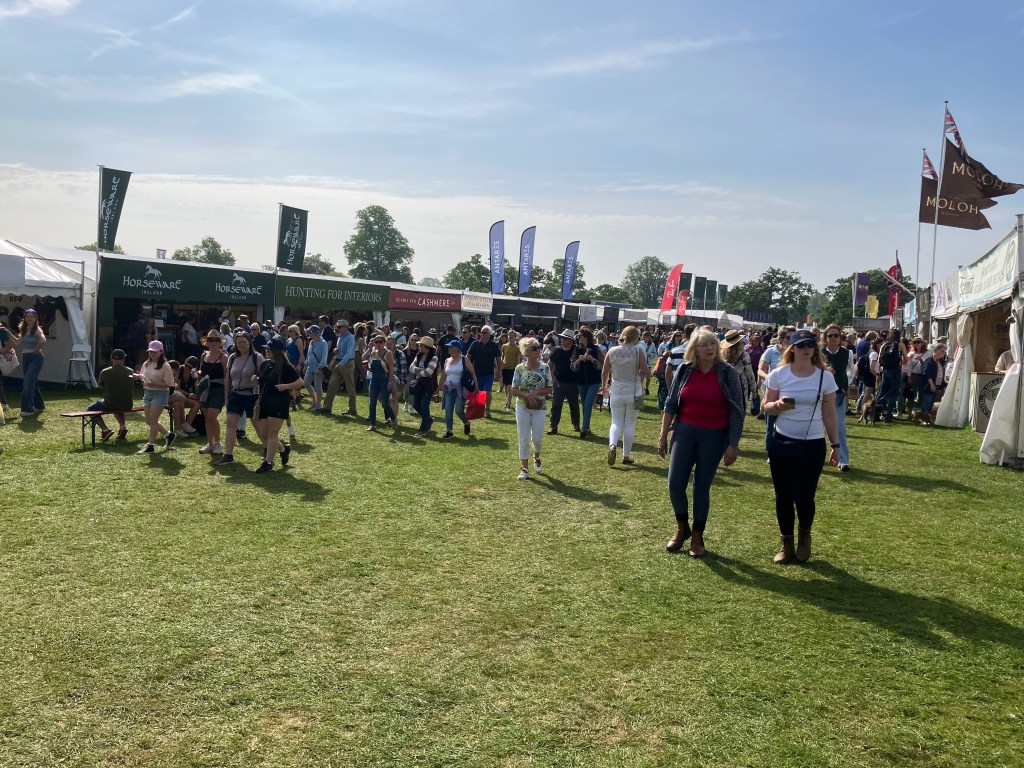
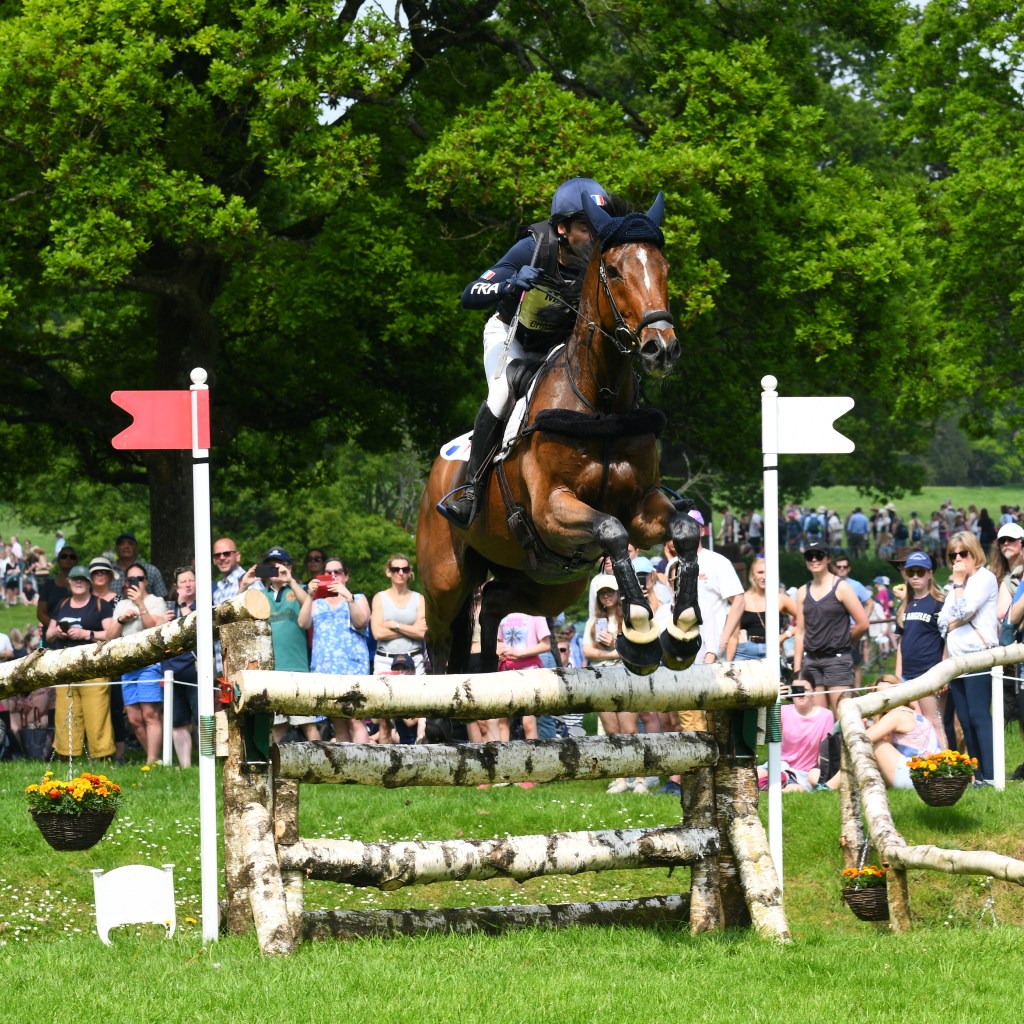

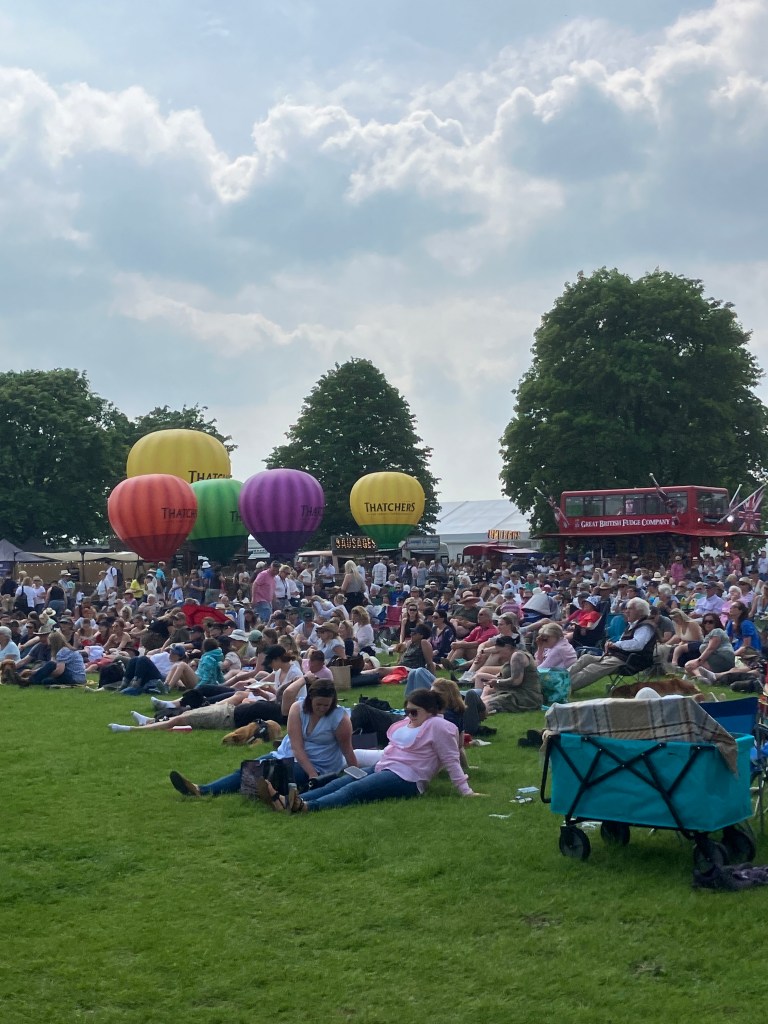

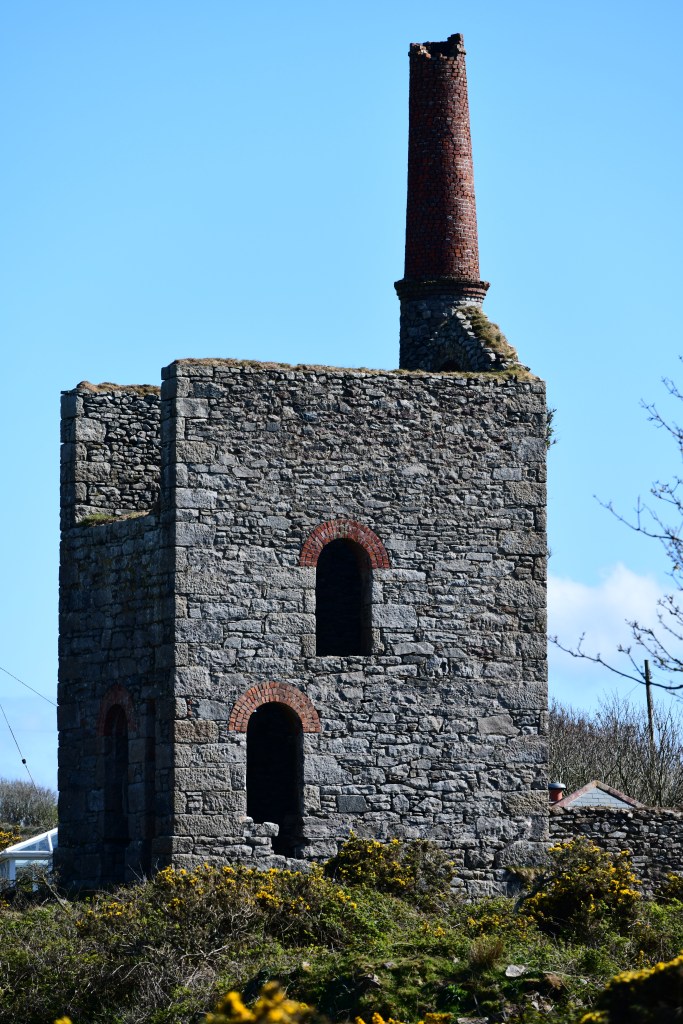

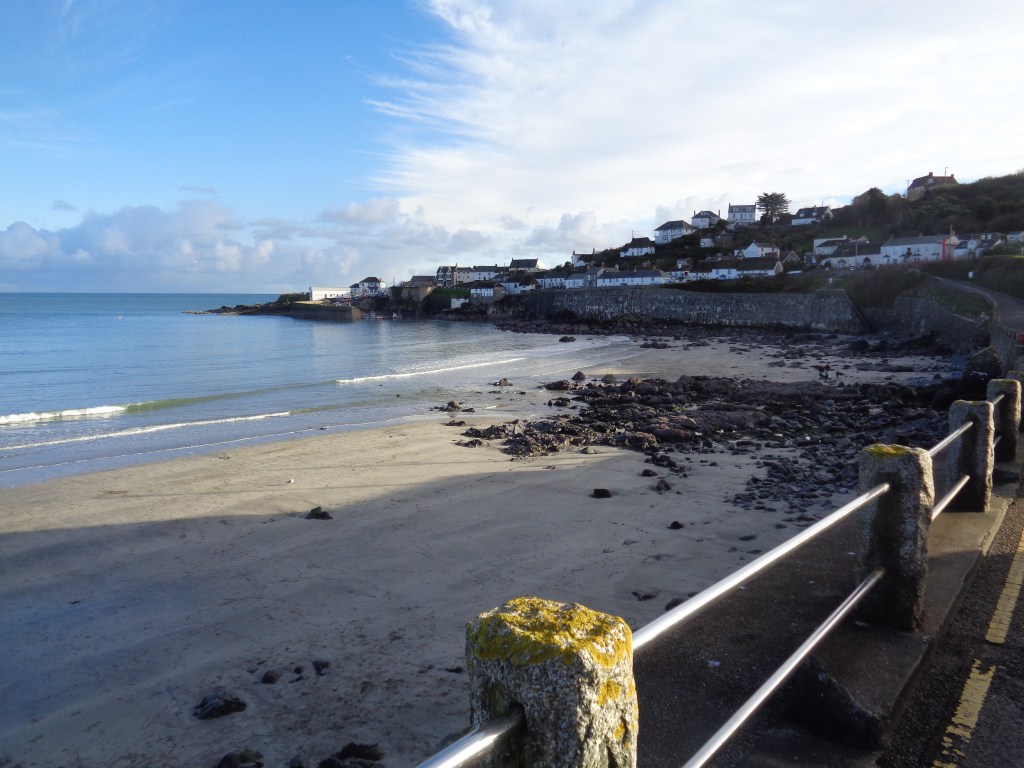


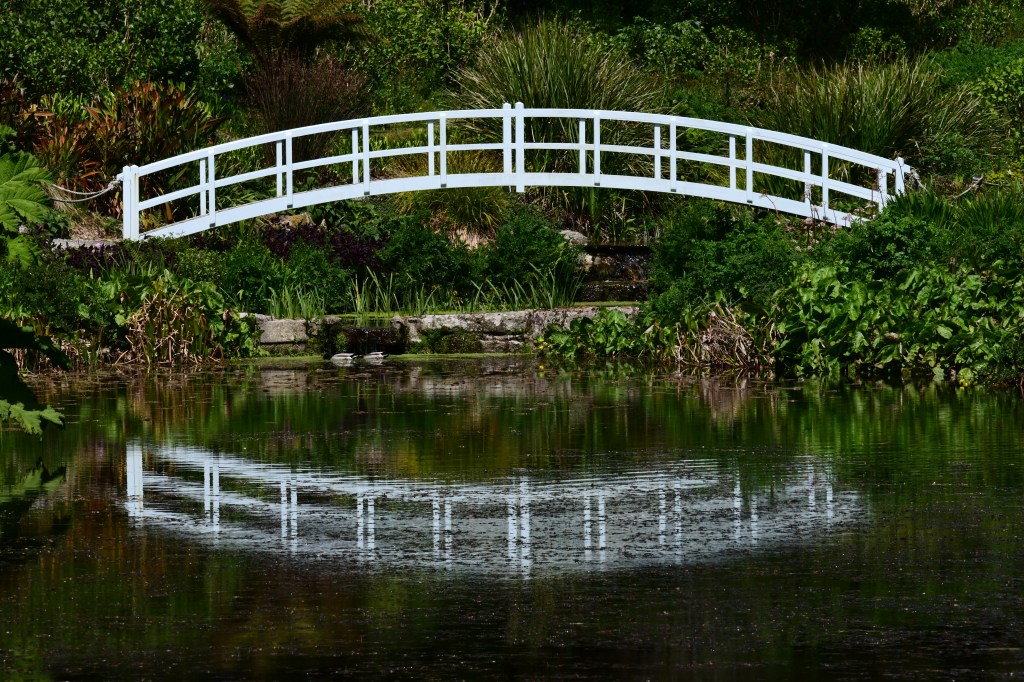


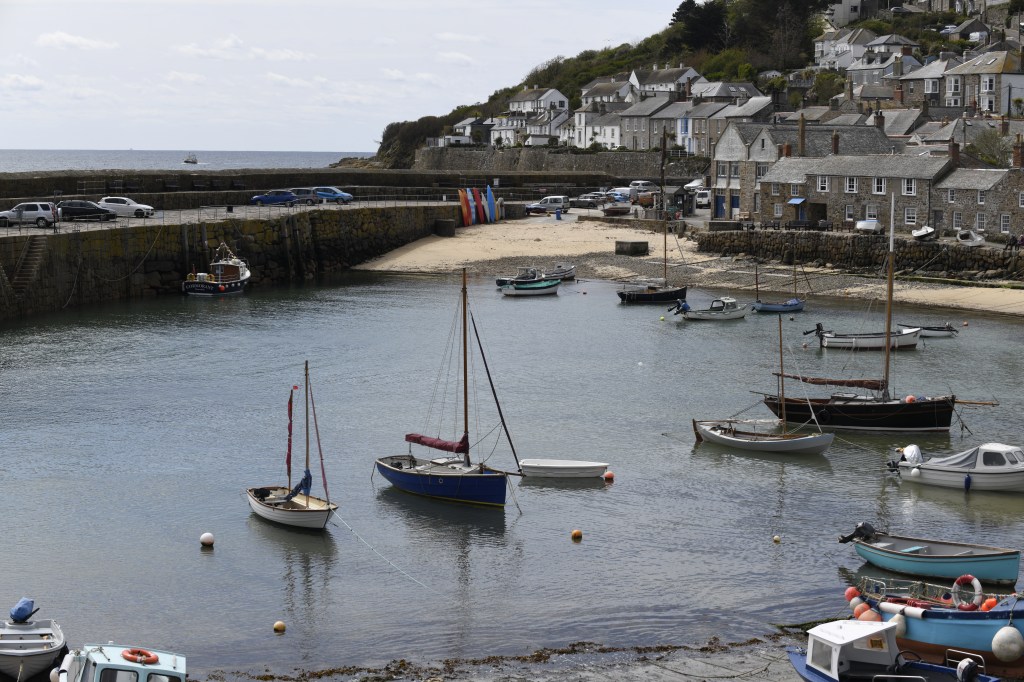




 A Midlife Adventure