Welcome to my final post of this four part series where I have been highlighting the wonderful work of the National Trust founded here in the UK. Having spent a wet and windy weekend in Somerset touring the Victorian Gothic Tyntesfield House and the Tudor Manor House of Barrington Court, this week I’m coming a bit closer to home to Gloucestershire and introducing Newark Park.
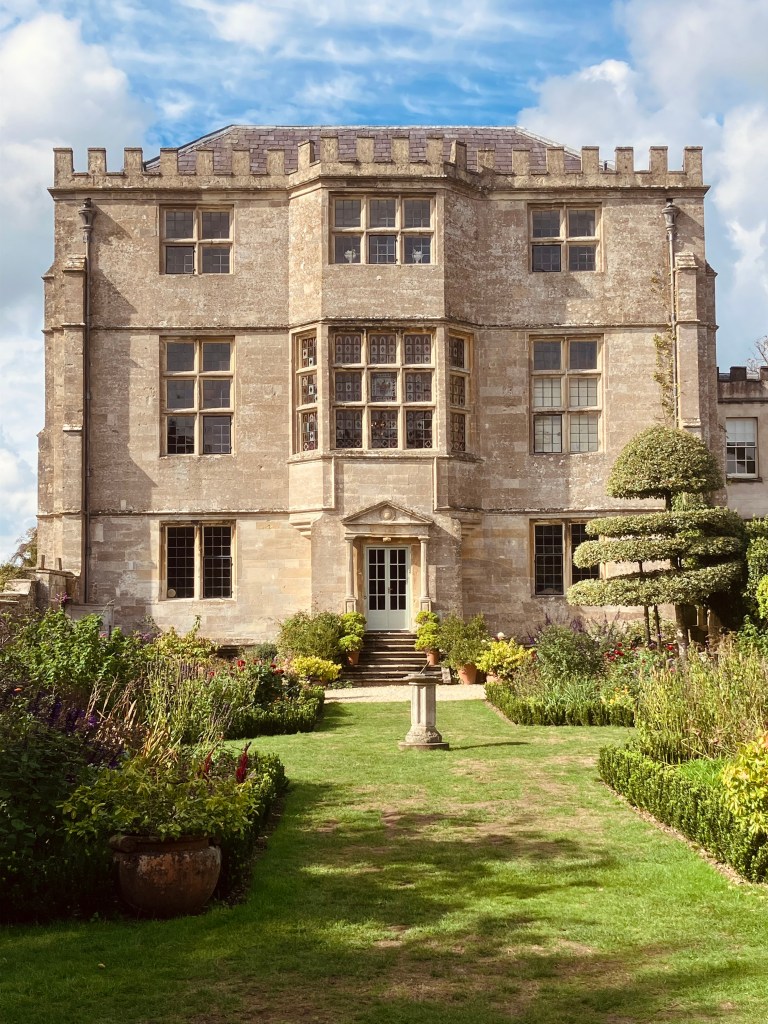
Inside the Grounds;
Having parked up and entered the grounds we opted to take a seat on the lawn and to buy a morning coffee from the Tea Pavilion. This small cafe in the grounds serves tea, coffee, light lunches, cakes and snacks. We visited at the end of September when the colours of the leaves were just starting to change colour but it was still warm enough to sit outside admiring the views across the surrounding countryside.
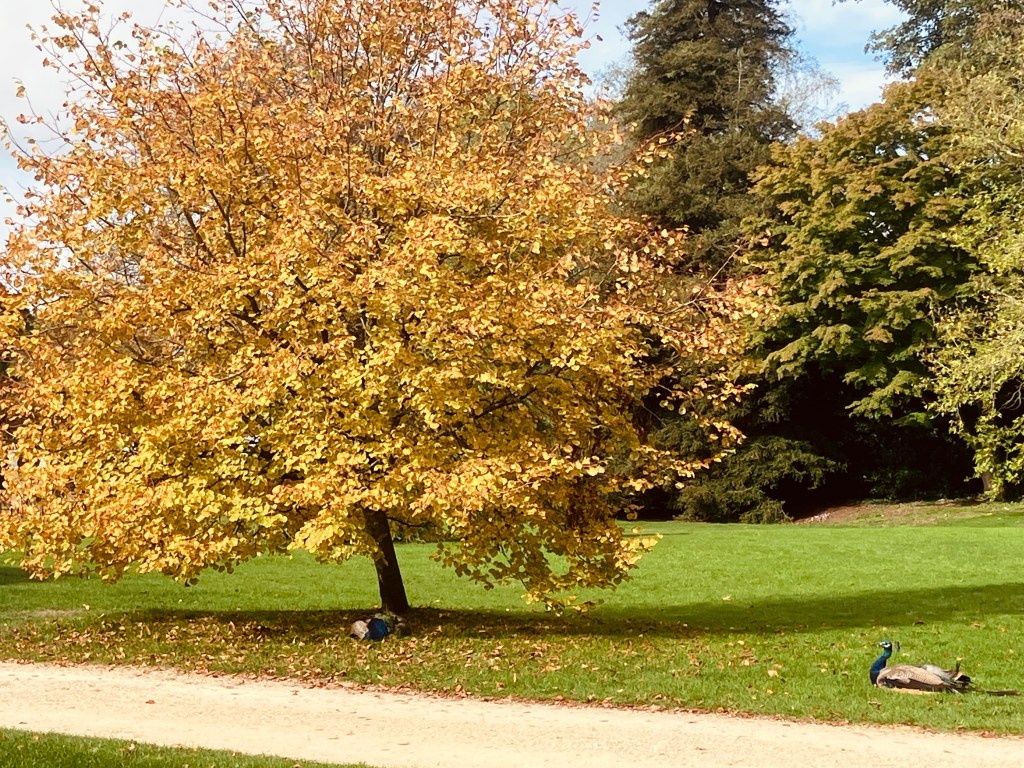
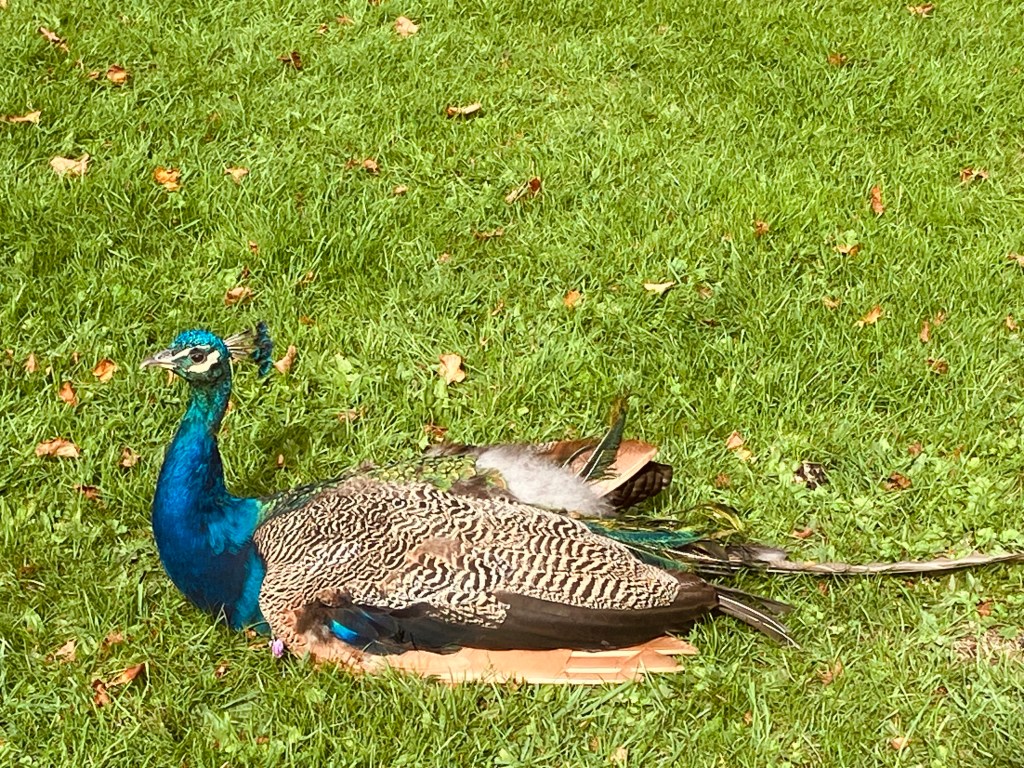
Two on site peacocks wandered across in front of us who were both evidently just starting their annual moult.
Exploring the House:
The house isn’t as large as many others that the NT own but it is still well worth a visit.
Sir Nicholas Poyntz, a soldier and attendant of Henry VIll, built the hunting lodge during the Tudor period in about 1550. It was much narrower than the current building, being only one room deep, though it was the same height as today. It survives as the eastern half of the present house.
Designed not as a home but as a grandstand for viewing deer hunting, the building also provided rooms for high-end entertaining and occasional sleeping. The kitchens were in the basement, with reception rooms on the ground floor, a large banqueting room on the first floor and bedrooms above. Guests could watch the hunt from the roof. Rumours of wild behaviour here were still circulating a century later.
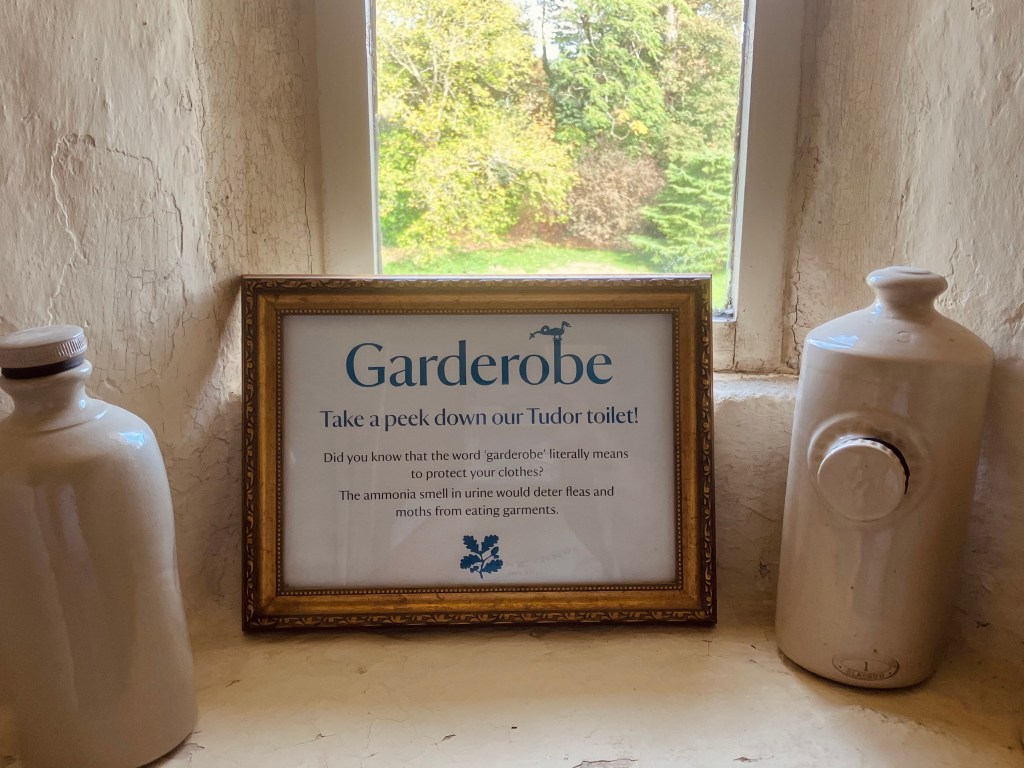
The lodge was simply known as ‘Newwork’, which later turned into ‘Newark’ and has been a place of entertainment and hospitality for nearly 500 years.
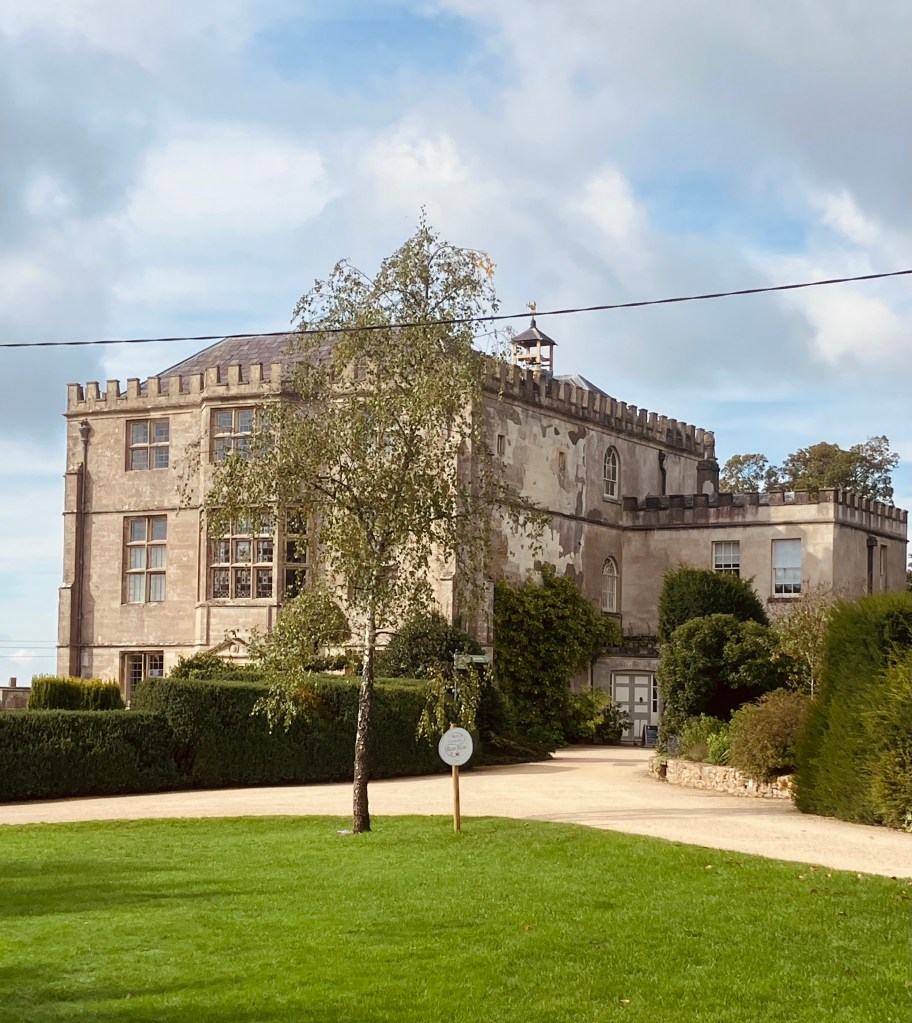
Later owners turned the hunting lodge into a family home and added more rooms. Some of the rooms retain a strong impression of life during the Tudor era whilst others show how Newark went on to become a fashionable Georgian house. The first extension turned the rectangular lodge into an L shape. Further rooms were added in the 18th century which made the building U-shaped. This left an open courtyard to take in the dramatic views to the south.
The next big renovation for Newark came in 1790. The owner, Reverend Lewis Clutterbuck, wanted the house to reflect the fashion at the time for symmetry. A castellated entrance was added to the north side of the house, with Georgian windows either side of the door and two arched windows above. The old courtyard was also filled in and a door and porch added on the south side with a complete symmetrical Georgian façade. Castellations were also added to the roof.
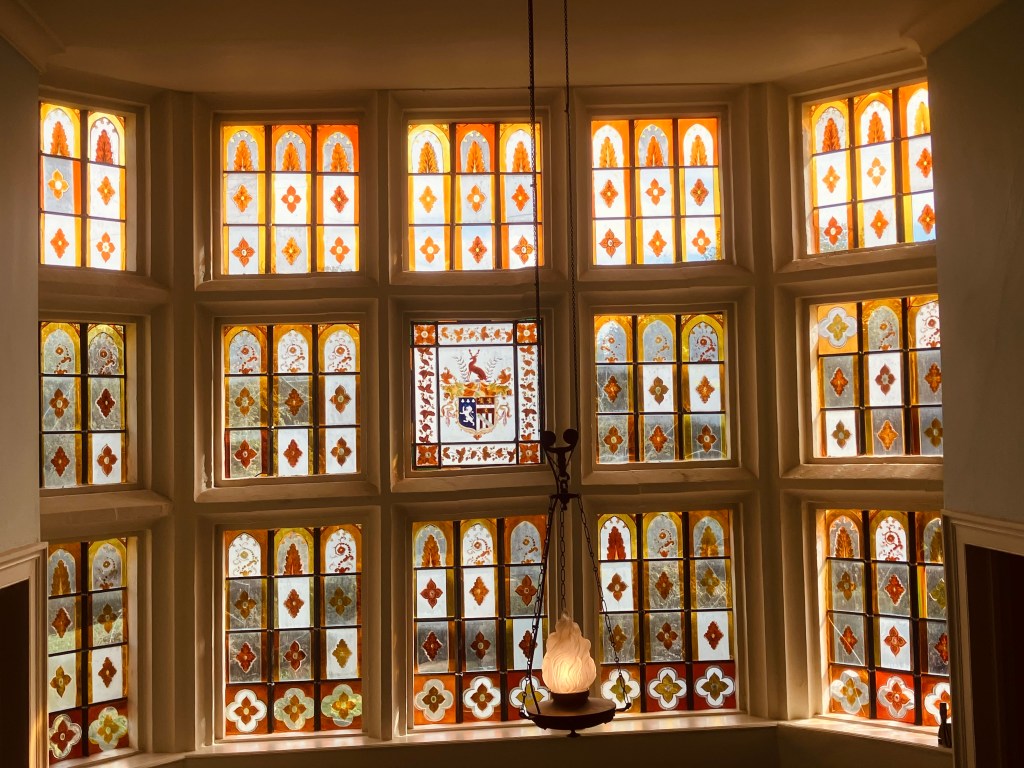
Also still clearly visible today is this beautiful stained-glass bay window on the east staircase landing. The stone window frame dates from around 1550 and was part of the original Tudor hunting lodge. It would have let light into the large banqueting room on this floor. In 1817 the Clutterbuck family filled it with a stained glass window.
It is believed that this acted as a memorial to Reverend Lewis Clutterbuck because the central panel shows his coat of arms and also those of both his wives.
Tenants in the late Victorian period added another extension to the house to provide accommodation for their servants, There is a great demonstration that can be seen of this transformation across the centuries in the first room that you enter with accompanying explanation given by one of the NT volunteers.
From the second half of the 20th century this wonderful building, like so many others, started to fall into decline. Eventually it was, however, given a new lease of life when in 1970, Robert (Bob) Parsons took over a repairing lease for Newark Park. The house was in a very poor condition at the time. It had been used as a nursing home for the previous twenty years and the gardens had been reclaimed by nature.
Born in Ponca City, Oklahoma, USA, in 1920, Bob came to England as a soldier with the American army during the Second World War. After the war, and after gaining his qualifications as an architect from Harvard university, he decided to make England his home, living in Suffolk and London before settling at Newark Park. Parsons had a passion for restoration and set his mind to restoring, redecorating and refurnishing the house at his own expense and in his own personal style. He did a lot of the work himself and uncovered many historic features, such as the Tudor fireplaces and the Georgian Summerhouse in the lakeside garden. Many of the rooms are presented today as Bob and his partner Michael had them, particularly the Dining Room and Drawing Room.
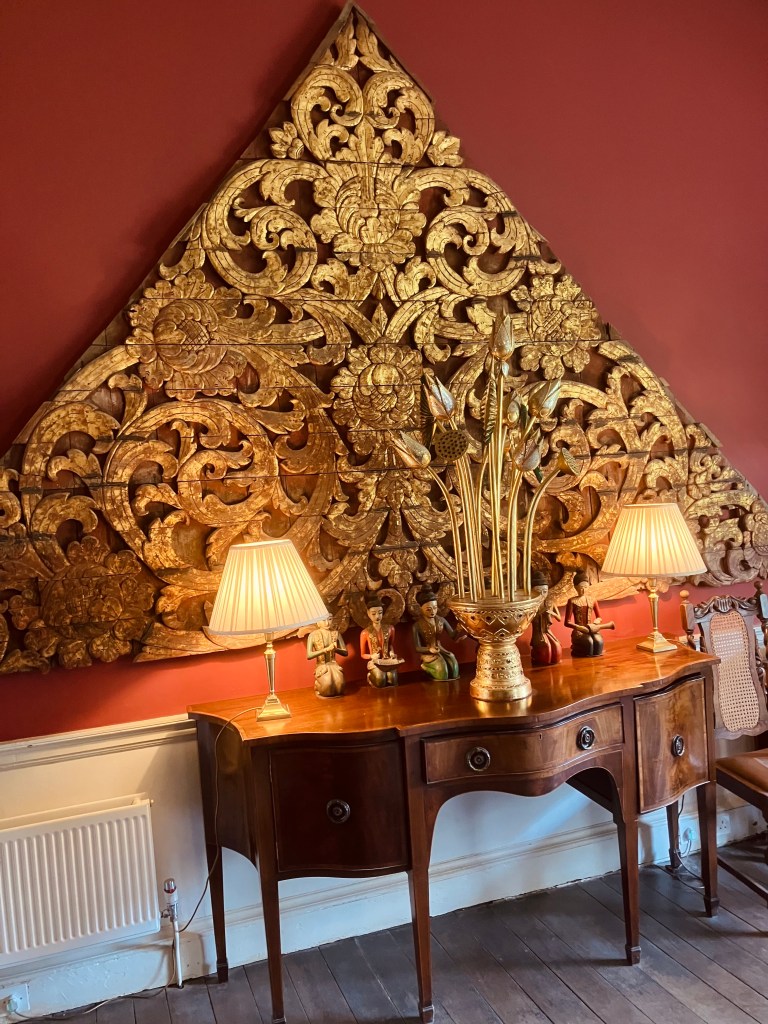
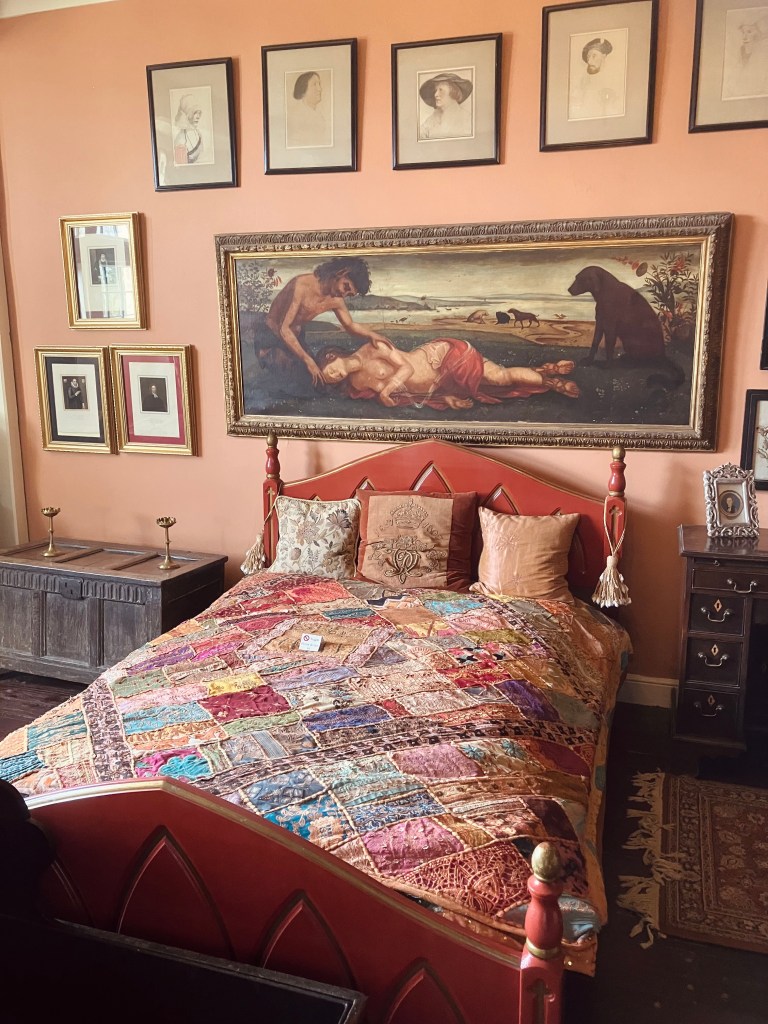
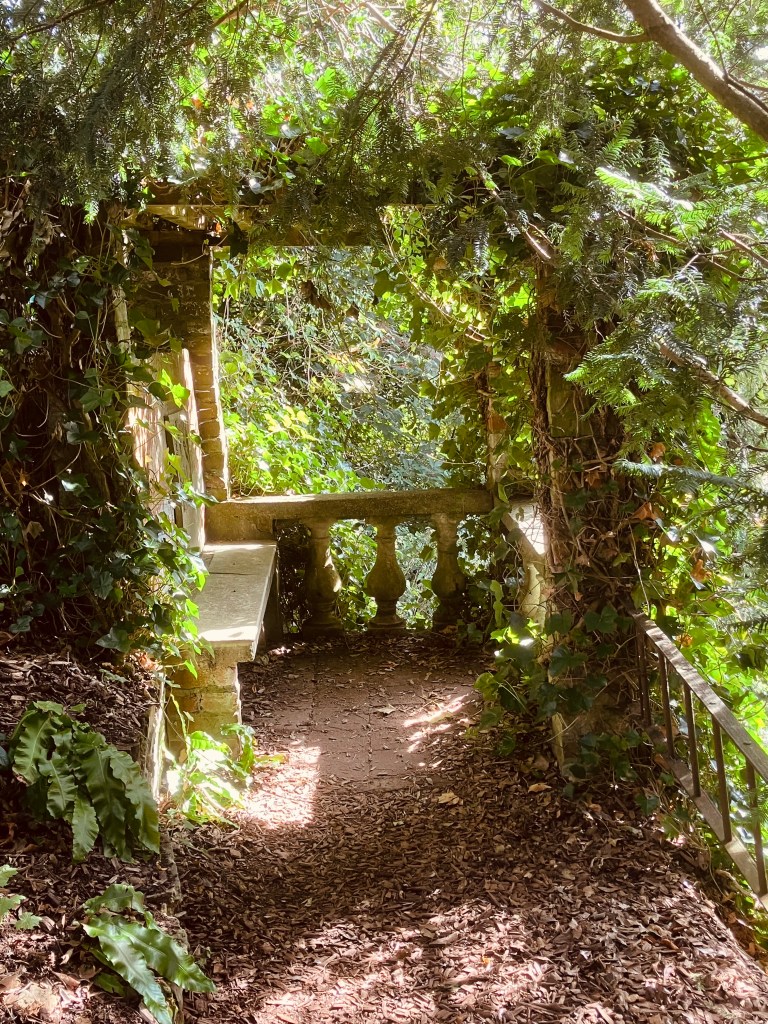
Focusing on the grounds Bob uncovered many historic structures and decorations.He also added the walled garden to the East of Newark House, and redeveloped the pleasure gardens.He rebuilt the Sham Castle Folly alongside several other garden structures.
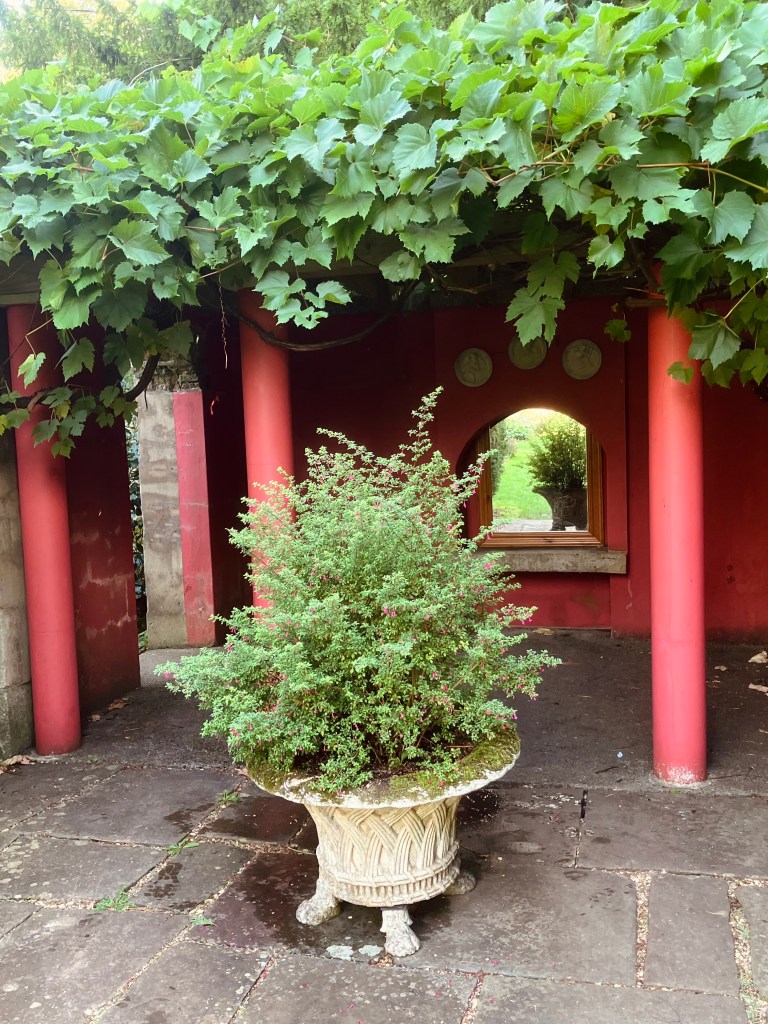
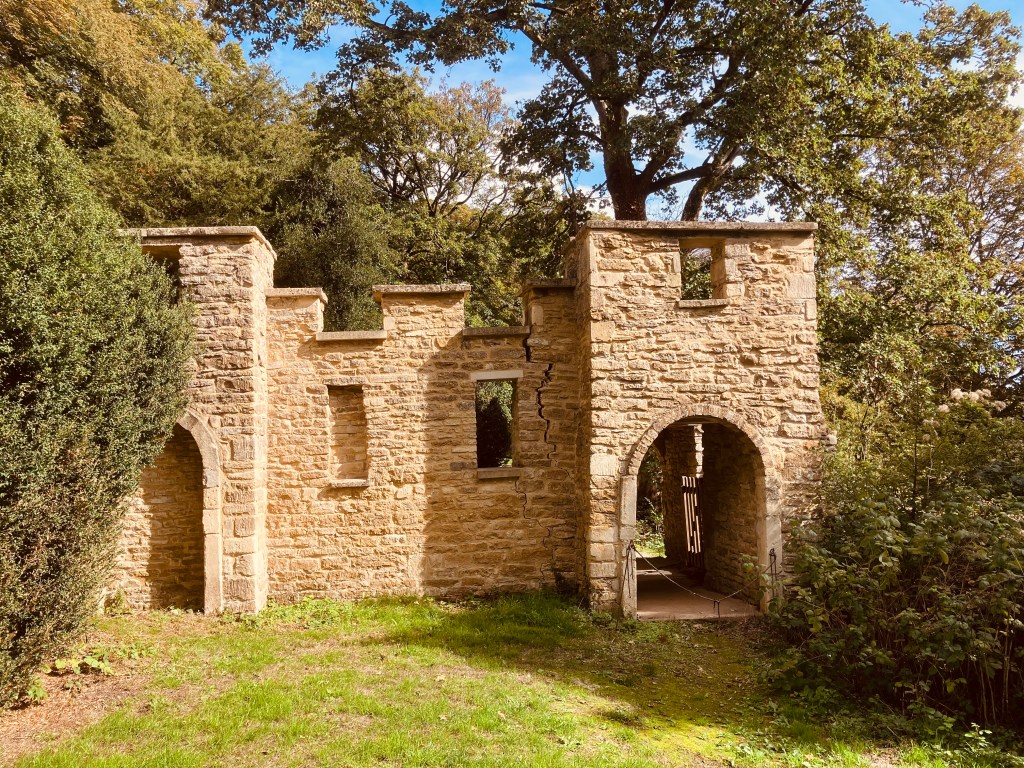
Newark once again became a hub for social events and entertaining. Bob passed away in 2000, and is buried in the graveyard at St Nicholas Church in Ozleworth. His partner, Michael Claydon, was the last tenant at Newark, moving out in 2011.
The Grounds:
Having explored the interior of the house we then ventured out into the gardens. These are arranged over three levels, making interesting use of the sloping landscape.
Close to the house, are the lawns, some established planting and attractive garden borders, with wonderful views across the surrounding countryside. Further down, the character changes as you wander through the woodland glade, where the Glade Walk leads from a quirky garden folly towards the rockery beneath the house.
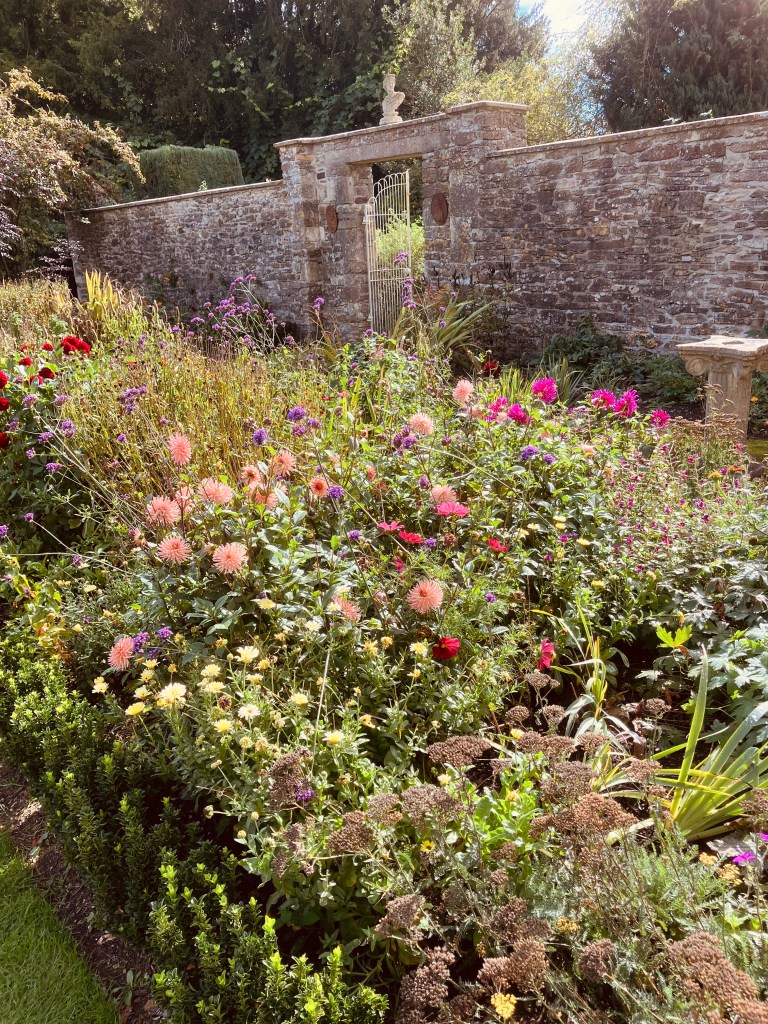
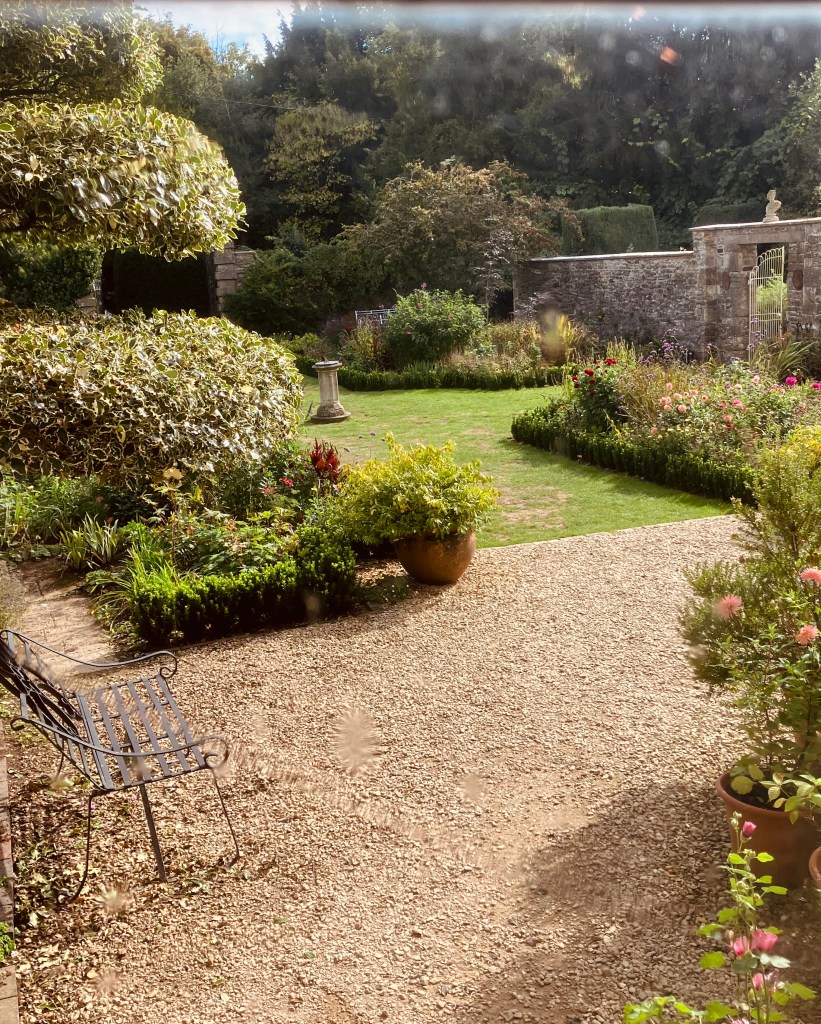
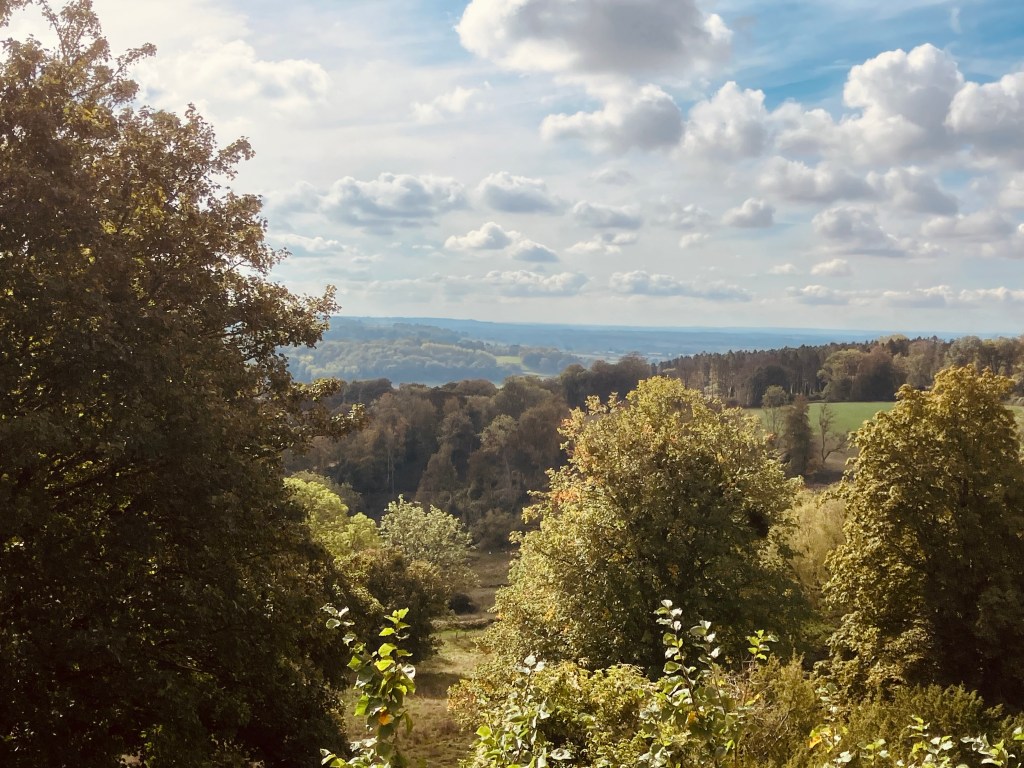
The lakeside garden is another particularly attractive area, offering a quieter, more romantic setting. Here you can enjoy the small lake, the historic summerhouse and views across the Ozleworth Valley.
I imagine that the gardens would have something to offer throughout the seasons. My husband had visited previously with his local photography group in order to take photos of the beds of snowdrops which brighten the grounds in winter.
Reading about the grounds Spring also brings daffodils and narcissus with one of my favourites wild garlic also being particularly abundant from early spring into May.
Wandering around there are also some interesting native and ornamental trees, along with plenty of places to pause and enjoy the surroundings.
Walking:
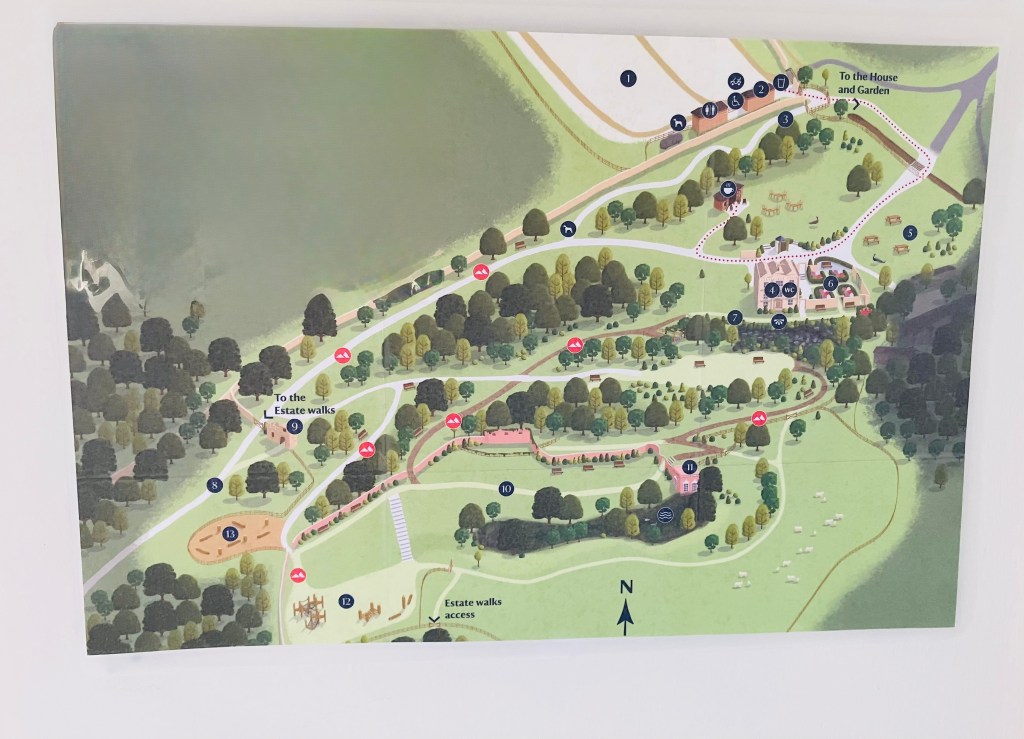
If you enjoy walking, there is plenty more of the local countryside to discover beyond the gardens. The estate has three waymarked walking trails, all starting from the main car park. The walks take you through a mixture of woodland, open grassland and historic parkland, with some lovely views to appreciate en route alongside local wildlife, including red kites, bats, hares and a variety of woodland birds. The mixture of ancient woodland, open grassland and parkland provides a range of habitats
The Orange Route – 1.5 miles
This is the shortest of the three walks and also the least steep. The route has recently been resurfaced and offers lovely views across the valley below, making it a good choice for those wanting a relatively gentle walk.
The Pink Route
This more adventurous route follows the original Georgian carriage drive around Lower Lodge Wood. As you make your way through the estate, you’ll encounter woodland and open grassy areas. At the furthest point, the woodland opens out into a valley, where you can see an overgrown field which the National Trust hopes to restore as an orchard. Further along are the remains of old farm buildings, now gradually being reclaimed by nature.
The Purple Route – nearly 3 miles
The longest of the three walks, this route offers some particularly rewarding views of the woodland, Newark House and Ozleworth Valley. It is more challenging, with a couple of steep slopes as you climb back up the valley alongside the woodland. The effort is rewarded with beautiful views back across the valley.
An important point is that the Purple Route is seasonal and closes during the winter months when the ground becomes too wet and muddy.
The nearby Cotswold Way also passes the property, making Newark Park an interesting stopping point for those exploring this long-distance walking route.
A few things worth knowing before setting out for a walk:
Although the walks are waymarked and relatively straightforward to follow, the terrain is not uniformly easy. The estate sits on the Cotswold escarpment, so some paths are steep, uneven and can become muddy even after relatively dry weather.
The National Trust recommends walking boots or wellies, particularly for the longer routes. Visitors should check with reception on arrival to find out which trails are open, as conditions can affect access.
Final Thoughts:
Newark Park was perhaps a little different from some of the other National Trust properties we have visited. It may not have the grandeur or scale of some of the larger historic houses, but what it lacks in size it certainly makes up for in character, history and setting.
I particularly enjoyed discovering how the building has evolved over nearly 500 years, with its Tudor origins still very much evident alongside the later Georgian additions. The story of Bob Parsons and his determination to rescue and restore the property also adds another fascinating chapter to its history.
For me, though, it was the gardens and the surrounding countryside that made this visit particularly special. The combination of beautifully landscaped gardens, woodland, far-reaching views and walking trails makes Newark Park somewhere you could easily spend a good part of the day exploring.
If you enjoy discovering historic properties, gardens and beautiful countryside, I would certainly recommend adding Newark Park to your list of places to visit.
This brings me to the end of my four-part series exploring some of the wonderful properties cared for by the National Trust. I hope you have enjoyed discovering them with me.
Have you visited Newark Park, or perhaps one of the other properties featured in this series? I’d love to hear about your experiences and any recommendations you might have.
If you have enjoyed reading, please give this post a like and leave me a comment. It is always lovely to hear from you!


It’s interesting that an American ended up restoring a historic English estate! Looks like a lovely walk through the countryside 🙂
LikeLike
It’s part of why I like exploring these old houses, you never quite know what history is going to turn up. In this series we’ve had a fortune made from seabird poo, a house restoration financed by Golden syrup and now an unexpected American 😊
LikeLike
What a lovely place and a very interesting history behind it too.
LikeLike